If your core training has plateaued or you’re tired of floor crunches that strain your neck more than they challenge your abs, it’s time to rethink your approach. Adjustable decline sit-up benches with foam leg rollers represent one of the most effective yet underrated tools for building serious abdominal strength and definition. Unlike fixed benches or basic floor mats, these versatile pieces of equipment allow you to progressively increase the difficulty of your workouts while providing the support and comfort necessary for proper form.
Whether you’re building a home gym from scratch or upgrading your current setup, understanding what makes a quality decline bench worth your investment can save you money, prevent injuries, and accelerate your results. This comprehensive guide dives deep into everything you need to know—from engineering mechanics and material science to space planning and workout programming—so you can make an informed decision that aligns with your fitness goals.
Top 10 Adjustable Decline Sit-Up Benches With Foam Leg Rollers
Detailed Product Reviews
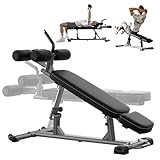
1. Finer Form Semi-Commercial Decline Sit Up and Flat Weight Bench. Adjustable Fitness Equipment and Exercise Bench for Abs, Crunches, and Strength Training. Great Workout Equipment for the Home Gym.
Overview:
The Finer Form Semi-Commercial bench delivers dual-functionality for serious home gym enthusiasts. This 2-in-1 unit transitions between flat and decline positions, serving equally well for heavy bench presses and targeted ab workouts. Built with a heavy-duty steel frame, it supports an impressive 1,100 lbs, making it suitable for intermediate to advanced lifters who demand reliability.
What Makes It Stand Out:
The integrated reverse crunch handle sets this bench apart, enabling advanced core movements that standard benches can’t accommodate. The extended backboard with thick padding provides superior comfort and stability, particularly benefiting taller users who typically struggle with cramped equipment. The adjustable foot roller adapts to various heights, ensuring secure positioning during decline work and weighted sit-ups.
Value for Money:
At $209.99, this bench sits in the mid-range price bracket but offers semi-commercial build quality. While you can find cheaper flat benches, the decline functionality and 1,100-lb capacity justify the premium. It essentially combines two pieces of equipment into one, saving space and money compared to purchasing separate benches for pressing and ab work.
Strengths and Weaknesses:
Strengths include exceptional stability, versatile 2-in-1 design, high weight capacity, and tall-user-friendly extended backboard. The reverse crunch handle adds unique core training options. Weaknesses include limited adjustability compared to full FID benches—no incline positions—and the price may deter budget-conscious buyers. The decline mechanism might require occasional adjustment checks.
Bottom Line:
This bench excels for lifters prioritizing both heavy pressing and serious ab training. If you need decline functionality without sacrificing flat bench stability, it’s worth every penny.
2. Finer Form Multi-Functional FID Weight Bench for Full All-in-One Body Workout – Hyper Back Extension, Roman Chair, Adjustable Ab Sit up Bench, Incline Decline Bench, Flat Bench

Overview:
The Finer Form Multi-Functional FID bench redefines versatility with over 100 exercise possibilities in a single footprint. This all-in-one solution functions as a hyperextension machine, Roman chair, ab bench, and fully adjustable FID bench. With eight backrest positions, three seat angles, and multiple support pad settings, it adapts to virtually any movement or body type for complete body conditioning.
What Makes It Stand Out:
The sheer configurability is unmatched at this price point—eight backrest angles, three seat positions, eight support pad heights, and four calf positions create endless customization. The hyperextension capability targets posterior chain development often neglected in home gyms. The included workout poster provides immediate exercise guidance, eliminating guesswork for beginners and intermediate users alike.
Value for Money:
Priced at $209.94, this bench delivers extraordinary versatility that would typically require multiple machines costing $500+. The 1,000-lb capacity supports serious strength training while the multi-functionality saves significant space. For home gym owners wanting maximum exercise variety without clutter, the value proposition is exceptional and hard to match.
Strengths and Weaknesses:
Major strengths include unparalleled adjustability, hyperextension function, comprehensive exercise options, and included workout poster. The sturdy construction handles heavy loads reliably. Weaknesses include a slightly lower weight capacity than some competitors and potential complexity for users wanting simple equipment. Setup may take longer due to multiple adjustment points.
Bottom Line:
For home gym enthusiasts seeking one bench to do everything, this is the ultimate choice. The versatility outweighs any minor limitations.
3. Finer Form Gym-Quality Adjustable Sit Up Ab Bench & Decline Weight Bench for Home Gym Strength Training. Supports 660lbs. Extended Backrest for Support. Great for Decline Bench Press & Core Workouts

Overview:
The Finer Form Adjustable Sit Up Ab Bench offers targeted decline training at an entry-level price point. Supporting 660 lbs, this bench focuses on core development and decline pressing movements. Its extended backrest accommodates users up to 6'2", addressing a common complaint with budget benches. The heavy-duty steel construction provides surprising stability for the price, making it ideal for beginners.
What Makes It Stand Out:
The extended length specifically designed for taller users distinguishes this from typical budget options. The non-slip rubber feet and secure locking pin system demonstrate thoughtful safety features rarely seen at this price. The one-year manufacturer warranty provides peace of mind that competitors often omit, showing the brand’s confidence in their product’s durability.
Value for Money:
At $89.99, this bench represents exceptional value for beginners and intermediate users. While limited to decline positions, it delivers commercial-inspired features—extended padding, safety mechanisms, and solid construction—at a fraction of typical costs. It’s an ideal entry point for dedicated ab training without financial commitment or space requirements.
Strengths and Weaknesses:
Strengths include unbeatable price, tall-user-friendly design, safety features, warranty protection, and solid 660-lb capacity. The compact footprint suits small spaces. Weaknesses include lack of flat or incline positions, limiting exercise variety. The 660-lb capacity, while adequate for most, may restrict advanced lifters. Padding thickness is moderate compared to premium benches.
Bottom Line:
Perfect for budget-conscious buyers focused on core training and decline exercises. For under $90, it’s hard to beat for dedicated ab work.
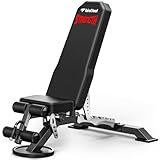
4. Birdfeel Commercial Adjustable Weight Bench, 1800LBS Heavy Duty Workout Bench for Home Gym Strength Training, Removable Leg Holder for Flat/Incline/Decline Sit Up & Full Body Workout, Black Red
Overview:
The Birdfeel Commercial Adjustable Weight Bench brings professional-grade specifications to the home gym market. With an astounding 1,800-lb static weight capacity and 70×50 mm heavy-duty steel frame, this bench handles elite-level training. The triangular force-bearing design with dual-arm reinforcements ensures absolute stability under maximum loads, making it ideal for powerlifters and serious athletes who refuse to compromise.
What Makes It Stand Out:
The 1,800-lb capacity exceeds most home gym equipment, rivaling commercial facilities. The removable leg holder with quick-release design transforms the bench from decline ab trainer to flat pressing platform instantly. Premium leather upholstery offers durability and hygiene benefits over standard vinyl, resisting odor and wear through intense training cycles and heavy sweating.
Value for Money:
At $189.99, this bench delivers commercial specifications below $200—remarkable considering the capacity and build quality. Comparable commercial benches cost $300-500. The removable leg holder effectively provides two benches in one, while the premium materials ensure longevity. For heavy lifters, this represents significant long-term savings and performance benefits.
Strengths and Weaknesses:
Strengths include unparalleled weight capacity, commercial construction, superior stability design, premium upholstery, and versatile removable leg holder. The eight backrest and three seat angles provide comprehensive positioning. Weaknesses include potential overkill for casual lifters and heavier weight that reduces portability. The commercial focus may lack some comfort refinements of consumer-oriented benches.
Bottom Line:
If you lift heavy and demand commercial durability without the commercial price, this bench is unbeatable. A powerlifter’s dream for home training.
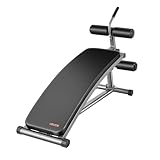
5. VEVOR Sit Up Bench, Curved Decline Ab Bench with Reverse Crunch Handle, with 6 Adjustable Height Setting, Heavy Duty Steel, 600 Lbs Capacity for Home Gym Workouts, Strength Training, Full Body Muscles
Overview:
The VEVOR Sit Up Bench offers versatile decline training with unique functional touches. Supporting 600 lbs, this curved bench features six height adjustments and a 90° rotatable foot hook, accommodating users of all sizes. The heavy-duty steel frame and reinforced construction provide stability for home workouts, while the reverse crunch handle enables advanced core movements typically found on premium equipment.
What Makes It Stand Out:
The rotatable foot hook is a distinctive feature, allowing seamless transitions between exercises and accommodating different body mechanics. The curved design naturally positions the spine for comfortable decline work. Six height settings provide more adjustability than typical budget benches, while the reverse crunch handle adds professional training options usually reserved for models costing twice as much.
Value for Money:
At $114.99, this bench positions itself as a mid-tier option. The unique rotatable hook and six height levels offer good value, though the 600-lb capacity trails some competitors at similar prices. It’s ideal for users prioritizing core variety over maximum weight loads. The build quality exceeds expectations for the price point, making it a smart compromise.
Strengths and Weaknesses:
Strengths include innovative rotatable foot hook, six height adjustments, reverse crunch handle, comfortable curved design, and solid construction. The thickened cushion enhances comfort during extended sessions. Weaknesses include the 600-lb capacity limiting heavy dumbbell work, and the curved design may not suit all user preferences or flat pressing needs. Stability is good but not commercial-grade.
Bottom Line:
An excellent choice for core-focused trainers wanting adjustability and unique features without breaking the bank. The rotatable hook alone makes it worth considering.
6. HARISON Adjustable Weight Bench with Leg Extension and Preacher Pad, Workout Bench Press for Home Gym Strength Training, Flat Incline Decline Sit Up Bench 1000LBS Capacity

Overview: The HARISON weight bench positions itself as a commercial-grade solution for serious home gym enthusiasts. With an impressive 1000-pound capacity and robust steel construction, this FID (flat/incline/decline) bench delivers versatility that rivals professional equipment. The inclusion of leg extension and preacher pad attachments transforms it from a simple bench into a comprehensive strength training station capable of supporting full-body development.
What Makes It Stand Out: This bench’s standout feature is its exceptional 1000-pound weight capacity, supported by 2.8" x 2.4" commercial steel and a triangular mechanical design. The integrated barbell rack accommodates both Olympic and standard plates, eliminating the need for a separate rack. With six backrest and five seat positions, users can execute precise angle adjustments for targeting specific muscle groups across full-body workouts, from decline sit-ups to steep incline presses.
Value for Money: At $299.99, this bench sits in the premium home gym category. However, when you consider it replaces separate leg curl machines, preacher curl stations, and a standard weight bench, the investment proves economical. Comparable commercial equipment would cost significantly more, making it a smart long-term purchase for dedicated lifters committed to home training.
Strengths and Weaknesses: Strengths include outstanding weight capacity, versatile attachments, dual barbell compatibility, and robust safety locks. The extensive adjustability supports everything from decline sit-ups to shoulder presses. Weaknesses are its substantial footprint requiring dedicated space, assembly complexity, and that beginners might find the price point intimidating for a starter setup.
Bottom Line: Ideal for intermediate to advanced lifters building a comprehensive home gym. The HARISON bench offers exceptional durability and versatility that justifies its premium price tag.
7. CAP Barbell Sit Up Bench – Adjustable Decline Ab Bench for Home Gym – Multi-Purpose Slant Board for Core Strength, Sit-Ups, and Full-Body Workouts

Overview: CAP Barbell delivers an entry-level decline bench that prioritizes affordability and core-specific training. This no-frills slant board focuses on fundamental abdominal exercises while maintaining the brand’s reputation for durable construction. Designed for home gyms with space constraints, it provides a straightforward solution for strengthening your midsection without complex adjustments or unnecessary features.
What Makes It Stand Out: The primary appeal lies in CAP Barbell’s 40-year legacy producing reliable strength equipment at accessible price points. The adjustable decline design allows users to progressively increase ab exercise intensity, while the multi-purpose functionality supports limited full-body movements like dumbbell presses or stretches. Its compact footprint makes it ideal for apartments or small workout spaces where every square foot matters.
Value for Money: At $58.99, this bench represents exceptional value for beginners or those supplementing existing equipment. While it lacks the versatility of FID benches, it costs a fraction of the price. For dedicated core training on a budget, it’s difficult to find a more cost-effective option from a trusted manufacturer with proven durability standards.
Strengths and Weaknesses: Strengths include unbeatable price, trusted brand reputation, space-saving design, and straightforward assembly. The steel construction provides adequate stability for bodyweight exercises. Weaknesses are limited functionality (decline only), unspecified weight capacity suggesting lower limits, minimal padding thickness, and lack of incline/flat positions for comprehensive training versatility.
Bottom Line: Perfect for fitness newcomers focusing on core development or anyone needing a compact, budget-friendly decline bench. Don’t expect versatility, but do expect reliable performance for abdominal work.
8. GYMAX Sit up Bench, Folding Adjustable Workout Bench for Ab Exercise, Curved Incline/Decline Slant Bench, Foldable Strength Training Weight Bench, Situps Abs Workout Equipment (Red)

Overview: The GYMAX bench balances functionality with space-saving design, offering a mid-range option for home fitness enthusiasts. With a 441-pound capacity and four adjustable positions, this folding bench provides versatility for both ab exercises and light strength training. The striking red color and triangular iron frame construction deliver aesthetic appeal alongside functional stability for users seeking practicality without compromising style.
What Makes It Stand Out: The folding mechanism distinguishes this bench, allowing it to collapse for storage under beds or against walls—perfect for multi-purpose rooms. The curved ergonomic design conforms to natural back contours, enhancing comfort during extended sessions. Four high-density foam rollers provide superior leg support compared to budget alternatives, while the heavy-duty iron frame offers respectable stability for its class and price point.
Value for Money: Priced at $75.99, the GYMAX bench occupies a sweet spot between basic entry-level models and premium equipment. The folding capability alone justifies the modest price increase over cheaper options, while the 441-pound capacity accommodates most home users. It’s an intelligent compromise for those prioritizing both performance and storage convenience in limited spaces.
Strengths and Weaknesses: Strengths include excellent foldability, stable triangular construction, comfortable padding, and versatile height adjustments. The ergonomic curve supports proper form and reduces strain. Weaknesses are limited four-position adjustability versus six or more on competitors, lower weight capacity than heavy-duty models, and the PU leather may wear faster than commercial-grade vinyl over time.
Bottom Line: An excellent choice for space-conscious users wanting more than a basic bench. The GYMAX delivers solid performance and storage convenience at a reasonable price point for apartment dwellers or multi-use spaces.
9. Marcy Adjustable 6 Position Utility Bench with Leg Developer and High Density Foam Padding SB-350,dark gray
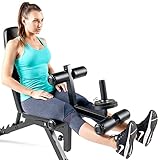
Overview: Marcy’s SB-350 utility bench targets the mid-range market with a feature set that punches above its weight class. The six-position back pad and integrated leg developer create a versatile platform for both upper and lower body training. With a 600-pound capacity and durable powder-coated steel frame, this dark gray bench offers professional aesthetics and functionality for serious home gyms without premium pricing.
What Makes It Stand Out: The leg developer attachment adds significant value, enabling leg curls and extensions without separate equipment. The sawtooth adjustment system, while traditional, provides secure locking at six distinct angles from decline to incline. Transport wheels and a handle solve the mobility challenge often overlooked in heavier benches, making repositioning effortless despite its sturdy build and substantial construction.
Value for Money: At $119.99, this bench delivers compelling value. The combination of leg developer, six positions, and mobility features typically appears in more expensive models. Marcy’s established brand reputation provides confidence in long-term durability, making it a prudent investment for intermediate lifters upgrading from basic equipment who need more exercise variety.
Strengths and Weaknesses: Strengths include the leg developer for complete lower body work, convenient transport wheels, six adjustable positions, and respectable 600-pound capacity. The vinyl-covered foam rollers offer durability and easy cleaning. Weaknesses are the sawtooth mechanism being less precise than pop-pin systems, a bulkier non-folding frame requiring dedicated space, and assembly that may require two people for easier setup.
Bottom Line: A well-rounded utility bench that excels for users wanting leg development capabilities without premium pricing. The Marcy SB-350 offers excellent versatility and mobility for its class and price range.
10. XMARK Adjustable Decline Abdominal Sit-up Bench, 12 Resistance Levels (Black)

Overview: XMARK specializes in core training with this premium decline bench featuring an industry-leading 12 adjustment levels. Designed for athletes and fitness enthusiasts focused on abdominal development, the bench prioritizes precision and safety over versatility. The black powder-coated frame and contoured design reflect a commitment to both functionality and professional aesthetics in specialized equipment for dedicated core work.
What Makes It Stand Out: The 12-position decline system offers unmatched granularity for progressive core training, allowing micro-adjustments as strength improves. The front-mounted bullhorn handlebar provides crucial stability for safe mounting and dismounting during steep decline work—an often-overlooked safety feature. Contoured leg supports with 4-inch high-density rollers demonstrate ergonomic attention to detail that reduces lower back strain during intense sessions.
Value for Money: At $219.00, this is a significant investment for a single-purpose bench. However, for serious athletes prioritizing core strength, the precision engineering and safety features justify the cost. Comparable commercial decline benches often exceed this price, making it reasonable for its specialized, high-quality construction and thoughtful design elements.
Strengths and Weaknesses: Strengths include exceptional adjustability, superior safety features, ergonomic leg support, and durable 2.5-inch Duraguard vinyl padding that withstands heavy use. The bullhorn handle is a game-changer for decline work. Weaknesses are the premium price for limited functionality (no incline/flat positions), specialized focus that may not suit generalists wanting full-body equipment, and larger footprint than basic ab benches.
Bottom Line: Outstanding for dedicated core training but niche. Choose XMARK if abdominal development is your primary goal and budget allows; otherwise, consider more versatile FID benches for comprehensive workouts.
Why Adjustable Decline Sit-Up Benches Are a Game-Changer for Core Training
Traditional ab exercises often fail because they don’t provide progressive overload, the cornerstone of muscle development. An adjustable decline bench solves this fundamental problem by allowing you to manipulate the angle of resistance, effectively increasing the gravitational load on your abdominal muscles with each incremental adjustment. This means you can continue challenging your core for years without outgrowing your equipment.
Understanding the Mechanics of Decline Training
The physics behind decline training is elegantly simple: as you increase the bench angle, you’re essentially increasing the distance your torso must travel against gravity. At a 30-degree decline, your rectus abdominis works approximately 40% harder than during flat ground crunches. At a 45-degree decline, that intensity jumps to nearly 60%. This progressive resistance curve mirrors how your core naturally functions in real-world movements, translating to better functional strength and athletic performance.
The Role of Foam Leg Rollers in Comfort and Stability
Foam leg rollers aren’t just comfort features—they’re biomechanical anchors that determine exercise effectiveness. Quality foam rollers maintain proper knee flexion and hip positioning, preventing your lower body from compensating during movements. The foam density directly impacts your ability to generate force; too soft and you’ll sink, losing stability; too firm and you’ll experience painful pressure points that cut workouts short. Premium benches strike a balance with high-density foam (typically 2.5-3.5 lbs/ft³) wrapped in sweat-resistant vinyl.
Key Benefits of Investing in an Adjustable Decline Bench
Beyond basic sit-ups, these benches transform your entire core training philosophy. The adjustability factor means one piece of equipment serves multiple training purposes—from beginner-friendly incline exercises to advanced decline weighted movements. You’ll develop deeper muscle activation patterns, improve spinal health through supported movement, and reduce the neck strain commonly associated with floor-based ab work. Additionally, the locked-in position eliminates momentum cheating, forcing your abs to do the actual work.
Essential Features to Evaluate Before You Buy
Not all decline benches are created equal, and the difference between a $100 bench and a $400 model extends far beyond branding. Understanding the critical features that impact performance, safety, and longevity will prevent buyer’s remorse and potential injury.
Adjustability Range: Finding Your Perfect Angle
Look for benches offering at least 4-6 distinct positions, typically ranging from flat (0 degrees) to steep declines of 45-60 degrees. The adjustment mechanism itself matters enormously—pin-lock systems provide more security than simple pop-pin designs, while ladder-style adjustments offer the most robust weight-bearing capacity. Avoid benches that only offer three positions, as you’ll outgrow them quickly.
Foam Leg Roller Quality and Padding Density
Examine the leg roller dimensions carefully. Ideally, rollers should be at least 6-8 inches in length and 4-5 inches in diameter to accommodate various leg sizes comfortably. The foam should be high-density polyurethane that rebounds immediately after compression. Cheap benches use single-layer foam that compresses permanently within months. Premium options feature dual-layer construction: a firm inner core for support and a softer outer layer for comfort.
Frame Construction and Weight Capacity
Steel gauge matters more than overall weight. A 14-gauge steel frame (approximately 2mm thick) represents the minimum acceptable standard for home use, supporting 300-400 lbs safely. For heavier users or those planning weighted exercises, 11-gauge steel (3mm thick) provides commercial-grade stability and 600+ lb capacity. Always check the weight rating includes both body weight and any additional load you’ll be using.
Bench Dimensions and User Height Compatibility
Bench length becomes critical for users over 6'2". Standard benches measure 48-52 inches, which may leave tall users with inadequate head and neck support at steeper angles. Look for extended models reaching 56-60 inches if you’re taller. The width should be 10-12 inches to support your back without restricting shoulder blade movement during rotational exercises.
Portability and Storage Options
Consider how the bench integrates into your space. Fold-flat designs reduce storage depth to 8-12 inches, while integrated transport wheels make repositioning effortless. However, be wary of overly lightweight “portable” models under 35 lbs—they often sacrifice stability. The sweet spot for home use is 45-65 lbs, providing stability while remaining movable.
Material Matters: What Your Bench Should Be Made Of
The upholstery covering your bench sees the most wear and tear. Medical-grade vinyl with double-stitched seams resists cracking and tearing far better than standard PVC leather. Look for at least 2 inches of padding beneath the vinyl—preferably multi-layer foam that won’t bottom out under pressure. For the frame, powder-coated steel resists corrosion and scratching better than painted finishes, especially important in humid garage gyms.
Safety Features That Shouldn’t Be Overlooked
Safety extends beyond weight capacity. Non-slip foot pads with rubber grips prevent the bench from sliding on smooth floors during explosive movements. The leg holder adjustment pins should have safety catches that prevent accidental release under load. Some premium models include emergency quick-release levers that allow you to bail out mid-rep if needed. Always test the stability by performing a slight side-to-side rock test before committing to a purchase.
How to Choose the Right Bench for Your Fitness Level
Beginners should prioritize benches with shallower starting angles (15-20 degrees) and thicker padding to build confidence and proper form. Intermediate users benefit from benches offering 30-45 degree declines with moderate foam roller firmness for progressive overload. Advanced athletes need steep angles (45-60 degrees) and dense foam that can handle weighted movements and high-velocity exercises like decline medicine ball throws.
Space Considerations: Measuring Your Home Gym
Before clicking “add to cart,” measure your available space with the bench fully extended and at its highest angle. You’ll need at least 2 feet of clearance on all sides for safe mounting and dismounting. Consider ceiling height too—at a 45-degree decline, a 6-foot user’s head will be approximately 3-4 feet lower than their feet. Low basement ceilings can become a serious limitation. Don’t forget to measure doorways if you need to move the bench between rooms.
Price vs. Value: Understanding Cost Tiers
Entry-level benches ($80-$150) typically feature lighter frames, basic foam, and limited adjustability. They work for beginners under 200 lbs but rarely last more than 1-2 years. Mid-range options ($150-$300) offer 14-gauge steel, better padding, and 4-5 positions—the sweet spot for most home gym owners. Premium benches ($300-$500+) provide commercial-grade 11-gauge steel, superior ergonomics, and warranties exceeding 5 years. Consider this a 10-year investment in your health.
Maintenance and Care for Longevity
Extend your bench’s lifespan by wiping down upholstery after each use with a mild soap solution to prevent salt and oil buildup. Monthly, check all bolts and adjustment pins for tightness—vibration from use gradually loosens hardware. Annually, lubricate moving parts with silicone spray (never oil-based products that degrade foam and vinyl). Store your bench away from direct sunlight, which accelerates vinyl cracking, and avoid garage storage in climates with extreme temperature fluctuations.
Maximizing Your Workout: Exercises Beyond Sit-Ups
A decline bench’s utility extends far beyond crunches. Use it for decline dumbbell presses to target lower chest fibers, decline Russian twists for oblique development, and inverted rows by positioning yourself under the bench. The leg rollers double as anchors for Nordic curls, one of the most effective hamstring exercises available. You can even perform decline planks and mountain climbers for advanced core endurance training.
Common Mistakes to Avoid When Using Decline Benches
The most frequent error is setting the angle too steep too soon, which recruits hip flexors instead of abs and strains the lower back. Always master a shallower angle before progressing. Another mistake is using momentum by swinging your arms—keep hands crossed on your chest or beside your ears to maintain tension on the target muscles. Finally, don’t neglect breathing patterns; exhale forcefully during the concentric phase to maximize abdominal engagement and protect your spine.
Frequently Asked Questions
What angle should I start with as a beginner?
Start at the lowest decline setting, typically 15-20 degrees, for your first 2-3 weeks. This allows you to develop proper form and neural pathways without overwhelming your core. Focus on controlled movements and full range of motion before increasing the angle. Many users make the mistake of starting too steep, which shifts the workload to their hip flexors and lower back rather than their abs.
How much weight can these benches typically hold?
Quality home-grade benches support 300-400 lbs total weight (body weight plus additional load). Commercial-grade models handle 600-800 lbs. Always choose a bench rated at least 50 lbs above your current body weight to account for dynamic forces during exercise. The stated weight capacity refers to static load; explosive movements effectively increase the force by 1.5-2 times, so build in a safety margin.
Are foam leg rollers better than hard plastic ones?
Foam rollers are superior for comfort and safety, allowing you to train longer without pain or bruising. However, the foam density matters more than the material itself. High-density foam (2.5+ lbs/ft³) provides better stability than hard plastic because it conforms slightly to your leg shape, creating a more secure anchor point. Avoid cheap single-density foam that compresses permanently over time.
Can I use a decline bench if I have lower back issues?
It depends on the condition. For mild issues, a decline bench can actually strengthen supporting muscles when used correctly at shallow angles (15-25 degrees). However, those with herniated discs, severe sciatica, or recent back surgery should consult a physical therapist first. Look for benches with extra-thick lumbar padding and start with isometric holds rather than dynamic movements to test tolerance.
How do I know if a bench will fit my height?
Check the bench length against your torso measurement (from hip to top of head when lying down). The bench should support your entire back with at least 2 inches of clearance above your head. For users over 6'2", prioritize benches 56+ inches long. Also consider the leg roller spacing—adjustable roller positions accommodate different tibia lengths, which is crucial for proper knee flexion.
What’s the difference between decline and flat benches for ab training?
Flat benches offer no gravitational advantage, making exercises easier but less effective for building strength. Decline benches increase mechanical tension throughout the entire range of motion, particularly targeting the lower abdominals that are often underdeveloped. The decline position also locks your pelvis, preventing the anterior pelvic tilt that reduces ab engagement during floor exercises.
How often should I clean and maintain my bench?
Wipe the upholstery with a damp cloth after every workout to remove sweat and bacteria. Perform a deep clean weekly with mild soap, especially if you train daily. Inspect bolts and adjustment mechanisms monthly for tightness. Every 3-6 months, check the foam rollers for compression or tears, and lubricate moving parts with silicone spray. This routine prevents 90% of premature wear issues.
Can I do other exercises besides sit-ups on these benches?
Absolutely. Decline benches function as versatile training platforms for decline dumbbell presses, chest flies, Russian twists, inverted rows, Nordic hamstring curls, and even tricep dips. The leg rollers serve as excellent anchors for resistance band exercises. This versatility makes them one of the best space-to-value investments for small home gyms.
Are these benches suitable for tall people over 6'3"?
Yes, but you must select models specifically designed for extended range. Look for benches with 58-60 inch lengths and adjustable leg rollers that can slide further apart. Some commercial models offer “tall user kits” with extended support pads. Be particularly mindful of the distance between the seat pad and leg rollers—insufficient spacing forces tall users into excessive knee flexion, reducing stability.
What’s the average lifespan of a quality decline bench?
With proper maintenance, a mid-range bench ($200-$300) should last 7-10 years in a home gym environment. Premium commercial-grade benches can exceed 15 years. The first components to fail are usually the vinyl upholstery (5-7 years) and foam rollers (3-5 years depending on density). Entry-level benches typically show frame wobbling and bolt stripping within 1-3 years of regular use. Your maintenance habits directly impact longevity more than initial cost.