Nothing kills a batting practice rhythm faster than watching your tee topple over after a solid connection. Whether you’re a Little League coach tired of resetting equipment between every swing or a serious hitter refining your mechanics, a stable batting tee isn’t just a convenience—it’s a training essential. The frustration of chasing a fallen tee disrupts muscle memory, shatters focus, and turns productive sessions into tedious equipment management.
Yet stability remains one of the most overlooked features when players and coaches shop for batting tees. Most buyers focus on adjustability or price, only to discover their new tee has the balance of a tipsy barstool the moment contact gets serious. Understanding what makes a batting tee genuinely stable requires looking beyond marketing claims and examining the engineering, materials, and design choices that separate professional-grade equipment from recreational toys.
Top 10 Batting Tees that Won’t Tip Over
Detailed Product Reviews
1. Jugs T - Pro Style Batting Tee, Will Not Tip Over, 24” - 46” Adjustment Range, Patented Grip-N-Go Handle, Always-Feel-The-Ball Flexible Top, 1-Year Guarantee

Overview:
The Jugs T-Pro Style Batting Tee positions itself as the ultimate professional-grade training tool for serious baseball and softball players. With its robust construction and patented stability features, this tee eliminates the frustration of tipping during intense practice sessions. The 24" to 46" adjustment range accommodates everyone from youth players to adult athletes, making it a versatile long-term investment for developing hitters.
What Makes It Stand Out:
The patented Grip-N-Go handle and internal interlocking bolt design set this tee apart from competitors. Unlike traditional tees that slip or loosen over time, Jugs’ engineering ensures the upper stem stays locked in place, even after thousands of swings. The “Always-Feel-The-Ball” flexible top provides realistic feedback without the jarring metal-on-metal contact found in cheaper models, while the self-stabilizing base eliminates the need for messy sandbags or external weights.
Value for Money:
At $104.99, the Jugs T sits in the premium mid-range category. While significantly more expensive than entry-level options, its durability justifies the cost for serious players. The 1-year guarantee and reputation for outlasting cheaper alternatives make it more economical over time than repeatedly replacing budget tees. Compared to the Tanner Tee, you’re paying slightly more for superior stability features.
Strengths and Weaknesses:
Pros include exceptional stability, durable construction, smooth height adjustment, and professional-grade flexible top. The internal bolt design truly prevents slippage. Cons are the higher price point that may deter casual players, heavier weight than ultra-portable models, and potential overkill for absolute beginners just learning to make contact.
Bottom Line:
The Jugs T-Pro Style is an excellent investment for dedicated players and coaches who prioritize stability and durability. If you’re tired of chasing tipped tees and want a tool that grows with your development, this is worth every penny.
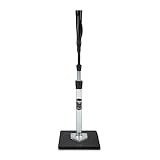
2. Tanner Tee The Original Batting Tee – Adjustable Pro Hitting Tee for Baseball & Softball, Steel Shaft, Composite Base, Hand-Rolled Rubber Top, 26"-43" Height
Overview:
The Tanner Tee is the original professional-style batting tee that has become the gold standard across baseball and softball. Trusted by more travel ball teams, colleges, and professional players than any other brand, this tee delivers consistent performance for serious training. Its simple yet effective design focuses on durability and realistic ball feedback without unnecessary complexity.
What Makes It Stand Out:
The patented Flextop technology is the hallmark feature, allowing hitters to feel the ball instead of the tee at contact. This creates a more authentic hitting experience that translates better to live pitching. The one-handed height adjustment (26"-43") makes it incredibly convenient for solo practice sessions, while the weather-resistant composite base provides stability without excessive weight.
Value for Money:
Priced at $89.99, the Tanner Tee offers strong value for serious players. It’s less expensive than the Jugs T while maintaining professional-grade quality. The steel shaft and hand-rolled rubber top are built to withstand thousands of swings, making it a smarter long-term purchase than budget options that need frequent replacement. For most players, this hits the sweet spot of quality versus cost.
Strengths and Weaknesses:
Pros include proven reliability, excellent portability, realistic ball feedback, and wide adoption by coaches. The composite base won’t scratch floors and provides adequate stability for most users. Cons include less stability than weighted models on aggressive swings, limited height range compared to some competitors, and a price that still exceeds casual players’ budgets.
Bottom Line:
The Tanner Tee remains the best all-around choice for most baseball and softball players. Its blend of durability, realistic feedback, and portability makes it ideal for anyone serious about improving their swing.
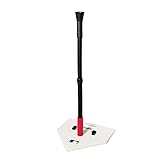
3. MLB Anti Tip Batting Tee
Overview:
The MLB Anti-Tip Batting Tee is an entry-level training tool designed specifically for beginners and tee-ball players learning the fundamentals of hitting. At under fifteen dollars, it removes the financial barrier to practice, allowing young athletes to develop basic swing mechanics without a significant investment. Its lightweight design prioritizes affordability and portability over advanced features.
What Makes It Stand Out:
The twist-and-lock height adjustment system (23"-33") offers surprising versatility for such a budget-friendly option, accommodating young hitters as they grow. The flexible post support absorbs mis-hits and prevents catastrophic breakage—a thoughtful feature for beginners still developing hand-eye coordination. Its anti-tip design, while basic, provides enough stability for the lighter swings of young children.
Value for Money:
At $14.83, this tee represents exceptional value for its target audience. It’s not built to last a lifetime, but it doesn’t need to be—it’s priced low enough to be considered disposable if it breaks after a season or two. For families with young children just testing interest in baseball, this eliminates the risk of expensive equipment going unused. No other tee comes close to this price point while maintaining MLB branding.
Strengths and Weaknesses:
Pros include unbeatable price, lightweight portability, simple operation, and adequate performance for beginners. The flexible post protects both bat and tee from damage. Cons are limited durability, restricted height range unsuitable for older players, less realistic feedback than premium tees, and stability issues with more powerful swings. It’s not designed for serious training.
Bottom Line:
Perfect for tee-ball players and absolute beginners under age eight. Buy this if you’re testing the waters or need a spare for backyard fun, but serious young athletes will quickly outgrow its capabilities.
4. Jugs Pro-Style 5-Point T - This Batting tee Comes Complete with a Weighted Rubber encased Base and 2 Fully Adjustable Extension Tubes. Teaches Correct Contact Points for Inside, Middle, and Outside.

Overview:
The Jugs Pro-Style 5-Point T is a specialized training system designed for advanced hitters focused on mastering contact points across the entire strike zone. Unlike standard tees that only offer center-placed balls, this innovative tool teaches proper mechanics for inside, middle, and outside pitches. It’s a coaching device rather than just a simple tee, aimed at developing complete hitters.
What Makes It Stand Out:
The five-point positioning system is revolutionary, allowing precise placement at various contact points to simulate different pitch locations. This transforms solo practice into strategic training, helping hitters learn to drive balls to all fields. The massive 17" x 11" quarter-inch steel base provides rock-solid stability without requiring additional weights, while the telescoping stems detach for transport despite the system’s complexity.
Value for Money:
At $239.95, this is a significant investment—more than double most premium tees. However, for serious travel ball organizations, college programs, or professional facilities, the specialized training capability justifies the cost. It essentially replaces multiple tees and provides drills impossible with standard models. For individual players, the value depends entirely on training commitment; casual hitters should look elsewhere.
Strengths and Weaknesses:
Pros include unmatched training versatility, incredible stability, durable construction, and professional-grade design. The ability to practice true inside/outside contact points is invaluable. Cons are the extremely high price, substantial weight and size limiting portability, and unnecessary complexity for beginners. It’s overkill for youth players still mastering basic contact.
Bottom Line:
An outstanding tool for serious coaches and advanced players committed to comprehensive strike zone training. The price is justified by unique capabilities, but only for those who will utilize its full potential.
5. TBT Batting Tee for Adults | Patent Approved Slider Base for Various Angles | 10 lbs Industrial Reinforced Steel Stem and Base | Adjusts 27-42” | Hand Rolled Flextop

Overview:
The TBT Batting Tee targets adult and advanced players seeking a heavy-duty training tool that can withstand intense daily use while offering specialized directional hitting practice. With its patent-approved slider base and 10-pound steel construction, this tee prioritizes durability and realistic game simulation over portability. It’s built for dedicated athletes serious about improving power and accuracy.
What Makes It Stand Out:
The patented rail and multi-point track system allows precise ball placement across the entire strike zone, enabling directional hitting drills that standard tees cannot support. The triangular steel base mimics a home plate, promoting proper stance alignment while providing exceptional stability. This combination transforms simple tee work into strategic, game-like training for driving balls to specific fields.
Value for Money:
At $129.99, the TBT tee positions itself between standard premium tees and ultra-specialized models. The heavy-duty construction justifies the price for adult players who break lighter tees, and the directional training features add value for those focused on situational hitting. While more expensive than basic pro models, it’s cheaper than the Jugs 5-Point while offering some similar benefits.
Strengths and Weaknesses:
Pros include extreme durability, innovative angle adjustments, realistic home plate design, and excellent stability. The solid iron construction withstands professional-level abuse. Cons are significant weight reducing portability, specialized features that may overwhelm youth players, and a price point still high for casual users. The height range (27"-42") is slightly limited compared to some competitors.
Bottom Line:
Ideal for adult players and serious high school athletes focused on directional hitting and power development. If you need a tee that will last years of intense practice and value strike zone versatility, this is an excellent choice.
Why Stability Matters in a Batting Tee
The Physics Behind Tee Tipping
Every swing generates rotational force and linear energy transfer that travels directly into the tee’s stem and base. A poorly designed tee acts like a lever, with the impact point creating a fulcrum that amplifies any instability in the base. The coefficient of restitution between ball and tee, combined with bat speed and attack angle, determines how much disruptive force gets transmitted downward. Professional-grade tees counteract this by engineering a low center of gravity and wide base footprint that distributes impact forces across a larger surface area, effectively neutralizing the lever effect before it can initiate tipping.
Impact on Training Consistency
When hitters subconsciously fear knocking over the tee, they alter their swing path, reduce bat speed, or pull punches at contact. This mental reservation creates training scars—flawed muscle memory that persists into live batting. Stable tees remove this psychological barrier, allowing hitters to attack the ball aggressively without equipment anxiety. The result is more authentic swing replication and better transference of practice skills to game situations.
Safety Considerations
A tipping tee isn’t just annoying; it’s a hazard. Falling equipment can roll into a hitter’s path, causing ankle injuries or creating tripping hazards during rapid-fire drills. Loose stems can become projectiles if the base tips while the ball is still loaded. For facilities running multiple cage sessions, unstable tees increase liability risks and equipment replacement costs.
Key Design Elements That Prevent Tipping
Base Weight and Distribution
The single most critical factor in tee stability is base weight, but not just total mass—it’s about weight distribution. Effective designs concentrate mass in the outer perimeter of the base, creating a stabilizing moment of inertia that resists rotational forces. Look for bases that feel heavier at the edges than the center when lifted. This perimeter-weighting technique is the same principle that keeps professional camera tripods stable in wind.
Base Shape and Geometry
Circular bases offer consistent resistance to tipping from any direction, while triangular or tripod designs can provide superior stability if the legs are angled correctly and weighted. Square bases often have dead zones where impact from certain angles creates maximum leverage. The base’s contact patch—how much of it actually touches the ground—is more important than its overall footprint. A 16-inch diameter base with a continuous rubber ring contacting the surface outperforms a 20-inch base with three small feet.
Material Composition
High-density polyethylene (HDPE) bases with integrated steel plates offer the best strength-to-weight ratio. Pure rubber bases can degrade and lose mass over time, while hollow plastic bases feel substantial initially but become buoyant and unstable in heat. The durometer rating of rubber components indicates hardness—higher ratings (70A+) resist deformation that can shift weight distribution during impact.
Weighted Base Technologies Explained
Steel Plate vs. Water-Filled Bases
Steel plate integration provides permanent, predictable weight that won’t shift or leak. Plates should be encapsulated in weatherproof housing to prevent rust. Water-filled bases offer portability advantages but suffer from sloshing dynamics that can destabilize during impact. The water’s movement creates a secondary inertial effect that sometimes helps but often hurts stability. For serious training, steel is the gold standard.
Integrated vs. Removable Weight Systems
Integrated weight systems are welded or molded permanently into the base, ensuring consistent performance and no maintenance. Removable weight systems allow customization but introduce failure points where connections can loosen. Threaded weight posts can strip, and slide-in plates can rattle loose over time. For institutional use where equipment gets abused daily, integrated designs prove more reliable.
Portability vs. Stability Trade-offs
Every stable tee represents a compromise between mass and mobility. The most stable tees weigh 15-25 pounds, making them impractical for coaches who walk to neighborhood parks. Innovative designs use detachable base plates that allow separating the weighted component from the stem for transport, or feature ergonomic handles positioned at the balance point to make heavy bases manageable.
The Role of Adjustable Height Mechanisms
Telescoping vs. Pin-Lock Systems
Telescoping systems with internal friction locks can develop play over time, creating wobble that amplifies tipping forces. External pin-lock systems with multiple holes provide more positive engagement but introduce stress risers where the stem can bend. The most stable designs use dual-locking mechanisms—both friction and pin—creating redundancy that maintains stability even as components wear.
Height Adjustment and Stability Correlation
As tee height increases, the center of gravity rises exponentially, reducing stability. Quality tees engineer this relationship by tapering the stem material thicker at the base and thinner at the top, maintaining strength where it’s needed while minimizing weight aloft. The adjustment range should match your training needs—excessive maximum height you never use just adds instability.
Wobble Prevention at Maximum Extension
At full extension, stem flex becomes the primary instability source. Look for internal reinforcement sleeves that engage when the stem extends beyond 30 inches. These hidden sleeves, often made of aluminum or carbon fiber, dramatically increase rigidity without adding significant weight to the upper assembly.
Material Choices for Maximum Durability
Heavy-Duty Rubber Compounds
Professional-grade tees use rubber compounds with UV inhibitors and anti-ozone additives that prevent cracking and hardening. The Shore A hardness should exceed 65 for base components, while the ball rest needs softer 40-50 durometer rubber to absorb impact without rebounding. This differential hardness prevents energy from reflecting back into the stem as destabilizing force.
UV-Resistant Polymers
Polymers like polyurethane and UV-stabilized HDPE resist degradation that makes bases brittle and lightweight. Cheaper ABS plastic becomes chalky and loses mass through surface erosion after one summer. Quality materials maintain their specific gravity and structural integrity through years of outdoor exposure.
Metal Components and Corrosion Resistance
Stainless steel hardware is non-negotiable for any tee exposed to moisture. Grade 304 stainless offers adequate corrosion resistance, but marine-grade 316 is worth the upgrade in humid climates. All threaded connections should have nylon insert lock nuts that resist vibration loosening—a common cause of developing wobble.
Surface Grip and Traction Features
Rubberized Base Coatings
The base’s bottom surface needs tacky, high-friction rubber that grips concrete, asphalt, turf, and even wooden batting platforms. This grip layer should be replaceable since it wears faster than other components. Some designs use reversible base rings that can be flipped when one side becomes smooth.
Textured Bottom Patterns
Micro-texturing patterns like cross-hatching or concentric rings increase surface area contact without creating pressure points that can rock on uneven surfaces. The pattern depth matters—too shallow and it polishes smooth quickly; too deep and it reduces contact patch size. Optimal patterns are 1-2mm deep with rounded valleys that don’t trap dirt.
Indoor vs. Outdoor Surface Compatibility
Indoor facilities need non-marking rubber compounds that won’t scuff finished floors while maintaining grip. Outdoor tees require more aggressive tread patterns that bite into dirt and grass. Universal designs use interchangeable base pads—smooth for indoors, textured for outdoors—that bolt onto the same weighted core.
Stem Flexibility vs. Rigidity: Finding the Balance
Flexible Stem Technology
Some modern tees incorporate engineered flex into the stem itself, allowing it to absorb impact energy like a fishing rod. This flex must be directional—bending backward on contact but resisting side-to-side movement that causes tipping. The flex point should be low, near the base, to prevent creating a long lever arm. Carbon fiber composites excel here, offering tuned flexibility with exceptional strength-to-weight ratio.
Rigid Stem Construction
Traditional rigid stems provide maximum feedback to the hitter—any mishit vibrates distinctly through the bat. These work best for contact hitters working on precision. The drawback is that all impact energy transmits directly to the base, requiring exceptional stability downstream. Thick-walled steel or aluminum tubing with internal gusseting provides the necessary rigidity.
Hybrid Designs
The most advanced tees use hybrid construction—rigid lower stem with a flexible upper section. This isolates impact forces from the base while still providing realistic ball feedback. The junction between rigid and flexible sections becomes a critical engineering point, often reinforced with overlapping sleeves and redundant fasteners.
Weather and Environmental Resistance
Wind Resistance Features
For outdoor use, a tee’s profile matters as much as its weight. Low-profile ball rests and aerodynamic stem shapes reduce sail effect in crosswinds. Some designs include optional wind skirts—flexible flaps that attach to the base perimeter, adding both weight and wind resistance without permanent bulk.
Water Drainage Systems
Bases that collect water become unstable and heavy in unwanted ways. Quality designs include hidden drainage channels that direct water away from the weight chamber. Stem tubes should be either completely sealed or have weep holes at the lowest point to prevent internal condensation that can cause rust or freeze expansion.
Temperature Fluctuation Tolerance
Extreme cold makes plastics brittle; extreme heat makes them soft. Professional tees are tested across temperature ranges, typically -20°F to 120°F. Look for materials with glass transition temperatures far outside normal use ranges. Rubber components should maintain their durometer rating across at least a 60-degree temperature span.
Assembly and Maintenance for Long-Term Stability
Proper Setup Techniques
Even the best tee will tip if assembled incorrectly. The stem must seat fully into the base socket with no gap. Tighten all fasteners in a star pattern, not sequentially around the base. Place the tee on the most level area of your hitting surface—never try to stabilize a wobbly tee by placing shims under the base, as this creates pivot points that amplify tipping.
Regular Maintenance Routines
Inspect the base-stem connection monthly for developing play. Clean the base bottom weekly to maintain grip. Check rubber components for hardening or cracking quarterly. Lubricate height adjustment mechanisms with dry Teflon spray, never oil-based products that attract dirt. Tighten all fasteners every 20 hours of use—vibration inevitably loosens them.
Tightening and Adjustment Schedules
Create a maintenance log for institutional equipment. Mark each tee with a unique identifier and track usage hours. After 50 hours, disassemble and inspect all wear points. Replace lock washers and nylon inserts annually—they lose their grip over time. Stem tubes can develop invisible stress cracks; flex test them by applying moderate pressure while listening for creaking sounds.
Price vs. Performance: What to Expect
Budget-Friendly Stable Options
Quality stable tees start around $75-100. In this range, expect steel-plate weighted bases of 8-12 pounds and simple pin-lock adjustments. These will resist tipping from average high school hitters but may struggle with elite power. The compromise is usually material longevity—expect 2-3 seasons of heavy use before base degradation affects stability.
Premium Stability Features
Above $150, tees incorporate advanced materials like carbon fiber, marine-grade hardware, and precision-machined components. These designs maintain stability under collegiate and professional power levels. The investment pays off in consistency—hitters can trust the equipment completely, allowing mental focus on technique rather than equipment management.
Long-Term Value Considerations
Calculate cost-per-swing instead of sticker price. A $200 tee that lasts 5 years and 10,000 swings costs $0.02 per use. A $50 tee that tips constantly and needs replacement yearly actually costs more in frustration and replacement. Institutional buyers should factor in warranty coverage—quality manufacturers offer 3-5 year warranties on stability-related components.
Common Mistakes That Cause Tees to Tip
Improper Base Placement
Never place a tee on the plate itself—batters’ boxes are designed to be soft and will compress unevenly. Instead, position the tee on the firm ground beside the plate. For indoor turf, place a 12-inch square of plywood under the base to distribute load and prevent the tee from sinking into the padding.
Overloading the Stem
Hanging bat weights or training aids on the stem raises the center of gravity and creates off-axis loads. If you need additional resistance for specific drills, use bases designed with integrated anchor points, never the stem itself. Even hanging a batting glove on the stem can shift the balance point enough to reduce stability.
Ignoring Wear and Tear
A base that was stable when new can become a tip hazard as rubber feet wear down or internal weights shift. Perform the “wobble test” monthly: extend the stem to maximum height and apply 5 pounds of side pressure at the ball rest. Any perceptible movement indicates developing instability that will worsen under impact.
Training Drills That Test Tee Stability
Power Hitting Drills
The true stability test is the inside-out power swing. Set up for deep contact points and swing at 90% effort. If the tee remains planted, it’s stable enough for game-speed training. Progressive overload drills—starting at 50% effort and increasing 10% per set—help identify the exact force threshold where stability fails.
Contact Point Precision Work
Stable tees allow for extreme contact point work—setting balls on the outer edge of the plate and driving them to opposite field. This requires the tee to absorb glancing blows without rotating. Test this by intentionally hitting the bottom half of the ball with an uppercut swing; quality tees will flex but not fall.
Advanced Angle Training
For launch angle work, hitters need to trust they can swing up through the ball without equipment failure. Elevated tee setups for high-ball training place maximum stress on stability. The tee must resist both the initial impact and the follow-through momentum as the bat continues upward.
Portability Considerations for Stable Tees
Transportation Solutions
Heavy stable tees don’t have to be immobile. Look for designs with integrated wheels that engage when you tilt the base, allowing rolling transport without lifting. Some models split into two components—base and stem—that connect with quick-release pins, making even 25-pound bases manageable by separating the load.
Storage and Space Efficiency
Facilities with limited storage need tees that nest or stack. Some stable designs feature removable stems that store inside the hollow base cavity, reducing storage volume by 60%. Wall-mount brackets designed specifically for weighted bases keep storage rooms organized and prevent base distortion from stacking.
Travel-Friendly Stable Designs
For teams on the road, consider “field kits” that include a compact but dense base (often using tungsten powder instead of steel for size reduction) and a multi-piece stem. While not as stable as full-size models, these designs maintain 80% of the stability in 50% of the transport weight.
Warranty and Quality Assurance Indicators
Stability-Specific Warranty Terms
Manufacturers confident in their stability engineering offer explicit coverage for “tip-resistance failure.” Read the fine print—some warranties cover structural breakage but not performance degradation. The best warranties guarantee stability metrics for the full coverage period, often including replacement if the tee develops wobble beyond specified tolerances.
Certification Standards
While no universal batting tee standard exists, look for ISO 9001 manufacturing certification or ASTM testing for material durability. Some premium brands subject tees to MIL-STD-810 environmental testing, ensuring stability in extreme conditions. These certifications indicate engineering rigor beyond marketing hype.
Customer Support Quality
Call the manufacturer’s support line before purchasing. Ask specific technical questions about base weight distribution and center of gravity height. Knowledgeable support teams indicate companies that engineer rather than just assemble. Brands offering video setup guides and maintenance tutorials demonstrate commitment to long-term performance.
Making Your Final Decision
Assessing Your Specific Needs
Youth players under 12 need stability for different reasons than college power hitters. Match the tee’s stability rating to your peak bat speed and strength levels. Consider your primary training surface—concrete demands different grip characteristics than turf. Account for climate if training outdoors year-round.
Testing Before Buying
Whenever possible, test tees in person. Bring your own bat and take 20 full-speed swings. Observe not just if it tips, but how it recovers from near-tips. Quality tees might rock slightly but settle immediately without walking across the surface. Check how easily you can reset it with your foot between swings—efficient practice requires one-touch stability restoration.
Future-Proofing Your Investment
Buy a tee that grows with the hitter. Stability requirements increase as players get stronger, so purchasing a tee rated for the next level up ensures you won’t outgrow it in one season. Modular designs that allow upgrading base weights or stem rigidity provide the best long-term value.
Frequently Asked Questions
How much should a stable batting tee weigh?
For high school and above hitters, look for bases weighing 12-18 pounds. Youth players can use 8-10 pound bases effectively. The key isn’t just weight but how it’s distributed—perimeter-weighted 12-pound bases outperform centered-weight 20-pound designs.
Can I make my existing tee more stable?
Adding weight to a poorly designed base rarely solves the underlying problem. You can bolt steel plates to the bottom of some bases or fill hollow cavities with sand, but this voids warranties and often creates new instability points. It’s usually more cost-effective to invest in a properly engineered stable tee.
Do flexible stems help or hurt stability?
Properly engineered flexible stems improve stability by absorbing impact energy before it reaches the base. However, cheap flexible stems that bend in all directions create unpredictable rebound that can actually cause tipping. Look for directional flex technology that only gives in the swing path direction.
What’s the most stable base shape?
For universal use, circular bases with continuous ground contact provide the most consistent stability from all swing angles. Tripod designs can be equally stable but only when the hitter contacts from predictable directions, making them better for individual training than team settings.
How often should I replace my batting tee for stability?
With proper maintenance, a quality stable tee should last 5-7 years. Replace it when the base develops cracks, the stem shows permanent bending, or when the wobble test reveals movement exceeding 1/8 inch at the ball rest. Institutional users should budget for replacement every 3-4 years under heavy use.
Are expensive tees really more stable?
Price correlates with stability up to about $150. Beyond that, you’re paying for durability, brand reputation, and marginal performance gains. A $120 tee is typically 80% as stable as a $250 model—sufficient for most users. The premium is worthwhile only for professional facilities or elite power hitters.
Can stable tees be used on uneven grass fields?
Quality stable tees handle moderate unevenness through flexible base rings that conform to surface contours. For very uneven surfaces, place a 2x2 foot square of artificial turf under the base to create a level platform. Never use adjustable legs or shims, as these create pivot points.
What’s better: steel or concrete-filled bases?
Steel offers better vibration damping and won’t crack if dropped. Concrete is denser and cheaper but can develop micro-fractures that eventually cause crumbling. For portable tees, steel is superior. For permanent outdoor installations, properly sealed concrete works well.
How do I test stability in a store?
Extend the stem to your typical hitting height and press down on the ball rest with about 10 pounds of force at a 45-degree angle. The base should not rock or lift any edge. Then tap the stem sharply with your palm—a stable tee will vibrate briefly then settle; an unstable one will continue oscillating.
Will a stable tee damage my bat?
Properly designed stable tees actually protect bats by providing consistent, predictable feedback. The ball rest should be softer than the bat barrel, allowing the bat to drive through contact without abrupt stopping. Avoid tees with metal ball rests or overly rigid stems that create bat-stinging vibration.