After twenty miles on the water, when your shoulders begin to burn and each stroke feels like moving through molasses, equipment choices transform from preferences into survival strategies. Long-distance canoeists understand that efficiency isn’t about brute force—it’s about preserving energy, protecting joints, and maintaining form when fatigue sets in. This is where bent-shaft paddle geometry shifts from a racing curiosity into an essential tool for marathon paddlers, expedition trippers, and anyone serious about covering serious mileage.
The subtle curve in a bent-shaft paddle isn’t a marketing gimmick; it’s a biomechanical solution refined through decades of competitive paddling and engineering evolution. For canoeists logging 30, 50, or 100+ miles in a single journey, that gentle bend can reduce strain on wrists and shoulders by up to 30% while improving forward stroke efficiency through optimized blade angle. But not all bent-shaft designs serve the same purpose, and choosing the wrong configuration can hinder performance rather than enhance it. Let’s explore what makes these paddles indispensable for endurance paddling and how to select the ideal design for your body, boat, and expedition goals.
Top 10 Bent-Shaft Paddles for Long-Distance Canoeists
Detailed Product Reviews
1. Accent Paddles Beat Carbon Canoe Adjustable 50in-56in Carbon Shaft 8-Degree Bent Carbon Reinforced Nylon Blade Ergo LeverLock Handle
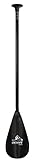
Overview: The Accent Paddles Beat Carbon Canoe Paddle targets recreational and intermediate canoeists seeking ergonomic comfort without premium pricing. Weighing 26 ounces with a carbon shaft and carbon-reinforced nylon blade, it balances weight savings with practical durability. The adjustable 50-56 inch length accommodates various paddler heights and canoe widths, making it versatile for family use or sharing between paddlers.
What Makes It Stand Out: The 8-degree bent shaft design is remarkable at this price point, promoting natural wrist alignment that reduces fatigue during extended trips. The Ergo LeverLock adjustment system enables tool-free length changes on the water—a convenience rarely found in sub-$200 paddles. The carbon shaft delivers significant weight reduction over aluminum alternatives, while the 95 square-inch nylon blade withstands rock impacts better than pure carbon, ideal for shallow or rocky waterways.
Value for Money: At $149.95, this paddle occupies a compelling sweet spot. You’re getting premium shaft material and ergonomic features typically reserved for $250+ paddles. The carbon-reinforced nylon blade keeps costs reasonable while offering adequate stiffness for most recreational paddling. While not ultralight, it significantly outperforms budget options and competes admirably with mid-tier competitors, making it an intelligent upgrade from basic models.
Strengths and Weaknesses: Strengths include the ergonomic bent shaft, reliable LeverLock system, durable blade material, and impressive weight-to-price ratio. The adjustable range adds versatility for different paddling conditions. Weaknesses involve the nylon blade’s slightly less efficient power transfer compared to full carbon, and 26 ounces may feel heavy for all-day touring purists. The canoe-specific design limits crossover appeal for kayak owners.
Bottom Line: Ideal for weekend warriors and developing paddlers wanting ergonomic benefits and reliable performance without breaking the bank. Serious expedition canoeists should invest in full-carbon models, but for most recreational users, this paddle delivers exceptional value that will noticeably improve comfort and efficiency on the water.
2. AQUA BOUND Tango Fiberglass Bent Shaft 2-Piece Kayak Paddle-GreenTide-230cm

Overview: The AQUA BOUND Tango Fiberglass Bent Shaft represents a premium offering for dedicated kayakers who demand elite performance. Constructed with a T-700 carbon shaft and compression-molded fiberglass blades, this paddle prioritizes lightweight efficiency and responsive power transfer. The extensive 210-250cm sizing range accommodates virtually any paddler height and kayak width combination, while the 2-piece design simplifies transport and storage.
What Makes It Stand Out: The T-700 carbon shaft places this paddle in elite company, offering exceptional stiffness-to-weight ratio that minimizes fatigue on marathon paddling sessions. The compression-molded fiberglass blades provide an optimal balance of lightweight performance and durability, while the bent shaft geometry promotes proper paddling mechanics and long-term wrist health. The precision-engineered ferrule ensures a wobble-free connection that feels like a single-piece paddle.
Value for Money: At $474.95, this is a significant investment justified for serious enthusiasts. Comparable paddles from Werner or AT often exceed $500, making the Tango competitively priced in the high-performance category. The premium materials and measurable performance gains deliver tangible benefits that casual paddlers won’t appreciate, but dedicated kayakers will immediately notice in reduced fatigue and improved stroke efficiency during multi-hour excursions.
Strengths and Weaknesses: Strengths include outstanding weight reduction, superior power transfer, extensive size customization, and portable two-piece design. The bent shaft significantly reduces joint strain, while the compression-molded blades offer excellent catch and release. Weaknesses center on the premium price, which exceeds recreational paddlers’ budgets. The fiberglass blade requires more care than nylon alternatives and may chip if struck against rocks frequently.
Bottom Line: A superb choice for avid kayakers, expedition tourers, and fitness paddlers who prioritize performance and ergonomics above all else. Casual users should opt for less expensive options, but serious paddlers will find this paddle worth every penny, delivering professional-grade performance that enhances every stroke.
Understanding Bent-Shaft Paddle Geometry
The signature curve of a bent-shaft paddle represents more than aesthetic choice—it’s a calculated engineering decision that fundamentally alters how force transfers from your body to the water. Unlike traditional straight-shaft paddles that require wrist articulation to achieve optimal blade angle, bent-shaft designs position the blade automatically for maximum catch and minimal flutter.
The Physics Behind the Bend
The bend typically occurs 12-18 inches from the grip, creating a forward angle of 10-14 degrees relative to the shaft. This geometry aligns the blade perpendicular to the water’s surface during the power phase of your stroke without requiring you to break your wrist. The result? A cleaner entry, reduced cavitation, and a stroke path that naturally follows the canoe’s centerline. For long-distance paddlers, this means maintaining a high cadence with less muscular correction, preserving critical energy reserves for hour six, not just hour one.
Blade Angle and Stroke Efficiency
The angle of the bend directly influences where in your stroke you generate peak power. A 10-degree bend suits paddlers with a slower, more powerful stroke rate—common in heavily loaded expedition canoes. A 12-14 degree bend favors higher cadence techniques used in marathon racing and fast touring. The key is matching the angle to your natural rhythm; forcing yourself to adapt to an aggressive bend when your biomechanics favor a gentler angle will create inefficiency and increase injury risk.
Why Long-Distance Canoeists Choose Bent-Shaft Designs
Endurance paddling demands equipment that works with your body, not against it. After thousands of repetitive strokes, even minor misalignments compound into significant fatigue and potential injury. Bent-shaft paddles address the specific pain points that emerge during multi-day expeditions or ultra-distance events.
Reducing Joint Strain Over Miles
Every time you articulate your wrist to position a straight-shaft paddle blade, you activate small stabilizer muscles and place shear stress on tendons. Over 10,000 strokes—roughly two hours of steady paddling—this micro-trauma accumulates. Bent-shaft designs keep your wrist in a neutral position, shifting the workload to larger muscle groups like your lats and core. Paddlers transitioning to bent-shaft designs consistently report reduced carpal tunnel symptoms and decreased elbow tendinitis after long days on the water.
Maximizing Power Transfer
The forward blade angle allows you to bury the entire blade immediately at the catch, eliminating the “setup” portion of the stroke where you’re essentially moving water sideways rather than propelling the canoe forward. This instant engagement translates to more distance per stroke—a critical metric when you’re measuring your day in tens of miles. The design also encourages a more vertical shaft angle, which reduces the tendency to sweep the bow off course, minimizing corrective steering strokes that sap energy.
Key Features to Evaluate
Selecting a bent-shaft paddle requires analyzing multiple variables that interact in complex ways. The “best” paddle depends entirely on your anthropometrics, paddling style, and typical water conditions.
Shaft Angle: Finding Your Sweet Spot
Most manufacturers offer bends from 10 to 14 degrees. Taller paddlers often benefit from more aggressive angles because their higher hand position naturally creates a shallower shaft entry. Conversely, shorter paddlers or those in narrow solo canoes may find extreme angles force them to hunch forward. Test paddling different angles on flat water for at least 30 minutes each reveals which geometry lets you maintain the most relaxed grip and consistent blade depth.
Materials Matter: Weight vs. Durability
A paddle that weighs 8 ounces less might seem trivial until you multiply that by 20,000 strokes per day. The ultralight advantage becomes exponential over distance. However, featherweight materials often sacrifice impact resistance—critical when navigating rocky rivers or performing rocky landings. The ideal material balances swing weight, stiffness, and the ability to withstand the inevitable encounters with shoreline hazards.
Blade Shape and Surface Area
Long-distance paddles typically feature blades 7-8.5 inches wide and 18-20 inches long. Oversized blades deliver more power but increase joint loading and air resistance during recovery. For all-day paddling, a medium-sized blade with a slight dihedral (center ridge) provides the best compromise between catch efficiency and flutter resistance. Asymmetrical blade shapes further enhance clean entry and exit, reducing the “flutter” that forces grip tension.
Grip Design for Extended Use
The grip must fit your hand like a well-worn tool. Palm grips distribute pressure across the entire hand, reducing hot spots during marathon sessions. T-grips offer more control for technical water but concentrate pressure on smaller surface areas. For pure distance work, a contoured palm grip with a slight flare at the top prevents slippage while allowing subtle hand repositioning without losing control.
Length Considerations for Different Water Types
Paddle length formulas change with bent-shaft designs. The forward angle effectively increases reach, so most paddlers need a paddle 2-4 inches shorter than their straight-shaft equivalent. In flatwater touring, a shorter paddle encourages a higher, more efficient shaft angle. For river tripping with frequent shallow water, a slightly longer paddle provides necessary reach without sacrificing the biomechanical benefits of the bend.
The Biomechanics of Efficient Paddling
Owning a premium bent-shaft paddle doesn’t automatically improve efficiency—you must adapt your technique to leverage the geometry. The learning curve typically spans 3-5 paddling sessions before the new stroke pattern becomes automatic.
Stroke Technique with Bent-Shaft Paddles
The key adjustment involves letting the paddle do the work. Resist the urge to “steer” the blade; instead, focus on a simple forward push with your top hand while pulling with your lower hand. The bend automatically feathers the blade into position. Your catch should be silent—if you hear a splash, you’re either punching down or reaching too far forward. The power phase remains vertical and compact, ending when your lower hand reaches your hip. Extending past this point engages the bend geometry incorrectly and reduces efficiency.
Body Positioning for Marathon Sessions
Bent-shaft paddles reward an aggressive, forward-leaning posture common in marathon canoeing. Sit upright with your weight centered, rotating from your hips rather than reaching with your arms. This torso rotation generates power while keeping your arms relatively static, reducing fatigue. The paddle’s geometry complements this rotation, keeping the blade square to your direction of travel throughout the power phase. Many distance paddlers pair bent-shaft paddles with a foot brace system to maximize this rotational power transfer.
Material Science Deep Dive
Understanding material properties helps justify investment and informs maintenance practices. Each material family offers distinct advantages for specific expedition profiles.
Carbon Fiber: The Ultralight Advantage
High-modulus carbon fiber shafts and blades deliver the lowest swing weight—often under 18 ounces total. The stiffness translates to immediate power transfer with zero flex lag, crucial for maintaining high cadence. However, carbon’s brittleness means it fails catastrophically rather than bending. For remote expeditions, consider carbon shafts with fiberglass-wrapped blades for impact resistance. The cost premium (often 2-3x wood) pays dividends when you’re 50 miles from your takeout and your shoulders still feel fresh.
Wood: Traditional Performance
Laminated wood shafts with fiberglass-clad blades offer a sublime feel that synthetic materials struggle to replicate. Wood absorbs vibration and provides subtle flex that some paddlers find more comfortable over 8+ hour days. Modern epoxy coatings and fiberglass sheathing have largely solved durability concerns, though wood requires more diligent maintenance. Weight typically runs 22-28 ounces—noticeable but not prohibitive for most expedition paddlers. The aesthetic and tactile qualities make wood a favorite for those who view their paddle as a lifetime tool.
Composite Blends: Balanced Engineering
Fiberglass shafts with carbon-reinforced blades represent the sweet spot for many long-distance canoeists. These hybrids offer 80% of carbon’s weight advantage with significantly improved impact durability. The slight flex in fiberglass reduces joint shock while the carbon blade face maintains crisp catch characteristics. Price points typically fall between wood and pure carbon, making this category accessible for serious recreational paddlers upgrading from entry-level equipment.
Customization and Fit
Off-the-shelf paddles serve average dimensions, but long-distance efficiency demands personalized fit. Small adjustments yield disproportionate benefits over extended use.
Measuring for Your Ideal Paddle
The traditional “nose-to-toe” measurement method fails with bent-shaft geometry. Instead, sit in your canoe on flat water and hold the paddle vertically with the blade fully submerged. Your top hand should rest comfortably at forehead height with a slight bend in your elbow. For bent-shaft paddles, subtract 2 inches from this measurement to account for the forward angle. Factor in your canoe’s width and seat height—higher seats require shorter paddles to maintain optimal shaft angle.
Fine-Tuning Feathering and Offset
Most bent-shaft paddles come with a fixed blade angle, but some high-end models offer adjustable ferrules that allow micro-adjustments. Experiment with 1-2 degree changes over multiple sessions. Track your average speed and perceived exertion. The right angle disappears in your hands—you shouldn’t consciously feel the bend working; you should simply notice less fatigue and more consistent tracking.
Maintenance for Longevity
A premium paddle represents a significant investment that justifies meticulous care. Neglect accelerates wear exponentially, especially at the bend stress point and blade edges.
Rinse with fresh water after every use, especially after saltwater exposure. Inspect the shaft-blade junction monthly for stress cracks—this is where flex concentrates. Sand and re-varnish wood shafts annually, paying special attention to the grip area where sweat degrades finishes. Store paddles vertically or suspended, never leaning against a wall where the bend experiences constant pressure. For carbon paddles, avoid prolonged sun exposure which can degrade UV-sensitive resins, weakening the structure over time.
Cost vs. Performance Analysis
Price correlates with performance, but diminishing returns appear quickly. Understanding value tiers helps allocate budget effectively.
Entry-level bent-shaft paddles ($80-150) typically use aluminum shafts and plastic blades. While functional, their weight (30+ ounces) and flex characteristics negate many efficiency benefits for serious distance work. Mid-range options ($200-350) offer wood or fiberglass construction with meaningful weight savings and proper biomechanical design—this is the minimum investment tier for paddlers logging 200+ miles annually. Premium paddles ($400-600+) deliver ultralight performance and exotic materials justified only for competitive racers or expedition professionals where every ounce matters over weeks of continuous use.
When Bent-Shaft Isn’t Ideal
Despite their advantages, bent-shaft paddles aren’t universal solutions. Technical whitewater demands the instant bracing and maneuverability of straight-shaft designs. Solo canoeists using sit-and-switch technique may find the fixed blade angle limits stroke versatility. Paddlers with pre-existing shoulder injuries should consult a sports physiotherapist—some movement patterns actually benefit from the wrist articulation straight shafts require. Additionally, stern paddling in heavily loaded tripping canoes often needs the corrective strokes that bent-shaft geometry makes awkward.
Transitioning from Straight-Shaft
The adaptation period frustrates many paddlers who expect immediate improvement. Your muscle memory will fight the new geometry for the first few outings.
Start with 30-minute sessions focusing purely on technique, not distance. Expect your forward stroke to feel “off” for 2-3 paddles as your body unlearns wrist articulation. Many paddlers benefit from temporarily shortening their paddle 1-2 inches during transition to prevent reaching. Film yourself from the side—your shaft angle should be more vertical with the bent-shaft design. Resist the temptation to switch back and forth between paddle types; commit exclusively to the bent-shaft for at least 10 paddling days to build proper neural pathways.
Frequently Asked Questions
1. Will a bent-shaft paddle automatically make me faster?
Not immediately. The paddle reduces fatigue and improves efficiency, which allows you to maintain higher average speeds over long distances. Most paddlers see measurable speed improvements after 2-3 weeks of technique adaptation, not from the paddle alone.
2. How do I know if my bent-shaft paddle is the right length?
The paddle should allow you to sit upright with the blade fully submerged and your top hand at forehead level. If you’re reaching forward or hunching down to get a clean catch, it’s too long. If the blade exits the water before your lower hand reaches your hip, it’s too short.
3. Can I use a bent-shaft paddle for solo canoeing?
Yes, but with considerations. Bent-shaft paddles excel for forward stroke efficiency but limit stroke versatility needed for solo maneuvers like draws and pries. Many soloists carry a bent-shaft for open water and a straight-shaft for technical sections.
4. What’s the ideal blade size for a 100-mile expedition?
Medium blades (7.5-8 inches wide) with moderate surface area provide the best balance. Oversized blades increase joint stress and air resistance during recovery, while undersized blades require unsustainably high stroke rates to maintain speed.
5. How long does a quality bent-shaft paddle last?
With proper care, a carbon or wood paddle lasts 5-10 years of heavy use. The bend itself doesn’t weaken over time if stored properly. Blade edges and grip areas show wear first. Professional paddlers often replace paddles every 2-3 seasons for performance reasons, not failure.
6. Are bent-shaft paddles worth the extra cost for casual paddlers?
If you paddle more than 50 miles annually or experience wrist/shoulder discomfort, the investment pays dividends. For occasional 2-3 hour trips, a quality straight-shaft paddle serves adequately. The benefits compound with distance.
7. Can I repair a cracked bent-shaft paddle?
Minor cracks in fiberglass or carbon can be repaired with marine-grade epoxy and cloth, though the paddle will never regain original stiffness. Cracks at the bend are structural failures requiring professional repair or replacement. Wood paddles are more repairable by experienced craftsmen.
8. Do bent-shaft paddles work in windy conditions?
The forward blade angle actually reduces wind resistance during recovery compared to straight-shaft paddles held at similar angles. However, the fixed angle can make corrective strokes less effective in strong crosswinds. Technique adjustments compensate for this limitation.
9. Should I choose a one-piece or two-piece bent-shaft paddle?
Two-piece designs with ferrules add 2-4 ounces but provide packability for fly-in expeditions and allow subtle angle adjustments. One-piece paddles offer marginally better feel and zero maintenance concerns at the joint. Most serious distance paddlers prefer one-piece for primary use.
10. How do I transition my paddling partner to bent-shaft if we’re a tandem team?
Both paddlers should transition simultaneously to maintain stroke synchronization. Practice on flat water with a focus on timing. The stern paddler may need to adjust their correction stroke technique more dramatically than the bow paddler, who benefits immediately from the forward stroke efficiency.