If you’ve been grinding away at the same plate-loaded movements and watching your progress stall, it’s time to introduce a game-changer to your training arsenal. Variable resistance training with chains isn’t just a flashy technique reserved for elite powerlifters—it’s a scientifically-backed method that can help any serious lifter smash through plateaus, protect their joints, and build explosive strength that translates directly to real-world performance. Unlike static weight that stays constant throughout your range of motion, chains create a dynamic load that challenges your muscles differently at every point in the lift.
Understanding how to select and implement the right chain set can make the difference between a transformative training tool and an expensive pile of metal collecting dust in your garage. This comprehensive guide will walk you through everything you need to know about choosing chain sets that match your training goals, space constraints, and budget—without getting bogged down in brand-specific hype.
Top 10 Chain Sets for Strength Lifts
Detailed Product Reviews
1. Weight Lifting Chains Set of (2) 1/2 x 5ft Galvanized Steel 28lbs

Overview: These 1/2-inch galvanized steel chains provide 28 pounds of accommodating resistance for serious strength training. Measuring five feet each, this pair attaches to barbells for dynamic overload during squats, bench presses, and deadlifts. The galvanized finish ensures durability in humid gym environments, making them suitable for both home and commercial facilities. Designed for intermediate lifters seeking to break through plateaus, these chains deliver progressive resistance that increases as you drive through the concentric phase of each lift.
What Makes It Stand Out: The rust-resistant galvanized coating distinguishes these from standard steel chains, extending lifespan significantly. At 28 pounds total, they offer a moderate weight increment perfect for learning chain mechanics without overwhelming your primary lift. The five-foot length provides sufficient ground contact for most lifters under six feet tall, ensuring the chains deload completely at the bottom position. This specific weight and size combo hits the sweet spot for athletic development and powerbuilding applications.
Value for Money: At $119.95, these chains cost approximately $4.28 per pound—a reasonable mid-range price point. While not the cheapest option available, the corrosion-resistant finish eliminates replacement costs associated with rusted equipment. Compared to purchasing chains from industrial suppliers, this set includes proper specifications for lifting and saves you the hassle of sourcing compatible hardware. The investment pays dividends in training variety and strength gains that barbells alone cannot provide.
Strengths and Weaknesses: Pros: Rust-resistant galvanized finish; optimal 28lb weight for intermediate lifters; versatile for all main lifts; durable forged steel construction; no additional hardware required.
Cons: 5ft length may be insufficient for taller lifters; 1/2" thickness provides less dramatic accommodating resistance than heavier options; no included carabiners or connector chains; weight is fixed with no adjustment options.
Bottom Line: These chains deliver excellent quality for lifters ready to implement accommodating resistance without overspending. The galvanized finish and moderate weight make them ideal for home gym enthusiasts seeking durable, low-maintenance equipment. If you’re under six feet tall and want to add progressive overload to your main lifts, this set deserves serious consideration.
2. Titan Fitness Pair of 6 Foot 5/8" Heavy Steel Chains, Weightlifting Chains for Resistance, 20.5 LB Each

Overview: Titan Fitness delivers a robust accommodating resistance solution with this pair of 6-foot, 5/8-inch steel chains weighing 41 pounds total. Each chain includes integrated carabiners for quick attachment to connector chains, enabling proper low-hang positioning on barbells. This setup excels at building explosive power and acceleration through variable resistance—lighter at the bottom, heavier at lockout. Ideal for strength athletes targeting one-rep max improvements on squats, bench presses, and deadlifts.
What Makes It Stand Out: The six-foot length accommodates lifters up to 6'4", ensuring complete deloading in the hole for most users. The included carabiners and compatibility with connector chains demonstrate thoughtful design for immediate gym floor use. At 5/8-inch thickness, these chains provide substantial accommodating resistance without being unwieldy. Titan’s specification of 20.5 pounds per chain offers precise loading calculations for serious programming, crucial for competitive powerlifters and athletes.
Value for Money: Priced at $113.99 for 41 pounds, you’re paying $2.78 per pound—excellent value in the specialty equipment market. Titan Fitness consistently undercuts competitors while maintaining commercial-grade quality. The included attachment hardware saves an additional $15-20 compared to buying components separately. For the length, weight, and included accessories, this represents one of the best price-to-performance ratios available for accommodating resistance training tools.
Strengths and Weaknesses: Pros: Generous 6ft length suits tall lifters; includes carabiners for easy setup; 41lb total provides significant overload; 5/8" thickness offers ideal resistance curve; excellent price per pound.
Cons: Requires separate connector chains for optimal setup (not included); 5/8" links may be noisy on metal racks; finish may rust over time without maintenance; weight may be excessive for novice lifters.
Bottom Line: These Titan chains offer outstanding value for serious strength athletes. The length and weight specifications cater to experienced lifters seeking maximum training stimulus. If you’re ready to invest in quality accommodating resistance and don’t mind sourcing connector chains separately, this set will serve your powerlifting goals for years.
3. Set of (2) 5/8 x 5ft galvanized steel weight lifting chains 40lbs

Overview: This heavy-duty pair of 5/8-inch galvanized steel chains delivers 40 pounds of accommodating resistance in a compact five-foot length. Forged steel construction with rust-resistant coating ensures longevity through intense training cycles. These chains target advanced lifters seeking to maximize top-end strength on the big three powerlifts. The increased thickness over standard 1/2-inch chains creates a more dramatic resistance curve, challenging lockout strength where lifters typically fail. The galvanized finish maintains appearance and function in garage gyms and commercial facilities alike.
What Makes It Stand Out: The 5/8-inch diameter combined with 40-pound total weight provides substantial overload for experienced athletes. Galvanized steel offers superior corrosion protection compared to standard steel chains, crucial for humid training environments. The five-foot length keeps the chains manageable while still providing adequate deloading for most lifters. This specific configuration balances increased resistance with practical gym usability, making it versatile for both dynamic effort and max effort training protocols.
Value for Money: At $149.95, the cost equals $3.75 per pound—moderately priced for premium features. The galvanized finish justifies the premium over bare steel alternatives, potentially doubling the equipment’s lifespan. While Titan’s comparable offering provides better dollar-per-pound value, this set’s construction quality and rust resistance appeal to lifters prioritizing low maintenance. Consider this an investment in hassle-free training equipment that won’t require periodic rust treatment.
Strengths and Weaknesses: Pros: Heavy 5/8" thickness for greater resistance; galvanized rust-resistant finish; 40lb weight suits advanced lifters; forged steel durability; compact 5ft length fits smaller spaces.
Cons: Higher price point than competitors; no included attachment hardware; 5ft may be short for taller athletes; weight not adjustable; thickness may be excessive for some programming needs.
Bottom Line: These chains suit dedicated lifters wanting premium corrosion resistance with substantial loading capacity. The galvanized finish and 5/8-inch thickness justify the price for those training in unheated spaces or coastal areas. If maintenance-free durability and heavy accommodating resistance are priorities, this set delivers excellent long-term value despite the initial investment.
4. Ader Barbell Olympic Weight Lifting Chain Set (Black, 30lb)

Overview: Ader Barbell’s 30-pound chain set features a distinctive black oxide finish dipped in oil, providing a professional aesthetic and initial corrosion protection. The 60-inch length works well for most lifters, while the unspecified thickness (likely 1/2-inch based on weight) offers moderate accommodating resistance. This set includes zinc shaft collars for secure barbell attachment—a thoughtful addition missing from many competitors. The non-toxic oxide finish appeals to lifters concerned about chemical exposure in their training space.
What Makes It Stand Out: The inclusion of zinc shaft collars eliminates the need for separate carabiners or connectors, simplifying setup and reducing additional purchases. The black oxide finish provides a sleek, professional appearance uncommon in gym chains. The oil dip treatment offers initial rust protection while the non-toxic formulation ensures safe handling. Ader’s Olympic-specific designation suggests compatibility with standard 2-inch sleeves, though verification with your barbell is wise.
Value for Money: Priced at $129 for 30 pounds, the cost is $4.30 per pound—premium pricing justified by included accessories. The zinc collars alone represent a $15-20 value, narrowing the gap with bare-bones alternatives. While more expensive per pound than Titan’s offerings, the ready-to-use package appeals to lifters wanting immediate implementation without hardware store trips. The finish quality and included attachments make this a convenient, if not economical, choice.
Strengths and Weaknesses: Pros: Includes zinc shaft collars for easy attachment; professional black oxide finish; non-toxic oil treatment; 60-inch versatile length; ready-to-use package.
Cons: Highest cost per pound in this comparison; oxide finish requires maintenance to prevent rust; 30lb weight may be insufficient for stronger lifters; thickness not clearly specified; oil coating may transfer to hands/floor initially.
Bottom Line: Ader’s chain set prioritizes convenience and aesthetics over raw value. The included collars and professional finish make it ideal for lifters wanting a complete, ready-to-use solution. If you’re willing to pay a premium for included attachments and a clean appearance, this set delivers quality and convenience. However, budget-conscious buyers can find better per-pound deals elsewhere.
5. Titan Fitness Pair 6ft 3/4" Heavy Steel Chains, Weightlifting Chains for Resistance, Increase Max Reps, Build Acceleration and Speed, Barbell Accessory for Back Squat, Bench Press, Deadlift

Overview: Titan Fitness’s 3/4-inch heavy chains represent the apex of accommodating resistance for elite strength training. Each six-foot chain provides substantial mass, creating a dramatic resistance curve that maximally overloads the lockout phase. The included carabiners facilitate attachment to connector chains (sold separately), enabling proper setup for squats, bench presses, and deadlifts. These chains target competitive powerlifters and strongman athletes seeking to break through stubborn plateaus and build explosive finishing strength where lifts are typically missed.
What Makes It Stand Out: The 3/4-inch thickness delivers the most aggressive accommodating resistance available in standard lifting chains, challenging even the strongest athletes. Six-foot length ensures complete deloading for virtually all lifters, critical for proper dynamic effort training. Titan’s direct-to-consumer pricing makes this professional-grade tool accessible to serious home gym owners. The substantial weight per chain means fewer chains needed to achieve desired loading, simplifying setup for heavy squats and presses.
Value for Money: At $184.99, these chains represent significant but justified investment for advanced athletes. While the per-pound cost appears higher, the extreme thickness provides training stimulus unmatched by lighter chains. For competitive lifters, the strength gains translate directly to competition performance, offering intangible ROI. Compared to purchasing multiple lighter chain sets, this heavy option may be more economical for those needing maximum overload.
Strengths and Weaknesses: Pros: Massive 3/4" thickness for maximum resistance; 6ft length suits all lifters; includes carabiners; builds exceptional lockout strength; reduces number of chains needed for heavy loads.
Cons: Highest absolute price; requires connector chains; may be excessive for novice/intermediate lifters; extremely heavy and loud; overkill for general fitness goals.
Bottom Line: These chains are specialized tools for elite strength athletes, not casual lifters. If you’re chasing a 500-pound bench press or competitive totals, the 3/4-inch thickness provides the overload you need. For general strength training, lighter options offer better value and versatility. Invest in these only when your programming demands maximum accommodating resistance.
6. Set of (2) 5/8 x 7ft galvanized steel weight lifting chains 60lbs
Overview: These heavy-duty weightlifting chains from a US manufacturer provide 60 pounds of additional resistance for serious strength athletes. Each 5/8-inch thick, 7-foot chain is crafted from galvanized steel, designed specifically for progressive overload training on compound lifts like deadlifts, bench presses, and squats. The set includes two chains that can be attached to Olympic barbells, offering variable resistance that increases as you lift.
What Makes It Stand Out: The domestic manufacturing sets these apart—cut to order in the USA from US steel by local workers. This ensures quality control and supports American manufacturing. The 5/8-inch thickness provides substantial weight per foot, while the 7-foot length accommodates taller lifters and various bar heights. The galvanized finish offers superior rust resistance compared to standard painted chains, making them suitable for garage gyms and commercial facilities alike.
Value for Money: At $195.95 for a 60-pound set, you’re paying approximately $3.27 per pound. This is mid-range pricing for quality lifting chains. While cheaper options exist from overseas manufacturers, the American-made quality, galvanized rust-resistant coating, and precise weight specifications justify the premium. The durability ensures these chains will outlast budget alternatives, making them a sound long-term investment for dedicated lifters.
Strengths and Weaknesses: Strengths include domestic manufacturing, excellent rust resistance, optimal length for most lifters, and true 60-pound weight specification. The heavy-duty forged steel construction ensures longevity under repeated drops. Weaknesses include the higher price point compared to import alternatives and the lack of included collars or attachment hardware, which must be purchased separately. The 5/8-inch thickness may also be overkill for beginners who don’t need such heavy chains.
Bottom Line: These American-made chains are ideal for intermediate to advanced lifters seeking durable, rust-resistant equipment for progressive overload training. The premium price is justified by domestic manufacturing quality and longevity. If you value American-made equipment and need reliable chains that will last years, this set is worth the investment.
7. VEVOR Chain Sling, 3/8 in x 10 ft Lifting Chains with 4 Leg Grab Hooks, Heavy Duty G80 Alloy Steel Lifting Sling, 22900LBS Capacity, Adjustable Engine Chain Hoist Lifts for Cargo Security Towing

Overview: This industrial-grade chain sling from VEVOR is engineered for heavy-duty lifting applications far beyond the weight room. With a staggering 22,900-pound working load capacity, this G80 alloy steel chain serves construction sites, warehouses, and mechanical transport operations. The 10-foot length with four adjustable grab hooks provides versatile rigging solutions for securing engines, cargo, and heavy machinery.
What Makes It Stand Out: The exceptional 22,900-pound capacity and Grade 80 alloy steel construction place this in a completely different category than fitness chains. The four-leg design with adjustable hooks allows for balanced lifting of irregularly shaped loads—something single-chain fitness products cannot match. The adjustable length feature provides flexibility for various load sizes and lifting angles, critical for industrial safety and efficiency.
Value for Money: While price is listed as N/A, similar industrial slings typically range from $150-300. For professional applications requiring certified lifting equipment, this represents excellent value. The G80 rating ensures compliance with workplace safety standards, and the versatility of four adjustable legs eliminates the need for multiple single-chain setups. This is a professional tool, not a fitness accessory, and should be evaluated on industrial performance metrics.
Strengths and Weaknesses: Strengths include massive load capacity, G80 alloy steel durability, adjustable four-leg design, and rust-resistant coating. The versatility across construction, warehousing, and transport applications is unmatched. Weaknesses include overkill for fitness use, potential lack of certification documentation, and the need for proper training to use safely. The 3/8-inch diameter, while strong, may be unnecessarily heavy for simple fitness applications.
Bottom Line: This VEVOR chain sling is a professional lifting solution for industrial applications, not a fitness product. If you need to lift engines, heavy equipment, or secure cargo, this offers exceptional capability and versatility. For weightlifting purposes, it’s complete overkill and potentially unsafe without proper rigging knowledge. Purchase only for intended industrial use where high capacity and adjustability are paramount.
8. Ader Barbell Olympic Weight Lifting Chain Set (Zinc, 45lb)
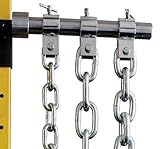
Overview: Ader Barbell’s 45-pound chain set provides a comprehensive progressive resistance solution with multiple chain sizes in one package. This set includes pairs of 1/2-inch, 5/8-inch, and 3/4-inch chains, each approximately 60 inches long, allowing lifters to customize resistance profiles. The zinc coating and oil-dipped oxide finish provide corrosion protection for home and commercial gym environments.
What Makes It Stand Out: The three-size variety pack approach is unique—offering incremental progression without purchasing separate sets. Each thickness provides different weight-per-foot ratios, allowing precise resistance adjustment from 45 total pounds. The inclusion of zinc shaft collars for secure barbell attachment adds value, eliminating the need for separate hardware purchases. The non-toxic oxide finish dipped in oil ensures smooth handling and extended rust prevention.
Value for Money: At $164.90 for 45 pounds, you’re paying $3.66 per pound, which is reasonable for a multi-size set. The inclusion of three different diameters effectively provides three resistance levels for the price of one, offering better value than buying individual sets. The zinc collars add $10-15 of included value. While slightly more expensive per pound than single-size chains, the versatility justifies the cost for lifters wanting progressive options.
Strengths and Weaknesses: Strengths include three chain sizes for progressive training, included zinc collars, corrosion-resistant finish, and 60-inch length suitable for most lifters. The variety allows experimentation with different resistance curves. Weaknesses include the 45-pound total weight may be insufficient for advanced lifters, and the thinner 1/2-inch chains may see limited use as strength increases. The oil finish may require initial cleaning to prevent gym equipment staining.
Bottom Line: This versatile set is perfect for intermediate lifters wanting to experiment with chain training without buying multiple separate sets. The three diameters provide excellent progression options, and included collars add convenience. While the total weight may limit advanced users, the variety and quality make it an excellent entry-to-intermediate option for progressive overload training.
9. Ader Barbell Olympic Weight Lifting Chain Set (Zinc, 30lb)

Overview: Ader Barbell’s lighter 30-pound chain set offers the same multi-size versatility as its heavier counterpart, making it ideal for beginners, rehabilitation, or speed-focused training. This set includes pairs of 1/2-inch, 5/8-inch, and 3/4-inch chains, each approximately 60 inches long, totaling 30 pounds. The zinc coating and oil-dipped finish ensure durability and corrosion resistance for various training environments.
What Makes It Stand Out: The three-size variety in a lightweight package is perfect for those new to chain training or focusing on explosive movements. The graduated diameters allow lifters to learn proper chain mechanics with manageable weight while still benefiting from variable resistance. The inclusion of zinc shaft collars provides secure attachment and adds value, making this a complete starter package.
Value for Money: Priced at $143.90 for 30 pounds, the cost is $4.80 per pound—higher than heavier sets but reasonable for a specialty lightweight option. The three-size versatility effectively provides multiple training tools in one purchase. For beginners or those using chains for speed work, this is more economical than buying a heavy set that would be inappropriate. The included collars and quality finish justify the premium over basic chains.
Strengths and Weaknesses: Strengths include ideal weight for beginners, three progressive sizes, included collars, and quality corrosion-resistant finish. The 60-inch length works for most exercises and lifter heights. Weaknesses include limited total resistance for advanced strength training, and the lighter weight may become obsolete quickly as lifters progress. The cost per pound is higher than heavier sets, and like the 45-pound version, the oil coating requires initial cleaning.
Bottom Line: This 30-pound set is the perfect entry point for beginners exploring chain training or athletes focusing on speed and technique work. The three sizes provide educational value for learning resistance curves, and the manageable weight ensures proper form development. While serious lifters will outgrow it quickly, it’s an excellent, safe introduction to variable resistance training with quality components included.
10. Body-Solid Tools Weight Lifting Chains - Ideal for Home Gym, Squats, Deadlifts, Bench Presses - Strength Training & Fitness Equipment, 5 feet Long Zinc-Coated Chain Pair

Overview: Body-Solid brings three decades of fitness industry expertise to this 5-foot zinc-coated chain pair designed for home gym enthusiasts. These chains provide variable resistance for classic compound movements, enhancing muscle tension throughout the lift. The stainless steel construction with zinc coating ensures durability, while the integrated chain lock system offers secure barbell attachment without additional hardware.
What Makes It Stand Out: Body-Solid’s reputation as a 30+ year industry leader lends credibility and assures quality control. The integrated chain lock mechanism is a notable feature—eliminating the need to purchase separate collars or carabiners. The 5-foot length is specifically optimized for standard Olympic barbells and typical lifter heights, reducing excess chain drag on the floor. The stainless steel core with zinc coating provides dual-layer corrosion protection.
Value for Money: At $143.10, this set offers excellent value from a reputable brand. While the exact weight isn’t specified, typical 5-foot chains of this construction weigh approximately 20-25 pounds per pair, placing the price at roughly $6-7 per pound—competitive for brand-name equipment. The included attachment system adds $15-20 of value, and the brand’s warranty support justifies any premium over generic alternatives. For home gym owners wanting trusted equipment, this is fairly priced.
Strengths and Weaknesses: Strengths include reputable brand backing, integrated chain lock system, optimal 5-foot length for home use, dual-layer corrosion protection, and versatility beyond barbell work (pull-ups, dips, sleds). Weaknesses include unspecified total weight, potentially limiting for advanced lifters, and the shorter length may not suit very tall athletes or specific exercises requiring ground contact. The weight range may be too light for heavy strength training.
Bottom Line: Body-Solid’s chains are an excellent choice for home gym owners prioritizing convenience, brand reliability, and integrated safety features. The chain lock system and optimal length make setup effortless, while the brand’s reputation ensures durability. Though the unspecified weight may limit advanced users, these chains perfectly serve intermediate lifters and home gym enthusiasts seeking quality variable resistance equipment from a trusted manufacturer.
Understanding Variable Resistance Training
Variable resistance training, often called accommodating resistance, modifies the load throughout an exercise’s range of motion. As you push or pull through the movement, the resistance changes—typically increasing as you reach stronger positions and decreasing where you’re biomechanically weakest. This mirrors your natural strength curve and allows for maximal tension across the entire lift.
The Science Behind Accommodating Resistance
Your muscles can produce varying amounts of force depending on joint angle. Traditional static weights overload certain portions of the lift while underloading others. Chains create a linear increase in weight as more links lift off the floor, matching your body’s ability to generate force. Research shows this method can improve rate of force development, increase time under tension in optimal zones, and reduce stress on joints during vulnerable positions.
Why Linear Variable Resistance Matters for Strength Gains
The gradual weight increase forces your nervous system to recruit more motor units progressively throughout the movement. This teaches explosive acceleration—you can’t simply grind through a chain-loaded lift. The deloading at the bottom position also allows for better technique preservation and faster recovery between sessions, letting you train heavy more frequently without the same joint wear.
How Chains Transform Your Lifts
Adding chains to barbell movements fundamentally changes the stimulus your muscles receive. The dynamic nature challenges your stabilizers, improves bar path control, and builds the kind of functional strength that static loading can’t replicate.
The Deloading Effect at the Bottom Position
When chains rest on the floor at the start of a squat or bench press, they subtract weight from the bar precisely where you’re most vulnerable. This reduction in load allows you to maintain better positioning, achieve proper depth, and reduce shoulder and knee stress. For lifters with mobility limitations or previous injuries, this deloading can be the difference between pain-free training and chronic aggravation.
Overloading the Top Portion of Movements
As you drive upward, each link lifts off the floor, progressively adding weight. At lockout, you’re supporting the full bar weight plus the entire chain mass. This overloads your triceps in pressing movements and your glutes/lower back in deadlifts—exactly where you need the most strength for competition lifts or athletic performance.
Key Specifications to Evaluate in Chain Sets
Not all chain sets are created equal. The specifications determine how smoothly the weight increases, how long your equipment will last, and whether the setup works for your specific training space.
Chain Link Diameter and Material Grade
Chain link diameter directly impacts the weight per foot and how smoothly the chain moves. Five-sixteenths-inch chains typically weigh about 1 pound per foot, while three-eighths-inch chains weigh roughly 1.5 pounds per foot. Look for Grade 70 transport chain—it’s designed for heavy loads and has excellent tensile strength without being brittle. Avoid hardware store decorative chains that can stretch or break under load.
Total Weight Capacity and Individual Chain Length
Calculate your needs based on your strongest lifts. Most lifters benefit from having 40-60 pounds of chain per side for heavy compound movements. Individual chain lengths should be adjustable—typically 5-6 feet per chain allows proper setup for both short and tall lifters. The total capacity should exceed your current max by at least 20% to allow for progressive overload.
Coating Types: Zinc, Black Oxide, and Raw Steel
Zinc-plated chains resist corrosion but can flake over time, creating sharp edges. Black oxide offers better grip and a more professional appearance but requires occasional oiling to prevent rust. Raw steel chains are the most cost-effective but demand regular maintenance, especially in humid environments. For home gyms, black oxide often provides the best balance of durability and aesthetics.
Weight Calculation Methods for Accurate Programming
Inconsistent chain weight calculation leads to programming chaos. You need reliable methods to know exactly how much you’re lifting at both the bottom and top positions.
Determining Deloaded vs. Loaded Weight
Measure how many chain links remain on the floor at the bottom of your lift, then calculate the weight of lifted links. At the top, measure the total chain weight plus bar weight. Most quality chain sets include weight charts, but you should verify with a scale. Mark your leader chains with tape at different heights to ensure consistent setup—this prevents the common mistake of varying deload between sessions.
Percentage-Based Loading Strategies
Start with 10-15% of your 1RM in chain weight for dynamic effort work, progressing to 20-25% for max effort lifts. The total bar weight should be reduced by approximately the amount of chain weight that deloads at the bottom. For example, if you have 40 pounds of chains per side that fully deload, reduce your working weight by about 80 pounds from your typical training load.
Essential Hardware Components
The chains themselves are only half the equation. The hardware connecting them to your barbell determines safety, ease of use, and adjustability.
Leader Chains vs. Loading Chains
Leader chains are shorter, lighter chains that attach directly to the barbell and hold the heavier loading chains. This setup allows you to adjust the height at which the main chains start lifting off the floor. A 3-4 foot leader chain with quick-adjust links lets you customize the setup for different exercises and lifter heights without reconfiguring the entire system.
Carabiner Types and Weight Ratings
Use screw-lock or auto-lock carabiners rated for at least 500 pounds working load limit. Avoid spring-gate clips that can open under vibration. Double-carabiner setups provide redundancy—if one fails, the other prevents catastrophic failure. Check carabiners monthly for wear, especially if you train in a gritty environment where metal-on-metal contact accelerates degradation.
Anchor Points and Attachment Mechanisms
For dumbbells or kettlebells, you’ll need specialized strap systems with reinforced loops. For barbells, the attachment point should be at the sleeve, not the shaft, to prevent chain interference with your grip. Some setups use magnetic anchors for quick changes, but these are only suitable for lighter weights and dynamic warm-ups.
Safety Protocols for Chain Training
Dynamic loads introduce unique risks that static weight doesn’t. Proper safety measures protect both you and your equipment.
Securing Chains to Barbells and Equipment
Wrap chains around the bar sleeve and secure them so they can’t slide inward toward the plates. Use cable ties or tape to bind excess leader chain length that could catch on equipment. The chains should hang vertically without swinging—pendulum effects create lateral forces that can destabilize the bar and cause injury.
Floor Protection and Impact Management
Dropping chains repeatedly will destroy concrete floors and create noise complaints. Use 3/4-inch rubber horse stall mats underneath the chain landing zones. For second-story home gyms, consider building a 4x8 foot platform with multiple layers of plywood and rubber to distribute impact forces. The mats also prevent chains from bouncing unpredictably during high-rep sets.
Spotting Considerations with Dynamic Loads
Spotters must understand that chain-loaded bars feel lighter at the bottom but heavier at the top. A lifter might grind through the bottom thinking they have the lift, only to fail at lockout when chains fully load. Spotters should position their hands near the bar throughout the entire lift, ready to assist during the top third where failure most commonly occurs.
Setup Configurations for Different Lifts
Each movement requires specific chain positioning to maximize benefits and maintain safety.
Bench Press Chain Alignment
Chains should hang from the bar sleeve, positioned just outside the plates to avoid interfering with the bench press arch. Adjust leader chains so 2-3 links remain on the floor at chest touch—this ensures complete deloading without creating slack that could catch on the bench. For floor press variations, shorten the leader chains to prevent excessive deloading.
Squat Chain Setup and Positioning
Attach chains to the bar sleeve just inside the collar, allowing them to hang straight down along the sides of your body. The chains should make light contact with the floor at the bottom of your squat but not stack up in piles that could trip you. For front squats, you may need to cross the chains behind your back to prevent them from sliding off your shoulders.
Deadlift and Overhead Press Variations
For deadlifts, chains can attach to a belt for accommodating resistance on rack pulls, or to the bar for full deadlifts. The setup should allow the chains to fully deload when the bar is on the floor. Overhead press chains require careful height adjustment—too much deloading at the bottom removes the stretch reflex, while too little overloads the weak bottom position excessively.
Progressive Overload Strategies with Chains
Chains excel at providing novel overload stimuli, but you need systematic approaches to avoid random programming.
Linear Progression Models
Add one chain link per side each week while keeping bar weight constant. This micro-progression of 1-2 pounds weekly adds up to significant long-term gains. Alternatively, keep chain weight fixed and increase bar weight following traditional linear periodization. Track both deloaded and loaded weights in your training log to ensure true progression.
Undulating Periodization with Chains
Use heavier chains (20% of 1RM) on dynamic effort days to build explosive power, and lighter chains (10% of 1RM) on max effort days to focus on bar speed. Wave your chain weight across three-week cycles: Week 1 at 15% chain weight, Week 2 at 20%, Week 3 at 10% (deload), then repeat with increased bar weight. This prevents accommodation and keeps your nervous system adapting.
Common Programming Mistakes to Avoid
Even experienced lifters misuse chains, turning a powerful tool into a gimmick that provides little benefit.
Overloading the Top Position
Adding too much chain weight creates an excessive lockout load that exceeds your structural capacity. This leads to form breakdown, slow grinding reps, and potential injury. If your lockout speed drops more than 15% compared to your raw lift, you’ve added too much chain weight. The goal is to maintain bar velocity while increasing load, not to turn the lift into a partial-range grind.
Inconsistent Setup Between Sessions
Varying chain height by even a few links changes the deload percentage and makes progressive tracking impossible. Use a measuring tape to mark your leader chains or J-hooks at the exact height for each exercise. Take photos of your setup and keep them in your training log. Consistency is more important than absolute precision—being off by 5 pounds is fine if it’s the same 5 pounds every session.
Maintenance and Longevity of Your Chain Set
Quality chain sets represent a significant investment. Proper maintenance ensures decades of reliable use.
Preventing Rust and Corrosion
Wipe chains down with a light coat of 3-in-1 oil every 4-6 weeks. For raw steel chains in humid environments, consider a light spray of WD-40 after each session. Store chains off concrete floors—use wall-mounted hooks or a dedicated chain storage cart. If rust develops, scrub with a wire brush and re-oil immediately; surface rust weakens chains over time.
Storage Solutions for Home Gyms
Hanging chains from wall-mounted pegboards keeps them organized and prevents tangling. For multiple chain sets, label each with its total weight using colored tape. Avoid storing chains in direct sunlight, which degrades any protective coating. If space is limited, coil chains in 5-gallon buckets, but ensure they’re completely dry first to prevent internal rusting.
Integration with Other Training Methods
Chains don’t exist in isolation. They work synergistically with other advanced training methods.
Combining Chains with Bands
Using chains and bands together creates a complex resistance profile—chains provide linear increase while bands add exponential resistance. Start with 10% chain weight and 15% band tension to avoid overwhelming your nervous system. This combination is particularly effective for equipped powerlifters who need to overload the top portion beyond what chains alone can provide.
Contrast Training Protocols
Alternate between chain-loaded sets and straight-weight sets to exploit post-activation potentiation. Perform 2 reps with chains at 85% 1RM, rest 2 minutes, then do 5 reps with straight weight at 70% 1RM. The chains prime your nervous system, making the subsequent straight-weight set feel lighter and move faster. This method builds both strength and power in the same session.
Frequently Asked Questions
How much chain weight should I start with as a beginner?
Begin with 10% of your estimated 1RM in total chain weight (5% per side). This provides noticeable accommodation without overwhelming your technique. Focus on maintaining bar speed and perfect form before adding more weight. Many beginners actually benefit more from lighter chains (5-8% of 1RM) for dynamic effort work to learn explosive acceleration.
Can I use chains with dumbbells or just barbells?
Chains work excellently with dumbbells using specialized strap attachments that loop through the handle and secure with carabiners. The setup is trickier because dumbbells rotate, but the variable resistance benefits are identical. For home gym users, hex dumbbells with flat sides are easier to chain-load than round pro-style dumbbells.
Will chains damage my barbell sleeves?
Quality chains with smooth links won’t damage hardened steel barbell sleeves. The real concern is carabiners scraping the sleeve finish. Use rubber-coated carabiners or wrap the sleeve with athletic tape where the leader chain attaches. Avoid letting chains slap against the sleeve during setup—lower them gently to prevent cosmetic damage.
How do I know if my chains are set at the right height?
At the bottom position of your lift, 2-3 links should remain on the floor. At the top, the entire chain should be fully suspended. Film your set from the side and watch the chain movement—if there’s a sudden “jump” in bar speed when chains fully deload, you’ve set them too high. The weight transition should feel smooth and linear.
Are chains better than resistance bands for variable resistance?
Neither is inherently superior—they produce different force curves. Chains provide true linear resistance and completely deload at the bottom, making them ideal for building lockout strength and practicing explosive starts. Bands offer exponential resistance and maintain some tension at the bottom, which can be better for overspeed eccentrics. Many advanced lifters use both strategically.
Can I leave chains set up in my rack between workouts?
It’s not recommended. The constant tension on leader chains can cause stretching over time, and hanging chains collect dust and moisture. Take 5 minutes to break down your setup after each session. This also forces you to recheck your configuration before each workout, ensuring consistency. If you must leave them up, use a dehumidifier in your training space.
What’s the difference between expensive training chains and cheap hardware store chains?
Training chains use Grade 70 steel with consistent link dimensions and weight tolerances within 2-3%. Hardware store chains often vary in link size, may stretch under load, and lack certified weight ratings. The cost difference is justified by safety, accuracy for programming, and longevity. Cheap chains can fail catastrophically under heavy loads.
How loud are chains during training, and will I disturb neighbors?
Unmitigated chain noise can reach 70-80 decibels when links hit the floor—comparable to a vacuum cleaner. Rubber mats reduce this by about 15 decibels. For apartment dwellers, consider chain silencers (neoprene sleeves over the bottom links) or train during reasonable hours. The noise is actually a useful feedback tool—quiet chains indicate smooth, controlled movement.
Do I need a special bar or rack to use chains?
Standard Olympic bars and power racks work perfectly. The only requirement is enough sleeve space to accommodate the leader chain attachment (about 3 inches). If you use specialty bars like safety squat bars or cambered bars, you may need longer leader chains or custom strap systems. Most chain sets include hardware that works with any standard equipment.
How often should I incorporate chain training into my program?
Use chains for 3-4 week blocks, then switch to straight weight or bands to prevent accommodation. Within those blocks, chain-loaded lifts can comprise 25-40% of your main movement volume. For dynamic effort work, chains can be used weekly. For max effort lifts, limit chain use to every other week to avoid excessive joint stress from the top-end overload.