Spending multiple days suspended on a vertical granite face changes your relationship with climbing gear. That sleek sport harness that feels perfect for a quick afternoon at the crag? It becomes a medieval torture device by hour six on El Cap’s sixth pitch. Your trusty single rope? It might be too short, too heavy, or lack the durability for constant jugging and hauling. Big-wall climbing demands equipment engineered for a unique set of challenges: all-day comfort, relentless abrasion, multi-day exposure to the elements, and the ability to efficiently manage massive amounts of gear. This year’s crop of harnesses and dynamic ropes reflects decades of evolution in wall climbing, balancing cutting-edge materials with time-tested designs. Whether you’re planning your first Grade V or your fiftieth El Cap route, understanding what separates big-wall specific gear from its single-pitch cousins is critical for both safety and success.
Top 10 Climbing Harnesses for Big-Wall Ascents
Detailed Product Reviews
1. BLACK DIAMOND Long Haul Rock Climbing Harness | Heavy-Duty Big Wall Support | Adjustable Fit | Durable, Padded Design for All-Day Comfort | Large

Overview: The Black Diamond Long Haul is the quintessential big wall harness engineered for multi-day ascents and severe vertical terrain. Designed specifically for aid climbing, extended belays, and hauling systems, this harness prioritizes comfort under load above all else. The Large size accommodates bigger climbers or those wearing bulky cold-weather layers, making it ideal for alpine big wall routes where conditions demand adaptability.
What Makes It Stand Out: This harness features dual-density foam padding that distributes weight evenly during hanging belays and repetitive rappels. Seven gear loops plus a dedicated rear haul loop provide exceptional organization for massive racks of cams, nuts, and aid gear. Reinforced wear points withstand the abrasive punishment of jumaring and continuous rope contact, while fully adjustable waistbelt and leg loops ensure a precise fit over varying layers.
Value for Money: At $159.95, the Long Haul sits at the premium end of the market, comparable to other high-end big wall harnesses. The investment is justified for serious climbers who regularly tackle multi-day objectives where comfort directly impacts performance and safety. For occasional sport climbers, this would be excessive spending on unnecessary features.
Strengths and Weaknesses: Strengths include unparalleled comfort for extended hanging, robust durability, and exceptional gear organization. The heavy-duty construction inspires confidence on serious routes. Weaknesses include significant weight compared to sport harnesses, bulkiness that limits mobility, and a price point that puts it out of reach for casual climbers. It’s over-engineered for gym or single-pitch use.
Bottom Line: This is a specialized tool for dedicated big wall climbers. If you’re planning routes like El Cap or remote alpine walls, the Long Haul is worth every penny. For sport or gym climbing, look elsewhere.
2. BLACK DIAMOND Long Haul Rock Climbing Harness | Heavy-Duty Big Wall Support | Adjustable Fit | Durable, Padded Design for All-Day Comfort | Medium
Overview: The Medium version of Black Diamond’s Long Haul harness delivers identical big wall performance as its larger sibling, tailored for climbers with slighter builds. This harness serves as a critical piece of equipment for multi-day ascents, aid climbing, and extended belay duties where comfort under sustained load determines success. The Medium size offers the same adjustability but fits a more typical climber’s physique without excess bulk.
What Makes It Stand Out: Seven gear loops and a rear haul loop create an organizational system that big wall climbers dream about. The dual-density foam padding excels during hours of hanging belays, while reinforced construction at all wear points handles jumaring and hauling abuse. Quick-adjust buckles make layering straightforward, and the harness maintains its structure even when loaded with a full aid rack.
Value for Money: Priced at $159.95, this represents a significant but necessary investment for serious wall climbers. The cost aligns with other premium big wall harnesses and reflects the specialized engineering. Occasional climbers would find better value in versatile all-around models, but for those committed to vertical camping, the comfort and durability justify the expense.
Strengths and Weaknesses: Pros include exceptional weight distribution, bombproof durability, and gear management that rivals any harness on the market. The adjustable fit works well across seasons. Cons are the substantial weight penalty, limited agility for free climbing, and premium pricing that doesn’t suit recreational users. It’s a one-trick pony that performs that trick brilliantly.
Bottom Line: For medium-framed climbers targeting serious big wall objectives, this harness is indispensable. Its specialized nature means it’s not a jack-of-all-trades, but it masters its intended purpose.
3. Mammut Ophir 3 Slide Climbing Harness for Men – Adjustable, Lightweight, and Durable Gear for Rock, Gym, and Sport Climbing, Black/Marble, Large

Overview: The Mammut Ophir 3 Slide positions itself as the versatile workhorse for climbers who split time between gym sessions, sport crags, and multi-pitch adventures. This Large-size harness emphasizes adaptability without sacrificing comfort or safety. Its two-part webbing construction balances durability with breathability, making it suitable for everything from redpoint attempts to long alpine routes.
What Makes It Stand Out: This harness carries bluesign and Fair Wear certifications, appealing to environmentally conscious climbers. The Slide Bloc buckles provide quick, secure adjustments without the bulk of traditional double-backs. At just $69.95, it delivers premium features like adjustable leg loops and a synthetic tie-in loop typically found on more expensive models. The abrasion protection reinforces high-wear areas without adding significant weight.
Value for Money: Exceptional value defines the Ophir 3 Slide. It undercuts most competitors by $30-50 while offering comparable performance for sport and gym climbing. The sustainable manufacturing adds intangible value. For climbers needing one harness for multiple disciplines, this price point is hard to beat. Big wall specialists should invest elsewhere, but for 90% of climbers, this hits the sweet spot.
Strengths and Weaknesses: Strengths include versatility across climbing styles, lightweight design, ethical manufacturing, and outstanding price-to-performance ratio. Adjustable leg loops accommodate varying clothing. Weaknesses include minimal padding for extended hanging belays, limited gear loops for trad climbing, and less robust construction than dedicated big wall harnesses. Not ideal for aid climbing.
Bottom Line: The Ophir 3 Slide is the perfect all-around harness for modern climbers. Unless you’re exclusively climbing big walls, this sustainable, affordable option deserves serious consideration.
4. Ocun Webee Bigwall Rock Climbing Harness | 7 Gear Loop Half Body Safety Harness for Bigwall, Trad & Alpine Climbs (4 Buckle) - Red/Black - XS-M

Overview: Czech manufacturer Ocun brings European engineering to the big wall harness market with the Webee Bigwall. This XS-M size targets smaller climbers or those preferring a snugger fit. Designed for gear-intensive objectives, it bridges the gap between budget models and premium offerings. The harness emphasizes breathability and security with its four slide-lock stainless steel buckles and perforated padding.
What Makes It Stand Out: Four buckles provide superior adjustability and security compared to typical two-buckle designs. Seven gear loops plus a 9kN-rated haul loop match the capacity of more expensive competitors. The washable, perforated padding addresses hygiene and comfort during multi-day climbs. Ocun’s two-year warranty demonstrates confidence in their precise Czech manufacturing. The red/black colorway offers high visibility.
Value for Money: At $119.95, the Webee Bigwall undercuts premium alternatives by $40 while delivering similar features. The four-buckle system and robust gear loops justify the mid-range price. For climbers wanting big wall capabilities without Black Diamond pricing, this represents smart value. The limited size range (XS-M) restricts its audience, but those who fit get professional-grade equipment at an intermediate price.
Strengths and Weaknesses: Pros include excellent breathability, generous gear storage, secure four-buckle closure, and strong warranty support. The adjustable fit works well for various body types within its size range. Cons include brand recognition limitations in North America, potential sizing constraints for larger climbers, and padding that’s less plush than top-tier competitors. Not as proven as legacy brands.
Bottom Line: The Webee Bigwall is a compelling alternative for budget-conscious big wall climbers. If the size range fits you, it’s a feature-rich harness that punches above its weight class.
5. TRSMIMA Safety Harness Fall Protection - Roofing Full Body Climbing Harness Men Tree Work Rock Climbing Chest Ascender Detachable Design

Overview: The TRSMIMA Safety Harness serves a dual purpose as both a full-body work harness and a detachable half-body climbing harness. Engineered for professional applications like roofing, tree work, and rescue operations, it adapts to recreational climbing with its detachable design. The harness supports up to 5000 lbs and accommodates waist sizes from 30.7 to 55.3 inches, making it suitable for a wide range of users.
What Makes It Stand Out: The detachable configuration allows conversion between full-body fall protection and traditional climbing harness modes. Five D-rings plus a self-locking carabiner provide multiple attachment points for lanyards and equipment. Integrated reflective strips enhance visibility for night work or rescue scenarios. The contrasting orange stitching on black webbing enables easy safety inspections. Quick-connect leg buckles expedite donning and doffing.
Value for Money: At $99.99, this harness offers versatility that justifies its price for professionals needing dual-function equipment. However, climbers should note it’s not UIAA certified, limiting its suitability for technical rock climbing. For construction, tree work, or as a backup/emergency harness, the value is excellent. Dedicated climbers should invest in sport-specific harnesses instead.
Strengths and Weaknesses: Pros include versatile detachable design, high weight rating, reflective safety features, and generous sizing range. The five D-rings offer professional-grade utility. Cons include lack of UIAA certification for technical climbing, bulky design that hinders free movement, and minimal padding for extended hanging. It’s overbuilt for sport climbing and may not be accepted at all climbing gyms.
Bottom Line: Purchase this for work-at-height applications or as a specialized rescue/emergency harness. For recreational rock climbing, choose a UIAA-certified sport or big wall harness instead.
6. BLACK DIAMOND Women’s Momentum Rock Climbing Harness | Dual Core Construction | Adjustable Waist & Leg Loops | Lightweight Comfort | Desert Sage | Medium

Overview: The Black Diamond Women’s Momentum is a purpose-built climbing harness engineered specifically for female anatomy. This medium-sized desert sage harness targets sport climbers, gym enthusiasts, and multi-pitch adventurers seeking ergonomic support. Its contoured waistbelt and tapered leg loops deliver a secure fit that eliminates pressure points during extended hangs.
What Makes It Stand Out: The Dual Core Construction distributes weight evenly while maintaining featherlight performance. The pre-threaded Speed Adjust buckle enables one-handed operation, while TrakFIT leg loops offer instant customization without dangling straps. Four pressure-molded gear loops provide ample racking space, and the breathable liner prevents overheating on hot days.
Value for Money: At $64.95, this harness sits in the sweet spot for premium women’s gear. It undercuts high-end competitors while offering Black Diamond’s proven durability and thoughtful design. Comparable women’s-specific harnesses typically run $70-90, making this an attractive investment for serious climbers.
Strengths and Weaknesses: Strengths include exceptional comfort, intuitive adjustability, quality construction, and female-specific geometry. The four gear loops accommodate extensive racks. Weaknesses are limited color/size availability in this listing and potential over-engineering for casual beginners. The medium size may not suit all body types.
Bottom Line: Ideal for dedicated female climbers prioritizing comfort and performance. The Women’s Momentum delivers professional-grade features without the premium price tag, making it a smart upgrade from entry-level harnesses.
7. KAILAS Safety Climbing Harness Professional Mountaineering Lightweight Rock Climbing Gear Protect Waist Safety Belt Orange Red L

Overview: KAILAS delivers a UIAA-certified performance harness designed for serious mountaineering and rock climbing. This orange-red size L model balances lightweight construction with professional-grade safety standards. The integrated frame design targets climbers who need reliable protection across diverse disciplines from alpine routes to crag sessions.
What Makes It Stand Out: UIAA certification provides international safety validation rarely found at this price point. The innovative tilted front gear loops enable effortless clipping, while rear loops stay flat against the body when wearing a pack. Cordura fabric construction ensures exceptional abrasion resistance, and the hot-forged Quick Buckle delivers secure, tool-free adjustments.
Value for Money: At $56.99, this harness significantly undercuts certified competitors. Most UIAA-approved harnesses start at $75+, making KAILAS a compelling value proposition. The combination of premium materials, certified safety, and thoughtful design features offers budget-conscious climbers professional performance without compromise.
Strengths and Weaknesses: Strengths include UIAA certification, durable Cordura fabric, excellent weight distribution, and smart gear loop geometry. The price-to-performance ratio is outstanding. Weaknesses include limited brand recognition in Western markets and sparse documentation on long-term durability. The sizing may run small for some users.
Bottom Line: A certified bargain for climbers seeking proven safety standards. The KAILAS harness is perfect for mountaineers and sport climbers who prioritize certification and functionality over brand prestige.
8. SOB Full Body Climbing Harness Can Be Inverted Thicken Widen Protect Waist Safety Harness Tree Work Rock Climbing Mountaineering Rescuing Work at Height
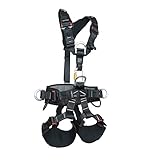
Overview: The SOB Full Body Harness provides comprehensive fall protection for technical rescue, tree work, and industrial applications. This CE-certified system meets EN361, EN358, and EN813 standards with a 22KN breaking strength. Its universal sizing accommodates waists from 33.5-49.2 inches, targeting professionals needing versatile, inverted-use capability.
What Makes It Stand Out: Five strategically placed binding rings enable upright and inverted configurations, expanding operational flexibility. The widened, thickened waist cushion and progressive leg loop design prioritize all-day comfort without sacrificing breathability. High-strength polyester webbing combined with aluminum alloy hardware ensures durability in harsh environments.
Value for Money: At $106.98, this specialized harness commands a premium over recreational models. However, for professionals requiring CE certification, multi-position capability, and reinforced padding, the price is justified. Comparable rescue-grade harnesses often exceed $150, making SOB competitively positioned.
Strengths and Weaknesses: Strengths include CE certification, invertible design, generous padding, universal sizing, and robust 22KN rating. The multiple tool rings enhance utility. Weaknesses include bulkiness for casual climbing, 220lb weight limit that may exclude some users, and higher cost for non-professionals.
Bottom Line: Essential gear for rescue professionals and arborists. While overkill for recreational climbers, the SOB harness delivers certified safety and versatility that justifies its premium for work-at-height applications.
9. Ttechouter Adjustable Thickness Climbing Harness Half Body Harnesses for Fire Rescuing Caving Rock Climbing Rappelling Tree Protect Waist Safety Belts

Overview: Ttechouter offers a budget-friendly half-body harness targeting rescue workers, cavers, and recreational climbers. This adjustable system features high-strength polyester construction with reinforced stitching, accommodating waists from 27.5-51.2 inches. Four equipment hooks and high-strength D-rings provide functional utility for technical operations.
What Makes It Stand Out: An exceptional 25KN tension rating and 300kg weight capacity exceed many premium harnesses at a fraction of the cost. The one-size-fits-all design eliminates sizing guesswork, while the 2.2-pound weight remains reasonable for budget gear. Four durable side hooks facilitate extensive gear organization.
Value for Money: At $34.99, this is among the most affordable harnesses available. It enables cost-conscious users and organizations to equip multiple people without sacrificing load ratings. However, the absence of UIAA or CE certification requires careful consideration for critical applications.
Strengths and Weaknesses: Strengths include unbeatable price, impressive weight capacity, generous adjustability, and multiple gear attachment points. The thick padding enhances comfort. Weaknesses are lack of mainstream certification, unknown brand reliability, and potential quality control inconsistencies. The harness may lack refinement found in premium models.
Bottom Line: A viable backup or training harness for those on tight budgets. While not recommended as a primary lifeline for serious climbers, it serves adequately for institutional use, recreation, and non-critical applications where certification is secondary to cost.
10. PETZL Corax Climbing Harness - Dark Gray, Size 1

Overview: The PETZL Corax represents the gold standard for versatile all-around climbing harnesses. This size 1 dark gray model excels across disciplines from gym climbing to alpine mountaineering. Its FRAME Technology construction and dual DoubleBack buckles provide unparalleled adjustability and weight distribution for climbers demanding premium performance.
What Makes It Stand Out: Unique DoubleBack buckles enable perfect tie-in point centering regardless of clothing layers or body type. Adjustable leg loops accommodate everything from shorts to insulated winter pants seamlessly. The rigid front gear loops offer lightning-quick access while flexible rear loops disappear under packs. FRAME Technology evenly distributes loads between waist and legs.
Value for Money: At $79.95, the Corax commands a premium but delivers exceptional versatility that replaces multiple specialized harnesses. For climbers who transition between gym, sport, trad, and ice, this single investment eliminates the need for separate rigs. The durability and brand support justify the cost over cheaper alternatives.
Strengths and Weaknesses: Strengths include unmatched versatility, superior comfort, precise adjustability, premium construction, and excellent gear loop design. The sizing range is generous. Weaknesses include higher price point and potential feature-overload for gym-only climbers. The darker color absorbs heat in direct sun.
Bottom Line: The ultimate one-harness quiver for serious climbers. The Corax justifies its premium price through adaptability, comfort, and durability that serves beginners through experts across all climbing disciplines.
Understanding the Unique Demands of Big-Wall Climbing
The Marathon Mentality: Why Your Gear Matters More
Big-wall routes aren’t measured in moves—they’re measured in days. Unlike single-pitch cragging where you might hang in your harness for minutes, wall climbing demands gear that performs under continuous load for 8-16 hours daily. Your harness becomes your office chair, your rope becomes your lifeline through dozens of falls and countless jugging cycles, and every piece of equipment faces environmental stressors that would destroy lesser gear. The psychological burden of trusting your life to equipment for days at a time means reliability isn’t just a feature—it’s a fundamental requirement. Modern big-wall gear balances this need for bombproof construction with surprising innovations in weight savings and comfort.
Multi-Day Exposure and Equipment Stress
The cumulative effects of sun, wind, granite abrasion, and constant tension create a perfect storm of equipment degradation. A rope that handles a dozen single-pitch sessions might show significant wear after just one wall, where it’s subjected to repeated hauling, sharp edge contact, and dirt contamination. Similarly, harness webbing absorbs sweat and UV radiation while buckles endure constant tension adjustments. Understanding these accelerated wear patterns helps inform both your purchasing decisions and your inspection protocols. The best gear for big-wall climbing anticipates these stressors through reinforced construction, weather-resistant treatments, and replaceable components.
Anatomy of a Big-Wall Harness: Key Features Explained
Waistbelt Construction and Weight Distribution
The waistbelt represents the foundation of your hanging comfort. Unlike minimalist sport climbing harnesses that prioritize lightness over padding, big-wall models feature dual-density foam that distributes pressure across a wider surface area. Look for contoured designs that match the natural curve of your iliac crest while providing firm support without cutting circulation. The width typically ranges from 3.5 to 4.5 inches—any narrower and you’ll feel the pressure; any wider and it interferes with movement. Modern designs incorporate variable stiffness, with softer foam against your body and firmer structural layers beneath.
Leg Loop Design: Finding Your Sweet Spot
Fixed leg loops save weight but become problematic when nature calls or temperatures fluctuate. Adjustable leg loops with metal buckles (not plastic) allow you to customize fit over base layers, insulation, and even rain pants. The leg loop angle matters significantly—steeper angles reduce pressure on the femoral artery during long hangs but can restrict high-stepping movements. The best designs use articulated patterns that move with your legs rather than against them. Pay attention to the rise (distance between waistbelt and leg loops); too short and you’ll feel squeezed, too long and you’ll slide out during an inverted move.
Gear Loops: Quantity, Positioning, and Accessibility
Six to seven gear loops have become the standard for serious wall routes. Front loops should be rigid and angled forward for easy racking of quickdraws, cams, and free climbing protection. Rear loops need to be flexible enough to not dig into your back while hauling but sturdy enough to support full racks. The spacing between loops determines how easily you can differentiate gear by touch alone—critical when you’re runout and need a specific piece without looking. Some designs feature haul-loop integrated gear management systems that keep your rack organized during ledge transitions.
The Haul Loop: Your Unsung Hero
That small loop on the back of your harness isn’t just for show—it’s your primary connection point for hauling, tagging gear, and emergency situations. It needs to be rated to at least 15kN and constructed from full-strength webbing, not just a bartacked accessory loop. The position should be high enough to keep haul bags from dragging on your heels but low enough to maintain center of gravity. Reinforced stitching with multiple bar tacks is non-negotiable; this is often the first point of failure on budget harnesses pressed into wall service.
Adjustability and Fit Systems
Speed buckle systems allow micro-adjustments without unthreading the webbing—crucial when you’re adding or removing layers mid-route. The tail end of the waistbelt should have adequate length for winter climbing but not so much that it flaps annoyingly. Some designs incorporate elastic keepers that manage excess webbing while allowing quick length changes. Double-back buckles remain the gold standard for security, though some modern auto-locking designs meet UIAA standards while offering convenience.
Dynamic Ropes for Big-Wall Climbing: Fundamentals
Single vs. Half vs. Twin: Making the Right Choice
For most big-wall routes, a single rope remains the workhorse choice—simple, straightforward, and compatible with standard belay devices. However, half rope systems offer advantages on wandering aid lines where rope drag becomes prohibitive. Twins, while ultralight, require both strands to be clipped to every piece, making them impractical for most wall climbing scenarios. The emerging trend is toward “rope systems” rather than individual ropes: pairing a 9.5mm single with a tag line for rappels, or using a thicker workhorse single for hauling and a skinny line for leading.
Diameter Decisions: Balancing Durability and Weight
The sweet spot for big-wall singles sits between 9.8mm and 10.2mm. Thinner ropes save precious pounds on long approaches and reduce rope drag on traverses, but they wear faster under jugging and hauling. Thicker diameters (10.5mm+) offer supreme durability and easier handling with gloves but add significant weight. Consider your primary use case: if you’re planning repeated walls with heavy hauling, lean toward the thicker end. For fast alpine-style ascents where every ounce matters, a sub-10mm rope with a high sheath proportion makes sense.
Rope Length Considerations for Wall Routes
Standard 60-meter ropes often fall short on modern walls where 70-meter leads are common. Seventy meters has become the default, with 80-meter options gaining popularity for linking pitches or reducing rappel stations. Remember that rope length affects your hauling system—longer ropes mean more weight to pull but also reduce the number of changeovers. Factor in your descent plan: will you need to rappel the route? If so, ensure your rope length matches or exceeds rappel stations, or plan for a second tag line.
Critical Performance Factors for Big-Wall Harnesses
All-Day Comfort: Padding vs. Minimalism
The padding debate divides the wall climbing community. Maximalist designs feature thick, plush foam that feels luxurious on day one but can absorb water and compress over time. Minimalist harnesses use strategic padding only in high-pressure zones, relying on wide load distribution rather than softness. The best compromise uses closed-cell foam that doesn’t absorb moisture and retains its loft throughout a multi-day push. Look for harnesses with pressure-mapping designs that place padding exactly where your body weight concentrates during a typical hanging belay position.
Breathability and Moisture Management
Mesh panels along the waistbelt and leg loops help evaporate sweat, but open mesh can collect grit and accelerate wear. Laser-cut ventilation holes provide airflow without compromising structure. Some manufacturers use hydrophobic treatments on padding that repel moisture while maintaining breathability. The inner surface material matters as much as the ventilation—soft, wicking fabrics reduce hot spots and chafing during 12-hour continuous wear.
Durability in High-Wear Areas
Examine wear indicators carefully. The tie-in points should feature reinforced webbing sleeves or extra bartacks. Gear loops need bar tacking at both ends and often include protective sleeves where carabiners create repetitive abrasion. The haul loop deserves the same attention as the tie-in points. Some designs use replaceable components, though this remains rare. The best indicator of durability is the denier rating of outer fabrics—higher numbers mean more abrasion resistance, though at the cost of weight and flexibility.
Dynamic Rope Performance Characteristics
Impact Force and Fall Ratings Explained
Impact force—the peak force transmitted to the climber and protection during a fall—becomes critical when you’re trusting tiny copperheads or marginal rivets. Lower impact force ratings (under 8.5kN) reduce loads on your protection but typically indicate a stretchier rope that may feel less precise while jugging. The UIAA fall rating, while based on severe test conditions, provides a relative durability index. For big-wall use, prioritize ropes with higher fall ratings (7+ falls) even if you never expect to take a factor-two fall—this indicates a robust sheath and core construction that will withstand jugging and hauling.
Dry Treatment and Weather Resistance
“Dry” ropes feature water-repellent coatings on both sheath and core, preventing moisture absorption that can increase weight by 30-40% in wet conditions. For desert walls, this matters less than for alpine granite. More importantly, dry treatments reduce grit infiltration into the core, significantly extending rope life in sandy environments like Zion or the desert Southwest. Look for UIAA Water Repellent certification, which requires a rope to absorb less than 5% of its weight in water. Some treatments also include UV inhibitors, valuable for routes with prolonged sun exposure.
Weight vs. Durability: The Eternal Trade-off
When to Prioritize Lightweight Designs
If your approach involves 15 miles of cross-country travel or your style emphasizes speed over comfort, every ounce matters. Modern lightweight harnesses use load-bearing webbing that’s as strong as heavier versions but less padded. Similarly, skinny ropes (9.2-9.5mm) can save pounds on long approaches. The key is honest assessment of your climbing style—are you pushing for speed records or comfortable ledge bivies? Lightweight gear demands more careful handling and faster replacement cycles, which may offset initial weight savings on extended expeditions.
When Bombproof Construction Wins
For first ascents involving unknown terrain, heavy hauling, or shared community ropes (like those left on popular routes), durability trumps weight. A 10.2mm double-braid rope with a thick sheath will outlast two skinny singles in harsh conditions. Similarly, a harness with full-strength webbing throughout and reinforced tie-in points will survive seasons of abuse that would destroy ultralight models. Consider the cost-per-use over a season rather than just the initial weight on your back.
Specialized Features for Aid Climbing
Daisy Chain and Fifi Hook Integration
Modern big-wall harnesses often include dedicated clip-in points for daisy chains, positioned to keep fifi hooks accessible but out of the way during free moves. These reinforced tabs prevent the dangerous practice of clipping into gear loops (which aren’t rated for body weight) while providing organized attachment for your aid ladder system. Some designs integrate a small, rated haul loop specifically for fifi hook use, keeping your main haul loop free for its intended purpose.
Adjustable Leg Loops for Layering
Wall climbing often involves temperature swings from 40°F in the morning shade to 90°F in afternoon sun. Adjustable leg loops accommodate this range without requiring a harness change. Metal cam buckles withstand repeated adjustments better than plastic, and webbing keepers prevent dangling tails. Some designs feature quick-release buckles for emergency bathroom breaks without removing the harness—a small luxury that becomes significant on day three.
Rope Management on Multi-Pitch Routes
Middle Marks and End Warning Markers
A distinct middle mark is non-negotiable for rappelling and rope management. Factory markings using black dye wear off quickly; look for ropes with integrated bi-pattern weaving or durable metallic prints. End warning markers—typically 10 meters from each end—prevent rappelling off your rope. Some ropes feature progressive markings every 5 meters, invaluable for estimating rope stretch and managing slack during complex hauling operations.
Bi-Pattern and Duo-Tone Advantages
Bi-pattern ropes change sheath pattern at the midpoint, providing a permanent, wear-resistant middle mark that never fades. Duo-tone designs use two distinct colors for each half, offering visual confirmation of how much rope you’ve paid out. For wall climbing, these features justify the 10-15% price premium—they remain visible even when the rope is dirty or icy, and they eliminate the need for potentially damaging DIY marking methods.
Safety Certifications and Standards
UIAA and CE Ratings Decoded
The UIAA (International Climbing and Mountaineering Federation) sets the gold standard for climbing gear testing. A UIAA-certified harness must withstand 15kN on the tie-in points and 10kN on the haul loop. For ropes, look for the UIAA Water Repellent mark if you climb in wet conditions. CE certification (European Conformity) indicates compliance with EU safety directives, though UIAA standards are typically more stringent. Don’t settle for gear lacking these certifications—unrated “climbing-inspired” gear has no place on a wall.
The Critical Importance of Regular Inspection
Pre-climb checks aren’t enough on multi-day routes. Implement a daily inspection routine: feel the rope for soft spots or sheath slippage, check harness tie-in points for abrasion, and examine all stitching. Carry a small loop of accessory cord to perform bend tests on suspect rope sections. Document gear hours—many manufacturers recommend retirement after a certain number of climbing days regardless of visible wear. This discipline prevents the gradual normalization of wear that leads to accidents.
Sizing and Fit: Getting It Right the First Time
Harness Sizing for Multi-Day Comfort
Try harnesses while wearing your typical wall clothing layers. The waistbelt should sit above your hip bones with enough room to tighten further when wearing only a base layer and loosen to accommodate a puffy jacket. Most manufacturers size by waist circumference, but body shape matters—those with narrower waists relative to hips may need models with longer belay loops to prevent the harness riding up. Many retailers offer demo programs; take advantage to hang in the harness for 30+ minutes before committing.
Selecting the Correct Rope Length
Research your target route’s pitch lengths and rappel requirements. The trend toward longer pitches means 70m is now the minimum for modern testpieces. Consider carrying a 60m tag line for full-length rappels—this system is lighter than an 80m single and more versatile. For routes with complex traverses, two 60m half ropes might be optimal. Always add 10 meters to your calculated needs to account for stretch, knots, and emergency situations.
Investment Considerations: Price vs. Long-Term Value
Understanding the Price Spectrum
Entry-level big-wall harnesses start around $80, while premium models exceed $200. The difference isn’t just padding—it’s material quality, replaceable components, and manufacturing precision. Similarly, ropes range from $200 to $400+ depending on length, treatment, and construction. Mid-range options ($120-150 for harnesses, $250-300 for ropes) often represent the best value, offering 90% of premium performance at a substantial discount. Avoid budget gear that cuts corners on reinforcement or uses questionable webbing.
Cost-Per-Use Calculations
A $300 rope used for 30 pitches of wall climbing costs $10 per pitch. If that same rope lasts for 100 single-pitch days, the cost drops to $3 per use. Factor in your climbing plans: occasional wall climbers might rent or buy mid-tier gear, while dedicated wall rats should invest in premium durability. Consider community gear for popular routes—many climbing areas have rope caches that spread cost across multiple parties, though this requires rigorous inspection and maintenance protocols.
Proper Care and Maintenance
Harness Cleaning and Storage
Never machine wash your harness—it damages webbing fibers. Instead, hand wash in lukewarm water with mild soap, gently scrubbing padding and webbing. Rinse thoroughly and air dry away from direct sunlight. Store loosely coiled in a cool, dry place; never in a trunk where heat and chemical fumes accelerate degradation. After sandy routes like Zion, use compressed air to remove grit from buckle mechanisms before it causes wear.
Rope Care Best Practices
Flake your rope onto a tarp at each belay to prevent dirt contamination. Use rope bags with integrated tarps to minimize ground contact. When jugging, use a rope protector at sharp edges—a simple piece of carpet or commercial edge guard can double your rope’s lifespan. After climbing, wash ropes in a front-loading machine on gentle cycle with rope-specific cleaner, then air dry away from UV light. Never step on your rope; it drives grit into the core where it silently saws fibers during use.
Knowing When to Retire Your Gear
Harness Retirement Indicators
Retire any harness after a significant fall, regardless of appearance. Replace if the tie-in points show fuzzing, if any stitching is abraded or broken, or if buckles no longer hold tension. A good rule: if you can’t read the manufacturer label, it’s time to retire. Most manufacturers suggest a 5-year lifespan with regular use, though heavy wall climbing can halve this. Keep a logbook of major falls and days of use; this data informs replacement decisions better than guesswork.
Rope Lifespan and Replacement Criteria
Retire ropes immediately if you feel a flat spot, sheath slippage, or core shot. If the rope has held a factor-two fall or shows significant impact force reduction (test by comparing stretch on a fixed length), replace it. Sheath abrasion that exposes core fibers requires immediate retirement. For ropes used exclusively on walls, consider retirement after one season of heavy use due to invisible internal wear from jugging and hauling. A rope that feels “dead” or excessively stiff has likely suffered core damage and should be downgraded to top-rope duty only.
Frequently Asked Questions
How do I know if my harness is big-wall specific or just a beefed-up sport model?
Look for haul loop strength ratings (should be 15kN+), number of gear loops (6-7), and waistbelt width (3.5"+). True big-wall harnesses also feature reinforced tie-in points and adjustable leg loops with metal hardware. If the manufacturer markets it for “light and fast” climbing, it’s likely not designed for multi-day hanging.
Can I use a skinny single rope for big-wall climbing?
Yes, but with caveats. Ropes under 9.5mm require careful handling, wear faster under jugging, and may not work optimally with all hauling devices. They’re best suited for experienced teams on faster ascents where weight savings justify reduced durability. Always pair skinny singles with rope protectors at edges.
What’s the ideal number of gear loops for a wall harness?
Six is the practical minimum, seven is optimal. You need dedicated loops for cams, nuts, pins/hooks, draws, free gear, and personal items. More than seven creates clutter and reduces accessibility. The configuration matters more than quantity—rigid front loops and flexible rear loops create the best system.
How often should I replace my big-wall rope if I don’t take big falls?
Retire after one season of heavy wall use regardless of visible wear. Jugging and hauling cause internal core damage that’s invisible during inspection. For occasional use, follow the 5-year maximum lifespan rule, but inspect meticulously after each wall and consider a professional rope test if available.
Are adjustable leg loops really necessary?
For multi-day routes with temperature fluctuations, absolutely. They allow you to add insulation layers without buying an oversized harness. They’re also crucial for bathroom logistics. Fixed leg loops work only for single-day ascents or extremely stable climates.
What’s the difference between dry treatment and UIAA Water Repellent certification?
Dry treatment is a manufacturer-applied coating. UIAA Water Repellent is a certified standard requiring the rope absorb less than 5% of its weight in a specific test. All UIAA-certified dry ropes have treatment, but not all treated ropes meet UIAA standards. For wet environments, insist on the UIAA mark.
Can I repair a damaged haul loop?
Never. Haul loops are structural components requiring factory stitching patterns and load testing. Field repairs cannot guarantee strength. If your haul loop is damaged, retire the harness immediately. Some manufacturers offer repair services, but replacement is usually more cost-effective and safer.
How do I test rope impact force degradation?
Mark a 2-meter section of new rope and measure its length under body weight. After significant use, repeat the test under identical conditions. If the rope stretches 10% more than when new, the core has likely degraded and impact force absorption has increased. This is a sign to retire the rope.
Is it worth buying a women’s-specific harness for big-wall climbing?
If the fit is better, absolutely. Women’s models typically feature longer rise measurements, differently angled leg loops, and waistbelts shaped for wider hip structures. Fit matters more than gender marketing—a properly fitting harness of any designation performs better than a poorly fitting “correct” model. Try both and choose based on hang time comfort.
What’s the most common gear failure on big walls?
Unexpectedly, it’s not the harness or rope—it’s the small components. Buckle wear, gear loop stitching, and fifi hook tabs fail first because they’re inspected less frequently. Implement a systematic check of every component daily, not just the obvious tie-in points and rope sheath. Carry spare buckles and a repair kit with strong thread for field repairs.