Between 8 a.m. classes, marathon study sessions, and navigating shared bathrooms, finding space for fitness in a dorm room feels like solving a Rubik’s cube blindfolded. Yet the freshman fifteen isn’t just campus folklore—it’s the byproduct of stress-eating ramen at 2 a.m. and realizing the nearest gym is a ten-minute trek through snow. The good news? Modern cardio equipment has evolved beyond bulky treadmills and squeaky ellipticals. Today’s dorm-friendly options pack serious metabolic punch into packages smaller than your mini-fridge, with whisper-quiet operation that won’t wake your roommate during their power nap.
Choosing the right compact cardio tool isn’t about grabbing the cheapest thing on sale. It’s about understanding biomechanics, space optimization, and how different resistance systems impact your joints when you’re training on thin carpet over concrete. This guide breaks down everything from hydraulic piston durability to flywheel weight distribution—so you can invest wisely in equipment that actually fits your lifestyle, budget, and that awkward corner between your desk and the radiator.
Top 10 Compact Cardio Equipment for Dorm Rooms
Detailed Product Reviews
1. Niceday Stepper Exercise Equipment with Resistance Bands

Overview: The Niceday Stepper is a compact cardio machine designed for quiet, effective lower-body workouts. Weighing just 16 pounds, this hydraulic stepper targets glutes and legs while operating at a whisper-quiet 25 dB, making it ideal for apartment living or early morning sessions. Its space-saving design requires only 1.29 square feet of floor space and includes resistance bands for full-body training.
What Makes It Stand Out: The intelligent hydraulic system maintains high resistance for 30 minutes before gradually decreasing, optimizing fat-burning cardio zones. The included resistance bands add upper-body engagement, transforming it into a comprehensive trainer. Silent silicone cushioning ensures you won’t disturb family members, while its ready-to-use design eliminates complicated assembly. This combination of smart programming and noise reduction is rare in budget steppers.
Value for Money: At $59.99, this stepper delivers exceptional value compared to gym memberships or bulkier equipment. It competes directly with entry-level steppers but adds superior noise dampening and smart resistance programming. For those seeking convenient cardio without disturbing others, the price is justified by its specialized quiet operation and portable design. The hydraulic cycle feature mimics more expensive programmable machines.
Strengths and Weaknesses: • Ultra-quiet 25 dB operation perfect for shared spaces • Compact footprint and lightweight portability • No assembly required • Smart hydraulic resistance cycle for optimal cardio • Included resistance bands for full-body workouts
• Resistance automatically decreases after 30 minutes • Limited user weight capacity (implied 220-250 lbs) • Basic LCD display functionality • Hydraulic systems may wear over time
Bottom Line: The Niceday Stepper is an excellent choice for apartment dwellers and parents needing silent, effective cardio. Its smart resistance programming and compact design make it ideal for consistent home workouts without space or noise concerns.
2. MACYO Stair Stepper for Home Gym Exercise, Adjustable Resistance, Tablet Holder, Compact Folding Cardio Exercise Climber with Extended Step Range, Adjustable Handlebar & Pedals (White)

Overview: The MACYO Stair Stepper brings gym-quality cardio to your home with a 300-pound capacity and adjustable resistance system. This steel-framed machine features extended pedals and a built-in tablet holder, positioning itself as a step above basic steppers for serious home fitness enthusiasts. The white finish adds a modern aesthetic to any space.
What Makes It Stand Out: Unlike fixed-resistance steppers, MACYO’s progressive adjustment system grows with your fitness level from beginner to advanced. The extended pedals with three angle settings target different muscle groups, while the LCD display tracks time, reps, and calories. The brand claims two hours on this machine equals three hours of yoga in efficiency, appealing to time-conscious users.
Value for Money: Priced at $69.90, this stepper sits in the sweet spot between budget models and premium equipment. The adjustable resistance and sturdy steel construction justify the cost over $50 steppers, while the tablet holder and extended pedals add convenience. For users under 200 pounds seeking long-term use, it’s a cost-effective alternative to $200+ machines, offering progressive training without the premium price tag.
Strengths and Weaknesses: • Adjustable resistance for progressive training • 300-pound weight capacity with stable steel frame • Extended pedals with three angle positions • Real-time tracking LCD display • Tablet holder for entertainment during workouts
• Efficiency claims lack scientific backing • Optimal performance limited to users under 200 lbs • Larger footprint than ultra-compact models • May require periodic maintenance of moving parts
Bottom Line: The MACYO Stair Stepper is ideal for committed beginners wanting room to progress. Its adjustable resistance and sturdy build offer excellent value, though heavier users should consider the 200-pound optimal limit for best performance.
3. Foldable Ski Machine for Home Workouts – 4-Level Adjustable Cardio Fitness Equipment with Non-Slip Pedals & Armrest, Supports 550 lbs – Full Body, Leg & Pelvic Floor Muscle Trainer

Overview: This Foldable Ski Machine delivers full-body cardio through skiing motions at an aggressive price point. Supporting 550 pounds and weighing just 11.9 pounds, it combines heavy-duty capacity with extreme portability. The four-level adjustable design targets legs, core, and pelvic floor muscles while folding to just 11.5×8×22 inches for storage under beds or in closets.
What Makes It Stand Out: The ski-motion mechanics provide a unique low-impact cardio alternative to traditional steppers, engaging more muscle groups simultaneously. Dual handrails offer beginner support, while the four-height adjustment accommodates multiple users tool-free. The 550-pound capacity rivals commercial equipment at a fraction of the cost, making it accessible to users typically excluded from budget fitness gear.
Value for Money: At $28.72, this machine is arguably the best budget fitness deal available. It undercuts basic steppers while offering full-body engagement and higher weight capacity. Even if durability proves limited, the price is lower than a month at most gyms, making it a low-risk entry point for home fitness. The cost-per-feature ratio is unmatched in the current market.
Strengths and Weaknesses: • Exceptional 550-pound weight capacity • Ultra-lightweight and highly portable • Full-body skiing motion workout • Tool-free folding and height adjustment • Dual handrails for safety and balance
• Quality concerns at extreme low price point • Ski motion may feel awkward for some users • Limited resistance compared to hydraulic steppers • Durability of pulley system questionable long-term
Bottom Line: This ski machine is a no-brainer for budget-conscious buyers wanting full-body workouts. While build quality may reflect the price, its unique motion and portability make it worth the minimal investment for those willing to try a different cardio approach.
4. Portable Rock Stepper – Side to Side Core Exerciser for Legs and Glutes, Low Shock Design Suitable for Apartments, Dorms, Offices, Gyms, or Living Rooms, Supporting Compact and Efficient Workouts
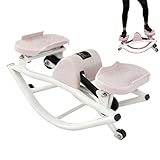
Overview: The Portable Rock Stepper occupies a premium niche with its innovative side-to-side rocking motion that targets core, legs, and glutes through low-impact movement. Designed for apartment and office use, this $216 device emphasizes joint-friendly cardio in compact spaces. Its rocking mechanism provides a unique alternative to traditional up-and-down steppers for functional fitness.
What Makes It Stand Out: The lateral movement pattern engages stabilizer muscles and core more effectively than standard steppers, offering functional fitness benefits. Its low-shock design significantly reduces joint strain, making it suitable for older adults or those with knee issues. The premium build quality supports versatile use from dorms to living rooms without noise complaints, enabling multitasking during work or TV time.
Value for Money: At $216.19, this is a significant investment compared to hydraulic steppers. The price reflects its specialized biomechanics and premium construction rather than features. For users specifically seeking lateral training or requiring ultra-low impact, it justifies the cost. However, those wanting traditional cardio intensity may find better value in adjustable resistance steppers at half the price.
Strengths and Weaknesses: • Unique side-to-side motion for core engagement • Extremely low-impact and joint-friendly design • Premium, whisper-quiet operation • Portable and space-efficient footprint • Suitable for all fitness levels and ages
• Very high price for basic functionality • Limited cardio intensity compared to other steppers • No resistance adjustment mentioned • Niche movement pattern not suitable for everyone
Bottom Line: The Rock Stepper excels for users needing joint-safe lateral training. Its premium price is justified only if you specifically want the rocking motion; otherwise, more versatile options exist for less money and provide greater intensity.
5. Rebounder Trampoline for Adults, 40"/50" Foldable Spring Fitness Trampoline with Adjustable Foam Handles - 450 lbs Capacity, Quiet & Stable Indoor/Outdoor Exercise Equipment for Cardio Workout

Overview: This Rebounder Trampoline redefines low-impact cardio with a 450-pound capacity spring system that absorbs impact three times better than average. Available in 40 or 50-inch sizes, it features a four-level adjustable handlebar and folds to one-quarter size in 30 seconds. Full-wrap spring guards and padded edges eliminate pinching risks for safe family use.
What Makes It Stand Out: The high-tension spring system (not bungees) delivers professional-grade bounce with 35% higher weight capacity than competitors. Rubberized springs and noise-dampening mat enable quiet indoor workouts perfect for apartments. The tool-free assembly and patented folding mechanism make storage effortless, while the adjustable handlebar accommodates users from 2.3 to 3.2 feet tall, from rehab to HIIT training.
Value for Money: At $99.99, this rebounder sits between budget bungee models and $200+ commercial units. The 450-pound capacity, safety features, and quiet operation justify the premium over $60 trampolines. For families or serious fitness enthusiasts wanting durability and versatility, it offers excellent long-term value. The spring system’s longevity exceeds cheaper bungee alternatives.
Strengths and Weaknesses: • Industry-leading 450-pound weight capacity • Ultra-quiet operation suitable for apartments • Patented quick-folding design for easy storage • Comprehensive safety features prevent injuries • Adjustable handlebar for all user heights
• Still requires significant storage space when folded • Springs may need periodic replacement • Higher price than basic bungee rebounders • 50-inch model takes up considerable room
Bottom Line: This rebounder is a top-tier choice for families and apartment dwellers seeking safe, quiet, high-capacity cardio. Its durability and thoughtful design make it worth the investment over budget alternatives, especially for users prioritizing joint safety and long-term use.
6. Sunny Health & Fitness Programmable Electro-Magnetic Elliptical Cross Trainer Exercise Machine, Full-Body Low-Impact Cardio Equipment with 24 Pre-Built Workout Modes and 330 lbs Capacity – SF-E3912
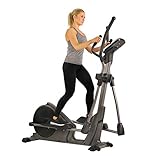
Overview: The SF-E3912 elliptical from Sunny Health & Fitness delivers gym-quality cardio in a home-friendly package. This full-body machine features electromagnetic resistance for precise intensity control, making it suitable for beginners through advanced users. With a 330-pound weight capacity and 15.5-inch stride length, it accommodates a wide range of body types while providing low-impact exercise that’s gentle on joints.
What Makes It Stand Out: The 16-level electromagnetic resistance system sets this apart from friction-based models, offering instant, accurate adjustments and whisper-quiet operation. The advanced monitor tracks nine metrics including watt generation and heart rate, while 24 pre-built programs eliminate workout monotony. The belt-drive mechanism requires minimal maintenance and ensures durability for daily home use.
Value for Money: At $406.99, this elliptical punches above its weight class. Comparable electromagnetic models typically cost $500-$800, making this an excellent mid-range value. The robust construction and extensive programming justify the investment for serious home fitness enthusiasts who want commercial-grade features without the premium price tag.
Strengths and Weaknesses: Strengths include exceptional stability, near-silent operation, comprehensive data tracking, and high weight capacity. The electromagnetic resistance provides smooth, consistent tension throughout workouts. Weaknesses include a relatively short stride length that may feel restrictive for users over 6'2", and the machine’s substantial footprint requires dedicated space. Assembly can be time-consuming despite clear instructions.
Bottom Line: This elliptical is ideal for households seeking a durable, feature-rich cardio machine that will last for years. It’s particularly valuable for users needing low-impact exercise options with varied programming. While space requirements and stride length may limit some buyers, the performance and build quality make it a smart investment for committed home exercisers.
7. Rock Stepper Side, – Portable Compact Low Shock, Core Exerciser Equipment Legs, Glutes Workout Machine Dorm Office | Dorm Office Apartment Gym Living Room Ergonomic Portable High-Performance

Overview: The Rock Stepper Side targets users needing gentle yet effective cardio in tight spaces. This hydraulic stepper emphasizes joint protection and core engagement through side-to-side rocking motion. Designed for seniors and apartment dwellers alike, it promises full-body conditioning without the noise or bulk of traditional equipment, making it perfect for bedrooms, offices, or shared living spaces.
What Makes It Stand Out: The innovative hydraulic cushioning system provides weight-sensitive resistance that adapts to your effort level while minimizing joint stress. Its double hydraulic cylinders ensure whisper-quiet operation, while the ergonomic design promotes core activation through lateral movement patterns. The senior-safe construction prioritizes stability and low-impact motion over high-intensity strain.
Value for Money: At $244.19, this premium stepper costs significantly more than basic $100 models. The price reflects advanced hydraulic engineering, superior joint protection, and near-silent operation. For users with arthritis, knee issues, or noise restrictions, the investment pays dividends in comfort and usability. However, fitness enthusiasts seeking high-intensity challenges may find better value elsewhere.
Strengths and Weaknesses: Strengths include exceptional portability, zero assembly hassle, virtually silent operation, and outstanding joint protection. The compact design stores easily under furniture. Weaknesses include limited resistance for advanced athletes, a high price point for the stepper category, and side-to-side motion that requires a learning curve. The weight capacity isn’t specified, potentially limiting some users.
Bottom Line: Perfect for seniors, rehabilitation patients, or apartment residents prioritizing quiet operation and joint health over intense cardio. The Rock Stepper Side excels at delivering gentle, consistent workouts but won’t satisfy those seeking high-resistance training. Consider this if low-impact convenience and noise reduction are your top priorities.
8. TYQMYSM Stair Stepper Machine, Rocking Fitness Stepper, with LCD Display, 100Kg Capacity Compact Stepping Cardio Equipment for Home & Office Fitness, Silent Pedals

Overview: The TYQMYSM Stair Stepper offers budget-conscious buyers a compact cardio solution without sacrificing stability. Supporting users up to 220 pounds, this steel-framed machine features a foldable design that disappears under beds or into closets. Its triangular support structure provides surprising durability for the price point, while the LCD display keeps tracking simple and motivating.
What Makes It Stand Out: The foldable frame distinguishes this from fixed steppers, making it ideal for studio apartments and multi-use spaces. Extra-wide pedals with aggressive non-slip patterns enhance safety during vigorous workouts. The quiet resistance system uses rubber rollers rather than hydraulics, creating smooth motion with minimal maintenance requirements and no fluid leakage concerns.
Value for Money: At $134.60, this represents exceptional value in the compact stepper market. Most folding steppers cost $180-$250, making this a budget-friendly entry point for home cardio. While it lacks advanced features like heart rate monitoring or pre-set programs, the solid construction and space-saving design deliver more than expected for the price.
Strengths and Weaknesses: Strengths include unbeatable portability, stable triangular frame, whisper-quiet operation, and user-friendly LCD display. The foldable design is genuinely practical for small spaces. Weaknesses include the modest 220-pound weight capacity, basic metrics tracking, and resistance that may feel light for stronger users. The steel construction, while stable, shows some flex during aggressive use.
Bottom Line: An excellent choice for beginners, casual users, or anyone prioritizing storage convenience and affordability. The TYQMYSM stepper won’t replace a gym membership but provides reliable low-impact cardio for daily use. It’s particularly valuable for apartment dwellers and those with limited space who want effective exercise without permanent equipment commitment.
9. Rock Stepper Side to Side, Portable Compact Low Shock Core Exerciser Equipment, Abs Legs Workout Step Rocker, for Dorm Office Apartment Gym Living Room
Overview: This Rock Stepper variant emphasizes core engagement through lateral rocking motion while maintaining the brand’s focus on joint protection. Designed for home environments where space and noise are concerns, it offers full-body conditioning through integrated arm and leg movements. The compact footprint makes it suitable for dorm rooms, offices, or small apartments where traditional equipment won’t fit.
What Makes It Stand Out: The weight-sensitive hydraulic system automatically adjusts resistance based on user input, creating a personalized workout without manual settings. Advanced knee protection technology minimizes stress through carefully engineered motion patterns. The double hydraulic cylinders ensure completely silent operation, allowing use during calls or while family members sleep.
Value for Money: Priced at $243.39, this sits in the premium stepper category alongside similar Rock Stepper models. The cost reflects sophisticated hydraulic engineering and specialized joint protection features. While basic steppers cost half as much, users with chronic pain, arthritis, or noise sensitivity will find the premium justified. For healthy users seeking intense cardio, the value proposition is weaker.
Strengths and Weaknesses: Strengths include exceptional joint protection, silent operation, core-focused lateral movement, and ready-to-use convenience. The smooth hydraulic motion feels premium and reduces injury risk. Weaknesses include a high price for limited resistance range, unspecified weight capacity, and motion pattern that may not appeal to everyone. The lack of digital tracking features is disappointing at this price point.
Bottom Line: Ideal for users prioritizing joint health, core activation, and quiet operation over high-intensity training. This stepper excels in therapeutic and rehabilitation contexts but won’t satisfy fitness enthusiasts seeking challenging workouts. Consider this if you have knee issues, live in noise-sensitive housing, or want gentle daily movement rather than intense cardio sessions.
10. Rock Stepper | Workout Equipment - Compact Side-to-Side Steppers,for Home Apartment Dorm Office Gym Legs Abs Glutes Women Men
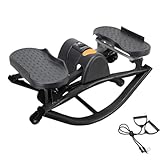
Overview: This Rock Stepper model balances affordability with functionality, offering side-to-side stepping motion with included pull ropes for upper body engagement. Ready to use out of the box, it targets users wanting convenient cardio without assembly headaches. The hydraulic system provides joint-friendly resistance suitable for all ages, while the compact design fits virtually any living space from dorm rooms to home gyms.
What Makes It Stand Out: The integrated pull rope system transforms a simple stepper into a total-body workout station, engaging arms, waist, and legs simultaneously. The hydraulic silent technology ensures operation remains whisper-quiet, while the no-assembly design means immediate use upon arrival. This combination of convenience and versatility is rare in the sub-$200 stepper category.
Value for Money: At $191.59, this offers strong value for users wanting more than basic stepping. The inclusion of resistance bands and ready-to-use design justify the modest premium over entry-level steppers. While it lacks advanced monitoring features, the total-body capability and joint-friendly engineering provide solid returns for casual fitness enthusiasts and beginners.
Strengths and Weaknesses: Strengths include immediate usability, quiet operation, effective pull rope integration, and gentle joint impact. The compact size stores easily. Weaknesses include unspecified weight capacity, basic resistance levels that may not challenge advanced users, and no digital tracking beyond potential basic displays. The side-to-side motion requires balance adaptation.
Bottom Line: A practical choice for beginners, seniors, or anyone seeking convenient, low-impact exercise with some upper body engagement. The Rock Stepper delivers on its promise of hassle-free workouts but won’t replace dedicated cardio machines for serious training. Best suited for supplemental exercise, daily movement goals, or small-space living where convenience trumps advanced features.
Why Dorm Room Cardio Requires Specialized Equipment
Space Constraints and Solutions
Dorm rooms average 180-230 square feet, with usable floor space often limited to a 4×6-foot patch after furniture. Effective equipment must either utilize vertical space, fold flat enough to slide under a bed, or serve multiple functions. Look for footprint specifications under 12 square feet for permanent fixtures and collapsible designs that reduce to under 3 inches thick for storage. The magic lies in equipment that exploits underutilized zones: under-desk areas, behind doors, or even inside closet floors when not in use.
Noise Considerations for Shared Living
Sound transmission through cinderblock walls and hollow-core doors means a single squeaky pivot point can make you the floor pariah. Quality dorm cardio gear operates below 50 decibels—quieter than a normal conversation. Focus on magnetic resistance systems over friction-based ones, sealed bearing housings, and rubber-coated components that dampen vibration. Remember, your 6 a.m. workout shouldn’t become your neighbor’s unwanted alarm clock.
Understanding Cardio Intensity in Small Spaces
HIIT vs Steady-State for Compact Areas
High-Intensity Interval Training shines in confined spaces because it delivers maximum metabolic impact in minimal time. A 15-minute HIIT session on a mini stepper can burn more calories than 45 minutes of steady-state walking. However, steady-state cardio builds aerobic base crucial for recovery and mental clarity during exam weeks. The key is choosing equipment that transitions seamlessly between both modalities—think adjustable resistance that toggles from level 2 to level 9 in seconds without complex programming.
Measuring Effort Without Machines
Without built-in heart rate monitors, use the talk test combined with rate of perceived exertion (RPE). On a scale of 1-10, HIIT intervals should hit 8-9 (breathing too hard to speak full sentences), while recovery periods drop to 3-4. For equipment without digital displays, count repetitions or strokes per minute. A jump rope hitting 120 RPM equals roughly 80% max heart rate for most users. Track workout density—how much work you complete in a fixed time—rather than distance, which becomes irrelevant in a 5-foot square.
Jump Ropes: The Ultimate Portable Cardio Tool
Handle Materials and Grip Technology
Ergonomic handles prevent forearm fatigue during extended sessions. Memory foam grips with sweat-wicking coatings outperform bare plastic, especially when your room hits 78 degrees because the radiator is stuck on high. Look for handles with 5-6 inch lengths and 1-inch diameters—optimal for most hand sizes. Internal ball-bearing systems are non-negotiable; they prevent wrist torque and allow the cable to rotate freely at 200+ RPM without friction burns.
Cable Types and Floor Compatibility
PVC-coated steel cables strike the best balance between speed and durability for indoor use. Thinner 2.4mm cables cut through air faster for double-unders but sting more on misfires. For dorm carpet or rubber tile flooring, avoid bare steel cables—they fray and leave metal shavings. Weighted cables (1/4 pound to 1 pound) add upper-body engagement but require more ceiling clearance. Always measure your available vertical space: you need at least 10 inches above your head when standing on the rope’s midpoint.
Length Adjustment Mechanisms
Screw-adjust systems with internal threading last longer than external clips that catch on clothing. The ideal length places the handles at your armpits when stepping on the rope’s center. Some designs feature sliding adjustments without tools—crucial when your roommate wants to borrow it. Avoid ropes requiring wire cutters for sizing; dorm life demands shareability and adaptability.
Resistance Bands for Cardio Training
Band Resistance Levels and Progression
Resistance bands aren’t just for strength—they create accommodating resistance for cardio when used in high-repetition, low-rest protocols. Loop bands rated at 15-35 pounds work best for cardio circuits. The key is progressive layering: start with a lighter band for 60-second work periods, then add a second band for 30-second finisher sets. Color-coding systems vary wildly between manufacturers, so always check the actual poundage rating, not just the color.
Anchoring Solutions in Dorm Rooms
Most dorm contracts forbid drilling or permanent fixtures. Over-the-door anchors with protective foam padding work, but test the door’s structural integrity first—hollow-core doors flex under tension. Better yet, use closed-loop bands that anchor around sturdy bed frames or desk legs. For floor-based cardio drills, wrap bands around your own feet in a figure-eight pattern to create a self-contained system requiring zero external anchors.
Safety and Snap-Back Prevention
Band snapping is the number one cause of dorm cardio injuries. Inspect latex daily for micro-tears, especially near connection points. Fabric-covered bands with inner latex cores contain snaps and last 3x longer than bare latex. Never exceed 150% stretch length—measure your band at rest and mark your maximum safe extension with tape. When a band breaks, it releases stored energy like a slingshot; always wear eye protection during high-velocity moves.
Mini Steppers: Vertical Space Optimization
Hydraulic vs Magnetic Resistance Systems
Hydraulic pistons dominate the mini stepper market but suffer from heat fade—resistance drops 20% after 10 minutes as fluid warms. Look for dual-piston designs with heat-dissipating aluminum housings. Magnetic resistance, while pricier, maintains consistent tension and operates silently. The sweet spot for dorm use: hybrid systems starting with magnetic resistance for warm-ups, switching to hydraulic for high-intensity peaks.
Pedal Design and Biomechanics
Pedal surface area affects ankle stability—platforms under 12 inches long force toes to hang off, straining the Achilles. Textured rubber with lateral grip ridges prevents slippage when sprinting. Some models include adjustable pedal pitch (the angle relative to horizontal), crucial for users with limited ankle mobility from old sprains. Pivoting pedals that follow your natural foot motion reduce knee shear forces by up to 30% compared to fixed platforms.
Stability Features on Uneven Floors
Dorm floors slope toward drains and have mysterious lumps under the carpet. Mini steppers with independently leveling feet—or at least three contact points—won’t rock during intense intervals. Base weight matters: units under 15 pounds wobble at speeds above 60 SPM (steps per minute). Rubberized base pads should be at least 1/4-inch thick to dampen vibration transmission to the room below.
Under-Desk Pedal Exercisers
Seated Cardio Biomechanics
Pedaling while seated recruits fewer muscle fibers than standing cardio, but proper setup maximizes engagement. The pedal axis should align with your knee joint when seated upright—usually 15-18 inches from floor to pedal center. Too low and you’ll hyperflex your hips; too high and your quads disengage early. Look for models with adjustable crank lengths (4 to 6 inches) to accommodate different chair heights and leg lengths.
Resistance Types and Smoothness
Magnetic resistance reigns supreme for under-desk units, offering infinite adjustability without the clicking steps of friction pads. The flywheel weight determines smoothness—anything under 3 pounds feels choppy and stalls between pedal strokes. Belt-driven systems whisper compared to chain drives, but require periodic tension adjustments. Test the resistance range: the easiest setting should feel like nothing (for 2-hour study sessions), while the hardest should make 60 RPM a challenge.
Display Metrics That Matter
Forget calorie counts—they’re notoriously inaccurate without heart rate data. Focus on RPM, time, and distance (which is really total revolutions). The best displays auto-pause after 5 seconds of inactivity, so bathroom breaks don’t skew your stats. Backlit screens drain batteries faster; instead, choose high-contrast LCDs visible in dim lighting. Some units track forward/reverse pedaling, adding workout variety that hits different muscle groups.
Foldable Treadmill Technology
Deck Cushioning and Joint Impact
Running on a foldable treadmill shouldn’t feel like pounding pavement. Deck cushioning systems use elastomer grommets or shock-absorbing boards. Multi-zone cushioning—firmer in the push-off zone, softer at impact—reduces knee stress by 15-20% compared to uniform decks. For dorms, look for decks under 50 inches long that still provide 15 inches of width; shorter decks save space but restrict stride length for users over 5’8”.
Motor Power vs Noise Levels
Motor power is measured in continuous horsepower (CHP), not peak HP. A 2.0 CHP motor handles walking and light jogging, but generates more heat and noise than a 1.5 CHP motor optimized for walking. Brushless DC motors cost more but run 10 decibels quieter and last twice as long. Check the motor housing insulation—rubber gaskets around the motor compartment cut noise by absorbing vibration before it transfers to the frame.
Storage Mechanisms and Safety Locks
Hydraulic assist folding systems prevent the deck from crashing down when released—essential when you’re groggy at 6 a.m. Storage height should be under 10 inches to slide under a standard dorm bed. Transport wheels must lock; otherwise, the unit migrates across the floor during use. Some models fold vertically against a wall, but verify the folded footprint doesn’t block emergency exits—a fire code violation in most dorms.
Compact Elliptical Machines
Stride Length and Natural Movement
Stride length determines how closely the motion mimics natural running. Compact ellipticals typically offer 11-14 inch strides, shorter than commercial units’ 18-20 inches. This can feel choppy for taller users. Look for articulating footplates that adjust angle throughout the stride, compensating for shorter lengths by allowing ankle flexion. Some models feature adjustable stride lengths—ideal for multiple users sharing one machine.
Flywheel Weight and Motion Quality
Heavier flywheels (15+ pounds) create momentum that smooths the elliptical path and prevents the jerky “dead spots” at top and bottom of the stride. However, weight adds bulk. The dorm-friendly compromise: perimeter-weighted flywheels that simulate heaviness without the mass. Magnetic resistance paired with a mid-weight (8-12 pound) flywheel delivers fluid motion without making the unit impossible to move for cleaning.
Multi-Directional Capabilities
Forward pedaling hits posterior chain; backward pedaling torches quads. Machines allowing both directions without disengaging resistance offer twice the workout variety. Some advanced compact ellipticals add vertical “climb” motion—essentially a mini stepper-elliptical hybrid. While innovative, these complex linkages require more maintenance and have more failure points, problematic when you can’t easily ship things for warranty repair.
Portable Rowing Machines
Resistance Mechanisms Compared
Rowers use air, magnetic, water, or hydraulic resistance. Air rowers are loud—fan blades chopping air echo through thin walls. Hydraulic pistons are quiet but lack the smooth pull of other types. Water rowers provide the most natural feel but weigh 50+ pounds when filled. For dorms, magnetic resistance offers the best noise-to-performance ratio. Dual-resistance systems (magnetic + air) let you fine-tune feel but cost more and add complexity.
Rail Length and User Height Compatibility
Compact rowers often sacrifice rail length, limiting leg extension for users over 6 feet. Measure your inseam and compare to the rail’s travel distance—you need at least 35 inches from the footplate to the seat at full extension. Some “compact” rowers use a center-pull design where the handle retracts from the middle, halving the required rail length. These save space but alter the biomechanics, engaging core more and back less.
Vertical Storage Solutions
The best dorm rowers store upright in a 2×2-foot footprint. Check the storage lock mechanism—some use a simple pin that vibrates loose; others have a robust latch system. The stored height should clear standard 8-foot ceilings with room to spare. Transport wheels are mandatory; even “lightweight” rowers weigh 35 pounds. Consider the floor protection: the stored unit concentrates 70+ pounds on two small wheels, denting soft vinyl flooring.
Short-Handle Battle Ropes
Wave Patterns and Metabolic Demand
Battle ropes torch calories through anaerobic power output, but standard 50-foot ropes need 25 feet of linear space. Short-handle versions use 20-foot ropes with weighted ends, requiring only 10 feet. The metabolic cost remains high because you generate waves faster with shorter ropes. Alternate between slams (vertical waves) and snakes (horizontal waves) to hit different energy systems. A 20-second on/40-second off protocol for 10 minutes equals a 5K run in calorie expenditure.
Anchor Points in Small Spaces
Loop the rope around a bed frame leg or heavy desk—anything that won’t slide weighing at least 50 pounds. Use a rope anchor strap with a protective sleeve to prevent wear. Never anchor to radiator pipes or electrical conduits. For door anchors, only use solid-core doors with reinforced hinges, and place the anchor near the hinge side where the frame bears load, not near the handle where leverage works against you.
Rope Material and Durability
Polyester ropes with a nylon sheath resist fraying better than pure manila, which sheds fibers and smells when damp from sweat. Rope diameter affects grip fatigue—1.5-inch ropes build forearm strength but exhaust grip in 30 seconds; 2-inch ropes are overkill for cardio. Look for heat-shrink handles with textured patterns; bare rope ends unravel and cause blisters. A rope weighing 15-18 pounds total provides enough inertia for sustained waves without becoming unwieldy.
Agility Ladders for Cardio Conditioning
Rung Spacing and Workout Variety
Standard rung spacing is 15 inches, but adjustable ladders let you modify from 12 to 18 inches. Tighter spacing forces faster foot turnover, spiking heart rate quickly. Wider spacing emphasizes power and stride length. For cardio, use 13-14 inch spacing for high-knee drills that keep you in the anaerobic zone. Flat rungs that lie flush prevent tripping; round rungs roll underfoot. The ladder should extend at least 10 feet for meaningful drill sequences.
Surface Compatibility and Slippage Prevention
Dorm carpet provides natural grip, but hardwood or tile requires rubberized rung undersides. Some ladders include anchor stakes for outdoor use—useless indoors but indicate a heavier-duty design. Weighted end caps prevent the ladder from bunching during lateral drills. If your floor is particularly slick, place a yoga mat underneath; just ensure the mat doesn’t create a trip hazard at the edges.
Storage and Portability Features
The best agility ladders stuff into a drawstring bag smaller than a water bottle. Avoid ladders with rigid rungs that don’t fold; they become a tangled mess. Look for side rails made of flat webbing rather than round cord—webbing resists twisting and lies flat when deployed. After use, shake out debris before storing; a single paperclip inside the bag can puncture the ladder material during transport.
Smart Features and Tech Integration
App Connectivity and Workout Tracking
Bluetooth connectivity turns basic equipment into data-rich training tools. But not all apps are created equal—proprietary apps often die when companies fold. Look for equipment compatible with open standards like FTMS (Fitness Machine Service Protocol) that sync with popular platforms. Heart rate monitor compatibility is crucial; optical wrist sensors fail during vigorous movement, so chest strap support is preferred. Data export options (CSV, GPX) let you analyze trends across semesters.
Virtual Classes and Motivation
Live and on-demand classes combat workout monotony, but streaming quality matters in dorms with shared Wi-Fi. Equipment with offline workout storage lets you preload sessions when bandwidth is high. Screen placement is critical—tablets mounted at eye level prevent neck strain better than phones propped on the floor. Audio options should include Bluetooth headphone connectivity; your roommate doesn’t need to hear your virtual trainer shouting encouragement.
Power Requirements in Dorms
Many compact cardio machines use battery power to avoid outlet competition. Check battery life specifications—20 hours is minimum, 50+ is excellent. For plug-in units, verify amperage draw; dorms often limit circuits to 10 amps total. Machines with auto-shutoff save power and prevent tripping breakers when you rush to class. USB charging ports are a bonus, letting you power your phone during workouts without fighting for wall outlets.
Budget Planning for Dorm Fitness
Cost-Per-Use Calculations
A $200 mini stepper used 150 times per semester costs $0.67 per use. A $50 jump rope used 300 times costs $0.17 per use. Factor in equipment lifespan: hydraulic pistons typically last 500 hours before fading, while magnetic systems endure 2000+ hours. Divide purchase price by expected hours of use to compare true value. Don’t forget hidden costs—replacement batteries, lubricants, and floor mats add 15-20% to initial investment.
Resale Value Considerations
Dorm equipment has excellent resale value if you choose timeless designs. Avoid trendy colors or brand-specific eccentricities. Standardized equipment like jump ropes and resistance bands retain 60-70% of value on campus marketplaces. Machines with transferable warranties command higher resale prices. Keep original packaging; a box doubles resale value by suggesting careful ownership. Sell at semester’s end when demand peaks, not over summer break.
Warranty and Durability Trade-offs
Warranties reveal manufacturer confidence. One-year warranties are standard; two years indicates premium build. But read the fine print—many exclude “commercial use,” which some companies interpret as dorm use due to high-frequency shared access. Look for “residential” warranties explicitly covering multi-user environments. Replacement part availability matters; a three-year warranty is worthless if the company stocks no parts after year two.
Maintenance in Small Living Spaces
Cleaning Protocols for Shared Areas
Sweat contains salt that corrodes metal and breeds bacteria in textured grips. Wipe equipment with alcohol-based cleaners after each use, but avoid bleach on rubber—it causes cracking. Keep microfiber cloths in your desk drawer for convenience. For machines with crevices, use compressed air cans (the same ones for cleaning keyboards) to blast out dust and skin cells weekly. This prevents the “dorm funk” that makes equipment smell like a locker room.
Lubrication and Upkeep Needs
Hydraulic pistons require periodic bleeding to remove air bubbles that cause jerky motion. Magnetic systems need virtually no lubrication but accumulate metal dust on the flywheel—clean with a dry cloth monthly. Jump rope cables develop kinks; hang them vertically when stored to maintain straightness. Resistance bands need talc powder on latex surfaces to prevent sticking and cracking. Keep a small maintenance kit in a shoebox under your bed: lubricant, cloths, talc, and a multi-tool.
Odor and Sweat Management
Enclosed spaces amplify smells. Place charcoal deodorizing bags inside equipment storage areas—they absorb moisture without chemicals. Silica gel packets in electronics compartments prevent corrosion from humidity. For fabric components (like resistance bands or rope handles), occasional hand-washing with mild detergent extends life and eliminates odor. Never store damp equipment; a 10-minute air-dry by the window prevents mildew that can ruin gear in days.
Creating Your Dorm Cardio Routine
Sample Weekly Structure (without specific products)
Structure matters more than equipment variety. A balanced week includes two HIIT days, two steady-state days, and one active recovery session. HIIT days: 20 minutes total, alternating 30 seconds max effort with 90 seconds easy pace. Steady-state days: 40 minutes at conversational pace while watching lectures. Active recovery: 15 minutes of gentle movement focusing on form. Always schedule rest days—overtraining in a stressful environment leads to burnout faster than in a well-equipped gym.
Progression Strategies
Progress when you can complete your current routine with an RPE of 6 or lower for three consecutive sessions. Increase intensity by 5% increments: add 30 seconds to work intervals, increase resistance one level, or reduce rest periods by 10 seconds. Track total weekly volume (minutes × average intensity) rather than single workout performance. This prevents the “more is better” trap that causes overuse injuries in repetitive motion equipment like steppers and bikes.
Recovery in Confined Spaces
Recovery is where adaptation happens. Use your equipment for active recovery at 30% max effort to flush lactate. Foam rolling on a yoga mat (even a thin travel mat) works wonders, but space is tight. Instead, use a lacrosse ball against the wall for myofascial release—it takes zero floor space. Elevate legs on your bed for 5 minutes post-workout to aid venous return. The real secret? Sleep. No equipment compensates for sleep deprivation’s catabolic effects.
Frequently Asked Questions
Can I really get an effective cardio workout in a space smaller than my bathroom?
Absolutely. Effectiveness depends on intensity, not space. A 4×6-foot area accommodates high-knee drills, jump rope, and most compact machines. HIIT protocols in small spaces can achieve 90% of max heart rate, matching outdoor sprint performance. The constraint often increases focus and intensity.
How do I know if my dorm floor can support a treadmill or rower?
Standard dorm floors support 40 pounds per square foot. A 150-pound treadmill over 15 square feet exerts 10 pounds per square foot—well within limits. However, dynamic loading (jumping) doubles effective weight. Check for floor sag when bouncing; if you see flex, stick to lower-impact options like bikes or steppers. Always place equipment perpendicular to floor joists (usually running parallel to the longer wall) for maximum support.
What’s the quietest cardio option for 5 a.m. workouts?
Under-desk pedal exercisers with magnetic resistance register under 40 decibels—barely audible through walls. Resistance bands are silent but can snap loudly if they break. Jump ropes on carpet with a mat are quiet, but the impact transmits through the floor. Mini steppers with magnetic resistance and thick rubber base pads rank second quietest.
How much should I budget for quality dorm cardio equipment?
Plan $100-200 for a primary piece (stepper, bike, rower) and $30-50 for accessories (jump rope, bands). This gets you commercial-grade durability without overpaying for features you won’t use. Avoid anything under $75 in the primary category—it won’t survive a semester of daily use. Consider this a semester-long investment; spending $150 on equipment you use 150 times costs less than a monthly gym membership.
Will using cardio equipment in my dorm violate my housing agreement?
Most dorm contracts prohibit only “damaging modifications” and “excessive noise.” Equipment that doesn’t bolt down and operates under 50 decibels typically complies. However, some schools ban heat-producing appliances, which could include motorized equipment. Check your specific agreement’s clause on “personal fitness equipment.” When in doubt, email your RA with decibel specs and footprint dimensions—documented approval prevents future issues.
How do I prevent my roommate from using (and breaking) my equipment?
Set clear boundaries day one. Offer supervised “test drives” but explain maintenance needs. For machines, use a bike lock through the frame and around your bed frame when not in use. With portable items, store them in a locked bin. If sharing is inevitable, create a written agreement splitting maintenance costs and establishing usage schedules. Damage deposits aren’t just for apartments.
Can compact equipment really help with weight management, or is it just a gimmick?
Weight management hinges on creating a caloric deficit, which equipment facilitates by increasing expenditure. A mini stepper used 30 minutes daily burns 250-300 calories—enough to offset one dining hall dessert. The real benefit is metabolic: consistent cardio improves insulin sensitivity, making it easier to resist junk food cravings during stress. Equipment is a tool, not a magic solution, but it’s a highly effective tool when used consistently.
What’s the best way to track progress without smart equipment?
Use a simple logbook: date, workout type, duration, average RPE, and notes on how you felt. Every two weeks, perform a standardized test: max jump rope RPM for 60 seconds, or max steps in 3 minutes on your stepper. Progress is trending upward in these tests while RPE at submaximal effort decreases. Photos of your setup every month also reveal subtle improvements in form and efficiency.
How do I deal with sweat and odor in a small, shared room?
Prevention beats treatment. Place a small fan pointed at you to evaporate sweat faster, reducing ambient humidity. Workout towels should be antimicrobial microfiber, not cotton. Immediately post-workout, wipe equipment with alcohol wipes, then hang towels on a drying rack—not draped over furniture. A small dehumidifier (under $30) running for 30 minutes after workouts prevents that stale gym smell from permeating your clothes and bedding.
Should I prioritize cardio equipment or strength equipment for my dorm?
If your goal is general fitness and weight management, prioritize cardio. It’s harder to replicate cardio benefits without equipment than strength benefits (which you can get from bodyweight exercises). However, the ideal setup includes one cardio piece and a set of resistance bands for strength circuits. This combination covers 90% of fitness needs in minimal space. If forced to choose, pick the cardio tool you’ll actually use—consistency trumps theoretical superiority every time.