The silence of the backcountry is both a hunter’s sanctuary and their greatest vulnerability. When you’re five miles deep in grizzly territory or perched on a remote ridge at 9,000 feet, that peaceful isolation means help isn’t just minutes away—it’s hours, possibly days. A twisted ankle becomes a potential overnight ordeal; a deep laceration from a field dressing accident transforms into a life-threatening hemorrhage. This is the unspoken contract we sign when we pursue game beyond the trailhead: self-sufficiency isn’t optional, it’s survival.
Your trauma kit isn’t another piece of gear to tick off a list—it’s your lifeline. But here’s what most hunters get wrong: they either carry a glorified band-aid kit that belongs at a kid’s soccer game, or they haul a paramedic’s rig that weighs more than their boned-out elk quarters. The sweet spot lives somewhere in between: a purpose-built system that addresses the specific injury patterns of hunting while respecting the brutal weight constraints of backcountry travel. Let’s dissect what actually belongs in your pack and why every item must earn its place.
Top 10 Compact Trauma Kits for Backcountry Hunters
Detailed Product Reviews
1. Adventure Medical Kits Sportsman Series Medical Kit - 100 - First Aid Kit for Camping, Hiking, Hunting & More - For 2 People for 4 Days - Includes Bandages, Medicine, Guide Book & More

###1. Adventure Medical Kits Sportsman Series Medical Kit - 100 - First Aid Kit for Camping, Hiking, Hunting & More - For 2 People for 4 Days - Includes Bandages, Medicine, Guide Book & More
Overview: The Adventure Medical Kits Sportsman Series 100 delivers comprehensive first aid coverage for two people on four-day outdoor excursions. Designed specifically for hunters, anglers, and campers, this kit balances thoroughness with portability. The compact storage bag houses hospital-quality medical supplies organized for rapid deployment when emergencies strike in remote locations. A wilderness first aid guidebook adds educational value, helping users make critical decisions when professional medical care is hours away.
What Makes It Stand Out: This kit’s trauma-ready design includes bleeding control supplies rarely found in standard first-aid kits, making it field-ready for serious injuries. The organized layout eliminates fumbling during high-stress situations, while the included medical guide transforms novices into competent first responders. Hospital-grade bandages, medications, and instruments ensure you’re not relying on flimsy, inadequate supplies when it matters most.
Value for Money: At $43.99, the Sportsman 100 offers solid value for dedicated outdoor pairs. Purchasing these professional-grade components individually would easily exceed $60, plus the organizational system and guidebook add intangible worth. For weekend warriors and serious sportsmen alike, this represents a reasonable investment in safety.
Strengths and Weaknesses: Strengths include professional-quality supplies, excellent organization, trauma-specific contents, and educational materials. The four-day capacity is realistic for most trips. Weaknesses involve limited scalability beyond two people, potential overkill for casual day hikers, and a price point that might deter infrequent adventurers. The kit also requires periodic expiration date monitoring.
Bottom Line: Perfect for outdoor duos who venture beyond cell service, this kit provides peace of mind through genuine preparedness rather than token supplies. It’s a professional-grade solution for serious adventurers.
2. IFAK Trauma Kit with Tourniquet, 4-Inch Israeli Bandage, Tactical First Aid Kit for Car, Camping, Hiking and Travel with Molle Bag (Camouflage Green)

Overview: The IFAK Trauma Kit delivers focused bleeding control in a tactical package designed for high-risk scenarios. At $35.99, this camouflage kit prioritizes life-threatening trauma management over minor scrapes, making it ideal for vehicle storage, range bags, or outdoor adventures where serious injury risk exists. The MOLLE-compatible pouch ensures versatile attachment options for tactical users.
What Makes It Stand Out: This kit excels in hemorrhage control with its tourniquet, Israeli bandage, and compressed gauze combination. The 1000D nylon MOLLE bag features waterproof lining and quick-release panels, demonstrating serious build quality. High-strength materials in the tourniquet, including aluminum alloy components, ensure reliability when cheaper alternatives might fail under stress.
Value for Money: For under $36, receiving a legitimate tourniquet, Israeli bandage, MOLLE pouch, and compression supplies represents exceptional value. Individual components would cost significantly more, making this an economical entry into serious trauma preparedness. The tactical bag itself justifies a substantial portion of the price.
Strengths and Weaknesses: Strengths include professional bleeding control tools, rugged construction, MOLLE compatibility, and multi-scenario versatility. The kit addresses the most preventable causes of traumatic death. Weaknesses involve minimal general first-aid supplies for non-traumatic injuries, the tactical aesthetic that may not suit all users, and limited capacity beyond hemorrhage control. Casual campers may need supplementary items.
Bottom Line: An essential trauma-specific supplement to any first-aid arsenal, this kit is perfect for tactical enthusiasts, hunters, and anyone prioritizing life-threatening injury preparedness over minor wound care.
3. Adventure Medical Kit Trauma Pak First Aid Kit with QuikClot - First Aid Kit for Emergency Supplies, Camping Essentials & More - Compact Trauma Kit with Gloves, Alcohol Swabs, Bandages & More

Overview: Weighing merely 4.4 ounces, the Adventure Medical Trauma Pak with QuikClot redefines portable emergency care. This pocket-sized trauma kit focuses exclusively on severe bleeding control, utilizing advanced hemostatic technology to accelerate clotting. The waterproof DryFlex packaging ensures contents remain sterile in any environment, from BDU pockets to glove boxes, making it an everyday carry essential for the prepared individual.
What Makes It Stand Out: QuikClot gauze infused with kaolin represents the gold standard in civilian hemostatic agents, potentially saving lives when direct pressure alone proves insufficient. The kit’s micro-footprint allows unobtrusive carry without compromising capability. Emergency trauma care instructions provide critical guidance during panic situations, while the waterproof bag guarantees performance regardless of weather exposure.
Value for Money: At $36.49, you’re primarily investing in QuikClot technology that typically retails for $25-30 alone. The included trauma pad, bandages, and waterproof packaging make this a compelling value for those seeking bleeding control without bulk. It’s affordable insurance against worst-case scenarios.
Strengths and Weaknesses: Strengths include QuikClot effectiveness, extreme portability, waterproof protection, and focused purpose. The lightweight design encourages actual carry rather than leaving it behind. Weaknesses involve extremely limited quantity of supplies, no general first-aid items, and the need for separate comprehensive kits for extended trips. It’s a specialized tool, not a complete solution.
Bottom Line: The ultimate supplemental trauma kit for EDC enthusiasts, this QuikClot-equipped pak belongs in every vehicle, backpack, and range bag as a critical backup for uncontrolled bleeding situations.
4. Adventure Medical Kits Sportsman Series Medical Kit - 200 - First Aid Kit for Camping, Hiking, Hunting & More - For 4 People for 4 Days - Includes Bandages, Medicine, Guide Book & More

Overview: Scaling up the Sportsman Series, the Adventure Medical Kits 200 accommodates four people for four days, making it ideal for family camping trips or small group expeditions. The Easy Care Organization System provides intuitive access to hospital-quality supplies when treating multiple victims. This kit maintains the series’ emphasis on trauma readiness while expanding general first-aid capacity for larger parties venturing into remote areas.
What Makes It Stand Out: The Easy Care Organization System surpasses simple compartments, using injury-specific labeling that allows anyone to locate appropriate supplies quickly. The four-person capacity doesn’t just double the Sportsman 100—it strategically scales contents for group dynamics where multiple simultaneous injuries might occur. The included wilderness medicine guide becomes even more valuable when responsible for others’ safety.
Value for Money: At $54.99, the per-person cost drops significantly compared to the Sportsman 100, offering better value for groups. Building a comparable kit for four people would easily exceed $80, making this pre-packaged solution both economical and expertly curated. The organizational system alone saves precious time during emergencies.
Strengths and Weaknesses: Strengths include excellent group coverage, superior organization, trauma-ready components, and comprehensive medical supplies. The scalability from individual to group needs is seamless. Weaknesses involve increased size and weight that may deter solo travelers, the same periodic expiration monitoring requirement, and a price point that might be excessive for couples who don’t camp with others.
Bottom Line: The perfect group safety solution for outdoor families and adventure teams, this kit provides professional-grade medical preparedness scaled for four-person expeditions without unnecessary bulk.
5. EVERLIT Emergency Trauma Kit, CAT GEN-7 Tourniquet 36" Splint, Military Combat Tactical IFAK for Critical Wounds First Aid, Gun Shots, Severe Bleeding Control (Camouflage)
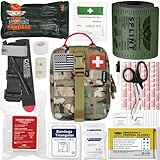
Overview: The EVERLIT Emergency Trauma Kit represents the pinnacle of civilian trauma preparedness, uniquely customized by U.S. military veterans. At $69.95, this premium kit includes a genuine CAT GEN-7 tourniquet, 36-inch splint, and comprehensive hemorrhage control supplies. Designed for tactical medics, first responders, and serious preparedness advocates, it addresses massive bleeding, respiratory injuries, and fractures in one professional package.
What Makes It Stand Out: Veteran curation ensures real-world functionality, not theoretical contents. The CAT GEN-7 tourniquet is the battlefield-proven gold standard, while the included splint addresses limb fractures often overlooked in trauma kits. The innovative approach to respiratory care—using kit packaging as an occlusive dressing—demonstrates resourceful battlefield medicine principles adapted for civilian use.
Value for Money: Though the highest-priced option, the $69.95 tag is justified by premium components. A genuine CAT tourniquet alone costs $30-35, making the complete kit a sound investment for those serious about trauma care. You’re paying for proven, life-saving equipment, not generic substitutes.
Strengths and Weaknesses: Strengths include veteran-designed contents, top-tier tourniquet, fracture management capabilities, comprehensive trauma coverage, and professional-grade materials. Weaknesses involve the premium price, tactical focus that may intimidate casual users, and limited general first-aid supplies for minor injuries. The camouflage pattern isn’t ideal for all environments.
Bottom Line: For those who refuse to compromise on trauma preparedness, this veteran-customized kit delivers professional-grade capabilities that can mean the difference between life and death in critical situations.
6. IFAK Trauma Kit with Tourniquet, 6-Inch Israeli Bandage, Splint, Tactical First Aid Kit for Car, Camping, Hiking and Travel with Molle Bag (Stellar Black)

Overview: This $45.99 trauma kit delivers professional-grade medical intervention for outdoor enthusiasts and first responders. It includes a tourniquet, 6-inch Israeli bandage, hemostatic gauze, chest seals, and a 36-inch moldable splint for comprehensive trauma management. The 1000D nylon MOLLE bag features waterproof lining and quick-release panel for rapid deployment. Designed for military, hunting, camping, and vehicle emergencies, it addresses massive hemorrhage, airway obstruction, and hypothermia—the leading preventable causes of death in trauma scenarios.
What Makes It Stand Out: Unlike basic first aid kits, this includes chest seals for tension pneumothorax and emergency blankets for hypothermia prevention—critical components often omitted. The quick-adjust buckle and double-zipper design enable one-handed operation under stress. Its modular attachment system works with tactical vests, backpacks, or vehicle headrests, providing genuine versatility rather than cosmetic tactical styling.
Value for Money: Purchasing these components separately would exceed $70. This kit bridges the gap between $20 basic kits and $100+ professional setups. While the tourniquet brand isn’t specified, the inclusion of authentic trauma components—hemostatic gauze, Israeli bandage, and chest seals—at this price represents exceptional value for function-focused users.
Strengths and Weaknesses: Strengths include comprehensive trauma coverage, quality MOLLE bag with waterproofing, and organized interior for rapid access. The 36-inch splint is versatile for various fractures. Weaknesses: unspecified tourniquet may concern purists, the 6-inch Israeli bandage is small for large wounds, and chest seals appear non-vented rather than vented.
Bottom Line: This kit provides genuine lifesaving capability at a consumer-friendly price. Ideal for outdoor adventurers, vehicle emergency kits, and tactical enthusiasts. While professionals might upgrade the tourniquet, the overall package offers impressive medical preparedness. For under $50, it’s one of the best values in trauma care.
7. RHINO RESCUE IFAK Trauma Kit with C-A-T Tourniquet, Tactical First Aid Kit Molle Pouch for Military, Combat, Car, Camping, Hiking, Travel (Coyote Brown)

Overview: The RHINO RESCUE IFAK at $119.99 represents a premium trauma solution built for professionals and serious civilian operators. This kit centers around an authentic C-A-T (Combat Application Tourniquet), widely regarded as the gold standard for hemorrhage control. It includes two non-vented chest seals, 36-inch splint, triangular bandage, elastic bandage, compress bandage, and self-adhering bandage. The abrasion-resistant MOLLE pouch features a rip-away panel for “Grab and Go” deployment and universal headrest mounting. Designed for military, combat, and high-risk outdoor activities, it provides immediate intervention for massive hemorrhage, chest trauma, and fractures.
What Makes It Stand Out: The genuine C-A-T tourniquet alone justifies the premium price, offering proven reliability in combat zones. The strategically organized interior compartments ensure every item is instantly accessible when seconds matter. The rip-away panel’s quick-detach capability, combined with adjustable vehicle headrest mounting, provides unmatched deployment flexibility. This is a purpose-built system rather than a collection of components.
Value for Money: While expensive, purchasing a C-A-T tourniquet ($30), chest seals ($20), splint ($15), and quality MOLLE pouch ($40) separately would approach this price. You’re paying for professional-grade components, expert organization, and proven reliability. For military personnel, tactical medics, and serious preppers, this investment in authentic, combat-tested gear is justified.
Strengths and Weaknesses: Strengths include authentic C-A-T tourniquet, superior organization, durable abrasion-resistant construction, and versatile mounting options. The rip-away panel is genuinely useful. Weaknesses: high price point excludes casual users, non-vented chest seals may not suit all chest wounds, and the kit lacks hemostatic gauze. Some may find it overbuilt for low-risk activities.
Bottom Line: This is professional-grade trauma care for those who refuse to compromise. Perfect for military operators, law enforcement, tactical medics, and serious survivalists. While overkill for casual camping, it delivers unmatched reliability when lives depend on equipment performance. The premium is justified for high-risk environments where failure isn’t an option.
8. RHINO RESCUE IFAK Trauma Kit with C-A-T Tourniquet, Tactical First Aid Kit Molle Pouch for Military, Combat, Car, Camping, Hiking, Travel (Black)

Overview: The RHINO RESCUE IFAK in black ($119.99) delivers identical professional-grade trauma capability as its coyote brown counterpart, offering the same authentic C-A-T tourniquet and comprehensive medical components in a discreet colorway. This kit includes two non-vented chest seals, 36-inch splint, triangular bandage, elastic and compress bandages, plus self-adhering wrap. The abrasion-resistant MOLLE pouch features the same rip-away panel and universal headrest mounting system. Built for military, combat, and tactical applications, it addresses massive hemorrhage, chest trauma, and fractures with combat-proven tools.
What Makes It Stand Out: Beyond the genuine C-A-T tourniquet, the black colorway offers tactical advantages for low-profile operations and civilian environments where coyote brown screams “military.” The black variant maintains the same strategic interior organization and quick-detach capability, ensuring professional performance with enhanced discretion. This color option makes the kit more versatile for plainclothes officers, civilian preppers, and international travelers.
Value for Money: Identical to the coyote version, the $119.99 price reflects professional-grade components and expert system design. The black color doesn’t affect functionality but adds versatility for users requiring discreet preparedness. For those operating in urban environments or wanting less conspicuous gear, this color premium (if any) is worthwhile.
Strengths and Weaknesses: Strengths include authentic C-A-T tourniquet, superior organization, durable construction, rip-away panel, and discreet black colorway. The mounting flexibility remains excellent. Weaknesses: premium pricing, non-vented chest seals, lack of hemostatic agents, and potential overkill for recreational users. The black color may show wear more visibly than coyote brown.
Bottom Line: Choose the black variant for the same professional performance with added discretion. Ideal for plainclothes law enforcement, urban preppers, and anyone prioritizing low-profile preparedness. While functionally identical to the coyote version, the black colorway expands its suitability across more environments. For professional use or serious civilian preparedness, it’s a worthy investment in reliable trauma care.
9. Medresq IFAK Trauma Kit – Compact Emergency First Aid Essentials for Military, Camping, Hiking, and Everyday Survival (Black)
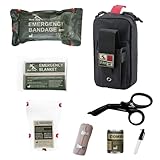
Overview: The Medresq IFAK Trauma Kit at $28.49 offers entry-level trauma essentials in an ultra-compact package. This budget-friendly kit includes a 1.4-inch Israeli Bandage, compressed gauze, trauma shears, marker pen, emergency blanket, combat tape, and elastic crepe bandage. Designed for quick access via pull tabs and two-way zippers, the tactical nylon bag attaches to belts, backpacks, or vests. Targeted at casual outdoor enthusiasts and everyday carry, it provides basic hemorrhage control and wound management for minor to moderate injuries.
What Makes It Stand Out: Remarkable affordability meets practical design. The inclusion of trauma shears enables safe cutting of clothing and materials in emergencies—a feature often missing in budget kits. The quick-pull tab and silent drawstring facilitate rapid one-handed opening. At under $30, it’s one of the few kits offering an Israeli Bandage and compressed gauze together, making it accessible for students, hikers, and budget-conscious preppers.
Value for Money: Exceptional value for the price. An Israeli Bandage alone costs $8-$12, making this kit’s comprehensive contents impressive. However, the absence of a tourniquet and chest seals limits its effectiveness for severe trauma. It’s perfect for minor wounds and as a supplemental kit, but shouldn’t be relied upon as a primary trauma system for high-risk activities.
Strengths and Weaknesses: Strengths include unbeatable price, trauma shears, quick-access design, and lightweight portability. The Israeli Bandage provides effective pressure dressing capability. Weaknesses: no tourniquet, no chest seals, small 1.4-inch bandage limits wound coverage, lacks hemostatic agents, and minimal splinting options. Not suitable for severe hemorrhage or chest trauma.
Bottom Line: An excellent entry-level or backup trauma kit for the price. Ideal for casual hikers, students, or as a vehicle supplement. However, serious outdoor adventurers and those in high-risk environments should invest in a more comprehensive kit with tourniquet and chest seals. It delivers impressive value for basic wound care but has clear limitations for life-threatening trauma.
10. EVERLIT 250 Pieces Survival First Aid Kit IFAK EMT Molle Pouch Survival Kit Outdoor Gear Emergency Kits Trauma Bag for Camping Boat Hunting Hiking Home Car Earthquake and Adventures Red
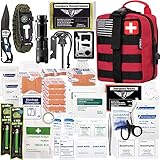
Overview: The EVERLIT 250-Piece Survival First Aid Kit ($39.99) blends comprehensive medical supplies with survival tools in a single MOLLE-compatible package. Designed by army veterans, this 2-pound kit exceeds OSHA guidelines with contents suitable for family emergencies and outdoor adventures. The 1000D water-resistant nylon pouch offers three large compartments for organization. Beyond medical supplies, it includes a tactical flashlight, paracord bracelet with compass and whistle, flintstone, knife, saber card, glow sticks, and emergency poncho—making it a hybrid survival system.
What Makes It Stand Out: The veteran-designed approach ensures practical, field-tested item selection rather than theoretical preparedness. Exceeding OSHA guidelines provides confidence for workplace compliance. The integrated survival tools eliminate the need for separate kits, offering all-in-one convenience. The MOLLE compatibility and water-resistant construction make it genuinely field-ready rather than a home kit in a tactical pouch.
Value for Money: With 250 pieces at $40, the per-item cost is remarkably low. Purchasing medical supplies and survival tools separately would easily exceed $60-$80. However, the compromise is individual item quality—while adequate for most situations, professionals may want higher-grade components. For families and recreational users, it delivers unmatched versatility and quantity.
Strengths and Weaknesses: Strengths include massive item count, veteran-designed selection, OSHA compliance, survival tool integration, and excellent organization. The lightweight design is travel-friendly. Weaknesses: trauma-specific items like tourniquets and chest seals may be absent or lower quality, survival focus dilutes medical depth, and durability of included tools may not match standalone purchases.
Bottom Line: This is the ultimate all-in-one solution for families and outdoor enthusiasts wanting comprehensive preparedness without assembling multiple kits. Perfect for camping, vehicle storage, and home emergencies. While not a dedicated trauma kit for professionals, it provides impressive coverage for general preparedness. For $40, it’s an exceptional value that balances medical and survival needs admirably.
Why Every Backcountry Hunter Needs a Trauma Kit
The statistics paint a sobering picture. Hunting-related injuries in wilderness settings follow a distinct pattern: severe hemorrhage from knives and broadheads, ballistic trauma from accidental discharges, traumatic injuries from falls, and environmental emergencies like hypothermia or anaphylaxis from bee stings. Unlike frontcountry accidents where EMS might arrive in 8-12 minutes, backcountry response times average 4-6 hours in optimal conditions—and that’s assuming you can even get a satellite communication out.
Your trauma kit is the bridge between injury and evacuation. It’s the tool that converts a fatal situation into a manageable one, buying precious time for extraction or self-rescue. More importantly, it’s a psychological asset. The confidence that comes from knowing you can manage a crisis keeps panic at bay, and panic is the true killer in emergency situations. When you understand the “why” behind each component, your kit becomes an extension of your skillset rather than just another piece of equipment you’re carrying blind.
Understanding the Unique Risks of Backcountry Hunting
The Distance Factor: Miles from Help
Backcountry hunting operates on a different risk calculus than your typical weekend camping trip. We’re talking about substantial distances from trailheads, often in terrain where helicopters can’t land and wheeled vehicles can’t reach. Your “golden hour” for trauma care might stretch into a “golden day.” This distance factor fundamentally changes what you need to carry.
Consider this: a severe arterial bleed can kill in 3-5 minutes. If you’re three hours from the nearest road, you need supplies that can stop that bleed immediately and keep it stopped during a prolonged evacuation. That flimsy roll of gauze from your drugstore kit? It’s not going to cut it. You need hemostatic agents, pressure bandages, and the training to use them effectively while potentially alone.
Common Hunting-Related Injuries
The injury patterns in hunting are surprisingly consistent. Knife wounds during field dressing top the list—usually deep lacerations to the non-dominant hand when a blade slips off bone or cartilage. Broadhead injuries, both from target practice accidents and from arrows that pass through game, create devastating wound channels. Falls from tree stands or while navigating steep terrain produce traumatic brain injuries, spinal damage, and long bone fractures.
Then there’s the ballistic trauma. Accidental discharges while crossing fences, loading/unloading, or during vehicle transport happen more often than the hunting community likes to admit. These injuries are rarely minor. Add in environmental factors: hypothermia when you’re immobilized and can’t generate heat, anaphylaxis from insect stings in remote areas, and the ever-present risk of animal attack. Your kit needs to address this specific constellation of threats, not generic outdoor mishaps.
Core Components of a Compact Trauma Kit
Hemorrhage Control: The Life-Saving Priority
If you remember nothing else, remember this: uncontrolled bleeding is the number one preventable cause of death in trauma. Your entire kit should be built around this reality. Look for components designed for severe hemorrhage: hemostatic gauze impregnated with clotting agents, wide compression bandages (at least 4 inches), and a quality tourniquet that you can apply one-handed to yourself.
The tourniquet debate is worth addressing here. Skip the cheap knockoffs and “multi-use” survival gadgets. A proper windlass tourniquet with a proven track record is non-negotiable. It should be staged for immediate deployment—meaning it’s already looped and ready to tighten, not buried in a plastic bag. Hemostatic gauze should be Z-folded, not rolled, allowing you to pack wounds quickly without the material rolling away on a windy ridge.
Airway Management Basics
While less common than bleeding, airway obstruction can kill silently and quickly. Your kit should include a nasopharyngeal airway (NPA) in multiple sizes. The NPA is a hunter’s best friend because it can be placed on a conscious patient and doesn’t trigger the gag reflex like oral airways. Include water-based lubricant for insertion—never petroleum-based products if there’s any chance of supplemental oxygen use.
A manual suction device is another overlooked gem. Blood, vomit, or saliva in the airway can turn a survivable injury fatal. A compact, pump-action suction tool clears the airway without relying on electricity. For the weight penalty of a few ounces, you gain the ability to manage one of trauma’s most insidious killers.
Breathing and Chest Injuries
Penetrating chest trauma from falls onto branches or accidental discharges requires specific tools. Vent chest seals are essential—look for ones with 3-4 year shelf lives and packaging that survives being crushed in a pack. The traditional “three-sided dressing” is outdated; modern vented seals allow air to escape while preventing tension pneumothorax.
Include a compact pulse oximeter. This battery-powered device clips to a finger and gives you real-time oxygen saturation readings. In a backcountry setting, it’s your objective measure of whether your patient’s breathing interventions are working. When you’re making evacuation decisions based on respiratory status, guessing isn’t good enough.
Circulation and Shock Prevention
Beyond stopping the bleed, you need to manage the aftermath. Trauma victims go into shock—period. Your kit should contain emergency blankets that actually work, not those flimsy Mylar sheets that tear in a light breeze. Look for reusable, reflective blankets with grommets that can be configured as shelters if needed.
IV access is controversial for non-medical personnel, but intraosseous (IO) infusion is becoming more accessible with modern devices. If you’re trained, an IO needle provides rapid fluid and medication access when veins collapse. If you’re not trained, stick with oral rehydration salts and the ability to keep your patient warm and positioned properly. Never carry equipment you haven’t been trained to use—it just becomes dangerous clutter.
Size and Weight Considerations for Backcountry Travel
Balancing Comprehensive Care with Pack Weight
Here’s the brutal math: every ounce matters when you’re climbing 2,000 feet with a camp on your back, but every second counts when you’re bleeding. The solution isn’t compromise—it’s intelligent design. A proper backcountry trauma kit should weigh between 1.5 and 3 pounds total. Anything lighter is missing critical components; anything heavier is poorly designed or includes redundant gear.
Break your kit into two tiers: immediate action items and sustained care supplies. The immediate action tier—tourniquet, pressure dressing, chest seal—should be accessible in under 30 seconds and weigh less than a pound. The sustained care tier can live deeper in your pack. This tiered approach lets you grab what you need now without digging through supplies you’ll use later.
Modular Kit Design Strategies
Smart hunters build their kits in modules. A “blowout kit” on your belt or in a chest rig pocket contains your hemorrhage control essentials. A larger “sustainment kit” in your pack handles airway, breathing, and circulation support. This modularity serves two purposes: it keeps critical items accessible and allows you to dump non-essential weight if you’re making an emergency move.
Consider color-coded pouches or labels. Red for hemorrhage, blue for airway, yellow for breathing, green for circulation. In a high-stress situation, your brain falls back on pattern recognition. A simple color system cuts through decision paralysis when every heartbeat pumps more blood onto the ground.
Material Durability and Weather Resistance
Waterproofing Your Medical Supplies
Backcountry hunting happens in rain, snow, and everything in between. Your trauma kit must be more waterproof than your sleeping bag. Individual supply packaging isn’t enough—double-bag critical items in vacuum-sealed or heat-sealed pouches. Many commercial kits use cheap ziplock-style bags that fail at altitude or in freezing conditions.
Desiccant packs are your friend. Toss them in every pouch containing gauze or bandages. Moisture not only degrades sterile packaging but can cause hemostatic agents to clump and become ineffective. A $0.10 desiccant pack can save a $20 roll of hemostatic gauze from ruin.
Case Construction and Abrasion Resistance
The kit container itself matters more than most realize. Soft-sided pouches are lighter but offer less protection. Hard cases add weight but survive being dropped off cliffs or run over by an ATV. The sweet spot is a hybrid: a semi-rigid case with reinforced corners and a water-resistant zipper.
Look for cases with transparent windows or clear internal organization. When you’re shaking from adrenaline, you need to see your supplies, not read labels. Some hunters prefer cases that open completely flat, creating a workspace you can see at a glance. Others want clamshell designs that keep everything contained. There’s no wrong answer—just the one that works for your brain under stress.
Organization and Accessibility Features
Color-Coding Systems
Beyond the medical color-coding mentioned earlier, consider personal organization systems. Some hunters use ranger bands (heavy-duty rubber bands) in different colors to identify modules. Others use glow-in-the-dark zipper pulls for nighttime access. The key is developing a system and sticking with it across all your gear.
Your organization should tell a story—specifically, the story of patient assessment. Items should be arranged in the order you’ll use them: primary survey (bleeding, airway, breathing) first, secondary survey (fractures, burns, environmental) second. This logical flow prevents you from jumping ahead to splinting a leg while your patient exsanguinates from an unseen arm wound.
Quick-Access Compartments
The best kits have external pockets dedicated to the “oh shit” moments. A tourniquet should never be behind a zipper, behind another zipper, inside a stuff sack. It should be accessible with one hand, possibly while you’re already applying pressure to your own wound. Some designs use magnetic closures or rip-away panels that let you detach the entire immediate-action module.
Practice your access drills. Can you get to every critical item in your kit in under 60 seconds, in the dark, with one hand? If not, reorganize. Time yourself. This isn’t gear obsession—it’s muscle memory that will serve you when your conscious brain is overwhelmed.
Training: The Most Important Component
Formal Wilderness First Aid Courses
A $300 trauma kit in untrained hands is a $300 talisman—comforting but ultimately useless. The best kit enhancement you can make is a Wilderness First Responder (WFR) certification. This 80-hour course teaches patient assessment, improvised splinting, wound management, and evacuation decision-making in environments where help is delayed.
WFR courses use scenario-based training that mimics real hunting situations. You’ll practice treating “patients” in the rain, at night, with limited supplies. This stress inoculation is invaluable. Many hunters discover their carefully planned kit is actually disorganized chaos when they’re cold, tired, and being graded on performance. Better to learn that in a course than when it’s your hunting partner bleeding.
Practice Scenarios in the Field
Once a season, run a “trauma drill” with your hunting party. One person simulates an injury while others respond using real supplies (replace them afterward). Time the response. Critique the decisions. Did someone grab the tourniquet first, or did they waste time cutting away clothing? Did they remember to record the time of application? These drills reveal weaknesses in both skill and kit organization that you’d never notice otherwise.
Consider carrying a small laminated card with your kit that lists critical steps: “1. Scene safety. 2. Massive hemorrhage? 3. Airway management. 4. Breathing assessment.” This isn’t a crutch—it’s a cognitive aid that ensures you don’t skip steps when your brain is flooded with cortisol and adrenaline.
Expiration Dates and Maintenance Schedules
Tracking Supply Longevity
Medical supplies expire, and not just the obvious ones like medications. Elastic in compression bandages degrades. Adhesive on chest seals loses its stick. Hemostatic agents have definitive shelf lives after which their effectiveness drops dramatically. Create a master spreadsheet with every item’s expiration date, then set calendar reminders 90 days before expiration.
Check your kit every time you head out, but do a deep audit twice a year—spring before turkey season and fall before big game. This aligns with most hunting schedules and catches items that might have been compromised by heat, cold, or moisture during storage. A tourniquet left in a truck cab all summer may have heat damage you can’t see but that will cause failure when you need it most.
Seasonal Kit Audits
Each hunting season presents different risks. Spring bear hunts in wet coastal regions require more waterproofing and maybe extra supplies for treating hypothermia. Fall high-country elk hunts demand altitude sickness medication and sunburn treatment. Your kit should evolve with your hunts.
During audits, actually open every package. Check for moisture intrusion, seal integrity, and supply condition. Replace anything that looks questionable. This is also the time to add lessons learned from the previous season. Did you wish you had a better splint? Add it. Did you carry three sizes of NPA and only use one? Streamline.
Integration with Your Existing Gear
Attachment Points and Carry Options
Your trauma kit should attach to your person, not just your pack. A kit in camp when you’re a mile away glassing is useless. Look for MOLLE-compatible pouches that attach to your backpack’s hip belt or a chest rig. Some hunters prefer fanny packs that can be worn forward-facing for immediate access.
Consider a “bail-out” setup: a minimalist kit on your belt that you can grab if you need to drop your heavy pack to respond to an emergency or make a rapid movement. This kit contains just the essentials: tourniquet, pressure dressing, and maybe a chest seal. It’s the “never leave camp without it” tier.
Compatibility with Backpack Systems
Modern hunting packs are marvels of engineering, but they’re not designed with medical access in mind. You’ll likely need to modify your setup. Many hunters mount their primary trauma kit on the pack’s exterior in a dedicated pouch, then carry a smaller “personal” kit inside for items like blister care, pain meds, and personal medications.
Think about weight distribution. A heavy medical kit mounted on one side of your pack creates an imbalance that you’ll feel after 10 miles. Center-mounting on the back panel or splitting components between side pockets can help. Some hunters use the “brain” of their pack (the top lid) for medical gear since it’s removable and can be taken on day hunts from base camp.
Legal Considerations and Good Samaritan Laws
Understanding Your Liability
Every state has Good Samaritan laws that protect individuals providing emergency care, but these laws have limits. They typically require that you act in good faith, within your training, and without gross negligence. Carrying and using medical equipment beyond your training level can open you to liability.
Document your training. Keep copies of your WFR or other certifications with your hunting license. If you’re hunting with a guide or outfitter, understand their medical protocols and liability coverage. Some guides prohibit clients from providing medical care to other clients due to insurance concerns. Know this before you’re in a situation where you have to choose between protocol and saving a life.
Documentation and Incident Reporting
Your kit should include a waterproof notebook and permanent marker. Document everything: time of injury, time of interventions, patient’s vital signs, medications given. This information is crucial for handoff to medical professionals and can protect you legally. Write legibly—adrenaline makes everyone’s handwriting terrible.
If you use your kit, especially if you use someone else’s supplies, document what was used and replace it promptly. Some hunting groups have a “kit pool” where everyone contributes to resupply after an incident. This prevents resentment and ensures the group’s safety net remains intact.
Building vs. Buying: The DIY Approach
Pros and Cons of Custom Kits
Pre-built kits offer convenience and often cost savings, but they’re designed for the average user, not the specific needs of backcountry hunters. Building your own kit ensures every item is exactly what you want, but it’s easy to forget critical components or over-pack on “just in case” items.
The hybrid approach works best: start with a quality commercial kit as a foundation, then customize. Remove the filler items (most commercial kits pad their component counts with alcohol wipes and band-aids), and add hunting-specific supplies like hemostatic agents and quality tourniquets. This gives you the best of both worlds: a proven foundation with personalized enhancements.
Essential Items for Building Your Own
If you go full DIY, start with the MARCH algorithm (Massive hemorrhage, Airway, Respiration, Circulation, Hypothermia). For each category, choose one primary and one backup item. One tourniquet, one pressure dressing. One NPA, one pocket mask. One chest seal, one roll of tape.
Don’t forget the supporting supplies: trauma shears that can cut through heavy clothing and even light leather, nitrile gloves in multiple sizes (blood-borne pathogens are real), and a headlamp with red-light mode to preserve night vision while treating injuries. These “force multipliers” make your primary tools more effective.
Red Flags: What to Avoid in Commercial Kits
Filler Items vs. Functional Supplies
Beware the “200-piece trauma kit” that contains 180 band-aids and alcohol wipes. These inflated component counts are marketing gimmicks. A real trauma kit might have only 20 items, but each one is a purpose-built tool that addresses a specific life threat. When evaluating kits, count the items that would actually stop severe bleeding or manage an airway, not the total piece count.
Watch out for outdated components. Some kits still include triangular bandages for slings and roller gauze for wrapping wounds. These have largely been replaced by better solutions in modern trauma care. If a kit looks like it was designed for a WW2 medic, pass. Modern backcountry medicine has evolved dramatically in the last decade.
Marketing Gimmicks in Medical Gear
“Tactical” doesn’t always mean functional. Black cases with Velcro patches look cool but can be impossible to find if dropped in low light. Camo patterns might blend with your gear but make the kit invisible when you’re frantically searching for it. Bright colors—red, orange, yellow—might not match your aesthetic but could save your life.
Be skeptical of multi-tools that claim to replace dedicated medical devices. A “survival knife” with a built-in tourniquet is a compromise that fails at both tasks. Your tourniquet should be a tourniquet, period. The same goes for combo pressure dressing/sling devices. Simple, single-purpose tools that excel at their job will serve you better than clever gadgets that try to do everything.
The Psychology of Emergency Response
Staying Calm Under Pressure
Your brain under stress is not your friend. It will revert to training, but only if that training is robust. This is why repetitive, realistic practice matters more than the specific brand of tourniquet you carry. Develop a pre-hunt ritual that includes touching each item in your kit and visualizing its use. This primes your brain for action.
Breathing techniques aren’t just for yoga. Box breathing (4 seconds in, 4 seconds hold, 4 seconds out, 4 seconds hold) can lower your heart rate and restore cognitive function during a crisis. Practice it during mundane moments—while glassing, during long hikes—so it becomes automatic when you need it.
The Buddy System in Hunting Parties
Solo hunters face exponentially higher risk. If you’re hunting alone, your kit must be even more accessible, and your communication device (satellite messenger or PLB) is as critical as your tourniquet. Check in with a responsible party at predetermined times with a specific plan: “If you don’t hear from me by 8 PM, here’s my exact location and the local sheriff’s number.”
In group hunts, cross-train everyone on the kit. Don’t let one person be the “medic”—what if they’re the one injured? Each hunter should know the kit’s layout and be able to access it under stress. Consider having each person carry a personal tourniquet on their belt, while the main kit stays with the most experienced (or least likely to be isolated) member of the party.
Frequently Asked Questions
How much should a backcountry hunting trauma kit weigh?
A properly equipped kit should weigh between 1.5 and 3 pounds, with your immediate-action hemorrhage control supplies accounting for less than a pound of that total. The weight should be distributed between a belt-mounted “blowout kit” for instant access and a larger sustainment kit in your pack. Remember, every ounce must earn its place—if you haven’t trained with it or it’s not designed for severe trauma, leave it behind.
What’s the difference between a first-aid kit and a trauma kit?
A first-aid kit treats minor injuries—blisters, small cuts, headaches. A trauma kit addresses life-threatening emergencies: severe bleeding, compromised airways, chest trauma, and shock. For backcountry hunting, you need both, but the trauma components are non-negotiable. Think of it this way: first-aid keeps you comfortable; trauma care keeps you alive. Your kit should be 80% trauma-focused with a small supplemental module for minor issues.
Do I really need a tourniquet if I’m careful with my knife?
Absolutely. Knife cuts are the most common hunting injury, and even the most careful hunters have accidents when they’re cold, tired, and processing an animal in fading light. A tourniquet isn’t an admission of carelessness—it’s an acknowledgment that sharp tools and fatigue are a dangerous combination. More importantly, you might need it for your hunting partner who wasn’t as careful, or for a completely different injury like a severe leg wound from a fall.
How often should I replace items in my trauma kit?
Perform a quick visual check before each hunt, looking for damaged packaging or moisture intrusion. Do a comprehensive audit twice yearly—spring and fall—checking all expiration dates and replacing any compromised items. Tourniquets and pressure dressings typically last 3-5 years if stored properly; hemostatic gauze and chest seals usually expire in 2-3 years. Mark replacement dates on your calendar 90 days before actual expiration to avoid last-minute scrambles.
Can I use expired hemostatic gauze or chest seals in an emergency?
In a true life-or-death situation, use what you have—something is better than nothing. However, expired hemostatic agents lose their effectiveness, and chest seal adhesives can fail, especially in cold or wet conditions. Don’t rely on expired supplies as your primary plan. The small cost of replacement is negligible compared to the cost of failure. Rotate expired items to your practice supply stash so you’re not wasting money.
Should I take a wilderness medicine course even if I have military or civilian medical training?
Yes. Wilderness medicine is a distinct discipline that addresses prolonged patient care, improvised equipment, and evacuation challenges that don’t exist in urban settings. Military trauma training often assumes rapid evacuation (the “golden hour”), which doesn’t apply when you’re 20 miles from a road. Civilian EMT training focuses on equipment and support you won’t have. A WFR or WEMT course bridges these gaps specifically for backcountry scenarios.
What’s the best way to practice using my trauma kit?
Enroll in scenario-based training courses that use moulage (fake injuries) and role-playing to create realistic stress. Between formal courses, practice with your hunting party during off-season meetups. Set up scenarios: “Jim’s got a simulated leg wound 300 yards from camp—go.” Time your responses, critique your decisions, and actually use your supplies (replacing them afterward). Practice in bad weather and low light. The goal is to make your responses automatic.
How do I know if my tourniquet is high-quality?
Look for a windlass design with a proven track record in military and civilian use. It should be capable of one-handed self-application, have a windlass that locks securely, and feature a writeable area to record application time. Avoid any tourniquet with plastic windlasses, narrow straps (less than 1.5 inches), or that claims to be “multi-use.” A proper tourniquet is a single-purpose medical device, not a survival gadget. If it costs less than $25, it’s probably not trustworthy.
Is it legal to carry and use prescription medications in a group kit?
This is legally murky and ethically complex. As a general rule, only administer medications you are personally prescribed and trained to use. Carrying epinephrine auto-injectors for group use can be legal with proper training and certification (varies by state). Narcotic pain medications should never be shared. The safest approach is for each hunter to carry their own personal medications (allergy meds, pain management) in clearly labeled containers, with the group kit focusing on non-prescription emergency care.
What should I do with used or contaminated supplies after treating an injury?
Pack it out. Contaminated gloves, gauze, and packaging are biohazards that should never be left in the field. Carry a dedicated heavy-duty zip-lock bag marked “BIOHAZARD” in your kit for this purpose. Document what was used for resupply purposes, then dispose of the bag properly when you return to civilization. This protects the environment and other hunters who might come across your old camp. Some hunters also take photos of the used supplies as part of their incident documentation.