If you’ve been searching for a way to break through sprint plateaus and train more efficiently, you’ve likely heard the buzz around curved treadmills. Unlike their motorized counterparts, these self-powered machines are transforming how athletes develop explosive speed, power, and running economy. The unique concave design doesn’t just simulate outdoor running—it actively enhances it by forcing your body to recruit more muscle fibers and maintain proper mechanics under fatigue.
What makes curved treadmills particularly revolutionary for sprint training is their immediate responsiveness. There’s no lag time, no button-pushing to adjust speeds, and no artificial pacing. Your body becomes the engine, which means every stride, push, and sprint interval is entirely self-determined. This creates a training environment that mirrors real-world athletic demands more closely than any traditional treadmill ever could. But not all curved treadmills are created equal, and understanding what separates a transformative training tool from an expensive coat rack requires digging deeper than marketing claims.
Top 10 Curved Treadmills for Sprint Training
Detailed Product Reviews
1. ERGOLIFE Curved Treadmill with Non-Electric Motorized, 2-in-1 Folding Treadmill with APP for Home Workout, Compact Manual Walking Pad, Office Running Machine with LCD Display

Overview: The ERGOLIFE Curved Treadmill positions itself as a versatile, family-friendly fitness solution that eliminates electricity costs while delivering a natural running experience. This self-propelled unit features a unique curved deck designed to reduce joint impact by 40%, making it accessible for users of all ages—from seniors to children and even pets. The 2-in-1 folding armrest design allows quick transitions between supported running and free-form sprints, collapsing to just 10 square feet for compact storage.
What Makes It Stand Out: This treadmill’s standout feature is its intelligent blend of manual operation with digital connectivity. The LCD display pairs with a companion app via QR code, enabling customized fitness plans and real-time tracking of calories, time, speed, and distance. The foldable armrests controlled by a metal rod offer genuine versatility—unfold for stability during runs, fold for space-saving storage or free-running workouts. The non-slip rubber track with raised bumps ensures secure footing, while the motorized-free design means minimal maintenance and zero electricity bills.
Value for Money: At $936.66, this model sits in the mid-range sweet spot. It offers premium features like app integration and folding mechanics typically found in higher-priced units, while undercutting commercial-grade alternatives by hundreds of dollars. The elimination of electricity costs and reduced maintenance needs provide long-term savings that justify the initial investment for home users.
Strengths and Weaknesses: Strengths: Foldable armrests enable dual workout modes; APP connectivity for personalized training; Zero electricity costs; Compact 10 ft² storage footprint; Joint-friendly curved design; Suitable for all family members.
Weaknesses: No adjustable resistance levels mentioned; Lower weight capacity than commercial models; Requires periodic track lubrication; May not satisfy high-intensity athletes.
Bottom Line: The ERGOLIFE excels as a family-oriented, space-conscious treadmill that bridges manual simplicity with smart technology. It’s ideal for home users prioritizing joint health, storage convenience, and app-driven motivation over commercial-grade intensity.
2. Curved Manual Treadmill, Non-Electric Curve Treadmill with 4 Resistance Levels, Self-Generated Air Runner with LCD, Commercial Motorless Treadmills for Home Gym, 450LBS Capacity

Overview: This commercial-grade curved treadmill represents a serious training tool for dedicated athletes and fitness enthusiasts. With a robust 450-pound weight capacity and a spacious 63" x 19" running surface, it’s engineered to accommodate users of all sizes and training intensities. The self-powered design harnesses your own motion, while four adjustable resistance levels create a customizable challenge that burns 30-50% more calories than traditional motorized treadmills.
What Makes It Stand Out: The four-level resistance system is the defining feature, transforming this from a simple manual treadmill into a versatile HIIT machine. The lightning-fast acceleration and deceleration response time enables seamless transitions between walking, jogging, sprinting, and high-intensity intervals—something motorized belts cannot match. The commercial construction uses heavy-duty steel with a reinforced curved platform, while the precision crawler system ensures stability with near-zero maintenance costs. Front-mounted wheels allow easy repositioning despite the substantial build.
Value for Money: Priced at $1,899.99, this sits in the premium home gym category. While expensive, the commercial durability, high weight capacity, resistance versatility, and zero operating costs justify the investment for serious users. Comparable motorized commercial treadmills cost twice as much and require ongoing electricity and maintenance expenses.
Strengths and Weaknesses: Strengths: 450 lbs weight capacity; Four resistance levels; Extra-large running surface; Commercial-grade steel construction; Excellent for HIIT training; Zero electricity costs; Easy mobility with pulleys.
Weaknesses: High initial investment; May be excessive for casual walkers; Heavy and requires space; No app connectivity mentioned.
Bottom Line: This treadmill is a powerhouse for athletes and HIIT devotees who demand commercial quality and resistance-based training. The premium price delivers premium performance, making it a wise long-term investment for serious home gyms.
3. RongLe Curved Treadmill, Curved Treadmills Home, Non-Electric Motorized Treadmill-300 LBS Capacity,No Assembly Required Self-Generated Curved Treadmill Exercise Treadmills

Overview: The RongLe QZD-103 brings curved treadmill technology to the budget-conscious consumer without compromising core functionality. As the brand’s third-generation model launched in October 2024, it benefits from a decade of refinement in non-motorized treadmill design. The unit requires virtually no assembly—simply connect the console and start running—making it the most user-friendly option for those intimidated by complex setup processes.
What Makes It Stand Out: This model’s primary distinction is its plug-and-play simplicity combined with thoughtful ergonomic details. The display doubles as a phone and tablet holder, while an integrated cup holder keeps hydration within reach—features often missing in basic models. The optimized running track utilizes gravitational potential energy and friction for smooth motion control, allowing users to self-regulate speed naturally. New folding technology ensures compact storage without the bulk of traditional treadmills.
Value for Money: At $599.00, this is the most affordable curved treadmill in the comparison, delivering exceptional value for entry-level users. It democratizes curved treadmill benefits—joint-friendly running, self-powered operation, and space efficiency—at a price point accessible to most home fitness enthusiasts. The zero assembly requirement saves both time and potential frustration.
Strengths and Weaknesses: Strengths: Budget-friendly pricing; No assembly required; Compact folding design; Device and cup holders included; Third-generation refined track; 300 lbs capacity suits most users.
Weaknesses: No adjustable resistance levels; Lower weight capacity than premium models; Basic LCD display; Limited advanced features for athletes.
Bottom Line: The RongLe QZD-103 is the ideal starter treadmill for beginners and budget-minded buyers seeking curved treadmill benefits without complexity or cost. It prioritizes simplicity and value over advanced features.
4. Sunny Health & Fitness Smart Ultra Manual Treadmill, Curved, Non-Motorized, High-Intensity with 8 Levels of Magnetic Resistance - SF-X7110

Overview: The Sunny Health & Fitness SF-X7110 stands as the premium flagship of manual treadmills, commanding the highest price but delivering unmatched resistance versatility. This commercial-grade machine features eight magnetic resistance levels—the most in its class—controlled by 14 strong magnets and a tension lever. The 59 x 17.7-inch anti-slip surface encourages natural forefoot striking, optimizing calorie burn while reducing joint stress through superior shock absorption.
What Makes It Stand Out: Eight resistance levels create infinite workout progression possibilities, from effortless walking to extreme high-intensity training. The free SunnyFit app integration provides thousands of trainer-led workouts and 10,000+ virtual scenic routes without subscription fees—a significant value add. The magnetic resistance system operates silently and offers precise speed control by simply shifting your position on the curve. The superior shock absorption system makes this the most joint-friendly option, ideal for users with previous injuries.
Value for Money: At $2,499.99, this is a substantial investment, but the combination of eight resistance levels, free premium app access, and commercial build quality creates a compelling value proposition. Competing motorized treadmills with similar features exceed $3,500 plus ongoing costs, while subscription-based fitness apps add $100+ annually.
Strengths and Weaknesses: Strengths: Eight magnetic resistance levels; Free SunnyFit app with no fees; Superior shock absorption; Silent magnetic operation; Encourages natural running form; Premium commercial construction.
Weaknesses: Highest price point; Smaller belt (59") than some competitors; Over-featured for casual users; Heavy and space-consuming.
Bottom Line: For serious runners seeking maximum resistance variety and free app-driven training, the SF-X7110 is the ultimate choice. The premium price delivers premium versatility and joint protection that justifies the investment for dedicated athletes.
5. LYAN HANS Curved Manual Treadmill, Non-Electric Curve Treadmill with 4 Resistance Levels, Self-Generated Air Runner with LCD, Commercial Motorless Treadmills for Home Gym, 450LBS Capacity, Black
Overview: The LYAN HANS treadmill appears nearly identical to Product 2, offering the same commercial-grade specifications: 450-pound capacity, four resistance levels, and a spacious 63" x 19" running surface. This self-powered curved treadmill targets serious athletes and HIIT enthusiasts who demand professional-quality equipment for home gyms. The black finish provides a sleek aesthetic that complements modern fitness spaces.
What Makes It Stand Out: The four-level resistance system enables 30-50% greater calorie burn than traditional treadmills, with rapid acceleration and deceleration perfect for interval training. The commercial construction features heavy-duty steel and a reinforced curved platform designed for intense HIIT sessions. The precision crawler system ensures stability with minimal maintenance, while integrated pulleys facilitate easy repositioning. The front-mounted LCD display provides essential metrics without app complexity.
Value for Money: Matching Product 2’s $1,899.99 price point, this treadmill offers identical value for commercial-grade features. The investment makes sense for athletes requiring high weight capacity and resistance training, while casual users may find it excessive. Zero electricity costs and near-zero maintenance offset the premium price over time.
Strengths and Weaknesses: Strengths: 450 lbs weight capacity; Four resistance levels; Extra-large running surface; Commercial steel construction; Ideal for HIIT training; Self-powered efficiency; Easy mobility.
Weaknesses: Premium pricing; No app connectivity; May be overbuilt for walkers; Heavy footprint requires dedicated space.
Bottom Line: The LYAN HANS is a professional-grade treadmill for serious trainers prioritizing durability and resistance-based workouts. Its similarity to competitors means brand preference and availability should guide your decision.
6. Fitvids Sprint Demon, Motorless Curved Sprint Treadmill with Adjustable Levels of Resistance, Black
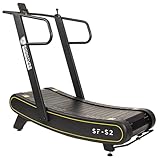
Overview: The Fitvids Sprint Demon offers an accessible entry point into curved treadmill training at just $808.32. Designed specifically for HIIT, sprinting, and power walking, this motorless treadmill promises up to 30% more calorie burn than traditional motorized models while promoting natural running mechanics.
What Makes It Stand Out: Its ultra-thin flexible slats provide cloud-like absorption that reduces joint stress while activating more muscles. The three resistance levels accommodate various training modes—from low-resistance sprints to high-resistance sled pushes. Weighing significantly less than commercial alternatives and equipped with front mobility wheels, it repositions easily within home gyms.
Value for Money: As the most budget-friendly curved treadmill in this lineup, it delivers core benefits without premium pricing. While lacking the robustness of commercial units, it provides sufficient functionality for most home users seeking HIIT versatility.
Strengths and Weaknesses: Strengths include exceptional affordability, lightweight portability, multiple hand grips for varied sled-push positions, and a device holder for entertainment. Weaknesses involve potentially shorter lifespan under heavy use, basic digital display metrics, and less stable feel compared to heavier models.
Bottom Line: Perfect for budget-conscious fitness enthusiasts wanting curved treadmill benefits without breaking the bank. It suits home gym owners focused on interval training rather than marathon sessions.
7. DELAVIN Curved Manual Treadmill, Non Electric Treadmill with 4 Resistance Levels, Motorless Treadmills with Front Digital Display and Handlebar, Wide Belt Treadmills 440LBS Capacity for Home Gym(FBA)

Overview: The DELAVIN Curved Manual Treadmill positions itself as a premium home gym solution at $1,999.99. With a generous 62.9" x 18.9" running surface and 440-pound capacity, it accommodates users of all sizes while promising superior joint protection through its curved, shock-absorbing belt design.
What Makes It Stand Out: Four resistance levels provide finer training granularity than entry models. The alloy steel frame and corrosion-proof hardware ensure durability, while the front-mounted LED display tracks time, speed, distance, and calories. Its widened belt and soft shock absorbers specifically target ankle comfort and impact reduction.
Value for Money: Though double the price of budget options, its commercial-grade construction and near-zero maintenance costs justify the investment for serious athletes. The eco-friendly, electricity-free operation eliminates ongoing power expenses.
Strengths and Weaknesses: Strengths include impressive weight capacity, wide comfortable belt, stable crawler system, and environmental sustainability. Weaknesses involve substantial upfront cost, heavy frame reducing portability despite pulleys, and limited advanced metrics compared to smart treadmills.
Bottom Line: Ideal for dedicated home gyms where durability and joint protection outweigh budget constraints. Serious runners and HIIT enthusiasts will appreciate its robust build and responsive speed control.
8. RUNOW Curved Treadmill, Non-Electric Motorized Treadmill for Commercial & Home Running Machine with Customization & Resistance Adjustment
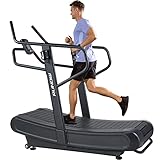
Overview: The RUNOW Curved Treadmill targets the premium home and light commercial market at $2,699.99. This non-electric treadmill emphasizes natural movement patterns while burning 30% more calories than conventional models, making it suitable for everyone from elite athletes to elderly walkers seeking low-impact exercise.
What Makes It Stand Out: A standout two-year replacement warranty demonstrates manufacturer confidence. Humanized details include transport wheels, integrated cup holders, and four-speed manual resistance adjustment. The 5" LCD monitor tracks comprehensive metrics including watts, pace, and load levels, while customization functions help achieve specific fitness goals with precision.
Value for Money: While the highest-priced home-oriented model, the extensive warranty and commercial-quality rubber tread with excellent shock absorption offset the premium. It bridges home convenience with commercial durability, potentially saving on gym memberships.
Strengths and Weaknesses: Strengths include exceptional warranty coverage, detailed metrics tracking, user-friendly design for all ages, and versatile resistance settings. Weaknesses involve premium pricing that may exceed casual user needs, and potential overkill for simple walking routines that don’t utilize full capabilities.
Bottom Line: Best suited for serious home gyms or light commercial settings where warranty protection and advanced metrics matter. The investment pays off for households with multiple users of varying fitness levels who demand professional-grade equipment.
9. SB Fitness Equipment CT400 Self Generated Curved Commercial Exercise Workout Treadmill with 3 Resistance Levels and Front Digital Display
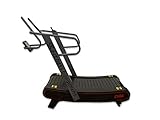
Overview: The SB Fitness CT400 represents a commercial-grade curved treadmill at $1,895, designed for facilities and serious home gyms. This self-powered unit burns more calories than traditional treadmills while offering unlimited speed potential for sport-specific training and HIIT protocols. Its robust construction ensures reliable performance under demanding conditions.
What Makes It Stand Out: Flexible track slats provide unique shock absorption in a non-motorized design. Three resistance levels tax the body appropriately for varied training intensities. Its immediate speed adjustment capability makes it ideal for high-intensity interval work where rapid transitions are critical, eliminating the lag of motorized belts.
Value for Money: Positioned between home and commercial pricing, it offers professional build quality without flagship cost. The durable construction ensures minimal maintenance, making it cost-effective for gym owners seeking long-term reliability. For home users, it bridges the gap between consumer and professional equipment.
Strengths and Weaknesses: Strengths include commercial durability, responsive speed control, effective shock absorption, and versatile training applications. Weaknesses involve fewer resistance levels than premium models, basic digital display, and substantial weight that complicates home installation despite its self-powered design.
Bottom Line: Excellent choice for boutique gyms, CrossFit boxes, or dedicated home gyms prioritizing commercial reliability. Athletes seeking authentic running feel and HIIT functionality will find strong value here.
10. SB Fitness Equipment CT700 Self Generated Curved Commercial Exercise Workout Treadmill with 8 Resistance Levels and Front Digital Display

Overview: The SB Fitness CT700 stands as the flagship curved treadmill at $2,895, engineered for commercial environments and elite training facilities. This self-generated machine maximizes calorie burn through eight distinct resistance levels, accommodating everything from rehabilitation walking to maximum-effort sled pushes without speed limitations.
What Makes It Stand Out: Eight resistance levels provide unmatched training granularity, far exceeding competitors. The immediate speed adjustment responds instantly to athlete input, making it perfect for sophisticated HIIT programming and sport-specific drills. The digital display tracks time, distance, speed, calories, and total miles—a valuable metric for facility maintenance planning and usage monitoring.
Value for Money: While the most expensive option reviewed, its commercial-grade construction and extensive resistance range justify the cost for high-traffic facilities. The durability ensures years of reliable service with minimal downtime, translating to lower per-use costs over time.
Strengths and Weaknesses: Strengths include maximum resistance versatility, commercial durability, comprehensive metrics, and unlimited speed potential. Weaknesses involve premium pricing prohibitive for most home users, substantial weight requiring dedicated placement, and potentially excessive features for casual exercisers who won’t utilize the full resistance spectrum.
Bottom Line: The ultimate choice for commercial gyms, performance centers, and wealthy home gyms serving multiple serious athletes. For facilities demanding the highest training specificity and durability, the CT700 delivers unmatched capability.
Understanding the Curved Treadmill Revolution
The Manual Treadmill Reimagined
Curved treadmills represent the evolution of manual treadmill technology, but calling them “manual” barely scratches the surface. Early manual treadmills were flat, clunky, and often caused more joint stress than they alleviated. The curved design fundamentally changes the physics of running by creating a constantly varying slope that matches your natural gait cycle. When your foot strikes at the front of the curve, it initiates a downward glide that converts potential energy into kinetic energy. This gravitational assist means you’re not just pushing the belt—you’re working with physics, not against it.
The self-powered nature eliminates the need for electricity, but more importantly, it removes the motor’s artificial speed constraints. For sprinters, this means you can hit true max velocity without waiting for a belt to catch up or worrying about outrunning a machine’s limitations. The belt’s speed is directly proportional to your effort, creating a one-to-one relationship between intent and execution that motorized treadmills simply cannot replicate.
How the Curve Enhances Biomechanics
The arc of a curved treadmill isn’t arbitrary—it’s engineered to promote proper running form through what sports scientists call “constrained optimization.” When you run on a flat surface, it’s easy to overstride, heel strike, or develop lazy hip extension patterns. The curve makes these inefficiencies physically uncomfortable, nudging your body toward a midfoot strike and more vertical force production.
Research indicates that curved treadmills increase glute and hamstring activation by 15-20% compared to flat running surfaces. For sprinters, this is gold. The posterior chain drives acceleration and top-end speed, and any tool that naturally recruits these muscles more effectively is worth serious consideration. The curve also encourages a higher stride frequency and reduced ground contact time—two critical factors in sprint performance that are notoriously difficult to train.
Why Sprint Athletes Are Making the Switch
The Self-Powered Advantage for Explosive Training
Motorized treadmills create a disconnect between your neuromuscular system and the running surface. You press a button, the belt moves, and your body reacts. This reactive pattern doesn’t translate well to track or field sports where you must be the initiator of all movement. Curved treadmills flip this script entirely. Every sprint starts from a dead stop, requiring the same explosive first-step mechanics you’d use in competition.
This self-powered design also means there’s no maximum speed limit beyond what you can physically produce. Elite sprinters can reach velocities of 24+ mph during fly sprints—speeds that would fry most motorized treadmill motors. The curved design accommodates these extreme outputs while providing a consistent, predictable surface that won’t wobble or hesitate when you’re producing massive horizontal forces.
Immediate Feedback and Natural Pacing
One of the most underrated benefits for sprint training is the instantaneous feedback loop. When you fatigue, the belt slows immediately. There’s no artificial maintenance of speed that could lead to overstretching or hamstring pulls. This natural deceleration protects you while teaching pace regulation—an essential skill for sprinters who need to distribute energy across rounds in competition.
The tactile nature of curved running also develops proprioception in ways flat surfaces cannot. You feel every slight adjustment in body position reflected in belt speed. Lean too far forward, and you’ll accelerate uncontrollably. Sit back too much, and you’ll grind to a halt. This constant micro-adjustment builds the body awareness that separates good sprinters from great ones.
Critical Features That Define Premium Curved Treadmills
Slat Belt Design and Running Surface Quality
The running surface is where rubber literally meets the road in sprint training. Premium curved treadmills use individual slats rather than a continuous belt, and this design choice matters enormously for sprinters. Slats reduce friction, provide more consistent grip, and allow for better shock absorption during high-velocity foot strikes. Look for vulcanized rubber slats with textured surfaces that grip without catching.
The spacing between slats also affects performance. Too wide, and you’ll feel each transition. Too narrow, and debris can get trapped. The sweet spot is typically 3-4mm between slats, creating a smooth ride while allowing easy cleaning. For sprint work, the total running surface should be at least 60 inches long to accommodate full extension at top speed without feeling constrained.
Curve Geometry and Its Impact on Performance
Not all curves are created equal. The radius of curvature determines how aggressively the treadmill promotes forward propulsion. Sharper curves (smaller radius) create more gravitational assist but can feel unstable for taller athletes or those with longer strides. Gentler curves require more self-generated power but offer a more forgiving learning curve.
The optimal curve geometry for sprint training typically features a variable radius—steeper at the front for acceleration, flattening slightly in the middle for top-speed maintenance, and curving again at the back for deceleration control. This parabolic shape mirrors the force-velocity curve of human sprinting, making the movement feel more natural across different speed phases.
Frame Construction and Weight Capacity
Sprint training generates forces up to 5x bodyweight with each foot strike. A flimsy frame will flex, wobble, and eventually fail under this repeated high-impact loading. Premium curved treadmills use steel frames with reinforced welds at stress points. Look for gauges of steel rather than just overall weight—a lower gauge number indicates thicker, stronger steel.
Weight capacity specifications tell part of the story, but for sprinters, it’s about dynamic load, not static weight. A 350-pound static capacity might sound sufficient, but when you’re pounding out 10-second fly sprints, you’re applying forces far beyond your bodyweight. Quality manufacturers test for dynamic loads and will provide these specs if asked. Don’t settle for vague claims—demand specific engineering data.
Bearing System and Smoothness of Motion
The bearing system is the unsung hero of curved treadmill performance. Cheap bearings create a “sticky” feel where the belt doesn’t want to start moving, then suddenly releases—a recipe for hamstring disaster. Premium systems use sealed, precision bearings with minimal rotational resistance. The number of bearings matters too; more bearings distribute load better and create smoother motion.
Test the belt’s free-spin when the machine is unloaded. A quality curved treadmill should glide smoothly with minimal effort. Listen for bearing noise during operation—grinding or clicking indicates poor quality or wear. For sprint training, the bearing system must maintain smooth operation at high speeds while supporting the lateral forces created during aggressive acceleration.
Performance Monitoring and Data Accuracy
Metrics That Matter for Sprint Training
Forget about calorie counts and heart rate zones. For sprint training, you need precise data on speed, distance, power output, and contact time. The best curved treadmills use optical or magnetic sensors that capture belt velocity multiple times per second, giving you true instantaneous speed rather than averaged data.
Power measurement is particularly valuable. Unlike motorized treadmills that estimate your work, curved treadmills can measure your actual wattage production because you’re moving the belt against known resistance. This allows for objective tracking of power endurance—a critical quality for maintaining speed in the latter half of a 200m or 400m race. Look for systems that capture peak power, average power, and power decline rate.
Space, Installation, and Portability Factors
Footprint and Ceiling Height Requirements
Curved treadmills typically have a smaller footprint than commercial motorized units, but don’t assume they’ll fit anywhere. The average unit requires about 6 feet by 3 feet of floor space, plus at least 2 feet of clearance on each side for safety. More importantly, consider your ceiling height. The curve elevates you 8-12 inches off the ground, and sprint mechanics involve significant vertical oscillation.
For athletes over 6 feet tall, you’ll want at least 10-foot ceilings to sprint without subconsciously suppressing your stride to avoid hitting your head. Also consider the room’s ventilation—sprint training generates enormous heat, and a stuffy room will limit performance. Position the treadmill away from walls to allow for proper airflow and to prevent feeling psychologically constrained during all-out efforts.
Investment Analysis: Cost vs. Long-Term Value
Curved treadmills represent a significant investment, typically ranging from $3,000 to $8,000 for quality units. While this exceeds basic motorized treadmills, consider the total cost of ownership. No electricity costs, minimal maintenance requirements, and virtually no motor replacement expenses make them surprisingly economical over a 5-10 year lifespan.
The real value calculation should factor in training efficiency gains. If a curved treadmill allows you to train sprint mechanics year-round regardless of weather, reduces injury risk through better form, and provides data that fine-tunes your performance, what’s that worth? For competitive athletes, shaving even 0.1 seconds through improved training can be the difference between medaling and watching from the stands. View the purchase as investing in a training partner that never misses a session.
Integrating Curved Treadmill Workouts Into Your Training Regimen
Sample Protocols for Different Sprint Phases
For acceleration development, use the curve’s natural incline to your advantage. Start with 10-meter sprints from a dead stop, focusing on explosive first steps. The self-powered nature means you must generate all the momentum, making these starts more specific to track competition than any motorized alternative.
For max velocity work, progress to flying 20s and 30s. Build speed on the curve’s flatter middle section, then hold top speed for the measured distance. The immediate feedback helps you identify exactly where your mechanics break down. Use the belt’s natural deceleration as a cool-down between reps, walking back to the starting point for active recovery.
For speed endurance, try 60-80 meter repeats at 90% effort with full recovery. The curved surface increases metabolic demand by 30-40% compared to flat running, so adjust volume accordingly. A session that might include 300 meters of total sprinting on a track should be reduced to 200-240 meters on the curve to account for the increased intensity.
Maintenance Essentials for Peak Performance
The beauty of curved treadmills lies in their mechanical simplicity, but they’re not maintenance-free. The slat belt requires periodic tension adjustment—typically every 3-6 months depending on usage volume. Too loose, and you’ll experience slippage during acceleration. Too tight, and you increase bearing wear and make the belt harder to turn.
Dust and debris are the enemies of smooth operation. Sweat contains salts that corrode metal components, so wipe down the frame and slats after every session. Use compressed air to blow out debris from between slats weekly. The bearing system should be inspected quarterly; quality units have sealed bearings that don’t require lubrication, but they can still collect dust that increases friction.
Safety Protocols and Injury Prevention
While curved treadmills are inherently safer than motorized units for sprint work, they introduce unique risks. The biggest danger is the “runaway belt” effect during fatigue. When you miss a step or stumble, the belt continues moving under your momentum. Always use the safety tether, but more importantly, develop a bailout technique—stepping to the side rails quickly without looking down.
The increased posterior chain activation can lead to DOMS in athletes unaccustomed to the demand. Progress volume gradually, even if you’re an experienced sprinter. The curve also encourages forefoot striking, which loads the Achilles and calf muscles more heavily. Spend 2-3 weeks building tolerance with submaximal runs before introducing all-out sprints.
Avoiding Common Buyer Pitfalls
The most expensive mistake is buying based on brand recognition alone. Some companies entered the curved treadmill market by slapping their logo on generic frames with subpar components. Always test the specific unit you’re considering, paying attention to how it feels at various speeds, not just a slow jog.
Another trap is overemphasizing digital features at the expense of mechanical quality. A flashy touchscreen means nothing if the belt feels sticky during acceleration. Prioritize the fundamentals: smooth belt operation, solid frame, and reliable sensor accuracy. You can always add a separate tablet for entertainment or advanced analytics.
Beware of “hybrid” units that claim to be both curved and motorized. These compromises typically excel at neither function and often have reliability issues. For pure sprint training, a dedicated manual curved treadmill will outperform any hybrid design.
Your Decision-Making Framework
Start by defining your primary training goals. Are you a 60-meter specialist who needs maximal acceleration work? A 400-meter runner requiring speed endurance? Or a team sport athlete seeking general speed development? Different curve geometries and resistance profiles suit different objectives.
Next, honestly assess your technical proficiency. If you’re new to sprint training, a more gradual curve with built-in resistance adjustment might be wise. Experienced sprinters can handle aggressive curves that demand precise mechanics. Finally, consider your training environment. Will this be in a garage gym where temperature fluctuations affect metal components? Or a climate-controlled facility? This impacts material choices and maintenance schedules.
Request a trial period from dealers. Most quality manufacturers offer 30-day satisfaction guarantees. Use this time to test not just the treadmill, but how it integrates with your existing program. The right curved treadmill should feel like a natural extension of your training, not a complicated gadget you need to work around.
Frequently Asked Questions
How does a curved treadmill actually make me a faster sprinter?
Curved treadmills enhance sprint-specific muscle recruitment, improve running economy through forced biomechanical efficiency, and provide year-round access to high-intensity speed work regardless of weather. The self-powered design develops explosive starting strength and teaches proper acceleration mechanics that directly translate to track performance.
What’s the learning curve like for transitioning from track to curved treadmill?
Most athletes adapt within 2-3 sessions. Start with 50% effort runs to get accustomed to the feel. The biggest adjustment is trusting that you control the speed rather than a motor. Resist the urge to “chase” the belt; instead, focus on driving through the ball of your foot as you would on track.
Are curved treadmills suitable for all sprinters, from beginners to elites?
Absolutely, but the training protocols differ significantly. Beginners benefit from the form feedback and reduced impact, while elites appreciate the unlimited speed potential and increased metabolic demand. The key is adjusting volume and intensity appropriately for your training age and current fitness level.
How much more challenging is running on a curved treadmill compared to flat ground?
Studies show metabolic cost increases of 30-40% at the same perceived effort. This means a 10-second sprint on a curve is more physiologically demanding than a 10-second track sprint. However, the biomechanical benefits often outweigh the increased effort, especially during base training phases.
Can I perform true max velocity work (flying sprints) on a curved treadmill?
Yes, provided the unit has sufficient running surface length and smooth bearing operation. The key is building speed gradually on the curve’s middle section, then maintaining for 20-30 meters. You won’t reach competition speeds initially, but with practice, elite sprinters can achieve 90-95% of their track max velocity.
What’s the realistic lifespan of a quality curved treadmill with daily sprint training?
With proper maintenance, commercial-grade units last 7-10 years even with heavy sprint training. The slat belt typically needs replacement after 3-5 years, while the frame and bearings can last the unit’s lifetime. Home-grade models may last 3-5 years under intense use before requiring significant repairs.
How do I know if a curved treadmill’s data is accurate?
Test it with known quantities. Time yourself over a measured distance on the curve, then compare the unit’s distance reading. For speed accuracy, have a training partner video you at a steady pace and calculate speed manually. Quality units will be within 2-3% of actual measurements.
Will using a curved treadmill improve my outdoor running form?
Yes, but only if you’re mindful during training. The curve encourages better mechanics, but you must consciously transfer that feeling to outdoor running. Many athletes find that 4-6 weeks of curved treadmill training reduces overstriding and improves hip extension when they return to track work.
What’s the minimum ceiling height for safe sprint training?
For athletes under 6 feet, 9-foot ceilings are the absolute minimum. For taller athletes or those with significant vertical oscillation, 10+ feet is recommended. Remember to account for the 8-12 inch elevation from the curve itself plus your head movement during maximal effort.
Are there any sprint workouts I should avoid on a curved treadmill?
Avoid extremely short, explosive starts (less than 5 meters) until you’ve mastered the bailout technique. Also, limit high-volume lactate tolerance sessions initially—the increased metabolic cost can lead to excessive fatigue and form breakdown. Traditional speed endurance work translates well, but reduce volume by 25-30% to account for the curve’s added intensity.