You’ve been riding for years, watching your FTP creep upward and your race times improve, but something still feels off. That nagging knee pain after long rides, the subtle sense that one leg works harder than the other, or perhaps your coach keeps mentioning asymmetries in your pedal stroke. These aren’t just random observations—they’re signals that your left/right leg balance might be holding you back. Dual-sided power meters have evolved from exotic pro-level equipment to accessible tools that can transform how you understand your body on the bike, and this year’s crop offers unprecedented insight into the biomechanical story your legs are telling.
But here’s the challenge: not all dual-sided systems are created equal, and the marketing hype around “true left/right balance” can obscure what really matters for your specific riding goals. Whether you’re a triathlete chasing efficiency, a masters racer dealing with old injuries, or a dedicated amateur ready to stop guessing about your pedal stroke, understanding the nuances of these devices will save you money, frustration, and potentially prevent injury. Let’s cut through the jargon and explore what makes dual-sided power meters the ultimate diagnostic tool for identifying and correcting leg imbalances.
Top 10 Dual-Sided Power Meters for Leg Balance
Detailed Product Reviews
1. Favero Assioma PRO MX-2 Dual Sided Power Meter Pedals

Overview: The Favero Assioma PRO MX-2 delivers dual-sided power measurement purpose-built for mountain bike and gravel riders seeking laboratory-grade training data. These pedals capture independent left/right leg metrics including balance, cadence, and pedal stroke dynamics through a robust spindle-based design that eliminates external pods. The system integrates seamlessly with major cycling computers and training platforms via Bluetooth and ANT+, providing the precision needed for structured off-road training.
What Makes It Stand Out: The pod-less architecture represents a significant durability advantage for trail riding, protecting sensitive electronics from rock strikes and debris. The ±1% accuracy rating holds up across extreme temperatures and harsh conditions, while the lightweight construction ensures you don’t sacrifice performance for data. Independent leg analysis reveals critical insights about pedaling efficiency that single-sided systems simply cannot provide.
Value for Money: At $849, these sit in the premium mid-range category. They’re considerably less expensive than the SRM X-Power while delivering comparable dual-sided accuracy and superior battery life. The investment pays dividends for serious riders who need reliable data for training optimization and injury prevention.
Strengths and Weaknesses: Strengths include exceptional accuracy, robust waterproof construction (IP67), easy bike-to-bike transfer, and comprehensive metrics. Weaknesses involve the premium price point and the need to remember to charge them periodically. The initial setup requires firmware updates that some users may find tedious.
Bottom Line: For dedicated MTB and gravel riders demanding precise dual-sided power data without reliability concerns, the PRO MX-2 is an outstanding choice that balances performance, durability, and value.
2. Favero Assioma Duo-Shi IP67 Upgraded Professional Cycling Real Dual-Sided Power Meter Cycling ANT+ Connectivity Gyroscope Sensors Pedals Bundled with Cleaning Cloth and Multi Tool Kit

Overview: The Favero Assioma Duo-Shi offers a clever alternative to dedicated power meter pedals by converting select Shimano SPD-SL pedal bodies into a sophisticated dual-sided power measurement system. This IP67-rated solution threads the power-sensing spindles into compatible Shimano models like the PD-R8000 and PD-R7000, instantly transforming standard pedals into precision training tools. The package includes a cleaning cloth and multi-tool kit for convenient maintenance.
What Makes It Stand Out: The modular approach provides unmatched flexibility for riders already invested in Shimano’s pedal ecosystem. Installation requires no special tools beyond a standard pedal wrench, making bike-to-bike transfers remarkably simple. Automatic Temperature Compensation ensures consistent accuracy from -10°C to 60°C, while both Bluetooth and ANT+ connectivity guarantee compatibility with virtually any head unit or smartphone.
Value for Money: At $639, the Duo-Shi represents exceptional value, undercutting integrated power pedals by hundreds of dollars. This pricing makes dual-sided power accessible to serious enthusiasts without pro-level budgets, especially those who already own compatible Shimano pedal bodies.
Strengths and Weaknesses: Strengths include affordability, easy installation, reliable connectivity, and the ability to maintain your preferred Shimano pedal feel. Weaknesses are limited compatibility to specific Shimano models and the slightly less streamlined appearance compared to dedicated units. Some users report minor creaking that requires periodic spindle greasing.
Bottom Line: The Duo-Shi is ideal for budget-conscious riders seeking accurate dual-sided power data while keeping their trusted Shimano pedal bodies. It’s a smart, cost-effective entry into serious power training.
3. SRM X-Power MTB Dual-Sided Power Meter Pedals – Long Spindle, SPD-Compatible, Bluetooth & ANT+, Precision Power Tracking, Durable Alloy Body, Rechargeable Battery – Includes StarlitGem Multitool Kit

Overview: The SRM X-Power MTB Dual-Sided Power Meter Pedals represent the German brand’s premium off-road offering, delivering laboratory-grade power measurement in a bombproof package designed for aggressive trail riding. With independent left/right leg analysis, 54mm Q-factor, and SPD-compatible interface, these pedals provide the precision SRM is famous for in a format that withstands the rigors of mountain biking. The included StarlitGem multitool kit adds immediate value for trail-side adjustments.
What Makes It Stand Out: SRM’s reputation for absolute accuracy shines through with a reinforced steel spindle that completely encases the electronics, providing superior protection against shock, mud, and debris. The anodized aluminum body and replaceable SPD bindings ensure longevity, while the 10.5mm stack height maintains natural pedaling ergonomics. The magnetic charging system is robust and user-friendly.
Value for Money: At $1,349, this is a significant investment positioned at the luxury end of the market. While the build quality and SRM pedigree justify the premium, the 30-hour battery life falls short of competitors offering 60+ hours. You’re paying for ultimate durability and brand trust rather than features or runtime.
Strengths and Weaknesses: Strengths include exceptional construction, accurate dual-sided data, natural SPD feel, and outstanding component protection. Weaknesses are the steep price, shorter battery life, and weight penalty compared to lighter alternatives. The SRM app, while functional, lacks the polish of competitor software.
Bottom Line: For riders who demand the most robust power meter for extreme off-road conditions and value SRM’s legendary precision above all else, the X-Power delivers. Most riders will find better value elsewhere.
4. Favero Assioma PRO MX-2 Dual-Sided Power Meter Pedals for MTB & Gravel – Advanced Accuracy, IAV Cycling Dynamics, Robust Build, Bluetooth & ANT+ with Multi Tool Kit

Overview: The Favero Assioma PRO MX-2 brings dual-sided power measurement to mountain and gravel riders through an elegantly simple spindle-based design that eliminates vulnerable external pods. Sealing all sensors and the rechargeable battery inside the spindle achieves IP67 waterproof rating, ensuring reliable performance through stream crossings, mud baths, and rock strikes. The system captures comprehensive metrics including left/right balance, torque effectiveness, and pedal smoothness for complete pedaling analysis.
What Makes It Stand Out: The modular spindle design allows quick swapping to PRO RS road pedal bodies (sold separately), creating a versatile power measurement ecosystem across all your bikes. Installation requires only an 8mm hex wrench, making transfers between MTB and gravel rigs effortless. The IAV power algorithm maintains ±1% accuracy regardless of temperature fluctuations or riding conditions.
Value for Money: Priced at $849 with an included multi-tool kit, the PRO MX-2 hits a sweet spot between budget options and premium competitors like SRM. The interchangeable spindle system effectively provides two power meters for the price of one additional pedal body, delivering exceptional long-term value for multi-bike owners.
Strengths and Weaknesses: Strengths include pod-less durability, proven accuracy, universal connectivity, and clever modularity. Weaknesses involve the extra cost for road pedal bodies and the need to manage charging schedules. Some users may find the initial app setup slightly complex.
Bottom Line: For cyclists seeking a single power meter solution across road and off-road disciplines, the PRO MX-2’s modular design and robust construction make it an unbeatable choice that grows with your cycling needs.
5. Favero Assioma PRO RS-2 Dual-Sided Road Power Meter Pedals | Pro L/R Balance, SPD-SL Shimano Compatible | Lightweight, Pod-Less IP67 Sensor, 60hr Battery with Multi-Tool Kit
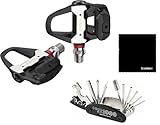
Overview: The Favero Assioma PRO RS-2 delivers professional-grade dual-sided power measurement for road cyclists through a pod-less, SPD-SL compatible design that integrates full sensor arrays in both pedals. This system captures true left/right balance, Power Phase analysis, and Platform Center Offset data, providing unparalleled insight into pedaling technique. The internal lithium-ion batteries deliver an industry-leading 60+ hours of ride time, while the IP67 rating ensures complete protection against water and dust.
What Makes It Stand Out: The revolutionary modular design allows the power-sensing core to transfer to PRO MX off-road pedal bodies in minutes, creating a two-in-one power meter solution. This versatility eliminates the need to purchase separate systems for road and mountain bikes. The IAV gyroscope and integrated strain gauges work in concert to maintain ±1% accuracy even during rapid cadence changes and out-of-saddle efforts.
Value for Money: At $824, the PRO RS-2 undercuts many premium road power meters while offering superior battery life and cross-discipline modularity. The included multi-tool kit and cleaning cloth add practical value, though SPD cleats must be purchased separately. For multi-bike riders, this represents exceptional long-term savings.
Strengths and Weaknesses: Strengths include outstanding battery life, proven accuracy, flexible modularity, and comprehensive metrics. Weaknesses are the requirement to buy MX bodies separately for off-road use and the premium price compared to single-sided options. The magnetic charger, while convenient, requires careful alignment.
Bottom Line: The PRO RS-2 sets the benchmark for road power meters, combining unmatched battery life, precision, and versatility. It’s the smartest investment for serious cyclists riding across multiple disciplines.
6. SRM Upgraded X-Power Road Dual-Sided Power Meter Pedals – Short Spindle | SPD-SL Cleat Compatible | ±2% Accuracy | Bluetooth & ANT+ | Rechargeable Pedal with StarlitGem Multitool Kit & Cleaning Cloth
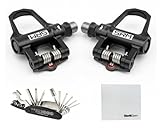
Overview: The SRM X-Power pedals represent premium dual-sided power measurement for serious road cyclists. These pedals capture independent left/right power data with ±2% accuracy, helping riders optimize pedaling efficiency and balance. Designed to mirror standard SPD-SL geometry with a 9.75mm stack height and 53mm Q-Factor, they integrate seamlessly into high-performance setups without compromising biomechanics.
What Makes It Stand Out: SRM’s engineering excellence shines through the protected steel spindle design, which fully encases electronics from dirt, water, and impact damage. This durability focus extends to replaceable anodized aluminum bodies, significantly extending service life compared to disposable units. The inclusion of a StarlitGem multitool kit and cleaning cloth adds practical value, while magnetic USB charging delivers up to 30 hours of runtime. Bluetooth and ANT+ connectivity ensure broad device compatibility.
Value for Money: At $1,499, these command premium pricing but justify it through robust construction and dual-sided precision. While more expensive than single-sensing options, they’re competitively priced against other dual systems like Garmin Rally. The replaceable bodies and protective spindle design translate to lower long-term ownership costs, offsetting the initial investment for dedicated riders.
Strengths and Weaknesses: Strengths include true dual-sided measurement, exceptional durability, natural SPD-SL-compatible feel, and comprehensive accessory bundle. The ±2% accuracy is reliable for training, though some competitors offer ±1%. The 30-hour battery life trails longer-lasting options, and the price remains a barrier for casual cyclists.
Bottom Line: Ideal for performance-focused riders prioritizing durability and accurate dual-sided data. The premium cost delivers professional-grade reliability and longevity that serious cyclists will appreciate.
7. Garmin Rally RK110 Single-Sensing Power Meter Pedals for Road Bikes, Upgradeable to Dual, 5 Degree Look KEO Cleats, Rechargeable, Up to 90 Hours of Ride Time w/ Wearable4U PowerBank Bundle

Overview: Garmin’s Rally RK110 offers an accessible entry point into power-based training with single-sensing pedals that track total power and cadence. Compatible with LOOK KEO cleats and designed for easy bike-to-bike transfer, these pedals feature an upgrade path to dual-sensing capability, making them a flexible long-term investment for cyclists entering the power meter market.
What Makes It Stand Out: The Rally series’ standout feature is its modular design—the removable power sensor can transfer to XC110 off-road pedal bodies, adapting to different disciplines. With ±1% accuracy from a new strain gauge and gyroscope, plus innovative force data insights when paired with Garmin devices, these pedals deliver professional-grade metrics. The Pedal IQ smart calibration automatically alerts when recalibration is needed, while the included Wearable4U PowerBank extends ride time beyond the impressive 90-hour battery life.
Value for Money: Priced at $759.99, the RK110 sits in the mid-range, offering excellent value for Garmin ecosystem users. The upgrade path to dual-sensing adds future-proofing absent in fixed single-sensing competitors. While initially more than basic power meters, the transferability and included PowerBank bundle offset costs compared to purchasing separate components.
Strengths and Weaknesses: Strengths include exceptional ±1% accuracy, outstanding 90-hour battery life, smart calibration, Garmin integration, and upgrade potential. Weaknesses are the single-sensing limitation out-of-box, restriction to LOOK KEO cleats, and reduced functionality without Garmin head units. The upgrade kit requires additional investment.
Bottom Line: Perfect for cyclists starting their power training journey within the Garmin ecosystem. The upgrade path and exceptional battery life make this a smart, forward-thinking purchase.
8. P715 Dual-Sided Bike Power Meter Pedals - ±1% Power Accuracy & Balance for KEO & SPD-SL(P715 S-Black)
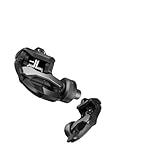
Overview: The P715 S-Black delivers dual-sided power measurement with ±1% accuracy at a competitive price point. These pedals cater to serious cyclists seeking comprehensive power balance data without the premium cost of mainstream brands. Supporting both KEO and SPD-SL cleats, they offer rare compatibility versatility in a lightweight package designed for performance training and racing.
What Makes It Stand Out: Dual cleat compatibility distinguishes the P715 from competitors locked into single ecosystems, allowing riders to switch between cleat types without changing pedals. The ±1% accuracy matches top-tier offerings, while the lightweight construction enhances the power-to-weight ratio critical for competitive cyclists. The dual-sided measurement provides valuable left/right balance insights for technique refinement and injury prevention.
Value for Money: At $1,195.27, these pedals undercut premium dual-sided options like SRM and Garmin while delivering comparable accuracy. The dual cleat compatibility effectively provides two pedals in one, offering flexibility that justifies the mid-premium pricing. For cyclists needing versatility across multiple bikes or transitioning between cleat systems, this represents significant savings over purchasing separate power meter setups.
Strengths and Weaknesses: Strengths include excellent ±1% dual-sided accuracy, dual cleat compatibility, lightweight design, and competitive pricing. Weaknesses involve the lesser-known brand reputation, unspecified battery life and connectivity details, and potential lack of robust software support compared to established competitors. Long-term durability remains unproven.
Bottom Line: A compelling choice for data-driven cyclists prioritizing accuracy and cleat flexibility. The value proposition is strong, though brand recognition lags behind market leaders.
9. P715 Dual-Sided Bike Power Meter Pedals - ±1% Power Accuracy & Balance for KEO & SPD-SL(P715 K-Black)
Overview: The P715 K-Black variant offers identical dual-sided power measurement capabilities to its S-Black counterpart, delivering ±1% accuracy and comprehensive power balance analysis. These pedals serve performance-oriented cyclists who demand precise bilateral data across multiple bike setups. The model designation likely indicates a cosmetic or minor specification difference while maintaining the same core functionality.
What Makes It Stand Out: Like the S-Black model, these pedals excel through dual cleat system compatibility, supporting both KEO and SPD-SL standards in a single unit. This versatility eliminates the need for separate power meters when switching between bikes with different cleat requirements. The ±1% accuracy rating positions them alongside industry leaders, while the lightweight construction preserves the responsive feel riders expect from high-end pedals. The dual-sided measurement captures critical left/right power distribution data.
Value for Money: Priced identically at $1,195.27, the K-Black model shares the same strong value proposition. It costs significantly less than premium dual-sided competitors while offering superior flexibility through dual cleat compatibility. For cyclists managing multiple bikes or uncertain about cleat preferences, this adaptability prevents costly future replacements, making the investment financially prudent despite the mid-premium price.
Strengths and Weaknesses: Strengths mirror the S-Black: excellent accuracy, cleat versatility, lightweight build, and competitive pricing. The primary weakness is the ambiguous brand history and lack of detailed specifications regarding battery life, connectivity protocols, and software ecosystem. Without established track records, reliability concerns may persist for risk-averse buyers.
Bottom Line: Functionally identical to the S-Black, this model suits cyclists seeking dual-sided precision and cleat flexibility. Consider it if brand reputation is secondary to specifications and value.
Understanding Dual-Sided Power Meters and Leg Imbalance
What Makes a Power Meter “Dual-Sided”?
A true dual-sided power meter independently measures the force output from each leg rather than estimating one side based on the other. This requires strain gauges and electronics in both crank arms, pedals, or spider arms. The key distinction lies in independent measurement—each side captures your raw force application in real-time, transmitting separate data streams to your head unit. This creates a granular view of your pedal stroke that single-sided systems simply cannot replicate, regardless of algorithmic sophistication.
Why Left/Right Balance Matters for Cyclists
Most cyclists operate with a natural 48-52% imbalance, but when that gap widens beyond 45-55%, efficiency plummets and injury risk escalates. Chronic imbalances can mask underlying issues: a dormant glute medius, limited ankle mobility, or even a leg length discrepancy. Dual-sided data reveals not just the percentage split, but when during your pedal stroke the imbalance occurs—whether you’re underpowering on the downstroke or failing to pull through the upstroke. This temporal insight is what separates hobbyist data collection from actionable performance intelligence.
The Science Behind Identifying Leg Imbalances
Power Distribution Metrics Explained
Beyond simple percentage splits, sophisticated dual-sided meters track torque contribution every 15-30 degrees of rotation. This creates a polar diagram showing exactly where in the 360-degree pedal cycle each leg shines or struggles. You’ll discover whether your left leg dominates early in rides but fatigues disproportionately, or if your right leg compensates during hard efforts. These metrics—often labeled as “Power Phase” or “Force Angle”—reveal the difference between gross power output and effective propulsive force.
Torque Effectiveness and Pedal Smoothness
Torque effectiveness measures what percentage of your applied force actually moves you forward versus fighting against the opposite leg. A rider with 85% effectiveness wastes 15% of their effort. When you see left/right effectiveness diverging by more than 5-7%, you’ve identified a compensatory pattern. Pedal smoothness scores complement this by showing how evenly you apply force throughout the rotation. A smooth but ineffective pedal stroke tells a different story than a punchy, peaky application of force.
Key Features to Evaluate in Dual-Sided Power Meters
Power Accuracy and Consistency Standards
Look for devices claiming ±1% accuracy, but dig deeper into the testing methodology. Does that spec apply to each side independently or to total power? Premium systems maintain accuracy across temperature ranges from -10°C to 50°C, while budget options might drift significantly. Consistency—how repeatable measurements are ride after ride—often matters more than absolute accuracy for tracking imbalances over time.
Data Transmission Protocols
Bluetooth Smart and ANT+ are standard, but the implementation varies. Some meters broadcast separate left/right channels that older head units can’t parse, displaying only combined power. Ensure your ecosystem supports advanced cycling dynamics: Garmin’s Cycling Dynamics, Shimano’s Rider Tuning, or Favero’s detailed metrics. The refresh rate matters too—data updated every second versus every 250ms creates vastly different real-time feedback quality.
Battery Life and Power Options
Rechargeable lithium-ion batteries typically last 30-50 hours but require periodic charging discipline. Coin cell batteries might last 200+ hours but create waste and risk of corrosion. Consider your riding habits: stage racers need reliability over three-week events, while weekend warriors might prefer the convenience of rechargeables. Some systems now offer hybrid options with solar trickle charging on the head unit to extend field life.
Installation and Compatibility Considerations
Crank-Based vs Pedal-Based Systems
Crank-based systems integrate into your drivetrain, offering robustness and consistent positioning but requiring specific bottom bracket compatibility. They’re ideal for riders who rarely swap bikes. Pedal-based systems provide ultimate portability—move them between road, gravel, and TT bikes in minutes—but introduce cleat compatibility constraints and expose electronics to more impacts and weather. Your choice should align with how many bikes you ride regularly and your willingness to maintain multiple sensors.
Bottom Bracket Standards and Frame Clearance
Modern frames with BB86, PF30, or T47 shells create clearance challenges for crank arm-based electronics. Measure the space between your crank arm and chainstay—some power meters add 5-8mm of width. Pedal-based systems dodge this issue but require adequate spindle clearance from crank arms. Don’t forget about chainring configurations; 1x gravel setups might interfere with spider-based units designed for traditional 2x road gearing.
Shoe and Cleat Compatibility
Pedal-based systems lock you into specific cleat patterns—Look Keo, Shimano SPD-SL, or Speedplay. If you use proprietary shoes or orthotics, verify cleat drilling compatibility. Some systems require specific torque values for installation that exceed typical home tool capabilities. Crank-based systems free you to use any pedal and shoe combination, crucial for riders using custom orthotics or switching between road and mountain bike shoes.
Data Interpretation and Analysis
Real-Time vs Post-Ride Analysis
Watching your balance percentage fluctuate during a ride can be distracting or enlightening. Elite riders use real-time data during specific drills—single-leg intervals, cadence pyramids—to develop proprioceptive awareness. Most athletes benefit more from post-ride trend analysis, identifying patterns across different power zones, ride durations, and fatigue states. The sweet spot involves structured intervals with real-time feedback, followed by deep-dive analysis after the ride.
Training Software Integration
Your power meter is only as good as the software that interprets it. Platforms like TrainingPeaks, WKO5, and Intervals.icu offer sophisticated left/right analytics, but they require proper data field configuration. Some systems automatically generate balance reports; others need manual CSV export. Check whether your chosen meter’s native app provides meaningful insights or merely raw numbers. The best ecosystems automatically flag concerning trends and suggest drills.
Setting Meaningful Balance Targets
Chasing perfect 50/50 balance is a fool’s errand. Instead, establish your personal baseline over 10-15 normal rides, then set a variability threshold—perhaps ±3% from your norm. During hard efforts, a 5-7% shift might be acceptable; during endurance rides, it should stay tighter. Work with a bike fitter or physiotherapist to determine whether your imbalance is functional (fixable) or structural (anatomical), as this dramatically changes your intervention strategy.
Calibration and Maintenance Best Practices
Zero-Offset Procedures
Daily zero-offsets are non-negotiable for reliable data. Temperature swings of 10°C can shift readings by 10-15 watts. The best systems feature automatic temperature compensation and prompt you for zero-offsets when significant ambient changes occur. Learn the proper procedure: unclip and position cranks vertically, ensure no pressure on pedals, and execute through your head unit—not just the mobile app. Some advanced systems allow you to zero each side independently, revealing installation issues.
Temperature Compensation Features
Strain gauges are sensitive to thermal expansion. Premium meters include multiple temperature sensors and algorithms that adjust readings in real-time. Budget systems might require manual zero-offsets every 30 minutes in variable conditions. If you ride in mountainous terrain or shoulder seasons, this feature transitions from luxury to necessity. Check whether compensation applies to each side independently—critical when one side sits in direct sunlight while the other stays shaded.
Long-Term Durability Factors
Electronics exposed to road spray, frame flex, and pedal strikes degrade over time. Look for IPX7 water resistance ratings and strain gauges protected by metal housings rather than exposed epoxy. Pedal-based systems should have user-replaceable battery doors and serviceable bearings. Crank-based units benefit from removable electronics pods that can be swapped without replacing the entire crank. Ask about expected service life—quality systems maintain accuracy for 5+ years with proper care.
Price Considerations and Value Assessment
Entry-Level vs Premium Features
Budget dual-sided systems ($500-$800) often sacrifice advanced metrics like torque angle or independent temperature compensation. They’ll give you basic balance percentages but lack the granularity to diagnose specific stroke flaws. Premium options ($1000-$1500) deliver research-grade data, superior build quality, and ecosystem integration. The middle ground ($800-$1000) typically offers the best value, providing core metrics without pro-level features you’ll rarely use.
Warranty and Support Services
A two-year warranty is industry standard, but read the fine print—some exclude water damage or require annual factory recalibration. Premium brands often include crash replacement programs and loaner units during service. Consider the company’s firmware update history; active development indicates long-term product support. Check user forums for support responsiveness—when your meter fails before a key event, email response time becomes critical.
Upgrade Paths and Ecosystem Lock-In
Starting with a single-sided system that offers an upgrade path to dual-sided can be strategic, but ensure the upgrade cost isn’t near the price of a complete dual-sided unit. Some ecosystems lock you into proprietary head units for full functionality. Consider whether you’ll want to mix brands—perhaps a Garmin head unit with a third-party power meter. Open standards like ANT+ FE-C provide flexibility, while closed ecosystems might limit future choices.
Common Pitfalls When Choosing Dual-Sided Meters
Overlooking Firmware Update Frequency
Manufacturers release firmware updates to fix bugs, improve accuracy, and add features. A company that hasn’t updated firmware in 18 months might be abandoning the product. Check the update process—some require sending the unit back to the factory, while others offer over-the-air updates via Bluetooth. Updates should be reversible in case new firmware introduces issues, a real concern with complex dual-sided synchronization.
Ignoring Weight Penalties
Dual-sided systems add 50-150 grams compared to non-power cranks. For weight-conscious climbers, this penalty might offset the training benefits. Pedal-based systems typically add 30-50 grams per pedal—noticeable if you’re accustomed to lightweight titanium spindles. Calculate the watts-per-gram tradeoff: if the data helps you improve efficiency by 2%, that’s likely worth 100 grams for all but the most elite hill climb specialists.
Misunderstanding Accuracy Claims
±1% accuracy sounds impressive, but what does it mean for imbalance detection? If each side has ±1% error, your balance reading could vary by ±2% purely from measurement noise. This masks real imbalances smaller than that threshold. Look for independent left/right accuracy specs and consistency metrics. Some manufacturers publish “balance accuracy” separate from total power accuracy—a crucial distinction for diagnosing subtle asymmetries.
Integration with Your Training Ecosystem
Head Unit Compatibility
Your cycling computer must support advanced cycling dynamics to display meaningful left/right data. Basic units might show only percentages, while premium head units render torque angle graphs in real-time. Check whether the power meter broadcasts standard ANT+ power profiles or proprietary extensions. Some systems require specific data field installations, which can be confusing. Test compatibility before committing—many shops will let you pair a demo unit with your computer.
Third-Party App Connectivity
Direct Bluetooth connections to smartphones enable firmware updates and zero-offsets without a head unit. However, not all apps support background data logging, meaning you can’t record to your phone and head unit simultaneously. This matters if you use apps for structured workouts while also wanting a head unit backup. Verify whether the meter supports multiple Bluetooth connections or if switching between devices requires re-pairing.
Cloud-Based Analytics Platforms
The real power of dual-sided data emerges in longitudinal analysis. Platforms like Today’s Plan or Golden Cheetah can track your balance trends across seasons, correlating them with training load and fatigue. Some meters automatically sync to these platforms; others require manual file uploads. Consider whether the native app provides API access for custom analysis, particularly valuable if you work with a remote coach who uses proprietary tools.
Professional vs Amateur Use Cases
When Dual-Sided Data Becomes Essential
Recreational riders can make enormous gains with single-sided power and perceived exertion. However, specific scenarios demand dual-sided insight: returning from unilateral injury, addressing chronic overuse injuries, or optimizing aerodynamic positions that affect weight distribution. Time trialists and triathletes benefit enormously, as small imbalances waste precious watts in aerodynamic tuck. If you’re investing 10+ hours weekly training with specific performance targets, dual-sided data accelerates improvement.
Single-Sided vs Dual-Sided: Making the Right Choice
Single-sided meters estimate total power by doubling one leg’s output, assuming perfect balance. For riders with sub-3% imbalances, this works adequately. But if you suspect an imbalance—or have any history of injury—this assumption becomes dangerous. The cost difference has narrowed to $200-$400, making dual-sided increasingly justifiable. Consider starting single-sided only if budget is truly constrained and you have no injury history; otherwise, the diagnostic value of dual-sided pays dividends in prevented injuries alone.
Seasonal and Environmental Performance
Weather Resistance Ratings
IPX7 (immersion up to 1 meter) should be your baseline. Pedal-based systems face harsher conditions than crank-based units, making sealing critical. Saltwater corrosion from winter road treatments can destroy electronics in months. Look for units with replaceable seals and documented corrosion resistance. Some manufacturers void warranties if you use pressure washers—a common cleaning method that forces water past seals.
Temperature Drift Considerations
Morning rides starting at 5°C that climb into 25°C mountain descents create massive accuracy challenges. Premium systems maintain calibration within 1% across this range; budget options might drift 3-5%. This drift often affects each side differently, creating phantom imbalances. If you ride in variable climates, prioritize meters with documented temperature compensation performance graphs, not just claims of “temperature stable.”
Power Meter Accuracy Standards Explained
Industry Benchmarks and Testing Protocols
There’s no universal certification for power meter accuracy. Companies self-report based on dyno testing, which typically uses steady-state, constant torque—nothing like real riding. Look for manufacturers who publish validation studies against reference-grade lab ergometers. Some now use ISO 9001 calibration procedures, providing traceability. Independent testing from sites like DC Rainmaker offers real-world validation, though sample sizes remain limited.
Real-World vs Lab Conditions
Lab accuracy means little if road vibration, frame flex, and temperature swings degrade performance. The best meters sample data at 200Hz+ and filter out noise without losing signal integrity. Ask about sampling rates and whether the unit measures both sides synchronously or alternates. Asynchronous measurement can introduce timing errors that appear as artificial imbalances during high-cadence efforts. Real-world accuracy also depends on proper installation—torque wrenches are mandatory, not optional.
Making Your Final Decision
Creating a Personal Requirements Checklist
Before browsing options, document your specific needs: number of bikes, primary riding conditions, current injuries, budget ceiling, and existing ecosystem. Rank features by importance—accuracy might trump weight, or vice versa. Specify your “must-have” metrics: is basic balance enough, or do you need torque angle analysis? This checklist becomes your filter, preventing feature creep and marketing dazzle from driving decisions.
Where to Test Before You Buy
Demo programs exist but are underutilized. Some manufacturers offer 30-day satisfaction guarantees. Local bike fitters often have loaner units they’ll rent for a week. The ideal test involves riding your regular routes in varied conditions, then analyzing data with your coach or fitter. Pay attention not just to the numbers, but to the user experience: How easy is zero-offset? Does the head unit display crash during sprints? Real-world testing reveals quirks that spec sheets hide.
Frequently Asked Questions
How do I know if I actually need a dual-sided power meter or if I’m overthinking my training?
If you’re consistently finishing rides with one leg more fatigued, experiencing unilateral knee or hip pain, or have hit a plateau despite structured training, dual-sided data provides diagnostic value. For healthy riders focused on general fitness, a single-sided meter offers sufficient training guidance. The key is honest assessment of whether you’re seeking performance optimization or solving a suspected problem.
Will a dual-sided power meter automatically make me a better cyclist?
No device replaces deliberate practice and structured training. What dual-sided meters provide is precise feedback on specific weaknesses, allowing you to target interventions effectively. They’re diagnostic tools, not magic bullets. Riders who improve are those who use the data to inform bike fits, strength work, and pedaling drills—not those who simply watch numbers change.
How long does it realistically take to see meaningful data about my leg imbalance?
Collect 10-15 rides across varied intensities and durations before drawing conclusions. Your balance naturally fluctuates with fatigue, cadence, and power zone. Look for patterns: does your imbalance worsen above threshold? Does it improve after warm-up? Single-ride anomalies are noise; trends over 3-4 weeks reveal your true biomechanical story.
Can dual-sided power meters detect injuries before they become serious?
They can indicate compensation patterns that precede injury. A sudden shift in balance or torque effectiveness often signals emerging issues—perhaps a tight hip flexor or developing tendonitis. However, they’re not medical devices. Use them as early warning systems: when you see unexplained changes lasting multiple rides, consult a physiotherapist before pain develops.
What’s the maintenance difference between pedal-based and crank-based systems?
Pedal-based meters require regular bearing maintenance like any pedal, plus periodic battery changes and seal inspections. Crank-based systems are largely “set and forget” but need careful torque checking after initial installation. Pedal systems face more environmental abuse but are easier to service; crank systems are more protected but often require factory service if they fail.
How accurate are balance percentages when I’m riding at very low or very high power?
Accuracy degrades at extremes. Below 100 watts, measurement noise can create artificial imbalances. Above 1000 watts, frame flex and drivetrain losses can affect readings. Most systems maintain reliable balance data between 150-600 watts—the sweet spot for most training. Focus on balance trends in your primary training zones rather than obsessing over sprint or recovery ride numbers.
Do I need a specific cycling computer to use all features of a dual-sided power meter?
You need a head unit that supports advanced cycling dynamics, but it doesn’t have to match the power meter brand. Garmin computers display most third-party meter data, and many third-party computers support Garmin’s Cycling Dynamics. However, some proprietary metrics only display on matching hardware. Check compatibility lists carefully, and prioritize head units that allow custom data fields for the metrics you value most.
Can I use dual-sided power meters for indoor training on smart trainers?
Yes, and this is an excellent way to validate accuracy. Most smart trainers estimate power at the flywheel, which includes drivetrain losses. Your dual-sided meter measures power at the crank or pedal, typically 2-5% higher. Comparing the two reveals your drivetrain efficiency and helps identify when your indoor balance differs from outdoor riding—a common issue related to trainer stability or bike fit differences.
How do temperature changes during a ride affect left/right balance readings?
Temperature affects strain gauges differently based on their location and shielding. A crank arm in direct sunlight might read differently than a shaded side. Quality systems compensate independently per side, but rapid temperature swings (like cresting a mountain pass) can temporarily skew balance by 1-3%. Always perform zero-offsets in the ambient temperature where you’ll ride, and ignore balance fluctuations during the first 10 minutes of major temperature changes.
What’s the resale value of dual-sided power meters compared to single-sided?
Dual-sided systems retain 60-70% of their value after two years, while single-sided meters drop to 40-50%. The smaller market for dual-sided creates higher demand among serious buyers who understand the value. However, ecosystems matter—meters locked to outdated bottom bracket standards or proprietary protocols depreciate faster. Buying a dual-sided meter is partially an investment in diagnostic equipment that holds value better than basic training tools.