If you’ve ever wondered whether you’re leaving watts on the table with every pedal stroke, you’re not alone. The difference between a good cyclist and a great one often hides in the subtle asymmetries and inefficiencies that traditional training tools simply can’t detect. Dual-sided power pedals represent the most granular window into your cycling biomechanics, offering real-time feedback that can fundamentally reshape how you generate power on the bike. Unlike single-sided systems that merely double one leg’s output, true bilateral measurement reveals the intricate dance between your left and right sides, exposing imbalances that could be limiting your performance or setting you up for injury.
Understanding how to leverage this technology effectively requires more than just installing pedals and glancing at numbers on your head unit. The transformative potential lies in interpreting the data, implementing targeted drills, and making informed equipment choices that align with your specific riding discipline and biomechanical profile. Whether you’re a time-trial specialist seeking every aerodynamic advantage, a mountain biker navigating technical terrain, or an endurance rider focused on sustainability, dual-sided power measurement provides actionable insights that generic training plans cannot.
Top 10 Dual-Sided Power Pedals
Detailed Product Reviews
1. Favero Assioma Duo Power Meter Pedal

Overview: The Favero Assioma Duo Power Meter Pedal delivers dual-sided power measurement in a package that works seamlessly across road cycling setups. At $629, these Italian-engineered pedals have gained a loyal following among serious cyclists who demand reliable wattage data without the complexity of crank-based systems. The Duo version captures independent left/right leg output, helping riders identify imbalances and optimize pedaling efficiency for more targeted training.
What Makes It Stand Out: The plug-and-play installation rivals changing regular pedals—no shop visits or specialized tools required. Rechargeable batteries eliminate the endless cost and waste of coin-cell replacements, providing 50 hours of riding per charge. The dual-protocol connectivity ensures compatibility with virtually any modern bike computer or smartphone, transmitting data via both Bluetooth and ANT+ simultaneously. Favero offers both single-sided (UNO) and dual-sided options, letting riders choose their investment level.
Value for Money: Positioned between budget single-sided meters and ultra-premium options, the Assioma Duo delivers professional-grade accuracy at a mid-range price. The rechargeable system saves approximately $30-50 annually compared to replaceable battery models. While the initial investment exceeds basic power meters, the ability to transfer between bikes provides value that crank-based systems cannot match, making it economical for multi-bike owners.
Strengths and Weaknesses: Strengths include effortless bike-to-bike transfer, consistent accuracy, and zero-maintenance rechargeable batteries. The waterproof construction handles all weather conditions reliably. Weaknesses center on the 50-hour battery life—shorter than some competitors—and Look Keo cleat exclusivity, which may require new cleats for Shimano SPD-SL users who don’t want to switch systems.
Bottom Line: The Assioma Duo remains the benchmark for road cyclists seeking proven dual-sided power data with minimal fuss. Its combination of accuracy, durability, and user-friendly design justifies the investment for dedicated riders committed to structured training.
2. Magene P715 Dual-Sensing Side Power Meter Cycling Pedals, Silver, ±1% Accuracy Bike Power Meter, SPD-SL Compatible, 120h Battery Life, Bluetooth & ANT+, Easy 1min Install

Overview: The Magene P715 disrupts the market with aggressive pricing at $499.99, challenging established players by delivering dual-sided accuracy without the premium cost. These pedals cater to performance-minded cyclists who refuse to compromise on data quality but balk at four-figure price tags. With ±1% accuracy claims matching industry leaders, the P715 represents a calculated bet on emerging technology from a brand gaining rapid traction.
What Makes It Stand Out: The staggering 120-hour battery life dwarfs most competitors, reducing charging frequency to roughly once per month for regular riders. SPD-SL compatibility is a masterstroke, allowing Shimano loyalists to upgrade without changing cleats—addressing a major barrier for many cyclists. The silver finish provides aesthetic appeal while the one-minute installation promise means you’ll be riding with power data before your Garmin finishes booting up.
Value for Money: At $130 less than the Favero Assioma Duo, the P715 undercuts major competitors while offering superior battery life. This pricing positions it as the value champion, making dual-sided power accessible to enthusiasts previously priced out of the market. The SPD-SL compatibility saves an additional $20-40 in cleat replacement costs, delivering pro-level features at an enthusiast-friendly price point.
Strengths and Weaknesses: Strengths include exceptional battery endurance, Shimano cleat compatibility, and budget-friendly pricing. The quick installation and dual connectivity streamline setup. Weaknesses involve Magene’s shorter track record compared to Favero or Garmin, potentially raising long-term durability questions. Customer support infrastructure remains unproven in Western markets, and the silver finish may show wear more visibly than black alternatives.
Bottom Line: For cyclists prioritizing value without sacrificing core performance, the P715 is a compelling choice. Serious riders on tight budgets should strongly consider it, though brand-conscious cyclists may prefer the proven reliability of more established alternatives.
3. Favero Assioma PRO MX-2, Dual-Sensing Side Pedal Based Cycling MTB Power Meter, Bluetooth and ANT+ Connectivity for Bike Computers, Cycling GPS Units, & Smartphones

Overview: The Favero Assioma PRO MX-2 addresses a long-neglected segment: mountain bikers and gravel riders demanding laboratory-grade power data in brutal conditions. At $824.99, this SPD-compatible system brings Favero’s renowned accuracy off-road, where rocks, roots, and mud typically render power meters unreliable. The modular design represents a fundamental rethinking of pedal-based power for multi-terrain cyclists.
What Makes It Stand Out: True SPD compatibility means using standard Shimano SM-SH51 cleats—no proprietary systems forcing compromises. The revolutionary modular architecture lets riders swap pedal bodies between road (PRO RS) and MTB configurations while retaining the same power-sensing spindle, protecting your investment across multiple bikes. Automatic Temperature Compensation maintains ±1% accuracy from -10°C to 55°C, crucial for mountain environments. The 6061-T6 aluminum body withstands impacts that would destroy lesser pedals.
Value for Money: The premium pricing reflects genuine innovation rather than branding. For riders needing both road and off-road power, the interchangeable system effectively provides two power meters for the price of 1.5. Compared to crank-based MTB power meters that require frame-specific adaptations, the universal pedal thread offers superior flexibility and resale value that justifies the initial cost for serious athletes.
Strengths and Weaknesses: Strengths include unmatched off-road durability, genuine SPD compatibility, and the versatile modular system. The gyroscope-enhanced IAV Power captures micro-variations in pedal stroke impossible with older designs. Weaknesses are primarily cost-prohibitive pricing for single-discipline riders and the 50-hour battery life that feels short at this premium tier. Weight-conscious XC racers may find them slightly heavier than non-power pedals.
Bottom Line: The PRO MX-2 is the definitive choice for serious off-road athletes who refuse to train blind. If your rides include dirt, the premium proves itself immediately through durability and accuracy where competitors fail.
4. Favero Assioma Duo, Dual-Sensing Side Pedal Based Cycling Power Meter, Bluetooth & ANT+ Connectivity for Bike Computers, Cycling GPS Units, & Smartphones

Overview: The Favero Assioma Duo represents the culmination of years of refinement in pedal-based power measurement, delivering dual-sided analytics in the lightest, most compact form factor available. At $629, these pedals have become the default recommendation for road cyclists seeking pro-level data without proprietary complexity. The system captures left/right balance, torque effectiveness, and pedal smoothness metrics that transform training precision.
What Makes It Stand Out: The IAV Power System with integrated gyroscope sets a new accuracy benchmark, measuring instantaneous angular velocity rather than estimating it—delivering true ±1% precision in real-world conditions, not just controlled labs. Automatic Temperature Compensation eliminates drift during long climbs where temperature swings would corrupt data. The bi-component resin construction creates a fully waterproof, shock-resistant sensor housing with zero protruding elements, ensuring cornering clearance and durability.
Value for Money: While not cheap, the Assioma Duo costs hundreds less than Garmin Vector 3 or SRM alternatives while matching their accuracy claims. The rechargeable battery system provides 50 hours of runtime and eliminates environmental waste from disposable cells. Transferability between bikes means one purchase serves your entire stable, unlike crank-based systems locked to specific bottom bracket standards, multiplying its value.
Strengths and Weaknesses: Strengths include class-leading accuracy, bulletproof waterproofing, and the ability to hot-swap between bikes in minutes. The magnetic charging system is elegantly simple. Weaknesses remain the Look Keo cleat requirement—forcing Shimano users to adapt—and battery life that trails some newer competitors. The plastic body, while durable, lacks the premium feel of metal pedals.
Bottom Line: For road cyclists demanding proven reliability and laboratory-grade accuracy, the Assioma Duo remains the intelligent choice. It balances performance, price, and practicality better than any competitor, making it the benchmark others chase.
5. Favero Assioma PRO RS-2, Dual-Sensing Side Pedal Based SPD-SL Road Cycling Power Meter, Bluetooth and ANT+ Connectivity for Bike Computers, Cycling GPS Units, & Smartphones

Overview: The Favero Assioma PRO RS-2 targets Shimano SPD-SL loyalists unwilling to switch cleat systems for power data. At $819.99, this premium road pedal combines Favero’s latest technology with the most popular road cleat standard, eliminating the primary complaint against standard Assioma pedals. It represents the intersection of compatibility and cutting-edge measurement for discerning road cyclists.
What Makes It Stand Out: The modular spindle design shared with the PRO MX-2 allows unprecedented flexibility—swap pedal bodies between road and MTB configurations in seconds while retaining the same power sensor. This future-proofs your investment across cycling disciplines. Full SPD-SL compatibility with original Shimano cleats (SM-SH10/11/12) ensures perfect engagement and walkability without compromise. The gyroscope-enhanced IAV Power system maintains ±1% accuracy regardless of cadence fluctuations or standing efforts.
Value for Money: At nearly $200 more than standard Assioma Duo pedals, the PRO RS-2 commands a steep premium purely for SPD-SL compatibility and modularity. For riders already invested in multiple SPD-SL shoes and cleats, this premium immediately pays for itself by avoiding replacement costs. However, those without cleat system loyalty may struggle to justify the cost over the standard Duo, as core accuracy remains identical.
Strengths and Weaknesses: Strengths include perfect SPD-SL integration, the versatile modular ecosystem, and the same proven accuracy as other PRO-series pedals. The compact spindle design protects electronics from impact and moisture. Weaknesses center on the prohibitive price for non-Shimano users and the fact that most riders won’t utilize the modular swapping feature. The 50-hour battery life feels inadequate at this price point when competitors offer 100+ hours.
Bottom Line: The PRO RS-2 is the ultimate power meter for dedicated SPD-SL users who demand the best. For everyone else, the standard Duo delivers identical performance at substantial savings, making this a specialized tool for a specific audience rather than a universal upgrade.
6. Magene P715 Dual-Sensing Side Power Meter Cycling Pedals, Silver, ±1% Accuracy Bike Power Meter, KEO Compatible, 120h Battery Life, Bluetooth & ANT+, Easy 1min Install

Overview: The Magene P715 enters the competitive power meter market as a compelling budget-friendly alternative to established players. These dual-sensing pedals deliver independent left and right leg measurements with professional-grade ±1% accuracy, making them suitable for serious training without the premium price tag. Designed for cyclists seeking reliable power data without breaking the bank, the P715 combines essential features with user-friendly installation.
What Makes It Stand Out: The standout feature is undoubtedly the 120-hour battery life—nearly double what many competitors offer. This endurance-focused design means fewer mid-charge interruptions during training blocks. The one-minute installation process eliminates the typical power meter setup headache, while KEO compatibility ensures you won’t need new cleats. The silver finish provides a sleek aesthetic that distinguishes it from the standard black fare.
Value for Money: At $474.99, the P715 dramatically undercuts premium brands while delivering comparable dual-sided accuracy. This positions it as an exceptional entry point for riders upgrading from single-sided meters or making their first power meter investment. The extended battery life adds tangible value, reducing long-term ownership costs and inconvenience compared to rechargeable alternatives requiring frequent top-ups.
Strengths and Weaknesses: Strengths include remarkable battery longevity, straightforward installation, true dual-sided measurement, and KEO cleat compatibility. The ±1% accuracy matches industry leaders. Weaknesses involve Magene’s lesser-known brand reputation versus established competitors, potentially raising questions about long-term support. The silver finish, while distinctive, may clash with some bike aesthetics. Advanced metrics like pedal smoothness are less comprehensive than premium options.
Bottom Line: The Magene P715 represents outstanding value for performance-minded cyclists seeking reliable dual-sided power data. While it lacks the brand prestige of Favero or Garmin, its accuracy, battery life, and ease of use make it a smart choice for serious amateurs and budget-conscious racers.
7. Favero Assioma PRO MX-2 Dual Sided Power Meter Pedals

Overview: The Favero Assioma PRO MX-2 represents the Italian brand’s premium entry in the dual-sided power meter category, building on years of proven reliability. These pedals deliver independent left/right power data with the precision that has made Favero a favorite among serious cyclists and professional teams. Designed for riders who prioritize data accuracy and build quality above all else, the MX-2 continues the brand’s reputation for no-nonsense performance.
What Makes It Stand Out: Favero’s engineering excellence shines through in the MX-2’s ability to measure comprehensive pedal stroke dynamics beyond simple power numbers. The system captures left/right balance, cadence, and efficiency metrics that help cyclists optimize their technique. The lightweight construction avoids adding rotational mass, while the robust design ensures consistent performance across seasons of hard riding without the reliability concerns that plague lesser brands.
Value for Money: At $849, the MX-2 sits firmly in premium territory, reflecting Favero’s established market position and proven track record. While significantly more expensive than budget alternatives, the investment buys peace of mind, extensive third-party app integration, and a robust warranty backed by a company with deep cycling expertise. For competitive athletes, the reliability and precision justify the cost over potentially problematic cheaper options.
Strengths and Weaknesses: Strengths include Favero’s impeccable accuracy, trusted brand reputation, comprehensive metric suite, and durable construction. The pedals pair seamlessly with all major cycling computers and training platforms. Weaknesses center on the premium pricing and unspecified battery life in the product description, which may concern endurance riders. The minimalist feature listing suggests fewer advanced metrics than the RS series.
Bottom Line: The Favero Assioma PRO MX-2 is a top-tier choice for serious cyclists who demand proven reliability and comprehensive data. While the price is steep, the accuracy and brand trust make it a worthwhile investment for competitive riders where data integrity is non-negotiable.
8. Favero Assioma PRO RS-2 Dual Side Power Meter Pedals with Cleats (6 Degree) and Wearable4U Towel Bundle

Overview: The Favero Assioma PRO RS-2 bundle delivers Italian-engineered precision in an ultra-lightweight package designed for discerning road cyclists. At just 123.5 grams per side, these dual-sided power meter pedals claim the title of world’s lightest while maintaining ±1% accuracy. The comprehensive bundle includes SPD-SL cleats and a towel, providing everything needed for immediate installation and maintenance in one premium package.
What Makes It Stand Out: The carbon-fiber tech-polymer construction achieves remarkable weight savings without sacrificing durability. The low 10.5mm stack height improves pedaling efficiency and cornering clearance, while the modular design allows pedal body replacement without replacing the entire power meter spindle. Made in Italy craftsmanship ensures meticulous quality control, and the included 6-degree cleats offer optimal float for most riders.
Value for Money: Priced at $849, this bundle commands a premium but justifies it through class-leading weight specifications and comprehensive accessories. The 60+ hour rechargeable battery provides adequate endurance for most training cycles, while the interchangeable pedal bodies future-proof the investment. Compared to buying pedals and cleats separately, the bundled towel and tools add convenience value, though the towel itself is a minor perk.
Strengths and Weaknesses: Strengths include exceptional lightness, SPD-SL compatibility, accurate oval chainring compensation, and robust carbon construction. The modular design simplifies maintenance. Weaknesses involve the premium price point and 60-hour battery life that trails some competitors. The low stack height may require saddle adjustments. The towel bundle, while nice, doesn’t significantly impact core value.
Bottom Line: The Favero PRO RS-2 bundle excels for weight-conscious riders seeking premium SPD-SL compatible power measurement. The Italian craftsmanship and innovative modular design justify the cost for serious cyclists where every gram matters.
9. Favero Assioma Pro RS-2 Upgraded Lightest Dual-Sided Power Meter Pedals Bundled with Extra SPD SL Cleats, Multi Tool Kit, Cleaning Cloth
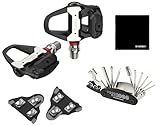
Overview: The upgraded Favero Assioma Pro RS-2 represents the pinnacle of pedal-based power meter technology, combining dual-sided precision with revolutionary modular design. This latest iteration tracks advanced metrics like torque effectiveness and Power Phase using Favero’s proprietary IAV Power System, delivering pro-level data even with oval chainrings. The comprehensive bundle positions it as a complete solution for data-driven cyclists.
What Makes It Stand Out: The unique split design seals electronics within the spindle, enabling easy pedal body swaps between road and MTB configurations without replacing the entire system. This modularity extends the product’s lifespan and versatility. At 123.5 grams per side, it remains the world’s lightest power pedal, while the IAV system provides unmatched accuracy by detecting instantaneous angular velocity throughout the entire pedal stroke.
Value for Money: At $824, this bundle undercuts the standard RS-2 package while offering superior accessories including a multi-tool kit and extra cleats. The modular architecture provides exceptional long-term value, allowing cost-effective upgrades rather than full replacements. For cyclists wanting both road and off-road power measurement, the interchangeable bodies eliminate the need for two separate power meters, effectively halving the long-term investment.
Strengths and Weaknesses: Strengths include cutting-edge IAV metrics, interchangeable pedal bodies, ultra-lightweight construction, and comprehensive connectivity. The 60-hour battery life is adequate but not class-leading. The main weakness is the premium price, though justified by innovation. The advanced metrics may overwhelm casual users, making it better suited for serious athletes.
Bottom Line: This upgraded RS-2 bundle is the ultimate choice for technically-minded cyclists seeking maximum versatility and data depth. The modular design and advanced IAV system make it a future-proof investment for dedicated riders who demand the most comprehensive power analysis available.
10. Favero Assioma DUO, Dual-sensing Side Pedal Based Cycling Power Meter with Extra Cleats, LOOK Keo Grip Road Cleats, Bluetooth and ANT+ Connectivity for Bike Computers, Cycling GPS Units, & Smartphones

Overview: The Favero Assioma DUO has established itself as the benchmark for reliable, pedal-based power measurement, offering dual-sensing accuracy in a proven package. These pedals integrate seamlessly with LOOK Keo cleat systems and deliver comprehensive power data to cycling computers, GPS units, and smartphones via Bluetooth and ANT+. The DUO balances performance, reliability, and accessibility for serious cyclists.
What Makes It Stand Out: Automatic Temperature Compensation (ATC) ensures consistent accuracy across conditions from -10°C to 60°C, eliminating drift during variable-weather rides. The IAV Power System with integrated gyroscope delivers ±1% precision by measuring actual instantaneous angular velocity rather than estimated values. The fully waterproof, shock-resistant design protects sensors in a bi-component resin block, making these pedals exceptionally durable for year-round riding.
Value for Money: At $639, the DUO hits a sweet spot between budget options and premium models. The included LOOK Keo Grip cleats add immediate value, while the 50-hour battery life provides adequate training time between charges. For cyclists invested in the LOOK ecosystem, this avoids cleat replacement costs. The proven reliability reduces risk compared to newer, unproven brands at similar price points.
Strengths and Weaknesses: Strengths include rock-solid accuracy, temperature compensation, robust waterproofing, and trusted brand reputation. The easy bike-to-bike transferability suits multi-bike owners. Weaknesses include battery life shorter than the Magene P715 and weight slightly higher than the RS series. The LOOK Keo compatibility limits riders preferring SPD-SL systems.
Bottom Line: The Favero Assioma DUO remains a compelling mid-range option delivering proven performance and reliability. For cyclists prioritizing accuracy and durability over cutting-edge weight savings, these pedals offer excellent value backed by Favero’s stellar reputation.
What Are Dual-Sided Power Pedals and How Do They Work?
Dual-sided power pedals are sophisticated cycling instruments that house independent strain gauges and accelerometers in each pedal spindle. Unlike their single-sided counterparts, these systems measure the exact force applied by both your left and right leg simultaneously, capturing torque, cadence, and angular velocity at the source of power generation. This bilateral approach provides a complete picture of your pedal stroke rather than an estimated approximation.
The Science of Bilateral Power Measurement
At the heart of each pedal lies a precision strain gauge that deforms microscopically under load, converting mechanical force into electrical signals. These signals are processed by onboard electronics that calculate power (watts) by multiplying torque by angular velocity. The accelerometer tracks pedal position throughout the 360-degree rotation, enabling analysis of where you’re applying force during each phase of the stroke. Advanced models can measure not just downward force but also tangential force, revealing how effectively you’re pulling through the bottom and pushing over the top of the pedal circle.
Why Pedal Stroke Efficiency Is the Hidden Key to Cycling Performance
Pedal stroke efficiency determines how much of your muscular effort actually translates into forward momentum versus being lost to biomechanical inefficiencies. Most cyclists naturally develop a “dead spot” somewhere in their stroke—typically at the top or bottom—where power transfer drops significantly. These gaps force your dominant muscles to work harder to compensate, accelerating fatigue and reducing sustainable power output. Dual-sided measurement quantifies these inefficiencies, showing you exactly where and how you’re losing force, not just that you’re losing it.
The Transformative Benefits of Dual-Sided Measurement
The leap from single-sided to dual-sided power data is like switching from a blurry photograph to high-definition video. You’re no longer guessing about your pedaling symmetry; you’re seeing precise left/right balance percentages, torque effectiveness scores, and platform center offset metrics that reveal your unique biomechanical signature.
Identifying and Correcting Power Imbalances
Most riders exhibit some degree of leg imbalance, often ranging from 48/52 to 45/55 splits. While minor asymmetries are normal and even functional, significant deviations can indicate muscle weaknesses, past injuries, or poor bike fit. Dual-sided pedals help you identify whether your imbalance is consistent across all power zones or worsens under fatigue, information that’s crucial for developing targeted strength and flexibility protocols.
Optimizing Your Pedal Stroke in Real-Time
Modern cycling computers can display live pedaling metrics, allowing you to experiment with cleat position, saddle height, and cadence while watching how these adjustments affect your torque effectiveness. You might discover that sliding your cleats back 2mm eliminates a power dip at the top of your stroke, or that increasing cadence by 5 RPM balances your left/right contribution. This immediate feedback accelerates the learning curve that traditionally took months of trial and error.
Injury Prevention Through Biomechanical Awareness
Chronic overuse injuries often stem from repeated compensation patterns. If your left leg consistently under-contributes, your right leg’s muscles, tendons, and joints absorb disproportionate stress. Over time, this can lead to iliotibial band syndrome, patellar tracking issues, or hip impingements. By catching these patterns early, you can implement corrective exercises before pain forces you off the bike.
Essential Features to Evaluate Before Buying
Navigating the technical specifications of power pedals requires understanding which features genuinely impact your training versus which are marketing fluff. The right choice depends on your discipline, technical aptitude, and performance goals.
Power Measurement Accuracy and Consistency
Look for systems claiming ±1% accuracy or better, but understand that real-world consistency matters more than laboratory-perfect numbers. Accuracy refers to how close measurements are to a true value, while consistency determines whether the readings are repeatable day after day. A pedal that’s consistently 2% off is more valuable than one that varies randomly between 0% and 3% error. Check whether the system auto-zeroes before rides and how temperature compensation is handled, as these factors dramatically affect reliability.
Pedal Platform Design and Float Options
The pedal body influences power transfer efficiency and comfort. Wider platforms distribute pressure more evenly across the foot, reducing hot spots and improving stability during hard efforts. Float—the degree of rotational freedom before disengagement—impacts knee health and biomechanics. Some systems offer multiple cleat options with different float ranges (0°, 4.5°, 9°), while others use proprietary cleats with fixed characteristics. Consider whether you need adjustable release tension for different riding scenarios.
Battery Life and Charging Mechanisms
Battery technology varies significantly between models. Some use rechargeable lithium cells requiring periodic charging via proprietary cables, while others utilize replaceable coin-cell batteries lasting 50-100 hours. Consider your riding volume and organizational habits. A rechargeable system might be more convenient if you already manage device charging, while replaceable batteries offer simplicity for travelers and those who dislike cables. Check whether the pedals continue transmitting data during charging or if they become temporarily unusable.
Data Transmission Protocols
Most modern pedals broadcast via both ANT+ and Bluetooth Smart, ensuring compatibility with bike computers, smartphones, and indoor training apps. However, the richness of data transmitted varies. Some systems broadcast only basic power and cadence via ANT+, while sending advanced metrics like torque effectiveness and platform center offset via Bluetooth to their proprietary app. Verify that your head unit can display the specific metrics you want to see during rides, not just in post-ride analysis.
Weight Considerations and Performance Impact
Power pedals typically add 30-50 grams per pedal compared to non-power equivalents. While this seems negligible, weight-conscious climbers and crit racers might notice the difference. More importantly, the weight distribution affects rotational inertia. Heavier pedals can slightly smooth out your stroke but may feel sluggish during high-cadence accelerations. Consider whether the performance insights gained outweigh the minor weight penalty for your specific goals.
Installation and Setup: Getting It Right the First Time
Proper installation is critical for accurate data and equipment longevity. Unlike standard pedals, power pedals contain sensitive electronics that can be damaged by improper torque or alignment.
Torque Specifications and Tools Required
Always use a torque wrench set to the manufacturer’s specification, typically 25-40 Nm. Undertorquing can lead to creaking and inaccurate readings as the pedal spindle moves in the crank arm. Overtorquing risks damaging the internal strain gauges or stripping threads. Many manufacturers provide specific installation tools or adapters to ensure proper engagement without stressing the electronics. Never use an impact driver or cheater bar.
Calibration Procedures for Reliable Data
After physical installation, perform a static calibration (often called “zero offset”) with your full weight on the pedals in the proper orientation. This establishes a baseline for accurate measurement. Some systems require periodic dynamic calibration through a specific pedaling protocol. Always calibrate before important rides and after swapping bikes. Temperature changes of more than 10°C (50°F) warrant recalibration, as thermal expansion affects strain gauge readings.
Understanding the Metrics: Beyond Just Power Numbers
The true value of dual-sided pedals emerges when you understand the secondary metrics that describe your pedaling quality, not just quantity.
Cadence, Torque Effectiveness, and Platform Center Offset
Torque effectiveness (often called “pedal smoothness”) measures what percentage of your pedal stroke contributes to forward propulsion versus just pushing up and down. Scores above 60% are generally good, while elite riders may exceed 70%. Platform center offset reveals where on the pedal body you’re applying force—consistent offset suggests stable foot position, while erratic readings may indicate cleat misalignment or foot instability.
Interpreting Left/Right Balance Data
Don’t obsess over achieving perfect 50/50 balance. Natural asymmetries exist, and forcing artificial balance can reduce efficiency. Instead, monitor how your balance shifts with fatigue, cadence changes, and power output. A drift from 48/52 to 40/60 during long rides indicates a weakness that needs addressing. Look for consistency within each power zone rather than across all intensities.
Compatibility Check: Will They Work With Your Bike?
Nothing’s more frustrating than discovering your expensive pedals don’t fit your bike or shoes after purchase. Comprehensive compatibility research prevents costly mistakes.
Cleat Systems and Shoe Compatibility
Most dual-sided power pedals use either Look Keo-style or Shimano SPD-SL-style cleats, though some offer proprietary systems. Verify that your current shoes have the correct bolt pattern (3-bolt for road, 2-bolt for mountain). Consider whether you need adapters for 4-bolt shoes. The stack height—distance between shoe sole and pedal axle—affects your effective saddle height, potentially requiring fit adjustments.
Bottom Bracket and Crank Arm Clearance
Power pedal spindles are slightly longer than standard pedals to accommodate electronics. On some bikes, particularly those with oversized chainstays or rear disc brake calipers, this can cause clearance issues. Measure your current pedal-to-chainstay distance and compare it to the specifications of any system you’re considering. Mountain bikers must also check clearance with rear suspension linkages and frame protectors.
Bike Computer and Software Integration
Ensure your cycling computer or smartphone app can display the metrics you want in real-time. While most systems work with popular head units, the ability to customize data fields varies. Post-ride analysis software compatibility is equally important—will your data automatically sync to your preferred training platform, or will you need manual file transfers? Some systems offer deep integration with specific training apps, providing coached pedaling drills based on your data.
Maintenance and Durability in All Conditions
Power pedals face the harshest conditions of any bike component—road spray, dust, impacts, and constant rotational stress. Durability varies significantly between designs.
Weather Sealing and Bearing Longevity
Look for IPX7 waterproof ratings and sealed electronics compartments. However, seals can fail, and bearings eventually wear. Check whether the manufacturer offers rebuild kits or bearing replacement services. Some premium models feature user-serviceable bearings, while others require factory service. Consider the cost and turnaround time for repairs when evaluating long-term ownership costs.
Firmware Updates and Data Integrity
Manufacturers regularly release firmware updates to improve accuracy, add features, or fix bugs. Check how updates are delivered—some require connecting to a computer, while others update wirelessly via smartphone. Always back up your ride data before updating, as rare glitches can corrupt files. Establish a routine of checking for updates monthly, especially during off-season when a failed update won’t derail important training.
The Investment Equation: Cost vs. Performance Value
Dual-sided power pedals represent a significant investment, typically costing 2-3 times more than single-sided systems. The value proposition depends entirely on how you’ll use the data. If you’re a data-driven athlete working with a coach who understands bilateral analysis, the ROI is substantial. If you primarily ride for fitness and rarely analyze post-ride data, a simpler system may suffice. Consider the cost per meaningful insight rather than just the sticker price.
Training Applications: From Recovery to Race Day
The true transformation happens when you integrate dual-sided data into structured training protocols, moving from passive observation to active improvement.
Structured Workouts and Interval Training
During intervals, monitor how your left/right balance shifts as fatigue accumulates. If your weak leg’s contribution drops significantly in the final repeats, you’ve identified a limiter. Design specific intervals where you consciously focus on the weaker leg, perhaps using lower power targets initially to build neuromuscular pathways without overwhelming the system.
Pedaling Drills and Technique Refinement
Use torque effectiveness data to practice specific drills: high-cadence spinning to improve smoothness, single-leg focus intervals to address imbalances, and overgear work to enhance force application through dead spots. The immediate feedback helps you understand which mental cues actually produce measurable improvements versus those that just feel different.
Common Mistakes Cyclists Make With Power Pedals
Many riders install power pedals and expect automatic improvement. The most common error is data overload—displaying so many metrics that you can’t focus on riding. Start with just power and left/right balance, adding advanced metrics only after you’ve mastered the basics. Another mistake is chasing perfect symmetry at the expense of overall power output. A 52/48 split producing 300 watts is better than a forced 50/50 at 250 watts.
Integrating With Your Cycling Ecosystem
Power pedals become exponentially more valuable when integrated with heart rate variability, GPS data, and subjective perceived exertion scores. This holistic view helps you understand whether a declining left leg contribution is due to muscular fatigue, cardiovascular limitation, or neural recruitment issues. Consider how the data will inform bike fit decisions, equipment choices (like crank length), and even off-bike strength training priorities.
Future Trends in Power Meter Technology
The next generation of power pedals will likely incorporate advanced metrics like dynamic pedaling angle, real-time muscle oxygenation correlation, and AI-driven technique coaching. We’re seeing early adoption of gyroscopic sensors for more precise stroke analysis and integration with smart trainers for seamless indoor-outdoor data consistency. Battery technology continues to improve, with solar-assisted charging and energy harvesting from pedal motion on the horizon.
Who Should Invest in Dual-Sided Power Pedals?
These tools are ideal for serious amateurs and professionals who’ve plateaued with traditional training methods, athletes returning from injury who need to monitor asymmetries, and cyclists passionate about optimizing every aspect of their performance. They’re less critical for beginners still developing basic fitness or riders content with general health benefits. If you’re already tracking heart rate and speed but crave deeper insights, dual-sided pedals offer the next level of training intelligence.
Frequently Asked Questions
1. How much more accurate are dual-sided pedals compared to single-sided systems?
Single-sided pedals measure one leg and double the value, assuming perfect symmetry. This introduces error if your actual balance differs from 50/50. Dual-sided pedals eliminate this assumption, providing true bilateral measurement. In real-world testing, riders with 45/55 imbalances see power readings vary by 10% or more between single and dual systems. For training consistency, dual-sided accuracy is superior, though single-sided can be sufficient for general fitness tracking.
2. Will dual-sided power pedals make me a faster cyclist automatically?
No technology replaces consistent training. However, they accelerate improvement by identifying specific inefficiencies that would take months to discover otherwise. Most users see measurable gains within 8-12 weeks when they actively use the data for targeted drills. The key is translating metrics into actionable changes rather than just collecting numbers.
3. Can I use dual-sided power pedals on multiple bikes?
Yes, and this is a major advantage over crank-based or spider-based systems. Most models swap between bikes in under five minutes. However, you’ll need to recalibrate each time and ensure proper torque. Some riders purchase multiple sets of pedal bodies to leave installed on different bikes, swapping only the power-measuring spindles—a cost-effective way to use one system across a road bike, TT bike, and indoor trainer.
4. How do weather conditions affect power pedal accuracy?
Quality systems maintain accuracy across temperature ranges from -10°C to 50°C (14°F to 122°F) through thermal compensation algorithms. However, rapid temperature changes can cause temporary drift until the electronics stabilize. Water ingress is rare with proper IPX ratings, but heavy mud can interfere with cadence sensors. Always rinse pedals after muddy rides and avoid pressure washers that can force water past seals.
5. What’s the learning curve for interpreting dual-sided data?
Basic metrics like power and balance are intuitive immediately. Advanced metrics like torque effectiveness require 2-3 weeks of regular observation to understand your personal norms. Most cyclists reach proficiency within a month if they review data after every ride. Working with a coach who understands these metrics can compress this timeline to two weeks.
6. Do dual-sided pedals require special maintenance compared to regular pedals?
They need the same basic maintenance—periodic cleaning and bearing service—but with extra care around electronics. Never use harsh solvents that could damage seals. Check battery contacts for corrosion quarterly. Firmware updates are an additional maintenance task unique to power pedals. Overall, expect to spend 15 minutes monthly on upkeep versus 5 minutes for standard pedals.
7. Can power pedals help with bike fit decisions?
Absolutely. They’re invaluable for quantifying fit changes. If moving your saddle forward improves torque effectiveness by 5% and balances your left/right contribution, that’s objective validation of a fit decision. Use them to test cleat position, saddle height, and crank length changes with real data rather than just “feel” alone.
8. Are there any riding situations where dual-sided data is less reliable?
Very low-cadence, high-torque grinding (below 40 RPM) can challenge some accelerometers’ ability to track pedal position accurately. Extremely rough terrain may cause momentary signal drops. Indoor trainers with strong electromagnetic fields can interfere with transmission. In these scenarios, data may show brief anomalies but generally remains accurate when averaged over several seconds.
9. How long do dual-sided power pedals typically last before needing replacement?
With proper maintenance, the power-measuring electronics typically last 5-7 years before component degradation affects accuracy. Pedal bodies and bearings wear faster, usually needing service every 1-2 years depending on mileage. Many manufacturers offer refurbishment programs that replace worn components and update electronics for a fraction of new cost, extending useful life to 10+ years.
10. Should I prioritize dual-sided pedals or a smart trainer with power measurement?
If you can only afford one, choose based on where you train most. Outdoor riders benefit more from power pedals, while indoor specialists might prefer a smart trainer’s controlled environment. However, having power measurement only on the trainer creates a data gap when riding outside. For comprehensive training, pedals are the more versatile first investment, with a smart trainer as a complementary tool later.