Picture this: a sprawling field bathed in moonlight, the air electric with anticipation as teams line up for the opening pull. Suddenly, a brilliant orb of light slices through the darkness, tracing a perfect flight path as players move in synchronized choreography beneath its glow. This isn’t your average day game—this is the mesmerizing world of night ultimate frisbee tournaments, where LED technology transforms a beloved sport into a spectacular nocturnal experience. The right glow disc doesn’t just illuminate; it becomes the heartbeat of the entire event, dictating visibility, performance, and ultimately, the quality of play.
Choosing the perfect LED ultimate frisbee disc for tournament play is far more nuanced than picking the brightest option on the shelf. Tournament organizers and serious players understand that factors like aerodynamic integrity, battery longevity, durability under competitive stress, and compliance with gameplay standards separate novelty toys from professional-grade equipment. Whether you’re planning your first glow tournament or looking to upgrade your organization’s arsenal, understanding these critical elements ensures every layout, huck, and score happens with precision—even when the sun goes down.
Top 10 Glow LED Ultimate Frisbees
Detailed Product Reviews
1. Toysery Light Up Flying Disc - LED Frisbee, Glow in The Dark, Easy to Use, Ideal Camping Game, Fun Outdoor/Indoor Birthday Toys for Boys/Girls/Kids/Adults, 175g

Overview:
The Toysery Light Up Flying Disc brings LED illumination to classic frisbee fun at an accessible price point. This 175-gram disc meets official standards, making it suitable for casual Ultimate games and beach activities. With pre-installed batteries and straightforward operation, it’s designed for immediate enjoyment without technical setup or learning curve.
What Makes It Stand Out:
This disc distinguishes itself through simplicity and affordability. Unlike rechargeable alternatives, it arrives ready-to-play with batteries included. The water-resistant construction handles dewy grass or light splashes, while the standard weight ensures predictable flight patterns that serious players appreciate. Its “glow stick” aesthetic creates a visible arc for nighttime tracking without complicated controls.
Value for Money:
At $14.48, this represents entry-level pricing for LED discs. While it lacks advanced features, it delivers core functionality that costs significantly less than premium smart discs. The battery-powered design means no charging downtime, though replacement costs add up over time. Compared to basic phosphorescent glow discs, the active LED illumination provides superior visibility for occasional night play.
Strengths and Weaknesses:
Strengths include immediate usability, professional weight compliance, water resistance, and budget-friendly pricing. The comfortable grip suits both children and adults. Weaknesses involve disposable batteries requiring eventual replacement, basic single-mode lighting, and lower brightness compared to high-end competitors. The LED unit may affect durability upon hard impacts, and battery life is finite.
Bottom Line:
Perfect for families seeking occasional nighttime fun without major investment, this disc balances cost and performance admirably. Casual players will appreciate its no-fuss approach, though frequent users might prefer rechargeable alternatives for long-term savings.
2. TOSY Flying Disc - 108 RGB Multicolor LEDs, Super Bright, Smart Modes, Christmas Stocking Stuffers Gift, Camping Toy for Kid/Teen/Adult, Auto Light Up, Rechargeable, Waterproof, 175g

Overview:
The TOSY RGB Flying Disc represents the pinnacle of illuminated disc technology, featuring 108 LEDs capable of producing 16.7 million colors. This professional-grade 175-gram disc earned TIME’s Best Inventions 2024 award, combining tournament-standard flight characteristics with mesmerizing light shows. Smart sensors automatically manage power, activating LEDs upon throw and conserving battery when idle.
What Makes It Stand Out:
Unprecedented customization sets this apart. Users control brightness, timer settings, colors, and display patterns through smart modes. The motion-activated system ensures effortless operation while maximizing battery life. Its USB-C rechargeable battery delivers 90 minutes of continuous play or approximately 1,000 throws—far exceeding competitors. The patented design integrates electronics without compromising professional flight dynamics.
Value for Money:
At $35.98, this premium disc justifies its cost through professional build quality and revolutionary lighting. While expensive compared to basic LED discs, it eliminates battery replacement costs and offers features unmatched in the market. The durable, waterproof construction ensures longevity, making it economical for serious players over time. For enthusiasts, the price reflects genuine innovation.
Strengths and Weaknesses:
Strengths include extraordinary brightness, intelligent power management, official Ultimate specifications, and award-winning design. The rechargeable system is both convenient and eco-friendly. Weaknesses center on the high initial investment and potential overkill for casual users. Some may find the extensive options unnecessarily complex for simple catch games, and the charger is not included.
Bottom Line:
For enthusiasts demanding the ultimate night experience, this disc delivers unparalleled performance. The combination of professional flight dynamics and spectacular lighting makes it worth every penny for frequent players who value customization and quality.
3. TOSY Flying Disc - 36 Monocolor LEDs, Super Bright, Smart Modes, Christmas Stocking Stuffers Gift, Camping Toy for Kid/Teen/Adult, Auto Light Up, Rechargeable, Waterproof, 175g
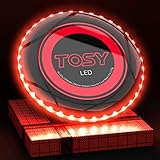
Overview:
The TOSY Monocolor Flying Disc prioritizes raw brightness over color variety, utilizing 36 concentrated LEDs that claim to be 100 times brighter than competitors. Meeting professional 175-gram standards and earning TIME’s 2024 Best Inventions recognition, this disc focuses on delivering maximum visibility for serious nighttime play. Smart motion sensors and rechargeable convenience maintain the premium TOSY experience without color complexity.
What Makes It Stand Out:
This disc’s singular focus on intensity rather than spectrum creates a different value proposition. The monocolor design produces a piercing, consistent light trail that some players prefer over RGB’s rainbow effects. It retains the intelligent motion activation and USB-C charging of its sibling, ensuring seamless gameplay without manual switching or battery anxiety during critical moments.
Value for Money:
Priced identically to the RGB version at $35.99, the choice becomes preference-driven. You sacrifice color variety for potentially superior visibility in foggy or challenging conditions. The professional-grade construction and rechargeable battery provide the same long-term value, eliminating disposable battery expenses while delivering tournament-quality performance. The brightness advantage may justify the price for specific use cases.
Strengths and Weaknesses:
Strengths include extreme brightness, simplified operation, professional flight characteristics, and intelligent power management. The durable, waterproof build withstands competitive play. Weaknesses involve the premium price for single-color output and limited aesthetic variety compared to the RGB model. The brightness may be excessive for intimate backyard games, and like its sibling, lacks an included charger.
Bottom Line:
Choose this disc if maximum visibility trumps color variety in your priorities. It’s ideal for competitive players in low-light environments where tracking the disc is paramount, offering the same professional quality with a different lighting philosophy.
4. Discraft Glow Ultrastar (Nite Glo) Ultimate Frisbee Sport Flying Disc

Overview:
The Discraft Glow Ultrastar takes a traditional approach to night play, using photoluminescent material rather than electronics. As the official disc of USA Ultimate, it delivers the exact 175-gram weight and 10.75-inch diameter used in professional competition. This no-frills option appeals to purists seeking authentic flight characteristics without battery concerns or electronic failure points.
What Makes It Stand Out:
Its official USAU certification ensures this disc performs identically to tournament discs used in daylight. The simplicity is its strength—no charging, no battery failures, no electronic components to break. A brief charge under bright light provides temporary glow for casual evening games, maintaining the classic frisbee experience that purists demand for consistent practice and play.
Value for Money:
At $14.11, it’s the most affordable option while offering professional-grade quality. The lack of electronics means no ongoing costs or technical failures. However, the glow diminishes quickly and requires recharging, making it less practical for extended night sessions compared to LED alternatives. For practice and official feel, it’s unmatched at this price point, representing true value for serious players.
Strengths and Weaknesses:
Strengths include authentic professional specifications, trusted brand reputation, indestructible simplicity, and lowest cost. It flies exactly like daytime tournament discs. Weaknesses involve weak, short-lived glow requiring frequent recharging, no active illumination in deep darkness, and zero customization. Performance drops significantly as the glow fades, limiting its practical night-play duration.
Bottom Line:
Perfect for Ultimate players practicing day-to-night transitions or purists prioritizing official feel over illumination. For serious night games, however, LED alternatives provide superior visibility, making this a specialized tool rather than a general-purpose night disc.
5. HYES 2 Pack Light up Flying Discs for Kids, 45 LEDs, 14 Lighting Modes, Rechargeable Glow in The Dark Flying Ring for Beach, Camping, Outdoor Game, Sport Toys for Teens Boys Adult

Overview:
The HYES two-pack delivers exceptional family value with twin rechargeable LED discs featuring 45 LEDs and 14 distinct lighting modes. Weighing 165 grams, these slightly lighter rings prioritize accessibility for younger players while offering impressive customization. The package includes a Type-C charging cable and presents an immediate gift solution for group activities, team sports, and multi-player scenarios.
What Makes It Stand Out:
Getting two feature-rich discs for the price of one premium competitor creates undeniable value. The multiple brightness levels and dynamic patterns cater to diverse preferences, while the anti-slip silicone strip enhances grip security. Unlike standard discs, these rings offer 6 single-color and 8 multicolor modes, plus the ability to stay lit when stationary, adding versatility for creative games and performances.
Value for Money:
At $35.99 for two, the per-disc cost undercuts most premium singles while providing comparable LED counts. The rechargeable design eliminates battery expenses, and the gift-ready packaging adds presentation value. The 10g weight reduction may slightly affect flight stability for purists but benefits younger users. For families and parties, this dual-pack is economically unbeatable, offering immediate multiplayer capability.
Strengths and Weaknesses:
Strengths include exceptional quantity value, versatile lighting options, family-friendly weight, durable ABS construction, and inclusive two-color packaging. The non-standard 165g weight improves accessibility for children. Weaknesses involve potentially less precise flight than 175g discs, unknown long-term durability compared to established brands, and no motion-sensor auto-shutoff for power conservation.
Bottom Line:
The ultimate choice for families, party hosts, or anyone wanting multiple discs without doubling their budget. Slight performance trade-offs are justified by the outstanding value and versatility, making it the smartest purchase for group entertainment and youth activities.
6. TOSY Flying Disc - 36 Monocolor LEDs, Super Bright, Smart Modes, Christmas Stocking Stuffers Gift, Camping Toy for Kid/Teen/Adult, Auto Light Up, Rechargeable, Waterproof, 175g

Overview: The TOSY Flying Disc represents the pinnacle of illuminated flying disc technology, earning recognition as a TIME Best Invention of 2024. This 175-gram professional-grade disc features 36 ultra-bright monocolor LEDs that claim to be 100 times brighter than competitors, making it ideal for serious Ultimate players and nighttime enthusiasts who refuse to compromise on performance.
What Makes It Stand Out: The motion-activated smart modes automatically illuminate when thrown and power down when idle, preserving battery life with intelligent efficiency. A rapid 30-minute charge delivers up to 90 minutes of continuous play or approximately 1,000 throws. The patented design meets professional standards for flight stability and grip, while waterproof construction ensures durability in all weather conditions and environments.
Value for Money: At $35.99, this is a premium investment, but justified for competitive players seeking tournament-quality performance with revolutionary brightness. The TIME award pedigree and professional specifications distinguish it from budget alternatives that compromise on flight dynamics and LED power. For serious Ultimate competitors, the price reflects genuine innovation.
Strengths and Weaknesses: Pros include exceptional brightness, intelligent battery management, professional weight certification, quick charging, and waterproof durability. Cons are the premium price point, inclusion of only a USB-C to C cable without a charger, and monocolor LEDs which may lack the visual variety some recreational users desire.
Bottom Line: Perfect for serious Ultimate competitors and enthusiasts who demand professional-grade flight characteristics combined with unmatched illumination. The premium price delivers quality that casual players may not need but dedicated players will appreciate as a game-changing investment.
7. ZhaoJum 49LEDs Glow Flying Disc - Rechargeable Light Up Disc Toy with 3 Smart Modes, 175g Professional Design for Beach/Camping/Backyard Night Games

Overview: The ZhaoJum 49LEDs Glow Flying Disc offers an impressive feature set at a remarkably accessible price point. This 175-gram professional-weight disc packs 49 high-brightness LEDs with three smart modes, making it suitable for competitive play and casual nighttime fun without breaking the bank.
What Makes It Stand Out: The standout feature is undoubtedly the sub-$8 price tag combined with more LEDs than many premium competitors. The disc floats on water thanks to lightweight materials, and a one-hour charge provides 4-8 hours of illumination—substantially longer than many alternatives. Motion sensors automatically manage power, lighting up during flight and dimming when idle to maximize efficiency.
Value for Money: At $7.99, this disc delivers extraordinary value, offering 175-gram professional specifications and impressive battery life for roughly the cost of two coffee drinks. While it lacks the brand pedigree of premium options, the feature-to-price ratio is unmatched for budget-conscious buyers seeking legitimate performance.
Strengths and Weaknesses: Pros include unbeatable affordability, high LED count, exceptional battery endurance, water-floating capability, and professional weight standards. Cons involve an unknown brand reputation potentially affecting long-term durability, fewer smart mode options than premium models, and possibly inferior LED brightness quality despite higher quantity.
Bottom Line: An unbeatable choice for families, casual players, or anyone wanting to experiment with light-up discs without financial commitment. The professional weight and floating feature make it surprisingly capable for both beach games and backyard fun, delivering performance that defies its budget price.
8. TOSY Flying Disc - 36 Monocolor LEDs, Super Bright, Smart Modes, Christmas Stocking Stuffers Gift, Camping Toy for Kid/Teen/Adult, Auto Light Up, Rechargeable, Waterproof, 175g

Overview: This TOSY Flying Disc is identical in features to its higher-priced counterpart, offering the same award-winning design that earned TIME Best Invention 2024 recognition. The 175-gram professional disc features 36 super-bright LEDs with intelligent motion-sensing technology and maintains all premium specifications.
What Makes It Stand Out: You get all the premium TOSY innovations—100x brightness claim, smart modes, 30-minute quick charge, and waterproof construction—at a more palatable price point. The motion sensors automatically activate LEDs when thrown and conserve battery when stationary, delivering up to 90 minutes or 1,000 throws per charge for extended play sessions.
Value for Money: At $26.98, this represents significantly better value than the $35.99 listing while maintaining identical specifications. The price reduction makes professional-grade illumination accessible to more players without sacrificing the TIME-recognized quality, performance, and durability that define the brand.
Strengths and Weaknesses: Pros mirror the premium version: exceptional brightness, intelligent power management, professional Ultimate specifications, rapid charging, and durable waterproofing. The main advantage is the improved price-to-value ratio. Cons remain the same—no charger included, only USB-C to C cable, and monocolor LEDs may disappoint those wanting RGB variety.
Bottom Line: Essentially the same premium disc at a smarter price. Unless you specifically need the packaging from the higher-priced listing, this is the obvious choice for players seeking TOSY’s industry-leading brightness and professional performance without overspending on identical technology.
9. HYES 2 Pack Light up Flying Discs for Kids, Rechargeable Disc with 45 LEDs, 14 Lighting Modes(10")&Built-in Battery Disc(7.8"), Glow in The Dark Ring for Beach/Camping/Outdoor Sport

Overview: The HYES 2 Pack Light-up Flying Discs offers versatility through dual-sized discs designed for mixed-age play. The set includes a 10-inch disc with 45 LEDs and 14 lighting modes, plus a smaller 7.8-inch, 95-gram disc with 30 built-in blue LEDs—perfect for accommodating different skill levels and age groups in one package.
What Makes It Stand Out: This package excels in adaptability. The larger disc features four adjustable brightness levels and rechargeable battery, while the smaller ring-style disc uses a simple built-in battery with included spare. With 14 total lighting modes across both discs, it provides visual variety unmatched by single-disc offerings, ensuring engagement for all players.
Value for Money: At $30.99 for two discs, the value proposition is strong—essentially paying $15.50 per disc while getting size options that grow with your family. The inclusion of a spare battery and Type-C charging cable adds convenience value that single-disc packages cannot match.
Strengths and Weaknesses: Pros include dual-size versatility, multiple lighting modes, rechargeable and battery-powered options, child-friendly smaller disc, and durable ABS construction. Cons are the larger disc potentially lacking true professional 175-gram weight, the smaller disc’s disposable battery requiring eventual replacement, and unknown brand longevity compared to established competitors.
Bottom Line: Ideal for families with children of varying ages or groups wanting options. The two-disc approach ensures everyone can participate comfortably, making it a practical choice for household recreation rather than competitive play, with versatility as its primary strength.
10. Flying Disc Glow in the Dark - Double LED Halos - Flying Disc with 39 LEDs+7 Lighting Modes Changeable - Waterproof Flying Disc Rechargeable - Outdoor Games in Camp Evening Party (Glowing Galaxy)
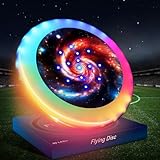
Overview: This Glowing Galaxy Flying Disc carves a middle-market niche with its unique double LED halo design, featuring 39 total LEDs plus an additional 14 RGB LEDs in the center. The 175-gram disc maintains professional weight standards while offering seven distinct lighting modes for varied visual effects during nighttime play.
What Makes It Stand Out: The dual-ring LED configuration creates distinctive light patterns that differentiate it from single-ring competitors. An IPX7 waterproof rating provides superior water protection, while the rubber edge ring concentrates weight distribution for stable flight and hand protection. The design balances performance with visual appeal for recreational users.
Value for Money: At $14.99, this disc positions itself as a mid-range option offering more features than budget models but at half the price of premium alternatives. The RGB center LEDs and enhanced waterproofing provide tangible upgrades over basic light-up discs, making it accessible for most players.
Strengths and Weaknesses: Pros include the unique double halo lighting effect, robust IPX7 waterproofing, professional weight with protective rubber edge, decent battery life, and competitive pricing. Cons feature fewer total LEDs than some competitors, potentially less brand recognition affecting quality assurance, and simpler smart features compared to premium motion-sensing models.
Bottom Line: A solid choice for players wanting RGB color variety and strong waterproofing without premium cost. The double halo design creates engaging visual effects for parties and beach games, making it versatile for recreational use where visual impact matters as much as flight performance.
The Evolution of Night Ultimate Frisbee
From Glow Sticks to Smart LEDs
The earliest night games involved taping chemical glow sticks to standard discs—a solution that was equal parts creative and frustrating. These setups created uneven weight distribution, compromised flight patterns, and lasted only a few hours before fading into uselessness. The transition to integrated LED technology revolutionized the experience entirely. Modern discs embed microelectronics directly into the plastic matrix during manufacturing, preserving the exact weight distribution and aerodynamic properties that players expect from tournament-grade equipment. This evolution represents more than convenience; it’s about maintaining the sport’s integrity while expanding when and how we play.
Why LED Discs Dominate Modern Night Play
Today’s LED discs offer capabilities that glow sticks never could. Programmable light sequences, variable brightness settings, and impact-activated sensors create a playing experience that adapts to different field conditions and player preferences. Unlike external light sources that can detach mid-game, integrated LEDs remain secure through layout bids, collisions, and errant throws into surrounding terrain. For tournament directors, this reliability translates to fewer game interruptions and consistent play quality across multiple matches.
Understanding LED Disc Technology
Battery Life and Power Management
The heart of any LED disc is its power system. Most tournament-quality discs utilize coin cell batteries (CR2032 or similar) that balance weight, availability, and runtime. Advanced models feature smart power management that automatically dims lights during periods of inactivity and brightens them when motion is detected. This intelligent cycling can extend battery life from 8 hours to over 20 hours of actual play time. For tournaments spanning multiple nights or weekends, understanding these power curves helps organizers plan battery replacements and avoid mid-game failures.
LED Configuration and Brightness Levels
Not all LED arrangements are created equal. Single-LED discs often create dark spots as the disc spins, while multi-LED configurations (typically 4-6 lights) ensure 360-degree visibility. The brightest discs aren’t always the best—excessive lumens can create glare that actually impairs depth perception. Tournament-grade discs usually operate between 50-150 lumens, optimized for tracking without overwhelming players’ night-adjusted vision. The placement of LEDs along the rim versus the center also affects the disc’s moment of inertia and stability in windy conditions.
Impact-Resistant Construction
Every component in an LED disc must survive repeated impacts at high velocities. Quality discs use shock-mounted battery compartments and flexible circuit boards that bend rather than snap on impact. The LED housing itself should be recessed slightly below the disc’s surface to prevent direct strikes. Look for discs tested to withstand at least 50 impacts from 30 feet onto concrete—this benchmark ensures they’ll survive tournament-level intensity without electrical failure.
Key Features That Define Tournament-Quality Glow Discs
Weight Standards and Flight Characteristics
Regulation ultimate frisbee discs weigh 175 grams, and your LED disc should match this exactly. Even a 5-gram deviation alters release timing and flight stability. Premium LED discs achieve this through precision molding that accounts for the weight of electronic components. The distribution of that weight matters equally—electronics concentrated in one area create wobble. Tournament-quality designs distribute components symmetrically around the rim, maintaining the perfect balance that serious players demand.
Aerodynamic Integrity with Embedded Lights
The challenge of embedding lights without disrupting airflow separates elite discs from recreational ones. Microscopic seams around LED ports create turbulence that affects stability in crosswinds. Top-tier manufacturers use ultrasonic welding or co-molding techniques that make the electronics package virtually indistinguishable from the surrounding plastic. This seamless integration preserves the disc’s lift-to-drag ratio, ensuring your 60-yard huck follows the same flight path at midnight as it does at noon.
Color Spectrum and Visibility Range
Human eyes perceive different wavelengths differently in low light. Green LEDs (around 525nm) appear brightest to our dark-adapted eyes, offering maximum visibility with minimal power draw. Blue LEDs (470nm) create stunning visual effects but require more energy and can be harder to track against dark backgrounds. Red LEDs preserve night vision better but lack the punch for long-distance visibility. The best tournament discs offer multiple color modes, allowing teams to select based on field conditions, ambient light pollution, and player preference.
Durability Factors for Competitive Play
Material Composition and Flexibility
Tournament discs use proprietary polymer blends—typically polyethylene or polyurethane composites—that balance rigidity for stable flight with flexibility for impact absorption. LED discs require additional considerations: the plastic must maintain its properties across temperature ranges where electronics operate. Some cheaper discs become brittle in cold weather, risking cracks that expose electronic components. Quality discs maintain flexibility down to 40°F (4°C) and structural integrity up to 100°F (38°C), ensuring consistent performance regardless of climate.
Water Resistance for All-Weather Tournaments
Night tournaments often coincide with dew formation or unexpected showers. Electronics require IPX4 minimum splash resistance, with IPX6 (powerful water jets) or IPX7 (temporary immersion) offering better peace of mind. The battery compartment seal is critical—look for O-ring gaskets and threaded closures rather than simple snap-fit designs. Remember that water resistance degrades over time; premium discs include replacement seals in their packaging.
Reinforced Rims and Impact Zones
The rim experiences the most stress during catches, throws, and ground strikes. LED discs need additional reinforcement here to protect circuitry. Some designs incorporate Kevlar strands or carbon fiber inserts in the rim, adding strength without significant weight. The impact zones around each LED should feature thickened plastic walls—at least 2mm thicker than surrounding areas—to prevent cracking that could compromise the entire disc.
Battery and Power Considerations
Replaceable vs. Rechargeable Systems
Replaceable coin cells offer immediate power restoration—crucial during tournaments where downtime equals schedule delays. Rechargeable lithium-polymer systems reduce long-term cost and environmental waste but require charging infrastructure between games. Hybrid systems are emerging: rechargeable discs with emergency coin cell backup that activates when primary power depletes. For multi-day tournaments, replaceable systems provide logistical simplicity, while single-day events might benefit from rechargeable options.
Runtime Expectations for Tournament Length
A typical night tournament runs 4-6 hours including warm-ups and finals. Your discs should comfortably exceed this with 8+ hours of runtime. However, brightness settings dramatically affect longevity—high-intensity modes might drain batteries in 6 hours, while pulsing or motion-activated modes extend life to 20+ hours. Always test runtime under actual playing conditions, as cold weather reduces battery capacity by 20-30%. Smart organizers budget for battery changes every 3-4 hours to maintain peak brightness.
Quick-Swap Features for Minimal Downtime
When a disc fails mid-game, you need replacement in seconds, not minutes. Look for tool-free battery compartments that open with a simple twist or slide mechanism. Some tournament-grade discs feature external battery indicators—tiny LEDs that flash when power drops below 20%, allowing preemptive changes during stoppages. The best systems let you swap batteries without removing the disc from play, using magnetic contacts that align automatically when a fresh battery pack is attached.
Visibility and Performance Metrics
Lumens vs. Candela: What Actually Matters
Lumens measure total light output; candela measures intensity in a specific direction. For frisbee discs, candela is more relevant—a focused beam visible from 200 meters beats diffuse brightness that washes out nearby. Tournament-grade discs achieve 200+ candela with optics that direct light outward along the rim, creating a visible ring that’s trackable even during rapid spins. Don’t be swayed by high lumen ratings alone; ask manufacturers for candela specifications and beam angle data.
Flashing Modes vs. Constant Glow
Flashing or strobing LEDs extend battery life and create distinctive visual signatures, but can trigger headaches or motion sickness in sensitive players. Constant glow provides the smoothest tracking but drains power faster. The sweet spot for tournaments is a rapid pulse mode (5-10Hz) that creates persistence of vision—appearing solid to the eye while saving battery. Some advanced discs synchronize flash patterns across multiple units, preventing the chaotic light show that occurs when every disc flashes randomly.
Peripheral Vision and Tracking
The human eye detects motion better in peripheral vision than in central focus. Effective LED discs exploit this by creating distinct light patterns that remain recognizable even when you’re not looking directly at them. Multi-color LEDs that alternate or create chasing patterns around the rim enhance peripheral tracking, allowing players to maintain awareness of disc position while watching cutters and defenders. This spatial awareness is crucial for high-level night play where split-second reactions determine outcomes.
Tournament Regulations and Compliance
USA Ultimate Standards for Light-Up Discs
While USA Ultimate doesn’t yet have formal standards specifically for LED discs, tournament directors follow guidelines from the Ultimate Players Association. Key requirements include: weight within 5 grams of 175g, diameter between 10.5-11 inches, and no protruding components that could cause injury. The lighting system must be fully enclosed and unable to detach during normal play. Self-certification by manufacturers is common, but experienced tournament directors often conduct their own weight and balance tests before approving discs for sanctioned events.
Self-Illuminated vs. Externally-Lit Discs
Regulations distinguish between discs that generate their own light and those illuminated by field-level systems. Self-illuminated discs offer mobility for tournaments without infrastructure, while externally-lit discs (using UV floodlights or reflective materials) provide consistent illumination but require setup. Most competitive night tournaments prefer self-illuminated discs for their flexibility, though some elite events use hybrid systems with field lighting for boundary markers and self-illuminated discs for gameplay.
Certification Requirements
While no universal certification exists, look for discs that meet FDA laser safety standards (even though LEDs aren’t lasers, the testing protocols ensure eye safety) and ROHS compliance for hazardous materials. Some manufacturers submit discs to independent testing labs for impact and waterproof certification—ask for these reports when making bulk purchases. Tournament insurance may require documentation of safety compliance, making these certifications more than just marketing claims.
Environmental and Safety Considerations
Eco-Friendly Materials and Battery Disposal
Tournaments generate significant battery waste. Reputable manufacturers offer take-back programs for spent cells and use recyclable #5 plastic for disc bodies. Some newer discs feature biodegradable battery casings made from polylactic acid (PLA). When planning your event, coordinate with local electronics recycling facilities and communicate disposal protocols to teams. Consider budgeting for rechargeable systems after your second tournament—the environmental and cost benefits compound quickly.
Eye Safety and Player Comfort
LED brightness is measured in millicandela (mcd) for eye safety. Tournament-grade discs should stay below 5000 mcd direct viewing brightness to prevent retinal afterimages. Blue light exposure is another concern—prolonged exposure to high-intensity blue LEDs can disrupt circadian rhythms and cause eye strain. Quality discs use diffusers that scatter light, reducing direct glare while maintaining visibility. Some players wear yellow-tinted glasses that enhance contrast while filtering harsh blue wavelengths.
Wildlife Impact in Outdoor Venues
Night tournaments in parks or natural areas must consider local wildlife. Bright, flashing lights can disorient nocturnal animals and insects. Responsible tournament directors choose discs with red or amber LED modes that minimize ecological disruption. Some venues now require light pollution assessments before permitting night events—using directional LEDs that focus light downward rather than outward can satisfy these requirements while maintaining playability.
Cost-Benefit Analysis for Tournament Organizers
Bulk Purchasing Strategies
Purchasing LED discs for tournaments represents significant investment. Volume discounts typically begin at 25 units, with substantial price breaks at 50 and 100 discs. However, don’t sacrifice quality for quantity—a single mid-game failure costs more in time and frustration than the $10 saved on a cheaper disc. Calculate cost-per-hour-of-play: a $30 disc lasting 20 hours costs $1.50/hour, while a $15 disc lasting 5 hours costs $3/hour. Tournament directors should budget $25-35 per disc for professional-grade equipment.
Longevity and Replacement Cycles
Quality LED discs survive 2-3 seasons of tournament play before battery contacts corrode or plastic fatigues. Budget for 30% replacement annually, with higher rates if you run multiple events per year. Track usage hours for each disc—most failures occur predictably after 50-80 hours of active play. Some tournament series rotate discs between “game play” and “warm-up” status, extending elite disc lifespan by using them only for actual matches.
Warranty and Manufacturer Support
Professional-grade discs should carry at least a 90-day warranty covering electronics failure and a 1-year warranty for physical defects. More importantly, manufacturers should offer tournament support packages: replacement discs shipped overnight, on-site technical assistance for large events, and bulk battery discounts. Establish a relationship with a manufacturer before your tournament—many offer demo programs that let you test discs under real conditions before committing to purchase.
Maintenance and Care Protocols
Cleaning LED Discs Without Damage
Standard disc cleaning involves soap and water, but electronics require caution. Use isopropyl alcohol on a microfiber cloth for the disc surface, avoiding battery compartments. Never submerge LED discs; instead, wipe them down immediately after play. For muddy tournaments, compressed air cleans crevices around LEDs without moisture exposure. Clean discs after each tournament day—dirt accumulation around LEDs dims output by up to 15% and can cause overheating.
Storage Best Practices for Battery Life
Remove batteries if storing discs longer than two weeks—battery corrosion is the #1 cause of LED disc failure. Store discs flat, not stacked vertically, to prevent warping that stresses electronic connections. Temperature-controlled storage (60-75°F) extends battery shelf life and prevents plastic degradation. For off-season storage, place discs in breathable mesh bags rather than airtight containers to prevent moisture condensation.
Pre-Tournament Testing Checklists
Test every disc 48 hours before your event. Checklist: power on/off function, full brightness output, battery level (replace if below 30%), physical cracks, LED function (all lights operational), and weight verification. Create a “game ready” and “reserve” pile—use reserves only if game discs fail. Test discs again 2 hours before first pull; batteries can fail suddenly, especially in temperature extremes. Document each disc’s performance to identify patterns in manufacturer reliability.
Advanced Features for Elite Competition
Smart Discs with App Connectivity
Emerging technology integrates Bluetooth Low Energy (BLE) chips into LED discs, allowing tournament directors to monitor battery levels, adjust brightness across all discs simultaneously, and even track which discs are in play via smartphone apps. While currently expensive, these systems offer unprecedented control for large tournaments. Some apps can synchronize light shows during halftime or finals introductions, adding professional production value to your event.
Programmable Light Patterns
Advanced discs allow custom flash patterns via magnetic programmers or NFC taps. This lets teams assign unique patterns to differentiate their practice discs from game discs, or create distinctive “home” and “away” patterns for mixed scrimmages. Tournament directors can program championship patterns for finals, creating visual distinction that elevates the event’s prestige. The programming should persist through power cycles, eliminating need for reconfiguration between games.
Telemetry and Flight Data
Cutting-edge prototypes include micro accelerometers and gyroscopes that log throw velocity, spin rate, and flight path. While not yet tournament-legal for competitive play, this data is invaluable for player development and disc performance analysis. Some manufacturers offer “coach’s editions” with this telemetry for training purposes, helping players understand how their throws differ between day and night conditions.
Setting Up the Perfect Night Tournament Venue
Field Lighting vs. Disc Illumination
The best night tournaments use minimal ambient lighting—just enough to prevent collisions but not so much that it washes out LED visibility. Low-level path lighting (2-3 foot-candles) along boundaries and team areas provides safety without glare. Avoid overhead lights that create harsh shadows; instead, use ground-level LED strips marking end zones and sidelines. This creates a “stage” effect where the disc becomes the primary light source, enhancing the spectacle while maintaining playability.
Boundary Markers and Goal Visibility
LED cones or illuminated rope lights define playing areas without interfering with disc tracking. Use amber or red for boundaries to avoid color confusion with blue or green disc LEDs. End zone markers should be elevated 3-4 feet to remain visible when players are stacked in the end zone. Some tournaments use synchronized flash patterns for goal lines—steady glow for sidelines, slow pulse for end zones—helping players orient quickly during fast breaks.
Player Safety Gear Integration
Consider how disc illumination interacts with player-worn lights. Many tournaments require dim red LED armbands for player identification, but these can create visual clutter. Standardize gear requirements: no flashing player lights, maximum brightness limits, and designated colors for offense/defense. Some directors provide standardized armbands as part of registration, ensuring visual consistency that keeps focus on the disc.
Common Pitfalls to Avoid When Selecting Glow Discs
Overlooking Weight Distribution
A disc can weigh exactly 175g but still fly poorly if weight clusters around electronics. Spin each candidate disc on your finger—wobble indicates poor weight distribution. Throw 30-yard backhands and forehands; the disc should release cleanly without flutter. Many tournament directors make the mistake of testing discs only with short tosses, missing instability that becomes apparent in full-power hucks. Always test maximum-distance throws before committing to a purchase.
Ignoring Temperature Performance
LED efficiency and battery capacity vary significantly with temperature. Test discs in conditions matching your tournament climate. Cold weather reduces battery voltage, dimming lights and shortening runtime. Heat can cause plastic softening that warps flight plates. A disc that performs perfectly at 70°F might be unusable at 40°F. Quality manufacturers provide temperature performance charts—request these and verify claims with your own testing.
Choosing Style Over Substance
Flashy color-changing patterns and smartphone apps are exciting, but they can’t compensate for poor flight characteristics or fragility. Prioritize discs that fly like your day-game equipment first, then consider bonus features. Tournament veterans follow the “flight test first, features second” rule. Remember: the coolest-looking disc that can’t hold an edge in a crosswind will sit in your bag while you borrow someone else’s reliable white disc.
The Future of Illuminated Ultimate Frisbee
Emerging Technologies on the Horizon
Micro-LED arrays thinner than human hair promise to embed hundreds of lights into discs without weight penalty. Piezoelectric generators that harvest energy from disc spin could eliminate batteries entirely. Photoluminescent materials that charge in seconds and glow for hours offer backup illumination. These technologies exist in labs today and will reach tournament-grade equipment within 2-3 years. Forward-thinking tournament directors should follow these developments to time their equipment refresh cycles advantageously.
Community-Driven Innovation
The ultimate frisbee community actively shapes LED disc development through feedback loops with manufacturers. Tournament directors who document performance issues and share data with producers influence next-generation designs. Some manufacturers sponsor “design labs” where elite players test prototypes and provide direct feedback. Engaging with these programs gives you early access to improved equipment while contributing to the sport’s evolution. The most successful night tournament series often co-develop signature discs with manufacturers, creating equipment perfectly tailored to their specific event needs.
Making Your Final Decision
Prioritizing Your Tournament’s Specific Needs
Youth tournaments prioritize durability and safety over advanced features—simple, bright, and indestructible wins. Elite club tournaments demand flight consistency that mirrors day-game conditions. Charity events might value spectacle and color variety for photos and social media. Create a priority matrix: rank flight performance, brightness, battery life, durability, and cost based on your event’s goals. No single disc excels at everything; honest assessment of your needs prevents costly mismatches.
Creating a Evaluation Scorecard
Develop a standardized testing protocol for potential purchases. Score each disc on: flight stability (30 points), brightness consistency (20 points), battery system (20 points), durability (20 points), and value (10 points). Have 3-5 experienced players conduct blind tests, rating discs without knowing brands or prices. This objective approach removes marketing bias and personal preferences, revealing which discs truly perform. Keep scorecards from year to year to track manufacturer quality changes and make informed replacement decisions.
Frequently Asked Questions
How long do LED ultimate frisbee discs typically last during continuous tournament play?
Most tournament-grade LED discs provide 8-12 hours of continuous bright illumination, with some advanced models reaching 20+ hours using motion-activated power saving. However, cold weather can reduce runtime by up to 30%. Always test your specific discs in expected tournament conditions and plan battery swaps every 3-4 hours to maintain optimal brightness.
Can LED discs achieve the same flight characteristics as regular 175g ultimate discs?
Yes, but only premium models designed specifically for competitive play. Quality LED discs maintain exact 175g weight and distribute electronic components symmetrically to preserve balance. Cheaper recreational models often fly inconsistently due to uneven weight distribution. Always flight-test LED discs with full-power throws before tournament use.
Are glow discs legal for USA Ultimate sanctioned events?
Currently, USA Ultimate doesn’t have specific LED disc standards, but they must meet general equipment requirements: 175g weight, proper diameter, and no protruding components. Most tournament directors approve discs that match day-game flight characteristics. Always confirm with your specific event organizer, as policies vary by competition level.
What’s the best LED color for maximum visibility during night games?
Green LEDs (around 525nm) appear brightest to dark-adapted human eyes while consuming minimal power. However, the “best” color depends on ambient conditions. Blue offers excellent contrast against grass, amber reduces light pollution, and red preserves night vision. Multi-color discs that allow switching provide the most versatility for different venues.
How do I clean LED discs without damaging the electronics?
Wipe discs with a microfiber cloth dampened with isopropyl alcohol, avoiding battery compartments. Never submerge LED discs or use high-pressure water. For mud, let it dry completely, then brush off gently before wiping. Clean after each use—dirt buildup around LEDs reduces brightness and can cause overheating.
Should I choose replaceable or rechargeable batteries for tournament play?
Replaceable coin cells offer immediate power restoration and simpler logistics for multi-day events. Rechargeable systems reduce long-term cost and waste but require charging infrastructure. For most tournaments, replaceable batteries provide better reliability. Hybrid systems with rechargeable primary power and coin cell backup offer the best of both worlds.
How many LED discs should I purchase for a 16-team tournament?
Budget for 1.5 discs per game, plus 20% reserve. A 16-team bracket requires approximately 30-35 game discs and 10-12 warm-up/practice discs. This allows for failures, provides adequate warm-up equipment, and ensures smooth transitions between games. Purchase in sets of identical models to ensure consistent flight characteristics across all game discs.
What temperature range can LED discs safely operate in?
Quality LED discs function reliably from 40°F to 100°F (4°C to 38°C). Below 40°F, battery capacity drops significantly and plastic becomes brittle. Above 100°F, overheating can damage electronics and warp the disc shape. For extreme conditions, consider discs with temperature-compensating circuits and store spare discs in temperature-controlled environments between games.
How can I prevent LED discs from disrupting local wildlife during outdoor tournaments?
Use red or amber LED modes when possible, as these wavelengths affect wildlife less. Direct lights downward and use shields to prevent skyward light pollution. Choose venues away from sensitive habitats, and communicate with local wildlife authorities about your lighting plan. Some tournaments schedule around breeding seasons or migration periods to minimize ecological impact.
What should I do if an LED disc fails during a game?
Stop play immediately using standard injury/unsafe conditions protocols. Replace the disc with a tested reserve from your pre-approved pool. Never attempt field repairs or battery changes during active play. Document the failure for warranty claims and manufacturer feedback. Keep a “game ready” and “reserve” classification system to ensure replacements are pre-tested and reliable.