In an era where everything from our coffee makers to our doorbells demands a power outlet, there’s something revolutionary about breaking a sweat without adding a single watt to your electricity bill. Enter the manual walking treadmill—a marvel of mechanical engineering that proves the most effective fitness solutions are often the simplest. These self-powered machines are experiencing a renaissance among eco-conscious consumers, apartment dwellers tired of tripping over cords, and fitness purists who believe your workout should be powered by you, not the grid.
But not all manual treadmills are created equal. While the concept is straightforward—your movement drives the belt—the execution varies dramatically across models. Some feel like running on sand, others glide like butter. Some fold flat enough to slide under a bed, while others occupy permanent real estate. This comprehensive guide walks you through everything you need to know before investing in a zero-electricity treadmill, ensuring you find the perfect match for your stride, space, and sustainability goals.
Top 10 Manual Walking Treadmills
Detailed Product Reviews
1. Non-Electric Treadmill with Dual Flywheel & Fixed Incline - AKLUER Motorless Treadmill with LCD Monitor, Non-Slip Belt, Compact Foldable Design for Small Home/Gym, Soft Foam Grips for Walking/Jogging
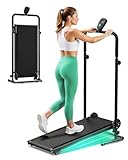
Overview: The AKLUER Motorless Treadmill offers a streamlined manual walking and jogging solution for space-conscious users. With its 36" x 15" running deck and lightweight frame, this non-electric machine eliminates power constraints while providing essential tracking capabilities through its LCD monitor. Designed for apartment dwellers and home gym enthusiasts seeking simplicity, it combines fixed incline training with cordless freedom.
What Makes It Stand Out: The dual flywheel system creates progressive resistance that naturally intensifies as you accelerate, delivering an authentic self-powered workout experience. Unlike electric models, its fixed incline design continuously challenges your cardiovascular system without complicated settings. The completely cordless operation means true placement freedom—use it anywhere from living rooms to garage gyms without hunting for outlets.
Value for Money: At $159.99, this treadmill sits comfortably in the mid-range manual treadmill market. It undercuts electric alternatives by hundreds while offering comparable build quality to pricier manual options. The absence of motor maintenance costs and zero electricity consumption provide ongoing savings that justify the initial investment within months of regular use.
Strengths and Weaknesses: Strengths:
- Space-saving foldable design ideal for small apartments
- No electricity required for true portability
- Dual flywheel provides smooth, progressive resistance
- Non-slip belt and foam grips enhance safety
Weaknesses:
- Fixed incline may prove too challenging for beginners or those with joint issues
- 36" length limits stride for taller runners
- Manual operation requires more effort than motorized alternatives
Bottom Line: The AKLUER Motorless Treadmill delivers excellent value for budget-conscious fitness enthusiasts prioritizing space efficiency and simplicity. While the fixed incline demands commitment, it’s an ideal choice for users seeking an affordable, maintenance-free cardio solution that rewards effort with results.
2. Sunny Health & Fitness Manual Walking Treadmill, Non-Electric, Foldable & Compact Design, Quiet Tread Pad, Transportation Wheels, Non-Slip Handlebars, Digital Monitor for Apartment, Gym, Home Office

Overview: Sunny Health & Fitness brings its reputable brand presence to the manual treadmill market with this compact walking solution. Featuring a 42" x 13" running surface, this non-electric machine targets apartment residents and home office workers seeking quiet, low-impact cardio. The foldable design and transport wheels prioritize convenience, while the digital monitor provides essential workout feedback without complexity.
What Makes It Stand Out: This model leverages Sunny’s established quality control and customer support network, offering peace of mind uncommon in budget fitness equipment. The dual flywheel system ensures consistent resistance progression, while the longer 42" deck accommodates more natural strides than many competitors. Its whisper-quiet operation makes it particularly suitable for shared living spaces or during work calls.
Value for Money: Priced at $199.99, this treadmill commands a $40 premium over similar manual models, essentially paying for brand reliability and proven durability. While not the cheapest option, it avoids the quality control roulette of lesser-known brands. The robust construction and responsive customer service create long-term value that justifies the modest price increase.
Strengths and Weaknesses: Strengths:
- Trusted brand with reliable warranty support
- Extended 42" length suits taller users better
- Extremely quiet operation ideal for apartments
- Stable construction with secure handlebars
Weaknesses:
- 13" width feels narrow compared to 15"+ alternatives
- Higher price point for manual treadmill category
- Fixed incline lacks adjustability for varied fitness levels
Bottom Line: The Sunny Health & Fitness Manual Walking Treadmill is a solid investment for buyers who prioritize brand trustworthiness and quiet operation. While slightly pricier than generic alternatives, its superior build quality and customer support make it worth the premium for serious walkers.
3. Sunny Health & Fitness Smart Manual Walking Treadmill, 300 LB Weight Capacity, Non-Electric, Fixed Incline, Compact & Foldable, Digital Monitor, Bluetooth Connection with SunnyFit App - SF-T1407SMART

Overview: This smart manual treadmill from Sunny Health & Fitness bridges traditional self-powered cardio with modern connected fitness. Supporting up to 300 pounds and folding to just 20 x 23 x 50 inches, it targets tech-savvy users in compact living spaces. The 8° fixed incline and dual flywheel system deliver challenging workouts while Bluetooth connectivity opens access to virtual training environments.
What Makes It Stand Out: The integrated SunnyFit App compatibility transforms a basic manual treadmill into an interactive fitness platform, offering 1,000+ workouts and scenic routes that sync with your effort. This connectivity, rare in manual treadmills, provides motivation through progress tracking and virtual coaching. The 300-pound capacity demonstrates robust construction exceeding most competitors in this price range.
Value for Money: At $179.99, this model costs only slightly more than basic manual treadmills while adding substantial tech value. The Bluetooth features and app integration typically appear in electric models costing twice as much. For users who thrive on data and virtual engagement, this represents exceptional value without recurring subscription fees.
Strengths and Weaknesses: Strengths:
- App connectivity enhances workout motivation
- High 300-pound weight capacity ensures durability
- Compact foldable design stores easily
- Reputable brand with reliable construction
Weaknesses:
- Manual operation still requires significant self-propulsion
- App experience depends on personal tech preferences
- Fixed 8° incline may be too aggressive for some users
Bottom Line: The SF-T1407SMART is perfect for fitness enthusiasts wanting manual treadmill benefits with digital engagement. Its smart features and solid build quality make it the best value in connected manual treadmills, provided you’re comfortable with the fixed incline challenge.
4. Walking Pad Treadmill for Home - Folding Treadmills with Handle Bar Portable Compact Fold up Indoor Foldable Handles Electric Walk Pads Small Spaces Mini Running Quiet Under Bed Office

Overview: This versatile electric walking pad delivers motorized convenience at an entry-level price point. Transforming from a traditional treadmill with handlebars to a flat under-desk pad, it offers three speed modes up to 4 MPH. The 90 x 38 cm running area and 264-pound capacity provide adequate space for walking and light jogging, while the fold-flat design enables under-bed storage in spaces as low as 10.5 inches high.
What Makes It Stand Out: The remarkable $99.99 price point makes electric treadmill technology accessible to budget shoppers typically limited to manual options. Its three-in-one design adapts from supported walking to flat under-desk use, maximizing versatility. The remote-controlled operation and pause function that retains workout data for 10 minutes demonstrate thoughtful user experience design uncommon in this price tier.
Value for Money: This walking pad redefines budget fitness equipment value, offering electric motorization at manual treadmill prices. While speed and capacity limitations exist compared to premium electric models, it costs 80% less than typical entry-level electric treadmills. For walking-focused users, the value proposition is unbeatable.
Strengths and Weaknesses: Strengths:
- Unbeatable price for electric treadmill functionality
- Ultra-compact fold-flat storage under beds
- Remote control enables easy speed adjustments
- Quiet 440W motor suitable for office use
Weaknesses:
- Maximum 4 MPH speed limits running potential
- 264-pound capacity lower than manual alternatives
- Handlebar removal requires tools and manual adjustment
Bottom Line: This walking pad is an exceptional choice for budget-conscious buyers wanting electric convenience without the premium price. Perfect for under-desk walking and light jogging, it sacrifices top-end speed for incredible value and space-saving design.
5. Lichico PulseDrive 8.7 MPH Walking Pad Treadmill w/t BLDC, Fits up to 6’ & 47"x16" Super-Long Desk with Handle Bar, Compact Under Desk Treadmill for HomeOffice, Walking Running Machine w/t APP Control
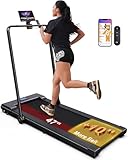
Overview: The Lichico PulseDrive represents the premium tier of walking pad treadmills, engineered for serious home fitness enthusiasts. Its 3.0HP brushless motor delivers speeds from 0.5 to 8.7 MPH, bridging under-desk walking and full running capabilities. The expansive 47" x 16" belt accommodates users up to 6 feet tall, while app integration and remote control provide sophisticated workout management in a compact footprint.
What Makes It Stand Out: This model’s BLDC motor technology ensures whisper-quiet operation even at 8.7 MPH, making it viable for apartment running without disturbing neighbors. The dual shock absorption system provides commercial-grade joint protection rarely found in compact treadmills. Its ability to seamlessly transition from under-desk walking to HIIT running workouts eliminates the need for separate equipment.
Value for Money: Priced at $666.63, this treadmill competes with full-sized electric models while offering superior space efficiency. Though expensive for a walking pad, it replaces both an under-desk walker and a traditional treadmill, effectively costing less than buying two separate machines. The durable motor and advanced features justify the investment for dedicated runners with space constraints.
Strengths and Weaknesses: Strengths:
- Impressive 8.7 MPH top speed for true running
- Large 47" x 16" deck accommodates tall users
- Advanced BLDC motor runs quietly and efficiently
- Excellent dual shock absorption protects joints
Weaknesses:
- Premium price point exceeds many buyers’ budgets
- Larger footprint than basic walking pads
- Overkill for users only wanting walking functionality
Bottom Line: The Lichico PulseDrive is the ultimate compact treadmill for serious athletes unwilling to compromise on speed or space. If budget allows and you demand full running capability in a walking pad format, this premium machine delivers unmatched performance and versatility.
6. Walking Pad Treadmill Under Desk - Portable Small Mini for Home Office Compact Walk Running Machine Mat Wide Quiet Indoor Flat Floor Standing Pads Lightweight Caminadora Eléctrica para Casa

Overview: This premium under-desk walking pad targets home office professionals seeking quiet, portable exercise solutions. With a 2.5HP motor supporting 0.6-4.0 mph speeds, it balances performance with discretion for multitasking environments.
What Makes It Stand Out: The 5-layer anti-slip belt with honeycomb cushioning and shock absorbers provides superior joint protection. Its steel frame minimizes vibration and noise, while the LED display and remote control enable seamless speed adjustments without disrupting workflow. The truly portable design with built-in wheels and hand-carry capability requires zero assembly.
Value for Money: At $999.99, this sits at the premium end. While the build quality and noise reduction justify the cost for dedicated remote workers, comparable models with similar specs retail for $300-500. You’re paying heavily for the brand’s portability promise and after-sales support network.
Strengths and Weaknesses: Strengths include whisper-quiet operation, exceptional portability, robust 2.5HP motor, and comprehensive accessory package. The 4.0 mph top speed limits running potential, while the price point is prohibitive for casual users. The steel frame adds durability but increases weight slightly compared to aluminum alternatives.
Bottom Line: Ideal for executives and serious home office workers who prioritize silence and build quality over budget. Casual users should seek more affordable options.
7. Non-Electric Treadmill with Dual Flywheel & Fixed Incline - FUNRAY Motorless Treadmill LCD Monitor, Non-Slip Belt, Compact Foldable Design for Small Home/Gym Use, Soft Foam Grips for Walking/Jogging

Overview: This manual treadmill offers a budget-friendly, eco-conscious alternative to motorized models. Powered entirely by user movement, it features a dual flywheel system with fixed incline for enhanced cardio workouts in compact spaces.
What Makes It Stand Out: The cordless design eliminates electricity costs and allows placement anywhere. Dual flywheels create smooth, consistent resistance that naturally intensifies with speed. The fixed incline automatically boosts calorie burn without manual adjustments, while the foldable frame and lightweight build maximize space efficiency.
Value for Money: At $159.99, this delivers exceptional affordability. Comparable manual treadmills range from $150-250, making this competitively priced. The absence of motor maintenance costs and zero energy consumption provide long-term savings that compound its value proposition.
Strengths and Weaknesses: Strengths include unlimited placement flexibility, low maintenance, natural resistance progression, and excellent price point. However, the fixed incline lacks customization, the 36" deck may feel short for taller users, and there’s no speed consistency—pace depends entirely on user effort. The LCD display is basic compared to LED counterparts.
Bottom Line: Perfect for budget-conscious users wanting reliable cardio equipment without power dependency. Not suitable for those requiring precise speed control or flat-walking options.
8. 4-in-1 Walking Pad with 10% Incline, Portable Under Desk Treadmill, Foldable Treadmills for Home and Office, 2.5 HP Quiet Walking Pad Treadmill with 300 LBS Capacity

Overview: This versatile walking pad combines under-desk convenience with incline training capabilities. The 2.5HP motor supports speeds from 0.6-5.0 mph while accommodating users up to 300 lbs, making it a flexible home fitness solution.
What Makes It Stand Out: The manual incline system adjusts to 10% (or 15% with included foot pad), offering rare uphill simulation in this category. The 6-layer non-slip belt with multi-level shock absorption prioritizes joint protection. Operating under 45 decibels, it’s exceptionally quiet for shared spaces.
Value for Money: Priced at $109.99, this represents outstanding value. Competing incline treadmills typically start at $200+, making this a budget champion. The 4-in-1 functionality, robust motor, and high weight capacity at this price point create an almost unbeatable cost-to-feature ratio.
Strengths and Weaknesses: Strengths include impressive incline range, whisper-quiet operation, heavy-duty construction, and exceptional affordability. The manual incline requires stopping to adjust, and the “4-in-1” marketing is somewhat vague. Customer support mentions “satisfied help experience” with grammatical errors, potentially indicating language barriers.
Bottom Line: An incredible value purchase for users wanting incline training without breaking the bank. Minor quirks are easily forgiven at this price.
9. TRAILVIBER Walking Pad Treadmill with 12% 9-Level Auto Incline, 450 lbs Capacity RGB LED Screen, Bluetooth Speaker Under Desk Treadmill, Compact Treadmills for Home Hiking

Overview: TRAILVIBER’s premium offering targets serious home fitness enthusiasts with auto incline technology and exceptional weight capacity. The 2.5HP motor drives nine automated incline levels up to 12%, simulating hiking experiences for enhanced cardio training.
What Makes It Stand Out: The auto incline function adjusts mid-workout via remote, burning up to three times more calories than flat walking. The 450 lbs weight capacity exceeds most competitors by 50%. Triple cushioning with silicone shock points protects joints, while the RGB LED display offers six color options and mileage accumulation tracking. Bluetooth speakers provide immersive audio.
Value for Money: At $329.00, this mid-premium price is justified by auto incline and superior weight capacity. Comparable auto-incline models start at $400+, making this competitively priced. The robust construction and advanced features deliver strong ROI for committed users.
Strengths and Weaknesses: Strengths include automated incline, exceptional weight capacity, engaging RGB display, integrated audio, and comprehensive tracking. Weaknesses include a higher price point than manual alternatives and potentially excessive features for casual walkers. The brand lacks widespread recognition, though specifications are impressive.
Bottom Line: Excellent choice for heavier users or those wanting automated intensity control. Delivers premium features at a moderate price premium.
10. Walking Pad with Handle Bar,5% Manual Incline Walking Treadmill for Home Office,2.5HP Super Quiet Foldable Treadmills with Handrails,300 LBS Small Under Desk Treadmill with LED Display,Remote Control

Overview: This 3-in-1 walking pad integrates handlebars for enhanced safety and versatility. The 2.5HP motor supports walking and light jogging up to 300 lbs, while the manual incline and foldable design adapt to various home office environments.
What Makes It Stand Out: Convertible handlebars transform it from under-desk pad to traditional treadmill, offering rare flexibility. The 5% manual incline adds intensity, while dual control options (remote and handrail touch buttons) provide convenience. The safety cord prevents accidents and stops beeping alerts, addressing a common user frustration.
Value for Money: At $139.99, this strikes an excellent balance between features and affordability. Handlebar-equipped competitors typically cost $180-250, making this a smart buy. The 3-in-1 versatility effectively replaces multiple machines, maximizing value in small spaces.
Strengths and Weaknesses: Strengths include versatile handlebar design, dual control methods, adequate incline, quiet operation, and strong safety features. The 5% incline is modest compared to competitors offering 10-15%, and manual adjustment interrupts workouts. The handlebar assembly adds setup time versus true no-assembly pads.
Bottom Line: Perfect for users wanting flexibility between focused walking and supported jogging. Great middle-ground option.
What Exactly Is a Manual Walking Treadmill?
A manual walking treadmill is a non-motorized exercise machine where your own leg power moves the running belt. Unlike their electric counterparts that use motors to drive the belt at predetermined speeds, these human-powered devices respond directly to your pace—speed up when you push harder, slow down when you ease off. The beauty lies in this kinetic relationship: you become both the engine and the passenger, creating a feedback loop that many users describe as more intuitive and engaging than motorized exercise.
How Manual Treadmills Work Without Power
The mechanism is elegantly simple. Your foot strikes the deck, pushing backward against the belt. This motion rotates a flywheel—typically connected via a pulley system—that maintains momentum through inertia. Higher-quality models incorporate precision bearings and weighted flywheels to create a smooth, consistent glide that doesn’t feel choppy or require constant acceleration effort. The belt tension, deck angle, and your body weight all work in concert to create a walking experience that, when engineered well, feels surprisingly natural.
The Physics Behind the Belt Movement
Understanding momentum and friction helps you appreciate why some manual treadmills feel effortless while others fight you at every step. The flywheel’s mass acts as an energy reservoir—once you get it spinning, it wants to keep spinning. Premium designs position this flywheel at the front of the machine, creating better weight distribution and a longer belt path that reduces the “dead spot” feeling some budget models suffer from. The coefficient of friction between the belt and deck must be low enough for smooth movement but high enough to prevent dangerous slippage, a balance achieved through specific materials and lubrication schedules.
Why Choose a Zero-Electricity Treadmill?
The appeal extends far beyond simply saving on your utility bill. Manual treadmills represent a philosophy of intentional movement and environmental stewardship that resonates with modern lifestyles. They strip away digital distractions and force a mindful connection between your body and the exercise itself—no screens, no programmed workouts, just you and the rhythm of your feet.
Environmental Benefits of Human-Powered Fitness
A typical electric treadmill draws between 600-700 watts during use. Over a year of daily 30-minute walks, that’s roughly 130 kWh—equivalent to charging your smartphone over 4,000 times. Manual treadmills eliminate this draw entirely, reducing your carbon footprint while simultaneously improving your health. The manufacturing process also tends to be less resource-intensive, with fewer electronic components and simpler circuitry that means less e-waste at end-of-life. For those building a truly sustainable home gym, this is the cornerstone appliance.
Cost Savings Over Time
Beyond the obvious $0 operational cost, manual treadmills typically cost 30-50% less than comparable motorized models upfront. With no motor to burn out, no control boards to fry, and no power cords to replace, maintenance expenses plummet. The average motorized treadmill repair runs $200-300, while most manual treadmill issues can be resolved with basic tools and $20 in parts. Over a five-year lifespan, total cost of ownership often falls below half that of electric alternatives.
The Mind-Body Connection of Self-Paced Exercise
There’s profound neurological benefit to self-regulated movement. Without a motor forcing a pace, your brain continuously adjusts your gait, posture, and effort—a process that engages proprioceptive circuits and core stabilizers far more than motorized walking. Many physical therapists note that manual treadmill users develop better balance and natural gait patterns because they’re not “chasing” a belt speed. The result is a more functional workout that translates directly to real-world movement.
Key Features to Evaluate Before Buying
When shopping for a manual treadmill, certain specifications separate the smooth operators from the clunkers. Focus on these critical elements rather than marketing fluff.
Belt Quality and Running Surface Dimensions
The belt should feel pliable but not flimsy—look for multi-ply construction with a textured PVC top layer and polyester backing. Running surfaces typically range from 14-18 inches wide and 40-50 inches long. For walking, a 16" x 42" surface suffices for most users under 6 feet tall. Taller individuals or those planning occasional jogging should prioritize 17" x 46" or larger. The belt’s seam should be nearly invisible; a thick, raised seam creates an annoying bump with every revolution and signals lower manufacturing quality.
Incline Mechanisms and Adjustability
Most manual treadmills offer incline settings from 6-12 degrees, but how you adjust them matters enormously. Fixed-position inclines require dismounting and manually repositioning pins—a dealbreaker if multiple users share the machine. Look for spring-loaded or lever-based systems you can adjust while walking. The mechanism should lock securely with audible clicks; wobbly incline settings create safety hazards and uneven wear patterns on the belt.
Frame Construction and Weight Capacity
Steel gauge matters more than overall weight. A 50-pound treadmill with 14-gauge steel outperforms a 70-pound model using thinner 16-gauge tubing. Check the welds—smooth, consistent beads indicate robotic manufacturing precision. Weight capacity ratings range from 220 to 350 pounds, but these numbers are notoriously optimistic. As a rule, choose a model rated for at least 50 pounds more than your actual weight to account for dynamic forces during walking.
Noise Levels and Acoustic Considerations
While manual treadmills are inherently quieter than motorized ones, they’re not silent. The primary noise source is foot impact and belt friction, which creates a “shushing” sound. Look for models with rubberized deck cushions and belt guides that minimize side-to-side slippage. If you’re in an apartment, place a dense equipment mat underneath—this absorbs vibration and prevents the hollow “drumming” effect that travels through floor joists.
Portability and Storage Solutions
The best manual treadmills balance stability with mobility. Integrated transport wheels should be large enough (minimum 3-inch diameter) to roll over carpet thresholds. Folding mechanisms must lock both open and closed—dual-locking pins prevent accidental collapse. Measure your storage space carefully; “folded dimensions” in product specs often exclude the handrails, which may not fold on all models. Some designs fold completely flat for under-bed storage, while others simply tilt upright like a folded ironing board.
Understanding Resistance and Intensity Control
Unlike electric treadmills where you dial in speed, manual models require you to generate all momentum. How they manage that momentum determines your workout quality.
Magnetic Resistance Systems Explained
Premium manual treadmills incorporate magnetic resistance to increase intensity without relying solely on incline. Magnets positioned near the flywheel create eddy currents that oppose rotation—turning a dial moves the magnets closer or farther away, smoothly adjusting difficulty. This system adds no friction or wear, making it virtually maintenance-free. The resistance curve should feel linear, not jumpy; test this by gradually increasing resistance and noting whether each click produces consistent additional effort.
Flywheel Weight and Momentum
Flywheels typically weigh between 8-15 pounds. Heavier isn’t always better—too much mass makes starting difficult, especially for seniors or rehab patients. The sweet spot for walking is 10-12 pounds, providing enough momentum to smooth out stride variations without feeling sluggish. The flywheel’s placement also affects performance; front-mounted designs create better belt tension and reduce the “walking uphill” sensation common in rear-drive models.
Safety Features That Matter Most
Without emergency stop buttons that cut power, manual treadmills rely on mechanical and ergonomic safeguards. These features become even more critical since the belt won’t automatically stop if you stumble.
Handrail Design and Ergonomics
Handrails should extend at least 12 inches beyond the belt’s front edge, giving you secure grip points during startup and stopping. The diameter should fit comfortably in your hand—typically 1.25-1.5 inches. Foam padding prevents slippage from sweat, but avoid overly soft cushioning that compresses and reduces stability. Some models offer side rails in addition to front rails; these are invaluable for users with balance concerns but can feel restrictive for natural arm swing.
Non-Slip Surfaces and Emergency Stops
The side rails flanking the belt should feature aggressive grip tape or rubberized texture. While there’s no kill switch, some models include a tether cord that triggers a brake mechanism when pulled. More importantly, the belt should stop within 2-3 seconds after you cease walking. Test this by stepping onto the side rails—the belt should decelerate quickly, not continue spinning freely. Excessive coasting indicates poor friction control and potential danger.
Maintenance and Longevity
A well-maintained manual treadmill can last decades. The simplicity that makes them reliable also makes them easy to care for—if you know what to watch for.
Lubrication Requirements
The belt-deck interface needs periodic silicone lubrication. Frequency depends on usage: light walkers (under 3 miles weekly) need lubrication every 3 months; daily users should lubricate monthly. Over-lubrication attracts dust and creates a sticky residue; under-lubrication causes premature belt wear and excessive noise. Use only 100% silicone oil—petroleum-based products degrade the belt’s PVC layer. Apply sparingly underneath the belt, not on top, using the applicator wand most manufacturers include.
Cleaning and Belt Alignment
Dust is the enemy of smooth operation. Vacuum underneath the treadmill weekly, paying attention to the flywheel housing where debris accumulates. Belt alignment is crucial—a belt that drifts left or right will wear unevenly and potentially derail. Most models include hex adjustment bolts at the rear roller. Turn them in quarter-turn increments while the belt moves slowly (push it by hand) until it tracks center. Misalignment often stems from uneven floor surfaces; use a bubble level on the frame before adjusting the belt.
Making the Right Choice for Your Space
Even the perfect treadmill becomes a coat rack if it doesn’t fit your living situation. Consider these spatial factors before committing.
Measuring Your Available Area
Account for more than the machine’s footprint. You’ll need at least 6 inches of clearance on each side and 24 inches behind the treadmill for safe mounting and dismounting. The front should have 36 inches of space—this isn’t just for safety, but also because you’ll need room to lean forward during intense incline walking. If placing it in a multi-use room, measure door swing arcs and furniture placement to ensure you won’t be constantly moving things around for each workout.
Ceiling Height Considerations
This is frequently overlooked. At maximum incline, you’ll be 6-8 inches higher than the deck height. Add your own height plus 3-6 inches for vertical head movement during vigorous walking. A standard 8-foot ceiling works for users up to 6'2" on most models, but basement gyms with 7-foot ceilings require careful calculation. Some low-profile manual treadmills have deck heights as low as 4 inches, making them ideal for height-constrained spaces.
Frequently Asked Questions
1. How much weight can a manual treadmill realistically support?
While manufacturers list capacities from 220-350 pounds, real-world performance varies. The stated limit often reflects static load (standing still) rather than dynamic forces created during walking. For users over 250 pounds, prioritize models with reinforced frames, thicker deck boards (at least 1 inch), and wider belts that distribute force. Many heavy-duty models can safely handle 300+ pounds for walking, but the belt may feel sluggish compared to lighter users. Always test the treadmill if possible—excessive belt flex or frame creaking indicates you’re approaching the practical limit.
2. Are manual treadmills suitable for running or just walking?
Most manual treadmills are optimized for walking speeds of 2-4 mph. The physics of running—higher impact forces, longer stride length, and flight phases where both feet leave the belt—creates challenges. Some high-end models with heavy flywheels (15+ pounds) and longer decks (50+ inches) can accommodate short sprint intervals, but sustained running feels unnatural because you must both propel yourself and maintain belt momentum. If running is your primary goal, a manual treadmill likely isn’t the right tool. For walking, hiking simulation, and interval training, they’re exceptional.
3. How loud are manual treadmills compared to electric ones?
Manual treadmills typically generate 45-55 decibels—about the volume of light rainfall. Electric models run 60-70 decibels from the motor alone, plus foot impact sounds. The manual’s primary noise source is the belt-deck interface, which produces a consistent “shushing” sound. This white noise quality is less intrusive than the whirring motor and is unlikely to disturb neighbors through walls. Hard surfaces like tile amplify sound; a 3/8-inch equipment mat reduces noise by 8-10 decibels and prevents floor vibration.
4. Do I need to assemble it myself, and how difficult is it?
Nearly all manual treadmills require assembly, typically taking 45-90 minutes. Most arrive with the frame pre-welded; you’ll attach handrails, console (if included), and belt guards. Quality manufacturers provide clearly labeled hardware and hex keys—no additional tools needed. The trickiest part is often belt tensioning; follow the manual precisely, as over-tightening can damage bearings. If you’re not mechanically inclined, many retailers offer assembly services for $75-150. Consider this investment worthwhile for models over $400, as proper assembly significantly impacts performance and safety.
5. How do I adjust the incline while the treadmill is in use?
This depends entirely on the mechanism. Budget models require stepping off and repositioning pins—plan your workouts around fixed incline intervals. Mid-range and premium models feature lever-based or spring-loaded systems you can adjust while walking. These typically involve pulling a handle or pressing a lever, then hearing audible clicks as the deck raises or lowers. Always maintain a firm grip on the handrails during adjustment, and make changes gradually. A sudden 3-degree incline jump can strain your Achilles tendon if you’re not prepared.
6. Can manual treadmills help with weight loss as effectively as electric ones?
Absolutely, and potentially more effectively. A 160-pound person burns approximately 210 calories per 30 minutes walking 3 mph on a flat electric treadmill. The same person on a manual treadmill at a 6-degree incline burns 280-300 calories due to the additional effort of propelling the belt and the metabolic cost of incline walking. The variable resistance nature also creates natural interval training—your pace unconsciously varies, preventing the efficiency plateau that occurs with steady-state motorized walking. The key is consistency; manual treadmills remove barriers like electricity costs and noise complaints, making daily use more sustainable.
7. What’s the difference between a manual treadmill and a walking pad?
Walking pads are ultra-slim motorized treadmills designed for slow walking (0.5-3.7 mph) under a desk. Manual treadmills are human-powered, typically have incline options, and offer more robust construction for dedicated exercise sessions. Walking pads prioritize compact storage and quiet operation for office use; manual treadmills focus on workout intensity and durability. The confusion arises because both are often marketed for small spaces, but their use cases differ dramatically. Choose a walking pad for passive movement while working; choose a manual treadmill for intentional cardio workouts.
8. How often should I lubricate the belt, and what happens if I don’t?
Lubrication frequency scales with usage: light users (under 5 miles weekly) every 3 months, moderate users (5-15 miles) every 6 weeks, heavy users (15+ miles) monthly. Skipping lubrication creates a cascading failure: increased friction generates heat that degrades the belt’s PVC layer, which then sheds particles that clog the deck surface. Within 3-6 months of neglect, you’ll notice a sticky, jerky motion and visible belt fraying. At this point, you’ve likely caused irreversible damage requiring belt replacement ($50-100). A $8 bottle of silicone lubricant and 5 minutes of maintenance prevents this entirely.
9. Will a manual treadmill damage my floors or carpet?
On carpet, the primary concern is indentation and fiber compression. Place a 1/4-inch plywood board under the equipment mat to distribute weight and prevent permanent carpet marks. On hardwood, the treadmill’s feet can scuff or dent. Use a dense rubber equipment mat (at least 3/8-inch thick) with a smooth bottom surface. Avoid mats with grippy textures that trap grit and act like sandpaper. For tile or laminate, the mat prevents cracking from impact forces. The treadmill itself generates minimal vibration compared to motorized models, so floor damage risk is low with proper protection.
10. Are manual treadmills appropriate for seniors or rehabilitation patients?
They can be excellent with the right model selection. Look for models with extensive handrails that extend the full length of the belt, low starting resistance (light flywheel), and very low deck height (4-6 inches) to minimize fall risk. The self-paced nature prevents the panic that occurs when an electric belt moves too quickly. However, the initial learning curve requires more balance and coordination than motorized treadmills. Start with handrail support and short sessions. Many physical therapists recommend manual treadmills specifically because they strengthen stabilizing muscles and allow patients to control intensity, but supervision during first uses is advisable.