The moment your boots hit the singletrack and the forest canopy swallows the skyline, your relationship with time and distance changes. Trail running isn’t just about miles logged—it’s about vertical gain, navigating gnarly terrain, and pushing through zones where cell signals fear to tread. Whether you’re plotting your first 10K on local trails or training for a 100-miler in the backcountry, a reliable GPS tracking watch transforms from a nice-to-have gadget into essential safety gear and a powerful training ally.
But here’s the thing: not all GPS watches speak the language of trail runners. That sleek road-running model that works perfectly for tracking laps around the park might crumble when faced with dense tree cover, dramatic elevation changes, or the harsh reality of a 12-hour mountain epic. This guide cuts through the marketing noise to focus on what truly matters when choosing a GPS tracking watch built specifically for the demands of off-road running.
Top 10 GPS Tracking Watches for Trail Runners
Detailed Product Reviews
1. Garmin Forerunner 55, GPS Running Watch with Daily Suggested Workouts, Up to 2 Weeks of Battery Life, Black - 010-02562-00

Overview: The Garmin Forerunner 55 is an entry-level GPS running watch that delivers core training features without overwhelming beginners. It tracks distance, pace, and heart rate while offering intelligent workout suggestions that adapt to your fitness level.
What Makes It Stand Out: The PacePro feature provides GPS-based pace guidance for race day strategy, while race time predictions and finish estimates help set realistic goals. With up to two weeks of battery life in smartwatch mode and 20 hours in GPS mode, it outlasts most competitors. The watch supports multiple activity profiles beyond running, including cycling, swimming, Pilates, and HIIT.
Value for Money: At $149, it sits in the sweet spot for serious beginners. You’re paying for Garmin’s reliable GPS accuracy, robust training ecosystem, and brand longevity. While cheaper alternatives exist, the Forerunner 55’s sophisticated algorithms and PacePro feature justify the premium over budget brands.
Strengths and Weaknesses: Strengths include exceptional battery life, wrist-based heart rate monitoring, daily suggested workouts, and comprehensive activity tracking. The Garmin Connect app provides deep insights. Weaknesses are the basic monochrome display, lack of on-device PacePro course mapping, and limited smartwatch features compared to pricier models. It’s not a medical-grade heart rate device.
Bottom Line: Perfect for runners ready to train smarter. The Forerunner 55 offers Garmin’s trusted accuracy and training tools at an accessible price, making it ideal for those moving up from phone tracking or basic fitness bands.
2. EZON GPS Running Watch with Distance Pace Alarm and Calorie Counter and Stopwatch for Men (Blue)

Overview: The EZON GPS Running Watch is a budget-friendly entry point for runners wanting basic GPS tracking without financial commitment. It delivers essential metrics in a simple, straightforward package that prioritizes function over frills.
What Makes It Stand Out: The sub-$50 price point is remarkable for a GPS-enabled watch. It features automatic GPS time synchronization, one-tap access to detailed workout data, and an impressive 99-hour stopwatch with lap tracking for up to 50 laps. The personalized profile input customizes calorie calculations based on individual metrics.
Value for Money: At $49.99, this is exceptional value for casual runners. It provides core GPS functionality—distance, pace, and calorie tracking—at a third of the cost of entry-level Garmin watches. While it lacks advanced training tools, it covers the basics reliably.
Strengths and Weaknesses: Strengths include affordability, simple operation, decent GPS acquisition time (1-minute cold start), and useful stopwatch features. It stores the last 10 exercise records. Weaknesses are the unknown brand reputation, basic display quality, lack of heart rate monitoring, no smartphone connectivity, and absence of structured training plans. Build quality may not match premium brands.
Bottom Line: Ideal for budget-conscious beginners who need basic GPS data. If you want simple distance and pace tracking without bells and whistles, the EZON delivers remarkable bang for your buck.
3. Garmin Forerunner 55, GPS Running Watch with Daily Suggested Workouts, Up to 2 Weeks of Battery Life, Aqua
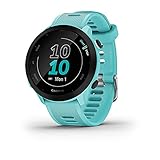
Overview: The Garmin Forerunner 55 in Aqua is functionally identical to its black counterpart, offering the same robust entry-level GPS running experience with a more vibrant color option that stands out on the wrist during workouts and daily wear.
What Makes It Stand Out: Beyond the eye-catching aqua color, it shares the same compelling features: PacePro for race-day pacing strategies, daily suggested workouts, and impressive two-week battery life. The watch provides Garmin’s trusted GPS accuracy and wrist-based heart rate monitoring across multiple sports profiles.
Value for Money: Priced at $168.20, it commands a $20 premium over the black version. While the features justify the base price, the color upcharge feels steep. You’re still getting Garmin’s ecosystem, reliable tracking, and comprehensive training tools, but shop the black version if budget matters.
Strengths and Weaknesses: Strengths mirror the black model: exceptional battery life, accurate GPS, intelligent training guidance, race predictions, and versatile activity profiles including pool swim and Pilates. The Garmin Connect platform is unmatched. Weaknesses include the basic display, lack of on-device course mapping for PacePro, and limited smartwatch capabilities. The aqua color may show wear more visibly over time.
Bottom Line: Choose the Aqua Forerunner 55 if you value style and don’t mind paying extra. It delivers the same excellent training experience as the black version, making it perfect for style-conscious runners serious about improvement.
4. EZON GPS Running Watch with Distance Pace Alarm and Calorie Counter and Stopwatch for Men T031B01 Black

Overview: The EZON GPS Running Watch in black offers the same budget-friendly GPS tracking as its blue variant, providing essential running metrics in a more traditional, understated colorway that suits any outfit or occasion without drawing attention.
What Makes It Stand Out: At under $50, it brings GPS technology to the masses. The watch features automatic time synchronization via GPS, one-tap workout data review, and extensive stopwatch functionality with 50-lap memory. The ability to input personal metrics ensures more accurate calorie calculations than generic formulas.
Value for Money: For $49.99, it’s hard to find better value in a GPS watch. It delivers core functionality—distance, pace, and time tracking—without subscription fees or complexity. Casual runners get reliable data at a fraction of the cost of premium brands, though advanced athletes will find it limiting.
Strengths and Weaknesses: Strengths include the incredibly low price, straightforward operation, GPS auto time sync, and robust stopwatch features. It stores 10 recent workouts and offers both countdown and lap timer modes. Weaknesses are the lack of heart rate monitoring, no Bluetooth connectivity, unknown long-term durability, and absence of structured training guidance. The display is basic and the brand lacks Garmin’s support network.
Bottom Line: Perfect for runners who want simple GPS tracking on a tight budget. The black EZON watch covers the fundamentals reliably, making it an excellent starter device before investing in a more advanced system.
5. Mibro GS Active2 Running GPS Smartwatch with 46mm AMOLED, Lightweight and 15-Day Battery, Supports Training Guidance and Dual-Band GNSS, 150+ Sport Modes (Dark Gray)

Overview: The Mibro GS Active2 punches far above its weight class, offering premium running watch features at a budget price point. This lightweight GPS smartwatch combines advanced metrics with impressive battery life in a sleek 39g package that disappears on your wrist.
What Makes It Stand Out: The 46mm AMOLED display is stunning for this price category, while dual-band GNSS positioning delivers superior accuracy. It calculates VO₂ Max, running ability index, and analyzes cadence, stride, and pace. The Mibro Coach provides adaptive training plans for 5K to half-marathon distances—features typically found in $300+ watches.
Value for Money: At $59.99, this is arguably the best value in GPS running watches. You’re getting an AMOLED screen, dual-frequency GPS, professional training guidance, and 15-day battery life for less than half the price of entry-level Garmins. The feature-to-price ratio is unmatched.
Strengths and Weaknesses: Strengths include the vibrant AMOLED display, dual-band GNSS accuracy, comprehensive running metrics, adaptive training plans, ultra-lightweight 39g design, and exceptional battery life. It offers 150+ sport modes and route navigation. Weaknesses are the lesser-known brand ecosystem, potential software bugs, and uncertain long-term support. It may lack the polish and third-party app integration of established competitors.
Bottom Line: A game-changer for budget-conscious serious runners. The Mibro GS Active2 delivers premium features without the premium price, making it ideal for data-driven athletes who want advanced training tools on a budget.
6. Garmin Forerunner 55, GPS Running Watch with Daily Suggested Workouts, Up to 2 Weeks of Battery Life, White

Overview: The Garmin Forerunner 55 delivers serious running intelligence in an accessible package. This GPS watch targets beginners and intermediate runners seeking structured guidance without complexity. With up to two weeks of smartwatch battery life and 20 hours in GPS mode, it outlasts most competitors. The watch monitors heart rate from the wrist and tracks distance, pace, and route while offering daily suggested workouts that adapt to your training status.
What Makes It Stand Out: The PacePro feature provides GPS-based pace guidance for planned routes or distances, helping you strategize race day execution. It offers race time predictions and finish time estimates based on your training data. Built-in profiles for running, cycling, swimming, Pilates, HIIT, and breathwork make it versatile beyond running. Integration with Garmin Connect unlocks advanced analytics and a robust community platform.
Value for Money: At $149, the Forerunner 55 sits in the sweet spot for feature-rich entry-level GPS watches. You’re paying for Garmin’s proven algorithms, reliable GPS accuracy, and training science that rivals more expensive models. While cheaper options exist, none match the depth of training insight and ecosystem support. It avoids the $300+ premium tier while delivering 80% of the functionality most runners actually use.
Strengths and Weaknesses: Strengths include exceptional battery life, accurate GPS tracking, adaptive daily workouts, and comprehensive activity profiles. The PacePro and race prediction tools provide genuine training value. Weaknesses are the lack of music storage, limited smartwatch features compared to the Venu series, and no onboard maps. The white colorway may show wear over time.
Bottom Line: The Forerunner 55 is the ideal training partner for runners ready to move beyond phone apps. It offers Garmin’s best training tools at an entry-level price, making it a smart investment for anyone serious about improving their performance.
7. POLAR Pacer Ultra-Light GPS Fitness Tracker Smartwatch for Runners; S-L, for Men or Women, Black

Overview: The POLAR Pacer strips away smartwatch distractions to deliver a pure running experience. This ultra-light GPS watch focuses on essential metrics—time, pace, distance, laps, and stopwatch—displayed on a crystal-clear, always-on MIP color screen. With up to 35 hours of training battery life and 100 hours in power save mode, it eliminates range anxiety for ultramarathoners. The unisex design accommodates wrist sizes S-L, making it versatile for all runners.
What Makes It Stand Out: The memory-in-pixel (MIP) display remains visible in direct sunlight without backlight drain, a critical advantage over traditional LCDs. Polar’s decades of heart rate expertise ensures accurate training zone data. The extreme battery longevity in training mode surpasses nearly every competitor, including premium models costing twice as much. Its simplicity is intentional—no bloated features, just reliable tracking that works in any condition.
Value for Money: At $214.90, the Pacer commands a premium over entry-level watches but justifies it through specialized endurance. You’re investing in Polar’s sports science legacy and hardware optimized for serious training. For runners who log 15+ hours weekly or compete in ultras, the extended battery eliminates mid-charge anxiety. However, casual runners may find better value in cheaper alternatives with similar basic tracking.
Strengths and Weaknesses: Strengths include the exceptional battery life, sunlight-readable always-on display, lightweight comfort, and focused feature set. GPS accuracy is reliable for road and trail running. Weaknesses include limited activity profiles beyond running, minimal smart notifications, and a higher price for feature-sparse design. The black-only colorway lacks variety.
Bottom Line: The POLAR Pacer serves serious runners who view watches as tools, not gadgets. If extended battery life and display clarity trump smart features, this is your watch. For data-focused athletes, it’s worth the premium.
8. TomTom Runner GPS Running Watch (Grey)

Overview: The TomTom Runner GPS watch proves that basic tracking doesn’t require a premium investment. With an extra-large display showing key stats at a glance, this grey unit prioritizes simplicity over sophistication. The one-button control system eliminates menu confusion, while QuickGPSFix technology accelerates satellite acquisition. At under $40, it democratizes GPS running data for budget-conscious athletes who simply want distance and pace without complexity.
What Makes It Stand Out: The graphical training partner offers three unique full-screen training modes, providing visual feedback that many modern watches lack. The oversized display ensures readability during speed work, and the single-button operation works reliably with sweaty fingers. TomTom’s QuickGPSFix genuinely reduces wait times compared to early-generation GPS watches. Its no-frills approach means zero learning curve—charge it and run.
Value for Money: At $39.95, this is arguably the cheapest functional GPS watch available from a recognized brand. It delivers core metrics that serve runners adequately for training and racing. While lacking heart rate and advanced analytics, it costs less than most running shoes. For beginners testing their commitment or runners seeking a backup device, the price is unbeatable. However, smartphone apps now offer similar functionality for free.
Strengths and Weaknesses: Strengths include the incredible price, large readable display, foolproof one-button interface, and reliable basic GPS tracking. It’s lightweight and gets the job done. Weaknesses are significant: no heart rate monitoring, limited battery life, outdated software support, minimal activity tracking beyond running, and no smartphone connectivity. The grey design is utilitarian.
Bottom Line: The TomTom Runner suits absolute beginners or runners needing a disposable GPS unit. Serious training demands more features, but as an entry-level experiment, it’s hard to beat the price. Consider it a gateway to more capable devices.
9. afoloery GPS Running Watch, Rugged Military Smart Watch, IP68, Long Battery Life, Multi-GNSS Support, Tracback Routing and More, Training Metrics and Recovery Insights, Answer/Make Call

Overview: The afoloery GPS Running Watch disrupts the market by packing premium features into a sub-$50 military-grade chassis. This rugged smartwatch withstands extreme environments while offering six satellite navigation systems (L1/L5 dual-band), a 1.75-inch AMOLED display, and over 100 sports modes. IP68 waterproofing, 24/7 health monitoring, and call-answering capabilities round out an impressive spec sheet. It targets outdoor enthusiasts who demand durability without premium pricing.
What Makes It Stand Out: Military-grade certification through 12 stringent tests ensures survival in deserts, glaciers, and jungles. The multi-GNSS support with L1/L5 signal capture exceeds what Garmin offers in watches costing five times more. The bright AMOLED display includes night mode for eye strain reduction. Unique at this price point: TracBack routing, training metrics, recovery insights, and Bluetooth calling—features typically reserved for $300+ devices.
Value for Money: At $49.99, the value proposition is staggering. You’re getting advanced GNSS tracking, comprehensive health monitoring, and smartwatch functionality for the price of a basic fitness band. Established brands charge $200+ for similar specs. The trade-off is brand reliability and software polish. For tech-savvy users willing to accept potential firmware quirks, it’s an unbeatable bargain. Risk-averse buyers may prefer paying more for proven ecosystems.
Strengths and Weaknesses: Strengths include military durability, exceptional satellite coverage, vibrant display, extensive sport modes, IP68 rating, and incredible feature density for the price. Weaknesses involve an unknown brand with unproven long-term support, potentially questionable sensor accuracy, privacy concerns with companion apps, and no established community. Battery life claims lack specifics.
Bottom Line: This watch suits adventurous users prioritizing features and durability over brand reputation. If you want maximum capability for minimal investment and can tolerate potential software imperfections, it’s remarkable. For reliable daily training, stick with proven brands.
10. LandAirSea 54 GPS Tracker - Made in the USA from Domestic & Imported Parts. Long Battery, Magnetic, Waterproof, Global Tracking. Subscription Required

Overview: The LandAirSea 54 GPS Tracker serves a completely different purpose than fitness watches—it’s a discreet asset-tracking device made in the USA. This ultra-compact unit attaches magnetically to vehicles, ATVs, or equipment, providing real-time global location tracking via web or mobile app. Motion activation preserves battery during idle periods, while waterproof construction ensures durability. The $14.95 price covers hardware only; subscription plans start at $9.95 monthly.
What Makes It Stand Out: Location updates every 3 seconds offer near-instantaneous tracking, faster than most consumer alternatives. The unconditional lifetime warranty reflects confidence in manufacturing quality. Its magnetic, pocket-sized design enables covert placement without installation. Historical playback stores up to one year of movement data, invaluable for fleet management or theft recovery. Geofencing alerts notify you when assets leave designated areas.
Value for Money: The low upfront cost is deceptive—a two-year subscription totals $239, making the true cost substantial. However, for business security or high-value asset protection, this investment is justified. Compared to AirTags (limited range) or hardwired systems (expensive installation), it balances affordability and performance. The lifetime warranty adds long-term value absent in disposable trackers. Prepaying reduces monthly fees significantly.
Strengths and Weaknesses: Strengths include rapid update frequency, robust magnet mounting, excellent battery optimization, waterproof rating, and exceptional warranty coverage. The web-based software provides professional-grade mapping. Weaknesses are the mandatory subscription cost, potential privacy concerns, limited utility for personal item tracking (overkill), and no integration with fitness platforms. It’s a single-purpose tool.
Bottom Line: The LandAirSea 54 excels for vehicle and asset security where real-time monitoring justifies ongoing costs. For personal fitness tracking, it’s entirely unsuitable. Business owners and security-conscious individuals will appreciate its reliability and warranty.
Why GPS Tracking Watches Are Essential for Trail Running
Trail running exists in a world where breadcrumbs matter more than pace splits. Unlike road running, where measured courses and predictable surfaces rule, trail running demands tools that understand topography, weather volatility, and self-sufficiency. A purpose-built GPS watch does more than track your distance—it becomes your digital trail companion, recording your route for safety, monitoring your effort across brutal climbs, and helping you navigate when the blazes become scarce.
The real magic happens in the data layers. Modern GPS watches capture the multidimensional nature of trail running: not just how far you went, but how much vertical you gained, how your heart rate responded to altitude changes, and whether you’re recovering adequately between those big vert days. For trail runners who venture into remote areas, the navigation features can literally be a lifesaver, allowing you to retrace your steps or follow a pre-loaded route back to civilization when darkness falls or weather turns.
Key Features to Look for in Trail Running GPS Watches
Battery Life: The Longevity Factor
Let’s start with the non-negotiable. Trail runs have a funny way of taking longer than planned—maybe you took a wrong turn, maybe that ridgeline took three hours instead of one, or maybe you’re just moving slower on technical terrain. Your watch needs to keep pace with your adventure, not die at mile 18 of a 20-mile loop.
Look for watches offering at least 20-25 hours of continuous GPS tracking in full accuracy mode. Many premium models now feature “ultraTrac” or “expedition” modes that extend battery life to 40, 60, or even 100+ hours by reducing GPS ping frequency. While this sacrifices some track accuracy, it’s a crucial feature for ultramarathon training or multi-day adventures. Consider how quickly the watch charges too—nothing’s worse than realizing your watch is dead the morning of a long run and only having 30 minutes to juice it up.
Accuracy and Satellite Systems
Tree cover, canyons, and steep mountain faces are GPS signal kryptonite. The best trail running watches don’t just rely on the standard GPS constellation—they tap into multiple satellite systems simultaneously (GLONASS, Galileo, and sometimes even BeiDou). This multi-band approach dramatically improves accuracy in challenging environments by giving your watch more satellites to “see” at any given moment.
Some advanced models now feature dual-frequency GPS, which can differentiate between direct satellite signals and those bouncing off canyon walls or dense forest canopy. This reduces those frustrating GPS spikes that show you suddenly teleported 200 feet off trail. For trail runners, accuracy isn’t about bragging rights—it’s about knowing precisely where you are on a map when you’re trying to find that unmarked junction.
Durability and Build Quality
Your watch will take a beating. It’ll scrape against granite boulders during scrambles, get coated in mud, endure freezing rain, and probably take a direct hit from a branch or two. The housing material matters—reinforced polymer, stainless steel, or titanium bezels offer protection without excessive weight. Sapphire crystal displays resist scratches far better than standard glass, though they add to the cost.
Pay attention to the watch’s operating temperature range too. Trail running often means early morning starts in sub-freezing temperatures or high-altitude exposure. Buttons should be glove-friendly and responsive when wet, not finicky touchscreens that fail in rain. The strap needs to be secure enough that it won’t unbuckle when you catch it on vegetation, yet comfortable for 8+ hours of wrist time.
Navigation and Mapping Capabilities
This is where trail watches separate themselves from their road-focused cousins. Basic breadcrumb navigation shows a line of where you’ve been, which helps for backtracking. But true trail running watches offer full-color topographic maps, the ability to load GPX routes, and turn-by-turn alerts for upcoming junctions.
Look for watches that allow you to create routes directly on the device or through a companion app. The ability to see contour lines, water sources, and trail names on your wrist means less stopping to pull out your phone. Some watches even offer “climbPro” features that break down upcoming ascents by distance, elevation gain, and average grade—priceless information when you’re pacing a long climb. A built-in barometric altimeter provides more accurate elevation data than GPS alone, which is crucial for tracking vert and navigating in mountainous terrain.
Heart Rate Monitoring and Training Metrics
Optical wrist-based heart rate sensors have come a long way, but trail running presents unique challenges. The jarring motion of technical descents and the constant arm movement can introduce noise into readings. The best watches use advanced algorithms to filter this out, and many trail runners still prefer pairing with a chest strap for maximum accuracy during interval sessions or races.
Beyond basic HR, look for training metrics that understand trail running’s variability. Trail running “pace” is a fuzzy concept—15-minute miles uphill might be threshold effort while 7-minute miles downhill could be a recovery jog. Advanced watches offer “adjusted pace” or “grade-adjusted pace” that normalizes your effort across elevation changes, giving you a true sense of intensity. Training load metrics should account for the increased muscular damage from downhill running and the cardiovascular stress of altitude.
Water Resistance and Weatherproofing
“Water-resistant to 50 meters” doesn’t tell the whole story. Trail running watches face more than just submersion—they battle driving rain, snow, mud, and constant sweat. Look for IP ratings that indicate dust protection (IP6X is ideal) as well as water resistance.
The way a watch handles moisture matters. Can you operate it with wet fingers? Do the charging contacts corrode over time with sweat exposure? Some watches use inductive charging to avoid exposed contacts altogether. The barometer’s port needs protection from debris while remaining functional, and buttons should have seals that prevent water ingress without becoming mushy and unresponsive.
Display Readability in All Conditions
That gorgeous AMOLED screen looks stunning in the store, but can you read it in direct alpine sunlight? Conversely, can you dim it enough for a 4 a.m. start without blinding yourself? The best trail running displays offer transflective memory-in-pixel (MIP) technology that actually gets more visible as ambient light increases, while still providing a backlight for low-light conditions.
Consider display size versus watch bulk. A larger screen makes maps easier to read but adds weight and can snag on sleeves. The resolution needs to be sharp enough to show detailed topography without draining battery. Night mode features that invert colors (white text on black background) reduce eye strain during pre-dawn or post-sunset running. Always-on display is essential—you shouldn’t have to wake the watch with a button press just to check your stats mid-run.
Comfort and Fit for Long Distances
A watch that feels fine for an hour road run can become a torture device on a 6-hour mountain mission. The weight distribution matters—lighter is generally better, but a well-balanced 60g watch can feel better than a top-heavy 45g one. The caseback should be smooth and slightly curved to prevent hot spots on your wrist bone.
QuickFit or similar tool-free strap systems let you swap between a breathable silicone band for summer and a nylon strap that fits over a jacket cuff in winter. Some trail runners prefer using the watch on the inside of their wrist for better HR accuracy and protection, so consider how the design looks and feels in that position. The watch shouldn’t shift during arm swing but also shouldn’t be so tight it restricts circulation during long efforts.
Understanding GPS Watch Metrics for Trail Runners
Elevation Gain and Loss Tracking
Barometric altimeters are non-negotiable for serious trail running. GPS-based elevation is notoriously inaccurate, often showing you’ve gained hundreds of feet while running flat. A barometer measures air pressure changes to calculate elevation with much greater precision. The best watches auto-calibrate the barometer using GPS data and known elevation points.
Look for watches that show real-time grade percentage—knowing you’re on a 12% vs. 18% slope helps with effort management. Total ascent/descent numbers should be easily accessible mid-run, not buried in menus. Some watches track “floors climbed,” which translates well to trail vert. After your run, analyze elevation profiles to identify where you pushed too hard or could have been more aggressive. This data is gold for race planning on courses with significant climbing.
Pace and Distance in Variable Terrain
Traditional pace metrics fail trail runners. A 9:00/mile average tells you nothing about a run that included 2,000 feet of climbing and technical rock gardens. Grade-adjusted pace uses algorithms to calculate what your pace would be on flat ground at the same effort level—this is your new best friend for training consistency.
Trail-specific distance tracking accounts for the fact that switchbacks and weaving around obstacles add real distance that GPS might miss. Some watches use accelerometer data to fill in GPS gaps, creating a more accurate total distance. Look for customizable data screens that can show both current pace and lap pace, letting you track segments between aid stations or trail markers. The ability to set pace alerts is less useful on trails, but effort-based alerts (heart rate or power zones) become invaluable.
Recovery and Training Load Analysis
Trail running beats you up differently. Downhill running causes eccentric muscle damage that can linger for days, while altitude exposure adds cardiovascular stress. Advanced training load metrics should account for these factors, not just time spent in heart rate zones.
Recovery time recommendations need to be smarter than “24 hours until next hard effort.” The best watches factor in sleep quality, heart rate variability (HRV), and the specific demands of your recent training. Look for “training status” indicators that recognize trail running’s unique stress profile. Some watches now offer “hill scores” or “endurance scores” that quantify your ability to handle vertical and long efforts—metrics that directly translate to trail running performance.
Budget Considerations: Finding Value Without Compromise
The price spectrum for trail-capable GPS watches runs from around $200 to over $1000, but more expensive doesn’t always mean better for your needs. Entry-level models ($200-$350) often provide excellent GPS accuracy and basic navigation but skimp on battery life and advanced metrics. They’re perfect for runners doing 2-3 hour adventures a few times a week.
Mid-range options ($350-$550) hit the sweet spot for most trail runners, offering multi-band GPS, barometric altimeters, and 20+ hour battery life. This is where you find the best balance of durability, features, and value. Premium watches ($600+) justify their cost with titanium builds, dual-frequency GPS, weeks-long battery life, and features like on-watch music storage and contactless payments—nice-to-haves that aren’t essential for pure performance.
Consider the ecosystem cost too. Some watches require premium subscriptions to access full features or detailed mapping. Factor in accessories: a chest strap HR monitor ($50-$80) often provides better accuracy, and protective cases or different straps add up. Buying last year’s flagship model when a new version drops can save 30-40% while still delivering 90% of the functionality.
How to Maintain and Care for Your GPS Watch
Your watch is an investment in your safety and training. Rinse it with fresh water after muddy or salty runs, paying attention to the barometer port and charging contacts. Let it dry completely before charging to prevent corrosion. Clean the optical HR sensor gently with a soft cloth to remove sunscreen and sweat residue that can interfere with readings.
Update the firmware regularly—manufacturers constantly improve GPS algorithms and fix bugs. Calibrate the compass and altimeter monthly, especially if you travel between significantly different elevations. Store the watch with at least 50% battery if you won’t use it for weeks; lithium batteries degrade faster when stored fully discharged. Check the strap for cracks or weakness every few months—it’s the most common failure point and easiest to replace preventatively.
Frequently Asked Questions
1. How accurate is GPS tracking on watches in dense forest cover?
Modern multi-band GPS watches achieve 95% accuracy even in heavy canopy, typically within 10-30 feet of your true location. Dual-frequency models cut that error in half by filtering reflected signals. For best results, wait for a strong satellite lock before starting your run, and understand that brief signal drops in deep valleys are normal—the watch’s internal accelerometer fills these gaps reasonably well.
2. Do I really need maps on my watch, or is breadcrumb navigation enough?
It depends on your terrain familiarity and risk tolerance. Breadcrumb navigation works fine for well-marked trails close to home where getting slightly off-route isn’t dangerous. But if you run in remote areas, explore new trail systems, or race in mountainous terrain, full topographic maps are invaluable. The ability to see contour lines, water sources, and trail networks without pulling out your phone saves time and preserves phone battery for emergencies.
3. Why does my watch show different elevation gain than my friend’s watch on the same run?
This usually comes down to barometer calibration and GPS smoothing algorithms. Watches with barometric altimeters are more accurate but can drift with weather changes. Two watches might smooth GPS data differently—one might filter out small elevation changes (showing less gain) while another counts every bump. For consistency, use the same watch and compare runs against the same device, not across different brands.
4. How long should the battery last for ultramarathon training?
Aim for a watch rated for at least 30 hours in full GPS mode. This gives you a 20-hour safety buffer for a 12-hour race after accounting for cold temperatures (which kill batteries) and the fact that you’ll start the watch well before the actual race begins. For 100-milers, look for ultraTrac modes extending to 50+ hours, or watches with swappable batteries. Always test battery life on a long training run before race day.
5. Can I rely on wrist-based heart rate for training zones on trails?
Wrist HR works adequately for steady efforts but struggles with the variability of trail running. The constant jostling on descents and rapid pace changes create noise in the data. For easy runs and long steady efforts, it’s fine. For intervals, tempo work, or racing, pair your watch with a chest strap for accuracy within 1-2 beats per minute. The watch’s HR data becomes more useful for post-run trend analysis than real-time pacing.
6. What’s the difference between GPS, GLONASS, and Galileo?
These are different satellite constellations operated by the USA (GPS), Russia (GLONASS), and EU (Galileo). Using multiple systems simultaneously gives your watch access to 60+ satellites instead of just 30, dramatically improving accuracy in canyons, dense forest, and near cliffs. Most trail-specific watches now use GPS+GLONASS or GPS+Galileo as standard; premium models use all three plus dual-frequency reception for the best possible signal.
7. How important is water resistance vs. dust protection for trail running?
Both matter equally. IP6X dust protection prevents fine trail grit from infiltrating buttons and charging ports, which can cause long-term damage. For water resistance, 5ATM (50 meters) is sufficient for running in any weather, but the quality of seals matters more than the rating. Pay attention to user reviews mentioning fogging under the display or button failure after wet runs—these indicate poor real-world weatherproofing despite impressive specs.
8. Should I get a watch with touchscreen or buttons for trail running?
Buttons win for trail running, hands down. Touchscreens fail with sweat, rain, gloves, and accidental bumps from vegetation. Physical buttons provide tactile feedback so you can operate the watch without looking at it—crucial when you’re picking through technical terrain. The ideal setup is a watch with well-designed buttons that are easy to press but hard to activate accidentally, possibly with a lock feature for extra security.
9. How do I know if a watch’s training load metrics work for trail running?
Check if the watch accounts for elevation in its calculations. Road-running algorithms often undervalue the muscular damage from downhill running and the cardiovascular load of uphill efforts. Look for features like “hill training effect,” “3D speed,” or specific trail running sport profiles. Watches that partner with trail running apps or have pro trail runner input typically have better algorithms. Test it: after a hilly 15-mile trail run, you should see higher training load than after a flat 15-mile road run at similar effort.
10. Can I use a road-running GPS watch for trails if I’m just starting out?
Absolutely, but know the limitations. A basic GPS watch will track distance and time accurately enough for short, non-technical trail runs. You’ll miss out on elevation data, good battery life, and navigation features, but it’s a fine way to test whether trail running sticks before investing in specialized gear. Just avoid relying on it for navigation in unfamiliar areas, and be prepared for it to die on runs longer than 3-4 hours. Consider it your gateway drug to eventually upgrading to a true trail running watch.