Picture this: you’re halfway through a chest press, suspended beneath a sturdy oak tree, with the morning sun filtering through the leaves and the faint sound of a distant stream replacing your gym’s blaring playlist. This isn’t just a workout—it’s a complete sensory experience that redefines what strength training can be. Portable suspension trainers have revolutionized the fitness landscape by transforming any outdoor space into a fully functional gym, but not all systems are created equal when it comes to al fresco training.
The difference between a frustrating, potentially dangerous outdoor setup and a seamless, confidence-inspiring workout comes down to understanding the nuanced features that separate premium portable systems from their mediocre counterparts. Whether you’re planning to train at local parks, on camping trips, or in your own backyard, knowing what to look for will ensure your investment delivers both performance and safety wherever your fitness journey takes you.
Top 10 Portable Suspension Trainers for Outdoor Strength Training
Detailed Product Reviews
1. TRX GO Suspension Trainer, At Home, Portable Gym Workout, For Strength Training, Full Body Exercise Equipment

Overview: The TRX GO is the brand’s entry-level suspension trainer designed for portable, effective home workouts. Weighing minimal pounds and packing into a small mesh bag, it enables full-body strength training in 20-minute sessions anywhere. The system uses your bodyweight to build lean muscle, burn fat, and improve mobility through scientifically-proven methods.
What Makes It Stand Out: TRX’s 10+ years of professional credibility distinguishes this from generic straps. The free trial to TRX Training Club App unlocks 500+ expert-led workouts, providing structure beginners desperately need. Unlike basic kits, it includes both indoor and outdoor anchors, plus safety-tested construction used by military and pro athletes.
Value for Money: At $139.95, it’s a significant step-up from budget options. You’re investing in brand reliability, professional programming, and proven injury-reduction benefits. While the app requires subscription after trial, the initial access adds $50+ value. Generic $40 alternatives can’t match this ecosystem, making it fairly priced for quality-conscious buyers.
Strengths and Weaknesses: Pros: trusted brand, comprehensive app integration, dual anchors, proven safety standards, excellent portability. Cons: pricier than no-name competitors, limited features vs TRX’s premium model, app subscription cost, unspecified weight capacity (likely lower than 700lb models).
Bottom Line: Perfect for beginners prioritizing guidance and safety over budget. The TRX GO delivers professional-grade training at home, but serious users should consider the All-in-One, while value seekers may prefer cheaper alternatives.
2. Home Resistance Training Kit | Full-Body Workout with Suspension Trainer Straps, Door Anchor, Handles, and Carrying Bag | Complete Home Gym Equipment (Yellow)

Overview: This budget-friendly suspension trainer offers a no-frills entry into bodyweight training. The kit includes adjustable straps, door anchor, handles, extension straps, and a carrying bag—everything needed for full-body workouts at home, outdoors, or while traveling. Marketed toward busy professionals, it promises quick setup and versatile exercise options without additional equipment.
What Makes It Stand Out: The aggressive $39.99 price point is its primary differentiator, undercutting premium brands by 70%. It includes 24-hour customer service support, a rare feature in this category. The high-density nylon and polyester construction with grip-proof handles attempts to mirror premium quality at a fraction of the cost.
Value for Money: Exceptional affordability makes this accessible to virtually anyone. However, the unspecified weight capacity and unknown brand raise durability questions. While it includes all basics, the lack of professional programming or safety certifications means you’re gambling on longevity. It’s a “try-before-investing” option, not a long-term solution.
Strengths and Weaknesses: Pros: incredibly cheap, complete kit, portable, dedicated customer support, quick setup. Cons: unknown brand reliability, unspecified weight limit, no app or workout guidance, questionable long-term durability, generic design lacks innovation.
Bottom Line: Ideal for absolute beginners testing suspension training waters without financial commitment. If you’re uncertain about the methodology, this lets you experiment. However, serious trainers should invest more for safety and durability. Treat it as disposable—if you use it regularly, upgrade to a proven brand.
3. Kensui Nanobars V2 – Ultra-Compact Portable Suspension Trainer – Pocket-Sized Home Gym for Travel & Outdoor Workouts – 600lb Capacity – Dual Anchor System with Rotating Handles (Teal)

Overview: The Nanobars V2 redefines portability, weighing just 376g—lighter than a water bottle. This pocket-sized trainer delivers full-body workouts anywhere, from hotel rooms to beaches. Despite its minimal footprint, it supports 600 lbs using military-grade nylon and premium cam buckles, making it a legitimate tool for serious athletes who prioritize space savings.
What Makes It Stand Out: The revolutionary rotating handles switch between “Stable” and “Rotate” modes, reducing joint stress during dynamic movements. The 16-foot straps feature numbered markings for instant, precise adjustments. Its dual-anchor design provides superior stability compared to single-point systems, while remaining vastly more portable than traditional gym rings.
Value for Money: At $45, it offers remarkable innovation for the price. The 600lb capacity matches premium brands, and the handle technology is unique. However, the door anchor costs extra, pushing the real price higher. Still, for travelers and minimalists, it outperforms both budget kits and bulky premium systems.
Strengths and Weaknesses: Pros: world’s most compact design, innovative rotating handles, high weight capacity, rapid adjustment system, dual-anchor stability. Cons: door anchor sold separately, newer brand with shorter track record, may feel less stable for certain exercises, limited included accessories.
Bottom Line: The ultimate choice for travelers, minimalists, and space-constrained users. If portability is your top priority without sacrificing capability, the Nanobars V2 is unbeatable. Home-only users might prefer more established brands, but frequent flyers should grab this immediately.
4. TRX All-In-One Home Gym System – Complete Suspension Training Kit for Strength Training, HIIT & Full-Body Workouts at Home or Outdoors, Includes Indoor & Outdoor Anchors

Overview: TRX’s flagship All-In-One system represents the gold standard in suspension training. This premium kit includes the commercial-grade suspension trainer, both anchor types, and a mesh bag. Engineered for serious athletes, it supports 700 lbs and has been battle-tested by the US Military, pro sports teams, and elite trainers for over a decade.
What Makes It Stand Out: Unmatched durability with a two-year Superior Quality Warranty provides peace of mind. The 700lb capacity exceeds most competitors, accommodating explosive movements and heavy users. TRX’s Training Club App trial offers 500+ workouts, while the brand’s institutional adoption means you’re using the same tool as professional athletes.
Value for Money: At $189.95, it’s the most expensive option here. However, the combination of maximum safety rating, proven longevity, professional programming, and warranty makes it a legitimate long-term investment. Cheaper alternatives may fail or need replacement; this won’t. For daily users, cost-per-workout becomes negligible over years.
Strengths and Weaknesses: Pros: highest weight capacity (700lbs), proven military-grade durability, 2-year warranty, comprehensive app access, trusted brand, dual anchors. Cons: premium price may be overkill for casual users, app requires subscription, heavier than travel-focused models.
Bottom Line: The definitive choice for serious athletes, daily trainers, and those prioritizing safety above all. If you’ll use it 4+ times weekly, the investment pays for itself. Casual users should opt for the TRX GO, but anyone committed to suspension training should buy this once and never look back.
5. Bodytorc Suspension Trainer, Bodyweight Training Straps for Full Body Workouts at Home, Includes Door Anchor, Extension Arms and Advanced Foot Straps. Green
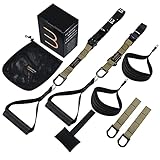
Overview: The Bodytorc system positions itself as a mid-range option for advanced users seeking customization. Its key innovation is detachable handles that accommodate ropes, bars, or Olympic rings (sold separately), while separate straps improve ergonomics over traditional V-shaped trainers. The kit includes door anchor, extension arms, and advanced foot straps for varied exercises.
What Makes It Stand Out: The separate strap design allows vertical alignment when anchored to pull-up bars, reducing wrist strain and improving biomechanics. Detachable handles offer versatility unmatched by fixed-handle systems, letting users expand their toolkit gradually. High-grade webbing with double stitching and anodized cam buckles promise durability.
Value for Money: At $69.97, it fills the gap between budget ($40) and premium ($140+) options. You get advanced features without brand-name markup. However, the lack of included accessories (rings, bars) and absence of professional programming means hidden costs and self-directed learning. It’s fairly priced for experienced users who know what they want.
Strengths and Weaknesses: Pros: ergonomic separate-strap design, detachable handles for versatility, strong construction, mid-range price, includes foot straps. Cons: no workout app or guidance, unknown brand track record, key accessories not included, may overwhelm beginners.
Bottom Line: Best suited for intermediate to advanced users wanting customization without paying TRX premiums. If you already own rings or bars and understand suspension training, the Bodytorc offers excellent ergonomic benefits. Beginners should choose a more guided system, but experienced trainers will appreciate its adaptability.
6. TRX Pro3 Home Gym System – Professional-Grade Suspension Trainer for Strength Training, HIIT, Cardio & Full-Body Workouts, Durable Design with Indoor & Outdoor Anchors

Overview: The TRX Pro3 represents the gold standard in suspension training, commanding a premium $229.95 price tag that reflects its professional-grade construction. This system delivers a comprehensive fitness solution for serious athletes and fitness enthusiasts who demand gym-quality results at home or on the road.
What Makes It Stand Out: Unlike consumer-grade alternatives, the Pro3 is engineered for professional use, featuring commercial-grade materials that TRX claims “will outlive you.” The inclusion of three suspension anchors (door, X-mount, and suspension anchor) provides unprecedented versatility for indoor and outdoor training. The textured rubber-grip handles and padded foot cradles prioritize comfort during intense sessions. Most notably, purchasers gain trial access to the TRX Training Club app with 500+ on-demand workouts led by certified trainers, effectively providing a personal training subscription.
Value for Money: At nearly $230, this is a significant investment, but one justified by exceptional durability and professional features. Comparable commercial suspension trainers cost $200-$300, and the included app access (typically $10-20/month) adds substantial value. For dedicated users, the one-time cost amortizes favorably against gym memberships.
Strengths and Weaknesses: Strengths include unmatched build quality, professional endorsements, multiple anchor options, and comprehensive app integration. The heavy-duty webbing and components withstand repeated daily use. Weaknesses center on the premium price point, which may exceed casual users’ budgets, and the potential complexity for absolute beginners who might feel overwhelmed by professional-level features.
Bottom Line: The TRX Pro3 is the definitive choice for committed fitness enthusiasts seeking commercial-grade durability and professional training resources. While expensive, its exceptional quality and included app access make it a worthwhile long-term investment for serious home gym builders.
7. Home Resistance Training Kit | Full-Body Workout with Suspension Trainer Straps, Door Anchor, Handles, and Carrying Bag | Complete Home Gym Equipment (Army Green)

Overview: This army-green suspension trainer kit delivers essential functional training capabilities at an accessible $39.99 price point. Designed for busy professionals and fitness enthusiasts seeking portability without complexity, it provides a straightforward solution for full-body resistance workouts in any environment.
What Makes It Stand Out: The kit’s primary distinction is its exceptional value proposition combined with 24-hour customer service support—a rarity in budget fitness equipment. The high-density nylon and polyester fiber construction offers reliable performance for most users, while the grip-proof handles and heavy-duty carabiners address safety concerns common in entry-level systems. Its versatility for indoor and outdoor use makes it genuinely adaptable.
Value for Money: At $39.99, this represents one of the market’s most affordable entry points into suspension training. Comparable budget systems range from $35-$60, making this competitively priced. While lacking premium features, it includes all essentials: door anchor, extension straps, handles, and a travel bag. For beginners testing suspension training or travelers needing a backup system, the price-to-function ratio is excellent.
Strengths and Weaknesses: Strengths include affordability, lightweight portability, quick setup, and responsive customer support. The complete accessory pack enables immediate use. Weaknesses involve lower-grade materials that may show wear with heavy use, basic handle comfort compared to premium models, and no included workout programming, requiring users to source exercises independently.
Bottom Line: This kit excels as an entry-level or travel-friendly suspension trainer. While not matching professional systems’ durability, its unbeatable price and solid functionality make it ideal for beginners, occasional users, or as a portable supplement to a primary home gym.
8. Kensui Nanobars V2 – Ultra-Compact Portable Suspension Trainer – Pocket-Sized Home Gym for Travel & Outdoor Workouts – 600lb Capacity – Dual Anchor System with Rotating Handles (Black)

Overview: The Kensui Nanobars V2 revolutionizes portability in suspension training, weighing a mere 376 grams—lighter than most water bottles. At $45.00, it targets travelers and calisthenics enthusiasts who refuse to compromise workout quality for convenience, packing professional-grade capacity into a pocket-sized format.
What Makes It Stand Out: This system’s defining innovation is the dual-mode rotating handles, which switch between stable and rotate modes to accommodate different exercises and reduce joint strain. The 600-pound weight capacity rivals commercial equipment, while numbered markings on 16-foot straps enable instant, precise adjustments. Military-grade nylon webbing and a premium cam buckle system ensure security despite the minimal weight.
Value for Money: Priced at $45, the Nanobars V2 occupies a sweet spot between budget straps and premium systems. You’re paying primarily for revolutionary portability and intelligent design rather than brand premium. For frequent travelers or minimalists, the ability to perform full-body workouts literally anywhere justifies the modest price increase over basic $40 kits.
Strengths and Weaknesses: Strengths include exceptional portability, innovative rotating handles, high weight capacity, quick-adjust system, and dual-anchor versatility. The compact design is genuinely game-changing for travel. Weaknesses include the separate purchase requirement for a door anchor, limiting immediate indoor usability, and potentially shorter strap length for certain exercises compared to traditional systems.
Bottom Line: The Nanobars V2 is the ultimate travel-friendly suspension trainer, combining innovative design with serious performance. For those prioritizing portability without sacrificing capability, it’s an unbeatable choice that redefines where and how you can train.
9. Home Resistance Training Kit | Full-Body Workout with Suspension Trainer Straps, Door Anchor, Handles, and Carrying Bag | Complete Home Gym Equipment (Pink)

Overview: This pink suspension trainer kit offers identical functionality to its army-green counterpart at the same competitive $39.99 price point. Targeting users who value personal expression in their fitness gear, it delivers comprehensive resistance training capabilities for home, office, or travel use without compromising on essential features.
What Makes It Stand Out: Beyond the vibrant colorway, this kit distinguishes itself through the same strong value proposition: 24-hour customer service and a complete accessory package. The high-density nylon and polyester construction provides dependable performance, while grip-proof handles and robust carabiners ensure safe operation. The color option makes it particularly appealing for those wanting to personalize their workout space or distinguish their gear in group settings.
Value for Money: At $39.99, this kit maintains excellent price-to-function ratio, matching competitors in the budget tier while offering responsive customer support. The inclusion of a door anchor, extension straps, handles, and travel bag provides everything needed to begin suspension training immediately. For style-conscious beginners or as a secondary travel system, the aesthetic versatility adds value without cost premium.
Strengths and Weaknesses: Strengths mirror the green version: affordability, portability, quick setup, complete accessories, and dedicated customer service. The pink color offers visual appeal and personalization. Weaknesses include material durability concerns under heavy, sustained use, basic ergonomic comfort compared to premium models, and absence of guided workout content, requiring independent exercise research.
Bottom Line: This kit serves as an ideal entry point into suspension training with added style. Functionally identical to its neutral-colored sibling, the pink variant excels for budget-conscious users, beginners, or travelers seeking a capable, personalized fitness solution without financial commitment.
10. Home Suspension Training Kit with Suspension Trainer, Straps & Bands – Adjustable Full-Body Workout System for Home Gym, Yoga, Pilates, Travel | Compact Design (Army Green)
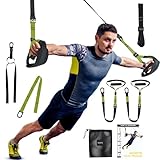
Overview: This comprehensive suspension training kit distinguishes itself by integrating resistance bands with traditional suspension straps at a budget-friendly $39.99 price. Designed for versatility across strength training, yoga, and Pilates, it targets users seeking maximum exercise variety without multiple equipment purchases.
What Makes It Stand Out: The hybrid design combining adjustable straps with elastic resistance bands offers training diversity unmatched by standard suspension trainers. Dual-lock carabiners and reinforced nylon construction provide enhanced security during dynamic movements. Weighing under two pounds with tool-free setup, it transitions seamlessly between home, office, and outdoor environments, making it exceptionally travel-friendly.
Value for Money: At $39.99, this kit delivers remarkable versatility, essentially providing two training modalities for the price of one basic suspension trainer. Comparable separate purchases (straps + bands) would cost $60-$80. While component quality reflects the price point, the functional variety represents exceptional value for budget-conscious users wanting comprehensive home gym capabilities.
Strengths and Weaknesses: Strengths include the innovative strap-and-band combination, secure dual-lock carabiners, ultra-portable design, and multi-discipline suitability (strength, yoga, Pilates). The all-in-one approach minimizes equipment clutter. Weaknesses involve potential durability concerns with integrated bands over time, basic handle ergonomics, and possible confusion for purists preferring dedicated suspension training without band assistance.
Bottom Line: This hybrid kit excels for users prioritizing exercise variety and portability on a budget. While not matching premium build quality, its ingenious combination of straps and bands creates a versatile, travel-ready fitness system that adapts to multiple training styles, making it ideal for small spaces and diverse workout preferences.
Why Portable Suspension Trainers Are Perfect for Outdoor Workouts
Outdoor suspension training merges the raw effectiveness of bodyweight resistance with the mental refreshment of nature immersion. Unlike static gym equipment, these systems leverage gravity and your body weight to create infinite resistance levels, making them uniquely adaptable to any fitness level. The unstable nature of suspension training activates deep stabilizing muscles that traditional strength machines ignore, building functional strength that translates directly to real-world movements.
The psychological benefits amplify the physical gains. Training outdoors reduces cortisol levels more effectively than indoor workouts, while natural terrain variations challenge your proprioception and balance in ways a flat gym floor never could. A truly portable system captures these advantages without compromising on the safety or functionality you’d expect from a permanent installation.
Key Features That Define a Premium Portable Suspension Trainer
Anchor System Versatility
The anchor is literally where your safety begins, yet it’s the most overlooked component. Premium systems offer multiple anchor configurations: loop-style anchors for thick tree branches, D-ring attachments for playground equipment, and specialized rock-climbing-inspired camming devices for vertical anchor points. Look for reinforced stitching at all connection points and redundant safety loops that provide backup protection if the primary anchor fails. The best systems include an integrated wear indicator—subtle color-changing threads that reveal when the anchor webbing has been compromised by UV exposure or abrasion.
Strap Material and Durability
Not all nylon webbing is created equal. Military-grade tubular nylon with a minimum breaking strength of 4,000 pounds should be your baseline for safety. The weave density matters significantly—tighter weaves resist abrasion from tree bark and concrete while preventing dirt and sand from embedding in the fibers. Premium trainers feature urethane-coated sections where the straps contact anchor points, dramatically extending lifespan. For outdoor use, UV resistance is non-negotiable; prolonged sun exposure can degrade standard nylon by up to 50% in a single season. Look for UV-inhibiting treatments that maintain structural integrity through hundreds of hours of direct sunlight.
Handle Design and Comfort
Your grip connection determines exercise effectiveness and wrist health. Ergonomic handles should feature a slight conical shape that naturally aligns with your closed fist, reducing pressure points during extended sets. The grip material needs to balance tackiness with quick-drying properties—textured rubber compounds with drainage channels prevent slippage from sweat or morning dew while avoiding the sponge-like water retention of foam grips. For outdoor training, antimicrobial treatments prevent the bacterial growth that thrives in damp, dark crevices. The best systems also include interchangeable handle options: standard grips for most exercises, larger “fat grips” for grip strength development, and foot cradles that convert to handles for specialized movements.
Weight Capacity and Safety Ratings
Always choose a system rated for at least 1.5 times your body weight to account for dynamic loading forces. During explosive movements like plyometric push-ups, the instantaneous force can exceed static weight by 200-300%. Reputable manufacturers provide third-party testing certification from organizations like UIAA (International Climbing and Mountaineering Federation) or ISO standards. These ratings aren’t just numbers—they represent rigorous testing under various environmental conditions including wet, frozen, and abraded states. Don’t settle for manufacturers’ self-reported capacities; demand verifiable certification, especially for outdoor use where environmental variables multiply risk factors.
Understanding Suspension Trainer Configurations
Single-Anchor vs. Dual-Anchor Systems
Single-anchor systems consolidate both straps at one point, creating a V-shape that allows fluid rotational movements and natural arc patterns. This configuration excels for dynamic exercises like atomic push-ups and rotational chops but demands more core stabilization. Dual-anchor systems separate the straps, providing greater stability for beginners and enabling wider hand positions for exercises like chest flies. For outdoor use, single-anchor systems offer superior versatility since finding one sturdy anchor point is easier than locating two perfectly spaced anchors. However, they require more skill to maintain equal strap length and tension, which can frustrate newcomers.
Adjustable Foot Cradles and Handle Positioning
The ability to quickly adjust handle height transforms your workout efficiency. Look for cam-buckle systems that allow one-handed adjustment under load—these use a spring-loaded mechanism that grips the webbing when weighted but releases instantly when you lift the lever. For outdoor training, avoid Velcro-based systems; sand and debris clog the hooks, rendering adjustments impossible and compromising security. The best systems feature numbered markings or color-coded sections on the straps, enabling symmetrical setup without tedious measuring. Foot cradles should rotate independently from the handles, preventing ankle strain during single-leg exercises and allowing quick transitions between hand and foot exercises.
Portability Factors That Actually Matter
Packed Weight and Volume
The difference between a system you actually bring on hikes versus one that stays in your garage comes down to grams and cubic inches. Premium portable systems pack down to roughly the size of a 1-liter water bottle and weigh under 2.5 pounds while maintaining full functionality. This requires intelligent design choices like integrated storage pouches that double as anchor padding and minimalist hardware that doesn’t sacrifice safety for weight savings. Be wary of systems that claim “ultralight” status by using thinner webbing or plastic hardware—these compromises become dangerous liabilities when you’re miles from help.
Included Carry Solutions
A dedicated stuff sack with compression straps keeps your system organized and protected from sharp objects in your pack. More importantly, the carry solution should include a separate wet/dry compartment for storing damp straps away from dry gear after morning workouts. Premium systems incorporate a carabiner clip that attaches the packed trainer to the outside of your backpack, saving interior space and allowing straps to air-dry during your hike. Some advanced designs even integrate a lightweight groundsheet that protects the system when setting up in mud or snow, preventing frozen hardware and sand contamination.
Setup and Takedown: The Real-World Experience
Door Anchor vs. Outdoor Anchor Solutions
While door anchors work for hotel rooms, outdoor training demands purpose-built solutions. Tree-protecting anchors use wide, padded loops that distribute pressure and prevent bark damage—essential for responsible training in public parks. For urban environments, fence rail anchors feature rubberized grips that clamp securely to playground bars and park benches without scratching paint or leaving marks. The most versatile systems include a “deadman anchor” option: a small sandbag you can fill on-site and bury for anchor points on beaches or in snowy conditions where natural anchors are scarce.
Quick-Adjust Mechanisms
When you’re training in variable weather, fumbling with complicated adjustments kills momentum and cools your muscles. Premium quick-adjust systems use a sliding cam that moves freely when unweighted but locks instantly under tension. This allows you to modify handle height mid-circuit without dismounting. For outdoor use, these mechanisms must be self-cleaning—designed so that sand and grit fall away from moving parts rather than jamming them. Test the adjustability with gloves on; cold mornings require hardware that operates smoothly with reduced dexterity. The best systems allow you to shorten one strap independently, creating intentional instability for advanced core training.
Safety Considerations for Outdoor Suspension Training
Anchor Point Assessment
Your safety depends on anchor evaluation skills. For tree branches, apply the “two-thumb rule”: if you can wrap both thumbs around the branch with them touching, it’s too thin to support dynamic loads. Test anchors with a series of progressively harder pulls before committing your full weight. For horizontal anchors like playground bars, check for rust at connection points and ensure the structure is anchored to the ground—not just cemented, but bolted with visible reinforcement plates. Always have a backup plan: carry a secondary anchor type in case your primary choice proves unsuitable.
Weather and Environmental Factors
Moisture dramatically reduces friction in camming devices and can cause nylon to stretch unpredictably. After rain, allow straps to dry completely before use, and retest all anchor points as soil conditions may have shifted. In cold weather, metal hardware becomes brittle; inspect for micro-fractures if you’ve dropped carabiners on frozen ground. UV exposure degrades materials over time, so rotate which sections of strap contact anchor points to distribute wear. Training near salt water? Rinse hardware with fresh water after each session to prevent corrosion that can cause catastrophic failure under load.
Maximizing Your Outdoor Training Experience
Progressive Overload Techniques
Without traditional weight plates, progression requires creativity. Start with angle adjustments: moving your feet closer to the anchor point increases resistance exponentially. Next, manipulate stability—transition from dual-foot support to single-leg exercises. Advanced users can employ tempo training: 4-second eccentrics and explosive concentrics create muscle tension without added weight. For pure strength gains, use “mechanical drop sets”: begin with the hardest variation (single-arm rows), then immediately switch to easier variations as you fatigue (two-arm rows, then assisted rows with higher anchor points).
Exercise Variety and Programming
The best portable systems unlock movements impossible in traditional gyms. Use uneven terrain for deficit lunges and incline push-ups. Incorporate natural features: loop straps around a low branch for horizontal rows, then use the same anchor for vertical pulls by kneeling on the ground. Program in circuits that capitalize on outdoor space: sprint between trees, then perform suspension exercises at each station. For total-body sessions, pair pushing movements (suspended push-ups) with pulling movements (rows) and leg work (single-leg squats), resting only as long as it takes to adjust strap length.
Maintenance and Care for Longevity
Proper maintenance extends system life by years. After each outdoor session, brush off visible dirt before it grinds into the webbing. Wash straps monthly with mild soap, avoiding detergents that leave residue attracting more dirt. Never store your system wet—mildew degrades nylon strength and creates health hazards. For hardware, apply a dry lubricant to moving parts quarterly; oil-based lubricants attract grit. Inspect the entire system before each use, focusing on high-stress areas: anchor loops, handle stitching, and adjustment cams. Replace any component showing fraying, discoloration, or stiffness immediately. Most manufacturers sell replacement parts—a sign they stand behind their product’s longevity.
Common Mistakes to Avoid When Choosing a Portable System
First-time buyers often prioritize price over safety certification—a dangerous false economy. Others fall for “complete kits” with dozens of accessories they’ll never use, adding bulk without value. Avoid systems with proprietary anchor designs that lock you into one brand’s ecosystem. Beware of “military-spec” claims without specific standards referenced; this is often marketing fluff. Don’t ignore the learning curve—some advanced systems require significant skill to use safely. Finally, never assume all suspension trainers work for outdoor use; many are designed exclusively for indoor door anchors and lack the durability for repeated outdoor anchoring.
Investment vs. Value: What Should You Pay?
Quality portable suspension trainers range from $80 to $250, with diminishing returns beyond that price point. The sweet spot for most users sits between $120 and $180, where you get certified safety ratings, durable hardware, and thoughtful design features without paying for celebrity endorsements. Budget options under $100 often use unrated hardware and lack UV-resistant treatments, making them more expensive long-term due to frequent replacement. Premium systems over $200 offer marginal gains in weight savings and exotic materials, worthwhile only for frequent travelers and professional athletes. Consider the cost-per-use: a $150 system used three times weekly for five years costs less than 20 cents per workout.
Frequently Asked Questions
Can I use any suspension trainer outdoors, or do I need a specific outdoor-rated model?
Not all suspension trainers are suitable for outdoor use. Outdoor-rated models feature UV-resistant webbing, corrosion-resistant hardware, and reinforced anchor systems designed for natural anchor points like trees and rocks. Standard indoor models often use lighter materials and door-specific anchors that won’t hold up to environmental exposure and irregular anchor shapes.
How do I find safe anchor points when training in unfamiliar parks or wilderness areas?
Look for living trees at least 8 inches in diameter with branches thicker than your wrist. Test playground equipment by shaking it vigorously—any wobble indicates insufficient anchoring. Park benches should be bolted through concrete, not just surface-mounted. Always perform a gradual load test: hang from the anchor with partial weight before committing to full exercises.
What’s the minimum weight capacity I should accept for outdoor suspension training?
Choose a system rated for at least 1,000 pounds static load, which typically translates to 350-400 pounds dynamic capacity. This provides a 2x safety margin for most users. For explosive training or if you’re over 200 pounds, look for 1,500-pound static ratings. Remember, dynamic forces during jumping movements can triple your body weight momentarily.
How do I protect trees and public property when using suspension trainers outdoors?
Use tree-protecting anchors with wide, padded surfaces that distribute pressure. Never loop straps directly around bark—this damages the cambium layer. For metal structures, place a cloth barrier between your anchor and the paint. Always follow Leave No Trace principles: inspect the area after use and pack out any debris.
Can I leave my suspension trainer set up outdoors permanently?
No. Continuous UV exposure degrades nylon by up to 50% in one season, and moisture invites mildew and corrosion. Always pack up your system after each session. If you must leave it temporarily, store it in a UV-resistant bag and hang it in a shaded, dry area. Permanent outdoor installations require marine-grade materials and professional mounting.
How do I clean my suspension trainer after beach or muddy trail workouts?
Rinse straps with fresh water immediately to remove salt and abrasive particles. Soak in a tub with mild detergent, then agitate by hand. Never use a washing machine—the agitator damages webbing fibers. Air dry completely away from direct sunlight. For hardware, disassemble if possible and rinse with fresh water, drying thoroughly with a microfiber cloth.
Are there exercises I should avoid when training outdoors on suspension trainers?
Avoid exercises that create sudden, uncontrolled movements near hazards like cliffs or water. Be cautious with inverted exercises on uneven ground—use a spotter until you’re comfortable with the terrain. In public spaces, avoid exercises that swing your body into pedestrian pathways. Never train during thunderstorms, even under trees, as metal hardware conducts electricity.
How does cold weather affect suspension trainer performance and safety?
Nylon becomes stiffer and less flexible below freezing but retains strength. Metal hardware, however, becomes brittle and more prone to cracking if dropped. Allow your system to warm slightly before use in extreme cold. Check for ice formation in camming devices, which can prevent proper locking. Always inspect hardware more frequently in winter conditions.
Can I combine suspension training with other portable equipment for outdoor workouts?
Absolutely. Pair your trainer with resistance bands for accommodating resistance, or use it as an anchor point for battle ropes. Many athletes stack suspension exercises between kettlebell swings or sandbag carries for metabolic conditioning. Just ensure your anchor point can handle the combined dynamic loads of multiple equipment types.
What’s the learning curve for transitioning from gym machines to outdoor suspension training?
Expect a 2-4 week adaptation period as your stabilizing muscles catch up to your prime movers. Start with basic rows and chest presses at high anchor points (easier angle) before progressing to lower angles and single-limb exercises. Film yourself to check form—the instability that makes suspension training effective also makes proper technique critical. Most users feel confident after 8-12 sessions.