If chronic back pain has turned your fitness goals into a distant memory, you’re not alone. Millions of people sacrifice cardiovascular health on the altar of spinal comfort, believing that high-impact running or even traditional upright ellipticals are their only options. Enter the recumbent elliptical—a game-changing hybrid that merges the spine-friendly seating of a recumbent bike with the natural, striding motion of an elliptical trainer. These machines are engineered specifically for those who refuse to choose between protecting their back and breaking a sweat.
Unlike their upright counterparts, recumbent ellipticals position you in a reclined, supported posture that distributes weight evenly and eliminates the compressive forces on your lumbar spine. The result? A low-impact, high-reward cardio session that burns calories, strengthens your heart, and keeps your vertebrae happy. Whether you’re managing a herniated disc, recovering from surgery, or simply prioritizing joint longevity, understanding what separates exceptional back-support equipment from mediocre models is critical. This comprehensive guide walks you through every feature, specification, and consideration worth weighing before investing in your spinal health.
Top 10 Recumbent Ellipticals for Back Support
Detailed Product Reviews
1. Sunny Health & Fitness Elliptical Recumbent Cardio Bike, Cross Trainer Cycle for Indoor Arm/Leg Home Exercise, Dual Stationary Handlebars Plus Easy Access Seat for Adults & Seniors w/App Connection

Overview:
The Sunny Health & Fitness Elliptical Recumbent Cardio Bike positions itself as a joint-friendly solution for adults and seniors seeking comprehensive indoor exercise. This $399.99 machine combines recumbent seating with elliptical motion, delivering full-body engagement through dual stationary and moveable handlebars paired with oversized pedals for natural movement patterns.
What Makes It Stand Out:
The belt-drive mechanism distinguishes this model, ensuring remarkably quiet operation that won’t disrupt household activities. Its seamless integration with the free SunnyFit App provides exceptional value, offering over 1,000 trainer-led workouts and virtual scenic tours without subscription fees—a rarity in connected fitness equipment that typically charges monthly.
Value for Money:
At this price point, you’re getting magnetic resistance technology and app connectivity typically found in $500+ units. While eight resistance levels are adequate for most users, fitness enthusiasts might crave more granular control. The build quality justifies the cost for moderate home use, though serious athletes may eventually outgrow its limitations.
Strengths and Weaknesses:
Strengths include whisper-quiet operation, low-impact design protecting joints, comprehensive app ecosystem, and stable construction suitable for seniors. The primary weakness is the limited eight-level resistance system, which may not challenge advanced users. The display is functional but basic compared to backlit competitors in this range.
Bottom Line:
An excellent choice for seniors, rehabilitation patients, or casual fitness enthusiasts prioritizing joint safety and quiet operation. The free app access adds tremendous long-term value, making it a smart investment for sustainable home cardio without ongoing costs.
2. Sunny Health & Fitness Electromagnetic Recumbent Cross Trainer Exercise Elliptical Bike w/Arm Exercisers, Easy Access Seat & Exclusive SunnyFit® App Enhanced Bluetooth Connectivity - SF-RBE4886SMART
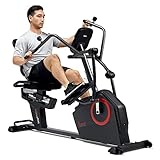
Overview:
Sunny Health & Fitness’s flagship electromagnetic recumbent cross trainer represents the premium tier of home cardio equipment at $629.99. This advanced machine elevates the recumbent elliptical concept with sophisticated resistance technology and intelligent programming for serious fitness enthusiasts who demand commercial-grade performance and workout variety.
What Makes It Stand Out:
The electromagnetic resistance system delivers 16 precise levels of intensity, creating smoother transitions and more consistent challenge than standard magnetic systems. Twelve pre-programmed workouts and four customizable user profiles transform it from a simple bike into a comprehensive training platform, eliminating workout monotony and providing structured progression for multiple household members.
Value for Money:
While significantly pricier than entry-level models, the electromagnetic mechanism alone justifies the premium. Comparable commercial-grade features typically cost $800+. You’re investing in durability, precision, and workout variety that will remain relevant as fitness levels improve, making it cost-effective long-term for committed users.
Strengths and Weaknesses:
Major strengths include ultra-smooth resistance modulation, extensive programming options, robust app integration, and low-impact biomechanics. The primary drawback is the substantial price jump from magnetic models. Casual users may not fully utilize the advanced features, making it potentially excessive for basic rehabilitation needs or infrequent use.
Bottom Line:
Ideal for dedicated home athletes seeking gym-quality performance and program variety. The electromagnetic system and workout customization make it worth every penny for users committed to long-term fitness progression who will leverage its advanced capabilities.
3. ECHANFIT Recumbent Exercise Bike with Arm Exerciser for Home - Elliptical Recumbent Cross Trainer with Backlit Display, Pulse Sensor, 8-Level Magnetic Resistance, 380LBS Weight Capacity

Overview:
The ECHANFIT Recumbent Exercise Bike delivers impressive specifications at a competitive $339.99 price point. This cross trainer emphasizes accessibility and durability, supporting users from 4'9" to 6'3" and up to 380 pounds, making it one of the most inclusive models in its class without premium pricing that often excludes larger individuals.
What Makes It Stand Out:
The backlit LCD display provides superior visibility compared to standard screens, while the 380-pound weight capacity exceeds most competitors under $400. The combination of magnetic resistance and belt drive ensures exceptionally quiet operation, crucial for shared living spaces and early morning workouts that won’t disturb family members.
Value for Money:
This model undercuts premium brands while offering comparable core functionality. The eight resistance levels cover most fitness needs, though lack the sophistication of electromagnetic systems. For budget-conscious buyers prioritizing capacity and quiet operation, value is exceptional and hard to match in the current market landscape.
Strengths and Weaknesses:
Strengths include high weight capacity, generous height accommodation, whisper-quiet performance, and clear display metrics. Weaknesses involve limited brand recognition and potentially less robust app ecosystem than SunnyFit. The eight resistance levels, while smooth, offer less granularity than premium alternatives and may plateau for advanced trainees.
Bottom Line:
A smart purchase for heavier users, seniors, or those in rehabilitation who need a sturdy, quiet machine without premium pricing. The ECHANFIT prioritizes essential functionality over flashy features, delivering reliable performance where it matters most for sustainable home fitness.
4. Exercise Bike Stationary Bikes for Home Recumbent Exercise Bike Folding with 10-Level Adjustable Resistance LCD Monitor Pulse Sensor Support Back Pad and Tablet Holder Arm Resistance Band 265LBS Weight Capacity for Home Workout
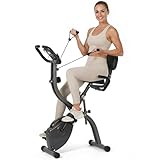
Overview:
This ultra-affordable $109.99 folding exercise bike redefines budget home fitness with its innovative 3-in-1 design. Transforming between upright, semi-recumbent, and recumbent positions, it offers versatility unmatched at this price point while supporting users up to 265 pounds in compact spaces where permanent equipment isn’t feasible.
What Makes It Stand Out:
The foldable frame is a game-changer for apartment dwellers, collapsing to store under beds or in closets. Ten resistance levels actually exceed some pricier models, while integrated arm resistance bands provide genuine full-body engagement without additional cost or complexity, a surprising inclusion at this entry-level price.
Value for Money:
Simply unbeatable for entry-level buyers. No other machine offers this feature set under $150. However, the low price necessitates compromises in materials and longevity. It’s a trade-off between immediate affordability and long-term durability that budget shoppers must consider when evaluating total cost of ownership.
Strengths and Weaknesses:
Strengths include incredible price, space-saving design, workout versatility, and included arm bands. Significant weaknesses involve lower weight capacity, potentially less stable frame, and basic LCD display without backlighting. Durability concerns make it best for lighter, occasional use rather than intense daily training by serious athletes.
Bottom Line:
Perfect for beginners, seniors on fixed incomes, or anyone in cramped quarters needing basic cardio options. While not built for intense daily training, it delivers remarkable functionality for the price, making fitness accessible to all budgets and living situations.
5. VANSWE Recumbent Exercise Bike with Arm Exerciser for Seniors Adults Home Training - Elliptical Recumbent Cross Trainer with Magnetic Resistance, Free App, Bluetooth Connectivity and Pulse Sensor

Overview:
The VANSWE Recumbent Exercise Bike targets the underserved high-capacity market at $358.98, supporting users up to 400 pounds while maintaining a feature set competitive with premium brands. This machine balances durability, adjustability, and technological integration for larger users seeking low-impact cardio solutions at home without spending premium dollars.
What Makes It Stand Out:
The infinite slider seat adjustment accommodates inseams from 29" to 37", providing precise ergonomic positioning that fixed-interval seats can’t match. At 400 pounds, the weight capacity leads this category, while Bluetooth connectivity and free app access add modern training tools without subscription fees that burden many competitors.
Value for Money:
Excellent value for heavier users who typically must spend $500+ for comparable capacity. The eight-level magnetic resistance system is reliable if not revolutionary. You’re paying for robust construction and inclusive design rather than advanced programming or electromagnetic technology, prioritizing durability over sophistication.
Strengths and Weaknesses:
Strengths include industry-leading weight capacity, superior seat adjustability, quiet magnetic resistance, and app connectivity. Weaknesses involve only eight resistance levels and lesser-known brand pedigree. The app ecosystem may not match SunnyFit’s depth or trainer content quality, potentially limiting long-term engagement.
Bottom Line:
The go-to choice for larger individuals or those needing exceptional adjustability. VANSWE prioritizes accessibility and durability over flashy features, creating a dependable machine that welcomes users often excluded from standard home fitness equipment due to weight or height limitations.
6. Universal 9V Adapter Power Cord for Schwinn 170 430 A10 A20 420 460 101 130 150 202 220 230 240 Schwinn Stationary Bike Power Cord for Bike Exercise Elliptical Recumbent Upright Trainer Power Supply

Overview: This universal 9V adapter solves power cord problems for numerous Schwinn exercise machines and Crosley Cruiser turntables. With six feet of reach and stable 2-amp output, it replaces lost or damaged OEM cords without the premium price tag. The manufacturer emphasizes noise-free operation and consistent power delivery, addressing common frustrations with aftermarket adapters.
What Makes It Stand Out: The sheer compatibility list is impressive, covering dozens of Schwinn bike and elliptical models plus Crosley record players. The extended 6.6-foot cord provides flexibility in room placement, while the 100-240V input range makes it travel-friendly. The company’s focus on power adapter specialization suggests reliable engineering, backed by 24/7 support and lifetime technical assistance.
Value for Money: At $8.99, this adapter costs a fraction of OEM replacements while delivering equivalent specifications. Original manufacturer cords often run $20-30, making this an intelligent budget choice for older equipment where factory parts are scarce. The two-year warranty and responsive customer service add significant value.
Strengths and Weaknesses: Strengths include broad compatibility, generous cord length, stable 9V/2A output, and exceptional customer support. The explicit warning about 2010 Schwinn 420 models demonstrates transparency. Weaknesses: Users must carefully verify model numbers, as incorrect purchase risks remain. Build quality may not match OEM durability for heavy daily use.
Bottom Line: An essential, cost-effective solution for replacing lost Schwinn or Crosley power cords. Verify compatibility carefully, but expect reliable performance and outstanding support at an unbeatable price.
7. Under Desk Elliptical Machine, 12-Levels Magnetic Resistance, Ultra-Quiet Seated Pedal Exerciser for Home/Office, Ideal for Seniors Rehabilitation & Low-Impact Cardio

Overview: This under-desk elliptical brings low-impact cardio to sedentary environments. Designed for seniors and rehabilitation patients, it operates quietly while providing 12 resistance levels. The compact unit fits under most desks, allowing users to pedal while working or watching TV. Front-panel controls enable easy adjustments without disrupting activities.
What Makes It Stand Out: Operating below 30 decibels—quieter than a library whisper—this machine won’t disturb colleagues or family. The dual-mode system offers both manual control and 12 automatic programs (P1-P12) that vary speed and direction for dynamic workouts. The LCD monitor tracks calories, time, and count, while EVA anti-slip pads ensure stability during use.
Value for Money: At $46.99, this represents exceptional value for a feature-rich mini elliptical. Comparable models often lack the 12 resistance levels or dual-mode functionality, typically costing $60-80. The rehabilitation-focused design and whisper-quiet operation justify every dollar.
Strengths and Weaknesses: Strengths include ultra-quiet operation, versatile resistance range, dual exercise modes, easy front-panel controls, and senior-friendly design. The compact size suits small spaces. Weaknesses: Limited stride length may not satisfy taller users, and maximum resistance might challenge advanced athletes. Build quality may vary with heavy daily office use.
Bottom Line: Perfect for office workers, seniors, and rehabilitation patients seeking convenient, quiet cardio. The feature set and price point make it a standout choice for low-impact daily activity.
8. Niceday Recumbent Exercise Bike & Elliptical Machine, 16 Resistance Levels and 400LB Weight Limit

Overview: The Niceday hybrid machine combines recumbent bike and elliptical functionality in a heavy-duty package supporting users up to 400 pounds. Engineered for physical therapy, it reduces joint stress while providing 16 resistance levels. The 18-inch stride accommodates users up to 6'4", delivering gym-quality workouts at home.
What Makes It Stand Out: The 400-pound weight capacity and therapy-focused design set it apart from standard home equipment. The 16-pound flywheel with magnetic resistance ensures whisper-smooth operation, while the bearing-linked stride mechanism prevents knee discomfort. The robust frame promises longevity and family-wide usability.
Value for Money: At $1,089.99, this is a premium investment. However, for users requiring heavy-duty support or rehabilitation equipment, it’s justified. Commercial-grade alternatives cost $2,000+, making this a mid-premium bargain for its capacity and specialized design.
Strengths and Weaknesses: Strengths include exceptional weight capacity, natural 18-inch stride, ultra-quiet operation, therapy-oriented engineering, and 16 resistance levels. The sturdy construction ensures stability. Weaknesses: The high price and large footprint may deter casual users. Assembly can be complex, and the unit’s weight makes relocation difficult.
Bottom Line: An outstanding choice for heavy users, arthritis patients, and post-surgery rehabilitation. The premium price delivers professional-grade durability and therapeutic benefits that cheaper models cannot match.
9. Sunny Health & Fitness Performance Recumbent Cross Trainer & Elliptical Bike with Dual Motion Arm Exercisers, Easy Access Seat SF-RBE420035 + Home Gym Foam Floor Protector Mat
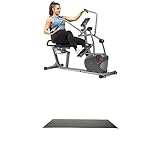
Overview: Sunny Health’s recumbent cross trainer merges elliptical motion with upper-body arm exercisers, creating a full-body workout solution. Bluetooth connectivity integrates with the SunnyFit app for guided workouts and progress tracking. The easy-access design simplifies mounting for users with mobility limitations, while the included mat protects floors.
What Makes It Stand Out: The SunnyFit app connectivity transforms a standard machine into a smart fitness hub with free workouts, leaderboards, and personalized plans. Dual-motion arm handles enable simultaneous upper and lower body training, while the step-through design ensures safe access. The included floor mat protects surfaces and equipment longevity, adding immediate value.
Value for Money: At $436.98, this offers impressive value with app integration and included accessories. Competing smart recumbent trainers typically cost $600+, making this an accessible entry into connected fitness without subscription fees. The dual-functionality effectively provides two machines in one.
Strengths and Weaknesses: Strengths include Bluetooth connectivity, full-body workout capability, easy on/off design, included protective mat, and low-impact motion. The SunnyFit app adds engagement. Weaknesses: Resistance levels aren’t specified, potentially limiting advanced training. App dependency may not suit all users, and build quality may not match premium brands. The stride length isn’t listed.
Bottom Line: Ideal for tech-savvy users wanting connected fitness on a budget. The full-body design and app features provide excellent value, though serious athletes may need more resistance.
10. Niceday Elliptical Machine & Recumbent Exercise Bike,16 Resistance Levels and 400LB Weight Limit
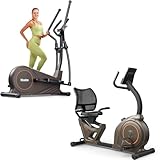
Overview: Niceday’s hybrid elliptical and recumbent bike targets physical therapy users with a 400-pound capacity and ultra-quiet magnetic drive. The 15.5-inch stride minimizes knee stress for users up to 6'4", while 16 resistance levels provide progressive challenge. Engineered for home harmony, it operates quieter than breathing.
What Makes It Stand Out: The magnetic drive system’s extreme quietness stands out, ensuring workouts won’t disturb sleeping family members or neighbors. The 400-pound weight capacity and therapy-focused design accommodate a wide user range. The precision-engineered magnetic system delivers commercial-grade smoothness in a home package.
Value for Money: At $789.99, this positions between budget and premium hybrids. For users needing high capacity and whisper-quiet operation, it justifies the cost. Similar spec machines from commercial brands exceed $1,500, making this a solid mid-premium value.
Strengths and Weaknesses: Strengths include exceptional weight capacity, ultra-silent operation, therapy-oriented design, 16 resistance levels, and smooth magnetic drive. The robust frame ensures stability. Weaknesses: The 15.5-inch stride is shorter than some competitors, potentially limiting natural motion for taller users. The price remains high for casual users, and assembly requires time and effort.
Bottom Line: A premium hybrid machine perfect for heavy users and those prioritizing silent operation. While expensive, the therapeutic benefits and build quality make it worthwhile for serious home fitness and rehabilitation needs.
What Exactly Is a Recumbent Elliptical?
A recumbent elliptical combines the seated, reclined position of a recumbent bicycle with the elliptical footpath and arm handles of a traditional cross-trainer. Your feet move in a smooth, oval-shaped trajectory while your back rests against a supportive seat, creating a closed-chain exercise that eliminates impact while engaging both upper and lower body muscles. The biomechanics are fundamentally different from upright cardio machines—your spine remains in a neutral, supported position throughout the entire range of motion, reducing axial loading by up to 60% compared to treadmill running.
How It Differs From Traditional Ellipticals and Recumbent Bikes
Traditional ellipticals force you to support your own torso weight, which can exacerbate existing back issues as fatigue sets in and posture degrades. Recumbent bikes, while supportive, only offer a circular pedaling motion that engages fewer muscle groups and can create hip flexor tightness. The recumbent elliptical bridges this gap: you get the weight-supported seating of a bike with the biomechanically superior stride pattern of an elliptical. The arm handles also mean you’re activating core stabilizing muscles without placing destabilizing stress on your spine—a key distinction for rehabilitation purposes.
The Biomechanics of Seated Cardio
The magic lies in the force distribution. When seated with proper lumbar support, your body weight spreads across the seatback and base, rather than compressing through your spinal discs. The elliptical path keeps your knees tracking in line with your hips and ankles, preventing the shear forces that occur with walking or running. This alignment is particularly crucial for those with degenerative disc disease or spinal stenosis, as it maintains the natural lordotic curve of the lower back while facilitating fluid, pain-free movement.
Who Benefits Most From Back-Support Cardio?
While these machines are universally low-impact, certain populations stand to gain transformative benefits. The seated, supported design opens doors for individuals who’ve been sidelined by pain, mobility limitations, or injury recovery protocols.
Chronic Lower Back Pain Sufferers
For the 80% of adults who experience back pain annually, recumbent ellipticals offer a rare combination of calorie burn and spinal decompression. The reclined angle—typically between 100 and 130 degrees—reduces pressure on the posterior chain while allowing you to maintain cardiovascular intensity. Look for models with adjustable lumbar zones that target specific problem areas, whether it’s L4-L5 disc issues or sacroiliac joint dysfunction.
Seniors and Active Aging Enthusiasts
Balance concerns and age-related spinal degeneration make traditional cardio equipment risky for older adults. Recumbent ellipticals provide a stable, fall-safe environment where seniors can achieve target heart rates without fear of injury. The step-through design common on quality models eliminates the dangerous high-step mounting required by upright machines, a critical accessibility feature for those with limited hip mobility.
Rehabilitation and Post-Surgery Recovery
Physical therapists increasingly prescribe recumbent elliptical work for post-laminectomy, post-fusion, and post-discectomy patients. The controlled, predictable motion allows for gradual progression from passive range-of-motion to active resistance training. If you’re in this category, prioritize machines with electromagnetic resistance that offers ultra-smooth transitions and eliminates the “jarring” sometimes felt with mechanical friction systems.
Plus-Size Users and Joint Protection
Individuals carrying extra weight often face a cruel paradox: they need cardio most but face the highest injury risk. Recumbent ellipticals with high weight capacities (up to 350-400 pounds) and reinforced frames distribute load effectively, protecting both spine and peripheral joints. The seated position also reduces patellofemoral stress, making it gentler on knees than walking or cycling.
Critical Back-Support Features to Evaluate
Not all “recumbent” machines deliver true spinal support. The difference between therapeutic relief and continued discomfort often lies in nuanced engineering details that generic models overlook.
Lumbar Support Systems and Adjustability
Premium back support goes beyond basic padding. Seek seats with independently adjustable lumbar bulges—air bladder systems or mechanical pumps that let you customize the amount of lordotic support. The support should align with your natural lower back curve, typically 1-2 inches deep at the L3-L5 region. Fixed, non-adjustable seatbacks force your spine to conform to the machine rather than the machine adapting to your anatomy.
Seat Engineering and Ergonomic Padding
Memory foam isn’t just marketing fluff here. High-density viscoelastic foam (4-5 lb/ft³ density) conforms to your spinal curves without bottoming out, maintaining support during 45+ minute sessions. The seat pan should be wide enough to accommodate your sit bones (typically 14-16 inches) and feature a waterfall edge that prevents pressure on the hamstrings and sciatic nerve. Breathable, moisture-wicking upholstery prevents the heat buildup that causes users to shift position and lose optimal alignment.
Frame Stability and User Weight Capacity
A wobbling frame transfers instability directly to your spine as supporting muscles engage to compensate. Look for center beam construction with a minimum 2-inch diameter steel tube and cross-bracing at the base. Weight capacity should exceed your body weight by at least 50 pounds to ensure the frame isn’t operating at its structural limit, which accelerates wear and compromises support integrity over time.
Stride Length, Pedal Spacing, and Elliptical Path
These three factors determine whether the machine will feel natural or force your body into compensatory patterns that stress your back.
Finding Your Optimal Stride Length
Stride length typically ranges from 12 to 20 inches on recumbent models. Taller users (over 6'2") need 18+ inches to prevent hip hiking—a compensation where one hip elevates to complete the stride, creating pelvic tilt and lumbar rotation. Petite users (under 5'4") should look for adjustable stride lengths as short as 12 inches to avoid overextension. The best machines offer 3-5 preset stride positions or infinite adjustability within a range.
Pedal Spacing and Q-Factor
The distance between pedals (Q-factor) critically impacts hip and back alignment. Excessively wide spacing forces hip external rotation, straining the sacroiliac joints. Optimal Q-factors for recumbent ellipticals fall between 6-8 inches, mimicking your natural gait width. Some therapeutic models offer narrow 4-inch spacing for users with severe SI joint dysfunction.
Elliptical Path Shape and Incline
The footpath should be a true ellipse, not a flattened circle. Look for a vertical axis that’s 60-70% of the horizontal axis length—this creates a proper heel-to-toe roll without excessive knee flexion. Adjustable incline changes the emphasis from hamstrings/glutes (lower incline) to quadriceps (higher incline), allowing you to vary muscle engagement and avoid overuse patterns that can refer pain to the back.
Resistance Technology: Magnetic, Electromagnetic, and Hybrid Systems
Resistance quality directly impacts workout smoothness and spinal safety. Jerky resistance transitions cause micro-traumas as your body stabilizes against unexpected forces.
Magnetic Resistance Basics
Permanent magnet systems use mechanical adjustment to move magnets closer to or farther from the flywheel. They’re reliable and quiet but offer limited precision—typically 8-16 discrete levels. The steps between levels can feel abrupt, which isn’t ideal for users managing pain who need gradual intensity progression.
Electromagnetic Braking Advantages
Electromagnetic (eddy current) systems use electrical current to precisely control resistance, offering 20-30 levels with seamless transitions. This technology allows for programs that automatically adjust based on heart rate, ensuring you never exceed safe spinal loading thresholds. The initial cost is higher, but the therapeutic benefits justify the investment for serious back-pain management.
Hybrid and Smart Resistance
Cutting-edge models incorporate motor-assisted pedaling that can actually help move your legs through the range of motion—a feature invaluable for neuromuscular reeducation after back surgery. These systems can provide negative resistance (helping you push) during the eccentric phase, reducing muscle guarding that often perpetuates pain cycles.
Console Technology and Workout Programming
A sophisticated console does more than track calories—it provides the feedback and structure necessary for safe, progressive spinal rehabilitation.
Spine-Friendly Pre-Programmed Routines
Look for programs specifically labeled “back therapy,” “spinal mobility,” or “pain-free cardio.” These should start with 5-minute warm-ups at minimal resistance, gradually build intensity while monitoring heart rate zones, and incorporate cooldown phases that include gentle spinal flexion/extension prompts. The best consoles allow you to customize and save your own routines based on your physical therapist’s protocols.
Heart Rate Monitoring for Safe Intensity
Wireless chest strap compatibility is non-negotiable for back-pain users. Wrist-based sensors are unreliable during seated exercise, and maintaining target heart rate zones (typically 60-75% of max) prevents the excessive muscle tension that accompanies anaerobic effort. Some advanced models link heart rate directly to resistance, automatically backing off intensity if your rate spikes—a critical safety net for those on pain medications that affect cardiac response.
Data Tracking and Progress Metrics
Beyond standard metrics, therapeutic users need to track “pain-free duration” and “post-workout soreness ratings.” Premium consoles include custom fields for these subjective measures, helping you correlate workout variables with outcomes. Exportable data is invaluable for sharing with healthcare providers to fine-tune your exercise prescription.
Footprint and Spatial Requirements for Home Use
These machines are larger than they appear in product photos, and underestimating space leads to cramped installations that force you to mount/dismount awkwardly—defeating the purpose of back-safe design.
Actual Dimensions vs. Published Specs
Always add 18-24 inches to the stated length and width for safe mounting/dismounting and console access. A machine listed at 60" long realistically needs 78-84" of clear space. Height clearance is equally critical—reclined seating positions mean your head sits lower, but overhead fans or low ceilings can create hazards when standing up after a workout.
Folding and Space-Saving Designs
While true folding recumbent ellipticals are rare due to structural demands, some models feature “vertical storage” where the entire unit tilts up on a castered base. These reduce floor footprint by 50% but require 8-foot ceilings and substantial upper-body strength to maneuver—potentially problematic for the target user base. Fixed-frame models generally offer superior stability, a worthwhile trade-off for most back-pain sufferers.
Flooring and Stability Considerations
Place your machine on a 3/4-inch rubber mat, even on carpet. This dampens vibration that can transfer through the frame and irritate sensitive spinal structures. For users over 250 pounds, consider reinforcing the floor area with a 1-inch plywood base to prevent floor flexing that creates perceptible instability during use.
Price Tiers and Value Proposition Analysis
Recumbent ellipticals span a wide price range, and understanding what you gain at each tier helps avoid both under-buying and overpaying for unnecessary features.
Budget Range ($500-$1,000)
Entry-level models typically offer mechanical magnetic resistance, fixed stride lengths (usually 14-16 inches), and basic LCD displays. Back support is generic—padded but not adjustable. These work for mild, occasional back discomfort but lack the customization for chronic conditions. Frame weight capacities often top out at 250 pounds, and warranties run 1-2 years on parts.
Mid-Range ($1,000-$2,500)
This sweet spot delivers electromagnetic resistance, 3-5 position stride adjustability, and programmable consoles with heart rate control. Lumbar support becomes independently adjustable, and seat padding uses higher-density foam. Weight capacities reach 300-325 pounds, and you get 3-5 year warranties on major components. For most users with moderate back pain, this tier offers the best therapeutic value.
Premium Range ($2,500-$5,000+)
High-end models feature infinite stride adjustment, smart resistance with motor assist, and medical-grade seat ergonomics. Consoles include touchscreen displays, WiFi connectivity for virtual training, and detailed health metrics export. Frame capacities exceed 350 pounds with lifetime warranties. These are essentially clinical-grade units for severe conditions or multiple users with different needs.
Setup, Servicing, and Equipment Longevity
A perfectly chosen machine becomes useless if improper assembly creates misalignment or if maintenance is so complex you avoid it.
Professional Assembly Considerations
Given the target user’s potential mobility limitations, professional assembly is worth the $150-$300 investment. Technicians ensure perfect frame alignment, which is critical for maintaining the designed biomechanics. Improperly tightened bolts can create micro-flexing that you might not notice initially but that accelerates wear and compromises spinal support within months. Some manufacturers require professional assembly to maintain warranty coverage—read the fine print.
Maintenance Protocols for Recumbent Models
Back-support machines need more frequent inspection than standard cardio equipment. Monthly checks should include:
- Seat mounting bolts (looseness creates dangerous wobble)
- Pedal axle tightness (affects stride alignment)
- Rail lubrication (dry rails cause jerky motion that jars the spine)
- Console firmware updates (ensures accurate heart rate-resistance coordination)
The electromagnetic brake system requires virtually no maintenance, but mechanical magnetic systems need annual friction pad inspection. Keep a maintenance log—neglect that leads to performance degradation is a common reason users abandon equipment and regress in their back health.
Expected Lifespan and Wear Patterns
Quality recumbent ellipticals should last 7-10 years with proper maintenance. The first components to wear are typically the seat upholstery and pedal bearings. Replace seat covers before they tear to prevent moisture from degrading the foam underneath. Listen for clicking in the pedal arms—a sign of bearing failure that creates irregular motion patterns capable of triggering muscle spasms.
Accessibility Features and Safety Mechanisms
The best therapeutic equipment anticipates the limitations of its users, incorporating features that make every interaction safer and more dignified.
Mounting and Dismounting Aids
Look for swing-away armrests that lock in both open and closed positions, providing stable handholds during transitions. Some models include retractable assist handles that extend from the seat base, offering additional leverage for users with limited core strength. The step-through height should be under 7 inches from floor to seat edge—any higher and you’re performing a single-leg balance exercise just to get on.
Emergency Stop and Resistance Dump
A physical emergency stop button within easy reach is mandatory, but superior machines also feature “resistance dump” functionality—holding a button for 3 seconds immediately reduces resistance to zero without stopping the flywheel. This is invaluable for sudden back spasms where you need to stop working against load but maintaining gentle motion helps the spasm resolve.
Accessibility for Wheelchair Users
Some therapeutic models feature seat removal or side-entry designs that allow direct wheelchair transfer. If this applies to you, verify the seat removal mechanism is tool-free and the entry width accommodates your wheelchair (typically 28+ inches). The machine height should align with standard wheelchair seat heights (19-21 inches) to minimize transfer lifts.
Comparing Recumbent Ellipticals to Alternative Equipment
Understanding how these machines stack up against other options clarifies whether they’re truly your best investment.
vs. Recumbent Bikes
While both offer back support, bikes lock you into a single plane of motion that can cause hip flexor shortening and glute deactivation—both contributors to back pain. The elliptical’s variable stride engages posterior chain muscles more effectively, creating better muscular balance around the spine. However, bikes are typically more compact and less expensive.
vs. Traditional Ellipticals
Upright ellipticals offer more dynamic movement options but at the cost of spinal loading. For users with diagnosed disc issues or spondylolisthesis, the seated position isn’t just more comfortable—it’s medically necessary. The calorie burn is surprisingly comparable; studies show only a 15-20% reduction in VO2 max when moving from upright to seated elliptical at the same perceived exertion.
vs. Rowing Machines
Rowing provides excellent back-strengthening benefits but requires perfect form to avoid injury. The flexion-extension cycle can aggravate certain conditions like spinal stenosis. Recumbent ellipticals offer safer, more intuitive movement patterns for those without coaching or with existing pathologies.
Making Your Final Decision: A Comprehensive Checklist
Before clicking “purchase,” systematically evaluate your choice against these criteria:
Medical Alignment: Has your physician or physical therapist approved the specific model’s biomechanics? Bring specifications to your next appointment.
Trial Period: Does the retailer offer a 30-day in-home trial? Back pain is subjective; you need real-world testing to verify comfort.
Return Policy: Understand who pays return shipping (often $200+ for these heavy units) and whether restocking fees apply.
Warranty Specifics: “Lifetime frame” warranties often exclude the seat support structure—a critical component. Read the exclusions carefully.
User Reviews: Filter reviews by users mentioning “back pain,” “spinal fusion,” or “herniated disc.” Their experiences are more relevant than generic fitness reviews.
Upgrade Path: Can you add accessories like seat cushions or tablet holders later? Modular design extends the machine’s useful life as your needs evolve.
Noise Level: Visit a showroom and operate the machine at high resistance. Excessive noise often indicates poor engineering that translates to vibration—bad news for sensitive backs.
Frequently Asked Questions
Are recumbent ellipticals actually effective for weight loss, or are they too “easy” to burn real calories?
They’re highly effective. A 160-pound person burns approximately 350-450 calories per hour at moderate intensity—comparable to brisk walking without the impact. The key is maintaining target heart rate zones. Because you’re comfortable, you often exercise longer, compensating for any minor reduction in per-minute calorie burn. Many users report more consistent workout adherence precisely because they don’t dread pain afterward.
Can using a recumbent elliptical worsen my specific back condition?
Any exercise can be contraindicated if performed incorrectly or on poorly designed equipment. For conditions like spinal stenosis or spondylolisthesis, the flexion-free motion is actually therapeutic. However, acute disc herniations with radiculopathy may require waiting for inflammation to subside. Always get clearance from a spine specialist, and start with 5-minute sessions to monitor your body’s response.
What’s the realistic learning curve for someone who’s never used cardio equipment?
Most users achieve basic competency within 2-3 sessions. The seated position is inherently stable, and the motion is intuitive. The challenge is learning to engage your core without tensing your back muscles—a common compensation pattern. Work with a physical therapist for 1-2 sessions to establish proper neuromuscular patterns. Many machines include “first use” tutorials on the console.
How do I know if a machine’s lumbar support will fit my body before buying?
Measure your lumbar curve depth while seated against a wall—have someone slide a ruler between your lower back and the wall at the deepest point. Compare this measurement to the machine’s lumbar prominence spec (quality manufacturers provide this). If buying online, choose retailers with hassle-free returns and preserve all packaging until you’re certain. Consider aftermarket lumbar inserts if the built-in support is close but not perfect.
Is electromagnetic resistance worth the extra $500-800 over mechanical magnetic systems?
For back-pain users, absolutely. The smooth, infinite adjustability prevents the jarring transitions that can trigger muscle guarding and spasms. The ability to link resistance to heart rate provides a safety net that mechanical systems can’t match. Over a 5-year equipment lifespan, the additional cost breaks down to less than $3 per month for significantly reduced pain risk.
Can multiple users with different back conditions share one machine effectively?
Yes, if you choose a model with multiple user profiles and extensive adjustability. Look for machines that store individual settings for seat position, lumbar support, stride length, and custom programs. Premium models allow quick profile switching via touchscreen. The compromise often comes in seat firmness preferences—consider a universal seat cushion that can be added/removed per user.
What’s the quietest resistance system for apartment living?
Electromagnetic systems are virtually silent; you’ll only hear the whisper of the belt drive and your own breathing. Mechanical magnetic systems produce a faint “whir” as the adjustment motor moves magnets. Avoid air-resistance hybrids, which become noticeably loud at higher intensities. Place a 3/4-inch rubber mat underneath to absorb any vibration transfer through the floor.
How often should I replace the seat cushion to maintain proper support?
High-density foam cushions maintain integrity for 3-5 years with regular use. Replace when you notice permanent compression indentations deeper than 1/2 inch or when the cover shows significant wear. Using a removable, washable cover extends life by protecting against sweat degradation. Some manufacturers sell replacement inserts; otherwise, custom upholstery shops can recreate the foam core.
Are there specific pre-workout stretches I should do for my back before using the machine?
Focus on neural glides rather than aggressive stretching. Seated figure-4 hip stretches and gentle cat-cow movements while seated on the machine prepare the spine without creating instability. Avoid deep forward flexion or twisting before exercise. The recumbent elliptical itself serves as an excellent dynamic warm-up—start with 3 minutes of zero resistance, gradually increasing range of motion before adding load.
What’s the best way to progress my workouts without aggravating my back?
Use the “10% rule” but apply it to duration before intensity. Add 5 minutes to your session length each week while keeping resistance moderate. Once you reach 45 minutes, hold duration steady and increase resistance by one level every two weeks. Monitor your “pain hours” metric—how many hours post-workout you experience increased discomfort. If this exceeds 2-3 hours, regress to previous settings. Progress is measured in pain-free consistency, not performance metrics.