Whether you’re coaching an under-8s tag rugby squad or running senior training sessions at your local club, the quality of your rugby balls can make or break a grassroots training session. The right ball builds confidence in young passers, develops proper technique in contact drills, and survives the relentless pounding of twice-weekly training on muddy community pitches. Yet with countless options flooding the market—each promising superior grip, unmatched durability, or revolutionary bladder technology—many coaches and club volunteers find themselves overwhelmed by choice.
This comprehensive guide cuts through the marketing noise to focus on what truly matters for grassroots rugby. We’ll explore the essential characteristics that separate a training ball that lasts a season from one that disappoints after a month, examine how different training scenarios demand specific ball types, and help you understand where to invest your limited club budget for maximum impact. No brand bias, no paid recommendations—just straight-talking advice from the pitch.
Top 10 Rugby Balls for Grassroots Training
Detailed Product Reviews
1. Gilbert Rebounder Match Trainer Rugby Ball

Overview: The Gilbert Rebounder Match Trainer is a specialized solo training tool engineered for rugby players who need to perfect their passing technique without a partner. Designed specifically for repetitive wall-passing drills, this ball features a durable rubber surface and authentic match ball weight, complete with Gilbert’s Truflight valve for consistent air retention. It’s particularly valuable for scrumhalfs and flyhalfs who require hundreds of daily repetitions to develop muscle memory and match-day consistency.
What Makes It Stand Out: This ball’s unique rebounder design sets it apart from standard training balls. Unlike conventional balls, it’s optimized for solo practice against a wall, allowing players to train off either hand with realistic feedback. The Truflight valve ensures predictable flight paths and reliable pressure maintenance, while the durable rubber construction withstands the repeated high-velocity impacts against hard surfaces that would quickly degrade regular match balls.
Value for Money: At $31.99, the Rebounder Match Trainer represents solid value for a specialized training implement. While slightly more expensive than basic training balls, it eliminates the need for a training partner and saves wear on your primary match ball. For dedicated halfbacks training daily, this investment pays dividends in improved technique and preserved equipment longevity.
Strengths and Weaknesses: Strengths include its purpose-built design for solo training, authentic match weight feel, exceptional durability against walls, and targeted benefit for key decision-making positions. The primary weakness is its specialization—it lacks the versatility for general team drills or kicking practice. Some players may find the rebounder-specific design unnecessary if they regularly have training partners available.
Bottom Line: For scrumhalfs and flyhalfs committed to daily skill refinement, the Gilbert Rebounder Match Trainer is an indispensable tool. It delivers exactly what it promises: realistic, durable, solo passing practice that translates directly to match performance.
2. Gilbert G-TR4000 Rugby Training Ball - Sky (5)

Overview: The G-TR4000 Sky represents Gilbert’s premium training ball tier, engineered for elite-level practice sessions. This size 5 ball incorporates TRI Grip Technology with an advanced triangular grip pattern, 3-ply polycotton hand-stitched construction, and the Hydratec moisture barrier system. Designed to perform in all weather conditions, it offers a slightly heavier build than standard training balls to replicate match ball feel, making it the preferred choice for schools, clubs, and professional environments.
What Makes It Stand Out: The TRI Grip Technology is the standout feature, providing superior ball control through scientifically-designed triangular patterns that enhance grip in wet and dry conditions. The 3-ply construction delivers exceptional shape retention and durability, while Hydratec technology actively repels water to maintain consistent handling during rainy training sessions. This combination creates a training ball that performs more like a premium match ball than a typical practice ball.
Value for Money: Priced at $27.99, the G-TR4000 offers remarkable value for its feature set. It competes with balls costing significantly more, delivering professional-grade technology at a mid-range price point. The durability ensures it will outlast cheaper alternatives, making it more economical over time for teams and serious players who train frequently.
Strengths and Weaknesses: Key strengths include the revolutionary TRI Grip pattern, excellent weather resistance, true match-like weight, hand-stitched quality, and outstanding durability. The slightly heavier build, while realistic, may initially challenge younger players or those transitioning from lighter training balls. The sky color, though attractive, can show dirt and scuffs more visibly than darker alternatives.
Bottom Line: The G-TR4000 Sky is an exceptional training ball that bridges the gap between practice and match equipment. For serious players and teams demanding professional performance without match ball prices, this is arguably the best value in rugby training balls today.
3. Gilbert WRS A XV Training Rugby Ball (Size 5)

Overview: The WRS A XV is Gilbert’s entry-level performance training ball, delivering reliable quality at an accessible price point. This hand-stitched size 5 ball features the Hydratec water-resistant barrier and a standard rubber dimple grip pattern. Built to withstand regular club and school use, it provides consistent performance in various weather conditions while maintaining the comfort and control players expect from the Gilbert brand.
What Makes It Stand Out: While lacking the advanced TRI Grip of premium models, the A XV’s uniformly distributed rubber dimples provide a classic, comfortable grip that many traditional players prefer. The Hydratec barrier effectively repels water and dirt, extending the ball’s lifespan and maintaining performance in wet conditions. The hand-stitched construction ensures quality control and durability that machine-stitched balls cannot match at this price level.
Value for Money: At $26.99, the A XV positions itself as the budget-friendly option in Gilbert’s quality training ball lineup. It undercuts the G-TR4000 series while retaining essential features like Hydratec technology and hand-stitched construction. For schools, youth clubs, or players seeking a dependable secondary training ball, this represents excellent value without significant performance compromises.
Strengths and Weaknesses: Strengths include the affordable pricing, effective water resistance, comfortable traditional grip, hand-stitched durability, and trusted brand quality. Weaknesses include the less advanced grip technology compared to TRI Grip models, the need for inflation upon arrival, and slightly less precise flight characteristics than premium balls. The standard grip may not provide the same level of control in extreme wet conditions as the triangular pattern.
Bottom Line: The Gilbert WRS A XV is a workhorse training ball that prioritizes reliability and value. It’s an ideal choice for bulk purchases by clubs or for players seeking a quality training ball without premium pricing, delivering consistent performance where it matters most.
4. Gilbert G-TR4000 Rugby Training Ball - Red (4)

Overview: The G-TR4000 Red (Size 4) brings Gilbert’s elite training technology to youth and junior players in a smaller, more manageable package. This ball features the same TRI Grip Technology, Hydratec moisture barrier, and 3-ply polycotton construction as its adult counterpart, but in a size 4 format suitable for younger players. The hand-stitched design ensures durability, while the vibrant red color maintains visibility during practice sessions.
What Makes It Stand Out: This ball uniquely offers professional-grade technology in a youth size, allowing developing players to train with the same advanced features used by elite athletes. The TRI Grip pattern provides exceptional control for skill development, while the Hydratec barrier ensures consistent performance in all weather conditions. Few youth training balls incorporate this level of technical sophistication, giving young players an advantage in developing proper technique early.
Value for Money: At $24.99, this youth ball delivers exceptional value by providing premium features at a price point typically associated with basic junior balls. Parents and youth coaches investing in this ball are essentially giving young players professional-quality equipment that will accelerate skill development and withstand the rigors of regular youth training sessions.
Strengths and Weaknesses: Major strengths include the TRI Grip technology in youth size, excellent weather resistance, appropriate weight for junior players, superior durability, and professional construction standards. The primary limitation is its size 4 specification, restricting it to players under approximately 14 years old. The red color, while visible, may not suit all team color schemes. Some youth players might not yet benefit fully from the advanced grip technology.
Bottom Line: The G-TR4000 Red (Size 4) is the best youth training ball available for serious junior development programs. It gives young players professional tools to master fundamentals, making it a wise investment for committed youth players and academies.
5. Gilbert G-TR4000 Rugby Training Ball - Flouro (Size 5)

Overview: The G-TR4000 Flouro edition combines Gilbert’s flagship training ball technology with high-visibility fluorescent coloring. This size 5 ball incorporates the complete premium feature set: TRI Grip Technology, Hydratec moisture barrier, and durable 3-ply polycotton laminate construction. The fluorescent colorway enhances visual tracking during drills and low-light conditions, making it ideal for early morning or evening training sessions while maintaining the professional performance standards of the G-TR4000 series.
What Makes It Stand Out: The fluorescent coloration is the defining feature, providing exceptional visibility that aids in skill development and reduces lost ball time during practice. Beyond aesthetics, it retains the full suite of G-TR4000 technologies: the triangular grip pattern for superior control, water-repelling Hydratec barrier for all-weather reliability, and hand-stitched 3-ply construction for durability. This combination of visibility and performance technology is rare in the training ball market.
Value for Money: Priced at $29.99, the Flouro variant commands a small premium over the standard G-TR4000 but justifies it through enhanced visibility and the same professional-grade construction. For teams training in variable light conditions or coaches emphasizing visual tracking skills, the additional cost is easily offset by improved practice efficiency and reduced ball loss.
Strengths and Weaknesses: Strengths include exceptional visibility, complete TRI Grip technology, reliable weather resistance, robust construction, and improved tracking for skill development. Potential weaknesses include the fluorescent color fading over time with heavy use and the slightly higher price point. Traditionalists may prefer standard ball colors, and the bright color can show scuff marks more prominently than darker alternatives.
Bottom Line: The G-TR4000 Flouro is the ideal training ball for programs prioritizing visibility and modern performance. It’s particularly valuable for coaches running complex drills requiring constant visual contact, making it a smart choice for serious training environments.
6. Gilbert G-TR3000 Pink Camo Rugby Training Ball

Overview: The Gilbert G-TR3000 Pink Camo Rugby Training Ball merges signature Gilbert quality with a bold, exclusive camouflage aesthetic. This size 5 training ball features the brand’s ellipse styling wrapped in Rugby Imports’ custom pink camo print, appealing to players who want performance with personality. Built for rigorous practice sessions, it promises reliable handling and durability through regular use.
What Makes It Stand Out: The eye-catching pink camo design immediately distinguishes this ball from standard training equipment, making it ideal for players valuing individuality. The dual-branding approach—alternating Gilbert and Rugby Imports logos—adds authenticity and collector appeal. TRI Grip Technology ensures consistent performance in wet or dry conditions, while the rugged rubber surface withstands repeated passes, tackles, and scrums.
Value for Money: At $24.00, this ball sits in the competitive mid-range training category. While cheaper alternatives exist, the unique aesthetic and trusted Gilbert engineering justify the premium over generic brands. Compared to standard G-TR3000 models, you’re paying roughly $3-5 extra for the exclusive camo design—a worthwhile investment for style-conscious players or teams wanting distinctive equipment.
Strengths and Weaknesses: Strengths:
- Unique, visually striking pink camo design
- TRI Grip Technology for all-weather handling
- Durable 2-ply laminate construction
- Dual branding adds authenticity
- Rugged rubber surface withstands heavy use
Weaknesses:
- 2-ply construction less durable than 3-ply alternatives
- Pink camo may not appeal to traditionalists
- Limited availability through specific retailers
Bottom Line: This ball excels for players seeking reliable performance with standout aesthetics. While the 2-ply build trades some longevity for affordability, the TRI Grip and rugged surface ensure it survives a full season of intense training. Perfect for individual players or teams wanting to make a visual statement without compromising on core Gilbert quality.
7. Gilbert G-TR4000 Rugby Training Ball - Red (5)
Overview: The Gilbert G-TR4000 Rugby Training Ball in red represents the brand’s next evolution in training equipment. This size 5 ball combines advanced water-resistant technology with enhanced durability features, making it a workhorse for serious players and clubs. Built with a 3-ply laminate and hand-stitched construction, it’s engineered to maintain shape and performance through countless training sessions.
What Makes It Stand Out: The Hydratec water-repellent system sets this ball apart from standard training models, ensuring consistent grip and weight even in wet conditions. The 3-ply polycotton and cotton laminate construction adds crucial durability over 2-ply alternatives, while hand-stitching guarantees quality control that machine-stitched balls can’t match. TRI grip technology provides the proven handling performance Gilbert is known for.
Value for Money: Priced at $26.65, this ball offers excellent value for serious players. The 3-ply construction and Hydratec technology typically appear in premium match balls costing $40+. You’re getting pro-level durability and weather resistance for roughly 30% less than top-tier alternatives. For clubs buying in bulk, this price point allows quality equipment without breaking the budget.
Strengths and Weaknesses: Strengths:
- Hydratec technology repels water effectively
- 3-ply construction enhances durability
- Hand-stitched for superior quality
- TRI grip ensures reliable handling
- Maintains shape under heavy use
Weaknesses:
- Ships deflated (requires pump)
- Red color shows scuffs more visibly
- Slightly heavier feel than 2-ply balls
- Basic aesthetic lacks visual flair
Bottom Line: An outstanding training ball that bridges the gap between entry-level and premium match balls. The Hydratec and 3-ply construction make it ideal for year-round outdoor training. While it won’t turn heads visually, its performance and durability make it a smart investment for dedicated players and teams prioritizing function over flash.
8. LUCA League Rugby Ball Adult Size 5 Water Resistant - Hand Stitched Training Balls 3 Ply Construction
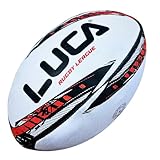
Overview: The LUCA League Rugby Ball positions itself as an affordable yet competition-ready option for players aged 15 and up. This size 5 ball features a 3-ply, 4-panel hand-stitched construction designed to deliver consistent flight and handling for both training and matches. With water resistance up to 10% of its 400-gram weight, it promises reliable performance in damp conditions without the premium price tag.
What Makes It Stand Out: The combination of true 3-ply construction and hand-stitching at under $19 is remarkable—features typically reserved for $25+ balls. The 4-panel design may offer different aerodynamic properties compared to standard 3-panel balls. Clear maintenance instructions and a specified 9.5 PSI inflation target demonstrate LUCA’s commitment to user education and optimal performance.
Value for Money: At $18.95, this ball dramatically undercuts comparable Gilbert and Canterbury training balls while offering similar specs. You’re getting hand-stitched quality, 3-ply durability, and water resistance for roughly 25-30% less than brand-name equivalents. For schools, youth programs, or budget-conscious clubs, this represents exceptional value without sacrificing core performance features.
Strengths and Weaknesses: Strengths:
- Excellent price point for 3-ply construction
- Hand-stitched with reinforced seams
- Water resistance up to 10% of weight
- Competition-ready size 5 specifications
- Clear maintenance guidelines provided
Weaknesses:
- Lesser-known brand may have resale concerns
- 4-panel design is non-traditional
- Durability unproven over multiple seasons
- Grip pattern not as advanced as TRI Grip
Bottom Line: A budget-friendly powerhouse that punches above its weight class. While it lacks the brand prestige of Gilbert, the specifications match or exceed balls costing significantly more. Perfect for high-volume programs, beginners, or as a reliable backup. The water resistance and 3-ply build make it a practical choice for regular training in variable conditions.
9. Gilbert WRS G-TR4000 Training Rugby Ball (4)

Overview: The Gilbert WRS G-TR4000 Training Rugby Ball (size 4) showcases the brand’s latest grip innovation in a youth-friendly package. Engineered with the newly patented triangular surface pattern, this ball maximizes handling confidence for developing players. The 3-ply construction and Hydratec technology ensure it withstands the rigors of regular training while maintaining consistent performance characteristics as young athletes hone their skills.
What Makes It Stand Out: The patented triangular grip pattern represents a genuine technological advancement, providing more surface contact area than traditional embossing. This design proves especially beneficial for younger players still developing hand strength and technique. Hydratec technical fabrics deliver professional-grade water resistance, while the 3-ply laminate offers durability that matches many match balls.
Value for Money: At $29.99 for a size 4 training ball, this sits at the premium end of youth equipment. However, the patented grip technology and 3-ply construction justify the cost compared to basic youth balls ($15-20) that lack advanced features. For serious youth players or academy programs, the investment translates to better skill development and longer equipment life, ultimately saving money on replacements.
Strengths and Weaknesses: Strengths:
- Patented triangular grip enhances handling
- Hydratec technology repels water effectively
- 3-ply construction ensures durability
- Hand-stitched quality control
- Ideal weight for youth development
Weaknesses:
- Premium pricing for youth size
- Ships deflated (additional pump needed)
- Triangular grip may wear faster than traditional patterns
- Size 4 limits versatility for mixed-age groups
Bottom Line: A top-tier youth training ball that prioritizes skill development through innovative grip technology. While pricier than standard youth options, the performance benefits and durability make it worthwhile for committed young players and structured programs. The triangular grip genuinely improves handling confidence, making it an excellent tool for developing proper technique that will transfer to size 5 play.
10. World Rugby Shop X Gilbert G-TR4000 Rugby Ball Size 5 - Durable Rugby Equipment - Triangular Surface Grip - 3 Ply Construction - Fluro

Overview: The World Rugby Shop X Gilbert G-TR4000 collaboration brings professional-grade technology to training grounds in a high-visibility fluro package. This size 5 ball features Gilbert’s patented triangular grip pattern alongside Hydratec water-resistant fabrics, creating a durable training tool that performs in all conditions. The 3-ply poly-cotton laminate and hand-stitched construction ensure it holds shape through intense sessions, while the bright fluro colorway enhances visibility during evening practices or low-light conditions.
What Makes It Stand Out: The fluorescent color scheme provides practical visibility benefits beyond mere aesthetics, helping players track the ball during twilight training or in crowded multi-team sessions. The patented triangular grip pattern offers measurable handling improvements over traditional training balls, while the World Rugby Shop partnership ensures authenticity and quality assurance. This ball essentially packages Gilbert’s latest technology in a functionally stylish wrapper.
Value for Money: At $29.99, this ball competes directly with premium training and entry-level match balls. The combination of patented grip technology, Hydratec fabrics, and 3-ply construction matches specifications of balls costing $35-45. The fluro color adds practical value for teams training in variable light conditions. For serious players and clubs, this represents a mid-range price for near-match-ball quality.
Strengths and Weaknesses: Strengths:
- Patented triangular grip improves handling
- Hydratec technology for all-weather play
- High-visibility fluro color
- 3-ply construction enhances durability
- Hand-stitched for quality assurance
Weaknesses:
- Fluro color may show dirt and scuffs prominently
- Premium price point for training ball
- Ships deflated
- Bright color not suitable for all team uniforms
Bottom Line: An exceptional training ball that combines cutting-edge grip technology with practical visibility features. The fluro color serves a genuine purpose beyond aesthetics, while the 3-ply construction and Hydratec system ensure year-round durability. Though priced at the training ball ceiling, its performance rivals entry-level match balls, making it a wise investment for dedicated players and teams training in varied light and weather conditions.
Understanding Grassroots Rugby Training Requirements
Grassroots rugby operates in a uniquely challenging environment. Unlike professional academies with pristine 3G surfaces and unlimited equipment budgets, community clubs deal with variable pitch conditions, mixed ability groups, and the harsh reality of British weather. Your training balls must perform consistently whether it’s a frosty January morning or a soggy October evening.
The Importance of Quality Equipment at Entry Level
The balls you choose directly influence player development. A poorly shaped ball that wobbles unpredictably teaches young players bad habits as they compensate for its deficiencies. Conversely, a well-balanced training ball with consistent flight characteristics reinforces proper passing mechanics and builds the muscle memory essential for progression. At grassroots level, where players might only handle a ball 2-3 times weekly, every touch counts.
How Training Balls Differ from Match Balls
Training balls prioritise durability and consistency over the nuanced performance characteristics of match balls. While a premium match ball might offer sublime grip for one 80-minute game, a training ball needs to maintain 70-80% of that performance through 50+ sessions. The rubber compound is typically more robust, the bladder thicker, and the surface treatment designed to resist waterlogging and mud build-up. Understanding this fundamental trade-off prevents the costly mistake of using expensive match balls for training.
Key Features to Evaluate in Training Rugby Balls
When assessing rugby balls for grassroots use, certain technical elements separate the exceptional from the average. These features determine how the ball behaves in wet conditions, how long it retains its shape, and ultimately, how much value it delivers for your investment.
Material Composition and Outer Layer Technology
The outer layer—typically a pimpled rubber or synthetic laminate—dictates grip and weather resistance. For grassroots training, look for a density of 40-60 pimples per square inch; this provides adequate grip without becoming too tacky in mud. The rubber should have a Shore A hardness rating between 55-65, offering enough give for comfortable handling while resisting abrasion. Avoid balls with glossy finishes, which become slippery when damp, and steer clear of overly soft compounds that degrade quickly on abrasive surfaces.
Grip Patterns and Surface Texture
Grip patterns aren’t just marketing fluff—they’re engineered for specific conditions. Traditional round pimples offer versatility across surfaces, while flattened or “dual-height” pimples can provide extra purchase in wet weather. For grassroots training, a moderate grip depth of 1.2-1.8mm works best. Deeper grips collect mud, while shallower ones offer insufficient traction for junior players still developing hand strength. Some manufacturers now incorporate micro-texturing between pimples to improve wet-weather performance without compromising durability.
Size and Weight Compliance Standards
World Rugby’s specifications aren’t just for show—they ensure consistency. A Size 5 training ball should weigh 410-460g and have a circumference of 740-770mm. However, many training balls sit at the heavier end of this range for durability. For grassroots, this is actually beneficial; the extra mass helps the ball fly truer in wind and provides better feedback during handling drills. Always verify that balls carry the World Rugby Approved stamp, even for training use, as this guarantees dimensional consistency across your entire ball bag.
Bladder Construction and Air Retention
The bladder is the heart of any rugby ball. Butyl bladders dominate the training ball market because they retain air significantly better than latex alternatives. Look for bladders with a minimum thickness of 0.8mm and multiple inflation layers. The valve system matters too—silicone-treated valves reduce leakage and make inflation smoother. For grassroots clubs, balls that hold pressure for 2-3 weeks between top-ups represent good value; anything requiring weekly inflation becomes a maintenance burden coaches simply don’t have time for.
Training-Specific Ball Categories
Different training objectives demand different ball characteristics. Building a comprehensive kit bag means understanding these categories rather than buying identical balls for every scenario.
Standard Training Balls for General Sessions
These are your workhorses—the balls that survive passing drills, contact sessions, and fitness circuits. They feature robust 3-ply construction with a grippy but hard-wearing surface. For grassroots clubs, these should constitute 60-70% of your ball inventory. They won’t have the sublime handling of a match ball, but they’ll still be performing reliably when your season ends in May. The sweet spot for these sits in the mid-price bracket; cheap enough to replace annually, but quality enough to maintain consistent performance.
Specialist Skill Development Balls
Weighted training balls (typically 500-600g) build wrist and forearm strength, improving passing distance and accuracy when players return to standard balls. Conversely, lighter balls (350-400g) help juniors master spin passing technique without over-exertion. Some specialist balls feature bright colourways or high-contrast panels to improve visual tracking for younger players. While not essential for every session, having 2-3 specialist options in your kit bag provides valuable variety for targeted skill development.
All-Weather and Multi-Surface Options
British grassroots rugby means training in rain, sleet, and occasionally snow. All-weather balls use hydrophobic surface treatments that repel water rather than absorbing it. The bladder is often coated to prevent moisture ingress, and the stitching (if present) is sealed. These balls typically cost 15-20% more but remain playable when standard balls become waterlogged and unmanageable. For clubs training on shared community pitches that might be waterlogged, this category is non-negotiable.
Age-Appropriate Ball Selection
Using the wrong size ball is one of the most common and damaging mistakes in grassroots coaching. It hampers technique development and increases injury risk through improper handling mechanics.
Mini and Midi Balls for Under-7s to Under-9s
Size 3 balls (300-340g, 580-620mm circumference) are essential for the youngest age groups. Their smaller dimensions allow proper grip formation, enabling children to pass with correct technique rather than developing compensatory movements. The lighter weight prevents fatigue during extended handling games. For tag rugby and introductory sessions, consider balls with slightly softer compounds to reduce impact anxiety and build confidence.
Size 4 Balls for Junior Development (U10-U14)
The transitional Size 4 (370-390g, 690-710mm) is crucial for skill progression. It’s large enough to prepare players for full-size balls but small enough that hand size isn’t a limiting factor. At this stage, grip becomes paramount as players develop spin passes and start learning box kicks. Invest in Size 4 balls with the same grip technology as senior balls—this consistency smooths the eventual transition to Size 5 and prevents re-learning basic handling.
Full-Size Size 5 for Senior Grassroots (U15+)
From under-15s upwards, players should train exclusively with Size 5 balls. However, consider having both standard weight (460g) and slightly lighter (420g) options available. The lighter balls are invaluable for technique refinement sessions, allowing players to focus on precision without fighting ball weight. For women’s and girls’ sections, some coaches prefer balls at the lower end of the weight specification, as hand size and grip strength can vary significantly across your squad.
Surface Performance Characteristics
Your home pitch dictates certain ball characteristics. A ball that performs brilliantly on lush natural grass might be completely unsuitable for the abrasive 3G surface you sometimes train on.
Optimising Ball Choice for Natural Grass Fields
On natural grass, especially well-maintained pitches, you can prioritise grip over absolute durability. Balls with deeper pimples and softer compounds perform excellently, providing superior handling in dry conditions. However, if your pitches cut up easily or have bare patches, opt for harder-wearing compounds with flatter grip profiles—these resist abrasion from exposed soil and grit. For typical council-maintained community pitches, a medium-density grip pattern with a Shore A hardness around 60 offers the best compromise.
Artificial Turf Considerations
3G and 4G surfaces are abrasive and generate significant heat through friction. Balls used regularly on artificial turf need harder compounds (Shore A 65+) and reinforced panel edges. The surface temperature can soften standard rubber compounds, causing rapid wear and a “shiny” surface that loses grip. Some manufacturers now produce “turf-specific” training balls with heat-resistant treatments. If your club trains on artificial surfaces more than once weekly, these specialist balls, while 20% more expensive, will outlast standard options by a factor of three.
Durability and Longevity Factors
A ball that dies mid-season represents poor value, regardless of its initial price. Understanding construction quality indicators helps you spot durability before purchase.
Stitching Quality and Panel Bonding
Traditional hand-stitched balls offer premium feel but are vulnerable to water ingress and seam splitting under heavy use. For grassroots training, thermally bonded or machine-stitched balls often provide better longevity. Examine the seam lines—if you can see individual stitches, water will find its way in. Quality training balls use sealed seams or have minimal stitching with reinforced bonding underneath. The panel geometry matters too; fewer, larger panels mean fewer failure points.
Wear-Resistance for Intensive Use
Check the ball’s “wear layer” thickness—quality training balls have a minimum 2.5mm rubber depth above the underlying laminate. Press your thumbnail into the surface; if you feel immediate resistance, the ball has adequate material depth. Also, inspect how the valve is set into the ball; a recessed valve with protective rubber moulding prevents valve tear-out, one of the most common failure points in grassroots rugby balls. Balls with moulded rather than inserted valves typically last 30-40% longer.
Balancing Budget with Performance
Grassroots clubs operate on tight budgets, but the cheapest option rarely offers best value. Understanding the price-performance curve helps maximise your limited resources.
Entry-Level Price Points
Balls under £15 often cut corners on bladder quality and rubber compound density. While tempting for bulk purchases, they’ll need replacing within a season and perform inconsistently. However, for minis sections where balls are used less intensively and size changes annually, this tier can be appropriate. The key is recognising these are essentially disposable—budget for annual replacement rather than expecting multi-season durability.
Mid-Range Investment Options
The £20-35 range represents the sweet spot for grassroots training balls. Here you’ll find World Rugby Approved specifications, decent butyl bladders, and rubber compounds balanced for durability and performance. These balls should comfortably survive a full season of twice-weekly training. For clubs buying 15-20 balls annually, this category delivers the best cost-per-session value. Look for bulk purchase deals from reputable suppliers—many offer 10-15% discounts for orders over a dozen balls.
When to Invest in Premium Training Balls
Premium training balls (£40+) mirror match ball construction but use more durable materials. They’re justified for senior squads where consistent performance directly impacts player development, or for clubs training on abrasive surfaces where durability offsets the higher initial cost. Consider these for your “first team” training set while using mid-range options for junior sections. The performance consistency justifies the price differential for serious amateur clubs aiming for promotion.
Maintenance and Care Protocols
Proper maintenance extends ball life by 50-100%, stretching your budget further. Most grassroots damage is preventable through simple care routines.
Proper Inflation Techniques
Over-inflation is the silent killer of rugby balls. Use a pressure gauge and inflate to 9-10 PSI for training balls—slightly lower than match balls. This reduces stress on seams and valves while providing adequate performance. Always moisten the needle before insertion to prevent valve damage, and inflate slowly to allow the bladder to expand evenly. Check pressure every two weeks; balls naturally lose 0.5-1 PSI monthly even with quality butyl bladders.
Cleaning and Storage Best Practices
Mud isn’t just messy—it contains abrasive particles that wear down grip patterns. Post-training, wipe balls with a damp cloth (never a pressure washer) and allow to air-dry naturally, away from direct heat. Store balls at room temperature in a ventilated bag; extreme cold makes rubber brittle, while heat accelerates compound degradation. Never leave balls in car boots or unheated sheds over winter. During off-season, inflate to just 5 PSI to maintain shape without stressing the bladder.
Common Purchasing Mistakes to Avoid
Even experienced coaches fall into these traps. Being aware of them saves money and frustration.
First, avoid buying replica match balls for training—they’re designed for aesthetics, not durability. Second, don’t assume one ball suits all age groups; buying only Size 5s for a club with minis sections is a false economy. Third, beware of “coach packs” containing balls of unproven quality; it’s better to buy fewer quality balls than a larger quantity of poor ones. Finally, never purchase without checking the manufacturing date—rubber degrades in storage, and a “new” ball that’s sat in a warehouse for three years won’t perform like a fresh one.
Frequently Asked Questions
What’s the realistic lifespan of a quality training rugby ball at grassroots level?
With twice-weekly use on natural grass and proper maintenance, a mid-range training ball should last 12-18 months. On artificial turf, expect 8-12 months. Intensive use in contact drills reduces lifespan by 20-30%. The valve typically fails before the outer surface wears out.
How many rugby balls should a grassroots club have per team?
Aim for 12-15 balls per senior squad for a 30-player session. This allows for multi-station drills without constant ball retrieval. For junior sections, 8-10 balls suffices as sessions are more coach-led. Always keep 2-3 spare balls inflated and ready—punctures happen mid-session.
Is it worth buying different balls for forwards and backs training?
For grassroots, generally no. Specialist balls for positional training are a luxury most clubs can’t justify. However, having 2-3 lighter balls for backs’ handling drills and 2-3 weighted balls for forwards’ strength work provides useful variety without breaking the budget.
Can training balls be used for matches in a pinch?
Yes, if they’re World Rugby Approved. Training balls meet the same dimensional standards as match balls, just with different durability characteristics. For friendly matches or lower league games, quality training balls are perfectly acceptable. Avoid using visibly worn balls as this affects player confidence.
How do I identify a fake or non-compliant rugby ball?
Check for the World Rugby Approved stamp—this is a holographic mark, not just printed text. Genuine balls have clear, deep moulded markings and consistent panel shaping. If the price seems too good to be true, it probably is. Buy from reputable rugby specialists, not general sports discount stores.
Should I buy latex or butyl bladder balls for training?
Always butyl for training. Latex bladders offer superior feel but require inflation before every session—impractical for grassroots clubs. Modern butyl bladders retain air for weeks and the performance difference is negligible for development-level players. The maintenance saving far outweighs any minor handling benefit.
What’s the best way to test a ball’s grip in a shop?
Wet your hands slightly—a ball that feels grippy when dry but slippery when damp is unsuitable for British weather. Press the surface to check compound hardness. If possible, request inflation to proper pressure; an un-inflated ball tells you nothing about its true handling characteristics.
Are coloured training balls better than traditional brown?
For junior sections, absolutely. High-visibility yellow, orange or two-tone balls improve tracking and reduce dropped passes. For seniors, it’s preference. Some coaches find coloured balls help players focus on spin and alignment. However, ensure the colour is moulded into the rubber, not painted on, or it’ll wear off within weeks.
How does altitude affect rugby ball selection?
At altitudes above 300m, balls behave more erratically due to lower air density. Opt for slightly heavier balls (top end of weight specification) and inflate to the lower end of pressure range (8-9 PSI). This stabilises flight. For coastal clubs at sea level, standard specifications work perfectly.
What’s the most cost-effective way to replace balls annually?
Time purchases for pre-season (June-July) when retailers clear old stock. Join a buying consortium with other local clubs for bulk discounts—orders of 50+ balls can secure 25% savings. Consider a ball sponsorship deal with a local business; they’ll often fund a full set in exchange for logo placement on your club’s training kit.