Walking into your home gym for a heavy squat session should feel empowering, not anxiety-inducing. Yet for countless solo lifters, that moment of truth—when the bar settles across your upper back and you unrack for a PR attempt—comes with a nagging question: “What if I can’t complete this rep?” This psychological barrier doesn’t just limit your progress; it fundamentally undermines the entire purpose of strength training. Safety spotter arms transform this equation entirely, serving as your silent, unwavering training partner that’s always ready to catch the bar when your muscles reach their limit.
The rise of dedicated home gyms has revolutionized how we approach strength training, but it’s also introduced a critical safety gap. Without a reliable spotter, every heavy set becomes a calculated risk, forcing you to leave precious gains on the table or, worse, attempt lifts with genuine safety concerns. The right pair of safety spotter arms doesn’t just protect your physical wellbeing—they liberate your mental game, allowing you to train with the intensity and confidence previously reserved for commercial gyms with attentive partners.
Top 10 Safety Spotter Arms for Solo Strength Training
Detailed Product Reviews
1. Titan Fitness T-3 Series Spotter Arms, 800 LB Capacity, Black Safety Catches, Power Rack Solo Lifting Attachments, Set of 2

Overview: The Titan Fitness T-3 Series Spotter Arms deliver robust safety for solo lifters using T-3 power racks. With an 800-pound rackable capacity and 20.5-inch catch surface, these arms provide ample room for error during heavy bench presses or squats. The solid steel construction with reinforced welding ensures reliable performance for intermediate to advanced home gym enthusiasts who train without a partner.
What Makes It Stand Out: The extended 20.5-inch catch surface sets these apart from budget alternatives, offering superior protection during failed lifts. The UHMW plastic lining safeguards your barbell’s knurling from damage, preserving your equipment investment. Quick-pin adapters enable lightning-fast height adjustments between sets, minimizing workout interruptions. The reinforced welding at stress points prevents flexing under heavy loads.
Value for Money: At $139.99, these sit in the mid-range bracket. While significantly pricier than budget options like CAP’s offering, they provide double the weight capacity and 3 inches more catch surface. For T-3 rack owners, the perfect compatibility justifies the premium over universal alternatives that may fit poorly. The durability ensures years of reliable service.
Strengths and Weaknesses:
- Strengths: Impressive 800lb capacity; generous UHMW-lined catch surface; tool-free height adjustment; solid steel construction; protects barbell finish; reliable brand support
- Weaknesses: Compatible only with T-3 Series racks; same price as longer T-3 options is misleading; may be overkill for casual lifters under 300lbs
Bottom Line: An excellent investment for serious T-3 rack owners. The extended catch surface and robust construction provide peace of mind that cheaper alternatives can’t match. If you lift heavy alone, these are worth every penny despite the rack-specific limitation.
2. CAP Barbell Safety Catches / Spotter Arms for FM-905Q Color Series, Red
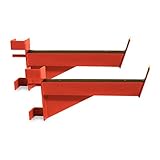
Overview: The CAP Barbell Safety Catches offer budget-conscious protection for owners of specific CAP power racks. Designed exclusively for FM-905Q and FM-CS7000F series, these 17.75-inch arms provide 500 pounds of static weight capacity. The bright red powder-coated finish adds visual appeal while preventing corrosion in home gym environments where moisture can be an issue.
What Makes It Stand Out: At just $34.63, these are among the most affordable spotter arms available from a recognized brand. The 10 and 11-gauge steel construction with welded end caps prevents dangerous bar roll-off during failed attempts. Rubber padding reduces noise and protects equipment, while the 3-sided face plate design enhances stability. The 16-inch effective length provides adequate coverage for most lifts.
Value for Money: Exceptional value for compatible rack owners. The price undercuts competitors by 60-80%, making heavy lifting accessible on tight budgets. However, the extremely limited compatibility means most buyers must look elsewhere. For FM-905Q owners, it’s a no-brainer; for others, it’s worthless. The 30-day warranty reflects the budget positioning but suffices for basic quality verification.
Strengths and Weaknesses:
- Strengths: Unbeatable price; sturdy steel construction; rubber padding for noise reduction; welded end caps prevent slippage; brand reliability; easy twist-pull adjustment
- Weaknesses: Only fits two specific CAP rack models; shortest catch surface (17.75"); lower 500lb capacity limits growth; limited warranty; red color may not match all gyms
Bottom Line: Perfect for CAP FM-905Q or CS7000F owners seeking affordable safety. The rock-bottom price and solid construction make these an easy choice. For anyone else, they’re completely incompatible. Verify your rack model before purchasing to avoid disappointment.
3. Titan Fitness T-2 Series Spotter Arms, 800 LB Capacity, Black Safety Catches, Power Rack Solo Lifting Attachments, Set of 2
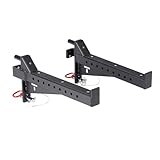
Overview: The T-2 Series Spotter Arms bring Titan’s reliable safety features to entry-level power racks. With the same 800-pound capacity as the T-3 series but a shorter 16.5-inch catch surface, these arms cater to T-2 rack owners who need dependable protection for solo training sessions. The construction matches Titan’s quality standards despite the compact design, ensuring longevity.
What Makes It Stand Out: These arms maintain Titan’s impressive 800lb capacity rating despite being designed for lighter-duty T-2 racks. The UHMW lining protects barbell knurling from damage during missed lifts. Quick-pin adapters ensure rapid height adjustments between exercises. The solid steel construction with reinforced welding matches the build quality of pricier options, ensuring no flex under load.
Value for Money: Priced identically to the T-3 arms at $139.99, the value proposition is mixed. You get the same weight capacity but sacrifice 4 inches of catch surface (16.5" vs 20.5"). For T-2 rack owners, these are your only Titan option, but the pricing feels misaligned with the shorter length. Universal alternatives cost less but lack guaranteed fit.
Strengths and Weaknesses:
- Strengths: High 800lb capacity; UHMW bar protection; easy adjustment; solid construction; perfect T-2 compatibility; black finish matches most equipment
- Weaknesses: Shorter catch surface than T-3; same high price as longer T-3 arms; rack-specific limitation; overbuilt for T-2’s typical user
Bottom Line: A necessary purchase for T-2 rack owners who lift heavy alone. While the price-to-length ratio disappoints compared to T-3 arms, the quality and capacity remain excellent. If you own a T-2, these are your best bet despite the premium pricing relative to size.
4. ZUKAM 2.36inch Barbell Safety Catches Squat Rack Safety Arm Spotter Fit for 2.36x2.36 Power Rack Cage with 1" or 5/8" Hole

Overview: ZUKAM offers a universal spotter arm solution for owners of 2.36x2.36-inch power racks. These 14.5-inch arms support 500 pounds and aim to fit various rack brands with 1-inch or 5/8-inch holes. The budget-friendly price targets lifters seeking compatibility over brand loyalty, particularly those with non-standard imported racks.
What Makes It Stand Out: The universal fit design attempts to solve compatibility issues plaguing rack-specific accessories. A 90-day warranty exceeds CAP’s 30-day offering and demonstrates confidence. The 3-sided face plate and rubber padding mirror pricier competitors. At $49.99, these bridge budget and mid-range options for those with off-brand racks.
Value for Money: Strong value if measurements align perfectly. At $50, these undercut Titan’s offerings significantly while providing similar 10/11-gauge construction. However, the shorter 14.5-inch length and lower 500lb capacity limit appeal for serious lifters. The universal fit claim requires careful buyer verification of hole diameter, spacing, and tube size to avoid costly returns.
Strengths and Weaknesses:
- Strengths: Universal compatibility claim; affordable price; 90-day warranty; rubber padding; powder-coated finish; includes both 1" and 5/8" pegs
- Weaknesses: Shortest catch surface; requires precise measurement verification; unknown brand reputation; lower capacity; potential fit issues
Bottom Line: A viable budget option for non-standard rack owners willing to measure meticulously. The price is attractive, but verify your rack’s hole spacing and tube dimensions before ordering. For standard Titan or Rogue racks, stick with brand-specific arms for guaranteed fit and higher capacity.
5. Titan Fitness X-3 Series Spotter Arms, 1500 LB Capacity, Black Safety Catches, Power Rack Solo Lifting Attachments, Set of 2

Overview: The X-3 Series Spotter Arms represent Titan’s premium safety offering for serious strength athletes. Boasting a massive 1,500-pound rackable capacity and the same 20.5-inch UHMW-lined catch surface as the T-3, these arms target powerlifters and heavy lifters using X-3 series racks. The construction exceeds commercial gym standards for home use.
What Makes It Stand Out: The 1,500lb capacity dwarfs all competitors, providing overhead safety for elite-level lifts. The robust solid steel construction with reinforced welding ensures zero flex under extreme loads. The full-length UHMW lining protects expensive barbells while the quick-pin system maintains workout efficiency. These are built for weights that would destroy lesser arms.
Value for Money: At $187.99, these command a premium but deliver proportionally. The 87.5% capacity increase over T-3 arms justifies the $48 upcharge for serious lifters. For those pushing over 800lbs, the extra investment is negligible compared to injury risk. Casual lifters under 500lbs will find this overkill and should save money with T-3 arms.
Strengths and Weaknesses:
- Strengths: Unmatched 1,500lb capacity; generous catch surface; superior build quality; UHMW protection; easy adjustment; commercial-grade construction
- Weaknesses: X-3 rack compatibility only; highest price point; unnecessary for intermediate lifters; heavier than other options
Bottom Line: The ultimate safety solution for X-3 rack owners lifting heavy. If you’re approaching four-digit poundages, these are essential. For sub-800lb lifters, the T-3 arms suffice. Serious strength athletes should consider these cheap insurance against catastrophic failure during max attempts.
6. Fitvids Power Rack with Adjustable Arms, Compatible with 5/8" Hole, Includes J-Hooks & Safety Straps, G. Spotter Arms, Pair Black

Overview: The Fitvids Power Rack Spotter Arms deliver essential safety features for home gym enthusiasts working with 2x2 power racks. Designed to catch failed lifts during bench presses, squats, and overhead movements, these arms provide the confidence needed to train intensely without a partner. The pair includes J-hooks and safety straps, offering a complete package for under $45.
What Makes It Stand Out: The quick-release swing-down mechanism enables tool-free installation in seconds, eliminating workout interruptions. Beyond spotting, they double as plate storage posts and temporary barbell holders, maximizing limited home gym space. The 500-pound weight capacity accommodates most intermediate lifters, while the reinforced steel construction ensures reliable performance.
Value for Money: At $41.32, these spotter arms represent exceptional value, costing significantly less than premium alternatives while delivering core safety functions. Comparable products often exceed $60-80, making this an intelligent choice for budget-conscious buyers who refuse to compromise on essential protection.
Strengths and Weaknesses: Strengths include rapid setup, versatile functionality, robust 500lb rating, and universal compatibility with most 2x2 racks featuring 5/8" holes. The black finish resists wear, and the multi-purpose design saves space. Weaknesses include the 500-pound limit, which may not satisfy advanced powerlifters, and compatibility restricted to 2x2 uprights only. The arms lack protective padding, potentially causing barbell wear over time.
Bottom Line: Ideal for intermediate lifters building a budget home gym, the Fitvids Spotter Arms provide reliable safety and surprising versatility at an unbeatable price point.
7. RitFit Spotter Arms Power Cage Attachment, Squat Rack Safety Bars for 2.36” x 2.36” Power Rack, Safety Squat Bar Attachment for Home Gym

Overview: RitFit’s Spotter Arms provide a safety solution for home gym owners with 2.36" x 2.36" power racks. These attachments deliver peace of mind during solo training sessions, catching failed reps during bench presses, squats, and various strength movements. The robust steel construction ensures durability for regular use.
What Makes It Stand Out: The integrated protective padding distinguishes these arms from bare-metal competitors, shielding barbell finishes from scratches while reducing noise during dropped reps. RitFit backs their product with a 30-day money-back guarantee and lifetime support warranty, demonstrating confidence in their manufacturing quality. The secure lock mechanism allows effortless height adjustments without tools.
Value for Money: Priced at $49.99, these spotter arms sit in the sweet spot between budget and premium options. The added padding and comprehensive warranty justify the modest price increase over basic models, while remaining far more affordable than high-end alternatives exceeding $100.
Strengths and Weaknesses: Strengths include protective rubber/foam padding, straightforward installation, versatile exercise compatibility, and strong customer support policies. The high-grade steel construction promises longevity. Weaknesses include the somewhat unusual 2.36" x 2.36" sizing, which limits compatibility compared to standard 2x2 or 3x3 racks. The product description doesn’t specify a weight capacity, potentially concerning for heavy lifters.
Bottom Line: A solid mid-range choice for lifters with compatible rack dimensions, offering excellent protection features and warranty support that justify the investment.
8. KOSEOO Spotter Arms, Heavy-Duty Squat Rack Safety Bars for 2x2 Rack, Power Rack Attachments, Compatible with 5/8 “or 1” Holes, 2 Pack

Overview: KOSEOO Spotter Arms position themselves as a heavy-duty upgrade for 2x2 power rack owners seeking enhanced safety and durability. These safety bars support up to 550 pounds of static weight, catering to serious lifters who push substantial loads during squats and bench presses in home or garage gym environments.
What Makes It Stand Out: The reinforced triangular base design provides exceptional stability compared to standard straight-arm constructions. Unique dual-hole compatibility accommodates both 5/8" and 1" rack holes, significantly expanding potential rack matches. The rust-resistant powder-coated finish ensures longevity in humid garage conditions, while welded caps prevent dangerous barbell roll-off.
Value for Money: At $99.99, these arms command a premium over budget alternatives but deliver justified upgrades: 50% higher weight capacity, superior stability engineering, and dual compatibility. For lifters approaching 500+ pound lifts, the extra investment provides crucial safety margins that cheaper options cannot match.
Strengths and Weaknesses: Strengths include impressive 550-pound rating, versatile hole compatibility, robust triangular reinforcement, protective rubber padding, and corrosion-resistant finish. The welded end caps enhance safety. Weaknesses include the steeper price point and continued limitation to 2x2 uprights, excluding owners of larger 3x3 racks. The premium may exceed casual lifters’ needs.
Bottom Line: Recommended for intermediate-to-advanced lifters requiring maximum safety margins and versatility from their 2x2 rack system.
9. Titan Fitness Titan Series Flip-Down Safety Bars, 36" Depth Spotter Arms, Rated 3,000 LB, Safety Bars for 3"x3" Uprights with Plastic Liner Protection, Spotter Arms for Squat Rack

Overview: Titan Fitness Titan Series Flip-Down Safety Bars represent commercial-grade protection for serious powerlifters and strength athletes. Engineered for 3"x3" uprights, these spotter arms boast an extraordinary 3,000-pound weight rating, making them suitable for elite-level training where safety cannot be compromised.
What Makes It Stand Out: The full-length UHMW plastic liner provides superior barbell protection compared to thin rubber pads, preserving knurling and reducing noise. The innovative flip-down design with J-cup mounting offers instant adjustability, while laser-cut numbers facilitate precise band peg placement for accommodating resistance work. The ability to function as a pulling platform adds remarkable versatility.
Value for Money: At $166.99, these are a significant investment, yet the price aligns with commercial equipment standards. For lifters handling extreme weights, the cost is negligible compared to potential injury or equipment damage. Budget options cannot approach this capacity or feature set.
Strengths and Weaknesses: Strengths include unmatched 3,000lb capacity, premium protective liner, rapid tool-free adjustments, dual functionality, and robust 11-gauge steel construction. The flip-down mechanism is intuitive and secure. Weaknesses include premium pricing that may deter casual lifters, and compatibility limited primarily to Titan Series racks with specific depth requirements. The 3x3 sizing excludes mainstream 2x2 rack owners.
Bottom Line: An essential investment for advanced lifters and powerlifters using compatible 3x3 racks who demand uncompromising safety and professional-grade durability.
10. Twister Arm Trainer for Biceps, Chest & Core – Adjustable Resistance Arm Workout Equipment for Home Gym, Strength Training & Muscle Building (40-100 lbs Resistance)

Overview: The Twister Arm Trainer offers a compact, portable solution for upper body conditioning outside traditional gym settings. This adjustable resistance device targets biceps, triceps, chest, shoulders, and core through twisting and pressing movements, making it ideal for home workouts, travel, or office exercise breaks.
What Makes It Stand Out: Remarkable affordability at $8.99 makes this accessible to virtually any fitness enthusiast. The adjustable 40-100 pound resistance range accommodates beginners through intermediate users, while the alloy steel construction defies expectations for such an inexpensive tool. Its pocket-sized portability ensures consistent training anywhere.
Value for Money: Nearly unbeatable value—comparable resistance bands cost $15-25, while portable cable machines exceed $100. For less than ten dollars, users receive a durable, versatile tool that maintains training consistency during travel or time constraints. The price point allows purchase as a supplemental tool without financial strain.
Strengths and Weaknesses: Strengths include extreme affordability, genuine portability, adjustable resistance, ergonomic anti-slip grip, and surprising durability from alloy steel construction. It requires no setup or installation. Weaknesses include limited maximum resistance for advanced lifters, restricted exercise variety compared to free weights, and potential longevity questions under daily heavy use. The resistance mechanism may lack the smoothness of premium equipment.
Bottom Line: An excellent supplementary tool for beginners and travelers seeking affordable, portable resistance training, though not a replacement for comprehensive strength equipment.
Why Safety Spotter Arms Are Non-Negotiable for Solo Lifters
The Psychology of Training Alone
Solo training introduces a unique mental calculus that can silently sabotage your progress. Your central nervous system is remarkably adept at sensing danger, and when you’re under a heavy load without a safety net, it instinctively holds back. This protective mechanism, while evolutionarily sensible, prevents maximum motor unit recruitment and limits adaptation. Safety spotter arms effectively “trick” your brain into believing it’s safe to give maximal effort, removing the subconscious governor that keeps you from reaching true muscular failure or attempting that extra rep.
The confidence boost isn’t just psychological—it’s neurological. When you know failure is an option without consequences, you can push into the high-threshold motor units that drive strength and hypertrophy adaptations. This mental shift transforms your training from cautious progression to aggressive, calculated overload.
Real-World Failure Scenarios
Consider the bench press, statistically the most dangerous lift for solo trainers. A stuck bar on your chest isn’t just embarrassing; it’s life-threatening. With spotter arms set correctly, a failed rep becomes a non-event—you simply lower the bar to the arms, slide out, and live to lift another day. The same principle applies to squats, where getting stapled at the bottom can result in catastrophic injury without a safe escape route. Spotter arms create a controlled failure environment, turning potential disasters into minor training interruptions.
Understanding Spotter Arm Anatomy
Material Science: Steel Grades and Construction
The difference between adequate and exceptional spotter arms starts at the molecular level. Look for 11-gauge steel (approximately 3mm thick) as the industry standard for serious strength equipment. This specification isn’t arbitrary—11-gauge offers the optimal balance between load-bearing capacity and manageable weight for adjustment. Some premium manufacturers use 7-gauge (4.5mm) for extreme heavy-duty applications, but this often proves overkill for home gym enthusiasts.
Steel grading matters enormously. A36 structural steel is common, but look for arms specifying ASTM A500 Grade B or better, which guarantees minimum yield strength of 46,000 PSI. The steel should be cold-rolled rather than hot-rolled, providing tighter tolerances and superior surface finish. Pay attention to the tube dimensions: 2x3-inch rectangular tubing offers superior rigidity compared to 2x2-inch squares, resisting torsional forces when a loaded bar makes uneven contact.
Welding Quality and Structural Integrity
A spotter arm is only as strong as its weakest weld. Professional-grade arms utilize continuous MIG welding with proper penetration, not spot welding or tack welds. The critical junctions—where the vertical attachment plate meets the horizontal arm, and where the UHMW liner attaches—should show clean, uniform bead patterns without porosity or undercutting.
Examine product photos for weld consistency. Reputable manufacturers often highlight their welding process, mentioning techniques like back-purging with argon gas for interior welds or post-weld heat treatment to relieve stress concentrations. These details separate equipment that will last decades from gear that might fail under your first real test.
Pin Mechanisms and Attachment Systems
The interface between your spotter arms and rack uprights represents the most stress-concentrated point in the entire system. High-quality arms use hardened steel pins, typically 5/8-inch or 3/4-inch diameter, with precision-machined surfaces. The pin should slide smoothly without wobble, indicating tight manufacturing tolerances.
Look for pins with positive locking mechanisms—spring-loaded balls or detents that provide audible and tactile confirmation of proper engagement. Some advanced systems incorporate secondary locking pins or threaded bolts that eliminate any possibility of accidental disengagement during use. The pin holes in the rack uprights should be laser-cut, not punched, as laser cutting maintains material integrity around the hole edges.
Compatibility: The Foundation of Safety
Rack Upright Sizing: 2x2, 3x3, and Olympic Standards
Before considering any spotter arm, you must know your rack’s exact specifications. The most common home gym configurations use 2x2-inch or 3x3-inch uprights, but depth matters just as much as width. A 3x3-inch rack might have 2-inch or 2.5-inch depth depending on the manufacturer, and these millimeters matter for proper fit.
Olympic-standard racks often use 3x3-inch uprights with 5/8-inch holes on 2-inch centers, but even within this “standard,” variations exist. Rogue Fitness uses 5/8-inch holes, while Titan Fitness often uses 1-inch holes on their 3x3 racks. Some European manufacturers employ 30x30mm or 30x60mm metric tubing. Always measure your actual rack—never assume compatibility based on nominal sizing.
Hole Spacing and Adjustment Range
Westside spacing—holes placed 1-inch apart through the bench and squat zones, then 2-inch spacing elsewhere—has become the gold standard for precision adjustment. This allows you to set spotter arms at the exact height needed for your anthropometry and exercise selection. Some budget racks use uniform 2-inch spacing, which can force you to choose between arms set slightly too high or too low.
The adjustment range itself should span from just above your chest level (for bench press) to just below your squat depth. Quality arms offer 30+ inches of vertical adjustment, accommodating users from 5'2" to 6'6" without compromise.
Brand Cross-Compatibility Considerations
The home gym market’s fragmentation means proprietary systems abound. While many claim “universal fit,” subtle differences in hole diameter, spacing tolerances, and steel thickness create compatibility issues. Some third-party manufacturers produce adapter sleeves or shims, but these introduce additional failure points.
Your safest approach is prioritizing spotter arms from your rack’s manufacturer. If that’s not possible, contact the spotter arm company with your rack’s exact measurements—hole diameter, spacing, and tubing dimensions—before purchasing. Reputable companies will provide compatibility guarantees or recommend specific models for your setup.
Weight Capacity Demystified
Static vs. Dynamic Load Ratings
Manufacturer weight ratings often confuse more than clarify. A “1000-pound capacity” might refer to static load—the weight the arms can support when gently placed and left stationary. Dynamic load capacity, the real-world metric, measures how much weight the arms can safely absorb when dropped from height.
Dynamic capacity is typically 60-70% of static rating. For Olympic lifts or aggressive powerlifting style training, look for spotter arms with dynamic ratings explicitly stated. If only static ratings are provided, assume a 50% safety margin for any lifts involving eccentric overload or potential bar drops.
Safety Factors and Engineering Margins
Professional engineers design safety equipment with built-in redundancy. A spotter arm rated for 1000 pounds should withstand 1500+ pounds in testing before deformation occurs. This safety factor, typically 1.5x to 2x the rated capacity, accounts for material variations, manufacturing defects, and unexpected loading angles.
Be skeptical of manufacturers who don’t mention safety margins. Transparency about engineering standards—mentioning finite element analysis (FEA) testing or compliance with ASTM standards—indicates serious design methodology. Some premium manufacturers even publish their testing data, showing load-deformation curves that demonstrate real performance under stress.
Reading Between the Lines of Manufacturer Claims
“Tested to 1000 pounds” differs significantly from “rated for 1000 pounds.” The former might mean the arms survived a single test at that weight without immediate failure, while the latter implies continuous safe operation. Look for language like “continuous duty rating” or “working load limit” (WLL) rather than vague “tested to” claims.
Also consider the liability perspective. Established brands with reputations to protect tend to be conservative in their ratings, while unknown brands might inflate numbers for marketing. When in doubt, choose the more conservative rating from a reputable manufacturer.
Attachment Security: The First Line of Defense
Pop-Pin vs. Locking Pin Systems
Pop-pin systems use spring-loaded detents that snap into place automatically, offering speed and convenience. However, they can wear over time, and the spring mechanism represents a potential failure point. Locking pin systems require manual insertion of a separate pin through both the arm and rack upright, providing visual confirmation of engagement but taking longer to adjust.
The hybrid approach—pop-pin for quick positioning plus a secondary locking pin for security—offers the best of both worlds. This redundancy means even if the primary mechanism fails, the secondary lock prevents catastrophic separation.
Secondary Safety Mechanisms
Premium spotter arms incorporate backup safety features that engage automatically if the primary pin shears or dislodges. These might include gravity-activated locking tabs or redundant pin holes that catch the arm before it can drop more than an inch. While rare, these features provide peace of mind when loading the bar with maximum weights.
Some designs also include anti-slip textures or rubberized contact points where the arm meets the rack upright. This prevents the arm from rotating or shifting under uneven loads, maintaining consistent positioning throughout your set.
UHMW Plastic Liners and Protection
Ultra-high-molecular-weight polyethylene (UHMW) isn’t just for protecting your barbell’s knurling—it serves critical safety functions. Quality UHMW liners, typically 1/4-inch to 3/8-inch thick, absorb impact energy, reducing the instantaneous load transferred to the steel structure. This dampening effect can increase the effective dynamic capacity by 10-15%.
The liner should cover the entire contact surface, secured with countersunk fasteners that don’t protrude above the plastic surface. Check that the UHMW is virgin material, not reprocessed, as reprocessed plastic has lower impact resistance and can crack under heavy loads.
Platform Design and Impact Management
Surface Area Considerations
The horizontal platform where your bar lands determines pressure distribution and barbell health. Too narrow (less than 2 inches), and you risk missing the platform during a failed rep. Too wide (more than 4 inches), and you lose the ability to perform exercises like pin presses or rack pulls with full range of motion.
The optimal platform width is 2.5 to 3 inches, providing a generous target zone while maintaining versatility. Length should accommodate your grip width plus several inches of margin—typically 18 to 24 inches total arm length from the rack upright.
Flat vs. Curved Platforms
Flat platforms offer predictable bar behavior and are ideal for powerlifting movements where you want the bar to settle immediately upon contact. Curved or dished platforms, with a slight concave profile, help center the bar automatically, preventing it from rolling off the edge during asymmetric failures.
Your choice depends on training style. Flat platforms provide more versatility for exercises like pin squats or floor presses, while curved designs offer superior safety for maximal attempts where control might be compromised. Some premium arms feature removable inserts, allowing you to switch between flat and curved surfaces.
Noise and Vibration Dampening
The sound of a loaded barbell contacting bare steel can exceed 120 decibels—loud enough to damage hearing and certainly loud enough to disturb family members or neighbors. Quality UHMW liners reduce this to a dull thud around 70-80 decibels. Some designs incorporate additional rubber dampening layers or hollow chambers that compress on impact, further reducing noise and vibration transmission through your rack.
Consider your training environment. Garage gyms with concrete floors might prioritize maximum dampening, while basement setups need vibration control to prevent structural resonance. Multi-layer composite platforms address both concerns simultaneously.
Height Adjustment Precision
Fine-Tuning for Exercise Specificity
The difference between an optimal and suboptimal spotter arm height can mean the difference between a safe escape and a dangerous pin. For bench press, arms should sit 1-2 inches above your chest at full arch, allowing you to flatten your back and slide out if needed. For squats, set them 2-3 inches below your absolute depth to catch the bar if you collapse but not interfere with legitimate reps.
This precision demands adjustment increments of 1 inch or less. Some systems offer half-inch spacing in critical zones, while others use continuously adjustable sliding mechanisms with locking teeth every half-inch. The latter provides ultimate precision but requires more careful locking verification.
Laser-Cut Numbers and Fast Adjustments
Fumbling with height adjustments between exercises wastes time and mental energy. Laser-etched or engraved numbering on rack uprights lets you quickly return to predetermined settings. The best systems use high-contrast white or yellow infill in the numbers, remaining visible even in dim garage lighting.
Some advanced setups include magnetic height indicators or sliding pointers attached to the spotter arms themselves, showing the exact setting without requiring you to squat down and read numbers. These small conveniences add up over thousands of training sessions.
Quick-Change Mechanisms
If your training involves frequent exercise changes—moving from bench press to incline press to overhead press within the same workout—consider quick-change systems. These use oversized handles or lever-action pins that can be operated without tools and with minimal grip strength, allowing single-handed adjustment while holding the arm with your other hand.
Be cautious of mechanisms that sacrifice security for speed. The best quick-change systems maintain full metal-to-metal contact and positive locking, using mechanical advantage rather than reduced safety margins to achieve speed.
Smart Investment Strategies
Budget vs. Premium: What’s the Real Difference?
Entry-level spotter arms priced under $100 typically use thinner steel (14-gauge), minimal UHMW coverage, and basic pin mechanisms. They’ll handle moderate weights (300-400 pounds) adequately but may deform under heavy drops or show wear within a few years of regular use.
Mid-range options ($150-250) offer 11-gauge steel, full UHMW liners, and refined adjustment mechanisms. This sweet spot serves 90% of home gym athletes, providing professional-grade safety without boutique pricing. Premium arms ($300+) add features like multi-layer dampening, redundant safety systems, and exotic materials like titanium pins, primarily benefiting competitive powerlifters or those regularly handling 600+ pounds.
Long-Term Value Proposition
Consider cost-per-use over equipment lifespan. A $200 pair of spotter arms used three times weekly for ten years costs about $0.13 per session. Cheaper arms that need replacement after two years due to deformation or wear actually cost more in the long run. Factor in potential medical costs from a single accident, and premium safety equipment becomes the most economical choice in your entire gym.
Quality spotter arms also retain resale value. Used premium arms often sell for 60-70% of retail, while budget options depreciate to near zero. This liquidity matters if you upgrade your rack or move to a different training style.
When to Upgrade Your Setup
Upgrade triggers include: consistently training within 20% of your arms’ rated capacity, noticing deformation or bending after drops, experiencing pin slippage, or planning to compete in powerlifting. If your current arms lack Westside spacing or full UHMW coverage, upgrading transforms your training experience even if your current setup is technically adequate.
Don’t wait for failure to upgrade. Proactive replacement of aging or inadequate equipment demonstrates maturity as an athlete and respect for your long-term health.
Installation and Pre-Workout Protocols
Proper Height Setting Guidelines
Always set spotter arms with an empty bar before loading plates. Perform a full range-of-motion rep without weight to verify clearance. For bench press, lie on the bench and have someone slide a 2x4 board between the bar and your chest; the arms should be set at that height. For squats, descend to your deepest position and have a partner measure from the bar to the safety position.
Remember to account for barbell flex. A heavily loaded barbell can sag 2-3 inches in the center, so set arms slightly higher for maximal attempts than for training sets. This compensates for the dynamic deflection that occurs during the lift.
Alignment and Safety Checks
After setting height, physically shake the arms—hard. They should exhibit zero movement or rattling. Verify the pins are fully seated by looking for the telltale “click” or visual alignment mark. Some systems include colored indicator bands that only show when pins are properly engaged.
Check that both arms are perfectly level using a small spirit level. Even a 1/2-inch height differential can cause the bar to roll off during a failed rep, defeating the safety purpose. Most racks have small tolerances, but manufacturing variations exist.
The Non-Negotiable Pre-Lift Inspection
Develop a ritual: before every heavy set, perform a “spotter arm check.” Give each arm three sharp upward taps with your palm—this confirms the pins are seated and the arm hasn’t loosened. Visually inspect the UHMW liner for cracks or separation. Confirm the height setting matches your training log from the previous session.
This 15-second routine becomes automatic with practice and has prevented countless accidents. Treat it with the same seriousness as checking plates are secured with collars.
Maintenance for Longevity
Regular Inspection Schedules
Monthly, remove the arms completely and inspect the pin holes in your rack uprights for ovaling or deformation. Check the pins themselves for bending or surface cracking. Examine welds under bright light, looking for hairline fractures or rust bleeding, which indicates internal cracking.
Quarterly, disassemble any quick-change mechanisms and clean accumulated chalk and dust. Apply dry lubricant to moving parts—never oil-based products that attract grime. Test the dynamic capacity by dropping an empty bar onto the arms from squat height; any unusual flex or sound indicates potential issues.
Cleaning and Care Best Practices
Chalk and sweat create a corrosive paste that accelerates rust. Wipe down arms weekly with a damp cloth, paying special attention to the pin holes where moisture collects. For powder-coated surfaces, use mild soap; for bare steel, apply a light coat of 3-in-1 oil after cleaning.
UHMW liners can be cleaned with isopropyl alcohol to remove embedded chalk and skin oils. Avoid abrasive cleaners that scratch the surface, as these create stress risers that can propagate cracks. If liners become deeply grooved from repeated impacts, consider replacement—even if they haven’t cracked.
Recognizing When Replacement Is Needed
Replace arms immediately if you notice any of these red flags: permanent bending or deformation (even minor), cracked welds, pins that no longer seat smoothly, or UHMW liners that have separated from the steel. Also replace if you’ve experienced a catastrophic drop that exceeded the dynamic rating, as internal stress damage may not be visible.
Most quality arms have a 5-10 year lifespan with regular use. Budget for replacement every 7 years as preventative maintenance, even if no visible issues exist. Metal fatigue is cumulative and invisible until failure.
Common Pitfalls to Avoid
Height Positioning Errors
The most frequent mistake is setting arms too low, forcing you to descend further than intended to reach safety. This increases injury risk and defeats the psychological benefit. Conversely, arms set too high interfere with legitimate reps and can cause you to hit them during proper technique.
Always err slightly high rather than low—you can flatten your arch or adjust technique to create clearance, but you can’t magically make low arms catch the bar sooner. For squats, perform a bodyweight squat to your absolute depth, then set arms 2 inches below that point.
Overloading Beyond Capacity
Never exceed 80% of the static weight rating for regular training. The 20% margin accounts for dynamic loading, minor manufacturing variations, and the cumulative effect of repeated impacts. If you’re consistently training above this threshold, upgrade your arms before pushing heavier.
Remember that capacity ratings assume even weight distribution. If you fail a squat and the bar tips forward, one arm may bear 70% of the load momentarily. This asymmetric loading demands additional safety margins that many lifters ignore.
Ignoring Wear and Tear
That small crack in the UHMW liner or slight wobble in the pin mechanism seems minor—until it’s not. Safety equipment demands a zero-tolerance policy for degradation. A spotter arm that fails catastrophically doesn’t just ruin your workout; it can cause life-altering injuries.
Document your arms’ condition with photos every six months. Comparing images over time reveals subtle changes invisible to daily observation. This objective record helps you make rational replacement decisions rather than emotional ones.
Training Integration Techniques
Exercise-Specific Setup Strategies
For pin squats, set arms at your sticking point and pause the bar for a 2-second count. This builds explosive strength out of the hole while providing perfect safety. For bench press, use arms for overload sets—set them 3 inches above your chest and perform partial reps with 110% of your 1RM, developing lockout strength safely.
Overhead press inside a power rack with arms set at shoulder height allows you to push maximal weights without fear of getting pinned. For floor presses, set arms just above your torso and perform the movement on the floor inside the rack—combining the benefits of floor press with full safety.
Building Confidence for Heavy Attempts
Use a progressive exposure protocol. Start with arms set high, performing sets at 85% of your target weight. Gradually lower the arms over several sessions as you build trust in the system. This systematic desensitization helps overcome the mental barrier of training without a human spotter.
Film your heavy sets from the side, showing the gap between your bar path and the spotter arms. Reviewing this footage proves the safety margin exists, reinforcing psychological confidence. Many lifters are surprised to see how much clearance they actually have.
Transitioning From Human Spotters
Human spotters provide tactile feedback and encouragement that arms cannot replicate. Compensate by developing internal cueing systems and using video feedback. The trade-off is complete reliability—spotter arms never get distracted, misjudge your effort level, or react too slowly.
Communicate your new setup to training partners if you occasionally lift together. Some may feel arms make their presence redundant, but explain that the arms handle safety while they provide form feedback and motivation. This collaborative approach maximizes both safety and training quality.
Frequently Asked Questions
What’s the difference between safety spotter arms and safety straps?
Safety straps are nylon or Kevlar webbing that attaches to your rack uprights, providing a flexible catching surface. They offer more “give” on impact, reducing noise and barbell damage, but can allow the bar to sink between them if set too loose. Spotter arms provide a rigid, predictable platform that’s superior for heavy powerlifting but transmits more impact force. Straps excel for dynamic Olympic lifting; arms dominate for maximal strength work.
How do I know if spotter arms will fit my rack?
Measure your rack uprights’ outside dimensions (width and depth), hole diameter, and center-to-center hole spacing. Contact the spotter arm manufacturer with these exact measurements—don’t rely on nominal sizing. Many companies offer compatibility charts, but physical measurement trumps all. When in doubt, purchase from your rack’s manufacturer or a company offering a guaranteed fitment policy with free returns.
Can spotter arms handle drop catches from Olympic lifts?
Standard powerlifting spotter arms are not designed for Olympic lifting drops. The dynamic loads from dropping 200+ pounds from overhead can exceed the arms’ rating even if the static weight is within limits. If you practice Olympic lifts solo, look for arms specifically rated for “drop catches” with dynamic capacity clearly stated. Better yet, invest in a platform with bumper plates and proper crash pads rather than relying on spotter arms.
How often should I inspect my spotter arms?
Perform a quick visual and physical check before every heavy training session. Conduct a thorough monthly inspection removing the arms and checking all components. Perform a comprehensive annual inspection with detailed photos and measurement of any deformation. After any failed lift where the arms catch the bar, inspect immediately for damage, even if everything looks fine.
What’s the ideal height setting for bench press vs. squat?
For bench press, set arms 1-2 inches above your chest when fully arched and inhaling. Test by having a partner slide a fist between the bar and your chest—the arms should be at that level. For squats, perform a bodyweight squat to your absolute maximum depth, then set arms 2-3 inches below that point. This catches catastrophic failures without interfering with legitimate depth.
Are UHMW liners really necessary?
UHMW liners protect your barbell’s knurling and sleeves from impact damage, but their safety role is equally important. They absorb impact energy, reducing instantaneous load on the steel structure by 10-15%. They also prevent the bar from bouncing unpredictably after contact. While you can use bare steel arms in an emergency, UHMW liners are essential for regular training and equipment longevity.
Can I use spotter arms for exercises beyond bench and squat?
Absolutely. Use them for pin presses, rack pulls, floor presses, overhead presses, and even as adjustable J-cups for loading/unloading heavy squats. Some lifters use them as elevated platforms for deficit deadlifts or as safety catches for heavy rowing movements. The versatility makes them one of the most cost-effective accessories in your gym.
What’s the weight capacity I should look for?
Choose spotter arms rated for at least 20% more than your current one-rep max on your heaviest lift. If you squat 400 pounds, look for 500+ pound rating. This provides margin for dynamic loading, future progression, and asymmetric failures. For dedicated powerlifters planning to compete, arms rated for 800+ pounds provide appropriate long-term headroom.
Do I need different spotter arms for different barbells?
Standard 20kg/45lb barbells have 16-17 inch loadable sleeve length that works with virtually all spotter arms. Specialty bars like squat bars (longer sleeves), deadlift bars (longer overall length), or cambered bars (unusual dimensions) may require longer arms for proper clearance. If you use specialty bars, measure their dimensions and ensure your arms provide at least 2 inches of platform beyond the sleeves.
How do I maintain my spotter arms for maximum lifespan?
Clean them monthly with a damp cloth to remove chalk and sweat. Inspect pins and holes for wear quarterly. Apply dry lubricant to moving parts twice yearly. Store them horizontally when not in use to prevent pin bending. Never drop an empty bar aggressively—this creates stress concentrations without beneficial training effect. Replace UHMW liners when they show deep grooving or cracking. With proper care, quality arms will outlast your rack.