There’s something transformative about watching the shoreline disappear behind you as you paddle toward a distant horizon, your board loaded with everything you need to survive—and thrive—for days on the water. Multi-day SUP expeditions blend the meditative rhythm of paddling with the raw adventure of wilderness camping, but they demand gear that works as hard as you do. At the heart of any successful extended paddleboard journey lies one unsung hero: the cooler deck bag. Unlike their casual day-trip cousins, these specialized systems are engineered to keep provisions fresh, gear dry, and your board stable through variable conditions, long distances, and unpredictable weather. Whether you’re planning a three-night island-hopping adventure or a week-long coastal expedition, understanding what separates a mediocre bag from a mission-critical piece of equipment will make the difference between a trip you endure and one you remember.
Top 10 SUP Cooler Deck Bags for Multi-Day Trips
Detailed Product Reviews
1. SUP-Now Paddle Board Accessories Cooler with Waterproof Phone Case – Essential SUP Accessories for Paddleboarding (Gray and Pink)

Overview: The SUP-Now Paddle Board Accessories Cooler in Gray and Pink is an entry-level storage solution for paddleboard enthusiasts seeking basic functionality with a touch of style. This bag positions itself as an essential accessory, though its feature set remains surprisingly minimal for the category. Marketed by a Texas-based company with strong USA support roots, it includes a waterproof phone case as its primary value-add.
What Makes It Stand Out: The most distinguishing characteristic is the company’s commitment to domestic customer service and the unique gray and pink colorway that breaks from typical solid colors. As a small local business, SUP-Now emphasizes personalized support that larger competitors often lack. The inclusion of a waterproof phone case, while common in premium models, is notable at this price tier.
Value for Money: At $24.99, this cooler sits in an awkward middle ground. Without detailed specifications about insulation quality, attachment systems, or capacity, it’s difficult to justify against competitors offering transparent technical details. The USA-based support adds intangible value, but the lack of material specifications or warranty information makes it a cautious purchase compared to alternatives with proven track records.
Strengths and Weaknesses: Strengths include domestic customer support, the included waterproof phone case, and aesthetic color options. Weaknesses are significant: vague product specifications, unknown insulation performance, unspecified attachment mechanism, no mention of floating capability, and absence of warranty details. The product description focuses more on company origin than functional attributes.
Bottom Line: This cooler best serves buyers who prioritize supporting USA-based small businesses over technical specifications. For casual paddlers who need basic storage and value accessible customer service, it’s adequate. However, serious enthusiasts should look for products with detailed performance metrics and robust attachment systems.
2. SUP-Now Paddle Board Accessories Cooler with Waterproof Phone Case – Essential SUP Accessories for Paddleboarding (Gray)
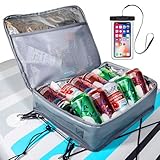
Overview: The SUP-Now Paddle Board Accessories Cooler in Gray offers identical functionality to its colorful counterpart, providing basic storage for paddleboarding essentials. This version strips away the pink accent for a more understated, monochromatic aesthetic. As with other SUP-Now products, it’s backed by a small Texas-based company emphasizing USA customer support and includes a waterproof phone case.
What Makes It Stand Out: The primary differentiator remains the company’s domestic support structure and small-business ethos. The solid gray colorway appeals to minimalists who prefer equipment that doesn’t draw attention. The waterproof phone case inclusion at this price point provides basic protection for valuables, though its quality is unspecified.
Value for Money: Priced at $24.99, this model shares the same value proposition challenges as the gray/pink version. The lack of detailed specifications about insulation, capacity, or attachment hardware makes it hard to assess true worth. While USA-based support is commendable, competitors at similar or lower prices offer transparent technical details and proven attachment systems. The value hinges entirely on intangible customer service benefits rather than measurable performance.
Strengths and Weaknesses: Strengths include domestic customer support, included phone protection, and neutral color scheme. Critical weaknesses encompass unspecified construction materials, unknown insulation effectiveness, unclear mounting system, no floating capability mentioned, and absent warranty information. The minimalist description leaves buyers guessing about critical performance aspects.
Bottom Line: Nearly identical to the gray/pink variant, this cooler suits paddlers who support small American businesses and need basic functionality. The conservative color choice works well for those wanting subtle gear. However, the omission of technical details makes it a risky choice for performance-focused users who require reliable insulation and secure attachment systems.
3. MOPHOEXII SUP Cooler Deck Bag Storage Bag for Paddle Board, Surfboard, Kayak, Boat, Canoe and Rafting

Overview: The MOPHOEXII SUP Cooler Deck Bag positions itself as the budget champion in paddleboard storage, offering surprising versatility at an aggressive price point. Designed for multiple water sports including paddleboarding, kayaking, and canoeing, this bag emphasizes practicality over brand prestige. Its 600D Oxford cloth construction with PEVA lining promises basic insulation for day trips.
What Makes It Stand Out: The four-clip swivel hook system provides secure attachment to suction cups or D-rings, a feature often reserved for pricier models. At just $13.99, it’s remarkably affordable while still offering insulated storage, side carry handles, and adjustable straps for various board sizes. The emphasis on hands-free convenience demonstrates thoughtful design for active water enthusiasts.
Value for Money: Exceptional value defines this product. It undercuts most competitors by 40-70% while delivering core functionality: insulation, secure attachment, and versatility across watercraft. The storage capacity accommodates phones, water bottles, snacks, and sunscreen—covering essential needs without premium pricing. For casual paddlers or those new to the sport, it removes financial barriers to organized, chilled storage.
Strengths and Weaknesses: Strengths include unbeatable price, versatile mounting system, adequate storage space, multi-sport compatibility, and hands-free design. Weaknesses involve unknown brand reputation, potential durability concerns with long-term UV and saltwater exposure, water-resistant rather than waterproof construction, and no mention of floating capability or warranty coverage.
Bottom Line: This is the go-to choice for budget-conscious buyers and beginners. It delivers essential features without unnecessary frills, making it ideal for occasional use and calm waters. While serious adventurers might prefer premium durability and waterproofing, the MOPHOEXII offers unbeatable value for recreational paddlers who prioritize function over brand name and want to test their gear needs affordably.
4. SUP-Now Stand Up Paddle Board Deck Bag Waterproof Accessory for Paddle Boarding

Overview: The SUP-Now Stand Up Paddle Board Deck Bag represents the premium tier of the brand’s lineup, engineered for paddlers who demand maximum protection. This fully waterproof bag employs a clip-and-rope system for secure attachment to board D-rings, addressing the critical failure point of cheaper alternatives. The inclusion of a waterproof phone pouch and lifetime warranty signals confidence in product longevity.
What Makes It Stand Out: True waterproofing—not just water resistance—sets this apart, with floating capability that prevents gear loss during capsizes. The lifetime warranty from a USA-based company provides unparalleled peace of mind. The rope tightening system offers more adjustability than clip-only designs, ensuring stable mounting across various board configurations. The floating feature alone justifies the premium for safety-conscious paddlers.
Value for Money: At $49.99, this is a significant investment, but the lifetime warranty transforms it into a one-time purchase. When amortized over years of use, the cost becomes reasonable. Comparable fully waterproof bags from marine brands often exceed $60 without lifetime guarantees. For serious paddlers who regularly venture into challenging conditions, the protection and warranty justify every dollar.
Strengths and Weaknesses: Strengths include fully waterproof construction, floating capability, robust rope-and-clip attachment, lifetime warranty, USA support, and included phone pouch. Weaknesses are primarily the premium price point, potentially excessive protection for casual lake paddlers, and added weight from waterproofing materials.
Bottom Line: This is the professional’s choice for demanding environments and frequent use. The lifetime warranty eliminates replacement concerns, while true waterproofing and flotation protect valuable gear. Ideal for ocean paddling, long expeditions, and anyone who values durability over cost. Casual users may find it over-engineered, but serious enthusiasts will appreciate the no-compromise design and permanent manufacturer support.
5. Paddle Board Cooler Bag, WITSTEP Waterproof Surf Sup Deck Cooler Bag Insulated Leakproof 10 Cans, Sup Paddle Board Accessories Bag for Stand Up Paddleboard and Kayak

Overview: The WITSTEP Paddle Board Cooler Bag occupies the sweet spot between budget and premium options, offering thoughtful features at a competitive $29.99 price point. Designed to hold 10 cans with organized storage, it balances insulation performance with practical accessibility. The combination of nylon exterior, pearl cotton foam, and aluminum thermal interior suggests serious temperature retention capabilities.
What Makes It Stand Out: The water-resistant tarpaulin material with waterproof zipper provides splash protection rarely seen at this price. Internal mesh pockets and a zippered mesh top demonstrate organizational thinking that keeps contents accessible and secure. The four-clip system ensures stable mounting while the side handle maintains portability off the board. It’s a feature set that punches above its weight class.
Value for Money: Strong value proposition here. For $5 more than the basic SUP-Now models, you get specified insulation materials, water-resistant construction, organized storage, and a clear capacity rating. It lacks the lifetime warranty and full waterproofing of the $49.99 SUP-Now premium model but delivers 80% of the functionality at 60% of the cost. This makes it ideal for regular users who need reliable performance without premium pricing.
Strengths and Weaknesses: Strengths include excellent insulation specification, water-resistant design with waterproof zipper, organized internal pockets, secure clip system, clear capacity rating, and good price-to-feature ratio. Weaknesses include not being fully waterproof, unknown brand history, no floating claim, and absence of warranty details.
Bottom Line: This is the smart middle-ground choice for most paddleboarders. It offers reliable performance, good organization, and water-resistant protection at a fair price. Perfect for regular lake and calm coastal use where occasional splashes are the main concern rather than full submersion. The WITSTEP delivers premium features without the premium cost, making it the practical choice for enthusiasts who paddle weekly but don’t require expedition-grade gear.
6. Gradient Fitness Paddle Board Cooler. PVC Waterproof Material Cooler for Kayaking. SUP Cooler for Paddle Board – Expandable Paddle Board Deck Bag w/Metal D-Rings Paddle Board Accessories

Overview: The Gradient Fitness 2024 paddle board cooler offers compact, lightweight storage for water enthusiasts. Measuring 14x11x4 inches, it holds about 10 cans plus snacks—perfect for solo short trips. Triple-layer PVC construction with waterproof zippers protects against splashes, while the deck bag design keeps essentials within easy reach during paddling sessions.
What Makes It Stand Out: This budget-friendly cooler includes premium convenience features: an integrated cup holder eliminates extra purchases, while both D-ring clips and strong suction cups ensure universal board compatibility. The new top handle enhances portability, and its expandable nature accommodates varying load sizes. These thoughtful additions typically appear on pricier models.
Value for Money: At $15.99, this is exceptional value. Comparable products with waterproofing and mounting hardware cost $25-35. The included suction cups (worth $8-12 separately) make this a complete solution. While insulation won’t rival premium options, the price makes it accessible for beginners or occasional paddlers who prioritize affordability over extended thermal performance.
Strengths and Weaknesses: Strengths: unbeatable price, versatile mounting, lightweight design, bonus cup holder, waterproof construction. Weaknesses: limited 10-can capacity insufficient for groups or long outings; moderate insulation performance; potential durability concerns with heavy use. The smaller size may disappoint those wanting all-day supplies.
Bottom Line: This cooler shines as an entry-level option for casual paddlers. Its inclusive hardware and smart features deliver surprising value, making it ideal for short solo adventures. Serious enthusiasts needing superior cooling or larger capacity should invest more. For those testing paddleboard accessories or paddling occasionally, it’s a low-risk, practical purchase that covers the basics admirably.
7. MYDAYS OUTDOOR Paddle Board Cooler Bag,Waterproof SUP Deck Coolers,Leakproof Kayak Cooler Accessories, Large Capacity Insulated Cooler for Paddleboard (Orange)

Overview: The MYDAYS OUTDOOR cooler bag targets paddlers needing reliable, leakproof storage for extended water adventures. With 20-liter capacity (14.6x11.4x8 inches), it holds substantial supplies for family outings. High-performance thermal insulation and sealed lining promise 100% leak-proof performance, while the vibrant orange color enhances visibility on the water.
What Makes It Stand Out: This cooler excels through its superior organization and genuine leak-proof design. Multiple compartments—including main storage, top net bag, interior net bag, front zipper pocket, and two side mesh pockets—keep items separated and accessible. The robust waterproof zipper and sealed lining prevent spills better than standard water-resistant models, making it ideal for kayaks where tipping is common.
Value for Money: Priced at $23.99, it sits in the sweet spot between budget and premium options. The 20L capacity and leak-proof construction justify the cost compared to $15-18 coolers that only offer water resistance. While $30+ alternatives may provide thicker insulation, the MYDAYS balances capacity, true leak-proofing, and organizational features at a competitive mid-range price.
Strengths and Weaknesses: Strengths: genuine leak-proof design, excellent 20L capacity, superior organization, multiple carrying options (side handles, shoulder strap), easy installation with four adjustable straps. Weaknesses: larger size may overwhelm smaller paddleboards; insulation adequate but not exceptional for multi-day cooling; orange color may not suit all aesthetic preferences; slightly heavier than minimalist options.
Bottom Line: The MYDAYS cooler is an excellent choice for families or groups prioritizing leak-proof security and organization. Its 20L capacity and multiple compartments handle substantial loads without chaos. While hardcore anglers might want thicker insulation, most recreational paddlers will appreciate the balance of performance, capacity, and price. A reliable mid-range option that delivers on its leak-proof promise.
8. MENOLY Paddle Board Accessories Cooler, 25L Sup Kayak Deck Cooler Bag Fit 30 Cans with Waterproof Phone Pouch, Adjustable Strap, Bottle Opener for Paddleboarding, Kayaking, Camping

Overview: The MENOLY 25L cooler bag positions itself as a premium paddleboard accessory for serious enthusiasts. Measuring 15.2x11.8x9.4 inches, it accommodates up to 30 cans with room for snacks. High-density waterproof PVC construction, thick insulating foam, and reflective foil lining promise extended cooling performance for all-day adventures.
What Makes It Stand Out: This cooler delivers professional-grade features: three removable dividers create customizable compartments, preventing crushed sandwiches and organizing gear. The truly waterproof main zipper and included waterproof phone pouch provide complete splash protection. A built-in bottle opener adds convenience, while multiple carrying options (padded top handle, side handles, shoulder strap) enhance versatility beyond the board.
Value for Money: At $29.99, it’s priced at the premium end but delivers commensurate features. The 25L capacity, superior insulation system, waterproof zipper, and organizational dividers match coolers costing $40-50. For paddlers spending full days on water or camping, the extended cooling performance justifies the investment over cheaper alternatives that lose ice by midday.
Strengths and Weaknesses: Strengths: excellent 25L capacity, superior insulation, waterproof zipper, customizable dividers, waterproof phone pouch, multiple carry options, durable PVC construction. Weaknesses: highest price in this comparison; larger size may not suit smaller boards; 30-can capacity might be overkill for solo paddlers; weight increases when fully loaded.
Bottom Line: The MENOLY cooler is ideal for dedicated paddlers and campers needing maximum capacity and cooling endurance. Its thoughtful features like dividers and waterproof phone protection show attention to real-world needs. While overkill for casual users, serious enthusiasts will appreciate the professional build and extended ice retention. If you regularly spend 6+ hours on water, this premium option proves its worth.
9. MORXPLOR Waterproof PVC Paddleboard Cooler Deck Bag - 12 Can Soft Insulated Cooler for Paddleboarding, Camping, Kayaking

Overview: The MORXPLOR cooler deck bag offers a compact, waterproof solution for minimalist paddlers. With 12-can capacity in a 14.6x13x4.7-inch profile, it prioritizes streamlined design over bulk. The 500D PVC construction with electrowelded seams ensures durability, while the watertight zipper provides splash protection for day trips.
What Makes It Stand Out: This cooler emphasizes true waterproofing through welded construction rather than stitched seams, preventing water ingress at vulnerable points. The watertight zipper design creates a superior seal compared to standard water-resistant zippers. Its mesh top pocket keeps small items accessible, and the included hooks offer flexible mounting to D-rings or bungees. The company highlights attentive customer service, promising support for manufacturing defects.
Value for Money: At $29.99, this sits at the premium end for its capacity class. While expensive for a 12-can cooler, the welded PVC construction and watertight zipper justify the cost for users prioritizing waterproof integrity over capacity. Comparable welded coolers cost $35-45, making this reasonably priced for its build quality. However, budget-conscious buyers can find larger stitched options for less.
Strengths and Weaknesses: Strengths: welded waterproof construction, watertight zipper, durable 500D PVC, compact/portable size, side handle for easy carrying, good customer service promise. Weaknesses: limited 12-can capacity; premium price for size; “waterproof but not leakproof” disclaimer means ice melt may escape; minimal insulation thickness; lacks organizational compartments.
Bottom Line: The MORXPLOR suits paddlers who prioritize waterproof reliability and durability in a compact package. Its welded construction and watertight zipper excel for splash-heavy activities like surfing or rough-water kayaking. However, the high price and small capacity make it poor value for those wanting maximum storage or extended cooling. Choose this for quality over quantity, but consider larger options if you need all-day supplies for multiple people.
10. Meodoassy Paddle Board Cooler Waterproof,26L SUP Paddleboard Cooler Deck Bag fits 42 Cans,2 Compartments Paddle Board Accessories for Kayaking,Beach, Camping(Blue)

Overview: The Meodoassy cooler delivers massive 26L capacity in a two-compartment design, accommodating up to 42 cans. Measuring 15x11x10 inches, it features a unique dual-layer system: an upper dry compartment for food and a lower insulated section for drinks. Four-layer insulation with 500D PVC, high-density foam, and welded PEVA lining promises 12-hour cooling performance.
What Makes It Stand Out: The innovative two-compartment design separates dry goods from cold items, solving the common problem of soggy sandwiches. Four-layer insulation rivals premium brands, while the inclusion of both clips and suction cups ensures universal mounting. Multiple function pockets (mesh, zipper, flap closure) provide exceptional organization rarely seen in coolers this size.
Value for Money: At $19.99, this offers outstanding value. The 26L capacity, dual-compartment design, and four-layer insulation compete with $40-50 coolers. Holding 42 cans while keeping food dry, plus including mounting hardware, makes this a budget champion. The price-performance ratio is exceptional for paddlers needing maximum storage without premium cost.
Strengths and Weaknesses: Strengths: exceptional 26L capacity, innovative dry/cold compartments, impressive 12-hour insulation, waterproof construction, includes clips and suction cups, multiple pockets, affordable price. Weaknesses: larger size may overwhelm small boards; two-compartment design reduces flexibility for oversized items; durability of budget components untested long-term; may be overkill for solo short trips.
Bottom Line: The Meodoassy cooler dominates the value category, offering premium features at a bargain price. Its dual-compartment design and 42-can capacity make it perfect for group outings, beach days, or camping. While size may intimidate casual users, those needing maximum storage will find unbeatable value. If you want capacity, insulation, and smart design without the premium price tag, this is your best choice. A true overachiever in the budget segment.
Why a Dedicated SUP Cooler Deck Bag Matters for Extended Adventures
Generic soft coolers and dry bags might cut it for afternoon outings, but multi-day expeditions expose their limitations within hours. A purpose-built SUP cooler deck bag functions as a floating pantry, a gear locker, and a stability aid simultaneously. These systems account for the unique dynamics of stand-up paddleboarding: constant board flex, repeated exposure to splashing, UV degradation, and the need for streamlined weight distribution. The right bag integrates seamlessly with your board’s D-ring pattern and deck pad, maintaining a low center of gravity while providing thermal protection that extends far beyond standard insulation ratings. More importantly, it protects your investment in provisions—spoiled food can terminate an expedition faster than any equipment failure.
The Cost of Compromise on Long-Distance Paddles
Using inadequate storage on extended trips creates a cascade of problems. Water intrusion ruins not just meals but also critical gear like first-aid supplies and electronics. Poor insulation forces you to cut trips short or waste precious time searching for ice resupply points. Perhaps most dangerously, improperly secured bags shift during paddling, creating instability that can lead to capsizing in conditions where self-rescue becomes exponentially more challenging. A dedicated system eliminates these variables, allowing you to focus on navigation, weather assessment, and energy conservation.
Key Differences Between Day-Trip and Multi-Day Cooler Bags
The jump from single-day to multi-day design represents a fundamental shift in engineering priorities. Day-trip bags prioritize convenience and light weight, typically offering insulation rated for 12-24 hours and minimal attachment points. Multi-day systems, conversely, are built around thermal endurance, structural integrity, and modular organization. They feature reinforced base panels to withstand being dragged across sand and rock, welded seams that maintain waterproof integrity under prolonged submersion, and attachment systems tested for dynamic loads. The difference becomes stark when you’re 30 miles from your launch point with three days of food at stake.
Insulation Ratings and Real-World Performance
Manufacturers often advertise ice retention in ideal conditions—shaded, unopened, pre-chilled. On the water, your bag faces constant sun exposure, frequent opening, and warm ambient temperatures. Multi-day bags should spec R-values of 8+ and feature radiant barriers. Look for descriptions mentioning “closed-cell foam” rather than generic “insulated” claims, as this indicates the density required for 72+ hour performance.
Capacity Considerations: How Much Storage Do You Really Need?
Calculating volume requirements for multi-day trips involves more than multiplying daily food intake by trip length. You must account for group size, meal complexity, water storage (if not using a separate hydration system), and contingency provisions. A solo paddler on a minimalist trip might manage with 20-25 liters, while two paddlers sharing a bag need 35-45 liters for a three-day expedition. The key is balancing capacity against board real estate—overpacking creates wind resistance and reduces stability, while underpacking forces you to compromise on nutrition or safety margins.
The 30% Deck Rule for Stability
Never allow your loaded cooler bag to occupy more than 30% of your board’s deck surface area. This benchmark preserves your ability to move freely for bracing strokes and maintains the board’s intended hydrodynamics. For touring boards 12'6" and longer, this typically translates to a maximum bag length of 36-40 inches and width of 14-16 inches. Measure your board’s usable deck space before falling in love with a high-capacity model.
Insulation Performance: Keeping Your Provisions Fresh for Days
True multi-day insulation relies on a trifecta: radiant barrier technology, high-density foam, and airtight construction. The radiant barrier—usually a metallic liner—reflects external heat rather than absorbing it. Foam density matters more than thickness; 1.5-inch closed-cell foam outperforms 3-inch open-cell foam. Airtight zippers or roll-top closures prevent warm air infiltration when accessing contents. For expedition-grade performance, look for bags advertising “compression-molded insulation” and welded (not stitched) seams on the cooler’s interior compartment.
Pre-Chilling Protocols for Maximum Efficiency
Your bag’s performance depends heavily on preparation. Pre-chill the empty bag overnight with ice packs before loading. Freeze everything possible—including meats, pre-cooked meals, and even some vegetables—to act as additional ice mass. Block ice lasts 40% longer than cubes; supplement with frozen water bottles that provide drinking water as they melt. Pack in layers, with items needed later in the trip at the bottom, minimizing the time the main compartment stays open.
Waterproof vs. Water-Resistant: Understanding Protection Levels
The distinction between waterproof and water-resistant becomes critical when your entire food supply rests inside. Water-resistant bags handle splashes and light rain but will eventually saturate in prolonged wet conditions or capsize scenarios. True waterproof bags carry IP (Ingress Protection) ratings—IPX7 indicates submersion protection up to 1 meter for 30 minutes, while IPX8 exceeds that threshold. For multi-day trips where capsize recovery might take time, demand IPX7 minimum for the main compartment. Remember: “waterproof” zippers require regular lubrication; otherwise, they become the failure point.
The Roll-Top Advantage for Expedition Use
Roll-top closures consistently outperform zippers for waterproof integrity in field conditions. They create multiple folds of material that pressure seals against itself, and they lack the mechanical complexity of waterproof zippers. The trade-off is slower access, but for base camp provisions accessed once daily, the security outweighs convenience. Some hybrid designs use roll-tops for the main cooler compartment and zippered waterproof pockets for frequently accessed items—a best-of-both-worlds approach.
Attachment Systems: Securing Your Bag to the Board
A cooler deck bag is only as good as its connection to your board. Multi-day conditions introduce forces absent in casual paddling: wave impact, board flex over swells, and the constant vibration of choppy water. Quality systems employ redundant attachment methods: primary D-ring connections with cam-buckle straps, secondary bungee loops for stabilization, and non-slip base materials. Straps should be at least 1.5 inches wide to distribute load and feature UV-resistant webbing. Quick-release buckles are non-negotiable for emergency ditch scenarios.
The Hidden Dangers of Improvised Rigging
Relying on generic bungee cords or rope lashings invites disaster. These systems loosen over time, allow bag shift, and can damage board rails under sustained tension. Purpose-built straps include neoprene pads that protect both board and bag from abrasion. They also position buckles away from high-impact zones where a wave strike could cause accidental release. Inspect attachment points daily on long trips; UV degradation and salt crystallization can weaken connections silently.
Deck Space Optimization: Balancing Storage and Stability
Your board’s shape dictates optimal bag placement. Displacement hulls (common in touring boards) perform best with weight centered just behind the handle, where the hull’s designed volume supports load. Planing hulls (found in all-around boards) require weight further forward, typically 18-24 inches from the nose, to maintain planning surface area. The bag’s shape matters too: tapered designs that narrow toward the nose reduce wind catch and allow more natural paddle stroke clearance.
Load Distribution for Different Board Types
On 14’ expedition boards, consider splitting storage between a smaller cooler bag (20-25L) behind the handle and a dry bag forward. This distributes weight across the board’s sweet spots. For shorter 11'6"-12'6" boards, a single centralized bag works better. Always test your loaded configuration in calm water before committing to a multi-day route; subtle balance issues magnify exponentially over distance and time.
Durability Factors: Materials That Withstand the Elements
Expedition-grade materials face a brutal combination of UV radiation, saltwater, sand abrasion, and flex fatigue. PVC tarpaulin (measured in denier) offers the best balance of waterproof integrity and puncture resistance—look for 500D minimum on base panels and high-wear zones. TPU (thermoplastic polyurethane) laminates provide superior cold-weather flexibility but at premium cost. Avoid bags with exposed stitching; welded seams are mandatory for waterproof compartments. UV inhibitors should be integrated into the fabric itself, not just a surface coating that wears off.
Reinforcement Zones That Predict Longevity
Pay attention to corner reinforcements, handle stitching, and attachment point bar tacking. These stress concentrations fail first. Quality bags use double-layer material at corners and box-stitch patterns on handles rated for at least 100 lbs. The base should be reinforced with a second material layer or integrated skid plate, as this area contacts the board constantly and sees the most abrasion during loading and unloading.
Accessibility Features: Getting to Your Gear Without Capsizing
Every time you open your bag on the water, you compromise stability. Smart designs minimize this risk through side-access panels, hinged lids with stay-open features, and external stash pockets for high-frequency items. Some expedition models incorporate a “day hatch”—a small, insulated compartment accessible without opening the main cooler. Consider how you’ll access contents while kneeling or sitting; top-opening bags can force you to stand, increasing capsize risk in choppy conditions.
The Kneeling Access Test
Before purchasing, simulate accessing the bag while kneeling on your board in shallow water. Can you reach the main compartment without shifting weight dramatically? Do zippers or roll-tops open smoothly one-handed? Can you see inside without a headlamp? These practical tests reveal design flaws that specifications miss. Remember, you’ll be tired, possibly cold, and balancing in moving water when you most need to access your bag.
Weight Distribution and Board Performance
A loaded cooler deck bag fundamentally alters your board’s performance characteristics. A 30-pound bag raises the center of gravity, reduces primary stability, and changes how the board responds to paddle strokes. Distribute heavy items—like water bottles and dense foods—low and centered. Use the bag’s internal compression straps to prevent load shift as contents are consumed. As the trip progresses and bag weight decreases, you may need to adjust trim by moving the bag slightly forward to maintain optimal glide.
Dynamic Weight Management Strategies
Consider packing a collapsible dry bag inside the cooler. As you consume food, transfer non-perishables to this bag and reposition it forward, using the cooler space for remaining cold items. This maintains overall weight distribution while adapting to changing load conditions. Some expedition paddlers pack a small sandbag or water bladder that can be filled to adjust trim on the fly—a pro-level technique for boards without extensive D-ring options.
Organization and Compartmentalization Strategies
Chaos inside your bag wastes time and compromises temperature control. Premium multi-day systems feature removable dividers that create separate zones: frozen proteins at the bottom, dairy and produce in a middle zone, and beverages in a top-access compartment. External pockets should be designated for specific gear—one for a stove and fuel, another for trash management, a third for quick-access snacks. Color-coded zipper pulls or labels help identify compartments without opening them, reducing thermal loss.
The First-In-Last-Out Packing Methodology
Pack items in reverse order of need: day-three meals at the bottom, day-one meals at the top. Within each day, group breakfast, lunch, and dinner in separate waterproof stuff sacks. This system prevents rummaging and allows you to remove entire day’s provisions at once, minimizing cooler exposure. For multi-paddler trips, assign each person a color-coded stuff sack system to avoid confusion and ensure equitable food access.
Temperature Management in Variable Conditions
Real-world conditions rarely match the controlled environment of manufacturer tests. Direct sun can increase bag surface temperature by 40°F above ambient air. Combat this by draping a light-colored towel or specialized reflective cover over the bag during midday paddling. In cold climates, insulation works both ways—preventing contents from freezing. Some expedition bags offer reversible liners: reflective silver for hot conditions, dark absorbent for cold. Monitor internal temperature with a stick-on thermometer; anything above 40°F for proteins becomes a safety concern.
Ice Management for Extended Trips
Block ice remains the gold standard, but it’s heavy and space-inefficient. A hybrid approach works best: a 2-liter frozen block at the bottom, supplemented with frozen water bottles around the perimeter. As bottles thaw, they provide cold, potable water. Add a handful of cube ice to fill air gaps—air is the enemy of ice retention. Some paddlers pre-freeze water in the bag itself if space allows, creating a custom ice block that conforms perfectly to the interior.
Safety and Emergency Preparedness Integration
Your cooler deck bag should double as a safety platform. Exterior reflective tape or patches increase visibility for rescue scenarios. Some designs incorporate a whistle into the buckle and reflective guy-line cordage. Internally, dedicate a specific pocket for emergency items: a compact marine VHF radio (in a waterproof case), a personal locator beacon, and a backup headlamp. Never store safety gear inside the main cooler compartment where temperature extremes could damage electronics or where it would be inaccessible in a capsize.
The Ditch Kit Concept
Pack a small waterproof container (inside the main bag but accessible within seconds) with critical survival items: fire starter, water purification tablets, emergency blanket, and high-calorie bars. This “ditch kit” stays with the bag if you must cut it loose in extreme conditions. Some expedition paddlers attach a small floating knife to the bag’s handle for emergency strap cutting—ensure it’s tethered and doesn’t compromise the waterproof seal.
Maintenance and Care for Long-Term Performance
Expedition gear failures often trace back to poor maintenance. After each trip, rinse the bag thoroughly with fresh water, paying special attention to zippers and buckle mechanisms. Dry completely—unzipped and inverted—in shade (never direct sun, which degrades materials). Store unzipped with a moisture absorber pack to prevent mold. Quarterly, lubricate waterproof zippers with silicone-based zipper wax; petroleum products damage waterproof coatings. Inspect attachment points for fraying and test buckles for cracks caused by UV exposure.
Field Repairs That Save Trips
Carry a small repair kit containing TPU patches and Aquaseal adhesive for puncture repair. Duct tape works temporarily but leaves residue that compromises future welding. For zipper failures, a paperclip can serve as a temporary slider. Learn to re-thread a buckle in the field—it’s a five-minute skill that prevents a failed strap from ending your expedition. Some paddlers wrap critical strap ends with brightly colored tape; if the strap frays to that point, it’s time for replacement.
Frequently Asked Questions
How do I determine the right size cooler deck bag for my multi-day trip?
Calculate 8-10 liters per person per day for food and ice, then add 20% contingency. A solo three-day trip needs 25-30 liters; two people for four days require 50-60 liters. Always measure your board’s usable deck space first—never exceed 30% of deck area to maintain stability.
What’s the realistic ice retention I should expect from a quality multi-day bag?
In real paddling conditions—sun exposure, frequent opening, warm ambient temps—expect 48-72 hours of safe temperatures (below 40°F). Pre-chilling, block ice, and minimizing air space can extend this to 96 hours. Claims of “5-day ice retention” assume optimal lab conditions rarely replicated on the water.
Are bungee cord attachments secure enough for rough water crossings?
Never rely solely on bungees for multi-day trips. Use them as secondary stability only. Primary attachment must be cam-buckle straps through D-rings, rated for dynamic loads. Bungees stretch and can detach under wave impact, especially after UV degradation. Check tension every morning.
Can I submerge my waterproof deck bag while loading my board in shallow water?
IPX7-rated bags handle brief submersion, but it’s poor practice. Water pressure increases with depth, and roll-tops can leak if not perfectly folded. Load your bag on land, then carefully place it on the board. If you must load in water, keep the bag at surface level and ensure roll-tops have 3-4 complete folds.
How often should I clean my cooler deck bag during extended trips?
Wipe down the exterior daily with fresh water to remove salt and sand. Clean the interior every 2-3 days or immediately after any spillage. Use biodegradable soap and dry thoroughly before repacking. Lingering moisture breeds mold and compromises insulation. At trip’s end, deep clean with a diluted bleach solution (1:10 ratio) to sanitize.
Will a fully loaded deck bag significantly impact my board’s performance?
Yes, expect a 15-25% reduction in glide efficiency and noticeable stability changes. A 30-pound load raises your center of gravity substantially. Practice loaded paddling before your trip to adjust stroke technique and bracing. Consider a slightly larger board (volume-wise) for multi-day trips to compensate for added weight.
Can I use a SUP cooler deck bag for kayak fishing or other water sports?
Many designs are versatile, but SUP-specific features like tapered noses and D-ring spacing may not transfer perfectly. The attachment systems and dimensions are optimized for paddleboard decks. For kayaks, look for models with additional strap configurations or consider hybrid designs marketed for both sports.
What’s the best way to portage with a loaded cooler deck bag?
Remove the bag from the board for portages over 100 yards. Use the bag’s carry handles or shoulder strap (if included). Distribute weight evenly and watch for low-hanging branches that could puncture the material. For frequent portages, consider a bag with backpack straps. Never drag the bag—abrasion on the base is the number one cause of failure.
How do I bear-proof my SUP cooler setup during overnight stops?
Bags alone aren’t bear-proof. Use a bear canister inside the bag for all scented items, or hang the entire bag using the PCT method (10 feet high, 4 feet from trunk). Some expedition paddlers carry lightweight electric fences for base camps. Never store the bag in your tent, even “empty”—residual odors attract wildlife.
Is it worth investing in a premium bag versus a mid-range option for occasional multi-day trips?
For one trip annually, a mid-range bag with proper care suffices. For frequent expeditions or remote trips where failure isn’t an option, premium construction pays dividends. The cost difference often reflects durability—premium bags last 5-7 years with heavy use versus 2-3 for mid-range. Consider it insurance against trip-ending gear failure.