Your heart health journey deserves equipment that meets you where you are—not where elite athletes compete. For beginners taking their first pedal strokes toward better cardiovascular wellness, upright bikes offer a uniquely accessible entry point. Unlike complex gym machines or high-impact activities that jar your joints, these stationary bikes provide a controlled, low-impact environment where you can safely build endurance, strengthen your heart muscle, and track your progress with precision.
What makes upright bikes particularly compelling for heart-health newcomers is their intuitive design and immediate feedback loop. You don’t need a personal trainer deciphering complicated settings or a medical degree to understand the basics. Within minutes, you can be monitoring your heart rate, adjusting resistance, and staying within zones that maximize cardiovascular benefits while minimizing risk. But not all upright bikes are created equal, and choosing the wrong one can derail your motivation faster than a squeaky pedal on a quiet morning.
Top 10 Upright Bikes for Heart-Health Beginners
Detailed Product Reviews
1. Sunny Health & Fitness Foldable Magnetic Exercise X-Bike Pro, 300 LB Capacity, Low-Impact, 14-Level Resistance, Ergonomic Support, SunnyFit® App Enhanced Bluetooth Connectivity - SF-B223011

Overview: The Sunny Health & Fitness Foldable Magnetic Exercise X-Bike Pro delivers a compact cardio solution for home users seeking low-impact workouts. Supporting up to 300 pounds, this magnetic resistance bike features 14 tension levels and integrates with the SunnyFit app via Bluetooth, offering a connected fitness experience without subscription fees. Its foldable frame reduces storage space by half, while built-in wheels ensure effortless mobility.
What Makes It Stand Out: The free SunnyFit app access truly distinguishes this model, providing over 1,000 trainer-led workouts and 10,000 scenic virtual tours at no extra cost—a rarity in today’s subscription-driven market. The 14-level magnetic resistance system employs a belt drive for whisper-quiet operation, making it apartment-friendly. The ergonomic design prioritizes joint health while maintaining challenging progression from beginner to intermediate levels.
Value for Money: At $152.99, this bike punches above its weight class. Competing models with app connectivity typically cost $250+ and require monthly fees. The foldable design adds premium convenience without the premium price tag. While it lacks some advanced metrics of pricier competitors, the zero-cost app ecosystem more than compensates.
Strengths and Weaknesses: Strengths include the free SunnyFit app, space-saving foldability, quiet magnetic resistance, and sturdy 300-pound capacity. The 14 resistance levels provide adequate challenge for most users. Weaknesses include a basic LCD display and fewer resistance levels compared to 16-level alternatives. The X-bike design may feel less stable during high-intensity sessions than non-folding models.
Bottom Line: This is an excellent choice for budget-conscious buyers wanting connected features without ongoing costs. Perfect for apartments, seniors, and beginners prioritizing space efficiency and quiet operation over advanced performance metrics.
2. Folding Exercise Bike, 5 IN 1 Foldable Stationary Bikes for Home, Upright Indoor Cycling Bike with 16 Level Adjustable Magnetic Resistance, 350LBS Weight Capacity Seat Backrest Adjustments X-Bike

Overview: The SLUNSE 5-in-1 Folding Exercise Bike redefines home fitness versatility, transforming from upright to recumbent positions while incorporating arm resistance bands and leg pull ropes for full-body conditioning. With a 350-pound weight capacity and 16 magnetic resistance levels, it accommodates users from 4'10" to 6'6" tall, making it a true family fitness solution.
What Makes It Stand Out: Its multifunctionality is unmatched at this price point. The near-silent operation under 10 decibels rivals commercial gym equipment, while the comprehensive resistance band system targets upper and lower body simultaneously. Eight seat height adjustments plus three angle settings ensure ergonomic perfection for virtually any body type.
Value for Money: At $151.99, you’re essentially purchasing a cardio machine and resistance training system in one. Comparable multi-function equipment costs $300+. The 16 resistance levels offer finer progression than standard 8-level bikes, while the inclusive design eliminates need for separate strength equipment.
Strengths and Weaknesses: Strengths include exceptional versatility, ultra-quiet operation, impressive height range accommodation, high weight capacity, and integrated full-body workout capabilities. The 16-level resistance provides precise intensity control. Weaknesses include a lesser-known brand reputation, potentially complex assembly, and durability questions under heavy daily use. The multi-position mechanism may require periodic maintenance.
Bottom Line: Ideal for families seeking maximum workout variety in minimal space. The SLUNSE excels for users wanting both cardio and strength training without multiple machines, though brand longevity remains unproven compared to established competitors.
3. Schwinn Fitness 130 Upright Bike

Overview: The Schwinn Fitness 130 Upright Bike represents the premium tier of home cardio equipment, offering enhanced Bluetooth connectivity and integration with major fitness platforms. With 16 magnetic resistance levels and 13 built-in workout programs displayed on a 5.5-inch LCD, it caters to serious fitness enthusiasts seeking structured training and immersive virtual experiences.
What Makes It Stand Out: Schwinn’s legacy brand reliability combines with cutting-edge app ecosystem compatibility. The bike syncs with Explore the World for 40+ auto-adjusting global routes and Zwift for 1,000+ structured workouts—though subscriptions are required. The robust build quality and refined engineering deliver a gym-quality feel missing from budget alternatives.
Value for Money: At $449, this is a significant investment. While feature-rich, the required app subscriptions ($10-15/month) add ongoing costs. You’re paying for brand reputation, superior electronics, and seamless third-party integration. Comparable commercial-quality bikes start at $600+, making it reasonably priced for its class.
Strengths and Weaknesses: Strengths include premium build quality, extensive app compatibility, 13 pre-programmed workouts, clear LCD display, and smooth 16-level resistance. The Schwinn brand ensures reliable customer support and parts availability. Weaknesses include the high upfront cost, mandatory subscription fees for full functionality, non-foldable bulky frame, and limited suitability for users over 6'2".
Bottom Line: Best suited for committed cyclists and tech-savvy users prioritizing immersive training experiences and brand reliability. The subscription requirements and price make it overkill for casual exercisers, but serious fitness enthusiasts will appreciate the quality and connectivity.
4. Sunny Health & Fitness Smart Recumbent Bike w/Workout Bands, 300LB Capacity Compact Equipment for Indoor Full-Body Exercise, Adjustable Cushion Seat for Seniors Home Cardio Training, Free SunnyFit App

Overview: The Sunny Health & Fitness Smart Recumbent Bike prioritizes comfort and accessibility for users requiring low-impact exercise solutions. With a 300-pound capacity, adjustable cushioned seat, and integrated workout bands, it combines cardiovascular training with upper-body strengthening. The free SunnyFit app provides 1,000+ workouts and 10,000 virtual tours without subscription fees.
What Makes It Stand Out: The recumbent design with flip-able side handles enables effortless mounting—crucial for seniors or those with mobility limitations. The full-motion resistance band system with 20-pound bands and swivel pulleys delivers genuine strength training, not just token arm exercises. The magnetic belt-drive ensures whisper-quiet operation suitable for shared living spaces.
Value for Money: Priced at $314.49, it occupies the mid-range sweet spot. Free app access eliminates ongoing costs that competitors charge. Recumbent bikes with similar features typically cost $400+, making this an excellent value for comfort-focused users. The included resistance bands add $50+ value compared to purchasing separately.
Strengths and Weaknesses: Strengths include superior comfort, easy accessibility, free app integration, quiet magnetic resistance, and effective upper-body workout bands. The recumbent position reduces back strain and joint stress. Weaknesses include a larger footprint than foldable models, limited high-intensity workout potential, and the recumbent design may not suit users wanting upright cycling variety.
Bottom Line: Perfect for seniors, rehabilitation patients, or anyone prioritizing joint health and comfort. The Sunny recumbent bike excels in accessibility and included features, making it a smart choice for low-impact, full-body home fitness without recurring fees.
5. Caromix Folding Exercise Bike, 5 in 1 Stationary Magnetic Cycling Bicycle Upright Indoor Cycling Bike for Home Workout 330LB Capacity (Dark Black)

Overview: The Caromix Folding Exercise Bike delivers 5-in-1 functionality at an entry-level price point, supporting both upright and semi-reclining positions plus arm resistance training. With a 330-pound capacity and 16 magnetic resistance levels, it offers surprising capability for $125.99. The foldable design and transport wheels address space constraints in small apartments.
What Makes It Stand Out: Remarkable affordability combined with genuine versatility. Most bikes under $150 offer basic upright positioning only, while Caromix provides semi-reclining option and resistance bands. The pre-installed screws and clear instructions enable quick assembly—often under 30 minutes—a refreshing change from frustrating flat-pack experiences.
Value for Money: At $125.99, this represents exceptional budget value. You’re getting features typically found in $200+ bikes: 16 resistance levels, foldability, and upper-body resistance bands. While lacking advanced app connectivity, the basic LCD tracks essential metrics. It’s a no-frills workhorse for casual fitness goals.
Strengths and Weaknesses: Strengths include unbeatable price, easy assembly, foldable storage, quiet 16-level magnetic resistance, and decent 330-pound capacity. The 5-in-1 design offers basic workout variety. Weaknesses include unknown brand longevity, basic display metrics, no app integration, potentially less durable components, and shorter warranty support compared to established brands.
Bottom Line: An excellent starter bike for budget-conscious buyers or occasional exercisers. The Caromix proves you don’t need to spend heavily for basic home cardio, though serious fitness enthusiasts should invest in more robust alternatives. Perfect for small spaces and casual use.
6. Sunny Health & Fitness Performance Upright Exercise Bike with 8-Level Magnetic Resistance, Pulse Sensor & Exclusive SunnyFit® App Enhanced Bluetooth Connectivity - SF-B220030

Overview: The Sunny Health & Fitness SF-B220030 is a performance-oriented upright exercise bike designed for connected home workouts. With integrated Bluetooth and the exclusive SunnyFit app, it transforms standard cycling sessions into immersive, data-driven experiences. The bike features 8-level magnetic resistance, a pulse sensor, and a 4-way adjustable seat, making it suitable for fitness enthusiasts seeking structured training at home.
What Makes It Stand Out: The SunnyFit app ecosystem is the star feature, offering 1000+ workout videos, real-time metric tracking, virtual global tours, and a competitive leaderboard. Unlike basic bikes, this connectivity provides guided motivation and progressive training plans. The frictionless magnetic resistance delivers whisper-quiet operation, while the belt-drive system ensures durability with minimal maintenance. The micro-adjustable resistance and comprehensive seat adjustments accommodate various body types.
Value for Money: At $249.99, this bike sits in the sweet spot between budget models and premium connected equipment. The included app functionality (assuming no mandatory subscription) adds hundreds of dollars in value compared to competitors like Peloton. The magnetic resistance system offers superior smoothness and longevity versus friction pads, justifying the price for serious home athletes.
Strengths and Weaknesses: Strengths include seamless app integration, exceptionally quiet operation, sturdy build quality, and excellent adjustability. The pulse sensor enables heart rate zone training. Weaknesses are limited to 8 resistance levels that may not challenge advanced cyclists, and the app experience could be compromised if premium features require paid subscription. No upper-body components are included.
Bottom Line: Ideal for tech-savvy users wanting guided workouts without premium brand pricing. The SF-B220030 delivers connected fitness value that outweighs its minor limitations, making it a top contender in the mid-range market.
7. pooboo Folding Exercise Bike - 4-in-1 Magnetic X-Bike, Foldable Upright Indoor Cycling Stationary Bike with 8-Level Resistance, Pulse Sensor, Arm Resistance Bands, Back Support Cushion & Bottle Holder - Home Gym Workout Equipment
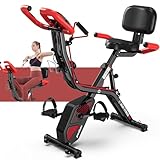
Overview: The pooboo Folding Exercise Bike is a versatile 4-in-1 home fitness solution combining upright and semi-recumbent cycling with upper-body resistance training. Priced at $127.99, this X-bike targets space-conscious users wanting full-body workouts without multiple machines. It features 8-level magnetic resistance, pulse sensors, and convenient add-ons like a bottle holder.
What Makes It Stand Out: Its transformative design is unique—switching between high-intensity upright and low-impact recumbent modes, plus attachable arm resistance bands for front or rear positions. This adaptability enables both cardio and strength training in one compact unit. The folding mechanism reduces storage footprint significantly, while transport wheels enhance mobility. The adjustable bottle holder and back support cushion demonstrate thoughtful user-centric design.
Value for Money: Exceptional value at $128. Comparable folding bikes lack the 4-in-1 functionality and arm bands. You’re essentially getting a cardio machine plus resistance training equipment for the price of a basic bike. The 300-pound weight capacity and stable triangular frame outperform many budget competitors, making it a budget-friendly powerhouse.
Strengths and Weaknesses: Major strengths include incredible versatility, space-saving foldability, quiet magnetic resistance, and included upper-body bands. The wide height range (4'10" to 6'1") accommodates most users. Weaknesses include potentially less robust durability than non-folding bikes, fewer resistance levels than premium models, and the seat may feel less comfortable during extended sessions. Assembly can be tricky for some.
Bottom Line: Perfect for apartment dwellers and beginners seeking maximum functionality per dollar. The pooboo 4-in-1 delivers surprising quality and versatility that belies its budget price, making it an outstanding entry-level choice.
8. leikefitness LEIKE X Bike Ultra-Quiet Folding Exercise Bike, Magnetic Upright Bicycle with Heart Rate,LCD Monitor and easy to assemble (BLUE)

Overview: The leikefitness LEIKE X Bike is a 2-in-1 folding exercise bike offering both upright and recumbent configurations with ultra-quiet magnetic resistance. At $189.99, it balances affordability with enhanced features like 10 resistance levels and real-time heart rate monitoring. Its blue aesthetic and compact design appeal to home users prioritizing both function and form.
What Makes It Stand Out: The 10-level magnetron resistance system provides finer intensity control than typical 8-level bikes, catering to both beginners and athletes. Its noise-free operation is genuinely impressive—perfect for shared spaces. The bike transitions between upright and recumbent modes, targeting different muscle groups. The HD electronic dial displays comprehensive real-time data, while the 7-level seat height adjustment ensures proper fit for various users.
Value for Money: Positioned between budget and mid-range, the $190 price reflects genuine upgrades. The additional resistance levels and 2-in-1 functionality add value over basic $150 models. While lacking an app ecosystem, it focuses on core mechanical excellence and quiet operation, which many users prefer over connectivity they might not use.
Strengths and Weaknesses: Strengths include superior 10-level resistance, silent magnetic operation, easy assembly, comfortable wide seat with foldable backrest, and clean real-time data display. The 2-in-1 frame maximizes workout variety. Weaknesses include no app integration for guided workouts, limited upper-body engagement compared to bikes with resistance bands, and the blue color may not suit all decor preferences. Weight capacity isn’t specified.
Bottom Line: An excellent choice for users wanting quiet, versatile cycling without app dependency. The LEIKE X Bike delivers premium mechanical features at a reasonable price, ideal for focused cardio training in noise-sensitive environments.
9. Sunny Health & Fitness Smart Upright Row-N-Ride Exerciser, Squat Assist Trainer for Glutes Workout with Adjustable Resistance, Easy Setup & Foldable, Glute & Leg Exercise Machine- NO. 077S

Overview: The Sunny Health & Fitness Row-N-Ride NO. 077S is a unique squat assist trainer that redefines home lower-body workouts. At just $86.84, this compact machine combines cardio and strength training through a guided squat motion. It’s designed to improve squat form while targeting glutes, quads, hamstrings, and core through low-impact, full-body movements.
What Makes It Stand Out: Unlike traditional bikes, this machine focuses on vertical squat movements with three pin-lock angle positions (deep, mid-level, neutral) allowing customized range of motion. The three built-in resistance bands provide up to 66 lbs of scalable challenge. Integration with the SunnyFit app offers AI-powered workout plans and real-time tracking. Its compact, foldable design makes it uniquely space-efficient for strength training.
Value for Money: Outstanding value at under $90. Traditional squat racks and weights cost significantly more and require more space. This provides guided, resistance-based lower-body training with app connectivity at a fraction of the cost. It’s an accessible entry point for proper squat training without gym fees or heavy equipment.
Strengths and Weaknesses: Strengths include innovative squat-focused design, excellent price point, SunnyFit app integration, multiple angle settings, and true full-body engagement. It’s incredibly compact and easy to set up. Weaknesses include limited upper-body resistance compared to rowing machines, 66 lbs max resistance may not satisfy advanced lifters, and the motion takes some learning for traditional cyclists or rowers. Not a replacement for heavy weight training.
Bottom Line: A brilliant, affordable solution for glute and leg development at home. The Row-N-Ride excels for users wanting low-impact strength training with cardio benefits. Its unique design and app support make it a standout value purchase for targeted lower-body conditioning.
10. Exercise Bike, Stationary Bike for Home Cardio with Brake Pad Resistance System, 300 lbs Weight Capacity, Adjustable Seat/Handlebars, Compact Indoor Workout Bike for Beginner

Overview: This no-frills Stationary Bike delivers authentic spin bike feel through a friction pad resistance system at an accessible $149.99 price point. Built with a heavy-duty 3mm steel frame supporting 300 lbs, it’s designed as a starter bike for users 5'7" to 5'9" wanting simple, effective cardio without technology complications. The compact 4.6 sq ft footprint fits any home.
What Makes It Stand Out: The mechanical friction resistance provides direct, road-like feedback that magnetic bikes can’t replicate, appealing to purists. The micro-adjustable knob offers fine intensity control. Its simplicity is intentional—no apps, no Bluetooth, just straightforward riding. The robust frame exceeds expectations at this price, while tool-free seat and handlebar adjustments make it household-friendly. The low-step design ensures safe mounting for all users.
Value for Money: Strong value for $150. The heavy-duty construction rivals $300+ bikes, while the friction system keeps costs down. You’re paying for durable basics rather than connectivity you might not use. For beginners wanting authentic spin feel without premium pricing, it’s strategically priced. However, friction pads require eventual replacement, adding minor long-term cost.
Strengths and Weaknesses: Strengths include rock-solid stability, authentic spin bike experience, high weight capacity, simple LCD tracking, and easy adjustability. The compact footprint is ideal for small spaces. Weaknesses include friction resistance noise versus magnetic systems, limited height range (5'7"-5'9"), no heart rate monitoring, and the seat may feel firm for longer sessions. No guided workout features.
Bottom Line: Perfect for beginners wanting a true spin bike experience without distractions. This straightforward machine prioritizes mechanical quality over tech features, delivering reliable cardio training. If you value simplicity and authentic feel over silence and connectivity, it’s an excellent budget-conscious choice.
Why Upright Bikes Are Perfect for Heart-Health Beginners
Upright bikes position your body similarly to a traditional bicycle, which activates your core and engages more muscle groups than recumbent alternatives. This posture improves functional fitness while delivering cardiovascular benefits. For beginners, this familiar positioning reduces the learning curve and builds confidence quickly. The vertical orientation also promotes better breathing mechanics—crucial when you’re learning to sync your respiration with cardiovascular effort.
The controlled environment of an upright bike eliminates variables that can intimidate newcomers. You don’t worry about traffic, weather, or uneven terrain. Instead, you focus entirely on maintaining steady cadence and target heart rate zones. Most models feature built-in heart rate sensors or compatibility with chest straps, giving you real-time data to ensure you’re exercising safely and effectively. This biofeedback is invaluable for beginners learning to perceive exertion levels accurately.
Understanding Your Cardiovascular Goals
Before browsing features, clarify your specific heart-health objectives. Are you recovering from a cardiac event under medical supervision? Building aerobic base to reduce blood pressure? Or improving cholesterol profiles through consistent moderate exercise? Your goals directly influence which bike features deserve priority.
For post-cardiac rehabilitation, prioritize precise heart rate monitoring and extremely smooth resistance transitions. Those managing hypertension benefit from bikes with excellent ergonomic support to maintain consistent, moderate-intensity sessions. If weight management is your primary driver, look for models with engaging programming that prevents boredom during longer rides. Understanding these distinctions prevents overspending on unnecessary features while ensuring you don’t miss critical functionality for your situation.
Key Features That Make or Break Your Experience
The difference between a bike that collects dust and one that becomes your daily wellness ritual often lies in subtle design choices. These elements determine comfort, durability, and your ability to progress safely.
Seat Comfort and Adjustability
A poorly designed seat transforms your heart-health journey into a torture session within days. Look for wide, padded seats with anatomical contours that distribute weight evenly. More importantly, prioritize vertical and horizontal seat adjustment ranges. Beginners often need frequent position tweaks as flexibility improves and body mechanics adapt. Some bikes offer seat post markings—helpful for quickly returning to your perfect position after family members use the equipment.
Consider whether the seat can be easily replaced with aftermarket options. Many beginners don’t realize that standard bike seats are often interchangeable, allowing you to upgrade to gel cushions or orthopedic designs if needed. The seat post diameter and mounting mechanism should be standard enough to accommodate alternatives.
Resistance Systems: Magnetic vs. Friction
Magnetic resistance has become the gold standard for good reason. It uses magnets moving closer to or farther from the flywheel to create tension—no physical contact means silent operation and zero wear parts. For heart-health beginners, this translates to smooth, predictable resistance changes that won’t jar you with sudden increases. The consistency helps maintain steady heart rate progression.
Friction resistance, while cheaper, uses brake pads that physically press against the flywheel. These generate noise, require replacement pads over time, and often provide less precise control. The jerky resistance transitions can spike your heart rate unpredictably—problematic when you’re trying to stay within prescribed zones. However, friction systems do offer infinite adjustability within their range, which some users prefer.
Console Technology and Heart Rate Monitoring
Entry-level consoles display time, speed, distance, and estimated calories—adequate for basic tracking. Mid-range models add preset programs that automatically adjust resistance, keeping your heart rate cycling through different zones. High-end consoles feature Bluetooth connectivity, app integration, and color screens displaying your heart rate zone with visual cues.
For heart-health beginners, prioritize accuracy over flashiness. Contact heart rate sensors (hand grips) are notoriously unreliable, often lagging by 10-20 beats per minute. Look for bikes with wireless chest strap compatibility or, better yet, included chest straps. These provide medical-grade accuracy, ensuring you never exceed safe exertion levels. Some advanced models even alert you when you drift outside your target zone.
Flywheel Weight and Ride Quality
The flywheel’s weight determines pedaling smoothness. Heavier flywheels (15-20 pounds or more) maintain momentum between pedal strokes, creating a fluid, road-like sensation that protects your joints and keeps heart rate steady. Lighter flywheels feel choppy, with each pedal stroke creating micro-accelerations that can spike blood pressure and feel jarring.
Beginners often underestimate this factor, focusing instead on resistance levels. However, a smooth pedal stroke reduces perceived exertion, allowing longer sessions that build true cardiovascular endurance rather than just muscular fatigue. The flywheel should be perimeter-weighted for optimal inertia, and enclosed in a protective shroud for safety.
Frame Stability and Build Quality
A wobbling frame during intense intervals isn’t just annoying—it’s dangerous for beginners whose focus should be on heart rate, not balance. Quality bikes use thick-gauge steel tubing with reinforced welds at stress points. The base should form a wide, stable footprint, with adjustable leveling feet to accommodate uneven floors.
Check the weight capacity rating, but read between the lines. A bike rated for 300 pounds but weighing only 50 pounds itself likely uses thin materials and will feel unstable. The bike’s own weight often indicates build quality better than manufacturer claims. Heavier frames absorb vibration and feel more substantial during vigorous pedaling, contributing to confidence and safety.
Space-Saving Considerations for Home Use
Heart-health commitments shouldn’t require dedicating an entire room to equipment. Many quality upright bikes now feature foldable designs that reduce their footprint by 50% when not in use. Look for models with transport wheels and a simple folding mechanism you can operate without tools.
Measure your available space carefully, adding two feet of clearance on all sides for safe mounting and dismounting. Consider ceiling height if you’re tall—some bikes position riders higher than expected. For apartment dwellers, prioritize magnetic resistance models that operate quietly enough for early morning or late-night sessions without disturbing neighbors.
Budget Planning: What to Expect at Different Price Points
Sub-$300 bikes often cut corners on flywheel weight, frame stability, and heart rate accuracy. While tempting, these models frequently lead to frustration and abandonment. Expect basic friction resistance, limited adjustability, and minimal programming.
The $400-$800 range offers the sweet spot for heart-health beginners. Here you’ll find magnetic resistance, moderate-weight flywheels (12-18 pounds), wireless heart rate monitoring, and solid warranties. These bikes provide the features necessary for safe, effective training without professional-grade costs.
Above $800, you gain heavier flywheels, commercial-grade frames, advanced consoles with app ecosystems, and superior ergonomics. While not essential for beginners, these features enhance long-term engagement. Consider this tier if multiple family members will use the bike or if you anticipate rapid fitness progression.
Safety Features Every Beginner Needs
Emergency stop mechanisms should be immediately accessible—preferably a large red button or pull-cord that kills resistance instantly. This is non-negotiable for anyone with cardiac concerns. The pedals must include adjustable straps or cages that prevent feet from slipping at high cadences, which could cause dangerous spikes in heart rate and blood pressure.
Look for handlebar designs that offer multiple grip positions. This allows you to shift hand placement during longer sessions, preventing numbness and maintaining proper posture. The bike should include clear warnings about maximum heart rate percentages and may even feature a “beginner mode” that limits resistance until you’ve completed several workouts.
The Importance of Warranty and Customer Support
A generous warranty signals manufacturer confidence and protects your investment. For heart-health beginners, aim for at least 3 years on the frame, 1 year on parts, and 90 days on labor. Some premium brands offer lifetime frame warranties—excellent for long-term peace of mind.
Customer support quality becomes crucial when you’re troubleshooting heart rate monitor connectivity or resistance issues. Research the company’s reputation for responsiveness. Do they offer live chat? Phone support with technicians who understand the product? A robust online knowledge base? These resources prove invaluable when technical problems threaten your exercise consistency.
Setting Up Your Workout Space for Success
Location influences adherence more than most beginners realize. Position your bike where you’ll use it—not hidden in a basement corner. A spare bedroom corner with a window provides natural light and ventilation, while living room placement allows family time during workouts. Ensure the area has adequate airflow; overheating elevates heart rate artificially and reduces workout quality.
Create an environment that encourages consistency. Mount a tablet holder for entertainment, keep water within reach, and consider a small fan to manage temperature. Some users place their bikes facing a television, while others prefer motivational posters or heart rate zone charts on the wall. The key is removing friction—every obstacle reduces the likelihood of maintaining your heart-health routine.
Heart Rate Training Zones Explained
Understanding zones transforms random pedaling into targeted cardiac therapy. Zone 1 (50-60% of max heart rate) builds recovery capacity and is perfect for warm-ups or active rest days. Zone 2 (60-70%) develops aerobic base and burns fat efficiently—this is where most beginners should spend 70% of their training time. Zone 3 (70-80%) improves cardiovascular efficiency and should be used sparingly at first.
Never exceed 85% of your maximum heart rate without medical clearance. Calculate your max using the formula 208 - (0.7 × age) for better accuracy than the outdated 220-age method. Many bike consoles can program these zones with alarms, keeping you safely in the therapeutic range while still making progress.
Maintenance Tips for Longevity
A well-maintained bike remains reliable for years, protecting both your investment and your heart-health progress. Weekly, wipe down the frame and console with a damp cloth to prevent sweat corrosion—salt is incredibly destructive to metal and electronics. Monthly, check all bolts for tightness, especially around the seat post and handlebar stem where vibration causes loosening.
Quarterly, inspect the drive belt or chain for wear. Magnetic resistance bikes typically use belts that last years but should be checked for proper tension. If you notice slipping or inconsistent resistance, contact support before the problem worsens. Lubricate any pivot points according to the manual, using only recommended products. Improper lubrication can attract dust and create a grinding paste that damages components.
Common Beginner Mistakes to Avoid
Overgripping the handlebars is the most frequent error, elevating blood pressure unnecessarily and causing premature fatigue. Your hands should rest lightly, with weight supported by your core. Another mistake is starting with resistance too high, pushing heart rate into anaerobic zones before building an aerobic base. Begin with minimal resistance, focusing on maintaining 60-80 RPM cadence while keeping heart rate in Zone 2.
Ignoring proper bike fit causes knee pain and inefficient workouts. Your leg should have a slight bend (10-15 degrees) at full extension, and the seat height should align your knee with the pedal axle when cranks are horizontal. Many beginners also fixate on calorie burn rather than heart rate consistency—remember, cardiovascular benefits come from time spent in target zones, not from exhausted sweating.
Building a Sustainable Cardio Routine
Consistency trumps intensity for heart health. Start with 10-15 minute sessions, 3-4 times weekly, focusing on staying within Zone 2. Add 5 minutes weekly until you reach 30-45 minutes. This gradual progression allows your cardiac system to adapt without overwhelming it. Track not just duration but also your resting heart rate each morning—a decreasing trend indicates improving cardiovascular fitness.
Schedule workouts like appointments you cannot miss. Morning sessions often work best, as evening obligations frequently derail plans. Pair your cycling with an existing habit (morning coffee, evening news) to create automatic triggers. Consider joining online communities of cardiac rehabilitation patients or heart-health beginners for accountability and motivation. The social connection reinforces commitment when willpower wanes.
Frequently Asked Questions
How often should I use my upright bike for heart health benefits?
Aim for 150 minutes of moderate-intensity cardio weekly, which breaks down to 30 minutes, five days per week. Beginners can start with three 10-minute sessions and build gradually. Consistency matters more than duration in early stages—three short weekly sessions beat one marathon weekend ride.
What’s the difference between contact and wireless heart rate monitoring?
Contact sensors on handlebars measure pulse through your palms but lag 10-20 beats behind actual heart rate and are affected by sweat and grip pressure. Wireless chest straps detect electrical signals from your heart, providing medical-grade accuracy with real-time updates. For cardiac patients or precise zone training, chest straps are essential.
Can I lose weight using just an upright bike?
Absolutely, when combined with proper nutrition. A 30-minute moderate session burns 200-300 calories while improving metabolic health. However, weight loss primarily depends on maintaining a calorie deficit. The bike’s greatest contribution may be improving insulin sensitivity and cardiovascular efficiency, making dietary changes more effective.
Is magnetic resistance really worth the extra cost?
For heart-health beginners, yes. The smooth, silent operation allows you to focus entirely on heart rate and breathing without jarring resistance changes. The lack of maintenance and wear parts also ensures consistent performance for years, protecting your investment in cardiac fitness.
How do I know if I’m overtraining my heart?
Monitor your resting heart rate each morning. An increase of 5-7 beats per minute over your baseline suggests overtraining. Persistent fatigue, irritability, and decreased performance are warning signs. If you experience chest pain, unusual shortness of breath, or dizziness, stop immediately and consult your physician.
What’s the ideal pedal cadence for heart health?
Maintain 60-80 revolutions per minute for moderate-intensity cardio. Higher cadences (90-100 RPM) can elevate heart rate without adding resistance but may cause form breakdown. Use cadence to fine-tune heart rate within your target zone rather than as a primary goal.
Should I stretch before cycling?
Perform 5 minutes of dynamic movements (leg swings, hip circles) rather than static stretching. Cold static stretches can increase injury risk. Save static stretching for post-workout when muscles are warm. The bike itself serves as an excellent warm-up tool—start with zero resistance and easy pedaling.
How long do quality upright bikes typically last?
With proper maintenance, a mid-range magnetic resistance bike should last 7-10 years of regular home use. Friction resistance models typically need pad replacement every 1-2 years. Commercial-grade bikes can exceed 15 years. The frame often outlasts the electronics, so prioritize simple, reliable consoles over flashy but fragile screens.
Can I use my upright bike if I have knee problems?
Upright bikes are generally knee-friendly due to low impact, but proper fit is crucial. Set seat height so your knee bends only 25-30 degrees at the bottom of the pedal stroke. Start with minimal resistance and higher cadence. If you experience sharp knee pain, stop and consult a physical therapist—your fit may need professional adjustment.
What’s the best time of day for heart-health cycling?
The best time is when you’ll actually do it consistently. Some research suggests morning workouts improve adherence and blood pressure control throughout the day. However, if evenings are your only free time, that’s perfectly effective. The key is making it a non-negotiable part of your daily routine, regardless of clock time.