If you’re launching barbells overhead, sprinting with explosive force, or absorbing impact from repetitive plyometrics, your bones aren’t just along for the ride—they’re the foundation of every personal record. Yet most power athletes obsess over protein macros and creatine loading while completely overlooking the micronutrient that actually directs calcium into bone matrix where it belongs. Enter vitamin K2, the fat-soluble activator that transforms osteocalcin from a passive protein into a bone-building powerhouse. While your training creates the stimulus for bone adaptation, K2 ensures that adaptation actually mineralizes, creating a skeleton resilient enough to handle your most aggressive training cycles.
The stark reality? Power sports impose forces up to 10 times body weight on your skeletal system, generating microfractures that require precise mineralization to heal stronger. Without adequate K2, that calcium you’re consuming from whey shakes and leafy greens might never reach its intended destination. Instead, it circulates aimlessly, potentially contributing to arterial calcification rather than reinforcing your trabecular bone structure. This isn’t just about preventing stress fractures—it’s about building a structural advantage that translates directly to force production and injury resilience.
Top 10 Vitamin K2 Supplements for Bone Strength in Power Sports
Detailed Product Reviews
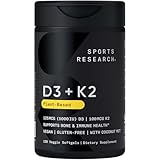
1. Sports Research® Vitamin D3 + K2 w/Coconut Oil - Vegan Vitamin D 5000iu & Mk7 Vitamin K 100mcg for Bone & Immune Support - Vegan Certified · Non-GMO · Soy Free - 120 Softgels
Overview:
Sports Research delivers a premium vegan D3+K2 supplement in a convenient 120-softgel bottle. Each capsule provides a robust 5000 IU of vitamin D3 from lichen and 100 mcg of K2 from fermented chickpeas, designed for once-daily dosing. The formula incorporates coconut MCT oil to enhance absorption of these fat-soluble vitamins, addressing a common issue with plant-based supplements.
What Makes It Stand Out:
This supplement distinguishes itself through its rigorous vegan certification and clean ingredient profile. Unlike most D3 supplements derived from lanolin, this uses lichen-sourced cholecalciferol, making it truly plant-based. The addition of K2 as MK-7, the most bioavailable form, ensures optimal calcium metabolism. Third-party testing and cGMP manufacturing provide quality assurance, while the absence of carrageenan, soy, and gluten caters to sensitive consumers.
Value for Money:
At $0.32 per softgel, this sits in the premium tier but delivers justified value. The 120-count bottle provides a four-month supply, reducing reorder frequency. Compared to non-vegan alternatives, you’re paying for ethical sourcing and comprehensive certifications. The synergistic formulation eliminates the need for separate K2 supplements, effectively bundling two products into one.
Strengths and Weaknesses:
Strengths include true vegan sourcing, excellent bioavailability, robust quality testing, and convenient single-capsule dosing. The 5000 IU potency suits those with documented deficiencies. Weaknesses: the higher upfront cost may deter budget-conscious buyers, and 5000 IU exceeds the needs of some users, potentially requiring dose splitting. The softgel format isn’t suitable for those preferring tablets.
Bottom Line:
This is the gold standard for vegans seeking high-potency D3+K2 supplementation. The clean formula and rigorous testing justify the price premium for those prioritizing quality and ethical sourcing.
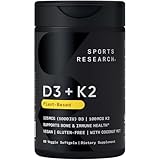
2. Sports Research® Vitamin D3 + K2 w/ Coconut Oil - Vegan Vitamin D 5000iu & Mk7 Vitamin K 100mcg for Bone & Immune Support - Vegan Certified · Non-GMO · Soy Free - 60 Softgels
Overview:
This 60-softgel offering from Sports Research delivers the same premium vegan D3+K2 formula as its larger sibling, providing 5000 IU of lichen-sourced D3 and 100 mcg of chickpea-derived K2 per capsule. The smaller bottle size makes it an accessible entry point for those new to supplementation or with limited storage space.
What Makes It Stand Out:
The product maintains all the hallmark features of the Sports Research line: vegan-certified ingredients, coconut MCT oil for enhanced absorption, and third-party testing. The MK-7 form of K2 ensures superior bioavailability, while the one-a-day formulation simplifies routine. This size is ideal for travel or for those wanting to trial the supplement before committing to a larger purchase.
Value for Money:
At $0.40 per count, you’re paying a 25% premium compared to the 120-count bottle. While this reduces initial investment, it’s not economical for long-term use. The pricing reflects convenience rather than bulk savings, making it best suited for short-term needs or first-time experimentation. For ongoing supplementation, the larger size offers substantially better value.
Strengths and Weaknesses:
Strengths include identical formulation to the larger size, lower upfront cost, and same rigorous quality certifications. It’s perfect for testing tolerance or for intermittent use. Weaknesses: the per-capsule cost is significantly higher, making it wasteful for regular users. The 5000 IU dose remains potentially excessive for maintenance purposes, and the smaller bottle contributes to more packaging waste over time.
Bottom Line:
Choose this size only if you’re testing the product or need a travel-friendly option. For daily, long-term use, the 120-count bottle provides far superior value without compromising quality.
3. Sports Research Vegan Vitamin D3 + K2 Supplement with Organic Coconut Oil - 5000iu Vitamin D with 100mcg Mk7 Vitamin K - Supports Calcium for Stronger Bones & Immune Health - 30 Softgels for Adults

Overview:
The 30-softgel bottle represents Sports Research’s trial-size vegan D3+K2 supplement, delivering the full-strength formula of 5000 IU D3 and 100 mcg K2 in a compact package. This size targets curious consumers wanting to evaluate the product’s effects before purchasing larger quantities, or those needing a short-term supplementation boost.
What Makes It Stand Out:
This miniature version maintains the brand’s commitment to vegan sourcing, using lichen-derived D3 and fermented chickpea K2 with coconut MCT oil for absorption. The identical potency to larger sizes means you’re experiencing the true product, not a diluted sample. Its petite bottle excels for travel or keeping a backup supply in your desk drawer.
Value for Money:
At $0.56 per softgel, this is the most expensive way to purchase this supplement—a 75% premium over the 120-count bottle. The value proposition is purely about low-commitment access, not economic sense. While the $16.95 price tag seems affordable, it translates to nearly $17 per month, making it drastically overpriced for regular use compared to alternatives.
Strengths and Weaknesses:
Strengths include minimal financial risk, authentic full-strength formula, and maximum portability. It’s ideal for addressing temporary deficiency or testing digestive tolerance. Weaknesses: prohibitive per-dose cost, excessive packaging waste for the pill count, and the worst value in the product line. The 5000 IU dose may be unnecessarily high for many users seeking maintenance supplementation.
Bottom Line:
Purchase this only for short-term trials or emergency travel needs. For any ongoing regimen, the 120-count bottle is vastly more economical and environmentally responsible.
4. Sports Research® Vitamin D3 + K2 w/Coconut Oil - Vegan Vitamin D 2500iu & Mk7 Vitamin K 100mcg for Bone & Immune Support - Vegan Certified · Non-GMO · Soy Free - 60 Softgels

Overview:
Sports Research offers a moderate-potency alternative with this 2500 IU D3 + 100 mcg K2 formula in a 60-softgel bottle. This version caters to users seeking D3+K2 benefits without the high potency of the 5000 IU variant, making it suitable for maintenance dosing or those with moderate sun exposure.
What Makes It Stand Out:
The key differentiator is the halved D3 dosage while maintaining the full clinically-relevant 100 mcg of MK-7 K2. This balanced approach supports calcium metabolism without risking excessive vitamin D intake. It retains the brand’s vegan certification, lichen-sourced D3, chickpea-derived K2, and coconut MCT oil carrier, ensuring identical quality standards to higher-potency siblings.
Value for Money:
At $0.33 per softgel, this slots between the 60-count and 120-count 5000 IU versions in price. For those needing only 2500 IU daily, it offers fair value, though some may find it more economical to purchase the 5000 IU version and take it every other day. The moderate dose reduces the need for medical supervision compared to high-potency options.
Strengths and Weaknesses:
Strengths include safer dosing for long-term use, same premium vegan ingredients, and lower risk of hypercalcemia. The 60-count size provides a two-month supply without overwhelming commitment. Weaknesses: limited size options force more frequent purchases, and the cost-per-IU of D3 is higher than the 5000 IU version. Those with severe deficiency may find it insufficient, requiring dose escalation.
Bottom Line:
This is the smart choice for maintenance supplementation or those new to D3+K2 combos. It balances safety, efficacy, and cost for everyday wellness support.
5. Life Extension Bone Restore with Vitamin K2 – Bone Health Supplement for Strong Bones – 3 Types of Absorbable Calcium, Vitamins D3 and K2, Minerals – Gluten-Free, Non-GMO – 120 Capsules

Overview:
Life Extension’s Bone Restore takes a comprehensive approach to bone health, combining three forms of calcium with vitamin D3, K2, and essential bone minerals in a 120-capsule bottle. This formula targets individuals seeking an all-in-one bone support supplement rather than isolated vitamins.
What Makes It Stand Out:
Unlike D3+K2-only supplements, this product includes 700 mg of calcium from three sources, 300 mg of magnesium, and trace minerals like zinc, manganese, silicon, and boron. This multi-nutrient strategy addresses bone density holistically. The inclusion of actual calcium makes it a true bone-building formula, while D3 and K2 ensure proper absorption and utilization.
Value for Money:
At $0.12 per capsule, this offers exceptional value for a multi-ingredient supplement. The comprehensive formula eliminates the need for separate calcium, magnesium, and trace mineral purchases, potentially saving $30-40 monthly. For bone-specific concerns, it’s one of the most cost-effective solutions available from a reputable brand.
Strengths and Weaknesses:
Strengths include unbeatable price, complete bone nutrient profile, and Life Extension’s decades-long research reputation. The formula covers all bases for bone health. Weaknesses: it’s not vegan, contains multiple fillers common in tablets, and the lower D3 dose (unspecified but likely modest) may require additional supplementation. The large capsule size could be challenging to swallow, and those wanting simple D3+K2 will find it overly complex.
Bottom Line:
For non-vegans focused specifically on bone health, this is an outstanding value. However, those wanting a clean, simple D3+K2 supplement should look elsewhere.
6. Sports Research Vitamin K2 MK7 180mcg with Coconut Oil - 60 Veggie Softgels - Vegan Certified, Non-GMO Verified & Gluten-Free

Overview: Sports Research delivers a thoughtfully crafted vegan Vitamin K2 supplement that prioritizes clean ingredients and optimal absorption. Each softgel provides 180mcg of MK7, the most bioavailable form of K2, sourced from fermented chickpeas rather than soy. The addition of coconut MCT oil enhances absorption since K2 is fat-soluble, while the carrageenan-free veggie softgel makes it suitable for strict plant-based lifestyles.
What Makes It Stand Out: The vegan certification and Non-GMO Project verification set this apart in a market dominated by animal-derived K2. The chickpea fermentation source is innovative, avoiding common soy allergens. The UV-protecting color barrier in the softgel demonstrates attention to stability—a detail many brands overlook. Sports Research also emphasizes third-party testing and USA-based cGMP manufacturing, building trust through transparency.
Value for Money: At $0.32 per softgel, this sits in the mid-range for K2 supplements. The price reflects its premium vegan sourcing and multiple certifications. While you can find cheaper K2 options, few match this level of clean-label credentials. The 60-count bottle provides a two-month supply, making the $18.95 price point reasonable for quality-conscious vegans.
Strengths and Weaknesses: Strengths include superior vegan formulation, coconut oil for enhanced absorption, rigorous third-party testing, and allergen-free composition. Weaknesses include the lack of Vitamin D3 pairing (which many users seek), lower capsule count compared to some competitors, and a price that may deter budget shoppers.
Bottom Line: This is an excellent choice for vegans and those with soy sensitivities seeking pure, high-quality K2 MK7. However, you’ll need a separate D3 supplement to maximize bone health benefits, which adds to total cost and complexity.
7. Bronson Vitamin K2 (MK7) with D3 Extra Strength Supplement Bone and Heart Health Non-GMO Formula 10,000 IU Vitamin D3 & 120 mcg Vitamin K2 MK-7 Easy to Swallow Vitamin D & K, 120 Capsules

Overview: Bronson offers an extra-strength combination of Vitamin D3 and K2 at a potency that commands attention. Each capsule delivers a substantial 10,000 IU of Vitamin D3 alongside 120mcg of K2 MK7, creating a powerful synergy for bone and cardiovascular health. With 120 capsules per bottle, this supplement targets those with significant deficiency or higher nutritional needs.
What Makes It Stand Out: The 10,000 IU D3 dose is notably higher than most competitors, making it ideal for individuals with diagnosed deficiencies or limited sun exposure. The brand’s 60-year legacy since 1960 lends credibility rarely seen in the supplement space. Bronson manufactures in its own cGMP-registered New York facility, maintaining direct control over quality from raw materials to finished product.
Value for Money: At just $0.12 per capsule, this represents exceptional value—by far the most economical option among comparable D3+K2 combinations. The 120-capsule count provides four months of daily supplementation. Even with the high potency, the $14.97 price point makes it accessible for budget-conscious consumers seeking therapeutic-level support.
Strengths and Weaknesses: Strengths include outstanding price-to-potency ratio, trusted brand heritage, high bioavailability MK7 form, and large quantity. Weaknesses include the very high D3 dose, which may be excessive for casual users without medical supervision, and the lack of vegan certification. The one-size-fits-all approach also limits dosing flexibility.
Bottom Line: Bronson delivers unmatched value for those needing high-dose D3 with K2 support. It’s perfect for deficiency correction under professional guidance, but may be too potent for general wellness use. Consult your healthcare provider before starting this strength.
8. Pure Encapsulations Vitamin D3 & K2 - Bone & Vascular Health Support - Immune Function Support* - Gluten Free - Non-GMO - 60 Capsules

Overview: Pure Encapsulations brings its reputation for hypoallergenic, premium supplements to this Vitamin D3 and K2 combination. Each capsule provides 4,000 IU of Vitamin D3 paired with K2 to support bone strength, vascular health, and immune function. The 60-capsule bottle embodies the brand’s “pure difference” philosophy, eliminating unnecessary additives and common allergens.
What Makes It Stand Out: Pure Encapsulations’ commitment to purity is the defining feature. The brand sources premium ingredients from trusted suppliers and manufactures with stringent quality controls. This supplement is free from artificial ingredients, GMOs, and common allergens, making it ideal for sensitive individuals. The moderate 4,000 IU D3 dose strikes a balance between efficacy and safety for daily use.
Value for Money: At $0.31 per capsule, this commands a premium price that reflects the brand’s quality standards rather than ingredient cost alone. While more expensive than many alternatives, the investment buys peace of mind for those with allergies or sensitivities. The 60-count bottle provides a two-month supply, positioning this as a mid-tier option for quality-focused consumers.
Strengths and Weaknesses: Strengths include exceptional purity standards, trusted brand reputation, moderate D3 dosing suitable for most adults, and comprehensive third-party testing. Weaknesses include the unspecified K2 dosage in marketing materials, premium pricing that may not suit all budgets, and the smaller quantity compared to value brands.
Bottom Line: This is the go-to choice for individuals with sensitivities or those who prioritize ingredient purity above all else. The moderate D3 dose makes it safer for unsupervised daily use, though the premium cost requires commitment to the brand’s quality promise.
9. InnovixLabs Full Spectrum Vitamin K2-90 Softgels with 600 mcg of Trans Form MK7 and MK4 - Supports General Health and Bone Strength - Soy and Gluten Free K2 Vitamin Supplement

Overview: InnovixLabs takes a comprehensive approach to Vitamin K2 supplementation by combining both essential forms—MK4 and MK7—in a single softgel. With 600mcg total K2 from bioactive trans forms, this formula targets bone strength, arterial health, and cognitive function. The 90-count bottle offers a three-month supply of full-spectrum K2 support.
What Makes It Stand Out: The inclusion of both MK4 and MK7 distinguishes this from single-form supplements. MK4 is the form naturally found in the brain and breast milk, offering unique cognitive and developmental benefits. The balanced ratio addresses different tissue needs, as MK4 acts quickly while MK7 provides longer-lasting effects. The trans form ensures bioavailability, and third-party testing verifies purity and potency.
Value for Money: At $0.24 per softgel, this offers solid value for a full-spectrum formula. The 600mcg total dosage is significantly higher than standard K2 supplements, justifying the cost for those seeking comprehensive support. While pricier than basic MK7-only products, the dual-form approach eliminates the need to purchase separate supplements.
Strengths and Weaknesses: Strengths include complete K2 spectrum coverage, higher total dosage, third-party testing, soy/gluten-free formulation, and cognitive health benefits from MK4. Weaknesses include the absence of Vitamin D3 (requiring separate supplementation), the complexity of dosing two K2 forms, and potential overkill for users only needing basic bone support.
Bottom Line: InnovixLabs excels for health enthusiasts wanting the most complete K2 supplement available. The MK4 addition for brain health is a unique advantage, but you’ll need to pair it with D3 for full skeletal benefits. It’s ideal for those willing to invest in comprehensive nutrient coverage.
10. Pure Encapsulations Vitamin D3 & K2 - Bone & Vascular Health Support - Immune Function Support* - Gluten Free - Non-GMO - 120 Capsules

Overview: This 120-capsule version of Pure Encapsulations’ Vitamin D3 and K2 formula offers the same premium quality as its 60-capsule counterpart but with better long-term value. Each capsule delivers 4,000 IU of Vitamin D3 alongside K2 to support bone density, vascular flexibility, and immune function, maintaining the brand’s commitment to purity and hypoallergenic formulation.
What Makes It Stand Out: The larger quantity maintains Pure Encapsulations’ rigorous quality standards while addressing the primary criticism of their smaller bottle—poor economy for daily users. This version provides the same trusted, allergen-free formulation with the convenience of a four-month supply. The brand’s transparent sourcing and manufacturing practices continue to differentiate it in a crowded market.
Value for Money: At $0.28 per capsule, this represents improved value over the 60-count version’s $0.31 per capsule. While still premium-priced, the 120-count bottle reduces the per-capsule cost and extends the time between purchases. The $33.60 upfront investment pays dividends for committed users who prioritize ingredient purity and have established this dose works for their needs.
Strengths and Weaknesses: Strengths include the same exceptional purity and quality as the smaller size, better per-capsule economics, reduced packaging waste, and consistent moderate D3 dosing. Weaknesses include the high upfront cost, continued lack of specified K2 dosage in marketing, and premium pricing that still exceeds budget alternatives.
Bottom Line: This larger size is the smarter choice for dedicated Pure Encapsulations users. It resolves the value concern of the 60-count while delivering the same trusted, clean formulation. If you’ve committed to this premium brand, the 120-capsule bottle is unquestionably the better option.
Understanding Vitamin K2: The Bone-Building Catalyst
Vitamin K2 belongs to the menaquinone family, a group of compounds that activate vitamin K-dependent proteins throughout your body. Unlike its more famous cousin vitamin K1 (phylloquinone), which primarily supports blood clotting, K2 operates in the shadows of bone metabolism, cardiovascular health, and even cellular energy production. For power athletes, its role is non-negotiable: without sufficient K2, your body cannot properly utilize the calcium and vitamin D3 you’re likely already supplementing.
What makes K2 particularly fascinating for strength and power athletes is its tissue-specific action. While K1 stays busy in the liver managing clotting factors, K2 travels to bone and soft tissues, where it activates osteocalcin and matrix Gla-protein (MGP). This isn’t just biochemical trivia—it’s the difference between a skeleton that merely maintains itself and one that actively strengthens in response to mechanical loading.
Why Power Athletes Need K2 More Than the Average Person
Your sport-specific demands create a unique metabolic environment. Heavy squats, Olympic lifts, and repeated sprint intervals generate osteogenic signals through mechanotransduction—the process where mechanical force converts to biochemical signals. However, this signal is only half the equation. Without K2-activated osteocalcin, your osteoblasts cannot effectively bind calcium to the bone matrix, leaving those microfractures from training inadequately repaired.
Research demonstrates that athletes in power sports consistently show higher bone turnover markers than sedentary individuals. While this turnover is necessary for adaptation, it also means you’re constantly depleting your K2 stores to activate new osteocalcin molecules. The math is simple: higher bone remodeling rates + insufficient K2 = suboptimal mineralization and increased fracture risk. This explains why seemingly well-nourished athletes still suffer stress fractures and slow-healing bone bruises.
K2 vs. K1: Why Not All Vitamin K Is Created Equal
The distinction between K1 and K2 isn’t merely academic—it’s functional and critical. K1 (phylloquinone) dominates in leafy greens and supports the coagulation cascade. Your body can convert small amounts of K1 to K2, but this conversion is inefficient, estimated at less than 10-15% under optimal conditions. For athletes pushing bone adaptation to its limits, relying on conversion is like trying to fuel a race car with regular unleaded.
K2 (menaquinone) appears primarily in fermented foods and animal products, sources often limited in athletic diets focused on lean proteins and controlled calories. More importantly, K2’s longer side chain allows it to remain bioavailable far longer than K1, giving it time to reach peripheral tissues like bone and cartilage. When you’re supplementing for performance, you’re specifically targeting menaquinones, not phylloquinone.
MK-4 vs. MK-7: Decoding the K2 Subtypes
Within the K2 family, two forms dominate the supplement landscape: MK-4 and MK-7. Understanding their differences is crucial for making informed decisions about your bone health protocol.
MK-4: The Short-Acting Muscle Ally
MK-4 (menaquinone-4) features a shorter half-life of about 1-2 hours, requiring multiple daily doses for sustained effect. However, it offers unique advantages for power athletes. Research indicates MK-4 directly supports testosterone synthesis in testicular tissue and may influence muscle cell differentiation. While these effects are still being elucidated, the potential anabolic synergy is intriguing. MK-4 also crosses the blood-brain barrier, supporting cognitive function during high-intensity training blocks.
The downside? Its rapid clearance means you need 45mg doses (yes, milligrams, not micrograms) split three times daily to achieve therapeutic bone effects—a regimen that can be inconvenient and expensive.
MK-7: The Long-Acting Bone Specialist
MK-7 (menaquinone-7), derived from natto fermentation, boasts a 72-hour half-life, allowing once-daily dosing around 180-200 micrograms. This form demonstrates superior bone-specific outcomes in clinical trials, particularly for improving bone mineral density and reducing fracture risk. For power athletes seeking compliance-friendly protocols, MK-7’s convenience is unmatched.
The extended circulation time means MK-7 can continuously activate osteocalcin as your bone remodeling process unfolds over days, not hours. This aligns perfectly with the extended nature of bone repair and adaptation following heavy training sessions.
The Osteocalcin Connection: How K2 Actually Strengthens Bones
Osteocalcin, produced by osteoblasts, functions like molecular Velcro, binding calcium ions to the collagen matrix. But there’s a catch: osteocalcin is synthesized in an inactive form. Only through K2-dependent carboxylation does it gain the ability to capture calcium. Think of K2 as the key that unlocks osteocalcin’s functional potential.
Without adequate K2, uncarboxylated osteocalcin (ucOC) circulates uselessly, and your bone matrix remains under-mineralized. Studies show that power athletes with high ucOC levels experience slower recovery from bone microdamage and demonstrate reduced bone mineral density despite adequate calcium intake. The takeaway? Your bone-building capacity is directly limited by your K2 status, not your calcium consumption.
Synergistic Power: Why K2 Needs Vitamin D3 (and Friends)
K2 doesn’t work in isolation. Vitamin D3 upregulates osteocalcin production, essentially creating more “workers” for K2 to activate. Without D3, you lack the raw materials; without K2, those materials remain idle. This synergy explains why D3/K2 combination supplements dominate the market.
But the team extends further. Magnesium serves as a cofactor for vitamin D activation and supports bone crystal formation. Zinc influences osteoblast activity and collagen synthesis. Calcium provides the building blocks, though many athletes over-supplement calcium while under-supplementing K2—a backward approach that may increase cardiovascular risk.
The ideal protocol for power athletes includes D3 (2,000-4,000 IU), K2 (MK-7 at 180-200 mcg or MK-4 at 45 mg split doses), magnesium glycinate (300-400 mg), and dietary calcium from whole foods rather than isolated supplements.
Optimal Dosing Strategies for Power Sport Demands
Standard population recommendations for K2 (90-120 mcg) fall short for power athletes. The increased bone turnover from heavy training creates higher demand. Research on athletic populations suggests 180-200 mcg of MK-7 daily provides optimal carboxylation of osteocalcin without diminishing returns.
For MK-4, the therapeutic dose sits at 45 mg daily, divided into three 15 mg doses to maintain blood levels. While this seems astronomically high compared to MK-7, it’s the dose used successfully in Japanese osteoporosis trials for decades.
Consider cycling your dose around training phases. During high-impact blocks (competition prep, plyometric emphasis), maintain full dosing. During deload weeks, you might reduce slightly, though consistent intake yields better long-term outcomes.
Timing Matters: When to Take K2 for Maximum Benefit
K2 is fat-soluble, requiring dietary fat for absorption. Taking your K2 supplement with your largest meal containing healthy fats—typically post-workout or dinner—maximizes bioavailability. Avoid taking it with fiber-heavy meals, as certain fibers can bind to fat-soluble vitamins and reduce uptake.
For MK-4 users, timing is more critical due to its short half-life. Doses should be spaced every 6-8 hours, ideally aligning with breakfast, post-workout meal, and dinner. MK-7 users enjoy flexibility, though evening dosing may support the nocturnal bone remodeling processes that peak during sleep.
Form Factor Fundamentals: Capsules, Softgels, Liquids, and More
Supplement delivery systems significantly impact K2 stability and absorption.
Softgels
Softgels suspend K2 in oil (typically olive or MCT), protecting it from oxidation and providing built-in fat for absorption. This format offers superior stability and bioavailability, making it the gold standard for serious athletes. Look for dark-colored softgels in opaque bottles to prevent light degradation.
Capsules
Dry K2 powder in capsules costs less but exposes the vitamin to air and light each time you open the bottle. If choosing capsules, ensure they’re in dark glass with moisture-absorbing packets and consume them with a fat source like avocado or nut butter.
Liquid Drops
Liquid K2 allows precise dose titration and easy mixing into shakes. However, stability concerns are paramount—once opened, oxidation accelerates. Only purchase liquids in amber glass with droppers that minimize air exchange, and refrigerate after opening.
Tablets
Avoid tablets entirely. The compression process generates heat that can degrade K2, and they often contain binders that interfere with absorption.
Quality Markers: What Separates Premium from Poor-Quality K2
The supplement industry remains notoriously under-regulated. For a nutrient as critical as K2, quality non-negotiables include:
Source Transparency: MK-7 should be sourced from natto fermentation using Bacillus subtilis, with clear supply chain documentation. Avoid synthetic MK-7, which shows lower bioactivity.
Stability Data: Reputable manufacturers publish stability testing showing K2 content remains within label claims throughout the product’s shelf life, not just at manufacture.
Clean Excipients: Premium products avoid magnesium stearate, silicon dioxide, and titanium dioxide—common fillers that may interfere with absorption or pose health concerns.
Bioavailability Enhancement: Some formulations include medium-chain triglycerides (MCT) or black pepper extract (piperine) to improve uptake, though evidence for piperine’s effect on K2 specifically remains limited.
Third-Party Testing: Your Shield Against Fake Supplements
Independent verification separates professional-grade supplements from supermarket shelf-fillers. Look for these certifications:
NSF Certified for Sport: The gold standard for competitive athletes, testing for banned substances, label accuracy, and contaminants.
USP Verified: Confirms identity, potency, and manufacturing quality, though doesn’t specifically test for sports banned substances.
ConsumerLab Approved: Provides independent testing for content and purity, valuable for non-competing athletes.
Informed Sport: Similar to NSF, with batch-specific testing crucial for drug-tested athletes.
Never trust a company’s in-house “quality guarantees.” Third-party testing adds cost, but when you’re trusting a supplement with your structural integrity, the investment is trivial.
Dietary Sources vs. Supplementation: Can You Eat Enough K2?
Fermented foods like natto (1,000 mcg per 100g), aged cheeses (75 mcg per 100g), and sauerkraut (5 mcg per cup) provide K2. Grass-fed butter and organ meats contain MK-4, but in amounts insufficient for therapeutic bone effects.
The challenge for power athletes is twofold: volume and consistency. You’d need to consume natto daily (an acquired taste most Western athletes can’t stomach) or eat impractical amounts of cheese to reach 180 mcg of MK-7. During caloric restriction phases, achieving these amounts through food alone becomes nearly impossible.
Supplementation ensures consistent, measurable dosing that aligns with your training demands, removing dietary variability from the bone-health equation.
Deficiency Red Flags: Are You Running Low on K2?
Subclinical K2 deficiency is rampant among athletes, often masked by adequate K1 intake. Warning signs include:
- Slow-healing bone bruises that linger for weeks
- Dental issues despite good oral hygiene (K2 affects dentin health)
- Easy bruising unrelated to trauma
- Calcification of soft tissues (detected in imaging)
- High uncarboxylated osteocalcin on lab tests (available through functional medicine providers)
The most telling indicator? You’re supplementing with D3 and calcium yet still experiencing bone-related injuries or poor bone density scans. This triad points directly to insufficient K2 activation.
Safety Profile: Side Effects and Contraindications
K2 demonstrates an exceptional safety record, with no known toxicity even at doses far exceeding recommendations. The primary concern involves interactions with anticoagulant medications like warfarin, which work by antagonizing vitamin K activity.
If you’re on blood thinners, coordinate any K2 supplementation with your physician—don’t avoid it entirely, as consistent K2 intake allows for stable dosing of medication. The key is consistency, not avoidance.
Some athletes report mild gastrointestinal upset when initiating high-dose MK-4. Starting with lower doses and gradually increasing over two weeks typically resolves this.
Vegan and Vegetarian Athlete Considerations
Plant-based athletes face unique challenges. MK-7 from natto is inherently vegan, but many softgels use gelatin. Look for vegan softgels made from tapioca starch or use liquid formulations.
MK-4 is typically synthetic and can be vegan, but most commercial sources derive from animal products. Vegan athletes should focus on MK-7 forms.
B12 deficiency common in vegan diets can impair bone health independently, creating a compounding issue. Ensure adequate B12 status alongside K2 supplementation for comprehensive skeletal support.
Budget vs. Premium: Making Smart Financial Choices
K2 supplements range from $10 to $60+ monthly. What’s the real difference?
Budget Tier ($10-20/month): Typically offers MK-7 at 100 mcg in dry capsule form. May lack third-party testing and use generic excipients. Suitable for maintenance during off-season if quality markers are verified.
Mid-Range ($20-35/month): Provides 180-200 mcg MK-7 in oil-based softgels, often with D3 included. Usually features some quality testing. This is the sweet spot for most power athletes.
Premium Tier ($35-60+/month): Delivers pharmaceutical-grade MK-7 or MK-4, comprehensive third-party testing, patented delivery systems, and synergistic nutrients. Justified for drug-tested athletes or those with existing bone injuries.
The cost of a premium K2 supplement is less than one physical therapy session for a stress fracture. Perspective matters.
Storage and Stability: Protecting Your Investment
K2 is notoriously unstable, degrading with light, heat, and oxygen. Protect your supplement by:
- Storing in original opaque packaging
- Keeping in a cool, dark place (not your gym bag or car)
- Refrigerating liquid forms after opening
- Using within 60 days of opening softgels
- Purchasing from suppliers with high turnover to ensure fresh stock
Never transfer K2 to pill organizers that expose it to light and air for days. Each exposure reduces potency incrementally.
Periodizing Your K2: Aligning With Training Cycles
Smart athletes periodize everything—training, nutrition, recovery. K2 should be no exception.
Off-Season/Base Building: Maintain baseline dosing (180 mcg MK-7) to support general bone health and recovery from previous competitive season.
Intensive Training Blocks: Increase to 200-240 mcg MK-7 during periods of high impact loading or when introducing novel training stimuli that increase bone stress.
Competition Phase: Maintain consistent dosing, ensuring peak bone integrity when performance matters most. Avoid introducing new supplements during this window.
Deload/Recovery Weeks: Standard dosing suffices, though some evidence suggests maintaining elevated intake during recovery may enhance bone remodeling efficiency.
The “Must-Have” Criteria Summary for Power Athletes
When evaluating any K2 supplement for your bone health protocol, demand these non-negotiables:
- Clinically relevant dose: 180-200 mcg MK-7 or 45 mg MK-4 (split)
- Fat-based delivery: Oil suspension in softgel or liquid form
- Third-party verification: NSF, USP, or Informed Sport certification
- Transparency: Clear sourcing and stability data
- Synergistic formulation: Paired with D3 and preferably magnesium
- Minimal excipients: No unnecessary fillers or binders
- Proper packaging: Opaque bottles with freshness seals
- Manufacturer reputation: Companies specializing in professional-grade nutrients
- Athletic suitability: Free from banned substances and common allergens
- Value alignment: Cost-effective for long-term, consistent use
Supplements meeting these criteria earn their place in your bone health arsenal, providing the biochemical foundation your skeleton needs to withstand the extraordinary demands of power sports.
Frequently Asked Questions
How long before I notice benefits from vitamin K2 supplementation?
Bone remodeling is a slow process. While osteocalcin carboxylation improves within 2-3 weeks, measurable changes in bone density require 6-12 months of consistent supplementation combined with proper training. However, many athletes report reduced joint stiffness and faster resolution of bone bruises within 4-6 weeks.
Can I take vitamin K2 with my pre-workout or protein shake?
Yes, but timing matters more than co-administration. Since K2 requires fat for absorption, taking it with a protein shake that includes nut butter or MCT oil works perfectly. Avoid taking it with caffeine-only pre-workouts on an empty stomach. Post-workout, when you’re consuming a mixed meal, is ideal.
Is MK-4 or MK-7 better for power athletes specifically?
For pure bone health and convenience, MK-7 wins with its once-daily dosing and superior bone density outcomes. However, if you’re also interested in potential testosterone support and don’t mind multiple daily doses, MK-4 offers unique advantages. Most athletes start with MK-7 for compliance.
Will vitamin K2 cause blood clots or affect my cardiovascular health?
No—this is a common confusion with K1. K2 doesn’t meaningfully affect clotting factors but instead prevents vascular calcification by activating matrix Gla-protein. Multiple studies show K2 reduces cardiovascular mortality risk without increasing thrombotic events.
Can I get enough K2 from fermented foods instead of supplements?
Theoretically yes, but practically no. You’d need to consume 15-20 grams of natto daily or multiple servings of aged cheese. During cutting phases or when traveling for competition, consistency becomes impossible. Supplements guarantee therapeutic dosing regardless of dietary variations.
What’s the difference between cheap and expensive K2 supplements?
Beyond marketing, premium products invest in stability testing, pharmaceutical-grade raw materials, and third-party verification. Cheap K2 may degrade before you finish the bottle or contain less active compound than labeled. For a nutrient critical to bone integrity, reliability trumps cost savings.
Is vitamin K2 safe to take with blood thinners like warfarin?
K2 isn’t contraindicated but requires medical supervision. Consistent daily K2 intake allows your physician to adjust warfarin dosing appropriately. The danger is inconsistency—suddenly starting or stopping K2 can disrupt medication efficacy. Never make changes without consulting your doctor.
Should I increase my K2 dose during heavy training blocks?
Evidence suggests modestly increasing intake to 200-240 mcg MK-7 during periods of high impact loading may optimize bone adaptation. However, exceeding 300 mcg daily offers no additional benefit. Consistency matters more than megadosing.
Can vitamin K2 help with joint pain or just bone strength?
Emerging research suggests K2’s anti-inflammatory properties may benefit joint health, particularly for osteoarthritis. While its primary role is bone mineralization, some athletes report reduced knee and hip discomfort after 8-12 weeks. The mechanism may involve improved cartilage matrix health.
What happens if I stop taking K2 after several months?
Osteocalcin carboxylation rates will gradually decline over 2-3 weeks as K2 stores deplete. Bone mineral density won’t immediately plummet, but you’ll lose the enhanced mineralization advantage during subsequent training cycles. For power athletes, K2 should be a long-term commitment, not a short-term fix.