For many individuals facing mobility challenges, joint pain, or balance concerns, traditional exercise equipment can feel more like an obstacle than a solution. The simple act of mounting a standard stationary bike often involves awkward leg lifting, unstable balancing, and uncomfortable twisting motions that can discourage even the most determined fitness enthusiast. This is where innovation in accessible fitness design truly shines—recumbent bikes equipped with swivel seats have revolutionized home exercise for seniors, those in physical recovery, and anyone seeking a more dignified approach to staying active.
These thoughtfully engineered machines eliminate the most significant barrier to entry: the climb. Instead of forcing users to navigate over a high frame, swivel seat technology allows the seat to rotate 90 degrees or more, creating a clear path for easy sit-to-stand transitions. This seemingly simple mechanism transforms the entire exercise experience, restoring independence and confidence while delivering the same cardiovascular benefits and low-impact workout that make recumbent bikes so popular. Whether you’re outfitting a home gym for aging in place or managing a rehabilitation routine, understanding what makes these specialized bikes worth the investment is the first step toward smarter, safer fitness.
Top 10 Recumbent Bikes with Swivel Seats
Detailed Product Reviews
1. HCI Fitness CardioStep Recumbent Semi-Elliptical Cross Trainer with Swivel Seat, grey (CS-600)

Overview: The HCI Fitness CardioStep CS-600 is a premium recumbent semi-elliptical cross trainer designed for rehabilitation and serious home fitness. At $3,695, this commercial-grade machine targets users needing maximum accessibility and low-impact exercise. It accommodates individuals from 4'9" to 6'2" and supports up to 450 pounds, making it exceptionally versatile for diverse body types and mobility levels.
What Makes It Stand Out: The 360° swivel seat is a game-changer for mobility-impaired users, allowing side entry without awkward climbing. The semi-elliptical motion provides ultra-smooth, connected arm-and-leg movement that’s gentler than traditional bikes. With 32 electronic resistance levels and 19 built-in programs—including heart rate control—this unit offers clinical-grade workout customization rarely seen in home equipment.
Value for Money: While significantly more expensive than consumer models, the CS-600 costs a fraction of clinical rehabilitation equipment. For seniors, post-surgery patients, or those with chronic conditions, the swivel seat alone justifies the investment by preventing falls and ensuring long-term usability. Comparable medical-grade machines often exceed $5,000.
Strengths and Weaknesses: Strengths include unparalleled accessibility, commercial durability, extensive program variety, and exceptional weight capacity. The low starting resistance with small increments is perfect for gradual progression. Weaknesses are the premium price point, large footprint requiring dedicated space, and potential overkill for able-bodied users seeking basic cardio.
Bottom Line: The CardioStep CS-600 is worth every penny for users with mobility limitations or those in active rehabilitation. If you need the swivel seat and clinical features, it’s unmatched. For general fitness, more affordable options suffice.
2. Recumbent Exercise Bike for Home Use, Quiet Recumbent Stationary Bikes for Adults & Seniors, 16-Level Resistance, Adjustable Seat, Supports 400LB, Pulse Sensors & LCD Display

Overview: This budget-friendly recumbent exercise bike delivers surprising value at just $189.99. Designed for home use, it supports users up to 400 pounds and offers 16 levels of magnetic resistance. The 85% pre-assembled design promises setup in about 30 minutes, making it accessible for those intimidated by complex assembly while delivering reliable performance.
What Makes It Stand Out: The combination of whisper-quiet operation and high weight capacity at this price point is remarkable. Commercial-grade steel construction provides stability typically found in more expensive models. The simple lever-based seat adjustment accommodates various family members without complicated mechanisms, enhancing its household versatility.
Value for Money: This bike offers exceptional value—costing less than six months of most gym memberships while delivering comparable functionality. The 16 resistance levels provide adequate progression for most users, from gentle rehabilitation to moderate cardio training. While lacking advanced features, it covers all essential bases for effective low-impact exercise without ongoing costs.
Strengths and Weaknesses: Strengths include affordability, sturdy 400-pound capacity, near-silent magnetic resistance, easy assembly, and family-friendly adjustability. The LCD display tracks all key metrics including heart rate. Weaknesses are basic program options (no pre-set workouts), less sophisticated electronics, and a utilitarian design that prioritizes function over luxury aesthetics.
Bottom Line: An outstanding choice for budget-conscious buyers, seniors, or beginners wanting reliable low-impact cardio without breaking the bank. It lacks bells and whistles but delivers where it counts: durability, quiet operation, and essential features.
3. Sunny Health & Fitness Electromagnetic Recumbent Cross Trainer Exercise Elliptical Bike w/Arm Exercisers, Easy Access Seat & Exclusive SunnyFit® App Enhanced Bluetooth Connectivity - SF-RBE4886SMART
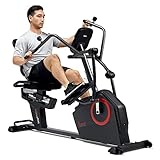
Overview: The Sunny Health & Fitness SF-RBE4886SMART bridges the gap between basic recumbent bikes and premium cross trainers at $629.99. This electromagnetic recumbent elliptical combines lower-body cycling with upper-body arm exercisers, creating a comprehensive low-impact workout solution with modern connectivity that appeals to a wide range of users seeking engaging home exercise.
What Makes It Stand Out: The free SunnyFit app with 1,000+ trainer-led workouts and 10,000+ virtual tours adds tremendous value without subscription fees. Electromagnetic resistance provides precise, smooth transitions across 16 levels. The ability to create four custom user programs allows personalized training, while 12 pre-programmed workouts offer immediate variety for different fitness goals and experience levels.
Value for Money: At this price point, you’re getting smart features typically reserved for equipment costing twice as much. The app integration alone rivals premium brands like Peloton for free. Compared to non-connected bikes, the SF-RBE4886SMART offers superior workout engagement and progression tracking, justifying the moderate price increase over basic models.
Strengths and Weaknesses: Strengths include excellent app ecosystem, electromagnetic resistance precision, full-body workout capability, Bluetooth connectivity, and low-impact design. The independent handle/pedal option enables targeted training. Weaknesses include potential app dependency for full value, more complex assembly than basic models, and a weight capacity that may be lower than some competitors in this price range.
Bottom Line: Perfect for tech-savvy users wanting guided workouts without monthly fees. The combination of smart features and full-body training makes it a top mid-range contender for serious home fitness enthusiasts.
4. CURSOR FITNESS Recumbent Exercise Bike, Quiet Recumbent Stationary Bike for Adults & Seniors, Magnetic Stationary Bike with 16-Level Resistance, Supports 350LB, Heart Rate Handle & LCD Display

Overview: The CURSOR FITNESS Recumbent Exercise Bike focuses on ergonomic comfort and whisper-quiet operation at a mid-range $299.99 price point. Designed for adults and seniors prioritizing joint protection, this magnetic resistance bike supports up to 350 pounds while delivering a peaceful workout experience suitable for shared living spaces and apartment settings.
What Makes It Stand Out: The breathable mesh backrest distinguishes it from competitors using standard foam padding, promoting better airflow and spinal support during longer sessions. The ultra-quiet magnetic system operates nearly silently, making it ideal for apartment dwellers or early-morning exercisers. The ergonomic design specifically reduces stress on ankles, knees, and lower back for pain-free workouts.
Value for Money: This bike strikes an excellent balance between affordability and comfort-focused features. While costing $110 more than budget options, the mesh backrest and superior quietness justify the premium for noise-sensitive users. It offers the same 16 resistance levels as pricier models, ensuring you don’t sacrifice workout variety for comfort and peace of mind.
Strengths and Weaknesses: Strengths include exceptional comfort, near-silent operation, comprehensive LCD metrics, built-in pulse sensors, and joint-friendly design. The 350-pound capacity is respectable for most users. Weaknesses include lack of upper-body arm exercisers, no app connectivity or pre-programmed workouts, and a weight capacity lower than some similarly priced competitors offering 400-pound limits.
Bottom Line: An excellent choice for seniors, rehabilitation users, or anyone prioritizing comfort and quiet operation over advanced tech features. The ergonomic design makes it worth the modest price premium for daily use.
5. VANSWE Recumbent Exercise Bike with Arm Exerciser for Seniors Adults Home Training - Elliptical Recumbent Cross Trainer with Magnetic Resistance, Free App, Bluetooth Connectivity and Pulse Sensor

Overview: The VANSWE Recumbent Exercise Bike with Arm Exerciser combines lower-body cycling with upper-body training at $358.98. This cross trainer configuration targets seniors and adults wanting comprehensive home workouts without high impact. The robust frame supports 400 pounds while offering infinite slider seat adjustment for precise ergonomic positioning across various body types and heights.
What Makes It Stand Out: The infinite slider seat adjustment provides more precise fitting than preset holes, accommodating inseams from 29" to 37". The inclusion of arm exercisers with elliptical-sized foot pedals enables true full-body conditioning. Bluetooth connectivity and a free app add modern tracking capabilities uncommon in this price range, enhancing workout motivation and progress monitoring.
Value for Money: For under $360, you’re getting cross trainer functionality that typically costs $500+. The 400-pound weight capacity rivals commercial equipment, while the full-body workout eliminates need for separate upper-body equipment. Eight resistance levels, while fewer than some competitors, provide adequate progression for most home users from rehab to moderate intensity training.
Strengths and Weaknesses: Strengths include full-body workout capability, high weight capacity, infinite seat adjustment, Bluetooth connectivity, and low-impact design. The transportation wheels enhance mobility. Weaknesses are limited to eight resistance levels (versus 16+ on competitors), less sophisticated app integration than premium brands, and potentially more complex assembly due to additional moving parts.
Bottom Line: Ideal for users wanting arm and leg training in one machine without spending premium dollars. The sturdy build and adjustability make it excellent for families or seniors needing customizable positioning for comfortable workouts.
6. Recumbent Exercise Bike for Home Use, Quiet Recumbent Stationary Bikes for Adults & Seniors, 16-Level Resistance, Adjustable Seat, Supports 400LB, Pulse Sensors & LCD Display
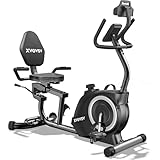
Overview: This recumbent exercise bike delivers robust home fitness capabilities with a remarkable 400-pound weight capacity. Designed for adults and seniors, it features a comfortable padded seat with ergonomic backrest and a lever-based adjustment system that accommodates various heights. The bike’s commercial-grade steel construction ensures stability while maintaining a whisper-quiet operation through its magnetic resistance system.
What Makes It Stand Out: The 16-level resistance system provides exceptional workout versatility, ranging from gentle rehabilitation to intense cardio sessions. The 85% pre-assembly significantly reduces setup time to about 30 minutes. Integrated pulse sensors and a clear LCD display monitor speed, time, distance, calories, odometer, and heart rate, offering comprehensive workout tracking without overwhelming complexity.
Value for Money: At $219.99, this bike strikes an impressive balance between durability and affordability. The 400-pound capacity and 16 resistance levels rival commercial-grade equipment costing twice as much. While lacking smart connectivity, it delivers essential features that matter most for consistent home workouts, making it a wise investment for long-term fitness.
Strengths and Weaknesses: • Strengths: Exceptional 400lb weight capacity; whisper-quiet magnetic resistance; 16 resistance levels for all fitness stages; quick 30-minute assembly; comprehensive LCD monitoring; ergonomic comfort design • Weaknesses: No Bluetooth or app connectivity; basic LCD display without backlight; seat adjustment may require dismounting; limited entertainment features
Bottom Line: This recumbent bike excels for users prioritizing durability, quiet operation, and straightforward functionality over tech features. Perfect for seniors, larger users, and families wanting a reliable, no-fuss cardio solution that handles diverse fitness levels with ease.
7. Kawnina Recumbent Exercise Bike, Recumbent Bike for Home with Smart Workout APP - Recumbent Bikes with Ergonomic Backrest and Comfort Seat, 420LBS Weight Capacity, Larger Backlit Display
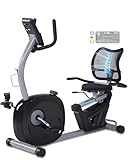
Overview: The Kawnina recumbent bike merges traditional comfort with modern technology, supporting users up to 420 pounds through its heavy-duty one-piece frame. Its infinitely adjustable seat position and breathable mesh backrest provide customized lumbar support, while Bluetooth connectivity opens up interactive training possibilities. The 90% pre-assembly and included installation video streamline setup.
What Makes It Stand Out: Smart app integration with Kinomap and Z-WIFT transforms routine workouts into engaging virtual experiences. The pre-installed 16-level resistance knob offers seamless intensity transitions without interrupting your session. The combination of a 420-pound capacity—the highest in its class—and infinite seat adjustability makes it exceptionally versatile for diverse family members and body types.
Value for Money: Priced at $289.98, this bike commands a premium over basic models but justifies the cost through smart features and superior weight capacity. The app connectivity and backlit display enhance motivation and tracking, delivering value comparable to gym memberships while maintaining home convenience.
Strengths and Weaknesses: • Strengths: Highest-in-class 420lb capacity; Bluetooth app connectivity; infinite seat adjustment; breathable mesh backrest; 90% pre-assembled; backlit display; progressive resistance system • Weaknesses: Higher price point; app dependency may not suit all users; requires smartphone/tablet for full features; potentially steeper learning curve for seniors
Bottom Line: Ideal for tech-savvy fitness enthusiasts and families wanting interactive workouts, this bike’s smart features and unmatched weight capacity make it worth the investment. The app connectivity provides motivation that basic models simply cannot match.
8. Sunny Health & Fitness Compact Performance Recumbent Bike with Dual Motion Arm Exercisers, Quick Adjust Seat & Exclusive SunnyFit® App Enhanced Bluetooth Connectivity - SF-RB420032 Gray

Overview: Sunny Health & Fitness delivers a unique full-body solution with this compact recumbent bike featuring dual motion arm exercisers. The design allows simultaneous upper and lower body training or independent targeted workouts. With 8 magnetic resistance levels and Bluetooth connectivity to the free SunnyFit app, it combines versatility with digital coaching in a space-efficient package.
What Makes It Stand Out: The movable handles differentiate this from traditional recumbent bikes, enabling comprehensive strength and cardio training. The free SunnyFit app provides over 1,000 trainer-led workouts and 10,000+ virtual scenic tours without subscription fees—a significant value advantage. Quick-adjust seat and non-slip components ensure comfort and safety during dynamic movements.
Value for Money: At $336.99, this represents the premium tier, but eliminates ongoing app subscription costs while offering full-body capability. The dual motion feature effectively replaces separate upper-body equipment, potentially saving money and space compared to buying multiple machines.
Strengths and Weaknesses: • Strengths: Unique dual motion arms for full-body workouts; free SunnyFit app with extensive content; no subscription fees; compact footprint; quality brand reputation; quick-adjust seat; independent upper/lower body modes • Weaknesses: Only 8 resistance levels (less than competitors); highest price in comparison; arm exercisers may not suit all users; potentially complex for seniors seeking simple cardio
Bottom Line: This bike shines for users wanting maximum workout variety in minimal space. The free app and full-body capability justify the premium price, making it perfect for fitness enthusiasts who value both cardio and strength training without gym membership costs.
9. YOSUDA Recumbent Exercise Bike for Adults Seniors with Quick Adjust Seat, 350LB Capacity & 16-level Resistance, Black

Overview: With two decades of exercise equipment expertise, YOSUDA presents a rehab-focused recumbent bike prioritizing joint protection and safety. Supporting 350 pounds, this bike serves seniors, pregnant users, and those recovering from injuries. The infinitely adjustable seat accommodates heights from 4'9" to 6'2", while the light commercial-grade steel frame ensures stability during low-stress workouts.
What Makes It Stand Out: YOSUDA’s 20-year manufacturing legacy and service to over 3 million families establishes exceptional trust. The specifically rehab-oriented design emphasizes whisper-quiet operation, allowing users to watch TV or read without disturbance. The 16-level magnetic resistance provides precise intensity control for therapeutic and progressive fitness applications.
Value for Money: At $219.49, this bike competes directly with budget models while offering superior brand credibility and specialized design. The focus on safe, low-impact exercise delivers exceptional value for seniors and rehabilitation users who prioritize injury prevention over flashy features.
Strengths and Weaknesses: • Strengths: 20-year brand reputation; rehab-focused low-stress design; whisper-quiet operation; 16 resistance levels; excellent height adjustability (4'9"-6'2"); stable commercial-grade steel; ideal for seniors and injury recovery • Weaknesses: Lower 350lb capacity than some competitors; no app connectivity; basic LCD display; limited entertainment features; black color may show dust
Bottom Line: This is the go-to choice for seniors, rehabilitation patients, and anyone prioritizing safe, quiet, low-impact exercise from a trusted manufacturer. YOSUDA’s experience translates into thoughtful design that protects joints while delivering effective cardio.
10. Exercise Bike Recumbent Exercise Bike for Home Stationary Bike Sturdy Quiet 8 Levels Large Comfortable Seat Heart Rate Handle & Device Holder 300 LB Weight Capacity

Overview: This budget-conscious recumbent bike delivers essential features without unnecessary frills, supporting 300 pounds with quiet magnetic resistance. The design emphasizes accessibility, featuring a unique shape that allows easy mounting without lifting legs high—particularly beneficial for seniors and deconditioned users. A functional LCD monitor and device holder provide basic tracking and entertainment options.
What Makes It Stand Out: The remarkably low price point combined with thoughtful accessibility features makes this exceptionally approachable. The device holder enables users to enjoy movies or music during workouts, compensating for the basic display. Front transport wheels and lightweight design facilitate easy repositioning around the home.
Value for Money: At $169.99, this represents outstanding value for entry-level users. While it lacks advanced features and high weight capacity, it provides reliable low-impact cardio that meets basic fitness needs. Perfect for casual users not requiring heavy-duty construction or smart connectivity.
Strengths and Weaknesses: • Strengths: Extremely affordable price; easy accessibility for limited mobility; device holder for entertainment; quiet 8-level magnetic resistance; portable with transport wheels; comfortable wide seat; simple assembly • Weaknesses: Lowest 300lb weight capacity; only 8 resistance levels; basic LCD display; no app connectivity; less durable for intense daily use; limited adjustability compared to premium models
Bottom Line: An excellent starter recumbent bike for seniors, casual exercisers, and budget-conscious buyers. It sacrifices advanced features and high capacity for affordability and simplicity, making it ideal for light to moderate home use without financial strain.
Understanding the Swivel Seat Mechanism
The swivel seat represents one of the most significant accessibility innovations in stationary bike design. Unlike fixed seats that require users to step over the frame, these rotating platforms pivot horizontally to create an unobstructed entry and exit path. Most quality models rotate a full 90 degrees in either direction, with some offering up to 180 degrees of movement for maximum flexibility.
How the Rotation System Works
At the core of every swivel seat is a robust bearing system that allows smooth, controlled rotation while maintaining exceptional stability during exercise. Premium designs incorporate locking mechanisms that engage automatically when weight is distributed on the seat, preventing unwanted movement during your workout. The release lever is typically positioned within easy reach and requires minimal grip strength to operate, making it accessible for users with arthritis or limited hand dexterity.
Weight Distribution and Stability Engineering
The engineering challenge lies in maintaining the bike’s center of gravity while adding a moving component. Manufacturers address this by reinforcing the seat post and base frame, often using thicker gauge steel or aluminum alloys. The swivel assembly itself is positioned as low as possible to the ground, reducing torque and wobble. This careful balance ensures that even when the seat rotates, the bike remains firmly planted and stable.
Who Benefits Most from Swivel Seat Technology?
While anyone can appreciate the convenience of a swivel seat, certain populations find this feature transformative for their fitness journey. The design addresses specific physical limitations that make traditional equipment prohibitive.
Seniors Aging in Place
For older adults committed to maintaining independence at home, swivel seat bikes remove a significant fall risk. The ability to sit down first and then swing the legs into position eliminates the precarious one-legged balancing act required by conventional bikes. This seated entry method aligns with occupational therapy best practices for safe transfers.
Physical Therapy and Rehabilitation Patients
Individuals recovering from knee replacements, hip surgery, or stroke rehabilitation often work with healthcare providers who recommend recumbent cycling. The swivel feature allows patients to maintain proper body mechanics during transfers, protecting healing joints and surgical sites from unnecessary stress or rotation.
Individuals with Chronic Pain Conditions
Those managing arthritis, fibromyalgia, or chronic back pain frequently experience heightened discomfort during the mounting and dismounting process. A swivel seat minimizes the range of motion required, reducing pain triggers and making consistent exercise more achievable.
Caregiver Support Situations
When assistance is needed, swivel seats make the helper’s job safer and more ergonomic. Caregivers can guide users into position without lifting or supporting body weight through complex movements, reducing injury risk for both parties.
Key Accessibility Features Beyond the Swivel
The rotating seat is just the beginning of what makes these bikes uniquely accessible. A truly well-designed model incorporates multiple features that work in concert to create a seamless experience.
Step-Through Frame Design
The lowest step-over height possible is crucial. Look for frames where the main support bar sits no more than 6-8 inches from the floor. Some advanced designs eliminate this bar entirely, using alternative structural supports that create a completely open entry path.
Handlebar Placement and Design
Strategically placed handrails on both sides of the seat provide support during transfers. These should be positioned at a height that allows users to push up from the seat using arm strength rather than relying solely on leg power. Foam padding and ergonomic grips accommodate arthritic hands.
Pedal Accessibility
Padded pedal straps that open wide and lock securely accommodate various foot sizes and footwear types. Some models feature adjustable crank arm lengths, bringing pedals closer to the seat for users with limited leg extension capability.
The Engineering Behind Swivel Seat Design
Understanding the technical aspects helps you evaluate quality and durability when comparing options. Not all swivel mechanisms are created equal, and the differences impact both safety and longevity.
Bearing Quality and Longevity
High-end models use sealed ball bearings or roller bearings that resist dust and moisture while providing smooth rotation. These bearings should be rated for thousands of cycles without degradation. Cheaper alternatives may use simple bushings that develop wobble and require frequent tightening.
Locking Mechanism Types
The most secure designs use a pin-lock system that physically inserts a metal rod into the seat base when locked. This creates a rigid connection that feels as stable as a fixed seat. Magnetic or friction locks offer less absolute security and may allow slight movement during intense pedaling.
Material Selection and Corrosion Resistance
The swivel assembly faces constant stress and potential sweat exposure. Aircraft-grade aluminum or stainless steel components resist corrosion better than standard steel. Powder-coated finishes add an extra layer of protection against moisture and salt from perspiration.
Weight Capacity and Structural Considerations
Swivel seat bikes must support not just static weight but dynamic loads that shift during rotation. This requires enhanced structural engineering compared to standard recumbent models.
Static vs. Dynamic Weight Ratings
Pay attention to whether the stated weight capacity refers to static weight (user sitting still) or dynamic weight (during exercise). Quality manufacturers test for both, with dynamic ratings typically 20-30% lower than static ratings. For safety, choose a bike with a static capacity at least 50 pounds above the user’s weight.
Frame Reinforcement Points
Stress concentrates at the seat post junction and the main support beam. Look for gusseted welds, thicker tubing walls (at least 2mm), and cross-bracing near the base. These reinforcements prevent frame flex that could compromise the swivel mechanism’s alignment over time.
Distribution of Load During Rotation
The best designs position the swivel pivot directly above the bike’s center of mass. This ensures that as the seat rotates, the load remains balanced rather than creating a tipping force. Test this by sitting in the seat and rotating slowly—you should feel stable throughout the entire range of motion.
Seat Comfort and Adjustability Factors
Since the seat is the primary point of contact and the star feature, its design merits careful scrutiny. Comfort during exercise is directly tied to how well the seat supports proper posture.
Cushioning Density and Material
Memory foam layered over high-density base foam provides the ideal combination of pressure relief and support. The cover should be breathable mesh or moisture-wicking fabric with antimicrobial treatment. Avoid vinyl covers that trap heat and cause sweating.
Lumbar Support Integration
Many swivel seat models incorporate adjustable lumbar support that can be positioned to match the natural curve of your spine. This is particularly valuable for users with degenerative disc disease or chronic lower back pain. The adjustment mechanism should be tool-free and lock securely in place.
Seat Back Angle and Height
The ability to recline the seat back between 100-130 degrees allows customization for different comfort needs and medical conditions. Higher seat backs that extend to the shoulder blades provide better upper body support during longer sessions.
Frame Design and Stability Features
The overall geometry of the bike determines how stable it feels during use, especially for users who may need to pause and regain balance.
Base Width and Length
A longer wheelbase (distance between front and rear support points) creates a more stable platform. Look for base lengths exceeding 48 inches. Width should be at least 24 inches, with wider being better for users with balance concerns.
Adjustable Leveling Feet
Uneven floors are common in home settings. Large, rubber-capped leveling feet that adjust via hand-twist mechanisms (no tools required) ensure the bike sits firmly without rocking. Some premium models include built-in bubble levels to simplify this process.
Low Center of Gravity Design
The heaviest components—flywheel, resistance system, and frame reinforcements—should be positioned as low as possible. This lowers the center of gravity, making the bike more resistant to tipping even when the seat is rotated to its maximum extension.
Resistance Systems: What to Look For
The resistance mechanism affects not just workout intensity but also noise level, maintenance needs, and smoothness of pedaling motion—all critical factors for home use.
Magnetic Resistance Advantages
Magnetic systems use no contacting parts, resulting in silent operation and zero wear. They’re ideal for shared living spaces and require virtually no maintenance. Look for models offering at least 16 resistance levels for adequate progression.
Friction Resistance Considerations
While less expensive, friction pads that press against the flywheel create noise and require periodic replacement. They also produce fine dust that can accumulate on the swivel mechanism, potentially affecting its smooth operation.
Electromagnetic Precision
The highest-end models use electromagnetic resistance controlled by computer algorithms. These systems provide incredibly smooth transitions between levels and can automatically adjust during programmed workouts, though they come at a premium price point.
Display Consoles and User Interface Accessibility
A sophisticated bike is only as good as its usability. The console should be readable, intuitive, and positioned for easy access without straining.
Screen Size and Readability
For seniors or those with visual impairments, screens should be at least 5 inches diagonal with high-contrast displays. Backlit LCD or LED screens are preferable to reflective displays. Numbers should be large—minimum 1-inch height for primary metrics like time and speed.
Button Design and Tactile Feedback
Oversized buttons with clear tactile feedback accommodate arthritic fingers and those with reduced sensation. Touchscreens can be problematic; physical buttons with distinct shapes for different functions are more accessible. Voice feedback options represent the gold standard for visually impaired users.
Data Tracking and Simplicity
While advanced metrics can be valuable, the interface should allow users to customize what appears on the main screen. The ability to hide unnecessary data reduces cognitive load and makes the experience less intimidating for new users.
Safety Features That Matter
Beyond the swivel mechanism itself, several safety elements work together to prevent accidents and provide peace of mind.
Emergency Stop Mechanisms
A prominently placed emergency stop button should immediately disengage resistance and bring pedals to a gradual stop. Unlike treadmills that require pull-cords, bike stop buttons should be large, red, and positioned within arm’s reach without requiring forward leaning.
Pedal Lock Positions
Some advanced models allow you to lock the pedals in a specific position (typically at the lowest point) when mounting. This prevents the “free spin” that can catch users off-guard during entry and exit.
Non-Slip Surfaces and Grip Points
Every surface your hands or feet might touch should have non-slip texture. This includes handlebars, seat edges, and even the frame near the entry point. Rubberized coatings are preferable to textured paint, which can wear smooth over time.
Space Considerations and Storage Options
Home fitness equipment must fit your living space without creating new hazards or inconveniences.
Rotational Clearance Requirements
Measure your intended location carefully, accounting for the seat’s full rotation arc. You’ll need at least 30 inches of clearance on the side where the seat swivels, plus the bike’s length. Consider door swing paths and whether the seat might block walkways when rotated.
Foldable vs. Fixed Frame Designs
While true folding recumbent bikes are rare, some swivel seat models feature collapsible frames that reduce storage depth by 30-40%. These typically involve removing a locking pin and folding the main beam, though this may compromise some stability.
Transport Wheels and Mobility
Built-in transport wheels should be large enough (minimum 3-inch diameter) to roll smoothly over carpet and thresholds. The bike should tilt easily onto these wheels without requiring significant strength, typically using a leverage handle built into the rear stabilizer.
Assembly and Maintenance Requirements
The best equipment is useless if it’s too complex to assemble or maintain. Understanding these demands upfront prevents future frustration.
Tool-Free Assembly Components
Quality manufacturers design major connections to be secured with hand-tightened knobs rather than bolts requiring wrenches. This is particularly important for the seat assembly, which may need periodic adjustment. Any necessary tools should be included in the package.
Swivel Mechanism Maintenance Schedule
The rotating joint should be inspected monthly for smooth operation and any signs of wobble. Most manufacturers recommend applying a dry lubricant (like silicone spray) every three months. Avoid oil-based lubricants that attract dust and create a grinding paste.
Professional Assembly Services
Given the critical nature of proper assembly for safety, many retailers offer professional setup for $100-150. This is often worthwhile, as technicians will verify all safety mechanisms function correctly and can demonstrate proper use of the swivel feature.
Price Ranges and Value Proposition
Swivel seat recumbent bikes span a wide price spectrum, and understanding what you get at each tier helps set realistic expectations.
Budget-Friendly Options ($300-$600)
At this level, you’ll find basic swivel functionality with manual resistance and simpler consoles. These bikes typically support lower weight capacities (250-300 pounds) and may use less durable bearing systems. They’re suitable for light, occasional use but may develop wobble over time.
Mid-Range Models ($600-$1,200)
This sweet spot offers magnetic resistance, better build quality, and more comfortable seating. Weight capacities typically reach 350 pounds, and the swivel mechanisms use sealed bearings. Consoles include preset programs and heart rate monitoring.
Premium Tier ($1,200-$2,500+)
High-end models feature electromagnetic resistance, advanced data tracking, superior cushioning, and exceptional build quality. These bikes often include physical therapy modes, user profiles for multiple family members, and the most robust swivel systems rated for daily use over many years.
Warranty and Customer Support Evaluation
A generous warranty signals manufacturer confidence and protects your investment in specialized equipment.
Frame and Swivel Mechanism Coverage
The frame should carry a lifetime warranty, while the swivel assembly deserves at least 3-5 years of coverage. Be wary of warranties that exclude “moving parts” from coverage, as this could leave you responsible for the most critical component.
Wear Item Policies
Upholstery, pedals, and resistance components will wear with use. Quality manufacturers offer reasonable replacement part pricing and clear documentation for DIY repairs. Some provide free wear-item kits during the first year.
Customer Service Accessibility
Test customer support before purchasing by calling with questions. Responsive, knowledgeable staff who understand accessibility concerns indicate a company that stands behind its products. Look for support hours that accommodate your schedule and multiple contact methods.
Making Your Final Decision
Choosing the right swivel seat recumbent bike requires balancing your specific needs against available features and budget constraints. Take time to evaluate your priorities and test options when possible.
Creating Your Priority Checklist
List your non-negotiable features based on your physical limitations. If balance is your primary concern, stability and locking mechanisms top the list. For chronic pain sufferers, seat comfort and lumbar support may be paramount. This list becomes your decision filter.
Testing When Possible
If you can visit a showroom, bring the shoes you’ll wear while exercising. Practice the full mount-dismount sequence several times. Pay attention to how stable the bike feels during seat rotation and whether the height allows your feet to plant firmly on the floor before rotating.
Reading Between Review Lines
When researching online, focus on reviews from users with similar mobility challenges rather than fitness enthusiasts. Look for comments about long-term durability, warranty claim experiences, and whether the swivel mechanism maintained smooth operation after months of use.
Frequently Asked Questions
What makes a swivel seat different from a standard recumbent bike seat?
A swivel seat rotates horizontally on a bearing system, allowing users to sit down from the side and then turn to face the pedals rather than stepping over the frame. Standard seats are fixed in place, requiring users to lift their legs over the bike’s center bar and slide into position, which demands greater flexibility and balance.
Are swivel seat recumbent bikes safe for seniors with balance issues?
Yes, when properly designed with automatic locking mechanisms and stable bases, these bikes are significantly safer than traditional models. The seated entry method eliminates the most dangerous part of using exercise equipment—the mount and dismount. Look for models with wide bases, low step-over heights, and positive user reviews specifically from seniors.
How much space do I need for a swivel seat recumbent bike?
Plan for the bike’s length plus an additional 30 inches on the side where the seat rotates. Most models require a footprint of approximately 60 inches long by 36 inches wide when in use. For storage, some units can be reduced to about 30 inches deep by folding, but the swivel function requires permanent clearance.
Can the swivel mechanism wear out over time?
Like any mechanical component, the swivel mechanism experiences wear. However, quality bikes use sealed bearings rated for tens of thousands of rotations. With proper maintenance—regular cleaning and periodic lubrication—a well-built swivel system should remain smooth and stable for 5-10 years of regular use. Cheaper bushing-based systems may develop wobble within 1-2 years.
What weight capacity should I look for?
Choose a bike with a static weight capacity at least 50 pounds greater than the heaviest user’s weight. For users over 300 pounds, seek models specifically designed with reinforced frames and heavy-duty swivel mechanisms. Dynamic weight capacity (during exercise) is typically 20-30% lower than the stated static capacity.
Are these bikes difficult to assemble?
Most swivel seat recumbent bikes require 1-2 hours of assembly. The complexity lies in properly aligning and securing the swivel mechanism. Many manufacturers offer professional assembly for $100-150, which is worthwhile for ensuring safety features function correctly. Models with tool-free assembly features are more user-friendly for those with limited dexterity.
Do swivel seat bikes cost more than traditional recumbent bikes?
Generally, yes. The swivel mechanism adds $100-300 to the price compared to similar-quality fixed-seat models. However, this premium is justified by the specialized engineering, reinforced frame requirements, and enhanced safety features. For those who need the accessibility, the cost difference is minimal compared to the value of safe, independent exercise.
Can I use a swivel seat recumbent bike for physical therapy?
Absolutely. Many physical therapists recommend these bikes for post-surgical recovery, stroke rehabilitation, and chronic pain management. The controlled, low-impact motion combined with safe transfers makes them ideal for therapeutic use. Some premium models even include preset rehabilitation programs and heart rate-controlled workouts.
What maintenance does the swivel mechanism require?
Inspect the swivel joint monthly for smooth operation and any lateral movement. Apply a dry silicone lubricant every three months to keep rotation effortless. Avoid oil-based products that attract dust. Tighten any accessible bolts quarterly, and listen for unusual sounds that might indicate bearing wear. Most manufacturers provide specific maintenance schedules in the owner’s manual.
Are there portable options available?
True portability is limited due to the robust construction required for stability. However, some models feature transport wheels and foldable frames that reduce storage size by 30-40%. These typically weigh 60-80 pounds, making them movable but not truly portable. For frequent relocation, consider a model with a two-piece design where the seat assembly separates from the main frame.