Picture this: you’re gliding through crystal-clear waters, weightless among vibrant coral formations, when you need to check your air supply. Instead of a smooth glance at your gear, you’re fumbling with multiple dangling gauges, hoses that won’t stay put, and a console that swings like a pendulum with every movement. This frustrating dance with cluttered equipment doesn’t just ruin the zen of your dive—it creates genuine safety hazards and unnecessary drag. Modern scuba gauge consoles have revolutionized how we interact with our life-support systems, transforming chaotic instrument clusters into streamlined command centers that stay put, read clearly, and keep your profile sleek.
The evolution from separate gauges to integrated consoles represents more than convenience; it’s a fundamental shift toward intentional diving where every piece of gear serves multiple purposes without adding bulk. Whether you’re a weekend warrior exploring local reefs or a seasoned tech diver planning complex missions, the right console configuration can mean the difference between gear that fades into the background and equipment that constantly demands your attention. Let’s dive deep into what makes these systems truly declutter your setup while enhancing safety and functionality.
Top 10 Scuba Gauge Consoles
Detailed Product Reviews
1. MARES Mission 3 Analog Console - Compact Durable Scuba Diving Triple Console with Pressure Gauge, Analog Depth Gauge & Compass, US

Overview: The MARES Mission 3 Analog Console consolidates three essential dive instruments into a single, streamlined unit. This modular console features a brass pressure gauge, analog depth gauge, and dedicated compass, providing recreational and intermediate divers with comprehensive underwater monitoring capabilities. The shockproof rubber housing protects against impacts while multiple attachment points ensure secure gear integration.
What Makes It Stand Out: The angled, oil-immersed compass with side-view window distinguishes this console from competitors, allowing simultaneous reading of bearing and pressure data without awkward wrist positioning. The phosphorescent dials on both gauges enhance low-light visibility, crucial for deeper or murky dives. Its modular architecture permits depth gauge replacement with Mares’ Puck computer, future-proofing your investment as your diving advances.
Value for Money: At $134.99, this triple-console sits in the mid-range pricing tier, offering excellent value compared to purchasing separate instruments. The upgrade path to a dive computer adds long-term versatility that cheaper alternatives lack. While not inexpensive, the durability and three-in-one convenience justify the cost for serious recreational divers.
Strengths and Weaknesses: Strengths: Triple-gauge convenience; innovative angled compass design; phosphorescent displays for night diving; rugged shock-resistant construction; modular upgrade capability to dive computer.
Weaknesses: Slightly bulkier than minimalist two-gauge consoles; compass requires periodic calibration; not suitable for technical diving requiring redundant computers; rubber housing may attract debris.
Bottom Line: The MARES Mission 3 delivers exceptional functionality for recreational divers seeking reliable analog instrumentation. Its thoughtful design and upgrade potential make it a smart long-term investment, particularly for those progressing toward advanced certifications.
2. SEAC Sub Console 3 Pressure Depth Gauge and Compass, Red, One Size (0600012005000A)

Overview: The SEAC Sub Console 3 presents a streamlined triple-gauge solution combining pressure, depth, and compass instruments in a robust Italian-made package. Designed for divers prioritizing simplicity and reliability, this console delivers essential monitoring capabilities without digital complexity. The included 4-inch black hose protector adds immediate value, preventing damage to the high-pressure hose connection.
What Makes It Stand Out: “Made in Italy” represents SEAC’s commitment to European craftsmanship and quality control standards. The console’s clean, minimalist design focuses on core functionality rather than superfluous features. The complimentary hose protector, often a separate purchase, demonstrates attention to practical diving needs and equipment longevity.
Value for Money: Priced at $169.00, this console commands a premium over budget alternatives. The Italian manufacturing pedigree and included accessories partially justify the higher cost, though the feature set appears basic compared to similarly priced competitors. You’re paying for proven analog reliability and brand heritage rather than cutting-edge features.
Strengths and Weaknesses: Strengths: Italian manufacturing quality; includes hose protector; straightforward analog reliability; compact triple-gauge design; established brand reputation in European markets.
Weaknesses: Limited published specifications; no mention of luminescent displays; higher price point without clear feature advantages; minimal product information available; lacks modular upgrade options.
Bottom Line: The SEAC Sub Console 3 suits divers who value European craftsmanship and brand reliability over feature-rich specifications. Consider this if you trust Italian engineering and want a no-frills, dependable analog console, but verify luminescence and specific gauge ranges before purchasing.
3. Sea Elite Scuba Gauge Console - Depth Gauge, Pressure Gauge
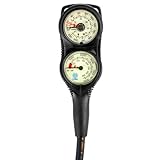
Overview: The Sea Elite Scuba Gauge Console delivers essential two-gauge instrumentation in a compact, budget-friendly package. Combining reliable analog pressure and depth gauges, this console targets recreational divers seeking straightforward functionality without compass complexity. Its corrosion-resistant construction ensures durability in saltwater environments while maintaining an ergonomic profile for comfortable diving.
What Makes It Stand Out: This console’s primary distinguishing factor is its aggressive pricing paired with professional-grade corrosion resistance. The compact design minimizes drag and gear bulk, appealing to traveling divers and those favoring streamlined setups. Versatile compatibility across various scuba configurations makes it an accessible entry point for new divers building their first kit.
Value for Money: At $89.94, this represents exceptional value in the two-gauge category, undercutting most competitors by $30-50. While lacking a compass and modular upgrade paths, the robust construction and reliable analog mechanisms provide performance that punches above its price class. This is arguably the best budget console for divers not requiring integrated navigation.
Strengths and Weaknesses: Strengths: Extremely affordable; corrosion-resistant materials; compact and lightweight; straightforward analog operation; ideal for travel and minimalist setups.
Weaknesses: No integrated compass; no modular computer upgrade capability; limited information on luminescent features; basic feature set may not satisfy advanced divers; brand recognition lower than premium manufacturers.
Bottom Line: The Sea Elite console is a no-brainer for budget-conscious divers or as a reliable backup system. Its simplicity and durability make it perfect for training and recreational diving, though you’ll need a separate compass for navigation. Excellent value proposition for those prioritizing cost over features.
4. Blue Reef Nano 2 Gauge Console - White Dial

Overview: The Blue Reef Nano 2 Gauge Console packs professional-grade engineering into an ultra-compact footprint. Featuring precision phosphor bronze C Bourdon tube depth measurement and nickel-plated brass construction, this console meets stringent EN250:2014 and European Regulation 2016/425 safety standards. The 1.5-inch gauge diameter creates minimal drag while delivering accurate readings to 200 feet.
What Makes It Stand Out: Certification to EN250:2014 standards represents rigorous testing for breathing apparatus, instilling confidence in high-pressure performance. The phosphor bronze Bourdon tube offers superior elasticity and accuracy compared to standard brass tubes. Luminous dials provide exceptional low-light visibility, while the polycarbonate window resists scratching and impact better than traditional glass.
Value for Money: At $119.95, this console occupies the sweet spot between budget alternatives and premium brands. The European safety certifications and high-end internal components justify the moderate price premium over entry-level units. For divers wanting verified performance without SCUBAPRO pricing, this represents compelling value.
Strengths and Weaknesses: Strengths: EN250:2014 certified; phosphor bronze Bourdon tube; luminous dial visibility; ultra-compact 1.5" design; scratch-resistant polycarbonate; nickel-plated brass durability.
Weaknesses: Two-gauge only (no compass); limited brand recognition; no modular upgrade path; smaller gauges may be harder to read for some divers; no mention of included hose protector.
Bottom Line: The Blue Reef Nano excels for divers demanding certified performance in a travel-friendly package. Its European safety compliance and quality internals make it a smart choice for serious recreational divers who prioritize accuracy and certification over brand name. Consider adding a wrist compass for complete navigation.
5. SCUBAPRO 2-Gauge U-Line Diving Console, PGPSI DGFT

Overview: The SCUBAPRO 2-Gauge U-Line Console represents premium analog instrumentation from diving’s most respected manufacturer. Housed in a compact plastic case, this console features a 0-6,000 psi pressure gauge and oil-filled depth gauge rated to 200 feet. Weighing just 0.75 pounds, it maintains SCUBAPRO’s reputation for reliability while offering expandability through optional C1 compass attachment.
What Makes It Stand Out: SCUBAPRO’s legacy of professional-grade equipment ensures exceptional reliability and resale value. The oil-filled depth gauge with linear Bourdon tube design provides consistent accuracy across the entire depth range. The modular expansion capability allows adding a compass without replacing the entire console, protecting your investment as diving needs evolve.
Value for Money: At $269.00, this commands a significant premium over competitors. You’re investing in brand reputation, proven field reliability, and exceptional customer support. While functionally similar to consoles costing half as much, the SCUBAPRO name carries weight in technical and professional diving circles. The one-year warranty provides peace of mind absent in cheaper alternatives.
Strengths and Weaknesses: Strengths: SCUBAPRO brand reliability; oil-filled depth gauge; modular compass expansion; lightweight 0.75-pound design; professional diver acceptance; one-year warranty; high 6,000 psi pressure rating.
Weaknesses: Premium pricing; plastic case feels less robust than metal alternatives; no compass included at this price; limited luminescence details; two-gauge only limits functionality versus triple consoles.
Bottom Line: This console justifies its premium for divers who demand SCUBAPRO reliability and plan to expand their system later. Ideal for professionals and brand-loyal enthusiasts, though budget-conscious divers may find better value elsewhere. The modular design and warranty make it a sound long-term investment for serious underwater exploration.
6. SCUBAPRO 2-Gauge Diving Console, Imperial

Overview:
The SCUBAPRO 2-Gauge Diving Console delivers essential dive data in a rugged analog format. This console combines a brass-cased pressure gauge reading 0-5,000 psi with a depth gauge capable of measuring to 150 feet. Designed for divers who appreciate traditional instrumentation, it features a maximum depth indicator and a molded eye for secure retractor attachment.
What Makes It Stand Out:
SCUBAPRO’s reputation for reliability shines through in the brass housing construction, offering exceptional durability compared to plastic alternatives. The max depth indicator is a valuable feature for logging dives and monitoring personal limits. The console’s streamlined design keeps your gauge setup simple and clutter-free.
Value for Money:
While pricing isn’t specified, SCUBAPRO’s typical positioning suggests mid-range value. The brass construction and brand pedigree justify a premium over budget plastic consoles. It competes favorably with other two-gauge setups from brands like Aqua Lung, though the one-year warranty is shorter than some competitors.
Strengths and Weaknesses:
Strengths include robust brass casing, trusted brand reputation, straightforward operation, and the useful max depth indicator. Weaknesses are the lack of integrated compass, imperial-only measurements limiting international use, absence of luminescent dials for low-light visibility, and a relatively brief one-year warranty.
Bottom Line:
This console suits experienced divers who prioritize durability and brand reliability over advanced features. It’s an excellent choice for those wanting a no-frills, dependable analog setup, though the missing compass means you’ll need additional navigation tools.
7. Mares Mission Puck 3 Scuba Diving Computer Console - Puck Computer w/Compact Easy-to-Read Pressure Gauge & Integrated Analog Compass

Overview:
The Mares Mission Puck 3 integrates a full-featured dive computer with essential analog gauges in one streamlined console. At its heart is the intuitive Puck computer with air, nitrox, and bottom timer modes, paired with a compact pressure gauge and integrated analog compass. The high-contrast display features large characters and a 170-degree viewing angle for exceptional underwater readability.
What Makes It Stand Out:
The single-button “Easy Access” system simplifies underwater navigation dramatically, allowing quick mode changes without fumbling. The integrated analog compass provides reliable navigation backup independent of battery power. Multiple attachment points offer versatile mounting options, while the backlight ensures visibility during night dives.
Value for Money:
At $269.94, this console sits in the sweet spot for entry-level dive computers with integrated gauges. It’s significantly less expensive than air-integrated computers while offering more functionality than pure analog consoles. The inclusion of three instruments in one justifies the price point.
Strengths and Weaknesses:
Strengths include intuitive operation, clear display, multiple dive modes, and the analog compass backup. Weaknesses involve the single-button interface potentially slowing complex adjustments, lack of air integration requiring hose connection, and limited advanced features for technical divers.
Bottom Line:
Perfect for recreational divers seeking their first computer console. The Mission Puck 3 balances simplicity, functionality, and price exceptionally well, making it an ideal upgrade from analog-only setups.
8. MARES Mission 2C Analog Console with Diving Pressure Gauge and Diving Compass

Overview:
The Mares Mission 2C Analog Console combines two critical dive instruments—pressure gauge and compass—into a single, compact unit. Designed for divers who prefer analog reliability, it features a 300-bar pressure gauge housed in a brass case with a phosphorescent dial for low-light visibility. The oil-immersed compass is uniquely angled to allow simultaneous monitoring of both instruments.
What Makes It Stand Out:
The inclined compass position is genuinely innovative, letting you check direction and air supply without repositioning the console. The side reading window on the compass enables quick bearings checks. A protective rubber boot with multiple attachment points shields against impacts while offering flexible mounting options.
Value for Money:
At $99.95, this is one of the most affordable quality console options available. It delivers essential functionality without the premium price tag of three-gauge setups or dive computers. For budget-conscious divers or as a backup system, it’s exceptional value.
Strengths and Weaknesses:
Strengths include the simultaneous instrument viewing, excellent price point, durable construction, and clear phosphorescent dial. Weaknesses are the lack of a depth gauge requiring separate purchase, analog-only display without digital precision, and no nitrox or advanced features.
Bottom Line:
An outstanding budget choice for divers needing reliable pressure and navigation monitoring. The clever compass angle makes it more practical than traditional side-by-side consoles, though you’ll need a separate depth gauge to complete your setup.
9. SCUBAPRO 3-Gauge Inline Scuba Diving Console with Pressure Gauge, Depth Gauge, and FS-1.5 Compass, Imperial Display

Overview:
The SCUBAPRO 3-Gauge Inline Console represents the pinnacle of analog instrumentation, combining pressure, depth, and compass in a streamlined inline configuration. The pressure gauge reads up to 6,000 psi, while the oil-filled depth gauge uses a linear Bourdon tube design for superior accuracy. The FS-1.5 compass features a 26-degree tilt for easy navigation.
What Makes It Stand Out:
The inline design keeps the console compact and reduces drag compared to clustered gauges. SCUBAPRO’s oil-filled technology enhances accuracy and reliability in both depth and compass modules. The higher 6,000 psi pressure range accommodates high-pressure steel tanks, and the two-year warranty reflects confidence in durability.
Value for Money:
At $299.00, this premium console commands top dollar for analog gauges. The price reflects SCUBAPRO’s engineering excellence and build quality. While expensive compared to digital alternatives, it offers unmatched analog precision and reliability for divers who trust traditional instruments.
Strengths and Weaknesses:
Strengths include premium build quality, accurate Bourdon tube depth gauge, tilt-compensated compass, and streamlined profile. Weaknesses involve the high price for non-digital technology, imperial-only measurements, and limited features compared to similarly priced computers.
Bottom Line:
Ideal for serious divers who demand the best analog instrumentation. If you prefer mechanical reliability over electronic complexity and appreciate premium craftsmanship, this console justifies its price through exceptional accuracy and durability.
10. Aqua Lung Console 2 Met Scuba Dive Gauges

Overview:
The Aqua Lung Console 2 Met delivers essential analog gauges in a rugged plastic housing designed for metric-measuring divers. It provides precise depth readings from 0-60 meters and pressure readings up to 350 bar, with luminous dials ensuring visibility in low-light conditions. The console is nitrox-compatible up to 50% oxygen.
What Makes It Stand Out:
Nitrox compatibility up to 50% is a standout feature rarely found in analog consoles at this price point. The luminous dials on both gauges enhance safety during deep or night dives. The robust plastic construction offers excellent impact resistance while keeping weight manageable for travel.
Value for Money:
At $199.00, this console occupies the middle ground between budget and premium options. The nitrox capability adds significant value for divers pursuing enriched air certifications. It undercuts three-gauge consoles while offering more versatility than basic two-gauge setups.
Strengths and Weaknesses:
Strengths include nitrox readiness, clear luminous displays, durable housing, and two-year warranty. Weaknesses are the lack of integrated compass, metric-only measurements limiting flexibility, plastic construction feeling less premium than brass, and no max depth indicator.
Bottom Line:
A solid mid-range choice for nitrox-certified divers who prefer metric measurements. The luminous dials and robust build make it practical for various conditions, though you’ll need a separate compass for navigation. Excellent value for enriched air divers on a budget.
Understanding Scuba Gauge Consoles: Your Dashboard Underwater
What Exactly Is a Scuba Gauge Console?
A scuba gauge console is essentially your underwater cockpit—an integrated assembly that combines multiple critical instruments into a single, manageable unit. Unlike the old-school approach of clipping separate pressure gauges, depth gauges, and compasses to various D-rings, a console creates a cohesive ecosystem where everything lives in one place. The core philosophy centers on reducing failure points: fewer hose connections, fewer clip attachments, and fewer opportunities for entanglement. Most configurations anchor to your first stage via a single high-pressure hose, then cascade information through analog dials, digital displays, or hybrid systems that give you real-time data on air consumption, depth, direction, and sometimes even temperature or no-decompression limits.
The Evolution from Individual Gauges to Integrated Systems
The journey from dangling instruments to sleek consoles mirrors the broader evolution of diving itself. Early recreational divers in the 1960s and 70s often dove with separate components—a simple submersible pressure gauge (SPG) clipped to a waist belt, a depth gauge worn on the wrist, and a compass stashed in a pocket. This piecemeal approach created a spaghetti mess of equipment that could snag on kelp, wreckage, or even your own fins. The first integrated consoles emerged in the 1980s as brass-and-chrome blocks that combined SPG and depth gauge, heavy but revolutionary. Today’s systems leverage lightweight composites, digital technology, and ergonomic design to create instruments that are practically invisible until you need them.
Why a Streamlined Setup Matters: Beyond Aesthetics
Safety Benefits of an Organized Console
When seconds matter, muscle memory and intuitive access to information become critical. A streamlined console positions all your vital data in one predictable location, eliminating the mental processing time spent wondering “where did I clip my pressure gauge?” During emergency scenarios like an out-of-air situation or rapid ascent, fumbling for scattered instruments compounds stress and delays response. A properly configured console keeps your SPG, depth, and compass aligned in your natural field of view, allowing you to simultaneously monitor multiple parameters with a single glance. This integrated approach also reduces the risk of losing individual instruments—when everything’s connected, nothing gets left behind on the dive boat or dropped into the abyss.
Improved Buoyancy and Trim
Every dangling piece of gear creates micro-drag that affects your position in the water column. A swinging gauge acts like a small parachute, pulling you off-axis and forcing constant micro-adjustments that waste energy and air. Integrated consoles, especially when paired with proper hose management, tuck tight against your body, maintaining your hydrodynamic profile. This reduction in drag translates directly to better gas efficiency—some instructors estimate that a clean setup can improve air consumption by 5-10% simply by eliminating unnecessary resistance. For photographers and videographers, this stability is non-negotiable; a stable platform starts with gear that doesn’t move independently of your body.
Reduced Entanglement Hazards
Wreck divers, cave explorers, and even those navigating through dense kelp forests understand that loose equipment equals entrapment risk. Individual gauges create multiple snag points where monofilament fishing line, net fragments, or natural debris can catch. A streamlined console minimizes these protrusions, with smooth edges and consolidated hoses that are easier to keep close to your body. Many modern designs feature recessed compass housings and streamlined SPG boots that prevent line from finding purchase. This isn’t just about convenience—it’s about ensuring you can extricate yourself from hazards without becoming trapped by your own equipment.
Key Components of Modern Gauge Consoles
Pressure Gauges: Digital vs Analog
The heart of any console is its pressure gauge, and the choice between analog and digital defines your entire user experience. Analog SPGs use a Bourdon tube mechanism—simple, reliable, and requiring no batteries. They’re immune to electronic failures and give you an at-a-glance reading that’s easy to interpret even with peripheral vision. Digital pressure displays, often integrated into dive computers, offer precision down to the single PSI or bar, plus additional data like estimated air time remaining (ATR) based on your current consumption rate. The trade-off? Batteries that can die and screens that may fog or crack. Many divers opt for hybrid setups: a primary digital computer with a backup analog SPG on the same console, providing redundancy without bulk.
Depth Gauges: Precision Monitoring
Depth information comes in three flavors: analog capillary gauges, analog Bourdon tube gauges, and digital pressure transducers. Capillary gauges use a simple air-filled tube that compresses with depth—bulletproof but less precise. Bourdon tube analog gauges offer better accuracy and integrate seamlessly with SPGs in a single housing. Digital depth sensors provide exact readings, often to 0.1 foot or meter increments, and can calculate rate of ascent with far greater accuracy than mechanical systems. For decluttering, digital integration wins: one screen, multiple data points, no additional dials needed.
Compasses: Navigation Essentials
The compass is often the Achilles’ heel of cluttered setups. Wrist-mounted compasses require you to extend your arm and hold still, while console-mounted versions keep navigation tools in your core vision. Look for consoles with oil-filled compasses that tilt up to 30 degrees while maintaining accuracy—these allow quick bearings without perfect alignment. Some advanced systems integrate electronic compasses into dive computers, offering digital headings and automatic logging of your swim path. The key is ensuring the compass is positioned on the console so it doesn’t interfere with reading your pressure or depth, typically mounted on the back or side of the main housing.
Dive Computers: The Smart Integration
Modern dive computers have become the ultimate decluttering tool, consolidating depth, time, no-decompression limits, ascent rate, temperature, and often air pressure into a single display. When console-mounted, they eliminate the need for separate depth gauges and timers while providing real-time algorithms that adjust your dive profile dynamically. The best console computers feature user-replaceable batteries, Bluetooth connectivity for downloading dive logs, and customizable displays that let you prioritize the information you actually need. However, they still require a backup analog SPG for redundancy—smart divers never trust a single electronic device with their life support.
The Decluttering Philosophy: Less Is More
The Minimalist Approach to Dive Gauges
Minimalism in diving doesn’t mean diving with less safety; it means diving with less redundancy of function. The minimalist’s console might consist of a single air-integrated dive computer with a backup analog SPG, period. Everything else—depth, time, temperature, decompression status—flows through the computer. This approach works brilliantly for recreational divers who stay within no-decompression limits and dive predictable profiles. The console becomes a small, lightweight unit that clips cleanly to a chest D-ring or retracts to a belt, virtually disappearing from your awareness until needed.
Modular Systems: Customization Without Chaos
For divers who want options without clutter, modular consoles offer the holy grail of customization. These systems use a backbone or rail design where you can add or remove components like gas pressure gauges for sidemount tanks, redundant computers, or specialty sensors. The genius lies in the mounting mechanism: each module clicks into place with a secure locking system, creating a rigid assembly that behaves as one unit. You can start with a basic SPG+depth combo and expand to a three-gas tech configuration without replacing the entire system. This adaptability means your console evolves with your training, not against it.
Material Matters: Durability and Weight Considerations
Brass and Chrome: Traditional Reliability
Old-school brass consoles are practically indestructible. They can survive being run over by a dive boat (though we don’t recommend testing this) and their weight helps them hang naturally in a predictable position. The downside? That same weight becomes noticeable on long dives or when traveling. Brass also requires periodic chrome polishing to prevent corrosion in saltwater environments. For divers who prioritize bomb-proof reliability over ounces, brass remains the gold standard—especially for technical diving where equipment failure isn’t an option.
Lightweight Composites: Modern Solutions
Carbon fiber reinforced polymers and high-impact plastics have revolutionized console design, shedding up to 60% of the weight compared to brass while maintaining impressive durability. These materials don’t corrode, resist impact better than metal, and can be molded into ergonomic shapes that fit naturally in your hand. The trade-off is they can feel “cheap” to divers accustomed to heft, and extreme cold can make some plastics brittle. For travel divers and those with back or shoulder issues, the weight savings alone justify the investment.
Impact Resistance and Longevity
Your console will get dropped, banged against tank valves, and knocked on rocks. Look for designs with recessed gauge faces protected by raised bezels, and consider consoles with replaceable protective boots. Some manufacturers design their housings to absorb impact by flexing slightly rather than transferring shock directly to the gauge mechanism. Remember: a console that cracks underwater creates a flood path that can destroy multiple instruments simultaneously. Durability isn’t just about surviving the surface; it’s about maintaining integrity at depth where pressure amplifies every weakness.
Ergonomics and Readability: Critical Factors
Gauge Size and Visibility
Bigger isn’t always better when it comes to console gauges. Oversized dials create bulk and weight, while undersized ones strain your eyes and force you to bring the console uncomfortably close to your mask. The sweet spot for analog gauges is typically 2-2.5 inches in diameter, providing clear visibility of markings without dominating your setup. For digital displays, pixel density and backlight brightness matter more than sheer screen size. Consider your vision: if you dive with contacts or have aging eyes, high-contrast faces and backlit screens aren’t luxuries—they’re necessities.
Night Diving and Low-Light Readability
When you’re 80 feet down at dusk, glowing in the dark isn’t optional. Analog gauges should have luminescent faces that charge quickly from your dive light and glow brightly for several minutes. Digital displays need adjustable LED backlighting that won’t blind your night-adapted vision. Some advanced consoles feature ambient light sensors that automatically adjust brightness, while others allow you to toggle between red and white illumination to preserve night vision. Test any console in actual low-light conditions before committing—what looks bright in the dive shop may fade to uselessness at depth.
Console Layout and User Experience
The arrangement of information on your console should match your mental priority hierarchy. Your SPG should occupy the most prominent position—typically top-center—since air supply is your most critical parameter. Depth gauge sits adjacent, with compass positioned where it won’t interfere with reading the other two. For computer-integrated consoles, customizable screen layouts let you position your “big three” (air, depth, NDL) prominently while tucking secondary data like temperature or dive time into corners. The best consoles feel intuitive within three dives; if you’re still hunting for information after a dozen dives, the layout is working against you.
Mounting Configurations: Finding Your Perfect Fit
Hose-Mounted Consoles
The traditional approach secures the console to your first stage via a high-pressure hose, typically 24-32 inches long. This keeps the console hanging near your waist or chest, easily accessible with either hand. The key to decluttering is hose length: too short and you can’t read it comfortably; too long and it flops around creating drag and entanglement risk. Many divers route the hose under their arm and clip the console to a chest D-ring, creating a clean sweep that stays close to the body. Swivel fittings at the first stage and console connection points add flexibility, preventing kinks and allowing natural movement.
Wrist-Mounted Alternatives
Some divers move their primary computer to the wrist and mount only an analog SPG on a short hose, creating the ultimate minimalist console. This configuration puts depth and time information in constant view while keeping the SPG tucked away but accessible. The downside: you lose the integrated feel of having everything in one place, and wrist-mounted computers are more vulnerable to impact and can interfere with wrist seals on drysuits. For photographers who need their hands free, this split approach often works better than a dangling console that gets in the way of camera controls.
Retractor and Clip Systems
The secret weapon for a truly clean setup is a quality retractor system. These devices clip to your BC and keep the console pulled tight against your body when not in use, extending only when you pull it to read. Look for retractors with at least 24 inches of Kevlar-reinforced cord and a locking mechanism that holds the console at extension. Magnetic clips offer silent operation and one-handed release, while traditional snap clips provide bomb-proof security. The retractor should mount to a location that allows the console to retract to the same spot every time—typically on the left chest D-ring for right-handed divers.
Hose Management: The Unsung Hero of a Clean Setup
High-Pressure Hose Length and Routing
Your HP hose is the literal connection between console and tank, and its management makes or breaks a streamlined rig. The optimal length depends on your body size and where you mount the console. Most divers find 28-32 inches ideal for chest mounting, while shorter 24-inch hoses work for waist-level positioning. Route the hose under your left arm (for standard regulator configurations) and secure it with hose retainers on your BC shoulder strap. This creates a clean line that doesn’t interfere with your regulator hoses and keeps the console’s movement isolated from your head movements.
Swivel Fittings and Flexibility
Static hose connections force your console into awkward positions as you move. A 360-degree swivel at the first stage allows the hose to rotate naturally, preventing stress on the O-rings and letting the console hang freely. Some advanced consoles feature a secondary swivel at the gauge housing, giving you even more positioning freedom. However, each swivel is a potential failure point, so quality matters—look for chromed brass construction with double O-rings rather than plastic fittings that can crack under pressure.
Quick Disconnect Systems
For travelers and divers who frequently swap gear between tanks, quick disconnect (QD) fittings on HP hoses are game-changers. These allow you to detach the console without tools, making gear rinsing and transport much easier. The best QD systems have a built-in shutoff that prevents air loss when disconnected and feature a locking mechanism that can’t be accidentally released. Just remember that each connection adds a tiny bit of height to your first stage, so ensure clearance with your tank valve and regulator orientation.
Air Integration: Cutting the Cord
How Wireless Transmitters Work
True decluttering nirvana comes from eliminating the HP hose entirely. Wireless transmitters screw into your first stage’s HP port and broadcast tank pressure to a wrist or console-mounted computer via low-frequency radio signals. This creates a hose-free setup that’s incredibly clean and reduces failure points. The transmitter typically samples pressure every few seconds and can also calculate your surface air consumption (SAC) rate in real-time, giving you incredibly accurate air time remaining calculations based on your actual breathing pattern, not just depth.
Benefits of Hose-Free Monitoring
Beyond the obvious aesthetic of a hose-free rig, wireless integration offers practical advantages. Your console becomes lighter and more compact, often just a small computer with a backup analog SPG. The elimination of the HP hose removes a significant entanglement risk and reduces the number of O-rings that need maintenance. For photographers and videographers, the freedom to move without a hose pulling on your gear is transformative. The system also allows easy monitoring of multiple tanks—sidemount divers can have two transmitters feeding data to one display.
Battery Life and Reliability Considerations
The Achilles’ heel of wireless systems is battery dependency. Transmitters typically use coin cell batteries that last 100-300 dives, but they always die at the worst possible moment. Always carry spare transmitter batteries in your save-a-dive kit, and consider consoles that display transmitter battery status. Signal interference is rare but can occur near powerful magnets or some camera strobes. Most systems have a backup mode where the computer reverts to time-based air consumption estimates if signal is lost, but this is no substitute for a direct pressure reading. That’s why even wireless devotees keep a tiny analog SPG as a backup.
Specialty Consoles for Different Diving Styles
Technical Diving Consoles
Tech divers need redundancy without redundancy of bulk. Their consoles often feature dual SPGs—one for bottom gas, one for deco gas—mounted on a single backbone with a primary and backup computer. These systems use isolator manifolds and are designed to be read while wearing thick gloves in zero visibility. The layout prioritizes gas pressure above all else, with large, high-contrast analog gauges that can be interpreted by touch if necessary. Materials are chosen for extreme durability, and modularity is essential for reconfiguring between different dive plans.
Sidemount Configurations
Sidemount diving presents unique challenges since you have two independent gas sources. The cleanest sidemount setups use two short HP hoses (16-20 inches) that route directly to each tank’s first stage and clip to the diver’s harness near the hips. The console itself is often minimal—a small computer on a retractor, with SPGs left clipped but accessible. Some advanced sidemount divers use wireless transmitters on both tanks feeding a single computer that displays both pressures simultaneously, eliminating hoses entirely while maintaining full redundancy.
Cold Water vs Warm Water Designs
Cold water consoles need to function in near-freezing temperatures where lubricants thicken and plastics become brittle. They feature larger, glove-friendly buttons and displays with wider temperature operating ranges. Warm water consoles prioritize compactness and weight savings, using lighter materials and smaller displays since divers wear less bulky gear. If you dive both environments, choose a console rated for at least 28°F (-2°C) even if you primarily dive warm water—it’s better to have capacity you don’t need than to have your console freeze up on an unexpected cold dive.
Maintenance and Care: Protecting Your Investment
Rinsing and Storage Best Practices
Salt crystals are your console’s mortal enemy. After every dive, rinse your entire console assembly—especially the hose connections and swivel joints—with fresh water. Don’t use high-pressure sprays that can force water past O-rings; a gentle soak or low-pressure rinse is ideal. Allow the console to dry completely before storing it in a cool, dark place. For long-term storage, loosen the HP hose connection slightly to relieve pressure on the O-ring, and remove batteries from digital components to prevent corrosion.
O-Ring Inspection and Replacement
The HP hose O-ring is the most common failure point in any console system. Inspect it before every dive trip—look for cracks, flattening, or debris. Replace it at the first sign of wear; O-rings cost pennies, but a flooded console costs hundreds. Keep a small O-ring kit specific to your console’s connections in your save-a-dive kit. When installing a new O-ring, lubricate it lightly with oxygen-compatible grease (even for air dives) to ensure proper seating and prevent pinching.
Calibration and Service Intervals
Analog depth gauges should be calibrated annually against a known reference, as they can drift over time. Most dive shops have a calibration chamber for this service. Digital computers need firmware updates and battery service according to manufacturer schedules—typically every 2-3 years or 300 dives. Don’t skip these services; a console that’s inaccurate by just 5 feet can affect your decompression calculations and air consumption estimates. Keep a service log with dates, just like you would for your regulator.
Budget Considerations: Value vs Premium Features
Entry-Level vs Professional-Grade Consoles
Entry-level consoles ($150-300) typically combine analog SPG and depth gauge in a simple housing. They’re reliable but lack modularity and often use basic materials. Mid-range options ($300-600) introduce digital depth sensors, better materials, and sometimes integrated compasses. Premium consoles ($600-1200+) feature air integration, full dive computers, modular backbones, and materials like carbon fiber. The law of diminishing returns hits hard around the $800 mark—beyond that, you’re paying for brand prestige or highly specialized tech features. For most recreational divers, a quality mid-range console offers the best balance of features and value.
Long-Term Cost of Ownership
That budget console that saves you $200 upfront might cost more over five years. Factor in battery replacement costs (some digital units require factory service), hose replacement every 3-5 years, and service intervals. A modular system might cost more initially but allows incremental upgrades rather than complete replacement as your skills advance. Consider resale value too—premium consoles from established brands retain 40-60% of their value after several years, while budget options become essentially worthless. Think of it as cost-per-dive: a $600 console used for 200 dives costs $3 per dive, while a $200 console that needs replacement after 100 dives costs $2 per dive but offers inferior experience and safety.
Common Mistakes to Avoid When Choosing a Console
Overbuying Features You Won’t Use
That console with trimix algorithms and six-gas switching capability looks impressive, but if you’re only doing tropical reef dives to 60 feet, you’re carrying complexity that adds no value. Every feature increases cost, weight, and potential failure points. Be honest about your actual diving: if you don’t plan to go technical in the next three years, don’t buy tech-grade gear. You can always upgrade later, and by then, the technology will be better and cheaper.
Ignoring Compatibility Issues
Not all HP hoses fit all first stages, and not all consoles work with all wireless transmitters. Before purchasing, verify thread compatibility (most are 7/16"-20 UNF, but some European models use different specs). If you’re considering air integration, ensure the transmitter is compatible with your regulator’s HP port spacing—some first stages have ports too close together for certain transmitter designs. Bring your regulator to the shop and physically test the fit before buying.
Prioritizing Price Over Quality
A console is life-support equipment, not a fashion accessory. That no-name brand offering a full-featured computer console for $150 less than established brands is cutting corners somewhere—usually in O-ring quality, sensor accuracy, or customer support. Stick to manufacturers with proven track records and authorized service centers. The extra cost buys you reliability, accurate algorithms, and the confidence that your gear won’t fail when you need it most.
Future Trends in Dive Console Technology
AI-Powered Analytics
The next generation of consoles is beginning to incorporate artificial intelligence that learns your breathing patterns and predicts air consumption with startling accuracy. These systems can alert you to unusual consumption patterns that might indicate equipment leaks or physical distress. Some prototypes even integrate heart rate monitors to detect stress or overexertion, adjusting your no-decompression limit in real-time based on physiological data rather than just depth and time.
Enhanced Connectivity and Data Logging
Future consoles will function as comprehensive dive data hubs, connecting wirelessly to your mask-mounted heads-up display, underwater camera, and even your buddy’s console. Imagine seeing your buddy’s air pressure and depth on your own display, or having your console automatically geotag photos with depth and temperature data. Cloud integration will allow instant dive log uploads and algorithm updates, while social features might let you share profiles and compare stats. The goal is a fully connected ecosystem where your console becomes the central nervous system of your entire dive operation.
Frequently Asked Questions
1. What’s the ideal number of instruments on a console for recreational diving?
For most recreational divers, a two-instrument console (pressure gauge and depth gauge or computer) plus a compass provides everything needed without excess bulk. If you use an air-integrated computer, you can reduce this to a single computer with a backup analog SPG. The key is ensuring each instrument provides unique, critical information rather than redundant data.
2. How often should I replace my high-pressure hose?
Replace HP hoses every 3-5 years or immediately if you notice any cracks, bulges, or damage to the outer braid. Even if they look perfect, the inner lining degrades over time. A burst HP hose at depth can cause catastrophic air loss in seconds. Many divers replace hoses proactively every 200 dives as cheap insurance.
3. Can I mix analog and digital components on the same console?
Absolutely, and this is often recommended for redundancy. A common setup is a digital dive computer for primary depth and time monitoring, paired with an analog SPG for pressure. This gives you the benefits of digital precision while maintaining a battery-independent backup for your most critical parameter: air supply.
4. What’s the best way to prevent console swing and drag?
Use a quality retractor system mounted to a chest D-ring, combined with a properly sized HP hose (28-32 inches for most divers). Route the hose under your arm and secure it to your BC shoulder strap with a hose retainer. This keeps the console pulled tight against your body when not in use while allowing full extension for reading.
5. Are wireless air transmitters reliable enough for primary monitoring?
Yes, modern transmitters are highly reliable, but they should never be your only pressure reference. Always maintain a backup analog SPG, even if it’s a tiny gauge on a short hose. Transmitter batteries die, signals can drop, and electronics can flood. Think of wireless as convenience layered on top of redundancy, not a replacement for it.
6. How do I choose between a console-mounted and wrist-mounted dive computer?
Choose console-mounted if you prefer all information in one place and dive primarily in cold water where wrist seals make wrist computers awkward. Choose wrist-mounted if you’re a photographer, videographer, or frequent night diver who needs constant depth/time visibility without reaching for a console. Many divers use both—wrist computer as primary, console as backup.
7. What’s the advantage of modular console systems?
Modular systems grow with your diving. You can start with a basic SPG+depth setup and add components like a compass, redundant computer, or additional SPGs for technical diving without buying a whole new console. This saves money long-term and reduces waste. The rigid backbone also prevents individual components from twisting relative to each other, improving readability.
8. How do I maintain my console’s compass accuracy?
Keep your console away from strong magnets and magnetic fields (some camera strobes, tank holders, etc.). Test accuracy periodically by comparing against a known bearing on land. If the compass develops an air bubble, has sticky movement, or shows inconsistent readings, have it serviced immediately. Oil-filled compasses should be professionally inspected every two years.
9. Can a streamlined console really improve my air consumption?
Yes, by reducing drag and entanglement risk. A clean setup reduces the micro-adjustments you make to compensate for swinging gear, which lowers your overall exertion and breathing rate. While the improvement varies by diver, many report 5-10% better air efficiency after streamlining their console and hose routing. The psychological benefit of feeling less cluttered also promotes calmer breathing.
10. What should I look for in a console if I dive both warm and cold water?
Choose a console rated for at least 28°F (-2°C) operation, with large, glove-friendly buttons and a display that remains legible in low temperatures. Materials should be impact-resistant in cold conditions—avoid cheap plastics that become brittle. A modular system is ideal, allowing you to configure a minimal warm-water setup and expand it with redundant components for cold-water diving where gear failures are more dangerous.