You’ve been counting laps in your head since you were eight years old, squinting at the pace clock between repeats, and trying to remember if that last 100 felt faster or just more painful. For decades, swimming improvement meant relying on feel, a coach’s sharp eye, and the occasional timed test set. But we’re living in a different aquatic era now—one where invisible sensors can decode every stroke, every turn, and every micro-pause in ways your brain simply cannot. Swimming metrics trackers have evolved from novelty gadgets into essential training partners that reveal the blind spots in your technique and the hidden patterns in your fatigue.
The difference between a good swimmer and a great one often isn’t talent or even effort—it’s the ability to make precise, data-driven adjustments. Whether you’re a masters athlete chasing a personal best, a triathlete trying to tame the swim leg, or a competitive swimmer building your championship season, the right metrics transform abstract feelings into actionable intelligence. This guide dives deep into what makes these devices game-changers, which features actually matter, and how to choose a system that aligns with your specific goals without drowning in unnecessary data.
Top 10 Swimming Pool Performance Trackers
Detailed Product Reviews
1. SC SPORTCOUNT 200 Lap Counter Timer - Waterproof Tracker for Swimming and Running - Records Laps and Times

Overview: The SC SPORTCOUNT 200 is a purpose-built lap counter for athletes who prioritize function over flash. This waterproof device tracks up to 200 laps while delivering instant split and elapsed time feedback. Worn on your finger, its minimalist design serves swimmers, runners, and triathletes without the distractions of modern smartwatches.
What Makes It Stand Out: What distinguishes this device is its ruthless focus. A single button controls everything—lap counting, pausing, and reviewing results—keeping your mental energy on performance, not navigation. The 50-meter waterproof rating exceeds most fitness trackers, while the pause function ensures rest intervals don’t corrupt your data. It’s the tool competitive athletes reach for when they need bulletproof reliability in demanding conditions.
Value for Money: Priced at $44.95, it carves a niche between $10 pool counters and $150+ smartwatches. You’re investing in specialized durability rather than bundled features. Unlike budget wearables that compromise waterproofing or accuracy, this single-purpose device delivers consistent results without monthly subscription fees or complex setup.
Strengths and Weaknesses: Pros: Intuitive one-button operation; superior 50m waterproofing; ergonomic finger placement; distraction-free design; proven track record; generous 200-lap memory. Cons: Basic LCD display; lacks heart rate and advanced stroke metrics; no Bluetooth syncing; limited to counting and timing.
Bottom Line: For dedicated swimmers and runners seeking simplicity, this is a compelling choice. It won’t replace your smartwatch, but it will reliably track laps when you need to stay competitive without digital interruptions.
2. Parsonver Swimming Smart Watch, 5ATM Waterproof for Pool & Open Water, Built-in GPS & Compass, AMOLED Fitness Tracker with 100+ Sports Modes, Heart Rate & Sleep Monitor, AI Swim Analysis, French Grey

Overview: The Parsonver Swimming Smart Watch positions itself as a premium multisport wearable at a mid-tier price. With 5ATM waterproofing, built-in GPS, and an AMOLED display, it targets serious athletes who want Garmin-like features without the premium cost. The watch tracks over 100 sports modes while providing specialized swim metrics including stroke type, SWOLF score, and underwater heart rate.
What Makes It Stand Out: Its standout feature is AI-powered swim analysis that delivers technique tips through the companion app. The built-in GPS enables phone-free running and cycling, while the compass adds navigation confidence. Health monitoring extends beyond basics to include SpO2, stress tracking, and menstrual cycle monitoring—all viewable on a crisp 1.32-inch AMOLED screen with always-on capability.
Value for Money: At $68.55, this watch dramatically undercuts competitors offering similar specs. Devices with built-in GPS and AMOLED displays typically start above $150. While the brand lacks Garmin’s ecosystem, the hardware package delivers exceptional value, assuming the app experience holds up to its promises without hidden subscription costs.
Strengths and Weaknesses: Pros: Comprehensive swim analytics; built-in GPS and compass; vibrant AMOLED display; 100+ sport modes; 5ATM waterproofing; AI coaching insights. Cons: Unknown battery life with GPS; brand reliability unproven; app dependency for advanced features; potential accuracy concerns versus premium brands.
Bottom Line: This is an outstanding value for multisport athletes seeking advanced features on a budget. If the companion app delivers on its AI promises, it’s a legitimate Garmin alternative that punches well above its weight class.
3. Parsonver Smart Watch, 5ATM Waterproof Watch for Swimming, Fitness Activity Tracker with 110+ Sports Modes, Heart Rate/Sleep/SpO2/Calories Monitor, Pedometer, Fitness Watch for Android & iPhone, Black

Overview: The Parsonver Smart Watch proves that comprehensive fitness tracking doesn’t require a triple-digit investment. At just $25.88, this 5ATM waterproof wearable offers 110+ sports modes, continuous heart rate monitoring, SpO2 tracking, and sleep analysis. The 1.8-inch HD touchscreen provides smartphone notifications while maintaining 50-meter water resistance for swim tracking.
What Makes It Stand Out: This device democratizes features typically reserved for premium wearables. Automatic stroke detection covers all four major swim styles, delivering SWOLF scores and stroke counts. The health suite monitors stress levels and provides sedentary reminders, while specialized women’s health tracking adds inclusive functionality. With over 200 customizable watch faces and photo upload capability, personalization matches pricier alternatives.
Value for Money: The value proposition is undeniable—you’re getting $100+ worth of features for a quarter of the cost. While corners must be cut somewhere, the spec sheet doesn’t reveal obvious omissions. This makes it ideal for fitness newcomers or as a secondary “beater” watch for activities where you wouldn’t risk an expensive device.
Strengths and Weaknesses: Pros: Unbeatable price; 5ATM waterproofing; extensive sport modes; comprehensive health tracking; large customizable display; smartphone notifications. Cons: Build quality concerns at this price point; likely inferior sensor accuracy; battery life questions; unknown app reliability; no built-in GPS.
Bottom Line: For budget-conscious buyers wanting maximum features, this is a no-brainer entry point. Manage expectations on durability and precision, but enjoy the impressive functionality that makes fitness tracking accessible to everyone.
4. Swimming Tracker: The Must-have Accessory For Swimmers - Keep Track Of Your Training And Your Swimming Performance

Overview: The generically-named “Swimming Tracker” represents the most accessible entry point for lap counting at just $6.79. While product details are sparse, this price point typically indicates a basic mechanical or simple digital counter designed for poolside use. The device aims to eliminate mental lap counting for casual swimmers through straightforward operation, though specific features remain unspecified.
What Makes It Stand Out: Its primary distinction is extreme affordability—costing less than a pool pass. For swimmers tired of losing count during long sets, even basic functionality provides value. These devices usually feature a single button that increments each lap, with a small LCD showing cumulative counts. The “must-have accessory” positioning suggests it’s targeting absolute beginners rather than competitive athletes who need detailed metrics.
Value for Money: The value equation is simple: minimal investment for basic utility. At this price, durability and advanced features aren’t expectations. It competes with free mobile apps and mental counting, offering a tangible alternative that won’t fail if your phone dies. However, the lack of timing functions or waterproof specifications limits its utility for serious training.
Strengths and Weaknesses: Pros: Extremely affordable; simple operation; no charging required; lightweight; disposable price point. Cons: Unknown waterproof rating; lacks timing features; no data storage; questionable durability; minimal product information.
Bottom Line: Only consider this if you’re a recreational swimmer seeking the absolute cheapest solution. Competitive athletes should invest in more reliable tracking, but for beginners testing their commitment, the financial risk is virtually zero.
5. SPGUARD Holoswim2s AR Smart Swim Goggles with Swimming Fitness Tracker with Metrics Tracking & Real-time Display, Compatible with Garmin Watch and Open Water Mode

Overview: The SPGUARD Holoswim2s transforms swimming analytics by embedding an AR display directly into swim goggles. This breakthrough device projects real-time metrics—time, distance, laps, pace, and heart rate—within your natural field of vision, eliminating the disruptive need to check wrists or pool clocks. The built-in AI automatically recognizes four stroke types while calculating SWOLF scores and stroke counts with impressive precision.
What Makes It Stand Out: What separates this from every competitor is the heads-up display experience. The optical heart rate sensor provides continuous intensity monitoring, displayed alongside performance data so you can adjust effort instantly. The Holofit App extends value beyond the pool with detailed analytics, trend tracking, and personalized training plans. Four interchangeable nose bridges ensure custom fit, while the magnetic charging cable simplifies power management.
Value for Money: At $88.99, you’re paying for genuine innovation rather than incremental features. While expensive compared to basic trackers, it’s significantly cheaper than professional swim analysis systems. The 4-hour battery life covers most training sessions, though ironman-distance swimmers may need mid-day charging. Compatibility with Garmin watches suggests it’s designed to complement, not replace, existing ecosystems.
Strengths and Weaknesses: Pros: Revolutionary AR display; real-time metrics without interruption; AI stroke recognition; heart rate monitoring; comprehensive app integration; custom fit options. Cons: Premium pricing; limited 4-hour battery; potential display distraction; niche appeal; unproven long-term durability.
Bottom Line: For serious swimmers seeking immersive data and technique refinement, this is a game-changing investment that justifies its price through genuine innovation. The AR experience creates a training advantage worth the premium.
6. TOOBUR Smart Watch for Women Alexa Built-in, 1.8" Compatible Android iOS, Answer&Make Call/Step Counter/Sleep Tracker/100 Sports/Heart Rate, Fitness Tracker Watch IP68 Waterproof Swimming
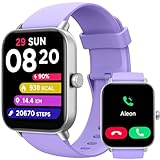
Overview: The TOOBUR Smart Watch delivers surprising sophistication at a budget price point. This wearable combines Alexa voice assistance, comprehensive health monitoring, and swim-ready waterproofing in a sleek package designed specifically for women. With compatibility across both Android and iOS platforms, it positions itself as a versatile alternative to premium brands without the premium cost.
What Makes It Stand Out: The integration of Alexa at under $40 is remarkable, offering hands-free control for smart home devices and daily tasks. The IP68 waterproof rating combined with 100 sports modes makes it exceptionally versatile for multi-sport athletes, particularly swimmers often underserved in this price bracket. The battery life claims are impressive—7 days normal use and 30-day standby—addressing a common pain point even high-end smartwatches face.
Value for Money: At $35.99, this watch costs less than a replacement band for an Apple Watch. While it won’t match the polish of $300+ alternatives, it delivers 80% of core functionality for 10% of the price. For budget-conscious buyers or smartwatch newcomers, the risk-to-reward ratio is exceptional. Permanent price drops on similar feature sets rarely dip below $60-80.
Strengths and Weaknesses: Strengths include unbeatable affordability, genuine waterproofing for swimming, Alexa integration, and outstanding battery life. The lightweight design suits daily wear. Weaknesses involve a less refined app ecosystem (VeryFit), potentially lower sensor accuracy than medical-grade devices, and limited third-party app support. The brand lacks the long-term track record of established competitors.
Bottom Line: This is an ideal entry-level smartwatch for swimmers, fitness enthusiasts, or anyone wanting Alexa on their wrist without financial commitment. Don’t expect flagship performance, but expect remarkable value. Perfect for teens, gift-giving, or as a rugged secondary tracker for serious athletes.
7. Premium Swim Trainer – for Any Pool, Optimal Swimming Without Counter-Current System, Padded Swim Belt 1–20 kg, Tested, Certified, Made in Germany

Overview: The Premium Swim Trainer revolutionizes pool training by delivering a portable counter-current experience without permanent installation. This German-engineered system uses elastic resistance to transform any pool into a training facility, making it invaluable for swimmers, triathletes, and rehabilitation patients who need consistent workouts while traveling or in small pools.
What Makes It Stand Out: Handmade German quality with DIN-certified components sets this apart from generic resistance trainers. The adjustable 9-20kg resistance range accommodates everyone from beginners to elite athletes. Its tool-free installation takes seconds, and the salt/chlorine-resistant materials ensure longevity in harsh pool chemicals. The TEST.NET “GOOD” certification provides verified performance credibility.
Value for Money: At $193.90, it’s a fraction of $5,000-$20,000 permanent counter-current systems. For serious swimmers paying $50+ monthly for pool memberships, it pays for itself within months. The 3-year warranty reflects manufacturer confidence and protects your investment. While casual swimmers may hesitate, committed athletes will recognize this as professional-grade equipment at amateur pricing.
Strengths and Weaknesses: Strengths include exceptional portability, professional-grade materials, generous hip circumference accommodation (150cm), and versatile anchoring options. The handmade German construction ensures durability. Weaknesses include the initial cost barrier for hobbyists, potential learning curve for optimal positioning, and requirement for a sturdy anchor point. It lacks the programmable features of electronic systems.
Bottom Line: A must-have investment for competitive swimmers, triathletes, and serious fitness enthusiasts. The quality justifies every penny. Skip this only if you swim casually less than twice monthly. For everyone else, it’s the most practical solution for consistent swim training regardless of location or pool size.
8. Swimmer Swimming Logbook: Swimming Performance Tracker,Best Gift For Swimming Performer And Scuba Divers

Overview: This analog logbook serves as a dedicated performance tracker for swimmers and scuba divers who prefer tangible records over digital apps. Designed for athletes who value the ritual of handwritten documentation, it provides structured templates to capture metrics, observations, and progress across training sessions and dives. It’s a straightforward tool without batteries or learning curves.
What Makes It Stand Out: The dual-purpose design for both swimming and scuba diving is unique, accommodating two distinct aquatic communities in one volume. As a gift, its physical presence feels more personal than a digital subscription. The analog format eliminates screen time and creates a permanent, distraction-free archive that won’t suffer from app obsolescence or data breaches.
Value for Money: At $6.99, it costs less than a single fast-food meal but provides lasting value across seasons of training. Unlike $5-15 monthly fitness apps, this is a one-time purchase. For scuba divers specifically, a dedicated logbook is often required for certification levels, making this both practical and economical compared to $20+ specialty dive logs.
Strengths and Weaknesses: Strengths include permanent analog records, no charging or syncing issues, psychological benefits of handwriting goals, and universal accessibility regardless of tech skill. It’s lightweight and pool-deck safe. Weaknesses involve manual calculation of statistics, risk of water damage if not protected, no automatic data capture, and inability to share data digitally with coaches. Lost book means lost records.
Bottom Line: Perfect for traditionalists, scuba divers needing certification logs, and swimmers who find digital tracking intrusive. Makes an excellent stocking stuffer or team gift. Tech-savvy athletes may find it limiting, but its simplicity is precisely its charm. Buy it if you value permanence over convenience.
9. My Personal Swimming Tracker Book: Track And Record Swimming Performance.Athlete Logbook And Record Book

Overview: This no-frills athlete logbook provides a systematic approach to tracking swimming performance for dedicated individuals and competitive swimmers. Stripped of gimmicks, it focuses on the essential metrics that coaches and athletes need to monitor progress over time. The straightforward design prioritizes function over form, making it a practical training companion.
What Makes It Stand Out: The athlete-centric language suggests templates designed specifically for structured training plans, not casual lap counting. It likely includes sections for intervals, stroke counts, split times, and rest periods—details that generic fitness journals miss. Its focused scope avoids the clutter of multi-sport trackers, serving swimmers exclusively.
Value for Money: At $6.99, it’s an accessible tool for any committed swimmer. Compared to $10-25 monthly coaching apps, this represents a full season of tracking for the price of a single coffee. For young athletes or those on team budgets, it provides professional-level documentation without recurring costs. The psychological investment in handwriting goals often increases accountability.
Strengths and Weaknesses: Strengths include dedicated swimming focus, portability to any pool, no battery concerns, and enhanced memory retention through manual entry. It encourages mindful reflection on each session. Weaknesses include lack of automatic data sync, potential for arithmetic errors, vulnerability to water damage, and no backup if lost. Coaches can’t remotely access data, limiting real-time feedback.
Bottom Line: Ideal for age-group swimmers, high school teams, and self-coached athletes who thrive on disciplined record-keeping. If you’re serious about swimming but not ready for expensive wearables, this bridges the gap perfectly. Skip only if your coach requires digital submissions. Otherwise, it’s a worthy investment in your athletic development.
10. My Life Is Cool In The Pool Themed Ultimate Swimming Logbook: An Ultimate Guidebook For Swimming Coach,Swimmers Performance Tracker And Workbook

Overview: This themed logbook combines performance tracking with motivational elements, positioning itself as both a coach’s resource and swimmer’s workbook. The playful title belies what appears to be a comprehensive tool for systematic training documentation. It aims to make the mundane task of logging workouts more engaging while maintaining athletic rigor.
What Makes It Stand Out: The dual coach/swimmer functionality suggests collaborative features—perhaps sections for coach feedback alongside athlete entries. The “ultimate guidebook” claim implies it may include training tips, goal-setting frameworks, or stroke analysis prompts beyond simple data entry. The thematic branding could increase engagement, particularly for younger swimmers who find standard logs tedious.
Value for Money: At $6.99, it offers potential coach-level insights at the price of a cheap pool toy. If it includes educational content, it delivers coaching wisdom without $50+ hourly coaching fees. For teams buying in bulk, the low cost enables unified tracking systems across all athletes. The motivational aspect may increase consistent usage, improving ROI through better adherence.
Strengths and Weaknesses: Strengths include motivational theming, potential educational content, coach-athlete collaboration features, and psychological engagement. It’s pool-friendly and requires no tech support. Weaknesses include theming that may not suit all ages, possible oversimplification for elite athletes, and the same analog limitations as other paper logs—no analytics, no backups, and manual entry time. Quality of “guidebook” content is unverified.
Bottom Line: Best suited for youth teams, summer league programs, and swimmers needing extra motivation. Coaches seeking a standardized team log will find tremendous value. Elite athletes may outgrow its structure quickly. Buy it if you believe engagement matters as much as data, but verify the “guidebook” content meets your competitive level before committing to multiple copies.
Understanding Swimming Metrics: The Foundation of Performance
What Gets Measured Gets Improved
Swimming is uniquely challenging to self-assess. You can’t see yourself, audio feedback is muffled by water, and proprioceptive feel often lies to you when fatigue sets in. Metrics trackers function as your underwater coach, capturing objective data points that reveal the true story of your stroke. They measure what the human eye—even a trained one—misses: the 0.3-second hesitation before your flip turn, the subtle stroke rate decay on your fifth repeat, or the inefficient glide phase that’s bleeding seconds.
The Evolution from Stopwatch to Smart Analytics
The journey from analog pace clocks to AI-powered stroke analysis represents more than technological progress—it’s a philosophical shift in training. Early digital watches simply automated timing. Modern trackers create a digital twin of your swimming, building a multi-dimensional profile that includes biomechanical efficiency, physiological load, and technical consistency. This evolution means you’re no longer just tracking time; you’re reconstructing your entire performance in granular detail.
Why Every Swimmer Needs a Metrics Tracker
Breaking Through Plateaus with Data
Plateaus aren’t just physical—they’re informational. When you stop improving, it’s often because you can’t identify what’s broken. Metrics trackers expose the micro-deficiencies that cause macro-stagnation. That plateau at 1:30 per 100 yards might stem from deteriorating distance per stroke after the 500-meter mark, something you’d never feel but can now quantify and address with targeted endurance drills.
The Psychology of Progress Tracking
The motivational architecture of swimming changes when you have concrete evidence of improvement. Seeing your SWOLF score drop by three points over six weeks provides a dopamine hit that vague “feeling smoother” never will. This psychological reinforcement creates positive training addiction, where data becomes the reward mechanism that sustains long-term commitment through the inevitable grind of base-building phases.
Essential Metrics That Actually Matter
Stroke Count and Rate: The Efficiency Equation
Stroke count reveals how much water you’re moving per arm cycle, while stroke rate shows how quickly you’re turning them over. The magic happens in the relationship between these two numbers. A dropping stroke count with maintained rate means you’re grabbing more water. A rising rate with stable count shows you’re accelerating turnover without sacrificing length. Trackers that capture both simultaneously unlock the secret to sustainable speed.
Split Times: Pacing Precision
Beyond simple lap times, advanced trackers provide wall-to-wall splits that expose pacing crimes. Negative splitting a 400 isn’t just about the final time—it’s about understanding where you bled time on the third 100 and why your turn tempo slowed. This metric becomes a masterclass in energy management, teaching you to distribute effort with mathematical precision rather than emotional guesswork.
Distance Per Stroke: Maximizing Propulsion
This fundamental efficiency metric tells you how far you travel with each arm pull. Elite swimmers maintain remarkable DPS consistency even at maximum effort. Trackers calculate this automatically, revealing the exact point in your set where technique collapses. A 10% drop in DPS during threshold work indicates your nervous system is fatiguing before your muscles, signaling the need for more neuromuscular endurance training.
SWOLF Score: Your Efficiency Benchmark
The combination of time and strokes creates this invaluable efficiency index. Lower SWOLF means you’re swimming smarter, not harder. The real power comes from tracking SWOLF degradation across repeats. A swimmer whose SWOLF stays within 2-3 points across 10×200 is demonstrating superior aerobic efficiency compared to someone whose score balloons by 8-10 points—a difference invisible to the naked eye.
Heart Rate Zones: Training Intensity Mastery
Water’s hydrostatic pressure affects heart rate response differently than land sports, making accurate HR tracking crucial for swimmers. Metrics trackers with reliable underwater HR monitoring help you identify your true lactate threshold in the pool, not just on the bike. This prevents the common mistake of training too hard on easy days and not hard enough on hard days—perhaps the most pervasive error in self-coached swimming.
Turn Time Analysis: The Hidden Performance Gap
For competitive swimmers, turns can represent 30-40% of short-course race time. Advanced trackers measure push-off velocity, underwater dolphin kick distance, and breakout timing. Most swimmers discover they’re losing more time on walls than in the swim itself. This metric alone can shave seconds off your 100 time with focused underwater work.
Rest Intervals: Strategic Recovery
Automated rest interval tracking eliminates the mental math that distracts from recovery quality. More importantly, it reveals patterns: are you taking longer rests as the set progresses? Is your heart rate dropping to the same baseline between repeats? This data helps optimize work-to-rest ratios for specific training adaptations, ensuring you’re actually hitting the intended physiological target.
Types of Swimming Metrics Trackers
Wearable Wrist Devices
Wrist-worn trackers offer convenience and multi-sport versatility. They excel at heart rate monitoring and basic metrics but face accuracy challenges with stroke detection due to arm movement variability. Their strength lies in all-day wearability and transition sport tracking—ideal for triathletes who need seamless run-bike-swim data integration.
Goggle-Mounted Sensors
Positioned near the head, these devices capture more stable acceleration data and provide real-time display directly in your line of sight. The immediate feedback loop is transformative: adjust your stroke rate mid-length based on live data. The trade-off is single-sport specificity and potential comfort adjustments during long sessions.
Poolside Timing Systems
High-frequency sensors mounted on lane ropes or starting blocks represent the gold standard for accuracy. Used by elite programs, they eliminate wearable interference entirely. While expensive and facility-dependent, they capture metrics no wearable can match, including exact wall contact time and wave resistance data.
App-Enabled Solutions
Smartphone apps paired with minimal sensors democratize advanced metrics. Using the phone’s accelerometer and manual input, these systems provide surprisingly robust analysis at a fraction of the cost. The limitation is manual operation and less precise automatic lap counting, requiring more user engagement.
Key Features to Evaluate Before Buying
Waterproof Ratings Decoded
IP ratings and ATM measurements matter, but context is crucial. A 5ATM rating means pressure resistance, not guaranteed performance at depth. Look for specific pool swimming depth ratings and chemical resistance claims. Saltwater swimmers need corrosion-resistant materials, while hot tub users should verify temperature tolerance beyond standard specs.
Battery Life Considerations
GPS-enabled open water modes drain batteries exponentially faster than pool modes. A device that lasts 7 days as a watch might only survive 6 hours of continuous swim tracking. Consider your training volume: marathon swimmers need 10+ hour endurance, while pool sprinters can prioritize features over longevity. Charging convenience matters—magnetic chargers are easier with wet hands than USB ports.
Display Visibility Underwater
Backlit LCD vs. OLED vs. heads-up display options create vastly different user experiences. Reflective displays excel in bright outdoor pools but dim indoors. Consider your primary training environment: dark college pools demand bright, high-contrast screens, while outdoor masters swimming benefits from anti-glare technology. Button vs. touchscreen operation with wet fingers is another critical usability factor.
Data Sync and App Ecosystem
The hardware is only as good as the software it feeds. Evaluate app clarity, data export options, and third-party integration with platforms like TrainingPeaks or Strava. Can you overlay swim metrics with bike/run data for triathlon training? Does the app provide trend analysis or just raw numbers? The best trackers offer API access for coaches to monitor remote athletes.
Customizable Metrics Display
One-size-fits-all displays waste your attention. Advanced trackers let you configure which metrics appear and when. You might want stroke rate during warm-up, split times during main sets, and heart rate during cool-down. The ability to create sport-specific profiles ensures you’re seeing relevant data, not digital clutter.
Multi-Sport Versatility
Triathletes should prioritize devices with quick sport transitions and accurate T1/T2 timing. Runners cross-training in pools need stroke detection that can be disabled to avoid miscounting laps. The key is sport-specific optimization without feature bloat—does the swimming mode get buried under 47 other activities you’ll never use?
Community and Coaching Features
Some platforms connect you with virtual teams, challenges, and coach feedback loops. This social accountability can be powerful for solo swimmers. Evaluate whether the community is active in your region and skill level. Elite-focused communities might intimidate beginners, while casual groups may lack the depth competitive swimmers crave.
Accuracy: The Non-Negotiable Factor
GPS vs. Accelerometer Technology
GPS fails underwater, making pool trackers rely on accelerometers and gyroscopes. Understanding this limitation is crucial: these devices detect turns and infer distance. They’re remarkably accurate for consistent pool lengths but struggle with irregular movements like drill sets or open turns. Some hybrid devices use GPS for open water swimming and inertial sensors for pools—a best-of-both approach for versatile athletes.
Pool Length Calibration Methods
Manual length entry seems simple but creates errors when switching pools. Auto-calibration algorithms learn your pool over several laps but may misinterpret aborted laps or mid-pool stops. The most reliable systems allow both: auto-detection with manual override. Look for devices that store multiple pool profiles and detect length changes automatically.
Stroke Recognition Algorithms
No algorithm is perfect, especially with mixed strokes or unusual techniques. Advanced trackers use machine learning that adapts to your stroke signature over time. They’ll initially misclassify your butterfly but improve after 5-10 sessions. Evaluate whether the device allows manual stroke correction in the app—this training feedback loop improves future accuracy.
Integration with Your Training Plan
Periodization and Metrics Tracking
Your metrics needs change across training phases. Base building demands DPS and stroke count consistency. Threshold phases prioritize split time repeatability and HR zone discipline. Taper periods focus on SWOLF maintenance at reduced volume. The best trackers accommodate these shifting priorities with phase-specific dashboards that highlight phase-relevant metrics.
Setting SMART Goals with Data
Vague goals like “get faster” become “reduce average SWOLF by 5 points over 8 weeks while maintaining 1:30 pace.” Metrics trackers provide the measurable baseline and progress verification. They also reveal when goals are unrealistic: if your DPS is already elite-level, further gains may require strength work, not technical tweaks.
When to Trust Your Body Over Numbers
Data is a tool, not a tyrant. There are days when your SWOLF is elevated but you feel amazing—this might indicate it’s time to push intensity rather than back off. Learn to use metrics as a conversation with your body, not a replacement for internal awareness. The ultimate tracker augments, never overrides, a swimmer’s proprioceptive intelligence.
Common Pitfalls and How to Avoid Them
Metric Overload: Analysis Paralysis
Chasing every number leads to technical confusion and mental fatigue. Master 2-3 core metrics that align with your primary weakness before expanding. If you’re a distance swimmer, obsess over DPS and SWOLF before worrying about turn times. Sprinters should nail stroke rate consistency before analyzing heart rate variability.
The Comparison Trap
Leaderboards and community averages can be demoralizing. Your 45 SWOLF might be world-class for your age group and body type, even if it’s 10 points higher than a 25-year-old Olympian. Use comparative data for inspiration, not self-judgment. The only meaningful comparison is your own baseline trendline.
Device Dependency Syndrome
Swimmers who can’t perform without their tracker create a psychological crutch. Schedule regular “naked” swims to maintain internal pacing feel and technique awareness. The device should enhance your relationship with the water, not become a barrier to entry. If you panic when you forget your tracker, you’ve lost the plot.
Budget Considerations
Entry-Level Options
Basic lap counters and interval timers provide 80% of the value for 20% of the cost. They won’t capture stroke metrics but will revolutionize your pacing awareness. These are perfect for swimmers building consistency before diving into advanced analytics. The key is choosing a device that can grow with you—one that syncs to an app and allows metric upgrades later.
Premium Features Worth the Investment
Real-time heads-up displays, advanced stroke analysis, and coach-sharing portals justify their cost for serious athletes. If you’re spending 10+ hours weekly in the pool, a $300 tracker costs less than a single private lesson but provides continuous feedback. The ROI appears when you can self-diagnose issues that previously required a coach’s video analysis.
Hidden Costs to Watch For
Subscription fees for premium app features, replacement straps corroded by chlorine, and optional sensor purchases add up. Some devices require proprietary charging cables that cost $40 to replace. Factor in a 2-3 year total cost of ownership, not just the sticker price. A cheaper device with expensive subscriptions may cost more long-term than a premium one-time purchase.
Making the Final Decision
Assessing Your Swimming Profile
Honest self-assessment prevents expensive mistakes. Beginners need simplicity and encouragement, not overwhelming data. Intermediate swimmers benefit most from efficiency metrics like SWOLF and DPS. Advanced athletes require granular turn analysis and HR zone precision. Match device complexity to your current ability, not your aspirational one.
Trial and Return Policies
Waterproof electronics are final-sale nightmares. Prioritize retailers with 30-day swim-friendly return policies. Test the device in your actual training environment: does it fit under your drag suit? Does the display work with your tinted goggles? Does it interfere with your streamline? Real-world testing reveals deal-breakers that spec sheets hide.
Warranty and Support Quality
Chlorine and electronics are natural enemies. A one-year warranty is standard, but premium brands offer two years and explicit pool chemical coverage. Investigate support responsiveness: do they have swim-specific troubleshooting? Are firmware updates frequent and meaningful? A device is only as reliable as the company’s commitment to post-purchase support.
Frequently Asked Questions
1. How accurate are swimming metrics trackers compared to manual timing?
High-quality trackers achieve 95-98% accuracy for lap counting and split times when properly calibrated. The variance usually comes from turn detection rather than interval timing. For absolute precision in race simulation, nothing beats a manual stopwatch, but for trend analysis and daily training, the consistency of automated tracking provides more actionable data over time.
2. Will wearing a tracker change my stroke or create drag?
Modern trackers are hydrodynamically designed and weigh less than 50 grams—less than most swim caps. Studies show no significant performance impact after a brief adaptation period. The psychological effect is more noticeable: some swimmers initially feel restricted, while others report improved focus from the feedback loop. Most adaptation occurs within 2-3 sessions.
3. Can I use a fitness tracker I already own for swimming?
Many general fitness trackers have a “swim mode,” but they often lack pool-length calibration, stroke detection, and underwater heart rate accuracy. They’re fine for casual lap counting but won’t provide the metrics needed for serious improvement. The sensor frequency and algorithm training specific to swimming make dedicated devices worth the investment for committed swimmers.
4. How do these devices handle open water swimming versus pool swimming?
Pool swimming uses accelerometers to detect turns and count strokes; open water relies on GPS (which requires a brief surface interval to lock satellites). Most devices are mode-specific—you must manually select pool or open water. GPS accuracy in open water varies with satellite visibility and stroke frequency, with error margins of 5-10% in distance.
5. What’s the learning curve for interpreting all this data?
Plan for a 4-6 week familiarization period. Start with one metric per training block. Week 1-2: just lap counting. Week 3-4: add stroke count. Week 5-6: introduce SWOLF. Attempting to master everything immediately leads to overwhelm. Most quality apps provide tutorial content and automated insights to guide interpretation.
6. Do I need a coach to make sense of the metrics?
Not necessarily, but a coach accelerates the process. Self-coached swimmers can use built-in app guidance and community forums to understand patterns. However, a coach can contextualize anomalies—like why your DPS dropped on a particular day—and create specific drills to address weaknesses. Think of the tracker as the diagnostic tool; the coach is the mechanic.
7. How often should I review my data—after every swim or weekly?
Daily review for immediate feedback on specific sets, but comprehensive trend analysis weekly. Checking every swim prevents you from seeing forest-for-trees patterns. Create a simple post-swim ritual: note one metric that surprised you. Then every Sunday, review the week’s trends to plan the next week’s focus. This balances immediate awareness with strategic planning.
8. Can these trackers help with injury prevention?
Absolutely. Sudden asymmetries in stroke count between arms often precede shoulder issues. Elevated heart rate at usual paces indicates overtraining. Decreased DPS without increased effort suggests compromised pull mechanics. By catching these patterns early, you can adjust technique or volume before pain develops. Many swimmers report fewer injuries after six months of metrics-guided training.
9. What’s the difference between a $100 tracker and a $400 one?
The $100 tracker tells you what happened; the $400 tracker tells you why and how to fix it. Premium devices offer higher sensor frequency (capturing more data points per second), real-time display, advanced algorithms that learn your stroke, and ecosystem integration. The price difference reflects accuracy, durability, and actionable insight—not just feature count.
10. How long do swimming trackers typically last before needing replacement?
With proper rinsing after each use, expect 2-3 years of reliable performance. Chlorine degradation affects straps first (replaceable) followed by waterproof seals. Battery capacity diminishes after 500+ charge cycles. Many users upgrade before failure to access newer analytics features. Consider it a consumable training tool, like quality goggles or suits, with a similar replacement cycle.