If you’ve been treating recovery as an afterthought, it’s time for a serious upgrade. While smooth foam rollers have long been the go-to tool for post-workout muscle relief, textured foam rollers are revolutionizing how athletes, fitness enthusiasts, and even desk workers approach self-myofascial release. These ingeniously designed tools don’t just roll over your muscles—they dig deep, target stubborn trigger points, and accelerate recovery in ways their smooth counterparts simply can’t match.
The magic lies in their carefully engineered surfaces. From grid-like patterns that mimic massage therapist hands to aggressive knobs that break up the most stubborn adhesions, textured rollers transform your living room floor into a professional recovery studio. But not all textures are created equal, and choosing the wrong one can mean the difference between blissful relief and unnecessary pain. Whether you’re a marathon runner battling IT band syndrome or a weekend warrior with chronic shoulder tension, understanding the nuances of textured foam rollers will completely transform your recovery routine.
Top 10 Textured Foam Rollers for Recovery
Detailed Product Reviews
1. TriggerPoint Grid 1.0 Foam Roller - 13" Multi-Density Massage Roller for Deep Tissue & Muscle Recovery - Relieves Tight, Sore Muscles & Kinks, Improves Mobility & Circulation - Targets Key Body Parts

Overview: The TriggerPoint Grid 1.0 Foam Roller is the industry benchmark for self-myofascial release, trusted by physical therapists and athletes globally. This 13-inch roller features a patented multi-density surface that replicates massage therapist hands, delivering targeted relief to tight muscles while improving mobility and circulation. Its hollow core construction withstands intensive daily use without losing shape, making it ideal for consistent recovery routines.
What Makes It Stand Out: The proprietary Distrodensity Zones create a three-dimensional surface with varying widths and densities that mimic finger, palm, and thumb pressure. This pattern promotes tissue aeration and blood flow more efficiently than uniform rollers. The EVA-foam-wrapped hollow core provides firmer compression than traditional solid foam, delivering deeper tissue penetration similar to a sports massage while maintaining structural integrity through thousands of uses.
Value for Money: At $29.99, this premium mid-range roller justifies its cost through exceptional durability and professional-grade performance. Comparable therapy-grade rollers often exceed $40, making the Grid 1.0 a sound investment. The construction quality eliminates replacement costs, and for athletes or those with chronic tension, therapeutic benefits outweigh the initial expense.
Strengths and Weaknesses: Pros: Permanent shape retention; Varied pressure zones; Deeper compression; Portable; Professional trust. Cons: May be too intense for beginners; Higher price than basic options; 13" length limits full-back coverage.
Bottom Line: The TriggerPoint Grid 1.0 excels for serious fitness enthusiasts needing reliable deep tissue relief. Its professional construction and effective design merit the premium for regular users. While beginners might prefer a softer start, this roller delivers exceptional targeted muscle recovery.
2. Gaiam Restore Compact Textured Foam Roller for Muscle Repair and Exercise – 12”L X 4" Diameter Massager Roller – Ideal for Improved Circulation and Easing Muscle Tension
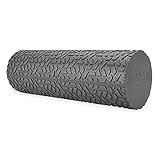
Overview: The Gaiam Restore Compact Foam Roller offers an accessible entry point into self-myofascial release with its 12-inch length and 4-inch diameter design. Featuring a light textured surface, this roller gently stimulates blood flow and aids muscle recovery without overwhelming intensity. Its compact size makes it exceptionally portable for gym sessions, travel, or targeted work on smaller muscle groups like arms and calves. The roller maintains its shape through daily use, providing consistent performance for beginners and those in physical therapy.
What Makes It Stand Out: This roller’s primary distinction is its approachable design and affordability. The subtle texture provides enough stimulation to improve circulation and ease tension while remaining comfortable for sensitive users. Its narrower 4-inch diameter allows for more precise targeting of smaller muscle groups that broader rollers might miss. The compact form factor makes it the most travel-friendly option in its class, easily fitting into gym bags or luggage for on-the-go recovery.
Value for Money: At $11.89, this represents exceptional value for budget-conscious buyers. It’s among the most affordable textured rollers available while maintaining durability standards. While it lacks advanced features of premium models, it delivers core functionality effectively. For occasional users or those new to foam rolling, the low-risk investment makes it ideal. Physical therapy patients will appreciate the gentle approach without financial commitment.
Strengths and Weaknesses: Pros: Extremely affordable; Portable and lightweight; Gentle texture suitable for beginners; Maintains shape well; Ideal for small muscle groups. Cons: Light texture may be insufficient for deep tissue needs; Shorter length limits versatility; Lower density provides less intense pressure.
Bottom Line: The Gaiam Restore is perfect for beginners, physical therapy patients, or anyone seeking gentle muscle maintenance on a budget. While serious athletes may outgrow its light compression, it excels as an entry-level tool. For targeted relief of arms, legs, and smaller muscle groups, this compact roller delivers remarkable value.
3. Trigger Point Releasing Foam Massage Roller with Medium Compression for Exercise, Stretching, and Muscle Recovery - Relieves Muscle Tightness, Improves Mobility, and Circulation
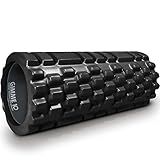
Overview: This Trigger Point Releasing Foam Roller bridges the gap between basic and premium options with its patented medium-compression design. Engineered to replicate the nuanced pressure of massage therapist hands, fingers, and thumbs through three distinct texture zones, this roller provides customizable relief for muscle tightness, mobility issues, and circulation problems. Supporting up to 485 pounds without bending, it accommodates all body types and intensity levels, making it versatile for workouts, physical therapy, or daily stretching routines.
What Makes It Stand Out: Five US patents protect its innovative three-zone design, demonstrating genuine engineering superiority over generic rollers. Each zone targets specific muscle needs with customized pressure, unlike single-pattern alternatives. The medium-density firmness hits the sweet spot—firm enough for effective release yet comfortable enough for regular use. Remarkably, it supports 485 lbs without deformation, indicating exceptional core strength rarely found at this price point. The one-year warranty provides confidence in its durability.
Value for Money: Priced at $19.99, this roller offers premium features at a mid-tier price. The patented technology and weight capacity typically appear in $30+ rollers, making this an outstanding value. The warranty adds financial protection, while the balanced firmness appeals to broad audiences. It essentially delivers professional-grade functionality without the professional-grade markup, saving users money while providing superior results compared to smooth rollers.
Strengths and Weaknesses: Pros: Patented three-zone precision; Excellent weight capacity; Balanced medium density; One-year warranty; Versatile applications. Cons: Brand recognition less than TriggerPoint; Texture may be too moderate for those wanting extreme intensity; No mention of hollow core design.
Bottom Line: This roller excels for intermediate users wanting advanced features without premium pricing. The patented zones and impressive weight capacity make it a smart choice for diverse body types and fitness levels. While maximum intensity seekers might prefer firmer options, its balanced design suits most users perfectly, offering exceptional bang for your buck.
4. The Original Body Roller - High Density Foam Roller Massager for Deep Tissue Massage of The Back and Leg Muscles - Self Myofascial Release of Painful Trigger Point Muscle Adhesions - 13" Turquoise

Overview: The Original Body Roller positions itself as a versatile deep tissue tool with its distinctive 12.5-inch length and 5.5-inch diameter. Featuring a 3D textured surface with triple massage zones designed to replicate human fingers, thumbs, and palms, it targets painful trigger points and muscle adhesions effectively. The dual-grid design offers ridges on one side and spiked bumps on the other, providing varied intensity options. Constructed from heavy-duty EPP material, it withstands rigorous use while remaining comfortable enough for beginners exploring self-myofascial release.
What Makes It Stand Out: The dual-grid design provides two distinct experiences in one roller—finger-like ridges for broader pressure and spiked bumps for targeted trigger point work. This versatility eliminates needing multiple rollers. The larger 5.5-inch diameter offers more surface coverage than standard rollers, while the 3D texture penetrates soft tissue effectively. Available in both 13-inch and 17-inch models, users can choose between portability and full-back coverage, a flexibility most competitors don’t offer at this price.
Value for Money: At $19.99, this roller delivers impressive versatility and build quality. The dual-texture design essentially provides two tools for the price of one, while the heavy-duty EPP construction ensures longevity. Comparable dual-zone rollers typically cost $25-35, making this competitively priced. The option to upgrade to a 17-inch model for full-body coverage adds value without forcing users into a single size choice.
Strengths and Weaknesses: Pros: Dual-grid texture versatility; Larger diameter for coverage; Durable EPP construction; Size options available; Effective for trigger points. Cons: Brand recognition is limited; Spiked side may be too aggressive for some; Heavier than hollow-core alternatives.
Bottom Line: The Original Body Roller suits users wanting versatility without complexity. Its dual-grid design effectively addresses different muscle needs, making it ideal for runners and gym-goers. While the brand lacks the prestige of market leaders, the performance and construction quality speak for themselves. For those wanting options in intensity and size, this roller provides excellent value.
5. 321 Strong Foam Roller - Medium Density Deep Tissue Massager for Muscle Massage and Myofascial Trigger Point Release, with 4K eBook - Orange

Overview: The 321 Strong Foam Roller combines patented technology with educational support through its included 4K eBook, creating a comprehensive recovery solution. This medium-density deep tissue massager features three distinct massage zones that replicate physical therapist hand techniques—small projections for fingertip precision, medium for thumb pressure, and large for palm-base compression. The entire roller is wrapped in BPA-free closed-cell EVA foam around a super-strong core, eliminating hard plastic while supporting substantial weight without deformation or cracking.
What Makes It Stand Out: The inclusion of a 4K eBook distinguishes this roller as an educational tool, not just equipment. The proprietary projection pattern is specifically designed to penetrate soft tissue and fascia, flushing lactic acid and breaking up adhesions effectively. Its medium density strikes an optimal balance—firm enough for deep tissue work along the spine yet comfortable enough to roll directly over bony areas without pain. The BPA-free, closed-cell construction prevents moisture absorption and bacterial growth, enhancing hygiene and longevity.
Value for Money: At $27.78, this roller sits in the premium mid-range while offering educational value that competitors lack. The eBook provides technique guidance worth $10-15 alone, effectively reducing the roller cost. The BPA-free materials and patented design justify the price over generic alternatives. For users wanting both tool and training, this package delivers superior value compared to purchasing separately. The quality construction ensures long-term durability, protecting the investment.
Strengths and Weaknesses: Pros: Includes educational eBook; Patented projection design; BPA-free hygienic materials; Balanced medium density; Strong core construction. Cons: Slightly higher price than similar rollers; eBook may be redundant for experienced users; Orange color might not appeal to everyone.
Bottom Line: The 321 Strong roller excels for users wanting guidance with their tool. The medium density suits most users, while the educational component accelerates learning proper technique. Though experienced rollers might not need the eBook, beginners will find immense value. The hygienic, durable construction and effective design make this a smart investment for anyone serious about consistent muscle recovery and trigger point release.
6. 321 Strong Foam Roller - Medium Density Deep Tissue Massager for Muscle Massage and Myofascial Trigger Point Release, with 4K eBook - Aqua

Overview: The 321 Strong Foam Roller delivers medium-density deep tissue massage through patented textured projections. This aqua-colored roller targets myofascial trigger points across your entire body, from neck to lower back, and includes a 4K eBook for guided techniques. Designed for home use, it bridges the gap between professional therapy sessions and DIY recovery.
What Makes It Stand Out: Patented three-zone technology mimics a physical therapist’s fingertips, thumbs, and palms through varying projection sizes. The BPA-free closed-cell EVA foam wrap over a super-strong core provides durability without weight penalty. Unlike basic rollers, its spine-safe design lets you roll directly along the vertebrae without discomfort while still delivering firm pressure to surrounding muscles.
Value for Money: At $27.78, this roller positions itself in the mid-range category. You’re paying for genuine innovation—the patented texture pattern offers more targeted relief than generic options costing $15-20, while remaining significantly cheaper than premium brands like RumbleRoller. The included eBook adds educational value that justifies the modest price premium over basic foam rollers.
Strengths and Weaknesses: Strengths include versatile intensity options, therapist-mimicking design, spine-safe construction, and durable materials. The medium density suits most users without being overly aggressive. Weaknesses: Athletes needing extremely firm pressure might find it insufficient, and the aqua color lacks universal appeal. The projections may feel too intense for complete beginners initially.
Bottom Line: This roller excels for home users seeking professional-grade myofascial release without the premium price tag. It’s an intelligent middle-ground choice that prioritizes safety, effectiveness, and durability.
7. Amazon Basics High Density Foam Roller for Exercise and Recovery, 18 Inches, Black

Overview: The Amazon Basics High Density Foam Roller strips away complexity to deliver a straightforward, no-nonsense recovery tool. This 18-inch black roller provides firm support for balance, strengthening, and flexibility work. Made from durable polypropylene, it maintains its shape under pressure while offering a smooth, consistent surface for basic myofascial release.
What Makes It Stand Out: Simplicity is its superpower. The molded edges provide comfortable hand placement, while the high-density foam offers consistent firmness without the learning curve of textured patterns. Its lightweight design makes it effortlessly portable for gym sessions or home workouts. The wipe-clean surface ensures hygiene with minimal maintenance.
Value for Money: At $11.28, this is the entry-level champion. It’s less than half the price of most textured rollers and nearly five times cheaper than premium options. For budget-conscious buyers or beginners testing foam rolling, the value is undeniable. You get a functional, durable tool without paying for features you might not need.
Strengths and Weaknesses: Strengths include exceptional affordability, reliable durability, comfortable molded edges, and universal 18-inch length for full-body use. It’s firm enough for effective rolling yet accessible to novices. Weaknesses: The smooth surface lacks targeted trigger point capability, offering less precision than textured competitors. The basic polypropylene material may feel too hard for sensitive users, and there’s no instructional guidance included.
Bottom Line: Perfect for first-time rollers or those prioritizing budget over advanced features. It reliably covers the fundamentals without frills, making it a smart starting point before investing in specialized tools.
8. TriggerPoint CORE Foam Massage Roller (Back, Body, Legs) with Softer Compression, Deep Tissue and Muscle Recovery - Relieves Muscle Pain & Tightness, Improves Mobility & Circulation (12’’), Gray

Overview: The TriggerPoint CORE Foam Roller packs professional-grade engineering into a compact 12-inch frame. Featuring a unique multi-density grid pattern, this gray roller delivers targeted compression for deep tissue work and muscle recovery. The solid-core EVA foam construction ensures durability while providing softer compression than ultra-firm alternatives, making it accessible to a broader audience.
What Makes It Stand Out: The proprietary grid pattern combines different foam densities to simulate various massage techniques in one surface. Unlike hollow-core rollers that can deform, the solid-core design maintains structural integrity under heavy use. TriggerPoint’s reputation for quality means you’re getting a research-backed design in a travel-friendly size that targets most muscle groups effectively.
Value for Money: Priced at $19.99, this roller hits the sweet spot between budget and premium. It’s $5-10 more than generic options but offers superior durability and thoughtful engineering. The brand credibility and proven design justify the modest upcharge, especially for users who’ll roll regularly.
Strengths and Weaknesses: Strengths include compact portability, innovative multi-density surface, durable solid-core construction, and reputable brand backing. The softer compression suits beginners and intermediate users. Weaknesses: The 12-inch length limits some full-body exercises and may require repositioning for larger muscle groups. Athletes seeking aggressive deep tissue might find the compression too gentle.
Bottom Line: An excellent choice for travelers, apartment dwellers, or those new to foam rolling who want quality without intimidation. It balances effectiveness with user-friendly design.
9. RumbleRoller Original Textured Foam Roller - Deep Tissue, Self Myofacial Release Massage Therapy Roller (RumbleRoller 12" Compact Size Original Foam Roller)
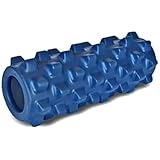
Overview: The RumbleRoller Original stands as the premium benchmark for aggressive self-myofascial release. Its 12-inch compact frame features a unique pattern of sturdy, flexible bumps that penetrate deep into muscle tissue and fascia. Designed for serious athletes and chronic pain sufferers, this roller doesn’t just massage—it fundamentally changes tissue quality through intense, targeted pressure.
What Makes It Stand Out: The proprietary textured bumps are firmer and more pronounced than any competitor, creating a “digging” effect that breaks up stubborn adhesions standard rollers can’t touch. The high-quality materials maintain their aggressive texture through years of heavy use. This is a specialist tool engineered for maximum therapeutic impact, not casual comfort.
Value for Money: At $52.50, this is a significant investment—nearly triple the price of mid-range options. However, for athletes dealing with chronic tightness or scar tissue, the therapeutic value outweighs the cost. Cheaper alternatives simply cannot replicate the intensity and precision. It’s a professional-grade tool with a price to match.
Strengths and Weaknesses: Strengths include unparalleled deep tissue penetration, durable construction that withstands daily use, and exceptional effectiveness for stubborn knots. The compact size allows precise targeting. Weaknesses: The intensity can be overwhelming for beginners, causing more pain than benefit initially. The high price point is prohibitive for casual users, and the 12-inch length limits some applications.
Bottom Line: Reserve this for dedicated athletes and those with chronic muscle issues who’ve outgrown standard rollers. It’s a specialized, premium tool that delivers unmatched results for those who can handle its intensity.
10. Gaiam Restore Foam Roller for Muscle Massage - Textured Muscle Massager for Stimulation, Total Body Pain Relief for Back, Neck, Foot, Calf, Leg, Arm - Deep Tissue Massager for Sore Muscles (18 Inches)
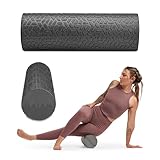
Overview: The Gaiam Restore Foam Roller offers a versatile 18-inch medium-density solution for total-body muscle massage. Featuring a textured tread pattern, this roller targets back, neck, legs, and arms with balanced pressure suitable for pre-workout warmups and post-exercise recovery. Its extended length provides stability for larger muscle groups while remaining portable enough for gym transport.
What Makes It Stand Out: The tread pattern delivers pinpoint massage control without the extreme aggression of knobbed rollers. At 18 inches, it balances full-body coverage with maneuverability better than 36-inch options. Gaiam’s focus on accessibility means this roller works effectively over clothes or directly on skin, adapting to user comfort preferences.
Value for Money: At $22.27, this roller competes directly with mid-range market leaders. You get a brand-name product with thoughtful design elements at a price only slightly above budget options. The 18-inch length adds versatility typically found in more expensive models, making it a cost-effective all-rounder.
Strengths and Weaknesses: Strengths include ideal length for versatility, moderate intensity suitable for most users, lightweight portability, and effective tread pattern for targeted work. It’s gentle enough for physical therapy patients yet firm enough for athletes. Weaknesses: The medium density may not satisfy those wanting extreme pressure, and the tread pattern is less sophisticated than patented multi-zone designs. Durability is good but not exceptional.
Bottom Line: A reliable, jack-of-all-trades roller that serves most users well. It’s particularly suited for those wanting one roller to handle diverse needs without specialization.
Why Texture Matters in Foam Rolling
The Science Behind Myofascial Release
Myofascial release works by applying sustained pressure to the fascia—the connective tissue webbing that surrounds your muscles. When fascia becomes restricted due to overuse, injury, or poor posture, it creates painful adhesions and limits mobility. Textured foam rollers amplify this process by creating variable pressure points across the muscle belly. Unlike smooth rollers that distribute force evenly, textured surfaces create peaks and valleys of pressure that penetrate deeper into tissue layers, mimicking the cross-friction techniques used by sports massage therapists.
Research shows that this variable pressure stimulates mechanoreceptors more effectively, increasing blood flow by up to 40% compared to smooth surfaces. The textured protrusions also create shearing forces that help break up scar tissue and fascial adhesions more efficiently. This means you’re not just temporarily relieving tension—you’re actively remodeling dysfunctional tissue patterns with each rolling session.
How Textured Surfaces Enhance Recovery
The strategic design of textured rollers allows for targeted treatment of specific muscle groups. Wide ridges might work beautifully on your quadriceps’ broad surface, while smaller, more aggressive knobs can pinpoint the piriformis muscle deep in your glutes. This adaptability means one tool can provide multiple therapeutic modalities. The texture also creates a proprioceptive feedback loop, helping your nervous system identify and release areas of chronic tension you might not even realize you’re holding.
Understanding Different Foam Roller Textures
Grid Patterns and Their Benefits
Grid patterns feature alternating raised blocks and recessed channels, typically arranged in a matrix across the roller’s surface. This design excels at providing consistent, predictable pressure that’s intense enough for deep work but structured enough to avoid overwhelming sensitive tissue. The grid layout allows you to control intensity by shifting your body weight between the raised blocks (high pressure) and recessed areas (moderate pressure).
These patterns particularly shine for large muscle groups like the lats, glutes, and hamstrings. The uniform distribution prevents “hot spots” that can occur with random knob patterns, making grid textures ideal for recovery sessions where you want thorough coverage without excessive discomfort.
Ridges and Knobs for Deep Tissue Work
Ridged and knobbed rollers represent the heavy artillery of the foam rolling world. Longitudinal ridges run the length of the roller, perfect for tracing along muscle fibers and addressing linear adhesions. Circular or pyramid-shaped knobs provide point-specific pressure that can access deeper layers of tissue and target individual trigger points with precision.
These aggressive textures are particularly effective for treating chronic conditions like plantar fasciitis, where the knobbed surface can dig into the foot’s arch, or for breaking up the dense scar tissue that forms around old injury sites. The key is matching the knob size to your pain tolerance and the specific depth of tissue you’re targeting.
Smooth vs. Textured: Making the Right Choice
While textured rollers offer superior therapeutic benefits, smooth rollers still have their place. Smooth surfaces provide gentle, uniform pressure that’s perfect for beginners, sensitive areas, or cooldown sessions. They’re also easier to clean and often more durable. The choice isn’t necessarily binary—many recovery enthusiasts maintain both types, using smooth rollers for daily maintenance and textured versions for weekly deep-tissue sessions.
Consider your primary goals: if you’re seeking general relaxation and mild muscle soreness relief, a smooth roller suffices. But if you’re battling chronic knots, training intensely, or recovering from injury, textured surfaces provide the aggressive intervention your tissue needs.
Key Features to Consider When Buying
Density Levels: Soft, Medium, and Firm
Density determines how much the roller compresses under your body weight and directly impacts the pressure intensity. Soft rollers (typically EVA foam around 30-40 durometer) offer gentle give that cushions sensitive areas and works well for beginners or those with low pain tolerance. Medium density (40-50 durometer) provides the sweet spot for most users—firm enough for effective myofascial release without causing excessive discomfort.
Firm rollers (50+ durometer, often made from EPP foam) maintain their shape under heavy pressure, delivering intense, deep-tissue work that serious athletes crave. Some advanced rollers combine densities, featuring a firm core with a slightly softer textured outer layer that provides structural integrity while maintaining surface comfort.
Material Quality and Durability
The material composition affects everything from durability to hygiene. EVA (ethylene-vinyl acetate) foam offers excellent cushioning and resistance to moisture but can compress permanently over time with heavy use. EPP (expanded polypropylene) foam is more rigid, maintains its shape indefinitely, and resists odor absorption, making it ideal for firm, long-lasting rollers.
Advanced options include TPE (thermoplastic elastomer) which provides a rubber-like feel with superior grip and durability, or rollers with reinforced cores that prevent deformation. Consider closed-cell foams that resist sweat absorption and bacteria growth—crucial for maintaining hygiene with regular use.
Size and Portability Factors
Standard full-size rollers measure 36 inches long and 6 inches in diameter, providing stability for back work and accommodating users of all heights. Half-size rollers (18 inches) offer greater portability and easier maneuverability for targeting arms and legs. Compact travel rollers (12 inches or less) fit in gym bags but sacrifice stability for full-body work.
Diameter also matters—larger diameters (6+ inches) provide less intense pressure and are easier to balance on, while smaller diameters (4-5 inches) deliver more concentrated pressure and work better for accessing tight spaces like the thoracic spine.
Weight Capacity and Build Strength
Quality textured rollers should support at least 250-300 pounds without compressing more than 25% of their diameter. Check for reinforced cores, particularly in hollow rollers, which prevent collapse under pressure. Solid-core rollers offer maximum durability but add weight, making them less portable. If you’re heavier or plan to use the roller for standing balance work, prioritize models with higher weight ratings and robust construction.
The Benefits of Textured Foam Rollers
Enhanced Blood Circulation
The variable pressure created by textured surfaces acts like a pump, forcing blood through compressed vessels and then allowing fresh, oxygenated blood to rush in when pressure releases. This vascular flushing effect removes metabolic waste products like lactic acid more efficiently than smooth rollers. The textured protrusions also create micro-massage effects that stimulate capillary beds, improving nutrient delivery to recovering muscles.
Breaking Up Adhesions and Scar Tissue
Textured rollers excel at addressing the cross-linked collagen fibers that form adhesions. The shearing action of moving a ridged or knobbed surface across muscle fibers helps realign these disorganized tissue structures. For post-surgical patients or those with old injuries, this can restore normal tissue glide and eliminate painful restrictions that limit movement.
Improved Flexibility and Range of Motion
By releasing fascial tension at specific points, textured rollers create a cascade effect that improves overall muscle extensibility. Studies show that just two minutes of rolling can increase joint range of motion by 10-20% without decreasing muscle strength—a critical advantage over static stretching. The targeted nature of textured rollers means you can address specific mobility limitations rather than applying generic pressure.
Targeted Trigger Point Release
Trigger points are hyperirritable knots within muscle tissue that refer pain to other areas. Textured rollers allow you to isolate these points with precision, applying sustained pressure that deactivates the neuromuscular junction causing the spasm. The ability to “dig in” with a small knob or ridge provides the focused intensity needed to release stubborn points that smooth rollers simply glide over.
How to Choose the Right Texture for Your Needs
For Beginners: Starting Gentle
If you’re new to foam rolling, begin with a medium-density roller featuring a mild grid pattern. This provides enough texture to be effective without overwhelming your nervous system. Start with shorter sessions (30-60 seconds per muscle group) and avoid aggressive textures until your tissue adapts. Consider rollers with graduated intensity—wider spaced ridges that become more concentrated toward the center—allowing you to control pressure by repositioning your body.
For Athletes: Deep Tissue Requirements
Competitive athletes need aggressive textures that can penetrate dense muscle tissue and address the micro-trauma from high-volume training. Look for rollers with varied knob sizes and densities that allow you to switch between maintenance work and intensive trigger point therapy. Multi-zone rollers featuring different textures on different sections provide versatility for treating various muscle groups with appropriate intensity.
For Specific Conditions: Plantar Fasciitis, IT Band Issues
Plantar fasciitis responds exceptionally well to small, firm knobs that can access the foot’s arch. Choose a compact roller with pyramid-shaped protrusions for this purpose. IT band syndrome benefits from longitudinal ridges that run parallel to the band, breaking up adhesions without compressing the bursa. For upper back tension related to desk work, grid patterns with moderate density help release rhomboids and erector spinae without aggravating the spine.
Proper Technique for Maximum Results
Common Mistakes to Avoid
The biggest error is rolling too quickly. Effective myofascial release requires slow, controlled movements—about one inch per second. Rapid rolling merely desensitizes tissue without creating lasting change. Another mistake is spending too much time on a single spot; limit pressure on any trigger point to 60-90 seconds to avoid bruising or nerve irritation.
Avoid rolling directly over joints, bony prominences, or the lower back where the spine lacks muscular protection. Don’t hold your breath—steady breathing helps your nervous system relax and allows deeper tissue release. Finally, never roll through sharp, shooting pain; this indicates nerve involvement and requires professional assessment.
Time Under Tension: How Long to Roll
Research suggests 1-2 minutes per muscle group provides optimal benefits. Divide this into slow passes covering the entire muscle belly, plus 30-60 seconds of sustained pressure on any trigger points you discover. For pre-workout activation, limit rolling to 30-45 seconds to avoid decreasing muscle performance. Post-workout recovery sessions can extend to 2-3 minutes per area, taking advantage of warm, pliable tissue.
Breathing Techniques While Rolling
Proper breathing enhances the effectiveness of foam rolling by activating the parasympathetic nervous system. Inhale deeply through your nose for 4 counts as you position the roller, then exhale slowly through your mouth for 6-8 counts as you apply pressure. This extended exhale triggers a relaxation response, allowing the roller to penetrate deeper without resistance. On particularly painful spots, use a “box breathing” pattern: 4 counts in, hold 4, 4 counts out, hold 4, to maintain composure and control.
Incorporating Textured Rollers Into Your Routine
Pre-Workout Activation
Use a textured roller with moderate intensity for 30-45 seconds on major muscle groups you’ll be training. Focus on dynamic rolling—slow passes without sustained pressure—to increase blood flow and neuromuscular activation without decreasing power output. This primes the tissue for movement and can improve performance by 3-5% through enhanced proprioception.
Post-Workout Recovery
Immediately after training, while muscles are warm, spend 1-2 minutes per muscle group using your textured roller. The elevated tissue temperature makes fascia more pliable, allowing deeper penetration. Target the muscles you worked most intensely, plus antagonist groups that may have tightened in compensation. Follow rolling with gentle stretching to lock in the new range of motion.
Rest Day Maintenance
On non-training days, dedicate 10-15 minutes to comprehensive rolling, addressing not just major muscles but also smaller stabilizers like the TFL, piriformis, and suboccipital muscles. This prevents adhesions from accumulating and maintains tissue quality between intense training sessions. Use this time to explore your body with the roller, finding and addressing tight spots before they become problematic.
Caring for Your Textured Foam Roller
Cleaning and Sanitizing
Textured surfaces trap sweat and skin cells more than smooth rollers, requiring regular cleaning. Wipe down your roller after each use with a damp cloth and mild soap solution. For deeper sanitizing, use a mixture of water and white vinegar (1:1 ratio) or a sports equipment spray, ensuring you reach into all the crevices. Avoid harsh chemicals that can degrade foam integrity. Allow the roller to air dry completely before storage to prevent bacterial growth.
Storage Best Practices
Store your roller in a cool, dry place away from direct sunlight, which can degrade foam materials over time. Avoid leaving it in hot cars or damp gym bags. Stand it vertically to prevent permanent compression spots from developing. If you have pets, keep it out of reach—many dogs find foam rollers irresistible chew toys, and their saliva can break down the material.
When to Replace Your Roller
Replace your textured foam roller when you notice permanent compression marks, cracking, or loss of texture definition. If the knobs or ridges have worn smooth in high-use areas, it’s no longer providing therapeutic benefit. Most quality rollers last 1-2 years with regular use, though aggressive textures may show wear sooner. A sudden increase in comfort during rolling often indicates the roller has compressed and lost its effectiveness.
Understanding Price Points and Value
Budget-Friendly Options
Entry-level textured rollers ($20-40) typically use lower-density EVA foam with simpler grid patterns. While effective for beginners, they may compress permanently within 6-12 months of heavy use. These are excellent for testing whether textured rolling suits you before investing more. Look for solid construction and at least a one-year warranty, even at lower price points.
Premium Features Worth Investing In
High-end rollers ($60-100+) justify their cost through superior materials like dual-density EPP/TPE combinations, reinforced cores, and sophisticated multi-zone textures. They maintain performance for years rather than months and often include access to technique videos or apps. Consider premium options if you roll daily, have chronic pain requiring consistent therapy, or need a roller that can double as a balance training tool.
Safety Considerations and Contraindications
Who Should Avoid Textured Rollers
People with bleeding disorders, those on blood thinners, or anyone with severe osteoporosis should avoid textured rollers due to the intense localized pressure. Pregnant women should consult their healthcare provider, particularly for abdominal or lower back work. If you have neuropathy or reduced sensation, textured rollers may cause tissue damage before you feel discomfort.
Areas to Never Roll
Never roll directly over the cervical spine (neck), the bony parts of your spine, or any area with open wounds, rashes, or acute inflammation. Avoid rolling over varicose veins, as the pressure could damage compromised vessels. The abdomen should be approached with extreme caution—light pressure only, and never over organs. The popliteal space behind the knee contains nerves and blood vessels that shouldn’t experience sustained pressure.
Recognizing Pain vs. Discomfort
Effective foam rolling feels like “good pain”—intense but relieving, similar to a deep tissue massage. Sharp, shooting, or electric sensations indicate nerve compression and require immediate repositioning. If pain doesn’t decrease after 30 seconds of sustained pressure, move to a different spot. Post-rolling soreness should feel like mild muscle fatigue, not bruising. If you develop visible bruises, your roller is too firm or you’re applying excessive pressure.
The Psychological Benefits of Recovery
Stress Relief and the Parasympathetic Response
The rhythmic pressure of textured rolling activates the parasympathetic nervous system, reducing cortisol levels and promoting relaxation. The focused attention required creates a mindfulness practice that pulls you out of stress loops and into bodily awareness. Many users report improved sleep quality when rolling before bed, particularly when using moderate textures that don’t overly stimulate the nervous system.
Building a Mindful Recovery Practice
Transform rolling from a chore into a ritual by creating a dedicated space and time. Use this period to scan your body mentally, noting areas of tension and tracking improvements over time. This mindfulness component enhances the physical benefits by reducing the protective muscle guarding that occurs with chronic stress. The tactile feedback from textured surfaces provides a concrete anchor for this practice, making it easier to stay present than with smooth rollers.
Frequently Asked Questions
What’s the difference between textured and smooth foam rollers?
Textured foam rollers feature raised patterns, ridges, or knobs that create variable pressure points, allowing for deeper, more targeted myofascial release. Smooth rollers provide uniform, gentler pressure across the entire surface. Textured versions excel at breaking up adhesions and accessing trigger points, while smooth rollers are better for beginners and general relaxation. The choice depends on your pain tolerance, experience level, and specific recovery needs.
How often should I use a textured foam roller?
Most people benefit from using a textured foam roller 4-6 times per week, with sessions lasting 10-15 minutes. You can roll daily if you vary intensity—lighter pressure on consecutive days, deeper work 2-3 times weekly. Athletes in heavy training may roll twice daily: briefly before workouts for activation and more thoroughly afterward for recovery. Listen to your body; if you feel bruised or overly sore, reduce frequency or intensity.
Can textured foam rollers cause bruising?
Yes, aggressive textured rollers can cause bruising if used improperly or if your tissue isn’t conditioned to the pressure. Start with moderate textures and limit pressure on any single spot to 60-90 seconds. Bruising indicates you’re applying too much force or using a roller that’s too firm for your current needs. Reduce intensity and allow bruises to heal completely before resuming rolling on that area.
Are textured foam rollers suitable for beginners?
Beginners can use textured rollers but should start with milder grid patterns and medium density rather than aggressive knobs. The key is gradual adaptation—begin with shorter sessions (30 seconds per muscle group) and lighter pressure. Many beginners actually prefer mild textures over smooth rollers because the varied pressure feels more effective and less monotonous. Just avoid the most aggressive textures until you’ve built up tissue tolerance.
How do I know if my foam roller is too firm?
If you can’t relax into the roller or find yourself tensing up to protect against the pain, it’s too firm. You should feel intense but manageable discomfort, not sharp pain or the urge to recoil. Another sign is consistent post-rolling bruising or soreness that lasts more than 24 hours. A properly firm roller allows you to breathe deeply and maintain pressure for 30-60 seconds without excessive distress.
What’s the best texture pattern for plantar fasciitis?
Small, firm knobs or pyramid-shaped protrusions work best for plantar fasciitis. These penetrate the thick fascia of the foot arch, breaking up adhesions that contribute to heel pain. A compact, hand-held textured ball or mini-roller allows better control when treating this area. Roll the arch slowly for 1-2 minutes, applying enough pressure to feel a deep stretch but not sharp pain.
Can I use a textured foam roller on my lower back?
You should never roll directly over the lumbar spine’s bony structures. Instead, position the roller perpendicular to your spine and roll the paraspinal muscles on either side. Use a moderate grid pattern rather than aggressive knobs, which could compress the spine. For lower back issues, consider using the roller on your glutes and hip flexors first, as these often contribute to back pain through referral patterns.
How long should I spend rolling each muscle group?
Research supports 1-2 minutes per muscle group for optimal benefits. Break this into slow passes covering the entire muscle (30-60 seconds) plus 30-60 seconds of sustained pressure on any trigger points you discover. Pre-workout rolling should be shorter (30-45 seconds) to avoid decreasing performance. If a muscle feels particularly tight, you can extend to 3 minutes, but avoid excessive time on any single spot to prevent tissue damage.
Do textured foam rollers really work better than smooth ones?
For most therapeutic goals, yes. Studies show textured surfaces increase blood flow and tissue oxygenation more effectively than smooth rollers. The variable pressure patterns better stimulate mechanoreceptors and break up fascial adhesions. However, “better” depends on your goals—smooth rollers are superior for gentle relaxation and are more appropriate for certain conditions. For targeted trigger point work and deep tissue release, textured rollers consistently outperform smooth versions.
When should I replace my textured foam roller?
Replace your roller when the texture pattern becomes significantly worn or compressed, typically after 1-2 years of regular use. If the knobs or ridges have flattened and the surface feels uniformly smooth in high-use areas, it’s lost its therapeutic edge. Also replace if you notice cracking, permanent dents, or a loss of firmness. A sudden decrease in rolling discomfort often indicates the foam has degraded and is no longer providing adequate pressure.