The ultralight backpacking rabbit hole runs deep. First, you cut your toothbrush handle in half. Then you start weighing your socks. Before you know it, you’re agonizing over every single gram in your pack, and suddenly that trusty stainless-steel pot from your car-camping days feels like you’re lugging around a cast-iron skillet. Enter titanium—the material that sparked a revolution in backcountry kitchens and became the darling of ounce-counting adventurers worldwide.
But not all titanium pot sets are created equal, and the journey to finding your perfect ultralight cooking system involves more than just sorting products by weight on a spec sheet. From material grades to heat distribution quirks, from nesting configurations to handle designs that won’t fail when you’re boiling water at 10,000 feet, the details matter. This guide dives deep into what separates exceptional titanium cookware from merely lightweight options, helping you make an informed decision that’ll serve you across thousands of trail miles.
Top 10 Titanium Pot Sets for Backpacking
Detailed Product Reviews
1. TOAKS Titanium 1100ml Pot with Pan

Overview: The TOAKS Titanium 1100ml Pot with Pan is a premium ultralight cooking solution for serious backpackers. Weighing just 5.6 ounces, this California-designed cookware combines a 37.2-ounce main pot with a 9-ounce frying pan, offering versatile meal preparation without the weight penalty. The set nests perfectly within itself and accommodates additional TOAKS components, making it a modular centerpiece for your backcountry kitchen.
What Makes It Stand Out: This system’s genius lies in its nesting ecosystem. The pot can store a TOAKS wood stove, 750ml pot, or 200g gas canister inside, while nesting within the larger 1600ml pot. Gradation marks in liters provide precise measurements, and the included mesh sack keeps everything organized. The 4.5-inch diameter offers excellent stability on compact stoves, and the titanium construction ensures rapid, even heating.
Value for Money: At $48.95, you’re investing in exceptional versatility. Comparable single titanium pots cost $30-40, but this adds a pan and unmatched modularity. For backpackers building a cohesive cook system, the compatibility with other TOAKS products eliminates redundant purchases, delivering long-term value that justifies the premium.
Strengths and Weaknesses: Pros include ultralight weight, superior nesting capabilities, precise gradations, and brand reputation. The pan’s 9oz capacity is somewhat limiting for actual cooking, serving better as a lid or plate. The price point may deter casual campers, and the single-pot design requires careful meal planning for two.
Bottom Line: Ideal for ultralight enthusiasts who prioritize weight savings and system integration. The TOAKS 1100ml set excels for solo hikers who occasionally cook for two, offering unmatched modularity in the titanium cookware market.
2. iBasingo 1.2L+1.8L+2.4L Titanium Pots Set with Lid Camping Cookware with Foldable Handle Portable Lightweight Cooking Kit Outdoor Kitchen Cooking Kit for Backpacking Hiking Picnic Fishing Ti2109C

Overview: The iBasingo Titanium Pots Set delivers three graduated capacities—1.2L, 1.8L, and 2.4L—in a single stackable package. Crafted from TA1 grade titanium, this versatile cookset serves everyone from solo hikers wanting options to small groups needing serious cooking capacity. The entire set shares a cohesive design language with foldable handles and seamless construction.
What Makes It Stand Out: Having three distinct sizes in one purchase is unique. Each pot features a flat bottom for stable direct-fire cooking, dual foldable handles that prevent tipping, and seamless walls that eliminate dirt-trapping crevices. The acid and alkali resistance ensures durability regardless of water source, while rapid heat transfer reduces fuel consumption—a critical advantage on longer trips.
Value for Money: At $88 for three premium titanium pots, the per-piece cost under $30 represents solid value. Purchasing equivalent individual TOAKS pots would exceed $120. For group campers or families, this eliminates the need to buy separate cookware systems, though solo hikers may find it unnecessarily comprehensive.
Strengths and Weaknesses: Pros include exceptional size versatility, true nesting efficiency, professional-grade material, and stable handle design. The set’s total weight, while reasonable for titanium, exceeds single-pot solutions. Some users report handles can loosen over time, and the lack of a dedicated frying pan limits cooking techniques.
Bottom Line: Perfect for group outings or basecamp cooking where versatility trumps absolute minimalism. The iBasingo set offers professional-grade options at a reasonable price, though ultralight soloists should consider lighter alternatives.
3. TOAKS Titanium Compact Cookset 2pcs – 800ml Pot and 400ml Pot with Lid,Seamless Nesting Design for Backpacking, Camping, and Outdoor Cooking

Overview: The TOAKS Titanium Compact Cookset delivers an 800ml pot and 400ml pan in a seamless nesting design optimized for two-person backpacking. Weighing mere ounces, this pure titanium set balances capacity and portability, allowing couples to share meals without doubling their load. The thoughtful engineering maintains TOAKS’ reputation for precision backcountry gear.
What Makes It Stand Out: The universal lid is brilliant—one titanium cover serves both pots, functioning as a strainer and heat seal. This eliminates redundancy while saving weight. The smooth, seam-free construction prevents food buildup, and the foldable handles tuck neatly for rattle-free packing. Precise volume markings aid with dehydrated meal prep, and the flavor-neutral titanium ensures clean-tasting coffee and meals.
Value for Money: At $34.95, this represents exceptional entry-level titanium value. Comparable single 800ml pots cost $25-35, making the included 400ml pan essentially free. For couples transitioning from heavier aluminum or steel, the weight savings per dollar spent is outstanding, rivaling sets costing twice as much.
Strengths and Weaknesses: Pros include unbeatable price, genuine titanium construction, smart nesting, and versatile sizing for two. The 400ml pan works best as a bowl or lid rather than for actual cooking. Some users note the lid fit requires careful placement, and the smaller capacity may not satisfy larger appetites or group cooking needs.
Bottom Line: The best budget-conscious choice for backpacking pairs. This TOAKS set delivers premium materials and thoughtful design at an accessible price, making it the smart starting point for titanium cookware without sacrificing quality or functionality.
4. Odoland Titanium Camping Cookware 420ML & 750ML Titanium Pot with Lid and Spork Lightweight Camping Pot for Backpacking Hiking Traveling and Picnic

Overview: Odoland’s 4-in-1 Titanium Cookware combines 420ml and 750ml pots with a lid, titanium spork, and mesh bag into a complete solo backpacking kit. Weighing just 9.62 ounces, this 99.9% pure titanium set prioritizes convenience without cutting corners on material quality. It’s designed as an all-in-one solution for coffee, oatmeal, and dehydrated meals on the trail.
What Makes It Stand Out: The inclusion of a titanium spork and dedicated mesh bag creates immediate out-of-box readiness. The size progression—420ml for coffee or small portions, 750ml for main meals—covers solo needs perfectly. Rapid, even heating saves precious fuel, while the foldable handles and nesting design maximize pack space. The 99.9% purity claim exceeds many competitors’ specifications.
Value for Money: At $43.99, the value proposition centers on completeness. While you could assemble similar components for slightly less, the curated matching set saves research time. Compared to TOAKS’ individual pieces, you’re paying a small premium for convenience and the included accessories, which is reasonable for beginners.
Strengths and Weaknesses: Pros include complete kit convenience, excellent material purity, practical size combo, and true ultralight weight. The spork, while functional, isn’t as robust as standalone utensils. Odoland’s brand recognition lags behind TOAKS, and the smaller 420ml pot may feel redundant for minimalists. Handle stability on uneven surfaces requires attention.
Bottom Line: Ideal for solo hikers seeking a turnkey titanium solution. Odoland’s set eliminates guesswork, delivering everything needed for basic backcountry cooking at a fair price, though experienced hikers might prefer à la carte selection from established brands.
5. Boundless Voyage Titanium 2-Piece Pot and Pan Set 1000ml+500ml Folding Handle for Outdoor Camping Cooking Hiking Backpacking Portable Tableware Cookware

Overview: Boundless Voyage’s 2-Piece Titanium Set pairs a 1000ml pot with a 500ml pan, offering impressive capacity at a featherweight 6.3 ounces. The 99.8% titanium construction delivers near-pure performance with folding handles that disappear for compact storage. This set targets ultralight backpackers who refuse to compromise on cooking volume.
What Makes It Stand Out: The weight-to-capacity ratio is remarkable—lighter than many single pots while offering 1.5L total volume. The folding handles are engineered to stay secure when extended, providing confidence when handling hot liquids. The included customized storage bag and protective carton demonstrate attention to detail rarely seen at this price tier, while the 5.5-inch diameter ensures stability on canister stoves.
Value for Money: At $32.89, this is the market’s value champion. Comparable titanium pots alone cost $30-40, making the two-piece set with accessories an absolute bargain. You’re getting premium materials and thoughtful design for budget aluminum prices, making it accessible for students and entry-level backpackers without sacrificing ultralight principles.
Strengths and Weaknesses: Pros include exceptional lightness, generous capacities, lowest price point, and complete packaging. The 99.8% titanium purity, while excellent, trails some competitors’ 99.9% claims. Brand longevity and warranty support remain unproven compared to TOAKS. The pan’s shallow depth limits frying capabilities, functioning better as a lid or plate.
Bottom Line: The definitive choice for budget-minded ultralight enthusiasts. Boundless Voyage delivers premium specifications and practical capacities at an unbeatable price, making it the smartest entry into titanium cookware for weight-conscious adventurers.
6. VQORAHUIX Titanium Mug Camping Pot Titanium Cup 420ml & 750ml Titanium Pot with Lid, Spork, Bag Lightweight Titanium Camping Pot for Backpacking Hiking Picnic and Traveling

Overview: The VQORAHUIX titanium cookware set delivers a comprehensive ultralight solution for solo backpackers and minimalist campers who refuse to compromise on quality. This 4-in-1 kit combines a 750ml main pot with a 450ml cup, two titanium sporks, and protective carrying pouches, all weighing just 9.88 ounces. Designed for those who meticulously count every gram, it balances essential functionality with featherweight portability across diverse outdoor scenarios.
What Makes It Stand Out: Pure 99.9% titanium construction ensures zero metallic taste and exceptional corrosion resistance that withstands years of wilderness abuse. The set’s thoughtful inclusion of two sporks and individual pouches adds convenience rarely found at this price point. Collapsible handles and a vented triangular lid demonstrate attention to practical details that matter in the field, while the copper-plated finish provides an elegant aesthetic touch that distinguishes it from utilitarian alternatives.
Value for Money: At $35.99, this set undercuts many competitors while offering more pieces. Comparable titanium pots alone often cost $25-30, making the added cup, sporks, and accessories genuine value additions. For budget-conscious ultralight enthusiasts, it’s difficult to find a better titanium-to-dollar ratio without sacrificing material quality or essential features.
Strengths and Weaknesses:
- Pros: Exceptionally lightweight at 280g; complete 4-piece set; pure titanium with no metallic taste; compact nesting design; includes protective bags
- Cons: 450ml cup may be small for some users; copper finish durability uncertain; not ideal for group cooking
Bottom Line: Perfect for solo adventurers seeking maximum gear integration at minimum weight and cost. This set eliminates the need to purchase separate components while delivering reliable performance.
7. Lixada Titanium Camping Cookware with Folding Spork, 750ml Camping Titanium Pot & 450ml Coffee Mug with Foldable Handle & Lid, Portable Outdoor Cookware Set for Backpacking Hiking Cooking

Overview: Lixada’s 3-piece titanium set provides a refined cooking experience for serious backpackers who value thoughtful engineering. The kit includes a 750ml pot, 450ml mug, and folding spork, weighing 12.49 ounces total. Its standout feature is the aligned bail handle design that allows safe direct drinking from the pot, eliminating unnecessary gear transfers and reducing cleanup.
What Makes It Stand Out: The redesigned handle alignment solves a common frustration with traditional pot designs where handles interfere with drinking. The movable spork bar locks securely open, preventing collapse during use. Ventilated lids stay relatively cool and provide visibility for boiling conditions. The copper-colored finish adds sophistication while maintaining titanium’s core benefits of taste neutrality and rapid heat transfer across camp stoves and open fires.
Value for Money: Priced at $51.29, this set sits in the mid-range for titanium cookware. While more expensive than basic options, the engineering refinements justify the premium. The ability to use the pot directly over campfire or stove adds versatility that cheaper alternatives lack, potentially saving fuel costs and reducing overall gear needs.
Strengths and Weaknesses:
- Pros: Smart bail handle design; versatile campfire compatibility; secure spork mechanism; excellent heat transfer; corrosion-resistant
- Cons: Heavier than ultralight competitors; single spork limits sharing; lid fit could be tighter
Bottom Line: Ideal for backpackers who prioritize functional design over absolute weight savings. The direct-drinking feature alone makes it worth considering for minimalist hikers.
8. BY-J Titanium Camping Cookware Set-2200ml+1200ml+700ml Titanium Pot with Lid and Foldable Handle, Compact Backpacking and Travel Kitchenware for Camping, Hiking and Fishing (3 Piece-Set)

Overview: The BY-J set breaks from solo backpacking norms by offering group-capable titanium cookware in three graduated sizes. With 2200ml, 1200ml, and 700ml pots, it serves 4-5 people while maintaining titanium’s ultralight advantage. The 2200ml pot weighs only 189 grams—80% lighter than steel equivalents—making group cooking feasible without excessive pack weight for the designated cook.
What Makes It Stand Out: Aviation-grade titanium withstands 300°C temperatures without chemical coatings, ensuring safe cooking and metal utensil compatibility. The nesting design consolidates all three pots into a compact package. The 1200ml and 700ml units double as frying pans and bowls, maximizing versatility. Foldable handles and a free storage bag enhance portability for cycling tours and family camping.
Value for Money: At $62.99 for three pots, this set delivers exceptional value for group campers. Purchasing equivalent titanium pieces separately would exceed $90. The multi-functionality eliminates need for separate bowls and pans, further justifying the investment for those who regularly camp with others.
Strengths and Weaknesses:
- Pros: Group cooking capacity; true ultralight titanium; nesting design; no toxic coatings; multi-functional use
- Cons: Overkill for solo hikers; larger pot may be bulky; no included spork or cups
Bottom Line: Perfect for families or groups prioritizing shared cooking gear. Solo ultralighters should look elsewhere, but for team adventures, it’s unmatched in capacity-to-weight ratio.
9. iBasingo 3-Piece Titanium Pot Set (1.3L+1.95L+2.9L) with Lids Ultralight Camping Cookware for Backpacking, Hiking & Outdoor Cooking, Nesting Backpacker Pots with Measurement Marks Ti2056C

Overview: iBasingo’s premium pot set targets serious backpackers needing precise cooking capabilities across varying group sizes. The 1300ml, 1950ml, and 2900ml pots feature measurement marks and innovative hanging rings with anti-slip catch points. This professional-grade set nests completely, with the smallest pot storing a G2 gas canister and stove for efficient space usage.
What Makes It Stand Out: Embedded lid design minimizes water leakage while steam holes regulate pressure during vigorous boiling. The hanging ring system allows safe suspension over fires—critical for winter camping and mountaineering where stable surfaces are scarce. Measurement marks enable accurate water-to-meal ratios. Premium packaging includes individual drawstring pouches and gift boxes.
Value for Money: At $115, this is a premium investment. The cost per piece ($38.33) is justified by professional features absent in budget options. For frequent backpackers who rely on precise cooking and hanging capability, the durability and functionality offset the initial expense over years of use.
Strengths and Weaknesses:
- Pros: Professional hanging design; measurement markings; premium nesting; anti-slip features; excellent packaging
- Cons: High price point; largest pot may be excessive; heavier than minimalist alternatives
Bottom Line: Best suited for experienced backpackers and mountaineers who need reliable, precise cookware. Casual campers may find the professional features unnecessary for occasional use.
10. THTYBROS Titanium 750ml Pot with Titanium Spork, Ourdoor Solo Camping Mug, Hanging Cup Spork Kits
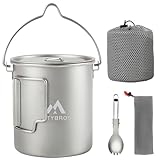
Overview: THTYBROS delivers a no-frills titanium solution for budget-minded solo campers seeking essential functionality. This single 750ml pot with spork weighs 40% less than steel alternatives while maintaining food-grade purity. The minimalist design focuses on core boiling and cooking tasks without unnecessary accessories that drive up cost and weight for those just entering ultralight camping.
What Makes It Stand Out: At under $20, it makes titanium accessibility possible for entry-level adventurers and youth campers. The unbreakable construction resists dents and corrosion even after repeated drops, while BPA-free certification ensures safety across all cooking temperatures. The hanging design works seamlessly with most outdoor stoves, and the included spork completes the basic eating system without requiring separate purchases.
Value for Money: This is the market’s most affordable titanium pot from a reputable brand. While lacking lids or multiple pieces, the $19.99 price point makes it an ideal starter piece or backup. You won’t find comparable titanium quality cheaper, making it perfect for those transitioning from steel or aluminum without financial commitment.
Strengths and Weaknesses:
- Pros: Extremely affordable; ultralight titanium; unbreakable construction; BPA-free; includes spork
- Cons: No lid included; single piece limits versatility; basic design; capacity may be small for some meals
Bottom Line: An excellent entry-level titanium pot for solo campers on tight budgets. Serious backpackers will want more features, but it’s perfect for beginners testing ultralight gear or as a reliable backup in your pack.
Why Titanium? Understanding the Ultralight Advantage
Titanium’s reputation as the ultimate ultralight material isn’t just marketing hype—it’s rooted in some genuinely impressive material science. At roughly 45% lighter than steel and significantly stronger than aluminum, titanium occupies a unique sweet spot for backpackers who refuse to compromise durability for weight savings. But the real magic happens when you consider its corrosion resistance and biocompatibility. Unlike aluminum, which can react with acidic foods and develop concerning wear patterns over time, titanium forms a stable oxide layer that protects both the pot and your health.
The weight savings become particularly meaningful when you calculate cumulative pack weight over long distances. Shaving 6-8 ounces from your cook system doesn’t sound revolutionary until you multiply that by 20,000 steps per day on a thru-hike. Your knees, shoulders, and future self will notice the difference. However, titanium’s advantages come with trade-offs—namely heat distribution characteristics and price point—that every serious buyer needs to understand before investing.
Decoding Titanium Grades: What Actually Matters for Cookware
Commercially Pure vs. Alloyed Titanium
You’ll encounter Grade 1 and Grade 2 titanium (commercially pure) in most backpacking cookware, with Grade 2 being more common due to its slightly higher strength. Some manufacturers boast about aircraft-grade titanium alloys, but here’s the insider truth: for cooking applications, the grade differences are largely irrelevant to performance. The thickness and construction quality matter far more than whether it’s Grade 2 or a specific alloy.
The “Titanium-ness” Reality Check
Beware of vague marketing terms like “titanium-infused” or “titanium-coated.” True titanium cookware is solid titanium, not a coating over another metal. The market has seen an influx of hybrid products that capitalize on titanium’s reputation while delivering subpar performance. Genuine titanium pot sets will specify the material as “titanium” or “pure titanium,” and they’ll carry the price tag to match. If a deal seems too good to be true, you’re likely looking at titanium-coated aluminum, which defeats the purpose of both materials.
Capacity Considerations: Right-Sizing Your Pot for Solo to Group Trips
The Solo Ultralight Sweet Spot
For solo hikers focused purely on boiling water for dehydrated meals and coffee, the 550ml to 750ml range represents the efficiency sweet spot. Anything smaller becomes impractical for actually cooking, while larger capacities add unnecessary ounces. The key is matching your pot size to your typical water-boil volume plus a small margin for safety. Most freeze-dried meals require 1.5 to 2 cups of water, making a 600ml pot nearly perfect.
Duo and Group Dynamics
When cooking for two, you’ll want to jump to the 900ml to 1.3L range. This allows for simultaneous meal preparation and hot drinks without running separate boils. For groups of three or more, consider modular systems where multiple pots nest together, or opt for a single 1.5L to 2L pot and embrace the shared-cooking philosophy. Remember: one larger pot often weighs less than two smaller ones combined, but sacrifices flexibility.
Pot Set Configurations: Nesting Systems and Modular Designs
The Classic Nesting Triad
The most common titanium pot set configuration follows a logical progression: a small pot, a slightly larger pot, and a cup or bowl that fits inside both. This triad lets you carry only what you need for a specific trip while keeping everything packed efficiently. The genius lies in the empty space utilization—you can store your stove, fuel canister, lighter, and small items inside the nested pots, creating a self-contained kitchen module.
Modular vs. Fixed Sets
Modular systems offer individual pieces that can be purchased separately, letting you build a custom set over time. Fixed sets come as complete packages, often at better value but with less flexibility. For beginners, a well-designed fixed set removes decision paralysis. For experienced hikers who’ve dialed in their specific needs, modular systems prevent paying for pieces that’ll gather dust in your gear closet.
Lid Features That Actually Save Weight (and Fuel)
Integrated Strainers and Pour Spouts
A lid with a built-in strainer or pour spout eliminates the need for a separate colander, saving both weight and pack space. More importantly, these features improve fuel efficiency by allowing precise pouring without removing the lid completely. When you’re boiling water at altitude where every BTU counts, keeping the lid partially sealed while pouring off starchy pasta water can mean the difference between a half-full and empty fuel canister at trip’s end.
Lid Material and Fit
Titanium lids save the most weight but can create a rattling symphony in your pack. Some manufacturers use a lightweight aluminum lid for the main pot and titanium for the pot itself—a hybrid approach that cuts ounces while reducing noise. The lid’s fit precision matters more than you might think; a lid that sits too loosely lets steam escape, increasing boil times and fuel consumption. Look for lids with a slight inner lip or tension fit rather than ones that simply rest on top.
Handle Systems: Folding vs. Fixed vs. Removable
Folding Handle Engineering
Folding handles that wrap around the pot’s exterior represent the most popular design, but their reliability varies enormously. High-quality sets feature handles with robust pivot points using stainless steel rivets or threaded fasteners. Cheaper versions use simple bent-wire designs that loosen over time and can fail catastrophically when lifting a pot of boiling water. Inspect the handle’s locked position—does it click securely, or does it feel vague and wobbly?
Removable Handle Philosophies
Some ultralight purists prefer removable handles or pot lifters that work across multiple pieces. This approach saves a few grams per pot but introduces a single point of failure. Drop that lifter in a stream, and you’re left with a pot you can’t safely handle. For most hikers, permanently attached folding handles offer the best balance of weight, reliability, and convenience. If you go the removable route, choose a design that allows improvised handling with a stick or multitool as a backup.
Material Thickness: The Durability vs. Weight Tradeoff
The Thin Wall Tightrope
Titanium pot walls typically range from 0.3mm to 0.5mm thick. At 0.3mm, you’re in UL territory where every gram counts, but these pots dent easily and can develop hot spots that scorch food. The 0.4mm to 0.5mm range offers noticeably better durability and more even heating while still providing massive weight savings over aluminum or steel. For most backpackers, this middle ground represents the smart choice.
Bottom Reinforcement Realities
Some manufacturers use a thicker base (up to 0.6mm) with thinner walls to improve heat distribution without adding excessive weight. This engineering makes sense in theory, but the manufacturing complexity can create weak points at the transition zone. Uniform thickness throughout often proves more reliable over years of use and abuse. Your pot’s bottom takes the most direct flame abuse, so prioritize construction quality over clever engineering in this area.
Heat Distribution Realities: What to Expect from Titanium
The Hot Spot Challenge
Titanium’s low thermal conductivity means heat doesn’t spread evenly across the pot bottom. This creates pronounced hot spots directly above your stove’s flame pattern, leading to scorched food if you’re not careful. The phenomenon is especially noticeable with canister stoves that concentrate heat in a small area. Understanding this limitation is crucial—titanium excels at boiling water but requires technique and attention for actual cooking.
Mitigation Strategies
Experienced titanium users develop workarounds: constant stirring, using a flame diffuser (though this adds weight), or simply embracing the “boil-only” philosophy. Some newer pot designs incorporate subtle surface texturing or micro-fins on the exterior bottom to disrupt flame patterns and spread heat more evenly. While these help marginally, they can’t overcome titanium’s fundamental material properties. Set realistic expectations: your titanium pot will boil water faster than anything else, but simmering a delicate sauce requires skill.
Compatibility with Backpacking Stoves and Fuel Types
Canister Stove Pairings
Most titanium pots pair perfectly with modern canister stoves, but pay attention to pot diameter relative to your stove’s burner head. Pots narrower than 3.5 inches can be unstable on some stove designs, while very wide pots may waste heat up the sides. The ideal pairing matches your pot’s diameter to your stove’s flame pattern, typically with the burner head covering about 70% of the pot’s bottom surface.
Liquid Fuel and Alternative Stoves
For white gas or multi-fuel stoves, ensure your titanium pot has a robust enough construction to handle the more aggressive flame patterns. Some alcohol stove users prefer wider, shallower pots that maximize surface area for the gentle, dispersed flame. Wood stoves present unique challenges—titanium’s high melting point handles the heat, but soot cleanup becomes an issue. Consider dark-colored titanium (often marketed as “sandblasted” or “stone-finished”) that hides soot stains better than polished silver.
Non-Stick Coatings: Yes, No, or Maybe?
The Coating Conundrum
Some titanium pots feature ceramic or other non-stick coatings to address the material’s tendency for food to stick. While this sounds appealing, coatings add weight—typically 1-2 ounces—and compromise titanium’s key advantage: durability. A scratched coating defeats its purpose and can flake into your food. In the ultralight philosophy, coatings often represent unnecessary complexity.
When Coatings Make Sense
If you genuinely cook rather than just boil, a coating might be worthwhile for the cleanup convenience and improved heat distribution. Look for high-quality ceramic coatings applied through thermal spraying rather than dipping. These bond better to titanium’s surface and withstand higher temperatures. Be realistic, though—even the best coatings wear faster on titanium than on aluminum due to the substrate’s hardness and flex characteristics.
Measuring Marks and Practical Add-Ons
Integrated Measurement Etching
Quality titanium pots often feature embossed or laser-etched measurement marks inside the pot. These add zero weight while providing crucial functionality for precise water-to-meal ratios. Avoid painted measurement lines—they wear off quickly and can contaminate food. The best implementations use a subtle texture change you can feel with your finger, readable even in low-light dawn-patrol starts.
Graduated Cup Lids
Some lid designs double as measuring cups with interior markings. This dual-purpose approach exemplifies ultralight thinking but requires careful evaluation of the lid’s seal integrity. A lid designed to be a cup may not fit as snugly when used as a pure lid, affecting boil efficiency. Test this function before committing to a long trip—pour water into the inverted lid and see if it holds without dripping.
Price vs. Performance: Understanding the Investment
The Titanium Premium
Quality titanium pot sets range from $40 to $150+, with price correlating to brand reputation, manufacturing precision, and included accessories. The cheapest options often skimp on handle hardware, lid fit, and material consistency. Mid-range sets ($60-$90) typically offer the best value—solid construction without boutique-brand markup. Premium sets justify their cost through innovative designs, exceptional quality control, and comprehensive warranties.
Long-Term Value Calculation
Consider cost-per-use over a decade of backpacking. A $100 titanium set used on 50 trips costs $2 per adventure. Compare that to replacing a $30 aluminum pot every few seasons due to wear, and titanium’s value proposition becomes clear. More importantly, titanium’s durability means consistent performance—you won’t face a handle failure 50 miles from the trailhead. For serious backpackers, titanium isn’t an expense; it’s insurance.
Care and Maintenance: Making Your Titanium Last Forever
Cleaning Without Scrubbing
Titanium’s non-reactive surface makes cleanup surprisingly easy—often a simple wipe with a bandana does the job. For stubborn residues, boil water with a drop of biodegradable soap and let it soak. Avoid abrasive scrubbers that can create micro-scratches where bacteria can hide. These scratches also worsen the hot-spot problem by creating uneven surface texture.
Oxidation and Color Changes
Over time, titanium develops a rainbow-like oxidation patina, especially on the exterior bottom where flame contact is direct. This is purely cosmetic and actually strengthens the protective oxide layer. Some hikers polish this off, but doing so removes a minute amount of material each time. Embrace the patina as a badge of honor—it tells the story of your miles.
Common Mistakes First-Time Buyers Make
Overcapacity Errors
First-time buyers consistently purchase pots too large, thinking they’ll need the flexibility. A 1.5L pot for solo use is overkill that adds unnecessary ounces and fuel consumption. Conversely, duos often undersize, buying two solo pots instead of one properly sized shared pot. Be honest about your typical trip style and meal prep approach.
Ignoring the Entire System Weight
Focusing solely on the pot’s weight while ignoring how it integrates with your stove, windscreen, and fuel leads to poor decisions. A pot that saves 20 grams but requires a heavier stove setup due to compatibility issues is a net loss. Always calculate the “kitchen system” weight: pot + lid + stove + fuel + windscreen + lighter + any required accessories. The lightest individual component doesn’t always create the lightest system.
Beyond the Pot: Complete Kitchen System Integration
The Nested Kitchen Philosophy
The most efficient ultralight kitchens treat the pot as a storage container first and a cooking vessel second. A 900ml pot can hold a small canister, a compact stove, a lighter, a mini sponge, and a small bottle of soap—effectively making the pot’s “packed weight” negligible since it replaces a stuff sack. This integrated thinking separates the truly ultralight from the merely weight-conscious.
Windscreen and Heat Reflector Synergy
Your pot doesn’t exist in isolation. A properly fitted windscreen can improve fuel efficiency by 30-50%, more than compensating for any minor weight differences between pot models. Some pot sets include custom-fit windscreens that double as pot stabilizers or heat reflectors. These system-level designs often provide better real-world performance than a slightly lighter pot used with a generic windscreen.
Frequently Asked Questions
How much weight can I realistically save by switching to titanium from aluminum?
A typical aluminum pot set for two weighs 10-12 ounces, while a comparable titanium set weighs 4-6 ounces. The real savings often come from titanium’s strength allowing thinner walls without compromising durability, plus the ability to nest more aggressively since titanium won’t deform as easily under pressure.
Will my titanium pot work on an induction stove?
No, titanium is not ferromagnetic and won’t work on induction cooktops. This only matters if you’re testing gear at home—induction stoves have no place in backcountry travel. For camping, titanium works perfectly with all flame-based stoves.
Why does my new titanium pot have a weird metallic smell?
The smell comes from manufacturing residues and the natural titanium oxide layer. Boil water with a splash of vinegar, discard it, then wash with mild soap. The odor dissipates after one or two uses. If it persists, contact the manufacturer—it could indicate improper cleaning before packaging.
Can I use metal utensils in my titanium pot?
Yes, titanium is hard enough to withstand metal spoons and sporks without scratching. However, if your pot has a non-stick coating, treat it like any coated cookware and stick to silicone or wood. For bare titanium, metal utensils are fine and won’t damage the structural integrity.
How thin is too thin for titanium pot walls?
Below 0.3mm, you enter “foil” territory where durability suffers significantly. These ultrathin pots can develop pinhole leaks at stress points and dent from minor impacts. Most reputable manufacturers stay between 0.35mm and 0.5mm, which provides the optimal balance for backcountry use.
Does titanium affect food taste?
Pure titanium is biologically inert and imparts zero flavor to food or water. If you notice a metallic taste, it’s likely from contaminated water sources, residue from cleaning products, or in rare cases, a counterfeit product with titanium plating over another metal. Always buy from reputable outdoor brands.
What’s the best way to pack a titanium pot to prevent noise?
Wrap your stove, fuel canister, or a bandana inside the pot to prevent the lid from rattling. Some hikers use a small rubber band around the pot’s circumference to secure the folded handles. For nesting sets, place a paper towel or coffee filter between pots to prevent abrasion and micro-scratches.
Are there any foods I shouldn’t cook in titanium?
Avoid prolonged cooking of highly acidic foods like tomato sauce, especially at high temperatures. While titanium is corrosion-resistant, acid can eventually break down the oxide layer over many hours of cooking. For typical backpacking meals—boiling water, reheating, simple sautés—titanium handles everything perfectly.
How do I fix a loose handle on my titanium pot?
Most folding handles use stainless steel rivets that can be gently tightened with a ball-peen hammer and solid surface. Place the pot on a hard surface, position a small nail set against the rivet head, and give it a light tap. Don’t overdo it—titanium’s hardness means you could crack the pot wall. If it’s a screw-based design, simply tighten with the appropriate driver.
Is it worth buying a titanium pot with a built-in heat exchanger?
Heat exchanger rings on the pot bottom improve efficiency by 10-15% but add 1-2 ounces and create cleaning challenges. For most backpackers, the weight penalty isn’t worth the marginal fuel savings. However, for winter camping or extended trips where fuel resupply is problematic, a heat exchanger pot can be justified as part of a broader efficiency strategy.