If you’ve ever winced your way through a foam rolling session, you know the bittersweet agony of self-myofascial release. That sharp pressure as you work out knots in your quads or IT bands is the price we pay for better mobility and faster recovery. But what if you could get all the benefits of traditional foam rolling with significantly less discomfort and in half the time? Enter the vibrating foam roller—a game-changing evolution in recovery technology that’s transforming how athletes, fitness enthusiasts, and even physical therapy patients approach muscle maintenance.
These innovative devices combine the pressure-based therapy of conventional foam rollers with targeted percussive vibrations that penetrate deep into muscle tissue. The result? Enhanced circulation, reduced pain perception, and more effective release of trigger points without the brutal discomfort that makes so many people skip their recovery work. Whether you’re training for a marathon, recovering from an injury, or simply trying to undo the damage of desk-job posture, understanding how to choose and use the right vibrating foam roller can revolutionize your wellness routine.
Top 10 Vibrating Foam Rollers for Muscle Recovery
Detailed Product Reviews
1. FITINDEX Vibrating Foam Roller for Back Pain, 5-Speed Foam Roller Muscle Massage, Exercise, Yoga, Muscles Deep Tissue, Pilates, Physical Therapy, Recovery, Neck, Leg, Rechargeable, Pink

Overview: The FITINDEX Vibrating Foam Roller integrates traditional myofascial release with advanced vibration therapy across five customizable speeds from 1500 to 3200 RPM. Its innovative 3-in-1 density design features high, medium, and low wave patterns, enabling targeted treatment for shoulders, neck, back, legs, and feet. Compact at 11.4x4.7 inches and weighing just 3 pounds, this rechargeable tool supports pre-workout activation and post-exercise recovery for yoga, Pilates, and physical therapy applications.
What Makes It Stand Out: The triple-density surface pattern distinguishes this roller from single-density competitors, effectively replacing multiple traditional rollers. Frequency conversion technology ensures consistent power delivery, while USB-C charging achieves full capacity in 5 hours. The vibrant pink aesthetic adds personality without compromising professional-grade functionality, making it an appealing gift option for fitness enthusiasts.
Value for Money: At $79.99, this roller occupies the mid-premium segment. The multi-density design provides exceptional versatility, justifying the investment over basic $40-60 models. While battery life reaches only 2 hours at maximum intensity, the feature set rivals $90+ competitors, offering solid returns for serious users who prioritize adaptability over marathon sessions.
Strengths and Weaknesses: Strengths include versatile density zones, robust vibration range, USB-C convenience, and travel-friendly portability. Weaknesses center on modest battery longevity requiring frequent recharging and limited color options that may not suit all users. The 2-hour runtime demands more charging discipline than high-capacity alternatives.
Bottom Line: This FITINDEX roller excels for athletes and therapy patients seeking multi-density functionality in one device. It’s ideal for those who value targeted pressure variation and portability, though frequent chargers should note the battery limitations. A strong investment for comprehensive recovery needs.
2. PURSONIC Vibrating Foam Roller – Deep Tissue Massage for Muscle Recovery – 5 Intensity Levels, USB Rechargeable, Durable & Lightweight Design

Overview: The PURSONIC VFR399 delivers essential vibration therapy through a high-performance motor with five adjustable intensity levels. Measuring 12.40" x 3.75" with a 3.75" diameter, this compact roller effectively targets specific muscle groups for warm-ups, cooldowns, and recovery routines. Constructed from durable ABS plastic and high-density foam, it provides reliable deep tissue massage suitable for home, gym, or travel use without unnecessary complexity.
What Makes It Stand Out: This roller’s primary distinction is exceptional affordability while maintaining core functionality. Five genuine vibration modes offer true customization typically absent in budget options. The streamlined, lightweight design emphasizes portability, while USB rechargeability eliminates ongoing battery costs. Its durable construction ensures longevity despite the entry-level positioning.
Value for Money: At $36.99, this represents outstanding value—approximately half the cost of premium alternatives. It delivers the complete vibrating foam roller experience: customizable intensity, portability, and effective muscle relief. For casual users or vibration therapy newcomers, it removes financial barriers while maintaining quality standards that exceed price expectations.
Strengths and Weaknesses: Strengths include unbeatable pricing, five intensity levels, compact portability, and USB charging convenience. Weaknesses involve a narrower feature set: no multi-density zones, ABS plastic construction potentially less durable than premium materials, and smaller diameter providing less surface coverage. The vibrations may feel less powerful than high-end models.
Bottom Line: The PURSONIC roller is perfect for beginners, budget-conscious buyers, or as a travel backup. It successfully delivers core vibration therapy benefits without premium cost. While lacking advanced features, it provides reliable muscle recovery support where it counts most.
3. FITINDEX Vibrating Foam Roller for Muscle Deep Tissue, Back Pain Relief, Leg Foot Neck Massager, Exercise, Pilates, Muscle Recovery, Physical Therapy, 4-Speed, Rechargeable, Black
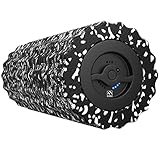
Overview: This FITINDEX model offers an expanded vibrating foam roller experience with four intensity settings ranging from 1400 to 2600 RPM. Measuring 15.8x5.8 inches yet weighing only 2.1 pounds, it prioritizes extended battery life—delivering over 4 hours of use per charge after just 3 hours of charging. Designed for whole-body application, it serves yoga, Pilates, exercise, and physical therapy needs with durable, high-quality materials and efficient power management.
What Makes It Stand Out: The exceptional battery efficiency distinguishes this model, offering double the runtime of many competitors. Its lightweight construction relative to surface area is impressive, making it surprisingly portable despite larger dimensions. The 3-hour quick charge minimizes downtime, ideal for daily users requiring consistent availability without frequent charging interruptions.
Value for Money: At $74.99, it competes directly with its brand sibling while trading one vibration speed for superior battery performance. This represents intelligent value for users prioritizing longevity over maximum intensity options. The larger surface area efficiently covers more muscle groups per pass, enhancing session efficiency and justifying the price point.
Strengths and Weaknesses: Strengths include remarkable battery life, lightweight design, larger massage surface, and quick charging capability. Weaknesses are the limited four-speed range compared to five-speed alternatives and reduced portability due to length. The single-density surface lacks the multi-zone versatility of other FITINDEX models, potentially limiting targeted treatment options.
Bottom Line: This roller suits home-based users and frequent rollers who value extended sessions without recharging. It’s ideal for larger individuals or those wanting broader surface coverage. Choose this for battery life and efficiency over maximum vibration variety.
4. LTHTRADE Vibrating Foam Roller, High Density Massage Muscle Roller Back Roller Foam for Back Pain Relief & Muscle Recovery and Physical Therapy, 5-Speed Rechargeable Exercise Roller, 2 Modes

Overview: The LTHTRADE roller emphasizes recovery optimization with an extensive vibration range from 800 to 3600 RPM across five intensity levels plus a variable speed mode. Its 4000 mAh battery provides 4-8 hours of use after a 5-hour charge, making it a workhorse for serious athletes. Designed to enhance mobility and flexibility, it targets legs, arms, hips, neck, and spine for comprehensive pre and post-exercise therapy with professional-grade power delivery.
What Makes It Stand Out: The remarkable RPM range—from gentle 800 to intense 3600—offers unmatched customization for different recovery phases and pain thresholds. The variable speed mode adds another personalization layer. Combined with exceptional battery capacity, it delivers professional-grade flexibility in a portable package that travels to gyms, beaches, or yoga studios without compromising performance capabilities.
Value for Money: At $69.99, this roller undercuts premium competitors while offering superior technical specifications. The wide RPM range and marathon battery life provide features typically found in $100+ models. It’s a value-packed option for data-driven users wanting precise control over recovery protocols without the premium brand markup.
Strengths and Weaknesses: Strengths include industry-leading RPM range, variable speed mode, outstanding battery life, and strong value proposition. Weaknesses involve lesser brand recognition compared to established competitors, potentially affecting long-term support and reliability perceptions. The single-density design may not satisfy users wanting varied surface textures, and the 5-hour charge time is lengthy despite runtime payoff.
Bottom Line: This is the choice for serious athletes and therapy patients requiring granular vibration control. Its technical capabilities exceed price expectations, making it a smart buy for customization enthusiasts. The LTHTRADE roller prioritizes performance metrics over brand prestige.
5. FITINDEX Vibrating Foam Roller for Back Pain, FSA&HSA Eligible, 5-Speed Muscle Massage, Exercise, Muscles Deep Tissue, Physical Therapy, Pilates, Yoga, Neck, Leg, Rechargeable, Travel Portable Gray

Overview: This premium FITINDEX model mirrors its sibling’s specifications with five vibration speeds (1500-3200 RPM), 3-in-1 density zones, and USB-C charging, while adding FSA/HSA eligibility for health spending account purchases. At 11.4x4.7 inches and 3 pounds, it maintains identical compact portability and frequency conversion technology. The neutral gray finish and medical spending compatibility make it a financially strategic recovery tool for eligible consumers seeking professional-grade muscle therapy.
What Makes It Stand Out: FSA/HSA eligibility is the defining feature, allowing pre-tax healthcare dollar purchases—a significant financial advantage. Combined with the proven 3-in-1 density design and premium vibration range, it represents the most financially accessible high-end option for account holders. The gray aesthetic provides broader appeal than color-specific alternatives while maintaining identical technical performance.
Value for Money: At $89.99, it’s the most expensive FITINDEX variant, but FSA/HSA eligibility effectively reduces out-of-pocket cost by 25-40% for qualified buyers. The price premium over similar models purchases tax advantages rather than additional features, making it strategically valuable for eligible users but questionable for others paying full price without health account access.
Strengths and Weaknesses: Strengths include FSA/HSA eligibility, versatile 3-in-1 density zones, USB-C charging convenience, and strong vibration range matching premium competitors. Weaknesses are the highest price point among similar models, identical specifications to cheaper alternatives, and the same 2-hour battery limitation on maximum settings. Non-account holders pay extra without functional benefit.
Bottom Line: This roller is ideal for anyone with FSA/HSA funds to spend, effectively making premium features more affordable through tax savings. For those without health accounts, alternative FITINDEX models offer identical performance at lower cost. It’s a financially strategic choice rather than a technical upgrade.
6. LifePro 4 Speed Vibrating Foam Roller for Physical Therapy & Exercise - High-Intensity Vibrating Roller for Muscle Recovery & Pliability Training - Back Roller for Deep & Gentle Trigger Point Therapy
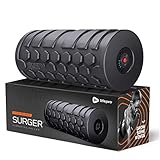
Overview: The LifePro vibrating foam roller represents a premium approach to self-myofascial release, combining traditional foam rolling with targeted vibration therapy. Designed for athletes and fitness enthusiasts seeking enhanced muscle recovery, this 4-speed electric roller aims to improve flexibility, circulation, and pliability before and after workouts. Its high-density construction and powerful motor promise deep tissue relief that penetrates beyond surface-level massage.
What Makes It Stand Out: LifePro distinguishes itself with a focused emphasis on both pre-workout preparation and post-exercise recovery. The four distinct vibration frequency levels allow users to customize intensity based on muscle group sensitivity or training phase. Unlike basic vibrating rollers, LifePro specifically markets toward pliability training—a concept popularized by elite athletes. The included drawstring bag enhances portability for gym-goers who prioritize consistent recovery routines across locations.
Value for Money: At $99.99, this roller sits in the premium category. The price is justified for serious athletes who view recovery as essential training infrastructure. Compared to non-vibrating rollers ($30-50), the added vibration technology offers measurable benefits in muscle activation and pain relief. However, budget-conscious buyers may find similar results with manual rollers combined with separate massage tools.
Strengths and Weaknesses: Strengths include versatile speed settings, targeted trigger point therapy capabilities, and excellent portability. The high-penetration vibration effectively reaches deep muscle layers. Weaknesses center on the unspecified battery life, steep price point for casual users, and potential intensity overwhelm for foam rolling beginners. The lack of detailed specifications about charge time and run duration raises longevity concerns.
Bottom Line: Ideal for dedicated athletes and physical therapy patients willing to invest in advanced recovery technology. Casual exercisers may not fully utilize its capabilities enough to justify the cost.
7. TriggerPoint Grid 1.0 Foam Roller - 13" Multi-Density Massage Roller for Deep Tissue & Muscle Recovery - Relieves Tight, Sore Muscles & Kinks, Improves Mobility & Circulation - Targets Key Body Parts

Overview: The TriggerPoint Grid 1.0 is the industry-standard foam roller that revolutionized self-myofascial release with its patented multi-density surface. This 13-inch manual roller requires no power source, relying instead on body weight and strategic movement patterns to deliver deep tissue massage. Its hollow-core design wrapped in EVA foam provides firm compression that mimics sports massage techniques for effective muscle recovery and mobility enhancement.
What Makes It Stand Out: The proprietary Distrodensity Zones create a three-dimensional surface that replicates a massage therapist’s hands—wide planes for large muscle groups, targeted fingers for precise trigger points, and medium tubes for tissue aeration. This pattern promotes blood flow more efficiently than smooth rollers. The hollow core maintains structural integrity far longer than solid foam alternatives, preventing the “flattening” common with cheaper rollers after repeated use.
Value for Money: At $29.99, the Grid 1.0 offers exceptional value. It eliminates ongoing costs (batteries, charging) and potential electronic failures. This one-time investment provides years of reliable performance. While lacking vibration features of $80-100+ models, its durability and proven design make it more cost-effective for most users. It’s the smart choice for those prioritizing simplicity and longevity over tech features.
Strengths and Weaknesses: Strengths include unmatched durability, scientifically-designed surface texture, lightweight portability, and trusted brand reputation. The firm compression effectively addresses deep knots and tightness. Weaknesses include a learning curve for proper technique, potential discomfort for ultra-sensitive users, and no vibration assistance for enhanced circulation. The 13" length may require repositioning for full-back coverage.
Bottom Line: The best all-around foam roller for 90% of users. Choose this for reliable, effective recovery without complexity or premium pricing.
8. Vibrating Foam Roller - 4 Vibration Levels - Rechargeable - Trigger Point Therapy, Deep Tissue Massage, Muscle Recovery, Back Roller and Muscle Massager - Medium, Green

Overview: This budget-friendly vibrating foam roller enters the market as an accessible entry point to vibration-enhanced recovery. Offering four vibration levels including a wave pattern, this rechargeable medium-sized roller aims to deliver trigger point therapy and deep tissue massage at a fraction of premium brand prices. Its distinctive green color and unique shape suggest targeted application for specific pain points across major muscle groups.
What Makes It Stand Out: The sub-$35 price point makes vibration technology accessible to casual exercisers and budget-conscious buyers. The inclusion of a wave pattern setting differentiates it from basic three-speed models, providing rhythmic pulsation that can enhance muscle relaxation. The roller’s unique shape—likely contoured or tapered—enables more precise targeting of hard-to-reach areas like hip flexors and shoulder blades compared to standard cylindrical designs.
Value for Money: At $34.99, this roller dramatically undercuts competitors while maintaining core vibrating functionality. It’s an excellent trial product for users uncertain about investing $80-100 in premium models. The rechargeable battery eliminates ongoing costs. However, corners cut in materials and motor quality may impact longevity. For occasional use, it outperforms manual rollers; for daily intense use, durability concerns emerge.
Strengths and Weaknesses: Strengths include unbeatable price, multiple vibration settings, rechargeable convenience, and targeted shape design. It’s lightweight and suitable for travel. Weaknesses involve unknown brand reliability, potentially weaker motor output, shorter product lifespan, and vague specifications regarding battery life and charge time. The medium firmness may not satisfy those wanting ultra-firm pressure.
Bottom Line: Perfect for beginners or occasional users wanting to experiment with vibration therapy without significant financial commitment. Serious athletes should invest in proven brands.
9. Vulken Extra Long 17” Vibrating Foam Roller 4 Speeds 3800RPM High Intensity Quick Charge Electric Foam Roller Tissue Massager for Muscle Recovery
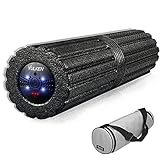
Overview: The Vulken Extra Long roller addresses a common complaint among larger athletes: standard rollers don’t accommodate broad backs and simultaneous leg work. This 17-inch vibrating foam roller provides expanded surface area while delivering high-intensity vibration up to 3800RPM across four speed settings. Designed for bigger bodybuilders and athletes, it combines length with power to create an efficient full-body recovery tool that reduces rolling time.
What Makes It Stand Out: The 17-inch length allows single-pass back coverage and simultaneous dual-leg rolling—significant time-savers. The 3800RPM maximum intensity surpasses many competitors, delivering deeper penetration for dense muscle tissue. Quick-charge technology (2x faster than USB models) minimizes downtime between sessions. At just 2.1 pounds, it remains surprisingly portable despite its size, and the eco-friendly plastic shell effectively transfers vibration without excessive weight.
Value for Money: Priced at $79.99, Vulken positions itself as a mid-premium option. The extended length and powerful motor justify the cost over $35-50 rollers, while undercutting $100+ models. For users over 6 feet tall or with broad frames, the efficiency gains alone warrant the investment. The included carrying bag adds value for gym transport. Casual users under 5'8" may find the length unnecessary.
Strengths and Weaknesses: Strengths include exceptional length for full-back coverage, powerful 3800RPM motor, rapid charging system, and lightweight design. The four-speed range accommodates various tolerance levels. Weaknesses include the plastic shell feeling less premium than foam-wrapped alternatives, potential overkill for smaller physiques, and a larger footprint for storage. Battery life specifications could be more transparent.
Bottom Line: The optimal choice for larger athletes, bodybuilders, and anyone prioritizing efficiency in their recovery routine. Smaller users should consider standard lengths.
10. High-Density Vibrating Foam Roller Blue with 4 Customizable Speeds for Deep Tissue Massage, Muscle Recovery and Pain Relief -Rechargeable with Portable Bag

Overview: This blue vibrating foam roller, marketed under the Kucttic brand, targets the mid-range segment with a feature set that bridges budget and premium options. The 13-inch roller combines vibration technology with innovative wave texture grooves across five intensity settings (1500-3200RPM). Its 3-in-1 density design aims to serve multiple therapeutic purposes—from gentle yoga recovery to intense deep tissue work—making it a versatile addition to home fitness equipment.
What Makes It Stand Out: The wave groove texture adds a physical dimension beyond simple vibration, creating additional pressure points that mimic finger-like massage. The three distinct density patterns (high, medium, low) integrated into one roller surface eliminate the need for multiple tools. Intelligent standby mode after 15 minutes prevents overheating and preserves battery life. The hypoallergenic EVA foam construction addresses skin sensitivity concerns often overlooked by competitors.
Value for Money: At $49.99, this roller delivers premium features—wave texture, five speeds, density zones—at a moderate price. It competes effectively with $80-90 rollers while maintaining build quality. The 2-hour battery life per charge is adequate for weekly use but may require mid-week charging for daily athletes. For home users wanting versatility without $100+ investment, it strikes an excellent balance.
Strengths and Weaknesses: Strengths include innovative wave texture, multiple density zones, good speed range, lightweight portability (2.2lbs), and safety features. The hypoallergenic material broadens user accessibility. Weaknesses include DC charging being less convenient than USB-C, battery life shorter than some competitors, and brand recognition lagging behind established names. The 13" length may still require repositioning for taller users.
Bottom Line: A smart mid-range purchase for home gyms and regular exercisers wanting advanced features without premium pricing. The texture innovation justifies the modest cost increase over basic vibrating models.
The Evolution of Self-Myofascial Release
Understanding Traditional Foam Rolling
For decades, foam rolling has been the gold standard for affordable, accessible muscle recovery. By using body weight to apply pressure to specific muscle groups, these cylindrical tools help break up adhesions in the fascia—the connective tissue surrounding muscles—and improve tissue elasticity. The mechanism is simple: sustained pressure on a trigger point temporarily restricts blood flow, and when released, a surge of nutrient-rich blood rushes back into the area, promoting healing and reducing tension.
However, traditional foam rolling comes with limitations. The discomfort can be intense enough that many users don’t spend adequate time on problem areas. Additionally, the pressure is static, meaning you’re relying solely on compression rather than active tissue manipulation. This is where vibration technology fundamentally changes the equation.
The Vibration Revolution
Vibrating foam rollers emerged from the same principles that made massage guns and percussive therapy devices so popular. By adding mechanical oscillations to the compression, these rollers create a multi-dimensional approach to tissue therapy. The vibrations cause rapid muscle fiber contractions and relaxations, essentially “distracting” pain receptors while simultaneously increasing blood flow and tissue temperature. This isn’t just a gimmick—it’s a scientifically-backed enhancement to an already effective recovery modality.
How Vibrating Foam Rollers Work
The Science Behind Percussive Therapy
The magic lies in mechanotransduction—how cells convert mechanical stimuli into biochemical responses. When vibrations penetrate muscle tissue at specific frequencies (typically between 20-60 Hz), they stimulate mechanoreceptors and proprioceptors embedded in your muscles and fascia. This stimulation triggers several beneficial responses: increased production of synovial fluid in joints, enhanced lymphatic drainage, and activation of the parasympathetic nervous system, which promotes relaxation.
Unlike static pressure alone, vibration creates micro-massage effects that reach deeper tissue layers without requiring excruciating pressure. This means you can achieve myofascial release at a cellular level while keeping discomfort manageable.
Frequency, Amplitude, and Why They Matter
Two technical specifications determine a roller’s effectiveness: frequency (measured in Hertz) and amplitude (the distance the vibration travels). Frequency controls how many vibrations occur per second—lower frequencies (20-30 Hz) are ideal for relaxation and warm-ups, while higher frequencies (40-60 Hz) target deep tissue and stubborn knots. Amplitude, often overlooked, determines the intensity of each vibration wave. A higher amplitude (measured in millimeters) means more aggressive tissue penetration, which is crucial for larger muscle groups like glutes and hamstrings.
The best devices offer adjustable frequency and amplitude settings, allowing you to customize your experience based on the muscle group and your recovery goals.
Key Benefits of Upgrading to Vibration
Enhanced Circulation and Blood Flow
While traditional foam rolling improves circulation through pressure and release, vibrating rollers take it further. The constant oscillations create a pumping action within blood vessels, dramatically increasing microcirculation. Studies show that vibration therapy can boost blood flow by up to 30% more than static pressure alone. This enhanced perfusion delivers more oxygen and nutrients to damaged tissues while accelerating the removal of metabolic waste products like lactic acid.
Deeper Muscle Activation
Vibrations recruit more motor units—the nerve-muscle connections responsible for contractions—than static pressure. This means you’re not just passively compressing tissue; you’re actively stimulating muscle spindles and Golgi tendon organs, which improves neuromuscular communication. For athletes, this translates to better muscle activation patterns during subsequent workouts and reduced risk of compensation injuries.
Pain Gate Theory and Reduced Discomfort
The “pain gate” theory explains how non-painful stimuli can block pain signals from reaching the brain. Vibrating foam rollers exploit this mechanism perfectly. The rapid sensory input from vibrations essentially overwhelms pain receptors, making the same amount of pressure feel significantly less painful. This allows you to spend the recommended 60-90 seconds on each trigger point without the instinctive flinching that shortens traditional rolling sessions.
Time Efficiency in Your Recovery Routine
Let’s be honest—most people don’t spend enough time foam rolling because it’s time-consuming and uncomfortable. Vibrating rollers cut required session times by 30-50% while delivering superior results. A 5-minute full-body session with a vibrating roller can be more effective than a 10-minute session with a traditional roller, making consistent recovery more realistic for busy schedules.
Essential Features to Evaluate Before Buying
Vibration Intensity Levels and Customization
Look for rollers offering at least 3-5 distinct speed settings. Single-speed models are limiting and rarely provide the versatility needed for different muscle groups. Premium options may offer 10+ levels with incremental adjustments. The control mechanism matters too—intuitive buttons or dials are preferable to complicated app-based controls when you’re mid-workout and sweaty.
Amplitude and Stall Force Specifications
Amplitude typically ranges from 8mm to 16mm in quality rollers. For general fitness, 10-12mm suffices, but serious athletes or larger individuals should prioritize 14mm+ for adequate depth. Stall force refers to how much pressure you can apply before the motor stalls. A minimum of 40 pounds of stall force is recommended; otherwise, you’ll lose vibration benefits when bearing down on dense muscle groups.
Battery Life and Charging Options
Nothing kills a recovery session like a dead battery. Quality rollers provide 2-4 hours of runtime per charge. Consider charging time (2-3 hours is standard) and whether the device uses proprietary chargers or standard USB-C. Removable batteries are rare but valuable for heavy users who can swap in a spare. Also check if it operates while charging—some cheaper models don’t, which is frustrating.
Material Quality and Durability
The outer shell should be high-density EVA foam with a closed-cell structure to resist sweat absorption and bacterial growth. Avoid rollers with thin foam layers over hard plastic cores—they break down quickly and feel harsh. The internal motor housing should be reinforced polymer or aluminum to withstand repeated impact. Check warranty terms; reputable manufacturers offer at least one year, with premium brands extending to two years.
Surface Texture and Design Patterns
Smooth surfaces work well for beginners and large muscle groups, but textured patterns (ridges, grids, or nodules) provide targeted trigger point therapy. The best designs incorporate multiple textures along the roller’s length, allowing you to rotate between broad pressure and pinpoint accuracy. Avoid overly aggressive spikes—they can bruise tissue and are unnecessary when vibration is doing the deep work.
Noise Level and Motor Quality
Early vibrating rollers sounded like jackhammers, but modern brushless motors operate at 45-60 decibels—about the volume of a normal conversation. Test noise levels if possible; excessive sound prevents relaxation and may indicate poor motor quality. Brushless motors last longer, generate less heat, and provide smoother vibration transitions than brushed alternatives.
Portability and Size Variations
Standard rollers measure 12-13 inches long and 5-6 inches in diameter, weighing 2-3 pounds. Travel-specific models compress to 4-5 inches diameter and may split into two halves. Consider your primary use case—home recovery favors full-size models, while gym-goers and travelers benefit from compact designs. Some premium rollers include carrying cases with dedicated pockets for chargers and accessories.
Smart Features and App Integration
While not essential, Bluetooth connectivity and companion apps can enhance your experience through guided routines, pressure sensors that display real-time feedback, and automatic intensity adjustments based on muscle group. However, don’t overpay for gimmicks—core vibration performance matters more than digital bells and whistles. Some users prefer simple, reliable mechanics over app dependency.
Choosing the Right Roller for Your Needs
For Athletes and Performance Recovery
Competitive athletes need maximum power and durability. Prioritize high amplitude (14mm+), strong stall force (50+ pounds), and at least 5 vibration speeds. Look for models with textured surfaces for targeted work and extended battery life for tournament weekends. Quick-charge capabilities are valuable between training sessions. Durability is non-negotiable—the roller must withstand daily use and transport in gym bags.
For Chronic Pain and Rehabilitation
Those managing conditions like fibromyalgia, arthritis, or recovering from injury require gentler, more controlled options. Focus on rollers with lower minimum vibration speeds (starting around 20 Hz) and smooth surfaces to avoid aggravating sensitive tissue. Amplitude should be moderate (10-12mm) to prevent overstimulation. Consider models with ergonomic handles or non-slip surfaces for better control when mobility is limited.
For Travel and On-the-Go Use
Frequent travelers need compact, lightweight designs that don’t sacrifice performance. Look for rollers that collapse or separate into smaller components, fitting easily in carry-on luggage. Battery life becomes even more critical—aim for 3+ hours since charging opportunities may be limited. Durable construction is essential to survive baggage handling, and TSA-friendly battery specifications prevent airport hassles.
For Budget-Conscious Buyers
Quality vibrating rollers start around $70 and can exceed $200. In the $70-$120 range, expect solid basic features: 3-4 speeds, decent battery life, and reliable construction. You’ll sacrifice some amplitude and smart features, but core vibration benefits remain. Avoid sub-$50 models—their motors lack power and burn out quickly. Consider refurbished units from reputable brands as a cost-effective alternative.
Proper Technique and Best Practices
Getting Started: First-Time User Guidelines
Begin with the lowest vibration setting to acclimate your nervous system. Place the roller on the floor and position the target muscle group perpendicular to the roller. Apply gentle body weight initially—don’t bear down aggressively. Gradually increase pressure and vibration intensity over 2-3 sessions as your tissue adapts. Limit first sessions to 5 minutes total to avoid overstimulation, which can cause temporary soreness.
Targeting Major Muscle Groups Effectively
For quads and hamstrings, use long, slow rolls from hip to knee, pausing for 30 seconds on tender spots. Glutes require cross-friction—roll at a 45-degree angle to fiber direction. Calves respond well to active ankle movements while vibrating. For the thoracic spine, support your head and roll vertically along the spine’s muscles, never directly on vertebrae. Shoulders need gentle pressure; try leaning against a wall rather than floor rolling for better control.
Duration and Frequency Recommendations
Aim for 1-2 minutes per muscle group, 3-5 times weekly. Daily use is safe but limit sessions to 15 minutes total to prevent tissue irritation. Post-workout rolling should be moderate intensity to promote recovery, while pre-workout sessions benefit from higher frequencies to activate muscles. Morning sessions can use lower frequencies for gentle activation, while evening recovery calls for moderate settings to promote relaxation.
Safety Considerations and Contraindications
When NOT to Use a Vibrating Foam Roller
Never use vibrating rollers on acute injuries, open wounds, or areas with significant swelling. Avoid direct application on the spine, neck (front or sides), or over joints like knees and elbows. People with deep vein thrombosis, severe varicose veins, or neuropathy should consult physicians first. Pregnant women should avoid abdominal use and get medical clearance. Those with pacemakers should avoid thoracic application due to electromagnetic interference concerns.
Consulting Healthcare Professionals
If you’re recovering from surgery, managing a diagnosed condition, or experiencing persistent pain, discuss vibrating roller therapy with a physical therapist or physician. They can recommend specific frequencies and techniques for your situation. Many rehabilitation centers now use clinical-grade vibrating rollers and can provide guidance on home device selection. Don’t self-prescribe aggressive vibration therapy for serious musculoskeletal issues.
Maintenance and Longevity
Cleaning and Hygiene Protocols
Sweat and bacteria degrade foam and create odors. Wipe down your roller with a damp cloth and mild soap after each use. For deeper cleaning, use alcohol wipes or a 1:10 bleach solution monthly, ensuring no liquid enters charging ports. Avoid submerging the roller—most are water-resistant but not waterproof. Let it air dry completely before storage. Textured surfaces may require a soft brush to remove debris from grooves.
Battery Care and Storage Tips
Lithium-ion batteries last longest when kept between 20-80% charge. Avoid leaving your roller plugged in continuously after full charge. Store in a cool, dry place; extreme temperatures degrade battery capacity. If not using for extended periods, charge to 50% every 3 months to prevent deep discharge. Use only manufacturer-approved chargers to avoid voltage mismatches that can damage the battery management system.
Frequently Asked Questions
Are vibrating foam rollers actually better than regular ones?
For most users, yes. Research shows vibrating rollers increase range of motion and reduce pain more effectively than non-vibrating versions in the same time period. The vibration allows deeper tissue penetration with less discomfort, making consistent use more likely. However, they’re more expensive, and some people achieve adequate results with traditional rollers. The key is adherence—if vibration makes you roll more regularly, you’ll see superior outcomes.
How often should I use a vibrating foam roller?
3-5 sessions per week is optimal for most people, though daily use is safe if limited to 15 minutes total. Athletes in heavy training may benefit from twice-daily sessions: brief pre-workout activation (2-3 minutes) and longer post-workout recovery (10-12 minutes). Listen to your body—excessive use can cause tissue irritation. If you experience increased soreness or bruising, reduce frequency or intensity.
Can vibrating foam rollers help with cellulite?
While vibrating rollers improve circulation and lymphatic drainage—which may temporarily reduce fluid retention—they cannot eliminate cellulite. Cellulite is a structural issue involving fat distribution and connective tissue bands. No external device can permanently alter this. However, improved skin tone from enhanced blood flow may create a smoother appearance temporarily. Manage expectations: these are recovery tools, not cosmetic devices.
What’s the ideal vibration frequency for muscle recovery?
There’s no single ideal frequency—it depends on your goal. For warm-ups and activation, 20-30 Hz works best. For deep tissue work and knot release, 40-50 Hz is most effective. For pain relief and relaxation, 30-40 Hz hits the sweet spot. Quality rollers offer a range covering 20-60 Hz. Start low and adjust based on tissue response; what feels best is often what’s most effective for your body.
Are these devices safe for everyone?
Most healthy adults can use vibrating foam rollers safely, but certain conditions require caution. Avoid use if you have acute injuries, severe inflammation, blood clots, neuropathy, or are pregnant (without medical clearance). Those with metal implants, pacemakers, or chronic conditions should consult healthcare providers. Children and adolescents should use adult supervision and lowest settings only.
How long do batteries typically last?
Quality rollers provide 2-4 hours of continuous use per charge, translating to 2-3 weeks of typical use. Battery lifespan is 2-3 years or 300-500 charge cycles before capacity degrades significantly. Factors affecting runtime: vibration intensity (higher speeds drain faster), ambient temperature, and battery age. Most use lithium-ion batteries that don’t suffer from “memory effect,” so partial charges are fine.
Can I use a vibrating foam roller on my neck?
Direct rolling on the neck is not recommended due to sensitive structures like the carotid arteries and cervical spine. However, you can safely use vibration on upper trapezius and levator scapulae muscles at the base of the skull. Lean against a wall with the roller between your upper back and the wall, avoiding direct cervical spine contact. For anterior neck muscles, consult a physical therapist—self-application risks injury.
What’s the difference between amplitude and frequency?
Frequency (Hz) measures how many vibrations occur per second—like the speed of a jackhammer. Amplitude (mm) measures how far the vibration travels with each pulse—like the depth of each hammer strike. High frequency with low amplitude feels buzzy but superficial. High amplitude with moderate frequency penetrates deepest. Effective rollers balance both: 10-14mm amplitude with 20-60 Hz frequency provides versatile therapy.
How much should I expect to spend?
Entry-level quality starts around $70-$90, offering basic vibration and decent construction. Mid-range rollers ($100-$150) provide better amplitude, more speeds, and longer battery life. Premium models ($160-$250) feature top-tier motors, smart connectivity, and professional-grade durability. Avoid sub-$50 options—their weak motors and poor build quality fail quickly. Consider cost-per-use; a $150 roller used 200 times costs less than $1 per session.
Can I travel with my vibrating foam roller?
Yes, but choose wisely. Full-size rollers fit in checked luggage but may be cumbersome. Travel-specific models collapse or split into compact halves, fitting carry-ons. Check battery capacity—TSA limits lithium batteries to 100 watt-hours in carry-ons; most roller batteries are 20-40 Wh, so they’re compliant. Bring your charger and consider voltage adapters for international travel. Protective cases prevent damage during transit.