Let’s be honest—tripping over a 45-pound plate at 6 AM isn’t the inspiring start to your strength training session you had in mind. Yet for countless home gym owners, this scenario plays out daily as weight plates multiply like rabbits, creating a chaotic minefield that transforms your dedicated training space into an obstacle course. The solution isn’t buying fewer plates (we both know that’s not happening) or resigning yourself to a cluttered cave. It’s investing in strategic storage that works as hard as you do.
Weight plate storage racks are the unsung heroes of organized strength spaces, yet most buyers treat them as afterthoughts. They’ll research barbells for weeks but grab the first cheap tree they see online, only to discover it wobbles, scratches their plates, or can’t accommodate their growing collection. This comprehensive guide changes that approach, equipping you with the knowledge to select storage that declutters your space, protects your investment, and actually enhances your training flow—no specific product hype required.
Top 10 Weight Plate Storage Racks
Detailed Product Reviews
1. CAP Barbell Olympic 2-Inch Plate Rack

Overview: The CAP Barbell Olympic Plate Rack delivers robust storage for serious lifters managing 2-inch center hole Olympic plates. Constructed from durable steel with a protective powder coat finish, this 21.5-pound rack stands 37 inches tall with a compact 22" x 19" footprint. Its 500-pound weight capacity accommodates substantial plate collections while the rubber base protects flooring from damage. The intelligent design features a top shelf for small plates, dual posts for large plates, and a triple-post side for medium weights, enabling systematic organization that keeps your training space efficient and safe.
What Makes It Stand Out: This rack’s differentiated post configuration sets it apart from generic trees, allowing intuitive size-based organization that speeds up weight changes. The 500-pound capacity exceeds most home gym requirements while maintaining a space-conscious footprint. CAP’s three-decade fitness industry legacy ensures proven engineering, and the powder coat finish resists corrosion in humid garage environments. The rubber base is a thoughtful touch that prevents floor scuffing without requiring a separate mat.
Value for Money: At $49.99, this rack offers exceptional capacity-to-cost ratio for Olympic plate users. Competing racks with similar steel construction typically run $70-90, making this a budget-friendly option that doesn’t sacrifice durability. The 30-day warranty is modest, but the build quality suggests longevity beyond the coverage period. For home gym enthusiasts not using bumper plates, this represents smart, focused spending.
Strengths and Weaknesses: Strengths include heavy-duty steel construction, intelligent multi-tier organization, compact footprint, floor protection, and trusted brand heritage. Weaknesses involve the 30-day warranty limitation, incompatibility with bumper plates, and potential stability concerns when fully loaded at 500 pounds. Some users may find the height slightly short for convenient access.
Bottom Line: This rack excels for dedicated Olympic plate storage in space-limited home gyms. Its specialized design and robust construction make it ideal for lifters with traditional iron plates who prioritize organization and floor protection. Avoid if you use bumper plates or require bar storage.
2. CAP Barbell 1-Inch Plate Tree Rack, Black

Overview: The CAP Barbell 1-Inch Plate Tree Rack provides streamlined storage for standard weight plates in a compact triangular frame. Built from durable steel with a rust-resistant powder coat finish, this rack supports up to 300 pounds across five strategically positioned posts. Measuring just 19 inches wide and 22 inches deep, it maximizes vertical storage while minimizing floor space requirements. The elevated design keeps plates off the ground, preventing moisture damage and creating a safer workout environment. CAP’s four-decade manufacturing expertise ensures reliable performance for budget-conscious home gym builders.
What Makes It Stand Out: The triangular geometry delivers exceptional stability without consuming excess space, making it perfect for apartments or small garages. Five separate posts allow logical weight progression organization, while the powder coating maintains a professional appearance despite heavy use. Unlike flimsy competitor models, CAP’s steel construction provides genuine 300-pound capacity without wobbling. The brand’s global reputation offers peace of mind that budget options typically lack.
Value for Money: At $33.99, this represents one of the most cost-effective plate storage solutions available. Comparable standard plate racks cost $45-60, while DIY options often exceed this price in materials alone. The durable finish extends lifespan, delivering years of service for minimal investment. For lifters using standard plates, it’s nearly impossible to find better capacity per dollar spent.
Strengths and Weaknesses: Strengths include unbeatable price point, space-saving triangular design, durable steel construction, trusted brand reliability, and effective floor protection. Weaknesses involve the 300-pound capacity limitation, lack of Olympic plate compatibility, absence of barbell storage, and shorter height that may require bending to access lower weights.
Bottom Line: This rack is the definitive choice for budget-minded lifters using standard plates. Its compact footprint and reliable construction make it perfect for small home gyms where space and money are tight. Upgrade only if you need Olympic compatibility or higher capacity.
3. CAP Barbell Olympic Bumper Plate Tree Rack with 6 Weight Plate Posts and 4 Barbell Storage Holders – Heavy-Duty Steel Gym Organizer for Olympic Plates and Bars - Black
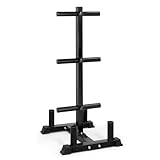
Overview: This premium CAP Barbell rack addresses comprehensive Olympic plate and barbell storage needs with professional-grade engineering. Featuring six plate posts supporting 110 pounds each for a 660-pound total capacity, it accommodates both standard Olympic plates and bumper plates. Four integrated vertical bar holders keep multiple Olympic bars secure and accessible. The heavy-duty steel frame stands 51.18 inches tall with a compact 23.62" x 25.59" footprint, while rubber end caps protect flooring and enhance stability during dynamic loading. This all-in-one solution eliminates clutter for serious training environments.
What Makes It Stand Out: The bumper plate compatibility distinguishes it from standard Olympic racks, while the 660-pound capacity serves powerlifters and Olympic lifters alike. Four barbell holders exceed most competitors’ offerings, making it ideal for athletes with specialized bars. The space-saving vertical design maximizes storage density without sacrificing accessibility. Rubber caps provide superior floor protection compared to basic plastic feet.
Value for Money: At $92.99, this rack consolidates two purchases into one, saving $30-50 versus separate plate trees and bar holders. The heavy-duty construction justifies the premium over entry-level options, while bumper plate compatibility future-proofs your investment. For lifters with multiple bars or bumper plates, the specialized features deliver targeted value that generic racks cannot match.
Strengths and Weaknesses: Strengths include massive 660-pound capacity, bumper plate compatibility, four barbell holders, robust steel construction, floor protection, and space-efficient design. Weaknesses involve higher price point, 50+ inch height may not fit low ceilings, and the 110-pound per-post limit requires careful weight distribution. Assembly instructions could be clearer.
Bottom Line: This rack is purpose-built for dedicated lifters with bumper plates or multiple barbells. Its superior capacity and integrated storage justify the investment for serious home gyms. Skip if you only need basic plate storage or have height restrictions.
4. Marcy 6-Peg Olympic Weight Plate Tree and Vertical bar Holder Storage Rack Organizer for Home Gym PT-5757 , Black

Overview: The Marcy PT-5757 combines Olympic plate storage and barbell organization in a compact, square-based design. Six plate pegs accommodate any Olympic plates with 2-inch center holes, while the integrated vertical bar holder stores a single Olympic barbell. With assembled dimensions of 34" x 34" x 32", this rack offers substantial storage without overwhelming small spaces. The 300-pound total capacity suits most home gym enthusiasts, and the durable black finish resists chipping and corrosion. Marcy’s reputation for reliable home fitness equipment ensures dependable performance for organized training spaces.
What Makes It Stand Out: The unified plate-and-bar storage eliminates the need for separate equipment, saving both money and floor space. The symmetrical 34-inch square footprint provides exceptional stability, while six pegs offer more organization options than typical 5-post designs. The lower 32-inch height allows easy plate access without excessive bending. Marcy’s long-standing presence in home fitness lends credibility to this practical storage solution.
Value for Money: Priced at $68.00, this rack sits in the mid-range, offering dual functionality that would cost $80-100 as separate components. While the 300-pound capacity is modest compared to premium options, the integrated bar storage adds significant value for lifters with limited space. It’s an efficient compromise between basic trees and high-capacity commercial racks.
Strengths and Weaknesses: Strengths include combined plate and bar storage, stable square base, six organization pegs, accessible height, and trusted brand name. Weaknesses involve the 300-pound capacity limitation, larger 34" x 34" footprint consumes more floor space, unspecified bumper plate compatibility, and single bar holder may insufficient for multiple bars.
Bottom Line: This rack perfectly serves home gym owners needing both plate and bar storage without commercial-grade capacity. Its stable design and dual functionality make it ideal for compact spaces where versatility matters more than maximum weight capacity. Consider alternatives if you need bumper plate storage or multiple bar holders.
5. 3-Tier Dumbbell Rack, 1100LB Capacity Adjustable Weight Rack for Home Gym, Heavy-Duty Weight Stand for Dumbbells Kettlebells & Weight Plates(Rack Only)

Overview: This versatile 3-tier rack redefines home gym storage with unprecedented adaptability and massive 1100-pound capacity. Engineered from commercial-grade steel with grade 8.8 alloy screws, this H-frame stand accommodates dumbbells, kettlebells, barbells, and both 1-inch and 2-inch weight plates. Adjustable height and angle settings (including 10-degree incline) allow horizontal or angled configurations, while width customization from 2.6 to 7.5 inches via adjustable spacers ensures compatibility with diverse equipment. Four rubber end caps protect floors and prevent slipping. This single-rack solution replaces multiple specialized storage units.
What Makes It Stand Out: Unmatched versatility distinguishes this rack—no other storage solution adapts to dumbbells, kettlebells, and plates simultaneously. The 1100-pound capacity exceeds most home gym needs, while the adjustable geometry allows horizontal storage for kettlebells or angled positioning for dumbbells. Commercial-grade steel and welded construction provide stability that flimsy multi-purpose racks lack. The ability to store both standard and Olympic plates future-proofs your investment.
Value for Money: At $139.99, this rack eliminates the need for separate dumbbell, kettlebell, and plate racks that would collectively cost $200-300. The commercial-grade materials and adjustability justify the premium price for serious home gym owners. While overkill for plate-only storage, its multi-equipment flexibility delivers exceptional long-term value for comprehensive fitness spaces.
Strengths and Weaknesses: Strengths include extraordinary versatility, massive 1100-pound capacity, adjustable height/angle/width, commercial-grade construction, floor protection, and broad equipment compatibility. Weaknesses involve complex assembly requiring careful balancing, higher price point for single-purpose users, larger footprint than dedicated plate trees, and potential stability issues if not perfectly leveled.
Bottom Line: This rack is the ultimate solution for home gym owners with diverse equipment collections. Its adjustability and capacity make it ideal for those outgrowing single-purpose storage. Choose dedicated racks only if you store exclusively plates or have severe space constraints.
6. CAP Barbell Olympic Bumper Plate Tree Rack with 4 Weight Plate Posts and 2 Barbell Storage Holders – Heavy-Duty Steel Gym Organizer for Olympic Plates and Bars - Black

Overview: The CAP Barbell Olympic Bumper Plate Tree Rack delivers specialized storage for serious Olympic weightlifters. Constructed from heavy-duty steel with a compact 36.8" x 24.4" x 25.9" footprint, this black organizer accommodates bumper plates and bars with purpose-built precision. The four plate posts each support 110 pounds, totaling 440 pounds of capacity, while two vertical barbell holders keep your Olympic bars secure and accessible. Rubber end caps protect flooring and enhance stability during intense loading sessions.
What Makes It Stand Out: This rack’s dedicated Olympic design sets it apart from universal organizers. The four-post configuration allows systematic plate organization by weight, while dual barbell holders accommodate multiple bars for varied workouts. Its space-efficient vertical storage transforms cluttered gym corners into organized training stations. The heavy-duty steel construction withstands commercial-grade use, making it equally suitable for home gyms and small fitness studios.
Value for Money: At $62.99, this rack offers exceptional specialization for Olympic equipment owners. Competing universal racks often cost more while providing less targeted functionality. The 440-pound capacity covers most recreational to intermediate lifters’ needs without premium pricing. For those invested in Olympic plates and bars, this focused design eliminates wasted features while delivering professional-grade durability.
Strengths and Weaknesses: Strengths include purpose-built Olympic compatibility, robust steel construction, dual bar storage, and space-saving footprint. The 440-pound capacity handles substantial weight collections. Weaknesses include limited versatility—it won’t hold dumbbells or kettlebells—and the 1-inch standard plate incompatibility. The all-black finish, while professional, may show scratches over time.
Bottom Line: For Olympic weightlifters seeking dedicated, sturdy plate and bar storage without overspending, this CAP Barbell rack delivers outstanding value. Its specialized design and robust construction make it a smart investment for organized, efficient training spaces.
7. Weight Plate Rack, Weight Tree, Weight Plate Holder, 1-Inch Home Gym Storage Stand, Holds 300 lbs

Overview: This budget-conscious weight tree targets home gym owners using standard 1-inch plates. The triangular steel rack with black powder-coat finish offers five storage posts in an ultra-compact 23.62" x 12" x 25.78" frame. Supporting 300 pounds total, it organizes standard plates efficiently without consuming valuable floor space. The design prioritizes simplicity and function for entry-level lifters building their first home gym setup.
What Makes It Stand Out: The five-post triangular configuration maximizes storage density in minimal square footage. Unlike bulkier alternatives, this rack’s narrow 12-inch width tucks into corners effortlessly. The dedicated 1-inch post diameter ensures standard plates sit securely without wobbling. Its powder-coated finish resists scratches and maintains a clean aesthetic despite heavy use. The assembly simplicity appeals to DIY enthusiasts wanting immediate organization.
Value for Money: At $39.99, this represents one of the most affordable quality plate trees available. Comparable budget options often sacrifice stability or capacity, but this model maintains 300-pound support at a entry-level price point. For lifters with standard plates, it eliminates the need to upgrade to more expensive Olympic-compatible racks, delivering targeted functionality without financial strain.
Strengths and Weaknesses: Strengths include exceptional affordability, ultra-compact footprint, five-post versatility, and durable powder coating. The triangular base provides surprising stability. Weaknesses include the 300-pound limit restricting advanced lifters, 1-inch exclusivity preventing Olympic plate use, and lack of barbell storage. The shorter height may require bending for heavier plates.
Bottom Line: This weight tree excels for budget-minded beginners with standard plate collections. While limited in capacity and compatibility, its rock-bottom price and space-saving design make it an unbeatable entry-level organization solution.
8. ULTRA FUEGO Dumbbell Rack 3-Tier Weight Plate Rack Storage Stand for Dumbbell/Kettlebell/Weight Plate and Curl Bar
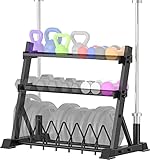
Overview: The ULTRA FUEGO 3-Tier Rack redefines home gym versatility by combining dumbbell, kettlebell, plate, and curl bar storage in one commercial-grade unit. Constructed from heavy-duty steel with a triangular stability structure, this multifunctional organizer maximizes equipment density. Four anti-slip rubber foot pads protect floors while preventing movement. The three-tier design accommodates various weight types, making it ideal for comprehensive home fitness setups where space is premium.
What Makes It Stand Out: True all-in-one functionality distinguishes this rack from single-purpose alternatives. The triangular safety structure, reinforced by a stiffening tube, creates exceptional stability under mixed loads. Unlike basic trees, it handles diverse equipment shapes and sizes simultaneously. The commercial-grade steel construction supports substantial weight without flexing, while the thoughtful design keeps all gear within arm’s reach for efficient circuit training.
Value for Money: At $109.99, this rack replaces multiple separate storage units that could cost $150+ combined. For home gym owners with varied equipment, the consolidation value is significant. The heavy-duty build ensures longevity, while the multifunctional design eliminates the need for additional racks, justifying the premium over basic plate trees through superior utility and space efficiency.
Strengths and Weaknesses: Strengths include unparalleled versatility, robust triangular construction, floor protection, and space-saving consolidation. It handles diverse equipment types effectively. Weaknesses include the highest price point in this category, potentially excessive for plate-only collections, and larger footprint than dedicated plate trees. Assembly may be more complex due to multiple components.
Bottom Line: For comprehensive home gyms requiring diverse equipment storage, this ULTRA FUEGO rack justifies its premium price through exceptional versatility and build quality. It’s a strategic investment for serious fitness enthusiasts.
9. SereneLife 6-Pegs Olympic Weight Plate Rack & 4 Barbells - 800 Pounds Capacity, Heavy Duty Gym Organizer, Scratch Resistant Frame, Powder-Coat Finish, Easy to Assemble, Compact & Space-Saving

Overview: The SereneLife rack dominates high-capacity plate storage with an impressive 800-pound limit across six pegs, plus four barbell holders. Engineered from durable steel with a scratch-resistant powder-coat finish, this heavy-duty organizer targets serious lifters with extensive Olympic plate collections. The compact design balances massive storage potential with space efficiency, while easy assembly appeals to users wanting quick setup. This rack transforms chaotic weight piles into a professional-grade storage system.
What Makes It Stand Out: Unmatched 800-pound capacity sets this apart from standard 300-440 pound racks. Six pegs provide superior organization for extensive plate sets, allowing weight progression categories. Four integrated barbell holders exceed most competitors’ two-bar limit. The scratch-resistant finish maintains appearance under brutal daily use, while the stable base design prevents tipping even when fully loaded with heavy bumper plates.
Value for Money: At $85.41, the capacity-per-dollar ratio is exceptional. Competing high-capacity racks often exceed $120 without matching the 800-pound limit or six-peg layout. For advanced lifters requiring extensive storage, this mid-range price delivers premium capacity typically found in commercial units costing twice as much, representing outstanding long-term value.
Strengths and Weaknesses: Strengths include industry-leading capacity, six-peg organization, four barbell holders, durable finish, and stable construction. The easy assembly is a bonus. Weaknesses include potential overkill for casual lifters, larger footprint than basic racks, and Olympic-only compatibility. The sheer capacity may encourage excessive weight accumulation.
Bottom Line: For serious strength athletes with substantial Olympic plate collections, this SereneLife rack offers unmatched capacity and organization at a surprisingly accessible price. It’s a commercial-grade solution for ambitious home gyms.
10. Marcy Combo Weights Storage Rack for Dumbbells, Kettlebells, and Weight Plates DBR-0117 gray 18.00 x 36.00 x 54.00 inches

Overview: The Marcy DBR-0117 Combo Rack leverages decades of fitness equipment expertise to deliver a versatile three-tier storage solution for dumbbells, kettlebells, and plates. Measuring 18" x 36" x 54", this heavy-duty steel unit features a rectangular frame with four plate posts and three shelves. The hammertone finish resists scratches while providing a professional aesthetic. Rubber base caps protect floors from damage, making it suitable for finished home gym spaces where equipment care is paramount.
What Makes It Stand Out: Marcy’s reputation for reliable home gym equipment instills confidence in this rack’s longevity. The three-tier shelf system accommodates irregularly shaped items like kettlebells and dumbbells better than peg-only designs. The rectangular frame provides exceptional stability without requiring wall anchoring. The hammertone finish hides wear better than glossy alternatives, maintaining appearance through years of use.
Value for Money: At $99.82, this rack positions itself in the mid-range while offering brand-name reliability. Combo racks from premium brands often start at $130+, making this an accessible option for quality-conscious buyers. The versatility eliminates need for separate dumbbell and plate racks, creating savings for users with mixed equipment collections seeking trusted manufacturer support.
Strengths and Weaknesses: Strengths include brand reputation, versatile three-tier design, floor protection, stable rectangular frame, and scratch-resistant hammertone finish. It handles diverse equipment types effectively. Weaknesses include unspecified total weight capacity, larger 54-inch height requiring vertical space, and less plate-specific organization than dedicated trees. The gray finish may not suit all gym aesthetics.
Bottom Line: This Marcy combo rack balances versatility, brand reliability, and reasonable pricing for home gym owners with mixed equipment. It’s a dependable, well-designed solution for organized, multi-purpose storage.
Why Your Home Gym Deserves Better Than Floor-Stacked Plates
Beyond the obvious tripping hazard, floor-stacked plates create a cascade of problems that sabotage your training environment. Moisture from concrete floors silently corrodes iron plates, while constant sliding across rough surfaces chews through bumper plate urethane. Every time you have to move plates to access others, you’re adding unnecessary time and frustration to your workout. More critically, disorganized storage creates mental clutter that subtly erodes your training focus. A well-designed rack transforms this chaos into a system where every plate has its place, making weight changes lightning-fast and keeping your mental energy where it belongs—on the lift.
Understanding Weight Plate Storage Rack Categories
Vertical Plate Trees: The Space-Saving Classic
Vertical plate trees stand as the most common solution for good reason—they concentrate storage in a minimal footprint. These units typically feature a central post with multiple pegs at varying heights, allowing you to store plates in a circular arrangement. The key advantage lies in their tiny floor space requirement, often under two square feet. However, not all vertical trees are created equal. The base diameter, post thickness, and peg angle dramatically affect stability. Look for models where pegs angle slightly upward to prevent plate slippage and feature protective sleeves to guard against metal-on-metal contact.
Horizontal Racks: Stability Meets Accessibility
Horizontal racks spread plates across a wider base, offering unparalleled stability and easier plate identification. These designs typically position plates at waist height, eliminating the need to bend deeply for heavy plates. The trade-off comes in floor space—you’ll sacrifice more square footage, but gain the ability to store plates in weight order for intuitive loading. Horizontal designs excel in garage gyms where wall space is limited but floor space is relatively available. They also serve as excellent platforms for storing fractional plates in dedicated compartments.
Wall-Mounted Solutions: Maximizing Vertical Real Estate
When floor space is at a premium, wall-mounted racks transform unused vertical space into prime storage real estate. These systems bolt directly to studs or concrete, keeping plates completely off the floor. The critical consideration here is structural integrity—you’re not just hanging a picture frame; you’re supporting hundreds of pounds of iron. Proper installation requires locating multiple studs and using appropriate lag bolts. Wall-mounted options work exceptionally well for fractional plates and smaller change plates, though heavy-duty versions can support full plate collections when properly installed.
A-Frame Designs: The Best of Both Worlds
A-frame racks combine the vertical orientation of plate trees with the stability of horizontal designs. Their triangular structure creates an inherently stable base while keeping plates accessible from both sides. These designs often feature built-in barbell storage and can double as small weightlifting platforms. The A-frame’s footprint sits between vertical trees and horizontal racks, making it a versatile compromise. Pay attention to the apex height—taller frames store more plates but may interfere with low ceilings in basement gyms.
Plate-Loaded Sleds with Storage: Dual-Purpose Innovation
The newest category merges plate storage with functional training equipment. Sleds and push carts designed with integrated pegs allow you to store plates while also using them for conditioning work. This hybrid approach maximizes equipment utility in compact spaces, though it requires accepting some compromises in pure storage efficiency. These units shine in small garage gyms where every piece must earn its keep through multiple functions.
Material Matters: What Your Rack Is Made Of
Steel Gauge and Why It Defines Durability
The thickness of steel, measured in gauge, determines whether your rack will last a lifetime or wobble into retirement after a year. Commercial-grade racks typically use 11-gauge steel (approximately 1/8 inch thick), while economy options might use 14-gauge or thinner. Thinner steel flexes under load, causing instability and potential weld failure over time. For home gyms, 11-gauge steel represents the sweet spot of durability without excessive weight or cost. Thicker steel exists but often adds unnecessary expense and bulk for non-commercial use.
Powder Coating: More Than Just a Pretty Finish
That textured black finish does more than look professional—it prevents rust and reduces plate scratching. Quality powder coating should feel thick and even, with no thin spots or orange-peel texture. Cheaper racks often feature paint that chips within months, exposing bare steel to humidity and sweat. Look for descriptions mentioning “baked-on” or “thermoset” powder coating, which indicates a more durable application process. The color might seem purely aesthetic, but darker finishes hide scuffs better in high-traffic gym environments.
Capacity Planning: Matching Storage to Your Collection
Olympic vs Standard Plates: The Compatibility Question
Before clicking purchase, verify your plate type. Olympic plates (2-inch center hole) require larger-diameter pegs, while standard plates (1-inch hole) need thinner pegs. Many modern racks accommodate both through stepped peg designs, but this isn’t universal. Mixing plate types on the same peg creates instability and scratching. If you own both types, consider dedicated storage for each or a rack with separate peg sections. The thickness difference means Olympic plates store fewer per peg than standard plates—factor this into capacity calculations.
Bumper Plates vs Iron: Density Differences That Matter
Bumper plates consume more horizontal space due to their uniform diameter and rubber construction. A rack that holds 500 pounds of iron plates might only accommodate 300 pounds of bumpers. Conversely, bumper plates are gentler on rack finishes and quieter to store. If your collection mixes both types, prioritize racks with adjustable peg spacing or separate sections. The weight distribution also differs—bumper plate collections often require wider bases for stability since the weight sits higher on the pegs.
Space Optimization Strategies for Compact Areas
Measuring Your Space: The Three-Dimension Rule
Don’t just measure floor space—measure your three-dimensional workout zone. A vertical tree might have a tiny footprint but require a 7-foot ceiling clearance when loading 45-pound plates. Account for your own height plus arm reach when placing plates on top pegs. Measure doorways and stairwells if the rack needs to navigate tight spaces during installation. Consider the “swing radius”—the space needed to maneuver plates onto and off pegs without hitting walls or other equipment.
Traffic Flow: Keeping Your Workout Zone Functional
Your rack’s placement affects workout efficiency. Position storage within arm’s reach of your primary lifting area but outside the barbell’s path during lifts. The ideal location creates a triangular workflow: barbell, bench, and plate storage forming points of an efficient triangle. Avoid placing racks where you’ll back into them during squats or deadlifts. In multi-user gyms, consider access from both sides to prevent bottlenecks when two people train simultaneously.
Safety Features That Prevent Costly Accidents
Stability Engineering: Base Width and Weight Distribution
A rack’s stability depends on more than total weight. The base width-to-height ratio determines its resistance to tipping. Quality designs feature bases at least 60% as wide as their total height, with weight concentrated low. Some premium racks include optional floor-mounting holes for permanent installation. For free-standing units, test the “push test”—a stable rack shouldn’t rock when you push the top plate with moderate force. Peg length also affects safety; overly long pegs act as levers, amplifying tip-over forces when loaded unevenly.
Protective Elements: UHMW Plastic and Rubber Inserts
Metal-on-metal contact destroys plate finishes and rack pegs over time. High-quality racks feature UHMW (ultra-high-molecular-weight) plastic sleeves or rubber grommets where plates contact pegs. These materials are abrasion-resistant and absorb impact, preventing the “clang” of plates settling. Check that these inserts are replaceable—sleeves wear out and should be user-serviceable. Avoid racks with bare metal pegs or thin rubber that peels off after months of use.
Budget Breakdown: From Economy to Premium
What You Sacrifice at Lower Price Points
Economy racks typically cut costs through thinner steel, welded (rather than bolted) construction, and minimal finishing. While functional, they often wobble under heavy loads, lack protective sleeves, and feature narrow bases that compromise stability. Welded construction means damage to one component requires replacing the entire unit. However, for lifters with under 300 pounds of plates and limited space, a budget vertical tree can serve adequately for several years.
When Premium Features Justify the Investment
Premium racks justify their price through modularity, expandability, and construction quality. Bolted construction allows replacing individual components. Modular systems let you add pegs, connect multiple units, or integrate barbell storage. The finish quality prevents rust in humid environments, and the stability handles dynamic loading without rocking. For serious lifters with 500+ pounds of plates or those building a long-term home gym, premium storage protects your plate investment and eliminates the need to replace a failing rack later.
The DIY Dilemma: Building vs Buying
Building your own rack tempts many handy lifters with promises of custom sizing and cost savings. A DIY rack using 4x4 lumber and steel pipe can absolutely work, but requires precise engineering. Wood compresses over time, causing pegs to loosen and racks to become unstable. Homemade solutions rarely include proper protective sleeves, leading to plate damage. Factor in your time, tool costs, and the risk of failure under load. Commercial racks benefit from engineered weight distribution and liability testing. Unless you have metalworking experience and access to a welder, buying often proves safer and more economical long-term.
Integration with Your Existing Gym Ecosystem
Your plate rack shouldn’t exist in isolation—it needs to complement your power rack, platform, and cardio equipment. Consider color coordination for visual harmony. Some racks integrate directly into power rack uprights via attachments, creating a unified system. Others match the finish and design language of popular rack manufacturers. Think about accessory storage: does the rack include hooks for collars, chains, or fractional plates? A cohesive gym design reduces visual clutter even when equipment is technically organized.
Aesthetics and Gym Design Cohesion
A bright orange rack might seem fun initially, but it can clash with a carefully curated gym aesthetic. Neutral colors (black, gray, dark blue) blend into most spaces and show less wear. Consider the rack’s silhouette—bulky designs dominate small spaces visually, while minimalist frames recede. Powder-coated finishes can be touched up with appliance epoxy paint if you decide to change your gym’s color scheme later. The goal is creating a space that motivates you, and visual harmony plays a subtle but powerful role in gym enjoyment.
Mobility: When You Need Your Storage to Move
Caster Quality: Not All Wheels Are Created Equal
Mobile racks with casters allow reconfiguring your gym layout, but cheap plastic wheels fail under load. Look for at least 3-inch diameter rubber-coated casters with ball bearings. These roll smoothly even when loaded with 500+ pounds and won’t mark floors. The caster mounting plate should be bolted through the rack’s base, not just surface-mounted with screws. Weight ratings for casters should exceed the rack’s total capacity by at least 50% to account for dynamic loads when moving.
Locking Mechanisms: Safety in Stationary Mode
A mobile rack must lock securely into place. Individual wheel locks are insufficient—quality designs feature a central brake that locks all wheels simultaneously or drop-down stabilizers that lift the casters off the floor entirely. Test the lock mechanism under load; it should immobilize the rack completely without any wiggle. Avoid racks where locks are plastic or feel flimsy, as they wear out quickly and create a tipping hazard.
Wall-Mounted Installation: A Structural Guide
Stud Finding and Load Distribution
Wall-mounted racks require securing to at least two studs, preferably three, using lag bolts at least 3 inches long. The mounting bracket should span multiple studs to distribute load. Use a stud finder that detects edges, then verify with a small pilot hole. Never mount solely to drywall, even with toggle bolts—the weight will eventually pull through. For heavy collections, consider adding a plywood backer board (3/4-inch minimum) secured to multiple studs, then mounting the rack to the board for ultimate load distribution.
Concrete vs Drywall: Anchor Selection
Concrete walls require expansion anchors or wedge anchors rated for the total weight plus safety margin. Drill holes must be deep enough and perfectly perpendicular—angled holes reduce anchor effectiveness by 70%. In drywall-over-concrete situations, use a hammer drill to penetrate both materials and install long enough anchors to bite into the concrete. For block walls, avoid hollow-core anchors; instead, fill cells with epoxy and use threaded rod for a permanent, bomb-proof installation.
Protecting Your Floors and Equipment
Rubber Feet vs Bolt-Down: The Floor Protection Equation
Bare steel feet destroy garage concrete and slip on smooth surfaces. Quality racks include rubber feet that grip without marking. For permanent installations, bolt-down holes allow securing the rack directly to a concrete pad, eliminating any wobble. If bolting down, use rubber isolation pads between the rack base and floor to prevent metal-on-concrete grinding and allow for future removal. In rental spaces, heavy-duty rubber mats under the rack distribute weight and prevent slipping without permanent modifications.
Sleeve Design: Preventing Plate Damage
Peg sleeves should extend at least to the end of your deepest plate. Short sleeves leave plate edges exposed to metal contact. The sleeve diameter must match your plate hole size—too loose and plates rattle; too tight and they stick. Quality designs use stepped sleeves that accommodate both Olympic and standard plates on different sections. Check sleeve ends for smooth finishing—sharp edges chew through plate inserts and create injury risks when loading quickly.
Maintenance and Longevity Best Practices
Even the best rack needs minimal maintenance. Monthly, check bolt tightness (they loosen from vibration) and inspect welds for cracks. Annually, touch up any chips in the powder coating with matching appliance epoxy to prevent rust. Lubricate caster bearings with dry silicone spray, not oil-based products that attract dust. If your rack includes UHMW sleeves, rotate them periodically to distribute wear evenly. For humid environments, place a moisture absorber near the rack or apply a light coat of 3-in-1 oil to bare steel areas.
Future-Proofing: Planning for Plate Collection Growth
Buy for where your collection will be in three years, not where it is today. A rack that holds your current 300 pounds of plates will be obsolete when you hit 500. Look for modular designs that allow adding pegs or connecting additional units. Some horizontal racks feature removable dividers that let you reconfigure compartments as your plate mix changes. Consider racks with higher weight capacities than currently needed—it’s cheaper to buy adequate storage once than replace an undersized rack later. Your future self, juggling multiple plate sets, will thank you.
Frequently Asked Questions
How much weight capacity do I really need in a plate storage rack?
Calculate your current plate total, then add 50% for future growth. If you own 400 pounds of plates, aim for at least 600-pound capacity. This buffer accounts for uneven loading, dynamic forces when placing plates, and inevitable collection expansion. For bumper plates, increase the buffer to 75% due to their space inefficiency.
Can I store both Olympic and standard plates on the same rack?
Only if the rack features stepped pegs or separate sections designed for each type. Mixing plate types on a single peg diameter creates instability and damages plate holes. If you own both types, prioritize a rack with dedicated Olympic pegs (2-inch diameter) and separate standard pegs (1-inch diameter), or consider two specialized racks for optimal protection.
What’s the ideal distance between pegs on a plate tree?
For iron plates, allow 2-3 inches between peg centers to provide finger clearance. For bumper plates, increase this to 4-5 inches due to their uniform diameter. Insufficient spacing makes plates difficult to remove and increases the risk of pinching fingers between plates. Some premium racks offer adjustable peg spacing to accommodate mixed collections.
Will a plate storage rack damage my plates over time?
Only if it lacks protective sleeves or features poorly finished pegs. Quality racks with UHMW plastic or thick rubber inserts prevent metal-on-metal contact that causes wear. However, repeatedly sliding plates on and off any rack will eventually show on plate inserts. Minimize damage by lifting plates rather than sliding them, and ensure peg sleeves are smooth and intact.
Are mobile plate racks stable enough for heavy loads?
Yes, if properly engineered. Look for mobile racks with at least 3-inch diameter casters, a low center of gravity, and a total locked base width over 24 inches. The casters should lock independently and the rack should include drop-down stabilizers that lift the wheels off the floor when stationary. Never move a rack loaded with more than 50% of its capacity.
How do I prevent my plate rack from rusting in a humid garage?
Apply car wax or a silicone-based protectant to all steel surfaces twice yearly. Ensure the powder coating has no chips—touch up immediately with appliance epoxy if damaged. Place a moisture absorber container near the rack and consider a dehumidifier for extremely humid climates. Elevate the rack slightly off concrete floors using rubber pads to prevent moisture wicking.
What’s better: welded or bolted construction?
Bolted construction wins for home gyms. While welded racks appear stronger, welds can crack under stress and are difficult to repair. Bolted racks allow replacing individual components and can be disassembled for moving. High-quality bolted joints, using Grade 8 hardware and proper torque, are just as strong as welds while offering superior maintainability.
Can I mount a plate rack on drywall-covered concrete block?
Yes, but never mount directly to drywall. Use a hammer drill to penetrate both materials, then install wedge anchors that bite into the block. The anchor length must exceed the drywall thickness plus the required embedment depth in concrete (minimum 2 inches). Consider adding a 3/4-inch plywood backer board secured with multiple anchors for ultimate load distribution.
How high should wall-mounted plate racks be installed?
Mount the bottom peg at knee height (18-24 inches from floor) and the top peg at shoulder height (around 60 inches) for comfortable access without reaching or deep bending. Ensure the highest loaded plate remains at least 12 inches below the ceiling to allow lifting clearance. For multi-user households, adjust to the primary user’s comfort level.
Is it worth building my own plate storage rack?
Only if you have metalworking experience and access to a welder. Wood racks compress and loosen over time, creating instability. The cost of steel, welding consumables, and protective finishing often approaches commercial rack prices. DIY only makes sense for extremely custom spaces or when you already own the necessary tools and skills. For most lifters, buying a quality rack is safer and more economical.