Tired of cranking out endless reps without seeing real strength gains? You’re not alone. Most calisthenics athletes hit a frustrating plateau where bodyweight alone stops delivering results. That’s when smart loading becomes your secret weapon—and nothing delivers progressive overload quite like a quality weighted vest. Unlike awkward dip belts or restrictive ankle weights, a well-designed vest distributes load evenly across your torso, letting you attack pull-ups, push-ups, dips, and muscle-ups with natural movement patterns intact.
But here’s the catch: not all weighted vests are created equal. Strap on the wrong one and you’ll be fighting chafing, restricted breathing, and wobbly weight distribution instead of focusing on your form. This guide cuts through the marketing noise to give you the biomechanics, material science, and training protocols you need to choose a vest that genuinely levels up your training—without compromising your joints or technique.
Top 10 Weighted Vests for Calisthenics
Detailed Product Reviews
1. CAP Barbell 20 lb Adjustable Weighted Vest | Heavy-Duty Workout Vest with Removable Iron Weights for Strength Training, Cardio, Running, and Calisthenics

Overview:
The CAP Barbell 20 lb Adjustable Weighted Vest delivers targeted resistance for entry-level to intermediate athletes seeking to amplify bodyweight exercises. Constructed from reinforced nylon and polyester, this vest features removable 2.5 lb weight packets that allow incremental load adjustments up to 20 lbs. The fully adjustable waist belt and padded shoulder straps create a unisex fit suitable for both men and women, while reflective stripes enhance visibility during outdoor training.
What Makes It Stand Out:
This vest excels in practicality and accessibility. Its machine-washable design (after removing weights) sets it apart from competitors requiring hand cleaning. The integrated anchor hooks enable parachute resistance training, expanding workout possibilities beyond standard calisthenics. CAP’s three decades of fitness industry experience ensures thoughtful design elements that address real-world training needs, making it particularly suitable for HIIT, running, and tactical-style workouts.
Value for Money:
At $29.06, this represents exceptional entry-level value. Comparable adjustable vests typically start at $45-$60, making this an accessible option for budget-conscious buyers. The durable construction and brand reputation provide confidence despite the low price point, though serious athletes may eventually outgrow the 20 lb capacity and seek heavier alternatives.
Strengths and Weaknesses:
Pros: Unbeatable price point; machine washable convenience; established brand reliability; versatile for multiple training styles; comfortable padded straps.
Cons: Limited 20 lb maximum may restrict progressive overload; weight packet descriptions show inconsistent specifications; basic materials lack premium feel; no dedicated storage pockets.
Bottom Line:
The CAP Barbell 20 lb vest is an ideal starting point for fitness enthusiasts new to weighted training. While it won’t satisfy advanced athletes, its affordability, practical features, and durable construction make it a smart purchase for those building foundational strength.
2. RUNmax 12lb-140lb Weighted Vest (Without Shoulder Pads, 40lb), Black

Overview:
The RUNmax 40lb Weighted Vest targets serious athletes seeking progressive resistance without premium pricing. Featuring military-grade 1000D tear-resistant nylon and reinforced stitching, this vest accommodates chest sizes 28"-48" through fully adjustable quick-release straps. The breathable mesh panels maintain airflow during intense sessions, while reflective strips ensure safety during low-light outdoor training. Though advertised with a broader range, this specific model ships with 40 lbs of removable weights.
What Makes It Stand Out:
The lifetime warranty distinguishes RUNmax from competitors, demonstrating manufacturer confidence in durability. The contoured ergonomic design distributes weight evenly across the torso, preventing the back strain common with budget vests. Individual weight pockets with secure Velcro closures prevent shifting during dynamic movements like burpees and sprints, making it suitable for CrossFit and obstacle course training.
Value for Money:
Priced at $46.67, this vest offers mid-range value with premium features. The lifetime warranty alone justifies the cost, potentially saving replacement expenses. While the 40 lb capacity serves most users well, the confusing product title mentioning 12lb-140lb ranges may mislead buyers expecting higher capacities without additional purchases.
Strengths and Weaknesses:
Pros: Lifetime warranty; military-grade durability; excellent weight distribution; breathable mesh construction; secure fit for high-intensity movements.
Cons: No shoulder pads in this version; Velcro closures may degrade over time; product specifications are confusing; weights may shift slightly during extreme plyometrics.
Bottom Line:
The RUNmax 40lb vest balances durability, functionality, and value. It’s an excellent choice for committed athletes who prioritize warranty protection and performance over premium pricing, though clarity in product listings would improve the buying experience.
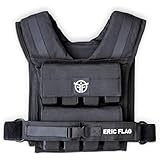
3. ERIC FLAG 40 lb Weighted Vest for Men & Women - Adjustable 0-40 lb with 16 Iron Weight, Heavy-Duty for Calisthenics, Running and Walking - Compact 1000D Oxford - Weighted Vest with Removable Weights
Overview:
The ERIC FLAG 40 lb Weighted Vest positions itself as a premium training tool for dedicated calisthenics practitioners and runners. Constructed from heavy-duty 1000D Oxford nylon, this vest features 16 removable 2.4 lb iron weights distributed across eight front and eight back pockets, allowing precise load adjustments from 1.6 lbs (empty) to 40 lbs. The ergonomic design prioritizes unrestricted arm and shoulder movement while maintaining even weight distribution to reduce spinal stress during intense workouts.
What Makes It Stand Out:
Precision engineering defines this vest. The 2.4 lb increment system enables more granular progression than standard 2.5 lb increments, while the compact 1000D Oxford fabric provides superior abrasion resistance compared to standard nylon. The design specifically accommodates calisthenics movements—dips, pull-ups, and handstands—without hindering mobility, addressing a niche that bulkier tactical vests often compromise.
Value for Money:
At $165.00, this is a significant investment. However, the commercial-grade materials, meticulous weight distribution, and sport-specific design justify the premium for serious athletes. Comparable professional-grade vests exceed $200, making this competitively priced within its tier. Casual users may find the cost prohibitive for occasional use.
Strengths and Weaknesses:
Pros: Premium 1000D Oxford construction; precise 2.4 lb weight increments; exceptional mobility for calisthenics; even weight distribution; professional-grade durability.
Cons: High price point; hand wash only maintenance; 40 lb capacity may limit advanced users; limited brand recognition compared to established competitors.
Bottom Line:
For committed calisthenics athletes and runners seeking professional-grade equipment, the ERIC FLAG vest delivers exceptional performance and durability. The premium price is justified by superior materials and thoughtful design, making it a worthwhile long-term investment for serious training.
4. CAP Barbell Adjustable Weighted Vest, 40 Lb

Overview:
The CAP Barbell 40 lb Adjustable Weighted Vest scales up the brand’s entry-level offering for intermediate athletes requiring greater resistance. Built from reinforced nylon and polyester, this vest utilizes 2.5 lb iron ore fines packets that can be added or removed to customize training load. The fully adjustable waist belt and padded shoulder straps ensure a secure fit, while reflective stripes and anchor hooks for parachute runs maintain the versatility found in the lighter 20 lb version.
What Makes It Stand Out:
CAP’s 30+ year industry heritage provides reliability and widespread availability of replacement parts. The anchor hook system for parachute training remains a unique feature in this price category, expanding beyond typical weighted vest applications. The use of iron ore fines rather than solid weights creates a more flexible, body-contouring fit that improves comfort during extended wear and running.
Value for Money:
At $58.99, this vest occupies a sweet spot between budget and premium options. It offers double the capacity of its 20 lb sibling for roughly double the price, maintaining consistent value. While materials don’t match 1000D nylon competitors, the cost savings are substantial. The brand’s global presence ensures customer support accessibility that lesser-known brands cannot match.
Strengths and Weaknesses:
Pros: Trusted brand reputation; flexible iron ore fines conform to body; parachute training hooks; good weight capacity for intermediate users; reasonable price point.
Cons: Iron ore fines may leak if packets tear; materials less durable than military-grade options; basic padding compared to premium vests; no dedicated storage solutions.
Bottom Line:
The CAP Barbell 40 lb vest is a reliable workhorse for intermediate athletes. It successfully balances affordability, functionality, and brand trustworthiness. While not the most durable or feature-rich option available, it delivers consistent performance for runners and calisthenics enthusiasts seeking proven value.
5. ZELUS Weighted Vest, 6lb/8lb/12lb/16lb/20lb/25lb/30lb Weight Vest with Reflective Stripe for Workout, Strength Training, Running, Fitness, Muscle Building, Weight Loss, Weightlifting, Black(12 lb)
Overview:
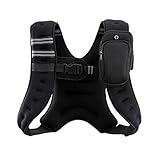
The ZELUS 12 lb Weighted Vest caters to beginners and casual fitness enthusiasts seeking simple, comfortable resistance. This fixed-weight vest uses evenly distributed iron sand filling encased in soft, wear-resistant spandex fabric. The adjustable buckle straps accommodate chest sizes 31.5"-45", while reflective strips enhance outdoor safety. Integrated storage includes an armband pouch and rear mesh pocket for keys, phones, and essentials during training.
What Makes It Stand Out:
Simplicity and comfort define this vest. The spandex fabric provides superior flexibility and breathability compared to rigid nylon vests, making it ideal for yoga, walking, and light jogging. The built-in storage solutions eliminate the need for additional armbands or belts, a practical feature often missing in dedicated training vests. The reflective strip placement ensures 360-degree visibility for dawn and dusk workouts.
Value for Money:
Priced at $28.99 for the 12 lb version, this vest offers excellent entry-level value. The multi-weight selection (6-30 lbs) allows users to choose their exact training load without paying for adjustable features they won’t use. While not suitable for heavy strength training, the cost-per-pound ratio is competitive for light cardio and muscular endurance work.
Strengths and Weaknesses:
Pros: Exceptional comfort from spandex material; integrated storage pockets; highly reflective safety features; affordable fixed-weight pricing; ideal for beginners and low-impact training.
Cons: Non-adjustable weight limits progression; spandex less durable than heavy-duty nylon; iron sand may shift over time; not suitable for advanced calisthenics or heavy loading.
Bottom Line:
The ZELUS 12 lb vest is perfect for fitness newcomers or those seeking comfortable light resistance for walking, yoga, and casual running. Its comfort-focused design and practical storage make it an excellent starter option, though committed athletes will quickly outgrow its fixed-weight limitations.
6. Renoj Weighted Vest for Women Men: 6lb/8lb/10lb/12lb/16lb/20lb Weight Training Vest for Workout, Running, Walking, Exercise, Weight Loss, Weight Lifting - With Reflective Strips and Storage Pocket
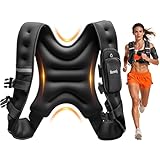
Overview: The Renoj Weighted Vest offers a versatile entry-to-intermediate option for fitness enthusiasts seeking to add resistance to cardio and bodyweight exercises. Available in increments from 6 to 20 pounds, this vest targets users wanting progressive overload without excessive bulk. At $41.99, it positions itself as an accessible upgrade for home workouts, outdoor training, and gym sessions.
What Makes It Stand Out: Safety-conscious design features reflective strips for low-light visibility, while integrated storage pockets provide practical convenience for phones and essentials. The ergonomic chest reinforcement minimizes shifting during dynamic movements like running or HIIT. Breathable neoprene construction with high-density iron shot filling delivers a slim profile that conforms to your body without the sand leakage concerns common in budget vests.
Value for Money: This vest punches above its weight class at $41.99. The combination of adjustable sizing, safety features, and storage solutions typically appears in premium models costing twice as much. While iron shot isn’t as refined as solid weight plates, the quality-to-price ratio makes it ideal for beginners and intermediate users who prioritize versatility over maximum resistance.
Strengths and Weaknesses: Strengths include multiple weight options, reflective safety features, breathable mesh fabric, secure clip system, and convenient pockets. The slim design prevents bulkiness during cardio. Weaknesses are the 20-pound maximum (insufficient for advanced strength training), iron shot filling (less durable than solid weights), and potential for uneven distribution over time compared to plate-based systems.
Bottom Line: An excellent starter vest that balances affordability, comfort, and functionality. Perfect for walkers, runners, and home fitness enthusiasts who need reliable resistance without professional-grade heft.
7. MVRK Weighted Vest Men 35lbs - Weighted Workout Vest With Removable Iron Weights, Heavy Duty Adjustable 0-35 lb with 16 Iron Weight For Functional Training & Calisthenics - Weight Vest for Men and Women

Overview: The MVRK Weighted Vest delivers professional-grade resistance for serious athletes pursuing functional training and calisthenics. This 35-pound system features 16 removable iron weights (2.18 lbs each) distributed evenly front and back, allowing precise load adjustments from 0 to maximum capacity. At $155.09, it targets committed users who demand durability and performance.
What Makes It Stand Out: Engineered with 100D fabric and TPE foam, this vest prioritizes durability without compromising comfort. The compact design achieves extreme weight density with minimal bulk, preserving full range of motion for pull-ups, dips, and plyometrics. Durable Velcro straps maintain a secure fit even during explosive movements, while the balanced weight distribution eliminates distracting shifts.
Value for Money: While $155.09 places this in the premium tier, the investment is justified for dedicated practitioners. The removable weight system essentially provides multiple vests in one, and the robust construction outlasts cheaper alternatives. Comparable plate-loading vests often exceed $200, making the MVRK a smart long-term investment for consistent trainees.
Strengths and Weaknesses: Strengths include superior build quality, precise weight adjustability, compact profile, secure fit during dynamic movements, and even distribution. The removable weights enable progressive overload and easier cleaning. Weaknesses are the steep price for casual users, hand-wash maintenance requirements, and 35-pound ceiling that may limit advanced strength athletes seeking heavier loads.
Bottom Line: A top-tier choice for committed calisthenics athletes and functional trainers. The premium construction and adjustability justify the cost for those training consistently at high intensity.
8. HANZO Weighted Vest for Men & Women 25lbs | 35lbs | 45lbs | 65lbs | Weight Vest With Removable Iron Weights, Adjustable Heavy Duty Weighted Workout Vest for Calisthenics & Fitness Training

Overview: The HANZO Weighted Vest represents the pinnacle of heavy-duty training equipment, offering weight options up to a massive 65 pounds for elite athletes. Constructed from reinforced 1000D Oxford nylon with double-padded shoulders, this vest is built for disciplined strength and conditioning work. At $174.80, it serves serious practitioners who require maximum load capacity and uncompromising durability.
What Makes It Stand Out: Unlike competitors topping out at 35-45 pounds, HANZO’s 65-pound option enables advanced progressive overload for weighted pull-ups, dips, and weighted carries. The quick-adjust weight brick system allows on-the-fly load changes between exercises. Double-padded shoulders distribute pressure effectively during extended wear, while the balanced profile stays secure through dynamic movements without restricting range of motion.
Value for Money: At $174.80, this is a significant investment, but it eliminates the need to purchase multiple vests as you advance. The commercial-grade 1000D nylon and heavy-duty stitching withstand daily abuse that would destroy lesser vests. For athletes who will actually utilize the 45-65 pound range, the cost-per-use makes economic sense compared to outgrowing cheaper alternatives.
Strengths and Weaknesses: Strengths include industry-leading weight capacity, professional-grade materials, rapid adjustability, excellent shoulder padding, and stable fit during intense training. The complete weight set included adds value. Weaknesses are the high price point, substantial bulk at maximum weight, and potential overkill for recreational exercisers who won’t exceed 30 pounds.
Bottom Line: The ultimate vest for dedicated strength athletes and serious calisthenics practitioners. If you’ll use the capacity, this is a worthy investment that will outlast and outperform the competition.
9. APEXUP Adjustable Weighted Vest Men 20lbs/30lbs/40lbs Weights with Reflective Stripe, Weight Vest Woman Workout Vest for Strength Training Running Walking (40 lbs, Black)

Overview: The APEXUP Weighted Vest strikes an impressive balance between professional features and mid-range pricing, offering 20, 30, or 40-pound options for versatile training. Constructed from durable 1000D nylon with removable cast-iron blocks, this vest caters to serious fitness enthusiasts who demand reliability without the premium price tag. At $99.99, it occupies the sweet spot between budget and professional tiers.
What Makes It Stand Out: The vest features 2.5-pound cast-iron blocks that eliminate sand leakage concerns entirely, providing confident, maintenance-free training. Reflective strips enhance nighttime safety, while the adjustable waist belt and padded shoulder straps prevent bouncing during runs or plyometrics. A unique detachable logo allows personalization, and reinforced stitching ensures longevity across multiple training modalities.
Value for Money: At $99.99, this vest delivers premium features—1000D nylon, solid iron weights, reflective safety elements—typically found in $150+ models. The three weight options provide clear progression paths, and the balanced symmetrical design reduces injury risk. It’s an intelligent compromise for dedicated trainees who need quality but can’t justify the highest-tier pricing.
Strengths and Weaknesses: Strengths include durable materials, solid iron weights, excellent safety features, customizable fit, and the unique personalization option. The 10-pound increments allow meaningful progression. Weaknesses are the 40-pound maximum (limiting for elite athletes), lack of incremental adjustments within each weight tier, and slightly less padding than premium competitors.
Bottom Line: A smart purchase for committed fitness enthusiasts seeking professional-grade materials and safety features at a reasonable price. Offers excellent long-term value for intermediate to advanced trainees.
10. Poudee Weighted Vest, 12LB Weight Vest for Men Women, Body Weight Vests Adjustable with Reflective Stripe for Strength Training, Running, Training Workout, Jogging, Walking - 12LB

Overview: The Poudee Weighted Vest offers an ultra-affordable entry point into weighted training at just $24.99. This fixed 12-pound vest targets beginners and casual exercisers seeking to add light resistance to walking, jogging, or basic bodyweight exercises. With adjustable straps and breathable construction, it prioritizes simplicity and accessibility over advanced features.
What Makes It Stand Out: At this price point, the inclusion of reflective stripes for safety and adjustable straps for fit is noteworthy. The iron sand filling provides even weight distribution without the bulk of plate systems, making it ideal for cardio-focused activities where mobility is key. The straightforward design eliminates complexity—no weights to add, remove, or lose.
Value for Money: Exceptional value for beginners testing weighted training without financial commitment. $24.99 is less than most gym accessories, yet delivers a functional training tool that can enhance calorie burn and endurance. While limited in weight, it serves its target audience perfectly. Comparable starter vests typically cost $35-45, making this a genuine budget champion.
Strengths and Weaknesses: Strengths include unbeatable price, comfortable fit for cardio, reflective safety feature, even weight distribution, and zero maintenance. The lightweight design won’t restrict movement. Weaknesses are the fixed 12-pound weight (no progression), iron sand filling (less durable than solid weights), insufficient resistance for strength training, and basic construction that may not withstand heavy use.
Bottom Line: The perfect impulse purchase for fitness newcomers or walkers wanting light resistance. Don’t expect advanced features, but for the price, it delivers exactly what beginners need to elevate basic workouts.
Why Weighted Vests Are Essential for Calisthenics Progression
Calisthenics builds incredible relative strength, but eventually your body adapts to its own mass. Weighted vests solve this by adding incremental resistance while preserving the movement patterns that make bodyweight training so effective. Unlike external loading methods that shift your center of gravity unpredictably, a vest keeps the weight close to your natural axis of rotation. This means your neuromuscular system learns to produce force the same way it will need to during unweighted skills—just with more power.
The magic lies in specificity. When you add 20 pounds to a pull-up, you’re not just building a bigger back; you’re teaching your lats, rhomboids, and biceps to fire in the exact sequence required for explosive muscle-ups. This transfer of strength is why vest training produces faster skill acquisition than simply adding more volume.
Understanding Weighted Vest Anatomy: What Makes a Great Vest?
Before diving into features, you need to understand the three core components that determine performance: the frame, weight system, and contact points. Think of it like a performance car—each element must work in harmony or the whole machine suffers.
Frame Design and Structural Integrity
The frame is the skeleton of your vest. Premium models use reinforced nylon or polyester with bar-tacked stitching at stress points. This prevents the catastrophic failure that happens when cheap vests rip mid-set. Look for vests with internal stabilizing straps that prevent the load from shifting during dynamic movements like burpees or handstand push-ups.
Weight Type: Fixed vs. Adjustable Systems
Fixed-weight vests come pre-loaded and sealed—simple but limiting. Adjustable systems use individual weight packets (usually 2.5-3 lbs each) that slide into pockets. For calisthenics, adjustable is non-negotiable. You’ll want to micro-load movements differently: maybe 10 lbs for push-ups but 30 lbs for pull-ups. The ability to customize load on the fly makes adjustable vests infinitely more versatile.
Closure Systems: Velcro, Buckles, and Zippers
Velcro offers quick adjustments but loses grip over time and collects lint. Buckle systems (like Cobra buckles) provide bombproof security but add weight. Zippers are smooth but can fail under lateral stress. The sweet spot? Hybrid systems that use a zipper for initial closure and adjustable straps with metal buckles for fine-tuning compression.
Key Features to Consider Before Buying
Your vest is a training partner, not just equipment. The right features separate a vest you’ll use daily from one that collects dust.
Weight Capacity: Matching Your Long-Term Goals
A common rookie mistake is buying a vest that maxes out at 20 lbs. Six months later, you’re cranking 15 pull-ups with that load and facing another plateau. Plan ahead. If your current max is 10 pull-ups, a 40-60 lb capacity vest gives you years of progressive loading potential. Remember: you’re not just buying for today’s strength—you’re buying for next year’s.
Material Selection: Balancing Durability and Comfort
Cordura nylon reigns supreme for abrasion resistance, but it’s stiff until broken in. Lighter polyester blends offer immediate comfort but may stretch over time. For the interior lining, moisture-wicking fabrics like Coolmax prevent the swampy feeling that leads to skin irritation during long sessions.
Adjustability: One-Size-Fits-All is a Myth
Your vest should fit like a second skin. Look for models with both horizontal (chest) and vertical (torso length) adjustment points. This dual-axis adjustability ensures the weight sits on your shoulders, not pulling on your neck, and doesn’t ride up during inverted movements.
Weight Distribution: The 60/40 Rule
Ideally, 60% of the load should rest on your shoulders, 40% on your torso. This ratio mimics how your body naturally carries mass and prevents excessive lumbar compression. Vests that concentrate weight too low force your erector spinae to overwork, increasing injury risk during planks or L-sits.
Weight Capacity: How Much is Too Much?
The “more is better” mentality kills progress. For calisthenics, the goal isn’t maximal loading—it’s optimal loading that maintains movement quality. A good benchmark: you should be able to perform 70% of your unweighted max reps with the vest on. If you can normally do 20 push-ups, start with a load that lets you hit 14 clean reps. This preserves the neurological quality of the movement while providing sufficient stimulus.
Advanced athletes might work in the 40-60 lb range for strength phases, but anything beyond 60 lbs often compromises the scapular control needed for handstand work and levers. The exception? Dedicated weighted calisthenics competitors who treat the vest as a separate sport. For most, 40 lbs of well-distributed weight is the sweet spot for long-term gains.
Material Matters: Durability and Comfort
Your vest will absorb sweat, endure friction from bar kips, and survive being tossed in gym bags. Material choice determines its lifespan.
Exterior Fabric: Abrasion Resistance
Cordura 1000D is the gold standard—used in military gear for a reason. It laughs at bar abrasion and maintains structure under load. Avoid vests with mesh exteriors; they tear within months of kipping pull-ups. For a middle ground, 600D polyester with PU coating offers decent durability at lower weight.
Weight Material: Iron vs. Steel vs. Sand
Iron pellets are cheap but can shift and create pressure points. Steel plates (often coated in rubber) provide dense, stable weight but add rigidity. Sand is a disaster—leaks, clumps, and never distributes evenly. For calisthenics, steel plate inserts with curved edges that conform to your torso are worth the premium.
Fit and Adjustability: The Goldilocks Principle
A vest that’s too loose turns into a pendulum, wrecking your rhythm on muscle-ups. Too tight, and you restrict diaphragmatic breathing, killing endurance. The Goldilocks fit allows two fingers between the vest and your sternum when fully tightened.
Sizing for Your Body Type
Short torso? Look for “athletic cut” vests that end above your navel to prevent hip interference during leg raises. Tall athletes need extended torso models that distribute weight over more surface area, reducing pressure points. Women should seek vests with contoured chest panels—unisex designs often compress uncomfortably and shift weight forward.
Adjustment Mechanisms: Quick-Release vs. Precision
Quick-release buckles are great for HIIT circuits where you’re stripping weight between exercises. But for pure strength work, precision-adjustable straps with ladder locks let you dial in tension exactly. Some premium vests feature micro-adjustment dials—overkill for most, but game-changing if you share equipment with training partners.
Weight Distribution: Why It Can Make or Break Your Workout
Poor distribution doesn’t just feel bad—it changes movement mechanics. A front-heavy vest pulls your shoulders into protraction, weakening pull-up power. Back-heavy loading exaggerates lumbar lordosis, risking lower back strain during hollow body holds.
Front vs. Back Loading Strategies
For pushing movements (push-ups, dips), slightly more weight in the front (55/45) helps counterbalance your natural center of gravity. For pulling (pull-ups, rows), a rear bias (45/55) keeps the weight closer to your lats. The best vests let you adjust this balance by removing/adding weight packets strategically.
Fixed vs. Dynamic Distribution
Some innovative vests use flexible weight channels that allow micro-movement of the load as you exercise. This sounds gimmicky but actually reduces pressure points during dynamic movements. However, for static holds like front levers, you want rock-solid distribution. Choose based on your primary training focus.
Breathability and Ventilation: Staying Cool Under Pressure
A sauna on your torso kills performance faster than any load. During a 30-minute calisthenics session, your core temperature can rise 2-3°F. Without proper ventilation, you’ll tap out early.
Mesh Panel Placement
Strategic mesh panels along the spine and under the arms dump heat without compromising structural integrity. Avoid vests with mesh on weight-bearing surfaces—it stretches and creates sagging. The ideal design uses solid fabric where weight sits and mesh only in non-load zones.
Moisture-Wicking Linings
Look for silver-ion treated linings that actively combat bacteria. This isn’t just about smell—bacterial buildup degrades fabric elasticity. Some high-end vests feature removable, washable liners. If you train daily, this feature alone is worth a 20% price premium.
Mobility and Range of Motion: Don’t Compromise Your Form
The vest should become part of your body, not a restriction. Test any vest with these three movements: overhead reach (for handstands), deep squat (for pistol progressions), and full spinal rotation (for human flags). If you feel binding in any plane, keep shopping.
Shoulder Strap Design
Narrow straps dig into your traps during pull-ups. Wide, contoured straps (2-3 inches) with tapered edges distribute pressure across more surface area. Some vests use memory foam padding that molds to your clavicles—excellent for heavy loading but can feel bulky for dynamic work.
Torso Length and Hip Clearance
A vest that extends past your iliac crest will ride up during leg raises and L-sits. Measure from your clavicle notch to your navel—your vest should be 2-3 inches shorter than this. For athletes over 6'2", consider “long torso” models specifically.
Safety Considerations: Protecting Your Joints and Spine
Loading adds stress exponentially, not linearly. Adding 20 lbs to a 150-lb athlete is a 13% increase in mass but can create 30-40% more joint compression due to acceleration forces. Respect the physics.
Spinal Loading and Core Bracing
Every pound on your torso increases compressive forces on your lumbar discs. Always brace your core as if expecting a punch before initiating movement. For planks and hollow holds, start with 50% of the weight you’d use for pull-ups. Your spine needs time to adapt to sustained loading.
Joint Impact: Wrists, Elbows, and Shoulders
Weighted push-ups increase wrist extension forces significantly. Use parallettes or push-up bars to neutralize wrist position. For dips, keep the load moderate—heavy vests can add 50+ lbs of force to already-stressed elbow joints. Listen to pain signals; joint aches are your body begging for deload weeks.
Form Degradation: The Red Flag
If your kip becomes exaggerated, your scapular retraction weakens, or your push-up depth decreases, you’re too heavy. Video yourself weekly. When form breaks down, drop 10% of the weight and rebuild. Quality reps with less weight beat ugly reps with more, every time.
Progressive Overload: The Science Behind the Strategy
Randomly adding weight is chaos. Strategic overload is art. The key is varying load, volume, and intensity across training cycles.
Micro-Loading: The 2.5% Rule
Increase vest weight by 2.5% of your bodyweight every 2-3 weeks. For a 180-lb athlete, that’s roughly 4-5 lbs. This small increment challenges adaptation without triggering compensation patterns. If you can’t add weight, add volume—one extra set with the same load provides novel stimulus.
Deload Weeks: The Missing Piece
Every fourth week, cut vest weight by 40-50% and focus on perfect form. This allows connective tissue recovery, which lags behind muscle adaptation. Athletes who deload properly see 15-20% better long-term gains than those who grind continuously. Your tendons will thank you.
Training Protocols: How to Integrate Weighted Vests Effectively
Owning a vest doesn’t automatically improve your training. Protocol design determines results.
Exercise Selection: What Responds Best
Weighted vests shine on horizontal and vertical presses/pulls. Push-ups, dips, pull-ups, and rows are vest-perfect. Handstand push-ups and muscle-ups respond well to moderate loading. Avoid vests for planche work—the forward lean makes weight distribution problematic. For leg training, stick to pistol squats and shrimp squats; barbell squats with a vest add unnecessary spinal compression.
Sets, Reps, and Rest Periods
For strength (1-5 reps), use 80-90% of your max vest weight with 3-5 minute rests. For hypertrophy (6-12 reps), 60-75% load with 90-second rests works best. For endurance (15+ reps), keep it under 50% load. Mix protocols across your training week for comprehensive development.
Frequency: The Recovery Equation
Start with 2-3 vest sessions per week, non-consecutive days. Your nervous system fatigues more from loaded work than bodyweight. As you adapt, you can add a fourth session, but monitor your resting heart rate each morning. A 5+ bpm increase signals overtraining—cut back immediately.
Common Mistakes to Avoid
Even veterans stumble with vest training. Sidestep these pitfalls to stay in the game.
The “Too Much, Too Soon” Trap
Ego is the enemy. Starting with 30 lbs when you can barely do 8 pull-ups is a recipe for shoulder impingement. Master unweighted form first, then add 10% of your bodyweight. Build a foundation of 15+ clean reps before considering heavy loading.
Ignoring Movement Quality
Weighted cheat reps are wasted reps. If your chin doesn’t clear the bar, your chest doesn’t touch the floor, or your elbows flare on dips, you’re not building strength—you’re reinforcing dysfunction. Drop weight until every rep looks as crisp as your unweighted sets.
Maintenance and Care: Extending Your Vest’s Lifespan
A quality vest is an investment. Treat it like one.
Cleaning Protocols
Never machine wash. The agitation destroys weight packet seals and warps the frame. Hand wash monthly with mild detergent, focusing on the lining. Hang dry only—dryer heat melts plastic components. For daily maintenance, wipe down with antibacterial spray and let air dry completely before storing.
Storage Solutions
Store your vest flat or on a wide-shouldered hanger. Hanging from narrow hooks stretches the shoulder straps. Keep it in a ventilated area—trapped moisture breeds mildew and degrades Velcro. If you live in a humid climate, toss a silica gel packet in the storage bag.
Budget Considerations: Finding Value Without Sacrificing Quality
Price correlates with durability, not always performance. A $150 vest with solid stitching and adjustable steel weights outperforms a $300 vest with gimmicky features you’ll never use.
Entry-level ($80-120): Look for simple adjustable models with iron weights. Accept shorter lifespan (1-2 years) but test if vest training suits you. Mid-range ($150-250): This is the sweet spot—Cordura fabric, steel plates, and excellent adjustability. Premium ($300+): You’re paying for brand, marginal weight savings, or specialized features like quick-release systems. Worth it only if you train daily at high loads.
Frequently Asked Questions
Are weighted vests safe for calisthenics beginners?
Weighted vests are safe only after you’ve mastered unweighted form. Build a foundation of 15-20 clean reps for push-ups, pull-ups, and dips before adding any load. Beginners should start with 5-10% of their bodyweight and focus on maintaining perfect technique. Rushing into heavy loading before establishing motor patterns invites joint injuries and muscular imbalances.
How heavy should my first weighted vest be?
Your starter vest should have a max capacity of 20-30 lbs with 2.5-lb increments. Initially, you’ll use 5-10 lbs for most exercises. Buying a vest with higher capacity (40-60 lbs) is smart long-term, but resist the temptation to load it heavily until you’ve logged 3-6 months of consistent, pain-free training at lighter weights.
Can I wear a weighted vest every day?
Daily vest use leads to overuse injuries and neural fatigue. Limit vest sessions to 2-4 times per week with at least 48 hours between heavy loading days. Your connective tissues adapt slower than muscles. Constant loading without recovery increases risk of tendonitis, especially in elbows and shoulders. Use unweighted days for skill work and mobility.
What’s the difference between a weighted vest and a plate carrier?
Plate carriers hold rigid armor plates and are designed for ballistic protection, not dynamic movement. They’re heavier, less adjustable, and distribute weight poorly for calisthenics. Weighted vests use flexible weight packets and contour to your torso. While plate carriers work for static exercises, they’ll restrict your range of motion for muscle-ups, handstands, and levers.
Will weighted vest training stunt my muscle growth or cause joint damage?
When done correctly, vest training accelerates muscle growth through progressive overload. The key is intelligent loading and form preservation. Joint damage occurs from excessive weight, poor form, or insufficient recovery—not from the vest itself. Strengthen supporting muscles with accessory work, prioritize mobility, and deload regularly to protect joints while maximizing gains.
How tight should my weighted vest fit?
Your vest should feel like a firm hug, not a compression wrap. You should be able to slide two fingers between the vest and your sternum when it’s fully tightened. During deep breaths, the vest should expand with your chest without restriction. If you feel shoulder pinching or restricted arm movement, it’s too tight or poorly sized.
Can I run or do cardio in my weighted vest?
Yes, but with caveats. Keep the load under 10% of your bodyweight for running to avoid altering gait mechanics and increasing knee impact. For HIIT circuits, you can go heavier since durations are shorter. Always prioritize posture—if you feel yourself leaning forward or shuffling, reduce weight immediately.
How long should a quality weighted vest last?
With proper care, a mid-range vest (Cordura fabric, steel weights) should last 5-7 years of regular training. Cheaper models with iron pellets and basic nylon might last 1-2 years. Signs it’s time to replace: stretched straps that won’t hold tension, torn weight pockets, or a frame that’s lost its shape and sags during use.
Are expensive weighted vests worth the investment?
Expensive vests ($300+) justify their cost if you train 4+ times weekly at loads over 30 lbs. The durability, comfort, and adjustability matter when your vest becomes a daily tool. For casual use (2-3 times/week, lighter loads), a $150-200 vest delivers 90% of the performance at half the price. Don’t pay for features you won’t utilize.
Can I build significant muscle mass using only a weighted vest?
Absolutely. Weighted vest training provides the progressive tension needed for hypertrophy, especially in the 6-12 rep range. Combine vest training with adequate protein intake and you’ll see substantial upper body development. However, for maximal leg growth, you’ll eventually need barbell squats or heavy kettlebells—vests alone can’t provide enough lower body load long-term.