If you’ve ever watched in awe as a seasoned practitioner folded effortlessly into a deep stretch while you struggled to reach your toes, you’re not alone. Flexibility isn’t just about natural talent—it’s about intelligent training, and the right tools can dramatically accelerate your progress. Enter the humble yoga strap: a deceptively simple prop that acts as an extension of your arms, a source of gentle traction, and a bridge between where your flexibility is today and where you want it to be tomorrow. Whether you’re a beginner struggling with basic poses or an advanced yogi working toward deeper expressions, understanding how to select and use yoga straps effectively can revolutionize your practice in ways you never imagined.
Top 10 Yoga Straps and Belts for Flexibility Training
Detailed Product Reviews
1. Acozycoo Stretching Strap with 10 Loops-Yoga Strap for Physical Therapy,Home Workout,Pilate & Flexibility Training,Non Elastic Exercise Stretch Band for Hamstring,Leg Stretcher Belt,Flexibility Fascia (Blue)

Overview: The Acozycoo Stretching Strap is an 86-inch non-elastic nylon strap featuring 10 reinforced loops designed for targeted flexibility training. Engineered for physical therapy, yoga, Pilates, and athletic recovery, this tool enables users to achieve deeper stretches through customizable grip positions. The numbered loops provide systematic progression, making it suitable for rehab patients, athletes, and yoga practitioners seeking controlled, stable stretching assistance.
What Makes It Stand Out: Unlike basic cotton straps, this features ultra-comfortable neoprene handles that protect hands and feet during intense sessions. The numbered loop system allows precise tracking of flexibility gains, while the included travel pouch and complimentary stretching guide add exceptional value. Its high-density nylon construction ensures zero elasticity, providing reliable resistance for therapeutic stretching where control is paramount.
Value for Money: At $9.99, this strap delivers premium features typically found in $20+ alternatives. The combination of durable materials, ergonomic handles, and educational resources makes it a cost-effective choice for home therapy. Comparable non-elastic straps without neoprene padding or guides often cost $15-25, positioning this as a budget-friendly yet professional-grade option.
Strengths and Weaknesses: Strengths include exceptional durability, versatile loop configuration, portable design, and comprehensive guide. The neoprene handles prevent discomfort during prolonged use. However, the non-elastic design limits dynamic stretching applications, and the 86-inch length may be insufficient for taller users or complex poses. The blue color option is also limited compared to multi-color competitors.
Bottom Line: This strap excels for controlled, therapeutic stretching and rehabilitation. Ideal for users prioritizing stability over elasticity, it’s a smart investment for home physical therapy and yoga practice. Those needing dynamic resistance should consider elastic alternatives instead.
2. Tchrules Leg Stretcher Strap, Backbend Training Belt with Door Anchor, Flexibility Trainer Stretching Equipment Assist Stretch Strap for Fitness Gymnastics Dance Aerial Yoga Ballet
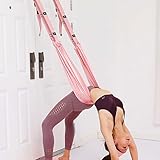
Overview: The Tchrules Leg Stretcher revolutionizes flexibility training with its door-mounted design, enabling assisted backbends and leg stretches without wall installation. This system uses a soft, aerial yoga swing-inspired fabric that wraps around the waist and legs, providing supported stretching for dancers, gymnasts, and aerial yoga enthusiasts. The adjustable ring system accommodates various heights and skill levels.
What Makes It Stand Out: The door anchor mechanism eliminates permanent installation, making it uniquely suitable for renters and travelers. Unlike narrow straps that dig into skin, its wide, hammock-like fabric distributes pressure evenly across the body. The adjustable positioning allows progressive backbend training and assisted handstand preparations, offering functionality beyond traditional floor-based straps.
Value for Money: Priced at $21.99, this specialized equipment costs more than basic straps but undercuts professional studio equipment by hundreds of dollars. For serious flexibility practitioners, the door-mounted assistance provides value comparable to private coaching sessions. The durability and multi-position adjustability justify the premium over simple loop straps.
Strengths and Weaknesses: Key strengths include no-installation setup, skin-friendly fabric, height adjustability, and portability. It’s particularly effective for backbend progression and aerial pose preparation. Weaknesses include door dependency (requires sturdy doors), not suitable for children under 12, and limited use for upper body-only stretching. The fabric may stretch slightly over time with heavy use.
Bottom Line: Perfect for intermediate to advanced practitioners focused on backbends and leg flexibility. The door-mounted design offers unparalleled assistance for solo training, making it worth the investment for serious dancers and gymnasts. Beginners may find simpler straps more practical.
3. Stretch Straps, Elastic Stretching Strap with Adjustable 11 Loops, Fitness Leg Stretch Band Equipment Flexibility Trainer Resistance Stretch Assist Belt, for Physical Therapy, Pilates, Yoga, Ballet

Overview: This elastic stretching strap combines woven nylon with latex wire to create a dynamic resistance tool featuring 11 numbered loops. Measuring approximately standard strap length, it provides progressive assistance for physical therapy, Pilates, yoga, and ballet conditioning. The elasticity allows for both static holds and dynamic stretching, adapting to various flexibility levels from beginners to elite athletes.
What Makes It Stand Out: The 11-loop design offers more incremental progression than typical 10-loop models, while the hybrid nylon-latex construction balances durability with responsive stretch. Clear digital numbering on each loop enables precise tracking of improvement. The washable, compact design supports daily use, and the material remains odor-free even with heavy sweating.
Value for Money: At $9.99, this elastic strap matches the price of basic non-elastic models while offering superior versatility. The dual-material construction typically commands $15-18 in competing products. For users wanting both resistance and assistance in one tool, it eliminates the need to purchase separate elastic and non-elastic straps.
Strengths and Weaknesses: Strengths include excellent elasticity for dynamic stretching, durable edge-locking construction, skin-friendly texture, and portability. The 11 loops provide finer progression control. However, the latex component may trigger allergies in sensitive users, and the elastic nature provides less stability for rehabilitation requiring rigid support. Elasticity may decrease over extended use.
Bottom Line: An excellent all-purpose strap for users seeking dynamic stretching capabilities. Ideal for active flexibility training and progressive resistance work. Those with latex sensitivities should opt for pure nylon alternatives, but for most practitioners, this offers outstanding versatility at a budget price.
4. Slim Panda Yoga Strap for Stretching,Cotton Yoga Strap with Adjustable D-Ring Buckle,Non-Elastic Yoga Belt for Pilates,Gym Workouts,Physical Therapy,Improve Flexibility

Overview: The Slim Panda Yoga Strap is a traditional 100% cotton non-elastic belt featuring a double D-ring buckle system for adjustable length control. At 1.5 inches wide with 2.5mm thickness, it provides a classic yoga prop experience for practitioners prioritizing natural fiber construction. The welded D-rings offer secure fastening for various poses and therapeutic applications.
What Makes It Stand Out: Unlike synthetic alternatives, the pure cotton construction provides superior grip that improves with use and washing. The extra loop on one end creates a built-in handle system without added hardware. The 4mm welded D-rings are notably more robust than the 3mm standard, reducing slippage risk during intense stretches. Its softness distinguishes it from stiffer cotton competitors.
Value for Money: At $5.89, this is the most economical option among reviewed straps, undercutting even budget synthetic models. Cotton straps of comparable quality typically retail for $8-12. While lacking loops or advanced features, it provides fundamental functionality at an entry-level price point, making it accessible for beginners and studio bulk purchases.
Strengths and Weaknesses: Strengths include natural cotton feel, secure buckle system, excellent grip, and unbeatable price. The material softens beautifully over time without losing strength. Weaknesses include lack of numbered loops for progression tracking, manual length adjustment is slower than loop systems, and cotton absorbs moisture more than synthetic materials. Non-elastic design limits dynamic applications.
Bottom Line: A no-frills, reliable strap perfect for traditional yoga practice and budget-conscious buyers. The cotton construction and secure buckle make it ideal for Iyengar-style yoga and basic physical therapy. Users wanting quick-adjust loops or dynamic resistance should invest more, but for static stretching, it’s exceptional value.
5. ZHQZZPH Aerial Yoga Stretching Strap - Adjustable Yoga Straps for Stretching, Flexibility & Inversion Training | Portable with Pouch for Pilates, Ballet, Gymnastics
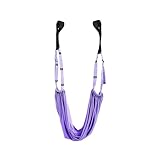
Overview: The ZHQZZPH Aerial Yoga Strap is designed specifically for inversion and aerial yoga practice, featuring a unique open hip hammock design that supports suspended poses. This system facilitates deeper stretches and assisted inversions without full aerial rigging requirements. The adjustable straps accommodate various body sizes and skill levels, from beginners exploring inversions to advanced practitioners refining technique.
What Makes It Stand Out: The inverted rope pull mechanism enables safe, supported transitions into upside-down poses, offering a bridge between floor yoga and full aerial hammock practice. The open hip hammock design promotes natural spinal alignment during suspended stretches. Its portability allows home users to experience aerial benefits without permanent ceiling installation, using door anchors or existing support structures.
Value for Money: At $12.99, this specialized aerial tool costs significantly less than complete aerial yoga hammocks ($50-150) while delivering core inversion benefits. For practitioners hesitant to invest in full aerial equipment, it provides an affordable entry point. The included pouch and portability add value for those attending aerial classes or traveling.
Strengths and Weaknesses: Strengths include targeted aerial yoga support, inversion assistance, portable design, and lower cost than full aerial systems. The hammock-style support is comfortable for extended use. However, it requires sturdy anchor points not included in the package, offers limited utility for non-aerial stretching, and lacks the comprehensive support of full aerial silks. Setup instructions could be more detailed.
Bottom Line: Best suited for aerial yoga enthusiasts wanting home inversion practice without full equipment investment. Excellent for supplementing studio classes and building inversion confidence. Traditional yoga practitioners may find limited use, but for its niche purpose, it delivers exceptional value and functionality.
6. Stretching Strap Yoga Strap with Loops, Stretch Straps for Physical Therapy, Non-Elastic Exercise Strap for Pilates, Dance and Gymnastics with Workout Guide (Purple)

Overview: The Oak-Sports Stretching Strap is a budget-friendly flexibility tool designed for physical therapy, yoga, pilates, and dance. This purple nylon strap features 10 loops over its 75-inch length, providing multiple grip points for progressive stretching. At just $5.86, it targets beginners and casual users seeking an accessible entry point into assisted stretching routines.
What Makes It Stand Out: This strap distinguishes itself through its remarkable affordability without sacrificing core functionality. The non-elastic premium nylon construction ensures stability during stretches, while the 12-month worry-free warranty demonstrates manufacturer confidence rare in this price bracket. The lightweight design and simple loop configuration make it immediately usable even for complete novices, and the included workout guide accelerates the learning curve.
Value for Money: At under six dollars, this strap delivers exceptional value. Comparable basic straps typically retail for $10-15, making this an ideal choice for budget-conscious buyers or those testing the waters of assisted stretching. While it lacks premium features like neoprene handles or numbered loops, it covers all fundamental stretching needs effectively.
Strengths and Weaknesses: Strengths include unbeatable price, durable nylon material, versatile 10-loop design, and reassuring warranty coverage. The 1-inch width provides adequate comfort for most users. Weaknesses are the basic construction without padded handles, lack of numbered loops for progression tracking, and slightly shorter 75-inch length that may limit taller users. The narrow width might dig into hands during intense pulls.
Bottom Line: The Oak-Sports strap is a no-frills champion for beginners and value-seekers. If you want reliable assisted stretching without financial commitment, this purple workhorse delivers. Skip it only if you require advanced features or have specific ergonomic needs.
7. Stretching Strap with Loops - Non Elastic Stretch Band for Physical Therapy, Yoga Strap for Stretching Equipment, Stretch Bands for Exercise and Flexibility - Fascia, Hamstring and Leg Stretcher Belt

Overview: This premium Stretching Strap elevates the standard loop design with thoughtful enhancements for serious flexibility training. The non-elastic nylon band features numbered loops and ultra-comfort neoprene handles, catering to yoga practitioners, physical therapy patients, and athletes. Available in two sizes (78-inch with 10 loops or 96-inch with 12 loops), it accommodates various heights and flexibility levels at a mid-tier price point.
What Makes It Stand Out: Numbered loops enable precise progression tracking and symmetrical stretching—crucial for rehabilitation and balanced flexibility gains. The neoprene handles protect hands and feet during intense sessions, while the included carry bag and comprehensive stretching guide demonstrate a complete user-centric approach. The 1.5-inch width distributes pressure more comfortably than standard 1-inch straps.
Value for Money: At $19.94, this strap sits in the sweet spot between budget and premium options. The features justify the cost: you get professional-grade materials, ergonomic handles, educational resources, and portability. While double the price of basic models, the durability and guided functionality make it a worthwhile investment for regular practitioners.
Strengths and Weaknesses: Strengths include numbered loops for tracking, comfortable neoprene handles, two size options, quality nylon construction, and excellent portability. The free guide adds significant value for beginners. Weaknesses include a higher price that may deter casual users, and the non-elastic design (while stable) lacks the progressive resistance some advanced users prefer. The wider profile may feel bulky for smaller hands.
Bottom Line: Perfect for dedicated practitioners who value guidance and comfort. The numbered loops alone make it worth the upgrade for anyone in physical therapy or pursuing specific flexibility goals. Casual users can save money with simpler options.
8. Abiarst Stretching Strap Yoga Straps for Physical Therapy, 10 Loops Non-Elastic Stretch Band for Pilates, Flexibility, Exercise and Gymnastics (Green)

Overview: The Abiarst Stretching Strap offers a straightforward approach to assisted flexibility training in an eye-catching green color. Constructed from durable, washable nylon with eco-friendly dye, this 75-inch non-elastic band features 10 loops for multi-purpose use in yoga, pilates, dance, and physical therapy. At $5.99, it positions itself as an environmentally conscious budget option.
What Makes It Stand Out: The emphasis on eco-friendly materials and skin-friendly construction sets it apart from other budget straps. The washable, tight-knit fabric ensures hygiene and longevity, while the slightly longer individual loops provide more adjustment room than standard designs. The brand’s focus on overall health benefits—from injury prevention to muscle recovery—shows a holistic approach to stretching.
Value for Money: This strap delivers solid value at six dollars. The eco-friendly dye and washable fabric are rare features in this price range, making it attractive for users with sensitive skin or environmental concerns. While it lacks premium features, the core functionality and durable construction match straps costing twice as much.
Strengths and Weaknesses: Strengths include eco-friendly materials, machine washability, durable tight-knit construction, skin-friendly texture, and versatile 10-loop design. The standard 75-inch length works for most users. Weaknesses are the basic 1-inch width without padding, absence of numbered loops for progression tracking, and lack of included accessories like a carry bag or guide. The green color may not appeal to everyone.
Bottom Line: An excellent choice for eco-conscious buyers seeking reliable basic functionality. The washable feature alone makes it ideal for frequent use or shared environments. If you prioritize sustainability and hygiene over advanced features, this green strap is a smart pick.
9. Acozycoo Stretching Strap with 10 Loops-Yoga Strap for Physical Therapy,Home Workout,Pilate & Flexibility Training,Non Elastic Exercise Stretch Band for Hamstring,Leg Stretcher Belt,Flexibility Fascia (Red)

Overview: The Acozycoo Stretching Strap targets users seeking premium features in a traditional loop design. This red nylon strap extends to 86 inches with 1.5-inch width, offering extra reach and comfort compared to standard models. The 10 numbered loops feature neoprene handles for ergonomic support during intensive stretching sessions for yoga, physical therapy, and athletic training.
What Makes It Stand Out: The extended 86-inch length accommodates taller users and enables more complex wrapping techniques for full-body stretches. Numbered loops provide progression tracking, while neoprene handles deliver superior hand and foot protection. The included travel pouch and complimentary stretching guide create a complete portable system for serious flexibility practitioners.
Value for Money: At $19.99, this strap competes directly with other premium options. The extra length and width justify the cost for users who found standard straps limiting. While priced similarly to competitors, the comprehensive package—guide, pouch, ergonomic handles, and numbered loops—makes it a strong value proposition for committed users.
Strengths and Weaknesses: Strengths include generous 86-inch length, comfortable 1.5-inch width, numbered loops, protective neoprene handles, travel pouch, and detailed exercise guide. The high-density nylon ensures durability. Weaknesses include a price point that may exceed casual users’ budgets, and the extra length could feel cumbersome for shorter individuals or simple stretches. The non-elastic design prioritizes stability over dynamic resistance.
Bottom Line: Ideal for taller users, advanced practitioners, or anyone serious about progressive flexibility training. The numbered loops and extended length make it particularly valuable for physical therapy and athletic conditioning. Worth the investment if you’ll use it regularly.
10. Elfzone Yoga Door Swing - Yoga Strap, Backbend Training Stretching Rope with Door Anchor, Flexibility Trainer Stretching Equipment Assist Stretch Strap for Fitness Gymnastics Dance Aerial Yoga Ballet (purple)

Overview: The Elfzone Yoga Door Swing revolutionizes home flexibility training by transforming any standard door into a suspension system for backbends, inversions, and splits. This innovative purple strap features a no-drill anchor design that supports over 400 pounds, making it suitable for aerial yoga, gymnastics conditioning, and deep flexibility work. The 40mm wide nylon webbing provides durability without sacrificing comfort.
What Makes It Stand Out: The door-mounted design eliminates installation barriers, allowing users to practice advanced poses safely at home. Unlike traditional floor straps, this system enables gravity-assisted stretching and backbend training impossible with standard equipment. The adjustable height settings accommodate various exercises from hip openers to full inversions, while the breathable, tear-resistant material ensures safety and comfort during intense sessions.
Value for Money: At $17.32, this specialized tool offers unique functionality at a reasonable price. Traditional yoga swings or trapeze systems cost $50-100+ and require permanent installation. For backbend enthusiasts and aerial yoga practitioners, this represents exceptional value, though casual stretchers may not utilize its full potential.
Strengths and Weaknesses: Strengths include no-tool installation, impressive 400+ lb weight capacity, versatile height adjustment, wide comfortable webbing, portability, and easy cleaning. The foldable design with storage pouch enhances mobility. Weaknesses include requiring a sturdy door, limited portability compared to simple straps, and a learning curve for safe use. Not suitable for all door types or rental properties with restrictions.
Bottom Line: A game-changer for backbend training and aerial yoga enthusiasts who lack space for permanent equipment. If you specifically want to improve backbends or explore suspension-assisted stretching, this is an unbeatable value. Traditional stretchers should choose a standard loop strap instead.
Why Yoga Straps Are Essential for Flexibility Training
Yoga straps aren’t just for beginners. These versatile tools create a feedback loop that teaches your nervous system it’s safe to release into deeper ranges of motion. By providing external support, they allow you to maintain proper alignment while exploring your edge—something that’s nearly impossible when you’re straining just to hold a position.
The Science Behind Assisted Stretching
When you use a yoga strap, you’re engaging in what’s known as “assisted passive stretching,” which targets both muscle fibers and the connective tissue fascia. The strap acts as a stabilizer, reducing the neurological “braking” mechanism that causes muscles to contract when they sense instability. This allows you to hold stretches 30-40% longer than unassisted attempts, leading to more significant adaptations in tissue elasticity. Research shows that consistent assisted stretching increases sarcomere length and stimulates fibroblasts to produce more organized collagen patterns, literally restructuring your body for greater mobility.
Breaking Through Plateaus
Every flexibility practitioner hits a wall where progress seems to stall. This plateau often occurs because your body has adapted to your current training stimulus. Yoga straps introduce novel proprioceptive input and allow you to apply micro-adjustments in angle and tension that reignite adaptation. By creating a closed-loop system where both ends of the muscle chain are secured, straps enable you to work on end-range control—crucial for translating flexibility into functional movement.
Understanding Different Types of Yoga Straps
Not all yoga straps are created equal. The material and hardware you choose directly impact your practice experience, safety, and long-term results.
Cotton vs. Nylon vs. Hemp
Cotton straps offer the most traditional feel with excellent grip that improves slightly when damp from sweat. They’re gentle on hands and provide a natural texture that doesn’t slip during intense stretches. Nylon straps, while less absorbent, deliver superior strength-to-weight ratio and resist stretching over time, making them ideal for heavy traction work. Hemp straps represent the eco-conscious choice, naturally antimicrobial and incredibly durable, though they may feel rougher initially until broken in. Each material responds differently to washing and aging, affecting both texture and tensile integrity.
D-Ring vs. Cinch Buckle vs. Loop Design
The D-ring design offers infinite adjustability and smooth release, perfect for dynamic flows where you need to change length quickly. Cinch buckles provide a more secure lock that won’t slip under heavy load, essential for inversion prep or deep hamstring work where safety is paramount. Continuous loop straps eliminate hardware entirely, offering consistent tension and no risk of buckle failure, though they sacrifice adjustability. Your choice should align with your primary use case: dynamic practice favors D-rings, maximum security calls for cinch buckles, and therapeutic work thrives with loops.
Key Features to Look for in Quality Yoga Straps
A premium yoga strap is a long-term investment in your physical development. Knowing what separates exceptional props from mediocre ones saves money and prevents injuries.
Length and Width Considerations
Standard straps measure 6, 8, or 10 feet long. Six-foot straps suit practitioners under 5'6" working on basic poses, while 8-foot versions handle most needs for taller individuals and complex binds. Ten-foot straps excel for partner work and advanced shoulder openings. Width matters too: 1.5-inch straps provide a sweet spot between comfort and precision, while 1-inch straps offer better grip for small hands but can dig into skin during heavy pulls. Wider 2-inch straps distribute pressure excellently for therapeutic work but feel bulky in hand.
Durability and Weight Capacity
A quality strap should withstand at least 500 pounds of tensile force without deformation. Look for reinforced stitching at stress points, particularly where the strap meets hardware. Bar-tacking—multiple rows of dense zigzag stitching—indicates professional-grade construction. The hardware itself should be cast from a single piece of metal, not welded, as welded joints can fail catastrophically under sudden load. For aerial or heavy traction applications, consider straps rated to climbing standards.
Texture and Grip
The weave pattern determines grip more than material alone. Tight, herringbone weaves offer superior friction without being abrasive, while loose basket weaves feel softer but may slip when wet. Some straps feature subtle texturing or slightly raised patterns that enhance grip without causing discomfort during extended holds. Test how the strap feels when pulled across skin—ideal texture provides control without irritation.
Eco-Friendly Materials
Sustainability-minded practitioners should examine the entire lifecycle. Organic cotton grown without pesticides, hemp requiring minimal water, or recycled nylon all reduce environmental impact. Look for OEKO-TEX certification ensuring no harmful chemicals in dyes or finishes. Consider straps manufactured using renewable energy and minimal packaging. While eco-options may cost 20-30% more, they typically last longer and align with yoga’s principle of ahimsa (non-harming).
How Yoga Straps Transform Your Practice
The true magic of yoga straps lies in their application. They don’t just help you reach further—they fundamentally change how your body experiences and integrates flexibility.
Deepening Forward Folds
In seated forward folds, looping a strap around your feet while maintaining a straight spine teaches the difference between hip flexion and spinal rounding. The strap’s tension provides a reference point for how much you’re actually folding versus how much you’re compensating. By gently pulling with your arms while resisting with your legs, you create an active stretch that targets the hamstring insertion points more effectively than passive stretching alone.
Improving Shoulder Mobility
Shoulder flexibility often limits progress in backbends and arm balances. Using a strap in poses like Gomukhasana (Cow Face Pose) allows you to gradually walk your hands closer without forcing the joint. For overhead mobility, holding a strap with wide grips and slowly moving through range-of-motion exercises retrains the scapular stabilizers to support greater flexion. The strap essentially acts as a neuromuscular re-education tool, not just a stretching aid.
Mastering Inversions Safely
Straps provide critical security when learning inversions like King Pigeon or forearm stand preps. By securing your arms or legs in proper alignment, they prevent the collapse that leads to injury. For shoulder stand variations, a strap placed around the upper arms maintains external rotation, protecting the cervical spine. This safety net allows you to build the necessary strength and proprioception without fear, accelerating skill acquisition by removing the anxiety that causes muscular bracing.
Enhancing Balance Poses
In balancing poses like Natarajasana (Dancer’s Pose), a strap around the lifted foot lets you focus on hip opening and chest expansion rather than struggling to maintain the grip. This shifts the pose from a balance challenge to a therapeutic heart opener. The strap’s feedback also helps you identify asymmetries—if one side feels dramatically tighter, you have objective data about where to focus your training.
Advanced Techniques for Flexibility Gains
Once you’ve mastered basic strap-assisted stretches, these sophisticated methods unlock the next level of mobility.
PNF Stretching with Straps
Proprioceptive Neuromuscular Facilitation (PNF) involves contracting the target muscle before stretching it. With a strap, you can apply precise resistance—push against the strap for 5-7 seconds at 70% effort, then immediately relax and deepen the stretch. This technique exploits the golgi tendon organ reflex, temporarily inhibiting the stretch reflex and allowing 15-20% greater range. The strap’s stability is crucial here; without it, you can’t maintain the end-range position during the contraction phase.
Progressive Overload Principles
Just like strength training, flexibility improves with progressive overload. Use your strap to measure progress: mark where you hold it today, then gradually work to narrow your grip by half-inch increments over weeks. Another method involves holding stretches for time under tension, starting with 60-second holds and adding 10 seconds weekly. The strap’s consistent feedback prevents cheating and ensures you’re actually progressing, not just adapting to discomfort.
Creating Traction and Decompression
For spinal flexibility, straps can create therapeutic traction. In supine hamstring stretches, looping the strap around your foot and pulling from both directions creates axial decompression that benefits the entire posterior chain. This technique is particularly valuable for desk workers with compressed spines. The key is applying steady, gentle force rather than aggressive pulling—think 3-5 pounds of pressure maintained for 90-120 seconds.
Common Mistakes to Avoid
Even the best tool becomes counterproductive when misused. These errors sabotage progress and can cause injury.
Over-Reliance on Straps
Your strap should be a bridge, not a crutch. If you find yourself using it for the same pose after six months without narrowing your grip, you’re likely not engaging the target muscles actively. The goal is to gradually reduce assistance as your nervous system adapts. A good rule: reassess your strap usage every four weeks, attempting the pose without it to gauge authentic progress.
Incorrect Placement and Alignment
Wrapping a strap around your foot’s arch versus the ball of your foot completely changes the stretch’s target. Poor placement on joints—especially knees and elbows—can create shear forces that damage ligaments. Always ensure the strap sits on muscular tissue, not bony prominences or joint creases. In standing poses, the strap should never pull joints into extreme ranges; instead, it should support the natural line of the limb.
Caring for Your Yoga Strap
A well-maintained strap can last decades, providing consistent performance throughout your flexibility journey.
Cleaning and Maintenance Tips
Cotton and hemp straps absorb sweat and skin oils, becoming breeding grounds for bacteria. Hand wash monthly in warm water with mild detergent, paying special attention to areas that contact skin most. Avoid fabric softeners, which coat fibers and reduce grip. For nylon straps, a simple wipe-down with diluted vinegar solution suffices. Always air dry completely before storage—moisture trapped in weave can cause mildew and weaken fibers. Inspect hardware monthly for corrosion or stress cracks, especially if you practice in humid environments.
Storage Solutions
Store straps loosely coiled in a breathable cotton bag, not sealed plastic. Prolonged tight wrapping creates permanent kinks that weaken the weave. Keep them away from direct sunlight, which degrades both natural and synthetic fibers over time. If you travel frequently, consider a dedicated strap bag with ventilation holes. Never leave straps in hot cars—extreme temperatures can cause hardware to expand and contract, compromising structural integrity.
Integrating Straps into Different Yoga Styles
Your approach to strap usage should align with your primary yoga discipline’s goals and philosophy.
Yin Yoga Applications
In Yin practice, where poses are held for 3-5 minutes, straps become essential for maintaining relaxation. Use them to support limbs so muscles can completely release, allowing stress to transfer to connective tissue. The key is minimal tension—just enough support to prevent muscular engagement. Loop straps loosely and consider using bolsters in combination for maximum passive release. This approach respects Yin’s principle of yielding rather than forcing.
Ashtanga and Vinyasa Modifications
In dynamic practices, straps must facilitate quick transitions. Choose D-ring designs that adjust silently and practice the motion of tightening/releasing until it becomes automatic. Use straps to modify challenging vinyasas—like binding in Marichyasana—while maintaining the breath-to-movement rhythm. The strap should integrate seamlessly, not disrupt your flow. Advanced practitioners often keep a strap nearby for specific challenging poses rather than using it throughout the entire sequence.
When to Replace Your Yoga Strap
Even the best strap has a lifespan. Replace immediately if you notice any fraying, especially near hardware where stress concentrates. Hardware that sticks, squeaks, or shows visible corrosion indicates impending failure. A sudden loss of grip texture or a strap that feels “mushy” when pulled suggests internal fiber breakdown. Most quality straps last 5-7 years with regular use, but heavy practitioners or those doing aerial work should inspect more frequently and replace every 3-4 years as a precaution.
Frequently Asked Questions
1. Can yoga straps actually make me more flexible, or do they just help me fake it?
Quality straps facilitate authentic flexibility gains by allowing you to maintain proper alignment while accessing deeper ranges of motion safely. They don’t “fake” flexibility—they create the neurological conditions for your body to adapt. The key is using them progressively, gradually reducing assistance as your tissues lengthen and your nervous system learns new patterns.
2. What’s the difference between a yoga strap and a yoga belt?
The terms are often used interchangeably, but traditionally, “belts” refer to the wider, D-ring style props used in Iyengar yoga, while “straps” encompass all varieties including loops and cinch-buckle designs. Functionally, they serve the same purpose, though belts typically offer more secure locking for heavy traction work.
3. How do I know what length strap I need?
Measure your wingspan fingertip to fingertip—this is your minimum useful length. For most people under 5'8", an 8-foot strap handles 90% of poses. If you’re taller, working on complex binds, or want versatility for partner work, opt for 10 feet. It’s better to have extra length you can coil than to come up short in a critical stretch.
4. Will using a strap make my muscles weaker from relying on it?
The opposite is true when used correctly. Straps allow you to engage muscles in their lengthened position, building eccentric strength and end-range control. The trick is active engagement—pull against the strap, don’t just hang in it. Think of it as resistance training for flexibility.
5. Can I use a regular belt or towel instead of a yoga strap?
While possible for basic stretches, household items lack the tensile strength, adjustability, and safety features of purpose-built straps. Belts can dig into skin and slip unexpectedly; towels stretch and provide poor feedback. A quality yoga strap is engineered for the specific forces and angles of yoga practice, making it a worthwhile investment in safety and effectiveness.
6. How tight should I make the strap when stretching?
Apply just enough tension to feel a gentle pull at your current end range—never pain. You should be able to breathe deeply and relax into the stretch. A good test: if you can’t hold a normal conversation, it’s too tight. For PNF techniques, the contraction phase uses firm resistance, but the subsequent stretch should feel easier, not harder.
7. Are there any poses where straps are contraindicated?
Avoid using straps directly on your neck or in ways that create compression rather than traction. People with certain shoulder instabilities should be cautious with overhead strap work unless guided by a qualified teacher. In acute injury phases, straps can sometimes enable movement that should be rested—always follow medical advice over prop usage.
8. How often should I clean my yoga strap?
For daily practitioners, a monthly deep clean is essential. Wipe down high-contact areas weekly with a natural disinfectant. If you practice hot yoga or sweat heavily, clean bi-weekly. Visible dirt, odor, or a slippery feeling when dry are signs you need immediate cleaning. Remember, a dirty strap can cause skin irritation and degrade faster.
9. Can yoga straps help with back pain and posture?
Absolutely. Straps facilitate decompression stretches that counteract sitting posture. They enable you to open tight chest muscles and strengthen mid-back muscles simultaneously. Many physical therapists recommend strap-assisted thoracic extensions and supine twists for chronic back pain. The key is consistency—5 minutes daily yields better results than occasional long sessions.
10. What’s the best way to progress from using a strap to doing poses unassisted?
Document your starting grip width, then set a goal to narrow it by 1-2 inches every 2-3 weeks. Practice the pose without the strap once weekly to test authentic progress. When you can perform the pose with the strap looped loosely (not taut), you’re ready to try without. Progress isn’t linear—some days you’ll need more support, and that’s perfectly normal.