If you’re serious about moving serious weight, your barbell isn’t just another piece of equipment—it’s the centerpiece of your entire training ecosystem. While beginners might grab any 45-pound bar off the rack, seasoned heavy lifters understand that the difference between a generic bar and a purpose-built Olympic barbell can mean the difference between hitting a new PR and walking away with a nagging wrist injury. The world of heavy lifting demands more than just a metal stick with sleeves; it requires precision engineering, material science, and a deep understanding of how bar dynamics interact with human biomechanics under extreme loads.
The market has exploded with options, from budget-friendly imports to American-made masterpieces that cost more than a month’s rent. But here’s the truth: the “best” Olympic barbell for heavy lifting isn’t about brand prestige or flashy marketing—it’s about matching the bar’s specifications to your specific lifting style, body mechanics, and long-term goals. Whether you’re a competitive powerlifter, an Olympic weightlifter, or a hybrid athlete building Herculean strength, this guide will arm you with the technical knowledge to make an informed investment that will serve you for decades of brutal, beautiful heavy lifting.
Top 10 Olympic Barbells for Heavy Lifting
Detailed Product Reviews
1. CAP Barbell Classic 7-Foot Olympic Bar, Chrome

Overview: The CAP Barbell Classic 7-Foot Olympic Bar delivers entry-level functionality at an unbeatable price point. Constructed from cold-rolled steel with a chrome finish, this 16KG bar accommodates standard Olympic plates and features medium-depth knurling with a center knurl for enhanced grip during squats. With 63,800 PSI tensile strength and rotating sleeves with bushings, it provides the basic mechanics needed for fundamental lifts.
What Makes It Stand Out: This bar’s primary appeal is its accessibility. The sub-$70 price tag makes it one of the most affordable true Olympic bars on the market. The inclusion of center knurling is rare at this price level, providing valuable back traction for squatting. CAP’s 30-year industry presence ensures you’re buying from an established brand with global support, and the 7-foot length offers full versatility for bench press, deadlifts, and Olympic movements.
Value for Money: At $67.99, this bar represents exceptional value for beginners building home gyms. Comparable budget bars often exceed $100, while premium options start at $250+. While it won’t match high-end performance, it costs less than a monthly gym membership and provides legitimate Olympic bar functionality.
Strengths and Weaknesses: Pros include the affordable price, center knurl inclusion, brand reliability, and adequate specs for novice lifters. Cons are the lower 63,800 PSI rating (limiting heavy loads), lighter 16KG weight, basic bushing rotation, and minimal 30-day warranty. The 30mm grip may feel thick for smaller hands.
Bottom Line: Perfect for beginners and casual lifters seeking a legitimate Olympic bar without financial commitment. While serious strength athletes will quickly outgrow it, this CAP Classic offers genuine value for establishing a home gym foundation.
2. CAP Barbell THE BEAST Olympic Bar | For Weightlifting and Power Lifting, THE BEAST - Black/Chrome, No Center Knurl, 7’ Olympic

Overview: THE BEAST represents CAP’s mid-tier offering, engineered for serious lifters seeking enhanced performance without premium pricing. Built from 110,000 PSI Japanese cold-rolled steel with a black phosphate finish, this 20KG bar meets competition weight standards. The 28.5mm shaft diameter and medium-depth diamond knurling provide optimal grip, while snap-clip sleeve construction ensures plate security during dynamic lifts.
What Makes It Stand Out: The 110K PSI tensile strength significantly outperforms entry-level bars, supporting heavier loads with less whip. The absence of center knurling makes it ideal for CrossFit and high-rep Olympic work where neck comfort matters. Snap clips offer superior sleeve security compared to standard collars, and the 5-year warranty demonstrates manufacturer confidence. The black phosphate finish provides better corrosion resistance than chrome.
Value for Money: At $126.99, THE BEAST bridges the gap between budget and premium bars. Similar-spec bars from specialty brands cost $300-400, making this an intelligent upgrade. The proper 20KG weight and enhanced steel quality justify the $60 premium over CAP’s Classic model.
Strengths and Weaknesses: Pros include superior steel strength, competition-standard weight, protective finish, snap-clip sleeves, and extensive warranty. The 28.5mm grip suits most lifters perfectly. Cons include the lack of center knurling (problematic for low-bar squatters) and basic bushing rotation rather than bearings. The finish may wear with heavy commercial use.
Bottom Line: An excellent choice for intermediate lifters and CrossFit enthusiasts. THE BEAST delivers meaningful performance upgrades over entry bars while maintaining affordability, though powerlifters may miss the center knurl for squats.
3. CAP Barbell 5-Foot Solid Olympic Bar, Black (2-Inch)

Overview: This compact 5-foot Olympic bar addresses space constraints without sacrificing plate compatibility. Constructed from cold-rolled steel with a black powder coat finish, the 1525mm bar weighs significantly less than standard 7-foot bars while maintaining 28mm grip diameter and 63,800 PSI tensile strength. It accepts all 2-inch Olympic plates, making it versatile for targeted exercises.
What Makes It Stand Out: Space efficiency is the defining feature—this bar fits where full-length bars cannot, perfect for apartments or small home gyms. At under $51, it’s remarkably affordable for a brand-name Olympic bar. The 9.75-inch loadable sleeve length still accommodates sufficient weight for most users, and the rotating sleeves reduce wrist strain during curls and presses.
Value for Money: $50.99 represents excellent value for a niche product. While limited in scope, it provides legitimate Olympic bar functionality at half the cost of standard bars. For users primarily performing arm work, landmine exercises, or working in confined spaces, it eliminates the need for a full-length bar.
Strengths and Weaknesses: Pros include compact size, affordability, brand reliability, and adequate knurling. It’s ideal for bench press in narrow racks and curls. Cons are significant: the 37-inch shaft length prohibits proper form on deadlifts and Olympic lifts, sleeve length limits total weight capacity, and the short length feels unbalanced for squats. It’s unsuitable for lifters over 5'8".
Bottom Line: A specialized tool for specific situations. Choose this bar only if space constraints demand it. For full-body training, invest in a 7-foot bar. However, as a secondary bar for arm work or tight quarters, it performs admirably.
4. CAP Barbell 260 LB Economy Olympic Bumper Plate Set with Color Logo | Black

Overview: CAP’s 260-pound bumper set provides a complete weight solution for home gym enthusiasts. The package includes pairs of 10, 15, 25, 35, and 45-pound plates, all featuring uniform diameter and rubber coating. Constructed with a proprietary blend of virgin and recycled rubber around a reinforced steel hub, these plates accommodate standard 2-inch Olympic bars while protecting floors and equipment from damage.
What Makes It Stand Out: This all-in-one set eliminates the piecemeal purchasing process, offering immediate training capability across multiple weight increments. The uniform 17.5-inch diameter across all plates ensures consistent pull height for deadlifts and Olympic lifts. The rubber coating allows for safe dropping from overhead, a feature steel plates cannot match. CAP’s color logo adds subtle branding without garish colors.
Value for Money: At $220.99, the set costs approximately $0.85 per pound—exceptional for bumper plates. Individual bumper plates typically cost $1.50-2.00 per pound, making this package economically smart. The comprehensive weight range supports progression from beginner to intermediate levels without additional purchases.
Strengths and Weaknesses: Pros include complete weight set, floor protection, uniform diameter, affordable per-pound cost, and brand reliability. The rubber coating reduces noise and equipment wear. Cons are economy-tier construction with potential for faster wear than competition bumpers, the “home use only” limitation, and multi-box shipping that may cause delivery delays. The recycled rubber content may produce more bounce than virgin rubber plates.
Bottom Line: An outstanding starter set for home Olympic lifting and CrossFit-style training. While not competition-grade, these bumpers deliver exceptional value for safe, floor-friendly training. Perfect for garage gyms where dropping weights is necessary.
5. 7Ft Olympic Barbell for Strength and Weightlifting Training, 45 LB Weighted Bar for Squat, Deadlift, Bench Press, Curl, Overhead Press, 1000 Lbs Capacity, Fits 2 Inch Plates

Overview: This unbranded 7-foot Olympic barbell challenges established manufacturers with impressive specifications at a mid-range price. Constructed from high-grade alloy steel boasting 190,000 PSI tensile strength, it supports loads up to 1,500 pounds—far exceeding its listed 1,000-pound capacity. The 28mm shaft with medium-depth diamond knurling and dual IPF/IWF knurl marks caters to both powerlifters and Olympic lifters.
What Makes It Stand Out: The 190K PSI rating rivals premium $400+ bars, while eight needle bearings plus brass bushings deliver exceptionally smooth sleeve rotation for Olympic movements. Hardened chrome finish provides superior corrosion resistance compared to standard chrome. The dual knurl marks offer versatility, and the manufacturer backs it with a warranty against bending—a confidence rarely seen at this price.
Value for Money: At $93.49, this bar undercuts CAP’s THE BEAST while offering superior steel, bearings, and finish. It delivers performance characteristics of bars costing 3-4 times more, making it arguably the best value in the under-$100 category. The 45-pound weight meets competition standards.
Strengths and Weaknesses: Pros include outstanding tensile strength, needle bearing rotation, hardened chrome finish, dual knurl marks, and impressive weight capacity. The 28mm grip suits most lifters. Cons include unknown brand reputation, potentially vague warranty terms, and inconsistent quality control compared to established names. Some users report sleeve play developing over time.
Bottom Line: For performance-focused buyers unconcerned with brand prestige, this bar delivers exceptional specifications. It outperforms CAP’s offerings in this price range and suits serious home gym owners. Verify warranty details before purchasing, but the specs are undeniable.
6. JELENS 7FT Bar Olympic Barbell, 1000lb Capacity Weight Bar for Strength Training, 2 Inch Strength Training Bar With Knurled Grip for Squats, Deadlifts, Presses, Rows, Curls (Silver, 7FT Olympic Barbell)
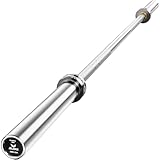
Overview: The JELENS 7FT Olympic Barbell delivers professional-grade specifications at a consumer-friendly price point. Engineered with 150,000 PSI tensile strength steel and a 1000-pound weight capacity, this 45-pound bar meets IWF standards for serious strength training. Measuring 86.6 inches with 16.1-inch loadable sleeves, it integrates seamlessly with standard Olympic plates and commercial racks.
What Makes It Stand Out: This bar’s hybrid bearing system combines needle bearings and brass bushings, offering exceptional spin for Olympic lifts while maintaining durability for powerlifting. The dual-marking knurl pattern accommodates both disciplines, and the precisely defined 33.46-inch central knurl zone provides superior back squat grip security. The hard chrome coating ensures longevity beyond standard finishes.
Value for Money: At $109.99, this barbell significantly undercuts competitors offering similar specifications. Comparable bars with hybrid bearing systems and 1000lb+ capacity typically retail for $200-300. The inclusion of IWF-standard features like dual knurl marks and high tensile strength steel makes this an exceptional investment for home gym enthusiasts seeking commercial quality without the premium price tag.
Strengths and Weaknesses: Strengths include outstanding 150K PSI steel rating, impressive hybrid bearing system, dual knurl markings for versatility, and excellent corrosion resistance. The 1.2mm diamond knurl provides secure grip without excessive abrasiveness. Potential weaknesses include limited brand recognition compared to established names, and the 28mm grip may feel thick for users with smaller hands.
Bottom Line: The JELENS barbell offers unmatched value for serious lifters building a comprehensive home gym. Its professional specifications and durable construction make it a wise long-term investment.
7. HANDBODE Olympic Barbell Bar 6.5 ft Weightlifting Bar for Powerlifting, Bench Press, Deadlift, Squat - 1000 lb Capacity, Home & Gym Strength Training, Black

Overview: The HANDBODE 6.5-foot Olympic barbell targets a specific niche with its compact design and female-friendly specifications. Weighing just 33 pounds with a 25mm shaft diameter, this alloy steel bar reduces the intimidation factor while still supporting an impressive 1000-pound capacity. The shorter length makes it ideal for smaller home gym spaces without sacrificing performance.
What Makes It Stand Out: This bar’s standout feature is its thoughtful design for smaller-handed lifters, with professional knurling scaled to a 1-inch diameter shaft. The hybrid needle bearing system ensures smooth rotation for dynamic lifts, while matte chrome sleeves reduce wrist strain during plate changes. Clear grip markings help maintain proper hand positioning across various exercises.
Value for Money: Priced at $126.99, this bar commands a premium over standard 7-foot options but justifies it through specialized engineering. For female lifters, youth athletes, or anyone with smaller hands, the ergonomic benefits outweigh the additional cost. The 1000lb capacity ensures it won’t become obsolete as strength increases, offering better longevity than lighter-duty alternatives.
Strengths and Weaknesses: Strengths include the accessible 25mm grip diameter, lighter 33lb weight for easier handling, smooth hybrid bearing rotation, and space-saving 6.5-foot length. The 1000lb capacity is impressive for its class. Weaknesses include the higher price per pound of capacity, potential compatibility issues with some wide power racks, and the matte finish may show wear faster than hard chrome.
Bottom Line: An excellent choice for lifters seeking a more manageable barbell without compromising on weight capacity. Perfect for home gyms where space and user comfort are priorities.
8. RICHUANG 7ft Olympic Barbell Weight Bar for Weightlifting, Powerlifting, CrossFit Training, 700 lbs Max Load Capacity, 45 Steel, 2 Inch Olympic Strength Training Bar for Home Gym Exercises Fitness Equipment 700LBS-Blue

Overview: The RICHUANG 7-foot Olympic Barbell positions itself as a versatile, stylish option for home gym enthusiasts. Constructed from premium high-grade steel with a 700-pound maximum load capacity, this 45-pound barbell balances performance with aesthetic appeal. The blue finish distinguishes it from standard silver bars while maintaining professional functionality for powerlifting, bodybuilding, and Olympic training.
What Makes It Stand Out: This barbell’s striking blue color scheme offers visual differentiation in crowded gym spaces. The precision bearing system delivers smooth sleeve rotation essential for Olympic lifts, while ergonomic knurling provides confident grip security. Its polished, corrosion-resistant finish combines durability with a modern look that complements both home and commercial environments.
Value for Money: At $149.99, the RICHUANG sits at the higher end of the budget barbell spectrum. While the 700lb capacity is sufficient for most intermediate lifters, competitors offer 1000lb ratings for less. The premium pricing appears to reflect the aesthetic customization rather than superior specifications. However, for users prioritizing gym aesthetics alongside functionality, the unique color may justify the additional investment.
Strengths and Weaknesses: Strengths include attractive blue finish, smooth precision bearing rotation, ergonomic knurling for secure grip, and versatile 7-foot standard length. The high-grade steel construction ensures durability. Weaknesses include the modest 700lb capacity limiting advanced lifters, highest price point among reviewed bars, and limited brand reputation. The finish may chip more readily than industrial chrome.
Bottom Line: A solid choice for style-conscious lifters who value aesthetics as much as performance. Best suited for intermediate users not requiring maximum load capacity.
9. ProsourceFit Olympic Barbell Spring Clip Collar 2-inch Pair with Easy-Grip Handles for Weightlifting,Powerlifting and Strength Training

Overview: The ProsourceFit Spring Clip Collars provide essential safety and convenience for Olympic barbell training. This pair of 2-inch collars features easy-grip plastic handles and chrome-plated steel springs designed to secure weight plates during explosive lifts. At under $9, these collars represent a fundamental accessory for any lifter using Olympic barbells, offering simple, reliable plate retention without complex mechanisms that can fail or require maintenance.
What Makes It Stand Out: These collars excel in simplicity and user-friendliness. The smooth plastic handles remain grippy even with sweaty hands, while the robust steel springs maintain consistent tension throughout workouts. Unlike bulky locking collars, these spring clips install in seconds with a simple squeeze-and-slip motion. Their compact design makes them highly portable for gym bags or home storage, and they work seamlessly with any standard Olympic barbell.
Value for Money: At $8.81 per pair, these collars deliver exceptional value that is hard to match. Competing locking collars cost $20-50 while offering marginal practical benefits for most lifters. The ProsourceFit clips provide adequate security for loads up to 300-400 pounds, making them perfectly suitable for the majority of home gym users. Their durability and low replacement cost make them an economical long-term choice for budget-conscious athletes.
Strengths and Weaknesses: Strengths include unbeatable price point, comfortable grip handles, lightning-fast operation, reliable plate security for moderate weights, and perfect 2-inch Olympic fit. They’re lightweight and highly portable. Weaknesses include less secure hold at maximum plate loads compared to locking collars, potential for spring fatigue over years of heavy use, and not suitable for competition settings requiring certified collars with higher safety standards.
Bottom Line: An essential, cost-effective accessory for every Olympic barbell owner. Ideal for home gym users who prioritize convenience and value over competition-grade security.
10. Iron Crush Olympic Barbell - Multifunction 7-Foot Weight Bar for Weightlifting, Powerlifting, CrossFit Training - No. 45 Steel, Chrome Finish - 750 lbs Max Load Capacity - Home Gym Fitness Equipment

Overview: The Iron Crush 7-foot Olympic Barbell targets versatile athletes with its multifunctional design. Constructed from cold-rolled No. 45 steel with 170,000 PSI tensile strength, this 45-pound bar supports up to 750 pounds. Measuring 7.2 feet with a 28mm diameter, it accommodates both powerlifting and CrossFit movements. The chrome finish protects against corrosion while maintaining a professional appearance suitable for any home gym.
What Makes It Stand Out: This bar’s 170,000 PSI tensile strength rating exceeds many competitors, including some premium brands. The medium-depth 1.2mm knurling provides secure grip without hand torture, while the absence of center knurling prevents neck irritation during high-rep front squats or thrusters. The balanced whip and spin characteristics make it genuinely versatile across lifting disciplines.
Value for Money: At $124.99, the Iron Crush occupies the middle ground between budget and premium bars. While its 750lb capacity is modest compared to 1000lb competitors at similar prices, the superior 170K PSI steel and thoughtful knurling design justify the cost. For CrossFit athletes and hybrid trainers, the versatility eliminates need for multiple specialized bars, offering better overall value.
Strengths and Weaknesses: Strengths include exceptional 170K PSI tensile strength, versatile performance for mixed training styles, comfortable medium-depth knurling, and quality chrome finish. The standard dimensions ensure broad compatibility. Weaknesses include limited 750lb capacity restricting advanced powerlifters, absence of center knurling may disappoint pure powerlifters, and the slightly longer 7.2ft length may not fit all racks.
Bottom Line: Perfect for CrossFit enthusiasts and hybrid lifters needing one bar for everything. The high-grade steel and thoughtful design make it a smart investment for versatile training.
Understanding the Difference: Olympic Weightlifting vs. Powerlifting Bars
Before diving into specifications, you need to understand a critical distinction that confuses even experienced lifters. “Olympic barbell” can refer to two entirely different categories: Olympic weightlifting bars (used for the snatch and clean & jerk) and IPF-spec powerlifting bars (used for squat, bench, and deadlift). Both have 2-inch (50mm) rotating sleeves that fit Olympic plates, but that’s where the similarities end.
Olympic weightlifting bars prioritize whip—the ability to store elastic energy and rebound during dynamic lifts. They typically feature 28mm shafts, aggressive but not razor-sharp knurling, and needle bearings for lightning-fast sleeve rotation. Powerlifting bars, conversely, emphasize rigidity and grip. They sport thicker 29mm shafts, often feature center knurling for back squat stability, and use slower-spinning bronze bushings since rotational speed matters less for static lifts. Using the wrong bar for your discipline isn’t just suboptimal—it can actively hinder progress and increase injury risk under maximal loads.
The Anatomy of a Heavy-Duty Olympic Barbell
Every barbell tells a story through its construction, and understanding each component helps you decode what makes a bar worthy of heavy lifting. The shaft forms the heart of the bar, typically crafted from high-tensile steel alloys that determine its strength and flexibility profile. The sleeves—the rotating ends where plates load—must withstand repeated drops while maintaining smooth rotation. Between them lie the collar, which anchors the sleeves and prevents plate slippage, and the knurling, the textured pattern that creates the critical interface between steel and skin.
What separates premium heavy lifting bars from recreational models is the attention to detail in these components. We’re talking about precision-machined sleeves with minimal tolerances, high-performance lubrication systems that maintain spin under 600+ pounds, and knurling patterns that provide maximum grip without shredding your hands. The end caps might seem trivial, but they protect the internal components from dust and chalk infiltration that can seize rotation over time.
Barbell Specifications That Matter for Heavy Lifting
When manufacturers list specifications, they’re not just throwing numbers around—they’re revealing the bar’s DNA. A true heavy lifting barbell typically measures 86-87 inches (7 feet) in overall length, with a weight of 20 kilograms (44 pounds) for men’s bars and 15 kilograms (33 pounds) for women’s bars. The shaft diameter directly impacts grip security and whip, while the loadable sleeve length determines how many plates you can stack before running out of room.
Pay attention to the distance between the sleeves—the standard 51.5-inch spread ensures the bar fits power racks and squat stands. For heavy lifters, the sleeve length becomes crucial; budget bars often skimp here, limiting your loading capacity to 400-500 pounds before you max out the sleeves. Premium heavy-duty bars offer 16.5+ inches of loadable sleeve space, accommodating 800+ pounds of calibrated plates with room to spare.
Tensile Strength: The True Measure of Barbell Durability
Tensile strength represents the most critical—and most misunderstood—specification for heavy lifting. Measured in pounds per square inch (PSI) or megapascals (MPa), this number indicates how much force the steel can withstand before permanently deforming or snapping. For serious heavy lifting, you want a minimum of 190,000 PSI (1300 MPa), with premium bars exceeding 200,000 PSI.
Here’s what this means practically: a 190,000 PSI bar can handle repeated drops with 600+ pounds without developing a permanent bend. Bars in the 150,000-170,000 PSI range might work for intermediate lifters but will develop “memory” or permanent deformation under elite-level weights. Don’t confuse tensile strength with “weight capacity” claims—manufacturers might claim a bar can hold 1,000 pounds static, but without sufficient tensile strength, that same bar will bend irreparably when dropped from overhead with 400 pounds.
Yield Strength vs. Tensile Strength: What Heavy Lifters Need to Know
While tensile strength gets all the attention, yield strength tells an equally important story. Yield strength measures the point where steel transitions from elastic deformation (bending but returning to shape) to plastic deformation (permanent bending). For heavy lifters, this distinction is everything. A bar with high tensile strength but relatively low yield strength might not snap, but it will develop a permanent arc after heavy squat sessions.
The best Olympic barbells for heavy lifting maintain a yield strength above 160,000 PSI, ensuring the bar springs back to true even after being loaded with 700+ pounds for heavy good mornings or yoke walks. This resilience becomes especially critical for powerlifters who frequently load bars maximally for low-rep sets, subjecting the shaft to extreme stress without the dynamic release of Olympic lifts.
Barbell Whip: When Flexibility Becomes Your Friend
Whip—the elastic oscillation of the bar under load—splits the heavy lifting community. Olympic weightlifters crave it; powerlifters often fear it. But here’s the nuanced truth: even powerlifters benefit from controlled whip during deadlifts, where the bar’s flex allows you to break the floor with slightly higher hips before the full weight engages. The key is matching whip characteristics to your primary lifts.
Whip depends on steel alloy, shaft diameter, and heat treatment. Thinner 28mm bars naturally provide more whip than 29mm counterparts, but advanced metallurgy can create surprising flexibility even in thicker bars. For heavy Olympic lifting, you want pronounced whip that stores energy during the pull and releases it during the catch phase. For heavy powerlifting, you want minimal whip for squats and bench press, but moderate whip benefits deadlift performance. Multi-purpose bars split the difference, offering moderate whip that works adequately across all lifts without excelling at any.
Sleeve Rotation and Bearing Systems: Spin Matters More Than You Think
Sleeve rotation quality separates bars that feel like precision instruments from those that feel like rusty crowbars. For heavy Olympic lifts, friction is the enemy—poor rotation forces you to fight the bar’s inertia, torquing your wrists and shoulders under load. Powerlifting requires less spin, but still demands smooth rotation to prevent the bar from binding during heavy squats or deadlifts.
Bushing systems—typically bronze or composite—offer slower, more controlled rotation ideal for powerlifting. They require minimal maintenance and last indefinitely under static loads. Bearing systems—needle bearings being the gold standard—provide virtually frictionless spin essential for Olympic weightlifting. Hybrid systems exist, offering a middle ground. For heavy lifting, avoid bars with plastic bushings or poorly sealed bearings that’ll fail under 500+ pounds or fill with chalk dust within months.
Barbell Finish Options: More Than Just Aesthetics
The finish affects grip feel, corrosion resistance, maintenance requirements, and long-term durability. Chrome offers excellent rust protection but can feel slick when hands get sweaty and may chip under extreme use. Black zinc provides a more natural grip while resisting corrosion, though it will wear over time, developing a patina that many lifters actually prefer. Cerakote—originally a firearm coating—offers incredible corrosion resistance in various colors but slightly dampens knurling feel.
Bare steel and stainless steel represent the premium choices for purists. Bare steel provides the most aggressive, direct knurling feel but demands obsessive maintenance—wipe down after every session or face rust. Stainless steel offers that same raw feel with complete corrosion immunity, making it the ultimate heavy lifting choice if budget allows. For garage gym warriors in humid climates, stainless steel isn’t just nice—it’s essential for preventing a $500 bar from becoming a rusted paperweight.
Knurling Patterns: Finding Your Grip Sweet Spot
Knurling transforms a smooth steel pipe into a grippable training tool, but not all knurling serves heavy lifting equally. Mountain patterns—sharp, pointed peaks—dig into the skin aggressively, providing maximum grip for heavy deadlifts but potentially tearing hands during high-volume training. Hill patterns—rounded, smoother peaks—offer a more comfortable grip that still secures heavy loads without shredding calluses.
The knurling depth and spacing create the “aggressiveness” profile. Deep, closely spaced knurling feels like sandpaper and locks in grip but can be painful for volume work. Moderate knurling balances security with comfort. For heavy lifting, avoid bars with cosmetic knurling—shallow patterns that look aggressive but offer no real bite under 500+ pounds. Test knurling by pressing your thumbnail into it; if it doesn’t catch, it won’t hold when your hands are sweaty and shaking under a max attempt.
Center Knurling: A Divisive Feature Explained
That strip of knurling in the bar’s center divides lifters more passionately than sumo vs. conventional deadlift stance. Powerlifters almost universally demand center knurling for back squats—it grips your T-shirt or skin, preventing the bar from sliding down your back under massive loads. Olympic weightlifters typically despise it, as it scrapes the neck and chest during cleans.
For heavy lifting, consider your primary movement. If you live for heavy squats above 400 pounds, center knurling isn’t optional—it’s essential safety equipment. If you’re a weightlifter or hybrid athlete, a bar without center knurling prevents neck irritation during front rack positions. Some premium bars offer passive center knurling—shallower and less aggressive than the outer sections—providing just enough grip without excessive abrasion. For true one-bar garage gyms, this compromise often proves ideal.
Load Capacity and Sleeve Length: Planning for Progressive Overload
Static load capacity—the weight a bar can hold without bending—means less than dynamic load capacity for heavy lifters. A bar might support 1,200 pounds in a rack, but snap back from 600 pounds dropped from overhead. Focus on dynamic load capacity and sleeve length for real-world heavy training. Each inch of loadable sleeve space equals roughly 45-50 pounds of calibrated plate capacity.
For lifters aiming for 600+ pound squats or deadlifts, you need minimum 16.5-inch sleeves. Elite lifters targeting 800+ pounds should demand 17-inch sleeves. Remember that competition plates are thinner than cast iron bumpers, so if you train with bumpers, you’ll hit the sleeve limit sooner. Some specialty powerlifting bars offer extended sleeves for this reason, though they may not fit standard power racks. Always measure your current plates and calculate your 5-year strength goals when evaluating sleeve length.
Barbell Diameter and Hand Size Compatibility
Shaft diameter dramatically impacts grip security and lifting mechanics. The IWF standard 28mm diameter maximizes whip and allows smaller hands to achieve full finger wrap around the bar, crucial for hook grip in Olympic lifting. IPF standard 29mm diameter increases rigidity and spreads load across a larger surface area, beneficial for heavy squats and bench press. Women’s bars at 25mm accommodate smaller hand structures while maintaining strength standards.
For heavy lifting, hand size dictates optimal diameter. Lifters with hands under 7.5 inches from wrist to fingertip often struggle to maintain hook grip on 29mm bars, making 28mm preferable even for powerlifting. Those with larger hands may find 28mm bars dig into the palm painfully under 500+ pound loads, while 29mm distributes pressure more comfortably. Test different diameters with heavy farmer’s holds or static hangs before committing—what feels fine at 135 pounds becomes excruciating at 405 pounds.
IPF and IWF Certification: Do You Need Competition Standards?
International Powerlifting Federation (IPF) and International Weightlifting Federation (IWF) certification means a bar meets exacting standards for competition use: specific knurling placement, precise diameter tolerances, verified weight accuracy, and approved whip characteristics. For competitive lifters, training with certified bars is non-negotiable—every nuance affects technique, from exact sleeve length to specific knurling mark placement.
For non-competitive heavy lifters, certification matters less than specifications. A bar can meet all performance criteria for heavy lifting without paying for official certification. However, certified bars guarantee quality control and resale value. If you ever plan to compete, familiarize yourself with the bar specifications used in your federation and train accordingly. Many state-level powerlifting meets use generic power bars, but national events require IPF-certified equipment—showing up unprepared can throw off your entire game.
Specialty Olympic Bars for Specific Heavy Lifting Goals
Beyond all-purpose bars, specialty bars target specific heavy lifting needs. Deadlift bars feature longer shafts (90-94 inches), creating more whip that helps break the floor with heavier weights. Squat bars boast 32mm diameters and zero whip, providing ultimate stability under 1,000+ pound loads. Axle bars—fat 2-inch diameter bars—build grip strength for strongman training while supporting massive weights.
Multi-purpose or “hybrid” bars attempt to bridge disciplines, offering moderate whip, dual knurling marks for both powerlifting and weightlifting, and versatile finishes. For heavy lifters with specialized goals, these bars become invaluable tools. A dedicated deadlift bar can add 20-30 pounds to your pull through improved mechanics alone. However, each specialty bar represents a significant investment—ensure your primary barbell needs are met before expanding your collection.
Budget Considerations: Investing in Quality vs. Economy
The hard truth about heavy lifting barbells: you cannot buy a $150 bar and expect it to survive 600+ pound training. Economy bars cut corners on steel quality, sleeve construction, and finish—all critical failure points under heavy loads. However, you also don’t need to spend $1,000 on a barbell for effective heavy training. The sweet spot for most heavy lifters lies between $300-600, where you get high-tensile steel, quality rotation systems, and durable finishes without premium branding.
Consider cost-per-use over the bar’s lifetime. A $500 bar that lasts 20 years costs $25 annually. A $150 bar that bends after 18 months costs $100 annually and risks injury. Budget lifters should prioritize tensile strength and sleeve quality over fancy finishes. A bare steel bar with 200,000 PSI tensile strength and bronze bushings outperforms a chromed beauty with 165,000 PSI every time. Save money by skipping colored Cerakote and brand premiums—invest in the steel itself.
Maintenance and Care for Longevity
Heavy lifting bars face extreme stress, but improper care kills them faster than 800-pound squats. Always store bars horizontally on a rack—not leaning in a corner, which creates permanent bend over time. Wipe down the shaft after every session with a nylon brush to remove chalk and skin oils, then apply a light coat of 3-in-1 oil monthly (weekly for bare steel). Never use WD-40; it attracts dust and gums up rotation.
For sleeve maintenance, remove end caps annually to clean out chalk dust and re-lubricate bearings or bushings. Check collar tightness monthly—loose collars indicate internal wear and impending spin issues. In humid environments, store bars with silica gel packs in the rack and consider a dehumidifier for the gym. A well-maintained 200,000 PSI bar can last decades; a neglected bar can rust and seize within a year, regardless of price.
Common Mistakes When Buying a Heavy Lifting Barbell
The most catastrophic mistake: buying based on weight capacity claims rather than tensile strength. A bar claiming “1,000-pound capacity” with 165,000 PSI tensile strength will bend permanently under dynamic loads far below that number. Second mistake: choosing the wrong bar type for your lifting style—using a whip-heavy Olympic bar for powerlifting creates instability under maximal squats and bench press.
Other frequent errors include prioritizing finish over function (a beautiful chrome bar with poor knurling is useless for heavy deadlifts), ignoring sleeve length (realizing too late you can’t load your goal weight), and buying bars with plastic components in the rotation system. Perhaps most overlooked: not checking warranty terms for heavy lifters. Some warranties void if you drop the bar with over 500 pounds, making them worthless for serious training.
The Long-Term Value of a Premium Olympic Barbell
A true heavy lifting barbell represents a generational investment. Unlike plates or racks that remain static under load, bars endure constant dynamic stress, friction, and impact. Premium bars with 200,000+ PSI tensile strength, quality bearings, and stainless steel construction often last 20-30 years with basic maintenance. During that lifespan, you’ll perform tens of thousands of reps, making the initial cost negligible on a per-rep basis.
More importantly, a quality bar protects your body. Proper whip reduces joint stress during Olympic lifts. Secure knurling prevents grip slips that cause biceps tears. Reliable sleeve rotation prevents shoulder and wrist torque under heavy cleans. When you consider injury prevention and consistent performance, a $600 barbell becomes cheap compared to medical bills or stalled progress from equipment limitations. The right bar doesn’t just hold weight—it becomes an extension of your body under the heaviest loads you’ll ever attempt.
Frequently Asked Questions
What’s the minimum tensile strength I should accept for a heavy lifting barbell?
For lifters regularly moving over 400 pounds, demand at least 190,000 PSI. At 500+ pounds, target 200,000+ PSI to ensure the bar returns to true after repeated heavy sessions. Anything below 180,000 PSI is a recreational bar that will develop permanent bend under serious loads.
Can I use a powerlifting bar for Olympic lifts or vice versa?
You can, but it’s suboptimal and potentially risky. Powerlifting bars lack the whip and spin needed for safe Olympic lifting, forcing you to fight the bar and increasing injury risk. Olympic bars have too much whip for heavy squats, creating instability that can throw off your bar path under maximal loads. If you must choose one, a multi-purpose bar with moderate whip and hybrid rotation system works adequately for both, but excelling in either discipline requires a specialized bar.
How do I know if a bar has good sleeve rotation without loading it?
Spin the sleeve unloaded—quality bars will rotate smoothly for 10-15 seconds with minimal friction. Listen for grinding or clicking sounds indicating poor bearing quality. In-store, ask to load 135 pounds and perform a few power cleans; the sleeves should spin freely without binding or wobbling. Online, check for detailed specs mentioning needle bearings or high-quality bronze bushings, and read reviews specifically mentioning spin performance under 300+ pounds.
Is center knurling necessary for heavy squats?
Above 400 pounds, center knurling becomes less a preference and more a safety feature. It prevents bar slippage down your back during maximal attempts, which can cause catastrophic form breakdown. If you train heavy squats regularly, choose a bar with center knurling. For weightlifting or general fitness, skip it to avoid neck irritation during cleans and front squats.
What’s the difference between needle bearings and bronze bushings?
Needle bearings use tiny cylindrical rollers in a sealed cartridge, providing virtually frictionless rotation essential for Olympic weightlifting. Bronze bushings are solid sleeves that rotate around the shaft, offering slower, more controlled spin ideal for powerlifting. Bearings require more maintenance but deliver superior spin; bushings last forever with minimal care but never achieve the same rotation speed.
How much sleeve length do I really need?
Calculate your 5-year strength goals. If you aim for a 600-pound deadlift and train with 45-pound iron plates (approximately 1.5 inches thick), you need roughly 16.5 inches of loadable sleeve space. Calibrated competition plates are thinner, while bumpers are thicker. Always err on the side of more sleeve length—running out of space when you’re peaking for a meet is a nightmare scenario.
Will a barbell’s finish affect my grip for heavy deadlifts?
Absolutely. Chrome and zinc can feel slippery when hands sweat, while bare steel and stainless steel provide the most direct, aggressive grip. Cerakote slightly dulls knurling sharpness but offers superior corrosion resistance. For maximum deadlift performance, prioritize bare steel or stainless steel with deep mountain-pattern knurling. If you train in a humid garage, stainless steel gives you the best of both worlds.
How often should I maintain my barbell for heavy lifting?
Wipe down the shaft after every single session to remove chalk and oils. Apply 3-in-1 oil monthly. Deep clean and re-lubricate sleeves every 6-12 months depending on use frequency. In humid climates, increase frequency to every 3 months. Inspect collars monthly for looseness. This 10-minute monthly investment extends your bar’s life from 2-3 years to 20+ years.
Can women use men’s 20kg bars for heavy lifting?
Absolutely, and many do. The 28-29mm diameter and 20kg weight are standards for a reason. However, women with smaller hands often find 25mm women’s bars (15kg) more comfortable for hook grip and reduce hand fatigue during high-volume training. For absolute maximal strength, the 20kg bar is fine, but for technical Olympic work or smaller frames, the women’s bar can improve performance and comfort.
What’s the real lifespan of a quality heavy lifting barbell?
With proper maintenance, a 200,000+ PSI stainless steel bar with quality bearings lasts 20-30 years of regular heavy training. Bars with lower tensile strength or chrome finishes might last 5-10 years before developing permanent bend or spin issues. The key factors are tensile strength, storage position (horizontal only), and consistent maintenance. Many lifters pass down premium bars to the next generation of athletes.