Solo adventures offer unparalleled freedom—the trail is yours alone, the summit belongs to no one else, and every decision rests squarely on your shoulders. But with that independence comes a stark reality: when things go wrong, there’s no partner to run for help. A twisted ankle ten miles from the trailhead, a sudden storm at altitude, or an unexpected medical emergency becomes exponentially more dangerous when you’re alone. This is why personal locator beacons have evolved from niche gadgets to essential safety equipment for the modern solo adventurer. As we look toward 2026, these devices are smarter, more reliable, and more accessible than ever before, but navigating the technical landscape requires more than just picking the top-rated model.
Understanding what makes a beacon truly reliable in life-or-death situations means looking beyond marketing claims and understanding the technology, regulations, and real-world performance factors that separate genuine rescue tools from expensive paperweights. Whether you’re planning a multi-week thru-hike, remote backcountry ski tours, or solo paddling expeditions, your choice of emergency beacon could be the single most important gear decision you make. This comprehensive guide cuts through the noise to help you understand exactly what to look for when selecting a personal locator beacon that matches your adventure style, risk tolerance, and budget—without getting lost in brand-specific hype.
Top 10 Personal Locator Beacons for Solo Adventurers
Detailed Product Reviews
1. Ocean Signal rescueME PLB1 Personal Locator Beacon-Compact Emergency Distress Beacon with 7-Year Battery Life, 24+Hours of Operation & Lifejacket Attachment - Waterproof up to 49 feet

Overview: The Ocean Signal rescueME PLB1 is a satellite-based personal locator beacon designed for adventurers who venture into remote areas where cellular coverage is nonexistent. This compact device provides a direct line to Search and Rescue services via the Cospas-Sarsat satellite network when life-threatening emergencies occur.
What Makes It Stand Out: At 30% smaller than competing models and weighing a mere 4 ounces, the PLB1 sets a new standard for portability. Its one-handed operation is a critical design feature, allowing activation even when injured or incapacitated. The impressive seven-year battery life and 24+ hour operational duration provide exceptional reliability when it matters most.
Value for Money: Priced at $394.95, the PLB1 sits in the premium tier of personal locator beacons. The extended battery life reduces replacement costs, and the robust waterproofing to 49 feet eliminates concerns about water damage. Compared to subscription-based alternatives, the one-time cost offers better long-term value for frequent adventurers.
Strengths and Weaknesses: Strengths include exceptional compactness, intuitive single-handed activation, long-lasting battery, excellent waterproof rating, and integrated strobe light for visual signaling. The 66-channel GPS ensures rapid location acquisition. Weaknesses are the premium price point and the need for mandatory registration. Unlike some competitors, it lacks Galileo GNSS support, relying solely on GPS.
Bottom Line: For serious hikers, boaters, and remote travelers prioritizing reliability and compact design, the rescueME PLB1 is an excellent investment. The seven-year battery life and proven Cospas-Sarsat network make it a trustworthy companion for emergency situations.
2. ACR ResQLink 400 - SOS Personal Locator Beacon with GPS and Global Coverage - Designed to Alert Search and Rescue Efforts for Any Outdoor Emergency - Ideal for Hiking, Hunting, Boating, Fishing

Overview: The ACR ResQLink 400 is a professional-grade personal locator beacon that provides global emergency alerting through the Cospas-Sarsat satellite system. Designed for multi-environment use, this device ensures that adventurers can summon help from anywhere on the planet without recurring costs.
What Makes It Stand Out: The ResQLink 400 distinguishes itself with dual GNSS capability, utilizing both GPS and Galileo satellite constellations for enhanced location accuracy and faster fix times. The inclusion of an infrared strobe alongside the visible LED provides visibility for night vision-equipped rescuers—a feature rarely found in consumer PLBs.
Value for Money: At $404.95, it’s priced slightly above entry-level beacons but delivers superior functionality. The absence of subscription fees makes it economical over time. The dual GNSS system and professional features justify the premium over basic models, offering peace of mind that justifies every dollar for frequent adventurers.
Strengths and Weaknesses: Strengths include true global coverage, no subscription requirements, dual GPS/Galileo positioning, powerful 406 MHz transmission, and dual strobe visibility (LED and IR). The device is built to military standards for durability. Weaknesses include a shorter operational battery life compared to some competitors (24 hours typical) and a slightly larger form factor. The five-year battery replacement cycle is more frequent than some alternatives.
Bottom Line: The ResQLink 400 is an outstanding choice for serious global adventurers, mariners, and remote workers who need the most reliable signaling capability. Its dual GNSS and infrared strobe provide cutting-edge rescue technology worth the modest premium.
3. Orion 547, Electronic SOS Beacon Locator Kit with USCG Approved Distress Flag

Overview: The Orion 547 is a visual distress signal device that flashes the internationally recognized SOS Morse code pattern. Unlike satellite-based PLBs, this is a local signaling tool designed for marine emergencies where rescuers are within visual range, making it a complementary safety device rather than a primary rescue beacon.
What Makes It Stand Out: This beacon exceeds U.S. Coast Guard requirements with 2.5 times the mandated brightness and runtime. Its self-righting, floatable design ensures proper orientation in rough water, while SOLAS-grade reflective tape enhances visibility during daylight. The versatile mounting options make it adaptable to various emergency scenarios.
Value for Money: At $91.99, the Orion 547 is significantly more affordable than satellite PLBs. It provides excellent value as a secondary signaling device for boaters operating near coastal areas or high-traffic waterways. However, it cannot replace a true PLB for offshore or remote wilderness travel where visual contact is unlikely.
Strengths and Weaknesses: Strengths include USCG approval, exceptional brightness exceeding regulatory standards, waterproof construction, low battery indicator, and versatile deployment options. It’s lightweight and doesn’t require registration. Weaknesses include reliance on line-of-sight visibility, no GPS capability, D-cell batteries not included, and limited effectiveness in poor weather or daylight conditions. It provides no direct emergency services notification.
Bottom Line: The Orion 547 is an excellent visual distress signal for boaters in coastal waters but should never be your sole emergency device. Pair it with a satellite PLB for comprehensive safety coverage in remote environments.
4. McMurdo FastFind 220 Personal Locator Beacon - US Programming

Overview: The McMurdo FastFind 220 is a no-frills personal locator beacon that provides essential satellite-based emergency alerting for US-registered users. Operating on the reliable Cospas-Sarsat network, this device offers straightforward operation when facing life-threatening situations in remote locations.
What Makes It Stand Out: The FastFind 220’s primary advantage is its accessibility, offering true PLB functionality at a price point significantly below premium competitors. Its proven track record in harsh environments and simple three-step activation process make it dependable when stress levels are high.
Value for Money: At $268.99, this is one of the most affordable FCC-approved PLBs available. The five-year battery life and robust construction provide solid value for occasional adventurers. While lacking advanced features of pricier models, it delivers the core rescue functionality that matters most without subscription fees.
Strengths and Weaknesses: Strengths include budget-friendly pricing, proven reliability, simple activation mechanism, and mandatory registration that ensures rescuers have your information. The compact design fits easily in packs or pockets. Weaknesses include US-only programming in this version (requiring a different model for international registration), basic GPS without multi-constellation support, shorter operational life than some competitors, and absence of advanced features like infrared strobes.
Bottom Line: For US-based outdoor enthusiasts seeking essential PLB protection without premium features, the FastFind 220 delivers reliable emergency signaling at an unbeatable price. It’s ideal for hikers and boaters who prioritize core functionality over advanced capabilities.
5. ACR ResQLink 400 GPS Personal Locator Beacon Survival Kit: Compact, Reliable, and Designed for Quick Rescue, ensuring Your Safety in Emergencies with GPS Precision.
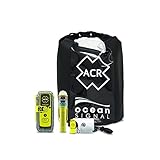
Overview: This comprehensive survival kit centers around the proven ACR ResQLink 400 PLB, bundling it with essential signaling and survival accessories. The package transforms a standalone beacon into a complete emergency preparedness system for serious adventurers who want integrated solutions rather than piecing together components separately.
What Makes It Stand Out: Beyond the dual GNSS PLB, the kit includes a waterproof C-Strobe H2O rescue light, Res-Q Whistle, RapidDitch Drybag, and signal mirror—creating a multi-layered signaling strategy. The drybag specifically protects your emergency gear while keeping it accessible, addressing a common logistical challenge in wet environments.
Value for Money: At $459.95, the kit commands a $55 premium over the standalone ResQLink 400. Considering the high-quality strobe light, durable drybag, and professional signaling accessories would cost over $100 purchased separately, the bundle offers meaningful savings. For those needing a complete setup, it’s financially sensible and ensures compatibility.
Strengths and Weaknesses: Strengths include the excellent ResQLink 400 base unit, comprehensive accessory package, waterproof storage solution, and multiple signaling methods (electronic, audible, visual). Everything is designed to work together seamlessly. Weaknesses include the premium price point and potential redundancy for users who already own some accessories. The kit adds weight compared to the minimalist PLB alone.
Bottom Line: This survival kit is perfect for adventurers starting from scratch or upgrading their entire emergency system. The convenience and cost savings of a curated, compatible package make it worth the premium for comprehensive preparedness.
Why Every Solo Adventurer Needs a Personal Locator Beacon
The statistics tell a sobering story: solo adventurers account for a disproportionate percentage of wilderness search and rescue operations, and response time is the critical factor determining outcomes. When you’re alone, you can’t send a friend for help, flag down a passing hiker, or split up to find cell service. A personal locator beacon (PLB) removes the “hope someone finds me” variable from your safety equation. Unlike satellite messengers that require monthly subscriptions and prioritize two-way communication, true PLBs are dedicated distress alerting devices designed for one purpose: initiating a rescue when you activate them.
These devices work where cell phones fail—deep in canyons, far offshore, and in the most remote wilderness areas on Earth. They broadcast a powerful distress signal directly to government-operated search and rescue satellites, not commercial networks. This distinction matters because it means your emergency call goes to the same coordinated rescue system used by ships and aircraft worldwide, with no corporate middleman, no subscription lapse risk, and no prioritization of paying customers over non-paying ones. For solo adventurers, this direct line to professional rescuers isn’t just convenient—it’s potentially life-saving.
Understanding the Technology: How PLBs Save Lives
At their core, personal locator beacons are sophisticated radio transmitters that activate a global emergency response network. When you deploy a PLB, it transmits a 406 MHz digital signal containing your unique identifier and GPS coordinates to specialized search and rescue satellites orbiting Earth. This signal is relayed to Mission Control Centers, which route the alert to local rescue coordination centers—typically the Coast Guard, Air Force, or local search and rescue teams—who then dispatch resources to your exact location.
The system is designed for reliability above all else. Modern PLBs incorporate multiple transmission methods: the primary 406 MHz signal for satellite communication, a secondary 121.5 MHz homing signal that rescuers can track once they’re in the vicinity, and often a strobe light for visual location in low-visibility conditions. This redundancy ensures that even if one system fails or conditions degrade, rescuers have multiple ways to find you. Understanding this technology helps you appreciate why certain features matter more than others when evaluating devices.
Satellite Networks: COSPAS-SARSAT vs. Commercial Systems
The most critical distinction in emergency beacon technology is the satellite network they use. True PLBs operate on the COSPAS-SARSAT system, an international, government-run satellite network specifically designed for search and rescue. This network is free to use, has global coverage, and is maintained by multiple nations with a singular focus on emergency response. There are no subscription fees because you’ve already paid for it through your taxes and international agreements.
Commercial satellite messengers, often marketed as “PLB alternatives,” use private networks like Globalstar or Iridium. While these systems enable two-way messaging and tracking features, they require ongoing subscriptions and route your emergency call through a commercial call center before reaching rescue authorities. In 2026, this distinction remains crucial: COSPAS-SARSAT devices offer a direct, unfiltered path to rescue services with no possibility of service interruption due to billing issues. For solo adventurers prioritizing pure emergency functionality, this direct connection is non-negotiable.
Key Features That Define a Reliable PLB in 2026
When evaluating personal locator beacons, certain specifications directly impact performance in rescue scenarios. Battery life, GPS acquisition speed, transmission power, and durability standards aren’t just numbers on a spec sheet—they’re the difference between being located in minutes versus hours, or being found at all. Modern devices have pushed these boundaries further than ever, but understanding the minimum viable specifications for your adventure type is essential.
The best beacons of 2026 incorporate multi-constellation GNSS receivers, meaning they can lock onto GPS, GLONASS, Galileo, and BeiDou satellites simultaneously. This dramatically improves acquisition time and accuracy, especially in challenging terrain like dense forests or narrow canyons. Transmission power has also increased, with top-tier devices broadcasting at the maximum permitted 5 watts, ensuring your signal reaches satellites even in adverse conditions. These technical improvements matter more than cosmetic features or companion app functionality.
Battery Life: The Non-Negotiable Lifeline
Battery performance is arguably the most critical specification for any PLB. Unlike satellite messengers with rechargeable batteries that die after days of use, true personal locator beacons use long-life lithium batteries designed to last the entire device lifespan—typically 5 to 10 years. In 2026, the standard is a minimum 24 hours of continuous transmission once activated, but premium models offer 30+ hours of operation in temperatures as low as -20°C.
Cold weather performance is particularly important for solo mountaineers and winter backpackers. Battery capacity drops significantly in freezing conditions, so look for devices tested to military standards (MIL-STD-810) for cold-weather operation. Some manufacturers now include battery status indicators that show remaining capacity, though this feature is controversial among purists who prefer the simplicity of a “test” button that only confirms functionality without revealing proprietary battery data. For solo adventurers, the peace of mind that comes with a decade-long battery life outweighs the convenience of rechargeability.
GPS Accuracy and Acquisition Time
In a rescue scenario, your beacon’s GPS accuracy determines how large a search area rescuers must cover. Modern PLBs in 2026 achieve accuracy within 100 meters 95% of the time, with many models specifying 62 meters or better. More important than absolute accuracy is acquisition time—the speed at which your device obtains a GPS fix after activation. In 2026, top performers lock coordinates within 30 seconds to 2 minutes, even with limited sky view.
This speed matters because every minute counts in medical emergencies or rapidly deteriorating weather. Devices with hot-start capability, which maintain ephemeris data in memory, can achieve even faster fixes if they’ve been powered on recently. Some advanced models incorporate assisted GPS (A-GPS) that downloads satellite almanac data via a smartphone app before your trip, though this feature is only useful if you remember to sync before heading out. For most solo adventurers, the baseline specification should be under 3-minute acquisition time in open terrain and under 5 minutes in moderate tree cover.
Durability Standards: Waterproofing and Impact Resistance
Your PLB will likely spend years bouncing around in your pack, exposed to dust, moisture, and occasional drops before you ever need it. In 2026, the durability baseline is IPX7 or IPX8 waterproofing (submersion up to 1-3 meters for 30+ minutes) and MIL-STD-810G shock resistance. However, these ratings don’t tell the full story.
True expedition-grade beacons undergo additional testing for saltwater corrosion, UV degradation, and extreme temperature cycling. Look for devices with reinforced antenna designs that won’t snap off when you need them most—the antenna is the most vulnerable component and must deploy reliably after years of storage. Some manufacturers now use flexible, coiled antennas that spring into position when released, eliminating the failure point of hinged designs. The housing material matters too: polycarbonate blends with glass fiber reinforcement offer better impact resistance than standard ABS plastic. For solo kayakers and canoers, buoyancy is another critical factor; a sinking beacon helps no one.
Subscription vs. Non-Subscription Models
The subscription debate is central to PLB selection in 2026. True PLBs operate on COSPAS-SARSAT and require no ongoing fees. You pay once, register your beacon with national authorities, and it’s active for life. This model appeals to adventurers who dislike recurring costs and want simplicity. However, the trade-off is limited functionality—most PLBs only send a distress signal, with no tracking, check-in messages, or two-way communication.
Subscription-based satellite messengers offer rich feature sets: live tracking, custom messaging, weather forecasts, and two-way rescue coordination. These capabilities can be invaluable for solo adventurers who want to provide peace of mind to family or need to communicate the nature of their emergency. The downside is cost—monthly fees from $15-50 add up, and a lapsed subscription means no rescue capability. In 2026, some hybrid models have emerged, offering basic SOS functionality without subscription while enabling premium features only when you activate a monthly plan. For budget-conscious soloists, the math is simple: a PLB’s one-time cost equals 2-3 years of satellite messenger subscriptions.
Size and Weight Considerations for Ultralight Backpackers
The “best” PLB is the one you’ll actually carry, making size and weight critical for ounce-counting solo adventurers. In 2026, the lightest true PLBs weigh under 4 ounces (113 grams) and are smaller than a smartphone. However, miniaturization comes with trade-offs: smaller antennas may have reduced transmission performance, and compact batteries might sacrifice cold-weather endurance.
The sweet spot for most solo backpackers is 5-7 ounces, which typically provides full 5-watt transmission power, 24+ hour battery life, and robust construction. Consider how you’ll carry the device: clipped to a shoulder strap, stashed in a hip belt pocket, or attached to your life jacket? The beacon should be accessible with one hand, even when injured. Some models include integrated clips or lanyards designed for specific mounting locations. For ultralight purists, every ounce matters, but cutting weight by choosing an underpowered device defeats the purpose. The weight penalty of a proper PLB is less than carrying an extra day’s worth of food—a reasonable trade for potentially saving your life.
Emergency Beacon Types: PLBs, SENDs, and EPIRBs
The emergency beacon market has fragmented into several categories, each with distinct use cases. Personal Locator Beacons (PLBs) are the gold standard for land-based solo adventures, offering the most powerful signal and direct government rescue channel. Satellite Emergency Notification Devices (SENDs) like Garmin inReach and Spot devices prioritize two-way messaging and tracking, using commercial networks. Emergency Position Indicating Radio Beacons (EPIRBs) are marine-specific devices with automatic activation and 48+ hour battery life, designed for vessels that may sink before crew can manually activate a beacon.
In 2026, the lines have blurred slightly. Some SEND devices now offer “SOS” buttons that attempt to mimic PLB direct-to-rescue functionality, but they still route through commercial call centers. Meanwhile, PLBs have gained limited messaging capabilities through companion apps, though these are secondary to their core rescue function. For solo adventurers, the choice depends on your primary need: if you want a dedicated rescue tool that works when everything else fails, choose a PLB. If you value communication and tracking as much as emergency signaling, a SEND might suit you better.
When to Choose a PLB Over a Satellite Messenger
The decision between a PLB and satellite messenger hinges on your adventure style and risk profile. Choose a PLB when your primary concern is a true life-threatening emergency in remote areas where self-rescue is impossible. They’re ideal for solo mountaineers, remote desert trekkers, and backcountry hunters who venture beyond cell service for days or weeks. The “set it and forget it” nature means you can pack it and trust it will work years later without monthly fees or battery management.
Satellite messengers excel when you want to maintain contact with home, share your location in real-time, or need to communicate non-life-threatening situations like gear failures that require a planned extraction. They’re popular with long-distance thru-hikers who want to update followers and concerned family members. However, the subscription model and commercial network dependency introduce variables that some solo adventurers find unacceptable for pure emergency use. In 2026, many serious soloists carry both: a PLB as primary rescue insurance and a basic satellite messenger for convenience.
Testing and Maintenance: Keeping Your Beacon Rescue-Ready
A PLB is useless if it doesn’t work when activated, making regular testing essential. All modern beacons include a self-test function that verifies internal circuitry, GPS acquisition, and transmission capability without sending a false alarm. In 2026, the standard is a monthly self-test, though some manufacturers recommend weekly tests during heavy use seasons. These tests typically display a green LED for pass or red for failure, with some models providing diagnostic codes.
Beyond electronic testing, physical inspection is crucial. Check the antenna for cracks or corrosion, ensure the activation button hasn’t been partially depressed by gear in your pack, and verify that the battery expiration date is still valid. Store your PLB with the antenna in the deployed position if possible; repeatedly folding and unfolding can weaken connections over time. After any significant impact or submersion incident, send the unit to the manufacturer for professional testing. Many offer free or low-cost verification services. Remember, your life depends on this device—treat it with the same diligence you’d give a climbing rope or PFD.
Legal Requirements and International Regulations
Operating a PLB isn’t as simple as buying one and heading into the wilderness. In the United States, you must register your beacon with NOAA, providing emergency contact information and trip details. This registration is free, mandatory, and can be updated online before each adventure. Failure to register can result in fines and delayed rescue response, as authorities won’t know who they’re looking for.
Internationally, regulations vary. Some countries require permits for PLB use, particularly for extended backcountry travel. Canada mandates registration with the Canadian Beacon Registry, while Australia requires registration with the Australian Maritime Safety Authority. When traveling abroad with your beacon, check local regulations and consider obtaining a radio license if required. In 2026, some regions have implemented beacon inspection requirements for certain wilderness permits, similar to bear canister regulations. Always carry proof of registration and understand that falsely activating a beacon can result in significant fines and prosecution—only use it when facing grave and imminent danger.
Adventure-Specific Considerations
Not all solo adventures present the same risks, and your beacon choice should reflect your primary activities. A device perfect for desert hiking might be inadequate for ocean kayaking. Understanding how different environments challenge beacon performance helps you prioritize features that matter for your specific adventures.
Mountaineering and High-Altitude Use
High-altitude solo mountaineering presents unique challenges: extreme cold, thin air, and potential avalanche burial. Your PLB must function at altitudes up to 40,000 feet and temperatures below -20°C. Look for devices with extended cold-weather battery specifications and consider models with integrated avalanche transceiver compatibility. The beacon should be accessible while wearing heavy gloves and mountable on a shoulder strap or chest harness for easy activation even if you’re immobilized. Some mountaineering-specific models include barometric pressure sensors that can help rescuers gauge your elevation more accurately.
Marine and Coastal Adventures
Solo kayakers, paddleboarders, and small-craft sailors need beacons that float and survive saltwater immersion. IPX8 waterproofing is mandatory, but corrosion resistance is equally important. Look for anodized aluminum or marine-grade stainless steel components. The beacon should be attachable to your PFD with a lanyard short enough to prevent snagging but long enough to keep the antenna above water when activated. Some marine-focused models include automatic activation upon water immersion—a feature that could save you if you’re incapacitated after capsizing. Battery life should be rated for at least 48 hours at 0°C, as water saps heat quickly.
Desert and Extreme Heat Environments
Extreme heat challenges batteries differently than cold. Lithium batteries can rupture or leak above 60°C, so desert soloists need beacons with high-temperature ratings and protective cases. The GPS receiver must acquire satellites quickly in open terrain where there’s no shade. Consider models with reflective or light-colored housings that minimize heat absorption. Dust and sand intrusion can jam activation buttons, so look for devices with sealed, membrane-style switches rather than mechanical buttons. The beacon should be easily accessible from a hip belt pocket, as you won’t want to remove your pack in extreme heat.
The True Cost of Safety: Budgeting for Your Beacon
Price shopping for a PLB is counterproductive when your life is on the line, but understanding cost structures helps you make informed decisions. In 2026, quality PLBs range from $250 to $400, with no ongoing fees. This one-time investment provides 5-10 years of coverage. Satellite messengers appear cheaper initially ($150-300) but require $180-600 annually in subscription fees.
Consider the total cost of ownership: a $350 PLB over 7 years costs $50 per year. A $200 satellite messenger with a $20/month plan costs $1,880 over the same period. For solo adventurers on a budget, refurbished or previous-generation PLBs from reputable manufacturers offer significant savings while maintaining full rescue capability—the technology evolves slowly in this space because reliability trumps innovation. However, avoid used beacons with expired batteries or unknown history. The $100 you save isn’t worth the risk of a compromised seal or damaged antenna. Factor in the cost of periodic professional testing ($25-50) every 3-5 years as part of your gear maintenance budget.
Emerging Technologies in 2026
The PLB landscape is evolving, albeit cautiously. The most significant advancement is the integration of Return Link Service (RLS), which sends a confirmation signal back to your beacon when your distress call is received. This simple LED indicator—often a blue light—provides enormous psychological relief in a crisis, confirming that help is coming. Not all rescue centers have RLS capability yet, but major regions including the US, Canada, and EU are now fully equipped.
Another emerging feature is Near Field Communication (NFC) for simplified registration and diagnostics. By tapping your smartphone to the beacon, you can update your emergency contacts, log maintenance tests, and even add trip-specific information that rescuers can access. Some manufacturers are experimenting with dual-mode devices that function as PLBs on COSPAS-SARSAT but enable optional two-way messaging through commercial networks when you purchase a temporary subscription for specific trips. This hybrid approach offers the best of both worlds for adventurers who occasionally want messaging but refuse to compromise on core rescue reliability.
Frequently Asked Questions
How long does the battery last in a personal locator beacon?
Most PLBs have a battery life of 5-10 years in standby mode, with at least 24 hours of continuous transmission once activated. Cold weather reduces performance, so check your device’s specifications for temperature ratings. The battery is not user-replaceable and must be serviced by the manufacturer.
What’s the difference between a PLB and a satellite messenger?
PLBs use the government-run COSPAS-SARSAT network, require no subscription, and send a powerful one-way distress signal directly to rescue authorities. Satellite messengers use commercial networks, require monthly fees, offer two-way messaging and tracking, but route emergency calls through a private call center first.
Do I need to register my PLB before using it?
Yes, registration is mandatory in most countries including the US, Canada, and Australia. You register with your national authority (NOAA in the US) for free, providing emergency contacts and personal information. Unregistered beacons can result in fines and delayed rescue response.
Can I test my PLB without triggering a false alarm?
All modern PLBs have a built-in self-test function that checks GPS and transmission circuitry without sending an actual distress signal. Perform this test monthly. Never activate the emergency switch unless in grave danger, as false alarms waste rescue resources and can result in prosecution.
Will a PLB work everywhere on Earth?
Yes, COSPAS-SARSAT satellites provide global coverage, including polar regions. However, terrain can block signals—deep canyons, dense forest canopy, and caves may delay or prevent signal acquisition. Always activate your beacon in the clearest area possible.
How accurate is the GPS location sent by a PLB?
Modern PLBs typically achieve accuracy within 62-100 meters. The beacon transmits multiple signals: the 406 MHz signal with GPS coordinates, and a 121.5 MHz homing signal that rescuers use to pinpoint your exact location once they’re within a few miles.
What happens when I activate my PLB?
Your beacon transmits a 406 MHz signal with your unique ID and GPS location to rescue satellites. This is relayed to Mission Control, then to local rescue coordination centers who dispatch SAR teams. The process takes 2-45 minutes depending on satellite availability and location verification.
Can I use a PLB for non-emergency check-ins?
No, PLBs are for grave and imminent danger only. Using one for non-emergencies is illegal and can result in fines. For routine check-ins, consider a satellite messenger with messaging capabilities or leave a detailed trip plan with trusted contacts.
Are there any ongoing costs after purchasing a PLB?
No, true PLBs have zero subscription fees. The only costs are the initial purchase and optional battery replacement every 5-10 years (typically $100-150). Registration is free. This makes PLBs more economical long-term than subscription-based alternatives.
What should I do if I accidentally activate my PLB?
Immediately contact the rescue coordination center for your region (in the US, call the Air Force Rescue Coordination Center at 1-800-851-3051). Provide your beacon’s ID number and explain the accidental activation. Do not turn off the beacon until told to do so, as this can complicate the cancellation process.