Gone are the days when power meters were exclusive tools for pro tour budgets and lab-coat-wearing coaches. As we roll into 2026, the sub-$600 category has become the most exciting battleground in cycling tech, delivering laboratory-grade wattage data to your handlebar display faster than you can say “threshold interval.” This democratization means whether you’re a cat-3 racer chasing upgrade points or a dedicated enthusiast finally ready to train with precision, instant power feedback is now as accessible as a mid-range helmet.
But here’s the thing: not all budget power meters are created equal. While the price ceiling might be similar, the technology underneath varies dramatically—from strain gauge configurations that would make an engineer weep with joy to firmware ecosystems that either elevate your training or leave you fighting signal dropouts on every group ride. This guide cuts through the marketing fluff to examine what actually matters when you’re hunting for reliable, instantaneous power data without draining your bike fund.
Top 10 Cycling Power Meters Under $600
Detailed Product Reviews
1. Favero Assioma Uno Power Meter Pedal

Overview: The Favero Assioma Uno delivers single-sided power measurement in a pedal-based format that installs like any standard pedal. This left-only sensor system transmits data via Bluetooth and ANT+ to virtually any bike computer or smartphone, making it one of the most accessible entries into structured power training. The rechargeable design eliminates battery replacement hassles while maintaining a sleek, low-profile form factor that won’t interfere with cornering clearance.
What Makes It Stand Out: The 50-hour battery life per charge provides months of riding for most cyclists, while the magnetic charging system with two-meter USB cable makes simultaneous charging simple. Unlike crank-based systems, you can transfer these between bikes in seconds without special tools. The Assioma platform offers an upgrade path to dual-sided measurement with the DUO version, protecting your investment as your training needs evolve.
Value for Money: At $399, the Uno sits in the sweet spot for single-sided power meters. It undercuts most direct-measurement crank arms while delivering comparable ±1% accuracy. The rechargeable system saves money long-term compared to coin-cell competitors requiring frequent replacements. While pricier than left-crank options, the pedal format’s portability justifies the premium for multi-bike households.
Strengths and Weaknesses: Strengths include effortless installation, excellent connectivity, reliable rechargeable batteries, and automatic temperature compensation. The single-sided limitation means right leg contribution goes unmeasured, potentially masking imbalances. Battery life, while adequate, falls short of some newer competitors offering 100+ hours.
Bottom Line: Perfect for cyclists entering the power training world who prioritize simplicity and cross-bike compatibility. The Uno delivers trustworthy data without permanent bike modifications, making it ideal for racers with multiple steeds or renters seeking performance insights.
2. Magene P715 S Power Meter Pedals - ±1% Precision, 120h Battery Life, Seamless Bike Compatibility, ANT+ & Bluetooth for Cycling

Overview: The Magene P715 S positions itself as a feature-packed single-sided power meter pedal designed for data-driven cyclists. Weighing just 157 grams per pedal, it adds minimal heft while delivering precise left-leg power measurement. The system connects seamlessly to cycling computers and training apps through dual Bluetooth and ANT+ transmission, supporting a comprehensive training ecosystem for athletes who demand extensive analytics.
What Makes It Stand Out: Seven advanced training functions provide deeper insights beyond basic power, including torque effectiveness and pedal smoothness metrics. The staggering 120-hour battery life dwarfs most competitors, requiring only three charges annually for typical riders. Installation takes literally one minute, making it faster to set up than changing a tube. The ±1% accuracy rivals laboratory-grade systems at a fraction of the cost.
Value for Money: At $499.99, the P715 S commands a premium over single-sided alternatives. However, the extended battery life and advanced metrics create strong justification. You’re essentially getting dual-sided feature depth in a single-sided package. The price approaches entry-level dual-systems, making it best suited for riders who specifically value battery longevity and detailed analytics over left/right balance data.
Strengths and Weaknesses: Strengths include exceptional battery endurance, lightweight construction, rapid installation, and comprehensive training metrics. The single-sensing limitation remains the primary weakness at this price point. The seven functions may overwhelm beginners, and the brand lacks Favero’s long-term reliability track record.
Bottom Line: Ideal for metric-obsessed cyclists and endurance riders who prioritize battery life and advanced analytics. If you charge devices begrudgingly and crave deeper performance data, the P715 S justifies its premium price through convenience and insight depth.
3. Favero Assioma UNO, Single-Sensing Side Pedal Based Cycling Power Meter, Bluetooth & ANT+ Connectivity for Bike Computers, Cycling GPS Units, & Smartphones

Overview: The Assioma UNO represents Favero’s refined approach to accessible power measurement, placing a sophisticated sensor exclusively in the left pedal. This system captures power, cadence, and advanced metrics through proprietary IAV Power Technology with integrated gyroscope, delivering laboratory-grade ±1% accuracy in real-world conditions. Automatic Temperature Compensation ensures consistent readings from -10°C to 60°C, making it reliable across all riding environments.
What Makes It Stand Out: The bi-component resin block construction creates the lightest and most compact pedal-based power meter available, with zero protruding elements to catch on obstacles. Waterproofing and shock resistance exceed industry standards, while the magnetic charging system with two-meter cable allows simultaneous charging without removing pedals. The gyroscope-enabled IAV technology distinguishes itself by measuring true instantaneous angular velocity rather than estimating it.
Value for Money: At $385, this is the most affordable entry into premium power measurement. The price undercuts competitors while delivering superior technology like ATC and IAV. Rechargeable batteries eliminate ongoing costs, and the robust construction promises years of service. You’re getting dual-system sophistication in a single-sided package, making it exceptional value for performance-focused riders on a budget.
Strengths and Weaknesses: Strengths include unmatched accuracy technology, bulletproof waterproofing, feathery weight, and best-in-class pricing. The 50-hour battery life is adequate but lags behind newer alternatives. Single-sided measurement inherently limits insight into bilateral imbalances, though the data quality remains impeccable.
Bottom Line: The smart choice for serious cyclists who want proven accuracy and durability without paying for dual-sided redundancy. If you trust Favero’s technology and prioritize data quality over battery extremes, the UNO delivers professional-grade measurement at an amateur-friendly price.
4. Magene P715 Dual-Sensing Side Power Meter Cycling Pedals, Silver, ±1% Accuracy Bike Power Meter, SPD-SL Compatible, 120h Battery Life, Bluetooth & ANT+, Easy 1min Install

Overview: The Magene P715 Dual-Sensing system provides true left/right power measurement in a sleek silver pedal package optimized for SPD-SL cleat users. Each pedal independently measures leg output with ±1% accuracy, giving cyclists precise bilateral balance data for addressing strength discrepancies and optimizing pedal efficiency. The system maintains full compatibility with standard SPD-SL cleats, eliminating the need to replace footwear when upgrading to power measurement.
What Makes It Stand Out: The 120-hour battery life sets a new standard for dual-sided systems, which typically drain faster than single-sided alternatives. Installation requires just one minute per pedal, and the silver finish provides a distinctive aesthetic upgrade over typical black power meters. Dual connectivity ensures seamless pairing with cycling computers, smartphones, and indoor trainers simultaneously, making it perfect for riders who analyze data across multiple platforms.
Value for Money: At $499.99, this undercuts most dual-sided competitors by $200-300 while offering superior battery life. The SPD-SL compatibility saves additional cleat replacement costs. You’re getting flagship dual-sensing technology at a mid-range single-system price, representing exceptional value. The silver finish adds premium visual appeal without price penalty, making it a budget-conscious choice for serious racers.
Strengths and Weaknesses: Strengths include true dual-sided measurement, incredible battery endurance, rapid installation, and SPD-SL native compatibility. The silver color may clash with some bike aesthetics, and the brand’s service network isn’t as established as Favero or Garmin. The system lacks the advanced gyroscope technology found in premium competitors.
Bottom Line: The definitive choice for SPD-SL users seeking dual-sided data without premium pricing. If you want left/right balance and marathon battery life while maintaining your existing cleat system, the P715 Dual delivers professional features at an unbeatable value.
5. Favero Assioma UNO, Single-sensing Side Pedal Based Cycling Power Meter with Extra Cleats, LOOK Keo Grip Road Cleats, Bluetooth & ANT+ Connectivity for Bike Computers, Cycling GPS Units, & Smartphones

Overview: This Assioma UNO bundle includes the same revolutionary left-only power meter pedal as the standard version, plus a set of LOOK Keo Grip road cleats for immediate out-of-box readiness. The system employs Favero’s IAV Power Technology with gyroscope and Automatic Temperature Compensation to maintain ±1% accuracy across all riding conditions. Installation takes mere minutes, and dual Bluetooth/ANT+ connectivity ensures compatibility with every major cycling computer and training application.
What Makes It Stand Out: The included LOOK Keo Grip cleats provide secure engagement and lateral grip for safer walking, saving you $25-30 in separate purchases. The power sensor’s bi-component resin block construction remains the industry’s most compact and lightweight design, with complete waterproofing and shock resistance. The gyroscope-enabled measurement captures true instantaneous angular velocity, delivering data fidelity that exceeds most single-sided competitors.
Value for Money: At $399, you’re paying just $14 more than the cleat-less version while receiving accessories worth nearly double that difference. This represents the best overall value in the Assioma lineup, combining the lowest power meter price with necessary consumables. The rechargeable 50-hour battery system eliminates ongoing costs, and the robust construction ensures years of reliable service. For new power meter users, this bundle removes the hidden cost of cleat acquisition.
Strengths and Weaknesses: Strengths include included cleats, proven accuracy technology, exceptional durability, and best-in-market pricing for the feature set. The 50-hour battery life requires more frequent charging than some alternatives, and single-sided measurement inherently limits bilateral analysis. The LOOK Keo system may not suit riders preferring SPD-SL compatibility.
Bottom Line: The ultimate starter package for cyclists ready to begin power-based training immediately. If you need cleats anyway, this bundle eliminates extra shopping while delivering Favero’s trusted accuracy and durability at an unbeatable entry price.
6. Favero Assioma UNO, Single-Sensing Side Pedal Based Cycling Power Meter with Extra Cleats, Bluetooth & ANT+ Connectivity for Bike Computers, Cycling GPS Units, & Smartphones

Overview: The Favero Assioma UNO delivers laboratory-grade power measurement through a brilliantly simple left-pedal sensor, transforming any road bike into a data-driven training tool. This Italian-engineered system captures power output with minimal fuss, transmitting via both Bluetooth and ANT+ to virtually any head unit or smartphone.
What Makes It Stand Out: Revolutionary IAV Power technology with integrated gyroscope detects instantaneous angular velocity for true ±1% accuracy across all conditions, while Automatic Temperature Compensation maintains precision from -10°C to 60°C. The fully sealed bi-component resin construction eliminates protruding elements, creating the most compact pedal-based system available. Installation requires zero tools—just thread them on like standard pedals and swap between bikes in minutes.
Value for Money: At $390, the UNO sits in the sweet spot for serious enthusiasts. While dual-sided systems cost $600+, this single-sensing unit delivers the same ±1% accuracy for riders whose left-right balance is relatively even. The 50-hour rechargeable battery and included cleats add tangible value, making it more economical than crank-based alternatives that require professional installation.
Strengths and Weaknesses: Pros: Effortless bike-to-bike transfer; exceptional accuracy for single-sided; robust waterproofing; no external pods; comprehensive connectivity. Cons: Single-sided only (doubles power from left leg); limited to LOOK Keo cleat standard; 50-hour battery life shorter than some competitors.
Bottom Line: The Assioma UNO is the ideal entry point into serious power training. Perfect for riders wanting accurate, consistent data without the complexity or cost of dual-sided systems. If your pedaling symmetry is balanced, this is the smartest power investment you can make.
7. GEOID PM500 Bike Power Meter Crankset, ±1.5% Accuracy, Lightweight 680g, 300h Long Battery Life, 110BCD, Bluetooth & ANT+, IPX7 Waterproof Cycling Power Meter for Road Bikes - 170mm

Overview: The GEOID PM500 redefines value in crankset-based power measurement, integrating dual-sensor fusion technology into a lightweight aluminum package. This spider-based system captures comprehensive metrics while maintaining compatibility with standard 110BCD chainrings, making it a versatile upgrade for riders seeking deeper performance insights.
What Makes It Stand Out: A staggering 300-hour battery life sets a new endurance standard, while magnetic snap-on charging eliminates fiddly connectors. The system tracks four critical metrics: power, cadence, left-right balance, and pedaling smoothness—data typically reserved for premium systems. Dual-sensor fusion with real-time temperature compensation ensures reliable readings despite the ±1.5% accuracy rating.
Value for Money: At $249.99, the PM500 undercuts most competitors by $100-200 while delivering dual-sided metrics. The complete crankset and spider solution means no compromises on stiffness or reliability. Compared to pedal systems, you save on replacement pedal costs, though initial installation requires more mechanical skill.
Strengths and Weaknesses: Pros: Exceptional 300-hour battery; magnetic charging convenience; left-right balance tracking; lightweight 680g construction; Shimano 12-speed compatibility. Cons: ±1.5% accuracy trails ±1% leaders; crankset installation requires tools and know-how; less transferable between bikes than pedals.
Bottom Line: The PM500 is a data-rich bargain for dedicated road cyclists. If you prioritize battery longevity and comprehensive metrics over absolute precision, this crankset delivers professional-grade features at an enthusiast price. Best for riders comfortable with drivetrain maintenance.
8. Magene P715 Dual-Sensing Side Power Meter Cycling Pedals, Silver, ±1% Accuracy Bike Power Meter, KEO Compatible, 120h Battery Life, Bluetooth & ANT+, Easy 1min Install

Overview: Magene’s P715 brings dual-sided precision to the pedal-based power meter market with elegant engineering and user-friendly design. These silver-finished pedals independently measure each leg’s output, delivering professional-grade data through a tool-free installation process that takes literally 60 seconds.
What Makes It Stand Out: True dual-sensing architecture captures left-right discrepancies with laboratory-grade ±1% accuracy, while KEO cleat compatibility ensures seamless integration with existing shoe setups. The premium silver finish resists corrosion better than standard black anodizing, and the one-minute install uses a simple torque-limiting system—no bike shop required.
Value for Money: Priced at $474.99, the P715 competes directly with premium dual-sided systems costing $600-800. You get identical accuracy, superior aesthetics, and comparable 120-hour battery life. The KEO standard broadens compatibility, though replacement cleats cost more than Shimano alternatives.
Strengths and Weaknesses: Pros: Genuine dual-sided measurement; rapid installation; excellent ±1% accuracy; attractive silver finish; broad head unit compatibility. Cons: 120-hour battery life trails crank-based alternatives; pedal bodies wear faster than spider systems; premium pricing over single-sided options.
Bottom Line: The P715 is a compelling choice for serious cyclists demanding bilateral data without the flagship price tag. Perfect for racers and performance-focused riders who need precise left-right balance metrics. If you value convenience and dual-sided accuracy, this pedal system punches well above its weight class.
9. Magene PES P505/P515 Power Meter Crankset - ±1% Accuracy, 625g Lightweight, 330H Battery, 110BCD, ANT+/Bluetooth, IPX7 Waterproof for Cycling

Overview: Magene’s PES P505/P515 crankset combines featherweight construction with marathon battery life, delivering dual-sided power measurement through an intelligently engineered spider design. At just 625g complete, it rivals premium carbon systems while maintaining the durability of aircraft-grade 7075 aluminum.
What Makes It Stand Out: An incredible 330-hour runtime—the longest in its class—pairs with IPX7 waterproofing for true set-and-forget reliability. The triple-hollow crank design achieves exceptional stiffness-to-weight ratio, while intelligent temperature compensation maintains ±1% accuracy across extreme conditions. The four-bolt 110BCD interface ensures universal chainring compatibility.
Value for Money: At $299.99, this system offers dual-sided ±1% accuracy and best-in-class battery life for less than most single-sided pedals. The complete crankset solution eliminates compatibility guesswork, though it sacrifices the swap-ability of pedal systems. For dedicated training bikes, the value proposition is unbeatable.
Strengths and Weaknesses: Pros: Industry-leading 330-hour battery; sub-630g weight; true ±1% dual-sided accuracy; robust IPX7 rating; comprehensive app compatibility. Cons: Installation requires crank puller and tools; not easily transferable between bikes; spider design limits future pedal upgrades.
Bottom Line: The PES P505/P515 is the endurance rider’s dream power meter. If you want maximum battery life, minimal weight, and dual-sided accuracy at a mid-range price, this crankset is unmatched. Ideal for dedicated training and racing bikes where long-term reliability trumps convenience.
10. Favero Assioma PRO RS-1, Single-Sensing Side Pedal Based SPD-SL Road Cycling Power Meter, Bluetooth and ANT+ Connectivity for Bike Computers, Cycling GPS Units, & Smartphones
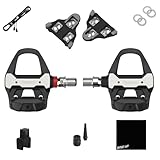
Overview: Favero’s Assioma PRO RS-1 addresses the demands of Shimano loyalists by wrapping proven single-sensing technology in a 100% SPD-SL compatible package. This pedal-based system finally lets riders use their preferred Shimano cleats while accessing Favero’s renowned accuracy and reliability.
What Makes It Stand Out: The innovative modular spindle houses all electronics and batteries, allowing instant pedal body swaps between road and MTB configurations—a future-proofing feature no competitor offers. SPD-SL compatibility means using original Shimano cleats (SM-SH10/11/12) without adapters. The same IAV gyroscope technology and ATC deliver ±1% accuracy in real-world conditions from -10°C to 55°C.
Value for Money: At $494.99, the PRO RS-1 commands a $100 premium over the standard Assioma UNO. For Shimano cleat users, this eliminates the cost and hassle of switching cleat systems. The modular design adds long-term value, though single-sided measurement still limits bilateral insights compared to dual-sided systems at similar prices.
Strengths and Weaknesses: Pros: Native SPD-SL cleat compatibility; modular spindle for future upgrades; tool-free bike transfers; proven ±1% accuracy; robust construction. Cons: Highest price for single-sided system; 50-hour battery life unchanged; left-only measurement limits advanced metrics.
Bottom Line: The PRO RS-1 is the definitive choice for Shimano purists seeking power data. If you’re invested in SPD-SL cleats and want the flexibility to swap pedal bodies, the premium is justified. For riders starting fresh, standard dual-sided options may offer more data for similar money.
Why Power Meters Under $600 Are Changing the Game
The Democratization of Performance Data
The cycling industry has hit a tipping point. Micro-manufacturing advances and streamlined supply chains have pushed production costs down while consumer demand has skyrocketed. What we’re witnessing in 2026 isn’t just cheaper versions of old technology—it’s fundamentally re-engineered hardware that prioritizes essential performance over boutique features. Think of it as the difference between a perfectly engineered Toyota and a luxury sedan with heated cup holders. Both get you there, but one does it with elegant efficiency.
This shift matters because power data transforms how you ride. Suddenly, you’re not guessing if that headwind is making you suffer more than usual—you’re seeing exactly how many watts you’re losing and adjusting your effort accordingly. For under $600, that transformation is now a no-brainer investment rather than a financial sacrifice.
What “Instant Feedback” Really Means for Your Training
When manufacturers promise “instant” wattage readings, they’re talking about microsecond-level strain gauge sampling that gets transmitted to your computer before your brain even processes the pedal stroke. In practical terms, this means seeing your power spike the moment you attack on a climb, not three seconds later when you’re already fading. For interval training, this immediacy is non-negotiable—you need to know you’re hitting your 350-watt target now, not averaging into it after five seconds of overshooting.
The psychological benefit is just as crucial. Instant feedback creates a tighter loop between effort and reward, making you more efficient at pacing and more disciplined about wasted energy. It’s the difference between reactive riding and proactive power management.
Understanding Power Meter Technology in 2026
The Science Behind Instant Wattage Measurement
At its core, every power meter measures torque (rotational force) and angular velocity (how fast you’re spinning) to calculate power using the formula: Power (W) = Torque (Nm) × Angular Velocity (rad/s). The magic happens in the strain gauges—tiny sensors that detect microscopic flex in metal components when you push on the pedals.
Modern budget meters use either foil gauges or the newer MEMS (Micro-Electro-Mechanical Systems) technology. While foil gauges are the proven standard, MEMS sensors have become reliable enough for consumer-grade devices and cost significantly less to produce. The key isn’t which technology is used, but how many gauges are deployed and where they’re placed. A well-designed single-sided meter can outperform a poorly implemented dual-sided system every time.
Key Components That Affect Accuracy
Accuracy isn’t just about the strain gauges. The signal processing chip, often overlooked, plays a massive role in filtering out noise from road vibration, temperature fluctuations, and pedaling dynamics. In 2026’s budget category, look for meters with 24-bit analog-to-digital converters—these provide the resolution needed for that coveted ±1% accuracy claim.
The temperature compensation algorithm is another unsung hero. A ride that starts at 50°F and climbs to 85°F can throw off uncalibrated sensors by 3-5%. Quality budget meters now include built-in thermistors that continuously adjust readings, a feature that was premium-only just two years ago.
How Firmware Updates Have Revolutionized Budget Power Meters
Here’s a secret the manufacturers won’t shout about: the hardware in many sub-$600 meters is identical to pricier models. The difference often comes down to firmware features and calibration sophistication. In 2026, over-the-air updates have become standard, meaning a $450 meter purchased today could gain new capabilities tomorrow.
Some brands have embraced open-source firmware communities, allowing tech-savvy users to unlock advanced metrics like pedal smoothness and torque effectiveness. While this voids warranties, it demonstrates the untapped potential in these devices. More importantly, it means brands committed to regular updates can extend the useful life of your purchase significantly.
Types of Power Meters Available Under $600
Crank-Based Systems: The Traditional Workhorse
Crank arm power meters remain the most common in the budget category for good reason. They leverage existing manufacturing processes, attach to a non-wearing component, and provide consistent data across all riding conditions. Single-sided crank meters typically measure left leg power and double it, which works fine for riders with reasonably balanced pedaling.
The trade-off? Installation requires pulling your crank, which means dealing with bottom bracket standards that seem designed to drive mechanics insane. But once installed, they’re virtually maintenance-free and protected from impacts. For riders who value set-and-forget reliability, this remains the gold standard.
Pedal-Based Solutions: Versatility Meets Value
Pedal power meters have finally cracked the sub-$600 barrier in 2026, and they’re changing the compatibility game entirely. Since they thread into any crank, you can swap them between bikes in minutes—road to gravel to trainer without missing a beat. This versatility makes them ideal for riders with multiple steeds or those who travel with their bike.
The downside is exposure. Pedals take a beating from rock strikes, curbs, and general abuse. Battery compartments need robust sealing, and the spindle sensors must withstand incredible stress. Look for models with reinforced axle designs and IPX8 water ratings if you’re eyeing this category.
Hub-Based Options: The Forgotten Gem
Hub power meters have become the sleeper hit of 2026’s budget market. By integrating sensors into the rear hub, these systems measure power at the wheel—accounting for drivetrain losses that crank and pedal meters miss. This gives you a true “power to the ground” number, which some coaches prefer for race analysis.
The catch is wheel-specific commitment. You can’t easily swap between training wheels and race wheels without buying multiple hubs. However, for riders with one do-it-all wheelset, hub meters offer exceptional value and durability since they’re completely isolated from pedal strikes and frame stresses.
Spider-Based Designs: Professional-Grade Accuracy on a Budget
Spider-based meters, which replace your standard chainring spider, have trickled down to the under-$600 price point thanks to standardized interfaces. These measure power from both legs simultaneously at the source—where torque is applied to the chainrings—making them inherently more accurate than single-sided systems.
Compatibility is the main hurdle. You need the correct BCD (Bolt Circle Diameter) or direct-mount interface, and not all crank brands play nice. But for riders with compatible setups, spider meters deliver dual-sided data that rivals systems costing twice as much.
Critical Features to Evaluate Before Buying
Accuracy and Consistency: The +/- 1% Benchmark
Let’s be real: ±1% accuracy is the marketing holy grail, but what does it actually mean? If you’re riding at 300 watts, a ±1% meter could show anywhere from 297 to 303 watts and still be “accurate.” More important is consistency—does it read 300 watts today when you’re producing the same torque and cadence as yesterday?
Look for meters that publish their repeatability specifications, not just accuracy. A meter that’s consistently off by 2% is more useful than one that bounces between ±1% and ±3% depending on temperature. Real-world testing shows many budget meters achieve ±1.5% consistency, which is perfectly acceptable for all but the most data-obsessed riders.
Data Transmission Protocols: Bluetooth 5.0 vs ANT+ Ultra
In 2026, the protocol wars have settled into a comfortable truce. Bluetooth 5.0 offers faster data rates and better security, while ANT+ Ultra provides more robust connections in interference-heavy environments like group rides or urban canyons. The best budget meters support both simultaneously.
Pay attention to broadcasting frequency. Some meters sample at 256Hz but only transmit at 4Hz to save battery, creating lag. For truly instant feedback, you want transmission rates of 8Hz or higher. This spec is often buried in technical manuals but makes a tangible difference in how responsive your numbers feel.
Battery Life Realities: From Coin Cells to Rechargeable
Battery technology has split the market. Coin cell batteries (CR2032, CR2450) offer 100-200 hours of life and easy replacement but can die unexpectedly mid-ride. Rechargeable lithium cells provide 40-60 hours but require charging discipline and eventual replacement when capacity degrades.
The 2026 sweet spot? Meters with swappable rechargeable battery modules. You get the convenience of USB charging with the option to carry a spare charged module for long events. Avoid proprietary batteries that lock you into manufacturer replacements at inflated prices.
Temperature Compensation: Why It Matters More Than You Think
That ±1% accuracy claim? It’s meaningless without proper temperature compensation. Metal expands and contracts with temperature, affecting strain gauge readings. A meter without compensation can drift 1-2% per 10°F change.
Quality budget meters now include multi-point temperature calibration, storing compensation curves for different temperature ranges. Some even auto-calibrate during the first few minutes of a ride as the unit warms up. Always check if a meter has active compensation—passive compensation (just using more stable materials) isn’t enough for precise training.
Left/Right Balance: Do You Really Need Dual-Sided Data?
Dual-sided power is sexy. Seeing a perfect 50/50 split makes you feel like a pedaling machine. But here’s the truth: for 90% of riders, single-sided data is perfectly sufficient. Your left/right balance doesn’t change dramatically day-to-day, and training interventions to “fix” imbalances show minimal performance gains.
Where dual-sided data shines is in identifying injury-related compensations or tracking rehabilitation progress. If you’re coming back from a knee injury, seeing your left leg contribution drop from 48% to 42% is valuable intel. For healthy riders, that money is better spent on a more accurate single-sided meter than a less accurate dual-sided unit.
Installation and Compatibility Considerations
Bottom Bracket Standards: A Compatibility Minefield
If crank-based meters give you pause because of bottom bracket compatibility, your instincts are spot-on. The alphabet soup of BB30, PF30, BB86, BB92, BB386EVO, and T47 standards means you must verify fitment before clicking “buy.” Many budget meters are designed around Shimano’s 24mm spindle, requiring adapters for BB30 cranks.
The 2026 trend toward T47 threaded shells is simplifying this mess, but most existing frames use press-fit standards. Check manufacturer compatibility charts meticulously, and when in doubt, email customer service with photos of your current setup. A $450 meter that doesn’t fit your bike is just an expensive paperweight.
Chainring Interfaces: BCD and Direct Mount Explained
Spider-based meters live and die by chainring compatibility. Traditional 5-bolt patterns (130mm BCD for road, 104mm for MTB) are giving way to direct-mount systems where the chainring bolts directly to the crank spider. Direct mount offers better stiffness and easier swaps but locks you into specific ecosystems.
Budget spider meters typically support one interface type. If you’re running SRAM’s 3-bolt direct mount, a Shimano 4-bolt meter won’t work without aftermarket adapters that add cost and complexity. Measure twice, buy once—literally.
Frame Clearance Issues That Could Ruin Your Day
That sleek carbon frame with the oversized chainstays? It might not have enough clearance for a bulky power meter pod. This is especially true for crank arm meters, which add 5-8mm of thickness to the driveside arm.
Before purchasing, measure the gap between your current crank arm and chainstay at the closest point. Most manufacturers list minimum clearance requirements (typically 8-10mm). Remember, frame flex under power can close that gap further. When in doubt, search forums for “[your frame] + [power meter model]” to find real-world fit reports.
Cross-Bike Versatility: Swapping Between Road and MTB
The dream of one power meter for all bikes is real, but only with certain types. Pedal-based systems win here hands-down—thread them from your road bike Friday evening to your gravel rig Saturday morning. Hub-based meters work if both bikes use the same wheel standard (boost spacing complicates this).
Crank and spider meters are generally bike-specific due to different spindle lengths and chainring configurations. Some creative mechanics have made cross-bike swaps work with extra bottom bracket adapters, but the effort rarely justifies the savings over buying two dedicated units.
Software Ecosystem and Data Integration
Native Apps vs Third-Party Platforms
Every power meter comes with a proprietary app for firmware updates and zero-offset calibration. The quality of these apps varies wildly—from sleek, intuitive interfaces to clunky afterthoughts that crash more than they work. In 2026, app quality is as important as hardware quality.
Check recent app store reviews before buying. A meter that works perfectly but has a buggy app will frustrate you every time it needs updating. The best apps offer ride analysis, battery status, and automatic zero-offset scheduling. Some even gamify calibration, turning a boring task into a quick daily ritual.
TrainingPeaks, Zwift, and Strava Integration
Your power meter is only as good as the software that analyzes its data. Thankfully, universal standards mean most meters sync seamlessly with major platforms. The nuance lies in advanced metrics—some budget meters broadcast basic power only, while others include cadence, torque effectiveness, and pedal smoothness.
For Zwift racers, look for meters that support the new “instant power” protocol, reducing the lag between your effort and your avatar’s response. TrainingPeaks users should ensure the meter records at 1-second intervals (not averaged) for proper Normalized Power calculations. Strava addicts? Make sure your meter’s calorie calculations align with Strava’s algorithms to avoid mismatched fitness scores.
The Importance of Zero-Offset Calibration Features
Zero-offset (sometimes called calibration) is your power meter’s version of taring a scale. It tells the sensor what “zero torque” looks like. The best budget meters make this process automatic—spin the cranks backward a few times and the app handles the rest.
Manual calibration remains more accurate but requires discipline. You must unweight the pedals and follow a specific procedure. Some 2026 models include “smart calibration” that detects when the bike is stationary and prompts you through the process. This feature alone is worth seeking out, as improper zero-offset is the number one cause of inaccurate readings.
Real-World Performance Factors
Water Resistance Ratings: IPX7 vs IPX8 Explained
That IP rating isn’t just marketing fluff. IPX7 means the device can survive immersion up to 1 meter for 30 minutes—think dropping it in a puddle. IPX8 means it’s rated for deeper, continuous immersion. For cyclists, IPX7 is sufficient unless you’re riding through flooded streets regularly.
More important is the seal quality around battery compartments. Many “waterproof” meters fail when battery covers develop micro-cracks from overtightening. Look for meters with O-ring seals and metal battery covers, not plastic threads that strip easily.
Drop and Impact Durability for Off-Road Use
Mountain bikers know: if it’s on your bike, it will eventually hit a rock. Pedal meters take the most abuse, followed by crank arm pods. The weak points are always the battery covers and sensor housings.
2026’s best budget MTB power meters feature recessed designs that protect vulnerable components. Some even use sacrificial plastic bumpers that absorb impacts while keeping the electronics safe. If your rides include rock gardens, prioritize meters with MIL-STD-810G shock ratings—even if it means sacrificing some accuracy specs.
Signal Dropout Prevention in Urban Environments
Riding through downtown means competing with a cacophony of wireless signals—phones, WiFi, other bike computers, even car key fobs. This interference can cause power data to stutter or drop entirely.
Modern budget meters combat this with frequency hopping, automatically switching channels when interference is detected. Dual-protocol broadcasting (sending both Bluetooth and ANT+ simultaneously) ensures your computer has a backup if one signal gets scrambled. For city riders, these features are non-negotiable.
The Hidden Costs of Budget Power Meters
Replacement Parts and Wear Items
That $450 price tag isn’t the final cost. Pedal-based meters need replacement cleats ($20-30) and eventually new pedal bodies ($80-120) when bearings wear out. Crank arm meters might require new batteries every 6 months ($5 each).
Factor in a 10-15% annual maintenance cost. Some brands offer subscription-based maintenance plans that cover wear items, but do the math—buying parts à la carte is often cheaper unless you’re a high-mileage rider replacing components multiple times per year.
Software Subscription Fees to Watch For
The hardware is cheap; the software is where some brands make their money. Some budget meters lock advanced metrics behind paywalls—$5/month for left/right balance, $10/month for advanced pedaling dynamics. Always check the app store for “in-app purchases” before buying.
The best value meters include all features upfront. Open-source friendly brands are particularly generous, with community-developed features that rival premium subscriptions. Read the fine print on the product page; if it mentions “free trial” for software features, assume you’ll pay later.
Warranty Limitations and Customer Support Quality
Budget pricing often means budget support. Warranty periods typically range from 1-2 years, but the real differentiator is how companies handle claims. Some require you to ship the unit internationally at your expense, turning a warranty claim into a $50 ordeal.
Search Reddit and forums for warranty experiences before committing. A company that responds to support tickets within 24 hours and offers advance replacement is worth a premium. A company that ghosts you after 30 days? Not worth the savings, no matter how good the specs look.
Making the Right Choice for Your Riding Style
Road Racers: Prioritizing Responsiveness
For criterium and road racers, data lag is the enemy. You need to see your attack wattage immediately, not three seconds later when the break is already up the road. Prioritize meters with high transmission rates (8Hz+) and minimal signal processing.
Weight matters too—every gram counts when you’re sprinting for the line. Spider-based meters add the least weight (typically 50-70g), while pedal systems add 100-150g per pair. Durability takes a backseat to responsiveness; you’re not bashing through rock gardens.
Gravel Riders: Durability Over Absolute Precision
Gravel riding is the torture test for power meters: dust, water, vibration, and the occasional crash. Here, durability trumps ultimate accuracy. A meter that survives a muddy 200-mile race reading ±2% is better than a ±1% meter that fails at mile 50.
Look for IPX8 ratings, metal battery covers, and robust warranties. Pedal-based systems shine for gravel since you can easily swap them to a backup bike if your primary rig goes down. Don’t obsess over left/right balance—focus on consistent, reliable data across dirty, nasty conditions.
Time Trialists: Aerodynamic Integration
In the quest for free speed, every protrusion matters. Bulky crank pods create measurable drag at 30+ mph. Spider-based meters integrated into aero cranks offer the cleanest profile, while some pedal meters now feature flush-mounted battery compartments that don’t disrupt airflow.
Data precision is critical for TT pacing. You need to hold 95% of FTP for 40 minutes, and a meter that reads 2% high could leave you blowing up halfway through. Prioritize accuracy over all else, and look for meters with automatic temperature compensation since courses can vary dramatically in temperature.
Mountain Bikers: Impact Resistance and Clearance
MTB power meters face unique challenges: rock strikes, massive torque spikes, and frame designs with minimal clearance. Crank arm meters often don’t fit modern boost-spacing bikes with wide tires. Pedal meters work well but need rock strike protection.
The emerging solution is spindle-based meters integrated into the crank axle itself. These are nearly invisible and incredibly robust, though they require specific crank compatibility. For enduro and downhill riders, some brands now offer “limp mode” that continues broadcasting basic power even after taking a massive hit that damages one sensor.
Commuters and Enthusiasts: Set-and-Forget Simplicity
If your goal is general fitness tracking and occasional structured workouts, complexity is your enemy. You want a meter that calibrates automatically, has a 200+ hour battery life, and never requires troubleshooting.
Single-sided crank meters excel here. Install once, pair with your phone, and forget about it for six months. Avoid meters requiring frequent zero-offsets or app updates. The best commuter power meter is the one you never have to think about—it just works, rain or shine, making every ride a data-rich training session without adding mental overhead.
Frequently Asked Questions
How often should I calibrate my budget power meter?
Calibrate before every critical ride or race, and at least once per week during regular training. Many 2026 models include auto-calibration reminders in their apps. If you experience temperature swings greater than 20°F during a ride, consider recalibrating mid-ride during a rest stop for maximum accuracy.
Can I trust a $300 power meter to be as accurate as a $600 one?
Yes, but with caveats. The $300 meter might achieve similar accuracy under ideal conditions but lack advanced features like temperature compensation or high-frequency data transmission. For steady-state training, they’re comparable. For variable efforts and racing, the $600 meter’s faster response and better consistency justify the cost.
Will a power meter make me faster, or is it just another gadget?
A power meter is a tool, not magic. Riders who follow structured training plans see 10-15% FTP improvements in their first year. Those who just watch the numbers without changing their approach see minimal gains. The value comes from training smarter, not just harder.
How do I know if my left/right leg imbalance is problematic?
Most riders vary 48-52% between legs, which is normal. Only worry if one leg consistently drops below 45% or varies more than 5% day-to-day. This could indicate injury, muscle weakness, or a bike fit issue. For healthy riders, chasing perfect 50/50 balance is a waste of mental energy.
Can I use one power meter across multiple bikes?
Pedal-based meters are easiest to swap, taking under 5 minutes. Hub-based works if wheel standards match. Crank and spider meters are generally bike-specific due to compatibility issues. If you race and train on different bikes, budget for two meters or commit to pedals.
What’s the real battery life difference between coin cell and rechargeable?
Coin cells average 150-200 hours but die suddenly. Rechargeables provide 50-70 hours with gradual decline, giving you warning. For high-mileage riders (15+ hours/week), rechargeable is more economical long-term. For occasional riders, coin cells are less hassle.
Do I need a specific bike computer to get instant power feedback?
Any modern GPS computer (Wahoo, Garmin, Hammerhead) displays power in real-time. The key is ensuring your computer supports the meter’s maximum broadcast frequency. Older units may only refresh at 1Hz, negating the benefit of an 8Hz meter. Check your computer’s specs before upgrading.
How does altitude affect power meter accuracy?
Altitude itself doesn’t affect strain gauges, but associated temperature drops do. Good temperature compensation handles this automatically. The bigger issue is physiological—your power output decreases at altitude, so your meter will accurately show lower numbers. Don’t confuse this with inaccuracy.
Are there any power meters that work with square taper bottom brackets?
In 2026, options are extremely limited. The vintage bike market is too small for most manufacturers. Your best bet is pedal-based systems or custom hub builds. Some boutique makers produce square taper crank arm meters, but expect to pay premium prices for what is essentially a custom fabrication.
What happens if my power meter breaks after the warranty expires?
Most manufacturers offer out-of-warranty repairs at fixed rates, typically 40-60% of retail cost. Some provide trade-in discounts on new models. Before buying, check if the brand has a reputation for honoring out-of-warranty claims. A company that stands behind its products for 3+ years is worth the initial investment.