Picture this: you’re streaking down the sideline, defender trailing by half a step, and the ball is dropping perfectly into your outstretched hands. In that split second, the last thing you want is bulky equipment slowing your rotation or restricting your reach. For speedy receivers, shoulder pads aren’t just protective gear—they’re performance equipment that can either enhance your natural abilities or quietly sabotage them with every cut and sprint. As we look toward the 2026 season, the evolution of lightweight shoulder pad technology has reached an inflection point where protection no longer requires compromise.
The modern game demands that receivers explode off the line, maintain fluidity through route breaks, and survive inevitable collisions over the middle. This comprehensive guide dives deep into what makes shoulder pads truly receiver-friendly in 2026, exploring the cutting-edge innovations, non-negotiable features, and critical buying considerations that separate game-changing gear from glorified plastic. Whether you’re a deep threat specialist or a slot technician, understanding these elements will transform how you evaluate your protective equipment.
Top 10 Lightweight Football Shoulder Pads for Speedy Receivers
Detailed Product Reviews
1. Schutt XV Skill Shoulder Pads - Flux

Overview: The Schutt XV Skill Shoulder Pads represent a premium option engineered specifically for skill position players who demand maximum mobility without sacrificing protection. The Flux cushioning system works in tandem with the innovative split-back arch design to create a truly anatomical fit that moves with the athlete’s body. Designed for quarterbacks, wide receivers, and defensive backs, these pads prioritize range of motion while maintaining critical impact absorption.
What Makes It Stand Out: The Ultra-Move Arch Technology distinguishes these pads from competitors, allowing unprecedented shoulder rotation and arm extension. The 4-piece removable air management channels offer customization rarely found in this price tier, letting players fine-tune fit and protection levels. Schutt’s split-back arch contours precisely to the player’s physique, eliminating the rigid feel of traditional pads while maintaining structural integrity during high-velocity impacts.
Value for Money: At $149.99, these pads deliver professional-grade features that justify the investment. While pricier than entry-level options, the XV Skill competes with models costing $200+ from other premium brands. The removable channel system effectively provides multiple pad configurations in one package, offering long-term value as players can adjust protection based on position changes or recovery needs.
Strengths and Weaknesses: Strengths include exceptional mobility, customizable air channels, Schutt’s proven durability, and position-specific engineering. Weaknesses involve the price point potentially exceeding youth league budgets and limited information about size range availability. The Flux system may require maintenance to ensure consistent air pressure.
Bottom Line: Ideal for serious high school and collegiate skill players seeking uncompromising mobility. The XV Skill pads earn their price through innovative design and adaptable protection, making them a smart long-term investment for dedicated athletes.
2. Champro Gauntlet Skill Shoulder Pad, Medium

Overview: The Champro Gauntlet Skill Shoulder Pad delivers targeted performance for skill position athletes at a competitive mid-market price point. Engineered with specially sized arch plates, these pads facilitate extended arm mobility essential for quarterbacks, receivers, and defensive backs. The low-profile forward cant design creates a streamlined silhouette that reduces bulk while maintaining protective coverage where it matters most.
What Makes It Stand Out: The Shock Rail system with its unique shoulder corrugation ridges provides superior energy dispersion compared to standard flat designs. Champro’s air management removable liner system ensures even impact distribution across the entire pad surface, preventing pressure points and reducing injury risk. The heavy-duty 1.5-inch belt and buckle system offers a more secure, customizable fit than the elastic straps found on budget models.
Value for Money: Priced at $125.00, the Gauntlet positions itself as an excellent value proposition. It bridges the gap between basic $80-100 pads and premium $180+ options, delivering professional features like the Shock Rail system and removable liners typically reserved for higher-priced equipment. For developing high school players, this represents a cost-effective upgrade from entry-level gear.
Strengths and Weaknesses: Strengths include excellent mobility, robust impact dispersion technology, secure belt system, and professional-grade liner system. Weaknesses are the single size option (Medium) limiting accessibility, potential durability concerns with frequent liner removal, and slightly heavier weight than ultra-premium alternatives.
Bottom Line: A smart choice for high school skill players ready to move beyond entry-level equipment. The Gauntlet offers legitimate performance features without breaking the budget, making it a practical investment for serious athletes.
3. Champro Falcon Skill Shoulder Pad, M

Overview: The Champro Falcon Skill Shoulder Pad represents the brand’s premium offering, incorporating advanced materials and construction techniques for elite-level performance. The integration of breathable polyester/spandex fabric creates a supportive base layer that manages moisture while maintaining a compressive, secure feel. Designed for skill positions requiring maximum agility, the flat pad construction eliminates bulk without compromising critical protection zones.
What Makes It Stand Out: The 360-degree yoke system provides comprehensive coverage of vulnerable collarbone and upper shoulder areas that traditional designs often leave exposed. At just 1/2-inch thick, the closed-cell foam lining delivers surprising impact absorption while maintaining an exceptionally lightweight profile. The sleek, anatomical design virtually disappears on the player, allowing unrestricted movement for precise route running and throwing mechanics.
Value for Money: At $190.95, the Falcon commands a premium price that reflects its high-tech construction. While significantly more expensive than standard skill pads, the advanced fabric technology and flat pad design rival equipment worn at collegiate and professional levels. For competitive players where performance margins matter, the investment translates to tangible on-field benefits.
Strengths and Weaknesses: Strengths include superior breathability, ultra-lightweight design, enhanced coverage areas, and professional-grade materials. Weaknesses involve the high price point, potentially insufficient padding for contact-heavy positions, and limited sizing information. The thin foam may compress faster than thicker alternatives.
Bottom Line: Best suited for elite high school and collegiate athletes prioritizing mobility above all else. The Falcon justifies its premium cost through innovative materials and unrestricted movement, though budget-conscious buyers may find better value elsewhere.
4. Battle Sports Phantom Football Shoulder Pads, Youth Size, Lightweight Design with Impact Protection (Youth Medium)

Overview: The Battle Sports Phantom Football Shoulder Pads address the specific protection needs of young athletes through youth-centric engineering. The innovative leaf spring technology absorbs multi-directional impacts, crucial for developing players still learning proper tackling technique. With a raised, molded chest plate and permanent sternum protector, these pads provide reinforced front impact defense that exceeds standard youth equipment specifications.
What Makes It Stand Out: The wide-coverage foam neck roll specifically safeguards developing neck and collarbone areas, recognizing the unique vulnerability of younger players. The adjustable belt system with integrated strap management simplifies fitting for parents and coaches, eliminating the frustration of tangled straps. Extra-wide internal cushioning provides enhanced side impact protection while maintaining the lightweight construction essential for growing athletes.
Value for Money: At $109.99, these pads offer specialized youth protection at a reasonable price point. While more expensive than basic youth models, the Phantom’s targeted features like leaf spring technology and enhanced neck protection justify the additional cost. The adjustable system accommodates growth spurts, potentially extending usable life across multiple seasons.
Strengths and Weaknesses: Strengths include youth-specific protection design, easy adjustability, comprehensive neck and chest coverage, and lightweight construction. Weaknesses involve limited size range (Youth Medium only), potential outgrowing within a season, and leaf springs that may be overly stiff for smaller players.
Bottom Line: An excellent investment for parents seeking maximum protection for young players. The Phantom’s thoughtful design addresses youth-specific safety concerns while maintaining comfort, making it worth the modest premium over generic youth pads.
5. Champro Scorpion Football Shoulder Pad, L

Overview: The Champro Scorpion Football Shoulder Pad delivers essential protection at an entry-level price point, making it accessible for beginners, practice squads, or budget-conscious programs. The cantilever design effectively disperses impact forces while maintaining structural integrity through high-impact polyethylene construction. Available in seven sizes accommodating players up to 180 pounds, the Scorpion provides a scalable solution for growing athletes.
What Makes It Stand Out: The easy release system allows players to independently manage gear without assistance, fostering responsibility and saving coaching staff time. Pre-drilled holes for optional attachments like backplates and neck collars offer customization potential typically absent in budget equipment. The sliding 1-inch elastic straps provide straightforward adjustability, though they sacrifice some durability compared to belt systems.
Value for Money: At $43.53, the Scorpion represents exceptional affordability. This price point makes it feasible for families to purchase multiple pads for siblings or for programs to equip entire practice rosters. While lacking premium features, the fundamental protection and cantilever design meet basic safety standards without unnecessary cost inflation.
Strengths and Weaknesses: Strengths include unbeatable price, easy on/off functionality, size versatility, and customization options. Weaknesses involve basic impact protection, less durable elastic straps, minimal padding thickness, and absence of advanced moisture management. The design prioritizes economy over performance.
Bottom Line: Perfect for youth league beginners, backup equipment, or programs operating on tight budgets. The Scorpion provides adequate protection where required by rule, though competitive players will quickly outgrow its capabilities. Purchase with realistic expectations about performance limitations.
6. Legion Youth Football Shoulder Pads, Patents Pending, Lightweight, Optimized Mobility, Enhanced Impact Protection, Industry-Best Ventilation and Cooling (M-80, Small)

Overview: The Legion Youth Football Shoulder Pads represent a significant innovation in youth sports protection, featuring patent-pending technology designed to keep young athletes safer and more comfortable on the field. These pads prioritize mobility without sacrificing impact protection, addressing common complaints about traditional bulky equipment.
What Makes It Stand Out: The revolutionary dual-density beaded foam body is the star here—it’s completely resistant to water and sweat absorption, meaning players stay lighter and drier throughout games and practices. This addresses a common complaint about traditional pads becoming waterlogged and heavy. The industry-best ventilation and cooling system complements this feature, creating a comprehensive moisture management solution that maintains performance in all conditions.
Value for Money: At $119.99, these pads sit in the mid-to-upper range for youth equipment. However, the proprietary foam technology justifies the investment, particularly for dedicated players who train frequently. Parents won’t need to replace water-damaged pads, and the consistent lightweight performance provides ongoing value that cheaper alternatives can’t match.
Strengths and Weaknesses: Strengths: Revolutionary fluid-resistant foam technology; exceptional ventilation; lightweight construction; enhanced mobility; maintains protection when wet Weaknesses: Limited feature details provided; patent-pending status means long-term durability is unproven; may be pricey for recreational players
Bottom Line: For serious youth football players who train in varied conditions, the Legion pads offer compelling technology that addresses real problems. The sweat-resistant foam alone makes them worth considering for athletes who prioritize consistent performance.
7. Battle Sports Defender Football Shoulder Pads – The Lightest, Most Protective in Its Class – Aerospace Grade Materials, Ventilated Design, Removable Sternum Plate, Foam Neck Roll

Overview: The Battle Sports Defender Football Shoulder Pads position themselves as the premium choice for elite players, engineered with aerospace-grade materials that deliver top-tier protection. These pads aim to be the lightest yet most protective option in their class, suitable for high-intensity competitive play.
What Makes It Stand Out: The aerospace-grade construction sets a new standard for durability-to-weight ratio. The innovative ventilation system actively reduces heat buildup, while the articulating chassis and biothane straps provide unrestricted movement. The inclusion of a removable sternum plate and foam neck roll offers customizable, comprehensive protection that adapts to player preferences and position requirements.
Value for Money: Priced at $159.99, these are premium pads. The investment is justified for competitive players who demand professional-grade equipment. The aerospace materials and multi-position protection features rival much more expensive options, making them reasonably priced for serious athletes who play regularly at elite levels.
Strengths and Weaknesses: Strengths: Exceptionally lightweight; superior ventilation; aerospace-grade durability; excellent mobility; comprehensive protection features; secure adjustable fit Weaknesses: Premium price may exceed budget-conscious families; possibly over-engineered for casual youth leagues; limited sizing information in description
Bottom Line: Competitive players seeking professional-quality protection will find the Battle Sports Defender pads deliver on their promises. The combination of lightweight design and comprehensive protection makes them ideal for high-intensity play where performance matters most.
8. Franklin Sports Youth Dress-Up Shoulder Pads
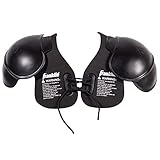
Overview: The Franklin Sports Youth Dress-Up Shoulder Pads serve a completely different purpose than athletic equipment—they’re costume accessories designed for ages 5-7. These non-performance pads prioritize appearance over protection for dress-up scenarios, making it essential to understand their intended use before purchase to avoid safety issues.
What Makes It Stand Out: The authenticity of the design at an incredibly low price point is remarkable. Kids can look like their favorite players without the bulk or cost of real equipment. The lightweight foam and plastic construction ensures comfort during extended costume wear, while the one-size design simplifies selection for young children who want to emulate their gridiron heroes.
Value for Money: At $7.35, these are an absolute bargain for costume purposes. You won’t find a more affordable way to complete a football uniform look. The value is exceptional for what they are—costume pieces—not protective gear, making them accessible for any family budget while delivering realistic aesthetics.
Strengths and Weaknesses: Strengths: Extremely affordable; realistic appearance; lightweight and comfortable for costumes; perfect for young children ages 5-7; great for fan wear and dress-up play Weaknesses: Zero protective capability; not suitable for any sports activity; very limited size range; non-performance materials; cannot withstand any impact
Bottom Line: For costume parties, Halloween, or game-day dress-up, these are perfect and deliver exactly what’s promised. However, parents must understand these offer no protection and should never be used in actual football or contact sports. Buy them for dress-up only and avoid any athletic application.
9. Champro Gauntlet Skill Shoulder Pad, Large
Overview: The Champro Gauntlet Skill Shoulder Pad is engineered specifically for skill position players who demand maximum arm mobility. These pads recognize that quarterbacks, receivers, and defensive backs require different protection than linemen, prioritizing range of motion without sacrificing safety. The large size accommodates growing high school athletes.
What Makes It Stand Out: The specially sized arch plates and low-profile forward cant design create exceptional arm mobility. The Shock Rail system with its unique shoulder corrugation ridges effectively disperses impact energy. Combined with the air management liner system, these pads deliver targeted protection for high-movement positions while maintaining a sleek profile that won’t slow you down.
Value for Money: At $91.18, these pads offer excellent value for skill position players. The position-specific design means you’re not paying for unnecessary bulk, and the specialized features rival more expensive options. For dedicated skill players, this is a smart investment that enhances performance without breaking the budget.
Strengths and Weaknesses: Strengths: Superior arm mobility; low-profile lightweight design; effective Shock Rail impact dispersion; secure customizable fit with heavy-duty belt; position-specific engineering; removable air management liner Weaknesses: Less protective for contact positions like lineman; “Guantlet” typo suggests quality control issues; may not suit players who switch positions; limited appeal for non-skill players
Bottom Line: Skill position players seeking unrestricted movement will find these pads ideal. The mobility-focused design doesn’t compromise on protection where it counts, making them perfect for quarterbacks, receivers, and defensive backs who need to perform at full range without hindrance.
10. Smoke AP Varsity Shoulder PAD M

Overview: The Smoke AP Varsity Shoulder Pad represents a premium option for serious high school players competing at the varsity level. These pads are built to handle the increased speed and intensity of varsity football while providing comprehensive protection that meets the demands of elite teenage athletes. The medium size fits most varsity players.
What Makes It Stand Out: The STAC Shoulder System is the key innovation, specifically designed to protect the AC joint while maximizing mobility. The flat pad design sits low across the shoulders, creating a more natural fit and feel. Combined with the air management liner and swivel front, these pads offer professional-grade features that enhance both safety and performance on the field.
Value for Money: At $220.39, these are among the more expensive options, but varsity-level protection commands premium pricing. The specialized AC joint protection and mobility features justify the cost for serious players. This is an investment in safety for athletes playing at higher competition levels where the risk of injury increases significantly.
Strengths and Weaknesses: Strengths: Excellent AC joint protection; low-profile flat pad design; superior mobility with swivel front; professional-grade construction; varsity-level impact protection; effective air management system Weaknesses: High price point may be prohibitive for some families; limited feature details in description; may be excessive for junior varsity or freshman players; overkill for practice-only athletes
Bottom Line: Varsity players who prioritize both protection and mobility will find these pads worth every dollar. The STAC system addresses a commonly injured area, making them particularly valuable for athletes competing at high intensity levels where collisions are more severe and proper protection is non-negotiable.
Understanding the Speedy Receiver’s Unique Needs
The Balance Between Protection and Mobility
Speedy receivers occupy a unique biomechanical space on the football field. Unlike linemen who need maximum frontal protection for constant contact, or quarterbacks who require extended range for throwing motion, receivers need multidirectional freedom. Every route—whether it’s a sharp dig, a comeback, or a deep post—requires rapid shoulder rotation, arm elevation, and torso flexion. The ideal shoulder pad acts as a forgotten layer, providing critical impact absorption during those rare but violent collisions while disappearing during the 95% of plays where you’re running free.
The physics are straightforward: excess mass positioned away from your center of gravity creates rotational inertia that slows direction changes. A half-pound reduction in pad weight, strategically distributed, can translate to measurable improvements in your 5-yard split and route sharpness. But this weight shedding can’t come at the expense of clavicle and sternum protection, especially with today’s faster, more violent collisions.
How Modern Football Has Evolved for Skill Positions
The 2026 football landscape looks dramatically different from even five years ago. Offensive schemes increasingly emphasize spread concepts, RPOs, and tempo that demand receivers run 60-70 plays per game at maximum intensity. Defensive backs are bigger, faster, and hit harder than ever, while safety rules have paradoxically increased high-speed collisions by reducing practice contact and creating more “live” game situations where players aren’t as conditioned to absorb hits.
This evolution means your shoulder pads must now protect against both repetitive sub-concussive impacts and catastrophic single collisions. The gear needs to manage moisture through four quarters in domes that feel like saunas, maintain structural integrity after 12 games of punishment, and integrate with GPS tracking vests that most teams now mandate. The one-size-fits-all approach is dead; position-specific engineering is the new standard.
Key Features That Define 2026’s Lightweight Shoulder Pads
Advanced Foam Technologies
The heart of any modern shoulder pad lives in its foam architecture. For 2026, we’re seeing widespread adoption of multi-density TPU (thermoplastic polyurethane) foams that use 3D-printed lattice structures. These aren’t the uniform foam blocks of old—they’re engineered with varying cell sizes and densities that create progressive resistance. Soft cells near your body compress easily for comfort, while denser outer cells activate during high-energy impacts.
Look for pads featuring “rate-sensitive” foams that stiffen upon impact while remaining pliable during normal movement. This viscoelastic behavior, similar to what’s used in military applications, means the harder you’re hit, the more protection you get. For receivers, this translates to barely noticeable weight during routes but military-grade protection when a safety launches at your chest.
Strategic Shell Geometry
The external shell design has undergone a radical transformation. Gone are the bulky, flat plastic plates that caught on jerseys and restricted movement. 2026 designs utilize “faceted geometry”—think stealth fighter angles—that deflect glancing blows rather than absorbing them head-on. These shells feature micro-channels that guide impact forces away from vulnerable joints and toward more robust muscle groups.
For speedy receivers, the key is “cantilever relief zones” built into the anterior deltoid area. These subtle cutouts and flexible bridges allow your arms to reach full extension overhead without the shell digging into your traps or limiting scapular movement. The best designs position the shell’s rigid protection only where bone is closest to the surface, using flexible TPU bridges everywhere else.
Ventilation and Moisture Management Systems
Heat stress directly correlates with decreased reaction time and increased injury risk. Modern pads incorporate active ventilation through “chimney channels” that run from the sternum up and over the shoulders, creating a convective current as you move. Some 2026 models integrate phase-change materials (PCMs) that absorb heat when you’re stationary and release it during movement, maintaining a consistent microclimate against your skin.
The interior liner has evolved beyond simple moisture-wicking fabric. We’re now seeing silver-ion antimicrobial treatments woven at the fiber level, preventing the bacterial growth that causes those brutal post-game odors. More importantly, these treatments reduce skin irritation and the dreaded “pad rash” that can sideline you with infection. Look for liners that are fully removable and machine-washable—this isn’t just a convenience feature, it’s a performance one.
Material Innovations Reshaping 2026 Gear
Carbon Fiber Composites vs. Traditional Plastics
The debate between carbon fiber and advanced polymers has reached a practical conclusion: hybrid construction wins. Pure carbon fiber, while incredibly light and strong, transmits too much vibration and can create dangerous stress risers that fail catastrophically. The sweet spot for 2026 uses carbon fiber reinforcement in high-stress areas (the arch and epaulets) while employing impact-modified polycarbonate for the main shell.
This hybrid approach reduces weight by 30-40% compared to traditional plastic-only pads while maintaining the “graceful failure” mode that prevents sharp edges during breakage. For receivers, the real advantage is the reduced thickness—carbon fiber’s superior strength allows for shells just 2-3mm thick that flex naturally with your body. The material also dampens high-frequency vibration from repetitive hits, reducing the cumulative fatigue that builds up over a game.
Next-Gen Foam Layers: From EVA to Zote Foam
The foam stack in your pads typically includes three layers: comfort foam against your skin, impact foam for energy absorption, and stabilization foam for structure. In 2026, each layer uses specialized materials. The comfort layer employs Zote foam, a nitrogen-expanded polyethylene that’s soft, breathable, and completely hydrophobic—it literally cannot absorb water, keeping weight constant even in a downpour.
The impact layer uses “smart foams” with embedded shear-thickening fluid (STF) that flows like liquid during slow movements but locks into a solid lattice under impact. This eliminates the traditional trade-off between soft (comfortable but protective) and firm (protective but restrictive) foams. The stabilization layer often incorporates cork composites, which provide natural vibration damping and maintain their structure better than traditional foams after repeated compression.
The Anatomy of a Receiver-Friendly Shoulder Pad
Streamlined Epaulet Design
Epaulets—the caps that sit on top of your shoulders—have historically been the biggest mobility culprits. 2026 designs feature “floating epaulets” that attach via flexible TPU tendons rather than rigid bolts. This allows the epaulet to move independently of the main arch, staying out of your way during arm elevation while still providing clavicle protection.
The shape has also evolved from the traditional cup design to a “shark fin” profile that tapers toward the back. This reduces the catching hazard when you shrug off press coverage and eliminates the gap that used to exist between epaulet and arch—a gap that could trap fingers or concentrate force. For slot receivers who face more physical press coverage, look for epaulets with slightly extended anterior coverage that protects against direct strikes without adding bulk.
Low-Profile Arches and Cantilever Systems
The arch—the main plastic piece covering your chest and back—determines the pad’s overall silhouette. Receiver-specific arches now use “pre-curved anatomical profiling” that mirrors your body’s natural posture in a three-point stance. This eliminates the gap between pad and body that used to create leverage points and restrict movement.
The cantilever system, the mechanical linkage that transfers impact from the epaulet to the arch, has been reimagined with “progressive rate springs” made from shape-memory alloys. These systems provide minimal resistance during normal movement but engage progressively during impact, creating a custom stiffness profile. For deep threats who need maximum range for high-pointing balls, look for “low-ride” cantilevers that position the arch lower on your torso, freeing up your upper chest and deltoids.
Removable Components for Customization
Modularity is the hallmark of 2026 designs. The ability to remove back plates, rib protectors, and even epaulets allows you to tune your protection to your role and opponent. Playing a finesse team with minimal contact? Strip it down to the bare essentials. Facing a physical press-man team? Add the extended back plate and floating rib guards.
This customization extends to the interior. Most premium pads now feature interchangeable foam inserts of varying densities, letting you adjust the feel and protection level. Some even offer “game day” and “practice” configurations—minimalist for games when you need every advantage, and more protective for the repetitive hits of practice. This not only extends the life of your pads but also trains your body to perform with less protection, making game-day gear feel invisible.
Fit and Sizing: The Non-Negotiable Foundation
Measuring for the Perfect Fit
Even the most advanced shoulder pad becomes a liability if it doesn’t fit like a second skin. Start with two critical measurements: your chest circumference measured at nipple line during normal inhalation, and your shoulder width measured from AC joint to AC joint (the bony protrusions on top of your shoulders). These numbers give you your baseline size, but the real magic happens in the fitting.
Try on pads with your game-day base layer—compression shirt, GPS vest, and any shoulder pre-wrap you use. The arch should sit 1-2 inches below your suprasternal notch (the hollow at the base of your throat), and the front should cover your sternum completely without extending past your ribcage. Reach both arms overhead; if the pads lift off your shoulders or dig into your neck, they’re either too small or the cantilever geometry is wrong for your build.
The “Second Skin” Philosophy
The goal isn’t just a good fit—it’s a forgettable fit. Modern fitting techniques use dynamic assessment: perform five route breaks in the fitting room, paying attention to where the pads shift. Any movement more than a quarter-inch indicates poor weight distribution or inadequate sternum strap tension. The sternum strap itself should use a “floating anchor” design that allows vertical adjustment without creating pressure points.
For receivers with developed deltoids or those using deltoid pads, check for “scapular relief zones”—slight cutouts in the posterior arch that accommodate shoulder blade movement. Without these, your pads will ride up during backpedal and limit your ability to sink your hips. The back plate should sit just above your belt line and move with your torso, not against it. Pro tip: have a teammate tug on the pads from behind; if they shift more than an inch, the fit is too loose for game action.
Safety Standards and Certifications for 2026
NOCSAE ND200 and Beyond
All 2026 shoulder pads must meet NOCSAE ND200 standards for commotio cordis protection, but the certification landscape has expanded. Look for the new ND300 certification, which specifically addresses repetitive sub-concussive impacts—the kind receivers experience on crossing routes and quick slants. This standard requires testing at multiple impact velocities and angles, not just the catastrophic single-hit scenario.
The certification label should be permanent and located on the interior sternum plate. Be wary of pads that only meet older ND050 or ND025 standards—these don’t account for the modern game’s speed and frequency of impact. Some manufacturers are now also submitting to independent testing by the NFL’s Engineering Committee, which uses biofidelic dummies that better replicate human kinematics. While not mandatory, this additional testing indicates a commitment to real-world protection.
What the New Regulations Mean for Receivers
The 2026 rule changes regarding blindside blocks and defenseless player protections have actually increased the types of impacts receivers face. Defenders are now hitting lower and with more rotational force to avoid penalties, placing new stress on clavicles and the AC joint. Modern certifications test for these oblique impacts, ensuring pads provide protection from all angles, not just straight-on collisions.
For youth and high school players, the 2026 standard also includes “growth accommodation” requirements, ensuring pads can be adjusted safely as players develop. This means more robust adjustment systems that won’t slip under load. College and pro receivers should look for the “Pro Level” designation, which indicates testing at higher impact energies consistent with elite-level collision speeds.
Position-Specific Design Elements
Wide Receiver vs. Slot Receiver Considerations
The split end and flanker positions demand maximum range of motion for releases and deep ball adjustments. These players benefit from “archless” or “skeleton” designs that use independent left/right epaulets connected by a flexible sternum bridge. This configuration eliminates the rigid arch entirely from the upper chest, allowing unrestricted overhead reach and rotation.
Slot receivers face a different reality: more traffic, more linebacker collisions, and more contested catches in the middle. They need “extended coverage” models that incorporate detachable flank guards covering the ribs and lateral chest. These guards should use a “floating attachment” that moves with your torso rather than rigidly fixing to the arch, preventing restriction during quick in-and-out breaks. The epaulets should be slightly wider to protect against linebacker strikes while maintaining a low profile for clean releases off the line.
Adaptability for Special Teams Play
Most speedy receivers contribute on special teams, whether as gunners on punt coverage or return specialists. This dual role demands quick adaptability. Look for pads with “mission-configurable” attachment points that let you add protective plates for coverage units and strip them off for offensive series. The best systems use magnetic fasteners or one-click releases that you can operate without tools on the sideline.
Return specialists need particular attention to sternum protection, as they face high-speed, often blind collisions. A removable “sternum shield” that adds 4-6mm of impact foam without significantly increasing bulk is ideal. This shield should integrate seamlessly with the main arch, using interlocking geometry that prevents edge catches while allowing independent flex.
The Technology Edge: Smart Features in 2026 Pads
Integrated Impact Sensors
The most forward-thinking 2026 pads incorporate ultra-thin piezoelectric sensors laminated between foam layers. These aren’t the bulky add-on devices of the past—they’re less than 0.5mm thick and add negligible weight. They measure impact magnitude, location, and frequency, transmitting data via low-energy Bluetooth to team medical staff.
For individual players, some systems connect to smartphone apps that track cumulative impact load throughout a game or season. This data helps you and your trainer recognize when you’re taking more hits than usual, potentially indicating a need for technique adjustment. The sensors are powered by your body heat and motion, requiring no charging, and they’re programmed to ignore routine contact like press coverage, focusing only on significant impacts.
Moisture-Wicking and Antimicrobial Treatments
The interior liner technology has become molecular. Silver-ion treatments are now complemented by copper-infused yarns that create an electrochemical barrier against bacterial colonization. More impressively, some 2026 liners use hydrophilic fibers on the skin side that actively pull sweat into hydrophobic channels, creating directional moisture flow that keeps weight down.
Phase-change materials (PCMs) have been integrated directly into the foam matrix. These microscopic capsules contain paraffin wax that melts at skin temperature, absorbing heat during rest and solidifying during activity to release it. This thermoregulation keeps your core temperature more stable, reducing the 2-3% performance degradation that occurs as you overheat. The effect is subtle but measurable over four quarters.
Budget Tiers and What to Expect at Each Level
Entry-Level Lightweight Options
The sub-$150 tier has benefited tremendously from trickle-down technology. You won’t get carbon fiber or smart sensors, but you can expect TPU shells, multi-density EVA foams, and decent ventilation. These pads typically weigh 3.5-4.5 pounds and use simpler cantilever systems that provide adequate protection for high school and lower-division college play.
The compromise comes in customization and durability. Adjustment systems use basic nylon straps and plastic buckles that may slip under heavy use. Foam layers are bonded rather than removable, meaning you can’t replace compressed sections. For developmental players who are still growing, this tier makes sense, but serious receivers will find the mobility limitations noticeable during advanced route running.
Premium Performance Investments
The $300+ range represents the cutting edge. Here you get full carbon fiber reinforcement, rate-sensitive foams, and fully modular designs. Weight drops to 2.5-3.5 pounds without sacrificing protection. These pads include professional fitting services at authorized retailers and often come with replacement foam inserts for tuning.
The real value is in longevity and performance consistency. Premium pads maintain their protective properties through 2-3 seasons of heavy use, while budget options may compress and degrade within a single season. The superior ventilation keeps you fresher in the fourth quarter, and the precise fit reduces the micro-adjustments that cost you precious milliseconds during route breaks. For scholarship-level players and pros, this isn’t an expense—it’s career insurance.
Common Mistakes Receivers Make When Choosing Pads
The most frequent error is over-protection. Many receivers, especially those coming off injury, gravitate toward bulkier pads that promise maximum coverage. This psychological comfort comes at a biomechanical cost. Excessive padding restricts movement, alters your running mechanics, and can actually increase injury risk by slowing your ability to brace or avoid contact. Trust the engineering—modern lightweight pads protect better than old-school heavy ones.
Another critical mistake is ignoring the interaction with your other gear. Shoulder pads must integrate seamlessly with your back plate, rib protector, and GPS vest. Buying pads without considering this ecosystem creates pressure points and restricted movement. Always try on your complete game-day setup together. Finally, many players focus solely on weight, choosing the lightest pad available regardless of fit or protection level. A well-fitting 3.5-pound pad outperforms a poorly fitting 2.5-pound pad every time.
Maintenance and Longevity: Protecting Your Investment
Cleaning Protocols for Modern Materials
The advanced materials in 2026 pads demand specific care. Never use bleach or fabric softeners on removable liners—these chemicals destroy antimicrobial treatments and clog moisture-wicking channels. Instead, use a sport-specific detergent with enzymes that break down sweat proteins without damaging technical fabrics. Wash liners in cold water on gentle cycle, and air dry only. High heat degrades elastic fibers and can melt foam laminations.
For the shell and foam components, wipe down with a mixture of isopropyl alcohol and water (1:3 ratio) after each use. This kills bacteria without degrading TPU or carbon fiber composites. Never submerge your pads in water or use a pressure washer—the force drives sweat and bacteria deep into foam layers where they can’t be removed. For stubborn odors, use an ozone treatment bag, which kills bacteria at the molecular level without moisture.
Storage and Off-Season Care
Proper storage begins the moment you take off your pads. Always air them out completely before bagging them—trapped moisture is the enemy of both materials and hygiene. Use a mesh equipment bag, never a solid duffel, to allow continued airflow. Store in a cool, dry place away from direct sunlight, which degrades foam and fades shell materials.
During the off-season, remove all detachable components and store them separately to prevent compression set. Place cedar blocks or moisture-absorbing silica packets in your equipment bag to control humidity. If your pads use shape-memory alloys in the cantilever system, cycle them through their full range of motion once a month to prevent creep. For pads with integrated electronics, charge the battery to 50% before long-term storage to maximize lifespan.
When to Replace Your Shoulder Pads: 2026 Timeline
The old rule of “replace every two seasons” is obsolete with modern materials. Instead, monitor specific wear indicators. Replace your pads immediately if you notice any cracks in the shell, especially around bolt holes or stress points. Delamination—when foam layers begin to separate—is another critical failure mode that drastically reduces protection. Test this by gently pulling at foam edges; any separation means it’s time for new pads.
Foam compression is more subtle but equally important. Measure the thickness of your main impact foam at the beginning of the season and check it monthly. When compression exceeds 30% of original thickness, the foam has lost its energy-absorbing properties. For most college and pro receivers running 60+ plays per game, this occurs around 18-24 months. High school players might get three seasons from premium pads. Remember: pads that look fine cosmetically can be dangerously compromised internally.
Frequently Asked Questions
How much should lightweight shoulder pads for receivers actually weigh in 2026?
Premium pads designed for elite receivers should weigh between 2.5 and 3.5 pounds total. Anything under 2.5 pounds typically sacrifices critical protection in the clavicle and sternum areas, while pads over 4 pounds start to impede the rapid shoulder rotation needed for advanced route running. The weight distribution matters as much as the total—well-designed pads feel lighter because the mass is concentrated close to your center of gravity.
Can I use the same shoulder pads for offense and special teams coverage?
Yes, but you’ll want a modular system. Look for pads with quick-detach back plates and flank guards that you can add for special teams play. Coverage units demand more posterior and lateral protection since you’re often hitting or being hit from awkward angles. The base pad should be identical, but the ability to add protective components for specific roles makes one set of pads versatile enough for both applications.
Do lightweight pads really protect as well as heavier traditional models?
Absolutely—often better. Modern materials like rate-sensitive foams and carbon fiber composites absorb more energy per gram than traditional plastic and EVA foam. The key is strategic placement of protection only where you need it, rather than blanket coverage. Independent testing shows premium lightweight pads reduce peak impact forces by 15-20% compared to older heavy designs, while simultaneously reducing the cumulative load from repetitive hits.
How do I know if my pads are too restrictive for my playing style?
Perform the “mirror test”: in your pads, stand in front of a mirror and execute your five most common route breaks. Watch for any pad movement independent of your body—that indicates poor fit. You should be able to touch your hands overhead without the pads lifting off your shoulders. If you feel the shell digging into your neck during a post-corner break or the epaulets catching on your jersey during a release, the geometry is wrong for receivers.
What’s the difference between “skill position” pads and receiver-specific pads?
“Skill position” is a broad category that includes running backs and defensive backs who have different impact profiles. Receiver-specific pads feature lower-profile arches for overhead extension, more flexible epaulets for press release, and anterior-focused protection for catching impacts. Running back pads emphasize lateral protection for tackles, while DB pads prioritize backward range for interceptions. Always choose pads designed specifically for receivers, not general skill position gear.
Should I wear additional rib protection with lightweight shoulder pads?
It depends on your role and conference rules. Slot receivers and those running a lot of intermediate routes should consider detachable floating rib guards that integrate with the shoulder pads. These add minimal weight (4-6 ounces) while protecting against linebacker forearms. Deep threats can usually skip additional rib protection, as their impact profile involves fewer direct side strikes. The key is ensuring any add-on uses floating attachment, not rigid connection.
How do GPS tracking vests integrate with modern shoulder pads?
2026 pads are designed with GPS compatibility in mind. Look for pads featuring “vest relief channels”—slight recesses in the posterior arch that accommodate the vest’s sensor pods without creating pressure points. The sternum strap should be positioned to avoid vest buckles, and the overall pad profile should be low enough that the vest sits flush against your back. Some manufacturers now collaborate with GPS companies to create integrated systems where sensors are built directly into the pad foam.
Can I adjust the protection level of my pads during the season?
Yes, and you should. Most premium 2026 pads use modular foam inserts that let you tune protection based on opponent and health. Playing a physical press team? Insert the dense impact foam. Dealing with a shoulder stinger? Swap in softer foam for a game while you heal. This adjustability extends to epaulet width and back plate length. Just remember to practice in the same configuration you’ll use in games—don’t surprise your body with different weight distribution on game day.
What’s the break-in period for new lightweight shoulder pads?
Modern pads require minimal break-in thanks to pre-curved anatomical designs and flexible materials. Expect 2-3 practices for the foam to compress to your body shape and the straps to settle into their adjusted positions. During this period, check fit after each session and tighten straps as needed. The foam should feel slightly firm at first—that’s normal. If you experience significant discomfort or restriction after a week of wear, the fit is wrong, not the break-in incomplete.
How do I balance cost with performance when choosing pads?
Invest at the level of your competition. Youth and freshman players can get excellent performance from the $150-200 tier, which includes most key technologies in simpler form. Varsity and college players competing for scholarships should be in the $250-350 range, where fit precision and protection become career-affecting. Professional or pro-bound players need premium pads with full customization. Remember that a $300 pad that lasts three seasons costs less per year than a $150 pad replaced annually, and the performance benefits compound over time.