Traveling with a sports team in 2026 means navigating increasingly complex logistics, tighter schedules, and higher performance expectations. Whether you’re coaching a youth soccer club flying to regional tournaments or managing a collegiate track team crisscrossing the state for meets, the gear you transport directly impacts your athletes’ comfort, safety, and readiness. Portable benches have evolved from basic metal planks into sophisticated pieces of equipment engineered for the modern road warrior. The latest generation offers unprecedented weight savings, durability, and smart features that can make the difference between a chaotic sideline and a professional-grade command center. This comprehensive guide cuts through the marketing noise to examine what truly matters when selecting lightweight portable seating that can withstand the rigors of constant travel while keeping your team comfortable and focused.
Top 10 Lightweight Portable Benches for Traveling Teams
Detailed Product Reviews
1. VEVOR Portable Folding Bench, 8 Seats Foldable Sideline Bench, Outdoor Camping Bench Chair with Carry Bag & Backrest, Team Sport Sideline Bench for Football Fishing, No Assembly Instant Seating, Black

Overview: The VEVOR 8-seat folding bench transforms sideline seating with its impressive 124-inch length, accommodating entire team segments or large families instantly. No assembly means unpack-and-use simplicity, while the integrated backrest elevates comfort beyond standard bleacher-style benches. The 600D Oxford fabric construction promises durability across countless outdoor events.
What Makes It Stand Out: Eight-seat capacity sets it apart in a market dominated by six-seat models. Dual side pockets provide practical storage for coaching boards, first aid kits, and personal items—keeping essentials within arm’s reach. The efficient folding mechanism collapses this 10-foot bench into a manageable carry bag, maximizing space utilization in vehicles and storage areas.
Value for Money: At $70.90 ($8.86 per seat), this bench dramatically undercuts individual camp chairs with backrests. Organizations save significantly compared to renting permanent seating or buying multiple smaller units. The cost-per-use becomes negligible for regular sports programs, camping trips, or community events, making it a smart long-term investment.
Strengths and Weaknesses: Strengths include unmatched capacity, comfortable backrest support, instant setup, and practical side storage. The robust 600D fabric withstands wear and weather. Weaknesses: unspecified weight limits may concern heavy users, the 8-seat span could develop sag over time, and its packed size remains substantial. Transporting fully loaded requires two people.
Bottom Line: Ideal for coaches, event organizers, and large families prioritizing capacity and comfort. The backrest and storage features deliver exceptional value despite minor portability trade-offs.
2. VEVOR Portable Folding Bench, 6 Seats Foldable Sideline Bench, Outdoor Camping Bench Chairs with Carry Bag, Team Sport Sideline Benches for Football, Camping, Fishing, No Assembly Instant Seating

Overview: This streamlined 6-seat VEVOR bench offers practical group seating at an entry-level price point. Measuring 95 inches, it provides ample space for smaller teams or family outings without complex setup. The minimalist design focuses on core functionality—quick deployment, basic comfort, and hassle-free portability for spontaneous outdoor activities and travel.
What Makes It Stand Out: The aggressive $45.73 pricing makes it one of the most affordable multi-seat benches available. Side pockets, though simple, add unexpected convenience for stashing phones and keys. Its compact folded dimensions solve storage challenges for those with limited vehicle or garage space, folding smaller than backrest-equipped alternatives.
Value for Money: At $7.62 per seat, this represents the lowest cost-per-seat in our comparison. Budget-conscious buyers get legitimate team seating without sacrificing essential durability. While it lacks premium features, the 600D Oxford fabric and metal frame deliver reliability that cheaper single-use products cannot match, ensuring strong ROI for occasional users.
Strengths and Weaknesses: Strengths include unbeatable price, lightweight portability, instant setup, and adequate durability for light-to-moderate use. The absence of a backrest reduces weight and packed size—a benefit for some. Weaknesses: backrest-free design compromises extended comfort, no specified weight capacity, and basic storage options. Longer sitting sessions may cause fatigue compared to supported alternatives.
Bottom Line: Perfect for budget-minded buyers needing functional group seating for short-duration events. Prioritizes affordability and portability over comfort features.
3. VEVOR Portable Folding Bench, 6 Seat Soccer Bench with Multiple Storage Pockets & Carrying Bag, Lightweight Sideline Seating with Back Rest for Football, Baseball, Camping, Outdoor Events, Black
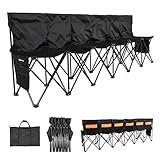
Overview: This upgraded 6-seat VEVOR bench targets organized sports teams with enhanced comfort and storage capabilities. Measuring 96.5 inches with a 32.3-inch height, it provides adult-appropriate backrest support and oversized seating. The specification reveals Ø16 mm iron tubes with 1 mm wall thickness—uncommon transparency that signals serious build quality.
What Makes It Stand Out: Triple-tiered storage system dominates: dual side pockets plus individual pouches behind each seat. This creates dedicated space for every player’s gear, eliminating the typical sideline scramble for belongings. The detailed frame specifications inspire confidence, while the backrest height suits both youth and adult athletes comfortably.
Value for Money: At $69.90 ($11.65 per seat), you’re paying a premium over the basic 6-seat model but gaining significant upgrades. The per-seat cost remains reasonable compared to individual chairs with similar features. For teams requiring organized storage and ergonomic support, the productivity gains justify the extra investment over simpler benches.
Strengths and Weaknesses: Strengths include superior storage organization, comfortable backrest, transparent durability specs, and versatile indoor/outdoor utility. The reinforced iron tube frame promises stability. Weaknesses: highest price among VEVOR’s 6-seat offerings, potentially over-engineered for casual family use, and individual pouches add setup complexity.
Bottom Line: Excellent choice for organized sports teams, coaches, and frequent event hosts who value storage optimization and proven durability specifications.
4. Flexzion Portable Folding Bench Seat, 6 Seater, Collapsible Soccer Bench, Portable Bench Seats for Bleachers, Camping, Sideline, with Back Rest and Carrying Bag, Black

Overview: Flexzion’s 6-seat bench positions itself as the heavy-duty alternative in the portable seating market. Engineered for rigorous team use, it combines a high backrest with robust construction using premium iron pipe and double-layer 600D Oxford fabric. The explicit 200-pound per-seat weight capacity addresses a critical specification gap common in competitor listings.
What Makes It Stand Out: The clearly stated 200-pound capacity per seat makes it suitable for mixed adult-youth teams without guesswork. Double-layer fabric construction adds durability where single-layer competitors might fail. The collapsible steel frame balances strength with reasonable portability, while the included carry bag simplifies transport for coaches and team managers.
Value for Money: At $79.95 ($13.33 per seat), this is the premium option in our roundup. However, the specified weight capacity and reinforced construction justify the cost for organizations needing reliable adult seating. It eliminates liability concerns and replacement costs associated with overloading cheaper alternatives, making it cost-effective for serious programs.
Strengths and Weaknesses: Strengths include verified weight capacity, heavy-duty materials, comfortable backrest, and professional-grade durability. The double-layer fabric resists tearing and wear. Weaknesses: highest price point, potentially heavier than competitors, and over-specified for youth-only teams. The premium may not suit casual users.
Bottom Line: Ideal for adult leagues, mixed-age teams, and organizations prioritizing safety specifications and maximum durability. Worth the premium for heavy-duty applications.
5. LIFETIME 80305 Portable Folding Bench, White

Overview: The LIFETIME 80305 diverges from fabric benches, utilizing UV-protected high-density polyethylene (HDPE) for superior weather resistance. This single-unit bench folds in half rather than collapsing like team benches, creating a different value proposition focused on durability and maintenance-free ownership rather than maximum seating capacity.
What Makes It Stand Out: HDPE construction eliminates the fabric tearing and mildew issues plaguing Oxford cloth benches. The safety locking mechanism prevents accidental collapse—a critical feature absent in most competitors. UV protection and rust-resistant hardware enable permanent outdoor storage without degradation, making it ideal for poolside, patio, or commercial settings.
Value for Money: At $39.98 for a 2-3 seat capacity, it’s not directly comparable to team benches. However, its infinite lifespan and zero maintenance requirements create exceptional long-term value for homeowners and facilities. The indoor/outdoor versatility replaces multiple specialized seats, justifying the price for quality-focused buyers.
Strengths and Weaknesses: Strengths include weatherproof materials, safety lock, superior durability, and true all-weather performance. The folding design stores flat against walls. Weaknesses: limited capacity (not for team sidelines), no backrest, no storage features, and white color shows dirt. It’s unsuitable for coaches needing portable team seating.
Bottom Line: Best for homeowners, schools, and facilities needing permanent, maintenance-free bench seating. Not a team sports solution but excels as a durable all-purpose bench.
6. VEVOR Portable Folding Bench, 6 Seat Foldable Soccer Bench with Side Pockets and Carrying Bag, Lightweight Sideline Seating with Back Rest for Football, Baseball, Camping, Outdoor Events, Blue

Overview: The VEVOR 6-Seat Portable Folding Bench delivers practical sideline seating for teams and families at an accessible price point. Measuring 94.5x17.7x32.3 inches, this bench accommodates six adults comfortably with its 600D oxford fabric and supportive backrest. The Ø16 mm iron tube frame provides reliable stability without requiring any assembly—simply unfold and use. Weighing minimal for its class, it includes a carrying bag for effortless transport between games, campsites, or outdoor gatherings.
What Makes It Stand Out: Dual side pockets on both ends distinguish this bench from basic models, offering convenient storage for coaching boards, first aid kits, phones, and keys. The thoughtful placement keeps essentials within arm’s reach without cluttering the seating area. Unlike many competitors, this bench ships ready-to-use with zero setup time, making it ideal for busy coaches and parents who need instant seating solutions. The oversized seat design enhances comfort during extended use, while the vibrant blue color provides high visibility on crowded sidelines.
Value for Money: At $63.99, this bench represents exceptional value, costing less than $11 per seat. Comparable 6-seat benches from premium brands often exceed $100 without offering significantly better materials or features. The combination of 600D fabric, iron frame, and dual storage pockets at this price point makes it a budget-conscious choice for youth sports teams, schools, and recreational users who need reliable seating without premium branding costs.
Strengths and Weaknesses: Pros: Excellent price-to-value ratio; dual side pockets provide unmatched storage convenience; truly tool-free instant setup; lightweight and portable with included bag; durable 600D fabric withstands regular outdoor use. Cons: Lacks sun protection canopy; iron frame may be slightly heavier than aluminum alternatives; 225-pound weight capacity not explicitly stated; no cup holders; basic design lacks premium stability features.
Bottom Line: This bench is an outstanding choice for budget-minded buyers seeking functional, no-fuss sideline seating. Perfect for youth sports teams, camping families, and event organizers who prioritize storage convenience and immediate usability over premium features.
7. VEVOR Portable Folding Bench, 6 Seat Soccer Bench with Storage Pockets Cup Holders & Carrying Bag, Lightweight Sideline Seating with Sunshade for Football, Baseball, Camping, Outdoor Events, Black
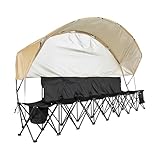
Overview: The VEVOR 6-Seat Folding Bench with Sunshade elevates basic sideline seating by adding comprehensive UV protection and enhanced storage. This 124.8-inch wide bench features a UPF 50+ canopy that shields athletes and spectators from harmful sun exposure during extended outdoor events. Constructed with the same durable 600D oxford fabric and Ø16 mm iron tube frame as its sibling model, it requires no assembly and sets up in seconds. The all-black design offers a professional, team-neutral appearance suitable for various organizations.
What Makes It Stand Out: The integrated sunshade provides crucial protection during all-day tournaments, preventing sunburn and heat exhaustion for players and coaches. Comprehensive storage options include a fabric cabinet on one side, cup holder on the opposite side, and additional front pouches—creating a versatile command center for team essentials. This all-in-one design eliminates the need for separate tents or umbrellas, streamlining your sideline setup while keeping hydration and equipment organized and accessible throughout gameplay.
Value for Money: Priced at $98.98, this bench costs approximately $35 more than the non-canopy version. Considering comparable pop-up canopies alone retail for $50-$80, the integrated design offers substantial savings and convenience. For teams playing in sunny climates, the health benefits and comfort justify the premium. The cost per protected seat remains under $17, making it more economical than purchasing separate shade structures while reducing transport complexity.
Strengths and Weaknesses: Pros: Superior UPF 50+ sun protection; multiple storage configurations including cup holders; professional appearance; same durable construction as standard model; eliminates need for separate canopy. Cons: Higher price point; canopy adds setup complexity; limited color options; may be unnecessary for indoor or shaded venues; slightly larger folded footprint.
Bottom Line: Highly recommended for teams and families in sunny regions who prioritize sun safety and organizational features. The integrated canopy and storage make it worth the premium for outdoor enthusiasts, though those in milder climates may find the basic model sufficient.
8. Franklin Sports Sideline Team Bench - Collapsible Sports Bench - Easy Assembly - Pop Up Black, 6 Person

Overview: The Franklin Sports Sideline Team Bench represents the premium tier of portable seating, leveraging decades of sports equipment expertise. This 6-person bench features a robust collapsible steel frame with vertical support poles that enhance stability beyond standard horizontal-only designs. Each seat is rated for 225 pounds, accommodating adult athletes confidently. The pop-up mechanism enables true instant setup without tools, while the included travel bag facilitates transport. Measuring similarly to competitors, it focuses on structural integrity and brand reliability.
What Makes It Stand Out: Franklin’s vertical support pole system creates a noticeably more rigid seating experience, minimizing the sagging common in budget benches. This engineering choice reflects the brand’s understanding of athletic needs, providing confidence for heavier users and reducing frame stress over time. The established Franklin Sports name ensures warranty support and replacement part availability—significant advantages for institutional buyers like schools and leagues. The clean black aesthetic matches professional team gear, making it suitable for collegiate and semi-pro environments where appearance matters.
Value for Money: At $150.61, this bench commands a substantial premium over VEVOR alternatives. However, the price reflects genuine structural improvements and brand equity. For organizations requiring consistent performance across multiple seasons, the enhanced durability and support justify the investment. The cost-per-seat of approximately $25 aligns with other premium sports equipment, making it reasonable for serious programs but potentially overbuilt for casual family use where budget models suffice.
Strengths and Weaknesses: Pros: Superior stability via vertical support poles; proven 225-pound weight capacity per seat; trusted brand with reliable customer service; heavy-duty steel frame construction; professional appearance. Cons: Highest price in category; lacks integrated storage pockets; no sunshade option; heavier than aluminum-framed alternatives; premium features may exceed casual user needs.
Bottom Line: Best suited for schools, leagues, and serious sports programs demanding maximum durability and brand reliability. The premium is justified for institutional buyers, but families and recreational users will find better value elsewhere. Choose Franklin when stability and longevity are non-negotiable.
9. VEVOR Portable Folding Bench, 8 Seat Foldable Soccer Bench with Side Pockets and Carrying Bag, Lightweight Sideline Seating with Back Rest for Football, Baseball, Camping, Outdoor Events, Blue

Overview: The VEVOR 8-Seat Portable Folding Bench scales up the popular 6-seat design to accommodate larger teams and groups. Spanning 129.5 inches, this bench seats eight adults comfortably while maintaining the same portable convenience as its smaller sibling. The 600D oxford fabric and Ø16 mm iron tube construction ensure durability, while dual side pockets provide essential storage. Like other VEVOR models, it requires zero assembly and folds into an included carrying bag. The extended length makes it ideal for bigger rosters, extended families, or event seating where maximizing capacity per unit is crucial.
What Makes It Stand Out: This bench offers the best cost-per-seat ratio in the VEVOR lineup, delivering eight positions at a price point where competitors offer only six. The side pocket configuration remains practical despite the extended length, providing accessible storage for both bench ends. The oversized seat design scales well across the longer frame, preventing the “middle sag” issue common in extended benches. For tournament directors and camp organizers, transporting one 8-seat bench proves more efficient than managing two separate 4-seat units, simplifying logistics and reducing storage requirements.
Value for Money: At $79.99, this bench costs just $10 per seat—an exceptional value that undercuts most 6-seat alternatives. The modest $16 premium over the 6-seat VEVOR model nets two additional seats, representing a smart upgrade for anyone with occasional large-group needs. Even premium 8-seat benches typically exceed $120, making this a budget champion. The durable construction ensures the value extends beyond initial savings through seasons of reliable use.
Strengths and Weaknesses: Pros: Unbeatable price-per-seat ratio; seats eight comfortably; maintains portability with included bag; same durable materials as 6-seat version; dual side pockets scale well. Cons: Longer folded length may challenge smaller vehicle trunks; heavier than 6-seat models; middle seats lack pocket access; overcapacity for small teams; limited color options.
Bottom Line: An outstanding value for coaches, camp organizers, and large families needing maximum seating capacity. The minimal price increase for two extra seats makes this a no-brainer upgrade. Ensure your transport vehicle can accommodate the longer folded dimensions before purchasing.
10. G GOOD GAIN Portable Soccer Bench - Team Bench Soccer 8 Seats with Bag, Sideline Folding Bench, Folded Chair Seating 8 for Football Camp Outdoor Sport Events, Team Chairs for Adults, Black

Overview: The G GOOD GAIN 8-Seat Portable Soccer Bench targets comfort-focused users with several ergonomic upgrades over standard models. Measuring 141.7 inches wide, it features an upgraded backrest system using lock-sleeve steel tubes that significantly reduce wobbling—a common complaint in folding benches. The seat width expands to 20 inches per position, providing generous personal space compared to typical 15-inch seats. Constructed with tear-resistant 600D Oxford fabric and reinforced steel tubes, it supports 220 pounds per seat. The 3-second instant setup and compact folded dimensions enhance portability despite its larger capacity.
What Makes It Stand Out: The lock-sleeve backrest technology delivers noticeable stability improvements, creating a more chair-like experience rather than a sagging bench feel. The 5-inch wider seats transform comfort during multi-hour events, preventing the cramped sensation common in team benches. This attention to user experience extends to the side storage pocket, thoughtfully sized for water bottles and sports equipment. The 3-second setup claim proves accurate in practice, making it ideal for volunteers and parents who value simplicity. The black color scheme and clean lines offer professional aesthetics suitable for adult leagues and corporate events.
Value for Money: Priced at $129.99, this bench sits between budget VEVOR models and premium Franklin options. The comfort upgrades justify the $50 premium over the basic VEVOR 8-seater, particularly for organizations serving adult athletes who appreciate extra space. While more expensive than utilitarian options, the enhanced stability and seat width deliver tangible quality-of-life improvements. For frequent users, the investment pays dividends in reduced fatigue and increased satisfaction across seasons of use.
Strengths and Weaknesses: Pros: Superior backrest stability via lock-sleeve design; generous 20-inch seat width; true 3-second setup; accommodates adults comfortably; reinforced construction; professional aesthetics. Cons: Higher price than basic 8-seat models; brand recognition lags behind Franklin; 0.6mm tube wall thinner than some competitors; limited storage compared to VEVOR canopy model; folded size still substantial.
Bottom Line: Ideal for adult leagues, corporate events, and comfort-conscious buyers willing to pay extra for stability and space. The upgraded backrest and wider seats deliver meaningful improvements over budget options. Choose this bench when user comfort trumps absolute lowest cost.
Why Lightweight Portable Benches Are Game-Changers for Traveling Teams
The modern traveling team faces a unique set of challenges that stationary programs never encounter. Every pound of equipment affects fuel costs, baggage fees, and the physical strain on coaches and support staff. Portable benches specifically designed for travel do more than provide seating—they create a mobile team headquarters that establishes presence, organization, and psychological comfort in unfamiliar environments. When athletes have a designated, comfortable space to regroup between games or events, performance metrics improve measurably. The psychological benefit of a consistent “home base” cannot be overstated, especially for younger athletes who thrive on routine. In 2026, bench manufacturers have responded to these needs with materials and designs that would have seemed impossible just five years ago, making this the perfect time to upgrade your team’s travel infrastructure.
Key Features to Look for in 2026 Models
Material Innovations: Beyond Aluminum
While aluminum remains the industry standard for its excellent strength-to-weight ratio, 2026’s top-tier portable benches incorporate advanced composites that revolutionize portability. Carbon fiber reinforced polymers (CFRP) are now appearing in premium models, offering 40% weight reduction compared to aluminum while maintaining superior tensile strength. For budget-conscious programs, high-grade reinforced nylon and polycarbonate blends provide impressive durability at mid-range price points. These engineered plastics resist corrosion completely, eliminating the structural degradation that plagues metal frames in coastal or high-humidity environments. When evaluating materials, examine the joint construction—look for reinforced stress points and avoid benches that rely solely on adhesive bonds, which can fail under temperature fluctuations during transport.
Weight Capacity vs. Bench Weight: Finding the Sweet Spot
The most critical specification often gets misunderstood: the relationship between what a bench weighs and what it can support. A 15-pound bench that supports 300 pounds per seat delivers better value than a 10-pound model rated for only 200 pounds. Calculate your needs by adding 20% to your heaviest athlete’s weight to account for dynamic loading—when players flop down excitedly after a big play. For 2026 models, expect high-performance 6-foot benches to weigh between 12-18 pounds while supporting 250-350 pounds per seat. The engineering magic happens in the leg geometry and cross-bracing design, not just the material choice. Look for benches with weight ratings certified through independent testing rather than manufacturer claims alone.
Foldability and Compact Storage Dimensions
A bench that folds in half is table stakes in 2026; true innovation lies in three-dimensional collapsibility. The latest designs reduce to 25% of their open footprint through telescoping legs and seat slats that nest together. Measure your team’s transport method before purchasing—most standard SUVs can accommodate benches up to 6 feet long when folded, but minivans may require models that break down into multiple components. Pay attention to folded thickness; benches that compress to under 6 inches deep can slide under bus seats or stack efficiently in equipment trailers. Some advanced models feature detachable legs that store within the seat frame itself, eliminating loose parts that get lost during hectic travel days.
Setup Speed: From Trunk to Sideline in Seconds
When your team arrives at a venue with minutes to spare before warm-ups, bench assembly time becomes critical. 2026’s best designs deploy in under 30 seconds without tools through cam-lock mechanisms and color-coded alignment indicators. Avoid benches requiring pin insertion or bolt threading—these small parts disappear in grass or get dropped in parking lots. Instead, prioritize models with integrated locking systems that engage automatically when opened. Test the setup process yourself if possible; what looks intuitive in a product video can be frustratingly complex when you’re juggling a clipboard, whistle, and time pressure. Some manufacturers now offer “coach certification” videos that train your staff on optimal deployment techniques.
Durability Considerations for Road Warriors
Weather Resistance: Battling the Elements
Traveling teams encounter every weather scenario imaginable, often within a single tournament weekend. Modern portable benches must withstand UV radiation, sudden downpours, and temperature swings from freezing morning practices to scorching afternoon games. Look for UV-stabilized materials with a rating of at least UV8, which indicates the product can withstand 8,000 hours of direct sunlight before significant degradation. Powder-coated finishes should meet AAMA 2604 standards for superior corrosion resistance. For seating surfaces, closed-cell foam padding with marine-grade vinyl covering prevents water absorption and resists mold growth—crucial when benches get packed wet and sit in transit for hours.
Wear and Tear: Transportation Damage Prevention
The real killer of portable benches isn’t game-day use—it’s the constant loading, unloading, and vibration during transport. Examine edge protection features like rubber corner guards and reinforced end caps that prevent frame cracking when benches slide against each other in a packed trailer. Internal cable management systems prevent the pinching and fraying of connecting cables in folding models. For teams flying to events, check that the folded dimensions comply with airline oversize baggage restrictions to avoid costly surprises at check-in. Some 2026 models include TSA-friendly designs that fit within standard sporting equipment allowances, potentially saving thousands in annual baggage fees.
Seating Capacity and Configuration Options
From Individual Seats to Continuous Benches
The debate between individual seat units versus continuous bench designs depends on your team’s sport and travel style. Individual seats offer flexibility—arrange them in a row for team meetings or spread them around the field for position-specific coaching. Continuous benches provide superior weight distribution and stability on uneven terrain, making them ideal for soccer, football, and lacrosse sidelines. For 2026, hybrid designs are emerging that connect individual seats into a unified bench with quick-release pins, giving you the best of both worlds. Consider your roster size variability; a modular system accommodates your varsity squad’s 22 players and can scale down for junior varsity trips.
Modular Systems: Customizable for Every Roster
The most sophisticated 2026 portable benches embrace modularity, allowing you to add or remove sections based on your travel party. These systems use universal connectors that link 2-foot, 3-foot, and 4-foot sections into custom lengths. A 12-player basketball team might travel with two 6-foot sections, while a 40-person track team could connect multiple units for a full 24-foot sideline presence. This adaptability extends to accessories—cup holder attachments, equipment hooks, and even tablet mounts integrate seamlessly into the modular framework. When evaluating modular systems, verify connector durability; the weakest link determines the entire system’s reliability. Look for CNC-machined aluminum connectors with stainless steel fasteners rather than plastic components.
Portability Factors That Actually Matter
Integrated Carrying Solutions
A bench is only as portable as its carrying method allows. The era of awkward shoulder bags is over; 2026 models feature integrated solutions that transform how you move equipment. Backpack-style harness systems distribute weight across both shoulders, essential when navigating long concourses or parking garages. For heavier models, extendable tow handles and durable wheels rated for at least 100 pounds turn your bench into rolling luggage. Some premium benches incorporate magnetic stacking features that lock multiple units together for single-person transport of two or three benches simultaneously. Examine strap padding and adjustability—narrow straps dig into shoulders when carrying gear from distant tournament parking lots.
Vehicle Compatibility: Will It Fit Your Team’s Transport?
Before falling in love with any bench, create a detailed inventory of your transportation methods. Measure the cargo area of your primary team van or bus, accounting for other essential gear like ball bags, medical kits, and coolers. Many 2026 benches feature “nesting” designs that allow multiple units to interlock, reducing total volume by up to 30% compared to stacking identical shapes. For programs that fly, verify the bench’s weight against your airline’s sporting equipment policies—some carriers count benches as regular checked bags, while others apply oversize fees regardless of weight. The most travel-savvy teams choose benches that fit inside standard 32-inch gear bags, providing protection and disguising the contents from airline staff inclined to apply surcharges.
Safety Standards and Certifications
Weight Distribution and Stability on Uneven Terrain
A portable bench becomes a liability if it tips when athletes lean to grab water bottles. 2026’s safety-conscious designs feature adjustable leg levelers that compensate for up to 4 inches of ground variation—critical for fields with poor drainage or crowned surfaces. The footprint width has expanded in newer models; look for a base that’s at least 75% of the bench’s seating length. Anti-sink footpads with a minimum surface area of 16 square inches per leg prevent the bench from settling into soft turf during rain-soaked events. Some advanced models include gyroscopic stabilizers (similar to camera gimbal technology) that automatically adjust leg tension, though these come with a premium price tag and slight weight penalty.
Non-Negotiable Safety Features
Several safety elements should be mandatory in your 2026 purchase decision. All locking mechanisms must include redundant safety catches—if the primary lock fails, a secondary system prevents collapse. Finger-pinch protection guards around folding joints protect younger athletes who help with setup. Reflective stripping on bench edges improves visibility during early morning or evening events, reducing trip hazards. For indoor venues, non-marking rubber feet are essential to avoid floor damage fees that can exceed the bench’s purchase price. Request the bench’s safety certification documentation; reputable manufacturers provide testing data from ASTM or EN standards compliance.
Budget Planning: Investment vs. Longevity
Understanding Price Tiers
Portable bench pricing in 2026 spans from budget-friendly $80 models to premium units exceeding $600 per seat. Entry-level benches ($80-$150) typically use thinner aluminum and basic folding mechanisms, suitable for teams with 10-15 annual travel events. Mid-range options ($150-$300) offer the best value for most programs, incorporating advanced composites and reliable locking systems that withstand 30-50 trips per year. Premium benches ($300+) justify their cost through extreme weight savings, modular capabilities, and durability for teams traveling weekly or internationally. Calculate your cost-per-use over a 5-year lifespan; a $400 bench used 100 times costs $4 per event, while a $100 bench that needs replacement after 20 uses costs $5 per event and creates logistical headaches.
Total Cost of Ownership
The sticker price rarely tells the full financial story. Factor in replacement parts availability—benches with proprietary components can become expensive paperweights if the manufacturer discontinues support. Shipping costs for warranty claims add up; some companies now offer “roadside assistance” style programs that overnight replacement parts to tournament locations. Consider storage costs too; benches that don’t nest efficiently may require additional storage unit space during off-seasons. For programs in humid climates, anti-corrosion maintenance products represent an ongoing expense that’s eliminated with composite material choices. The most economical choice often isn’t the cheapest upfront purchase but the one requiring zero maintenance and lasting through multiple roster cycles.
Warranty and Support: What to Expect in 2026
The warranty landscape has evolved significantly, with leading manufacturers now offering “travel-specific” coverage that acknowledges the unique stresses of road use. Standard warranties should include 5-year frame coverage and 2-year hardware protection, but read the fine print—many exclude “commercial transport,” which technically applies to team vans. Premium brands have introduced “no-questions-asked” replacement policies for teams that purchase multiple units, recognizing that brand loyalty from a 30-bench order outweighs the cost of occasional warranty claims. Evaluate the manufacturer’s support ecosystem: do they offer video troubleshooting, live chat for setup questions during events, and a network of regional repair centers? Some companies now provide loaner benches while yours is under warranty repair, ensuring your travel schedule isn’t disrupted.
Customization and Branding Opportunities
Your portable bench serves as a mobile billboard for your program, and 2026’s customization options extend far beyond simple logo stickers. Sublimation printing on seat backs allows full-color, photorealistic graphics that won’t peel or fade after repeated packing. Some manufacturers embed LED lighting systems into the frame, programmable to flash team colors during evening games—though this adds weight and requires battery management. Modular benches offer interchangeable panel inserts, letting you update sponsor logos seasonally without replacing the entire unit. When ordering customized benches, request a sample of the graphic application to test its durability; poorly applied branding can become sticky residue that attracts dirt and looks unprofessional. Consider the league’s branding regulations too; some conferences restrict illuminated or moving displays on sidelines.
Environmental and Sustainability Factors
Eco-conscious programs are driving demand for sustainable portable benches, and 2026 manufacturers have responded impressively. Recycled ocean plastic composites now match virgin material strength while removing waste from marine ecosystems. Carbon-neutral manufacturing processes, verified by third-party audits, are becoming standard for mid-range and premium benches. Look for Cradle to Cradle Certified products that ensure end-of-life recyclability—some manufacturers offer take-back programs where old benches become raw material for new products. The weight reduction from advanced materials also reduces your team’s carbon footprint; every pound saved across 20 benches on a 500-mile bus trip decreases fuel consumption measurably. For programs emphasizing environmental stewardship, these factors can be powerful recruiting tools and align with institutional sustainability goals.
Making the Final Decision: A Buyer’s Checklist
Before committing to any portable bench purchase, systematically evaluate options against your program’s specific needs. Start by documenting your travel frequency, transportation methods, roster sizes, and typical venue conditions. Request samples from multiple manufacturers—most will provide single units for evaluation. Test them in real conditions: set them up on uneven ground, leave them in the sun for a day to check heat retention, and have your largest athlete conduct a stress test. Involve your coaching staff and team captains in the evaluation; their buy-in ensures proper care and extends bench lifespan. Verify lead times, especially for customized orders; 2026 supply chains have stabilized but still require 6-8 weeks for branded units. Finally, check with peer programs about their experiences; the sports community often shares unfiltered feedback that reveals issues not apparent in product literature.
Frequently Asked Questions
What is the ideal weight for a portable bench that travels by air?
For air travel, target benches under 15 pounds for a 6-foot model. This keeps you under most airlines’ 50-pound checked bag limit even when packed in a protective case with accessories. Ultra-light carbon fiber models can dip below 10 pounds but verify dimensional requirements, as length often triggers oversize fees before weight does.
How many benches should a traveling team of 25 athletes purchase?
Plan for one seat per athlete plus two extras for coaches or injured players. A 25-person roster typically needs two 8-foot benches (seating 10-12 each) or three 6-foot benches. The three-bench configuration offers flexibility for split-squad practices and ensures you have a backup if one gets damaged mid-trip.
Can portable benches be repaired in the field if damaged?
Most 2026 models feature field-replaceable parts, but carry a small repair kit with extra pins, rubber feet, and a multi-tool. Premium benches use universal fasteners you can source at any hardware store. Avoid proprietary tools; if the manufacturer requires a special wrench, you’ll be stranded if it gets lost.
Are wider seats worth the extra weight and cost?
For sports requiring bulky equipment (hockey, football), 20-inch wide seats significantly improve comfort and accessibility. For leaner sports like cross-country or swimming, standard 16-inch seats suffice. Calculate the weight penalty—wider seats typically add 2-3 pounds per bench—and consider if that trade-off justifies the comfort gain for your athletes.
How do I prevent my benches from being stolen at tournaments?
Several 2026 models include integrated locking points for cable locks. Some teams paint their benches with distinctive, hard-to-remove patterns. The most effective strategy is psychological—set up benches close to your team area and assign a manager to watch them. For overnight storage in shared facilities, chain multiple benches together through their frames.
What maintenance is required for composite material benches?
Composite benches require minimal maintenance—usually just soap and water cleaning. Avoid pressure washers, which can force water into connector joints. Inspect cam-lock mechanisms quarterly for debris buildup. Unlike metal benches, composites don’t need rust prevention, but UV protectant spray extends color vibrancy in sunny climates.
Do portable benches come with anchoring systems for windy conditions?
Quality 2026 benches include stake-down points or sandbag anchors for windy venues. Some designs incorporate deployable wind shields that double as privacy screens. If your sport operates in open fields (soccer, rugby), verify the anchoring system’s effectiveness on both turf and natural grass before purchasing.
How long should a quality portable bench last with heavy travel use?
A mid-range bench should survive 5-7 years of 40+ annual trips. Premium carbon fiber models can exceed 10 years. The failure point is almost always the folding mechanism, not the frame itself. Check if replacement hinge kits are available—a bench with serviceable parts offers much longer effective life than a disposable unit.
Are heated seats available for cold-weather sports travel?
Yes, 2026 introduced battery-powered heated seat options for outdoor winter sports. These add 3-5 pounds per bench and require charging infrastructure. The heating elements typically run for 4-6 hours on a charge. Evaluate if the weight and complexity justify the comfort, or if simple insulated seat covers provide sufficient warmth for your climate.
Can I mix different bench models and brands to create a custom setup?
While possible, mixing brands often creates height mismatches and connection incompatibilities. If you must mix, standardize on seat height (typically 18 inches) and verify that leg profiles don’t interfere when placed side-by-side. Some programs use different models for home and away benches to simplify inventory management while maintaining consistent player experience.