The difference between a decent session and a competition-winning ride often comes down to equipment you barely notice—until it fails. In 2026’s hyper-competitive surf landscape, where judges reward progressive aerials and critical tube rides measured in millimeters, your leash isn’t just a safety tether; it’s a performance component as vital as your fins or rocker. The technology has evolved dramatically from the basic urethane cords of yesterday, with material science and hydrodynamic engineering converging to create leashes that practically disappear during critical maneuvers yet remain bulletproof when the ocean reclaims you.
Competitive surfers understand that leash selection directly impacts speed, board response, and psychological confidence. A drag-inducing coil or a cuff that shifts mid-heat can cost precious points, while a leash that’s too robust for conditions creates unnecessary swing weight. As we look toward the 2026 competitive season, understanding the nuanced features separating premium performance leashes from recreational models has become essential knowledge for anyone serious about their competitive edge.
Top 10 Performance Surfboard Leashes for Competition
Detailed Product Reviews
1. FCS Competition Essential Leash

Overview:
The FCS Competition Essential Leash represents the brand’s dedication to high-performance surf hardware. Engineered for surfers who prioritize agility and minimal drag, this leash features a streamlined 5.5mm cord diameter specifically designed for waves up to four feet. The competition designation signals its purpose: delivering reliable board retention without compromising maneuverability during critical sections.
What Makes It Stand Out:
The silicone ankle grip technology directly addresses a common frustration among shortboard riders—cuff rotation that can interfere with proper foot placement. This proprietary feature keeps the leash securely oriented throughout your session. The Hypalon quick-release tab provides confident emergency detachment, while moulded Velcro construction ensures the connection won’t fail during heavy impacts.
Value for Money:
At $44, this leash sits in FCS’s mid-tier pricing, reflecting genuine competition-grade engineering rather than marketing hype. While budget options exist, the silicone grip system and proven FCS durability justify the premium over generic alternatives. For dedicated surfers surfing smaller waves regularly, the performance benefits offset the cost difference.
Strengths and Weaknesses:
Strengths include the anti-twist cuff technology, lightweight profile reducing drag, trusted brand reputation, and quick-release safety features. Weaknesses are the limited 4ft wave rating unsuitable for heavier conditions, thinner cord sacrificing some durability, and premium pricing that may deter casual surfers.
Bottom Line:
Ideal for intermediate to advanced surfers seeking a performance edge in small-to-medium waves. The anti-twist technology alone makes it worth considering if you’ve battled rotating cuffs. However, those venturing into larger surf should opt for a thicker cord.
2. Ho Stevie! Premium Surf Leash - No Tangles, No Lost Surfboard - Hi-Strength Lightweight 1/4" Cord - Feels Like Surfing Leashless - 6/7/8/9 Feet

Overview:
The Ho Stevie! Premium Surf Leash emerges from daily California surf testing, embodying a practical approach to leash design that emphasizes reliability across diverse board types. Available in lengths from six to nine feet, this leash accommodates everything from shortboards to SUPs, making it a versatile quiver-of-one solution for multi-board owners.
What Makes It Stand Out:
The stainless steel double-swivel system provides exceptional tangle prevention, crucial for maintaining freedom of movement during dynamic turns. A secure key pocket integrated into the high-density neoprene cuff solves the practical problem of key storage without adding bulk. The 1/4-inch cord diameter balances strength with manageable weight, while the solid black aesthetic maintains a clean appearance session after session.
Value for Money:
At $29.97, this leash aggressively undercuts premium competitors while offering features like double swivels and a comfortable padded cuff typically found on higher-priced models. The direct-to-consumer pricing model passes savings to surfers without sacrificing core performance, representing exceptional value for both beginners building their kit and veterans needing reliable backups.
Strengths and Weaknesses:
Strengths include the versatile sizing options, robust anti-tangle system, comfortable 1.5-inch ankle cuff, practical key storage, and impressive strength-to-weight ratio. Weaknesses involve the lesser-known brand status compared to industry giants, and the “feels like surfing leashless” claim remains subjective and potentially misleading for safety-conscious buyers.
Bottom Line:
A top recommendation for surfers wanting premium features without the premium price tag. The versatility across board lengths and proven anti-tangle design make it an excellent primary leash or backup for any quiver.
3. The GNAR Premium Surfboard Leash, Black Nylon with Stainless Steel Swivel System, Padded Ankle Strap, Quick-Release Cuff, Heavy-Duty Urethane Cord for Surfing (Pink, 8ft)
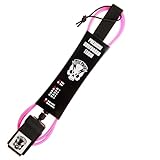
Overview:
The GNAR Premium Surfboard Leash positions itself as a budget-conscious yet feature-rich option for surfers unwilling to compromise on safety essentials. With its distinctive pink colorway and eight-foot length, this leash targets style-conscious riders seeking reliable performance across various conditions and board types, from funboards to mid-lengths.
What Makes It Stand Out:
The quick-release cuff system provides immediate detachment capability, a safety feature often omitted in this price bracket. A double-reinforced rail saver distributes stress more effectively than standard single-ply designs, reducing board damage risk. The heavy-duty urethane cord paired with stainless steel swivels delivers durability typically associated with pricier alternatives.
Value for Money:
Priced at $28.95, the GNAR leash competes directly with value leaders while incorporating premium touches like quick-release functionality and dual rail-saver reinforcement. For surfers prioritizing safety features over brand prestige, this represents a compelling proposition that doesn’t cut corners on critical components.
Strengths and Weaknesses:
Strengths include the safety-focused quick-release cuff, reinforced rail protection, durable urethane construction, competitive pricing, and eye-catching aesthetic options. Weaknesses are the limited size information (primarily marketed as 8ft), unknown long-term brand reputation, and potentially less refined cuff ergonomics compared to premium competitors.
Bottom Line:
An excellent choice for budget-minded surfers who refuse to skimp on safety features. The quick-release system and reinforced rail saver make it particularly attractive for beginners and intermediates, though sizing limitations may restrict its appeal for shortboard specialists.
4. FCS 6’ All Round Essential Surfboard Leash -Code Red (Code Red, 6ft0)

Overview:
The FCS 6’ All Round Essential Surfboard Leash from the Code Red collection represents FCS’s commitment to versatile, high-performance equipment for dedicated surfers. With a substantial 7mm cord diameter and wave rating spanning two to eight feet, this leash transitions seamlessly from everyday sessions to more demanding conditions, embodying the “all-round” designation.
What Makes It Stand Out:
Drawing inspiration from the revolutionary Freedom Leash, this model balances lightweight construction with robust durability. The Code Red aesthetic signals a mindset shift—this isn’t just equipment, it’s a commitment to pushing boundaries. The increased cord thickness over competition models provides confidence in heavier surf while maintaining enough flexibility to prevent slingshot recoil.
Value for Money:
At $48, this is the premium offering in the essential series, reflecting its expanded performance envelope. While significantly more expensive than budget brands, the FCS pedigree, versatile wave range, and 7mm cord durability justify the investment for surfers who regularly face variable conditions. It’s essentially two leashes in one—competition-light for small days, and substantial enough for overhead surf.
Strengths and Weaknesses:
Strengths include the impressive 2-8ft wave versatility, durable 7mm cord, premium brand reliability, comfortable cuff design, and the psychological boost of the Code Red branding. Weaknesses center on the premium pricing that may exceed beginner budgets, and the thicker cord adds minimal drag that pure competition surfers might notice.
Bottom Line:
The ideal single-leash solution for intermediate-to-advanced surfers tackling varied conditions. If you want one leash that handles both grovelers and overhead sets without compromise, the Code Red justifies its premium price through genuine versatility.
5. FCS Competition Classic Surfboard Leash (Tranquil Blue/Black, 6’)

Overview:
The FCS Competition Classic Surfboard Leash delivers the brand’s competition DNA at an accessible price point, making premium features available to budget-conscious surfers. With its 5.5mm engineered polyurethane cord and smooth-rotating swivel assembly, this leash focuses on reliable performance in smaller surf conditions up to four feet.
What Makes It Stand Out:
The combination of stainless steel and brass swivels provides corrosion resistance and smooth rotation that outlasts all-plastic alternatives—a detail that reflects FCS’s engineering heritage. The smooth rotating nylon cuff and rail saver assembly work in concert to minimize tangling, while the competition designation ensures the design prioritizes low drag and minimal interference during progressive maneuvers.
Value for Money:
At $34, this is the most affordable entry into FCS’s competition leash lineup, offering brand credibility and proven component quality at a price that competes with generic alternatives. For beginners seeking their first quality leash or experienced surfers needing a reliable backup, it delivers FCS engineering without the typical premium markup.
Strengths and Weaknesses:
Strengths include the trusted FCS brand reputation, quality metal swivel hardware, competition-proven design, lightweight 5.5mm cord reducing drag, and attractive price point. Weaknesses are the restrictive 0-4ft wave range unsuitable for larger conditions, thinner cord compromising durability, basic feature set without modern innovations like silicone grips, and limited color options.
Bottom Line:
Perfect for beginners learning in small waves or as a dependable backup for experienced surfers. While it lacks the advanced features of pricier models, the FCS Competition Classic provides reliable brand-quality performance where it matters most.
6. FCS Regular Classic Surfboard Leash – Durable 7mm Cord, Neoprene Strap, Anti-Tangle Swivel – Everyday Surf Leash for 2–8ft Waves (Eclipse/Black, 6’)
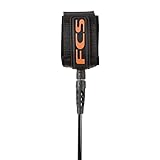
Overview:
The FCS Regular Classic Surfboard Leash is a dependable everyday companion for surfers tackling 2-8ft waves. Featuring a robust 7mm engineered PU cord, this leash balances strength and flexibility for daily sessions. The 6-foot length suits a variety of board sizes, while the Eclipse/Black colorway offers understated style that complements any board.
What Makes It Stand Out:
The premium stainless steel and brass swivel assembly is a key differentiator, effectively preventing tangles that can compromise safety. The comfortable neoprene ankle strap minimizes irritation during marathon sessions, and the leash’s versatility across multiple conditions makes it a true workhorse. Available in various lengths and colors, it adapts to individual preferences while maintaining consistent performance.
Value for Money:
At $36, this leash hits the sweet spot between budget and premium options. It delivers FCS reliability without breaking the bank, outperforming generic brands while remaining accessible to intermediate surfers. The durability ensures you won’t replace it mid-season, making it a smart long-term investment for regular wave riders.
Strengths and Weaknesses:
Strengths include excellent anti-tangle performance, comfortable extended-wear design, and versatile wave range. The 7mm cord provides reassuring strength for most conditions. Weaknesses include limited suitability for heavy overhead surf beyond 8ft, where thicker cords are advisable. The basic features may not satisfy surfers seeking cutting-edge technology like silicone grips or quick-release tabs.
Bottom Line:
This leash is ideal for regular surfers needing reliable, no-fuss performance in everyday conditions. It offers professional-grade basics at a fair price, making it a solid choice for those who value durability and simplicity over premium features.
7. Dakine KAINUI Leash 9FT X 5/16IN T2 Black/OSFM

Overview:
The Dakine KAINUI Leash is built for serious surf when consequences matter. Designed for 8-15ft double to triple overhead waves, this 9-foot leash features an ultra-thick 8mm urethane Dura-Cord that provides maximum strength when you need it most. It’s the heavy-duty option for experienced big wave riders who refuse to compromise on safety.
What Makes It Stand Out:
The 8mm cord thickness stands out as significantly beefier than standard leashes, offering peace of mind in critical situations. Dakine’s Opti-Flex molded urethane leash ends enhance durability at stress points, while the 2-inch molded neoprene cuff delivers comfort despite the leash’s rugged build. The detachable railsaver adds versatility for different board setups.
Value for Money:
At $43, this leash offers exceptional value for big wave equipment. The price is remarkably reasonable for the level of durability and specialized design, making it accessible to chargers who need reliable gear without premium brand markup. It’s an insurance policy that won’t empty your wallet.
Strengths and Weaknesses:
Strengths include extreme durability, superior cord thickness for heavy conditions, comfortable wide cuff, and trusted Dakine construction. The dedicated big-wave design inspires confidence. Weaknesses include unnecessary weight and bulk for everyday small-wave surfing, and the length may create excessive drag on shorter boards. It’s simply overkill for casual beach breaks.
Bottom Line:
If you’re charging heavy waves, this is your leash. For casual surfers, it’s overkill. Choose based on your actual surf conditions—this tool is specifically engineered for those who paddle out when most are heading in.
8. FCS 7’ All Round Essential Surfboard Leash - Eclipse | Lightweight & Durable 7ft Surf Leash for 2-8ft Waves, in-Cuff Silicone Grip, Comfortable and Supportive Ankle Strap, Easy-Release Tab

Overview:
The FCS 7’ All Round Essential Surfboard Leash represents the brand’s latest evolution in leash technology. Designed for 2-8ft waves, this premium leash incorporates features from the revolutionary Freedom Leash into a more accessible package. The 7mm cord provides reliable strength while the streamlined design reduces drag for unencumbered performance.
What Makes It Stand Out:
The in-cuff silicone grip is a game-changer, preventing ankle twisting during critical moments. The quick-release Hypalon pull tab offers safety benefits, especially in heavy hold-downs or when detaching with cold hands. Its lightweight construction doesn’t compromise durability, making it feel almost invisible during use while providing maximum security.
Value for Money:
At $50, this leash commands a premium price but delivers corresponding value. The advanced features justify the cost for dedicated surfers who prioritize performance and safety. It bridges the gap between basic leashes and the top-tier Freedom Leash, offering modern innovation without the absolute highest price point.
Strengths and Weaknesses:
Strengths include innovative anti-twist silicone grip, easy-release tab for safety, comfortable supportive cuff, and tangle-resistant design. The versatility across wave conditions is excellent. Weaknesses include the higher price point that may deter casual surfers, and some may find the cuff slightly bulkier than minimalist options. The premium features might be unnecessary for beginners.
Bottom Line:
This leash suits intermediate to advanced surfers who want modern features and maximum safety. The investment pays dividends in comfort and performance, making it worth the premium for those who surf regularly and demand the latest technology.
9. FCS 6’ All Round Essential Surfboard Leash - Black | Lightweight & Durable 6ft Surf Leash for 2-8ft Waves, in-Cuff Silicone Grip, Comfortable and Supportive Ankle Strap, Easy-Release Tab

Overview:
The FCS 6’ All Round Essential Leash packs the same advanced technology as its 7-foot sibling into a more compact package ideal for shortboards. Built for 2-8ft waves, this leash features the same 7mm cord and innovative in-cuff silicone grip that prevents twisting during aggressive maneuvers. The streamlined design reduces drag without sacrificing strength.
What Makes It Stand Out:
Developed with leading surf athletes and shapers, this leash benefits from professional input. The extended overmould reduces tangles, while the extra-strength moulded Velcro ensures secure attachment even in heavy wipeouts. The contoured horn conforms naturally to the ankle, enhancing comfort during long sessions and critical turns.
Value for Money:
At $48, it’s slightly less expensive than the 7-foot version while offering identical features. For shortboard riders, this represents excellent value, eliminating unnecessary length and drag without compromising on the premium features that define the Essential series. You get flagship technology in an optimized size.
Strengths and Weaknesses:
Strengths include anti-twist silicone grip, athlete-tested design, reduced drag from shorter length, and secure Velcro system. The comfortable contoured cuff is ideal for performance surfing. Weaknesses include limited compatibility with longer boards that require more leash length, and the premium price may exceed budget-conscious buyers’ limits. It’s specifically designed for shortboards.
Bottom Line:
Perfect for shortboard enthusiasts who want high-end features without excess length. It performs flawlessly in critical moments, making it the go-to choice for progressive surfers riding boards under 6'6" who demand both security and minimal interference.
10. Classic Competition Leash by FCS

Overview:
The Classic Competition Leash by FCS is a streamlined option designed for smaller waves and high-performance surfing. With a slim 5.5mm cord and lightweight construction, this leash minimizes drag for surfers who prioritize speed and responsiveness. It’s engineered for wave heights up to 4ft, making it ideal for contest conditions or summer beach sessions.
What Makes It Stand Out:
The competition-focused design emphasizes minimalism without sacrificing essential functionality. The smooth rotating cuff and rail saver swivel assembly, featuring stainless steel and brass components, provide reliable anti-tangle performance. The thinner cord reduces drag significantly, allowing for unrestricted movement on the wave face and quicker board response.
Value for Money:
At $34, this is FCS’s most accessible leash, offering brand reliability at entry-level pricing. It’s perfect for beginners, groms, or experienced surfers needing a dedicated small-wave leash without investing in heavier, more expensive options. The affordability makes it easy to keep a spare in your bag.
Strengths and Weaknesses:
Strengths include ultra-lightweight design, minimal drag for performance surfing, reliable swivels, and affordable price point. The FCS quality assurance ensures decent durability for its class. Weaknesses include limited wave height suitability—it’s not safe for overhead surf. The thinner cord sacrifices overall strength and longevity compared to thicker options, requiring more frequent replacement.
Bottom Line:
This leash excels in its intended environment: small waves and competition settings. Don’t push it beyond 4ft, and it will serve you well. It’s a specialized tool that performs brilliantly within its limits, making it ideal for progressive surfing in mellow conditions.
What Defines a Performance Surfboard Leash in 2026?
Performance leashes have transcended their utilitarian origins to become specialized competitive tools. The modern iteration represents thousands of hours of R&D focused on solving specific competition scenarios—whether that’s maintaining neutrality during a 540 air or preventing catastrophic tangles in a churning Pipeline barrel.
The Evolution from Casual to Competition-Grade
Recreational leashes prioritize durability and cost-effectiveness, often using thicker urethane and basic swivel designs that suffice for weekend warriors. Competition-grade models, conversely, engineer every component for minimal interference. The urethane compound itself undergoes different curing processes to achieve specific elongation properties, allowing the cord to stretch and recoil with less energy loss. This means when you kick out of a wave, the leash returns to neutral faster, reducing the “slingback” effect that can throw off your board’s positioning.
Key Performance Metrics That Matter
Judges don’t score your leash, but its performance directly influences what they see. The critical metrics include elongation percentage (how much the cord stretches under load), recoil speed (how quickly it returns to original length), and hydrodynamic coefficient (drag created during high-speed movements). Elite leashes in 2026 typically achieve 25-30% elongation at 50% break strength, recoil in under 0.3 seconds, and generate 40% less drag than standard models through textured cord surfaces and strategic diameter tapering.
Understanding Leash Anatomy: Components That Make or Break Performance
Dissecting a leash reveals why premium models command higher price points. Each component serves a distinct function, and weak links in any area compromise the entire system.
The Cord: Urethane Technology and Density
The cord’s urethane formulation determines everything from stretch to memory retention. 2026’s top-tier leashes utilize multi-density extrusion, where the core maintains higher tensile strength while the outer layer prioritizes flexibility. This dual-property approach prevents the “noodling” effect seen in cheaper leashes that lose their shape after repeated stretching. Look for cords with Shore Hardness ratings between 85A-90A for competition use—soft enough for elasticity, firm enough for rapid recoil.
Cuff Engineering: Comfort Meets Security
The cuff-to-body connection represents a critical failure point. Modern competition cuffs employ anatomically molded neoprene with internal skeletal structures—thin layers of flexible polymer that distribute load across a wider surface area. This prevents the “tourniquet effect” during heavy wipeouts while maintaining a low-profile fit that won’t rotate on your ankle during critical turns. The closure system matters equally; micro-adjustable Velcro patterns with directional hooks prevent slippage even when waterlogged.
Swivel Systems: Preventing Tangles at Critical Moments
Double-swivel configurations have become non-negotiable for competition, but 2026’s innovation lies in bearing quality. Stainless steel sealed bearings with ceramic ball inserts maintain rotation under salt and sand load—traditional swivels often seize mid-heat, creating dangerous coil memory. The best designs position swivels at both cuff and rail saver connections, with the cuff swivel handling rotational forces from body movement while the rail swivel manages board torsion.
Rail Savers: Protecting Your Board Investment
A leash is useless if it destroys your board’s tail. Competition rail savers have evolved from simple nylon straps to multi-layered systems incorporating TPU reinforcement and progressive release tabs. The key is width-to-thickness ratio: too narrow concentrates force, too wide creates unnecessary drag. The sweet spot for shortboards sits around 25mm width with tapered edges that blend into the cord seamlessly.
Length and Thickness: The Competition Balancing Act
Selecting length and thickness requires understanding the trade-off between safety, drag, and board behavior. This decision varies significantly based on wave type and board design.
Why Shorter Isn’t Always Better in Big Waves
The conventional wisdom of “shorter leash = less drag” collapses in heavy conditions. At waves of consequence, a leash that’s too short prevents your board from clearing the impact zone during a wipeout, increasing the likelihood of the board snapping back and striking you. Competition leashes for heavy water typically run 6-8 inches longer than the board, providing enough distance for safe separation without creating excessive slack.
The Diameter Debate: Thin vs. Thick for Performance
Cord diameter directly correlates with drag and strength. Competition leashes for small-to-medium waves (under 6 feet) now favor 5mm-5.5mm cords, which create minimal water resistance during high-speed maneuvers. For heavy water, 7mm-7.5mm remains standard, but new tapering technology reduces the middle section to 6mm while maintaining 7.5mm at stress points. This hybrid approach cuts drag by 15% without sacrificing break strength.
Competition-Specific Features for 2026
Manufacturers now engineer features addressing scenarios unique to competitive surfing—where split-second advantages and safety protocols intersect.
Quick-Release Mechanisms for Safety
The 2026 competitive circuit mandates quick-release cuffs for events at waves like Teahupo’o and Pipeline. These mechanisms use magnetic or mechanical pins that disengage with a firm pull on a designated tab, allowing surfers to ditch their board in life-threatening situations. The challenge lies in preventing accidental release during normal wipeouts; top designs require 15-20 pounds of directed force, ensuring they only activate during intentional emergency pulls.
Minimal Drag Designs for Speed
Hydrodynamic testing has revealed that cord texture significantly impacts drag. 2026’s performance leashes feature micro-ridged surfaces that create turbulent boundary layers, actually reducing overall drag compared to smooth cords. This principle, borrowed from golf ball aerodynamics, helps the leash cut through water during high-speed bottom turns and aerial rotations.
UV and Saltwater Resistance Standards
Competition leashes face 8-10 hour daily exposure in tropical conditions. Premium models now undergo accelerated UV testing equivalent to 500+ hours of direct sunlight without degradation. The urethane incorporates UV inhibitors and anti-ozone compounds, while hardware receives PVD coating rather than basic chrome plating, preventing the galvanic corrosion that plagues standard leashes.
Wave Type and Board Pairing Strategies
One leash doesn’t rule all conditions. Smart competitors build a quiver of leashes matched to specific board and wave combinations.
Small Wave Performance Leash Characteristics
For 1-4 foot beach breaks where aerials dominate, prioritize minimalism. A 5mm cord, 5'6" length for a standard shortboard, and ultra-light cuff reduce swing weight during rotations. The cuff should sit slightly higher on the calf to prevent drag in the water during prone paddling, with a single-wrap Velcro design for the lowest profile.
Step-Up Leashes for Heavy Conditions
When boards exceed 6'6" and waves pack real power, leash dynamics shift dramatically. The cord needs 7mm+ thickness, but more importantly, requires progressive stretch characteristics—softer initial elongation to absorb shock, then rapid stiffening to prevent over-extension. Cuffs widen to 2.5" with dual-wrap security, and rail savers integrate Kevlar stitching for enhanced tear resistance.
Specialty Leashes for Step-Off and Tow-In
These niche applications demand unique specifications. Tow-in leashes feature 10mm+ cords with internal Spectra cores, handling forces exceeding 500 pounds. The cuff attaches to a waist belt rather than the ankle, preventing dangerous board-to-head contact during high-speed wipeouts. For step-off entries at slabs, quick-release systems become mandatory, with some models incorporating CO2-powered release mechanisms for absolute reliability.
Material Innovations Shaping 2026’s Market
Sustainability and performance now intersect in leash manufacturing, driven by competitive surfers demanding eco-conscious options without compromise.
Bio-Based Urethanes and Sustainability
Leading manufacturers have replaced 40-60% of petroleum-based urethane with bio-derived alternatives sourced from castor oil and algae. These compounds match petroleum performance while reducing carbon footprint. The critical advancement is maintaining consistent elongation properties—early bio-leashes suffered from variable stretch, but 2026 formulations achieve <2% performance variance from conventional urethane.
Anti-Coil Memory Technology
Nothing kills performance like a leash that won’t uncoil. New manufacturing processes involve post-extrusion annealing, where cords are heat-treated and slowly cooled to relieve internal stresses. This eliminates the “factory coil” and prevents memory formation even after repeated stretch cycles. Some premium models also incorporate internal nylon filaments that maintain linearity without adding stiffness.
Reinforced Connection Points
The leash-cuff and leash-rail saver junctions experience 70% of all failures. 2026’s solution involves molded-in connectors where the urethane encapsulates the swivel body during manufacturing, creating a mechanical bond stronger than traditional crimping. This eliminates the stress risers that cause classic “ball-and-socket” failures.
The Safety-Performance Paradox
Here’s where many competitors get it wrong: the strongest leash isn’t always the best choice. Understanding failure modes is as important as preventing them.
When Stronger Isn’t Smarter
A leash that refuses to break can become a liability. In heavy waves, a board held by an overly strong leash can become a projectile, causing more injury than if it had released. Competition leashes are engineered with “controlled failure points”—areas designed to fail at specific loads, typically 150-200% of the surfer’s body weight. This prevents catastrophic injury while protecting the board in most scenarios.
Breakaway Strength vs. Board Protection
The ideal leash keeps your board safe in 95% of wipeouts but fails before causing joint damage or board breakage. This balance requires understanding your local break’s power. For reef breaks where boards can be destroyed on impact, slightly higher break strength makes sense. For beach breaks with softer landings, prioritize your body’s safety over absolute board retention.
Maintenance Protocols for Competition Reliability
A $60 performance leash becomes worthless without proper care. Elite competitors treat leash maintenance with the same seriousness as ding repair.
Pre-Heat Inspection Checklist
Before every heat, run through this 30-second check: Pull-test the cord for soft spots or delamination, rotate swivels to verify smooth operation, inspect Velcro hooks for debris, and check rail saver stitching for wear. The cuff should show no cracking around stress points. This ritual prevents mid-heat failures that could cost you a jersey.
Post-Session Care for Longevity
Salt crystals are urethane’s enemy. After each session, rinse the entire leash with fresh water, paying special attention to swivels. Stretch the cord fully and hang vertically to dry—this prevents coil memory from setting. Store leashes loosely coiled in a cool, dark place; UV exposure from garage windows degrades urethane over time. Rotate between two leashes in competition to allow complete drying and stress recovery.
Making Your Final Decision: A Competitor’s Framework
Choosing your 2026 performance leash requires honest assessment of your competitive goals, typical conditions, and risk tolerance. Start by categorizing your primary break’s power and your most-used board length. Match cord diameter to wave size first, then refine based on maneuver style—air-focused surfers might accept slightly higher break risk for reduced drag. Test multiple models in practice sessions before committing to competition use; a leash that feels perfect on land might behave differently under load. Finally, build a two-leash rotation: one optimized for your home break, one versatile enough for travel events. This approach ensures you’re never compromising performance or safety when it matters most.
Frequently Asked Questions
How often should I replace a competition-grade leash?
Even with perfect care, replace any leash showing cord whitening (indicating urethane degradation), swivel stiffness, or Velcro fraying. For regular competitors, annual replacement is standard, though heavy water specialists may need new leashes every 6-8 months due to extreme stress cycles.
Does leash color affect performance?
Darker colors absorb more UV radiation and degrade faster in tropical conditions. Opt for light colors or clear urethane for maximum lifespan. The performance difference is negligible, but longevity varies by 20-30% based on color.
Can I use the same leash for all board types in my quiver?
While possible, it’s not optimal. A leash matched to your 5'10" daily driver will be too short for a 6'6" step-up and too long for a 5'4" fish. The 6-inch length difference changes board behavior significantly in critical sections.
What’s the ideal cuff placement for performance?
Position the cuff 2-3 inches above your ankle bone for shortboards, allowing freedom of movement. For guns and step-ups, wear it lower for added security during violent wipeouts. Never wear it over wetsuit seams—that creates pressure points and slip risk.
Are double-swivel leashes worth the extra cost?
Unequivocally yes for competition. The second swivel prevents 90% of tangles that can cost you a wave or create dangerous situations. The $15-20 premium pays for itself in avoided interference calls and equipment damage.
How do I know if my leash is too thick?
If you feel noticeable drag during cutbacks or the leash visibly slows your board’s rotation during aerials, you’re overspec’d. In clean conditions under 6 feet, most surfers can safely use 5mm cords regardless of skill level.
What’s the deal with leash strings? Should I upgrade them?
Standard nylon leash strings are failure points. Upgrade to Spectra or Dyneema cord with a breaking strength over 500 pounds. Keep them as short as possible—2-3 inches max—to reduce rail saver leverage on your board’s tail.
Can I repair a leash with a small nick in the cord?
No. Urethane’s molecular structure means any cut compromises the entire cord’s integrity. A repaired leash might hold in small surf but will fail unpredictably under competition loads. Replace immediately.
Do pro surfers actually use the same leashes available to consumers?
Mostly yes, though some have custom lengths or prototype materials. The key difference is their leash quiver—pros might travel with 5-6 different models, each dialed for specific waves. They also replace gear far more frequently than recreational surfers.
How does water temperature affect leash performance?
Cold water makes urethane stiffer and more brittle, increasing break risk. In water below 55°F, consider stepping up 0.5mm in diameter to compensate. Warm water has the opposite effect, making leashes stretchier—shorten your length by 3-4 inches in tropical conditions to maintain board control.