If you’re still storing dumbbells under your bed or stacking them precariously in a corner, you’re not just wasting precious square footage—you’re sabotaging your workout flow before you even start your first set. The home gym revolution has evolved far beyond tossing equipment in a spare room. In 2026, spatial intelligence is the ultimate luxury, and vertical dumbbell racks have emerged as the architectural backbone of efficient strength training spaces. These aren’t your grandfather’s wobbly weight trees; today’s designs marry aerospace-grade engineering with biomechanical precision, transforming chaotic clutter into a vertical arsenal that demands less floor space than a yoga mat.
But here’s the thing: not all vertical racks are created equal. A rack that looks sleek in a product render can become a daily frustration if the tier spacing fights your grip width, or if the base design scratches your premium flooring. The difference between a rack that serves you for a decade and one that ends up on the curb often comes down to details manufacturers don’t splash across their marketing headlines. Let’s decode what actually matters when you’re investing in vertical storage that works as hard as you do.
Top 10 Vertical Dumbbell Racks for Space-Saving
Detailed Product Reviews
1. CAP Barbell A-Frame Dumbbell Weight Rack, Carbon

Overview: The CAP Barbell A-Frame Rack offers a budget-friendly storage solution for light dumbbells in home gyms. Designed specifically for CAP hex or rubber hex dumbbells from 5-25 pounds (with some flexibility up to 35-pound pairs), this rack maximizes vertical space with its classic A-frame silhouette. Weighing just 10.5 pounds, it’s easy to move and position, making it ideal for beginners or those with limited space.
What Makes It Stand Out: Its sub-$30 price point is remarkable for a steel-constructed rack from a brand with three decades of fitness industry experience. The carbon finish provides a clean, modern aesthetic that blends into most home environments. The vertical storage design saves substantial floor space compared to horizontal alternatives, while the powder-coated steel construction ensures durability despite its lightweight frame.
Value for Money: At $26.99, this is one of the most affordable dumbbell racks available. However, the 200-pound capacity limitation and 30-day warranty reflect its entry-level positioning. It’s best suited for users with light to moderate weight collections rather than serious lifters. The rack-only package means no extras, but the price makes it accessible for budget-conscious buyers starting their home gym journey.
Strengths and Weaknesses: Pros include exceptional affordability, space-saving vertical design, lightweight portability, and trusted brand reputation. The powder-coated steel construction is surprisingly robust for the price. Cons are significant: limited 200-pound capacity restricts future weight progression, some dumbbell combinations won’t fit properly, the short 30-day warranty offers minimal protection, and it’s restricted primarily to CAP brand hex dumbbells.
Bottom Line: Perfect for fitness beginners or those with limited space and light dumbbells under 25 pounds. The CAP A-Frame Rack delivers basic functionality at an unbeatable price, but serious lifters will quickly outgrow its capacity limitations. Consider this a starter rack with an expiration date as your strength increases.
2. WeGym Dumbbell Racks, Space Saving Solution, Sturdy Cast Iron, Home Workout Storage, Heavy Weights Bearing, Home Strength Training

Overview: The WeGym vertical tower rack positions itself as a premium storage solution for serious home gym enthusiasts. Constructed from sturdy cast iron with a sleek vertical configuration, this rack is engineered for heavy weight bearing while maintaining a compact footprint. The design prioritizes both functionality and safety, incorporating features that protect both equipment and flooring in dedicated workout spaces.
What Makes It Stand Out: Anti-tip stability is the headline feature, with a wide base and multiple support joints preventing dangerous wobbling or collapse. The PVC sleeves provide thoughtful protection for dumbbell handles and prevent slippage during storage. Rubber feet safeguard floors from scratches and damage, a crucial detail for renters or those with finished flooring. The vertical tower design maximizes space efficiency while adding a modern aesthetic.
Value for Money: At $149.99, this rack commands a premium price but delivers corresponding quality. The cast iron construction and stability features justify the cost compared to basic steel tube racks. For users with substantial weight collections or expensive dumbbells, the protective features and anti-tip design offer peace of mind that cheaper alternatives cannot match. It’s an investment in safety and equipment longevity.
Strengths and Weaknesses: Pros include superior stability with anti-tip design, protective PVC sleeves and rubber feet, heavy-duty cast iron construction, and excellent space optimization. The rack accommodates heavier weights than budget options. Cons are the high price point, heavier weight making it less portable, and potential over-engineering for users with only light dumbbells. The premium cost may not suit casual fitness enthusiasts.
Bottom Line: Ideal for dedicated home gym owners with significant weight investments who prioritize safety and equipment protection. The WeGym rack’s premium features and rock-solid stability make it worth the price for serious lifters, though beginners may find it unnecessarily expensive for their needs.
3. CAP Barbell Dumbbell storage Rack - Black

Overview: This upgraded CAP Barbell rack builds upon their entry-level model with enhanced capacity and stability. Designed to hold six pairs of CAP hex or rubber hex dumbbells ranging from 5-30 pounds (with some 35-pound pair flexibility), it supports 210 pounds total. Weighing approximately 45 pounds, the black powder-coated steel construction provides a more substantial feel than its lighter counterpart, making it suitable for intermediate home gym setups.
What Makes It Stand Out: The increased capacity and additional storage tier differentiate it from CAP’s budget model, accommodating six pairs instead of five. The heavier 45-pound weight enhances stability when loaded, reducing wobble during dumbbell retrieval. Maintaining the space-saving A-frame design, it offers the same trusted brand reliability with expanded functionality for growing weight collections.
Value for Money: Priced at $79.60, this rack occupies a middle ground between budget and premium options. The $50 premium over the carbon model buys increased capacity and sturdier construction. While still limited by a 30-day warranty, the additional storage slot and 10-pound capacity increase provide meaningful value for users outgrowing lighter racks. It’s a logical step-up for progressing lifters.
Strengths and Weaknesses: Pros include higher 210-pound capacity, six-pair storage (one more than the cheaper model), significantly improved stability from heavier construction, and CAP’s reputable brand heritage. The A-frame design remains space-efficient. Cons persist: the 30-day warranty is still inadequate, maximum individual pair weight remains limited to 35 pounds, and some combinations won’t fit properly. The 45-pound weight reduces portability.
Bottom Line: A solid mid-tier choice for intermediate lifters whose collections are expanding beyond entry-level racks. The CAP Black Rack offers good capacity and improved stability, but serious strength trainers will still find its 35-pound-per-pair limitation restrictive. Best for users committed to moderate weight ranges.
4. WeGym Dumbbell Racks, Space Saving Solution, Sturdy Cast Iron, Home Workout Storage, Heavy Weights Bearing, Home Strength Training

Overview: The WeGym vertical tower rack delivers a premium storage solution for dedicated home gym enthusiasts seeking maximum stability. Constructed from sturdy cast iron with a sleek vertical configuration, this rack handles heavy weight bearing while occupying minimal floor space. Engineered with safety as a priority, it incorporates protective features that safeguard both valuable dumbbells and flooring in permanent workout areas.
What Makes It Stand Out: The comprehensive anti-tip stability system, featuring a wide base and multiple support joints, sets this rack apart from conventional designs. PVC sleeves protect dumbbell finishes and prevent dangerous slippage, while rubber feet eliminate floor damage concerns. The vertical tower configuration provides exceptional space efficiency without compromising accessibility, making it ideal for compact yet serious training spaces.
Value for Money: At $149.99, this represents a significant investment in equipment storage. The cast iron construction and multi-layered safety features justify the premium over economy racks. For athletes with substantial weight collections or high-end dumbbells, the protective elements and stability provide insurance against equipment damage and personal injury. The cost is justified for committed home gym owners.
Strengths and Weaknesses: Pros include outstanding anti-tip stability, protective PVC sleeves and rubber flooring guards, robust cast iron build quality, and superior space optimization. The design accommodates heavier weight collections safely. Cons are the premium pricing, substantial weight reducing mobility, and potential over-specification for casual users. The investment may exceed requirements for basic home fitness needs.
Bottom Line: Perfect for serious home gym owners who prioritize safety and equipment protection above all. The WeGym rack’s premium construction and stability features make it worth the investment for dedicated lifters, though beginners and casual users will find more economical options sufficient for their needs.
5. YOLEO Heavy-Duty A-Frame Dumbbell Rack with Wheels, 5-Tier Weight Rack, 440LBS Capacity, Space-Saving Home Gym Storage Organizer, Anti-Slip & Finger-Safe Design (Rack Only)

Overview: The YOLEO A-Frame Rack revolutionizes home gym storage with industrial-strength capacity and unprecedented mobility. Supporting up to 440 pounds across five tiers, this rack accommodates serious weight collections while maintaining a remarkably compact 12.5" x 10.6" footprint. Weighing only 11 pounds despite 2mm thick reinforced steel construction, it features 360° silent wheels with locking brakes for effortless repositioning.
What Makes It Stand Out: The combination of massive 440-pound capacity and mobility is unmatched in this price range. Patent-pending A-frame design with finger-safe engineering prevents painful pinching during use. Tool-free assembly completes in 15 minutes via an innovative interlocking system. The lifetime “Zero Hassle” warranty represents industry-leading customer protection, while PU-coated casters glide smoothly across any flooring without noise or damage.
Value for Money: At $59.99, this rack delivers extraordinary value. The 440-pound capacity rivals commercial equipment, while wheels and lifetime warranty exceed expectations for sub-$60 pricing. Compared to $150+ alternatives, YOLEO offers superior capacity, mobility, and warranty coverage. The only compromise is brand recognition versus established names like CAP or WeGym.
Strengths and Weaknesses: Pros include exceptional 440-pound capacity, mobile design with locking wheels, lifetime warranty, tool-free 15-minute assembly, compact footprint, finger-safe design, and commercial-grade stability. The price is remarkably competitive. Cons are limited brand history compared to 30-year veterans, potential wheel maintenance over time, and the vertical height may not suit all ceiling clearances.
Bottom Line: The YOLEO rack is the clear winner for value-conscious serious lifters. Unbeatable capacity, mobility, and lifetime warranty at a mid-range price make it a no-brainer for home gym owners who want commercial features without the premium cost. This is arguably the best dumbbell rack value on the market.
6. WeGym Dumbbell Racks, Space Saving Solution, Sturdy Cast Iron, Home Workout Storage, Heavy Weights Bearing, Home Strength Training

Overview: The WeGym Dumbbell Rack presents a vertical tower solution designed for home fitness enthusiasts prioritizing floor space. Constructed from sturdy cast iron with protective PVC sleeves, this rack accommodates various dumbbell types while maintaining a small footprint. Its design targets users with compact workout areas who refuse to compromise on safety or organization.
What Makes It Stand Out: The anti-tip stability system distinguishes this rack, featuring a wide base and multiple support joints that create exceptional balance. Unlike basic stands, the PVC sleeves protect both your dumbbells and the rack from wear, while rubber feet prevent floor damage. The vertical orientation maximizes storage density without sacrificing accessibility, making it ideal for apartments or multi-purpose rooms.
Value for Money: At $79.99, this rack sits in the sweet spot between flimsy budget options and overpriced commercial equipment. The cast iron construction ensures longevity that cheaper steel-wire alternatives can’t match. For home users storing moderate weight collections, this investment prevents costly floor repairs and eliminates the need for multiple storage solutions, delivering solid ROI.
Strengths and Weaknesses: Strengths include superior stability engineering, floor protection features, and space-efficient vertical design. The PVC sleeves demonstrate thoughtful durability considerations. Weaknesses center on unspecified weight capacity and limited capacity for larger dumbbell collections. The tower format may feel top-heavy when fully loaded with heavier weights.
Bottom Line: This rack excels for serious home trainers with space constraints. If you own quality dumbbells and want a storage solution that matches their durability while protecting your floors, the WeGym rack deserves consideration. Avoid if you need storage for more than 6-8 pairs or extremely heavy dumbbells.
7. Marcy 6-Tier Durable and Ultra-Lightweight Wire Frame Minimalist Dumbbell Rack with Bottle Holder DBR-8352

Overview: Marcy’s DBR-8352 offers a minimalist wire-frame approach to dumbbell organization at an entry-level price point. This six-tier stand emphasizes lightweight portability while providing dedicated storage for smaller dumbbell collections. The integrated bottle holder adds functional convenience for streamlined workout sessions.
What Makes It Stand Out: The ultra-lightweight construction makes repositioning effortless, while the six-tier design maximizes vertical storage for compact spaces. Rubber end caps provide floor protection rarely seen in this price bracket. The minimalist aesthetic blends seamlessly into modern home gyms without visual bulk.
Value for Money: At $58.90, this represents exceptional affordability for users with modest needs. However, the 210-pound capacity limits long-term growth, and wire frame construction can’t match solid steel durability. It’s ideal for beginners or those with vinyl-coated dumbbells under 25 pounds, but serious lifters will quickly outgrow its capabilities.
Strengths and Weaknesses: Strengths include unbeatable price, lightweight maneuverability, and thoughtful floor protection. The bottle holder is a practical bonus. Weaknesses are significant: wire frames may bend under concentrated weight, capacity limitations restrict future expansion, and the open design offers less stability than closed-frame alternatives. Assembly can be frustrating with wire components.
Bottom Line: Perfect for beginners, apartment dwellers, or those with lightweight dumbbell sets. The Marcy rack solves basic storage needs without breaking the bank. Upgrade to a heavy-duty option if you own cast iron dumbbells over 30 pounds or plan to expand your collection. For under $60, it delivers exactly what it promises—nothing more.
8. Fitvids Dumbbell Rack Multifunctional Weight Stand for Home Gym, Vertical
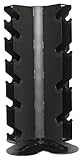
Overview: The Fitvids Vertical Rack targets serious home gym owners with its innovative spinning design and commercial-grade capacity. Engineered to hold ten pairs of hex dumbbells up to 1,000 pounds, this steel behemoth transforms storage into a functional gym centerpiece. The rotating access system redefines convenience in compact spaces.
What Makes It Stand Out: The spinnable vertical tower is genuinely innovative—access any dumbbell with a finger touch rotation. Ground mounting anchors provide uncompromising stability despite the towering height. The 40-inch length accommodates full dumbbell sets from 5 to 50+ pounds, making it one of the most space-efficient high-capacity solutions available.
Value for Money: At $299.99, this is a premium investment, but the math works for dedicated lifters. Commercial racks with similar capacity exceed $400 and occupy triple the floor space. The steel construction ensures lifetime durability, and the spinning mechanism eliminates the daily frustration of reaching for weights in traditional racks.
Strengths and Weaknesses: Strengths include unmatched 1,000-pound capacity, revolutionary spinning access, and rock-solid stability when mounted. The space-to-storage ratio is exceptional. Weaknesses: mandatory ground drilling makes it rental-unfriendly, the price exceeds casual user budgets, and the height may be imposing in low-ceiling rooms.
Bottom Line: For committed strength trainers with permanent gym space, this rack is transformative. The spinning feature justifies every dollar. Skip if you’re a renter or casual user—the installation requirement and cost demand long-term commitment. Otherwise, it’s the smartest storage investment for growing collections.
9. Body-Solid 3-Side Vertical Dumbbell Rack for 5-50 lb. - Compact, Space-Saving Weight Holder for Home Gym, Holds upto 10 Pair of Dumbbells with Medicine Ball Storage Tray
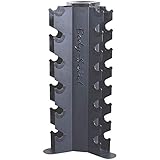
Overview: Body-Solid leverages three decades of fitness equipment expertise in this three-sided vertical rack. Designed to hold ten pairs of hex dumbbells from 5 to 50 pounds, it adds a medicine ball tray for multifunctional storage. The heavy-gauge steel construction with powder-coated finish promises commercial durability in a home-friendly footprint.
What Makes It Stand Out: The three-sided access design eliminates the reach-around hassle of traditional vertical racks, placing every weight within easy viewing and grabbing distance. The integrated medicine ball tray transforms wasted top space into functional storage—a thoughtful touch from a brand that understands real gym workflows. The 58-pound weight indicates serious material quality.
Value for Money: At $285.00, you’re paying for brand reputation and proven reliability. While cheaper vertical racks exist, Body-Solid’s warranty support and heavy-gauge steel justify the cost for buyers who’ve experienced flimsy equipment failures. The medicine ball tray adds $30-50 of value compared to buying separate storage.
Strengths and Weaknesses: Strengths include exceptional build quality, three-sided accessibility, versatile storage options, and brand trust. The compact 24"x22" footprint is ideal. Weaknesses: limited to 50-pound dumbbells per tier, no specified total capacity, and the price exceeds budget alternatives without premium features like spinning access.
Bottom Line: A rock-solid choice for brand-conscious buyers wanting proven reliability. The three-sided design and medicine ball storage add genuine utility. Consider alternatives if you lift heavier than 50 pounds or need maximum capacity per dollar. For most home gym enthusiasts, this represents a dependable, long-term storage solution.
10. AmazeFan 5 Tier | 3-Tier Dumbbell Rack Stand Only, A-Frame Design Weight Rack with Handle, Weights Metal Strength Training Dumbbells Storage Rack for Home Gym Space Saver (Dumbells not Included) (Black, 5 Tier)

Overview: The AmazeFan 5-Tier Rack enters as the budget champion, priced to move at under $32. This A-frame design holds five pairs of dumbbells from 5 to 25 pounds, targeting beginners and light home fitness users. The integrated handle and 8.8-pound weight emphasize portability over heavy-duty performance.
What Makes It Stand Out: No rack delivers this level of organization at a lower price point. The A-frame geometry provides inherent stability without complex engineering. The top-mounted handle enables single-handed repositioning—a feature absent even in premium racks. Adjustable corner pads allow micro-leveling on uneven floors, showing surprising attention to detail for the cost.
Value for Money: At $31.39, expectations must align with reality. This is functional storage for light weights, not a lifetime investment. It costs less than a single dumbbell, making it disposable if it fails. For users with 25-pound max weights, it delivers adequate utility. Those with heavier collections should view this as a temporary solution.
Strengths and Weaknesses: Strengths include unbeatable price, true portability, and easy assembly. The A-frame design is stable for light loads. Weaknesses are deal-breakers for many: 200-pound total capacity, thin metal construction prone to wobbling, and limited to five pairs. The narrow tier spacing may not accommodate larger dumbbell heads.
Bottom Line: Buy this if you’re starting your fitness journey with light weights and want to test commitment without financial risk. It’s a disposable organizer that works surprisingly well within its limits. Serious lifters should skip it entirely—the capacity and construction won’t survive real strength training demands. For the target beginner audience, it’s a no-brainer entry point.
Why Vertical Racks Dominate Modern Home Gyms
The math is brutally simple: a horizontal five-tier rack devours 20+ square feet of floor space, while a vertical equivalent occupies under four. But the real victory runs deeper than geometry. Vertical orientation aligns with how our bodies move—up and down—creating a natural retrieval pattern that reduces workout transition times by up to 40%. In 2026’s hybrid living spaces, where your gym might share real estate with a home office or guest room, vertical racks function as sculptural elements rather than industrial eyesores. Manufacturers have responded with furniture-grade finishes and architectural profiles that blend with modern decor, not fight it. The psychological impact is measurable: organized vertical storage increases workout consistency because your equipment reads as “ready” rather than “chaotic.”
Understanding Capacity: Matching Racks to Your Dumbbell Collection
Tier Configurations: How Many Dumbbells Can You Actually Store?
Manufacturers love to advertise “holds 10 pairs,” but that’s marketing algebra, not reality. A rack’s tier configuration must account for handle length, not just plate diameter. Pro-style dumbbells with 6-inch handles require 7.5 inches of clear width per slot, while compact rubber-coated bells might need only 5 inches. The 2026 standard is adjustable-tier spacing, allowing you to customize rack height for your specific collection. Look for configurations offering 5-6 inch vertical clearance between tiers—any less and you’ll fight to extract heavier bells; any more and you’re wasting vertical space. For hex dumbbells, ensure the cradle width exceeds 5.5 inches to prevent jamming.
Weight Limits: What the Numbers Really Mean
That “1,000-pound capacity” sticker doesn’t tell the full story. Static load capacity—weights gently placed and left undisturbed—is entirely different from dynamic load, which accounts for the occasional dropped dumbbell and daily vibration. Quality 2026 racks spec both: static loads of 800-1,200 pounds and dynamic loads of 600-800 pounds. The magic number is the safety factor: divide static capacity by your total dumbbell weight. You want a minimum 1.5x safety margin. If you own 400 pounds of dumbbells, demand a rack rated for at least 600 pounds static. Anything less and you’re playing engineering roulette.
Material Matters: Steel Gauge, Welding, and Longevity
Powder Coating: The Unsung Hero of Durability
The difference between a rack that rusts in two years and one that outlasts your mortgage often comes down to powder coating thickness, measured in mils (thousandths of an inch). Premium 2026 racks apply 6-8 mil textured powder coat, creating a microscopic grip that prevents dumbbell slippage while resisting rubber staining from coated bells. Avoid racks with smooth, glossy finishes—they’ll look showroom-ready for a month, then reveal every scratch and transfer black rubber residue like a magnet. For coastal homes, specify marine-grade powder coat with salt-spray resistance ratings exceeding 1,000 hours.
Footprint Fundamentals: Measuring Your Space Correctly
Height Considerations: Ceiling Clearance and Accessibility
Measure twice, buy once: your ceiling height is just the starting point. Subtract 6 inches for safe dumbbell extraction from top tiers. For users under 5'6", a 48-inch tall rack might require a step stool for top-tier access—adding a fall risk and killing workout flow. Conversely, users over 6'2" will resent a 36-inch rack that forces constant bending. The 2026 sweet spot for most home gyms is 42-46 inches total height, placing the heaviest dumbbells at waist level. Don’t forget to account for base width: a 20-inch base needs 30 inches of operational width to accommodate your body positioning when retrieving weights.
Stability and Safety: The Non-Negotiables
Base Design: Wider Isn’t Always Better
Counterintuitive but critical: an excessively wide base creates a tripping hazard and wastes space without improving stability. Modern engineering favors a base-to-height ratio of 0.4:1. A 45-inch tall rack needs an 18-inch base width for optimal stability. The real secret lies in weight distribution: premium racks position the center of gravity precisely 60% up from the base, creating a self-stabilizing effect as you load heavier dumbbells at the bottom. Look for cross-bracing on the rear frame—absent on cheap models, this feature prevents the rack from racking (pun intended) under dynamic loads.
Anti-Slip Features: Floor Protection and Rack Security
Those little rubber feet aren’t just for show. In 2026, we’re seeing silicone-infused polymer feet that grip like gecko toes without leaving residue. For hardwood or laminate floors, demand at least 1/4-inch thick non-marking rubber with a Shore A hardness of 70-80—soft enough to grip, firm enough to prevent wobble. Concrete garage floors? Upgrade to polyurethane feet that resist oil and chemical breakdown. The footprint area matters: each foot should be at least 2x2 inches to distribute load and prevent floor dimpling under 800+ pound loads.
Accessibility and Ergonomics: Your Daily Workout Flow
Angled vs. Straight Slots: The Biomechanics of Retrieval
Vertical racks come in two philosophies: straight vertical slots that demand a pure upward pull, or angled cradles that present dumbbells at 15-20 degrees. The biomechanical winner? Angled slots reduce ulnar deviation in your wrists by 12-15 degrees, cutting down on strain during high-volume supersets. They also improve weight visibility, letting you read embossed numbers without squatting. However, angled designs sacrifice absolute density—expect to store 10-15% fewer pairs in the same height. For drop sets and metabolic work, angled is worth the trade-off. For pure powerlifting density, go vertical.
Loadable vs. Fixed Design: Future-Proofing Your Investment
Fixed racks are bulletproof: welded joints mean zero maintenance and absolute rigidity. But they’re also frozen in time—add a new dumbbell pair that doesn’t fit the spacing, and you’re shopping for a new rack. Loadable designs feature bolt-on tiers you can reposition or add, adapting to everything from your first 5-pounders to competition-grade 120s. The 2026 innovation is modular loadable systems with laser-etched numbering on uprights, letting you replicate configurations precisely. Warning: loadable racks require quarterly bolt torque checks. If you’re not the maintenance type, invest in a fixed rack with generous tier spacing.
Assembly Realities: What to Expect Before You Unbox
Tool-Free Assembly: Myth vs. Reality
“Tool-free assembly” is the fitness industry’s favorite fairy tale. In reality, 90% of “no-tool” racks still require a 17mm wrench for base bolts to achieve proper torque. What tool-free actually means in 2026 is snap-together plastic covers and adjustable feet—structural assembly always demands tools. Budget 45-90 minutes for assembly, and invest in a torque wrench. Bolts spec’d at 25 Nm need exactly that; over-tightening warps base frames, while under-tightening creates wobble that multiplies under load. Pro tip: assemble on a level surface, then use a digital level app to verify upright plumb before loading weights.
Aesthetic Integration: Matching Your Home Gym Vision
Gone are the days of prison-gray industrial racks. 2026’s palette includes matte black, gunmetal, bronze, and even custom RAL color matching for premium orders. But color is just the start. Consider sight lines: a rack with a closed-back design hides wall scuffs but feels bulky. Open-back designs create visual depth, making small rooms feel larger. For minimalist spaces, look for racks with hidden hardware (countersunk bolts) and cable management clips that keep your space looking clean. The rise of “gym-as-furniture” means some racks now include optional wood-accent panels that attach magnetically—swap them out when your style evolves.
Price vs. Value: Investing Wisely in 2026
Warranty Coverage: Reading Between the Lines
A $199 rack with a 90-day warranty is a disposable purchase. A $449 rack with a 10-year structural warranty is an asset. The 2026 market has stratified into three tiers: budget ($150-$250) with 1-year warranties and 14-gauge steel, mid-range ($300-$500) with 5-year warranties and 11-gauge construction, and premium ($600+) with lifetime warranties and 7-gauge uprights. But read the fine print: “structural warranty” often excludes powder coat, while “full coverage” might require registration within 30 days. Look for transferability—if you upgrade your home gym, can the warranty follow the rack to a buyer? That’s the hallmark of a brand that stands behind its engineering.
Vertical Racks for Specialized Dumbbells
Standard racks cradle round or hex heads perfectly, but what about your adjustable dumbbells with 8-inch handles? Or your thick-grip Fat Bells? In 2026, adaptive cradle designs feature V-shaped grooves that self-center odd shapes, while removable rubber inserts accommodate both 5-pound chrome bells and 100-pound pro-style monsters. If you own PowerBlock or Bowflex adjustables, verify cradle depth exceeds 6 inches—shallow slots cause tipping. For kettlebell hybrids or clubbells, look for racks with hybrid tiers: vertical dumbbell slots on one side, horizontal kettlebell horns on the other, maximizing your storage ROI.
Maintenance and Care: Extending Your Rack’s Lifespan
Your rack is a static workhorse, but it’s not maintenance-free. Quarterly, wipe down with a microfiber cloth dampened with isopropyl alcohol to remove sweat salts that corrode powder coat. Monthly, torque-check all bolts to 80% of spec—vibration from dropped dumbbells loosens hardware over time. Annually, inspect feet for compression set; rubber hardens and loses grip after 12-18 months of load. For garage gyms in humid climates, apply a light coat of silicone spray to uprights (avoiding cradles) to prevent rust creep from micro-scratches. If you notice paint chips, touch up immediately with automotive touch-up paint matched to your rack’s RAL code—rust spreads like wildfire under powder coat.
Common Mistakes Buyers Regret (And How to Avoid Them)
The number one regret? Buying for current dumbbells, not future gains. A rack that fits your 5-50 pound set will be obsolete when you progress to 80s. Always purchase capacity for 30% more weight than you own today. Mistake number two: ignoring floor deflection. That 800-pound rack on a second-story bedroom with engineered joists? You’re risking structural damage. Consult a structural engineer if loads exceed 50 pounds per square foot. Third: falling for capacity inflation. A rack holding “10 pairs” might mean 10 pairs of compact rubber dumbbells—your pro-style set might only fit 6 pairs. Always request cradle width specs and compare to your dumbbell handle lengths before clicking “buy.”
Frequently Asked Questions
Yes, but with critical caveats. Most vertical racks are designed for fixed-weight dumbbells with uniform handle widths. Adjustable dumbbells often have wider profiles and uneven weight distribution. Look for racks with adjustable cradle widths and minimum 7-inch slot depth. Some 2026 models include specific “adjustable dumbbell tiers” with extra width and reinforced bases to handle the unique stress patterns. Measure your adjustables’ footprint at their largest setting, then add 1 inch for safe clearance.
Never rely on stock rubber feet alone. Upgrade to 3/8-inch thick neoprene pads with adhesive backing, cut to match each foot’s footprint. For premium protection, install a 24x24-inch 3/4-inch plywood platform painted to match your floor, placing the rack on top. This distributes load across multiple joists and prevents point-loading that causes permanent dimples. Avoid sliding the rack—always lift and place. If you must slide, place furniture sliders under each foot temporarily, then remove them after positioning.
For 7-foot basement ceilings, cap your rack height at 48 inches total. This places the top tier at 44 inches—comfortable for users up to 6 feet tall without requiring a step stool. The bottom tier should sit 4-6 inches off the ground to prevent moisture wicking from concrete floors. Consider a “half-rack” design, 36 inches tall, that stores your 5-40 pound bells, then wall-mount heavier dumbbells above 40 pounds using separate heavy-duty brackets. This hybrid approach maximizes vertical space without creating accessibility issues.
Welded joints eliminate failure points and maintain perfect alignment forever, making them theoretically stronger. However, modern bolt-together racks using Grade 8.8 hardware with proper torque specs achieve 95% of welded strength while offering shipping and configuration advantages. The real differentiator is joint design: look for gusseted bolt joints (triangular reinforcement plates) versus simple butt joints. For loads exceeding 600 pounds, welded is peace-of-mind. For evolving collections under 600 pounds, quality bolt-together racks perform flawlessly when maintained.
Minimum 6 inches of clearance prevents wall scuffs and allows for cleaning. However, 12 inches is optimal for two reasons: it accommodates your body when retrieving weights (you’ll naturally step back), and it prevents condensation on cold walls from transferring to the rack, causing rust. If space is tight, mount a 1/4-inch thick HDPE plastic panel on the wall behind the rack—it’s self-healing against minor impacts and creates an air gap.
Only if the rack specifies “hybrid storage.” Standard dumbbell cradles lack the depth and structural reinforcement for kettlebell horns. Improvised storage bends cradles and voids warranties. Some 2026 vertical racks offer modular horn attachments that bolt onto the side, providing proper support. If you must mix, place kettlebells only on the bottom two tiers where the rack’s center of gravity remains low, and never exceed 50 pounds per kettlebell on a dumbbell-rated tier.
The culprit is likely uneven floor contact, not loose hardware. Even a 1/16-inch floor variance creates a teeter-totter effect. Use a digital level on the base frame, then adjust feet until all four make firm contact. If wobble persists, the rack may have a twisted upright from shipping—check by measuring diagonal corner-to-corner distances; they should be within 1/8 inch. Persistent wobble under load indicates metal fatigue or bolt hole elongation—discontinue use and contact the manufacturer immediately.
Rubber dumbbells leave behind vulcanized oils that bond to powder coat. Use a plastic scraper (old credit card) to remove bulk residue, then apply Goo Gone Pro-Power formula with a microfiber cloth. Let it sit for 2 minutes, then scrub with a soft-bristle toothbrush. Finish with isopropyl alcohol to remove cleaning residue. Never use metal scrapers or abrasive pads—they’ll scratch the coating and create rust sites. For prevention, wipe cradles monthly with a silicone-free protectant like 303 Aerospace Protectant.
For collections under 300 pounds, 14-gauge (0.075 inch) is adequate and saves $100-$150. For serious lifters exceeding 400 pounds, 11-gauge (0.120 inch) is non-negotiable. The stiffness difference is dramatic: 11-gauge deflects 60% less under load, preventing the “sway” that loosens bolts over time. It also handles dynamic loads better—dropped dumbbells won’t dent the cradles. Over a 10-year lifespan, the $150 upgrade to 11-gauge costs $15 annually for peace-of-mind and resale value retention.
Wall anchoring is overkill for quality racks under 50 inches tall and voids most warranties by transferring stress to non-designed points. Instead, focus on base weight: place your heaviest dumbbells on the bottom tier to lower the center of gravity. If you must anchor (earthquake zones), use only the manufacturer’s optional anchoring kit, which bolts through the base into wall studs with isolation bushings. Never drill into uprights or cradles—this compromises structural integrity and creates stress risers that lead to catastrophic failure.