Ever watched your deadlift bar slip from your fingers on the final rep? Or struggled to open a stubborn jar while everyone else watches in pity? You’re not alone. Grip strength remains the most overlooked bottleneck in strength training, yet it’s the foundation that connects you to every weight, tool, and real-world object you’ll ever handle. While traditional fixed-resistance grippers collect dust after you outgrow them, adjustable hand grips have revolutionized how we train our hands, offering a progressive path from beginner to beast-mode without buying a dozen different devices.
But here’s the thing: not all adjustable hand grips are created equal, and randomly squeezing away won’t build the crushing strength you’re after. This guide cuts through the marketing noise to deliver evidence-based strategies for selecting, using, and mastering adjustable hand grips for measurable grip strength gains that transfer to the gym, sport, and daily life.
Top 10 Adjustable Hand Grips for Grip Strength
Detailed Product Reviews
1. FitBeast Grip Strengthener Forearm Strengthener Hand Grips Strengthener Kit - 5 Pack Adjustable Resistance

Overview: The FitBeast Grip Strengthener Kit delivers five adjustable resistance hand grips in one economical package. Designed for universal appeal, this set targets everyone from office workers seeking stress relief to athletes building forearm power. Each unit features an ergonomic, contoured shape with textured non-slip rubber handles that promise comfortable, extended training sessions without palm fatigue. The compact design makes these grippers ideal for home, office, or travel use, ensuring you can strengthen your grip anywhere.
What Makes It Stand Out: Getting five grip strengtheners for under ten dollars is remarkable value that immediately distinguishes this kit from single-unit competitors. The manufacturer emphasizes professional after-sales service with 24/7 availability, which is uncommon in this price category. The ergonomic design specifically addresses injury prevention—both during exercise and in sports applications—making it more than just a simple strength tool.
Value for Money: At $9.90 for five units (effectively $1.98 each), this represents exceptional bulk value. Individual grip strengtheners typically retail for $7-15, making this kit perfect for families, group training, or distributing across multiple locations. While premium single grippers offer higher maximum resistance, the per-unit cost here is unbeatable for beginners and intermediate users.
Strengths and Weaknesses: Pros include outstanding bulk pricing, ergonomic comfort, true portability, and comprehensive after-sales support. The adjustable resistance suits progressive training, and the variety of applications—from rehabilitation to sports performance—is impressive. Cons include unspecified exact resistance ranges, potentially lower individual durability compared to premium metal units, and basic features without counting mechanisms.
Bottom Line: This five-pack is ideal for beginners, families, or anyone wanting multiple training locations. The value proposition is outstanding, though serious strength athletes may need higher resistance options.
2. AIXPI Grip Strength Trainer, Hand Grip Exerciser Strengthener with Adjustable Resistance 11-132 Lbs (5-60kg), Forearm Strengthener, Hand Exerciser for Muscle Building and Injury Recover Black 1 Pack
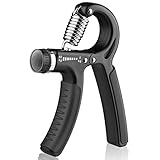
Overview: The AIXPI Grip Strength Trainer is a compact, single-unit hand exerciser offering adjustable resistance from 11 to 132 pounds. Built with heavy-duty plastic and reinforced metal alloy, this budget-friendly strengthener targets athletes, musicians, and individuals recovering from hand injuries. Its 4.3x5.8-inch footprint makes it genuinely pocket-sized for training anywhere, enabling consistent grip training without gym dependency.
What Makes It Stand Out: The clear resistance specification (5-60kg) provides transparency that many budget competitors lack. At $6.99, it occupies the sweet spot between toy-like grippers and professional equipment. The explicit focus on injury recovery—including tendinitis, carpal tunnel, and post-surgery rehabilitation—makes it a dual-purpose tool for both building strength and therapeutic use, broadening its appeal beyond fitness enthusiasts.
Value for Money: This single-unit gripper delivers professional-grade resistance range at an entry-level price. Comparable grippers with 130+ lb capacity typically cost $12-18, making the AIXPI an excellent value for individual users. The lightweight design sacrifices some premium feel but maximizes portability without compromising functionality, representing smart engineering for the price point.
Strengths and Weaknesses: Pros include precise resistance calibration, ultra-portability, therapeutic applications, and an unbeatable price-to-performance ratio. The soft-wrapped ergonomic handle enhances comfort during high-repetition sets. Cons include plastic construction that may wear faster than all-metal alternatives, lack of a rep counter, and potential durability concerns under maximum resistance over time.
Bottom Line: Perfect for budget-conscious buyers needing a reliable, no-frills grip strengthener. It’s especially recommended for rehabilitation purposes or as a starter unit before investing in premium equipment.
3. NIYIKOW Grip Strength Trainer, Hand Grip Strengthener, Grip Strengthener, Adjustable Resistance, Forearm Strengthener, Perfect for Musicians Athletes (Black, 1 Pack)
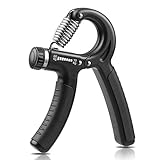
Overview: The NIYIKOW Grip Strength Trainer is a single-unit hand gripper designed for progressive resistance training from 22 to 132 pounds. Marketed toward athletes, musicians, and general fitness enthusiasts, this $6.99 unit emphasizes durability with heavy-duty plastic and reinforced metal alloy construction. Its lightweight design promises true portability for training anywhere, requiring just 5-10 minutes daily for noticeable results.
What Makes It Stand Out: NIYIKOW distinguishes itself with 24/7 USA-based customer support—a rare commitment in the budget fitness category. The company explicitly calls out competitor quality issues, positioning their product as a safer, more durable alternative. The 22-pound minimum resistance provides a better starting point for users with existing hand strength compared to lower-resistance models, targeting a more serious training demographic.
Value for Money: At the same $6.99 price point as similar single grippers, the added value of domestic customer service and quality assurance claims makes this competitive. The resistance range suits most users from intermediate to advanced, though beginners might find the 22-pound starting point challenging. The focus on high-quality materials attempts to justify trust in a crowded market.
Strengths and Weaknesses: Pros include USA customer support, solid resistance range, portability, and durability-focused marketing. The company’s confidence in product quality is reassuring. Cons include the higher minimum resistance unsuitable for true beginners, lack of advanced features like rep counters, and plastic construction that may not match premium metal units for extreme durability under daily heavy use.
Bottom Line: An excellent choice for users prioritizing customer support and quality assurance. Best suited for those with baseline hand strength rather than absolute beginners or those needing sub-20-pound resistance.
4. Hiyoga Grip Strength Trainer, Hand Grip Strengthener with Adjustable Resistance 11-220Lbs(5-100KG), Automatic Counter, Ergonomic Design, Forearm Strengthener for Musicians Athletes and Injury Recovery (Orange)

Overview: The Hiyoga Grip Strength Trainer is a premium single-unit gripper featuring an automatic rep counter and an impressive 11-220 pound resistance range. The built-in digital counter tracks each repetition and resets easily with a button rotation. Constructed with a high-strength stainless steel spring and TPR ergonomic handles, this $21.90 unit targets serious athletes and rehabilitation patients who demand progress tracking and maximum resistance capacity.
What Makes It Stand Out: The automatic counter eliminates manual tracking, a game-changer for structured training programs. The 220-pound maximum resistance exceeds most competitors, accommodating elite grip strength development. The thickened stainless steel spring design ensures stability and safety even at maximum tension, while the TPR handle material provides superior grip and comfort compared to standard rubber.
Value for Money: While significantly more expensive than basic grippers, the Hiyoga justifies its price through digital tracking and extended resistance range. Similar grippers with counters retail for $25-35, making this reasonably priced for its feature set. For dedicated trainees, the progress-tracking alone warrants the premium, transforming subjective feel into objective data.
Strengths and Weaknesses: Pros include the invaluable rep counter, exceptional resistance range, premium stainless steel construction, ergonomic TPR handles, and rust-resistant design. Cons include the higher price point, single-unit packaging (no backup gripper), and potential battery maintenance for the counter. The orange color may not appeal to all users seeking professional aesthetics.
Bottom Line: Ideal for serious athletes, data-driven trainers, and rehabilitation professionals who need progress tracking. The premium features justify the cost for committed users, though casual exercisers may find basic models sufficient.
5. KDG Hand Grip Strengthener 2 Pack(Black) Adjustable Resistance 10-130 lbs Forearm Exerciser,Grip Strength Trainer for Muscle Building and Injury Recovery for Athletes

Overview: The KDG Hand Grip Strengthener provides two counting grip trainers for $9.99, featuring adjustable resistance from 10 to 130 pounds. Each unit includes a smart rep counter that tracks exercise numbers automatically, with a reset function for both single and tens digits. The ergonomic design uses high-quality soft materials for comfortable, safe training sessions, making it suitable for both muscle building and injury rehabilitation.
What Makes It Stand Out: Getting two counting grippers for under ten dollars is exceptional value—typically, counting features appear only on premium single units. The dual-pack allows simultaneous bilateral training, cutting workout time in half. The counting mechanism distinguishes between clearing single units versus tens digits, showing thoughtful design for serious training progression and rehab protocols requiring precise volume tracking.
Value for Money: At $5 per unit with counting functionality, this is arguably the best feature-to-price ratio available. Individual counting grippers cost $20+, making this 2-pack a steal. The resistance range covers beginners through advanced users, maximizing utility across fitness levels and rehabilitation stages without requiring multiple purchases.
Strengths and Weaknesses: Pros include unbeatable price for counting grippers, two-unit packaging for balanced training, solid resistance range, injury rehabilitation applications, and ergonomic comfort. Cons include unknown long-term durability of the counting mechanism, potentially less premium feel than all-metal construction, and basic materials that may wear under extreme use or maximum resistance settings.
Bottom Line: The best value proposition for users wanting progress tracking without premium cost. Perfect for balanced training, rehabilitation clinics, or budget-conscious athletes who prioritize data over brand prestige.
6. NIYIKOW 2 Pack Grip Strength Trainer, Hand Grip Strengthener, Adjustable Resistance 22-132Lbs (10-60kg), Forearm Strengthener, Perfect for Musicians Athletes - Carbon Black

Overview:
The NIYIKOW 2-Pack Grip Strength Trainer delivers exceptional value for anyone seeking to build hand, wrist, and forearm strength without breaking the bank. With adjustable resistance from 22 to 132 pounds, these compact grippers accommodate beginners and intermediate users alike. The dual-pack configuration makes it easy to keep one at home and another at the office, ensuring consistent training throughout your day. Designed for portability and convenience, each unit weighs mere ounces and slips effortlessly into a gym bag or desk drawer.
What Makes It Stand Out:
This product’s primary differentiator is its aggressive pricing combined with the inclusion of two complete units. While most competitors sell single grippers at this price point, NIYIKOW provides a pair, enabling bilateral training or backup convenience. The 22-132lb range covers the sweet spot for most users—from musicians needing finger dexterity to athletes building crushing grip strength. The reinforced metal alloy and heavy-duty plastic construction exceeds typical budget-gripper expectations.
Value for Money:
At $7.99 for two units, this represents one of the best cost-per-unit values in the grip training market. Comparable single grippers from established brands often retail for $12-15 each. You’re essentially receiving two grippers for half the typical price of one, making it an ideal entry point for budget-conscious buyers or those wanting to equip multiple locations. The 24/7 USA customer support adds unexpected premium service to an economy product.
Strengths and Weaknesses:
Strengths include unbeatable price-to-value ratio, genuine portability, wide resistance range for most users, and responsive customer support. The dual-pack convenience cannot be overstated for maintaining training consistency. Weaknesses involve plastic construction that may not match the longevity of all-metal premium alternatives, and the adjustment mechanism might gradually loosen with heavy use. The handles lack the ergonomic contouring found in higher-end models, potentially causing discomfort during extended sessions.
Bottom Line:
The NIYIKOW 2-Pack is the definitive budget champion for grip training. Perfect for beginners, casual users, or anyone wanting spare units for different locations, it delivers functional performance at an almost unbeatable price. While serious strength athletes may eventually outgrow its build quality, it provides an accessible entry point to consistent grip training.
7. FitBeast Grip Strength Trainer, Hand Gripper Strengthener Kit - 6 Pack with Adjustable Resistance Forearm Strengthener, Forearm Exerciser and Massage Balls for Hand Therapy, Grip Training and Recovery

Overview:
FitBeast has engineered a comprehensive 6-in-1 grip training ecosystem that addresses strength, flexibility, and recovery in one thoughtfully curated package. The centerpiece is an adjustable gripper with built-in force gauge displaying 10-160 lbs resistance, complemented by finger stretch bands, stress ball, forearm exerciser, and massage balls. This kit serves athletes, musicians, rehab patients, and fitness enthusiasts seeking a holistic approach to hand health. Everything arrives ready-to-use with no assembly required.
What Makes It Stand Out:
The integrated force gauge sets this apart from basic grippers, providing real-time feedback that transforms vague “feels heavy” into quantifiable progress tracking. The inclusion of dedicated recovery tools—particularly the massage balls and finger bands—recognizes that grip training requires both stress and restoration. This dual-focus approach prevents overtraining injuries while maximizing strength gains. The forearm exerciser adds rotational training often missing in grip-specific kits.
Value for Money:
At $26.99 for six specialized tools, the kit delivers substantial savings versus purchasing items individually. Comparable grippers with force gauges alone cost $20-25, making the additional five tools essentially free. For rehab patients requiring varied resistance types, this single purchase replaces multiple physical therapy orders. The durability of each component ensures years of use, spreading the investment across countless training sessions.
Strengths and Weaknesses:
Strengths include unparalleled versatility, progress tracking capability, rehab-focused accessories, and professional-grade build quality across all tools. The variety prevents training plateaus and addresses multiple hand-health aspects. Weaknesses center on portability—the full kit occupies significant space compared to single grippers. Casual users may find six tools overwhelming, and the forearm exerciser has a learning curve. Some users report the force gauge can be slightly inconsistent at extreme resistance levels.
Bottom Line:
FitBeast’s kit is the ultimate solution for comprehensive hand conditioning. Ideal for serious athletes, musicians requiring finger flexibility, or anyone undergoing hand rehabilitation, it justifies every penny through versatility and quality. If you want more than simple squeezing and value progress tracking, this is your best choice.
8. GD IRON GRIP 12LV Aluminum Grip Strength Trainer Adjustable Hand Gripper Strengthener(26 to 181 lb) Hand Grip Exerciser Wrist Strengtheners for Golf Training Equipment Forearm Gripper
Overview:
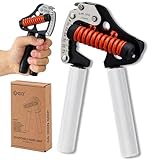
The GD IRON GRIP 12LV represents the pinnacle of precision grip training technology, machined from aluminum and iron for users demanding professional-grade durability. Featuring 12 distinct resistance levels from 26-181 lbs—double the adjustments of standard grippers—it caters to everyone from rehabilitation patients to competitive arm wrestlers. The revolutionary 3-level handle width adjustment ensures ergonomic fit regardless of hand size, while silent operation enables discreet training anywhere. This is a single, lifetime tool replacing an entire rack of fixed-resistance grippers.
What Makes It Stand Out:
The 12-level micro-adjustment system provides progression granularity unmatched in the market, allowing 13-pound increments versus typical 20-30 pound jumps. Combined with handle width customization, it creates a truly personalized training experience that prevents plateaus and accommodates anatomical variations. The all-metal construction exudes quality—this is built to survive decades of daily use. Silent operation, achieved through precision engineering, eliminates the distracting squeaks that plague metal spring grippers.
Value for Money:
At $55.80, this premium investment delivers exceptional long-term value. Purchasing 12 individual grippers covering this resistance range would cost $180-300, while the width-adjustable feature is unique at any price. For serious athletes, the ability to fine-tune resistance translates to faster strength gains and reduced injury risk. The build quality justifies the cost—this won’t crack, loosen, or fail like plastic alternatives.
Strengths and Weaknesses:
Strengths include aircraft-grade construction, unprecedented adjustment precision, ergonomic versatility for all hand sizes, whisper-quiet operation, and massive resistance range. The single-unit design saves space while replacing multiple tools. Weaknesses involve the premium price barrier for casual users, substantial weight that reduces pocket portability, and complexity that may intimidate beginners. The aluminum handles can become slippery with sweaty hands without grip tape.
Bottom Line:
The GD IRON GRIP 12LV is the professional’s choice and arguably the last gripper you’ll ever need. Worth every dollar for serious strength athletes, climbers, or anyone prioritizing precision and longevity. Casual users should consider cheaper options, but for dedicated training, this is the gold standard that outperforms and outlasts all competitors.
9. AIXPI Grip Strength Trainer, Hand Grip Exerciser Strengthener with Adjustable Resistance 11-132 Lbs (5-60kg), Forearm Strengthener, Hand Exerciser for Muscle Building and Injury Recover Black 2 Pack
Overview:
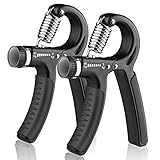
AIXPI delivers a comfort-focused approach to grip training with this ergonomically designed 2-pack set, prioritizing user experience through soft, cushioned handles that reduce hand fatigue during extended sessions. The adjustable resistance spans 11-132 lbs, making it suitable for rehabilitation patients building back from injury while still challenging intermediate athletes. Each unit measures just 4.3x5.8 inches, emphasizing grab-and-go convenience. The heavy-duty plastic and reinforced metal alloy construction balances durability with lightweight portability.
What Makes It Stand Out:
The soft-wrapped handles distinguish AIXPI from competitors using hard plastic or bare metal, providing immediate comfort that encourages longer training sessions—crucial for injury recovery where frequent, moderate repetition matters more than max resistance. The explicit focus on tendinitis, carpal tunnel, and post-surgical rehabilitation in the marketing shows a deep understanding of therapeutic applications. The 2-pack configuration at under $10 creates exceptional value for bilateral training or keeping spares in multiple locations.
Value for Money:
At $9.99 for two units, AIXPI positions itself as a value leader with comfort upgrades. Similar grippers with ergonomic grips typically cost $15-20 each, making this dual-pack 70% cheaper. For rehab patients requiring gentle, frequent training, the comfortable handles justify the purchase alone. The 11-132 lb range covers the therapeutic sweet spot while still offering room for strength progression, eliminating the need for early replacement.
Strengths and Weaknesses:
Strengths include superior handle comfort, injury-recovery specialization, excellent portability, genuine 2-pack value, and appropriate resistance range for most users. The soft grip material prevents callus formation and hand soreness. Weaknesses involve plastic construction that may not withstand extreme long-term abuse, resistance adjustment that can slip if not locked properly, and a maximum resistance that advanced athletes will outgrow. The black color scheme shows sweat and oil marks readily.
Bottom Line:
AIXPI excels for comfort-seekers and rehabilitation patients. The ergonomic handles make it the most hand-friendly option in its price class, while the 2-pack value is undeniable. Perfect for musicians, office workers combating repetitive strain, or anyone recovering from hand injuries. Strength purists may want higher maximum resistance, but for 90% of users, this delivers an ideal balance of comfort, function, and value.
10. GD GRIP Pro-E, hand grip strengthener (Resistance : 17 to 79 lb) Hand Grip Hand Gripper Adjustable Hand Strengthener Wrist Strengthener Hand Workout

Overview:
The GD GRIP Pro-E occupies the thoughtful middle ground in grip training, offering family-friendly resistance from 17-79 lbs in a durable, library-quiet package. Engineered with premium compression springs and high-strength plastic, this single gripper targets the broadest demographic—kids, seniors, women, and men—making it a versatile household tool. The soft EVA foam handles provide non-slip comfort without the harshness of metal or hard plastic. Its noise-free design enables discreet use in offices, libraries, and shared spaces where traditional grippers would be disruptive.
What Makes It Stand Out:
The deliberately moderate resistance range addresses a massive underserved market: users who find 100+ lb grippers intimidating or inappropriate. This focus on accessible, sustainable training rather than maximum strength appeals to seniors maintaining independence, children developing coordination, and adults seeking health benefits without aggressive bodybuilding. The 10-year durability claim, backed by robust construction, positions it as a long-term health investment rather than disposable fitness gear. The silent operation is genuinely whisper-quiet, not just “quieter than average.”
Value for Money:
Priced at $23.90, the Pro-E sits in the mid-range but justifies cost through demographic versatility and build longevity. Purchasing separate grippers for various family members would cost $40-60, while this single unit adapts to everyone. For office workers, the silent feature alone adds value—competitors market “quiet” grippers at $30+ that still produce noticeable noise. The EVA foam handles, typically found on premium models, enhance comfort without premium pricing.
Strengths and Weaknesses:
Strengths include universal accessibility, truly silent operation, comfortable foam grips, claimed 10-year lifespan, and safe resistance range preventing overexertion injuries. The build quality exceeds typical plastic grippers. Weaknesses involve the 79 lb maximum, which serious athletes will find insufficient for progressive overload. The plastic construction, while durable, lacks the premium feel of metal alternatives. Adjustment increments are relatively large, limiting fine progression. The foam may compress and degrade with heavy daily use over several years.
Bottom Line:
The GD GRIP Pro-E is the perfect family grip trainer and office companion. It prioritizes usability over extreme performance, making it ideal for general health, senior fitness, and workplace wellness. While not for elite strength athletes, it brilliantly serves its target audience with thoughtful features and reliable construction. An excellent choice for shared households and professional environments where discretion matters.
Why Grip Strength Matters More Than You Think
Your grip is quite literally your connection to the physical world. Research published in the Journal of Strength and Conditioning Research shows that grip strength correlates directly with overall muscular strength and serves as a reliable indicator of functional longevity. Athletes with stronger grips demonstrate better performance in throwing, grappling, and racket sports, while lifters see immediate carryover to deadlifts, rows, and farmer’s walks.
Beyond the gym, grip strength predicts mortality risk in older adults and impacts everything from carrying groceries to preventing falls. The 30-plus muscles controlling your hand and forearm represent a complex system that, when properly trained, becomes an unbreakable link in your kinetic chain. Neglecting grip work is like building a supercar with bicycle tires—your engine might be powerful, but you can’t transfer that power effectively.
What Are Adjustable Hand Grips and How Do They Work
Adjustable hand grips are dynamic resistance training devices designed to strengthen your crushing grip—the power generated when squeezing your fingers into your palm. Unlike their fixed-resistance ancestors that offered a single tension level, modern adjustable grippers feature mechanisms that modify resistance across a spectrum, typically ranging from 20 to 130+ pounds of pressure.
The fundamental design includes two handles connected by a spring-based resistance system. By turning a dial, sliding a pin, or rotating an adjustment knob, you alter the spring’s pre-tension or leverage angle, making each squeeze easier or harder. This adjustability transforms a simple tool into a complete grip training system that grows with you, enabling progressive overload—the cornerstone principle of strength adaptation—without requiring multiple devices cluttering your training space.
The Science Behind Grip Training Adaptations
Grip strength improvements occur through three primary mechanisms: neural adaptation, muscular hypertrophy, and connective tissue remodeling. Initially, your nervous system becomes more efficient at recruiting motor units in the forearm flexors, particularly the flexor digitorum profundus and superficialis. This explains why beginners see rapid strength gains in the first 2-3 weeks without visible muscle growth.
With consistent training, these forearm muscles undergo hypertrophy, increasing cross-sectional area and force production capacity. More importantly, the tendons and ligaments surrounding your finger joints experience collagen synthesis and structural strengthening, a process that takes 6-8 weeks minimum. This connective tissue adaptation is crucial for handling heavy loads without injury. Adjustable grippers excel here by allowing micro-progressions that challenge these tissues gradually, preventing the overload injuries common with jumping between fixed resistances.
Types of Adjustable Hand Grips Explained
The market offers four primary categories, each with distinct advantages. Coil spring grippers feature a visible helical spring between the handles and represent the most common and affordable option. They typically adjust via a threaded screw that compresses or decompresses the spring, offering smooth resistance curves ideal for general strength building.
Torsion spring grippers use a twisted metal spring at the pivot point, providing a more compact design and often more precise adjustments. These mimic the feel of premium fixed grippers and appeal to serious grip trainees. Variable resistance grippers incorporate cam-based or lever systems that alter the resistance curve throughout the squeeze, peaking at different points in the range of motion.
Digital smart grippers represent the newest category, featuring electronic sensors that measure force output, count reps, and sync with smartphone apps for data tracking. While pricier, they eliminate guesswork and provide objective progression metrics that manual adjustments can’t match.
Key Features to Evaluate Before Buying
When shopping for adjustable hand grips, prioritize features that align with your training goals and usage patterns. Resistance range should span your current strength level plus 30-40% more to allow future growth. Look for adjustment increments of 5 pounds or less—coarser jumps make progressive overload difficult and create plateaus.
Handle comfort directly impacts training volume; knurled metal provides secure grip but may chew up skin during high-rep sessions, while rubber-coated handles offer comfort at the cost of some durability. Build quality indicators include metal construction (avoid plastic springs or internal components), reinforced pivots, and smooth adjustment mechanisms without slippage.
Consider size and portability if you plan to train at work or while traveling. Some models feature compact designs that fit in pockets, while others prioritize stability and base width for heavy training. Finally, evaluate feedback mechanisms—clearly marked resistance settings prevent training inconsistencies that stall progress.
Resistance Mechanisms: Coil Springs vs. Torsion Springs
Understanding the internal mechanics helps you choose a gripper that matches your training style. Coil springs function like a simple compression device: as you squeeze, the spring compresses linearly, creating a resistance curve that increases steadily through the range of motion. This predictable pattern builds strength evenly and allows you to “feel” the tension building, making it excellent for beginners learning force control.
Torsion springs work by twisting metal along its axis, storing rotational energy. This mechanism creates a resistance curve that ramps up more aggressively near the closed position, mimicking the difficulty spike of closing heavy-duty fixed grippers. The compact nature of torsion springs also allows for slimmer handle designs and more precise micro-adjustments via threaded collars.
For most trainees, coil springs offer better value and durability. Torsion springs appeal to grip purists chasing the authentic feel of competition-grade equipment and those needing ultra-precise resistance tuning for rehab or specific strength curve targeting.
Handle Design and Ergonomics
Handle design dramatically impacts both comfort and training effectiveness. Standard straight handles work well for most users but can place undue stress on the pinky finger during heavy closes. Contoured handles feature ergonomic shaping that distributes pressure across the palm more evenly, reducing hot spots and allowing longer training sessions.
Handle width affects which muscles dominate the movement. Wider handles (2+ inches) emphasize the thumb and challenge hand opening strength, while narrower handles (1.5 inches) isolate crushing power. Some premium models offer interchangeable handle sets to vary training stimuli.
Material choice involves trade-offs. Bare aluminum or steel with aggressive knurling provides maximum grip security but tears calluses quickly. Rubber or silicone coatings protect skin and absorb vibration but can compress under extreme loads, slightly altering the effective resistance. For high-volume training, look for hybrid designs with textured but padded surfaces that balance security and comfort.
Build Quality and Material Considerations
A gripper’s lifespan depends entirely on material choices and construction integrity. Frame material should be aircraft-grade aluminum or steel—avoid any model using plastic for load-bearing components, as it will deform under sustained heavy use. The pivot point deserves special attention; look for bronze bushings or sealed bearings rather than simple metal-on-metal contact, which wears quickly and creates slop in the movement.
Spring quality determines both performance consistency and safety. High-carbon steel springs maintain their resistance rating over thousands of repetitions, while cheaper alloys lose tension and can break unexpectedly. Quality manufacturers pre-stress their springs and provide resistance calibration data.
Adjustment mechanism durability separates premium from disposable grippers. Threaded steel adjustment screws with lock nuts prevent slippage during intense sets. Pin-based systems should feature multiple detents with positive engagement you can feel and hear. Test the mechanism in-store if possible—smooth, consistent adjustment without binding indicates precision manufacturing.
Adjustability Range: Finding Your Sweet Spot
The usable resistance range defines a gripper’s long-term value. For untrained individuals or rehab purposes, look for models starting around 20-30 pounds with adjustments up to 80-100 pounds. This provides entry-level accessibility while offering room for significant strength gains. Intermediate to advanced lifters should target grippers spanning 60-150+ pounds to challenge already-developed forearm strength.
Fine-tuning capability matters as much as overall range. The best adjustable grippers offer 2.5 to 5-pound increments, allowing you to apply progressive overload weekly. Avoid models with 10+ pound jumps between settings—these force you to spend weeks at the same resistance or attempt jumps that compromise form.
Consider minimum resistance too. Some grippers bottom out at 50+ pounds, making them useless for warm-ups, high-rep endurance work, or rehab. A quality adjustable gripper should serve as your complete grip training system, from activation drills to maximal effort singles.
Progress Tracking and Measurement Features
Objective measurement transforms grip training from guesswork into systematic progression. Analog counters integrated into the handle track reps automatically, ensuring you complete prescribed volumes without mental fatigue. Digital force sensors provide real-time poundage feedback, confirming you’re hitting target resistances and identifying strength fluctuations due to fatigue or recovery status.
Visual markers on the adjustment mechanism—clearly numbered settings, colored bands, or digital displays—prevent the common mistake of training at slightly different resistances between sessions. This consistency is crucial for tracking true progress versus equipment variability.
Advanced models sync with training apps, logging every rep, set, and peak force. This data reveals patterns: perhaps your grip strength peaks mid-week, or drops 15% after deadlift sessions. Such insights allow you to schedule grip training for optimal adaptation. Even without tech, a simple training log noting the setting number, reps, and perceived effort provides enough data to guide intelligent progression.
How to Choose the Right Gripper for Your Goals
Match the tool to the task. For general fitness and functional strength, a mid-range coil spring gripper (20-100 pounds) with comfortable rubber handles offers versatility for daily training. If you’re a strength athlete (powerlifter, strongman, CrossFit competitor), prioritize high-end torsion spring models with 150+ pound capacity and metal knurled handles that replicate competition conditions.
Rehabilitation users should select grippers with the lowest minimum resistance (under 15 pounds) and smallest increment adjustments, allowing gentle progression without re-injury. Look for models with smooth resistance curves that don’t spike unexpectedly.
Travelers and office workers need compact, quiet designs that fit in bags and won’t disturb coworkers. Slimmer profiles with rubber-coated springs reduce noise during desk-side training sessions. For competitive grip athletes, choose grippers that approximate the feel of official certification grippers, with thin handles and resistance curves that peak near closure.
Proper Technique and Form Fundamentals
Perfect form separates productive training from joint-jarring frustration. Hand placement should position the handle deep in your palm, not in your fingers. The bottom handle should nestle against the meaty base of your thumb, while the top handle contacts your proximal phalanges (the finger bones closest to your palm). This positioning leverages your strongest lever arms.
Initiate the squeeze by closing your pinky first, then ring finger, middle, and index in sequence. This “setting” technique ensures all fingers contribute evenly rather than letting your dominant index finger do all the work. Keep your wrist neutral—neither flexed nor extended—to isolate forearm flexors and protect delicate wrist structures.
Tempo matters. For strength, squeeze over 2-3 seconds, hold the closed position for 1 second, then release over 3-4 seconds. This controlled eccentric phase builds tendon resilience. Avoid rapid, bouncy reps that rely on momentum and chew through adjustments without stimulating adaptation. Breathe normally—never hold your breath, which spikes blood pressure unnecessarily during high-tension squeezes.
Programming Your Grip Training for Maximum Gains
Effective programming balances intensity, volume, and frequency to drive adaptation without overuse injuries. For strength development, train 3-4 times weekly with 3-5 sets of 5-8 reps at 80-90% of your maximum resistance. Rest 2-3 minutes between sets to maintain quality output.
Hypertrophy-focused trainees benefit from 4-5 sets of 10-15 reps at 65-75% max, with 60-90 second rest periods. The higher time-under-tension drives forearm muscle growth. For endurance and work capacity, perform 2-3 sets of 20-30 reps at 50-60% max, training your grip to resist fatigue during long farmer’s walks or grappling matches.
Implement progressive overload by increasing resistance 2.5-5 pounds when you can complete all prescribed reps with perfect form. Alternatively, add one rep per set weekly, then increase resistance once you exceed the target rep range. Periodize your training: spend 4-6 weeks in each phase (strength, hypertrophy, endurance) to prevent plateaus and address all grip qualities.
Common Mistakes That Sabotage Your Progress
Chasing numbers over form tops the list. Closing a gripper with poor mechanics—using body English, incomplete range of motion, or inconsistent hand placement—builds ego, not strength. Always prioritize clean reps over maximal resistance.
Training too frequently destroys recovery. Forearm muscles and tendons recover slower than larger muscle groups due to constant daily use. Training grip daily or even 5-6 times weekly leads to overuse injuries like medial epicondylitis (golfer’s elbow). Stick to 3-4 dedicated sessions weekly.
Ignoring the extensors creates dangerous muscle imbalances. All that crushing work overdevelops flexors, pulling your wrists into constant flexion and predisposing you to elbow pain. Pair gripper work with extensor training using rubber bands or dedicated extensor tools.
Using the same resistance indefinitely stalls gains. Many trainees find a challenging setting and stay there for months. Without progressive overload, adaptation halts. Increase resistance, reps, or time-under-tension every 1-2 weeks to keep the training stimulus fresh.
Integrating Grip Work Into Your Existing Routine
Strategic placement maximizes gains without compromising main lifts. Post-workout finisher: After upper body days, perform 3 sets of gripper work. Your forearms are already warmed up, and the relatively low systemic fatigue won’t affect recovery. This approach works perfectly for bodybuilding-style splits.
Between sets of non-grip exercises: During rest periods for leg presses or chest work, knock out a quick set of 10-15 reps with light resistance. This “greasing the groove” builds volume without adding training time. Keep the resistance low (50-60% max) to avoid interfering with primary lifts.
On off-days: Dedicate 10-15 minutes to focused grip training. This separate session allows maximum intensity and volume without compromising other training. Schedule it 24 hours away from heavy back or deadlift sessions to ensure full forearm recovery.
Pre-habilitation: Use very light resistance (30-40% max) for 2 sets of 20 reps before heavy pulling sessions. This activates forearm muscles, enhances neural drive, and may prevent injuries by preparing connective tissues for load.
Maintenance and Care for Longevity
Proper maintenance extends a quality gripper’s lifespan from months to decades. Weekly cleaning prevents sweat and oil buildup that corrodes metal components. Wipe handles with a damp cloth, then dry thoroughly. For metal springs, apply a drop of light machine oil monthly to prevent rust and maintain smooth action.
Calibration checks ensure consistent resistance. Every 3 months, test your gripper against a known weight or another gripper at the same setting. If you notice slippage or inconsistent tension, disassemble the adjustment mechanism (if possible) and clean out debris that may be affecting engagement.
Storage matters. Keep grippers in a dry environment away from extreme temperatures, which can degrade spring temper. Avoid leaving them set at maximum resistance between sessions—this pre-loads the spring and accelerates fatigue. Return the adjustment to minimum resistance after training.
Handle maintenance preserves grip security. If knurling becomes smooth, carefully refresh it using a fine metal file. Replace worn rubber coatings that compromise grip; many manufacturers sell replacement handle sleeves.
Safety Considerations and Injury Prevention
Grip training carries unique injury risks that require proactive management. Always warm up with 2-3 minutes of wrist circles, finger extensions with a rubber band, and 15-20 light-resistance squeezes. Cold forearms are prone to strains and tendon tears.
Listen to finger joint pain. Dull muscle fatigue is normal; sharp joint pain is not. If you experience pain in the knuckles or finger joints, immediately reduce resistance and volume. Consider switching to a gripper with a smoother resistance curve that doesn’t spike pressure at the closed position.
Avoid the “death grip” mentality. Squeezing until your hand cramps may feel productive but increases carpal tunnel compression risk. End each set when rep quality declines, not when you physically can’t close the gripper.
Balance crushing with opening strength. For every 3 sessions of gripper work, perform 1 session focused on finger extensors. This prevents the flexor dominance that leads to elbow pain and ulnar nerve issues. Simple rubber band extensions work perfectly for this.
Advanced Training Techniques for Plateau-Busting
When linear progression stalls, these methods reignite adaptation. Negatives involve closing the gripper with assistance from your other hand, then resisting the opening phase for 5-10 seconds. This eccentric overload targets tendons and builds lockout strength. Perform 3 sets of 5 negatives after your main work.
Cluster sets break volume into manageable chunks. Perform 2 reps, rest 15 seconds, repeat 5 times. This allows more total reps at high intensity than straight sets. Use this technique for 3 weeks, then return to traditional sets to test new strength levels.
Timed holds build endurance and mental fortitude. Close the gripper and hold for 20-60 seconds at 70% max. The time-under-tension challenges forearm metabolic capacity and builds pain tolerance. Progress by adding 5 seconds weekly before increasing resistance.
Drop sets exploit fatigue for growth. Start at your working weight, perform reps to near-failure, then immediately reduce resistance 20% and continue. The metabolic stress drives hypertrophy when strength gains stagnate. Limit drop sets to once weekly due to their high recovery demand.
Comparing Adjustable Grips to Other Grip Training Tools
Adjustable hand grips occupy a specific niche in the grip training ecosystem. Unlike Captains of Crush or other fixed grippers, they offer progression without requiring a full set, making them cost-effective for beginners. However, fixed grippers provide absolute resistance consistency and are required for official grip sport certifications.
Fat gripz and thick bar training develop support grip and open-hand strength—qualities adjustable grippers don’t address. Conversely, grippers excel at building crushing strength that Fat Gripz minimally stimulate. For complete grip development, use both tools.
Wrist rollers and plate pinches train different grip modalities (flexor endurance and pinch strength) that complement but don’t replace gripper training. The beauty of adjustable grippers lies in their convenience and progressive nature—you can train anywhere, anytime, with measurable increments.
Rice bucket exercises offer unique benefits for finger extensors and joint health that grippers can’t match. Think of adjustable grippers as your primary crushing strength tool, supplemented by other modalities for comprehensive hand development.
Frequently Asked Questions
1. How often should I train with adjustable hand grips to see results?
Train 3-4 times weekly for optimal gains. This frequency provides adequate stimulus while allowing forearm recovery. Beginners may see improvements in 2-3 weeks; significant strength gains typically require 8-12 weeks of consistent training.
2. What’s the difference between adjustable and fixed-resistance hand grippers?
Adjustable grippers modify resistance across a range using dials or screws, offering progressive overload with one device. Fixed grippers provide single resistance levels, requiring multiple units as you advance. Adjustable models are cost-effective and space-saving; fixed grippers offer absolute consistency for competition training.
3. Can adjustable hand grippers build forearm size, or just strength?
Both. High-rep sets (12-20 reps) at moderate resistance create metabolic stress that drives forearm flexor hypertrophy. However, grippers primarily build strength and tendon density. Combine gripper training with wrist curls and reverse curls for maximum forearm mass.
4. What resistance should I start with as a beginner?
Begin at a resistance you can close for 12-15 clean reps with moderate effort. This typically ranges from 30-50 pounds for untrained individuals. Focus on perfect form and progressive volume before increasing resistance. Rushing to heavy weights teaches poor mechanics and risks injury.
5. Why do my fingers hurt when using hand grippers?
Finger joint pain indicates excessive resistance, poor form, or insufficient warm-up. Reduce weight by 30% and verify hand placement—the handle should sit in your palm, not fingers. If pain persists, switch to a gripper with a smoother resistance curve and incorporate finger extensor training to balance flexor dominance.
6. How do I know if I’m ready to increase the resistance?
Increase resistance when you can complete all prescribed sets and reps with perfect form while maintaining the same tempo. If your last rep looks as clean as your first, you’re ready. A good rule: add 5 pounds when you exceed your target rep range by 2-3 reps across all sets.
7. Can I train with hand grippers every day?
Daily training leads to overuse injuries. Forearm muscles and tendons need 48 hours to recover and adapt. Maximum frequency is 4-5 times weekly for experienced trainees using periodization. Beginners should stick to 3 sessions weekly with at least one rest day between.
8. Are expensive adjustable grippers worth the investment?
Premium grippers ($40-80) justify their cost through durability, precise adjustments, and consistent resistance. Cheap models ($10-20) often have plastic components that break, inaccurate resistance markings, and springs that lose tension. If you’re serious about grip training, invest in quality once rather than replacing budget options repeatedly.
9. What’s the best way to track grip strength progress?
Log the resistance setting, reps completed, and perceived effort for each set. Advanced users can time holds or measure peak force if using digital models. Test your max close every 4 weeks by finding the highest resistance you can close once with perfect form. Track trends over months, not days.
10. Can hand grippers help with carpal tunnel syndrome?
Grippers can worsen carpal tunnel if used incorrectly—excessive resistance and incomplete range of motion increase median nerve compression. However, light-resistance grippers (20-30 pounds) performed through full range of motion may improve circulation and reduce symptoms when combined with extensor training and wrist mobility work. Always consult a physical therapist before training with existing conditions.