The allure of side-country terrain is undeniable—fresh lines just beyond the rope, the promise of untracked powder within sight of the lift, that intoxicating blend of accessibility and adventure. But here’s the harsh reality that too many riders discover too late: avalanche danger doesn’t respect boundary lines. That seemingly harmless pitch just past the resort’s edge carries the same burial risk as remote backcountry, yet side-country riders often operate with a dangerous cocktail of confidence and complacency. Your avalanche beacon isn’t just another piece of gear to tick off a list; it’s your voice when you’re silent under the snow, the only tool that can punch through 30 feet of debris to scream “I’m here.” For snowboarders who treat the side-country as an extension of the resort, understanding beacon technology isn’t optional—it’s the price of admission for playing in terrain that can kill you.
Top 10 Avalanche Beacons for Side-Country Snowboarders
Detailed Product Reviews
1. BCA Backcountry Access Tracker S Avalanche Beacon + Avalanche Probe
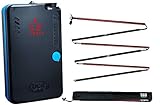
Overview: This two-piece kit pairs the user-friendly BCA Tracker S avalanche transceiver with a SnowBigDeal 260cm aluminum probe, providing essential tools for backcountry travel. The bundle addresses two-thirds of the critical rescue triad—beacon and probe—leaving only a shovel to complete your safety setup. Designed for skiers, snowboarders, and snowmobilers venturing into avalanche terrain, this package prioritizes simplicity when seconds count.
What Makes It Stand Out: The Tracker S beacon lives up to its name by stripping away complex features that can confuse during emergencies, offering straightforward transmit-and-receive functionality. The included aluminum probe features clear centimeter depth markings for accurate victim location. Purchasing these items together creates an immediate cost advantage over separate purchases while ensuring compatibility between essential rescue components.
Value for Money: At $299.95, this kit saves approximately $30-50 compared to buying the Tracker S ($280) and a comparable probe ($50-70) individually. This represents solid entry-level value, though the SnowBigDeal probe isn’t BCA-branded. For recreational users, the price point makes backcountry safety more accessible without compromising on the beacon’s proven performance.
Strengths and Weaknesses:
- Strengths: Industry-leading beacon simplicity; durable aluminum probe; cost-effective bundle; immediate readiness for two-thirds of rescue scenarios.
- Weaknesses: Shovel not included (required for complete safety); probe is third-party brand; 260cm length adequate but not longest available.
Bottom Line: An excellent starter package for those new to backcountry travel who already own or plan to purchase a shovel separately. The Tracker S beacon’s reputation makes this kit a trustworthy foundation for avalanche safety.
2. BCA Backcountry Access Tracker S Avalanche Beacon Transceiver

Overview: This standalone Tracker S transceiver is the digital heart of avalanche rescue, operating at the 457 kHz international standard frequency. With a 55-meter maximum range and 50-meter search strip width, it provides reliable performance for backcountry enthusiasts who already own compatible probes and shovels. The unit delivers a minimum of one hour search time after 200 hours in transmit mode, ensuring longevity during extended trips.
What Makes It Stand Out: BCA’s Tracker S eliminates professional-grade complexities while retaining the core performance of their flagship models. The real-time display provides instant distance and direction feedback without motion-sensing features that can confuse recreational users. Its reputation as North America’s most widely used transceiver stems from intuitive operation that reduces cognitive load during high-stress searches.
Value for Money: Priced at $279.95, this represents the baseline cost for a proven digital beacon. While cheaper analog units exist, they lack the speed and simplicity of the Tracker’s three-antenna design. Competitors with similar specs typically cost $300+, making this a competitively priced option from a trusted brand. The investment is justified by reliability when lives depend on it.
Strengths and Weaknesses:
- Strengths: Proven three-antenna digital technology; intuitive interface; excellent battery life; 55m range covers standard search areas; lightweight design.
- Weaknesses: No probe or shovel included; lacks professional features like motion sensing; plastic housing may show wear over multiple seasons.
Bottom Line: Ideal for experienced backcountry travelers needing to replace an old beacon or complete a custom safety kit. The Tracker S remains the gold standard for simplicity and reliability.
3. SnowBigDeal Avalanche Rescue Bundle - BCA Tracker S Avalanche Beacon, 260cm Avalanche Probe, Rescue Shovel w/Saw
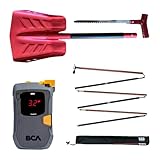
Overview: This comprehensive three-piece bundle delivers everything needed for avalanche rescue in one package. Combining the trusted BCA Tracker S beacon with SnowBigDeal’s 260cm aluminum probe and a versatile rescue shovel featuring an integrated saw, it eliminates guesswork for those building their first safety kit. The shovel’s extendable handle and “hoe mode” conversion enhance snow-moving efficiency during critical excavations.
What Makes It Stand Out: Complete integration sets this apart—no need to research separate components or worry about compatibility. The shovel’s dual-function design with a built-in saw adds backcountry utility beyond rescue scenarios. The Tracker S beacon provides the same reliable performance found in premium setups, while the probe’s depth markings ensure precise victim location. This all-in-one approach accelerates readiness for backcountry novices.
Value for Money: At $359.99, this bundle offers exceptional savings. Purchasing the Tracker S ($280), a comparable probe ($50), and a feature-rich shovel ($60-80) separately would exceed $390. The included saw functionality and hoe-mode shovel typically command premium pricing, making this package nearly $50-70 less expensive than assembling equivalent components individually.
Strengths and Weaknesses:
- Strengths: Complete rescue kit in one purchase; cost-effective bundling; versatile shovel with saw; Tracker S beacon reliability; immediate backcountry readiness.
- Weaknesses: Probe and shovel are third-party brands; may lack durability of premium BCA accessories; 260cm probe shorter than some alternatives.
Bottom Line: The best value complete kit for recreational users. It provides professional-level beacon performance with capable accessories at a price that undercuts individual component purchases.
4. BCA BACKCOUNTRY ACCESS Tracker S Avalanche Beacon Rescue Package

Overview: This premium all-BCA package pairs the Tracker S beacon with the Stealth 270 probe and Dozer 1T shovel, creating a unified rescue system from the industry’s leading brand. The 270cm probe offers extended reach over standard 260cm models, while the lightweight aluminum shovel provides professional-grade snow removal. Every component shares BCA’s design philosophy of simplicity under pressure.
What Makes It Stand Out: Brand consistency ensures seamless integration and unified quality control across all components. The Stealth 270 probe features BCA’s quick-lock mechanism and depth markings, while the Dozer 1T shovel’s ergonomic handle and durable blade outperform generic alternatives. This package reflects the exact setup used by many ski patrols and guides, offering recreational users professional-equipment confidence.
Value for Money: At $369.00, this is the most expensive option, but justifiably so. The premium BCA probe ($70) and shovel ($80) would cost $430+ when purchased separately with the beacon. You’re paying approximately $50 more than mixed-brand kits for guaranteed component quality and the 270cm probe’s extra length, which can be critical in deep burials.
Strengths and Weaknesses:
- Strengths: All-BCA quality assurance; longer 270cm probe; professional-grade shovel; unified design language; superior durability for frequent use.
- Weaknesses: Highest price point; marginal benefits for occasional users; Tracker S lacks professional motion-sensing features despite premium accessories.
Bottom Line: Worth the premium for dedicated backcountry enthusiasts who prioritize brand consistency and professional-grade durability across their entire rescue kit.
5. BCA Tracker S Avalanche Beacon Transceiver

Overview: BCA positions the Tracker S as their accessible rescue solution, bringing professional-level multi-antenna technology to the recreational market. As the most widely used transceiver across North America, it balances performance with approachability. The device mirrors the Tracker3’s core functionality while omitting advanced features like motion detection that primarily benefit snow professionals rather than weekend warriors.
What Makes It Stand Out: The Tracker S inherits BCA’s pioneering digital multi-antenna technology that revolutionized rescue speeds. Its dominance in the market creates a network effect—more users mean more potential rescuers familiar with its operation. The transceiver’s real-time display provides instant feedback without menu-diving complexity, crucial when training is limited or stress is high.
Value for Money: At $289.95, this sits $10 above the stripped-down Tracker S price, reflecting BCA’s brand premium and market leadership. While functionally identical to the $279 version, the packaging and marketing emphasize its heritage. Compared to competitors like the Ortovox Zoom+ ($280) or Pieps DSP Sport ($300), the Tracker S offers superior ease-of-use at a competitive mid-range price.
Strengths and Weaknesses:
- Strengths: Market-leading simplicity; proven multi-antenna performance; massive user base familiarity; real-time display; lightweight construction.
- Weaknesses: $10 premium over identical hardware; no bundled accessories; plastic housing durability concerns; lacks professional-grade features.
Bottom Line: Pay the slight premium for the peace of mind that comes with owning the industry’s most recognized and trusted beacon. The Tracker S remains the smartest choice for most recreational backcountry travelers.
6. BCA Backcountry Access T4 Turbo Avalanche Beacon Kit Rescue Package - Includes The Tracker 4 Transceiver, 300 Centimeter Avalanche Probe, and Shovel with Saw.

Overview: The BCA T4 Turbo Avalanche Beacon Kit is a comprehensive rescue package designed for serious backcountry enthusiasts. This all-in-one bundle includes the cutting-edge Tracker 4 transceiver, a Stealth 300 centimeter probe, and the versatile Dozer 2H-S shovel with integrated saw. At $501.49, it’s positioned as a premium solution for skiers, snowboarders, and snowmobilers who refuse to compromise on safety equipment. The complete system ensures you have every tool needed for companion rescue in a single purchase.
What Makes It Stand Out: The Tracker 4 beacon represents BCA’s latest technology with enhanced signal processing and user-friendly interface. The 300cm probe offers superior reach for deep burials compared to standard 240cm models. The Dozer 2H-S shovel’s convertible hoe mode significantly increases snow-moving efficiency, while the integrated saw adds versatility for shelter building or snow science. Weighing just 7.6oz, the beacon won’t burden your pack, though the complete kit totals approximately 3.5 pounds, a worthwhile trade-off for complete protection.
Value for Money: While $501.49 seems steep, purchasing these components separately would exceed $550. The Tracker 4 alone commands a premium, and the specialized shovel with saw adds unique value. For dedicated backcountry riders who venture into avalanche terrain frequently, this investment in professional-grade gear is justified. Casual users might find better value in simpler bundles, but serious enthusiasts appreciate having no compromises.
Strengths and Weaknesses: Strengths include complete coverage with all three rescue essentials, top-tier Tracker 4 performance, extended probe length, and the innovative hoe-mode shovel. The professional-grade build quality inspires confidence. Weaknesses are the premium price point, total weight for weight-conscious tourers, and potential feature overload for beginners who may not utilize all capabilities immediately.
Bottom Line: This kit is the gold standard for serious backcountry travelers and professionals. If you demand the best performance across all rescue components and frequent avalanche terrain, the T4 Turbo package delivers unmatched capability and peace of mind that justifies every dollar.
7. SnowBigDeal Bundle Backcountry Access BCA Tracker 3 Avalanche Beacon Avalanche Transceiver + 240cm Avalanche Rescue Snow Probe Avy Package for Backcountry ski + Snowmobile
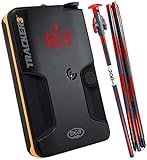
Overview: The SnowBigDeal Bundle pairs the reliable BCA Tracker 3 avalanche beacon with a 240cm rescue probe, creating a streamlined package for backcountry skiers and snowmobilers. Priced at $339.95, this bundle focuses on the two most critical pieces of avalanche rescue equipment without adding unnecessary complexity or cost. It’s an efficient solution for those who prioritize essential functionality over comprehensive kits.
What Makes It Stand Out: The Tracker 3 is a proven three-antenna digital transceiver with multiple-burial suppression capabilities, offering intuitive operation when seconds count. The bundle’s 240cm probe strikes a balance between compact portability and effective depth reach. SnowBigDeal’s packaging includes everything needed: beacon with harness and batteries, plus the probe, making it ready for immediate field use without additional purchases.
Value for Money: At $339.95, this represents solid mid-range value. The Tracker 3 typically retails around $300 alone, making the probe essentially a $40 addition. Compared to buying separately, you save approximately $30-50. For riders who already own a shovel or prefer to select one separately, this focused bundle eliminates redundancy while providing core rescue capability at a reasonable price point.
Strengths and Weaknesses: Strengths include proven Tracker 3 reliability, cost-effective bundling, lightweight design, and immediate deployment readiness. The 240cm probe is adequate for most scenarios. Weaknesses include the lack of a shovel (requiring separate purchase), shorter probe length limiting deep burial effectiveness, and the Tracker 3 being a previous-generation model compared to the Tracker 4.
Bottom Line: This bundle is perfect for budget-conscious backcountry enthusiasts who need reliable core rescue gear. If you already own a quality shovel or want to select one separately, this package delivers essential beacon and probe performance at an attractive price point that won’t break the bank.
8. Bundle Backcountry Access BCA Tracker 3 Avalanche Beacon Avalanche Transceiver + 270cm Avalanche Rescue Snow Probe Avy Package for Backcountry ski + Snowmobile
Overview: This bundle upgrades the standard Tracker 3 package with a longer 270cm avalanche probe, offering enhanced reach for serious backcountry missions. At $364.95, it targets skiers and snowmobilers who want the proven Tracker 3 beacon with extended probing capability without committing to a full three-piece kit. The modest price increase over shorter probe bundles makes it an attractive middle-ground option.
What Makes It Stand Out: The 270cm probe provides 30cm additional reach over standard lengths, potentially crucial in deep burial scenarios. The Tracker 3’s three-antenna system with multiple-burial suppression remains a reliable choice for complex rescue situations. This bundle maintains the same user-friendly interface and rapid signal acquisition that made the Tracker 3 a backcountry favorite among guides and recreational users alike.
Value for Money: The $364.95 price represents a $25 premium over the 240cm version, which is reasonable for the extended probe length. Considering the Tracker 3’s $300 individual price, you’re getting the 270cm probe for approximately $65, versus $80-90 purchased separately. This offers modest savings while providing enhanced capability over shorter probes, making the upgrade financially sensible.
Strengths and Weaknesses: Strengths include the proven Tracker 3 platform, extended probe reach, cost-effective upgrade path, and lightweight portability. The bundle covers the two most time-sensitive rescue components. Weaknesses mirror the 240cm version: no shovel included, and the Tracker 3 lacks some refinements of the newer Tracker 4. The longer probe adds minimal weight but slightly more pack bulk.
Bottom Line: Ideal for riders who prioritize probe depth without needing a complete kit. The 270cm probe offers meaningful extra reach for marginal cost, making this bundle smart for those operating in areas with deeper snowpacks or higher avalanche risk where every centimeter counts.
9. BCA Tracker 3 Avalanche Transceiver Beacon

Overview: The BCA Tracker 3 Avalanche Transceiver is the standalone beacon from Backcountry Access’s popular line, priced at $299.97. This three-antenna digital transceiver delivers professional-grade performance for backcountry enthusiasts who already own compatible probes and shovels or prefer to select rescue components individually. It represents focused investment in core transceiver technology.
What Makes It Stand Out: The Tracker 3’s reputation for simplicity and speed makes it a favorite among guides and recreational users alike. Its three-antenna system provides accurate direction and distance readings, while multiple burial indicators help prioritize rescue efforts. The auto-revert mode automatically switches back to transmit if the rescuer becomes motionless, adding a critical safety layer. The included harness and batteries ensure immediate deployment.
Value for Money: At $299.97, the Tracker 3 sits in the mid-to-upper price range for digital beacons. While not cheap, it undercuts premium models like the Tracker 4 by $50-75 while retaining most core functionality. For users with existing probe and shovel setups, this focused investment prevents redundant purchases. However, bundle deals often provide better overall value if you need all three components.
Strengths and Weaknesses: Strengths include proven reliability, intuitive interface, rapid signal acquisition, multiple burial processing, and the safety-enhancing auto-revert feature. It’s lightweight at under 8 ounces. Weaknesses include being a previous generation model, lacking some Tracker 4 refinements, and requiring separate probe/shovel purchases. The display, while clear, shows its age compared to newer interfaces.
Bottom Line: Purchase the Tracker 3 if you need a dependable, no-frills beacon and already own quality probes and shovels. It’s a solid choice for experienced users who value proven performance over having the latest features and want to avoid kit redundancy.
10. SnowBigDeal BCA Tracker 3 Avalanche Beacon + 260cm Avalanche Probe 260cm SBD Probe
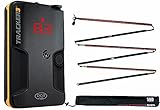
Overview: SnowBigDeal’s custom bundle combines the BCA Tracker 3 beacon with their proprietary 260cm aluminum avalanche probe for $349.95. This package targets value-focused backcountry riders seeking a middle-ground probe length between standard 240cm and extended 270cm options, paired with a trusted transceiver. It’s a clever niche offering.
What Makes It Stand Out: The 260cm SBD probe offers a unique length not typically found in standard BCA kits, providing 20cm extra reach over 240cm models while remaining more compact than 270cm versions. SnowBigDeal’s bundling strategy creates a cost-effective entry point for riders wanting slightly enhanced probing capability without the premium price of top-tier kits from major brands.
Value for Money: At $349.95, this bundle positions itself as a smart middle-market option. The Tracker 3 accounts for approximately $300 of the cost, making the SBD 260cm probe a $50 addition—significantly less than comparable probes purchased separately. This represents better value than buying components individually, though savings are modest compared to other bundles. The custom probe length adds unique value.
Strengths and Weaknesses: Strengths include the reliable Tracker 3 platform, custom 260cm probe length offering balanced reach and packability, attractive pricing, and included harness and batteries. The aluminum probe provides durability. Weaknesses include the lack of a shovel, SBD probe being less proven than BCA’s Stealth series, and the Tracker 3’s dated feature set compared to newer beacons.
Bottom Line: This bundle suits cost-conscious riders wanting slightly more probe length than standard offerings. The 260cm probe hits a sweet spot for many conditions, making this a practical choice for those building their first complete rescue kit or upgrading incrementally without breaking the bank.
Understanding Avalanche Beacons: Your Digital Lifeline
An avalanche beacon—technically a transceiver—is a radio transmitter and receiver operating on the international standard 457 kHz frequency. In transmit mode, it continuously emits a pulsed signal. In search mode, it detects these signals and guides rescuers to buried victims. Unlike the glorified proximity detectors of the 1980s, modern digital beacons are sophisticated computers that interpret signal strength, flux lines, and multiple frequencies to build a three-dimensional map of what’s beneath the surface. For side-country riders, this technology bridges the critical gap between burial and survival, where every minute reduces survival rates by 10%.
The Physics Behind the Signal
The 457 kHz signal propagates through snow as an electromagnetic field, creating elliptical flux lines that radiate from the buried transmitter. Your searching beacon doesn’t just measure distance—it interprets the shape and strength of these fields. The challenge in wet coastal snow versus dry continental powder is significant; dense snow attenuates signals, reducing effective range by up to 30%. Side-country riders often encounter variable snowpack conditions within a single run, meaning your beacon must perform reliably in everything from wind-affected crust to deep facets. Understanding that your device is interpreting physics, not magic, helps you trust its readings when seconds count.
Digital vs. Analog: Evolution of Rescue Technology
The analog beacons of yesteryear required users to interpret audible beeps, a skill that demanded extensive practice and nerves of steel. Digital beacons revolutionized search by converting signals into intuitive directional arrows and distance readings. But here’s what manufacturers don’t advertise: digital processing introduces a slight lag, typically 1-3 seconds, as the computer crunches data. For single burials, this trade-off is negligible. In multiple burial scenarios—more common in side-country where groups travel together—that processing time compounds. Modern hybrid systems offer the best of both worlds, providing digital guidance with analog audio overlays for experienced users who want raw data without interpretation delays.
Why Side-Country Riders Can’t Afford to Skip This Gear
Resort-adjacent terrain breeds a false sense of security. Ski patrol manages in-bounds avalanches, but the moment you duck that rope, you’re in unmanaged terrain with the same instability issues as the backcountry. Side-country riders face unique risks: compact groups, frequent route-following behavior, and the tendency to push deeper after each lap. A 2022 study showed that side-country incidents have a 15% higher multiple-burial rate than remote backcountry accidents because riders stay within each other’s slide paths. Your beacon isn’t just for you—it’s for your crew, and they’re counting on it to work when their own device is buried under a ton of moving snow.
Key Features That Separate Good Beacons from Great Ones
When evaluating beacons, look beyond the flashy marketing. The difference between adequate and exceptional lies in nuanced features that only become apparent during high-stress searches. Processing speed, signal suppression algorithms, and user interface clarity separate devices that merely function from those that perform under pressure. Side-country riders should prioritize features that address group dynamics: clear multiple burial indicators, flagging functions that actually work, and intuitive controls that don’t require fine motor skills when your hands are shaking from adrenaline and cold.
Range Realities: What Those Numbers Actually Mean
Manufacturers tout ranges of 50, 60, even 70 meters, but these are laboratory measurements in ideal conditions. Real-world performance drops significantly when antennas aren’t perfectly aligned—a common scenario with tumbling riders. For side-country use, focus on effective range rather than maximum range. A beacon that maintains consistent signal lock at 40 meters in varied orientations outperforms one that hits 60 meters only with perfect alignment. Digital signal processing can extend apparent range, but may introduce phantom readings at the fringe. Test your beacon’s real-world range by burying it in a backpack at various angles and conducting timed searches in different snow conditions.
Multiple Burial Scenarios: When Things Get Complicated
The side-country’s social nature means you’re rarely riding alone. When multiple riders get caught, your beacon must distinguish between overlapping signals—a task that pushes technology to its limits. Advanced beacons use signal suppression to “ignore” a found victim once flagged, allowing you to focus on the next signal. But suppression isn’t perfect; signals can bleed through, especially when victims are close together. Some devices use micro-timing variations to separate signals, while others rely on directional masking. Understand your beacon’s specific multiple burial strategy by practicing with three or more buried units spaced 5-10 meters apart, simulating realistic side-country scenarios where riders fall in a cluster rather than a line.
Display Technology: Reading the Story Your Beacon Tells
Screen clarity in bright sunlight and driving snow is non-negotiable. OLED displays offer superior contrast but consume more battery. LCD screens with LED backlighting provide better power efficiency but can wash out in direct light. The real innovation lies in directional arrow algorithms—how the beacon interprets flux lines into guidance. Some use simple proximity-based arrows that jump erratically near a burial, while others employ predictive algorithms that smooth the path. For snowboarders wearing gloves, button size and spacing matter enormously. Can you operate it with mittened hands? Are the buttons distinguishable by feel alone? These tactile details become critical when you’re not looking at the device.
Battery Life: Power Management in the Cold
Lithium batteries perform better in cold than alkaline, but their voltage curve drops sharply at end-of-life, giving little warning before failure. Alkaline batteries provide gradual degradation, allowing you to notice sluggish performance before complete shutdown. For side-country riders doing multiple laps, battery life isn’t just about total hours—it’s about consistent performance across a full day of temperature fluctuations. Cold starts, pocket warmth, and intermittent use create a power draw pattern different from continuous backcountry tours. Carry spares in an interior pocket, not your pack, and change batteries when they hit 50% capacity, not when they’re dead. A beacon with a 200-hour transmit life might only deliver 15 hours of active searching, a crucial distinction for practice sessions.
Size, Weight, and Ergonomics: The Carry Factor
Modern beacons weigh as little as 150 grams, but ultra-compact designs sacrifice antenna separation, potentially reducing range and accuracy. For snowboarders, the carry position matters more than weight. The harness system must work with your outerwear’s pocket configuration and layering system. Some riders prefer chest harnesses for accessibility; others opt for internal pockets for streamlined riding. Consider how the beacon sits when you’re strapped in—does it dig into your ribs when you bend? Can you access it quickly with your board still attached? The best beacon is the one you’ll actually wear every time, not the one with the smallest spec sheet.
Durability and Weatherproofing: Built for the Mountain
IP67 ratings mean dust-tight and water-resistant to 1 meter for 30 minutes—adequate for most scenarios but not immersion. Side-country riders face unique abuse: chairlift impacts, tree jibs, and the occasional tomahawk through spring slush. Look for beacons with recessed screens and reinforced corners. The battery compartment seal is the most common failure point; a double-locking mechanism prevents accidental opening during a tumble. Cold-weather plastics become brittle, so flexural strength matters more than you think. A beacon that cracks at -20°C is worthless in mid-winter conditions.
Software and Firmware: The Invisible Upgrade
Your beacon’s hardware is static, but its brain evolves. Manufacturers release firmware updates that improve search algorithms, fix bugs, and occasionally add features. Some require factory service; others allow user updates via Bluetooth and a smartphone app. This matters for side-country riders because search protocols evolve as accident data reveals new patterns. A beacon that can’t be updated is frozen in time, potentially using outdated logic. Check how many updates a manufacturer has released in the past three years—frequent updates indicate active development and responsiveness to field data.
Certification Standards: What the Acronyms Mean
The EN 300718 standard governs European beacons, while North America relies on ASTM F2090. These certifications test basic transmit/receive functions but don’t evaluate user interface or multiple burial performance. The UIAA 152 standard is more rigorous, requiring specific multiple burial tests and interference resistance. However, certification is voluntary, and some excellent beacons exceed standards without formal UIAA approval. For side-country use, focus less on which badge is on the box and more on real-world performance reviews from professional guides who test in actual rescue scenarios, not laboratories.
The Price Spectrum: Investing in Your Safety
Beacons range from $250 to $500, but price doesn’t always correlate with performance. Budget models often lack advanced multiple burial features but excel at single-victim searches—perfect for solo riders or pairs. Premium devices offer sophisticated signal processing and larger displays, beneficial for group leaders or those who frequently ride with three or more. Consider the total cost of ownership: battery type, update requirements, and warranty service. A $300 beacon that lasts eight years costs less annually than a $500 unit you replace in three due to frustration with complexity. For side-country riders, the sweet spot often lies in mid-range devices that balance essential features with intuitive operation.
Practice Makes Perfect: Training Regimens That Actually Work
Owning a beacon without practice is like owning a board you’ve never ridden. Monthly practice sessions should include timed single-burial searches under 5 minutes and multiple-burial scenarios that force you to use flagging functions. Practice in realistic conditions: during snowstorms, at twilight, and while wearing your actual riding gear. The side-country mindset often involves quick decisions and faster riding, so practice should simulate stress. Buried beacons should be in realistic positions—upside-down, on edge, partially shielded by rocks. Time yourself not just to finding the signal, but to the probe strike. Remember, your beacon gets you close; your probe confirms the location. Without both skills, you’re just a fast searcher with a fancy radio.
Common Mistakes That Render Beacons Useless
The most frequent error is forgetting to switch from receive back to transmit after a search—a mental lapse that happens to experienced riders under stress. Another is wearing the beacon near electronics: cell phones, GoPros, and heated gloves can interfere with both transmit and receive functions. Keep it 20cm from any other device. Battery management failures account for 12% of beacon malfunctions in rescue reports. Perhaps most insidious is the “beacon in the pack” syndrome, where riders stash it in a backpack instead of wearing it on their body. In an avalanche, packs can be torn off or buried separately. Your beacon must be on your torso, under your outer layer but over your base layer, secured in a harness or dedicated pocket.
Integration with Your Existing Safety System
Your beacon is one node in a triangle that includes your shovel and probe. A carbon probe might save 100 grams, but can you penetrate dense debris? Your shovel blade should move snow efficiently—plastic blades are lighter but can shatter in frozen debris. More importantly, consider how these tools work together. Can you deploy your probe with gloves on? Is your shovel handle long enough to dig effectively? For side-country riders, integration extends to your pack: quick-access pockets for shovel and probe, and a design that doesn’t compromise beacon wearability. Some riders add an avalanche airbag, but understand this: airbags reduce burial depth, they don’t prevent burial. Your beacon remains essential even with airbag deployment.
Maintenance and Long-Term Care
Beyond battery changes, annual function tests are critical. Most manufacturers offer free testing at ski shows or via mail-in programs. The antenna connections can loosen over years of vibration; symptoms include intermittent signal drop during searches. Store your beacon at room temperature with batteries removed during summer months—long-term battery contact can corrode terminals. The harness elastic degrades with UV exposure; replace it every three years even if it looks fine. For side-country riders who might only use their beacon 15-20 days per year, the calendar matters more than usage days. A five-year-old beacon used lightly may be less reliable than a two-year-old beacon used heavily, simply due to component aging.
Frequently Asked Questions
Can I use my smartphone as an avalanche beacon? No. While some apps claim to mimic beacon functionality, they lack the dedicated 457 kHz transmitter, proper antenna design, and rugged reliability required for life-safety equipment. Phones operate on completely different frequencies and cannot communicate with standard beacons. More critically, phone batteries fail rapidly in cold, and touchscreens become unusable with gloves or when wet. Your phone is a fantastic tool for mapping and communication, but it cannot replace a certified avalanche transceiver.
How often should I replace my avalanche beacon? Industry standards suggest every 5-7 years, but this depends on usage and technology advances. If your beacon lacks modern multiple burial capabilities or cannot be firmware-updated, consider upgrading sooner. A beacon that’s physically fine but uses outdated search algorithms is a liability. Conversely, a well-maintained, updateable beacon used lightly might serve you for 8-10 years. The key is annual function testing and honest assessment of whether its features match your riding style.
What’s the real difference between 1, 2, and 3 antenna beacons? Single-antenna beacons are obsolete, offering only distance without direction. Dual-antenna units provide directional guidance but struggle with edge-on orientations. Triple-antenna beacons resolve this by using a third vertical antenna to calculate depth and maintain directional accuracy regardless of burial orientation. For side-country riders, triple-antenna is non-negotiable. The price difference is negligible compared to the performance gap, especially in complex rescue scenarios where every second matters.
Do I really need a beacon for side-country if I’m just ducking one rope? Absolutely. Avalanche terrain is defined by slope angle and snowpack, not proximity to lifts. Many side-country slides occur within sight of the resort, often on slopes that appear benign. The rope is a legal boundary, not a magical force field. Side-country terrain is unmanaged, uncontrolled, and carries the same risks as remote backcountry. If you’re traveling on or below slopes steeper than 30 degrees, you need a beacon, period.
Can beacons interfere with each other during a search? Yes, and this is where technology differences become critical. When multiple beacons transmit simultaneously, their signals can overlap, creating ghost signals or false distances. Advanced beacons use signal suppression and timing algorithms to isolate individual signals. In large groups, staggering beacon check intervals can help, but ultimately, your device’s ability to handle interference determines search efficiency. Practice with your entire group to understand how your specific beacons interact.
How deep can beacons actually detect victims? Laboratory tests show detection up to 80 meters, but realistic burial depths reduce this to 40-50 meters for reliable signal lock. Beyond 2 meters of depth, survival rates plummet, so maximum range is less critical than rapid pinpointing in the 0-5 meter range. Deep burial searches require grid patterns and careful signal tracking. For side-country riders, focus on speed in the final 10 meters rather than maximum range—most side-country burials are relatively shallow but happen in high-consequence terrain.
Is buying a used beacon a smart way to save money? Generally, no. Beacons are life-safety equipment with invisible wear. Antenna damage, battery corrosion, and firmware obsolescence aren’t apparent in a casual test. Without a full diagnostic from the manufacturer, you can’t verify performance. A used beacon might be 30% cheaper but represents 100% of the risk. If budget is tight, buy a new, basic triple-antenna model rather than a used premium unit. The warranty and known history are worth the premium.
What’s the learning curve for becoming proficient? Basic single-victim searches take about 4-6 hours of practice to achieve consistent sub-5-minute times. Multiple burial proficiency requires 15-20 hours of structured training. But muscle memory fades without maintenance. Plan on 2-3 practice sessions per month during season, each lasting 30-45 minutes. The side-country rider’s challenge is practicing realistic stress—your heart rate during a real rescue will be 160+ bpm. Simulate this with timed drills, complex terrain, and distraction. Proficiency isn’t a destination; it’s a subscription you renew with practice.
Can I travel internationally with my avalanche beacon? Yes, the 457 kHz frequency is global. However, some countries have specific certification requirements for import. Carry it in your carry-on luggage—checked bags can be exposed to extreme cold and rough handling that damages electronics. Declare it as safety equipment at customs if asked. Some older analog beacons use slightly different frequencies; if you’re traveling with vintage gear (which you shouldn’t be using anyway), verify compatibility. Modern digital beacons work worldwide without issue.
Do beacons perform differently in wet snow versus dry powder? Significantly. Wet, dense snow attenuates signals more than dry snow, reducing effective range by 20-30%. Maritime snowpacks like those in the Pacific Northwest challenge beacons more than continental interiors. This affects side-country riders disproportionately, as many side-country zones are in wet snow climates. Practice in the conditions you ride. A beacon that performs flawlessly in Colorado’s dry snow might struggle in California’s Sierra cement. Test your device in local snow conditions to understand its real-world range and behavior.