The rhythmic thud of a basketball against pavement, the crisp snap of the net, the solitary echo of sneakers squeaking on concrete—these are the sounds of dedicated players putting in work when no one’s watching. But let’s be honest: chasing down every rebound during solo shooting sessions is the ultimate motivation killer. You finally find your rhythm, sink three in a row, then spend the next two minutes retrieving balls from the garden, behind the fence, or wedged beneath your car. Enter the basketball shot returner—a training innovation that transforms inefficient solo sessions into high-repetition, flow-state shooting workouts that mirror the intensity of team practices.
Whether you’re a middle-schooler building fundamentals, a high school athlete chasing a scholarship, or a weekend warrior refining your corner three, understanding how to select and utilize the right shot returner can revolutionize your development curve. This comprehensive guide dives deep into everything from trajectory physics to material durability, ensuring you make an informed decision that matches your specific training goals, space constraints, and skill level.
Top 10 Basketball Shot Returners for Solo Practice
Detailed Product Reviews
1. SKLZ Kick-Out Basketball Return Attachment

Overview: The SKLZ Kick-Out Basketball Return Attachment delivers essential rebounding assistance for players seeking to maximize practice efficiency without breaking the bank. This straightforward device attaches to standard basketball rims and uses a rotating chute to redirect made shots back toward the shooter, eliminating the need for constant ball retrieval during solo training sessions.
What Makes It Stand Out: The integrated twist-adjustment handle allows for tool-free angle changes between shots, a feature rarely found in this price range. Its rotating chute provides reliable return coverage for most shooting positions, while the durable construction promises multiple seasons of consistent performance. The quick-assembly design means you’ll spend less time fiddling with installation and more time perfecting your jumper.
Value for Money: At $43.97, this represents one of the most accessible entries into shot-returner technology. While premium models offer wider return arcs or metal construction, the Kick-Out provides core functionality at nearly half the cost of mid-tier competitors. It’s an ideal starting point for younger players or families wanting to test the concept before investing heavily.
Strengths and Weaknesses: Strengths include its affordable pricing, intuitive adjustment mechanism, and proven durability. The lightweight design facilitates easy removal when not needed. Weaknesses are the limited return angle compared to 180° or 360° systems, potential compatibility issues with non-standard rims, and plastic construction that may show wear faster than metal alternatives under heavy dunking stress.
Bottom Line: The SKLZ Kick-Out is a practical, budget-conscious choice for recreational players and developing athletes who want to increase shooting repetitions without the premium price tag. It delivers reliable performance where it counts most.
2. FORZA Basketball Shot Returner |180° Ball Return System for Rapid Shooting Drills – Easy Snap-Button Assembly – Compatible with All Basketball Hoops – Weatherproof & Durable Design
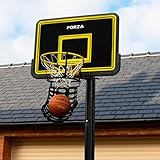
Overview: The FORZA Basketball Shot Returner positions itself as a serious training tool designed for athletes committed to elevating their shooting efficiency. This 180-degree ball return system attaches to any netted rim and creates a rapid-fire training environment that minimizes downtime between shots, making it perfect for both solo practice and team drills.
What Makes It Stand Out: The high-grade, shatter-proof plastic construction delivers genuine weatherproof performance for year-round outdoor use, while the innovative snap-button assembly system eliminates frustrating tool-based installation. Its sleek jet-black aesthetic reduces visual distraction, keeping players mentally locked in during repetitive shooting sessions. The universal compatibility ensures seamless integration across virtually all standard basketball systems.
Value for Money: Priced at $76.99, the FORZA sits in the competitive mid-range segment. You’re paying a premium over basic models for the durable weatherproofing, secure strap system, and professional appearance. For players training outdoors regularly, the weather resistance alone justifies the additional cost compared to entry-level plastic alternatives that may crack in extreme conditions.
Strengths and Weaknesses: Strengths include exceptional durability, tool-free assembly, stable attachment system, and distraction-minimizing design. The 180-degree coverage handles most practical shooting angles effectively. Weaknesses include its higher price point relative to basic models and the lack of full 360-degree rotation found in some competitors at similar prices. The plastic construction, while durable, still doesn’t match the longevity of powder-coated metal alternatives.
Bottom Line: The FORZA is a robust, weather-ready solution for dedicated players seeking reliable performance without stepping into premium pricing territory. It strikes an excellent balance between functionality, durability, and ease of use.
3. Dr. Dish IC3 Basketball Shot Trainer Rebounder with Net Return System

Overview: The Dr. Dish IC3 Basketball Shot Trainer represents the professional-grade end of the shot returner spectrum, engineered for serious athletes and coaches who demand maximum training efficiency. This comprehensive system catches both made and missed shots, fundamentally transforming solo practice by eliminating ball retrieval entirely and enabling up to 800 shots per hour using a two-ball rotation.
What Makes It Stand Out: The elevated rebound net sits 17 inches above the rim, forcing shooters to develop proper arc and soft touch—a unique training feature absent in standard returners. The manual 180-degree rotating ramp allows precise ball placement anywhere on the court, while the integrated wheels and 35-pound weight make it genuinely portable between indoor and outdoor venues. This is a complete training station, not just an attachment.
Value for Money: At $499.99, the IC3 commands a premium price that reflects its professional capabilities. While exponentially more expensive than basic attachments, it delivers functionality comparable to full shooting machines costing thousands more. For high school programs, serious AAU players, or dedicated individuals logging daily practice hours, the investment pays dividends in shot volume and form improvement.
Strengths and Weaknesses: Strengths include unmatched shot retrieval efficiency, arc-training design, portability, and professional build quality. It handles both makes and misses, a game-changer for solo practice. Weaknesses are the substantial upfront cost and potential overkill for casual players. The manual rotation requires periodic adjustment during multi-angle drills, and storage requires more space than simple rim attachments.
Bottom Line: The Dr. Dish IC3 is a worthwhile investment for committed players and programs treating basketball development as a priority. For casual use, the price is prohibitive, but for serious training, it’s unmatched.
4. KingDolly 360° Rotatable Track Basketball Return Attachment, Powder-Coated Metal Basketball Rebounder, Basketball Returner for Solo Practice and Focused Training, Fits 18" Rim Indoor/Outdoor Use
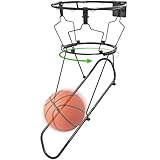
Overview: The KingDolly 360° Rotatable Track Basketball Return Attachment distinguishes itself through metal construction and comprehensive rotation capability at a competitive price point. This powder-coated steel rebounder offers full-circular ball return coverage, making it ideal for players dedicated to mastering shots from every angle on the court without constant manual adjustment.
What Makes It Stand Out: The 360-degree swivel track design provides unmatched shooting angle flexibility, allowing seamless transitions between free-throw practice, corner threes, and wing shots. Three anti-slip buckles deliver exceptional stability during high-intensity play and even dunking situations. The heavy-duty metal construction with corrosion-resistant finish ensures reliable performance across all weather conditions, from driveway sessions to indoor gym use.
Value for Money: At $68.39, KingDolly presents compelling value for those prioritizing durability and versatility. Metal competitors often exceed $100, making this an attractive middle-ground option. You’re investing in a longer-lasting material than basic plastic while gaining full rotation that 180-degree models can’t match, all without approaching premium price tiers.
Strengths and Weaknesses: Strengths include robust metal construction, complete 360-degree rotation, secure three-buckle attachment system, and weather-resistant powder coating. The precision-engineered track consistently returns balls to the shooter. Weaknesses include increased weight compared to plastic models, potentially longer assembly time, and a slightly higher price than entry-level options. The metal design may also pose a greater injury risk if players contact it during aggressive play.
Bottom Line: The KingDolly is an excellent choice for serious recreational players and developing athletes who want maximum shooting angle coverage and durable construction without professional-level expense. Its metal build and full rotation make it a long-term training partner.
5. Zoienu Portable Basketball Return Easy Setup Shot Returner for Solo Practice, Efficient Rebounder for Skill Improvement & Drills

Overview: The Zoienu Portable Basketball Return targets players seeking straightforward efficiency improvements during solo practice sessions. This shot returner focuses on delivering balls back to the shooter to maintain rhythm and form, supporting both individual training and two-person stationary shooting drills with its multi-directional return capabilities.
What Makes It Stand Out: The emphasis on weather-resistant PP material ensures stable performance across indoor and outdoor environments, while the clear component design prioritizes hassle-free assembly. The manufacturer prominently highlights responsive customer service, suggesting confidence in product support that many competitors overlook. Its design accommodates shooting practice from various angles without requiring constant manual repositioning.
Value for Money: At $120.06, Zoienu occupies a confusing middle ground—priced above basic plastic models but lacking the metal construction or 360° rotation of similarly-priced alternatives. The value proposition hinges on durability claims and customer service rather than innovative features. For buyers prioritizing support accessibility over advanced functionality, this premium may be justified, though most players would find better feature-per-dollar elsewhere.
Strengths and Weaknesses: Strengths include weather-resistant materials, straightforward assembly, and promised responsive customer service. The multi-directional return works adequately for basic drills. Weaknesses are the unclear feature differentiation, relatively high price for plastic construction, and vague product description that leaves specifications like return angle ambiguous. It faces stiff competition from both cheaper and better-equipped models at this price point.
Bottom Line: The Zoienu is a serviceable but overpriced option in a crowded market. While functional and backed by strong customer service, most buyers will find superior value in metal 360° models or established mid-range brands with clearer performance specifications.
6. Basketball Shooting and Training Equipment Aid, Perfect Shot Form Every Time, Great for All Ages
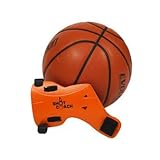
Overview: This shooting aid is a biomechanical training tool designed to ingrain proper shooting fundamentals through physical constraint and muscle memory development. Developed under the guidance of NCAA Division 1 sharpshooter Tucker Neale, it targets five critical shooting mechanics: follow-through, ready position, elbow alignment, thumb interference, and arm spacing. The device physically corrects form in real-time, making it suitable for youth players building foundational skills or advanced athletes refining their stroke.
What Makes It Stand Out: Unlike video tutorials or coaching apps, this trainer provides immediate tactile feedback that prevents bad habits before they crystallize. The professional pedigree adds credibility—Neale’s expertise as an international shooting coach ensures the device addresses the most common mechanical flaws. Its comprehensive approach tackles multiple form issues simultaneously rather than isolating single problems, creating a holistic training experience that accelerates improvement.
Value for Money: At $29.99, this represents significant savings compared to private coaching sessions that cost $50-100 hourly. The durable construction withstands repetitive use across seasons, making it a one-time investment for continuous skill development. While not the cheapest aid on the market, its multi-faceted correction system eliminates the need for several single-purpose trainers, delivering excellent long-term ROI for serious players.
Strengths and Weaknesses: Pros include expert-backed design, comprehensive form correction, and immediate results. The universal fit accommodates most players, and its simplicity requires no tech setup. Cons are the right-handed limitation, which excludes left-handed shooters entirely. The one-size approach may prove cumbersome for very young children with smaller arms, and success depends entirely on user discipline—it’s not a magic bullet without consistent practice.
Bottom Line: This is an excellent investment for dedicated right-handed players seeking professional-grade form correction without recurring coaching fees. It won’t replace a shooting coach entirely but serves as a powerful daily training companion that reinforces proper mechanics through repetition.
7. Basketball Rebounder with Rotating Track,Basketball Shot Trainer Rebounder with Net Return Systemfor Efficient Training, Suitable for Indoor & Outdoor Use, Easy Assembly & Convenient Storage

Overview: This premium rebounder system revolutionizes solo shooting practice by eliminating ball retrieval time. The manually rotating return ramp shoots made and missed shots back to the shooter, allowing up to 800 attempts per hour when using two balls—a threefold increase over traditional practice. Constructed with galvanized steel and a powder-coated finish, it’s engineered for year-round indoor and outdoor durability. The system folds into a compact 30" x 30" x 3.5" package for convenient storage.
What Makes It Stand Out: The 180-degree manual rotation is the game-changer, enabling shooters to practice from any court angle without repositioning the entire unit. This dynamic feedback loop builds court awareness while maintaining rhythm. The weather-resistant construction means you won’t be replacing it after one season, and the tool-free assembly makes it accessible for families without extensive DIY skills.
Value for Money: At $219.95, this is a substantial investment, but the math justifies the cost. If it saves 10 minutes of retrieval per hour and you practice 5 hours weekly, you gain over 40 hours of additional shooting annually—equivalent to months of extra training. Compared to cheaper nets that tangle or lack return capability, this professional-grade system pays dividends through unmatched efficiency and longevity.
Strengths and Weaknesses: Pros include exceptional shot volume increase, robust all-weather build, and space-saving storage. The rotating ramp provides versatile training angles. Cons are the premium price point that may deter casual players, manual rotation that briefly interrupts flow, and the assembly time required despite “easy” claims. The system works best with two balls to maximize efficiency.
Bottom Line: This rebounder is ideal for serious players, coaches, or families committed to high-volume shooting practice. While expensive, it transforms training efficiency in ways that justify the investment for those who’ll use it consistently. Casual players should consider simpler alternatives.
8. PBOBQ Basketball Shooting Trainer - Left & Right Handed Universal Basketball Shot Trainer - Eva Foam for Comfortable Feel

Overview: This minimalist shooting aid forces proper one-handed release by gently disabling the guide hand’s fingers, preventing “thumbing” and two-handed pushes. Made from soft EVA foam, it straps onto the non-shooting hand to eliminate its influence while maintaining comfort during repetitive drills. The ambidextrous design serves both right and left-handed shooters, and its one-size-fits-all approach accommodates youth through professional players. It addresses the most common shooting flaw—guide hand interference—through simple physical constraint.
What Makes It Stand Out: The universal left/right compatibility immediately distinguishes it from right-hand-only trainers, making it accessible to all players. The EVA foam construction provides surprising durability at an ultra-lightweight profile, ensuring it doesn’t alter the natural feel of shooting. Its simplicity is its genius—no apps, batteries, or complex adjustments; strap it on and start building muscle memory within minutes.
Value for Money: At $9.99, this is arguably the best value in basketball training equipment. It costs less than a basketball but corrects a fundamental flaw that plagues 90% of amateur shooters. While foam may eventually compress with heavy use, replacement is inexpensive. Compared to $30+ trainers, it delivers targeted correction without unnecessary complexity, making it accessible to every budget.
Strengths and Weaknesses: Pros include unbeatable price, ambidextrous design, immediate feedback, and comfortable foam padding. It’s lightweight and doesn’t impede dribbling or movement. Cons are limited scope—it only addresses guide hand issues, not elbow alignment or follow-through. The foam may wear with daily use, and some players find the strap loosening during intense sessions. It won’t help advanced players fine-tuning nuanced mechanics.
Bottom Line: This is the perfect entry-level tool for beginners and intermediate players struggling with guide hand interference. For less than the cost of a movie ticket, it delivers focused correction that builds proper muscle memory. Serious players may need additional tools, but everyone should start here.
9. KingDolly 360° Swivel Track Basketball Return Attachment, Basketball Rebounder with 3 Anti-Slip Buckles, Ball Return for Basketball Hoop for Solo Practice, Shooting Training Indoor/Outdoor

Overview: This mid-range return attachment delivers premium features without the premium price tag. The 360-degree swivel track allows shooters to adjust return angles instantly, enabling practice from free-throw line to three-point arc without repositioning. Three anti-slip buckles secure it firmly to most standard hoops, even during aggressive play. Constructed from powder-coated metal, it withstands outdoor elements and indoor wear. The precision-engineered track consistently returns balls to the shooter’s spot, tripling repetition rates for solo training sessions.
What Makes It Stand Out: The full rotation capability at this price point is exceptional, offering dynamic training typically found in $200+ systems. The anti-slip buckle system provides stability that cheaper clip-on models lack, crucial for maintaining rhythm during high-volume shooting. Its heavy-duty construction ensures longevity while remaining lightweight enough for quick installation and storage.
Value for Money: At $71.99, this hits the sweet spot between basic fixed-angle models and professional rebounders. You get 80% of a premium system’s functionality at one-third the cost. The durability means you won’t replace it annually, and the efficiency gains justify the investment within weeks for dedicated players. It’s a smart upgrade from entry-level attachments that frustrate with inconsistent returns.
Strengths and Weaknesses: Pros include versatile 360-degree rotation, robust metal construction, secure buckle system, and excellent return consistency. Setup is genuinely quick, and it handles all weather conditions. Cons include a price that may still deter casual players and potential compatibility issues with non-standard or older hoop designs. The return track requires occasional angle adjustment between drills, which briefly interrupts flow.
Bottom Line: This is the ideal choice for committed solo players seeking versatile rebound assistance without breaking the bank. It transforms practice efficiency through reliable, multi-angle returns. While not as automated as premium systems, its balance of features, durability, and price makes it a standout value for serious youth and adult players.
10. WodGod Basketball Return Attachment,Heavy Duty Basketball Rebounder Basketball Accessories for Outdoor and Indoor Use,Great for Solo Play and Practice,Black

Overview: This budget-friendly return attachment offers straightforward rebound assistance for players seeking basic efficiency gains. Constructed from high-quality metal with a black powder-coated finish, it attaches to most standard hoops using screws for semi-permanent installation. The fixed-angle design returns balls consistently to a predetermined spot, eliminating chase time and allowing more focused repetition. Its simple construction prioritizes durability over features, making it suitable for both driveway and indoor court use without complicated setup.
What Makes It Stand Out: The heavy-duty metal construction at this price point is remarkable—most competitors use plastic components that crack in cold weather. The screw-mounted design, while less convenient than clip-on models, provides rock-solid stability that won’t shift during play. It focuses on doing one thing well: returning the ball reliably from a single position, perfect for free-throw and short-range repetition.
Value for Money: At $20.99, this delivers professional-grade materials for entry-level pricing. While it lacks rotation features, it provides 70% of the benefit of premium systems at 10% of the cost. For players primarily practicing from one spot (free throws, corner shots), it’s arguably the smartest financial choice. The metal construction ensures multiple seasons of use, unlike $15 plastic alternatives that need annual replacement.
Strengths and Weaknesses: Pros include exceptional affordability, durable metal build, stable screw-mount installation, and smooth return track that rarely jams. It’s lightweight and unobtrusive. Cons are the fixed angle that limits training versatility, semi-permanent installation that complicates removal, and potential incompatibility with some hoop designs. The return arc isn’t adjustable, which may frustrate players wanting varied drills.
Bottom Line: This is the perfect solution for budget-conscious players who practice primarily from one location and value durability over features. It won’t replace a rotating system for advanced training, but it reliably delivers core rebound assistance at an unbeatable price. Ideal for beginners and casual shooters wanting more reps without complexity.
What Is a Basketball Shot Returner?
A basketball shot returner is a specialized training apparatus designed to capture made baskets and automatically redirect the ball back to the shooter, typically to a designated spot on the court. Unlike traditional rebounders that simply bounce the ball back randomly, true shot returners create a predictable, repeatable return path that maintains practice rhythm. These systems attach to or surround the rim and net assembly, using nets, ramps, or chutes to guide the ball back to you—eliminating the need to chase rebounds and allowing for 3-5 times more shots per hour compared to unassisted solo practice.
The Evolution of Solo Basketball Training
The concept of automated ball return isn’t new—coaches have been rigging up bedsheets and plywood for decades. However, modern engineering has transformed these DIY solutions into precision training tools. Early commercial models were bulky, rigid frames that often interfered with the ball’s entry or damaged easily. Today’s designs incorporate flexible composite materials, adjustable geometry, and physics-based trajectory calculations that work with the ball’s natural momentum rather than against it. This evolution reflects a broader shift in basketball training toward deliberate practice principles: maximum quality repetitions with minimal downtime.
Core Benefits of Using a Shot Returner
Repetition Density Multiplication is the primary advantage. A player shooting alone might average 30-40 shots in ten minutes; with an efficient returner, that number jumps to 120-150 shots in the same timeframe. But the benefits extend beyond volume. Rhythm Development occurs when you receive the ball at a consistent interval and location, building muscle memory for your shooting motion. Fatigue Training becomes more effective when you’re not getting rest periods while retrieving balls. Additionally, Shot Accountability increases—when the ball returns instantly, you can’t forget whether that last attempt was short or long; the immediate feedback loop reinforces correction. Finally, Mental Engagement stays elevated because you’re in constant movement, simulating game-like intensity even when training alone.
Types of Basketball Shot Returners
Understanding the four main architectural categories helps narrow your search based on your primary training environment and shot selection.
Net-Based Systems
These models use a circular or semi-circular net that hangs below the rim, creating a funnel effect. Made shots drop into the net, which channels the ball through a chute or sleeve back to the shooter. Net-based systems excel for mid-range and perimeter work because they don’t obstruct your view of the rim. They’re typically lighter and more portable, though they may struggle with high-velocity shots that can “punch through” the netting if the mesh isn’t taut enough. Look for models with reinforced rim attachments and weather-treated nylon if you’ll be practicing outdoors.
Ramp-Style Returners
Ramp systems feature a rigid or semi-rigid surface that slopes downward from the backboard, guiding the ball along a predictable path. These are exceptionally durable and handle high-volume shooting well, making them favorites for serious high school and college programs. The best ramp designs include adjustable angle settings that let you fine-tune return speed and direction. However, they can be heavier and may slightly obscure your view of the backboard’s sweet spot during certain angle shots.
Chute-Fed Systems
Chute-fed returners combine elements of both nets and ramps, using a collapsible fabric or plastic chute that attaches directly to the rim’s hooks. These are often the most affordable and portable options, folding down into compact packages for storage. The trade-off is precision—wind can affect lightweight chutes outdoors, and the return path may vary more than rigid systems. They’re ideal for younger players or those with limited storage space who prioritize convenience over pinpoint accuracy.
Hybrid Models
Hybrid systems integrate multiple return mechanisms, often featuring a primary ramp with secondary netting to handle errant shots or adjustable panels that convert between ramp and net configurations. These offer maximum versatility but typically come at a higher price point and weight. Consider hybrids if you train multiple players of different heights and skill levels, or if you want one system that works equally well for free throws and three-point practice.
Key Features to Evaluate Before Buying
Material Quality and Durability
The difference between a $50 and $300 shot returner often lives in the materials. Frame components should be powder-coated steel or aircraft-grade aluminum to resist rust and bending. Netting needs UV-stabilized, high-denier nylon (at least 420D) that won’t fray after 10,000 shots. Connection points—where the system attaches to your rim—experience the most stress; look for reinforced stitching, double-riveted brackets, and silicone-dampened joints that absorb vibration. For outdoor use, avoid systems with untreated metal or thin plastic components that become brittle in cold weather.
Return Mechanism Efficiency
Test how quickly the ball returns after a made basket. Efficient systems return the ball within 2-3 seconds on a free throw and maintain that speed for 15+ consecutive makes. The angle of descent should be steep enough to prevent balls from getting stuck but shallow enough that the ball doesn’t rocket back at dangerous speeds. Quality systems include speed dampeners—flexible flaps or baffles—that control descent velocity, especially important for younger players or when practicing close-range shots.
Adjustability and Versatility
Your training needs will evolve, so your returner should too. Look for 360-degree rotation capabilities that let you practice from any spot on the arc without moving the entire system. Height adjustment features accommodate growing players or allow you to simulate passes at different release points. Return distance control—whether through extendable chutes or adjustable ramp angles—lets you position the ball exactly where you want it, from the free-throw line to beyond the three-point line.
Portability and Storage
Consider your practice location. If you’re setting up and breaking down daily, prioritize systems under 25 pounds with quick-release clamps and fold-flat designs. Wheeled bases on heavier ramp models make transportation manageable. For permanent installations, weight becomes less critical than stability. Measure your storage space—many net-based systems collapse to under 6 inches thick, while ramp models may need vertical wall storage or ceiling hoists.
Compatibility with Your Hoop
Not all returners fit all rims. Standard 18-inch rims with standard hooks accommodate most systems, but if you have a breakaway rim (common on higher-end portable systems), you’ll need a model with flexible attachment arms that don’t interfere with the rim’s movement. Measure your backboard-to-pole distance—some returners require clearance that smaller driveways or side courts don’t provide. Check the rim thickness too; outdoor rims are often thicker than indoor ones, requiring wider clamp openings.
Understanding Return Angles and Ball Trajectory
The physics of ball return directly impacts training effectiveness. A returner that drops the ball straight down then guides it forward creates a different rhythm than one that immediately angles the ball backward. Shallow-angle returns (15-25 degrees) are better for catch-and-shoot drills because the ball arrives with forward momentum, simulating a pass. Steeper angles (35-45 degrees) slow the ball down, giving you time to reset your feet for form shooting. The sweet spot for most players is around 30 degrees, but this varies based on your release speed and preferred catch zone. Some advanced systems let you adjust this angle based on whether you’re practicing free throws (slower returns) or transition threes (faster returns).
Space Requirements and Court Setup
Before purchasing, map your court with painter’s tape. You’ll need a minimum 10-foot radius clear zone around the basket for safe operation—this prevents the ball from hitting obstacles and ensures you have room to move. For three-point practice, extend this to 15-18 feet. Ceiling height matters for indoor setups; ramp systems often extend 2-3 feet above the rim, requiring at least 12-foot ceilings. Consider ball containment too—if you’re practicing in a driveway, you may want to add side netting to prevent balls from rolling into the street when you miss. The return path should be clear of windows, vehicles, and landscaping; a ball returning at speed can cause surprising damage.
Installation and Assembly Considerations
Most quality returners require 30-60 minutes for initial assembly. Tool-free assembly is a marketing term—while you might not need wrenches, you’ll still need to align brackets and tension nets precisely. The critical installation point is rim attachment. Over-tightening clamps can bend your rim or prevent it from flexing naturally; under-tightening causes the returner to shift after made shots. Look for systems with torque-limiting knobs that prevent over-tightening. For permanent installations, consider secondary safety straps that connect to the backboard or pole, providing backup support if the primary attachment fails. Always test the system with 10-15 gentle shots before full-power shooting to ensure stability.
Skill-Level Specific Considerations
Youth and Beginner Players
Young players (under 12) need forgiveness over precision. Their shots often don’t have enough arc to drop cleanly into net-based systems, so ramp-style returners with wide capture areas work better. The return speed should be slow—fast returns frustrate kids who are still developing hand-eye coordination. Systems under 15 pounds that can be easily removed by a parent are ideal, as younger players may lose interest if setup is cumbersome.
Intermediate and High School Athletes
This group benefits most from adjustable net systems that handle the velocity of a proper jump shot while providing consistent returns for repetition training. Focus on systems that allow you to practice game-speed threes and mid-range pull-ups with equal efficiency. Durability becomes critical here—high school players might shoot 500+ shots per session, 5-6 days per week. Look for commercial-grade materials and replaceable wear parts like net sleeves and dampening flaps.
Advanced and College-Level Players
Elite players need trajectory specificity. Your shot returner should allow you to practice NBA-range threes and rapid-fire spot shooting with zero lag time. Consider systems with programmable return positions or multiple exit points that simulate passes from different angles. At this level, integration with video analysis systems matters—choose returners with minimal visual obstruction so you can film your sessions without the equipment dominating the frame. Weighted stability and vibration dampening become important for consistent performance when you’re shooting at game intensity.
Essential Drills to Maximize Your Shot Returner
Form Shooting Repetitions
Start every session 3-5 feet from the rim. Set your returner to drop the ball softly to your shooting pocket. Take 50 shots focusing only on release mechanics—elbow alignment, follow-through, spin. The returner’s consistency lets you feel the micro-differences between “perfect” and “slightly off” releases. Keep a log: if you make 45/50, move back two feet; if you drop below 40/50, stay put until you maintain 90% accuracy.
Catch-and-Shoot Conditioning
Position yourself at your primary scoring spot (corner three, elbow, etc.). Set the returner for a firm, pass-like return. Sprint from the baseline, catch, square, and shoot within two seconds. The returner becomes your passer, delivering the ball to the same spot every time so you can focus on footwork consistency. Run this drill in sets of 25 makes, resting only 30 seconds between sets to build game-stamina.
Off-Dribble Shooting
This is where returners prove their worth. Place a cone at your preferred catch spot. Dribble at game speed from the wing, make a move (crossover, step-back) at the cone, rise into your shot. The returner sends the ball back while you’re resetting, allowing you to complete 15-20 repetitions in two minutes—a volume impossible when chasing rebounds manually.
Fatigue Training Protocols
For the final 10 minutes of practice, run suicide sprints between shots. Shoot from the free-throw line, sprint to half-court and back, receive the return, shoot again. This mimics late-game situations where legs are heavy but shots must remain pure. The returner’s speed keeps your heart rate elevated, transforming shooting practice into a conditioning drill.
Common Mistakes That Reduce Effectiveness
Over-reliance on the returner is the top error. Players sometimes develop a “returner rhythm” that doesn’t translate to game situations where passes come from unpredictable angles and speeds. Counter this by dedicating 20% of your session to shooting without the returner. Incorrect height adjustment causes you to catch balls too high or low, building bad catching habits. Always position the return exit at your chest level when standing in your ready stance. Neglecting missed shots is another issue—the returner only handles makes, so you still need to track and retrieve misses to analyze why you missed. Place a second ball near you and alternate shots to maintain flow while retrieving the occasional miss.
Maintenance and Longevity Best Practices
Treat your returner like any piece of sports equipment. Weekly inspections should check for frayed netting, loose bolts, and cracks in plastic components. Monthly deep cleaning with mild soap and water removes dust and grime that can degrade materials; never use pressure washers, which force water into sealed joints. Seasonal storage matters—UV rays degrade even treated materials over time, so bring net-based systems indoors during off-seasons. For ramp systems, apply UV-protectant spray quarterly. Replace wear parts proactively: if you see a small tear in the net, patch it immediately before it spreads. Keep a maintenance log tracking shot count; most quality systems need net replacement after 50,000-75,000 shots, which sounds like a lot until you’re shooting 500 per day.
Safety Guidelines and Injury Prevention
A ball returning at 20 mph can break fingers if you’re not ready. Always assume a ready stance before the ball exits—never turn your back on the returner. Inspect attachment points before each session; a returner detaching mid-shot can fall and cause ankle injuries. For driveway setups, position the system so returned balls can’t roll into the street, creating a chase hazard. Weight the base if your system includes ground stakes or sandbags—wind gusts can turn a lightweight returner into a projectile. Young players should wear shooting gloves initially to protect against fast returns and develop proper hand positioning. Never hang on the rim with a returner attached; the combined weight can damage both your hoop and the equipment.
Budget Considerations and Value Assessment
Shot returners range from $40 basic chutes to $500+ commercial-grade systems. The value sweet spot for most serious players lies between $150-$250, where you get durable materials, adjustability, and consistent performance without professional-installation costs. Calculate cost-per-shot: a $200 returner used for 50,000 shots costs $0.004 per repetition—far cheaper than any trainer or camp. Avoid sub-$75 systems if you’re shooting daily; they simply won’t survive the volume. Conversely, don’t overspend on features you won’t use—a high school player doesn’t need a pro-level system with programmable return angles. Factor in replacement costs: budget $30-$50 annually for net replacement if you’re a high-volume shooter.
Integrating Shot Returners with Other Training Tools
Modern training is holistic. Pair your returner with a shot tracker app that logs makes and misses via sensor; the returner’s consistency ensures the sensor isn’t triggered by random ball movement. Use video analysis by mounting a phone on a tripod behind the returner—the stable return path means you can film from angles that would be impossible with a human rebounder. For advanced players, combine with resistance bands attached to your waist; the returner provides the ball while you fight resistance, building shot power. Dribble goggles force you to keep your head up while the returner delivers the ball, improving court vision. The key is ensuring your returner doesn’t block these tools’ effectiveness; position cameras above or to the side, not behind the return path.
The Mental Game: Building Rhythm and Confidence
There’s a psychological component that most guides miss. The predictable “thump-return-catch-shoot” cadence creates a meditative flow state where mechanical thoughts disappear and muscle memory takes over. This rhythm builds shooting confidence—when you see 20 consecutive makes returned perfectly, your brain registers success patterns. However, beware false confidence. The returner can’t replicate game pressure or contested shots. Use it to build technical proficiency, then transition to game-speed scenarios with defenders or time constraints. The best practice split: 70% returner work for mechanics, 30% situational shooting without it to transfer skills to live play.
Frequently Asked Questions
1. Will a shot returner work with my portable basketball hoop?
Most shot returners are designed for both in-ground and portable systems, but compatibility depends on your rim’s design and backboard clearance. Check that your portable hoop’s rim has standard 5/8-inch hooks and that there’s at least 8 inches of space between the backboard face and the support pole. Breakaway rims on premium portables work best with flexible net-based systems rather than rigid ramps.
2. How many more shots can I realistically expect to take per hour?
The average solo shooter takes 150-200 shots per hour when chasing rebounds. With an efficient shot returner, that number increases to 400-600 shots depending on your shooting speed and the returner’s efficiency. High-volume shooters using rapid-fire drills can approach 800 shots per hour, but focus on quality over quantity—maintaining form at high volume is more valuable than simply increasing numbers.
3. Can shot returners handle missed shots or only made baskets?
Shot returners are designed exclusively for made baskets. Missed shots will still require manual retrieval, which is actually beneficial for training. The immediate feedback of retrieving your own miss reinforces correction. Some advanced systems include side netting to contain misses within a smaller radius, but no current consumer system reliably returns errant shots to the shooter.
4. Are these systems safe for young children to use unsupervised?
While shot returners are generally safe, children under 12 should not use them unsupervised. The returning ball can move quickly enough to cause injury if a child isn’t paying attention. Additionally, improper installation by a child could lead to equipment failure. Parental setup and initial training on proper stance and readiness are essential safety measures.
5. How do weather conditions affect outdoor shot returners?
Net-based systems perform well in light rain but heavy water weight can sag nets and slow returns. Ramp systems handle moisture better but can become slippery when wet. Wind is the biggest challenge—gusts can alter return paths on lightweight chute systems. UV exposure degrades all materials over time, so look for UV-stabilized components and consider bringing net-based systems indoors during extended periods of non-use.
6. Can I practice dunks or layups with a shot returner attached?
No. Shot returners are not designed to support player weight or contact. Attempting dunks or aggressive layups with a returner attached risks damaging the equipment, your hoop, and potentially causing injury. Always remove the returner before practicing any above-the-rim play. Some systems feature quick-release mechanisms for this purpose.
7. What’s the learning curve for getting used to a shot returner?
Most players adapt within one or two sessions. The initial adjustment involves timing your ready stance with the ball’s return and learning the ball’s trajectory. Start with slow, form-focused shots from close range before moving to game-speed threes. The key is letting the returner complement your natural rhythm rather than forcing you to chase its pace.
8. Do shot returners work with irregularly sized or weighted training balls?
Standard shot returners are calibrated for regulation 29.5-inch (men’s) or 28.5-inch (women’s/youth) basketballs. Using oversized training balls, weighted balls (which can be 3-5 pounds heavier), or smaller youth balls may cause inconsistent returns or premature wear. If you train with weighted balls, look for heavy-duty systems specifically rated for increased impact loads.
9. How loud are shot returners during operation?
Noise levels vary by type. Net-based systems are quietest, producing only the sound of the ball swishing through net and sliding through chute (about 50-60 decibels). Ramp systems are louder due to the ball’s impact on rigid surfaces, typically 65-75 decibels—comparable to normal conversation. Adding foam dampeners to ramp models can reduce noise significantly, important for neighborhood-friendly practice sessions.
10. Can I use a shot returner for team practices or is it strictly for solo use?
While designed for solo training, shot returners can be incorporated into team drills. They’re excellent for station work during practice—set up multiple hoops with returners for form shooting stations while coaches run other drills elsewhere. However, they don’t replace human rebounders for team scrimmages or competitive shooting drills where multiple balls are in play. They shine as a supplement that lets players get extra reps before or after official practice without requiring a partner.