If you’ve ever watched someone absolutely crushed by a workout on what looks like a stationary bike from the future—arms and legs pumping furiously while a massive fan roars—you’ve witnessed the brutal efficiency of an air bike with arm ergometers. These machines, often called fan bikes or dual-action bikes, have evolved from dusty rehab tools to the centerpiece of high-intensity training protocols across elite athletics, CrossFit boxes, and home gyms worldwide.
What makes them uniquely punishing is their elegant simplicity: the harder you push, the harder the resistance becomes. There’s no knob to turn, no motor to set, just pure, unfiltered human effort converted into wind resistance through a large-diameter fan. Add synchronized moving handlebars, and you’ve got a full-body conditioning tool that can torch calories, build mental toughness, and improve both aerobic and anaerobic capacity faster than almost any other piece of cardio equipment. But not all air bikes are created equal, and understanding the nuances between frame geometry, fan design, and build quality can mean the difference between a decade of reliable service and a rattling money pit that ruins your knees and your mood.
Top 10 Air Bikes with Arm Ergometers
Detailed Product Reviews
1. pooboo Exercise Bike, Stationary Bike for Home Gym, Air Resistance Bluetooth Fan Bike w/Dual Acction Handlebars & Dual-Layer Transmission System, Upright AirBike Indoor Cycling Bike for Cardio Workout
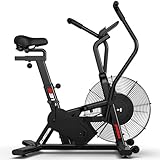
Overview: The pooboo Exercise Bike delivers a robust air resistance training experience for home gyms. Supporting users up to 350 pounds, this fan bike combines belt and chain drive systems for authentic cycling feel with quiet operation. Its dual-action handlebars enable full-body conditioning, while Bluetooth connectivity tracks your progress digitally.
What Makes It Stand Out: The hybrid belt-and-chain transmission system is genuinely distinctive, offering both low-maintenance quietness and realistic road-bike sensation. The dual-layer approach separates pedal resistance from fan operation, creating smoother power transfer. Integrated footrests allow targeted upper-body isolation, and the Bluetooth performance monitor provides preset interval programs for structured training.
Value for Money: At $474.99, this bike sits in the mid-high range but justifies its price through dual-drive engineering and higher weight capacity than budget alternatives. While pricier than basic fan bikes, the construction quality and feature set rival commercial units costing nearly twice as much, making it a smart long-term investment for serious trainees.
Strengths and Weaknesses: Strengths: Exceptional 350-pound capacity; innovative dual-drive system; quiet belt operation; comprehensive Bluetooth tracking; full-body workout capability. Weaknesses: Assembly can be time-consuming; footprint is relatively large for small apartments; chain drive requires occasional lubrication; seat comfort may need upgrading for longer sessions.
Bottom Line: Ideal for dedicated fitness enthusiasts seeking commercial-grade durability and versatile training options. The pooboo bike excels in build quality and functionality, though casual users might find simpler models sufficient for basic needs.
2. Marcy Fan Exercise Bike with Air Resistance System – Red and Black – NS-1000
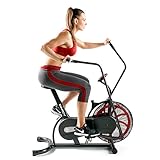
Overview: The Marcy NS-1000 offers an entry-level air resistance bike for budget-conscious home exercisers. This compact unit provides full-body workouts through its dual-action arms while maintaining a simple, user-friendly design. With a 250-pound weight capacity and straightforward LCD tracker, it delivers essential cardio training without complexity, making it ideal for beginners.
What Makes It Stand Out: Its remarkable affordability combined with genuine air resistance makes this accessible to beginners. The adjustable resistance knob allows manual tension control beyond standard air resistance, offering more workout variety than typical budget fan bikes. The ergonomic foam-padded seat and handlebars provide unexpected comfort at this price point, distinguishing it from bare-bones alternatives.
Value for Money: At $236.99, this represents exceptional value—roughly half the cost of mid-tier competitors. While lacking advanced features like Bluetooth, it covers all fundamental bases effectively. For casual users or those new to air bikes, the price-to-performance ratio is outstanding, though serious athletes will eventually outgrow its limitations and require upgrades.
Strengths and Weaknesses: Strengths: Extremely affordable; compact footprint; adjustable resistance; comfortable ergonomic design; easy assembly; transport wheels enhance mobility. Weaknesses: Lower 250-pound weight limit; basic LCD display; no app connectivity; less stable during intense sprints; fan noise can be loud; limited warranty coverage.
Bottom Line: Perfect for beginners, seniors, or budget-focused buyers wanting effective full-body cardio without frills. The Marcy NS-1000 delivers solid fundamentals, though high-intensity trainers should invest in more robust models.
3. Sunny Health & Fitness Premium Smart Cross Trainer Fan Bike, Air Resistance Cardio Machine with 330LB Capacity for Intense Home Workout , Customizable Monitor with Free SunnyFit App Connection- SF-B223018

Overview: The Sunny Health & Fitness SF-B223018 positions itself as a premium smart cross-trainer for high-intensity home workouts. Engineered with commercial-grade steel and supporting 330 pounds, this bike targets serious athletes pursuing HIIT, Tabata, and cross-training. The belt-drive system ensures smooth operation while app connectivity expands training possibilities.
What Makes It Stand Out: The free SunnyFit app integration transforms this from a simple bike into a connected fitness platform, offering video workouts, virtual routes, and community challenges. The commercial-grade construction provides exceptional stability during explosive movements, and the advanced monitor includes heart rate tracking when paired with wireless monitors—features rarely included at this price point.
Value for Money: Priced at $699.99, this competes with gym-quality equipment while costing significantly less than commercial alternatives. The comprehensive app ecosystem and robust build quality justify the premium over budget models. For dedicated athletes, the investment pays dividends in durability and training variety, though recreational users may not utilize its full capabilities effectively.
Strengths and Weaknesses: Strengths: Superior stability; comprehensive app integration; heart rate monitor compatibility; smooth belt drive; 330-pound capacity; excellent for HIIT training. Weaknesses: Highest price point among reviewed models; SunnyFit app has mixed reviews; large footprint; assembly requires two people; fan can be noisy at high intensity.
Bottom Line: Best suited for serious fitness enthusiasts and athletes demanding commercial durability with smart features. The premium price delivers premium performance, exceptional build quality, and long-term reliability, making it a worthwhile investment for high-intensity training regimens.
4. ERGOLIFE Air Magnetic Resistance Exercise Bike, Stationary Fan Bike with Exclusive App, 8 Resistances Indoor Cycling with 300lbs Weight Capacity & Tablet Holder for Weight Loss
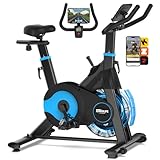
Overview: The ERGOLIFE bike innovates with a dual resistance system combining air and magnetic forces for versatile training. Supporting 300 pounds and accommodating users from 4'11" to 6'4", this bike targets home users seeking customizable workouts. Its compact design integrates smart connectivity with popular fitness apps for interactive training experiences at home.
What Makes It Stand Out: The eight-level magnetic resistance叠加 on unlimited air resistance creates unique training progression, allowing fine-tuned control for steady-state cardio or all-out sprints. Compatibility with Zwift and Kinomap opens professional-grade virtual training environments. The vertically aligned fan blades generate smoother, more consistent air resistance than traditional horizontal designs.
Value for Money: At $399.99, this bike offers premium features at a mid-range price point. The dual resistance system alone justifies the cost compared to single-resistance models. While more expensive than basic fan bikes, the magnetic control and app integration provide training versatility that rivals $600+ competitors, delivering strong value for tech-savvy users seeking variety.
Strengths and Weaknesses: Strengths: Innovative dual resistance system; broad height accommodation; app compatibility; compact footprint; tablet holder included; smooth turbine fan design. Weaknesses: 300-pound capacity lower than some competitors; magnetic resistance may require maintenance; app setup can be finicky; seat comfort could be improved; limited customer service reputation.
Bottom Line: An excellent choice for intermediate users wanting advanced resistance control without breaking the bank. The ERGOLIFE bike balances innovation, adjustability, and connectivity, making it ideal for varied and progressive training programs.
5. HXD-ERGO Exercise Bike, Magnetic & Air Resistance Indoor Bike, Stationary Bike for Home with Silent Belt Drive, Adjustable Resistance, App Compatible Cycling Bike with LCD Monitor, 350lbs Capacity Workout Bike

Overview: The HXD-ERGO bike combines innovative dual resistance technology with exceptional weight capacity in a home-friendly package. Supporting up to 350 pounds and accommodating users from 4'7" to 6'1", this stationary bike offers eight magnetic levels plus unlimited air resistance. The silent belt drive system ensures quiet operation for shared living spaces.
What Makes It Stand Out: The four-way seat adjustment provides superior customization for optimal biomechanics, rare in this price category. Integration with Zwift, KINOMAP, Apple Health, and Google Fit creates comprehensive data tracking across platforms. The triangular steel frame delivers remarkable stability despite the high weight capacity, while the nine-engineered fan blades generate smooth and consistent resistance.
Value for Money: At $399.99, this bike matches the ERGOLIFE’s price while offering higher weight capacity and more adjustability. The robust construction and extensive app ecosystem provide commercial-grade features at a consumer price point. For heavier users or those prioritizing customization and comfort, this represents outstanding value compared to similarly spec’d models costing $500+.
Strengths and Weaknesses: Strengths: Highest-in-class 350-pound capacity; four-way seat adjustment; extensive app compatibility; quiet belt drive; stable triangular frame; dual resistance system. Weaknesses: Handlebar adjustment limited to two-way; brand recognition lower than competitors; assembly instructions could be clearer; monitor display is basic; customer support responsiveness varies.
Bottom Line: A top contender for users needing maximum capacity and adjustability without premium pricing. The HXD-ERGO excels in inclusivity, stability, and quiet operation, making it perfect for intense home workouts in busy multi-person households.
6. Sunny Health & Fitness Smart Total-Body X-Bike Plus Arm Exercisers, Free SunnyFit App Connection for Guided Workout
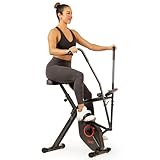
Overview: The Sunny Health & Fitness Smart Total-Body X-Bike is a compact, foldable exercise machine designed for full-body workouts at home. Combining lower-body cycling with upper-body arm exercisers, it supports users up to 300 pounds and integrates with the free SunnyFit app for guided training sessions.
What Makes It Stand Out: This bike distinguishes itself through its space-saving foldable design paired with dual-action arm exercisers, delivering comprehensive training without consuming your living room. The free SunnyFit app connectivity is a major advantage, offering AI-powered workout plans, real-time performance tracking, and virtual global tours—features typically locked behind subscription fees on pricier equipment. The 14-level magnetic resistance system ensures whisper-quiet operation, perfect for apartment living or early-morning sessions.
Value for Money: At $299.99, this X-Bike sits in the sweet spot between basic stationary bikes and premium smart equipment. The inclusion of app connectivity at no extra cost adds significant value, while the foldable frame maximizes utility in small spaces. Magnetic resistance systems are generally more durable and smoother than friction-based alternatives, justifying the price point compared to entry-level models that lack these features.
Strengths and Weaknesses: Strengths include the truly compact foldable design, full-body workout capability, free app integration, quiet 14-level magnetic resistance, and 300-pound weight capacity. Weaknesses involve potential durability concerns with the arm exerciser mechanism under heavy use, the app’s content library may not rival paid platforms like Peloton, and the seat comfort might require upgrading for longer sessions.
Bottom Line: An excellent choice for budget-conscious home exercisers seeking versatile, tech-enabled workouts without sacrificing space or peace. Ideal for beginners to intermediate users wanting full-body results.
7. leikefitness Fan Exercise Bike Upright AirBike Indoor Cycling Stationary Bicycle with Unlimited Air Resistance System,Heart Rate Compatibility and Tablet Holder for Home Cardio Workout (Pure Black)

Overview: The leikefitness AirBike is a premium upright fan bike engineered for high-intensity interval training and serious cardio conditioning. Featuring unlimited air resistance, heart rate monitoring compatibility, and a built-in tablet holder, this $699 machine targets fitness enthusiasts seeking commercial-grade performance at home.
What Makes It Stand Out: The unlimited air resistance system automatically scales with your effort, making it ideal for HIIT and CrossFit-style workouts without manual adjustments. Heart rate compatibility allows precise training zone monitoring, while the integrated tablet holder keeps entertainment or workout programming visible during intense sessions. The pure black aesthetic gives it a sleek, professional appearance that rivals more expensive competitors.
Value for Money: While $699 represents a significant investment, it’s considerably less than industry leaders like the AssaultBike Elite or Rogue Echo Bike, which can exceed $800-900. The unlimited resistance and robust construction offer comparable durability for most home users. For athletes prioritizing intense cardio and metabolic conditioning, the price is justified by the performance and potential savings on gym memberships.
Strengths and Weaknesses: Strengths include the self-regulating unlimited resistance, sturdy build quality suitable for intense use, heart rate monitoring integration, convenient tablet holder, and effectiveness for calorie burn. Weaknesses encompass the premium price point, significant noise from the fan during operation, large footprint requiring dedicated space, and lack of included app connectivity or programmed workouts.
Bottom Line: A powerful tool for serious athletes and HIIT devotees. If you have the space and budget, this air bike delivers commercial-quality training that grows with your fitness level.
8. Air-Dyne Upright Fan Bike Right Crank Arm with Pedal Works with Schwinn

Overview: This is a replacement right crank arm with pedal specifically designed for Schwinn Air-Dyne upright fan bikes. Priced at $83.99, this component serves as a direct replacement for worn or damaged parts, extending the life of your existing exercise equipment.
What Makes It Stand Out: The part is tested and guaranteed 100% working, ensuring compatibility and functionality with Schwinn Air-Dyne models. Rather than replacing an entire bike due to a single component failure, this economical solution addresses a common wear point, making it a practical choice for bike maintenance and repair.
Value for Money: At $83.99, this replacement part is reasonably priced compared to the cost of a new air bike, which can run several hundred dollars. However, buyers must note the strict 25% restock fee policy on all returns, making it crucial to verify compatibility before purchasing. For DIY-inclined owners, this represents significant savings over professional repair services or complete replacement.
Strengths and Weaknesses: Strengths include exact manufacturer compatibility, tested reliability, cost-effectiveness for repairs, and straightforward installation for those with basic mechanical skills. Weaknesses involve the punitive 25% restock fee that discourages returns, limited compatibility to specific Schwinn Air-Dyne models, and the requirement for self-installation which may challenge some users.
Bottom Line: An essential purchase for Schwinn Air-Dyne owners needing crank arm replacement. Verify your model compatibility carefully before ordering to avoid the steep restocking penalty. Perfect for hands-on users looking to economically extend their equipment’s lifespan.
What Is an Air Bike with Arm Ergometer?
An air bike with arm ergometer is a dual-action exercise bike that combines lower-body cycling with upper-body arm levers, all powered by air resistance generated through a large fan wheel. Unlike traditional stationary bikes that isolate your legs, these machines integrate push-pull handlebars that move in sync with the pedals, forcing your entire body to contribute to the effort. The “ergometer” designation means it measures mechanical work output, typically displaying metrics like watts, calories, and RPMs on a console. This full-body engagement transforms a simple cardio session into a comprehensive metabolic conditioning tool that challenges your cardiovascular system, muscular endurance, and coordination simultaneously.
How Dual-Action Air Bikes Work
The genius lies in the fan-based resistance system. As you pedal and pump the arms, you spin a large fan blade through enclosed housing. The faster the fan rotates, the more air it must displace, creating exponential resistance. This is fundamentally different from friction, magnetic, or electromagnetic resistance systems. There’s no upper limit—you can never “max out” the machine. Your maximum output is literally your physical limit.
The arm ergometer connects to the same drivetrain as the pedals via a sturdy linkage system. When you push and pull the handlebars, you’re not just going through motions; you’re directly contributing to fan rotation. This creates a harmonious full-body rhythm where upper and lower body work together, though you can also isolate specific limbs for targeted training or rehabilitation protocols.
Top Benefits of Training on an Air Bike
Full-body conditioning is the obvious headline benefit, but the advantages run deeper. Air bikes deliver scalable intensity that responds instantly to your effort level—perfect for interval training where you need to go from zero to maximum output in seconds. The unlimited resistance ceiling makes them ideal for progressive overload across all fitness levels.
They’re also exceptionally joint-friendly when used correctly. The smooth, circular motion with no impact forces reduces stress on knees, hips, and ankles compared to running. For the upper body, the push-pull pattern builds shoulder stability and chest/back endurance without the ballistic stress of plyometrics.
Metabolically, air bikes create massive EPOC (Excess Post-exercise Oxygen Consumption) effects. Short, intense bursts can elevate your metabolism for hours post-workout. The combined arm/leg action also drives higher heart rates at lower perceived exertion, making time-efficient workouts brutally effective.
Who Should Use an Air Bike with Arm Ergometers?
These machines serve an incredibly broad demographic. Elite athletes use them for sport-specific conditioning, particularly in combat sports, CrossFit, and functional fitness. The ability to maintain high output while fatigued translates directly to competitive performance.
General fitness enthusiasts benefit from time-efficient calorie burning and cardiovascular improvement. A 20-minute interval session can match the metabolic demand of much longer steady-state cardio.
Rehabilitation patients leverage the low-impact nature and ability to isolate limbs. Physical therapists often prescribe air bike work for knee, hip, and shoulder recovery because resistance is self-regulated and controllable.
Home gym owners prize them for their durability and versatility—one machine that can replace multiple pieces of equipment while taking up minimal space.
Key Features to Evaluate Before Buying
Resistance System and Fan Design
The fan’s diameter, blade pitch, and housing design directly affect the resistance curve. Larger diameter fans (25-27 inches) typically provide smoother, more consistent resistance. Look for fans with balanced blades to minimize wobble at high RPMs. The housing should be fully enclosed for safety while allowing adequate airflow. Some advanced models offer adjustable venting to slightly modify resistance feel, though this is rare.
Build Quality and Frame Construction
Commercial-grade steel frames with welded joints outperform bolted-together consumer models. Gauge thickness matters—look for frames using 14-gauge steel or thicker. The base should be wide and stable, with rubberized feet that won’t shift during sprints. Powder-coat finishes resist corrosion and scratching better than paint.
Seat Comfort and Adjustability
You’ll spend hours on this seat, so don’t compromise. Look for oversized, padded seats with anatomical contours. Four-way adjustability (up/down and fore/aft) is non-negotiable for proper biomechanics. Quick-release levers beat threaded knobs for fast adjustments between users. Some models offer standard seat posts that accept aftermarket bicycle saddles for customization.
Console and Tracking Capabilities
A quality console should display RPM, watts, calories, distance, time, and heart rate (with a compatible strap). Backlit screens improve visibility in dim garages. Look for interval timers, programmable workouts, and the ability to toggle between metrics. Bluetooth connectivity is increasingly common for app integration, though not essential for everyone.
Pedal and Crank System
Three-piece crank systems with sealed bearing cartridges offer superior durability and serviceability compared to one-piece designs. Pedals should have aggressive grip texture and adjustable straps. For heavy use, check the crank arm material—forged steel beats cast aluminum for longevity under high torque.
Handlebar Design and Motion
Handlebars should have multiple grip positions (neutral, overhand, wide) to vary muscle recruitment and reduce fatigue. The pivot points need robust bushings or bearings that won’t develop play over time. Foam or rubber grips should be dense and sweat-resistant, not cheap vinyl that cracks within months.
Understanding Resistance: Why Air Matters
Air resistance provides a unique linear resistance curve where power output increases exponentially with speed. This creates natural interval training—when you back off, resistance drops instantly, allowing active recovery without stopping. Compare this to magnetic resistance, which maintains tension even at low speeds.
The fan’s inertia also creates a flywheel effect that smooths the pedal stroke and encourages proper pacing. However, fan weight matters. Heavier fans require more initial effort to accelerate but maintain momentum better, creating a different feel than lighter fans that spin up quickly but also decelerate fast.
Frame Stability: The Foundation of Performance
Nothing ruins a workout like a bike that wobbles during sprints. Stability comes from three factors: base width, total weight, and weight distribution. A quality air bike should weigh at least 90-110 pounds for home use, with commercial models pushing 150+ pounds.
The center of gravity should be low and centered. Test stability by simulating an aggressive sprint—if the front lifts or the frame twists, walk away. Look for cross-bracing between the front and rear stabilizers. Rubber feet should be large, adjustable, and grippy enough for your floor surface.
Ergonomics and Adjustability for All Body Types
Proper fit prevents injury and maximizes power transfer. The seat height should align your knee with a slight bend at full extension (25-35 degrees). Fore/aft adjustment positions your knee over the pedal spindle when cranks are horizontal.
Handlebar reach affects shoulder strain. You shouldn’t have to hunch or overextend. The best designs offer some handlebar adjustment, though this is less common than seat adjustment. For taller users (over 6’3”), verify maximum seat height and handlebar clearance. For shorter users (under 5’3”), check minimum settings and whether you can maintain proper arm geometry.
Console Technology: What Data Should You Track?
Beyond basic time and distance, prioritize watts for measuring true power output. This metric isn’t affected by fan speed fluctuations and gives consistent feedback on effort. RPM helps pace intervals, while heart rate (via chest strap) ensures you’re training in the correct zone.
Advanced consoles offer interval programming with customizable work/rest periods. Look for automatic lap recording and the ability to save workout history. Some units calculate “calories” based on fan speed—understand this is an estimate, not a precise metabolic measurement. For competitive types, consoles that display average watts and max watts help track progress.
Noise Levels: What to Expect
Air bikes are loud. The fan creates a distinctive whooshing sound that increases with intensity. Expect 65-75 decibels at moderate pace, climbing to 80+ decibels during sprints—comparable to a vacuum cleaner. This isn’t a machine for quiet apartment living rooms.
However, not all noise is equal. High-quality bikes produce a smoother, more consistent sound. Rattling, clicking, or grinding indicates loose components or poor assembly. The noise comes from air displacement, not friction, so it’s a “clean” sound that many athletes find motivating. For noise reduction, place the bike on rubber flooring away from walls that reflect sound.
Space and Storage Considerations
A typical air bike occupies a 4’ x 2’ footprint, but you’ll need 2-3 feet of clearance around it for safe mounting/dismounting and arm movement. Ceiling height matters too—users over 6 feet tall need at least 8-foot ceilings to avoid hitting their head on the fan housing during intense efforts.
Most air bikes don’t fold, but some have transport wheels and can be tipped vertically against a wall. Verify the bike’s weight if you’ll need to move it frequently. For dedicated home gyms, consider leaving it in place. For multi-use spaces, measure your storage area and compare against the bike’s dimensions when upright.
Price Ranges and What You Get
Budget tier ($300-$600): Lighter frames (70-90 lbs), basic consoles, one-piece cranks, and limited adjustability. Suitable for light home use (2-3 sessions/week) but expect shorter lifespans and more maintenance. Welds may be spotty, and bearings wear faster.
Mid-range ($600-$1,000): 14-gauge steel frames, three-piece cranks, better seats, and more robust consoles. These handle 4-6 sessions weekly and offer good durability for serious home users. Fan balance and component quality improve noticeably.
Premium ($1,000-$1,500+): Commercial-grade construction, sealed bearing systems, advanced consoles with app connectivity, and exceptional stability. Built for daily punishment in commercial settings or demanding home gyms. Expect 10+ year lifespans with minimal maintenance.
Maintenance and Durability
The beauty of air bikes is mechanical simplicity. No motors, magnets, or friction pads mean fewer failure points. Weekly maintenance includes wiping down sweat, checking pedal tightness, and inspecting for loose bolts. Monthly, lubricate pivot points with silicone spray and check chain tension—most use a standard bicycle chain that requires periodic adjustment.
Annually, inspect all bearings for play or noise. Quality bikes use sealed cartridge bearings that last years but can be replaced when needed. Keep the fan housing clean of dust buildup, which can imbalance the fan. Store indoors away from moisture to prevent rust on steel frames. A well-maintained commercial air bike can exceed 50,000 miles of use.
Common Mistakes to Avoid
Overgripping the handlebars creates unnecessary forearm and shoulder fatigue. Maintain a firm but relaxed grip, letting your larger muscles do the work. Poor seat height is epidemic—too low stresses knees, too high reduces power. Take time to dial in fit.
Starting too fast during intervals burns you out prematurely. The fan’s exponential resistance means pace matters. Begin conservatively and build. Neglecting maintenance turns minor issues into major repairs. That slight wobble or squeak will only worsen.
Ignoring form when fatigued leads to back rounding and shoulder strain. Even in all-out sprints, maintain core engagement and upright posture. Finally, underestimating the learning curve—the coordination between arms and legs takes practice. Don’t judge the machine after one awkward session.
Integrating Air Bike Workouts Into Your Routine
For beginners, start with 10-15 minutes of steady-state riding at conversational pace, 2-3 times weekly. Focus on smooth coordination between limbs. Progress to intervals: 30 seconds moderate, 30 seconds easy, for 10 rounds.
Intermediate users can try Tabata protocols (20 seconds max, 10 seconds rest, 8 rounds) or pyramid intervals (20-40-60-40-20 seconds work with equal rest). Advanced athletes often use the bike for lactate threshold training—sustained 5-10 minute efforts at 80-90% max heart rate—or mixed-modal workouts combining bike sprints with strength movements.
The bike excels as a finisher after strength training. A 5-minute max calorie burn at workout’s end provides metabolic conditioning without interfering with strength gains. For active recovery, low-RPM pedaling with light arm movement increases blood flow without adding training stress.
Frequently Asked Questions
1. How is an air bike different from an elliptical?
Air bikes use a seated cycling position with circular pedal motion and independent arm levers that directly drive the same fan. Ellipticals keep you standing with oval footpaths and often use magnetic resistance with arm handles that provide less resistance. Air bikes offer unlimited resistance and better power measurement.
2. Will an air bike build muscle or just burn calories?
It builds muscular endurance rather than hypertrophy. Your muscles will become more fatigue-resistant and stronger at high repetitions, but you won’t gain significant muscle mass like with weight training. The exception is novice users who may see initial strength gains.
3. Can I use an air bike if I have knee problems?
Yes, with caveats. The zero-impact nature is knee-friendly, but improper seat height or excessive resistance can strain joints. Start with low RPMs, high seat position, and consult a physical therapist. The ability to self-regulate resistance makes it safer than fixed-resistance machines.
4. Why are air bikes so much louder than other cardio equipment?
The fan blades physically move air to create resistance, producing a whooshing sound that increases with speed. Unlike magnetic or friction resistance which is nearly silent, air displacement is inherently noisy. The sound is a feature, not a flaw—it indicates the resistance mechanism is working.
5. How many calories can I really burn in 30 minutes?
A 180-pound male can burn 400-600 calories in 30 minutes of vigorous mixed-intensity work. However, console calorie estimates vary widely and aren’t perfectly accurate. Focus on watts and heart rate for reliable intensity metrics rather than calorie counts.
6. What’s the ideal ceiling height for an air bike?
Minimum 8 feet for users up to 6’3”. The fan housing sits higher than your head, and during intense efforts you may rise slightly from the seat. For taller users or basement gyms, measure from floor to ceiling and subtract 12 inches for safety clearance.
7. Can I replace my rowing machine with an air bike?
They’re complementary, not interchangeable. Rowers emphasize posterior chain and pulling strength with a longer learning curve. Air bikes provide more intense cardio in less time with easier technique. For complete fitness, ideally own both. If choosing one, pick based on your goals: cardio efficiency (bike) vs full-body strength endurance (rower).
8. How long should my intervals be for fat loss?
For fat loss, variety trumps specificity. Use 30-60 second work periods with 1:1 or 1:2 work-rest ratios. The key is intensity—push hard enough that you’re genuinely recovered during rest periods. A 20-minute session with 30-second sprints burns more fat post-workout than 40 minutes of steady riding.
9. Will the fan create a cooling effect or just blow dust around?
The fan does create airflow that helps cool you, but it also circulates room air. In dusty environments, this can kick up particles. Place the bike away from direct HVAC vents and dust sources. Wipe the fan housing regularly. The cooling effect is a minor benefit, not a primary feature.
10. How do I know if I’m ready for a premium commercial-grade bike?
If you’re training 5+ times weekly, doing high-intensity intervals, or weighing over 200 pounds, the investment pays off. Commercial bikes handle heavier loads, maintain accuracy better, and outlast budget models by years. For casual 2-3x/week use, a solid mid-range bike suffices. The repair costs and frustration of a broken budget bike often exceed the initial savings.