If your deadlift stalls at your fingertips instead of your hamstrings, you’re not alone. Grip strength remains the most common bottleneck in strength progression, silently sabotaging PRs and limiting functional power. Enter the axle bar—a deceptively simple piece of equipment that transforms your entire training paradigm by forcing your hands, forearms, and neuromuscular system to adapt to a thicker, more demanding diameter. Unlike standard barbells that let your grip hide in the shadows, axle bars drag it into the spotlight, turning every lift into a forearm-building, callus-forging event that pays dividends across every major movement pattern.
Understanding what makes an axle bar effective requires more than knowing it’s “just a thick bar.” The subtle variations in construction, material science, and design philosophy can dramatically impact your training outcomes. Whether you’re building a home gym sanctuary or selecting equipment for a commercial facility, making an informed decision means diving deep into specifications that most product descriptions gloss over. This guide strips away the marketing fluff and delivers the technical knowledge you need to identify the perfect axle bar for your specific grip-focused goals.
Top 10 Axle Bars for Grip-Focused Strength
Detailed Product Reviews
1. Titan Fitness 5 FT Axle Barbell, Fat Grip Strength Training, Olympic Bar, Rated 880 LB, Powder-Coated Steel
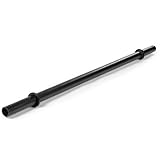
Overview: The Titan Fitness 5 FT Axle Barbell is a compact specialty bar designed for grip strength training and strongman-style workouts. Measuring just 60 inches overall with a 1.9-inch fat grip diameter, this 17-pound bar challenges your forearms and grip in ways standard Olympic bars cannot. With an 880-pound weight rating and 8 inches of loadable sleeve space, it fits standard 2-inch Olympic plates.
What Makes It Stand Out: The bar’s compact 5-foot length makes it ideal for home gyms with limited space, while the impressive 880-pound capacity exceeds many competitors in this price range. The 1.9-inch diameter specifically targets grip weakness, forcing greater forearm activation during deadlifts, rows, and curls. The black powder coating provides a raw, industrial aesthetic while offering basic corrosion resistance.
Value for Money: At $89.99, this bar delivers exceptional capacity-to-price ratio. Comparable fat grip bars often cost $120+ while offering lower weight ratings. The 880-pound limit means most lifters won’t outgrow it, making it a one-time investment for grip-specific training.
Strengths and Weaknesses: Strengths include the high weight capacity, space-saving design, and aggressive pricing. The thick grip effectively builds forearm strength. Weaknesses are the short 8-inch sleeves limiting plate loading, powder coating that can feel slippery without chalk, and the 5-foot length restricting some traditional barbell movements like wide-grip bench press.
Bottom Line: Perfect for lifters prioritizing grip development in compact spaces. While not a complete Olympic bar replacement, it’s an excellent specialty tool for targeted strength building.
2. Titan Fitness Axle Barbell, Fat Grip Strength Training, Olympic Bar, Powder-Coated Steel (Axle Barbell Length: 84")

Overview: The Titan Fitness Axle Barbell presents significant specification confusion. The title advertises an 84-inch length, yet the product features explicitly state “5 FT in total length” and list overall length as 60 inches. This 17-pound bar features a 1.9-inch fat grip diameter with 8-inch loadable sleeves, identical specifications to Titan’s 5-foot model, creating uncertainty about the actual product dimensions.
What Makes It Stand Out: Beyond the perplexing listing errors, the bar offers an 880-pound weight rating that impresses for its price point. The thick grip design builds exceptional forearm and wrist strength, making standard lifts considerably more challenging. If the 84-inch length is accurate, it would provide more versatility than the 5-foot version.
Value for Money: Priced at $100.97, this bar sits slightly above its 5-foot counterpart. However, the specification inconsistencies make it difficult to assess true value. An 84-inch bar with these features would be competitively priced, but if it’s actually 60 inches, you’re paying more for what appears to be the same product.
Strengths and Weaknesses: Strengths include the high weight capacity and effective grip training diameter. The black powder coating offers basic protection. Major weaknesses center on the contradictory product information, creating purchase risk. The short sleeves remain limiting, and the 8-inch loadable length restricts heavy loading.
Bottom Line: Proceed with caution. Verify actual length with seller before purchasing. If truly 84 inches, it’s a solid option, but the listing errors raise serious concerns about product accuracy and quality control.
3. Fox 2015 36 Axle Pinch Bar
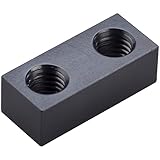
Overview: The Fox 2015 36 Axle Pinch Bar is a highly specialized bicycle maintenance tool, not a fitness barbell. Designed specifically for servicing 2015 Fox 36 suspension forks, this $13.34 tool enables precise removal and installation of axle components. Constructed from high-strength steel with a corrosion-resistant coating, it provides professional-grade durability for demanding trail conditions.
What Makes It Stand Out: Its singular focus on 2015 Fox 36 forks ensures perfect compatibility and safe operation where generic tools might fail. The engineered design provides excellent leverage, reducing service time while minimizing risk of damaging expensive suspension components. The corrosion-resistant finish withstands workshop conditions and outdoor maintenance sessions.
Value for Money: For professional bike mechanics or dedicated Fox 36 owners, this tool offers excellent value at under $15. Attempting fork service without proper tools risks costly damage, making this a wise insurance policy. Generic alternatives may not fit precisely, potentially compromising safety.
Strengths and Weaknesses: Strengths include precise engineering for specific application, durable steel construction, excellent leverage, and professional-grade reliability. The primary weakness is ultra-narrow compatibility—it’s useless for other fork models or brands. Casual riders may find limited use given its specialized nature.
Bottom Line: An essential purchase for bike shops and serious Fox 36 owners performing their own suspension maintenance. For general cyclists or those with different fork models, this tool offers zero value. Its quality is undeniable, but its utility is extremely limited.
4. Valor Fitness Thick Grip Axle Barbell – 84” Long, 2” OD Hand Grip Training Bar for Curls, Deadlifts & Muscle Strengthening, 25 lbs, 500 lb Weight Capacity for Home Gym Weightlifting

Overview: The Valor Fitness Thick Grip Axle Barbell is an 84-inch strongman training bar featuring a full 2-inch diameter shaft that significantly challenges grip strength. Weighing 25 pounds with a 500-pound capacity, this bar offers 16-inch loadable sleeves on each side—double the length of many competitors. The powder coat finish enhances grip and chalk retention for serious training sessions.
What Makes It Stand Out: The generous sleeve length allows substantial weight loading, making it suitable for progressive strength training. Valor claims the thick bar better distributes weight across forearms for more symmetrical muscle development. Its versatility spans deadlifts, curls, rows, bench press, and landmine exercises, serving as a comprehensive strongman tool.
Value for Money: At $135.98, this bar commands a premium price. While the 500-pound capacity is adequate for most users, it’s lower than budget alternatives offering 700+ pound ratings. The longer sleeves and quality construction justify some premium, but cost-conscious buyers may find better capacity-to-price ratios elsewhere.
Strengths and Weaknesses: Strengths include excellent sleeve length, versatile exercise applications, and true 2-inch grip diameter. The 84-inch length accommodates wide-grip movements. Weaknesses are the lower 500-pound capacity relative to price, heavier 25-pound empty weight, and premium cost that may not suit beginners.
Bottom Line: A quality specialty bar for dedicated strongman trainees wanting sleeve length versatility. The price is steep for the capacity, but the build quality and features appeal to serious home gym enthusiasts focused on grip development.
5. REP Fitness Axle Barbell | 7ft (22lb) | Thick 2” Grip Bar for Strongman, Deadlifts, Bench, Squats, Strength Training | Olympic Plate Compatible | 700lb Capacity, Black Powder Coat

Overview: The REP Fitness Axle Barbell offers a 7-foot (84-inch) strongman bar with a 2-inch grip diameter and 700-pound capacity. Weighing 22 pounds, this bar features black powder coating throughout and accommodates Olympic plates. REP Fitness emphasizes their Denver-based full-service operation, suggesting strong customer support and quality assurance.
What Makes It Stand Out: REP’s reputation for reliable equipment adds confidence to the purchase. The 700-pound capacity strikes a balance between affordability and performance. The bar works with both iron and bumper plates, offering flexibility. The 2-inch diameter provides authentic strongman grip training, while the 7-foot length enables traditional barbell movements.
Value for Money: At $96.99, this bar presents excellent value. The 700-pound rating exceeds many competitors in the sub-$100 range, and REP’s domestic headquarters suggests accessible customer service. The listing mentions varying sleeve lengths (13.75"/15.75"), creating some specification uncertainty, but the overall package remains compelling.
Strengths and Weaknesses: Strengths include strong weight capacity, reputable brand backing, versatile plate compatibility, and competitive pricing. The full powder coat finish provides consistent protection. Weaknesses involve ambiguous specifications in the listing and the 22-pound weight making it slightly heavier than some axle bars. The coating may feel slick without chalk.
Bottom Line: An excellent mid-range choice from a trusted brand. The REP Axle Barbell delivers strong performance specs at a competitive price, making it ideal for home gym owners seeking reliable grip training equipment without breaking the budget.
6. SERIOUS STEEL FITNESS Figure 8 Deadlifting Straps (80 Centimeters)
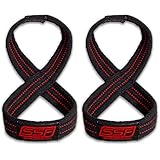
Overview: SERIOUS STEEL FITNESS Figure 8 Deadlifting Straps deliver a bombproof grip solution for powerlifters pushing maximal loads. The 80cm length specifically serves athletes with 8+ inch wrist circumferences, creating an unbreakable hand-barbell connection that eliminates grip failure during heavy deadlifts and shrugs.
What Makes It Stand Out: The figure-8 design offers superior security compared to traditional lasso straps, forming a continuous loop that won’t slip under extreme loads. This 80cm model addresses a crucial market gap—larger-wristed lifters often find standard straps painfully constrictive. Application is refreshingly simple: thread your wrist through one loop, place the bar in the center, then insert your hand through the second loop. No complex wrapping technique required.
Value for Money: At $23.90, these straps occupy the sweet spot for specialized equipment. Basic cotton lasso straps run $10-15 but lack the figure-8’s absolute security, while premium brands charge $30+. The thoughtful sizing system prevents costly returns, and for dedicated deadlifters, the durability and performance far justify the modest premium over basic alternatives.
Strengths and Weaknesses: Pros: Exceptional grip security for maximal lifts; eliminates grip fatigue entirely; straightforward, foolproof application; robust construction; precise sizing prevents fit issues. Cons: 80cm size only suits wrists 8"+—non-adjustable; unsuitable for rows, cleans, or other movements; can be difficult to release mid-set if needed; overkill for casual lifters or moderate weights.
Bottom Line: These straps are a targeted tool for serious lifters with larger wrists who prioritize absolute grip security. If you’re consistently pulling heavy and have struggled with strap fit, the $23.90 investment delivers outstanding performance. For smaller wrists or versatile training, opt for the 60cm/70cm versions or traditional lasso straps instead.
What Is an Axle Bar and Why Does It Matter for Grip Strength?
An axle bar—often called a “fat bar” or “thick bar”—is a barbell variant typically featuring a 2-inch (50mm) diameter shaft compared to the standard Olympic bar’s 1.1-inch (28mm) grip. Originally adapted from actual vehicle axles used in strongman competitions, these bars have evolved into precision training tools engineered specifically to challenge your grip. The increased diameter spreads the load across a larger surface area of your hand, reducing the mechanical advantage of your fingers and forcing greater recruitment of forearm flexors, extensors, and intrinsic hand muscles.
The real magic lies in open-hand training. Unlike standard bars that allow a closed-fist, mechanically efficient grip, axle bars prevent your fingers from fully wrapping around the shaft. This creates an isometric demand that builds crushing strength and support grip simultaneously. For athletes, this translates to better grappling control, stronger deadlifts, and improved performance in any sport where hand strength determines outcomes. For general strength enthusiasts, it means finally breaking through plateaus that have nothing to do with your posterior chain and everything to do with your hands being the weak link.
The Science Behind Axle Bar Training and Grip Development
Neuromuscular Adaptations to Thick Bar Training
When you grip a standard barbell, your central nervous system recruits motor units in a predictable sequence. The axle bar disrupts this pattern, triggering a phenomenon called co-contraction—where agonist and antagonist muscles fire simultaneously to stabilize the unpredictable load. This creates a unique training stimulus that standard bars simply cannot replicate. Research on grip mechanics shows that increasing bar diameter by just 25% can reduce maximal grip force output by up to 40%, forcing your nervous system to develop more efficient motor control pathways.
Forearm Hypertrophy and Tendon Remodeling
The open-hand position on an axle bar places continuous tension on your forearm flexors and extensors throughout the entire range of motion. This constant time-under-tension, particularly during pulling movements, drives myofibrillar hypertrophy in muscles like the brachioradialis, flexor carpi radialis, and extensor carpi ulnaris. More importantly, the increased torque on your wrists stimulates tendon remodeling through collagen synthesis, creating more resilient connective tissue that prevents injuries when you return to standard barbell work.
Key Benefits of Incorporating Axle Bars Into Your Training
Breaking Through Neurological Grip Barriers
Your brain places artificial limits on prime mover activation when grip becomes a limiting factor. By training with an axle bar, you recalibrate this neurological governor, allowing your CNS to trust that your hands can handle heavier loads. This crossover effect means that after a dedicated axle bar cycle, your standard deadlift grip often feels bulletproof, enabling you to express true lower body strength without your hands tapping out early.
Building Functional, Real-World Strength
Real-world objects don’t come with convenient 28mm handles. Axle bars simulate the awkward, thick implements you’ll encounter in manual labor, sports, and daily life. This builds what strength coaches call “transferable strength”—power that works outside the perfectly calibrated environment of a commercial gym. The proprioceptive challenge of controlling a rotating, thick bar also enhances wrist stability and shoulder packing, creating a more resilient upper body kinetic chain.
Time-Efficient Training Economy
One of the most underrated benefits is training economy. A single set of axle bar deadlifts trains your posterior chain while simultaneously delivering a grip stimulus that would require 3-4 additional isolation exercises to replicate. For busy lifters, this means achieving comprehensive forearm development without adding 30 minutes of grip-specific work to your sessions. The metabolic cost is also higher, making axle bar complexes brutally effective for conditioning.
Understanding Axle Bar Specifications: What to Look For
Diameter Consistency and Tolerance
Not all “2-inch” bars measure exactly 50mm. Manufacturing tolerances can vary by ±2mm, which significantly impacts grip demand. Premium bars maintain consistent diameter across the entire shaft length, while budget options may have slight tapering or irregularities that create weak points. Look for specifications that list actual diameter measurements rather than nominal sizes, and understand that even a 1mm variance changes the grip challenge measurably.
Total Weight and Balance
A solid steel axle bar can weigh anywhere from 15 to 25 pounds empty, substantially lighter than a standard 45-pound Olympic bar. This affects how the bar feels during explosive movements and changes the starting point for progressive overload. The weight distribution also matters—some bars have thicker sleeves that shift the center of gravity, creating a different swing weight during cleans or presses. Understanding these nuances helps you select a bar that matches your training style.
Fixed vs. Loadable Axle Bars: Which Type Suits Your Needs?
Fixed-Weight Axle Bars: Simplicity and Durability
Fixed-weight axle bars come as single-piece implements with permanent weight, typically ranging from 20 to 50 pounds. These bars excel in group training environments and home gyms where simplicity matters. Without collars or rotating sleeves, they offer maximum durability and zero maintenance. The downside is limited progression—you’re restricted to the bar’s weight plus whatever you can hold in your hands (grip plates, chains). For pure grip training and technique work, however, their simplicity is a feature, not a bug.
Loadable Axle Bars: Progressive Overload Mastery
Loadable bars accept standard Olympic plates, offering unlimited progression potential. They typically feature either welded or bolt-on sleeves that may rotate slightly or remain fixed. The key consideration is sleeve length—longer sleeves accommodate more weight but increase total bar length, potentially limiting exercises in tight spaces. For serious strength progression, loadable bars are non-negotiable, but you must weigh the sleeve design against your specific programming needs.
Material Matters: Steel, Aluminum, and Coating Considerations
Steel Alloys and Tensile Strength
Most quality axle bars use cold-rolled steel with tensile strengths between 120,000 and 150,000 PSI. Higher tensile strength prevents permanent bending under heavy loads, but excessive rigidity can increase wrist strain. Some manufacturers use specialized alloys that provide slight flex, absorbing shock during drops while maintaining structural integrity. The steel’s hardness rating (measured on the Rockwell scale) also affects how the bar responds to chalk and bare skin—softer steel provides slightly more friction but wears faster.
Coating Types and Grip Friction
Black oxide, zinc, chrome, and bare steel each create different grip experiences. Black oxide offers a raw, chalk-friendly surface that oxidizes over time, increasing friction. Zinc plating provides corrosion resistance but can feel slick until broken in. Chrome is the most durable but notoriously slippery for grip work, often requiring extensive knurling to compensate. Bare steel delivers maximum grip feedback but demands diligent maintenance to prevent rust. Your choice should balance tactile preference with willingness to maintain the bar.
Knurling vs. Smooth: Surface Texture Impact on Grip Training
The Case for Smooth Shafts
Pure smooth axle bars represent the ultimate grip challenge, forcing maximal friction development through skin contact alone. This builds “sticky strength”—the ability to hold onto objects without relying on textured surfaces. Smooth bars also reduce callus tearing and are gentler for high-volume pressing work where knurling can chew up your chest and shoulders. For strongman competitors, smooth axle bars better simulate contest implements, which are rarely knurled.
Strategic Knurling Patterns and Placement
When axle bars do feature knurling, it’s typically aggressive and strategically placed. Look for deep, sharp patterns with optimal spacing that digs into the meat of your palm without creating pressure points. Some bars feature center knurling for squats, while others keep the center smooth for cleans. The knurling’s coverage percentage matters—full-length knurling maximizes grip options but can be uncomfortable for front rack positions. Partial knurling focused on common hand placements offers a hybrid solution.
Diameter Dynamics: Why 2-Inch Isn’t Always Just 2-Inch
The Psychological Impact of Incremental Increases
Jumping straight to a true 2-inch bar can be demoralizing if your grip is underdeveloped. Some training systems use progressive diameters—1.5-inch, 1.75-inch, and 2-inch bars—to allow gradual adaptation. This approach, borrowed from rehabilitation protocols, builds confidence and prevents compensation patterns. Even if you ultimately want a 2-inch bar, starting with a slightly smaller diameter and working up over 8-12 weeks can yield better long-term results.
Ovality and Manufacturing Imperfections
Perfectly round bars are surprisingly rare. Slight ovality (where the diameter varies when measured at different angles) can create an uneven grip challenge that either enhances or detracts from training. High-end bars are precision-machined to maintain roundness within 0.1mm, ensuring consistent stimulus. Budget bars may have noticeable ovality that forces constant grip adjustment—annoying for strength work but potentially beneficial for grip endurance by preventing adaptive efficiencies.
Weight Capacity and Durability: Building for Longevity
Static vs. Dynamic Load Ratings
Manufacturers often list static load capacity (the weight the bar can hold without moving), which can exceed 1,000 pounds. However, dynamic capacity—the weight it can handle being dropped from overhead—is typically 60-70% of static rating. For strongman-style training involving axle cleans and presses, prioritize dynamic load ratings. The weakest point is usually the sleeve-to-shaft connection; look for bars with reinforced welds or mechanical fastening systems rather than simple plug welds.
Warranty and Real-World Testing
A lifetime warranty means little if the company requires you to ship a 30-pound bar back for inspection. Look for manufacturers who publish third-party testing data or have strong reputations in the strongman community. User reviews mentioning years of heavy use without bending or sleeve separation provide more valuable insights than any marketing claim. Bars that survive actual competition use are the ones worth investing in.
Sleeve Design and Rotation: The Often Overlooked Factor
Fixed Sleeves for Maximum Grip Demand
Traditional axle bars feature completely fixed sleeves that don’t rotate, creating an additional torque challenge during cleans and curls. This “whip and twist” forces your grip to fight rotational forces in addition to supporting the load, building anti-rotation stability in your wrists and elbows. The downside is increased stress on your joints and the need for perfect technique to prevent the bar from ripping out of your hands during explosive movements.
Bearing and Bushing Sleeves: A Compromise
Some modern axle bars incorporate bronze bushings or needle bearings in the sleeves, allowing limited rotation. This reduces wrist torque during cleans while maintaining the thick-bar grip challenge. The rotation is intentionally restricted compared to Olympic bars, providing a middle ground for athletes who want grip benefits without sacrificing movement quality. These hybrid designs are ideal for CrossFit-style workouts where axle bars are integrated into metcons requiring speed.
Space and Storage Considerations for Home Gym Owners
Length and Rack Compatibility
Axle bars typically range from 60 inches (short “stubby” bars) to 84 inches (full-length strongman bars). Standard 84-inch bars won’t fit in most power racks, requiring specialty yokes or squat stands. Measure your rack’s width and sleeve clearance before purchasing. Some bars feature reduced sleeve length to fit in compact racks while maintaining a 2-inch shaft, offering a smart compromise for space-constrained lifters.
Vertical Storage and Bar Jacks
Storing an axle bar horizontally on a standard gun rack can damage its finish and deform the shaft over time. Vertical storage systems that support the bar from the sleeve ends are superior but require ceiling height clearance. For loading and unloading, a dedicated axle bar jack is invaluable—the thick shaft doesn’t fit standard barbell jacks, and trying to prop it up on plates risks dropping weight on your feet. Factor these accessories into your budget and floor plan.
Programming Axle Bar Work: Principles for Progressive Overload
The 25% Rule for Load Selection
A good starting point is using 70-75% of your standard barbell weight when transitioning to axle bars. This accounts for the grip disadvantage while allowing productive volume. Progress axle bar loads independently of your regular deadlift or press numbers. Track both absolute weight and relative intensity—hitting a new axle bar PR at 80% of your conventional max represents genuine grip improvement, not just posterior chain gains.
Grip-Specific Periodization
Treat grip like any other training variable. Run 4-6 week blocks focusing on different qualities: weeks 1-2 emphasize high-rep support grip (3 sets of 10-12 deadlifts), weeks 3-4 target max effort holds (5 sets of 5-second holds at 90% 1RM), and weeks 5-6 integrate dynamic movements (axle cleans for speed). This periodized approach prevents adaptive stagnation and addresses the different grip qualities—support, crush, and pinch—more effectively than random axle bar use.
Common Axle Bar Exercises for Maximum Grip Gains
The Axle Deadlift: Foundation of Grip Strength
The axle deadlift is the king of grip builders. Without the benefit of a hook grip or straps, every rep becomes a battle of pure hand strength. Focus on setting your hands slightly wider than normal to engage more of your palm surface. The “reset” style—dropping each rep and resetting your grip—builds starting strength, while touch-and-go reps develop support grip endurance. Experiment with double overhand, mixed grip, and even double underhand to target different forearm musculature.
Axle Cleans and Presses: Dynamic Grip Challenge
Cleaning an axle bar demands a violent hip extension and lightning-fast grip adjustment as the bar rotates into the rack position. The thick shaft sits higher on your shoulders, changing the front rack mechanics and requiring greater wrist mobility. Pressing from this position builds incredible lockout strength while your grip fights to prevent the bar from rolling out of your hands. Start with light weight and high reps to groove the movement before adding load.
Axle Rows and Curls: Isolation Through Integration
Bent-over axle rows force your grip to work isometrically while your lats and rhomboids perform the dynamic movement. This contrast—static grip, dynamic upper back—creates a unique neurological demand. Axle curls, particularly cheat curls with controlled eccentrics, overload the brachioradialis in a way that standard barbells cannot. The thick shaft prevents you from fully closing your hands, keeping constant tension on the forearms throughout the curl’s entire range.
Integrating Axle Bars With Other Grip Training Tools
Complementary Tool Selection
Axle bars excel at building support grip but should be paired with tools that address other grip qualities. Fat Gripz or other thick bar adapters can convert dumbbells and pull-up bars, allowing you to extend axle bar principles across your entire program. Hand grippers develop crushing strength that axle bars don’t fully address, while pinch blocks and plate curls build thumb strength. Use axle bars as the cornerstone of your grip program, then fill specific gaps with targeted tools.
Periodization Across Modalities
Avoid using axle bars and other grip tools in the same session initially. Instead, dedicate specific days: Monday for axle deadlifts, Wednesday for gripper work, Friday for pinch training. This prevents CNS fatigue and allows focused adaptation. As your grip improves, you can integrate multiple modalities in one session, but always prioritize the axle bar as the main lift when it appears in your program.
Avoiding Common Mistakes: Technique and Safety Guidelines
The Death Grip Fallacy
Squeezing an axle bar with maximum tension from the start is a recipe for premature fatigue and failed reps. Instead, use a “firm but flexible” grip—enough tension to control the bar, but not so much that your forearms exhaust before your target muscles. Think of holding a bird: firm enough it can’t escape, gentle enough you don’t crush it. This technique, borrowed from kettlebell training, conserves grip resources for when they’re truly needed.
Wrist Position and Injury Prevention
The thick shaft encourages wrist extension, which can stress the extensor tendons. Consciously maintain a neutral wrist position by engaging your forearm flexors and thinking about “breaking the bar” inward. For overhead work, consider wrist wraps initially to prevent hyperextension injuries. Never let the bar drift into your fingertips during pulls—this extreme open-hand position can strain the flexor digitorum profundus tendons and lead to lingering pain.
Maintenance and Care: Protecting Your Investment
Rust Prevention and Surface Care
Bare steel and black oxide bars require monthly oiling with 3-in-1 or gun oil to prevent oxidation. After each session, brush off chalk with a nylon brush—never leave it caked on, as it traps moisture. For coated bars, wipe down with a damp cloth and mild detergent. Avoid abrasive cleaners that strip protective coatings. In humid climates, store bars with silica gel packets or in climate-controlled spaces.
Sleeve and Collar Maintenance
If your bar has rotating sleeves, disassemble them annually to clean and re-grease bushings or bearings. Use lithium grease for bushings and light machine oil for bearings. Check collar set screws monthly—vibration from drops can loosen them, leading to dangerous sleeve separation. For fixed-sleeve bars, inspect welds for cracks using the “ring test” (tap the sleeve with a wrench and listen for a clear ring vs. a dull thud indicating a crack).
Frequently Asked Questions
1. Will training with an axle bar actually improve my regular deadlift grip?
Absolutely. The open-hand demands of axle bar training strengthen the exact muscles and neural pathways used in conventional deadlifts, but to a greater degree. Most lifters report being able to hold 10-15% more weight double-overhand on a standard bar after 12 weeks of dedicated axle work.
2. How often should I incorporate axle bar training into my program?
Start with one dedicated axle session per week, replacing your regular deadlift or row variation. After 4-6 weeks, you can add a second lighter session for technique work. Avoid using it daily—grip muscles recover slower than larger muscle groups due to their dense connective tissue.
3. Can I use lifting straps with an axle bar?
You can, but it defeats the primary purpose. Use straps only for overload work where you’re targeting legs or back beyond your current grip capacity. For grip-specific sets, train raw. If you must use straps, consider using them only on your heaviest set to ensure you’re still getting adequate grip stimulus.
4. What’s the difference between an axle bar and Fat Gripz adapters?
Fat Gripz convert standard bars to thick grip temporarily, while axle bars are purpose-built with consistent diameter and often different balance characteristics. Axle bars provide a more authentic strongman stimulus and better simulate competition implements. Fat Gripz are more versatile and budget-friendly but can shift during lifts.
5. Are axle bars worth it for non-strongman athletes?
Without question. Basketball players benefit from better ball control, fighters from improved grappling strength, and rock climbers from enhanced open-hand endurance. The carryover to sport-specific grip demands makes axle bars valuable for any athlete whose hands are primary tools of performance.
6. Why does my axle bar feel “sticky” even without knurling?
This is oxidation creating micro-surface texture. Bare steel bars develop a patina that increases friction over time. While it improves grip, excessive oxidation can feel grabby and cause skin tears. Light sanding with 400-grit paper followed by oiling can smooth it out while preserving the beneficial texture.
7. Can I squat with an axle bar?
Yes, but it requires adaptation. The thick shaft sits uncomfortably on your traps initially. Use a pad or towel while building tissue tolerance. The grip width is typically wider, changing your upper back tightness mechanics. Start with front squats to get accustomed to the feel before attempting back squats.
8. How do I progress if I can’t add more weight to my axle bar?
Use tempo training (5-second eccentrics), increase rep ranges, add holds at the top of each rep, or incorporate pauses mid-rep. You can also use grip-thickening tape to increase diameter incrementally, or train with damp hands to reduce friction. These methods create progression without adding plates.
9. Will axle bar training tear up my hands and affect my other lifts?
Initially, yes. The first 2-3 weeks will be rough on your skin. Use pumice stones on calluses, moisturize nightly, and consider training tape on vulnerable areas. Once your hands adapt, you’ll find your calluses become more uniform and less prone to tearing than with standard bars, as the load is distributed across more skin surface.
10. What’s the ideal axle bar length for a home gym with limited space?
A 60-72 inch “shorty” axle bar provides the full grip stimulus while fitting most power racks and storage solutions. These bars typically have shorter sleeves, limiting total load to 400-500 pounds, which is sufficient for 95% of trainees. Only consider full-length 84-inch bars if you compete in strongman or have a dedicated yoke setup.