Sprint training has always demanded equipment that can keep up with explosive power and relentless intensity. While traditional motorized treadmills have served general fitness well, they’ve long fallen short for serious sprinters—limited speed caps, lagging acceleration response, and unnatural belt propulsion that alters your gait. Enter the curved treadmill: a self-powered, athlete-driven machine that’s quietly revolutionizing how speed work gets done from elite training facilities to high-performance home gyms.
Unlike their flat, motor-driven counterparts, curved treadmills respond instantly to your effort. The harder you drive, the faster the belt moves—no buttons, no delay, just pure kinetic translation. This guide dives deep into everything you need to know about selecting and using a curved treadmill specifically for sprint training. We’ll unpack the biomechanics, decode the engineering features that actually matter, and help you make an informed decision without the marketing fluff.
Top 10 Curved Treadmills for Sprint Training
Detailed Product Reviews
1. ERGOLIFE Curved Treadmill with Non-Electric Motorized, 2-in-1 Folding Treadmill with APP for Home Workout, Compact Manual Walking Pad, Office Running Machine with LCD Display

Overview: The ERGOLIFE Curved Treadmill positions itself as a versatile, non-electric solution for home fitness enthusiasts seeking a natural running experience. This self-propelled unit eliminates electricity costs while offering a joint-friendly curved deck that mimics outdoor running mechanics. Designed with space-conscious users in mind, it features innovative foldable armrests and compact storage capabilities, making it suitable for apartments and home offices where square footage is at a premium. The built-in hollow gear system ensures smooth operation for users of all fitness levels.
What Makes It Stand Out: The treadmill’s dual-mode operation is genuinely impressive—unfold the armrests for supported running or fold them for a free-running walking pad experience, switching between modes in seconds. The APP connectivity via QR code adds modern tracking capabilities for calories, speed, and distance, bridging the gap between manual equipment and digital fitness. The 10 ft² footprint when folded represents excellent space efficiency, while the non-slip rubber track with raised bumps ensures secure footing without the maintenance headaches of motorized belts. The thoughtful design extends to its silent operation and pet-friendly accessibility.
Value for Money: At $936.66, this model sits in the mid-range sweet spot. You’re paying a premium over basic manual treadmills for the folding mechanism and smart connectivity, but it’s significantly less than commercial-grade alternatives. For home users prioritizing versatility and tech integration, the price is justified by the 2-in-1 design and app features that many competitors lack. The zero operational costs and minimal maintenance further enhance long-term value.
Strengths and Weaknesses: Strengths include the space-saving foldable design, APP connectivity for workout tracking, zero electricity costs, ergonomic curved surface reducing joint impact by 40%, and suitability for all ages and fitness levels. The non-motorized design means fewer mechanical failures. Weaknesses involve the lack of adjustable resistance levels for advanced training, manual lubrication requirements over time, unspecified weight capacity likely below commercial standards, and potential durability concerns under heavy daily use compared to all-steel framed alternatives.
Bottom Line: The ERGOLIFE excels for home users wanting a tech-forward, space-efficient manual treadmill. It’s ideal for families and apartment dwellers who prioritize convenience and connectivity, though serious athletes may miss resistance training options.
2. Curved Manual Treadmill, Non-Electric Curve Treadmill with 4 Resistance Levels, Self-Generated Air Runner with LCD, Commercial Motorless Treadmills for Home Gym, 450LBS Capacity

Overview: This commercial-grade curved manual treadmill targets serious athletes and home gym enthusiasts seeking a high-performance, non-electric cardio solution. With a substantial 450-pound weight capacity and an expansive running surface, it’s engineered for intense HIIT sessions, sprint training, and endurance workouts. The self-powered design eliminates electricity costs while providing instant speed control through body positioning, making it ideal for interval training where rapid acceleration and deceleration are crucial. The crawler system ensures smooth, stable movement with minimal maintenance.
What Makes It Stand Out: The four-level resistance system is a game-changer, allowing users to increase calorie burn by 30-50% compared to traditional treadmills while activating deeper muscle groups. The generous 63" x 19" curved belt accommodates all stride lengths and body types comfortably. Its commercial construction with heavy-duty steel and a reinforced platform ensures stability during the most explosive movements. The front-mounted LCD display provides real-time feedback, while the silent operation keeps household disruption to zero. Bottom pulleys enable surprisingly easy repositioning despite the robust frame.
Value for Money: Priced at $1,899.99, this represents a significant investment, but commercial-grade components and near-zero maintenance costs justify the expense. Comparable motorized commercial treadmills cost twice as much and incur ongoing electrical expenses. For athletes prioritizing durability, high weight capacity, and resistance training, the premium delivers professional-grade performance that budget models cannot match. The long-term savings on electricity and repairs offset the initial outlay.
Strengths and Weaknesses: Strengths include exceptional 450-pound capacity, four resistance levels for progressive training, massive running surface, commercial durability, silent operation, and self-powered convenience. The crawler system ensures stability with minimal maintenance. Weaknesses are the high price point, substantial weight and footprint, lack of app connectivity mentioned, and potential overkill for casual walkers. The size may overwhelm smaller spaces, and the brand recognition is less established than major fitness manufacturers.
Bottom Line: This is a professional-grade tool for dedicated athletes and serious home gym owners. If you’re committed to HIIT training and need maximum durability, the investment pays dividends in performance and longevity.
3. RongLe Curved Treadmill, Curved Treadmills Home, Non-Electric Motorized Treadmill-300 LBS Capacity,No Assembly Required Self-Generated Curved Treadmill Exercise Treadmills

Overview: The RongLe QZD-103 represents the brand’s third-generation non-motorized treadmill, launched in October 2024 as an entry-level solution for home fitness. Backed by a decade of manufacturing expertise, this model emphasizes simplicity and accessibility, requiring no complicated assembly—just connect the console and start running. With a 300-pound capacity, it targets everyday users seeking the benefits of curved treadmill technology without the premium price tag. The refined running track geometry improves comfort over previous generations.
What Makes It Stand Out: The tool-free setup is remarkably convenient, eliminating the frustration of complex assembly that plagues many competitors. Its new folding technology ensures compact storage, while integrated amenities like a phone/tablet holder and cup holder demonstrate user-centric design. The display tracks essential metrics including total mileage, a feature often omitted in budget models. As a third-generation product, it benefits from optimized running track and structure that enhance comfort. The gravitational potential energy system provides intuitive speed control.
Value for Money: At $599, this is the most budget-friendly curved treadmill in the lineup, making curved technology accessible to price-sensitive buyers. While it lacks advanced features like resistance levels, it delivers core curved treadmill benefits—joint-friendly running, self-powered operation, and compact design—at nearly half the cost of mid-tier alternatives. For beginners testing curved treadmill concepts or seeking a secondary machine, the risk-to-reward ratio is excellent. The ten-year brand heritage adds confidence.
Strengths and Weaknesses: Strengths include unbeatable price, zero assembly hassle, compact folding design, third-generation refinements, device holders for entertainment, and straightforward operation. The self-powered mechanism provides natural speed control. Weaknesses involve the lower 300-pound weight capacity, absence of adjustable resistance for advanced training, potentially less robust construction than commercial models, and limited digital connectivity compared to app-enabled competitors. The brand’s market presence is smaller than established players.
Bottom Line: The RongLe QZD-103 is perfect for beginners, budget-conscious buyers, or those wanting a secondary treadmill. It delivers essential curved treadmill benefits without frills, though serious athletes will crave more resistance options and higher capacity.
4. Sunny Health & Fitness Smart Ultra Manual Treadmill, Curved, Non-Motorized, High-Intensity with 8 Levels of Magnetic Resistance - SF-X7110

Overview: The Sunny Health & Fitness SF-X7110 stands at the premium end of manual treadmills, combining advanced magnetic resistance technology with extensive digital integration. This commercial-quality machine targets fitness enthusiasts who refuse to compromise on features, offering eight resistance levels and free access to the SunnyFit app. The curved design promotes natural forefoot striking while maximizing calorie burn through enhanced muscular engagement. The 59" x 17.7" anti-slip surface ensures safety at any speed.
What Makes It Stand Out: Eight levels of magnetic resistance, powered by 14 strong magnets, provide unparalleled workout customization from gentle walks to brutal hill sprints. The free SunnyFit app includes thousands of trainer-led workouts and 10,000+ virtual scenic tours—features competitors often charge subscriptions for. Superior shock absorption delivers genuine joint protection, while the unlimited speed capability accommodates elite sprint training. The anti-slip surface ensures safety at any intensity, and the brand’s established reputation adds confidence.
Value for Money: At $2,499.99, this is the most expensive option, but the feature set justifies the premium. Eight resistance levels, a comprehensive free app, and commercial build quality create exceptional value when compared to subscription-based fitness equipment. For users who would otherwise pay monthly app fees, the treadmill essentially pays for itself over time while delivering professional-grade durability. The magnetic resistance system offers smoother operation than friction-based alternatives.
Strengths and Weaknesses: Strengths include eight magnetic resistance levels, completely free app with extensive content, superior shock absorption, unlimited speed potential, commercial-grade construction, and joint-friendly design. The brand’s established reputation adds confidence. Weaknesses are the highest price point, potentially smaller running surface than some competitors, significant weight, and size requirements that demand dedicated space. The 17.7-inch width may feel narrow for larger users.
Bottom Line: This is the ultimate manual treadmill for tech-savvy athletes wanting maximum versatility. If you value digital content, multiple resistance levels, and premium build quality, the SF-X7110 is worth every penny.
5. LYAN HANS Curved Manual Treadmill, Non-Electric Curve Treadmill with 4 Resistance Levels, Self-Generated Air Runner with LCD, Commercial Motorless Treadmills for Home Gym, 450LBS Capacity, Black
Overview: The LYAN HANS curved manual treadmill mirrors commercial-grade specifications, offering a robust non-electric alternative for serious home gym setups. With identical 450-pound capacity and four resistance levels to its competitors, this model emphasizes durability and performance. The self-powered design provides instant speed control for HIIT training, while the heavy-duty steel construction promises stability during explosive movements. The crawler system ensures smooth, stable movement with minimal maintenance requirements.
What Makes It Stand Out: The four-level resistance system enables 30-50% more calorie burn than conventional treadmills, targeting deep muscle activation for superior conditioning. The expansive 63" x 19" curved belt accommodates various stride patterns comfortably. Commercial-grade steel construction with a reinforced platform ensures this machine withstands intense daily use. The front-mounted LCD display tracks essential metrics, while integrated pulleys simplify repositioning despite the substantial frame. The silent design maintains household peace.
Value for Money: Priced at $1,899.99, this positions itself as a direct competitor to other commercial manual treadmills. The near-zero maintenance costs and absence of electricity bills offset the initial investment over time. For athletes requiring high weight capacity and resistance training, it delivers professional performance comparable to gym equipment costing significantly more. The long-term durability and stability make the premium justifiable for dedicated users who train regularly.
Strengths and Weaknesses: Strengths include impressive 450-pound capacity, four resistance levels, spacious running surface, commercial durability, silent operation, and easy mobility with bottom pulleys. The crawler system ensures smooth, stable movement. Weaknesses involve the steep price for casual users, substantial footprint requiring dedicated space, unspecified app connectivity, and brand recognition that trails established names like Sunny Health & Fitness. The black finish shows dust more readily.
Bottom Line: A solid commercial-grade option for athletes focused on HIIT and resistance training. It matches competitors feature-for-feature, making it a worthy consideration if brand loyalty isn’t a primary factor and you prioritize raw performance over digital extras.
6. Fitvids Sprint Demon, Motorless Curved Sprint Treadmill with Adjustable Levels of Resistance, Black
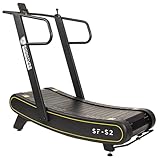
Overview: The Fitvids Sprint Demon positions itself as an accessible entry into curved treadmill technology, specifically targeting HIIT enthusiasts and home gym owners. At $808.32, it dramatically undercuts most competitors while delivering core curved treadmill benefits: self-powered operation that allegedly burns 30% more calories than motorized alternatives. The design emphasizes sprinting and short-distance work, making it ideal for interval training rather than long-distance jogging.
What Makes It Stand Out: This model’s ultra-thin, flexible slats create a “cloud absorption” effect that reduces joint stress while increasing muscle activation. Three distinct resistance levels accommodate different training modes—low for all-out sprints, medium for walking, and high for simulated sled pushes. The lightweight construction and front-mounted mobility wheels solve a common pain point, allowing single-person repositioning. A large device holder accommodates phones and tablets for entertainment or training apps, while the digital display tracks essential metrics like calories, heart rate, and speed.
Value for Money: Priced at just over $800, the Sprint Demon offers exceptional value—most curved treadmills start around $1,500. You’re sacrificing some premium features like higher weight capacity or advanced displays, but the core functionality remains intact. For home users unwilling to invest two to three times more, this represents a smart compromise between cost and performance.
Strengths and Weaknesses: Pros: Unbeatable price point; highly portable; HIIT-optimized design; joint-friendly slat system; device integration. Cons: Lower weight capacity than commercial models; only three resistance levels; brand lacks long-term track record; may not suit users over 250 pounds.
Bottom Line: The Sprint Demon is a compelling budget option for HIIT-focused athletes building home gyms. While it won’t match commercial durability, its price-to-performance ratio is outstanding for sprint and interval work.
7. DELAVIN Curved Manual Treadmill, Non Electric Treadmill with 4 Resistance Levels, Motorless Treadmills with Front Digital Display and Handlebar, Wide Belt Treadmills 440LBS Capacity for Home Gym(FBA)

Overview: The DELAVIN Curved Manual Treadmill targets serious home gym enthusiasts seeking commercial-grade durability without motors. At $1,999.99, it sits in the mid-range price bracket but delivers impressive specifications, including a 440-pound weight capacity and a generous 62.9 x 18.9-inch running surface. The self-powered design responds instantly to pace changes, making it ideal for HIIT, sprinting, and walking workouts while eliminating electricity costs.
What Makes It Stand Out: Four resistance levels provide more versatility than budget alternatives, allowing seamless transitions between walking, jogging, and power training. The curved belt geometry is specifically engineered to match natural foot strike patterns, reducing ankle strain and joint impact. Soft shock absorbers further enhance comfort. The front-mounted LED display clearly shows time, speed, distance, and calories, while the silent mechanical operation ensures you won’t disturb household members during early morning sessions.
Value for Money: While nearly $2,000 isn’t cheap, the DELAVIN justifies its price through superior build quality, higher weight capacity, and thoughtful ergonomics. Comparable commercial units often exceed $2,500, making this a reasonable investment for users prioritizing durability and joint protection over absolute budget concerns.
Strengths and Weaknesses: Pros: Exceptional 440 lbs capacity; joint-friendly curved design; four resistance levels; silent operation; eco-friendly power-free operation. Cons: Still expensive for casual users; heavy frame despite mobility pulleys; requires more space than foldable motorized treadmills.
Bottom Line: The DELAVIN excels for dedicated athletes needing a sturdy, joint-protecting manual treadmill. Its high capacity and ergonomic design make it worth the premium over budget options, particularly for larger users or those with joint concerns.
8. RUNOW Curved Treadmill, Non-Electric Motorized Treadmill for Commercial & Home Running Machine with Customization & Resistance Adjustment
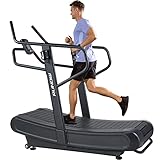
Overview: Priced at $2,699.99, the RUNOW Curved Treadmill bridges commercial durability with home-gym convenience. This non-electric, self-powered machine emphasizes versatility across user demographics—from elite athletes to elderly exercisers. The manual operation eliminates electricity costs while providing instant speed responsiveness, crucial for HIIT and sprint intervals. Its robust metal and crawler rubber construction promises longevity with minimal maintenance requirements.
What Makes It Stand Out: Four manual resistance levels adapt to diverse training protocols, while transport wheels and a built-in cup holder demonstrate user-centric design thinking. The 5" LCD monitor tracks comprehensive metrics including watts, pace, and resistance levels (L1-L4), plus custom goal-setting functions. Most notably, RUNOW backs this premium product with a two-year replacement warranty—rare in the curved treadmill market—and explicitly markets it to families and commercial facilities alike.
Value for Money: This is a significant investment, but the warranty, build quality, and versatility justify the cost for the right buyer. Commercial gyms will appreciate the durability; multi-user households benefit from its accessibility. Compared to similar commercial units lacking warranty protection, the RUNOW offers peace of mind that offsets its higher price tag.
Strengths and Weaknesses: Pros: Two-year replacement warranty; suitable for all ages/abilities; cup holder and device-friendly design; comprehensive data tracking; low maintenance. Cons: Premium pricing; may be overbuilt for single casual users; “non-electric motorized” is confusing marketing language.
Bottom Line: The RUNOW is an excellent choice for commercial settings or active families needing a versatile, durable manual treadmill. The warranty and user-friendly features make it a premium but sensible long-term investment.
9. SB Fitness Equipment CT400 Self Generated Curved Commercial Exercise Workout Treadmill with 3 Resistance Levels and Front Digital Display
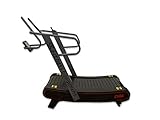
Overview: The SB Fitness CT400 represents a focused commercial-grade offering at $1,895.00, positioned between budget home models and premium commercial units. As a self-generated curved treadmill, it harnesses user power to burn more calories than motorized alternatives while delivering instant acceleration response critical for sport-specific training and HIIT protocols. The design eliminates electrical components, reducing both operational costs and maintenance needs.
What Makes It Stand Out: SB Fitness emphasizes its flexible track slats, which add shock absorption uncommon in manual treadmills—protecting joints while maintaining the natural running feel. Three resistance levels provide adequate variety for most training scenarios, from recovery walks to resisted sprints. The lack of maximum speed limitation appeals to elite sprinters, while the front digital display keeps essential metrics visible. The commercial designation suggests robust construction for high-use environments.
Value for Money: At under $1,900, the CT400 offers commercial credibility at a moderate price. It’s competitively positioned against home-gym pretenders, offering true commercial durability without the $2,500+ price tag of premium competitors. For gym owners or serious home users, this represents a sweet spot of quality and affordability.
Strengths and Weaknesses: Pros: Commercial-grade construction; flexible slat shock absorption; unlimited speed potential; established brand reputation; no electricity required. Cons: Only three resistance levels; no mentioned warranty; fewer user-friendly extras than some competitors; may be excessive for casual walkers.
Bottom Line: The CT400 is a no-nonsense commercial treadmill ideal for gyms and serious athletes. It prioritizes performance and durability over bells and whistles, making it a smart investment for high-intensity training environments.
10. SB Fitness Equipment CT700 Self Generated Curved Commercial Exercise Workout Treadmill with 8 Resistance Levels and Front Digital Display

Overview: The SB Fitness CT700 stands as the premium flagship at $2,895.00, delivering maximum versatility for commercial facilities and elite training environments. This self-generated curved treadmill builds on the CT400 foundation with eight resistance levels—the most in this comparison—enabling unprecedented workout variation from light recovery walks to heavy sled-push simulations. The commercial-grade construction ensures durability under constant daily use while maintaining the natural running dynamics curved treadmills are known for.
What Makes It Stand Out: Eight resistance levels dramatically expand training possibilities, allowing precise load progression for athletes across sports and fitness levels. The digital display provides comprehensive feedback including time, distance, speed, calories, and total accumulated miles—valuable for tracking long-term equipment usage in commercial settings. Like its sibling, it features instant speed adjustment and unlimited top speed, making it ideal for high-intensity interval training and sprint work where rapid acceleration changes are paramount.
Value for Money: This is the highest-priced unit reviewed, but for commercial buyers, the eight resistance levels justify the premium. No other manual treadmill offers this range of load variation, essentially replacing multiple pieces of equipment. For home users, it’s likely overkill unless multiple athletes with diverse needs share the space.
Strengths and Weaknesses: Pros: Industry-leading eight resistance levels; commercial durability; comprehensive metrics tracking; unlimited speed; brand reliability. Cons: Highest price point; excessive for casual home use; no mentioned warranty; significant footprint.
Bottom Line: The CT700 is the ultimate curved treadmill for commercial gyms and elite training centers. Its unmatched resistance versatility makes it worth every penny for facilities serving diverse athlete populations, though home users should consider the CT400 instead.
What Exactly Is a Curved Treadmill and Why It’s Revolutionizing Sprint Training
A curved treadmill is a non-motorized running machine with a concave, bow-shaped running surface. Instead of a motor controlling belt speed, your own leg drive powers the movement. The curved geometry uses gravity and friction to create a smooth, responsive running experience where acceleration is entirely athlete-controlled. For sprinters, this means you can hit maximum velocity instantly, decelerate naturally, and replicate true outdoor sprinting mechanics without waiting for a motor to catch up.
The real game-changer lies in the neuromuscular recruitment. Because you’re pulling the belt rather than reacting to it, your posterior chain—glutes, hamstrings, calves—activates more aggressively. Studies show up to 30% greater muscle engagement compared to motorized treadmills, translating directly to improved acceleration mechanics and ground force production.
The Science Behind Self-Powered Curved Running Surfaces
The mechanics are elegantly simple yet scientifically sophisticated. The running deck consists of individual slats rotating around bearings, creating a low-friction belt system. The curved shape places your foot strike slightly ahead of center, using gravitational pull to assist belt movement. As you shift your body weight forward and increase stride power, the belt velocity increases proportionally.
Magnetic resistance systems add another layer of control. By adjusting magnets closer to or further from the metal flywheel, you can increase or decrease the effort required to move the belt. This is crucial for sprint training—it allows you to simulate resisted sprints (like sled pushes) or maintain high-speed turnover with lighter resistance. The best systems offer incremental, precise adjustments rather than vague “levels 1-8” settings.
7 Game-Changing Benefits of Curved Treadmills for Sprinters
1. Instant Acceleration Response No ramp-up time. You go from zero to max speed in 2-3 steps, mirroring real-world sprint starts. This trains your nervous system for true explosive power.
2. Enhanced Posterior Chain Development The self-propelled nature forces greater hip extension and foot strike propulsion, building the exact muscles that drive top-end speed.
3. Natural Deceleration Stopping the belt requires active braking, strengthening eccentric control and reducing injury risk during real sprints when you need to slow down quickly.
4. Metabolic Overload Research indicates curved treadmills increase oxygen consumption by 30-40% at the same perceived effort, making them brutally effective for conditioning work.
5. Gait Pattern Correction The curved surface encourages mid-foot striking and reduces overstriding, naturally cleaning up inefficient sprint mechanics.
6. No Speed Limitations Elite sprinters can exceed 24 mph without hitting a motor’s max capacity. The only limit is your power output.
7. Reduced Impact Forces The curved design and slatted surface provide slight vertical compliance, decreasing joint stress compared to rigid motorized decks.
Key Features to Evaluate Before Investing
Belt Quality and Slat Design
Look for vulcanized rubber slats with embedded ball bearings. Cheap plastic slats crack under heavy use and create a choppy ride. The belt should feel seamless—high-quality machines use 60-80 slats with precision spacing to eliminate the “bump” sensation. For sprinting, slat width matters too; narrower slats (around 1.5 inches) flex more naturally, while wider ones feel clunky at high speeds.
Curve Radius and Running Surface Geometry
The curve’s depth directly affects running feel. A 6.5-7 inch center drop creates optimal propulsion without forcing an unnatural forward lean. Too shallow, and you lose the gravitational assist; too steep, and it feels like running uphill. The running surface should be at least 17 inches wide and 60 inches long to accommodate full sprint stride length without constraint.
Resistance Levels and Magnetic Braking Systems
Avoid machines with only manual friction brakes—they wear out quickly and provide inconsistent resistance. Opt for electromagnetic systems with vernier dial adjustments or digital presets. The resistance range should span from near-frictionless for overspeed work to heavy drag for resisted sprint intervals. Check if the system allows on-the-fly adjustments mid-sprint without breaking stride.
Frame Construction and Weight Capacity
Sprinting generates massive lateral forces. The frame needs welded steel construction, not bolted joints that loosen over time. A minimum weight capacity of 350 lbs indicates structural integrity, but pay attention to the base footprint—wider bases (over 30 inches) prevent wobbling during aggressive acceleration. Powder-coated finishes resist sweat corrosion better than paint.
Console Metrics and Data Tracking Capabilities
Basic units track speed, distance, and time. Advanced consoles should capture instantaneous velocity peaks, wattage output, stride rate, and heart rate compatibility. For sprint training, look for interval timing functions with programmable work/rest periods and the ability to export data via Bluetooth or ANT+. Some high-end models now offer force plate integration to measure ground contact time and vertical oscillation.
Noise Level and Vibration Dampening
Even the best curved treadmills generate noise—the slats hitting the frame create a characteristic “slap.” Quality machines use rubber dampeners between slats and frame, reducing noise to 60-70 decibels. Place the unit on a vibration-dampening mat to protect floors and reduce noise transfer through walls, crucial for apartment dwellers.
Portability and Storage Options
Commercial-grade curved treadmills weigh 250-350 lbs, but good ones include transport wheels and a tipping mechanism. Check if the wheels engage without lifting the entire machine—some designs allow you to tilt and roll solo. Foldable handles are rare but valuable for tight spaces.
Understanding the Biomechanics: How Curve Design Impacts Sprint Form
The curve’s geometry subtly alters your center of mass positioning. Your foot contacts the belt slightly ahead of your hips, promoting a more active pawing motion. This can be beneficial for sprinters who tend to “sit” in their stride, but it requires adaptation. The first 2-3 sessions often feel awkward as your neuromuscular system recalibrates.
The self-powered nature also changes ground contact time. Without a motor pulling your foot backward, you must actively generate all propulsive force. This typically reduces contact time by 10-15 milliseconds and increases stride frequency by 3-5%. While this sounds minor, at elite levels it translates to significant performance gains. However, over-reliance on curved treadmill training can make outdoor track sprinting feel “slow” initially, so periodization is key.
Sprint-Specific Training Protocols for Maximum Results
Acceleration Development (10-30 meters) Use minimal resistance and focus on 5-7 second maximal efforts. Rest 90-120 seconds between reps. The key is achieving peak velocity before the belt naturally slows. Perform 6-8 reps per session.
Max Velocity Maintenance (30-60 meters) Set light resistance (10-15% of max) to prevent belt overrun while maintaining 95%+ effort. These 6-8 second sprints train top-end speed endurance. Rest 2-3 minutes between efforts.
Resisted Sprints Crank resistance to 40-50% of max for 15-20 meter pushes. This mimics heavy sled work without the setup hassle. Keep volume low (4-6 reps) to prevent neural fatigue.
Overspeed Training Set zero resistance and use a slight forward lean to let the belt run faster than your typical max. This is advanced—only attempt after mastering basic mechanics to avoid injury.
Curved vs. Motorized: Making the Right Choice for Your Training Goals
If your primary goal is pure sprint development, a curved treadmill wins hands-down. The motor response lag in traditional treadmills makes them unsuitable for true speed work—you can’t replicate a 2.0-second 20m dash when the belt takes 5 seconds to reach speed.
However, motorized treadmills excel for tempo runs, long intervals, and incline work. They’re also better for rehabilitation settings where controlled, predictable speeds are crucial. The ideal setup? A curved treadmill for speed and power days, and access to a motorized unit for recovery and general conditioning.
Cost is another factor. Entry-level curved treadmills start around $3,000—double a decent motorized unit. But for serious sprinters, the training specificity justifies the investment.
Common Sprint Training Mistakes to Avoid on Curved Treadmills
Overstriding for Belt Speed The biggest error is reaching forward to grab more belt, which increases braking forces and kills efficiency. Focus on rapid turnover behind your center of mass.
Excessive Resistance More resistance doesn’t equal better training. Heavy resistance alters sprint mechanics, turning sprints into pushes. Use resistance sparingly and never exceed 50% of max for true sprint work.
Ignoring Deceleration Don’t just step off when tired. Practice active deceleration by driving down into the belt to slow it. This builds eccentric strength critical for injury prevention.
Poor Posture The curve encourages a forward lean. Consciously maintain a tall posture with slight forward tilt from the ankles, not the waist. Use a mirror or video feedback to monitor.
Maintenance Matters: Keeping Your Machine in Peak Condition
Curved treadmills require less maintenance than motorized units—no motor brushes, no deck lubrication—but they’re not maintenance-free. The slat bearings need quarterly cleaning with compressed air to remove dust and sweat residue. Annually, apply a single drop of sewing machine oil to each bearing.
Check slat tension monthly. Loose slats create a “slapping” sound and uneven wear. Most machines have tension bolts accessible from the underside—tighten in small increments to avoid over-tensioning. Inspect the magnetic brake pads for wear every 6 months; they’re typically good for 5,000+ miles but can accumulate metal dust that reduces effectiveness.
Wipe down the belt after every session with a damp cloth to prevent sweat salt from corroding the bearings. Never use harsh chemicals—they degrade the rubber slats and strip lubrication.
Budget Breakdown: What to Expect at Different Price Points
$2,500-$3,500: Entry-Level Basic magnetic resistance, decent slats, but often narrower decks and lower weight capacities (250-300 lbs). Suitable for lighter athletes or moderate use. Consoles are basic, tracking only speed/time/distance.
$3,500-$5,500: Mid-Range Improved slat bearings, wider decks, electromagnetic resistance with finer adjustments. Better consoles with interval timers and HR monitoring. Weight capacities reach 350 lbs. This is the sweet spot for most serious athletes.
$5,500-$8,000: High-Performance Commercial-grade construction, advanced data tracking (watts, stride metrics), superior vibration dampening, and programmable resistance profiles. These handle daily sprint sessions from multiple athletes and provide the data depth coaches crave.
$8,000+: Elite/Research Grade Force plates, integrated software suites, custom curve geometry, and institutional warranties. Overkill for individual use but standard in Olympic training centers.
Space and Installation: Real-World Considerations
A curved treadmill’s footprint typically measures 70” x 33” x 60” (L x W x H). You’ll need an additional 2-3 feet clearance behind for safety and 1-2 feet on each side. Ceiling height matters—at 6’ tall, you’ll need at least 8.5-foot ceilings to avoid head contact during aggressive forward lean.
Flooring is critical. Place on a level, hard surface; carpet creates instability and increases belt friction. A 3/4-inch rubber mat (4’ x 6’ minimum) protects floors and reduces noise. For second-floor installations, verify floor load capacity—these machines concentrate 300+ lbs on four small contact points, creating high psi loads.
Electrical needs are minimal—just power for the console. But position near an outlet to avoid extension cords, which create tripping hazards during intense sessions.
Who Should (and Shouldn’t) Use a Curved Treadmill for Sprint Work
Ideal Users:
- Competitive sprinters (high school to elite) needing weather-independent speed work
- CrossFit athletes requiring high-intensity interval durability
- Strength coaches who need versatile power development tools
- Rehabilitation patients progressing from non-impact to full sprinting (with supervision)
Poor Fits:
- Beginners with poor running mechanics—the curve can reinforce bad habits if fundamentals aren’t solid
- Long-distance runners focused on aerobic base building
- Individuals with severe balance issues or acute lower limb injuries
- Budget-conscious buyers who primarily jog or walk
The learning curve is real. Most athletes need 3-5 sessions to feel comfortable, and 2-3 weeks before mechanics normalize. Rushing this adaptation leads to calf strains and Achilles irritation.
The Future of Sprint Training: Innovations on the Horizon
The next generation of curved treadmills is integrating AI-driven form analysis using embedded pressure sensors and high-speed cameras. These systems provide real-time audio cues to correct asymmetries or overstriding. We’re also seeing hybrid designs that can lock the curve flat for recovery walking, then engage the curve for sprint sets—one machine, multiple modalities.
Battery-powered electromagnetic resistance is emerging, allowing fine-tuned, programmable resistance profiles that sync with wearable tech. Imagine a sprint workout where resistance automatically increases as your power output fades, maintaining optimal training stimulus throughout the session.
Perhaps most exciting is the development of “smart slats” with individual load cells, potentially measuring ground reaction forces on each step. This data would revolutionize how we analyze sprint mechanics in real-time, previously only possible in biomechanics labs.
Frequently Asked Questions
Are curved treadmills really better for sprint training than traditional ones? For pure speed development, absolutely. The instant response and self-powered nature force you to generate all propulsive force, recruiting more posterior chain muscles and training true acceleration mechanics. Traditional motorized treadmills have a 2-5 second ramp-up lag that makes them unsuitable for replicating real sprint starts. However, they’re not inherently “better” for all training—motorized treadmills still excel for controlled tempo runs and rehabilitation. The best approach is using curved treadmills for speed/power days and motorized units for recovery work.
How much should I expect to spend on a quality curved treadmill? Plan on $3,500-$5,500 for a machine that will withstand serious sprint training. At this price point, you get electromagnetic resistance, a 350+ lb weight capacity, and a console that tracks metrics like peak velocity and wattage. Budget options under $3,000 work for lighter athletes or occasional use but often have narrower decks and less durable bearings. Commercial-grade units used in training facilities run $6,000-$8,000 and offer advanced data tracking and superior construction. Remember to factor in $200-300 for a quality vibration-dampening mat and potential delivery fees.
Can beginners use curved treadmills, or are they just for elite athletes? Beginners can absolutely use them, but they should master basic running mechanics first. The curve’s geometry can reinforce poor form if you’re already an overstrider or have weak posture. Spend 4-6 weeks doing form drills and building a base on flat ground or a motorized treadmill. When you transition, start with 5-minute familiarization sessions at a light jog to adapt to the self-powered feel. The first sprint session should be submaximal—focus on technique, not speed. With proper progression, curved treadmills benefit athletes at any level by teaching efficient force application.
What maintenance do curved treadmills require compared to motorized models? Far less, but different. There’s no motor to service or deck to lubricate, but the slat bearings need quarterly cleaning with compressed air to remove sweat and dust buildup. Apply a single drop of sewing machine oil to each bearing annually. Check slat tension monthly—loose slats slap and wear unevenly. Wipe the belt after every use to prevent sweat salt corrosion. Magnetic brake pads need inspection every 6 months for metal dust accumulation. Overall, expect 2-3 hours of maintenance yearly versus 8-10 for motorized units, but neglecting bearing care will lead to costly replacements.
How do I know if a curved treadmill will fit in my home gym space? Measure your space carefully. The machine itself needs roughly 6 feet by 3 feet of floor space, plus 2-3 feet clearance behind and 1-2 feet on each side. Ceiling height is critical—if you’re over 6 feet tall, you need at least 8.5-foot ceilings to accommodate forward lean. The footprint is actually similar to motorized treadmills, but curved units can’t fold flat. Consider doorways too—some machines don’t disassemble easily and need 32-inch-wide openings. If space is tight, look for models with transport wheels that allow vertical storage against a wall.
Do curved treadmills help improve running form automatically? They encourage better mechanics but don’t guarantee them. The curve naturally promotes mid-foot striking and reduces overstriding, which is beneficial. However, you can still run poorly on them—reaching forward, excessive tension, or hunching over. Use video analysis or a coach to ensure you’re not just adapting bad habits to the new surface. Many athletes initially feel awkward as their body learns the proper pawing motion. Think of the curved treadmill as a tool that rewards good form rather than one that magically fixes bad form.
What’s the learning curve like for transitioning to a curved treadmill? Most athletes need 3-5 sessions to feel comfortable and 2-3 weeks for mechanics to normalize. The first session feels foreign—expect a higher heart rate at slower speeds as your neuromuscular system adapts. Start with 10-15 minute easy jogs, focusing on quick turnover behind your hips. Your calves and Achilles may be sore initially due to increased propulsive demands. Don’t attempt maximal sprints until you can maintain proper form at 70% effort. Rushing this adaptation is the fastest path to strained calves or shin splints.
Are curved treadmills loud enough to disturb neighbors in an apartment? They’re quieter than you might think but not silent. The slats hitting the frame create a rhythmic slapping sound, typically 60-70 decibels—comparable to a dishwasher. This is quieter than most motorized treadmills at high speeds. However, the impact vibrations can transfer through floors. Place the unit on a 3/4-inch thick rubber mat and consider additional isolation pads under the feet. Avoid early morning or late-night sprint sessions. If you’re on an upper floor, test during the day and ask downstairs neighbors about vibration. Some buildings have strict floor load limits that these machines exceed.
Can I do distance running on a curved treadmill, or is it just for sprints? You can, but it’s brutally hard. The self-powered nature increases metabolic cost by 30-40% at the same pace, so a 6-minute mile feels like a 5:30 mile effort. This makes them excellent for time-efficient conditioning but poor for easy aerobic base building. Most athletes use them for intervals up to 400-meter equivalents (2-3 minutes). Longer efforts become form-breakingly fatiguing. If you need both sprint and distance work, a curved treadmill serves as a powerful supplement but shouldn’t replace your primary aerobic training tool.
How long do curved treadmills typically last with heavy sprint training use? With proper maintenance, 10,000+ miles is realistic for commercial-grade units. The slat bearings are the wear point—expect to replace them every 2-3 years with daily use. The belt itself lasts 5-7 years, and the frame is essentially indestructible. Home users typically see 15-20 years of service. Heavy sprinters (over 200 lbs) will see slightly faster bearing wear due to higher peak forces. The magnetic brake system is maintenance-free for 5+ years. Compare this to motorized treadmills where motors often fail within 5-7 years under heavy use, and the long-term value becomes clear despite higher upfront cost.