If you’ve been searching for a cardio solution that respects your joints while delivering serious fitness results, you’re in the right place. Elliptical machines have revolutionized home fitness by offering a unique combination of heart-pumping intensity and gentle, fluid motion that mimics natural walking patterns. Unlike the jarring impact of running or the limited engagement of stationary bikes, ellipticals provide a full-body workout that can burn calories efficiently without the next-day aches that send you reaching for ice packs.
But here’s the challenge: walk into any fitness equipment store or browse online, and you’ll encounter a dizzying array of options with technical specifications that seem designed to confuse rather than clarify. What separates a budget-basement model from a commercial-grade machine? Does flywheel weight really matter? And why do some ellipticals feel like gliding on air while others feel choppy and unnatural? This comprehensive guide cuts through the marketing noise to equip you with the knowledge to make a confident, informed decision—whether you’re managing arthritis, recovering from injury, or simply prioritizing longevity in your fitness journey.
Top 10 Elliptical Machines for Low-Impact Cardio
Detailed Product Reviews
1. Sunny Health & Fitness SF-E902S Air Walk Pro Trainer Elliptical Machine Glider w/LCD Monitor, 220 LB Max Weight and 30 Inch Stride

Overview: The Sunny Health & Fitness SF-E902S Air Walk Pro Trainer delivers a unique low-impact cardio experience through its signature air gliding motion. This compact machine engages arms, legs, and core simultaneously while minimizing joint stress. With a 220-pound weight capacity and 30-inch stride, it accommodates most users comfortably, making it ideal for beginners, seniors, and rehabilitation purposes who need gentle full-body exercise.
What Makes It Stand Out: Bluetooth connectivity sets this budget trainer apart, providing access to 1,000+ training videos and 10,000+ world tour videos through a companion app—features rarely seen under $200. The simulated air walking motion combines walking rhythm with cross-country skiing glide, creating a distinctive feel. Its foldable design collapses to a compact form, perfect for apartments and small spaces where storage is critical.
Value for Money: At $159.99, this machine offers exceptional value. Traditional ellipticals with magnetic resistance typically cost $300+, yet the SF-E902S provides adjustable resistance and premium app integration at nearly half the price. It’s an accessible entry point for home cardio without sacrificing modern connectivity features that keep workouts engaging.
Strengths and Weaknesses: Strengths include ultra-compact folding, app connectivity, whisper-quiet operation, and gentle joint-friendly motion. The 30-inch stride suits taller users well. However, the 220-pound weight limit restricts some users, and the air walker design lacks the heavy flywheel smoothness of magnetic ellipticals. Resistance may prove insufficient for advanced athletes seeking high-intensity training.
Bottom Line: The SF-E902S excels as an entry-level choice for low-impact home cardio. Its app connectivity and space-saving design make it perfect for apartments and beginners, though serious fitness enthusiasts may quickly outgrow its resistance capabilities.
2. FOUSAE Elliptical Exercise Machine, 16-Level Magnetic Resistance Elliptical Machine for Home Trainer with Hyper-Quiet Drive, 15.5IN Stride, LCD Monitor & App Support, 350LBS Weight Capacity

Overview: The FOUSAE Elliptical Exercise Machine positions itself as a gym-quality home trainer with professional-grade stability and whisper-quiet operation. Engineered with a robust rear-drive system and 16-pound flywheel, it supports users up to 350 pounds while delivering smooth, fluid motion. The 15.5-inch stride length mimics natural walking and running patterns, making it suitable for varied user heights and fitness levels in home environments.
What Makes It Stand Out: The 16-level magnetic resistance system provides exceptional versatility, accommodating everything from gentle rehabilitation to intense fat-burning sessions. Its ultra-quiet magnetic drive operates below 20 decibels—quieter than a whisper—allowing early morning or late-night workouts without disturbing household members. Multi-app compatibility with FITSHOW, KINOMAP, Zwift, and EXR transforms routine exercise into immersive training experiences with community features.
Value for Money: At $299.99, this elliptical competes directly with commercial-grade machines costing twice as much. The combination of high weight capacity, extensive resistance range, and premium app integration justifies every dollar. For serious home fitness enthusiasts who need durability and progressive challenge, it eliminates costly gym memberships while delivering comparable quality.
Strengths and Weaknesses: Strengths include exceptional stability, near-silent operation, comprehensive app ecosystem, and wide resistance range suitable for all fitness levels. The 350-pound capacity accommodates virtually all users. However, its heavier construction makes it less portable than foldable models, and the assembly process may be more involved. The 15.5-inch stride might feel short for users over 6'2".
Bottom Line: This is a top-tier home elliptical for dedicated fitness enthusiasts. Its gym-quality build, silent operation, and extensive resistance make it worth the investment, provided you have dedicated space and don’t require a folding design.
3. THERUN Elliptical Machine for Home, Hyper-Quiet Elliptical Exercise Machine, Compact Elliptical Trainer w/8 Levels Adjustable Resistance, 6KG Flywheel, Pulse Sensor, LCD Monitor

Overview: The THERUN Elliptical Machine strikes a balance between affordability and performance for home users prioritizing quiet operation. With a 265-pound weight capacity and compact footprint, this trainer features a magnetic resistance system that maintains noise levels at just 20 decibels. The dual-handlebar design incorporates both moving and stationary arms with built-in pulse sensors, offering versatile workout options for full-body engagement and heart-rate monitoring.
What Makes It Stand Out: The dual-handlebar configuration is a standout feature, providing both cardio-pumping arm motion and stable heart-rate monitoring through stationary grips. This design enhances workout versatility and safety. Its ultra-silent magnetic system makes it exceptionally apartment-friendly, while the heavy-duty iron frame ensures stability during intense sessions without the wobble common in budget machines, supporting users from 4'9" to 6'2".
Value for Money: Priced at $219.99, the THERUN elliptical sits in the sweet spot between basic air walkers and premium magnetic trainers. It offers genuine magnetic resistance and heart-rate monitoring—features typically found in $300+ models—while maintaining an accessible price point. For users seeking quiet operation without paying premium prices, it represents smart value.
Strengths and Weaknesses: Strengths include whisper-quiet performance, dual-handlebar versatility, solid build quality, and integrated pulse sensors. The machine accommodates a wide height range effectively. However, with only eight resistance levels, it lacks the fine-tuned progression of 16-level systems. The 265-pound capacity, while adequate, trails behind heavy-duty competitors, and app connectivity is absent.
Bottom Line: Ideal for apartment dwellers and intermediate users seeking quiet, reliable performance. While resistance options are limited compared to premium models, its silent operation and dual-handlebar design make it a strong mid-range contender.
4. pooboo Elliptical Machine, Elliptical Exercise Machine with 16-Level Resistance&Hyper-Quiet Magnetic Driving System, Elliptical Machine for Home with LCD Monitor&15.5IN Stride, 350LBS Weight Capacity

Overview: The pooboo Elliptical Machine combines commercial-grade specifications with user-friendly assembly and storage. Supporting up to 350 pounds with a thickened steel frame, this rear-drive trainer features a 16-pound flywheel and 15.5-inch stride that replicates natural human movement. What distinguishes it from competitors is the 80% pre-assembled design, allowing setup in under 30 minutes without professional help or complicated instructions.
What Makes It Stand Out: The foldable design paired with gym-quality construction is a rare combination—most foldable ellipticals compromise on stability. The rear-drive configuration shifts the center of gravity backward, enhancing safety and creating a smoother motion. Sixteen resistance levels are clearly segmented into three modes: soothing, moderate intensity, and fat burning, simplifying workout selection for users at different fitness stages without guesswork.
Value for Money: At $299.99, this machine matches premium non-folding models while adding convenience features. The pre-assembly saves hours of frustration and potential installation errors that cause noise problems. Folding capability maximizes space efficiency without sacrificing the 350-pound capacity or heavy flywheel performance, making it ideal for multi-purpose rooms where storage matters.
Strengths and Weaknesses: Strengths include easy assembly, foldable storage, exceptional weight capacity, ultra-quiet operation, and well-defined resistance zones. The rear-drive design improves balance and safety. However, the 15.5-inch stride may not suit users over 6'3", and its heavier weight makes frequent folding/unfolding cumbersome. App connectivity isn’t mentioned, limiting digital training options.
Bottom Line: Perfect for home gyms where space and assembly concerns are paramount. It delivers professional performance with consumer-friendly convenience, making it worth the premium price for those needing foldability without compromise.
5. KINMAC Air Walking Elliptical Exercise Machine - Foldable Low-Impact Cardio Trainer with LCD Monitor, Extended Stride & Non-Slip Pedals for Home Gym
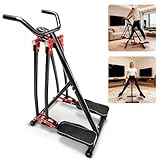
Overview: The KINMAC Air Walking Elliptical is the most budget-conscious option in this lineup, priced at just $105.25. This foldable cardio trainer emphasizes simplicity and accessibility, delivering a low-impact, full-body workout through its extended stride design. Engineered for beginners, seniors, and space-constrained users, it prioritizes ease of use over advanced features, assembling in under 30 minutes with minimal tools required.
What Makes It Stand Out: The extended stride length mimics natural “air walking” and cross-country skiing motions more effectively than compact ellipticals, maximizing calorie burn while maintaining comfort for all user heights. Its ultra-low price point combined with functional folding design makes home cardio accessible to virtually any budget. The non-slip pedals provide secure footing during intense sessions—a safety feature often overlooked in economy models.
Value for Money: At $105.25, this machine redefines budget fitness equipment. While lacking magnetic resistance and app connectivity, it provides essential cardio functionality at one-third the cost of basic magnetic ellipticals. For users needing gentle rehabilitation exercise or maintenance-level fitness, it eliminates financial barriers to home workouts entirely.
Strengths and Weaknesses: Strengths include unbeatable price, quick assembly, foldable storage, extended stride comfort, and stable non-slip pedals. The low-impact motion is ideal for joint-sensitive users. However, it lacks adjustable resistance, magnetic drive smoothness, and digital connectivity. The weight capacity isn’t specified, likely limiting it to lighter users, and the air walker design provides less intense workouts than magnetic alternatives.
Bottom Line: An outstanding entry-level choice for absolute beginners, seniors, or those with severe budget constraints. While limited in features and intensity, it delivers reliable low-impact cardio that exceeds expectations for its price point.
6. Niceday Elliptical Machine, Elliptical Trainer for Home with Hyper-Quiet Magnetic Driving System, 16 Resistance Levels, 15.5IN Stride, 400LBS Weight Capacity

Overview: The Niceday Elliptical positions itself as a premium home fitness solution built for serious users who demand durability and whisper-quiet operation. With a 400-pound weight capacity and 16 resistance levels, this machine targets households where multiple users of varying fitness levels need reliable daily performance without disturbing others.
What Makes It Stand Out: The hyper-quiet magnetic driving system genuinely delivers noise levels quieter than breathing, making it ideal for apartments or early morning workouts. The 15.5-inch natural stride length accommodates users up to 6 feet tall comfortably, while the industrial-grade steel construction with laser-welded joints provides exceptional stability that cheaper models simply cannot match.
Value for Money: At $499.99, this elliptical sits in the mid-to-high range for home equipment, but justifies the investment through its 400-pound capacity and robust build quality. Comparable commercial-grade machines cost significantly more, while budget alternatives rarely exceed 300-pound limits or offer the same smooth motion precision.
Strengths and Weaknesses: Strengths include the exceptional weight capacity, virtually silent operation, smooth stride motion, and sturdy construction that eliminates wobbling. The comprehensive digital monitor tracks all essential metrics effectively. Weaknesses are the premium price point that may deter casual users, and the assembly process requires two people despite clear instructions. The 16 resistance levels, while adequate, may not challenge advanced athletes seeking extreme intensity.
Bottom Line: This elliptical excels for dedicated home fitness enthusiasts prioritizing durability, quiet operation, and high weight capacity. The investment pays off in long-term reliability and neighbor-friendly workouts, making it a smart choice for serious users in shared living spaces.
7. OWLSKY Air Walk Elliptical Exercise Machine for Home Gym – Compact Elliptical Cross Trainer with LCD Monitor, Device Holder, Low-Impact Cardio Workout, Full Body Fitness Equipment 400LBS
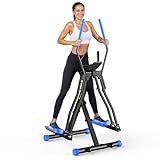
Overview: The OWLSKY Air Walk Elliptical delivers impressive versatility at a budget-friendly price point, offering 2-in-1 training modes that include forward, backward, and side-to-side motion. This compact machine targets apartment dwellers and beginners seeking effective full-body cardio without sacrificing precious floor space or disturbing household members.
What Makes It Stand Out: Remarkably, this $239.99 machine supports 400 pounds while maintaining noise levels under 20 decibels—quieter than a whisper. The multi-directional movement pattern engages stabilizing muscles rarely activated by traditional ellipticals, while the integrated device holder keeps entertainment accessible during workouts. This combination of high capacity and low noise at this price point is genuinely rare.
Value for Money: Exceptional value defines this model. Competing machines with similar weight capacities typically cost twice as much, and the ultra-quiet operation rivals premium magnetic systems. For budget-conscious buyers, this represents one of the best cost-to-feature ratios in the home elliptical market.
Strengths and Weaknesses: Strengths include the unbeatable price, versatile motion patterns, whisper-quiet operation, high weight capacity, and straightforward assembly requiring minimal tools. The LCD monitor covers basic metrics adequately. Weaknesses include limited resistance variability compared to magnetic systems, a less premium feel in materials, and the basic monitor lacks advanced programming. The stride length may feel short for users over 5'10".
Bottom Line: This machine dominates the entry-level category, offering quiet, versatile workouts that won’t break the bank. Perfect for beginners, apartment residents, or anyone prioritizing value and noise reduction over advanced features.
8. Sunny Health & Fitness Smart Elliptical Machine, Total Body Cross Trainer with Hyper-Quiet Magnetic Belt Drive, Low Impact Exercise Equipment and Exclusive SunnyFit App Enhanced Bluetooth

Overview: Sunny Health & Fitness bridges technology and affordability with this smart elliptical that integrates seamlessly with their free SunnyFit app. The machine combines hyper-quiet magnetic belt drive technology with Bluetooth connectivity, targeting tech-savvy users who want guided workouts without ongoing subscription fees.
What Makes It Stand Out: The free SunnyFit app provides access to over 1,000 trainer-led workouts, 10,000 virtual scenic routes, and real-time metric tracking—features typically locked behind expensive monthly subscriptions. The hyper-quiet magnetic belt drive ensures smooth, silent operation perfect for shared spaces, while Bluetooth connectivity automatically syncs workout data for progress visualization.
Value for Money: At $249.99, this elliptical delivers extraordinary value by eliminating subscription costs while providing premium app features. Comparable smart machines with similar app ecosystems cost $600+, making this an intelligent choice for budget-conscious users seeking digital motivation and community features.
Strengths and Weaknesses: Strengths include the completely free app with extensive content library, whisper-quiet magnetic belt drive, Bluetooth connectivity, low-impact total body engagement, and straightforward assembly. The eight resistance levels provide adequate progression for most users. Weaknesses include a lower 330-pound weight capacity, fewer resistance levels than premium models, and the app interface occasionally experiences minor connectivity hiccups. The stride length isn’t specified, potentially limiting taller users.
Bottom Line: This smart elliptical democratizes connected fitness, offering an unbeatable combination of quiet operation, app integration, and affordability. Ideal for beginners to intermediate users wanting guided workouts without subscription fatigue.
9. Sunny Health & Fitness Programmable Electro-Magnetic Elliptical Cross Trainer Exercise Machine, Full-Body Low-Impact Cardio Equipment with 24 Pre-Built Workout Modes and 330 lbs Capacity – SF-E3912
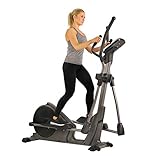
Overview: The SF-E3912 elevates Sunny’s lineup with programmable electro-magnetic resistance and extensive built-in workout variety. This machine targets intermediate to advanced users seeking gym-quality programming and precise resistance control without the commercial price tag, delivering 24 pre-designed programs in a compact footprint.
What Makes It Stand Out: Electro-magnetic resistance provides instantaneous, precise adjustments with faster response times than manual magnetic systems. The advanced backlit monitor displays comprehensive metrics including watt generation and heart rate, while the 24 built-in programs offer structured training options from interval sessions to heart rate control, eliminating workout monotony.
Value for Money: Priced at $406.99, this model occupies a sweet spot between basic magnetic ellipticals and high-end commercial units. The electro-magnetic system and extensive programming justify the premium over entry-level models, though it costs more than the brand’s app-enabled version that offers similar digital guidance.
Strengths and Weaknesses: Strengths include precise electro-magnetic resistance with 16 levels, extensive built-in programming, comprehensive metric tracking, quiet belt-drive operation, and pulse sensors in handlebars. The 15.5-inch stride accommodates most users comfortably. Weaknesses include the 330-pound capacity which lags behind some competitors, absence of app connectivity for those wanting digital ecosystems, and the higher price may stretch budgets. Assembly requires patience despite clear instructions.
Bottom Line: This programmable elliptical shines for self-motivated users wanting structured, varied workouts without relying on smartphone apps. The electro-magnetic resistance and extensive programs make it feel like a commercial machine at a fraction of the cost.
10. YOSUDA Elliptical Exercise Machine, 3-in-1 (Elliptical + Cardio Climber + Stair Stepper) Elliptical Machine for Home with 45°Incline, 15.5 in Stride, 16-Levals Resistance, Quiet Magnetic System
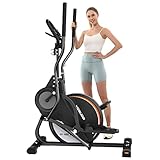
Overview: YOSUDA’s innovative 3-in-1 design merges elliptical, cardio climber, and stair stepper functionalities into a single space-saving machine. The 45-degree incline mechanism transforms traditional elliptical motion into vertical climbing, targeting users who want varied workout modalities without purchasing multiple pieces of equipment.
What Makes It Stand Out: The unique 45° climbing stride motion dramatically increases calorie burn compared to flat ellipticals while maintaining low-impact benefits. An 18-pound flywheel—heavier than most competitors—ensures exceptionally smooth momentum throughout the stride. The dual-calibrated data tracking provides unusual accuracy for metrics, helping users set precise goals.
Value for Money: At $399.97, this machine delivers three exercise modalities for the price of one, representing excellent value for space-conscious buyers. While pricier than basic ellipticals, the versatility eliminates the need for separate stepper or climber purchases, which would collectively cost $800+.
Strengths and Weaknesses: Strengths include versatile 3-in-1 functionality, heavy 18-pound flywheel for smoothness, 16 resistance levels, quiet 26-decibel operation, and dual-calibrated accurate metrics. The 15.5-inch stride works well for most heights. Weaknesses include the 300-pound weight capacity—lower than some rivals—and the incline mechanism adds complexity to assembly. The frame, while sturdy at 15mm thickness, may feel less robust than commercial alternatives during intense climbing sessions.
Bottom Line: This hybrid machine excels for users wanting workout variety and maximum efficiency from limited space. The 3-in-1 design and heavy flywheel make it a compelling choice for those who bore easily with single-motion machines.
Why Choose an Elliptical for Low-Impact Cardio?
The magic of elliptical training lies in its biomechanical design. Your feet never leave the pedals, eliminating the ground reaction forces that make running so punishing on knees, hips, and ankles. Research consistently shows that elliptical training reduces joint loading by up to 30% compared to treadmill running while maintaining similar cardiovascular benefits. This makes it the gold standard for anyone dealing with osteoarthritis, chronic joint pain, or those simply being proactive about preserving their mobility.
Beyond joint protection, ellipticals uniquely engage both upper and lower body simultaneously when used with moving handlebars. This dual-action recruitment activates multiple muscle groups—glutes, quads, hamstrings, chest, back, and arms—creating an efficient metabolic demand that torches calories while building functional strength. For time-crunched individuals, this means a 30-minute session delivers more total-body benefits than 30 minutes of cycling or walking.
Understanding Elliptical Mechanics: How They Protect Your Joints
The elliptical motion path isn’t just a random oval; it’s a carefully engineered trajectory that replicates your natural gait cycle. As you stride forward, the pedal follows a path that minimizes internal rotation and shearing forces at the knee joint—a common culprit in overuse injuries. The synchronized handlebar movement further distributes workload, preventing any single joint from bearing excessive stress.
The key is the continuous, non-impact nature of the movement. When you run, each foot strike generates a force equivalent to 2-3 times your body weight traveling up your kinetic chain. Ellipticals eliminate this impact phase entirely while maintaining the weight-bearing benefits that keep bones strong. This makes them superior to swimming for osteoporosis prevention and more functional than cycling for everyday movement patterns.
Key Benefits of Regular Elliptical Training
Beyond the obvious cardiovascular improvements, consistent elliptical training delivers transformative benefits that ripple through every aspect of your health. Studies show that 150 minutes of weekly elliptical training can reduce blood pressure by 5-7 mmHg, improve insulin sensitivity by 25%, and boost VO2 max by 15% in just eight weeks. The weight-bearing nature stimulates bone density without the risks associated with high-impact loading.
Mentally, the smooth, rhythmic motion creates a meditative quality that reduces cortisol levels more effectively than high-intensity interval training for stress-prone individuals. The ability to pedal forward or backward adds neuromuscular variety, challenging your brain and body in different movement planes. For older adults, this translates to improved balance, reduced fall risk, and maintained independence.
Types of Elliptical Machines: Finding Your Perfect Match
Front-Drive Ellipticals
Front-drive models position the flywheel and drive mechanism at the front of the machine, creating a movement pattern that feels slightly more vertical—similar to climbing stairs with a forward lean. These units typically offer a more compact footprint, making them popular for home gyms with limited space. The incline ramp is often more pronounced, providing excellent glute and hamstring engagement. However, they can feel less stable for users with balance issues and may require more maintenance due to the complex linkage system.
Rear-Drive Ellipticals
Pioneered by early commercial designs, rear-drive ellipticals place the flywheel behind the user, creating a flatter, more horizontal stride that closely mimics running or walking. This configuration generally provides the smoothest, most natural feel with fewer moving parts and less noise. The weight distribution creates inherent stability, and the longer stride lengths accommodate taller users more comfortably. The trade-off is a longer overall machine length, demanding more floor space.
Center-Drive Ellipticals
The newest innovation positions the drive system on either side of the user, creating a centered, balanced feel that many describe as “floating.” These models excel in ergonomics, allowing a more upright posture that reduces lower back strain. The compact side-to-side footprint is ideal for tight spaces, and the symmetrical design often supports higher weight capacities. The unique pedal spacing can be narrower, which better aligns with natural hip width for many users.
Essential Features to Evaluate Before Buying
Stride Length: The Foundation of Comfort
Stride length determines how natural and comfortable your workout feels. A stride that’s too short creates a choppy, restricted motion that can actually increase joint stress. For users under 5'4", an 18-inch stride suffices. Those between 5'4" and 6’ should demand 20 inches, while anyone over 6 feet needs 21-22 inches for full hip extension. Premium machines offer adjustable stride lengths, allowing multiple household members to customize their experience.
Flywheel Weight: Smoothness and Stability
The flywheel’s mass directly impacts motion quality. Heavier flywheels (20+ pounds) store more rotational energy, creating momentum that smooths out the “dead spots” in the elliptical path and eliminates the jerky feeling common in budget models. This inertia also provides consistent resistance that doesn’t fluctuate with speed changes. For serious training, look for flywheels exceeding 25 pounds—they’ll feel whisper-smooth and last for decades.
Resistance Systems: Magnetic vs. Mechanical
Modern ellipticals exclusively use magnetic resistance for good reason. This system employs magnets positioned around the flywheel; moving them closer increases resistance without any physical contact. The result is silent operation, infinite adjustability, and zero wear parts. Mechanical resistance uses friction pads that physically press against the flywheel—noisy, inconsistent, and requiring frequent replacement. Avoid any elliptical that doesn’t specify “magnetic resistance.”
Incline and Ramp Adjustability
Incline transforms your elliptical from a single-plane cardio machine into a versatile strength-endurance tool. Manual incline requires stopping your workout to adjust, while power incline changes on the fly via console controls. A 10-20% incline range dramatically shifts muscle recruitment—lower inclines target quads and calves, while steeper angles hammer your glutes and hamstrings. Look for machines with at least 15 levels of incline adjustment for meaningful workout variety.
Console Technology: What You Actually Need
Console features range from bare-bones LCD displays to immersive touchscreens streaming virtual workouts. The key is distinguishing novelty from utility. Essential metrics include time, distance, speed, calories, and heart rate—everything else is optional. Bluetooth connectivity allows syncing with fitness apps, which is valuable for tracking progress over time. However, avoid paying premium prices for built-in entertainment systems that become outdated; your tablet is a better streaming solution.
Consider the user interface complexity. Large, tactile buttons beat sleek touchscreens when you’re sweating and breathing heavily. Backlit displays are non-negotiable for dimly lit basements. If the console requires a subscription for basic functionality, factor that ongoing cost into your budget. The best consoles grow with you—offering beginner-friendly simplicity that expands as your fitness advances.
Ergonomics and Adjustability: Customizing Your Ride
Proper ergonomics prevent the very joint pain you’re trying to avoid. Look for articulating foot pedals that tilt slightly with your natural ankle motion, reducing Achilles strain. Pedal spacing should mirror your natural hip width—overly wide stances stress hip joints and IT bands. Adjustable handlebars accommodate different arm lengths and allow you to target different upper-body muscles.
Step-up height matters more than you think. Machines with 8-10 inch step-up heights are easier to mount for users with limited mobility. If you’re placing the elliptical in a room with low ceilings, measure your height plus the machine’s pedal height at its highest point—add 6 inches for safety clearance. Some premium models offer adjustable pedals that change the angle of attack, which can be a game-changer for users with specific ankle or knee limitations.
Space Considerations: Sizing Up Your Home Gym
Elliptical footprints vary dramatically. Compact models can squeeze into 4 x 2 feet, while commercial-grade machines demand 7 x 3 feet. Don’t forget to account for the pedal trajectory—your body moves forward and backward during use, requiring at least 20 inches of clearance behind the machine and 12 inches in front. Side-to-side, allow 18 inches on each side for safe mounting and dismounting.
Ceiling height is the forgotten dimension. At the apex of the pedal stroke, your head can be 12-18 inches higher than your standing height. For a 6-foot user, this means needing at least an 8-foot ceiling. Folding ellipticals exist but compromise stability; they suit occasional users with severe space constraints. For dedicated fitness spaces, non-folding units offer superior durability and feel.
Noise Levels: Maintaining Household Harmony
A whisper-quiet elliptical operates at 25-30 decibels—comparable to a library. Budget models can exceed 60 decibels, sounding like a vacuum cleaner. Magnetic resistance is inherently silent; most noise comes from the drive system and bearings. Belt-driven systems are quieter than chain-driven alternatives and require less maintenance.
Consider where you’ll place the machine. Second-floor installations demand extra attention to vibration transmission. Place a high-density equipment mat underneath to absorb vibration and protect floors. Test the machine at high resistance and speed—some units develop a “chatter” when pushed hard. For apartment dwellers, seek machines specifically marketed as “whisper-quiet” with acoustic dampening in the frame design.
Weight Capacity and Build Quality: Durability Matters
Weight capacity reveals more than just user limits—it indicates overall construction quality. Machines rated for 300+ pounds typically feature heavier gauge steel frames, reinforced welds, and commercial-grade components. A 250-pound capacity machine might work for lighter users but will feel less stable and have a shorter lifespan.
Examine frame construction details. Welded joints outperform bolted connections for longevity. Steel gauge matters: 14-gauge steel is adequate for light use, while 11-gauge represents commercial durability. Powder-coated finishes resist corrosion better than painted surfaces. The base should have adjustable leveling feet to compensate for uneven floors—essential for wobble-free operation.
Workout Programs and Training Options
Pre-programmed workouts prevent the boredom that kills consistency. Look for a mix of steady-state, interval, hill climb, and heart rate-controlled programs. Manual mode is essential for creating custom routines. Machines offering user-defined programs allow you to save personalized workouts—a valuable feature for households with multiple users.
Advanced programming includes watt-based training, which measures actual power output for precise intensity control. Recovery programs assess heart rate variability to gauge fitness improvements. Some consoles simulate famous routes, automatically adjusting resistance to match terrain profiles. While entertaining, ensure these features don’t inflate the price beyond the machine’s mechanical quality.
Heart Rate Monitoring: Training in Your Zone
Accurate heart rate data transforms your elliptical from a calorie burner into a precision training tool. Contact grips are notoriously inaccurate, especially during movement. Wireless telemetry using a chest strap provides medical-grade accuracy and allows hands-free training. Some machines include optical sensors in stationary handlebars—these are moderately accurate but less reliable than chest straps.
Target heart rate programs automatically adjust resistance to keep you in specific zones, essential for zone 2 training or HIIT protocols. Verify the machine is compatible with standard ANT+ or Bluetooth heart rate monitors rather than requiring proprietary devices. This compatibility ensures you can upgrade or replace monitors without being locked into one brand.
Maintenance and Longevity: Protecting Your Investment
A quality elliptical should last 10-15 years with minimal maintenance. Monthly tasks include wiping down rails and pedals to prevent sweat corrosion and vacuuming around the flywheel housing to remove dust. Every three months, check and tighten all bolts—the constant motion inevitably loosens hardware. Belt-driven systems need tension adjustment annually; a loose belt causes slipping and premature wear.
Lubrication requirements vary. Sealed bearing systems are maintenance-free, while older designs need periodic greasing of pivot points. Magnetic resistance systems have no wear parts, but the eddy current sensors should be cleaned annually with compressed air. Keep the console away from direct sunlight to prevent LCD degradation. If your machine develops squeaks, address them immediately—noises indicate wear that worsens if ignored.
Budget Breakdown: What to Expect at Each Price Point
Under $500: Entry-Level Basics
These machines get you moving but compromise on durability. Expect light flywheels (under 15 pounds), shorter strides (16-18 inches), and basic LCD displays. Weight capacities hover around 250 pounds. They’re suitable for occasional use (2-3 times weekly) by users under 200 pounds. Mechanical issues often appear within 12-18 months.
$500-$1,000: Solid Home Use
This sweet spot delivers magnetic resistance, 18-20 inch strides, and 20-pound flywheels. Consoles include multiple programs and heart rate monitoring. Build quality supports 5-7 years of regular use. You’ll find better ergonomics and quieter operation. Most users find everything they need in this range without overpaying for commercial features.
$1,000-$2,000: Premium Home Training
Here you’ll encounter 22-inch strides, 25+ pound flywheels, and power incline systems. Consoles feature full-color displays, Bluetooth connectivity, and extensive program libraries. Frame warranties extend to 10+ years. These machines handle daily use by multiple family members and feel remarkably stable during intense sprints.
$2,000+: Commercial-Grade Excellence
Built with 11-gauge steel frames, adjustable strides, and studio-quality components. Expect whisper-quiet operation, advanced training metrics, and lifetime frame warranties. These machines replicate health club quality and easily support 20+ years of use. The premium is justified for serious athletes or households where the machine sees heavy daily traffic.
Common Mistakes to Avoid When Buying
First, never buy without testing. A machine that looks perfect on paper might feel awkward in practice. Visit showrooms and spend at least 10 minutes on each candidate at various speeds and resistances. Second, don’t confuse features with quality. A flashy touchscreen can’t compensate for a choppy stride or flimsy frame. Prioritize mechanical excellence over electronic gadgetry.
Third, ignore user weight capacity at your peril. Buying a machine rated for 250 pounds when you’re 240 pounds leaves no safety margin and accelerates wear. Fourth, forget about ceiling height. That perfect machine is useless if you hit your head during the first workout. Finally, don’t underestimate assembly complexity. Some units arrive in 200+ pieces requiring 3+ hours and mechanical expertise. Factor in professional assembly costs if you’re not handy.
Frequently Asked Questions
Are elliptical machines actually effective for weight loss?
Absolutely. A 155-pound person burns approximately 335 calories in 30 minutes of vigorous elliptical training—comparable to running at 6 mph but without joint impact. The key is intensity. Using resistance and incline, combined with interval training, creates an afterburn effect (EPOC) that elevates metabolism for hours post-workout. For sustainable weight loss, pair consistent elliptical sessions with nutrition tracking.
How do ellipticals compare to treadmills for knee pain?
Ellipticals are significantly gentler. Treadmills still involve foot strike impact, even with cushioning systems transmitting forces through the knee joint. Ellipticals eliminate vertical impact entirely while maintaining weight-bearing benefits essential for bone health. For existing knee pain, ellipticals allow pain-free cardio that maintains quadriceps strength, which actually protects knee joints long-term.
What’s the minimum ceiling height needed for an elliptical?
Calculate your height plus 18-24 inches for safe clearance. A 6-foot user needs at least a 7.5-foot ceiling, but 8 feet is ideal. Remember to account for the machine’s pedal height at its apex—some units elevate you 12+ inches above floor level. Always measure in your actual workout space rather than relying on manufacturer specs.
Can I build muscle using an elliptical, or is it just cardio?
You can absolutely build muscle, particularly in the glutes, quads, and hamstrings. High resistance settings at low RPMs (50-60) create significant muscular tension, similar to leg press movements. Using incline shifts emphasis to posterior chain muscles. While you won’t build bodybuilder mass, you’ll develop functional strength and muscular endurance that translates to daily activities.
How long should an elliptical last before needing replacement?
A quality home elliptical should last 10-15 years with proper maintenance. Commercial-grade machines can exceed 20 years. Budget models under $500 often show significant wear within 2-3 years. The flywheel bearing and drive system are the first components to fail in cheap units. Investing $1,000+ typically doubles or triples the usable lifespan.
Is a longer stride always better?
Not necessarily. Stride should match your natural gait. Too long a stride forces overextension, stressing hip flexors and lower back. Too short feels restrictive and choppy. The sweet spot allows full leg extension without your heels lifting at the back of the stroke. Adjustable stride machines offer the best versatility for multi-user households.
Do I need a machine with incline capability?
Incline isn’t mandatory but dramatically expands workout variety. It transforms muscle recruitment patterns and prevents training plateaus. If you’re serious about fitness progression, power incline is worth the premium. For basic cardio maintenance, a flat-path elliptical suffices. Consider your goals: weight loss and muscle toning benefit greatly from incline; general health maintenance less so.
Why do some ellipticals feel “bouncy” or unstable?
This sensation stems from insufficient flywheel weight or poor frame rigidity. Light flywheels lack rotational inertia, causing momentum fluctuations. Cheap frames flex under load, creating a wobbly sensation. Always test machines at high resistance and speed. A stable elliptical feels planted and smooth regardless of intensity. The base should have substantial contact with the floor through wide leveling feet.
Can elliptical training improve my running performance?
Yes, strategically. Elliptical training maintains cardiovascular fitness during injury recovery or when reducing running volume to prevent overuse injuries. The similar movement pattern preserves neuromuscular pathways. However, running-specific adaptations like bone density and tendon strength require some impact loading. Use ellipticals as cross-training or active recovery, not a complete running replacement.
What’s the difference between magnetic and electromagnetic resistance?
Standard magnetic resistance uses permanent magnets moved mechanically closer to the flywheel. Electromagnetic (ECB) systems use an electrical current to create a magnetic field, allowing infinitely precise, instant adjustments. ECB systems are quieter, more durable, and enable advanced features like automatic heart rate control. They’re standard in machines over $1,500 and worth seeking for serious training.