There’s a moment every kayak angler knows—that heart-dropping second when your favorite lure skitters across the deck and vanishes into the drink because you fumbled through a tangled mess of gear. On a compact vessel where every square inch matters, chaotic tackle management isn’t just frustrating; it’s a fish-losing, trip-ruining liability. The difference between a successful day on the water and a disappointing one often comes down to how quickly you can grab the right lure, tool, or rig without taking your eyes off the fish finder or your rod tip.
Enter the unsung hero of modern kayak fishing: the specialized fishing crate. Far more than a simple storage box, today’s kayak crates are engineered systems designed to maximize limited space, protect your investment in gear, and create an intuitive workflow that keeps you focused on what matters—catching fish. Whether you’re a weekend warrior exploring local ponds or a tournament competitor chasing checks, understanding what makes a crate truly exceptional will transform your on-water experience.
Top 10 Kayak Fishing Crates for Tackle Organization
Detailed Product Reviews
1. YakAttack BlackPak Pro 16" x 16" Kayak Fishing Crate with 6 Rod Holders - Battleship Grey | Tackle Storage Box & Fishing Gear Organizer | Lightweight, Durable & Customizable Kayak Fishing Accessory

Overview: The YakAttack BlackPak Pro 16" x 16" represents the pinnacle of kayak fishing crate design, engineered for serious anglers who demand uncompromising performance. This ultra-rigid crate features interlocking panels that create a remarkably sturdy structure while maintaining a manageable 11.5-pound weight with rod holders installed. Battleship grey finish gives it a professional aesthetic that resists showing wear.
What Makes It Stand Out: Six integrated TetherTube rod holders with hook-and-tether systems set this apart, securing expensive gear in choppy conditions better than standard holders. The customizable design features a hinged lid, multiple rigging points, and rubberized feet that dampen noise while preventing slippage. Being Made in the USA with a lifetime guarantee demonstrates YakAttack’s confidence in its durability against harsh marine environments.
Value for Money: At $174.95, this premium-priced crate justifies its cost through exceptional build quality and longevity. While significantly more expensive than DIY solutions or budget bags, the lifetime warranty ensures it’s a one-time investment. Comparable high-end crates often lack the same rigidity and rod security features, making this a worthwhile purchase for dedicated anglers.
Strengths and Weaknesses: Strengths include superior rigidity, excellent rod security, extensive customization options, noise reduction, and unbeatable warranty. The main weaknesses are its premium price point and the 16" x 16" footprint, which may overwhelm smaller kayak tankwells. Weight could be a concern for paddlers prioritizing ultralight setups.
Bottom Line: For committed kayak anglers seeking the most robust, feature-rich storage solution available, the BlackPak Pro 16" is worth every penny. Its durability and lifetime guarantee make it a long-term investment that cheaper alternatives simply cannot match.
2. EDSRDPLT Kayak Crate Bag Durable Saltwater- Resistant Kayak Fishing Bag with 3 Fishing Rod Holders Large Kayak Fishing Tackle Storage Bag for Milk Crate-13x13 in
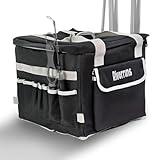
Overview: This innovative bag transforms an ordinary milk crate into a fully functional kayak fishing organizer for budget-conscious anglers. The EDSRDPLT crate bag offers a clever alternative to expensive dedicated crates, providing saltwater-resistant fabric construction that withstands harsh marine conditions while maintaining affordability at under $30.
What Makes It Stand Out: Three integrated rod holders and foam-insulated side panels for keeping beverages cool are impressive features at this price point. The design prioritizes on-water safety by allowing gear retrieval without leaving your seat, while secure loops prevent tipping. UV and saltwater-resistant materials ensure surprising longevity for a budget product.
Value for Money: Exceptional value at $29.99, this bag delivers core functionality for roughly one-sixth the cost of premium crates. By leveraging a standard milk crate (often free or cheap), anglers get rod holders, storage compartments, and organization typically found in $150+ systems. The cost savings can be allocated to tackle or other essential gear.
Strengths and Weaknesses: Strengths include unbeatable price, quick installation, portability, drink cooler functionality, and decent material quality. Weaknesses stem from dependency on a separate milk crate for structure, fewer rod holders than premium options, and less rigidity than molded crates. The 13" x 13" size may also limit storage compared to larger systems.
Bottom Line: Perfect for entry-level anglers or those wanting to test kayak fishing without major investment. While not as robust as premium crates, its affordability and clever design make it an outstanding value proposition that gets you on the water organized and ready.
3. YakAttack BlackPak Pro 13" x 16" Kayak Fishing Crate with 4 Rod Holders - Orange | Tackle Storage Box & Gear Organizer for Kayaks | Lightweight, Durable & Customizable Marine Accessory | Made in USA

Overview: The compact sibling to YakAttack’s flagship crate, the 13" x 16" BlackPak Pro delivers premium performance in a smaller footprint ideal for smaller kayaks. Weighing just 9.2 pounds with rod holders, this orange crate maintains the ultra-stiff panel construction and interlocking design that defines the Pro series while optimizing space efficiency.
What Makes It Stand Out: The GridLoc Mounting Platform on all sides revolutionizes customization, allowing anglers to attach accessories anywhere without drilling. Four TetherTube rod holders provide the same secure tether system as larger models, while the vibrant orange color improves visibility. The frustration-free assembly and noise-dampening rubberized feet demonstrate thoughtful engineering.
Value for Money: At $154.95, it offers a modest savings over the 16" model while retaining the lifetime guarantee and Made in USA quality. For anglers with compact kayaks, this avoids the compromise of buying an oversized, more expensive crate that doesn’t fit properly. The same durability and warranty make it equally sound as a long-term investment.
Strengths and Weaknesses: Strengths include compact dimensions, innovative GridLoc system, premium build quality, lifetime warranty, and lighter weight. The main weakness is reduced storage capacity compared to larger crates, and the price, while slightly lower, remains premium. Four rod holders may be insufficient for anglers with extensive rod collections.
Bottom Line: An excellent choice for kayak anglers with limited tankwell space who refuse to compromise on quality. The GridLoc system and compact design make it perfect for technical anglers wanting premium features without the bulk of larger crates.
4. YakAttack TracPak Black Combo Kit – 2 Stackable Kayak Storage Boxes with Quick Release Track Mount Base | Kayak Crate System for Fishing Gear & Tackle Accessories | Compact Kayaking Storage Box
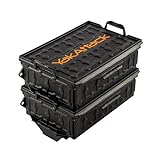
Overview: The TracPak Combo Kit reimagines kayak storage through modularity and space efficiency. This innovative system includes two stackable boxes mounted on a quick-release track base, providing organized storage without the bulk of traditional crates. Weighing only 2.44 pounds total, it’s ideal for anglers prioritizing weight savings and accessibility.
What Makes It Stand Out: The vertical stacking design maximizes limited deck space while allowing independent access to each box. Quick-release track mounting integrates seamlessly with YakAttack GearTrac and MightyMount systems, enabling rapid removal for transport or security. The marine-grade polymer construction ensures durability despite the lightweight design.
Value for Money: At $51.95, this system offers remarkable versatility for the price. Rather than investing in a single large crate, anglers can organize tackle by species or technique across two separate compartments. The space-saving design is invaluable for smaller kayaks where every inch matters, making it more practical than bulkier alternatives.
Strengths and Weaknesses: Strengths include exceptional space efficiency, lightweight construction, modular organization, quick-release functionality, and track system integration. Weaknesses include limited internal capacity (8.375" x 5.375" x 2.375" per box), which won’t hold large tackle boxes, and the requirement for an existing track mounting system. It’s not a direct replacement for a full-size crate.
Bottom Line: Perfect for organized anglers with track-equipped kayaks who value accessibility and space optimization. While not suitable for those needing massive storage, its clever design solves many common on-deck organization challenges at an attractive price point.
5. Wilderness Systems Kayak Crate - 4 Rod Holders - Kayak and Boat Tackle Storage - Fits Anglet Boats
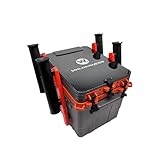
Overview: Wilderness Systems delivers a practical, water-resistant tackle storage solution designed for both kayak and small boat anglers. This crate features a large main compartment with a dual-purpose lid that serves as additional storage space, plus four integrated rod holders. Universal lash-down points ensure secure mounting across various vessel configurations.
What Makes It Stand Out: The water-resistant design when latched closed protects valuable tackle from spray and rain, a feature often overlooked in traditional crate designs. The lid’s additional storage capability maximizes utility in a compact footprint. Four rod holders provide adequate capacity for most fishing scenarios, while the universal mounting system offers flexibility across different kayak brands and small boats.
Value for Money: With price listed as N/A, value assessment depends on retail pricing. Based on Wilderness Systems’ market positioning, expect mid-range pricing between budget bags and premium YakAttack crates. The water resistance and brand reputation suggest fair value for anglers prioritizing gear protection over customization. Comparable crates without water sealing typically cost $80-120.
Strengths and Weaknesses: Strengths include effective water resistance, versatile mounting options, lid storage functionality, and reputable brand backing. Weaknesses include limited customization compared to YakAttack’s GridLoc system, unspecified weight and dimensions, and lack of a stated warranty. The design appears less modular than premium alternatives.
Bottom Line: A solid, no-frills choice for anglers wanting reliable tackle protection and rod storage without premium pricing. While it lacks advanced customization, its water-resistant design and universal compatibility make it a dependable workhorse for both kayak and small boat fishing applications.
6. EDSRDPLT Kayak Crate Bag Durable Saltwater- Resistant Kayak Fishing Bag with 3 Fishing Rod Holders Large Kayak Fishing Tackle Storage Bag for Milk Crate-13x13 in

Overview: The EDSRDPLT Kayak Crate Bag converts any standard milk crate into a saltwater-ready fishing station for $29.99. This 13x13-inch sleeve attaches to existing crates, delivering rod holders, tackle storage, and marine-grade durability without premium costs. It’s an ideal entry point for budget-conscious anglers seeking on-water organization without committing to expensive dedicated systems.
What Makes It Stand Out: Three integrated rod holders secure outfits while a zippered main compartment and side pockets organize tackle and tools. UV-resistant, saltwater-proof fabric withstands harsh marine environments. Foam-insulated panels keep drinks cool, and the safety-first design allows gear retrieval without shifting position. Bottom loops prevent tipping in rough conditions, addressing key stability concerns.
Value for Money: At under $30, this bag costs less than most single rod holders while providing a complete crate solution. Compared to $75+ specialized crates, savings are substantial. For anglers owning a milk crate, it’s nearly zero-compromise. The saltwater resistance and integrated features deliver exceptional ROI for casual to intermediate fishermen who prioritize function over branding.
Strengths and Weaknesses: Strengths include exceptional affordability, lightweight portability, marine-grade materials, beverage insulation, and tool-free setup. Weaknesses: requires separate milk crate purchase, lacks rigid structure for heavy gear, and 13x13 size limits compatibility. Rod holders may not suit large offshore reels. Durability won’t match premium hard-shell crates in extreme conditions.
Bottom Line: Perfect for kayak fishing newcomers and budget-minded anglers. The EDSRDPLT provides professional features at entry-level pricing, though serious anglers may eventually desire more robust integrated systems.
7. YakGear Kayak Angler Kit Crate – Basic | Complete Kayak Fishing Storage System with Double Rod Holder, Accessory Pouch, Anchor Kit, Utility Leashes & Heavy-Duty Milk Crate

Overview: The YakGear Kayak Angler Kit Crate delivers a complete fishing system for $74.99, including a heavy-duty milk crate, double rod holder, accessory pouch, 1.5lb anchor kit, and utility leashes. This all-in-one package eliminates guesswork, providing ready-to-rig storage that fits most kayak tankwells straight out of the box without requiring additional purchases.
What Makes It Stand Out: The honeycomb-designed crate offers rugged structure while the double rod holder adds integrated slots for pliers and knives. An adjustable accessory pouch secures tackle trays with elastic straps. The included grapnel anchor with 30 feet of rope provides immediate positioning capability in calm waters, and utility leashes prevent costly gear loss—a thoughtful inclusion missing from many competitors.
Value for Money: This kit bundles essential components that would cost over $100 purchased separately. At $74.99, you’re getting a purpose-built crate system plus anchoring capability—something competitors often omit. The heavy-duty construction ensures seasons of reliable use, making it a smart mid-range investment for serious anglers who want turnkey convenience.
Strengths and Weaknesses: Strengths include complete package convenience, rugged crate design, integrated tool storage, included anchor kit, and secure mounting options. Weaknesses: double rod holder may feel limiting compared to triple or quadruple setups, anchor is lightweight for strong currents, and the accessory pouch size restricts larger gear. Some anglers may want more customization options.
Bottom Line: An excellent turnkey solution for intermediate kayak anglers. The YakGear kit provides everything needed for organized fishing adventures, offering strong value and proven components, though customization enthusiasts might prefer modular systems.
8. YakAttack BlackPak Pro 16" x 16" Kayak Fishing Crate with 6 Rod Holders - Black | Tackle Storage Box & Fishing Gear Organizer | Lightweight, Durable & Customizable Kayak Fishing Accessory
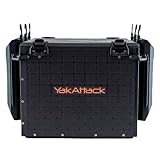
Overview: The YakAttack BlackPak Pro represents the premium tier of kayak fishing crates at $176.95. This 16x16-inch system features ultra-rigid interlocking panels, six integrated rod holders, and a customizable design backed by a lifetime guarantee. Made in the USA, it’s built for demanding anglers who refuse to compromise on quality, organization, or long-term durability.
What Makes It Stand Out: Six TetherTube rod holders feature integrated hook and tether systems for securing outfits in rough water. The hinged lid and rigging points enable endless customization, while rubberized feet reduce noise and stabilize the crate. The lightweight yet incredibly strong construction handles heavy loads without flexing, and the modular design accepts various YakAttack accessories for personalization.
Value for Money: While expensive, the lifetime guarantee and USA manufacturing justify the premium. Comparable systems with similar durability and features often exceed $200. For serious anglers spending hundreds of hours on the water annually, the BlackPak Pro’s longevity and performance deliver excellent long-term value and peace of mind that cheaper alternatives can’t match.
Strengths and Weaknesses: Strengths include exceptional durability, six rod holders, customizable rigging, stable rubberized feet, lifetime warranty, and premium materials. Weaknesses: high upfront cost, 16x16 size may not fit smaller kayaks, 11.5-pound weight adds heft, and overkill for casual fishermen. The price barrier excludes budget-conscious buyers.
Bottom Line: The ultimate crate for dedicated kayak anglers. The BlackPak Pro’s quality, customization, and lifetime guarantee make it a worthwhile investment for serious fishermen, though recreational paddlers may find it unnecessarily robust and expensive.
9. MadBite By KastKing RigHub Portable Tackle Storage Box, Adjustable Rod Holder, Cup Holder, Removable Dividers, Ideal for Fishing Lures and Gear Storage, Kayak Fishing, Ice Fishing

Overview: The MadBite RigHub by KastKing redefines portable tackle storage at $69.99. Available in 6L and 12L sizes, this versatile box features three storage compartments, adjustable rod holders, and a cup holder. Its innovative design doubles as a workbench or stool, making it ideal for kayak, ice, and bank fishing where adaptability and space efficiency matter most.
What Makes It Stand Out: Three-tier storage includes an EVA-backed middle section for jig heads and hooks, plus removable dividers for custom organization. Adjustable rod holders offer three height settings, while the clip-on cup holder adds convenience. The lid flattens into a stable workbench, and the durable construction supports weight for use as a seat—a unique multi-function approach.
Value for Money: The RigHub’s multi-functionality creates exceptional value. Acting as tackle storage, rod holder, cup holder, workbench, and stool, it replaces several separate purchases. At $69.99, it’s competitively priced against single-function crates while offering superior portability and versatility for anglers who fish multiple environments throughout the year.
Strengths and Weaknesses: Strengths include versatile 3-in-1 design, adjustable rod holders, custom dividers, shoulder strap portability, and dual-lock compartment access. Weaknesses: smaller capacity than traditional crates, plastic construction less rugged than premium crates, and rod holder stability may falter with heavy surf rods. The stool function might not suit larger anglers.
Bottom Line: A brilliant choice for mobile anglers fishing varied environments. The RigHub’s versatility and smart design make it perfect for kayak, ice, and shore fishing, though those needing maximum storage may prefer larger crate systems.
10. RAILBLAZA Gear Hub Kayak Fishing Crate - with 4 Internal Rod Holders, Storage for 8 TackleBoxes, Premium Kayak Crate with Rod Holders and Lid

Overview: The RAILBLAZA Gear Hub Kayak Fishing Crate offers sophisticated storage for $77.81. This system features four internal rod holders, capacity for eight Plano 3600 tackle boxes, and nine integrated accessory tracks. Designed for secure mounting and efficient organization, it serves as a premium mid-range option for serious anglers seeking customization within the RAILBLAZA ecosystem.
What Makes It Stand Out: Internal rod holders keep outfits protected within the crate structure, while recessed hand holds and multiple tie-down points ensure secure installation. The nine accessory tracks accept RAILBLAZA mounts and other accessories, creating a highly customizable platform. Rod and reel tethers add security in rough conditions, and the design supports additional Rod Stow systems for expansion.
Value for Money: Positioned between budget bags and premium crates, the Gear Hub delivers professional features at a reasonable price. The integrated track system adds expansion capability rarely seen at this price point. For anglers invested in the RAILBLAZA ecosystem, compatibility maximizes value, though generic accessory users may not fully utilize the tracks, reducing relative value.
Strengths and Weaknesses: Strengths include robust rod storage, high tackle box capacity, excellent security features, integrated accessory tracks, and stable design. Weaknesses: only four rod holders compared to some competitors, tracks limit non-RAILBLAZA accessory mounting, and the price sits high for a crate without included rod holders. Installation complexity exceeds simple bag systems.
Bottom Line: An excellent mid-tier choice for RAILBLAZA enthusiasts and organization-focused anglers. The Gear Hub’s track system and security features justify its price, though budget buyers and non-RAILBLAZA users may find better value elsewhere.
Why Tackle Organization is Critical for Kayak Anglers
Space constraints on a fishing kayak create unique challenges that bank or boat anglers never face. You’re working with a platform that might offer as little as 8-10 square feet of usable deck space, yet you need immediate access to dozens of lures, multiple rod setups, pliers, line, and safety equipment. Poor organization leads to decision fatigue when you can’t find the right jig weight, missed opportunities while untangling leaders, and dangerous situations when loose gear shifts your center of gravity. A well-designed crate system creates designated homes for every item, reducing mental load and allowing you to react instinctively when a school fires up beneath you.
The psychological benefits are equally significant. When your gear is systematically arranged, you develop muscle memory that lets you grab a crankbait or hook remover without looking. This efficiency translates directly to more time with your line in the strike zone and less time playing gear Tetris on your deck. Tournament anglers report that switching to a modular crate system saved them an average of 12-15 minutes per day previously spent rummaging—a significant advantage when fishing windows are tight.
What Exactly is a Kayak Fishing Crate?
A kayak fishing crate is a purpose-built storage and organization system specifically dimensioned to fit within the rear tankwell of most sit-on-top fishing kayaks. Unlike generic milk crates or standard tackle boxes, these units integrate rod holders, tool mounts, tackle tray slots, and security features into a cohesive platform. The typical design sits approximately 12-16 inches high, 15-18 inches wide, and 13-15 inches deep—proportions that nestle securely in the 6-8 inch recessed tankwell found on most fishing-specific kayaks.
The evolution from milk crate to modern fishing crate mirrors the sport’s growth from niche hobby to mainstream pursuit. Early adopters simply zip-tied PVC pipe to plastic crates, creating functional but unstable systems. Today’s engineered solutions feature reinforced mounting points, integrated drainage, UV-resistant materials, and compatibility with track systems. They’re designed as the central nervous system of your kayak’s gear management, connecting to other components like fish finders, anchor trolleys, and camera mounts.
Essential Features That Define Premium Crates
The hallmark of a truly superior fishing crate lies in its feature integration rather than any single attribute. Look for units that offer multiple rod holder positions—not just vertical storage, but angled options for trolling and horizontal cradles for transport. Premium designs incorporate tool holsters that accommodate everything from 8-inch pliers to fish grips without them rattling loose in chop. Threaded insert patterns on the lid and sides allow for endless customization using standard RAM mounts, YakAttack tracks, or custom 3D-printed accessories.
Drainage engineering separates amateur designs from professional-grade crates. Strategically placed weep holes should allow water to escape while preventing smaller items from falling through. Some advanced models feature raised floor grates that keep tackle trays elevated above any standing water. The lid mechanism deserves scrutiny too—hinged designs should open to at least 90 degrees and stay open without support, while removable lids need secure latches that won’t pop when you hit a powerboat wake.
Material Science: Choosing the Right Build for Your Environment
Polyethylene plastic dominates the market for good reason—it floats, resists UV degradation, and withstands impacts from dropped pliers or errant casts. High-density variants offer better rigidity but add weight, while medium-density provides flexibility that absorbs shocks. Look for marine-grade formulations that include UV inhibitors; standard storage crates can become brittle after a season in the southern sun. The wall thickness should be at least 3/16 inch in stress areas, with reinforced corners where mounting hardware attaches.
Fabric-based crates, typically using heavy-duty 1680D ballistic nylon, offer advantages for anglers who frequently remove their systems for transport or storage. These collapse flat and weigh significantly less than plastic alternatives, but they sacrifice rigidity and can’t support rod holders without additional framing. Hybrid designs combine a plastic base with fabric upper sections, attempting to balance durability with portability. For saltwater environments, marine-grade stainless steel or reinforced composite hardware is non-negotiable—standard zinc-plated screws will corrode within weeks.
Sizing Your Crate: The Goldilocks Principle
The “perfect” crate size depends entirely on your kayak model, fishing style, and physical dimensions. Measure your tankwell’s length, width, and depth before considering any purchase—many new anglers buy based on capacity only to find their crate sits too high, interfering with their paddle stroke. A properly sized crate should sit at least 2 inches below the top of the tankwell, allowing you to lean back into your seat without the crate edge digging into your spine.
Capacity is measured in both volume and modularity. A 50-liter crate might sound spacious, but if it only accepts two large tackle trays, you’ll waste space. Better designs offer a mix of full-width slots for 3600-series trays and smaller compartments for 3500-series boxes, letting you mix and match based on species targeting. Consider your “mission profiles”—a panfish trip requires different storage than a offshore tuna venture. Some anglers maintain multiple crate setups, each pre-loaded for specific scenarios, swapping them out in minutes.
Modular Design: The Future of Customization
Modularity transforms a static storage box into an evolving ecosystem. Track systems integrated into the crate’s sides accept a universe of accessories without drilling permanent holes. Industry-standard T-bolt slots spaced every 1.5 inches accommodate everything from cup holders to GoPro mounts. The most versatile crates feature mounting plates on all four sides plus the lid, essentially turning every surface into potential real estate.
Interior modularity matters just as much as external customization. Look for crates with removable dividers that let you reconfigure compartments between trips. Some systems use a pegboard-style floor where you can reposition partitions to accommodate oversized items like planer boards or umbrella rigs. The ability to add or remove layers—stacking shallow trays for jigs and deep boxes for hard baits—gives you the flexibility to adapt to seasonal patterns without buying a new crate.
Rod Management Systems: Beyond Basic Storage
Vertical rod holders are just the beginning. Advanced crates feature adjustable angle holders that let you troll crankbaits at optimal positions or keep topwater rods at the ready without tangling. Horizontal rod tubes integrated into the lid provide secure transport for pre-rigged outfits, preventing guide wrap and tip damage during trailering. Some designs include tip protection tubes that extend above the rod butts, shielding delicate guides from paddle strikes and rogue waves.
Consider how rod holders interact with your kayak’s overall layout. Holders positioned too close to the seat create a tangled mess when landing fish, while those too far back become unreachable in a hurry. The sweet spot is typically 18-24 inches behind the seat, within arm’s reach but out of your casting arc. Look for systems that allow you to stagger rod heights—keeping shorter ultralight outfits below longer medium-heavy setups prevents handle interference and makes selection intuitive.
Tackle Box Integration: Making Your Gear Work Together
The relationship between your crate and tackle boxes should be symbiotic, not adversarial. Premium crates are dimensioned around industry-standard Plano and Flambeau box sizes, with slots that grip 3600, 3700, and 3500 series trays securely without allowing them to rattle. The interior height must accommodate tall boxes for oversized lures while still allowing the lid to close completely—measure your tallest box and add at least half an inch for clearance.
Some innovative designs feature slide-out drawers that bring tackle to you rather than forcing you to reach deep into the crate. Others use a “tackle tower” approach where boxes stack vertically on a central post, rotating for access like a lazy Susan. Consider how you organize by species or technique: having dedicated slots for finesse boxes, flipping setups, and terminal tackle prevents cross-contamination and speeds up lure changes. The best systems let you label each slot or use color-coded boxes for instant visual identification.
Mounting Systems and Stability
A crate that shifts during a hookset or when navigating rough water becomes a safety hazard. Quality crates feature multiple anchor points—typically four corner cleats—for securing to factory deck loops with bungee or cam straps. Advanced systems integrate with track-mounted tie-downs that allow fore-aft adjustment while preventing lateral movement. For kayaks without factory loops, some crates include suction cup or adhesive pad bases that grip the tankwell floor without permanent installation.
The mounting method affects your kayak’s trim and handling. A fully loaded crate can weigh 30-40 pounds, shifting your center of gravity significantly. Positioning it as far forward in the tankwell as possible improves tracking but may interfere with paddle entry. Some anglers use sliding track systems that let them adjust crate position based on conditions—forward for long paddles, rearward for technical casting. Always test your setup in shallow water before heading to open water; a top-heavy kayak is unforgiving.
Ergonomic Access: Designing Your Workflow
Your crate should function as an extension of your body, with frequently used items positioned for blind retrieval. The “golden zone” extends from your hip to your forward knee—anything stored here should be accessible without shifting your weight. Pliers, line cutters, and your go-to lure boxes belong in this prime real estate. Secondary items like spare leaders, scale, and camera gear can occupy the periphery.
Lid design dramatically impacts access speed. Hinged lids that open away from you prevent reaching over an open lid, but they require clearance behind the crate. Removable lids offer unlimited access but need secure storage while open—some designs feature tethers or magnetic stays. Consider one-handed operation; when you’re holding a thrashing fish, you need to flip a latch and grab a hook remover without setting anything down. Gas-assisted struts, while seemingly overkill, make a noticeable difference when you’re on the water for 8+ hours.
Weather Resistance and Durability
Your crate lives in a hostile environment—baking sun, corrosive salt spray, and occasional full submersion. UV resistance isn’t just about preventing color fade; it’s about maintaining structural integrity. Quality crates undergo accelerated weathering tests equivalent to three years of Florida sun. Look for materials rated to UV-8 or higher, and avoid black crates if you fish in extreme heat—they can reach temperatures that soften plastic and melt soft-plastic baits stored inside.
Waterproofing exists on a spectrum. Fully waterproof crates with gasketed lids protect electronics and paperwork but can trap condensation inside. Most anglers prefer “water-resistant” designs that shed splashes and rain while allowing moisture to escape. For saltwater use, rinse your crate with freshwater after every trip, paying special attention to hinges and latch mechanisms. Some manufacturers offer saltwater-specific models with sacrificial anodes on metal components—a feature borrowed from marine hardware that dramatically extends lifespan.
Transport and Portability: From Truck to Yak
The journey from your garage to the launch ramp reveals design flaws invisible in the store. A crate weighing 15 pounds empty becomes a 45-pound burden when loaded with lead weights and full tackle trays. Look for models with comfortable carry handles positioned at the balance point, or better yet, integrated wheels that let you roll it like luggage. Some designs split into two sections—a heavy base that stays in the kayak and a lighter “mission pack” you carry to the truck.
Consider how the crate interfaces with your vehicle. Stackable designs let you load multiple crates efficiently if you own several kayaks or fish with partners. Models with flat tops provide stable platforms for securing additional gear with a single strap across the whole load. For fly-in trips to remote lakes, collapsible fabric crates that pack into a duffel bag are worth their weight in gold, even if they sacrifice some durability.
Budget Breakdown: From Entry-Level to Premium
Entry-level crates ($40-80) typically offer basic storage with minimal features—think reinforced milk crates with a few rod holders zip-tied on. They’re perfectly functional for casual anglers but lack refinement. Mid-range options ($80-150) introduce modularity, better materials, and integrated features like tool holders and improved drainage. This is the sweet spot for most serious anglers, balancing cost with capability.
Premium crates ($150-300) justify their price through advanced materials like carbon-fiber-reinforced polymers, gas-assist lids, and universal mounting compatibility. They often include features you didn’t know you needed, like built-in LED lighting, magnetic tool strips, and integrated fish ruler lids. For tournament anglers, the time savings and gear protection easily offset the cost. Consider the total investment perspective: a $200 crate protecting $800 worth of tackle and electronics represents cheap insurance.
The DIY Debate: When to Build vs. Buy
Building your own crate from a standard milk crate offers unlimited customization and significant cost savings—initially. You’ll need PVC pipe, rod holders, stainless steel hardware, and likely a few trips to the hardware store. The process teaches you about your fishing style and can result in a perfectly personalized system. However, DIY solutions rarely match the durability and refinement of commercial products, and the time investment often exceeds the price difference.
Store-bought crates shine in their engineered integration. They’ve solved problems you haven’t encountered yet, like preventing tackle tray creep in heavy chop or designing latches that work with cold, wet fingers. The modularity of commercial systems means you can evolve your setup without starting from scratch. That said, many anglers hybridize—starting with a quality base crate and adding custom 3D-printed accessories or modified PVC additions. This approach gives you the best of both worlds: proven engineering where it matters and personal touches where they count.
Longevity: Maintenance and Care Protocols
A quality crate should last five to seven years with proper care. The enemies are UV radiation, salt corrosion, and impact damage. Store your crate out of direct sunlight when not in use—even UV-resistant plastics degrade over time. A simple cover or storing it upside down in your garage extends life dramatically. For saltwater anglers, a weekly deep clean with mild soap and freshwater prevents crystalline buildup in crevices.
Inspect mounting hardware quarterly, replacing any rusted screws or weakened bungees before they fail on the water. Lubricate hinges and latches with silicone spray—not petroleum-based products that can degrade plastic. If your crate develops stress cracks (common around rod holder mounts), stop-drill the crack with a small bit to prevent spreading, then reinforce with marine epoxy. Some manufacturers offer replacement parts for wear items like latches and seals, a sign of a company that stands behind their product’s lifespan.
Safety Considerations
A shifting crate can capsize a kayak faster than a rogue wave. Always secure your crate with at least two independent attachment points—never rely on a single bungee. The combined breaking strength of your straps should exceed twice the weight of your fully loaded crate. In rough water, add a safety tether that connects the crate to a deck loop; if primary straps fail, the crate stays with the kayak instead of becoming a hazard.
Weight distribution affects stability more than total weight. Keep heavier items like lead weights and full tackle boxes low in the crate, positioning them over the kayak’s keel line. High-mounted rod holders act as sails in wind, creating torque that can weather-vane your kayak. Consider this when configuring your setup for open-water versus sheltered creek fishing. Finally, ensure your crate doesn’t obstruct access to safety gear—you must be able to reach your PFD, whistle, and emergency radio without moving the crate.
Eco-Conscious Choices: Sustainable Materials and Practices
The fishing community increasingly demands sustainable gear options. Some manufacturers now use recycled ocean plastics in their crate construction, creating a closed-loop system that removes waste from marine environments. These eco-friendly options perform identically to virgin plastic while reducing your carbon footprint. Look for companies that participate in gear recycling programs, accepting old crates for material reclamation.
Durability itself is an environmental feature—a crate that lasts a decade prevents three or four cheaper replacements from entering landfills. Consider repairability when purchasing; models with replaceable components generate less waste. For the ultimate green solution, some anglers repurpose old coolers or dry boxes into crates, though this requires more DIY effort. When your crate finally reaches end-of-life, check if the manufacturer offers a take-back program, or donate it to a youth fishing program where a few scratches don’t matter.
Off-Season Storage Strategies
Winter storage can make or break your crate’s longevity. Before storing, completely empty and clean the crate, removing all salt residue and organic matter. Leave it open for several days to ensure complete dryness—trapped moisture breeds mold and mildew that can ruin soft plastics and corrode hooks. Store in a climate-controlled space if possible; extreme cold makes plastic brittle, while heat can warp lids and compromise seals.
Organize your tackle by season before storing. Remove spring-specific lures and replace them with ice-fishing gear if you hardwater fish, or consolidate to a minimal “year-round” setup. This is also the perfect time to inventory and replace rusted hooks, frayed line, and dried-out soft plastics. Some anglers create “seasonal inserts”—pre-loaded tackle trays that swap in and out of their crate, making seasonal transitions seamless. Label everything clearly; six months is long enough to forget what you packed where.
Frequently Asked Questions
What’s the ideal crate height for a 6-foot paddler?
For most anglers under 6'2", a crate height of 13-14 inches provides optimal access without interfering with your paddle stroke. Taller paddlers can manage 15-16 inches, but always measure from your tankwell floor to the lowest point of your paddle arc during a normal stroke.
Can I use a standard milk crate instead of a fishing-specific model?
While possible, standard crates lack rod holders, secure latches, and proper drainage. They also degrade quickly in UV light and can crack under the weight of full tackle boxes. The money saved initially is typically lost in replacement costs and frustration within one season.
How many rods should I realistically carry in a crate?
Most quality crates securely hold 4-6 rods, but the practical limit is often 3-4 for kayak fishing. More rods create tangles and reduce access to gear. Focus on versatile outfits that cover multiple techniques rather than carrying every possible setup.
What’s the best way to waterproof papers and electronics in my crate?
Use a waterproof document box for licenses and maps. For electronics, rely on dry bags within the crate rather than expecting the crate itself to be fully waterproof. A small Pelican case or similar works perfectly for phones and keys.
How do I prevent tackle boxes from sliding out in rough water?
Look for crates with adjustable retention straps or bungee grids that hold boxes down. Some anglers add non-slip drawer liner material to crate floors. The most secure solution is a crate with individual slots sized specifically for your tackle box dimensions.
Should my crate match my kayak brand?
Brand matching offers aesthetic appeal and guaranteed fit, but it’s not essential. Most crates use universal dimensions. Focus on features and quality over branding—many third-party manufacturers offer superior modularity compared to factory accessories.
What’s the weight penalty for a fully loaded crate?
A typical loaded crate weighs 25-40 pounds depending on material and contents. This is significant on a 60-pound kayak. Distribute weight by keeping heavy items low and centered, and consider removing non-essential gear for long paddles.
How do I clean saltwater corrosion from my crate’s hardware?
Soak hardware in a 50/50 solution of white vinegar and water for 30 minutes, then scrub with a soft brush. Rinse thoroughly and apply a corrosion inhibitor like Boeshield T-9. Replace severely corroded stainless steel hardware with marine-grade 316 stainless.
Can I mount a fish finder transducer to my crate?
While possible, it’s not recommended. The transducer performs best when mounted directly to the hull for consistent contact with water. Mounting to a vibrating, removable crate degrades sonar performance and creates another failure point. Keep electronics on dedicated hull or track mounts.
What’s the lifespan difference between plastic and fabric crates?
Quality plastic crates last 5-7 years with proper care, while fabric crates typically last 3-4 seasons before seams fail or material degrades. However, fabric crates often include replaceable components, potentially extending their useful life beyond a one-piece plastic unit that cracks.