Transforming your garage, basement, or spare room into a serious strength training sanctuary starts with one pivotal decision: choosing the right power rack. This isn’t just another piece of equipment—it’s the central nervous system of your home gym, the difference between making modest gains and unlocking your true strength potential. Whether you’re a seasoned lifter fleeing commercial gym crowds or a beginner building your foundation from scratch, understanding the nuances of power rack selection will save you money, prevent injuries, and ensure your setup grows with you for years.
The market is flooded with options that look nearly identical but vary wildly in quality, safety, and versatility. A power rack isn’t a purchase you want to get wrong. The right choice becomes your training partner, spotter, and platform for hundreds of exercises. The wrong choice becomes an expensive clothes rack that limits your progress and puts your safety at risk. This comprehensive guide cuts through the marketing noise and gives you the expert framework to evaluate every specification like a seasoned strength coach.
Top 10 Power Racks for Home Strength Training
Detailed Product Reviews
1. CAP Barbell Power Rack with Pull Up Bar & Attachments - Squat Rack & Strength Training Power Cage for Home Gym - Carbon
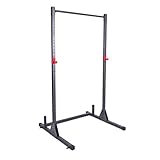
Overview: The CAP Barbell Power Rack delivers essential strength training functionality in a compact, budget-friendly package. Measuring 46" W x 50" D x 85" H and weighing just 59.5 pounds, this carbon-finished cage fits comfortably in most garage gyms while supporting up to 500 pounds. Built from 11- and 12-gauge steel tubing that meets ASTM testing standards, it includes J-cup catches, a built-in pull-up bar, and integrated weight storage posts, providing everything needed for squats, bench press, and pull-ups.
What Makes It Stand Out: CAP Barbell’s 40+ years of industry leadership shows in the details. The double-gusseted uprights provide exceptional stability during heavy lifts, while the industrial zinc hardware and durable powder coat finish ensure maintenance-free performance. Unlike many budget racks, this model meets rigorous ASTM standards and maintains compatibility with CAP’s entire attachment ecosystem, allowing for future expansion as your training evolves.
Value for Money: At $98.99, this represents exceptional entry-level value. The cost equates to roughly two months of a commercial gym membership, yet provides years of reliable service. While 500-pound capacity won’t suit elite powerlifters, it’s more than adequate for intermediate lifters and the quality construction rivals units costing twice as much.
Strengths and Weaknesses: Strengths include the trusted brand reputation, ASTM-certified construction, compact footprint, and expandability. The double-gusseted design adds welcome stability. Weaknesses are the modest 500-pound capacity that may limit advanced progression, basic included features, and absence of a pulley system or dip attachments. The lightweight design, while portable, can feel less planted than heavier cages.
Bottom Line: This CAP rack is an ideal starting point for building a serious home gym without serious investment. It prioritizes essential safety and quality over flashy features, making it perfect for lifters who want proven reliability. If you’re planning to lift under 500 pounds and value brand trustworthiness, this is your best budget choice.
2. ULTRA FUEGO Power Cage, Multi-Functional Power Rack with J-Hooks, Dip Handles, Landmine Attachment and Optional Cable Pulley System for Home Gym (Power Cage with Pulley System)
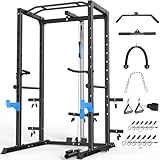
Overview: The ULTRA FUEGO Power Cage transforms any space into a complete commercial gym. This comprehensive system measures 63" D x 47" W x 82.7" H and features a precision-engineered pulley system alongside the main rack. Constructed from 1.5mm thick steel with 50mm x 50mm uprights, it boasts a 1000-pound capacity and includes an extensive attachment package that eliminates additional purchases.
What Makes It Stand Out: Laser-cut precision and thoughtful engineering define this cage. The system arrives with tricep ropes, ankle straps, T-bars, lat pulldown bars, cable handles, J-hooks, dip bars, safety bars, six weight storage pegs, a 360-degree landmine, and band pegs. The 10-level J-hook adjustment and 3-level dip handle positioning provide unmatched versatility, while the pulley system offers smooth, professional-grade resistance for lat pulldowns, rows, and cable work.
Value for Money: At $389.99, the UF-896 delivers remarkable value. Purchasing these attachments separately would easily exceed $600, and the integrated design ensures perfect compatibility. The 1000-pound capacity accommodates serious strength progression, making this a long-term investment rather than a starter unit.
Strengths and Weaknesses: Strengths include the all-inclusive attachment package, high weight capacity, smooth pulley operation, and extensive adjustability. The wide, heavy steel bases prevent tipping during intense work. Weaknesses include the larger footprint that demands more space, complex initial assembly with numerous components, and a price point that may exceed casual lifters’ budgets. The 82.7" height may not fit all basements.
Bottom Line: For serious lifters wanting maximum versatility without piecing together a system, the ULTRA FUEGO is unbeatable. It replaces multiple machines while maintaining commercial quality. If you have the space and budget, this cage eliminates the need for gym membership entirely.
3. Sportsroyals Power Cage,1600lbs Multi-Function Power Rack with Adjustable Cable Crossover System and More Training Attachment, Weight Cage for Home Gym

Overview: The Sportsroyals Power Cage positions itself as the heavy-duty champion of home gym equipment. This behemoth weighs 150 pounds and supports an impressive 1600-pound capacity thanks to its 50x50mm commercial steel frame with 1.5mm thickness. The system includes both upper and lower pulley systems with a cable crossover configuration, enabling true commercial-gym functionality in a single footprint.
What Makes It Stand Out: Beyond the extreme weight capacity, Sportsroyals includes every conceivable accessory: lat pull-down bar, cable bar, two cable handles, J-Hooks, safety frames, safety rods, wide and narrow pull-up frames, dip bars, 360° landmine, foot board, six band pegs, and both 1" and 2" barbell clamps. The precision bearing pulleys and electroplated telescopic poles deliver exceptionally smooth operation, while 14 height-adjustable pillars accommodate users of all sizes.
Value for Money: Priced at $389.99, this cage offers commercial-grade specifications at a fraction of professional equipment costs. The 1600-pound capacity future-proofs your investment, and the comprehensive accessory package eliminates hidden expenses. Shipping in two packages minimizes transit damage, demonstrating attention to customer experience.
Strengths and Weaknesses: Strengths include the highest weight capacity in its class, comprehensive included accessories, superior stability from its 150-pound weight, and smooth dual pulley systems. The 14 adjustment levels provide exceptional customization. Weaknesses include potential confusion between the 1600-pound title claim and 1200-pound safe support mention, substantial space requirements, and challenging solo assembly due to weight. The large footprint demands dedicated gym space.
Bottom Line: For heavy lifters who refuse to compromise, Sportsroyals delivers unmatched capacity and completeness. It’s essentially a commercial half-rack for home use. If you’re serious about strength and have the space, this is the last rack you’ll need to buy.
4. Fitness Reality Power Cage Squat Rack with Optional LAT Pulldown, Cable Crossover, 800 lb Capacity, Multi-Grip Pull-Up Bar, Adjustable Safety Bars, Strength Training for Home Gym

Overview: The Fitness Reality Power Cage strikes an intelligent balance between safety, versatility, and affordability. This ASTM-tested unit officially supports 800 pounds after being tested at 2,000 pounds, providing substantial overhead for progressive overload. The cage features a multi-grip pull-up bar system that reverses to lower the overall height, making it suitable for basement gyms with lower ceilings.
What Makes It Stand Out: Safety defines this cage. Unlike competitors who use hollow tubes, Fitness Reality employs solid steel safety arms designed for serious weight. The twin support braces add exceptional rigidity, with the lower brace doubling as foot support for low row cable attachments. Standard 1" holes ensure compatibility with a vast aftermarket ecosystem of attachments, preventing vendor lock-in.
Value for Money: At $299.00, this cage occupies the sweet spot between budget and premium options. You get tested safety ratings and solid construction without paying for accessories you might not need. The reversible pull-up bar design adds value for space-constrained users, potentially saving hundreds in ceiling modification costs.
Strengths and Weaknesses: Strengths include the rigorously tested 800-pound capacity, solid steel safety components, reversible and multi-grip pull-up bars, and universal 1" hole spacing. The twin-brace design creates exceptional stability. Weaknesses include the lack of included pulley system or accessories, requiring additional investment for cable work. The 800-pound capacity, while adequate for most, trails some competitors. No integrated weight storage pegs are mentioned.
Bottom Line: Fitness Reality excels for safety-conscious lifters who prioritize proven performance over bundled extras. It’s a modular platform that grows with your needs. If you value ASTM testing and plan to customize your attachment selection, this cage offers unmatched flexibility and peace of mind.
5. CAP Barbell Power Rack with Pull Up Bar & Attachments - Squat Rack & Strength Training Power Cage for Home Gym - Red

Overview: The CAP Barbell Power Rack in red offers identical specifications to its carbon-colored counterpart, providing the same trusted performance with a bold aesthetic choice. Assembled dimensions remain 46" W x 50" D x 85" H, with a weight of 59.5 pounds and 500-pound capacity. Built from 11- and 12-gauge steel tubing that meets ASTM testing standards, it includes J-cup catches, a built-in pull-up bar, and weight storage posts for Olympic plates.
What Makes It Stand Out: This rack carries CAP Barbell’s 40+ year legacy of strength equipment manufacturing, trusted by athletes worldwide. The double-gusseted uprights deliver exceptional stability, while the durable powder coat finish and industrial zinc hardware ensure maintenance-free durability. The bright red finish adds visual impact to your home gym while maintaining compatibility with CAP’s extensive attachment lineup for future upgrades.
Value for Money: At $101.99, the red variant commands a $3 premium over the carbon version purely for color preference. The underlying value proposition remains identical: gym-quality construction at a fraction of membership costs. For those designing a color-coordinated gym, the small upcharge is negligible compared to the satisfaction of a personalized space.
Strengths and Weaknesses: Strengths mirror the carbon version: trusted brand reputation, ASTM-certified steel construction, compact footprint ideal for small spaces, and expandability through CAP’s attachment ecosystem. The double-gusseted design provides welcome reinforcement. Weaknesses include the 500-pound capacity ceiling that may limit advanced lifters, basic feature set without pulley system, and lightweight design that feels less anchored than heavier cages. Color options are purely aesthetic.
Bottom Line: Choose the red version if aesthetics matter in your gym design. Functionally identical to the carbon model, it delivers the same excellent entry-level value and reliability. For lifters starting their home gym journey who want a pop of color, this CAP rack remains the smart budget choice.
6. Goimu C1-V4 Power Cage, 2000LBS Squat Rack with LAT Pulldown, Multi-Function Weight Cage Strength Training Machine, Workout Cage with More Attachments for Home Gym Garage (RD Power Cage C1)

Overview: The Goimu C1-V4 Power Cage delivers commercial-grade training capabilities at an accessible price point. This full cage system supports 2000 pounds and includes a LAT pulldown attachment with over 30 accessories, making it a comprehensive solution for home gym enthusiasts seeking versatility without sacrificing safety or performance.
What Makes It Stand Out: The 1:1 pulley ratio ensures true weight resistance for cable exercises, while the 43.35-inch depth provides ample room for complex movements. The package includes a triceps rope, T-bar, landmine attachment, and multiple J-hooks—essentially everything needed for a complete strength training program. Its compact 17.88 square foot footprint makes it apartment-friendly despite robust capabilities.
Value for Money: At $349.99, this rack undercuts most competitors by hundreds while offering superior weight capacity. Comparable systems with similar attachments typically retail for $500-700. The included accessory bundle alone would cost $150+ separately, making this an exceptional value for lifters wanting maximum functionality on a moderate budget.
Strengths and Weaknesses: Strengths: Impressive 2000lb capacity; extensive included accessories; space-efficient design; safety rods and adjustable spotters; smooth pulley system Weaknesses: 2"×2" steel frame less robust than premium 3"×3" options; unknown long-term brand reliability; assembly instructions may be challenging for novices; cable quality unproven over time
Bottom Line: The Goimu C1-V4 is arguably the best budget full cage available, perfect for intermediate lifters building a serious home gym. While not matching commercial build quality, its capacity and included features make it a smart investment for those prioritizing function over brand name.
7. MAJOR FITNESS F22 Power Rack, 1600lbs All-in-One Squat Rack with Cable Crossover, Dual Pulley System, Heavy-Duty Steel Frame, Attachments & Storage for Home Gym Strength Training, Khaki

Overview: The MAJOR FITNESS F22 represents a premium all-in-one solution designed for serious home gym athletes. With commercial-grade 2"×3" steel construction and a dual pulley cable crossover system, this $929.99 rack prioritizes stability and long-term durability. The khaki finish distinguishes it aesthetically from competitors.
What Makes It Stand Out: The innovative dual triangle base eliminates wobbling entirely—a common issue with lesser racks. The comprehensive accessory kit includes dip bars, safety arms, T-bars, and resistance band pegs, eliminating additional purchases. Four integrated storage hooks keep equipment organized, while the dual pulley system allows for advanced cable work unmatched by single-pulley alternatives.
Value for Money: While expensive, the F22 justifies its price through superior engineering and included accessories that would cost $300+ separately. Commercial-grade steel thickness ensures decade-long durability, making it cheaper than gym memberships long-term. Competitors with similar specs often exceed $1,200, positioning this as a mid-premium value.
Strengths and Weaknesses: Strengths: Exceptional stability from triangle base; thick 2"×3" steel frame; complete accessory package; integrated storage; professional finish quality Weaknesses: 1600lb capacity lower than some budget options; premium pricing excludes beginners; larger footprint than compact models; khaki color may not suit all aesthetics
Bottom Line: For dedicated lifters with adequate budget and space, the F22 is a lifetime investment that eliminates the need for multiple machines. Its stability and build quality make it ideal for heavy training, though overkill for casual users.
8. GarveeLife Power Cage, 2000 LB Squat Rack with Dual Pulley Cable Crossover, Multi-Function Home Gym Power Rack with Attachments, Full Body Strength Training Equipment for Home

Overview: GarveeLife’s Power Cage targets the sweet spot between affordability and advanced functionality at $377.99. Featuring independent dual pulleys and a 2000-pound capacity, this rack offers commercial-style cable training in a space-saving design. It combines ten workout stations into one compact unit for comprehensive home training.
What Makes It Stand Out: The independent dual pulley system allows for unilateral exercises and drop sets—features typically found in $600+ racks. Digital height markers on 20 adjustment settings enable precise, repeatable positioning. The storage board and eight hooks keep accessories organized, while the compact design reduces floor space by nearly two-thirds compared to traditional power racks.
Value for Money: This rack delivers dual-pulley functionality at a price point where most competitors offer single-pulley systems. The 2000lb capacity exceeds many premium options, and the included crossover bars, landmine handle, and tricep rope add significant value. For lifters wanting advanced cable work without breaking $400, it’s unmatched.
Strengths and Weaknesses: Strengths: Independent dual pulleys; impressive weight capacity; space-efficient footprint; digital height markers; comprehensive accessory package Weaknesses: 2"×2" steel tubing less stable than thicker alternatives; brand lacks long-term reputation; cable durability untested; assembly may require two people
Bottom Line: The GarveeLife cage is ideal for intermediate lifters wanting advanced cable training on a budget. Its dual pulleys and high capacity make it a future-proof choice, though serious powerlifters may prefer heavier-duty steel construction.
9. YOLEO Smooth Dual Pulley System Power Cage, 1600LBS Adjustable Cable Crossover Power Rack, Multi-Functional Squat Rack for Home Gym with More Training Attachment (Power Cage + 660LBS Weight Bench)

Overview: YOLEO’s package combines a dual-pulley power cage with a 660-pound capacity weight bench for $539.99, creating a complete home gym ecosystem. The system integrates nine functional stations using 1.8mm commercial-grade steel—30% thicker than standard racks. This all-in-one solution targets users wanting professional equipment without complex sourcing.
What Makes It Stand Out: Twelve laser-cut reinforcement joints provide exceptional rigidity, while military-spec polymer-sheathed cables promise 50,000+ cycles without fraying. The one-handed height adjusters enable rapid exercise transitions. Including a matching bench eliminates compatibility guesswork, and the battle rope anchor adds functional training versatility rarely bundled with power cages.
Value for Money: Purchasing cage and bench separately would cost $600-700, making this bundle a $100+ savings. The enhanced cable system and thicker steel justify the premium over budget options, while remaining $300-400 cheaper than comparable commercial setups. For those wanting a coordinated system, the value is compelling.
Strengths and Weaknesses: Strengths: Thick 1.8mm steel construction; premium cable system; included weight bench; battle rope anchor; quick-adjust pulleys; reinforced joints Weaknesses: 1600lb capacity lower than some similarly-priced cages; larger footprint may not suit small spaces; assembly still requires 2-3 people despite quick-setup claims; bench capacity may limit advanced lifters
Bottom Line: This YOLEO bundle serves as an excellent turnkey solution for serious home gym builders. The quality cables and thick steel make it a durable choice, particularly for those wanting a matched bench and cage without research hassle.
10. Jusgym Squat Rack with Pull Up Bar, Heavy Duty 600LBS Weight Capacity Squat Rack for Home Gym, Adjustable Multi-Functional Power Racks Strength Training Fitness Equipment

Overview: The Jusgym Squat Rack offers essential functionality at an entry-level price of $119.98. With a 600-pound capacity and six height adjustments, this rack covers basic barbell and bodyweight exercises for beginners and intermediate lifters. Its minimalist design prioritizes affordability and space efficiency over advanced features.
What Makes It Stand Out: At this price point, inclusion of four Olympic plate storage posts and side barbell holders is remarkable. The dual diagonal support bars and rectangular base structure provide stability uncommon in sub-$150 racks. Non-slip floor pads and anchor points allow secure mounting, addressing safety concerns typical of budget equipment.
Value for Money: This is among the cheapest functional squat racks available. While lacking cable systems and high capacity, it costs 70-80% less than full cage alternatives. For lifters under 500 pounds working weight, it provides identical core functionality to pricier options. The included storage adds $50+ value.
Strengths and Weaknesses: Strengths: Extremely affordable; stable base design; integrated plate storage; simple assembly; space-efficient footprint; adequate for beginner to intermediate training Weaknesses: 600lb capacity limits long-term progression; no cable attachments; fewer height adjustments than competitors; thinner steel construction; not suitable for heavy powerlifting; lacks safety spotter arms
Bottom Line: Perfect for beginners, apartment dwellers, or budget-conscious lifters, the Jusgym rack delivers core functionality without frills. It’s a smart starter piece that can be upgraded later, though serious lifters will outgrow its capacity quickly. For the price, stability and storage inclusions are impressive.
What Is a Power Rack and Why Is It the Cornerstone of Home Strength Training?
A power rack—sometimes called a power cage or squat rack—is a four-post rectangular steel frame designed to be the safest possible environment for heavy barbell training. Unlike basic stands, it features adjustable safety spotter arms that catch the barbell if you fail a lift, allowing you to train to true muscular fatigue without a human spotter. This single feature revolutionizes home training, enabling heavy squats, bench presses, overhead presses, and countless other movements with complete confidence.
The true genius of a power rack lies in its modularity. Modern racks serve as the foundation for an entire ecosystem of attachments: pull-up bars, dip stations, landmines, cable systems, and storage solutions. In a compact 20-40 square foot footprint, you replicate the functionality of an entire commercial gym’s free weight section. For home lifters, this means unlimited progressive overload—the fundamental principle of strength gains—without monthly membership fees, commute time, or waiting for equipment.
Power Rack vs. Squat Stand vs. Half Rack: Understanding the Key Differences
Before diving deeper, you need to understand the three main categories of barbell support systems. Each serves different needs, space constraints, and budgets.
Full Power Rack (Cage)
The gold standard for safety and versatility. Four vertical posts connected by horizontal cross-members create a complete enclosure. You lift inside the cage, with safety spotters surrounding you on all sides. This design supports the heaviest loads, accommodates the most attachments, and provides maximum psychological security when attempting PRs. The footprint is larger, typically requiring 8-12 square feet of floor space plus workout area.
Squat Stand
Essentially two independent uprights, sometimes connected by a base or rear stabilizer. Squat stands are minimalist, portable, and budget-friendly. However, they lack integrated safety spotters—you’ll need to add separate spotter arms or use safety straps. They’re ideal for experienced lifters with excellent spatial awareness and controlled technique, but significantly less forgiving for solo training or beginners. The open design feels less claustrophobic but demands more caution.
Half Rack (Wall-Mounted or Freestanding)
A hybrid solution that bolts to the wall (or uses a heavy counterweight) with two posts and a cantilevered design. Half racks save floor space while offering better stability than squat stands and often include safety arms. They’re excellent for narrow garages or multi-use spaces, but the wall-mounting requirement limits placement flexibility and may not suit renters. Weight capacity is typically lower than full cages due to the leveraged design.
The Non-Negotiable Safety Features Every Power Rack Must Have
Safety isn’t a feature—it’s the foundation. When evaluating racks, prioritize these elements above aesthetics or minor convenience features.
Safety Spotter Arms or Straps
Look for spotter arms with solid steel construction and UHMW plastic liners to protect your barbell knurling. The arms should adjust in small increments (ideally 2 inches or less) to fine-tune height for different exercises and body types. Modern strap systems offer superior bar protection and “give” that reduces joint stress during a failed rep, but ensure they’re rated for your max intended load plus a safety margin.
Westside Hole Spacing
Popularized by the legendary Westside Barbell, this configuration places 1-inch spaced holes through the bench press range (roughly chest height), then switches to 2-inch spacing above and below. This precision matters: proper safety height for bench press is critical—too high and you hit the pins before touching your chest, too low and the bar crushes you before the safeties engage. Westside spacing solves this problem elegantly.
Base Stability and Floor Anchoring
Even the heaviest rack can shift during explosive movements like rack pulls or kipping pull-ups. Quality racks include floor-mounting holes in the base feet. If you’re bolting to concrete, this is non-negotiable for heavy lifters. For platforms or wooden floors, consider racks with extended base feet or add-on stabilizers. Rubber foot pads help, but they don’t replace proper anchoring for advanced training.
Understanding Weight Capacity: What the Numbers Really Mean
Manufacturers love to advertise impressive weight capacities—1,000 lbs, 1,500 lbs, even 2,000 lbs. But these numbers require critical interpretation. A rack’s stated capacity typically refers to static load in a perfect vertical plane. Dynamic force—dropping a heavy deadlift onto spotters, dumping a failed squat, or the lateral forces from kipping pull-ups—can exceed static load by 2-3x.
Static vs. Dynamic Load Ratings
Always choose a rack rated for at least 20% above your current one-rep max for any lift, with room to grow. If you squat 400 lbs, don’t settle for a 500 lb rack—opt for 700 lbs or higher. This buffer accounts for dynamic forces, future strength gains, and the rack’s longevity under repeated stress cycles. Premium racks often underrate their capacity for safety; budget racks may overstate it.
Upright Capacity vs. Pull-Up Bar Capacity
These are different specifications. The uprights handle barbell loads, while the pull-up bar has its own rating based on mounting hardware and cross-member design. If you’re a heavier athlete or do weighted pull-ups, verify the pull-up bar can handle your bodyweight plus added load. A 400 lb upright capacity with a 250 lb pull-up rating creates a frustrating limitation.
Steel Gauge and Construction Quality: The Backbone of Durability
The steel gauge (thickness) determines rigidity, vibration dampening, and long-term durability. This is where budget and premium racks diverge most dramatically.
11-Gauge vs. 12-Gauge vs. 14-Gauge Steel
- 11-gauge (3mm): The commercial standard. This is what you’ll find in serious powerlifting gyms. It resists flexing under 600+ lb squats, dampens vibration, and lasts decades. Expect this in racks above $800.
- 12-gauge (2.7mm): The sweet spot for most home gym owners. Sufficient for loads up to 500-600 lbs, noticeably more affordable, and still provides excellent stability. This is the most common gauge in the $500-800 range.
- 14-gauge (2mm): Entry-level territory. Acceptable for beginners under 300 lbs, but you’ll feel flex and wobble as you progress. The cost savings rarely justify the premature upgrade you’ll need within 2-3 years.
Upright Dimensions and Cross-Member Engineering
3x3-inch uprights with 5/8-inch holes have become the home gym standard, offering the best compatibility with third-party attachments. 2x3-inch uprights are common on budget racks but limit attachment options. Examine cross-member design—triangular gussets at joints dramatically increase rigidity without adding much weight or cost. Welded construction beats bolt-together designs for stability, though bolt-together racks are easier to transport and assemble solo.
Dimensions and Space Requirements: Planning Your Home Gym Layout
A common mistake is measuring just the rack’s footprint without accounting for the total workout zone. Your power rack requires clearance on all sides for safe loading, lifting, and emergency exit.
Rack Footprint vs. Workout Footprint
A typical 4x4-foot rack needs an absolute minimum of 8x8 feet of clear floor space—10x10 feet is ideal. This accounts for:
- Front clearance: 3-4 feet to load plates and step back for squats
- Side clearance: 2-3 feet per side for plate storage and lateral movement
- Rear clearance: 2 feet for access and ventilation
- Height clearance: Add 12-18 inches above the rack height for pull-ups and overhead lifts
Low-Ceiling Solutions
Standard racks are 80-85 inches tall. If you’re under 7-foot ceilings, look for “short” or “low-ceiling” models at 72-76 inches. You’ll sacrifice some pull-up bar height, but you maintain full rack functionality. Measure twice—account for floor leveling, rubber mats, and any ceiling obstructions like ductwork or garage door openers.
Hole Spacing and Adjustment Increments: The Devil Is in the Details
Hole spacing affects everything from safety precision to attachment compatibility. It’s one of the most overlooked specifications that dramatically impacts daily use.
Standard Spacing Patterns
Most racks use 2-inch spacing throughout, which works fine for squats and overhead press but creates bench press safety issues. Westside spacing (1-inch in bench zone) is worth the premium for serious benchers. Some racks offer “hybrid” spacing with 1-inch holes at key positions and 2-inch elsewhere—an excellent compromise.
Hole Quality and Deburring
Poorly manufactured racks have rough, unpainted holes with sharp edges that scrape attachments and your hands. Quality racks feature clean, deburred holes with internal paint or powder coating to prevent rust. Run your finger inside a hole (or read reviews mentioning this) before purchasing. Sharp edges indicate sloppy manufacturing that extends beyond cosmetic issues.
Attachment Compatibility and Expandability: Future-Proofing Your Investment
Your rack is the foundation of a modular system. Buying into an ecosystem with robust attachment options prevents costly replacements down the road.
3x3 Uprights with 5/8-Inch Holes: The Universal Standard
This configuration has become the “Android” of the rack world—most third-party attachments fit. Proprietary systems (like some 2x2 or 2x3 racks) lock you into one brand’s expensive accessories. Before buying, browse attachment marketplaces to ensure options exist for cable pulleys, dip stations, landmines, and specialty bars.
Must-Have Attachment Categories
Even if you can’t buy them all immediately, ensure your rack supports:
- Dip attachments: Critical for upper body development
- Landmine stations: For rotational work and T-bar rows
- Cable systems: Transform your rack into a functional trainer
- Plate storage pegs: Keeps weights accessible and stabilizes the rack
- Lat pulldown/low row: Adds major versatility without separate machines
Built-In Storage Solutions: Maximizing Functionality in Small Spaces
Integrating plate and bar storage into your rack isn’t just convenient—it improves stability and saves money on separate storage solutions.
Plate Storage Pegs as Stabilizers
Adding 200-300 lbs of plates to storage pegs on the rack’s rear posts increases its total weight and lowers the center of gravity. This reduces wobble during kipping movements and eliminates the need to bolt down in some cases. Ensure pegs are positioned to not interfere with your lifting area or create shin hazards.
Barbell Storage and Organization
Horizontal barbell holders mounted on the rack keep your bars off the floor and within reach. Vertical bar holders save space but require careful placement to avoid tipping the rack. Some premium racks integrate bar storage into the rear cross-members, keeping them accessible but out of the lifting zone.
Barbell and J-Hook Design: Protecting Your Equipment and Your Body
J-hooks (the cradles that hold your barbell) are your most-touched interface point. Cheap hooks damage expensive barbells and create dangerous roll-off risks.
UHMW Plastic Lining
Ultra-high-molecular-weight polyethylene plastic is non-negotiable. It protects your barbell’s knurling and finish while providing a slick surface for easy racking. Avoid bare metal hooks or cheap plastic that cracks under load. The lining should be thick (at least 1/4 inch) and cover all metal-to-bar contact points.
Hook Depth and Security
Shallow hooks (under 2 inches deep) increase the risk of the bar rolling off during plate loading or if bumped. Deep hooks (3+ inches) provide security but can make racking heavy squats tricky. Look for hooks with a slight upward angle and a “lip” at the end. Premium hooks feature magnetic or pin-locking systems that prevent accidental dislodging during dynamic movements.
Pull-Up Bar Variations and Grip Options
Your rack’s pull-up station is more than a single bar—it’s a complete upper body development tool. The configuration significantly impacts exercise variety.
Straight Bar vs. Multi-Grip vs. Globe Grip
- Straight bar: Classic, effective, but limited. Ensure it’s knurled, not smooth.
- Multi-grip (neutral, wide, close): Dramatically increases exercise variety and reduces shoulder strain. Look for welded, not bolt-on, grip options for stability.
- Globe/fat grip attachments: Build grip strength and forearm size. These are typically add-ons, so verify mounting compatibility.
Clearance and Mounting Height
The pull-up bar should sit 6-12 inches above the rack’s top cross-member, giving your head clearance during reps. Bars mounted flush with the top frame force you to duck or limit range of motion. If you’re tall, verify you’ll have adequate clearance from the ceiling at full hang.
Flooring Considerations for Power Rack Installation
Your rack is only as stable as what it’s bolted to. Flooring affects safety, noise, and equipment longevity.
Concrete vs. Platform vs. Bare Wood
Concrete is ideal for bolting down and handles heavy drops, but it’s brutal on equipment and joints. Lifting platforms (typically 8x8 feet, made of plywood and rubber) are the gold standard—they absorb impact, protect your foundation, and create a defined lifting zone. Bare wood floors are acceptable for light-to-moderate training but require additional anchoring and can be damaged by heavy deadlifts.
Rubber Mat Thickness and Quality
Use at least 3/4-inch thick rubber horse stall mats under and around your rack. Thinner mats (1/2 inch) compress unevenly under heavy loads, creating instability. Avoid recycled crumb rubber with strong odors; virgin rubber or vulcanized rubber lasts longer and smells better. Mats should extend at least 2 feet beyond the rack on all sides.
Budget Breakdown: What to Expect at Every Price Point
Power rack pricing reflects steel quality, engineering, and attachment ecosystems. Understanding the tiers helps set realistic expectations.
Entry Level ($300-$600)
Expect 12-14 gauge steel, 2x2 or 2x3 uprights, basic J-hooks, and limited attachment options. Weight capacities of 500-700 lbs are common. These racks work for beginners but will be outgrown within 2-4 years of serious training. Welded construction is rare; plan for a full day of assembly.
Mid-Range ($600-$1,200)
This is the sweet spot for 90% of home gym owners. You’ll get 11-gauge steel, 3x3 uprights, Westside spacing, quality J-hooks, and robust attachment ecosystems. Capacities of 1,000 lbs are standard. These racks last decades and support advanced strength levels. Look for lifetime frame warranties.
Premium ($1,200-$2,500+)
Commercial-grade construction, precision manufacturing, extensive laser-cut numbers on uprights, and integrated cable systems. These racks offer the best resale value and often include unique features like monolift attachments or belt squat integrations. The law of diminishing returns applies, but for serious lifters, the refinement is noticeable daily.
Assembly, Maintenance, and Longevity Tips
A rack that lasts 20 years requires proper assembly and minimal but consistent maintenance. These steps prevent the wobbles and squeaks that plague cheap setups.
Solo Assembly Strategies
Full racks are heavy and awkward. Use a floor jack or furniture dollies to lift uprights into position. Assemble the frame loosely first, then square it before final tightening. A ratcheting wrench set saves hours. Don’t fully tighten any bolts until the entire structure is assembled—this allows you to adjust for squareness.
Preventative Maintenance Schedule
Every 3 months, check all bolt torque (they loosen under vibration). Annually, touch up any paint chips with rust-inhibiting spray paint. Lubricate J-hook adjustment pins with dry silicone spray. Tighten pull-up bar mounting hardware quarterly. These 15-minute sessions prevent major issues.
Common Mistakes to Avoid When Buying Your First Power Rack
Even seasoned lifters make these errors when transitioning to home training. Learning from others’ mistakes saves money and frustration.
Underestimating Future Strength Gains
That 700 lb capacity rack seems like overkill when you’re squatting 225. But with consistent training, you’ll add 100-200 lbs to your squat annually. Buying for your current strength is the #1 regret. Plan for where you’ll be in 3-5 years, not where you are today.
Prioritizing Attachments Over Rack Quality
A $1,000 rack with no attachments beats a $500 rack with $500 of attachments. The rack is the foundation; attachments are accessories. It’s better to add dip bars and a landmine later to a quality cage than to be locked into a proprietary system with flexing uprights.
Ignoring the “Walk-In” Depth
Racks come in “shallow” (24-30 inches) and “deep” (36-48 inches) configurations. Shallow racks save space but make it harder to set up for squats without hitting the rear uprights. Deep racks feel luxurious but may not fit your space. Test your squat walk-out in the gym and measure how much depth you actually need.
Frequently Asked Questions
What’s the minimum ceiling height for a power rack? For standard 83-85 inch racks, you need 96 inches (8 feet) minimum to do pull-ups comfortably. With 7-foot ceilings, choose a short rack at 72-76 inches and accept that pull-ups will be done with bent knees. Always measure from your finished floor height (including mats) to the lowest ceiling obstruction.
Do I need to bolt my power rack to the floor? If you’re lifting under 400 lbs and have a 300+ lb rack with plate storage, bolting is optional but recommended. For any dynamic work (kipping pull-ups, rack pulls), lifting over 500 lbs, or if you have children/pets who could bump the rack, bolting is mandatory. Use concrete anchors rated for at least 4x your rack’s weight capacity.
Can I assemble a power rack by myself? Yes, but plan for 3-6 hours and use creative methods. Lay the uprights on the floor to attach cross-members, then use a floor jack to raise the assembled frame upright. A second person makes it exponentially easier and safer. Never climb on an unsecured, partially-assembled rack.
What’s better: powder coat or paint finish? Powder coat is superior for durability and scratch resistance. It’s thicker, more even, and doesn’t chip like paint. Look for textured powder coat, which hides minor scratches and provides better grip when adjusting attachments. Avoid glossy finishes that show every imperfection.
How do I know if a rack attachment will fit my rack? Measure your upright dimensions (2x2, 2x3, or 3x3 inches) and hole diameter (typically 5/8 or 1 inch). Check hole spacing (vertical distance between holes). Most quality brands follow the “3x3 with 5/8-inch holes” standard, but always verify before buying third-party attachments. When in doubt, buy from the rack manufacturer.
Is a multi-grip pull-up bar worth the extra cost? Absolutely. The neutral and angled grips reduce shoulder strain and enable more exercise variety than a straight bar alone. If you have any history of shoulder issues, the neutral grip is essential. The cost difference is minimal compared to the rack’s total price, and you’ll use it multiple times per week.
What’s the difference between 1-inch and 5/8-inch holes? 1-inch holes are stronger and more common on commercial equipment, but 5/8-inch has become the home gym standard due to better attachment compatibility. 5/8-inch hardware is lighter and easier to adjust. Either works fine; the key is buying into an ecosystem with plenty of attachment options for your chosen size.
Should I get a rack with built-in weight storage? Yes, if space is limited. Integrated storage adds 50-100 lbs to the rack’s total weight, improving stability. Just ensure storage pegs don’t protrude into your lifting area. Rear-mounted pegs are ideal. If you have separate plate storage, it’s less critical but still convenient.
How much weight should I store on my rack for stability? Store at least 200 lbs of plates on the rear posts, evenly distributed. This adds mass and lowers the center of gravity, reducing wobble. Don’t exceed the manufacturer’s storage weight limit (typically 500-800 lbs). For bolted racks, storage weight is less critical but still helpful for vibration dampening.
Can I do kipping pull-ups in a home power rack? Only if it’s a heavy-duty, bolted-down rack with 11-gauge steel and gusseted joints. Even then, check the pull-up bar’s independent weight rating. Most home racks are designed for strict pull-ups. Kipping generates lateral forces that can loosen bolts and damage lighter-gauge racks. When in doubt, stick to strict pull-ups or buy a rack specifically rated for dynamic movements.