Recovering from injury or managing a chronic condition demands exercise equipment that works with your body, not against it. Recumbent bikes have emerged as the gold standard in physical therapy settings for good reason—they deliver effective cardiovascular conditioning while respecting your need for joint protection, spinal support, and gradual progression. Unlike traditional upright bikes that can strain your back and weight-bearing joints, these reclined wonders distribute pressure evenly and keep you properly aligned throughout your session.
But here’s the challenge: not every recumbent bike labeled “therapeutic” actually meets the rigorous demands of rehabilitation. The difference between a basic fitness model and a true therapy-grade machine can mean the gap between successful recovery and setbacks. This comprehensive guide cuts through marketing hype to reveal the essential features, specifications, and considerations that physical therapists prioritize when recommending equipment for home use. Whether you’re recovering from knee surgery, managing osteoarthritis, or rebuilding strength after a stroke, understanding these critical elements will empower you to make an informed investment in your healing journey.
Top 10 Recumbent Bikes for Physical Therapy
Detailed Product Reviews
1. Recumbent Exercise Bike for Home Use, Quiet Recumbent Stationary Bikes for Adults & Seniors, 16-Level Resistance, Adjustable Seat, Supports 400LB, Pulse Sensors & LCD Display

Overview: This recumbent exercise bike positions itself as a family-friendly fitness solution prioritizing comfort and accessibility. With an impressive 400-pound weight capacity and ergonomic design, it specifically targets adults and seniors seeking low-impact cardiovascular exercise without sacrificing durability. The commercial-grade steel construction and magnetic resistance system promise both stability and whisper-quiet operation for shared living spaces.
What Makes It Stand Out: The 85% pre-assembled delivery reduces setup time to approximately 30 minutes—substantially less than competitors requiring extensive assembly. The lever-based seat adjustment offers intuitive customization for multiple users, while integrated pulse sensors and a comprehensive LCD display provide real-time feedback on six key metrics. The 400-pound capacity exceeds most models in this price range, making it exceptionally inclusive.
Value for Money: At $189.99, this bike undercuts many competitors while offering superior weight capacity and comparable features. Similar bikes with 400-pound ratings typically retail above $250, making this an excellent entry-level option. The commercial-grade steel construction suggests longevity that budget alternatives lack, providing long-term value despite the lower price point.
Strengths and Weaknesses: Pros: Exceptional 400LB weight capacity; whisper-quiet magnetic resistance; quick 30-minute assembly; ergonomic padded seat and backrest; comprehensive LCD tracking; pulse sensors included. Cons: Basic LCD display without backlight; no Bluetooth connectivity or app integration; seat adjustment may lack precision of infinite slider systems.
Bottom Line: This recumbent bike delivers outstanding value for budget-conscious buyers prioritizing durability and simplicity over tech features. Ideal for seniors, rehabilitation, and multi-user households, it provides reliable low-impact exercise without unnecessary complexity. If you need a sturdy, quiet workhorse without premium app connectivity, this $189.99 offering is difficult to beat.
2. VANSWE Recumbent Exercise Bike for Seniors & Rehab, Low-Impact Stationary Bike for Home Workout with 380 lbs Weight Capacity, 16-Level Magnetic Resistance, Bluetooth App Connectivity, Backlit Monitor with Heart Rate, Adjustable Seat

Overview: The VANSWE bike targets seniors and rehabilitation users with a feature-rich package balancing comfort with connectivity. Supporting 380 pounds and accommodating inseams from 29 to 37 inches, it offers infinite slider seat adjustment for precise fit. Bluetooth app connectivity and a bright LED backlit monitor distinguish it from basic models, while 16 levels of magnetic resistance provide ample workout variety.
What Makes It Stand Out: The advanced magnetic system utilizing 10 neodymium magnets ensures exceptionally uniform resistance and extended durability compared to standard magnetic systems. Bluetooth connectivity enables workout tracking and data synchronization, a rare feature in sub-$250 bikes. The oversized padded cushion (13" x 16.5") and bright LED display with double-calibrated data algorithms demonstrate attention to user experience and accuracy that competitors often overlook.
Value for Money: Priced at $246.97, this model sits in the sweet spot between budget and mid-range options. It offers premium features like Bluetooth connectivity and enhanced magnetic resistance typically found in $300+ bikes, while maintaining competitive build quality. The infinite slider adjustment and superior cushioning justify the $57 premium over basic models, making it a smart upgrade for tech-savvy seniors.
Strengths and Weaknesses: Pros: Bluetooth app connectivity; infinite slider seat adjustment; 10-neodymium magnet resistance system; bright LED backlit monitor; oversized comfortable cushion; iPad holder included; quiet dual-belt operation. Cons: 380LB capacity slightly lower than budget alternatives; assembly more complex than pre-assembled options; app ecosystem may be less robust than premium brands.
Bottom Line: The VANSWE bike excels for users wanting modern connectivity without premium pricing. Its superior magnetic system and precise adjustability make it ideal for rehabilitation and senior fitness. At $246.97, it’s a worthwhile investment for those who value data tracking and comfort over maximum weight capacity. Recommended for tech-comfortable users seeking a mid-range upgrade.
3. Sunny Health & Fitness Electromagnetic Recumbent Cross Trainer Exercise Elliptical Bike w/Arm Exercisers, Easy Access Seat & Exclusive SunnyFit® App Enhanced Bluetooth Connectivity - SF-RBE4886SMART
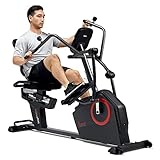
Overview: The Sunny Health & Fitness Cross Trainer revolutionizes the traditional recumbent bike by incorporating elliptical motion and arm exercisers for a true full-body workout. At $629.99, it targets serious fitness enthusiasts seeking low-impact versatility. The electromagnetic resistance system and exclusive SunnyFit app access with 1,000+ workouts position it as a premium connected fitness solution that goes beyond basic cardio.
What Makes It Stand Out: This is the only model featuring both recumbent seating and elliptical foot pedals with moveable arm handles, enabling simultaneous upper and lower body engagement. The electromagnetic resistance provides precise, instant adjustments without physical contact, ensuring whisper-quiet operation and exceptional durability. The SunnyFit app offers unlimited access to trainer-led content and virtual tours without subscription fees—a significant value proposition over competitors like Peloton or iFit.
Value for Money: While nearly triple the price of basic models, the SF-RBE4886SMART justifies its $629.99 tag through unique functionality and free premium content. Comparable full-body trainers often exceed $800 plus monthly fees, making this a cost-effective alternative. The electromagnetic resistance and 12 pre-programmed workouts deliver commercial-gym quality for home use, offering substantial value for committed users.
Strengths and Weaknesses: Pros: Full-body elliptical cross-training; electromagnetic resistance; free SunnyFit app with 1,000+ workouts; moveable arm handles; 12 built-in programs; 4 user profiles; joint-friendly low-impact design. Cons: Premium pricing; larger footprint than standard recumbent bikes; complex assembly; may be excessive for users seeking simple leg-only workouts.
Bottom Line: This cross trainer is ideal for fitness enthusiasts wanting comprehensive workouts without joint stress. The combination of recumbent comfort, elliptical motion, and free app content creates exceptional long-term value. If budget allows and space permits, the $629.99 investment delivers commercial-quality versatility that basic bikes cannot match. Highly recommended for serious home gym setups.
4. OWLSKY Recumbent Exercise Bike for Home Gym, Magnetic Stationary Bike with 16-Level Resistance, Quiet 15LBS Flywheel, 300LBS Capacity, Low-Impact Cardio & Physical Therapy

Overview: The OWLSKY bike focuses specifically on low-impact exercise and physical therapy applications. With a 300-pound capacity and 16-level magnetic resistance, it targets users managing knee pain, arthritis, or post-surgical recovery. The 15-pound flywheel emphasizes smooth, natural pedaling motion over high-intensity performance, positioning it as a rehabilitation-first device rather than a general fitness bike.
What Makes It Stand Out: The explicit physical therapy design philosophy sets it apart from generic recumbent bikes. The 15-pound precision flywheel delivers exceptionally smooth motion critical for rehabilitation, while the reinforced steel frame ensures stability during vulnerable recovery periods. OWLSKY’s emphasis on responsive customer support demonstrates understanding of therapy users’ unique needs, providing reassurance that competitors often lack.
Value for Money: At $199.99, this bike offers targeted value for its niche audience. While the 300-pound capacity is modest compared to similarly priced alternatives, the therapy-oriented design and premium flywheel weight justify the cost for specific users. Standard recumbent bikes in this range typically feature lighter flywheels and less focus on joint protection, making this a smart choice for rehabilitation despite lower weight limits.
Strengths and Weaknesses: Pros: Therapy-focused low-impact design; 15-pound precision flywheel; whisper-quiet operation; 16-level magnetic resistance; reinforced steel frame; dedicated customer support; ideal for arthritis and post-surgery recovery. Cons: Lower 300LB weight capacity limits user range; basic LCD display; no Bluetooth connectivity; assembly required; less suitable for high-intensity training.
Bottom Line: The OWLSKY bike serves a specific but important market segment exceptionally well. For users prioritizing joint protection and smooth operation over maximum capacity, the $199.99 price delivers targeted features worth the investment. It’s not the most versatile option, but it’s arguably the best choice for rehabilitation and senior users with mobility concerns. Recommended for therapy-first applications.
5. CURSOR FITNESS Recumbent Exercise Bike, Quiet Recumbent Stationary Bike for Adults & Seniors, Magnetic Stationary Bike with 16-Level Resistance, Supports 350LB, Heart Rate Handle & LCD Display

Overview: The CURSOR FITNESS bike positions itself as a premium quiet-operation solution for adults and seniors. Supporting 350 pounds with 16-level magnetic resistance, it balances durability with comfort-focused design. The breathable mesh backrest and integrated pulse sensors cater to users seeking ergonomic support during low-impact cardio sessions, while ultra-quiet operation makes it suitable for any time of day.
What Makes It Stand Out: The breathable mesh backrest is a distinctive feature that promotes airflow and proper spinal alignment, addressing a common complaint about sweaty, uncomfortable solid backrests. The near-silent magnetic resistance system is engineered for minimal disturbance, while the comprehensive LCD display tracks all essential metrics without overwhelming technophobic users. The 350-pound capacity combined with ergonomic protection design creates a thoughtful balance of inclusivity and comfort.
Value for Money: At $299.99, this bike sits in the mid-range category, offering premium comfort features without advanced connectivity. It competes directly with bikes $50-100 more expensive that offer similar build quality but inferior ergonomics. The mesh backrest and ultra-quiet operation justify the price premium over budget options, making it a solid value for comfort-conscious buyers who don’t require app integration.
Strengths and Weaknesses: Pros: Breathable mesh backrest; ultra-quiet magnetic resistance; 350LB weight capacity; ergonomic joint protection; integrated pulse monitor; easy-to-read LCD display; suitable for all fitness levels. Cons: Lacks Bluetooth or app connectivity; basic LCD without backlight; assembly required; fewer premium features than similarly priced competitors; no tablet holder mentioned.
Bottom Line: The CURSOR FITNESS bike excels for users prioritizing comfort and quiet operation over technology. Its ergonomic design and mesh backrest make it ideal for extended sessions, while the 350-pound capacity ensures broad accessibility. At $299.99, it’s a worthwhile investment for seniors and adults seeking a dependable, comfortable recumbent bike without unnecessary digital complexity. Recommended for comfort-first buyers.
6. Exercise Bike Recumbent Exercise Bike for Home Stationary Bike Sturdy Quiet 8 Levels Large Comfortable Seat Heart Rate Handle & Device Holder 300 LB Weight Capacity

Overview: This budget-friendly recumbent exercise bike delivers essential features for home cardio at an accessible price point. With 8 levels of magnetic resistance, it provides quiet operation suitable for apartment living or shared spaces. The 300-pound weight capacity accommodates most users, while the functional LCD monitor tracks time, distance, speed, calories, and pulse through handlebar sensors.
What Makes It Stand Out: The integrated device holder sets this apart from basic models, letting you stream entertainment during workouts. The wide, adjustable seat with quick-release lever offers comfort without requiring dismounting—particularly valuable for seniors or those with mobility limitations. Front transport wheels make relocation effortless, addressing a common pain point with home fitness equipment.
Value for Money: At $169.99, this represents exceptional value, costing less than three months of most gym memberships. While it lacks advanced app connectivity, it covers all fundamental recumbent bike functions reliably. The magnetic resistance system typically found in pricier models ensures smooth, quiet pedaling that won’t disturb family members.
Strengths and Weaknesses: Strengths include affordable pricing, whisper-quiet magnetic resistance, convenient device holder, easy portability, and tool-free seat adjustment. The larger seat surface enhances comfort during longer sessions. Weaknesses comprise the modest 300-pound capacity (lower than mid-range alternatives), basic LCD display without backlighting, and only 8 resistance levels—adequate for beginners but potentially limiting for advanced users seeking intense workouts.
Bottom Line: An excellent entry-level choice for budget-conscious buyers, seniors, or casual exercisers prioritizing simplicity and comfort over high-tech features. It reliably delivers low-impact cardio without breaking the bank.
7. VANSWE Recumbent Exercise Bike with Arm Exerciser for Seniors Adults Home Training - Elliptical Recumbent Cross Trainer with Magnetic Resistance, Free App, Bluetooth Connectivity and Pulse Sensor

Overview: The VANSWE Recumbent Bike distinguishes itself with integrated arm exercisers, transforming standard leg-only cardio into a comprehensive full-body workout. This hybrid design combines recumbent cycling with upper-body resistance training, making it ideal for time-efficient home fitness. Supporting up to 400 pounds with heavy-duty construction, it accommodates a broader user range than most competitors.
What Makes It Stand Out: The moveable handles and elliptical-sized pedals simultaneously engage arms and legs, creating a low-impact cross-training experience. Bluetooth connectivity and free app integration provide workout tracking and motivation typically reserved for premium models. The infinite slider seat adjustment fits inseams from 29" to 37", ensuring ergonomic positioning for users 5’ to 6'5".
Value for Money: Priced at $358.98, this mid-range option justifies its cost by essentially combining two machines—recumbent bike and upper-body trainer—into one. The 400-pound capacity and robust frame suggest longevity, while magnetic resistance delivers smooth, maintenance-free operation. For those seeking full-body engagement without purchasing separate equipment, the value proposition is strong.
Strengths and Weaknesses: Strengths include the unique arm exerciser functionality, superior 400-pound weight capacity, Bluetooth/app connectivity, ultra-low-impact elliptical motion, and extensive seat adjustability. Weaknesses involve a higher price point that may deter budget buyers, potentially complex assembly, and the arm motion may feel unnatural to traditional cyclists. The footprint is larger than standard recumbent bikes.
Bottom Line: Perfect for users wanting maximum workout efficiency and full-body conditioning from a single machine. The VANSWE excels for those prioritizing joint protection and comprehensive training over basic leg-only cycling.
8. YOSUDA Recumbent Exercise Bike for Adults Seniors with Quick Adjust Seat, 350LB Capacity & 16-level Resistance, Black

Overview: YOSUDA leverages 20 years of fitness equipment expertise to create a recumbent bike prioritizing safety and accessibility. With 16 resistance levels—double most competitors—and a 350-pound capacity, this model serves seniors, rehabilitation patients, and general fitness enthusiasts. The quick-adjust seat accommodates users from 4'9" to 6'2", making it truly family-friendly.
What Makes It Stand Out: The tool-free seat adjustment mechanism allows on-the-fly modifications without dismounting, crucial for those with limited mobility. Engineered for silence, it operates at noise levels low enough for nighttime use without disturbing household members. The design specifically targets joint protection, making it suitable for obesity, pregnancy, and injury recovery scenarios where traditional exercise proves challenging.
Value for Money: At $219.49, this mid-range bike offers premium features like 16 resistance levels and commercial-grade steel construction typically found in $400+ models. The brand’s three-million-family track record suggests reliable customer support and parts availability. For those needing rehabilitation-focused equipment without premium pricing, it strikes an optimal balance.
Strengths and Weaknesses: Strengths include exceptional 16-level resistance range, whisper-quiet operation, rapid seat adjustment, proven brand reliability, and rehab-specific engineering. The 350-pound capacity exceeds most budget options. Weaknesses are the lack of app connectivity or device holder, basic LCD monitor, and no upper-body engagement components. Entertainment features require separate mounting solutions.
Bottom Line: An outstanding choice for users prioritizing quiet operation, rehabilitation needs, and family-wide adjustability. The YOSUDA delivers professional-grade low-impact training without unnecessary tech frills.
9. MERACH Recumbent Exercise Bikes for home, Light Commercial Recumbent Exercise Bike for Seniors Adults, Magnetic Recumbent Stationary Bike with Exclusive Apps, LCD, Heart Rate Handle

Overview: MERACH positions this as a light-commercial grade recumbent bike designed for discerning home users seeking gym-quality experience. The 15-pound flywheel—nearly triple standard models—delivers exceptionally smooth, inertia-driven motion. Integrated app compatibility with Zwift, Kinomap, and Apple Health transforms solo workouts into immersive digital experiences.
What Makes It Stand Out: The “Supreme Comfort Throne” features deep contouring and breathable mesh to eliminate pressure points during extended sessions. Military-spec 0.08" reinforced steel doubles industry standards, creating unwavering stability for users up to 350 pounds. The MERACH app ecosystem provides scenic routes and real-time data syncing, while 85% pre-assembly reduces setup to under 30 minutes.
Value for Money: At $549.99, this premium bike commands a higher price but delivers commercial durability and digital integration that cheaper models cannot match. The heavy flywheel and reinforced frame suggest decades of reliable service. For fitness enthusiasts who would otherwise pay for boutique gym memberships, it pays for itself within a year while offering superior convenience.
Strengths and Weaknesses: Strengths include the substantial 15-pound flywheel, exceptional build quality, extensive app ecosystem, premium comfort seating, and quick assembly. The reinforced chassis provides unmatched stability. Weaknesses center on the premium price tag, potential overkill for casual users, and reliance on smartphones for full feature access. The footprint is substantial.
Bottom Line: Ideal for serious home fitness enthusiasts wanting commercial-grade equipment with modern digital connectivity. The MERACH justifies its price through superior engineering and immersive training options.
10. Teeter FreeStep Recumbent Cross Trainer Stepper, Zero-Impact Exercise Bike Alternative w/Patented Physical Therapy Stride, Up to 350lb, Free App w/Trainer Workouts (LT1)

Overview: The Teeter FreeStep revolutionizes home cardio with its patented zero-impact stepping motion, licensed from commercial physiotherapy equipment. Unlike traditional recumbent bikes, it uses a linear stepping action that eliminates joint stress while providing total-body conditioning. This makes it uniquely suitable for arthritis, Parkinson’s, and MS patients seeking safe, effective exercise.
What Makes It Stand Out: The patented physical therapy stride technology replicates clinical rehabilitation movements, offering unmatched joint protection. Dual power motion simultaneously engages upper and lower body, distributing effort so workouts feel easier while burning more calories. The Free app provides trainer-led classes without subscription fees, delivering professional guidance at no ongoing cost.
Value for Money: At $899, this premium machine targets a specific niche where joint preservation is paramount. While significantly more expensive than standard recumbent bikes, it replaces both a bike and an upper-body ergometer while providing medically-inspired motion. For those with chronic conditions or recovering from injury, the therapeutic value far exceeds the price.
Strengths and Weaknesses: Strengths include the unique zero-impact design, patented PT technology, total-body engagement, free training app, and exceptional joint protection. It accommodates users up to 350 pounds. Weaknesses are the premium price, larger footprint than traditional bikes, and the stepping motion may not satisfy those wanting cycling-specific training. It’s over-engineered for healthy users seeking basic cardio.
Bottom Line: The ultimate solution for anyone prioritizing joint health above all else. The Teeter FreeStep is worth every penny for arthritis sufferers, seniors with mobility issues, or rehabilitation patients needing clinical-quality exercise at home.
Understanding Recumbent Bikes for Physical Therapy
A therapeutic recumbent bike differs fundamentally from standard exercise bikes through its biomechanical design philosophy. The reclined seating position places your hips and knees at a more open angle—typically 140-160 degrees compared to the 90-degree flexion of upright bikes. This seemingly small adjustment dramatically reduces patellofemoral joint stress and eliminates compression forces on the lumbar spine that can derail recovery progress.
The clinical value extends beyond joint protection. These machines facilitate passive to active-assisted movement patterns, crucial for early-stage rehabilitation when muscle activation is limited. The seated position provides inherent stability, allowing patients to focus on proper biomechanics rather than struggling with balance. This stability is particularly vital for neurological rehabilitation, where proprioceptive feedback and controlled movement patterns rebuild neural pathways without the fall risk associated with traditional cycling.
Key Benefits of Recumbent Bikes in Rehabilitation
The therapeutic advantages begin with gravitational offloading. By distributing body weight across a larger surface area, recumbent bikes reduce vertical load on healing tissues while maintaining cardiovascular engagement. This creates a unique opportunity to improve cardiac output and circulation—essential for tissue healing—without compromising vulnerable joints.
Spinal decompression occurs naturally in the reclined position, as the backrest supports the natural lordotic curve. For post-surgical spine patients or those with degenerative disc disease, this means achieving cardio goals without triggering pain responses. Additionally, the biomechanics promote improved venous return from the lower extremities, reducing edema—a common complication in immobilized patients.
From a neurological perspective, the rhythmic, bilateral movement pattern enhances motor learning and coordination. The predictable, controlled motion allows therapists to isolate specific muscle groups, address asymmetries, and implement progressive loading protocols with precision unavailable in weight-bearing exercises.
Who Can Benefit from Recumbent Bike Therapy?
The versatility of recumbent bikes makes them invaluable across multiple patient populations. Post-operative orthopedic patients—particularly following total knee arthroplasty, ACL reconstruction, or hip arthroscopy—find the controlled range of motion essential for regaining flexion without jeopardizing surgical repairs. The ability to set specific resistance parameters prevents the accidental overload that can occur with traditional cycling.
Individuals managing chronic conditions like osteoarthritis, rheumatoid arthritis, or fibromyalgia experience symptom relief through low-impact movement that lubricates joints without inflammatory stress. For seniors with sarcopenia or balance disorders, the recumbent position eliminates fall risk while combating deconditioning. Neurological patients recovering from stroke, TBI, or Parkinson’s disease benefit from the repetitive, symmetrical movement that drives neuroplasticity.
Even athletes returning to sport use recumbent bikes for active recovery and maintaining cardiovascular fitness during injury rehabilitation, making these machines cross-functional tools in comprehensive recovery protocols.
Critical Features to Evaluate Before Buying
When selecting a therapeutic recumbent bike, feature prioritization should align with your specific rehabilitation goals. The hierarchy of importance differs significantly from recreational fitness equipment. Stability trumps sleekness, precision outweighs entertainment features, and adjustability surpasses preset program variety.
Start by assessing the frame geometry—look for a low step-through height (under 9 inches) if mobility limitations are significant. The Q-factor, or distance between pedals, should be narrow (under 200mm) to maintain proper hip-knee-ankle alignment and prevent valgus stress on healing joints. Examine the weight distribution; a rear-heavy design increases stability during high-resistance pedaling, preventing the forward tipping common in lightweight models.
Seat Design and Adjustability
The seat represents the most critical interface between patient and machine. Therapeutic models feature anatomically contoured backrests with adjustable lumbar support that maintains the natural spinal curve through various recline angles. Look for seats that slide horizontally on rails rather than pivoting on a fixed point—this ensures the distance from seat to pedals changes without altering the recline angle, preserving biomechanical consistency.
Seat padding density requires careful consideration. Overly soft cushions compress over time, creating pressure points and reducing support. High-density foam with a medium-firm rating (15-25 ILD) distributes pressure optimally while maintaining comfort during extended sessions. The seat width should accommodate your ischial tuberosity distance plus 2-3 inches; too narrow creates pressure points, too wide reduces stability.
Fore-aft adjustment range should span at least 12 inches to accommodate users from 4'10" to 6'5". Some premium therapeutic models offer independent seat and backrest adjustments, allowing clinicians to fine-tune hip angle for specific conditions like spinal stenosis versus post-laminectomy protocols.
Resistance Systems Explained
Magnetic resistance systems dominate therapeutic applications for their whisper-quiet operation and infinite adjustability. Unlike mechanical friction systems that create wear and inconsistent resistance, magnetic systems use eddy currents to generate smooth, predictable force. This precision matters enormously when following protocols that specify exact wattage or metabolic equivalents (METs).
Look for systems offering at least 20 resistance levels, though more important than quantity is the granularity of progression. The best therapeutic bikes provide step-less adjustment, allowing clinicians to make micro-increments as small as 0.1 METs. This granularity supports the principle of progressive overload without triggering pain or compensation patterns.
Direct-current (DC) motors controlling magnetic resistance offer superior consistency compared to manual magnetic systems. They maintain set resistance regardless of pedaling cadence, crucial for isokinetic training protocols where speed must remain constant as strength improves.
Display Consoles and Tracking Progress
Therapeutic progress tracking requires specific metrics beyond calories and distance. Prioritize consoles displaying wattage, METs, and heart rate zones—data that quantifies work intensity and cardiovascular adaptation. The interface should feature large, high-contrast displays readable from the reclined position without neck flexion.
Memory functions allowing user profiles to store baseline measurements and track improvements over time transform the bike into a clinical tool. Look for models offering data export via USB or Bluetooth to share progress with healthcare providers. Some advanced consoles include isokinetic testing modes that measure peak torque and bilateral symmetry, invaluable for return-to-sport decisions.
Avoid overly complex entertainment systems that distract from movement quality. The focus should remain on biomechanical precision, not virtual scenery. Simplicity in navigation reduces cognitive load, particularly important for neurological patients or those experiencing medication side effects affecting concentration.
Frame Construction and Stability
Therapeutic applications demand commercial-grade steel frames with minimum weight capacities of 300 pounds, regardless of the user’s current weight. This safety margin ensures stability during vigorous efforts and accounts for future needs as strength returns. Examine the gauge of steel—14-gauge or thicker prevents flexing that compromises alignment.
The base footprint should exceed 50 inches in length and 24 inches in width for adequate stability. Center of mass positioning is critical; the flywheel should sit directly under or slightly behind the seat, creating a low center of gravity that resists tipping. Rubberized leveling feet with individual adjustability compensate for uneven floors, maintaining a plumb orientation essential for symmetrical muscle recruitment.
Powder-coated finishes resist corrosion from sweat and cleaning agents used in clinical settings. Welded joints outperform bolted connections for long-term durability, though they reduce portability. For home use, consider whether the frame includes transport wheels and handles that allow single-person repositioning without compromising structural integrity.
Pedal Design and Foot Support
Standard pedals fail therapeutic needs. Look for oversized pedals (minimum 6 inches long) with adjustable toe cages and heel straps that accommodate edematous feet or orthopedic footwear. The strap system should use Velcro rather than buckles for patients with limited dexterity.
The Q-factor—the horizontal distance between pedal attachment points—should be adjustable or fixed below 180mm. Wider stances increase valgus stress on knees and alter hip biomechanics, potentially aggravating labral tears or patellofemoral pain syndrome. Some therapeutic models offer independent pedal spacing adjustment, allowing customization for pelvic width or postural asymmetries.
For neurological patients or those with foot drop, look for models compatible with ankle-foot orthoses (AFOs) or offering optional pedal adapters that convert to leg press movements. The ability to use the machine for both cycling and resistance training multiplies its therapeutic value.
Weight Capacity and User Dimensions
Published weight capacities represent static loads; dynamic forces during pedaling can exceed body weight by 1.5 times. Therefore, select a bike rated at least 50 pounds above the user’s current weight to ensure safety margins. Bariatric therapeutic models accommodating 400-500 pounds feature reinforced frames and wider seats without sacrificing adjustability.
Height accommodation extends beyond weight. The distance from seat to pedals at maximum extension should accommodate your inseam plus 5 inches. Many manufacturers provide user height ranges, but these assume average proportions. If you have disproportionately long legs or torso, verify the specific measurements rather than relying on general guidelines.
Consider future needs as well. Recovery often involves weight changes; a bike that accommodates your goal weight prevents the need for premature replacement. This forward-thinking approach represents sound economic and therapeutic planning.
Space Considerations and Portability
Therapeutic use requires adequate clearance around the bike for safe transfers and caregiver assistance. Allow a minimum 3-foot radius on all sides, with additional space at the front for wheelchair access if needed. The bike’s own footprint should be measured against your available space, remembering that the seat extends rearward during adjustment.
Folding mechanisms might seem attractive for small spaces, but they introduce flex points that compromise stability. Instead, look for models with vertical storage capability—some therapeutic bikes allow upright positioning against a wall when not in use. Transport wheels should lock securely to prevent movement during exercise, yet release easily for repositioning.
Consider the doorway width if the bike must move between rooms. Most non-folding models require 30-inch door clearance. Folding frames may reduce this to 24 inches but sacrifice the rigidity essential for high-resistance training. For dedicated therapy spaces, non-folding commercial models offer superior longevity.
Safety Features for Therapeutic Use
The step-through design should present a height under 7 inches from floor to frame, allowing patients with limited hip flexion to mount safely. Some models include swivel seats that lock at 90-degree intervals, enabling side transfers from wheelchairs or chairs without lifting. The seat locking mechanism must be robust, tested to withstand lateral forces without accidental release.
Heart rate monitoring through contact sensors or telemetry provides essential safety data, particularly for cardiac rehabilitation patients. Look for systems that automatically reduce resistance if heart rate exceeds programmed zones. Emergency stop mechanisms should be within easy reach and require minimal force to activate—lanyard-style pull cords are preferable to buttons that demand precise finger control.
For home use where supervision may be intermittent, consider models with remote monitoring capabilities that alert caregivers to extended inactivity or unusual heart rate patterns. While not standard, some therapeutic-grade bikes offer this feature for telehealth applications.
Noise Levels and Home Environment
Sound output directly impacts adherence; a noisy machine discourages consistent use, especially during early morning or evening sessions when household members sleep. Magnetic resistance systems produce under 45 decibels—comparable to a quiet library—while friction systems can exceed 65 decibels, similar to normal conversation.
Belt drives operate nearly silently compared to chain drives, though they may require more frequent tension adjustment. The flywheel housing should be fully enclosed to prevent dust accumulation and reduce operational hum. Rubber isolation mounts between frame components dampen vibration transmission to floors, important in multi-level homes.
Test the bike at high resistance and cadence before purchase. Some models develop harmonic vibrations at specific RPMs that resonate through floor joists. This phenomenon, while not loud, creates an intrusive low-frequency hum that penetrates walls.
Maintenance Requirements and Durability
Therapeutic bikes require regular maintenance to ensure consistent resistance and safety. Magnetic systems need virtually no internal servicing beyond annual inspection, while friction systems demand quarterly pad replacement and weekly cleaning of brake dust. Belt drives require tension checks every six months; chain drives need lubrication monthly.
Examine warranty terms carefully. True therapeutic equipment offers 5-10 year warranties on frames, 2-3 years on parts, and 1 year on labor. Be wary of “lifetime” warranties with pro-rated terms that reduce coverage value over time. Commercial-grade models often include service contracts, while residential models may require out-of-pocket technician visits.
User-serviceable components should be accessible without specialized tools. The ability to replace pedals, seat cushions, and console batteries yourself reduces downtime and long-term costs. Some manufacturers provide maintenance videos specifically for therapy applications, demonstrating proper cleaning protocols to prevent infection in multi-user environments.
Budget Planning and Value Assessment
Entry-level therapeutic recumbent bikes start around $800, but these often lack the precision resistance and durability needed for true rehabilitation. Mid-range models ($1,500-$2,500) typically offer the best balance of therapeutic features and longevity, including magnetic resistance, robust frames, and basic data tracking.
Premium therapeutic bikes ($3,000-$5,000) justify their cost through isokinetic testing capabilities, programmable protocols matching clinical equipment, and extended warranties. For post-surgical patients requiring months of structured rehab, this investment often proves economical compared to ongoing physical therapy copays.
Consider total cost of ownership, not just purchase price. Factor in maintenance contracts, replacement parts, and potential resale value. Commercial-grade bikes retain 40-60% of their value after five years, while residential models depreciate more rapidly. Some durable medical equipment suppliers offer rental-to-own programs that allow testing suitability before committing.
Frequently Asked Questions
What’s the difference between a recumbent bike and an upright bike for therapy?
Recumbent bikes position you in a reclined seat with back support, reducing spinal compression and joint stress while providing superior stability. Upright bikes require core engagement for balance and place more weight on your wrists, shoulders, and knees—making them less suitable for early-stage rehabilitation or conditions requiring gravitational offloading. The biomechanical open-chain movement of recumbent bikes also allows for better isolation of specific muscle groups without compensation patterns.
How often should I use a recumbent bike during rehabilitation?
Frequency depends on your specific condition and phase of recovery. Generally, acute post-surgical patients start with 5-10 minutes, 2-3 times daily, focusing on range of motion without resistance. As healing progresses, sessions extend to 20-30 minutes once daily, 5-6 days per week. Cardiac rehabilitation protocols typically prescribe 30-45 minutes, 3-5 times weekly at target heart rates. Always follow your therapist’s specific prescription, as overuse can trigger inflammation and setbacks.
Can I use a regular recumbent bike for physical therapy?
Standard fitness recumbent bikes often lack the adjustability, resistance precision, and durability required for therapeutic applications. They may not offer the granular resistance control needed for progressive overload protocols, and their seats might not support proper spinal alignment during extended sessions. While suitable for maintenance exercise after formal therapy ends, they’re generally inadequate for active rehabilitation phases where specific parameters must be controlled and monitored.
What resistance level should I start at?
Begin at the lowest resistance setting that allows pain-free, fluid pedaling—typically 0-0.5 METs for post-surgical patients or those with severe deconditioning. The goal is achieving 50-60 RPM cadence without joint pain or compensatory movements. Resistance progresses by 0.5-1.0 MET increments weekly as strength and endurance improve. Cardiac patients may use heart rate zones to determine resistance, while orthopedic patients rely on pain scales and range of motion assessments.
How do I know if the seat will be comfortable enough?
Test the seat for at least 15 minutes before purchasing, paying attention to pressure points on your ischial tuberosities and lumbar region. The backrest should support your natural curve without forcing extension or flexion. Quality therapeutic seats use high-density foam with pressure-mapping technology to distribute weight evenly. If you experience numbness or tingling within 10 minutes, the seat geometry doesn’t match your anatomy. Some manufacturers offer trial periods or comfort guarantees specifically for therapeutic users.
Are recumbent bikes safe for seniors with balance issues?
Absolutely—this is one of their primary therapeutic advantages. The low center of gravity, step-through design, and backrest support eliminate the balance demands of upright cycling. Seniors with proprioceptive deficits or vestibular disorders can exercise safely without fall risk. Look for models with extended handrails on both sides for transfer assistance, and ensure the seat locks securely. For severe balance impairments, consider bikes with swivel seats that allow side transfers without stepping over the frame.
How much space do I really need?
Beyond the bike’s footprint, allocate a 6x8 foot minimum area to allow safe transfers, caregiver access, and emergency egress. The bike should sit away from walls to prevent handlebar contact during seat adjustment. If space is limited, prioritize models with vertical storage capability over folding designs, which compromise stability. Measure your doorways if moving the bike between rooms—most require 30-inch clearance. Remember that adequate space reduces anxiety during transfers, particularly for users with spatial awareness deficits.
Can recumbent bikes help with weight loss during recovery?
Yes, though weight loss should be secondary to therapeutic goals during active rehabilitation. A 30-minute session at moderate intensity (3-4 METs) burns 150-250 calories depending on body weight. The metabolic benefits extend beyond caloric expenditure—regular use improves insulin sensitivity, lipid profiles, and resting metabolic rate. For bariatric patients, the weight capacity and joint-friendly nature make recumbent bikes ideal for initiating exercise when weight-bearing activities are contraindicated. Focus first on consistent participation; metabolic adaptations follow.
What maintenance is required?
Monthly tasks include wiping down the frame and console, checking pedal tightness, and inspecting seat adjustment mechanisms for wear. Quarterly, lubricate the seat rails and verify belt/chain tension. Annually, have a technician calibrate the resistance system and test electronic components. Magnetic systems need minimal internal maintenance, while friction systems require pad replacement every 6-12 months depending on usage. Keep a maintenance log to track service intervals and identify patterns of wear that might indicate biomechanical issues.
Will insurance cover a recumbent bike for physical therapy?
Coverage varies significantly by provider and policy. Medicare typically covers recumbent bikes only when classified as Durable Medical Equipment (DME) with a prescription specifying medical necessity for home use. Private insurance may offer partial reimbursement under physical therapy benefits or Health Savings Account eligibility. To improve approval odds, obtain a detailed letter of medical necessity from your physician or physical therapist documenting why clinic visits alone are insufficient and how home equipment will prevent deconditioning. Some suppliers specialize in insurance billing for therapeutic equipment and can navigate pre-authorization requirements.