You’ve just stuck a massive tantrum to blind 20 feet above the wake. The world slows down as you spot your landing, but the water has other plans—your board catches an edge and you slam down with spine-compressing force. In that moment, your wakeboard bindings transform from simple gear into critical safety equipment. The difference between riding away cleanly and spending weeks on the sidelines often comes down to millimeters of foam, degrees of flex, and design details most riders never consider.
Hard landings aren’t just part of progression; they’re an inevitability when you’re pushing limits. While your board and technique matter, your bindings serve as the primary shock absorber between your body and the unforgiving water surface. This comprehensive guide dives deep into the engineering, fit, and features that separate average bindings from true impact-dissipating machines. We’ll explore everything from baseplate geometry to closure system physics—no product pitches, just pure technical knowledge to help you make an informed decision.
Top 10 Wakeboard Bindings for Hard Landings
Detailed Product Reviews
1. Hyperlite Destroyer Wakeboard Bindings Fits Boot Sizes 8-14

Overview: The Hyperlite Destroyer bindings deliver versatile performance for riders sharing gear across a broad size spectrum. Designed to accommodate men’s boot sizes 8 through 14, these bindings eliminate the need for multiple setups in family or rental scenarios. The construction balances durability with user-friendly features that prioritize quick transitions between riders.
What Makes It Stand Out: The one-size-fits-all approach is the headline feature, but the Speed Lace system and Easy Entry Heel Panel genuinely simplify the on/off process. Drain panels prevent water retention, reducing weight and drying time—practical touches that frequent riders appreciate. These elements combine to create a binding that values convenience without completely sacrificing performance.
Value for Money: At $149.95, the Destroyer sits in the mid-range category. While not cheap, the versatility of covering nearly all adult male sizes effectively replaces two or three size-specific bindings. Compared to purchasing multiple sets, the value proposition becomes clear for shared-use situations, though dedicated riders might find specialized bindings perform better.
Strengths and Weaknesses: Strengths include exceptional size range coverage, quick-entry design, and effective drainage system. The Speed Lace mechanism proves reliable after repeated use. However, the one-size compromise means less precise fit for extreme ends of the size range—size 8 riders may experience some slop, while size 14 riders might find them snug. Performance-oriented riders will notice reduced responsiveness compared to fitted bindings.
Bottom Line: Ideal for families, boat owners with multiple riders, or beginners uncertain about their permanent size. The Destroyer excels in versatility and convenience, making it a smart choice for shared gear scenarios where fit precision takes a back seat to adaptability.
2. Liquid Force Index One-Size Wakeboard Binding, O/S Mens 8-12

Overview: The Liquid Force Index targets comfort-focused riders seeking a more refined one-size solution within a moderate size range. Accommodating men’s sizes 8-12, these bindings emphasize dampening and customizable fit over pure universality. The design caters to beginner-to-intermediate riders who prioritize fatigue reduction during long sessions.
What Makes It Stand Out: The dampening mid-sole genuinely reduces impact and vibration, a feature rarely seen at this price point. Dual-zone lacing allows independent adjustment of upper and lower zones, creating a more personalized fit than single-lace systems. The top-cuff stretch zone accommodates various calf sizes while maintaining support, addressing a common comfort issue in one-size designs.
Value for Money: Priced at $139.97, the Index undercuts the Hyperlite Destroyer slightly while offering more sophisticated comfort features. For riders within the 8-12 size range, this represents excellent value—providing near-custom fit characteristics without the premium price tag of size-specific bindings. The durability justifies the investment for regular weekend warriors.
Strengths and Weaknesses: Strengths include superior comfort from the dampening mid-sole, effective dual-zone lacing system, and thoughtful stretch zone design. The narrower size range allows better fit optimization. Weaknesses include limited size versatility compared to 8-14 options, and the comfort-focused design sacrifices some edge-to-edge responsiveness that aggressive riders prefer. The materials feel slightly less robust than premium offerings.
Bottom Line: Perfect for intermediate riders who own their gear and fall within the size range. The Liquid Force Index prioritizes comfort and fit customization, making it an excellent choice for those who value reduced fatigue over universal compatibility. Consider this over the Destroyer if you don’t need the extended size range.
3. Hyperlite Agent Wakeboard Bindings Fit Wakeboard Boot Sizes 8-14

Overview: The Hyperlite Agent occupies the same price tier and size range as the Destroyer model, positioning itself as another versatile option for riders seeking broad compatibility. While specific feature details are limited in the product listing, the Agent branding suggests a focus on all-around performance suitable for various skill levels. The 8-14 size range targets the same shared-gear market segment.
What Makes It Stand Out: The Agent likely shares Hyperlite’s proven construction methods and quality control standards. At $149.95, it probably includes entry-moderate level features like basic lace systems and standard drainage. The Hyperlite name carries weight in the wakeboarding community, suggesting reliable performance even without detailed specifications. The one-size approach remains the primary selling point.
Value for Money: Matching the Destroyer’s price point, the Agent’s value depends entirely on its unlisted features. If it includes similar quick-entry systems and drainage, it represents comparable value. Without explicit details, buyers are essentially purchasing on brand reputation alone. This creates uncertainty compared to competitors with transparent feature lists at similar prices.
Strengths and Weaknesses: Strengths include Hyperlite’s established reputation for durability and the convenient wide size range. The price is competitive for one-size bindings. Significant weaknesses stem from the lack of product information—buyers cannot verify lacing systems, comfort features, or entry mechanisms before purchase. This transparency gap makes informed comparison difficult and risks disappointment if features are basic.
Bottom Line: Consider the Agent only if you trust Hyperlite’s baseline quality and prioritize brand consistency. However, the absence of detailed features makes it impossible to recommend over the better-documented Destroyer model at the identical price. Request complete specifications before purchasing to ensure it meets your needs.
4. Airhead VENOM Wakeboard Binding, US 4 - 8, Black (AHB-21)
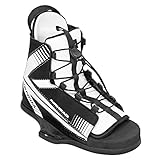
Overview: The Airhead Venom serves the youth and smaller rider market with an open-toe design that prioritizes affordability and growth accommodation. Sized for US 4-8 (EU 36-41), these bindings target younger riders or adults with smaller feet who need functional gear without premium pricing. The design emphasizes easy entry and basic performance.
What Makes It Stand Out: The open-toe configuration naturally accommodates growing feet, extending usable life through several size increases. Left and right specific plates improve fit asymmetry rarely addressed in budget bindings. The flexible plastisol overlay provides support while maintaining forgiveness for developing riders. At under $100, these are among the most accessible wakeboard bindings available.
Value for Money: At $99.00, the Venom delivers exceptional value for the target demographic. Parents appreciate not replacing bindings every season as kids grow. While materials and features are basic, the price reflects appropriate expectations. Competing youth bindings often cost 50-100% more without proportional performance gains, making this a smart budget choice.
Strengths and Weaknesses: Strengths include unbeatable price, growth-friendly open-toe design, and surprising attention to fit with left/right plates. The easy-adjust lace system works adequately for beginners. Weaknesses involve noticeable performance limitations—flex is excessive for aggressive riding, materials lack durability for heavy use, and support is minimal for advanced maneuvers. The narrow size range within youth sizing restricts adult small-footed riders.
Bottom Line: An excellent starter binding for young riders that prioritizes economics and growth accommodation over performance. The Venom gets kids on the water without breaking the bank, making it ideal for families introducing children to wakeboarding. Upgrade as skills progress, but this serves the beginner phase perfectly.
5. Liquid Force 2026 Index Wakeboard Bindings Size 12-15

Overview: The Liquid Force 2026 Index represents a premium evolution of the Index line, specifically engineered for larger riders requiring enhanced support and performance. Accommodating sizes 12-15, this binding addresses the often-overlooked big-foot market with advanced features typically reserved for pro-level gear. The design balances support with progression-friendly flex.
What Makes It Stand Out: The 6R Binding Chassis delivers exceptional heel hold and energy transfer, solving common issues for larger riders. The EVA Comfort Liner with 2.5-degree canting reduces knee stress—a crucial feature for bigger athletes. Dual-zone lacing with sliding hex locks provides micro-adjustability that cheaper bindings lack. Universal 6-inch mounting compatibility ensures board fit versatility.
Value for Money: At $279.99, this is a significant investment, but justified for the target rider. Larger bindings typically command premiums, and the feature set rivals $350+ competitors. The durability and performance gains translate to faster progression and reduced injury risk. For dedicated riders in this size range, the cost-per-use becomes reasonable over multiple seasons.
Strengths and Weaknesses: Strengths include outstanding support from the 6R chassis, superior comfort via the canted EVA liner, and precise dual-zone lacing. Build quality exceeds expectations. Weaknesses center on the narrow size applicability—only riders 12-15 can use them, and the price excludes casual participants. The forgiving flex pattern may limit aggressive riders who prefer stiffer response. Weight is slightly higher than minimalistic bindings.
Bottom Line: A must-have for serious riders with larger feet who’ve struggled with inadequate support. The 2026 Index justifies its premium price through targeted engineering that addresses big-rider-specific challenges. If you fall within the size range and ride regularly, this investment pays dividends in comfort, performance, and longevity. Skip if you’re a casual rider or have smaller feet.
6. CTRL Imperial V2 Open-Toe Wakeboard Bindings, Black, 9-12

Overview: The CTRL Imperial V2 targets intermediate riders seeking a balance of security and comfort in an open-toe design. Sized for feet 9-12, these bindings emphasize quick adjustability and impact protection for progressing wakeboarders who need reliable performance without premium pricing.
What Makes It Stand Out: The proprietary J-Bars deliver exceptional heel lockdown, preventing lift during aggressive cuts. A three-strap hook-and-loop closure system enables tool-free adjustment and rapid entry/exit—practical advantages on busy days. The ergonomic chassis eliminates traditional pinch points, while the EVA footbed cushions hard landings and reduces fatigue.
Value for Money: At $149.99, the Imperial V2 competes in the mid-range segment. J-Bars and ergonomic design typically appear in $200+ bindings, making this a smart upgrade from entry-level options. For riders advancing beyond basic skills, the performance benefits justify the premium over $100 budget models that lack secure heel hold.
Strengths and Weaknesses: Pros: Superior heel retention; quick-adjust closure; comfortable EVA cushioning; ergonomic fit; accommodates multiple sizes. Cons: Open-toe design sacrifices precision; 9-12 range may feel loose on smaller feet; not ideal for advanced riders needing stiff response.
Bottom Line: The Imperial V2 excels for recreational to intermediate riders prioritizing convenience and comfort. The secure fit and impact protection make it a worthwhile investment for those ready to progress beyond entry-level gear.
7. Airhead Venom II Wakeboard Binding Boot Medium/Large

Overview: The Airhead Venom II M/L delivers accessible performance for riders sharing gear or developing technique. This open-toe binding emphasizes adjustability and user-friendly operation at a budget-conscious price point, accommodating feet in the medium to large range.
What Makes It Stand Out: The lightweight chassis provides surprising support without bulk, while the adjustable lacing system allows micro-customization of fit. Multiple binding angle options let riders experiment with stance configurations—a valuable feature for technique development. The open-toe architecture maximizes versatility for families or camps with varying foot sizes.
Value for Money: At $134.52, the Venom II undercuts most competitors while retaining core functionality. Premium brands charge $180+ for similar features, making this compelling for casual riders. While durability may not match high-end models, the performance-per-dollar ratio suits those riding fewer than 30 sessions annually.
Strengths and Weaknesses: Pros: Versatile sizing; intuitive adjustment; comfortable for extended sessions; angle customization aids progression; lightweight design. Cons: Open-toe lacks high-performance precision; chassis may flex for aggressive riders; materials wear faster than premium alternatives; not ideal for advanced tricks.
Bottom Line: The Venom II M/L serves recreational riders and families perfectly. While it won’t satisfy hardcore enthusiasts, the combination of adjustability, comfort, and affordability makes it ideal for casual use and skill development.
8. Airhead Venom II Wakeboard Binding Boot Small/Medium
Overview: The Airhead Venom II S/M brings versatile design to riders with smaller feet. This binding targets younger riders and smaller adults seeking budget-friendly performance without sacrificing adjustability, offering the same core features as the M/L version in an appropriate size range.
What Makes It Stand Out: Maintaining the adjustable lacing system and multiple angle options, the S/M variant offers identical customization features. The lightweight chassis performs admirably for its class, while the open-toe design allows for growth and size fluctuations—particularly valuable for teenage riders still developing their foot size and riding style.
Value for Money: At $125.75, this represents exceptional value, slightly undercutting the M/L version. For growing riders, the expandability prevents frequent equipment replacement. Entry-level bindings in this size range typically lack angle adjustment, giving the Venom II a clear advantage in its price bracket.
Strengths and Weaknesses: Pros: Proper sizing for smaller feet; growth-friendly design; angle adjustability aids technique; easy entry/exit; budget-friendly. Cons: Same performance limitations as M/L version; may be outgrown skill-wise before physically; less precise than closed-toe alternatives; durability concerns with heavy use.
Bottom Line: The Venom II S/M is ideal for younger riders and smaller adults entering the sport. The combination of proper fit, adjustability, and attractive pricing creates a smart entry point that supports progression without breaking the bank.
9. Hyperlite Wakeboard System Pro Bindings 10/13

Overview: The Hyperlite System Pro Bindings represent a different approach—separating the binding interface from the boot. Designed for 2022, this system focuses on maximizing edge response and hold for performance-oriented riders using size 10-13 boots, requiring compatible system boots for operation.
What Makes It Stand Out: The conversion from cloth to rubber belt dramatically increases flexibility while maintaining a firm hold. The elevated heel side design enhances edging power, directly translating to sharper cuts and better wake approach. By securing boots separately, the system achieves faster edge reaction speeds compared to traditional integrated designs.
Value for Money: At $169.97, this system binding offers advanced performance typically seen at $250+. However, it requires compatible system boots—an additional cost. For riders invested in the Hyperlite ecosystem, it’s exceptional value. Newcomers must factor in total system expense versus integrated alternatives costing $200-250 complete.
Strengths and Weaknesses: Pros: Superior edge response; rubber belt improves fit; high heel side boosts edging; increased reaction speed; modern system design. Cons: Requires separate boot purchase; limited compatibility; more complex setup; steeper learning curve; not for casual riders.
Bottom Line: The System Pro suits dedicated riders seeking performance gains. If you’re already using Hyperlite system boots, this upgrade delivers noticeable improvements. Casual riders should consider integrated bindings instead.
10. Liquid Force 2026 Index Wakeboard Bindings Size 8-12
Overview: The Liquid Force 2026 Index targets progressing riders with premium features typically reserved for advanced bindings. Sized 8-12, this model balances support and forgiveness through innovative chassis design for dedicated wakeboarders pushing their skill limits.
What Makes It Stand Out: The 6R Binding Chassis delivers high-end response while remaining accessible to intermediate riders. Dual-zone lacing with LF Hex Lace Locks provides precise, independent upper and lower tension control. The 2.5-degree angled liner promotes natural body alignment, reducing knee stress during long sessions and hard landings.
Value for Money: At $279.99, this sits in the premium category. While expensive, you’re getting technology from Liquid Force’s flagship lines. Comparable bindings with dual-zone lacing and advanced chassis design typically exceed $300. For riders progressing beyond basic tricks, the investment prevents premature equipment obsolescence.
Strengths and Weaknesses: Pros: Advanced 6R chassis; precise dual-zone lacing; ergonomic angle reduces knee strain; universal 6-inch compatibility; forgiving flex aids progression. Cons: Price prohibitive for casual riders; may be overly feature-rich for beginners; 8-12 range misses smaller/larger sizes.
Bottom Line: The Index is a top-tier choice for committed riders serious about progression. The advanced features justify the cost for those riding regularly and pushing their limits. Casual users can find better value elsewhere.
Why Bindings Are Critical for Hard Landings
Your bindings are the first line of defense against impact trauma. When you land from height, forces exceeding 5G can travel through your board and into your ankles, knees, and spine. Quality bindings act as a sophisticated suspension system, extending the duration of impact and reducing peak forces on your joints. Think of them as the difference between landing on concrete versus a professional gymnastics mat—the material composition and structural design literally reshape how energy transfers through your body.
The physics are straightforward: water doesn’t compress, so something has to. Without proper shock absorption, your cartilage, ligaments, and bones absorb that energy instead. Over time, this leads to chronic pain, stress fractures, and career-shortening injuries. The right bindings distribute these forces across a larger surface area while converting kinetic energy into heat through viscoelastic materials.
Understanding Wakeboard Binding Anatomy
Before diving into specific features, you need to understand how each component contributes to impact protection. Modern wakeboard bindings are complex systems where every element plays a role in energy management.
Baseplate and Chassis Design
The baseplate forms the foundation of impact protection. Look for chassis designs that feature integrated shock pods or suspension systems rather than flat, rigid platforms. Multi-density baseplates use varying durometer materials in specific zones—softer compounds under the heel and ball of the foot where initial contact occurs, with firmer sections around the edges for board control. Some advanced designs incorporate canting (angled footbeds) that align your joints naturally, reducing stress during compression.
Footbed Technology and Cushioning
The footbed is where the magic happens for hard landings. Premium models use progressive cushioning systems that respond differently based on impact intensity. Soft foam handles everyday riding, while denser layers activate under heavy loads. Pay attention to footbed thickness—anything under 8mm is insufficient for aggressive riding. The best systems feature 12-15mm of layered materials with varying compression rates.
Highback Structure and Support
Your highback controls how much your ankle can flex and how forces transfer up your leg. For hard landings, you want a highback that’s tall enough to provide leverage but features strategic cutouts or flexible zones that allow controlled deformation. Some designs use dual-injection molding, creating a rigid skeleton with softer outer layers that absorb initial impact before the main structure engages.
Strap Systems and Closure Mechanisms
Straps do more than keep you connected—they’re active participants in impact management. Wide, padded straps distribute pressure across your foot, preventing hot spots during violent impacts. The placement matters significantly: lower ankle straps should sit above the talus bone, while toe straps need to anchor the forefoot without cutting circulation.
Key Features for Impact Absorption
Not all cushioning is created equal. The specific technologies and materials used in binding construction determine their effectiveness at dissipating hard landing forces.
EVA Foam Densities and Layering
Ethylene-vinyl acetate (EVA) remains the industry standard, but the devil is in the details. Single-density EVA is outdated; modern bindings use 3-4 different durometers in strategic layers. Soft 30A durometer foam closest to your foot provides immediate comfort, while 70A durometer layers deeper in the stack prevent bottoming out. The progression should feel seamless, with each layer compressing only after the previous one reaches its limit.
Gel Inserts and Liquid Cushioning
Strategic gel placement under the heel and forefoot can reduce peak impact forces by up to 30%. Unlike foam, gel doesn’t compress—it displaces, spreading force laterally. Look for encapsulated gel pockets that retain their shape over time. Some premium designs use non-Newtonian fluids that stiffen under high shear rates, providing soft landings for small hops but firming up when you really send it.
Airbag and Pneumatic Systems
The pinnacle of impact technology uses small pneumatic chambers that act like miniature shock absorbers. These systems compress air during impact, then slowly release it through micro-valves. The advantage is tunability—some designs allow you to adjust air pressure based on your weight and riding style. The downside? Complex maintenance and potential failure points.
Stiffness vs. Flexibility: Finding the Sweet Spot
This is perhaps the most misunderstood aspect of binding selection for hard landings. Conventional wisdom suggests soft bindings are better for impact, but that’s overly simplistic. Excessively soft bindings allow your joints to travel through an uncontrolled range of motion, increasing injury risk. Conversely, overly stiff bindings transfer forces directly to your body without any absorption.
The ideal binding for hard landings features progressive stiffness—soft initial flex that rapidly firms up as you compress deeper. This is achieved through tapered highbacks, multi-stage foam, or structural elements that engage at specific deflection points. Think of it like a progressive spring rate in motorsports: compliant over small bumps, but firm enough to prevent bottoming out on big hits.
Binding Sizing and Fit: The Foundation of Protection
A binding that doesn’t fit perfectly is a binding that can’t protect you properly. Impact absorption relies on direct, even contact between your foot and the binding’s cushioning layers.
Measuring Your Feet Correctly
Forget your shoe size. Wakeboard binding sizing requires precise measurements. Measure both feet at the end of the day when they’re slightly swollen, tracing each foot on paper while bearing full weight. Compare length and width measurements to manufacturer size charts—never assume you’re a medium because you wear size 10 shoes. Many riders need different sizes for each foot, and some brands offer split sizing.
Toe Box and Heel Hold Considerations
Your toes should lightly brush the end of the binding when standing flat, with no more than 5mm of space. More room allows your foot to accelerate before hitting the binding wall during impact. Heel hold is even more critical—your heel must be locked down with zero lift. Test this by trying to raise your heel while the binding is fully tightened. Any movement means energy is wasted and your Achilles tendon is at risk.
Heat-Moldable Liners: A Game Changer
Heat-moldable liners represent the biggest advancement in custom fit. These liners use thermoformable foam that softens at 120-140°F, allowing them to conform precisely to your foot’s anatomy. The process eliminates pressure points and ensures 100% contact between foot and binding. For hard landings, this means no energy is lost to gaps or movement inside the binding.
Mounting Systems and Board Compatibility
Your bindings are only as good as their connection to the board. Traditional 6-inch mounting patterns create stress concentrations that can crack under repeated hard impacts. Modern M6 and M8 systems distribute loads better, but the real innovation is in flexible mounting discs.
Look for bindings with rubber-dampened or floating discs that allow micro-movement between binding and board. This tiny amount of isolation—just 1-2mm—can significantly reduce the high-frequency vibrations that cause joint pain. Some systems even use urethane bushings that compress during impact, adding another layer of suspension.
The Role of Binding Angles in Impact Distribution
Stance angle affects how forces travel through your body. A duck stance (feet angled outward) is popular for park riding, but for hard wake landings, consider a slightly more forward angle—12-15 degrees on the front foot, -9 to -12 on the rear. This aligns your knees with the direction of impact, allowing your natural biomechanics to absorb forces more effectively.
The key is avoiding extreme angles that put your knees in compromised positions during compression. Your bindings should allow your tibia to track straight over your ankle joint when viewed from the front. Any inward or outward deviation multiplies forces on your ACL and MCL.
Material Matters: Durability Under Stress
Impact protection is useless if the binding breaks down after a month of hard riding. Examine material specifications closely. TPU (thermoplastic polyurethane) highbacks offer better fatigue resistance than standard plastics, maintaining their flex characteristics season after season. Stitching should be double or triple-needle, with reinforced stress points. Pull on every strap attachment point—if you see any separation or hear cracking sounds, walk away.
The baseplate chassis needs particular scrutiny. Nylon composites with 30-50% glass fiber reinforcement provide the best strength-to-weight ratio while maintaining some inherent dampening. Pure carbon fiber might be lighter and stiffer, but it transmits too much vibration for hard landing applications.
Lace, Velcro, or BOA? Closure Systems Compared
Closure systems directly impact how well your binding maintains fit during impact. Traditional laces offer infinite adjustability but can stretch and loosen. Velcro is fast and secure but loses grip when wet and degrades with UV exposure. BOA systems provide even pressure distribution and never loosen, but they add weight and potential failure points.
For hard landings, the best approach is often hybrid: BOA or lace for the lower zone that needs precise, consistent tension, and a wide Velcro strap for the upper zone that handles dynamic loads. The key is independent zone control—your ankle needs different support than your forefoot.
Entry Systems: Open-Toe vs. Closed-Toe
The open-toe versus closed-toe debate intensifies when discussing hard landings. Open-toe bindings offer more toe splay and natural foot movement, which some riders prefer for impact absorption. However, closed-toe designs provide superior toe protection and prevent the “toe bang” that occurs when your foot slides forward during a heavy landing.
Modern closed-toe bindings have evolved with asymmetrical toe boxes that mirror your foot’s natural shape, combining the benefits of both systems. If you choose open-toe, ensure the toe strap sits low and tight, preventing forward movement without restricting blood flow.
Maintenance Tips for Maximum Shock Absorption
Even the best bindings lose impact protection over time. EVA foam permanently compresses after about 100-150 hard impacts, losing its energy-absorbing properties. Rotate your bindings 180 degrees every few sessions to even out wear patterns. Store them in a cool, dark place—UV radiation and heat accelerate foam degradation.
Monthly maintenance should include inspecting all cushioning layers for permanent compression marks deeper than 3mm. Check that highbacks return to their neutral position without sticking. Lubricate BOA dials and examine lace guides for wear. A binding that can’t return to its original shape can’t protect you on the next landing.
Common Mistakes When Choosing Bindings for Hard Landings
Many riders prioritize weight savings over protection, choosing minimalist bindings that sacrifice cushioning. Others buy based on pro rider endorsements without considering that sponsored athletes often replace gear monthly. The most critical error is buying oversized bindings “for comfort”—extra space becomes extra acceleration distance during impact, multiplying forces on your feet.
Another frequent mistake is ignoring the board-binding system as a whole. The stiffest bindings on a soft board create a mismatch that concentrates forces. Your setup should have balanced flex characteristics, with the board and bindings working as an integrated suspension system.
How to Test Bindings Before You Buy
Never purchase bindings without physically testing them. Wear them for at least 15 minutes in the shop, walking around to feel pressure points. Perform a “heel lift test” and “toe bang test.” If possible, mount them on a demo board and do box jumps onto a hard floor—this simulates impact better than any carpet test.
Ask the shop to let you tighten them to riding tension and hold it for 5 minutes. Then check for numbness or hot spots. A binding that feels perfect for 30 seconds might create pressure points that cause you to subtly shift your weight, compromising your stance and impact absorption when riding.
When to Replace Your Bindings: Safety First
Bindings don’t last forever, and worn bindings are dangerous bindings. Replace them immediately if you notice any cracks in the chassis, permanent compression in cushioning exceeding 5mm, or if the highback develops play in its pivot points. Even without visible damage, bindings used for regular hard landings should be replaced every 100-150 riding hours.
Pay attention to performance changes. If you start feeling more impact on landings you previously stomped cleanly, your foam has likely degraded. Don’t wait for catastrophic failure—your joints will pay the price long before the binding falls apart.
Frequently Asked Questions
How do I know if my bindings are absorbing impacts properly?
You’ll feel a progressive compression rather than a harsh stop. Good bindings create a “soft catch” sensation where the impact force builds gradually over 0.2-0.3 seconds instead of peaking instantly. If you experience sharp pain or feel every landing directly in your joints, your cushioning system is either worn out or inadequate for your riding style.
Can stiff bindings actually be better for hard landings?
Yes, when they feature progressive stiffness. A binding that’s soft throughout allows your joints to hyperextend, while a progressively stiff binding provides initial give followed by firm support that prevents over-compression. The key is avoiding linear stiffness—look for bindings that get exponentially firmer as they compress.
What’s the most important feature for big air riders?
Heel hold and baseplate suspension. Your heels absorb the initial impact in most landings, so zero heel lift is non-negotiable. The baseplate must have dedicated heel cushioning that works independently from the forefoot, as impact forces travel differently through each zone of the foot.
How often should I replace my wakeboard bindings?
For riders who regularly hit large features or boost big air, replace bindings every 100-150 hours of water time. Casual riders can extend this to 200 hours. The foam cushioning permanently compresses and loses its energy-absorbing properties long before visible damage appears. Mark your calendar with purchase date and track riding hours.
Are heat-moldable liners worth the extra cost?
Absolutely for hard landings. The custom fit eliminates micro-movements inside the binding that waste energy and create pressure points. The molding process also pre-compresses the foam in a way that extends its effective lifespan. Most riders report 30-40% better impact absorption after molding compared to out-of-the-box feel.
Do open-toe bindings provide enough support for hard landings?
Modern open-toe designs can, but they require precise fit. The advantage is natural toe splay and better blood circulation, which reduces fatigue. However, they must have a robust toe strap system that prevents forward movement. If your toes can touch the front of the binding during a hard impact, you need a smaller size or closed-toe design.
Can I modify my existing bindings for better shock absorption?
Limited modifications are possible but generally not recommended. Adding aftermarket insoles can help, but they change your foot position and may create new pressure points. Drilling holes for “flex” compromises structural integrity. If your bindings are inadequate, replacement is safer and more effective than modification.
What’s the ideal binding angle for reducing impact?
A moderate duck stance of 12-15 degrees front foot and -9 to -12 degrees rear foot works best for most riders. This aligns your knees naturally while allowing enough rotational freedom to absorb off-axis landings. Avoid extreme angles beyond 18 degrees, which put your knees in vulnerable positions during heavy compression.
Are BOA systems more reliable than traditional laces for hard landings?
For maintaining consistent tension, yes. BOA systems don’t stretch or loosen under dynamic loads, ensuring your heel hold remains constant throughout your session. However, they add weight and create a single point of failure. Carry a spare BOA dial and lace kit in your boat. Traditional laces are more field-serviceable but require more frequent adjustment.
Why do my feet still hurt after landing even with new bindings?
Check three things: First, verify your sizing—most foot pain comes from bindings that are too large, allowing foot movement. Second, examine your board’s flex pattern; a board that’s too stiff for your bindings creates a mismatch. Third, consider your technique—are you landing with weight evenly distributed? Even perfect bindings can’t protect against consistently poor landing mechanics.