Whether you’re wobbling through your first Warrior III or deepening your decades-long practice, the humble yoga block might be the most underrated tool in your wellness arsenal. Far from being a “crutch” for beginners, these versatile props are secret weapons for building proprioception, creating safe alignment, and accessing strength you never knew you had. In the evolving world of yoga accessories, blocks and bricks have transformed from simple foam rectangles into sophisticated tools engineered for specific support needs.
Understanding what makes one block better than another for balance work isn’t about following trends—it’s about biomechanics, material science, and matching your unique practice requirements with the right specifications. This comprehensive guide cuts through marketing hype to examine the essential features that separate exceptional balance supports from glorified paperweights, ensuring your investment enhances rather than hinders your journey toward stability.
Top 10 Yoga Blocks for Balance Support
Detailed Product Reviews
1. Gaiam Yoga Block - Supportive Latex-Free Eva Foam - Soft Non-Slip Surface with Beveled Edges for Yoga, Pilates, Meditation - Yoga Accessories for Stability, Balance, Deepen Stretches

Overview: This dual-pack from Gaiam delivers fundamental support for yogis at any level. Constructed from premium latex-free EVA foam that’s 50% denser than standard blocks, these accessories measure 9"x6"x4" and weigh just 4.6 ounces each. The beveled edges and non-slip surface provide reliable grip for hands and feet during various poses.
What Makes It Stand Out: The enhanced density sets these blocks apart from budget alternatives without adding significant weight. The beveled edges demonstrate thoughtful ergonomics, reducing hand fatigue during prolonged holds. Gaiam’s reputation for quality yoga accessories shows in the construction, which maintains shape under regular use. The blocks work equally well for meditation seating, standing pose modifications, and restorative practice.
Value for Money: At $13.44 for two, this set offers exceptional value for everyday practitioners. The price point matches basic foam blocks while delivering premium density and durability. Comparable single blocks often cost $8-12, making this pair a smart investment for home studios or frequent practitioners who need reliable, long-lasting support.
Strengths and Weaknesses:
- Pros: Superior density provides firm support; lightweight portability; beveled edges enhance comfort; trusted brand quality; excellent price for two
- Cons: Limited color options; may compress slightly under heavy weight; 4-inch height might be too tall for some users
Bottom Line: The Gaiam Yoga Block set delivers professional-grade support at an entry-level price. Ideal for practitioners seeking reliable, dense foam blocks that won’t bottom out during practice.
2. Yoga Block, High Density EVA Foam Blocks for Yoga, Pilates, Meditation, Aid Balance, Support and Deepen Poses - Non-Slip Lightweight Durable(2-Pack-Grey)

Overview: KEEP’s eco-conscious approach yields lightweight yet sturdy yoga blocks designed for stability across all practice styles. These high-density EVA foam blocks feature a closed-cell, textured surface that repels moisture while providing secure grip. Each block weighs merely 0.44 pounds, making them exceptionally portable for studio-to-home transitions.
What Makes It Stand Out: The six-sided, eight-angle design creates unexpected versatility in positioning options beyond standard rectangular blocks. Environmental responsibility shines through the recyclable, non-toxic construction free from chlorides, heavy metals, phenols, and latex. The microporous foaming process achieves an impressive strength-to-weight ratio that supports various poses without deformation.
Value for Money: Priced at $13.99 for two, these blocks compete directly with standard foam options while offering superior eco-credentials. The scientific cutting process ensures dimensional accuracy and longevity, representing excellent value for environmentally aware practitioners. Similar sustainable blocks typically cost $20+ per pair.
Strengths and Weaknesses:
- Pros: Exceptionally lightweight; planet-friendly materials; moisture-resistant surface; precise construction; versatile geometry
- Cons: Lower density may feel less supportive for larger bodies; closed-cell texture can feel slick with very dry hands; limited cushioning compared to premium brands
Bottom Line: KEEP Yoga Blocks excel for practitioners prioritizing portability and environmental impact. Perfect for travel, hot yoga, and those seeking sustainable practice tools without premium pricing.
3. Yoga-Grip, Premium Quality Wrist Alignment Yoga Blocks to Eliminate Wrist Pain in All Poses - Great for Yoga, Pushups and Pilates. Set of 2 with Instruction Card

Overview: Engineered specifically for wrist health, Yoga-Grip blocks target practitioners experiencing pain in weight-bearing poses. The patented ergonomic design features a low center of gravity and wide base that prevents tipping during critical postures like Downward Facing Dog and Crow. Doctor-tested construction prioritizes wrist alignment over traditional flat-block designs.
What Makes It Stand Out: These are the only blocks specifically designed to eliminate wrist compression through contoured hand positioning. The ergonomic grip redistributes weight across the palm rather than concentrating pressure on the wrist joint. Unlike wedge modifications, this integrated solution maintains stability across all pose categories, making it uniquely effective for plank variations and arm balances.
Value for Money: At $47.00, this specialized set commands a premium price justified by medical-grade design and materials. For practitioners with chronic wrist issues or those recovering from injury, the cost represents significant savings compared to physical therapy sessions or modified practice limitations. Generic blocks plus wedges would cost $30-40 with inferior integration.
Strengths and Weaknesses:
- Pros: Unmatched wrist support; doctor-approved design; stable in all poses; fits all hand sizes; premium construction quality
- Cons: High price point; specific hand orientation required; non-slip covers cost extra; less versatile for non-wrist-focused uses
Bottom Line: Yoga-Grip blocks are essential equipment for anyone with wrist pain or injury concerns. The investment pays dividends in practice longevity and pain-free exploration of arm balances.
4. Trideer Yoga Block, Soft Non-Slip Surface Premium Foam Blocks, Supportive, Lightweight, Odorless, Yoga Accessories for Pilates Meditation General Fitness Stretching Toning (Mint Green-2 Pack)

Overview: Trideer’s premium foam blocks deliver odorless, eco-friendly support in a slightly slimmer 9"x6"x3" profile. The closed-cell foam construction provides a comfortable balance of softness and stability for various yoga, Pilates, and meditation applications. These blocks prioritize user comfort and environmental responsibility without sacrificing performance.
What Makes It Stand Out: The commitment to sustainability extends beyond materials to the manufacturing process, resulting in truly odorless blocks straight from packaging. The thinner 3-inch depth offers unique advantages for certain poses and body types, providing just enough lift without over-elevation. Trideer’s non-slip surface texture maintains grip even during vigorous vinyasa flows.
Value for Money: At $13.99 for two premium eco-blocks, this set delivers outstanding value. The odorless quality and sustainable sourcing typically command prices $10-15 higher per pair. For practitioners sensitive to chemical smells or committed to green practice, these blocks offer premium features at standard pricing.
Strengths and Weaknesses:
- Pros: Completely odorless; eco-friendly materials; comfortable cushioning; excellent grip texture; thinner profile suits many poses
- Cons: 3-inch height may be insufficient for some modifications; slightly less dense than ultra-premium options; limited color variety
Bottom Line: Trideer Yoga Blocks shine for environmentally conscious practitioners seeking comfortable, odor-free support. The thinner profile works exceptionally well for seated poses and gentle support needs.
5. WRISTBuddy® Yoga Blocks 2-Pack (Left + Right) — Ergonomic, Hand-Shaped EVA Blocks for Wrist Relief & Better Grip | Doctor-Designed Support for Yoga, Pilates, Handstands, Push-Ups & Rehab

Overview: WRISTBuddy takes ergonomic support a step further with hand-specific blocks designed by a sports chiropractor. Each block is clearly marked left and right, featuring precision-cut contours that guide natural hand placement for optimal wrist alignment. The textured EVA foam enhances grip security during weight-bearing poses and transitions.
What Makes It Stand Out: The doctor-designed, hand-specific approach ensures anatomically correct positioning that flat blocks cannot replicate. Precision-cut texture increases friction exactly where hands need it most, building confidence in balances and handstands. Unlike universal ergonomic blocks, the L/R marking system eliminates guesswork and ensures consistent placement practice after practice.
Value for Money: At $39.99, these specialized blocks sit between basic ergonomic options and premium medical-grade equipment. The sports chiropractor design adds credibility and functional value that generic contoured blocks lack. For serious practitioners exploring arm balances and inversions, this investment prevents costly wrist injuries while enhancing performance.
Strengths and Weaknesses:
- Pros: Hand-specific design; chiropractor-developed; excellent grip texture; stable in advanced poses; clear L/R markings
- Cons: Mid-range price; less versatile for non-hand uses; requires proper orientation; may not suit all hand shapes perfectly
Bottom Line: WRISTBuddy blocks offer professional-grade wrist support for dedicated practitioners. The hand-specific design and expert development make them ideal for advancing your arm balance practice safely and confidently.
6. 2 Pack Squat Wedge Blocks,Non Slip Professional Squat Ramp for Heel Elevated Squats Calf Raises Platform, Calf Stretcher, Balance, Pushup, Yoga Wrist Support, Pilates, Squat, Riser Block

Overview: These versatile wedge blocks deliver targeted support for fitness enthusiasts seeking to enhance squat form, calf training, and yoga practice. Measuring 9.5" x 6" x 3" with a 23-degree incline, this 2-pack serves multiple functions—from heel-elevated squats to pushup assistance and wrist support. The high-density EVA foam construction provides a balance of firmness and cushioning suitable for home workouts, physical therapy, and studio sessions.
What Makes It Stand Out: The wedge design specifically addresses ankle mobility limitations, allowing deeper squat positions while reducing knee strain. Unlike standard rectangular blocks, these angled platforms optimize biomechanics for lower body exercises. The non-slip surface ensures stability during dynamic movements, while the lightweight 4.69-ounce construction makes them exceptionally portable. Their versatility extends beyond yoga into CrossFit, Pilates, and rehabilitation settings.
Value for Money: At $14.99 for two blocks, this set offers exceptional affordability compared to purchasing individual wedges or slant boards costing $20-40 each. The 90-day satisfaction guarantee eliminates purchase risk, while the dual-pack configuration provides bilateral support for balanced training—something single-block alternatives cannot match.
Strengths and Weaknesses: Strengths include outstanding versatility, superior portability, excellent grip, and the value of a matching pair. The 23-degree angle suits most users but may prove insufficient for those requiring steeper inclines. Heavy powerlifters might find the foam compresses slightly under maximal loads. The bright color options, while not specified, typically show wear faster than darker alternatives.
Bottom Line: Ideal for home gym owners, yoga practitioners, and physical therapy patients, these wedge blocks deliver professional-grade functionality at an entry-level price. Their multi-purpose design replaces several single-use tools, making them a smart investment for comprehensive fitness routines.
7. Soxsense Half Moon Recovery Block & Calf Stretching- Improve Balance, Stability & Foot Mobility/Calf Stretcher for Plantar Fasciitis Relief/Yoga & Pilates Balance Trainer

Overview: This ergonomically designed half-moon block targets foot, ankle, and calf mobility with precision. Crafted from sustainable cork, the 9.5 x 3.9 x 3.3-inch block supports therapeutic stretching, plantar fasciitis relief, and balance training. Its curved profile cradles the natural arch of the foot, making it particularly valuable for rehabilitation and restorative yoga practices where targeted support matters more than general stability.
What Makes It Stand Out: The unique crescent shape distinguishes it from traditional blocks, providing graduated stretching options that flat surfaces cannot replicate. Cork’s natural density offers firmer feedback than foam, enhancing proprioception during balance work. The material’s antimicrobial properties and eco-friendly sourcing appeal to environmentally conscious users. Its specialized design excels at relieving plantar fasciitis symptoms and improving ankle dorsiflexion.
Value for Money: At $19.99 for a single block, the price reflects premium cork construction and specialized engineering. While foam alternatives cost less, cork’s durability ensures years of use without compression or degradation. For those specifically treating foot conditions or seeking superior stability, the investment pays dividends over cheaper, shorter-lived options.
Strengths and Weaknesses: Strengths include exceptional durability, natural antimicrobial properties, ergonomic shaping for foot therapy, and environmental sustainability. The single-block packaging limits bilateral exercises, and cork’s heavier weight reduces portability. The curved design, while excellent for stretching, proves less versatile for standard yoga block applications like seated support.
Bottom Line: Perfect for practitioners prioritizing foot health, injury recovery, and eco-friendly materials. The specialized design justifies its premium price for targeted therapeutic use, though general yoga practitioners may prefer traditional rectangular blocks for greater versatility.
8. Yoga Blocks, High Density EVA Foam Blocks for Yoga, Pilates, Meditation, Aid Balance, Support and Deepen Poses - Non-Slip Lightweight Durable(2-Pack-Pink)

Overview: This pair of high-density EVA foam blocks provides foundational support for yoga, Pilates, and meditation practitioners. Each block weighs a mere 0.44 pounds, making them effortlessly portable while maintaining structural integrity. The 9" x 6" x 3" dimensions follow industry standards, and the non-toxic, recyclable construction aligns with environmental consciousness. The closed-cell surface treatment repels moisture and bacteria, ensuring hygiene across multiple sessions.
What Makes It Stand Out: Remarkable lightness combined with surprising stability defines these blocks. The microporous foaming process creates a supportive core that resists deformation under bodyweight while remaining easy to transport. The six-sided design with eight precisely cut angles offers multiple height options and grip positions. Their moisture-resistant surface maintains traction even in hot yoga conditions where traditional foam might become slippery.
Value for Money: At $15.99 for two blocks, this set hits the sweet spot between budget and quality. Comparable foam blocks often cost $10-15 each, making this dual-pack particularly economical. The durability and non-toxic certification add value for health-conscious consumers and families with children.
Strengths and Weaknesses: Strengths include exceptional portability, hygienic non-porous surface, vibrant aesthetic, and true 2-pack value. The pink color, while attractive, may not suit all preferences. High-density foam, though stable, can compress slightly over years of heavy use. The lightweight nature, beneficial for travel, may feel less substantial to practitioners preferring heavier cork options.
Bottom Line: An excellent choice for beginners, travelers, and studio owners seeking lightweight, hygienic props. These blocks deliver reliable performance without the premium cost of cork, making them ideal for everyday practice and instructional settings.
9. Trideer Cork Yoga Blocks, 2 Pack Natural Cork Blocks, High Density with Non Slip Surface, Eco-Friendly Accessories and Ideal for Yoga, Pilates, Stretching
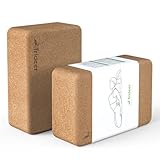
Overview: Trideer’s cork yoga blocks represent the intersection of sustainability and performance. Harvested from renewable cork oak without tree harm, these 9" x 6" x 3" blocks deliver three times the density of foam alternatives. The textured surface and contoured corners provide secure grip and comfortable handling across active yoga, meditation, and strength training. Each purchase includes a professional exercise guide with illustrated muscle engagement cues.
What Makes It Stand Out: The commitment to environmental responsibility extends beyond materials to include a comprehensive visual guide, rare in block sets. Cork’s natural properties create a progressively grippier surface as hands warm during practice. The contoured edges prevent the uncomfortable digging common with sharp-cornered blocks. Their exceptional hardness supports substantial weight without distortion, making them suitable for advanced arm balances and seated meditation.
Value for Money: At $24.99 for two premium cork blocks with a professional guide, this package undercuts many competitors by $5-10. Cork’s longevity means these blocks often outlast multiple foam replacements, translating to long-term savings. The included exercise resource adds educational value that justifies the modest premium over basic cork options.
Strengths and Weaknesses: Strengths include outstanding durability, eco-conscious production, superior stability for heavy use, and valuable educational materials. Cork’s heavier weight (roughly 1.5 pounds per block) reduces portability. The firmer surface, while supportive, may feel harsh for sensitive joints during restorative poses. Initial cork odor dissipates but may bother sensitive users.
Bottom Line: The definitive choice for serious practitioners, eco-conscious consumers, and studio professionals. These blocks combine environmental ethics with professional-grade performance, making them worth every penny for dedicated yogis seeking equipment that improves with age.
10. Everyday Yoga Foam Yoga Block 3 Inch - High-Density EVA Support Block for Stability, Balance & Flexibility, Lightweight, Durable & Comfortable - True Navy

Overview: Everyday Yoga’s single foam block delivers no-frills reliability for practitioners seeking fundamental support. The 3" x 6" x 9" dimensions provide standard elevation, while high-density EVA foam ensures consistent performance across various poses. True Navy color offers a professional aesthetic that resists visible wear. Beveled edges enhance comfort during prolonged contact, making it suitable for both dynamic vinyasa and restorative yin practices.
What Makes It Stand Out: Simplicity and focused quality define this block. Rather than chasing trends, Everyday Yoga perfects the classic foam block formula with precise density and thoughtful edge profiling. The brand’s reputation for consistent manufacturing means each block matches studio specifications. Its single-block packaging appeals to practitioners who need to replace one block from a worn set or supplement existing props with matching quality.
Value for Money: At $12.95, this block sits in the mid-range for single foam blocks. While not the cheapest option, the quality control and durability justify the slight premium over budget alternatives. However, competitors offer two blocks for $15-16, making this less economical for those starting their prop collection.
Strengths and Weaknesses: Strengths include excellent edge comfort, reliable non-slip texture, professional appearance, and trustworthy brand consistency. The single-block configuration limits exercise versatility compared to 2-pack sets. Foam density, while high-quality, will eventually compress with heavy use. The 3-inch height may prove insufficient for practitioners needing greater elevation.
Bottom Line: A solid, dependable choice for experienced yogis replacing a single block or studios standardizing equipment. Beginners should consider 2-pack options for better value, but those prioritizing quality over quantity will appreciate this block’s refined construction and professional finish.
Why Yoga Blocks Are Essential for Balance and Support
Balance isn’t just about standing on one foot; it’s a complex neurological conversation between your body and brain. Yoga blocks act as translators in this dialogue, providing immediate feedback and reducing the risk of compensation patterns that lead to injury. When properly integrated, they create a foundation of safety that allows your nervous system to relax enough to actually learn, rather than simply survive a pose.
The real magic happens in how blocks manipulate your relationship with gravity. By elevating the floor, they effectively reduce the distance you need to travel, making challenging poses accessible while maintaining proper form. This accessibility isn’t about making things “easier”—it’s about creating the optimal conditions for muscle engagement and neural pathway development.
Understanding the Difference: Yoga Blocks vs. Yoga Bricks
While often used interchangeably, yoga blocks and bricks serve slightly different purposes in balance work. Traditional yoga bricks tend to be smaller, denser, and offer more precise, firm support—think of them as precision tools for targeted alignment adjustments. Yoga blocks, conversely, typically provide larger surface areas and more height options, making them ideal for broader support in balancing poses.
The distinction matters most when you’re working on specific types of balance. Bricks excel in seated balance work and subtle alignment corrections in standing poses, while blocks shine in providing the substantial, stable platforms needed for arm balances and deeper standing poses. Most practitioners find that a standard block offers more versatility, but having a brick as a secondary tool can elevate your precision practice.
The Anatomy of a Perfect Yoga Block: Key Features Explained
Material Matters: Foam, Cork, Wood, and Recycled Options
The material composition of your block fundamentally determines its behavior under pressure. Foam offers give and comfort, cork provides sustainable firmness with subtle compression, wood delivers unyielding stability, and modern recycled materials balance eco-consciousness with performance. Each material creates a different sensory experience that directly impacts how your body responds during balance challenges.
Size and Dimensions: Finding Your Perfect Fit
Standard blocks measure approximately 9" x 6" x 4", but this one-size-fits-all approach ignores the reality of diverse body types and practice needs. Taller practitioners might benefit from larger dimensions, while those with smaller hands may find standard blocks cumbersome for certain arm balances. The key is matching block dimensions to your anthropometrics and intended use cases.
Density and Firmness: The Support Spectrum
Density isn’t just about hardness—it’s about how a block responds to dynamic loading. A high-density foam block might feel firm under static pressure but compress unpredictably during a jump-through. Understanding the relationship between stated density (measured in kg/m³ for foam or specific gravity for cork) and real-world performance helps you select a block that supports without surprising you mid-pose.
How Yoga Blocks Transform Your Balance Practice
Blocks function as both biofeedback devices and safety nets. When placed under your hand in Half Moon pose, they don’t just bring the floor closer—they provide a stable reference point that allows your core to activate more efficiently. Research in motor learning suggests that reducing the degrees of freedom in a complex movement pattern actually accelerates skill acquisition, which is precisely what blocks accomplish.
They also redistribute load in ways that protect vulnerable joints. In Crow pose, for instance, blocks under your feet reduce the wrist flexion required, allowing you to build shoulder and core strength without overloading delicate wrist structures. This intelligent load management is crucial for sustainable, long-term practice.
Choosing the Right Block for Your Yoga Style
Restorative and Yin Yoga: Soft Support Needs
In slower practices where poses are held for minutes, comfort becomes paramount. Lower-density foam blocks with rounded edges prevent pressure points during prolonged holds. For these styles, you’re looking for gentle support that encourages complete muscular release rather than active engagement.
Vinyasa and Power Yoga: Stability Requirements
Dynamic practices demand blocks that won’t shift or compress during rapid transitions. Medium to high-density foam or cork blocks with textured surfaces provide the stable foundation needed for flow sequences. The block must be predictable—what you feel at the beginning of class should be what you get at the end, even after repeated use.
Iyengar Yoga: Precision and Alignment
This method’s emphasis on exact alignment calls for the firmest, most dimensionally stable blocks available. Hardwood blocks or ultra-high-density cork are preferred for their ability to provide unwavering support and precise measurements that don’t degrade over time. In Iyengar practice, your block is a measuring tool as much as a support.
The Science Behind Block-Supported Balance
Proprioception—your body’s awareness of its position in space—is enhanced when you have reliable reference points. Blocks provide these reference points, allowing your nervous system to map body positions more accurately. Studies on assisted balance training show that external supports can reduce postural sway by up to 40% while simultaneously improving muscle activation patterns.
The concept of “edge of stability” training explains why blocks accelerate balance development. By providing just enough support to keep you in the pose but not so much that you’re passive, blocks position you in the optimal challenge zone for neural adaptation. It’s the difference between falling out of a pose repeatedly and experiencing the kinesthetic sensation of correct alignment.
Material Deep Dive: Pros and Cons
Foam Blocks: Lightweight Versatility
High-quality EVA foam blocks offer the best weight-to-support ratio for most practitioners. They resist moisture, maintain consistent performance across temperatures, and provide tactile feedback that’s neither too harsh nor too muted. However, lower-quality foam can compress permanently over time, creating uneven surfaces that destabilize rather than support.
Cork Blocks: Sustainable Stability
Natural cork provides a slightly grippy surface that improves with use and offers excellent firmness for balance work. It’s antimicrobial and provides a satisfying tactile experience. The downside? Cork can chip at the edges and may absorb moisture in hot yoga settings, potentially affecting its structural integrity over time.
Wooden Blocks: Traditional Firmness
Bamboo or birch blocks deliver unparalleled stability and last decades with proper care. They’re ideal for practitioners who prioritize firm support and environmental sustainability. The trade-off is weight—wooden blocks are significantly heavier, making them less portable, and their hard surface can be unforgiving on joints in certain positions.
Recycled and Eco-Friendly Options
Emerging materials like recycled EVA or cork-rubber composites offer compelling performance with reduced environmental impact. These often combine the best properties of traditional materials while addressing sustainability concerns. The key is verifying the manufacturing process and ensuring the material hasn’t been compromised in the recycling process.
Size Variations and Their Specific Uses
While standard blocks dominate the market, variations serve specific balance needs. Junior blocks (typically 7" x 4.5" x 3") work beautifully for practitioners with smaller frames or for children’s yoga. Larger therapeutic blocks (up to 12" x 8" x 6") provide substantial support for pregnancy yoga or injury rehabilitation where maximum stability is paramount.
Consider also the beveled edge radius. Sharper edges provide more precise support for targeted pressure points, while generously rounded edges distribute weight more evenly in poses where the block contacts broader body surfaces. This subtle detail significantly impacts comfort during balance work.
Density Demystified: What the Numbers Mean
Foam block density is measured in kilograms per cubic meter (kg/m³), with quality blocks ranging from 80 kg/m³ to 150 kg/m³. For balance support, aim for the 100-130 kg/m³ range—dense enough to resist compression but not so rigid that it feels hard under sensitive joints. Below 80 kg/m³, blocks become unpredictable under dynamic loads.
Cork density varies by granule size and compression method. Fine-grain, high-compression cork (around 200-240 kg/m³) offers the most consistent support for balance work. Lower-density cork may feel softer initially but can develop depressions that create unstable surfaces over time.
Surface Texture and Grip Considerations
The coefficient of friction between your block and your mat determines safety in balance poses. Textured foam surfaces provide reliable grip even when hands get sweaty, while smooth foam can become slippery. Cork’s natural texture improves with a light moisture film, making it excellent for heated practices.
Consider also how the block grips the floor. A block that slides on your mat is worse than no block at all. Look for blocks with textured bottom surfaces or use a mat with good grip. Some practitioners place a small piece of non-slip material under their blocks for extra security during arm balances.
Weight Portability vs. Stability Trade-offs
The block’s weight directly correlates with its stability-to-portability ratio. A 2-pound foam block travels easily but might shift during vigorous practice. A 4-pound cork block stays put but becomes noticeable in your tote bag. Wooden blocks at 5+ pounds offer rock-solid stability but are essentially studio-only props.
For home practice, weight matters less than performance. For studio commuting, consider a medium-weight cork block that balances stability with portability. Some practitioners maintain a set of heavy blocks for home and lighter ones for travel.
Eco-Conscious Choices: Sustainability in Yoga Props
Your block’s environmental impact extends beyond material to manufacturing and shipping. Locally sourced cork from Portugal has a different carbon footprint than foam manufactured overseas and shipped globally. Look for certifications like FSC for wood products or OEKO-TEX for foam, which verify sustainable and non-toxic production.
Consider also end-of-life disposal. Foam blocks rarely recycle curbside, while cork and wood biodegrade naturally. Some manufacturers offer take-back programs for worn blocks, converting them into playground surfaces or insulation materials.
Caring for Your Yoga Blocks: Maintenance and Longevity
Foam blocks clean easily with mild soap and water, but avoid harsh chemicals that can degrade the cellular structure. Cork requires gentler care—wipe with a damp cloth and occasional natural disinfectant. Never submerge cork blocks, as water infiltration can cause swelling and structural breakdown.
Storage matters for longevity. Keep blocks out of direct sunlight, which can cause foam to off-gas and cork to dry out and crack. Store them flat rather than on edges to prevent warping, especially in humid environments where materials can absorb moisture asymmetrically.
Common Mistakes When Using Blocks for Balance
The most frequent error is using blocks to “cheat” rather than to learn. Placing a block under your bottom hand in Triangle pose at the wrong height can reinforce poor alignment patterns. The block should bring the floor to you, not force you to collapse onto it.
Another mistake is inconsistent placement. Your body learns through repetition, so varying block position by even an inch changes the neural mapping. Mark your blocks with subtle indicators or use the manufacturer’s logo as a reference point to ensure consistent orientation.
Integrating Blocks into Specific Balance Poses
Standing Balance Poses
In poses like Standing Hand-to-Big-Toe, placing a block under your standing foot’s arch creates proprioceptive feedback that dramatically improves stability. For Tree pose, a block between your thigh and wall helps activate the correct muscles. The key is using blocks to enhance sensation, not just to prevent falling.
Arm Balances
Blocks under your feet in Crow or Side Crow reduce the required wrist flexion and make the entry more accessible. For Flying Pigeon, a block under your sitting bone on the standing leg helps you find the precise tilt needed for lift-off. Always position blocks so they support your alignment, not just your weight.
Seated and Reclined Poses
In Boat pose, holding a block between your thighs engages adductors and protects your lower back. For Bridge pose, a block between your knees prevents the common collapse pattern that destabilizes the pose. These applications transform blocks from external supports into biofeedback tools for internal engagement.
When to Use One Block vs. Two Blocks
Single-block work excels in asymmetric poses where one side needs elevation while the other grounds down. Two blocks create symmetrical support systems ideal for backbends and forward folds where both sides need identical reference points. For balance training, two blocks can create a “channel” that guides movement, like placing them shoulder-width apart to frame your body in Crow pose.
Consider also the psychological aspect. Two blocks can feel more secure for nervous practitioners, while one block challenges your body to integrate feedback from an asymmetrical support. Advanced practitioners often use one block to create intentional instability that demands greater core activation.
Budget Considerations: Investment vs. Value
A quality block costs between $15 and $40, but price doesn’t always correlate with performance for balance work. Mid-range cork blocks often outperform premium foam blocks for stability. Consider cost-per-use: a $30 block that lasts five years costs pennies per practice, while a $10 block that compresses in six months is ultimately more expensive.
Watch for multi-block sets marketed as “beginner kits”—these often include low-density blocks unsuitable for serious balance work. Instead, invest in one excellent block initially, then add a second matching block as your practice deepens. Consistency in feel between blocks matters more than having a variety of mediocre options.
Frequently Asked Questions
1. Can yoga blocks really improve my balance, or do they just make poses easier?
Blocks improve balance by providing the stable reference points your nervous system needs to develop proprioception. They position you in the “challenge zone” where learning occurs—stable enough to hold the pose, but dynamic enough to require active engagement. Over time, this accelerates authentic balance development far beyond what struggling without support achieves.
2. How do I know if my yoga block is too soft for balance work?
Perform a simple compression test: place the block on a hard surface and press firmly with both hands. If you can compress it more than half an inch or if it feels squishy, it’s too soft for reliable balance support. Quality blocks for balance should feel firm and return to shape immediately when you release pressure.
3. Is cork or foam better for hot yoga balance poses?
Cork generally performs better in heated environments because its natural texture becomes slightly tacky with moisture, improving grip. High-quality closed-cell foam also works well, but avoid open-cell foam which can absorb sweat and become heavy and unstable. Always test a block’s grip when both your hands and the block surface are slightly damp.
4. What’s the ideal block height for someone 5'10" working on standing balances?
Taller practitioners often benefit from using the full 9-inch height initially, then gradually reducing to the 6-inch side as flexibility improves. However, the “ideal” height is the one that allows you to maintain neutral spine alignment without collapsing into the block. Start high and progressively lower as your body maps the correct position.
5. Can I use yoga blocks if I have wrist issues during arm balances?
Absolutely. Blocks under your feet in poses like Crow reduce the required wrist extension by up to 30 degrees. You can also place blocks under your hands to decrease wrist flexion, though ensure they’re stable and won’t slide. Some practitioners use wedge-shaped blocks specifically designed to reduce wrist angle while maintaining hand position.
6. How long should I expect a quality yoga block to last with daily use?
High-density foam blocks typically maintain their performance for 2-3 years of daily practice before showing compression wear. Cork blocks can last 5-7 years with proper care, while wooden blocks essentially last indefinitely. Signs it’s time to replace: visible compression dips, loss of firmness, or surface degradation that affects grip.
7. Do I need different blocks for home practice versus traveling to a studio?
Many practitioners maintain a heavier, more stable block at home and a lighter, portable block for travel. If you can only invest in one, choose a medium-weight cork block (around 2.5 pounds) that balances stability with reasonable portability. The consistency of using the same block outweighs the convenience of multiple options.
8. Why do my blocks slide on my yoga mat during balance poses?
This common issue stems from a mismatch between block bottom texture and mat surface. Solutions include: using blocks with textured bottoms, placing a yoga towel under the block, or switching to a mat with more grip. Some practitioners lightly moisten the block’s bottom surface to increase friction, though this works better with cork than foam.
9. Are there specific balance poses where blocks are counterproductive?
Blocks can hinder development in simple balancing poses where you’re ready to work without support, like basic Tree pose. They may also be unnecessary in poses where the balance challenge comes from dynamic movement rather than static hold. Listen to your body: if the block makes you passive rather than engaged, it’s time to practice without it.
10. How do I clean cork blocks without damaging them for balance work?
Use a solution of one part white vinegar to four parts water, lightly mist the surface, and wipe immediately with a clean, dry cloth. Never saturate cork or let water penetrate the surface. For deeper cleaning, use a cloth barely dampened with mild soap solution, wipe clean, then dry thoroughly away from direct heat. Proper maintenance ensures the consistent surface texture critical for balance.