Nothing derails a figure skating practice or performance faster than a run in your tights. One moment you’re focused on landing that salchow; the next, you’re distracted by a spidering snag creeping down your leg. For skaters who demand reliability from their gear, run-resistant tights aren’t just a luxury—they’re essential equipment. The right pair can survive countless hours on the ice, repeated washings, and the inevitable contact with boot hooks and skate blades that would destroy lesser hosiery.
But here’s the truth: not all “run-resistant” claims are created equal. The market is flooded with tights promising durability, yet many skaters find themselves disappointed when their expensive purchase ladders after just a few wears. Understanding what actually makes tights resist runs—from fiber engineering to construction techniques—empowers you to make informed decisions that protect both your performance and your wallet. This guide dives deep into the technical and practical aspects of selecting figure skating tights that truly live up to their reputation.
Top 10 Figure Skating Tights That Resist Runs
Detailed Product Reviews
1. Mondor 3310 Women’s Skating Tight Footed (Medium, Suntan)

Overview: The Mondor 3310 represents a benchmark in performance skating apparel, engineered specifically for figure skaters who demand both elegance and functionality. These 40 denier semi-opaque tights utilize 3D Lycra technology to deliver comprehensive leg support while maintaining a sophisticated appearance that complements any competition dress. Constructed from 85% microfiber nylon and 15% Lycra elastane, they provide the essential balance of durability and stretch required for rigorous training and performance schedules.
What Makes It Stand Out: Mondor’s proprietary 3D Lycra technology distinguishes these tights from generic alternatives, offering targeted compression and support throughout the leg muscles. The comfort waistband eliminates the digging and rolling common in lesser-quality tights, while the matching gusset ensures a seamless, professional look under costumes. As a brand exclusively focused on dance, figure skating, and gymnastics apparel, Mondor brings authentic technical expertise that recreational brands simply cannot replicate.
Value for Money: At $12.25 for a single pair, these tights occupy the sweet spot between budget options and premium competition wear. While not the cheapest available, the specialized construction and brand reputation justify the investment for serious skaters. Generic dance tights may cost less but lack the targeted support and durability that the 3310 series provides, making these more economical over a full season.
Strengths and Weaknesses: Strengths include exceptional comfort, true second-skin fit, reliable waistband stability, and professional-grade material quality. The 40 denier weight offers adequate coverage without excessive bulk. Weaknesses are limited color availability in some sizes and the single-pair packaging, which may disappoint skaters seeking multi-pack value. The tights require careful washing to maintain elasticity.
Bottom Line: The Mondor 3310 is an excellent choice for competitive and dedicated recreational skaters prioritizing performance and comfort. The technical features and reliable fit make them worth the modest premium over basic alternatives.
2. SSZYace Ice Skating Pants Figure Skating Tights for Girls Women, Black, Medium

Overview: SSZYace delivers an innovative over-the-boot design tailored for skaters seeking both practicality and aesthetic versatility. These tights feature an ergonomic stepped construction that contours precisely to the leg and boot junction, creating a smooth, uninterrupted line. Available in both embellished and unembellished versions, they accommodate different performance contexts from daily practice to recital showcases. The 85% microfiber nylon and 15% elastic fiber composition provides robust durability for frequent use.
What Makes It Stand Out: The distinctive grooved sole design represents a practical innovation, allowing the tights to anchor securely to skate boots without adhesive products. This mechanical grip system simplifies the on-and-off process while maintaining a clean aesthetic. The optional crystal embellishments offer built-in costume enhancement, eliminating the need for separate decorative elements. The ergonomic stepped patterning demonstrates thoughtful engineering that addresses the specific challenges of over-the-boot wear.
Value for Money: Priced at $15.47, these specialized over-the-boot tights command a reasonable premium over standard footed styles. The dual-style option effectively provides two aesthetic choices in one product, while the reinforced construction suggests longer lifespan than budget alternatives. For skaters requiring over-the-boot coverage, the price aligns with market expectations for purpose-built apparel.
Strengths and Weaknesses: Key strengths include the innovative sole grip system, crystal embellishment option, and ergonomic fit that reduces bunching at the boot line. The material blend offers good stretch recovery. However, the sizing description shows inconsistencies (height ranges overlap confusingly), and over-the-boot styles inherently experience more wear at stress points. The black color may limit costume coordination compared to traditional suntan shades.
Bottom Line: SSZYace tights suit performance-focused skaters who prioritize convenience and presentation. The grip system and style options make them particularly valuable for competition settings where quick changes and polished appearance matter.
3. DANCEYOU Ice Skate Figure Skating Tights for Child Women Over the Boot, MA

Overview: DANCEYOU’s over-the-boot tights address the specific needs of competitive skaters requiring secure, warm coverage during cold-weather training and events. The 90 denier construction provides substantial opacity and thermal protection, while the integrated clip system ensures the tights remain anchored beneath skate boots. With updated sizing protocols from November 2022, the brand demonstrates responsiveness to customer feedback. The 85% microfiber nylon and 15% spandex blend balances durability with necessary flexibility.
What Makes It Stand Out: The dual-clip fastening mechanism represents a significant functional advantage, creating a reliable anchor point without damaging boot materials or requiring messy adhesives. At 90 denier, these tights offer superior warmth compared to standard 40 denier options, making them ideal for early-season competitions and cold rinks. The comprehensive size range spanning child to adult with clear corresponding labels (SC, MC, LC, SA, MA, LA) eliminates the guesswork common in unisex sizing.
Value for Money: At $19.99, these are premium-priced tights, but the specialized features justify the cost for dedicated athletes. The clip system alone adds value by extending garment life (no adhesive residue or stretching), while the heavier weight provides dual-season utility. For skaters competing in winter months, the warmth factor translates to better muscle performance and injury prevention.
Strengths and Weaknesses: Strengths include the secure clip system, excellent thermal protection, clear sizing nomenclature, and robust material weight. The over-the-boot design protects expensive skate boots from interior wear. Weaknesses include higher price point, potential for clips to feel bulky under tight boot tongues, and limited color options. The thicker material may reduce tactile feedback for skaters preferring minimal barriers.
Bottom Line: DANCEYOU tights excel for competitive skaters in cold environments. The clip system and warmth make them a smart investment for serious athletes, though recreational skaters may find the features unnecessary for their needs.
4. Kami-So Footed Ice Skating Tights | Figure Skating Tights For Women | Plush Fabric Soft Stretch Fit | Practice Competition Wear | Ice Skates Outfit Accessory | Comfort | Suntan | Adult Small/Medium

Overview: Kami-So positions these footed tights as a plush, comfort-first option for skaters at all levels. The brand emphasizes moisture-wicking properties and reinforced stitching in a design that transitions seamlessly between practice and competition. Marketed specifically for figure skating, the tights feature a full-foot construction that provides warmth and reduces friction inside boots. The suntan shade offers traditional aesthetic compatibility with most skating costumes.
What Makes It Stand Out: The plush fabric composition prioritizes skin comfort during extended wear sessions, addressing a common complaint about abrasive performance fabrics. Kami-So’s skater-focused development process, incorporating feedback from active athletes, results in practical details like the non-roll waistband and fade-resistant dyeing. The reinforced stitching at high-stress areas demonstrates an understanding of how skaters actually move and where garments typically fail.
Value for Money: At $12.99, these tights compete directly with established brands like Mondor while offering a unique comfort proposition. The moisture-wicking feature adds value for skaters with heavy training schedules, potentially reducing skin irritation and extending wear time between washes. While single-pair packaging limits immediate value, the durability claims suggest reasonable cost-per-wear metrics.
Strengths and Weaknesses: Major strengths include exceptional softness, reliable waistband stability, moisture management, and strategic reinforcement. The brand’s skater-centric design philosophy inspires confidence. However, the product description lacks specific denier rating, making opacity hard to gauge. The limited size range (only Small/Medium listed) may exclude larger skaters. The “plush” descriptor might translate to slightly warmer but less breathable wear.
Bottom Line: Kami-So tights are ideal for skaters prioritizing comfort and skin-sensitive materials. They serve practice and competition needs equally well, making them a versatile wardrobe staple for dedicated athletes seeking a softer alternative to traditional performance tights.
5. CRS Cross Skating Tights. 2 Pair of Footed Opaque Figure Skate Tights. Sheer 40 Denier Performance. Figure Skate Competitions, Ice Skating Practice, and Dance. (Women Medium Suntan)

Overview: CRS Cross distinguishes itself immediately with a two-pair package designed by a former US Professional skater, coach, and skating parent. This insider perspective manifests in practical features like the 1.25-inch no-roll waistband and deluxe cotton moisture-wicking gusset. The set includes two pairs of 40 denier tights, positioning them as sheer/opaque performance wear suitable for both competition and daily practice. With eight sizes covering youth through adult, the brand addresses the full spectrum of skating demographics.
What Makes It Stand Out: The dual-pair packaging delivers immediate value while acknowledging that skaters need backup tights for competitions and training. The designer’s professional background ensures authentic performance features like superior stretch for jump flexibility and color-matched components for seamless costume integration. The extensive size range (Children’s 6-8 through Women’s X-Large) demonstrates inclusive design rarely seen in niche sports apparel.
Value for Money: At $24.99 for two pairs, the effective $12.50 per-unit cost represents excellent value for professional-grade tights. Competitors typically charge $12-15 per single pair without the performance pedigree. The no-roll waistband and reinforced construction promise extended lifespan, further improving cost efficiency. For regular skaters, this package eliminates the “emergency backup” purchase necessity.
Strengths and Weaknesses: Strengths include exceptional value per pair, professional design credentials, comprehensive sizing, and quality components like the moisture-wicking gusset. The brand loyalty mentioned suggests consistent quality. Weaknesses include the 40 denier weight may be too sheer for some preferences, and the two-pair requirement might exceed casual skaters’ needs. The suntan-only option in this listing limits color flexibility.
Bottom Line: CRS Cross offers the best value proposition for committed skaters needing reliable, performance-tested tights. The two-pair set, designed by an industry insider, provides professional quality at an accessible price point, making it the smartest choice for regular practice and competition use.
6. Ramede 3 Pcs Figure Skating Tights Rhinestones Ice Skate Tights Tan Crystal Figure for Girls Women Skating Ballet Dance Kids (Large)

Overview: The Ramede 3-piece figure skating tights set offers a practical solution for frequent skaters, combining performance features with decorative elements. Designed for girls and women over 14 years old (59-67 inches tall, 95-135 lbs), these tan tights feature rhinestone embellishments and a unique button closure system for securing over skate boots.
What Makes It Stand Out: This set’s triple-pack configuration immediately distinguishes it from single-pair competitors, providing built-in redundancy for busy training schedules. The integrated rhinestone detailing adds visual flair for performances and recitals, while the dual-button fastening system at the boot opening ensures a secure, slip-free fit during jumps and spins. The 85% microfiber nylon and 15% spandex blend delivers four-way stretch for unrestricted movement.
Value for Money: At $36.99 for three pairs, each tight costs approximately $12.33—positioning this as a mid-range option that undercuts premium brands while offering quantity advantages. The multi-pack eliminates frequent reordering hassles and provides immediate backup when laundry schedules conflict with practice times.
Strengths and Weaknesses: Strengths include exceptional quantity value, decorative rhinestones for performance aesthetics, versatile sizing with elastic waistband, and multi-sport applicability for ballet and gymnastics. Weaknesses involve rhinestones potentially violating strict competition regulations, microfiber nylon being less breathable than cotton blends, and the size range possibly excluding petite teens or smaller adults.
Bottom Line: Ideal for practice sessions and recreational performances where style matters, but competitive skaters should verify rhinestone allowances before purchasing. The three-pack convenience makes it a smart choice for growing skaters needing frequent replacements.
7. ChloeNoel Figure Skating Light Tan Over The Boot Tights TB8832 Light Tan Child Medium (8-10)

Overview: ChloeNoel’s over-the-boot tights for children represent a brand-name option in the youth figure skating apparel market. Sized specifically for medium-build children ages 8-10, these light tan tights feature the traditional over-the-boot design preferred by many coaches for creating a seamless leg line on the ice.
What Makes It Stand Out: The ChloeNoel brand carries significant recognition within figure skating communities, often associated with quality and adherence to sport-specific requirements. The child-focused sizing ensures proper proportions for younger skaters rather than scaled-down adult designs, which can compromise fit and comfort during growth spurts.
Value for Money: Priced at $19.96 for a single pair, these tights sit in the mid-range bracket for brand-name skating apparel. While not the cheapest option available, the brand reputation may justify the premium for parents seeking reliable, competition-approved attire for their developing skaters.
Strengths and Weaknesses: Strengths include trusted brand recognition within the skating world, age-appropriate sizing for children, and the classic over-the-boot silhouette. Critical weaknesses stem from minimal product information—no material composition, durability features, or care instructions are provided. The lack of details about waistband construction, foot security, or fabric weight makes it difficult to assess performance value.
Bottom Line: A safe choice for parents prioritizing brand familiarity and child-specific sizing, but the sparse product details require contacting the seller for material and care specifications before purchasing. Best for skaters needing basic, competition-standard tights.
8. Mondor Footless Natural Tight 3373 (NOT RETURNABLE IF OPENED) (10-12, Caramel)

Overview: Mondor’s footless natural tights offer a unique approach to skating apparel, prioritizing natural fiber comfort in a heavyweight opaque design. The caramel-colored tights feature a combed cotton interior and footless construction, catering to skaters who prefer bare feet in their boots while maintaining leg coverage and warmth.
What Makes It Stand Out: The 69% cotton, 28% lactate nylon, and 3% Lycra composition provides exceptional breathability and softness rarely found in purely synthetic skating tights. The Coolmax gusset enhances moisture management, while the footless design appeals to skaters seeking direct boot contact for better foot articulation and proprioception.
Value for Money: At $15.75, these tights offer excellent value for the material quality and specialized construction. However, the “NOT RETURNABLE IF OPENED” policy significantly impacts overall value, forcing buyers to commit before verifying fit and comfort.
Strengths and Weaknesses: Strengths include superior cotton comfort, durable heavyweight opacity, effective moisture-wicking gusset, and versatility for practice and competition. Weaknesses center on the restrictive return policy, footless design that may not suit all skating disciplines, and limited size range. The footless style requires careful boot fit to avoid blisters.
Bottom Line: Excellent practice tights for skaters confident in their sizing who prioritize natural fiber comfort. Purchase only after confirming measurements, as the non-returnable policy eliminates flexibility for fit issues. Not recommended for first-time buyers of the brand.
9. Kami-So Over the Boot Figure Skating Tights | Apparel for Women | Durable Flexible Leggings for Ice Dance, Practice, Training, Competition and Performance | Comfortable Plush Fit | Suntan Size 4-7

Overview: Kami-So’s over-the-boot figure skating tights deliver professional-grade durability at an accessible price point. Designed for women sizes 4-7 in a versatile suntan shade, these 100-denier tights feature reinforced stress points and underfoot straps, making them suitable for the rigors of daily practice through high-stakes competition.
What Makes It Stand Out: The comprehensive reinforcement strategy—targeting heels, knees, and underfoot areas—addresses common failure points in skating tights. Integrated moisture-wicking technology and a wide waistband provide comfort during extended training sessions, while the underfoot straps ensure the tights remain securely positioned over boots throughout complex routines.
Value for Money: At $14.99, these tights represent exceptional value, undercutting most competitors while offering features typically found in premium-priced options. The durability-focused construction extends lifespan, reducing replacement frequency and long-term costs for serious skaters.
Strengths and Weaknesses: Strengths include outstanding affordability, strategic reinforcement for longevity, secure strap system, breathable moisture management, and versatile suntan color. Weaknesses involve limited size availability (4-7 only), potential sizing discrepancies for athletic builds, and lack of color options beyond suntan for diverse skin tones.
Bottom Line: The best budget-conscious choice for dedicated skaters needing reliable practice and competition tights. The reinforced design justifies purchase despite limited sizing, though athletes outside the 4-7 range must look elsewhere. Highly recommended for intermediate to advanced skaters.
10. Aaronano 2 Pairs Run Resistant Tights for Women Semi Opaque Rip-Resist Pantyhose with High Waist Natural Large
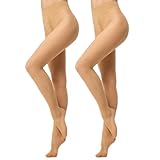
Overview: Aaronano’s run-resistant tights offer a practical, budget-friendly alternative to sport-specific skating apparel. This two-pair set features semi-opaque construction with reinforced stress points, designed for general active use though marketed toward skaters seeking durable legwear for practice sessions.
What Makes It Stand Out: The run-resistant technology provides exceptional snag and tear protection, addressing a primary frustration with traditional pantyhose. The high-waist design with widened band ensures stay-put performance, while the reinforced T-crotch and toe areas accommodate rigorous movement without compromising durability.
Value for Money: At $19.99 for two pairs, each tight costs approximately $10—making this the most economical option per unit. The value proposition strengthens with the rip-resistant construction, potentially outlasting standard tights and reducing replacement costs.
Strengths and Weaknesses: Strengths include superior run resistance, secure high-waist fit, body-contouring compression, two-pair convenience, and inclusive sizing (S-XL). Critical weaknesses involve lack of skating-specific features (no boot straps, over-boot design), potentially insufficient warmth for ice rinks, and semi-opaque coverage that may not meet competition dress codes.
Bottom Line: Excellent budget option for practice sessions, off-ice training, or recreational skating where strict dress codes don’t apply. Not suitable for competition use. Best as supplemental practice tights rather than primary skating apparel.
Why Run Resistance Is Non-Negotiable for Serious Skaters
Run-resistant tights do more than just maintain a polished appearance. They provide consistent compression, ensure even color distribution across your legs, and eliminate the need for emergency nail polish repairs backstage. When you’re preparing for a competition, the mental peace that comes from knowing your costume won’t fail you is invaluable. Runs compromise not just aesthetics but also the structural integrity of the fabric, leading to sagging, uneven fit, and potential wardrobe malfunctions during jumps or spins.
The Fabric Technology That Prevents Runs
Microfiber Construction and Density
The magic begins at the molecular level. Premium run-resistant tights utilize microfiber yarns spun at extremely high densities, creating a interlocking matrix that’s fundamentally harder to puncture. Unlike traditional hosiery with loosely twisted fibers, these advanced textiles feature multi-filament construction where dozens of ultra-thin strands are bundled together. When one filament breaks, the surrounding fibers anchor it in place, preventing the typical ladder effect. Look for terms like “high-needle count” or “dense knit” in product descriptions—these indicate a tighter weave that naturally resists snagging.
Reinforced Fiber Spinning Techniques
Manufacturers employ specialized spinning methods like air-jet texturing or false-twist processing to create crimped, interlocking fibers. This mechanical bonding means individual threads physically grasp their neighbors. Some premium options incorporate micro-amounts of synthetic polymers during extrusion, essentially welding weak points before they exist. The result is a fabric that distributes stress across a wider area rather than concentrating it at a single point.
Critical Features to Evaluate When Shopping
Denier Rating: Your Durability Cheat Code
Denier measures fiber thickness—the higher the number, the more durable the tight. For run resistance, aim for 70 denier minimum; elite options reach 200+ denier. However, there’s a tradeoff: higher denier means less sheerness and more weight. Smart skaters keep multiple deniers in their bag: 70-100 for practice (balance of durability and breathability), 150+ for competition (maximum opacity and resilience). Be wary of manufacturers who advertise “sheer run-resistant” tights below 60 denier—the physics simply doesn’t support the claim.
Gusset Design: Stress Point Reinforcement
The gusset (the triangular or diamond-shaped fabric insert at the crotch) experiences maximum stretch and friction. Run-resistant tights feature reinforced, often double-layered gussets with flat-lock stitching. Some designs extend reinforcement panels along the inner thigh, creating a “saddle” of protection where boots and thighs meet. Inspect this area closely—if the stitching is raised or the fabric feels thin, that tight will fail you when you need it most.
Style Variations: Finding Your Perfect Silhouette
Footed, Footless, or Convertible: Pros and Cons
Footed tights offer seamless leg lines and protect feet from boot friction, but runs often start at the toe seam. Footless designs eliminate this vulnerability and allow for barefoot connection to the ice, yet they can ride up and create ankle gaps. Convertible tights with a hidden opening under the foot provide versatility, though the conversion seam becomes a potential weak point. For pure run resistance, footless styles with silicone ankle grips often outperform, as they remove the highest-stress failure point entirely.
Boot-Over vs. Boot-Under: Performance Implications
Boot-over tights (designed to cover your skate boot) require extreme durability at the hem where blade guards and hooks constantly snag. The best versions use a bonded, rather than stitched, hem and incorporate a abrasion-resistant yarn blend at the boot cuff. Boot-under tights must survive repeated pulling over the heel and ankle bones—look for reinforced heels and a high-rise waistband that won’t roll down during layback spins. Your choice depends on costume requirements, but boot-under styles generally offer superior run resistance due to fewer exposure points.
The Perfect Fit: Sizing Strategies for Longevity
Ill-fitting tights are runs waiting to happen. Too small, and every movement stresses the fibers beyond their tensile limits. Too large, and fabric bunches create catch points for blades and hooks. Measure your height, inseam, and hip circumference, then consult manufacturer-specific charts—never assume your street clothing size translates. Pay special attention to the “rise” measurement; a gusset that sits too low turns every lunge into a ripping hazard. When in doubt, size up slightly; modern compression technology means a larger size still provides support without the strain.
Color Matching: Beyond Basic Tan and Black
Run-resistant technology varies by dye color due to how pigments affect fiber properties. Darker dyes often strengthen fibers but can reduce elasticity. Lighter shades require more advanced manufacturing to maintain durability without opacity. The latest innovation is “color-matched compression,” where dye is injected during extrusion rather than applied afterward, preserving fiber integrity. For competition, order samples in natural light—artificial rink lighting dramatically changes appearance. Pro tip: purchase tights after selecting your costume fabric, not before, to ensure perfect matching.
Temperature Management: Seasonal Tight Selection
Cold rinks make tights brittle; excessive warmth weakens fiber bonds. Winter-weight run-resistant tights incorporate hollow-core fibers that trap air for insulation while maintaining strength. Summer formulations use moisture-wicking channels that reduce internal friction (a hidden cause of runs). Some advanced tights feature phase-change materials that adapt to body temperature, maintaining optimal fiber flexibility regardless of conditions. Always warm up your tights gradually—pulling ice-cold fabric is a recipe for instant runs.
Maintenance Protocols for Maximum Lifespan
Washing Methods That Preserve Integrity
Never machine wash with agitators; the twisting motion fatigues fibers. Instead, use a front-loading machine on delicate cycle inside a mesh lingerie bag, or hand wash in cool water with pH-neutral detergent. Turn tights inside-out to protect the outer surface. Avoid fabric softeners—they coat fibers, reducing their ability to grip each other when snagged. For blood or makeup stains, use enzyme cleaners specifically designed for synthetic fabrics; harsh chemicals break down polymer bonds.
Drying and Storage Best Practices
Heat is the enemy. Always air dry away from direct sunlight and heat sources. Never wring—press between towels to remove excess water. For storage, roll rather than fold to prevent crease stress points. Keep silica gel packets in your skate bag to absorb moisture that weakens fibers between sessions. Store practice and competition tights separately; the former often carry microscopic ice crystals that can transfer and abrade more delicate competition pairs.
Investment Analysis: Price vs. Performance
Budget tights ($15-30) typically use single-layer construction and basic nylon-spandex blends, lasting 10-20 sessions before developing runs. Mid-range options ($40-70) employ reinforced knitting and higher denier, offering 50+ sessions of reliable use. Premium tights ($80-150) utilize patented fiber technology, multi-density zones, and often include replacement guarantees. Calculate cost-per-wear: a $120 pair lasting 200 practices costs $0.60 per session, while a $25 pair failing after 15 sessions costs $1.67 per use. For competitive skaters, the real value lies in reliability, not just longevity.
Skill-Level Considerations: From Learn-to-Skate to Elite
Beginners need maximum durability over aesthetics—opt for highest denier, footless styles that withstand frequent falls and rough handling. Intermediate skaters should balance run resistance with flexibility, choosing reinforced knees and seat areas while maintaining sheerness elsewhere. Elite athletes require zoned construction: ultra-durable inner thigh panels, breathable calf sections, and competition-grade opacity. Juvenile competitors have unique needs; their rapid growth means adjustable waistbands and stretch-recovery become as important as run resistance itself.
Pre-Purchase Testing: The Snag Test and Beyond
In-store, perform the “pinch test”: gently pull a small section of fabric between your fingers. High-quality run-resistant tights should feel dense and spring back immediately without visible distortion. The “nail test” involves lightly running a fingernail across the surface—if fibers separate easily, walk away. Check transparency by stretching the fabric over your hand; you shouldn’t see individual fibers separating. Finally, examine seams under your phone’s flashlight—any light penetration indicates weak stitching that will unravel.
Debunking Run-Resistant Tight Myths
Myth: “All opaque tights are run-resistant.” Reality: Opacity comes from dye concentration, not fiber strength. A 40-denier tight can be opaque yet incredibly fragile.
Myth: “Freezing tights strengthens fibers.” This old wives’ tale actually crystallizes polymers, making them brittle and more prone to snapping on the first wear.
Myth: “Clear nail polish stops runs permanently.” While it prevents spreading, the polish creates a hard spot that stresses adjacent fibers, often causing secondary runs.
Myth: “Higher price always means better run resistance.” Some brands charge premium prices for fashion features that add zero durability value. Focus on technical specifications, not brand prestige.
When to Replace Your Skating Tights
Retire tights at the first sign of “pre-run” conditions: individual fibers protruding from the surface, a dulling of sheen in high-stress areas, or loss of elasticity at the waistband. Microscopic damage accumulates invisible until catastrophic failure. For competitive skaters, replace tights after 15-20 high-impact sessions regardless of appearance. Practice tights can last longer, but any pair that’s been snagged by a blade should be downgraded to off-ice warm-up use only. Keep a “retired” pair in your bag for emergency backup—better a slightly worn tight than no tight at all.
Frequently Asked Questions
How do I know if tights are truly run-resistant before buying?
Look for a denier rating of 70 or higher, reinforced gussets, and flat-lock seams. Perform the in-store “pinch test” to check fiber density and recovery. Reputable manufacturers often provide specific durability metrics—avoid vague “run-resistant” labels without technical details.
Can I repair a small run in my skating tights?
Minor snags can be stopped with clear fabric glue designed for synthetics, applied from the inside. Never use nail polish on performance tights—it creates a stiff spot that compromises stretch. For competition, replace rather than repair; any fix alters the tight’s uniform tension.
Why do my run-resistant tights still develop holes at the toes?
Toe seams experience extreme friction and moisture. Choose footless styles or tights with reinforced toe boxes. Ensure your skate toe box isn’t too tight, as pressure points accelerate wear. Some skaters wear thin liner socks underneath to reduce direct friction.
Are higher denier tights always less comfortable?
Not necessarily. Modern fiber technology allows high-denier fabrics to remain flexible through advanced knitting patterns and microfiber blends. However, there’s always a trade-off—200-denier tights will never feel as sheer as 70-denier options. Comfort depends more on fit and waistband design than denier alone.
How many pairs of tights should a competitive skater own?
Maintain at least three competition-quality pairs: one for competition day, one backup in your bag, and one at home for fitting sessions with new costumes. For practice, rotate between 4-5 mid-denier pairs to extend each tight’s lifespan through rest days.
Do run-resistant tights require special skate guards?
Standard guards are fine, but inspect them for burrs or rough edges that can snag. Soft guards with fleece lining provide extra protection. Always pull tights on before putting on guards to avoid catching fabric on buckle hardware.
Can I dye my skating tights if I can’t find the right color?
Never dye performance tights. Commercial dyes require heat and chemicals that break down elastic fibers and void any run-resistant properties. The dye also penetrates unevenly due to varying fiber densities. Always purchase pre-colored tights from manufacturers offering extensive color ranges.
Why do my tights run more in winter?
Cold fibers lose flexibility, becoming brittle and prone to snapping. Warm tights gradually before putting them on—keep them in your jacket or use a hand warmer in your skate bag. Choose winter-specific formulations with cold-weather polymer blends.
Are seamless tights more run-resistant?
Seamless construction eliminates stitch lines, a common failure point, but the knitting process can create thinner fabric zones. Look for “3D knit” seamless tights that vary density across the garment. Traditional seamed tights with flat-lock stitching often outperform poorly made seamless options.
How does storage affect run resistance over time?
UV light and ozone degrade elastic fibers even unworn. Store tights in opaque, airtight containers with silica gel packets. Never leave them in hot cars or damp skate bags. Properly stored, premium tights maintain their run-resistant properties for 2-3 years before fiber fatigue sets in, regardless of wear.