There’s a specific kind of panic that hits when you realize the trail has disappeared beneath your boots, your phone shows “No Signal,” and the fog rolling in makes every direction look identical. In that moment—when you’re truly alone in the backcountry—your choice of navigation tool shifts from convenience to survival. This is precisely why GPS tracking watches with offline maps have revolutionized modern hiking, transforming wrist-worn devices from simple fitness trackers into sophisticated backcountry computers that work when everything else fails.
Unlike smartphones that become expensive bricks without cell towers, these specialized watches store detailed topographic data directly on your wrist, connecting directly to satellite constellations orbiting 12,000 miles overhead. But not all GPS watches are created equal, and the difference between a reliable navigation companion and a frustrating piece of tech often lies in understanding the nuanced features that matter most when you’re miles from civilization. This guide cuts through marketing jargon to give you the expert knowledge you need to choose a device that won’t let you down when the trail gets tough.
Top 10 GPS Tracking Watches with Offline Maps for Hikers
Detailed Product Reviews
1. 2026 AI Smart Watch with Standalone GPS & Offline Maps, 5ATM Waterproof, 1.43" AMOLED, 21-Day Battery, 178 Sports Modes, Compass, Heart Rate/SpO2/Stress/Sleep Monitor, for Android iOS Men Women Black

Overview: This 2026 AI Smart Watch positions itself as a premium multisport wearable targeting serious adventurers and tech enthusiasts. It combines standalone GPS with offline topographic maps, comprehensive health monitoring, and an ambitious AI ecosystem. The 5ATM rating and 21-day battery life suggest robust outdoor credentials, while the 1.43" AMOLED display promises excellent visibility.
What Makes It Stand Out: The AI integration is genuinely distinctive—20 virtual companions spanning fitness training to psychological counseling, plus real-time translation across 24 languages. The standalone GPS with <2.8% tracking error and offline maps works without cellular signal, crucial for remote expeditions. With 178 sports modes covering extreme activities like diving and mountaineering, it’s more comprehensive than most competitors at this price.
Value for Money: At $123.99, this undercuts flagship models from Garmin or Coros by hundreds while delivering comparable features. The 21-day battery life alone justifies the cost against Apple Watch or Samsung alternatives that require daily charging. For outdoor athletes needing reliable navigation and extensive sport tracking without subscription fees, it represents exceptional value.
Strengths and Weaknesses: Strengths include class-leading battery life, truly independent GPS navigation, AI-powered personalization, and a bright 1000-nit display. The 5ATM waterproofing with drain function is practical for swimmers. Weaknesses involve potential software instability from a lesser-known brand, unproven AI reliability in real-world conditions, and the 81.5g weight may feel substantial for all-day wear. The proprietary ecosystem might lack third-party app support.
Bottom Line: Ideal for adventurers wanting premium features without premium pricing. The AI capabilities are experimental but promising, making it a compelling alternative to established brands.
2. Military GPS Smart Watch for Men with Offline Map/Air Pressure/Altitude/Compass,smart Watch for Android Phones and iPhone,Waterproof Fitness Tracker with Blood Oxygen/Heart Rate/Sleep/100+ Sport Modes

Overview: This military-inspired smartwatch delivers core GPS navigation and health tracking at a budget-friendly price point. Built for Android and iOS compatibility, it offers offline maps, multi-system satellite support, and over 100 sport modes. While lacking the AI bells and whistles of pricier models, it focuses on essential outdoor functionality for casual adventurers.
What Makes It Stand Out: The value proposition is undeniable—standalone GPS with BeiDou, Galileo, and GLONASS support typically appears in watches costing three times more. The 8-40 second lock time is reasonable for the price. Including altitude, barometer, and compass sensors creates a genuine navigation tool. The comprehensive health suite tracking stress, emotion, and fatigue adds unexpected depth for a sub-$50 device.
Value for Money: At $49.99, this is among the most affordable GPS-enabled smartwatches available. It democratizes features like offline mapping and multi-satellite tracking that usually command $150+. For beginners testing GPS watches or as a backup for seasoned explorers, the cost-to-feature ratio is outstanding. However, corners are inevitably cut somewhere.
Strengths and Weaknesses: Strengths include true GPS independence, broad satellite compatibility, complete health monitoring, and IP-rated waterproofing. The military aesthetic appeals to tactical users. Weaknesses consist of unspecified battery life likely requiring frequent charging, a basic display compared to AMOLED competitors, slower GPS acquisition, and potentially less durable construction. Software updates may be infrequent, and accuracy won’t match premium brands.
Bottom Line: A no-frills navigation workhorse perfect for budget-conscious hikers. Don’t expect polish, but it reliably delivers core GPS functionality at an unbeatable price.
3. Smart Watch for Men, with GPS, Offline Maps, Heart Rate, Blood Oxygen, Stress, Sleep Monitor, 178 Sports Modes, 5ATM Waterproof Round Watch, 1.43-inch AMOLED Display, Compatible Android and iOS Khaki
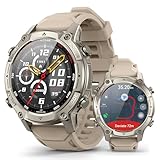
Overview: Essentially the khaki variant of Product 1, this smartwatch targets the same adventure-athlete demographic with identical specifications. The 1.43" AMOLED display, standalone GPS with offline topographic maps, and AI ecosystem remain central to its appeal. The khaki finish offers a tactical alternative to the standard black, though functionality is unchanged.
What Makes It Stand Out: The feature set mirrors its black counterpart exactly—178 sports modes, 21-day battery, 5ATM waterproofing, and the unique AI virtual companion system. The STK8327 Gsensor chip claims 100% faster processing than typical Bluetooth watches, while the HX3691 sensor enables 24/7 health monitoring including mood tracking. Real-time translation across 24 languages and voice-generated fitness plans differentiate it from conventional GPS watches.
Value for Money: At $179.99, this commands a $56 premium over the identical black model—a questionable markup for color alone. While still competitive against Garmin Fenix or Coros Vertix series at $400+, savvy shoppers will opt for the black version. The price positions it awkwardly between budget and premium tiers without added functionality to justify the increase.
Strengths and Weaknesses: Strengths duplicate Product 1: exceptional battery life, comprehensive AI integration, precise GPS tracking, and robust waterproofing. The 1000-nit AMOLED display excels outdoors. Weaknesses include the arbitrary price premium, unknown brand reliability, potential AI gimmickry that may not age well, and limited third-party app ecosystem. The khaki finish may show wear more visibly than black.
Bottom Line: Functionally excellent but financially flawed—buy the black model instead unless khaki is non-negotiable. The hardware deserves praise, but the pricing strategy does not.
4. Smart Watches for Men,1.46" Fitness Tracker (Make Calls/Text),GPS and Offline Maps Navigation,5 Satellite Systems,Health,Compass/Altitude/Barometer,100+Sports Mode for Android iOS with 2 Straps

Overview: The most affordable GPS smartwatch in this lineup at $40.99, this model prioritizes accessibility over advanced features. It covers the basics: GPS navigation with five satellite systems, offline maps, health monitoring, and Bluetooth calling. The inclusion of two straps (leather and silicone) adds versatility for sport-to-casual transitions.
What Makes It Stand Out: The five-satellite system support (GPS, GLONASS, BeiDou, Galileo, plus one unspecified) is remarkable at this price point. The 1.46" HD touchscreen, while not AMOLED, still offers decent visibility. Dual straps provide immediate customization without extra purchases. Bluetooth 5.4 enables stable calling, though message replies are Android-only—a common budget limitation.
Value for Money: This sets the budget benchmark. At $40.99, it’s cheaper than most non-GPS fitness bands yet includes true navigation capabilities. For users wanting basic GPS tracking without financial commitment, it’s unbeatable. The trade-offs are clear: no AI features, unspecified battery life, and a basic display. Still, it delivers core functionality that serves 80% of users’ needs.
Strengths and Weaknesses: Strengths include rock-bottom pricing, comprehensive satellite coverage, useful bonus straps, and essential health tracking. The Bluetooth calling works reliably. Weaknesses comprise an unbranded display likely inferior to AMOLED, unknown battery performance, no advanced features like AI or mood tracking, and Android-only message replies. Build quality and long-term software support are concerns.
Bottom Line: The perfect entry-level GPS watch for casual users. It sacrifices flash for function, delivering reliable navigation at a disposable price point.
5. Military GPS Smart Watch for Men with Offline Map/Air Pressure/Altitude/Compass,smart Watch for Android Phones and iPhone,Waterproof Fitness Tracker with Blood Oxygen/Heart Rate/Sleep/100+ Sport Modes

Overview: A carbon copy of Product 2 in both specifications and pricing, this military-style GPS watch targets the same budget-conscious outdoor enthusiast market. With identical features—multi-system GPS, offline maps, altimeter/barometer/compass trio, and comprehensive health monitoring—it represents another entry in the sub-$50 navigation watch category.
What Makes It Stand Out: The feature parity with Product 2 is complete: GPS/BeiDou/Galileo/GLONASS support, 8-40 second lock times, and over 100 sport modes. The health suite tracking blood oxygen, heart rate, sleep, stress, emotion, and fatigue is unusually thorough for the price. Offline mapping without subscription fees remains the key selling point.
Value for Money: At $49.99, it offers identical value to Product 2—exceptional affordability for true GPS functionality. This pricing tier democratizes outdoor navigation, making it accessible to students, beginners, or as a backup device. The lack of differentiation from Product 2 suggests either white-label manufacturing or marketplace listing duplication.
Strengths and Weaknesses: Strengths mirror Product 2: genuine GPS independence, broad health tracking, and military aesthetics. The waterproof rating handles basic water exposure. Weaknesses include identical concerns—unspecified battery capacity, basic display technology, slower GPS acquisition than premium brands, and uncertain long-term software updates. Accuracy may vary, and build quality won’t match tactical-grade watches.
Bottom Line: Indistinguishable from Product 2—choose based on seller reputation, shipping, or warranty rather than features. A solid budget GPS watch that delivers core navigation without frills.
6. Smart Watches for Men,1.46" Fitness Tracker (Make Calls/Text),GPS and Offline Maps Navigation,5 Satellite Systems,Health,Compass/Altitude/Barometer,100+Sports Mode for Android iOS with 2 Straps

Overview: This versatile smartwatch delivers premium features at a budget-friendly price point. The 1.46-inch HD touchscreen provides crisp visuals while supporting Bluetooth calling and text replies on Android. With built-in GPS supporting five satellite systems and offline map navigation, it’s designed for outdoor enthusiasts who need reliable tracking without constant phone dependency.
What Makes It Stand Out: The offline maps capability sets this apart from competitors in its price class, offering turn-by-turn directions without cellular service. Five satellite system support ensures rapid GPS acquisition even in challenging environments. The inclusion of both leather and silicone straps adds versatility for daily wear versus athletic activities. Comprehensive environmental sensors—compass, altimeter, and barometer—provide crucial data for hiking and exploration.
Value for Money: At $40.99, this watch dramatically undercuts major brands while delivering features typically found in $200+ devices. The combination of GPS navigation, calling functionality, and extensive health monitoring represents exceptional value. While build quality may not match premium alternatives, the feature-to-price ratio is outstanding for budget-conscious buyers.
Strengths and Weaknesses: Strengths include offline GPS navigation, five satellite connectivity, dual strap options, Bluetooth calling, and 100+ sport modes. The 5.4 Bluetooth chip ensures stable connections. Weaknesses are limited Android-only text replies, unspecified waterproof rating, unknown brand reliability, and potentially shorter battery life with heavy GPS use. The display resolution isn’t specified beyond “HD.”
Bottom Line: This smartwatch is ideal for outdoor adventurers seeking GPS navigation on a tight budget. If you prioritize offline maps and environmental sensors over brand recognition, it delivers remarkable functionality. Just manage expectations regarding durability and battery performance under heavy use.
7. Lyaarka Smart Watches for Men,1.46" Fitness Tracker with GPS,Health Monitor,AI,Bluetooth Call/TextReply, Compass/Altitude/Barometer,100+ Sports Mode,5ATM Waterproof for Android/iPhone with 2 Straps
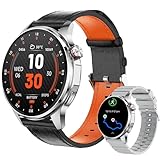
Overview: The Lyaarka smartwatch positions itself as an ultra-affordable fitness companion with surprising premium features. Its 1.46-inch HD touchscreen handles Bluetooth calls and Android text replies while packing GPS tracking and comprehensive health monitoring into a sub-$35 package. The 5ATM waterproof rating adds confidence for swimmers and outdoor enthusiasts.
What Makes It Stand Out: This watch’s standout feature is its aggressive pricing combined with legitimate waterproofing—5ATM supports swimming and diving unlike many budget competitors. The AI integration promises smarter interactions, while dual-band GNSS improves GPS accuracy in urban canyons and dense forests. The inclusion of two straps at this price point demonstrates surprising value.
Value for Money: At $31.99, this is among the cheapest full-featured smartwatches available. You’re getting GPS, Bluetooth calling, environmental sensors, and true waterproofing for less than a restaurant dinner. While corners are inevitably cut, the core functionality matches watches costing three times as much. It’s perfect for first-time smartwatch users or those prone to damaging expensive gear.
Strengths and Weaknesses: Strengths include unbeatable price, 5ATM waterproof rating, five satellite GPS, dual straps, and comprehensive health tracking. The lightweight design suits all-day wear. Weaknesses involve vague AI capabilities, Android-only text replies, unknown brand longevity, lack of offline maps, and potentially inferior display quality. Battery life remains unspecified and likely modest.
Bottom Line: For budget shoppers prioritizing waterproofing and basic smart features, this Lyaarka watch is nearly impossible to beat. It sacrifices premium materials and brand support for raw affordability. Choose it for casual fitness tracking and occasional swimming, but serious athletes should invest more for reliability.
8. HIRREO Smart Watches Built-in GPS,1.43" AMOLED Fitness Tracker with LED Flashlight/Compass/530mAh Battery, Heart Rate/SpO2/Sleep Monitor 5ATM Outdoor Sports Smartwatch for Android iOS,100+Sport Modes

Overview: HIRREO targets serious outdoor athletes with this feature-packed sports watch. The 1.43-inch AMOLED display delivers superior brightness and color compared to standard LCDs, while the massive 530mAh battery promises extended endurance. Built-in GPS with dual-frequency positioning and over 110 sport modes make it a comprehensive training tool.
What Makes It Stand Out: The AMOLED screen is a rare find under $50, offering vibrant always-on displays that save power. The integrated LED flashlight is genuinely useful for pre-dawn runs and emergencies. With 5-10 days of active use and 60 days standby, battery anxiety disappears. Support for six satellite systems including India’s NAVIC ensures global coverage.
Value for Money: At $49.99, this commands a premium over basic GPS watches but justifies it with AMOLED technology and exceptional battery life. The flashlight and advanced positioning features add tangible value for outdoor enthusiasts. While lacking Bluetooth calling, it focuses resources on core athletic functionality where it matters most.
Strengths and Weaknesses: Strengths include gorgeous AMOLED display, industry-leading battery capacity, LED flashlight, six satellite GPS, 5ATM waterproofing, and comprehensive health monitoring. The rugged build suits harsh conditions. Weaknesses are no calling/texting capability, smaller 1.43-inch screen, higher price point, and potentially complex interface for casual users.
Bottom Line: This HIRREO watch excels for dedicated athletes prioritizing display quality and battery longevity over communication features. If you want a training tool that lasts weeks and performs in extreme conditions, the premium is worthwhile. However, casual users should save money with simpler alternatives.
9. Elderly 4G GPS Smart Watch Waterproof Senior Real-Time Tracking Phone Video Call SOS Emergency Alarm Voice Message Geo-Fence Touch Screen Pedometer Anti-Lost Tracker Father Mother’s Day Global Version

Overview: This specialized 4G smartwatch prioritizes senior safety over fitness tracking. Unlike general-purpose watches, it functions as a standalone communication device with video calling, SOS emergency alerts, and real-time GPS tracking. Designed for elderly users, it emphasizes simplicity and connectivity through cellular networks rather than smartphone pairing.
What Makes It Stand Out: True 4G connectivity enables video calls and voice messages without phone dependency—crucial for seniors who may forget their phones. The SOS button cycles through three emergency contacts until someone responds, providing peace of mind. Geo-fencing alerts caregivers when wearers leave safe zones, while 90 days of location history aids in finding lost seniors.
Value for Money: At $97.99, this is a premium investment, but specialized medical alert devices cost $200+ with monthly fees. The one-time purchase includes features like video calling that traditional medical alerts lack. For families prioritizing elderly safety, the cost is justified. However, it requires a separate SIM card with data plan, adding ongoing expense.
Strengths and Weaknesses: Strengths include standalone 4G operation, video calling, robust SOS system, global compatibility, waterproof design, and caregiver-focused tracking features. The anti-lost functionality is invaluable. Weaknesses are high upfront cost, required monthly SIM plan, limited fitness features, complex setup for non-tech-savvy seniors, and bulkier design than standard smartwatches.
Bottom Line: This is a senior safety device first, smartwatch second. Perfect for elderly parents living alone or with cognitive concerns. The 4G connectivity and video calling justify the premium for families needing constant contact. Don’t buy it for fitness tracking—buy it for priceless peace of mind and emergency response capabilities.
10. baoinse Military Smart Watch with GPS Tracker, Pressure/Altitude/Compass, Rugged Smartwatch with 90 Days Battery, 1ATM Waterproof, Answer/Make Call, 100+ Sport Modes Fitness Tracker for Android iOS

Overview: The baoinse military smartwatch champions extreme endurance and durability. Its massive 650mAh battery delivers up to 90 days standby—far exceeding typical smartwatches. Built to military-grade standards with 7H hardness glass, it targets outdoor workers and adventurers who prioritize reliability over sleekness. Bluetooth calling and comprehensive sensors round out this rugged package.
What Makes It Stand Out: Unprecedented battery capacity is the headline feature, eliminating weekly charging rituals. Military-grade testing for pressure, temperature, and vibration ensures survival in harsh environments. The 7H hardness screen resists scratches from tools and rocks. At $39.99, it offers premium ruggedization at a budget price point.
Value for Money: This watch redefines budget rugged tech. Competitors with similar durability and battery life cost $150+. While the 1ATM waterproof rating is modest compared to 5ATM rivals, it’s sufficient for rain and splashes. The trade-off between extreme battery life and water resistance makes sense for land-based activities.
Strengths and Weaknesses: Strengths include extraordinary 90-day standby, 650mAh battery, military durability, Bluetooth calling, environmental sensors, and aggressive pricing. The AI voice assistant adds convenience. Weaknesses are limited 1ATM waterproofing, unspecified display quality, likely bulky design, basic fitness algorithms, and unknown brand support network.
Bottom Line: Ideal for construction workers, hikers, and anyone tired of constant charging. The baoinse watch sacrifices swim-proofing and display refinement for unbeatable battery life and toughness. If you work in demanding environments or forget to charge devices, this is your watch. For water sports, look elsewhere.
Why Offline Maps Matter for Serious Hikers
Cellular coverage maps are wishful thinking once you dip below ridgelines or venture into wilderness areas. Offline maps aren’t just a backup plan—they’re your primary navigation system in the backcountry. When you preload detailed topographic data onto your watch, you’re carrying a complete digital map library that remains accessible even when your phone has transformed into a paperweight. This capability becomes critical in emergency situations, allowing you to identify water sources, locate escape routes, or find the safest descent path without relying on any external infrastructure.
How GPS Technology Works in Wrist-Worn Devices
Your GPS watch is essentially a sophisticated radio receiver that calculates position by timing signals from multiple satellites. Each satellite broadcasts a timestamp and orbital data; your watch measures the minuscule time differences between these signals to triangulate your exact position in three-dimensional space. Modern multi-band receivers can pull from GPS (American), GLONASS (Russian), Galileo (European), and BeiDou (Chinese) systems simultaneously, dramatically improving accuracy in deep canyons, dense forests, and urban canyons. Understanding this technology helps you recognize why some watches acquire satellites in seconds while others take minutes—and why that difference matters when you’re standing at an unmarked trail junction in deteriorating weather.
Essential Features vs. Nice-to-Have Features
The line between necessity and luxury shifts dramatically based on your hiking style. Essential features include: preloaded topographic maps, multi-GNSS support, at least 20 hours of GPS battery life, barometric altimeter, 3-axis compass, and the ability to create and follow routes. Nice-to-have additions might be: music storage, contactless payments, advanced training metrics, or solar charging. For thru-hikers tackling the Pacific Crest Trail, battery life and durability are non-negotiable. For weekend warriors, those premium features might justify the extra cost. Be brutally honest about your actual needs versus aspirational use cases when evaluating specifications.
Understanding Map Types and Compatibility
Not all offline maps are created equal. Raster maps (like traditional topographic sheets) offer beautiful detail but consume massive storage space. Vector maps are mathematically rendered, allowing you to zoom infinitely without losing clarity while using minimal memory. The gold standard for hikers is 1:24,000 scale topographic data with contour intervals of 40 feet or less, showing water sources, vegetation boundaries, and man-made structures. Check whether your prospective watch allows third-party map uploads or locks you into the manufacturer’s ecosystem—this flexibility becomes crucial when you need specialized maps for international trails or proprietary land management data.
Battery Life Realities in the Backcountry
Manufacturers’ battery claims exist in a fantasy world of minimal GPS usage, no map interaction, and ideal temperatures. In reality, constant map display, frequent route recalculation, cold weather, and backlight usage can slash advertised 30-hour GPS life to less than 15 hours. For multi-day trips, look for watches with expedition modes that log location less frequently (every few minutes instead of every second) while still tracking your path. Solar charging can add 10-15% daily in full sun, but don’t bet your safety on it—cloud cover, forest canopy, and sleeve coverage dramatically reduce effectiveness. Always carry a portable battery and understand your watch’s actual power consumption in field conditions.
Display Technology: Readability in All Conditions
That gorgeous AMOLED screen looks stunning in the store but becomes nearly invisible in bright alpine sunlight and devours battery like a starving hiker at an all-you-can-eat buffet. Memory-in-pixel (MIP) displays sacrifice color vibrancy for exceptional sunlight readability and sip power conservatively. Consider transflective properties—how the screen uses ambient light to become clearer the brighter your environment gets. Touchscreens seem convenient until you’re wearing gloves in freezing rain; physical buttons provide reliable operation in any conditions. The sweet spot for serious hikers is a MIP display with button navigation and a customizable backlight for pre-dawn starts and nighttime navigation.
Durability Standards for Rugged Terrain
The backcountry doesn’t care about your warranty. Look for MIL-STD-810G certification, which means the device survived controlled tests for shock, vibration, temperature extremes, and humidity. The watch case should be fiber-reinforced polymer or titanium—not just for weight savings, but because these materials absorb impact without cracking. Sapphire crystal displays resist scratches from granite scree fields and ice axes, while chemically strengthened glass offers a budget-friendly compromise. That IPX7 water rating means the watch survives 30 minutes at 1 meter depth, but for river crossings and unexpected swims, aim for 10 ATM (100 meters) or better. Remember: water resistance degrades over time as gaskets age and microscopic cracks develop from repeated impacts.
Satellite Systems: GPS, GLONASS, Galileo, and BeiDou Explained
Using GPS alone is like trying to see the sky through a straw. Multi-GNSS support dramatically increases the number of visible satellites, especially critical in challenging environments. GLONASS provides better high-latitude coverage (crucial for Alaska or Scandinavia). Galileo offers superior accuracy in urban areas but also helps in deep valleys. BeiDou improves Asian coverage and provides additional satellites globally. Dual-frequency reception (L1 and L5 bands) cuts through multipath errors caused by signals bouncing off canyon walls or buildings. For technical terrain and international travel, prioritize watches supporting all four systems with dual-frequency capability—your position accuracy improves from 10-15 feet to under 6 feet in ideal conditions.
Altimeter, Barometer, and Compass (ABC Sensors)
The barometric altimeter measures air pressure to calculate elevation, providing far more precise vertical data than GPS alone. However, weather systems cause pressure fluctuations that can fool your watch—learn to calibrate at known elevations. The barometer tracks pressure trends, giving you early warning of approaching storms (rapid pressure drops indicate deteriorating weather). The 3-axis compass works regardless of watch orientation, unlike older 2-axis models requiring level positioning. Together, these ABC sensors create a powerful environmental monitoring system. The best implementations allow you to set storm alerts, track vertical speed, and automatically switch between GPS and barometric elevation based on movement patterns.
Route Planning and Watch Integration
The watch is only as good as the route you load into it. Look for seamless integration with desktop and mobile apps that allow you to draw routes on detailed maps, import GPX files from AllTrails or Gaia GPS, and sync wirelessly. Advanced watches offer “snap-to-trail” functionality that automatically aligns your planned route to established paths in their database. The ability to create routes directly on the watch using the map interface is invaluable for improvisation—when you spot a promising alternate path or need to bail due to conditions. Pay attention to how the watch handles off-route warnings: the best devices provide subtle haptic feedback and clear visual cues without constantly nagging you when you’re intentionally exploring.
Memory and Storage Considerations
Map files are storage hogs. A single state at 1:24,000 scale can consume 2-4GB. Global basemaps might be 16GB or more. The watch needs enough internal memory for your operating system, activity history, waypoints, and maps—with room to grow. 32GB is the practical minimum for serious hikers; 64GB provides comfortable headroom for multiple regions. Some watches offer expandable storage via SD cards, but these introduce failure points and compromise waterproofing. Consider how the watch manages memory: does it intelligently cache maps for your planned route, or must you manually manage storage? Can you download maps directly via Wi-Fi, or are you tethered to a computer?
Water Resistance Ratings Deep Dive
That “waterproof” claim deserves scrutiny. IP ratings (Ingress Protection) measure dust and water resistance, but ATM (atmospheres) ratings indicate pressure resistance. For hiking, 5 ATM (50 meters) handles rain and splashes but might fail during extended submersion or powerful water jets. 10 ATM (100 meters) provides genuine protection for river crossings and unexpected swimming. The crown, buttons, and charging contacts are failure points—magnetic charging is more reliable than USB ports with rubber covers that degrade. Thermal shock (moving from hot sun to cold water) creates pressure differentials that test seals. Rinse your watch after saltwater exposure, and never operate buttons underwater unless specifically designed for it (some diving watches lock buttons when submerged).
User Interface and On-Trail Usability
When you’re hypoxic at 12,000 feet or hypothermic in a storm, complex menus become impossible to navigate. The best interfaces prioritize frequently used functions: map view, compass, elevation profile, and backtrack feature. Customizable data screens let you display exactly what you need without scrolling. Button logic should be intuitive—can you operate it with mittens? Is there a “panic button” that instantly shows your location and nearest waypoint? Touchscreens require capacitive gloves and fail when wet; physical buttons work regardless. The learning curve matters: a powerful watch you can’t operate under stress is just expensive dead weight. Test the interface extensively before trusting it on a major expedition.
Emergency Features and SOS Capabilities
Beyond navigation, some GPS watches offer two-way satellite communication or automated incident detection. These features require subscriptions but can summon help when you’re beyond cell range. The watch’s ability to broadcast your GPS coordinates via text message to emergency contacts provides peace of mind for solo hikers. Some models detect unusual impacts or lack of movement and automatically send SOS alerts. However, never rely solely on technology—always carry a personal locator beacon (PLB) or satellite messenger as primary emergency communication. Think of watch-based SOS as a supplementary tool, not a replacement for dedicated emergency devices. The backtrack feature, which guides you along your exact incoming path, often proves more useful than SOS in non-life-threatening disorientation scenarios.
Data Syncing and Post-Hike Analysis
Your adventure doesn’t end when you reach the trailhead. The ecosystem surrounding your watch determines how easily you can analyze your performance, share routes, and plan future trips. Look for automatic Wi-Fi syncing, comprehensive web platforms that visualize your track on topographic maps, and easy GPX export for archiving or sharing. Advanced metrics like training load, recovery time, and acclimatization status help you understand how elevation gain affects your body. The ability to overlay your track on satellite imagery helps you analyze route choices and plan improvements. Some platforms integrate with trail databases, automatically identifying peaks, trails, and points of interest you encountered.
Price Tiers and What You Get
Budget tier ($200-350) offers basic GPS tracking with limited map storage and shorter battery life—suitable for day hikers on well-marked trails. Mid-range ($350-600) provides comprehensive mapping, multi-GNSS support, and 20+ hour battery life, hitting the sweet spot for most serious hikers. Premium tier ($600-1000+) adds solar charging, titanium construction, advanced training metrics, and satellite communication—justifiable for professionals and extreme expedition leaders. Beyond $1000, you’re paying for marginal gains in materials and niche features. Consider total cost of ownership: some watches require paid map subscriptions or premium app features. A $500 watch with free maps often costs less over three years than a $400 watch requiring $100 annual subscriptions.
Common Mistakes When Choosing a GPS Watch
First mistake: buying based on brand loyalty rather than feature set. Second: prioritizing smartwatch features (notifications, apps) over navigation reliability. Third: assuming all “offline maps” are equally detailed—some watches include only basic road maps, not topographic data. Fourth: ignoring the charging system—proprietary cables are useless when lost in the field. Fifth: choosing touchscreen over buttons for harsh conditions. Sixth: not testing the watch on familiar trails before committing to remote expeditions. Seventh: overlooking the quality of the companion app ecosystem. Eighth: buying more watch than needed, adding complexity and cost without practical benefit. Ninth: trusting manufacturer battery claims without reading real-world reviews. Tenth: forgetting that maps become outdated—check update frequency and ease of refreshing data.
Frequently Asked Questions
How accurate are GPS watches compared to dedicated handheld units?
Modern multi-GNSS GPS watches match handheld units for accuracy in open terrain, typically achieving 6-10 foot precision. Handhelds maintain an edge in extreme conditions due to larger antennas and better sky view, but the gap has narrowed significantly. For most hiking scenarios, a quality GPS watch provides sufficient accuracy, especially when supplemented with ABC sensors.
Can I use my GPS watch for multi-week thru-hikes without recharging?
Only with aggressive power management. Enable expedition mode (1-minute GPS intervals instead of 1-second) to extend battery life to 50-100 hours. Solar models add 10-15% daily in ideal conditions. For truly multi-week trips, carry a 10,000mAh power bank—most watches recharge fully 4-5 times from one bank, weighing less than spare batteries for traditional GPS units.
What’s the difference between barometric and GPS elevation, and which should I trust?
GPS elevation is less accurate than horizontal position due to satellite geometry. Barometric elevation is more precise but affected by weather. The best watches blend both: using GPS for absolute reference and barometer for relative changes. Calibrate your barometer at known elevations (trailheads, summits) for best results, and trust barometric data for following contour lines or tracking vertical progress.
Do I need cellular connectivity in my GPS watch for hiking?
No—cellular connectivity is unnecessary and drains battery. Offline maps and satellite systems work independently of cell towers. Some watches offer LTE for live tracking or SOS, but this requires subscriptions and compromises battery life. For emergencies, a dedicated PLB or satellite messenger is more reliable and has better battery life than watch-based cellular.
How much map storage do I realistically need?
For regional hiking, 8-16GB suffices for several states at high resolution. For international travel or national park hopping, 32GB provides comfortable headroom. Remember that map detail level dramatically affects file size—1:100,000 scale uses 10% of the storage of 1:24,000 scale. Start with your primary hiking region and add areas as needed; most watches allow selective map downloads.
Can I create routes directly on the watch, or do I need a computer?
Most premium watches allow basic route creation on-device by dropping waypoints on the map, but the small screen makes complex planning tedious. The best workflow: plan detailed routes on a computer or tablet with large-screen mapping software, then sync to your watch. On-trail creation is reserved for spontaneous detours or emergency rerouting, not primary trip planning.
How do I update maps on my GPS watch?
Update methods vary: Wi-Fi direct download, USB connection to computer, or companion app sync. Wi-Fi is most convenient but slow for large files. Computer-based updates are fastest and most reliable. Check update frequency—quality manufacturers refresh map data quarterly or semi-annually. Some charge for updates; others include lifetime free updates. Stale maps showing old trails can be dangerous, so regular updates are essential.
Will my GPS watch work in deep canyons or dense forests?
Performance degrades significantly when the watch can’t see enough satellites. Multi-GNSS support helps by providing more satellites to lock onto. In extreme situations, the watch may lose fix entirely. This is why ABC sensors are critical backups—your compass and altimeter continue working without satellites. Always carry a paper map and traditional compass as ultimate backup; no electronic device is 100% reliable in all conditions.
What’s the lifespan of a GPS watch with regular backcountry use?
Expect 3-5 years of reliable service with heavy use. Battery capacity degrades after 500+ charge cycles. Buttons and seals wear out from dust, sweat, and impacts. Software updates typically continue for 2-3 years post-release. Sapphire displays resist scratches but impacts can crack them. The weakest link is often the charging system—magnetic connectors corrode, and USB ports collect debris. Proper maintenance (rinsing after use, periodic seal checks) extends lifespan.
Are subscription services worth it for GPS watches?
It depends on the service. Map subscriptions providing frequent updates and premium layers (satellite imagery, land ownership) offer good value at $30-50 annually. Training platform subscriptions with advanced analytics benefit serious athletes but are overkill for casual hikers. Satellite communication subscriptions ($15-50 monthly) are worthwhile for solo remote travelers but redundant if you already carry a PLB. Avoid watches requiring subscriptions for basic GPS functionality or map access—these nickel-and-dime you for core features that should be included.